Monthly Archives: September 2013

The Calvert Marine Museum’s big foam shark

Over Labor Day weekend, I visited the Calvert Marine Museum in Solomons, Maryland. The Museum, which features both indoor and outdoor exhibits, covers a wide range of Chesapeake regional history, including Patuxant Indian culture, the War of 1812, the local fishing industry and of course, Miocene marine fossils. The paleontology gallery, called “Treasures from Our Cliffs”, is nicely done and surprisingly high in production value for the museum’s size. Starting with an extensive entry gallery that places Chesapeake area fossils in a global context, the exhibit also includes fossils of seals, whales, invertebrates and assorted terrestrial mammals, plus a neat recreation of a cliff-side excavation.

The Carcharocles megalodon at the Calvert Marine Museum.

The Carcharocles megalodon at the Calvert Marine Museum.

What I want to talk about most, though, is the big foam shark pictured above. This is the exhibit’s centerpiece attraction, a complete replica of the cartilaginous skeleton of the infamous giant extinct shark Carcharocles megalodon. Since shark skeletons are primarily made up of soft cartilage, most of their bodies are very unlikely to fossilize. While teeth and lithified vertebrae of C. megalodon are relatively common, a complete skeleton can only be created as a replica. As such, the Calvert Marine Museum’s display is a scaled-up model of the cartilaginous skeleton of a modern Carcharodon chararias (great white shark), with a few proportional adjustments based on known fossils. The result is undeniably impressive: suspended over an ocean backdrop, the 37-foot model absolutely steals the show in the paleontology exhibit.

Nevertheless, I find it absolutely fascinating that the museum would go to such lengths to create a replica shark, particularly given its substantial collection of original fossils. The foam shark’s existence can be traced to the beginning of the 20th century, when there was a dramatic rush among large urban museums in the United States to collect and mount the biggest and most spectacular dinosaur skeleton that could be found. This fossil craze was largely motivated by the vanity of the museums’ wealthy benefactors, but proved to be extremely productive for both paleontologists and museums. Mounted dinosaur skeletons sprung up seemingly overnight in cities across the country, making names like “Brontosaurus” and Diplodocus household terms and igniting a wave of interest in museums and natural science.

As a result of this mounting spree, the public conception of dinosaurs and other prehistoric animals is to this day irreversibly intertwined with its conception of museums. When we think of fossils, we think of grand museum halls populated by towering skeletons. This connection is so ingrained that mounted skeletons have become, in the public eye, the only proper way to display prehistoric animals. Patrons of paleontology exhibits expect mounts, and museums must deliver, even if it means purchasing a cast from another institution, or in the case of the Calvert Marine Museum, sculpting one outright.
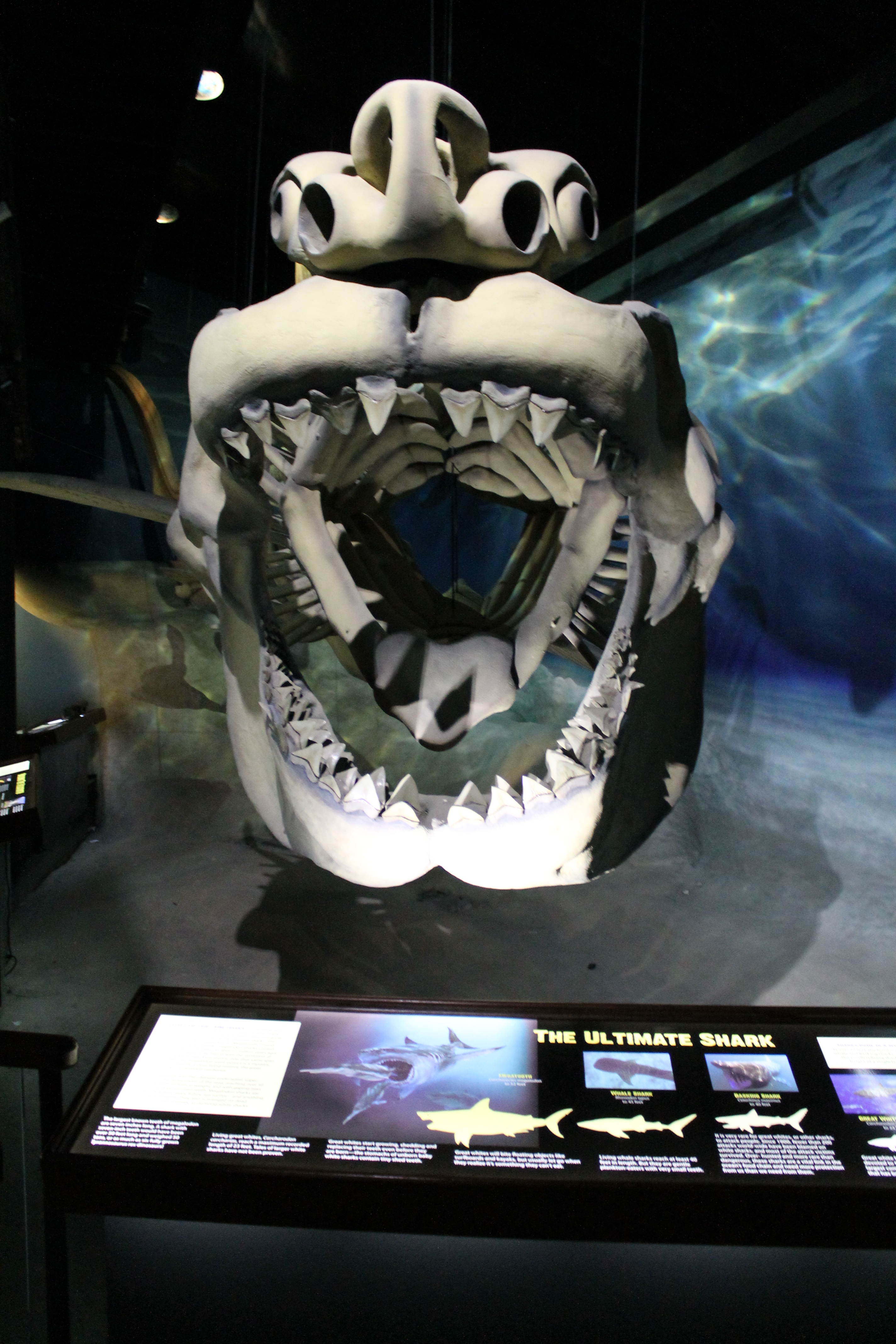
And from the front.

A closer look at C. megalodon.

It is true that very few museum mounts feature the complete skeleton of a single animal – they are typically composites of many specimens, or have missing parts filled in with casts or sculpted elements (see this SVPOW post on Kyle Davies, who sculpts bone replicas for OMNH). Probably the most important function of a mount is to present fossil material in a format that non-specialists can easily understand and appreciate. They show viewers what extinct animals would have been like in life, and let us perceive them in relation to our own human scale. But unlike a mural or life-sized model, which are obviously reproductions, mounts retain the aura of authenticity that comes from displaying known fossils. To display a skeleton is to imply that we are seeing real specimens, or at least replicas standing in for specimens that exist somewhere else. Whether reasonable or not, this is the expectation ingrained by over 150 years of fossil mounts in museums.

This means that the C. megalodon at the Calvert Marine Museum is pushing the concept of a fossil mount to its very limit. While this is without doubt a very reasonable reconstruction of what a C. megalodon skeleton would have looked like, only a minuscule fraction of what is on display represents fossils that have actually been uncovered. The question is then, is a display like this a misrepresentation of scientific knowledge and the fossil record?
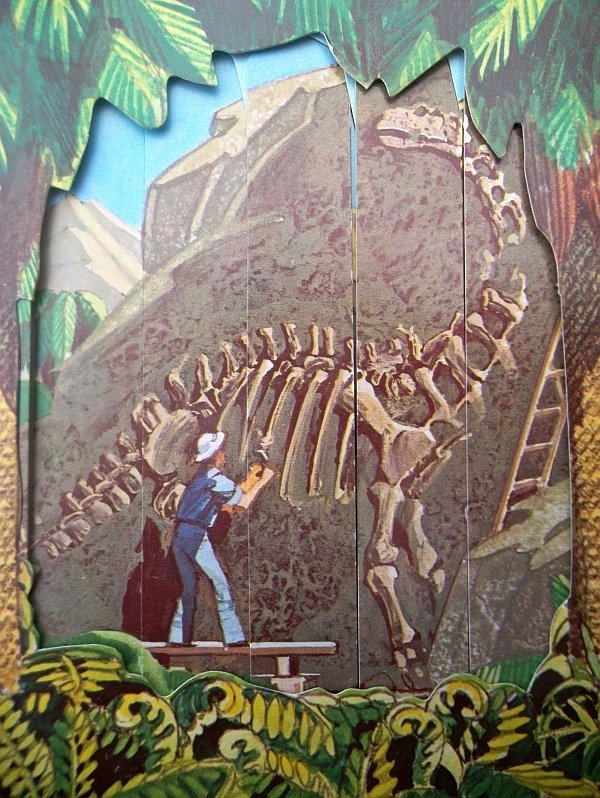
How dinosaur fossils are NOT found. From Dinosaurs: A Prunell magic Pop-Up Book, via LITC.

Not how vertebrate fossils are found. From Dinosaurs: A Prunell Magic Pop-Up Book, via LITC.

To the Calvert Marine Museum’s credit, the exhibit signs clearly explain that the C. megalodon skeleton is a replica, and provide a detailed explanation of how and why it was made. What’s more, the shark mount is merely an extreme example of filling in gaps with probable reconstructions, a process needed to make the construction of mounts of most prehistoric animals possible at all. The field of vertebrate paleontology is, in fact, largely based on the premise that incomplete remains can be understood in the context of other, better known relatives. Then again, if I learned anything teaching undergraduate anatomy, it’s that the concept that vertebrates share a body plan inherited through common ancestry is not widely known. This might be worth considering when presenting fossil mounts in general: after all, mounts primarily exist for the public, not for experts (although see Kenneth Carpenter’s comments on an earlier post).

The Calvert Marine Museum’s C. megalodon definitely raises some weighty questions about displays of scientific specimens in museums. In the context of vertebrate fossils, what qualifies as a real specimen, and what is well-supported extrapolation? What role should a museum play when displaying scientific knowledge? Should museums merely serve as repositories for original objects found in nature, or is the goal to provide context and meaning for those objects? Can a boundary between the two be defined at all?
3 Comments

Filed under exhibits, fish, fossil mounts, museums, science communication

In Defense of New Museums

As a museum* educator, I work with two kinds of experts: researchers who create knowledge and education specialists who disseminate knowledge. Both groups have ostensibly the same mission, which is to effectively communicate credible information about the world around us. Generally, both sides collaborate effectively, due in no small part to a shared enthusiasm for their work. But there is one issue (that has been raging for decades) in which researchers and educators frequently seem to be shouting past each other, complaining about what one another are doing wrong but not making much progress in reconciling their priorities. This issue is, of course, “new museum” exhibit aesthetics, the trend toward replacing traditional academically-oriented displays of specimens with dynamic, interactive leaning experiences that use specimens alongside interactive activities and multimedia to communicate specific educational messages to a broad audience.

*When I say museum, I mean natural history or science museum. Art museums are a completely different beast, and one I won’t pretend to understand.

From the perspective of many researchers and certain sets of museum-goers, these newer exhibits are frivolous lowest-common-denominator attractions better suited to amusement parks than serious institutions. For example, in a recent Tetrapod Zoology review of the London Natural History Museum’s Extinction exhibit, Darren Naish criticizes computer-based interactive exhibits because they “take up space that really should be spent on something far more worthwhile” and “give visitors the excuse to do the same old crap they do every other day of their lives (look at screens, play videogames, use touchscreens) when they really could be treated to a more unique experience.” Likewise, an all-encompassing rant about new museums can be found in this (admittedly 6 year old) post by Matt Wedel, which is well worth a read (seriously, read it now and then come back to this).

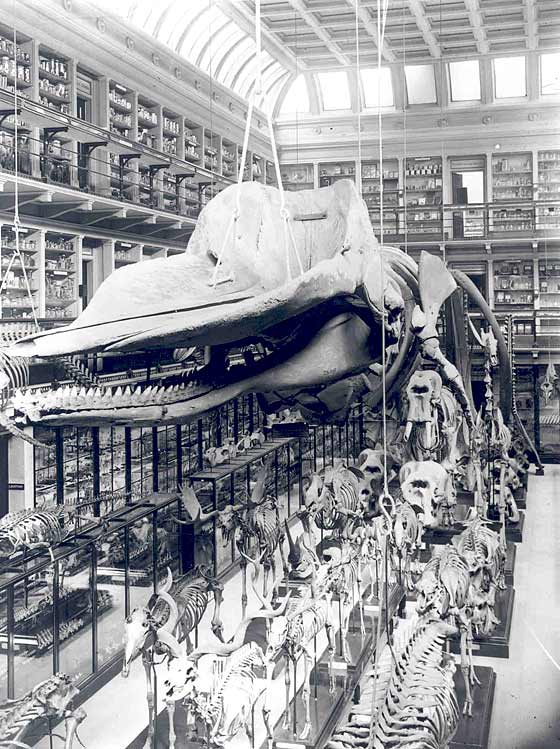
The Hunterian Museum as it appeared in the 1600s: all  of the specimens, not much else.

The Hunterian Museum as it appeared in the 1800s: ALL OF THE SPECIMENS.

But in direct contrast to Wedel’s insistence that the intrinsic value of real specimens is all museum-goers want or need, there are editorials like this one by James Durston, which I will charitably describe as provocative. Durston tells us that museums that only display artifacts for their own sake are “classrooms made of cold granite, the only sense of life emerging from the tourists.” He argues that most objects on display in museums don’t matter as much to visitors as museum workers think they do, and pleads for more context and more reason to care.

So what’s the deal? Are modern museums too focused on providing context for their collections, or not focused enough? Let me begin by explaining why modern museum exhibits look the way they do. A century ago, or even 50 years ago, exhibits were arranged and labels were written almost exclusively by expert curators. These exhibits were, by and large, created with an audience of “interested people” in mind, meaning either other experts or clientele with enough leisure time to learn the jargon presented to them. The majority of visitors who came through the door were not directly catered to, because exhibits were considered an afterthought to the real work of the museum: research and collections management.

In the past 30 years, however, the museum field has decided that it can do better. Museums shifted from inwardly focused, primarily academic institutions into focal points for lifelong learning that operate in service to a wide community of visitors. Go to the website of your favorite museum and check out their mission statement (it should be pretty easy to find). I just did, and the mission of the National Museum of Natural History is to “increase knowledge and inspire learning about nature and culture, through outstanding research, collections, exhibitions, and education, in support of a sustainable future.” Note that the museum doesn’t seek to increase knowledge and inspire learning just for a core audience of studious, well-read people, but for everyone. That means the museum needs to offer content that is interesting to all sorts of people, whether they learn best by reading and absorbing information, by physically doing something, by making choices for themselves or by discussing an issue with others. Preserving  and studying collections is no less important than in museums of yore, but these activities are understood to be in service of providing knowledge to the widest possible audience.

This shift in focus has inspired museum exhibits with more explicit educational goals, as well as attempts to create learning experiences that reach visitors other than those already keyed in to the customary language of academia. Drawing heavily on Gardner’s multiple intelligences, modern exhibits are intended to cater to diverse audiences that learn in a variety of different ways. In particular, hands-on mini experiments and computer-based games have become staples in science exhibits in order to reach visitors who learn better by doing than by observing. These interactive elements (we just call them interactives in the biz) are not appealing to everyone, but museums serve a broad community and have no business being exclusionary in the services they provide.

Beyond any moral or educational imperative, however, modern museums must be accessible because they are nonprofit institutions that rely heavily on public funds. They are funded based on the promise that they will provide educational resources for their communities, and that means serving more than a small subset of the population. Furthermore, ever-tightening budgets mean that museums need to be strictly managed. Educators have no choice but to establish clear standards of success for their exhibits, and to develop means to track attendance and audience engagement. Just to keep our jobs and keep museum doors open, we need to be able to clearly articulate who we are serving, how we are benefiting them and how we know.

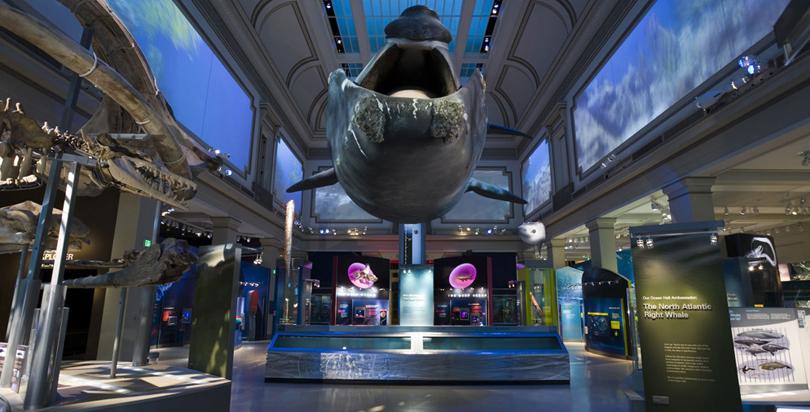
The new Ocean Hall at NMNH: a $90 million new museum extravaganza.

The new Ocean Hall at NMNH: a $50 million new museum extravaganza.

If it was not clear, I absolutely agree with the goals behind new museum design. As  was argued in the American Alliance of Museums’ 1984 “Museums for a New Century” commission report, “if collections are the heart of museums, what we have come to call education – the commitment to presenting objects and ideas an an informative and stimulating way – is the spirit.” General audiences can certainly experience awe and wonder when presented with neat stuff, but museums can and should provide more than that. A hundred birds from around the world look impressive on a shelf, but they are much more interesting when the viewer understands the evolutionary processes and biogeography that produced such diversity. A little bit of context goes a long way to making such an exhibit is accessible and valuable to the widest possible audience.

In practice, however, I will concede that many attempts at broadening the appeal of natural history exhibits are pretty bad. Some modern museum exhibits use technology in terrible ways, and many attempts to increase interactivity are bafflingly pointless or even counterproductive. For instance, a dinosaur exhibit I visited earlier this year includes a green-screen stage where visitors can place themselves in a scene with dinosaurs running around. The result is not only painfully dated, but it has no educational purpose and may well encourage people to think that humans and dinosaurs once co-existed. Likewise, an exhibit on human evolution features a glorified photo booth that makes visitors’ faces look like other hominids. This non-educational attraction is consistently the most popular element of the gallery, distracting visitors from the fantastic displays and specimens all around it. More generally, an increasing number of exhibits are incorporating profoundly pointless touch-screen computers that let visitors browse photos of the specimens on display right in front of them. Just because an exhibit element is hands-on doesn’t mean it is actually helping visitors interact with exhibit content.

One reason lousy interactives keep being designed is that our evaluation procedures* are not always great at separating good exhibits from appealing ones. A good interactive provides informative content in an engaging way, while an appealing one is engaging but lacking in content. Many visitors may speak highly of just-appealing interactives, but that doesn’t mean these belong in museums. The aforementioned budget woes are also a factor here: interactives that draw crowds for any reason are a big help when scrounging for ways to fund research and preservation. There are tough calls to make when deciding between what visitors most want to see and what is actually worthy of an educational institution. There are no easy answers, especially when museums are consistently hurting for funding.

*Do note, however, that actually testing whether exhibits are meeting their educational goals has finally become commonplace…for far too long museum workers just assumed anything they made was good enough.

Nevertheless, when an interactive display works, when visitors’ eyes light up with understanding by working out a scientific problem for themselves, the process is absolutely worthwhile. Earlier this year, I raved about the low-tech brilliance of an activity in the Academy of Natural Sciences that let visitors physically act out the difference in upright and sprawling gaits. And the NMNH Human Origins exhibit features a fantastic computer game where visitors play the part of a future world leader and experience firsthand the challenges and consequences of overpopulation, food shortage and invasive species. Exhibit interactives, both technology-based and otherwise, are difficult to pull off, and many museums have failed at the task. But we owe it to our visitors to try.

10 Comments

Filed under collections, education, exhibits, history of science, museums, opinion, science communication