Monthly Archives: March 2018

Tyler Keillor’s new tyrannosaurs

Paleoartist Tyler Keillor has not one but two new tyrannosaur sculptures on display in museums north of Chicago, and this past weekend I paid both of them a visit. Keillor has been reconstructing extinct animals since 2001, most frequently in collaboration with Paul Sereno. You may well have seen Keillor’s fleshed models of Rugops, Kaprosuchus, Eodromaeus, and others, all commissioned by Sereno to accompany press releases announcing new discoveries. Keillor also specializes in restoring incomplete fossil material, assembling physical or digital models of the complete, undamaged bones. The composite Spinosaurus skeleton from the 2014 National Geographic traveling exhibit was his work, as is the skull on the mounted skeleton of Jane the juvenile Tyrannosaurus at the Burpee Museum of Natural History.

Tyler Keillor’s Dryptosaurus at the Bess Bower Dunn Museum.

One of Keillor’s latest and most ambitious pieces debuted on March  24th at the brand-new Bess Bower Dunn Museum in Libertyville, Illinois. Standing at the entrance to the museum’s galleries, the life-sized Dryptosaurus is a show-stopping centerpiece. Never mind that no dinosaur fossils have been found in Illinois –  Dryptosaurus lived on the other side of the Cretaceous continent of Appalachia, which is as good an excuse as any to include a giant model dinosaur.

During the very well-attended opening event, Keillor gave a standing-room-only talk about creating the model. Dryptosaurus is only known from a handful of fossils, the most complete parts being the arm and leg. Working with Richard Kissel, who served as the project’s scientific advisor, Keillor had to make a number of educated choices to turn the available fossil material into a 20-foot fleshed model. The shape of the head, for example, is based on that of Jane, while the tiny, millimeter-sized scales are informed by recently published skin impressions of various tyrannosaurs. Less certain is the choice to give Dryptosaurus a two-fingered hand. For the time being, the three-fingered skeletons Research Casting International built for the New Jersey State Museum are no less reasonable.

Opening day at the Dunn Museum was mobbed – it’s great to see so many people excited about a new museum!

Keillor’s 2009 Dryptosaurus head is meant to be a male, while the new sculpture represents a female.

During the planning stages, Keillor prepared three possible poses for the museum to pick from. The Dryptosaurus could be standing tall, leaning forward with its mouth open, or crouching down next to a nest mound. Keillor favored the nesting pose, both because it was unusual and because the Dryptosaurus holotype fossils may have come from an animal that had recently laid eggs*. Unsurprisingly, museum staff opted for the more spectacular open-mouthed version.

The bulk of the model is foam, created on a milling machine using data from a digital model produced by Keillor. The foam body form is covered with nearly 200 pounds of epoxy putty, applied and textured by hand. Keillor casted the head as a separate piece, using the molds from a standalone Dryptosaurus head he produced for the Dunn Museum’s predecessor in 2009. The patches of fluff are made from a commercially-available synthetic fiber that resembles kiwi feathers.

*Edward Cope noted in the 1880s that the Dryptosaurus limb bones had large, hollow medullary cavities. Gravid female birds grow extra layers of bone in their medullary cavities to stockpile calcium, which they use to produce eggshells. We now know that several non-avian dinosaur species did the same. 
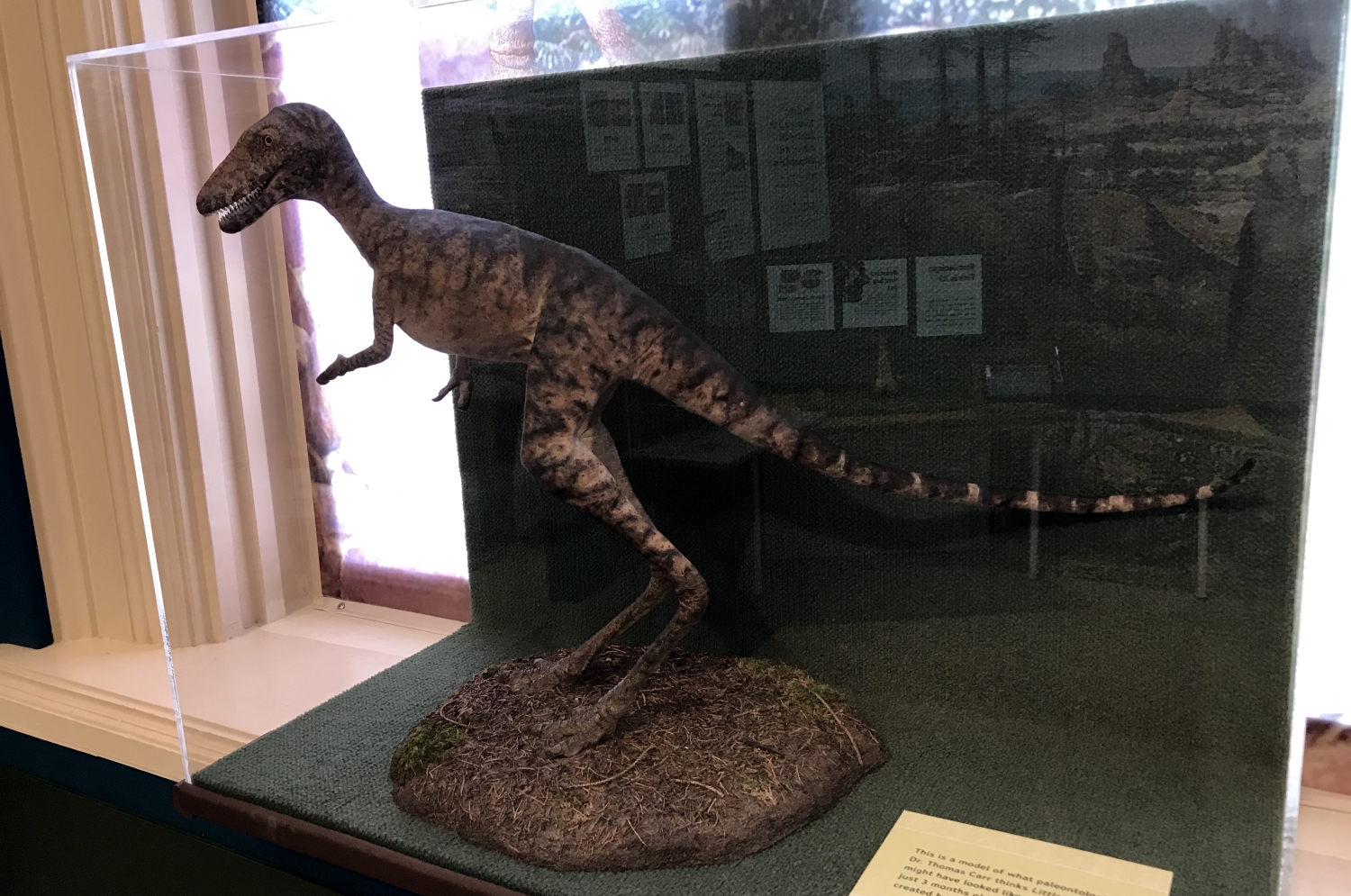
Little Clint at the Dinosaur Discovery Museum.

Keillor’s other new model is “Little Clint” the infant Tyrannosaurus rex, which debuted at the Dinosaur Discovery Museum in Kenosha, Wisconsin with absolutely no fanfare. The model is part of a new exhibit all about the discovery and interpretation of the pocket-sized T. rex fossils it’s based on. Frustratingly, there’s no mention of the exhibit on the museum’s website, and I would have never known about it if Keillor hadn’t mentioned it (I’m sure it’s not the museum’s fault, I too have known the joys of working within the constraints of a large municipal website). The model is roughly two and a half feet long, and is almost grotesque in its spindly proportions. Judging by photos accompanying the model, Keillor used a traditional build-up process, rather than the physical-digital hybrid techniques employed in the making of the Dryptosaurus.

Dryptosaurus and Tyrannosaurus both belong to the same group of theropod dinosaurs (tyrannosaurs), but in creating the two models Keillor went in two very different directions when reconstructing their soft tissues. Working with Richard Kissel of the Yale Peabody Museum, Keillor gave Dryptosaurus a patchy coat of shaggy integument, as well as fleshy lips that would easily cover the animal’s teeth if it were to ever close its mouth. However, Carthage College’s Thomas Carr, scientific advisor for Little Clint, requested a scaly hide with a crocodilian tooth-exposing grin.
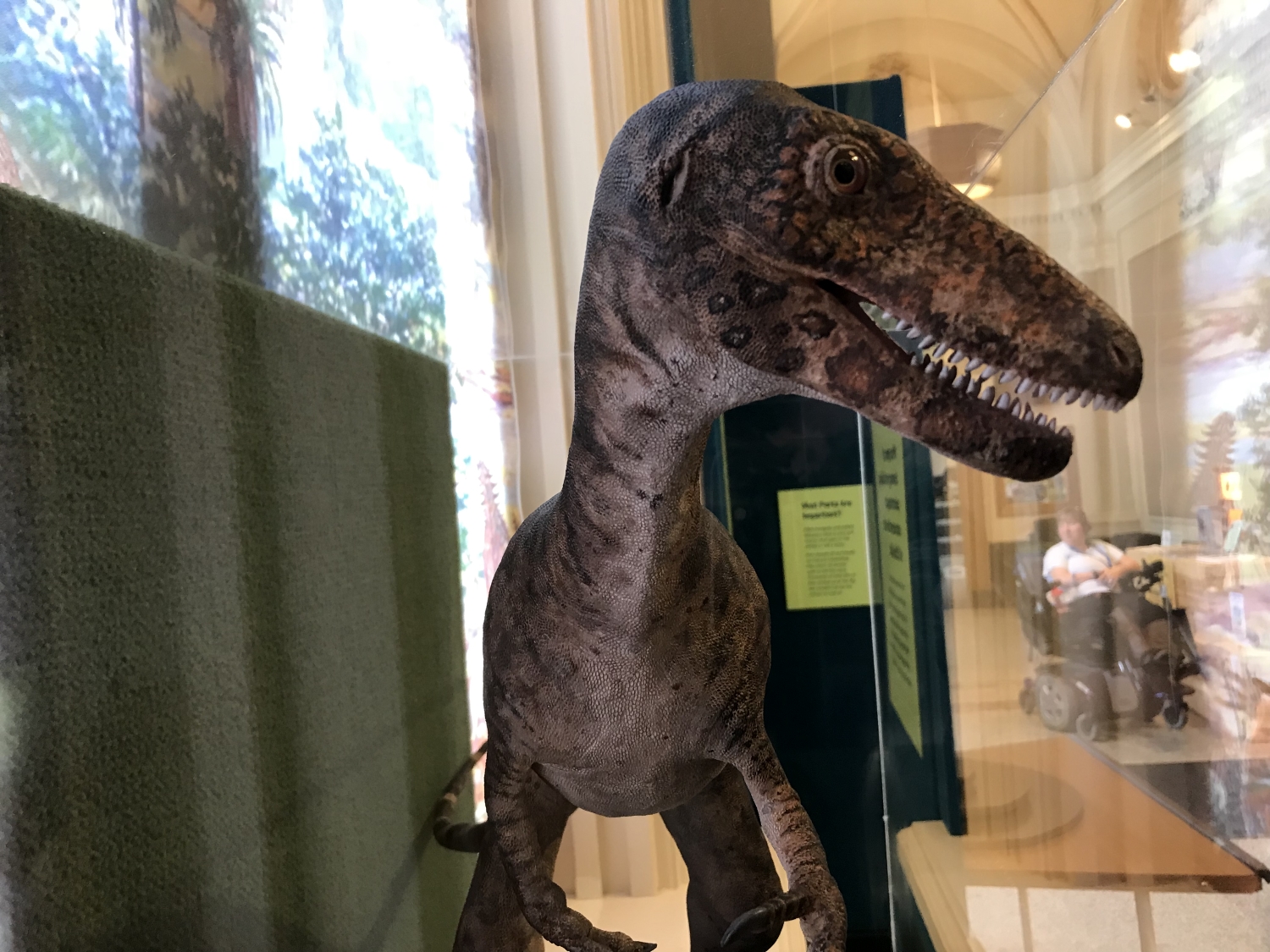
Little Clint’s toothy grin.

It turns out feathers and lips on large theropods (and tyrannosaurs in particular) are fairly contentious subjects, at least among the sort of people who like to argue about these things on the internet. It is well-established that feathery integument was widespread among theropods, and even certain other dinosaurs. Several members of the tyrannosaur family have been found with fossilized fuzz impressions, including the Dryptosaurus-sized Yutyrannus. This means it’s reasonable to expect that all tyrannosaurs, including Tyrannosaurus rex, were feathered to some degree. However, a recent publication by Phil Bell and colleagues suggests the opposite: an assortment of small skin impressions from Tyrannosaurus and its closest relatives reveal only scaly skin. Meanwhile, ongoing research by Robert Reisz demonstrates that theropods had fleshy lips, but this is contradicted by Carr’s own findings that some tyrannosaurs had armored scales on their maxillary margins.

So which interpretation of tyrannosaur soft tissue is right? For now, there is compelling evidence for both interpretations. Perhaps more fossils or new analytical techniques will eventually steer the consensus in one direction or the other. Or maybe we will never know for sure what the faces of Dryptosaurus and Tyrannosaurus looked like. For now, Keillor’s models make fascinating companion pieces. They are windows into two possible versions of the deep past, reminding us to accept a little ambiguity now and then.
10 Comments

Filed under dinosaurs, exhibits, museums, paleoart, theropods

Paleontology Exhibits of California – Part 3

We ended our southern California museum tour with the Western Science Center and the San Diego Natural History Museum. Regrettably, my memory of the Western Science Center is not as detailed as it could be – probably because we stopped by the morning after an 8-hour romp through the San Diego Safari Park and I was still a little braindead. Open since 2006, the Western Science Center was established to house and interpret the fossils and archaeological artifacts recovered during the construction of Diamond Valley Lake, an artificial reservoir near Hemet, California. The fossils in question are from the Pleistocene (roughly contemporaneous with the La Brea Tar Pits) and the museum has nearly a million of them.

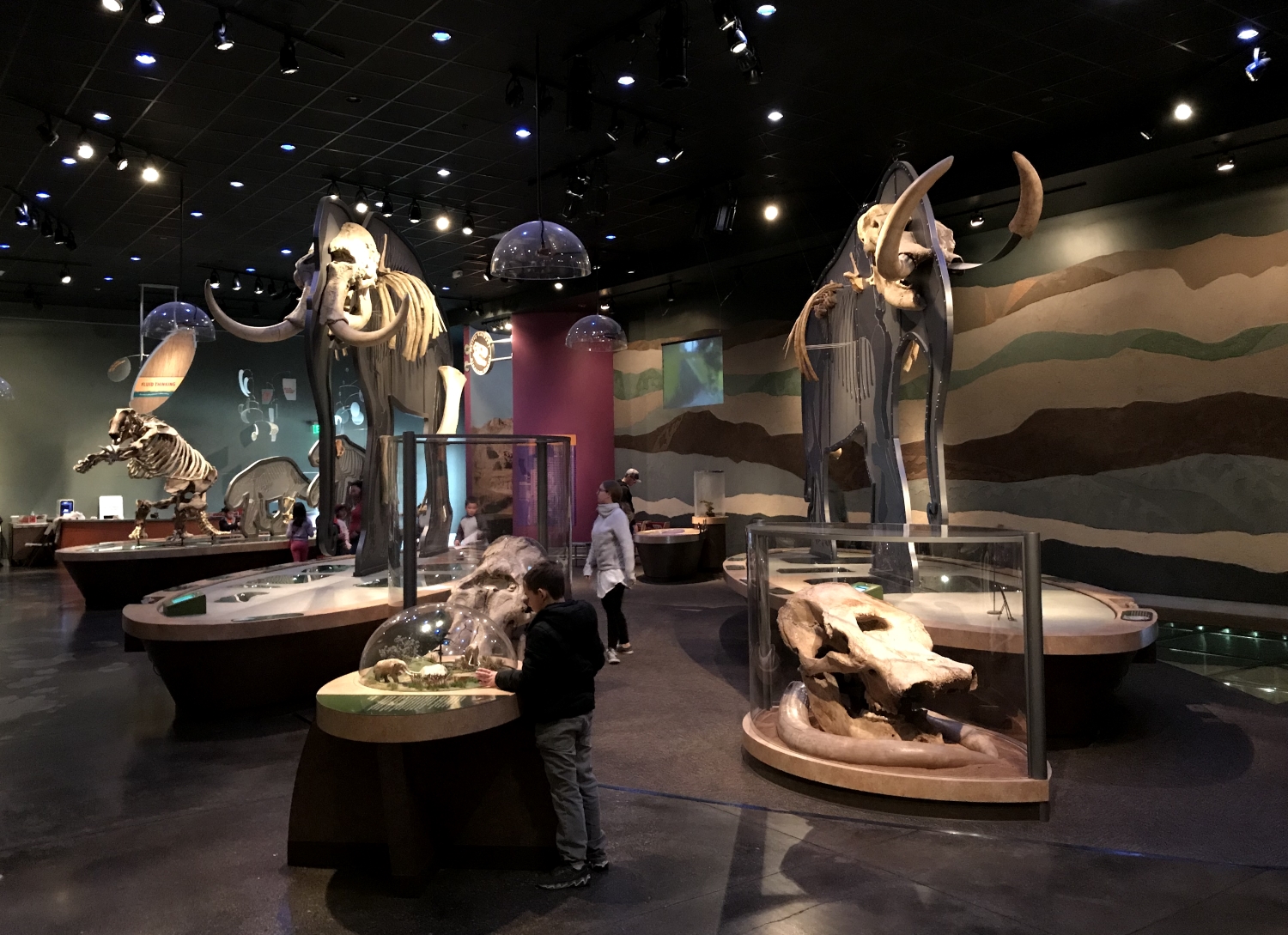
“Snapshots in Time” is the main exhibit at the Western Science Center.

The heart of the museum is the permanent “Snapshots in Time” exhibit, which features both paleontology and archaeology displays. Dominating the room are the mounted skeletons of Max the mastodon and Xena the columbian mammoth. Unlike conventional fossil mounts, in which real or cast bones are cradled by a custom armature, Max and Xena are represented by two-dimensional frames, which establish the animals’ shape in life. Casted bones are attached to the frames in their proper locations, and the real fossils are in glass-covered sandboxes at the feet of the mounts. These visually distinctive displays have some noteworthy interpretive advantages. For one thing, they show the true shape of a proboscidian (in contrast, a conventional mammoth or mastodon mount omits the boneless trunk). These displays also clearly illustrate how much of the specimen was actually found – no reconstructed bones are needed. The Max and Xena mounts are a clever way to help visitors understand the subtleties of paleontological reconstruction: vertebrate fossils are rarely found as complete skeletons, but the inferred portions are far more than idle speculation.

The Western Science Center’s interactives are inspired, as well. Most impressive is a station where visitors can make clay casts from metal molds set into a counter. The amount of upkeep an activity like this requires would be prohibitive for a higher-traffic museum, but here it seemed to work just fine. I also liked a station that invites visitors to interpret archaeological objects through the rules of superposition. However, a mostly-digital interactive that demonstrates taphonomic processes in different microenvironments felt clunky and difficult to use.

As long as clay and plastic wrap can be continuously provided, this cast-making station is worth attempting to emulate.

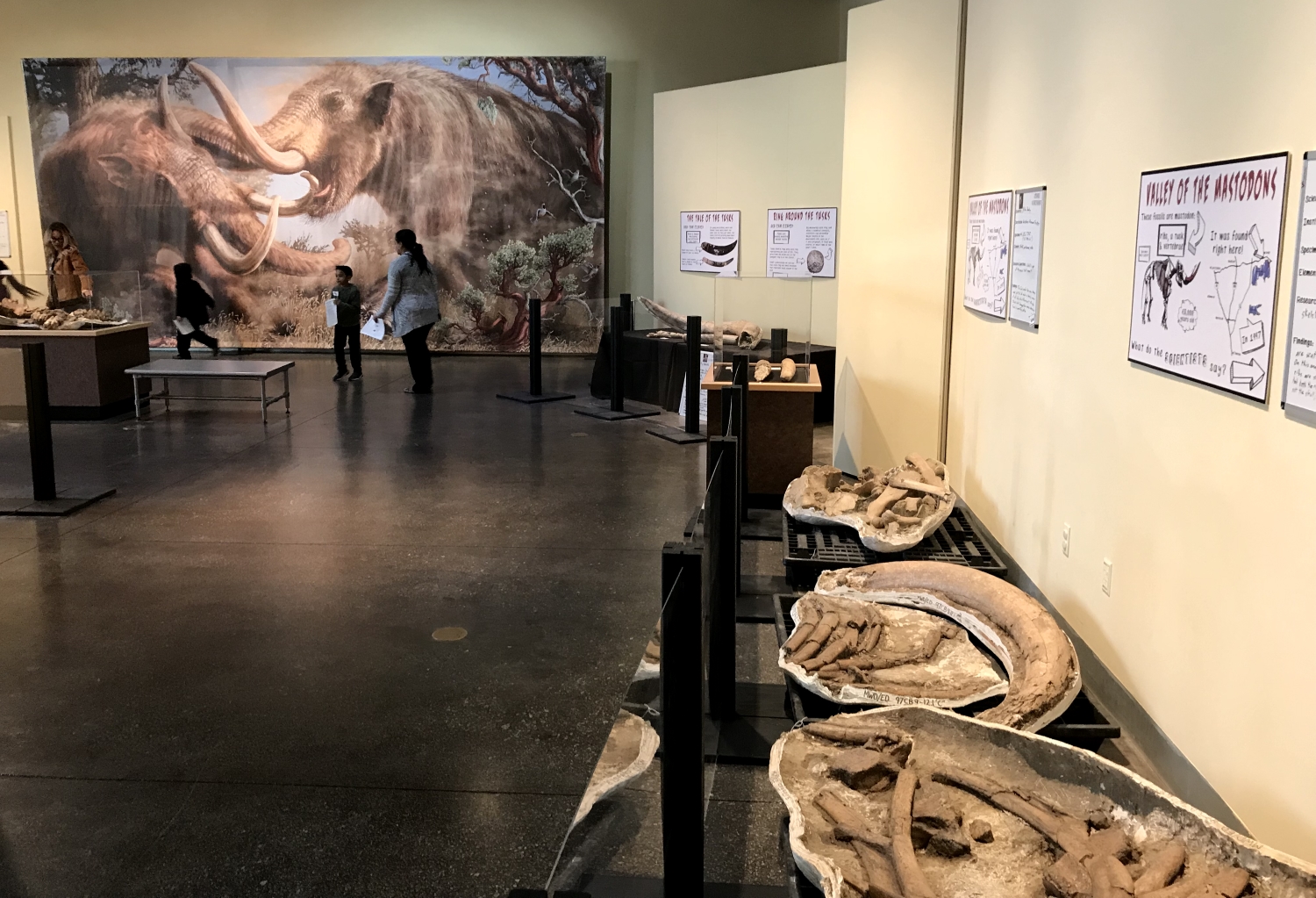
The Valley of the Mastodons special exhibit, featuring a killer mural by Brian Engh.

We also got to see “Valley of the Mastodons,” a special exhibit that will be on display until next month. The exhibit is the result of an experimental public conference arranged by Western Science Center Director Alton Dooley and Dr. Katy Smith of Georgia State University. During the event last August, a group of paleontologists spent several days studying as-yet undescribed fossils from the museum’s collection on the exhibit floor and in view of the public. Visitors could chat with scientists and learn about their discoveries and methods in real time. I can’t report on the event itself (do check out Jeanne Timmons’s top-notch reporting at PLOS Paleo), but I liked the slap-dash, science-in-progress look of the exhibits. There were pieces of over a dozen mastodon individuals on display in various states of preparation, accompanied by notes from the visiting scientists feverishly scrawled on whiteboards. Between Valley of the Mastodons and the Western Science Center’s event calendar, it seems that the museum’s secret strength its its ceaseless slate of public programming. Workshops, activities, and lectures on topics ranging well beyond the boundaries of paleontology and archaeology suggest that the museum has successfully situated itself as an indispensable community resource.

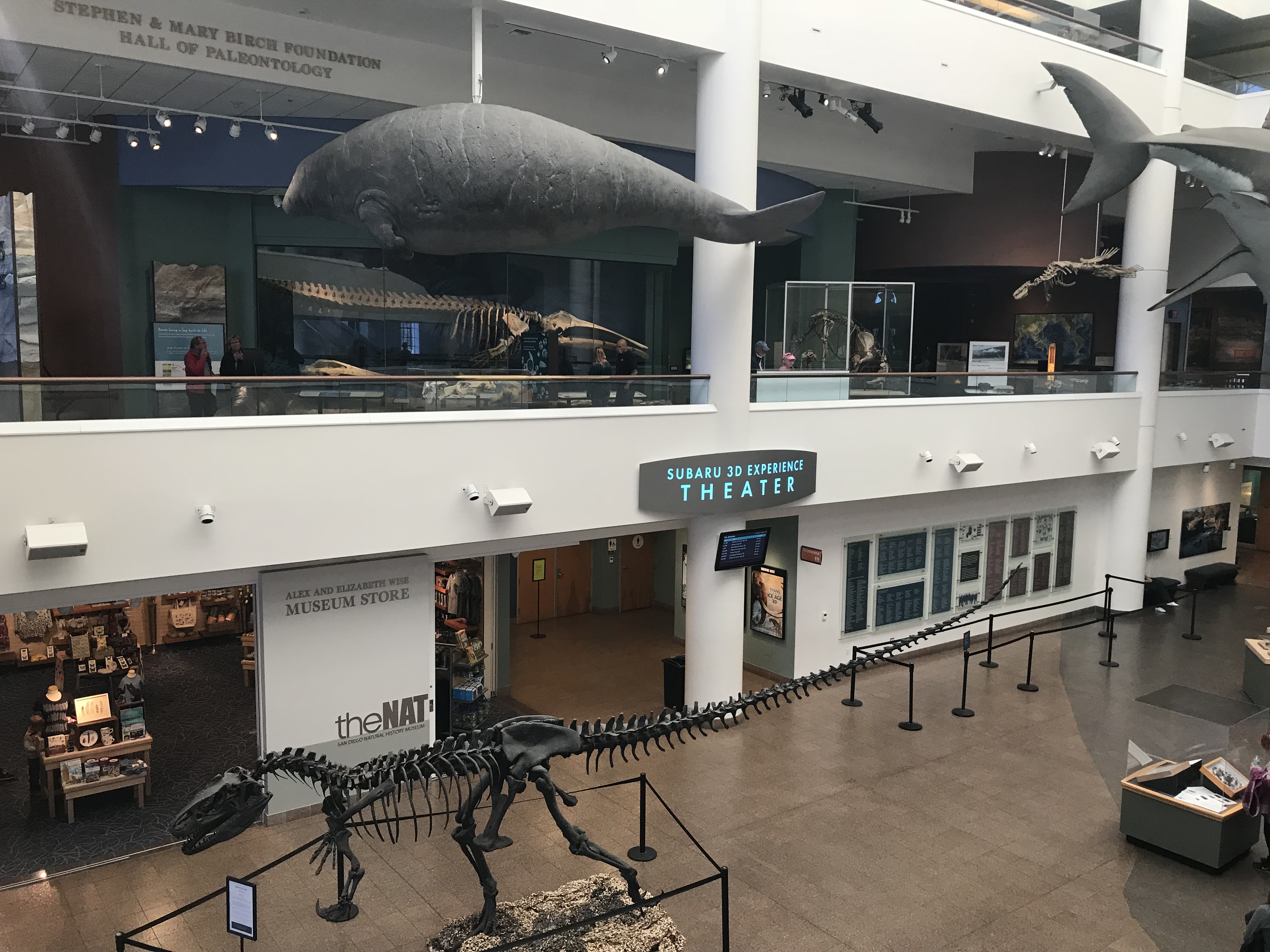
Despite its size, the SDNHM building doesn’t have a ton of usable exhibit space, and many displays are crowded onto mezzanines.

If I had to pick a favorite southern California museum, it would be the San Diego Natural History Museum (or “the Nat,” as it is rather insistently branded). Like the Field Museum, SDNHM got its start as a permanent home for a collection of objects assembled for a world’s fair, in this case the 1914 Panama-California Exposition. The museum occupied a series of temporary structures built for the Exposition in San Diego’s Balboa Park until 1933, when the purpose-built museum building was completed. A 2001 renovation more than doubled the museum’s size. Near as I can tell, no pre-renovation exhibits remain on display. Nevertheless, there’s a ton of great stuff to see, from an urban ecosystems-focused wildlife exhibit to a temporary “random cool specimens from the collections” gallery (this sort of exhibit has been popular lately, and I’m all for it). In keeping with the theme of this blog I’ll focus my comments on the paleontology exhibit.

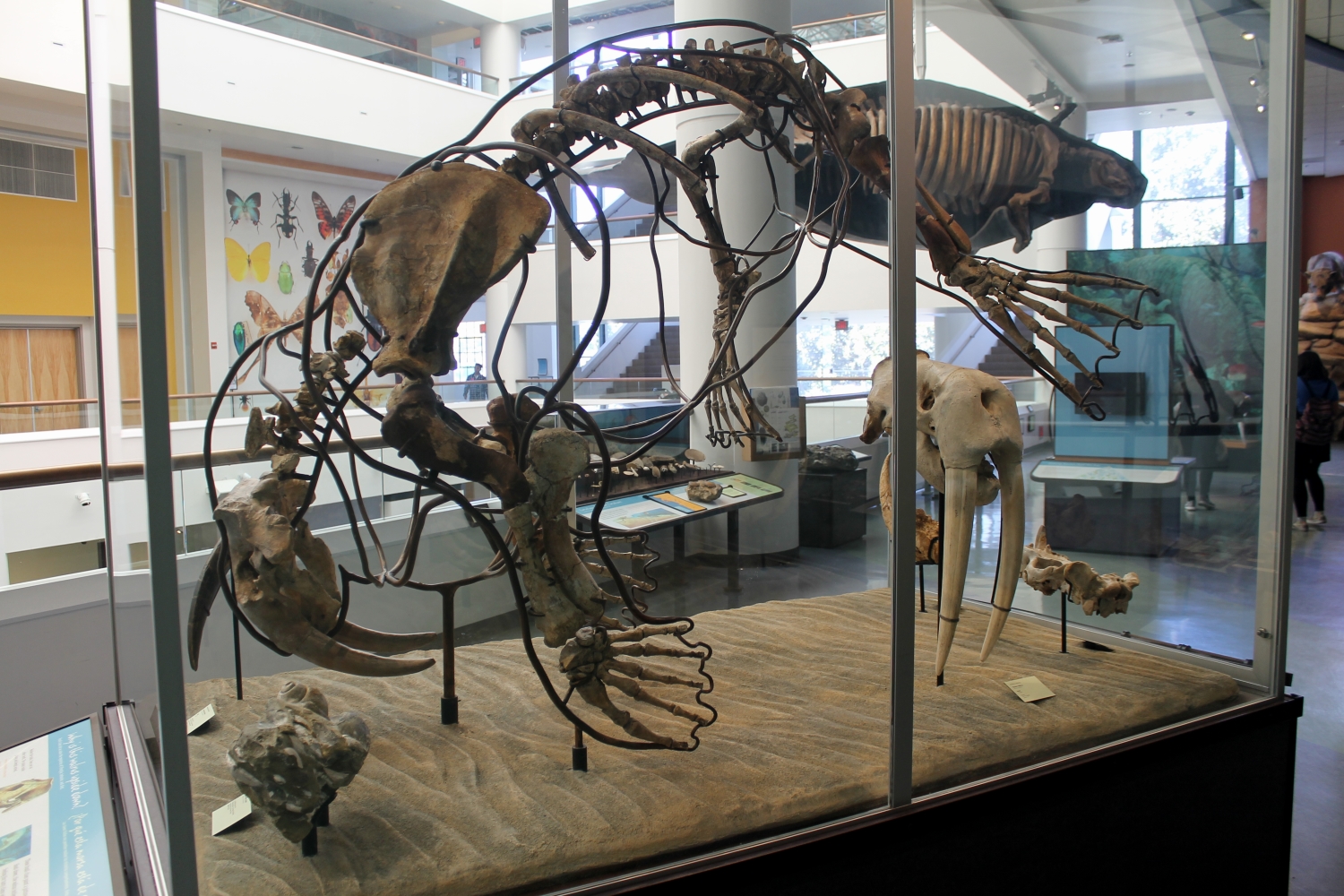
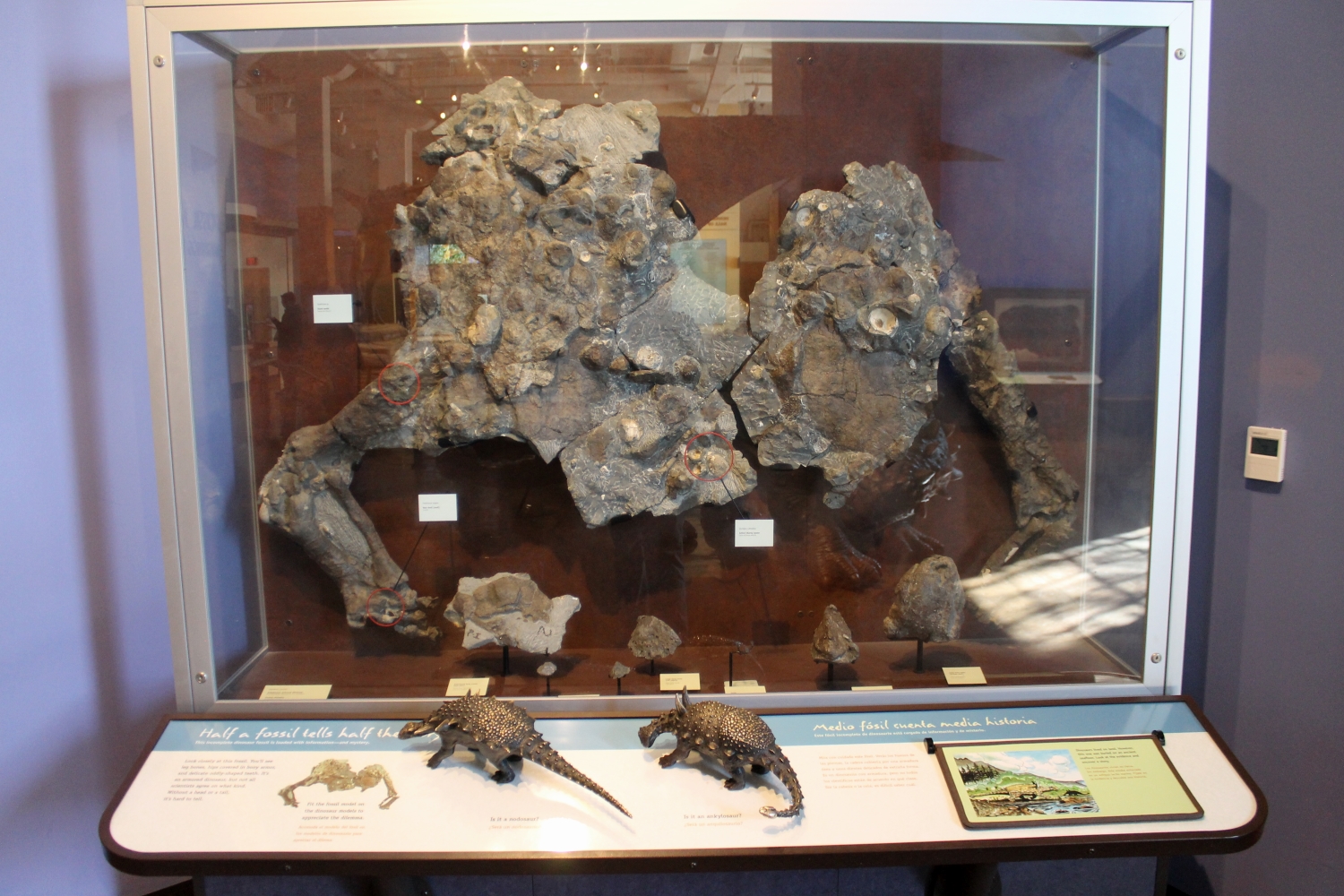
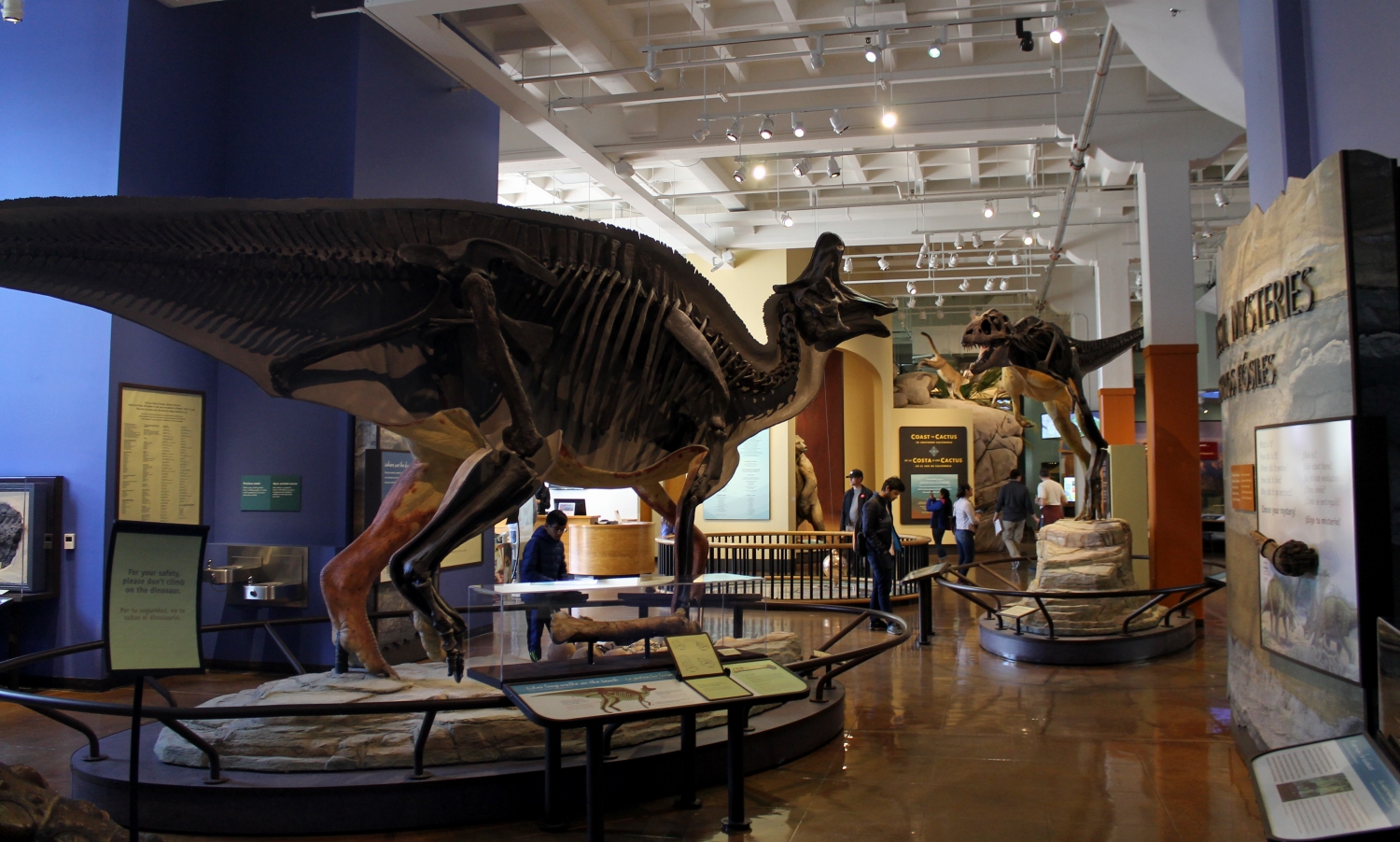
“Fossil Mysteries” showcases prehistoric life from the San Diego area from the Mesozoic through the ice ages. The regional focus means that the exhibit is full of incredible creatures I had never heard of. Examples include Semirostrum, a porpoise with an absurdly elongated chin, and Dusignathus, a walrus with seal-like teeth for hunting fish (unlike modern walruses, which are adapted to suck up mollusks). Beautiful mounted skeletons of the walrus Valenictus, the fearsome-looking pinniped Allodesmus, and an unnamed grey whale relative introduced me to a brand-new prehistoric ecosystem. While southern California is not known for its dinosaur fossils, the handful of specimens on display were interesting because of their unique taphonomy. Found in marine deposits, the hadrosaur femur and armored shoulders of Alectopelta are studded with bivalves.

I am the Valenictus.

This Alectopelta was swept out to sea before being buried in marine sediments, and is now studded with oysters.

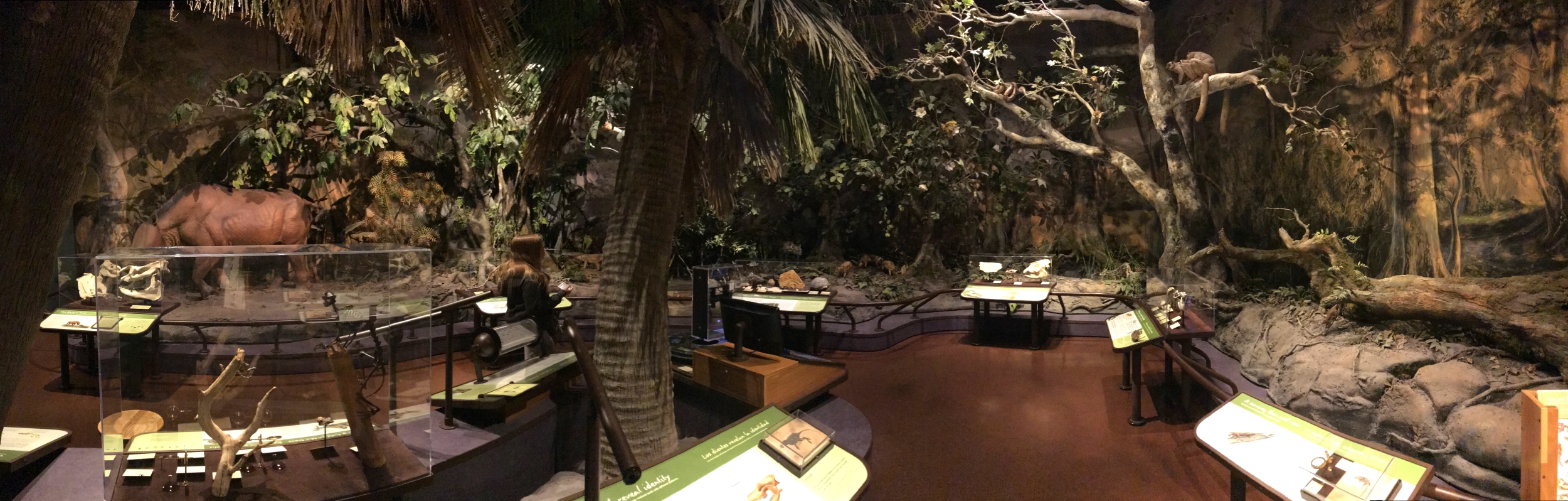
Fossil Mysteries also boasts an impressive array of fabricated displays. Life-sized models of Carcharocles megalodon and Hydrodamalis gigas hang over the central hall, while half-model, half-cast reconstructions of Lambeosaurus and Albertosaurus make up for the paucity of real dinosaur material. One of my favorite parts of the exhibit is the walk-through diorama of an Eocene rainforest. I’ve seen Carboniferous coal swamps represented like this at several other museums, but this is the first time I’ve seen this approach applied to the early Cenozoic. I can’t imagine why, since Lagerstätten from this time period found across North America and Europe make it a natural choice for a highly detailed, immersive display. In a rare but very welcome move, SDNHM provides information about the artists that contributed to the exhibit on its website.

Half-model, half-cast skeletons of Lambeosaurus and Albertosaurus were designed by Mark Rehkopf of Research Casting International.

A panoramic view of the immersive Eocene diorama.

Aside from the specimens and objects, what I really love about Fossil Mysteries is the interpretation. For me, the best signage grabs visitors’ attention by starting with what they know, then poses new questions and provides the tools needed to answer them. Good signs relate directly to the objects on display whenever possible, because that is what visitors come to see in the first place. And all this should be done with brutal succinctness. People can read textbooks at home, so its a mark of a truly talented exhibit writer when complex ideas can be consistently communicated in 40 words or less. With the right phrasing and arrangement, an exhibit can move beyond merely sharing information and become a space for conversation, reflection, and meaningful engagement. Basically, visitors should be able to learn something new in a way that wouldn’t be possible anywhere else. I want to give the exhibit developers and writers at SDNHM the highest of fives, because they absolutely nailed it.

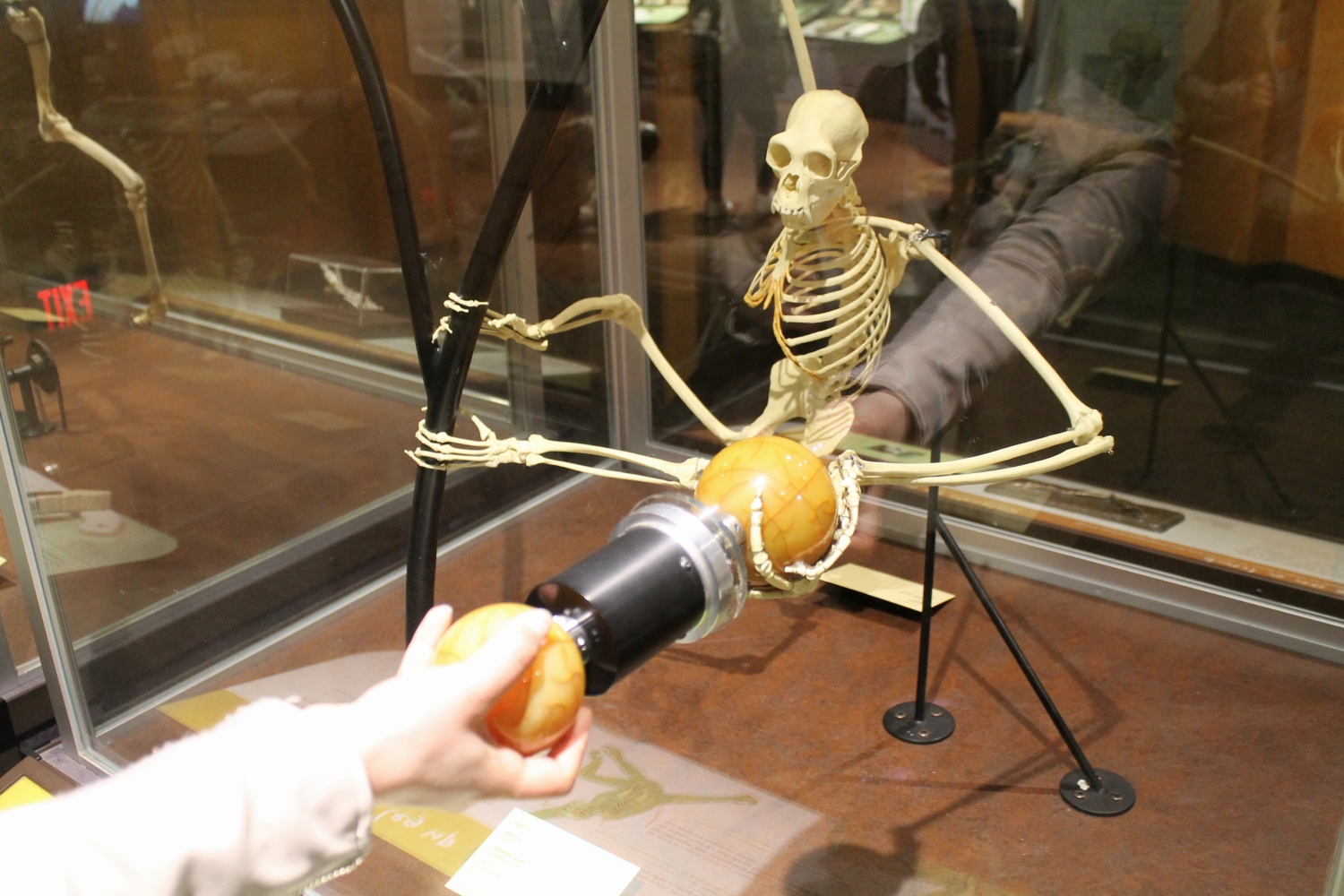
In an informative and weirdly potent interactive, visitors learn about the special adaptations in primate wrists by helping a gibbon skeleton turn a doorknob.

So there you have it – five museums in as many days, and another corner of the world map of natural history museums checked off. Have you been to any of the southern California museums I’ve been discussing? What did you think? Please share in the comments!

4 Comments

Filed under dinosaurs, exhibits, fossil mounts, mammals, museums, opinion, reviews

Paleontology Exhibits of California – Part 2

After visiting the La Brea Tar Pits and the Natural History Museum of Los Angeles County, we headed to Claremont to check out the Raymond M. Alf Museum of Paleontology. I had heard lots of good things about the Alf Museum and have been wanting to check it out for some time. Many, many thanks to Curator Andy Farke (as well as Lucy Herrero and Gabriel Santos) for generously taking the time to show us around!

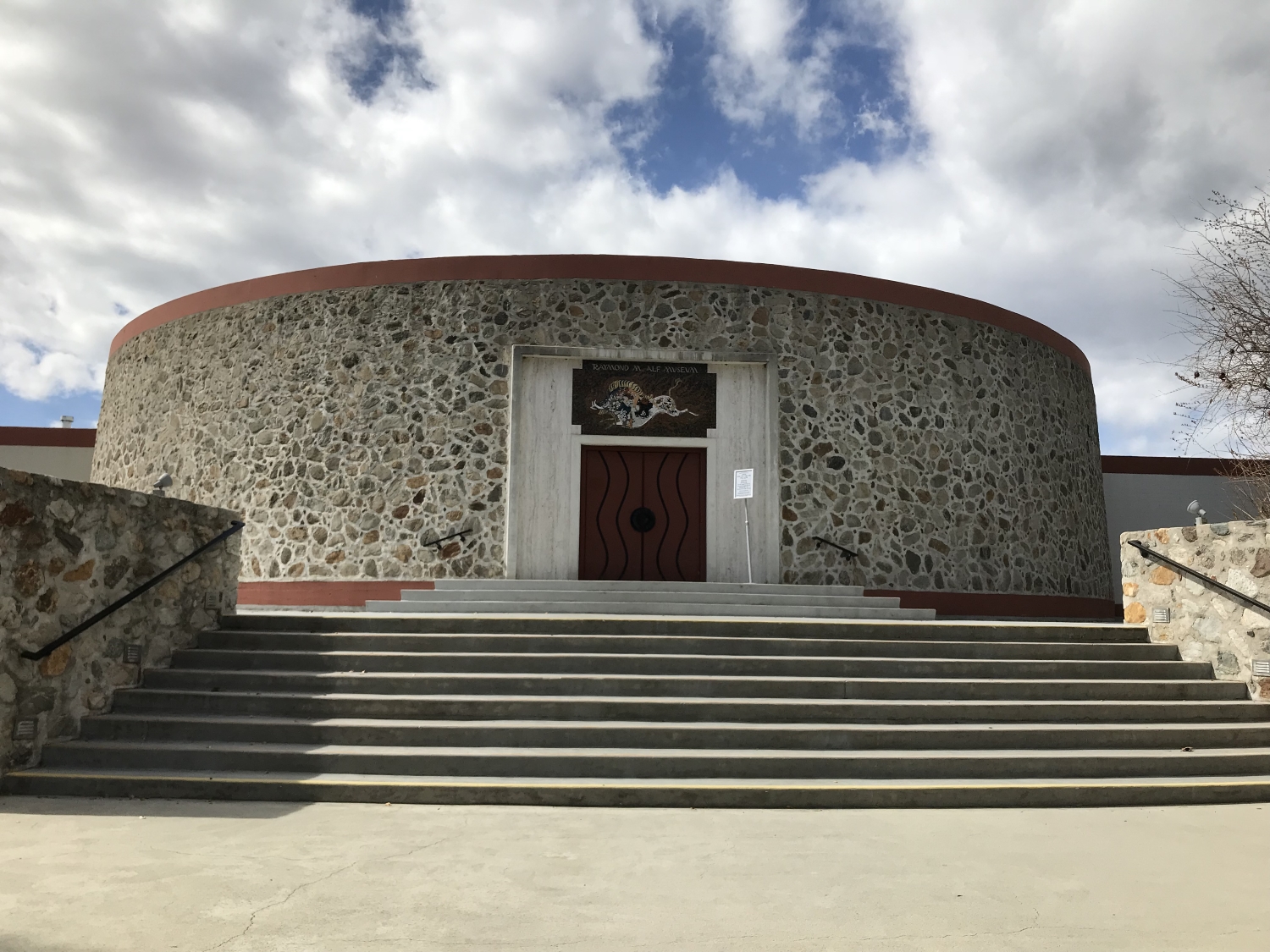
The Alf Museum is housed in a distinctive circular building, with a peccary mosaic over the door.

The Alf Museum is extremely unique. Located at the Webb School in Claremont, it is the only nationally accredited museum on a high school campus. The museum grew out of the collection of Webb teacher Raymond Alf. Though he was not a paleontologist by training, Alf became hooked on fossils after finding a Miocene peccary skull on a 1936 trip to the Mojave Desert. Alf continued to take students fossil hunting year after year, building a sizable collection in the basement of the library and any other storage space he could find. In 1968, alumi and school administrators came together to establish the non-profit Alf Museum, with Raymond Alf himself serving as its first director. Alf passed away in 1999, but lived long enough to see his museum become an internationally recognized research institution.

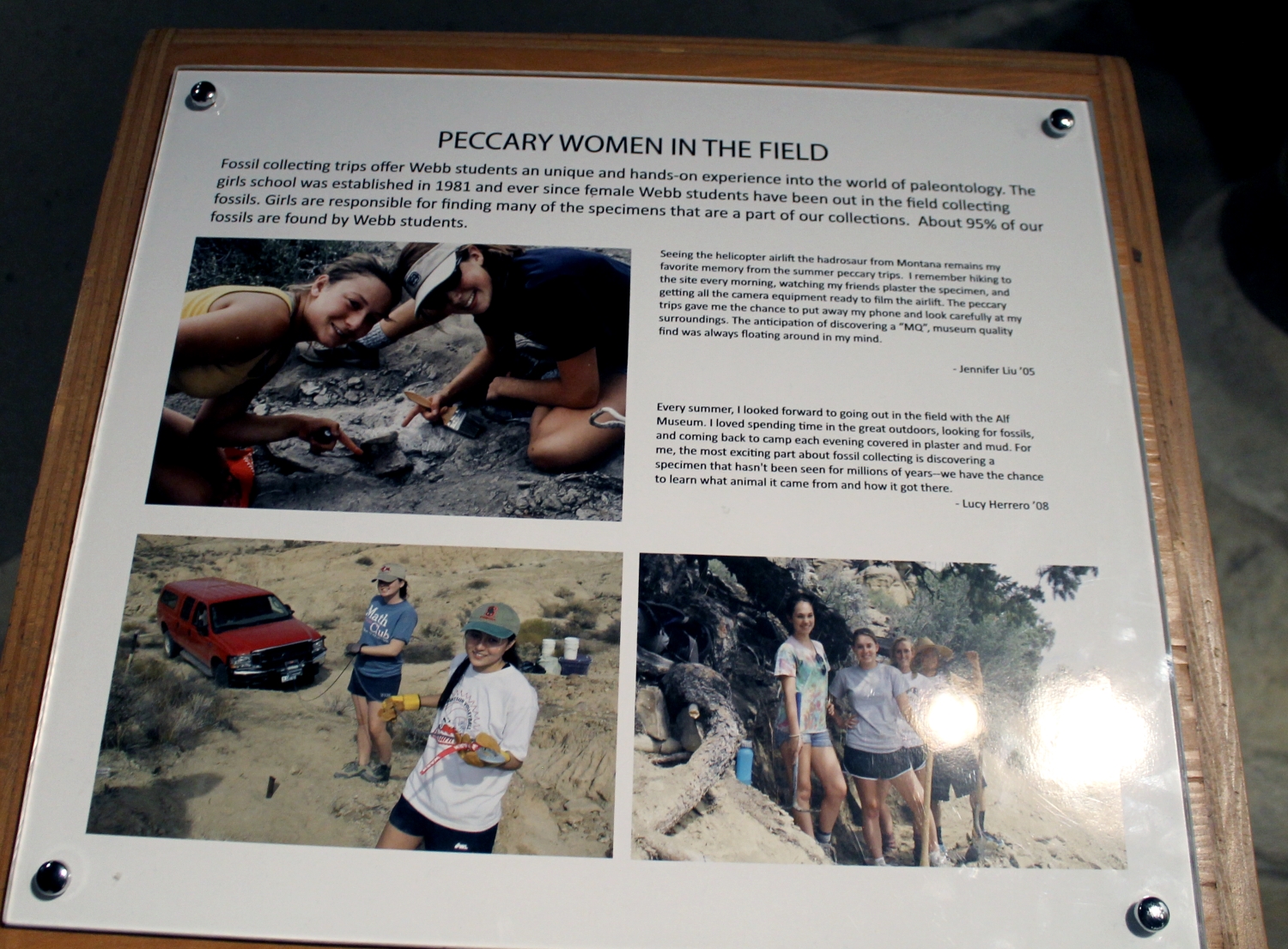
Webb School students continue to take an active part in collecting and research at the museum. All students go through a paleontology course in 9th grade, and about a fifth of the student body remains involved afterward. 95% of the museum’s 140,000 fossils were found by students on “peccary trips” to California, Utah, and Arizona. Students also lead tours and work in the state-of-the-art fossil prep and digitization labs. To date, 28 students have co-authored technical papers before graduating, all of which are proudly displayed at the museum.

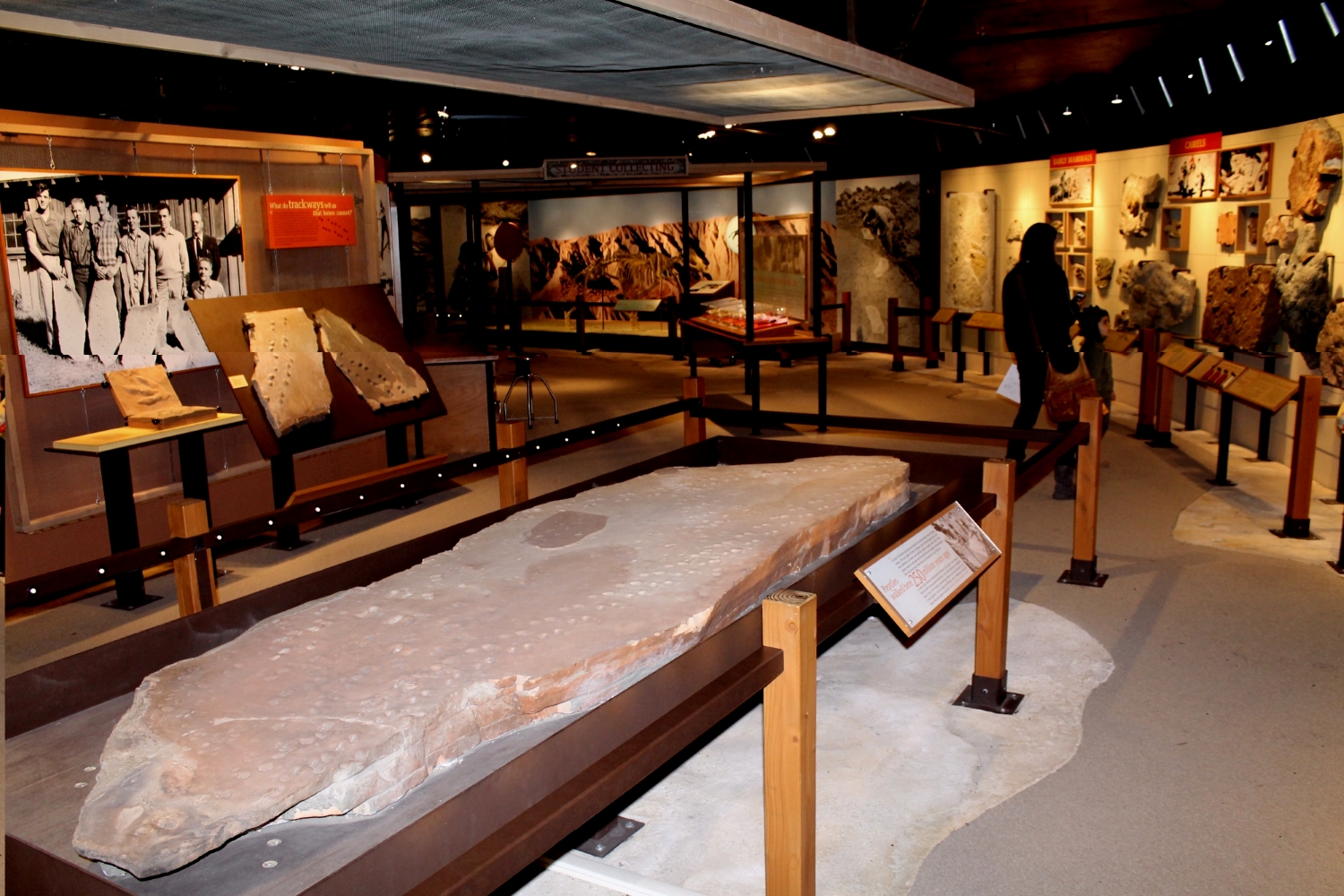
Alf and a group of students collected this Permian reptile trackway in 1967 near Seligman, Arizona.

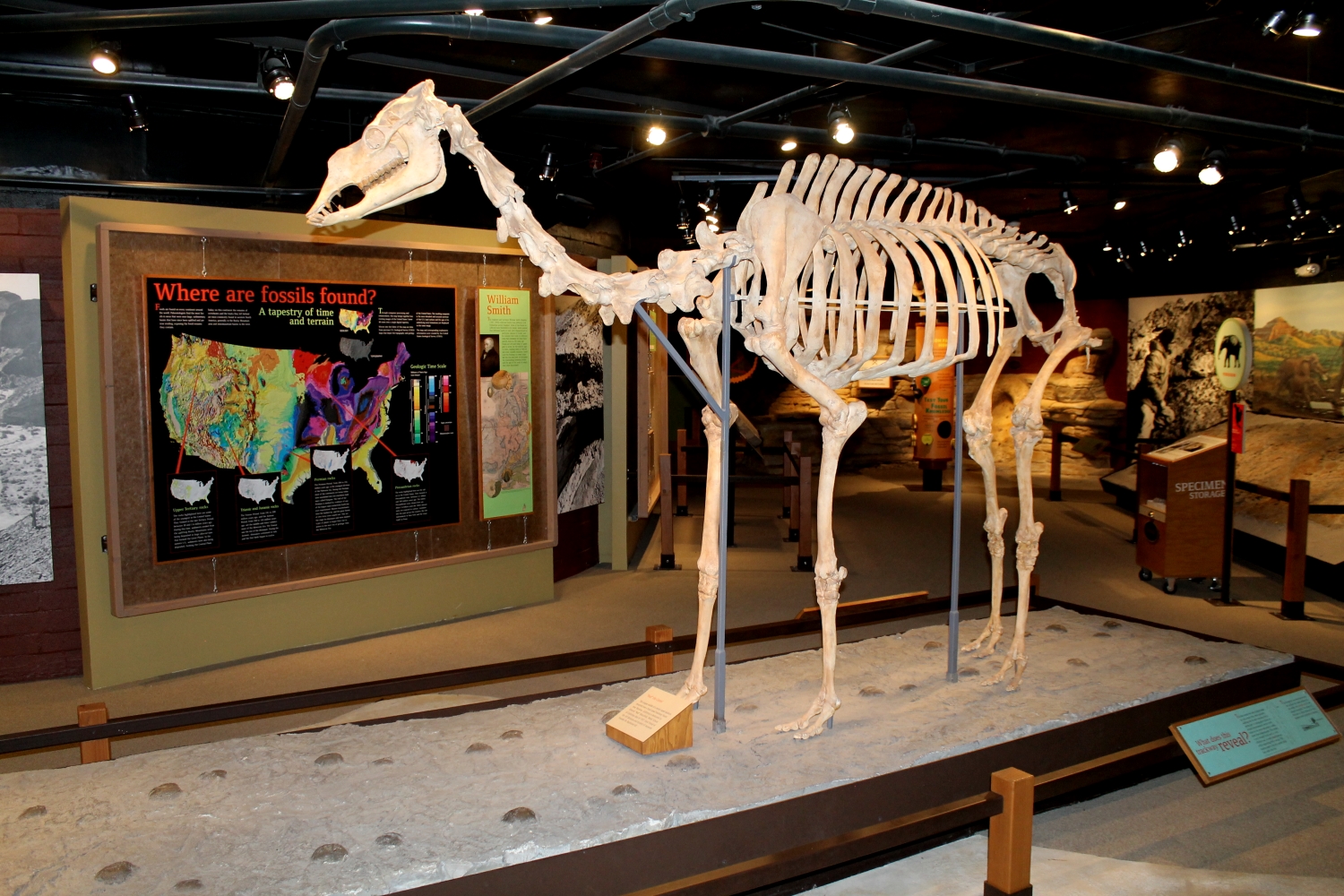
In the Hall of Footprints, mounted skeletons are cleverly placed over real fossil trackways.

There are two exhibits at the Alf Museum, each taking up one of the two floors. The lower level houses the Hall of Footprints, which was last renovated in 2002. This exhibit showcases one of the largest fossil trackway collections in the United States. Trace fossils on display range from Permian reptiles and insects to Cenozoic elephants and camels, as well as important holotypes like the world’s only known amphicyonid (bear-dog) trackway. To quote Dr. Farke, much of the footprint collection was acquired by “being stupid.” Despite being miles from any road, Alf and his students would cut colossal track-bearing slabs out of the bedrock by hand. Between the logistical problems and the availability of digitization techniques like photogrammetry, few modern ichnologists would condone Alf’s practices. On the other hand, his recklessness ensured that these fossils are available for study today, even after many of the source localities have weathered away or been vandalized.

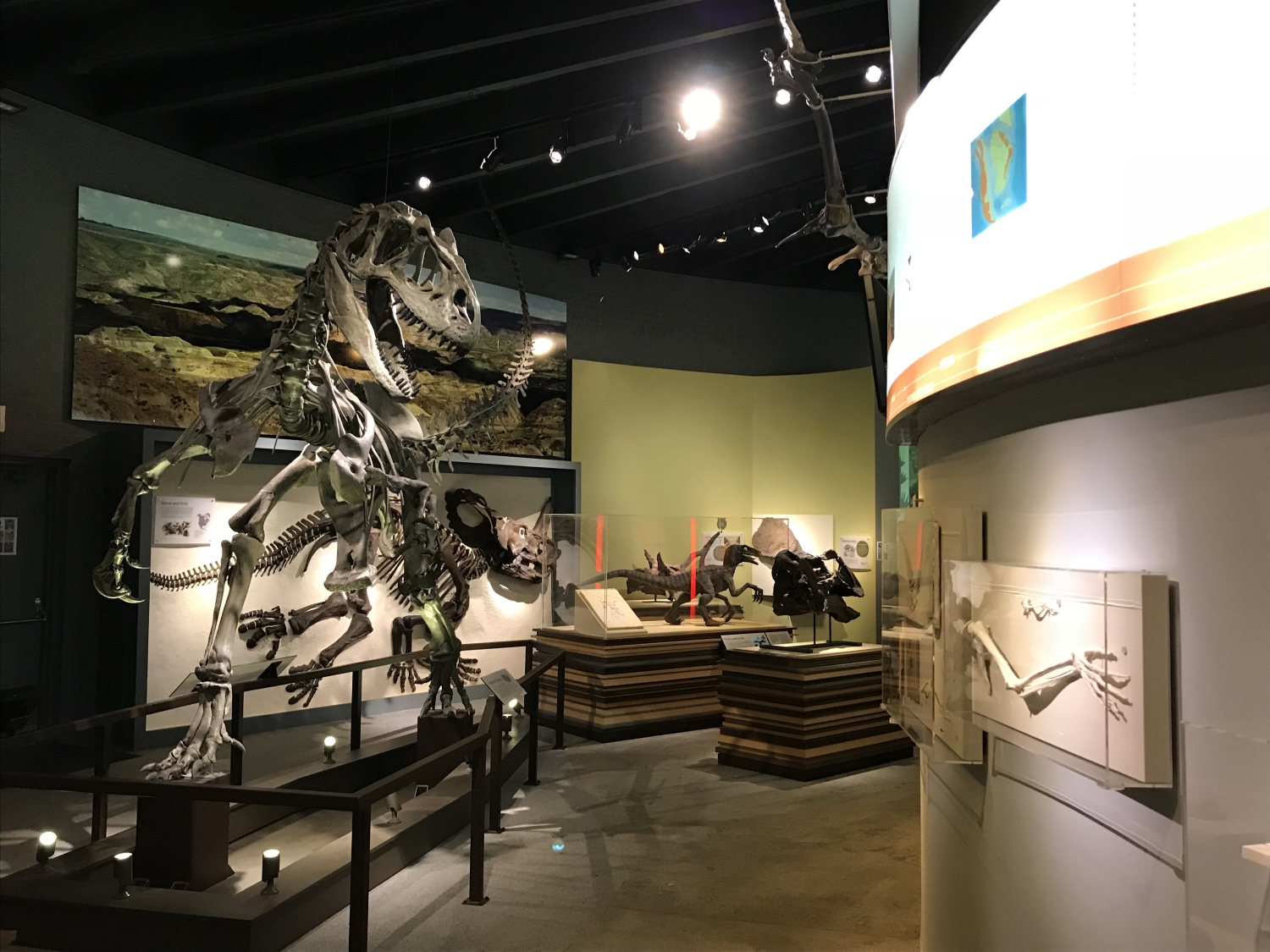
The main level’s Hall of Life is a more traditional walk through time, but with an Alf Museum spin. Visitors follow the circumference of the annular building, starting with the origin of the universe and progressing chronologically through the major milestones in the evolution of life on Earth. The bigger, showier aspects of the exhibit are not unique to the museum. There’s a cast of the Red Deer River Centrosaurus from the American Museum of Natural History, and a composite cast of a Cleveland-Lloyd Allosaurus. A model of the famous transitional fish Tiktaalik has an identical twin at the Field Museum. Like many modern exhibits, walls are filled in with large murals and a varied color palate is used to demarcate themed sections. Different audio tracks throughout the exhibit are subtlety employed in the same way (the sound of buzzing prairie insects symbolizing the rise of grasslands in the Cenozoic is particularly inspired).

Showy dinosaur casts undoubtedly draw visitors’ attention.

Original and cast specimens from the Paleozoic are illustrated by one of several murals by Karen Carr.

Once one looks past the more ostentatious parts of the display, the Alf Museum really gets interesting. Since Dr. Farke was involved in the Hall of Life’s 2011 renovation, he could explain the design choices in detail. Some of these follow Farke’s own sensibilities. For instance, the scientific method and the evidence for evolution are strongly emphasized. Most labels are implicitly written to answer the question how do we know? Interactives tend to be of the analog variety, and multimedia is only used to illustrate things that could not be effectively shown with a static display. One example is a video where a computer model of a pterosaur skeleton demonstrates the quadrupedal launch hypothesis.

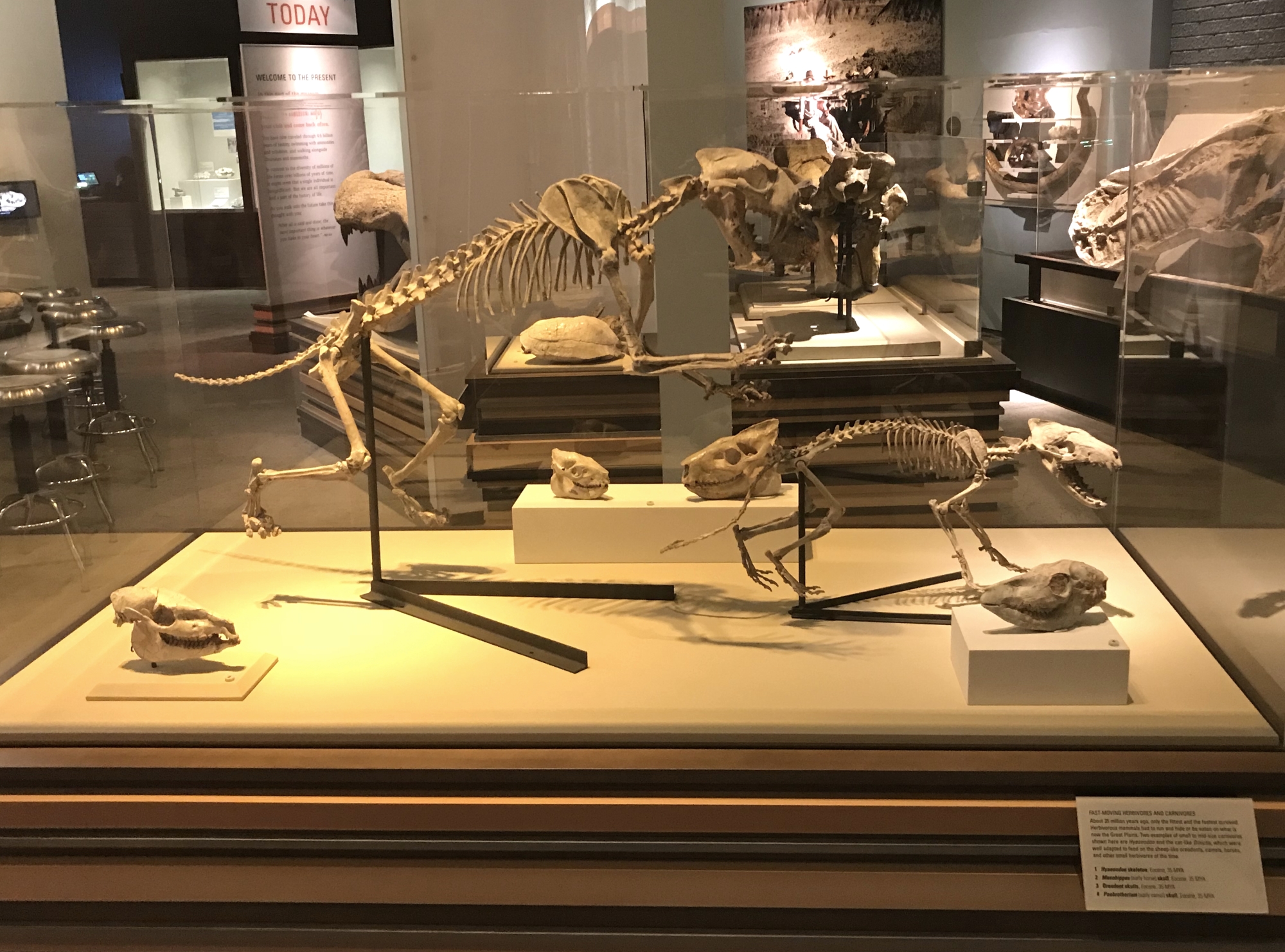
Expressive Dinictis and Hyaenodon mounts welcome visitors to the Cenozoic.

“What are you going to do with your moment in time?”

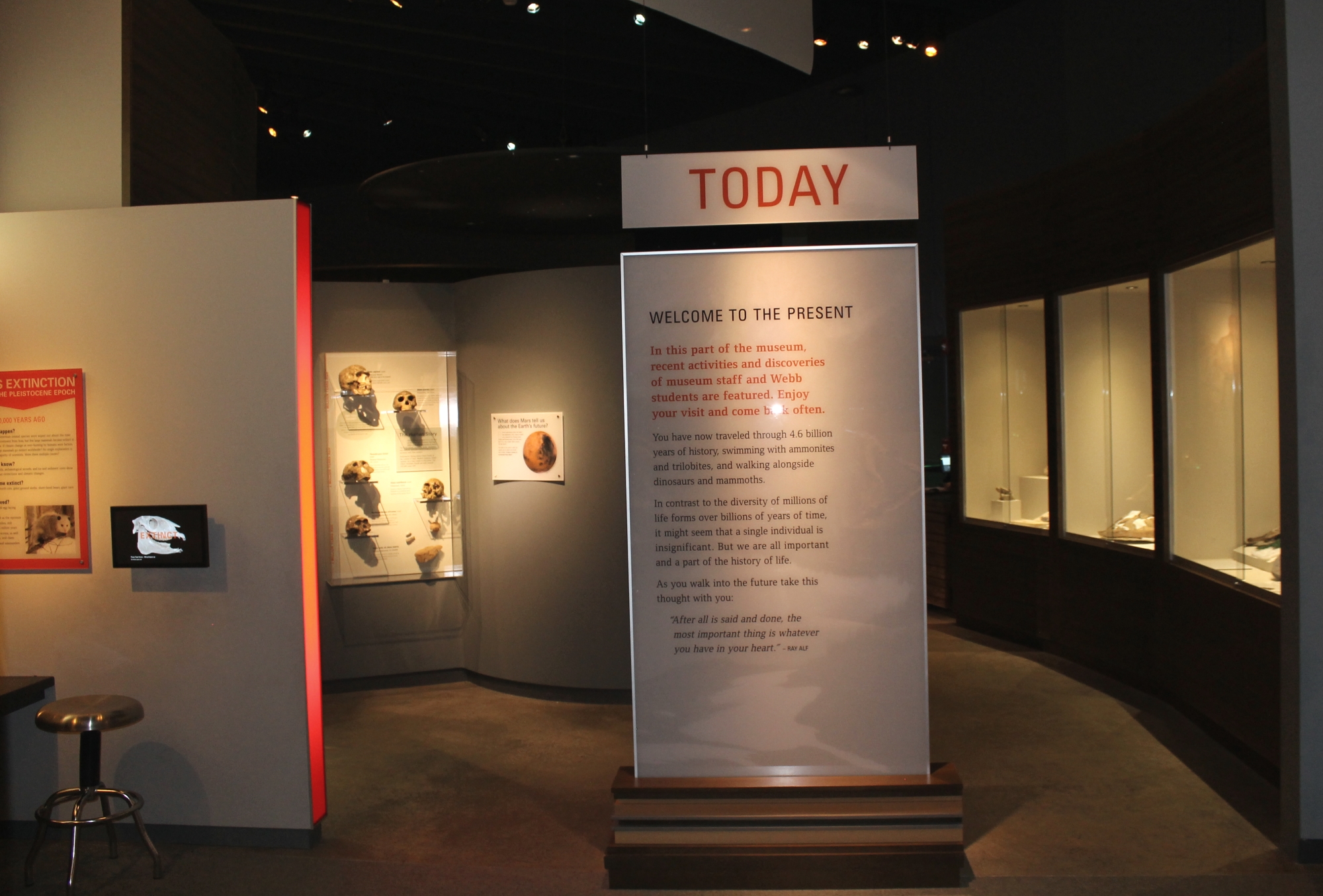
Nevertheless, in both large and small ways the main themes of the exhibit are modeled after Raymond Alf’s own teaching philosophies. Following Alf’s lead in trusting students to treat specimens mindfully and respectfully, many objects are not in cases and within arm’s reach. The circular halls harmonize with the “spiral of time,” Alf’s preferred metaphor for the geological record (and circles and spirals are a recurring visual motif throughout the museum). Perhaps most importantly, the Hall of Life’s walk through time doesn’t end in the past but in the present. This final section includes nods to the archaeological record, as well as cases featuring new research and discoveries by Webb School students. The message is that despite our short time on Earth, humans have had a profound impact on the planet and every individual has a part to play in the larger story of the universe. As Alf repeatedly asked his students, “what are you going to do with your moment in time?”

Student stories and quotes can be found throughout the exhibits.

The most thought-provoking thing that Farke told me was that the Alf Museum is intended for three distinct audiences. There are the regular museum visitors, seeking a generalized look at paleontology. Then there are current Webb School students, who make use of the museum as part of their classes. Finally, there is the larger cohort of Webb alumni, who want to see specimens they remember from decades past (including fossils they collected themselves) and to reflect on their time at the school and on Raymond Alf himself. It is the nods to this third group that make the Alf Museum’s exhibits uncommonly special. Even as an outsider who had never met a Webb student and was just learning about Alf’s legacy, I found that the museum has a palpable sense of community.

Between the photos of beaming students on peccary trips to the unattributed Raymond Alf quotes printed high on the walls, the shared experiences of the Webb School community are intractably situated within the exhibits. Objects on display are illustrative specimens, but they are also more. Each one represents a rich tapestry of people, places, and experiences, and embodies a sort of collective memory starting with its discovery and extending into the present day. For me, at least, this is what natural history is all about.

5 Comments

Filed under collections, dinosaurs, education, exhibits, field work, mammals, museums, reviews, science communication