
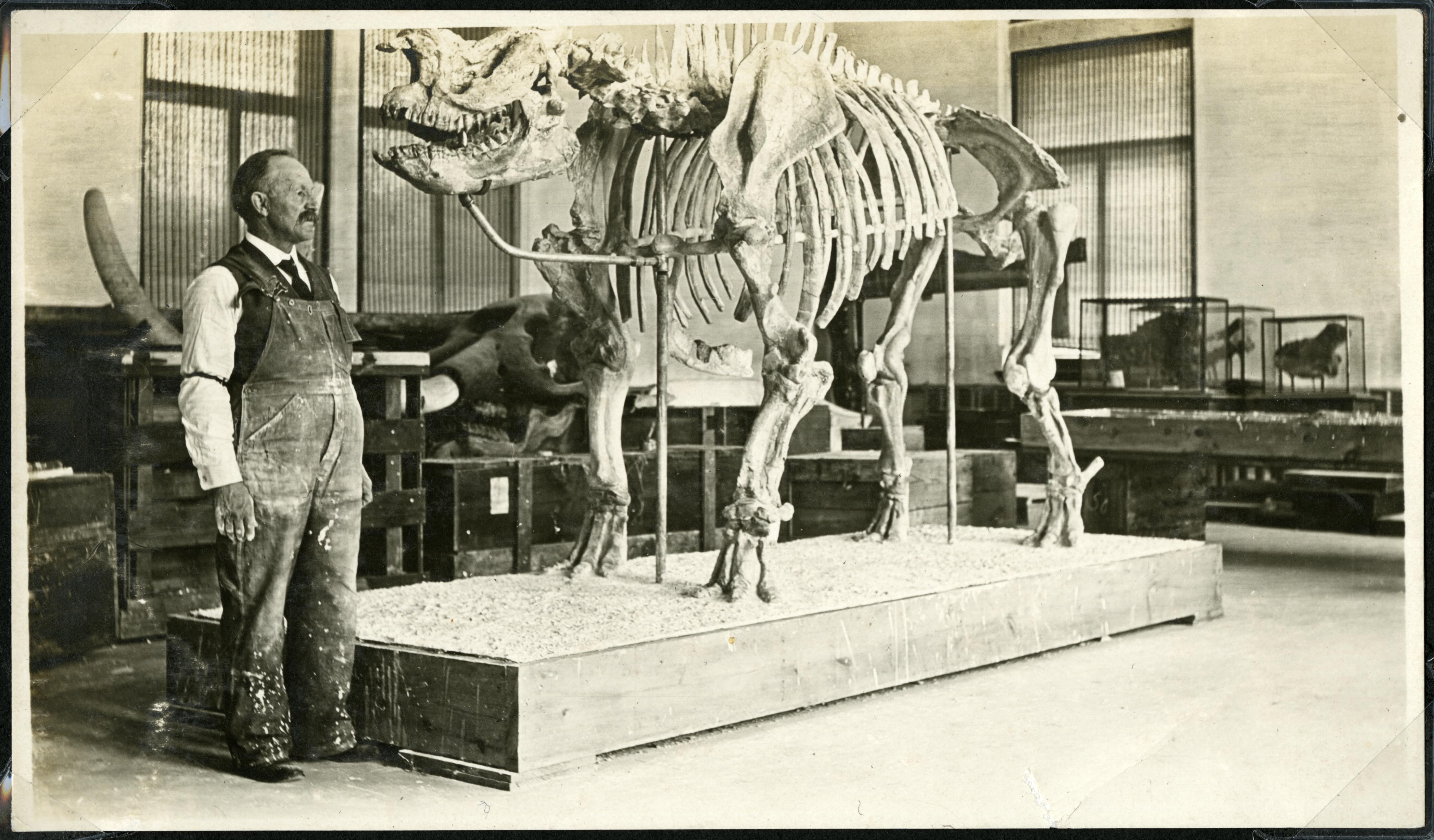
The Sternbergs were, in all likelihood, the most talented bunch of fossil hunters that ever lived. Charles Hazelius Sternberg—later joined by his sons George, Levi, and Charles Mortram Sternberg—built a reputation among turn-of-the-century museum leaders as men who could find any fossil they were asked for. From the 1870s to the 1970s, they steadily filled the halls of museums across the United States, Canada, and western Europe with spectacular skeletons of dinosaurs, marine reptiles, and more, many of which remain the best examples of their taxa. If you’ve visited any large natural history museum in the western hemisphere, chances are you’ve seen a Sternberg specimen. Still, it’s a challenge to keep all those Sternbergs straight, so this post is an overview of who was where, and when.
Charles H. Sternberg grew up near Cooperstown, New York in a religious household led by his minster father. The family relocated to western Kansas in 1867. Then a teenager, Charles H. learned of the ancient fish and marine reptile fossils around his new home at Fort Hays from his older brother, George Miller Sternberg. While George M. dabbled in collecting and identifying fossils, he was already busy as a medical doctor and a major in the United States Army. He would go on to be Surgeon General and make great strides in establishing cures for typhoid, yellow fever, and tuberculosis. It would therefore fall on Charles H. to make fossil hunting his life’s work.
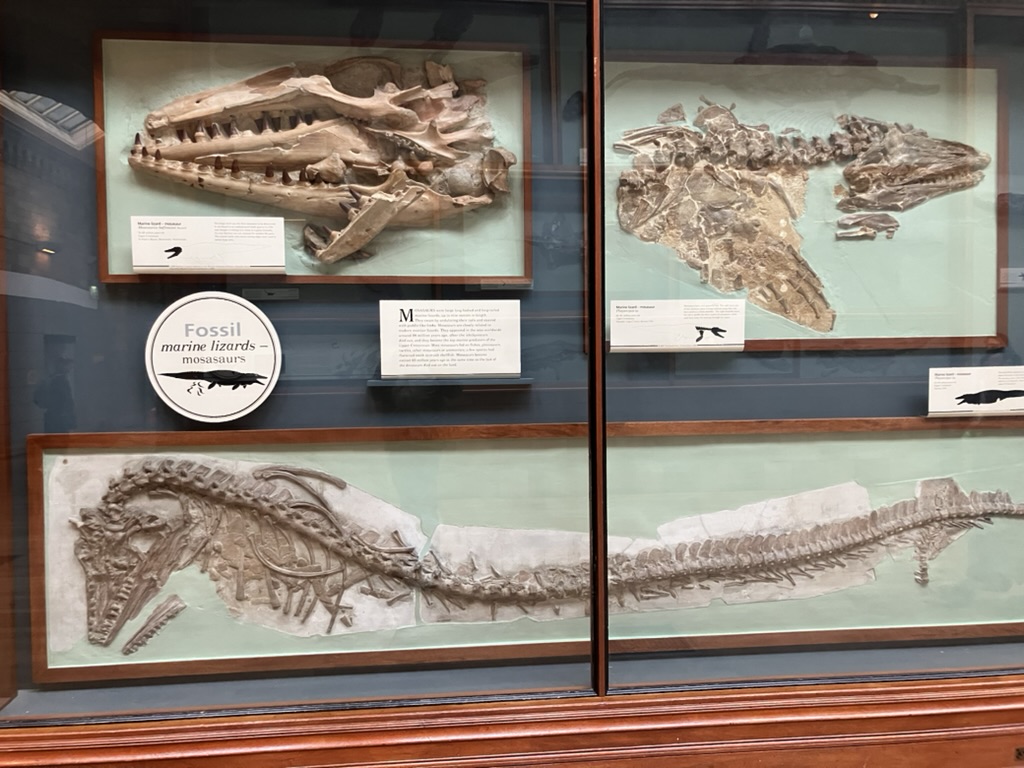
In 1870, Charles H. sent a package of fossil leaves he had collected to the Smithsonian Institution, hoping to find a buyer. Assistant Secretary Spencer Baird replied with a note of appreciation, but made no offer for renumeration. A decade layer, Charles H. recognized his fossil leaves illustrated in a scientific journal with no credit to him. The experience foreshadowed what a career as a fossil hunter for hire would be like, but Charles H. was not deterred. As he would later write in his first memoir, he was by that point determined “to collect facts from the crust of the Earth so that men might learn more of the introduction and succession of life on our Earth.”
Over the subsequent decade, Charles H. built himself a reputation as a skilled collector. With a recommendation letter from George M., he was hired to collect fossil leaves for Leo Lesquereaux of the American Philosophical Society. By 1876, he was working for Edward Drinker Cope of the Academy of Natural Sciences. Charles was soon Cope’s right hand man in the field. Together, they invented the process of securing fossils for transport by wrapping them in a “jacket” of plaster-soaked burlap—a technique that is still used today.
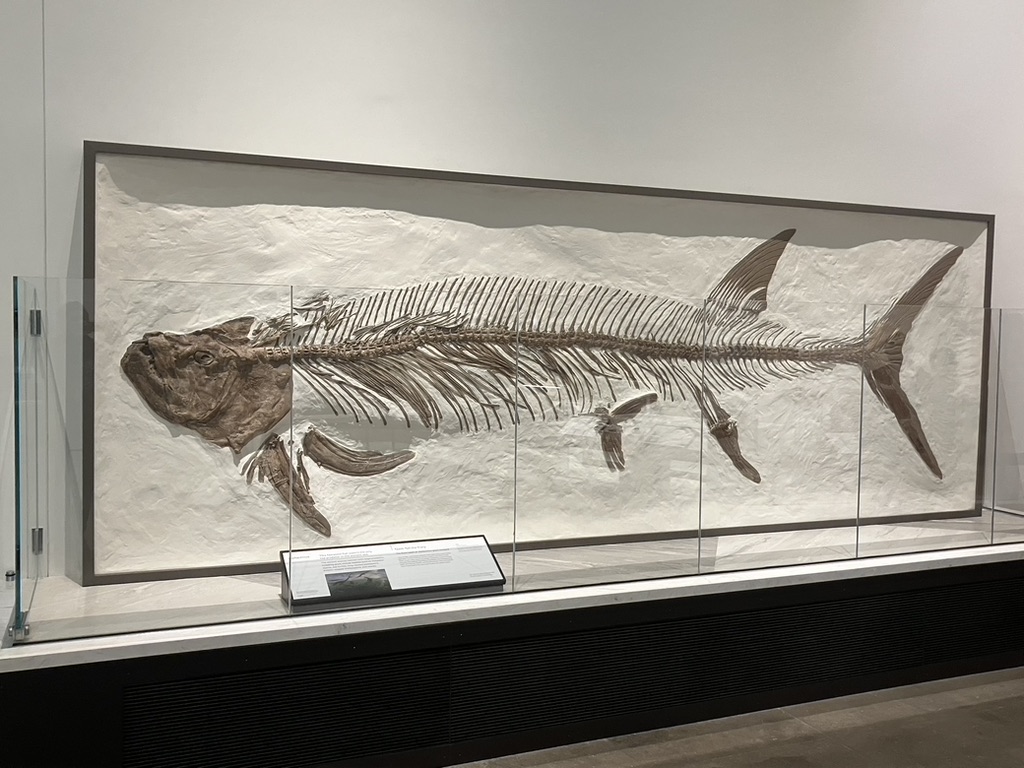
Charles H. married Anna Reynolds in 1880. As his client list grew to include Yale, Harvard, the British Museum (now the London Natural History Museum), and other institutions, he settled into something like a routine. Summers were spent chasing fossils across Kansas and neighboring states for various clients, while winters were spent in Lawrence, Kansas with his wife (and writing to prospective clients to secure work for the following field season). Charles and Anna had four children over the next few years. George Fryer Sternberg was born in 1883. Charles Mortram Sternberg was next in 1885, followed by Maud in 1890 and Levi in 1895.
Earning a living finding fossils for museums was hard work. Charles H. moved from gig to gig, often with multiple employers in a single season. He lived for months out of the year at remote campsites only accessible by horseback. In 1892, Anna tried accompanying her husband in the field with young George and Charles M. in tow (Maud stayed in Lawrence with her grandmother). While nine-year-old George found a nearly complete plesiosaur, Anna decided that field life was not for her.
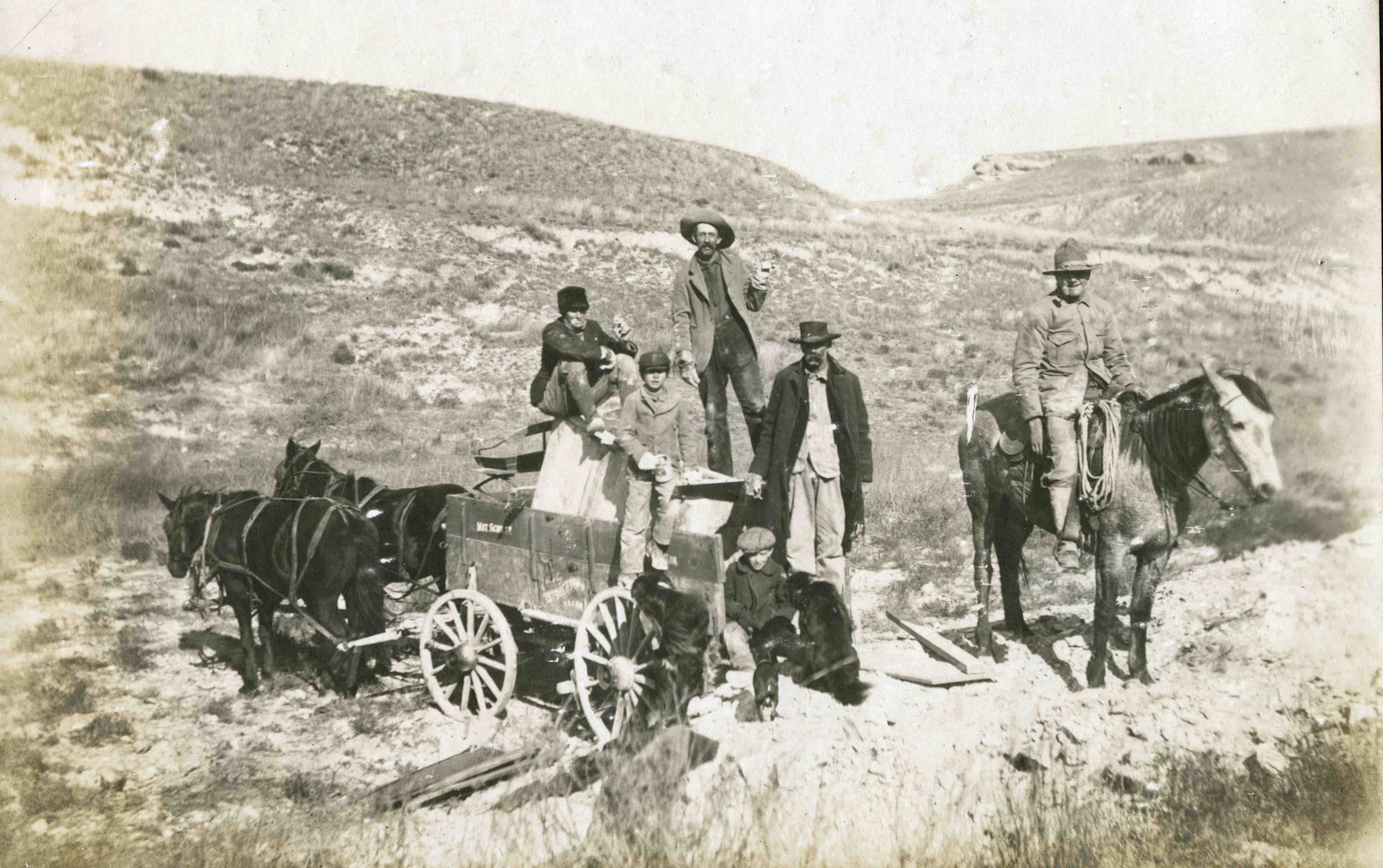
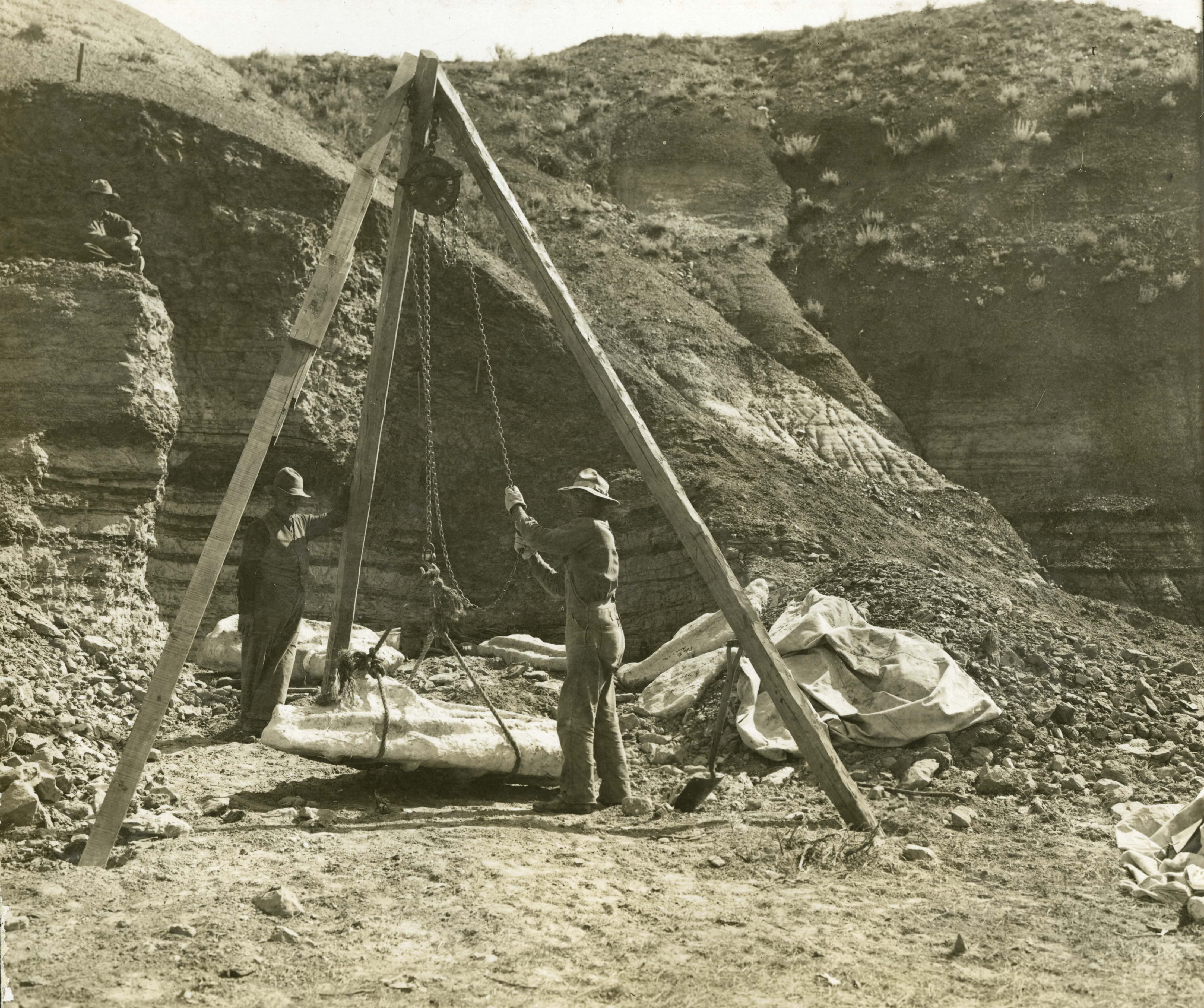
By 1897, George and Charles M. (then aged 14 and 12) were regular hands on their father’s expeditions. And just like their father, they could apparently smell fossilized bone. Among other innovations, the Sternbergs built a tripodal pulley rig for hoisting plaster jackets out of the ground—a far cry from Charles H.’s early years, when he was prying out individual bones with a butcher knife. In addition to finding fossils on demand, the Sternbergs also accumulated a growing backlog of fossils for sale. Since the family business was never incorporated, records of what they had in inventory at any given time are sparse.
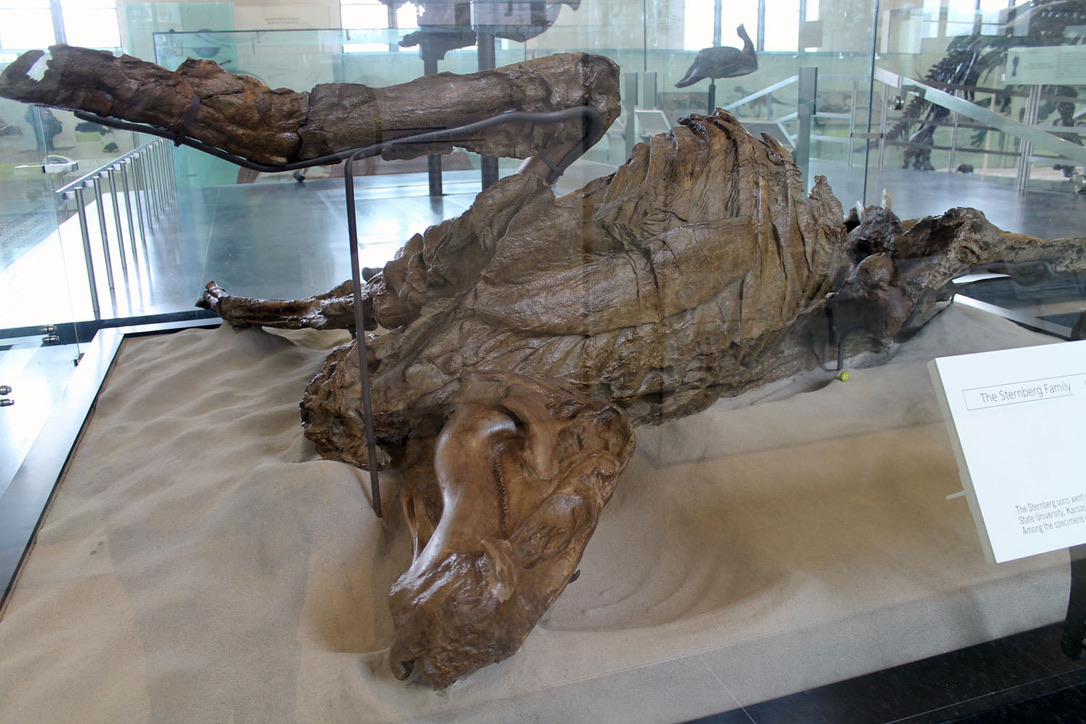
In 1908, the Sternbergs found what is arguably their most famous fossil. By that time, they had shifted their focus from the marine fossils of Kansas’s Niobrara Formation to late Cretaceous dinosaurs of Wyoming’s Lance Formation. In late August, George and Levi (now 13) were removing sandstone overburden from a promising site while Charles H. and Charles M. took the wagon on a supply run. It soon became clear to the brothers that they had an articulated dinosaur skeleton lying on its back. Excavating further, George uncovered the unmistakable texture of scaly reptile skin across the animal’s chest—likely the first fossilized dinosaur skin ever found. Although they had nothing but potatoes left to eat, George and Levi stayed by the fossil and continued to excavate for two days until their father and brother returned.
The skeleton—an Edmontosaurus—turned out to be almost entirely wrapped in skin, like a hardened, wet sack draped over the bones. Charles H. told George that it was the most incredible fossil he had ever seen, and later wrote in his memoir that he knew the moment he saw it that it was time for his son to take the lead in the family business. Word of the find made it to Henry Osborn, who immediately sent a representative to buy it for the American Museum of Natural History. The Edmontosaurus “mummy” (as Obsorn called it) was fully prepared and on display within two years, and is still revealing new information about the life appearance of dinosaurs to this day.
1911 was an eventful year for the Sternbergs. Charles H. and George embarked eastward to visit the big east coast museums for the first time. They saw the Edmontosaurus mummy on display at AMNH, as well as plenty of their other finds at the Carnegie Museum, the Yale Peabody Museum, the Harvard Comparative Zoology Museum, and the National Museum of Natural History. They also observed how museum preparators Adam Hermann and Arthur Coggeshall were restoring incomplete specimens and mounting them on custom armatures. The Sternbergs would go on to offer these services as part of their trade.
Meanwhile, Charles M. married Myrtle Martin and built a homestead in Wyoming. Even as the Sternbergs began taking separate commissions and working together less frequently, they could still regroup for dinners at Charlie and Myrtle’s whenever they traveled through the area. The news that year wasn’t all happy, however: Maud Sternberg passed away at age 20 after a long illness.
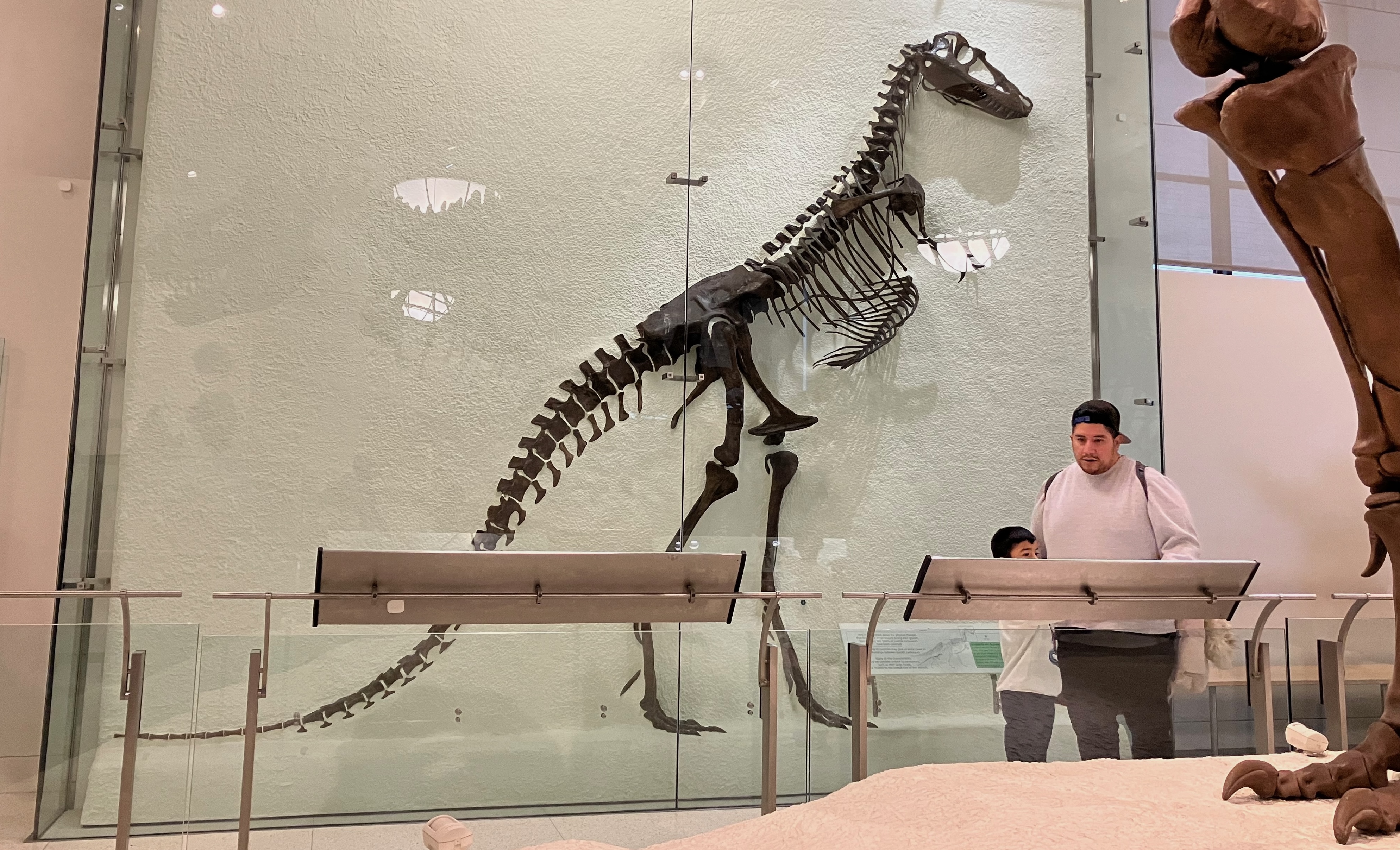
Late in 1911, George was hired to join the AMNH’s Barnum Brown, who had been collecting dinosaurs along Alberta’s Red Deer River since the previous year. While Joseph Tyrell had pioneered fossil hunting in that region in the 1880s, Brown’s team was revealing just what a treasure trove of fossils was hidden in those hills. Nevertheless, many Canadians were concerned about how much of their natural heritage was being taken away and shipped to New York, so Reginald Brock of the Geological Survey of Canada organized a competing expedition in 1912. Who could lead such an expedition and promise comparable success to Barnum Brown? The natural choice was Charles H. Sternberg.
With Charles M. and Levi in row, Charles H. got to work hunting for dinosaurs not far from where Brown was working. The two teams were generally friendly with one another, spending their leisure time together and even sharing Sunday picnics. Charles H. was also able to learn the basics of operating along the Red Deer River from the AMNH crew. A floating barge made for a convenient mobile base camp, but face nets were mandatory to protect from the incessant biting insects. The biggest inconvenience was the need to move water and supplies from the river to the fossil quarries (and fossils back to the river)—often a multi-mile trek over uneven terrain.
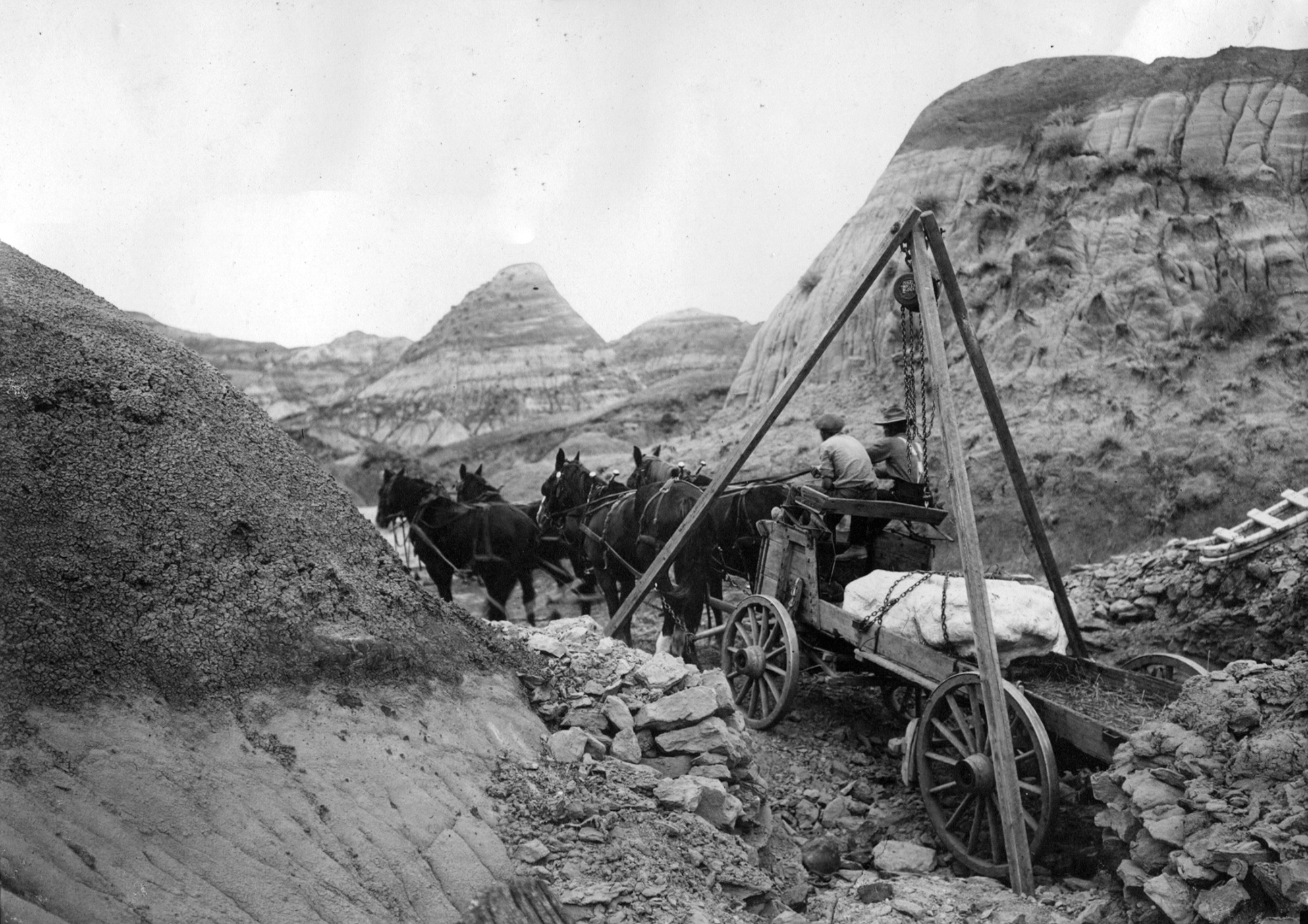
Despite these challenges, both teams managed to find, excavate, jacket, and transport around 30 dinosaur specimens every year, for three years straight. Brown wrapped things up in Alberta at the end of 1915, but George and Charles M. continued working for the Geological Survey for several years. Charles H. and Levi also remained in Canada, freelancing for the British Museum in the summer of 1916.
Charles H. collected 45 boxes of fossils that season, including three reasonably complete hadrosaur skeletons. Those fossils were loaded onto the S.S. Mount Temple for transport to London, but they never made it. The ship was intercepted and boarded by a German surface raider, and its crew and passengers taken prisoner (not killed, as Sternberg wrote in his memoir). The Germans then placed explosive charges on the ship and sank it. All of the Mount Temple‘s cargo—including thousands of pounds of food and provisions, 700 horses, and the aforementioned fossils—were lost at the bottom of the north Atlantic. Experiments have shown that mineralized fossils aren’t seriously harmed by immersion in salt water, so there’s every reason to think those hadrosaurs are doing fine down there. If any billionaires happen to read this and want to fund something dramatic in the name of science, you could do far worse than rescuing the lost dinosaur skeletons on the wreck of the Mount Temple (it’s at 46° 43’ N, 34° 8’ W).
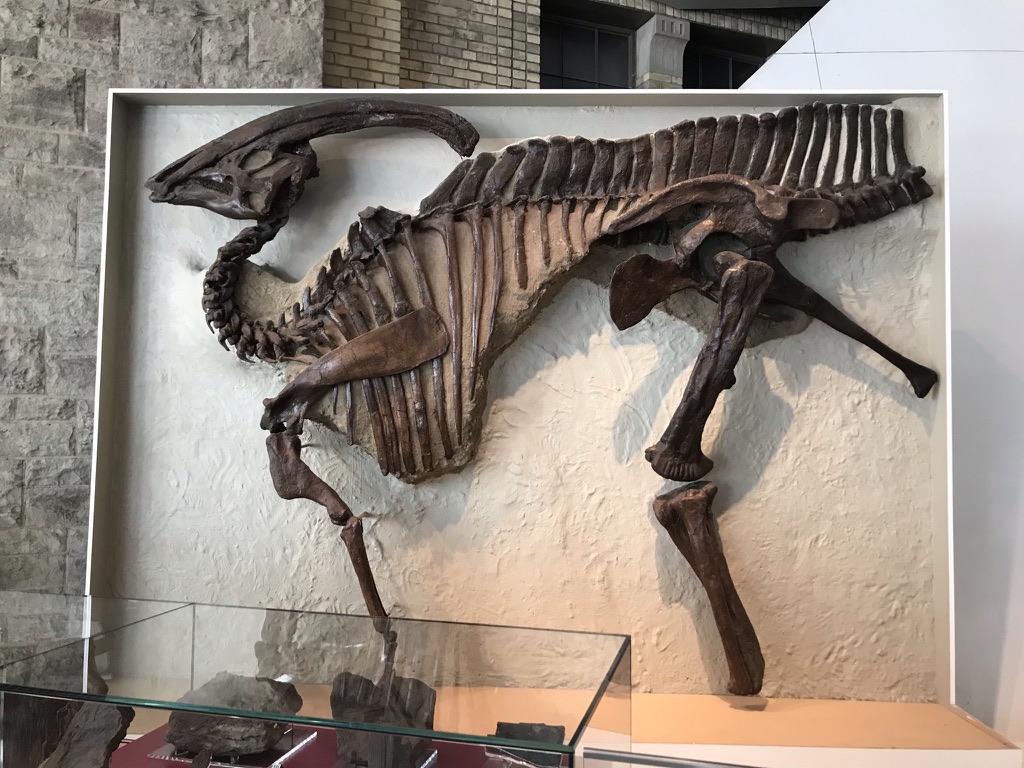
Starting in the 1920s, the Sternberg clan began to settle down. Charles H. relocated to California with Anna in 1921 after being hired as Curator of Vertebrate Paleontology at the San Diego Natural History Museum. His final field seasons were spent in the American southwest, collecting dinosaurs in New Mexico and Baja California. Charles M. remained in Canada, taking a job as lead paleontologist for the Geological Survey of Canada in 1919. He became a curator at the National Museum of Canada in 1948, where he continued to study and publish on Canadian dinosaurs. Meanwhile, Levi moved to Toronto with his young family and worked at the Royal Ontario Museum for several decades, first as a preparator and eventually as Associate Curator. After Anna passed away in 1938, Charles H. moved in with Levi until his death in 1950.
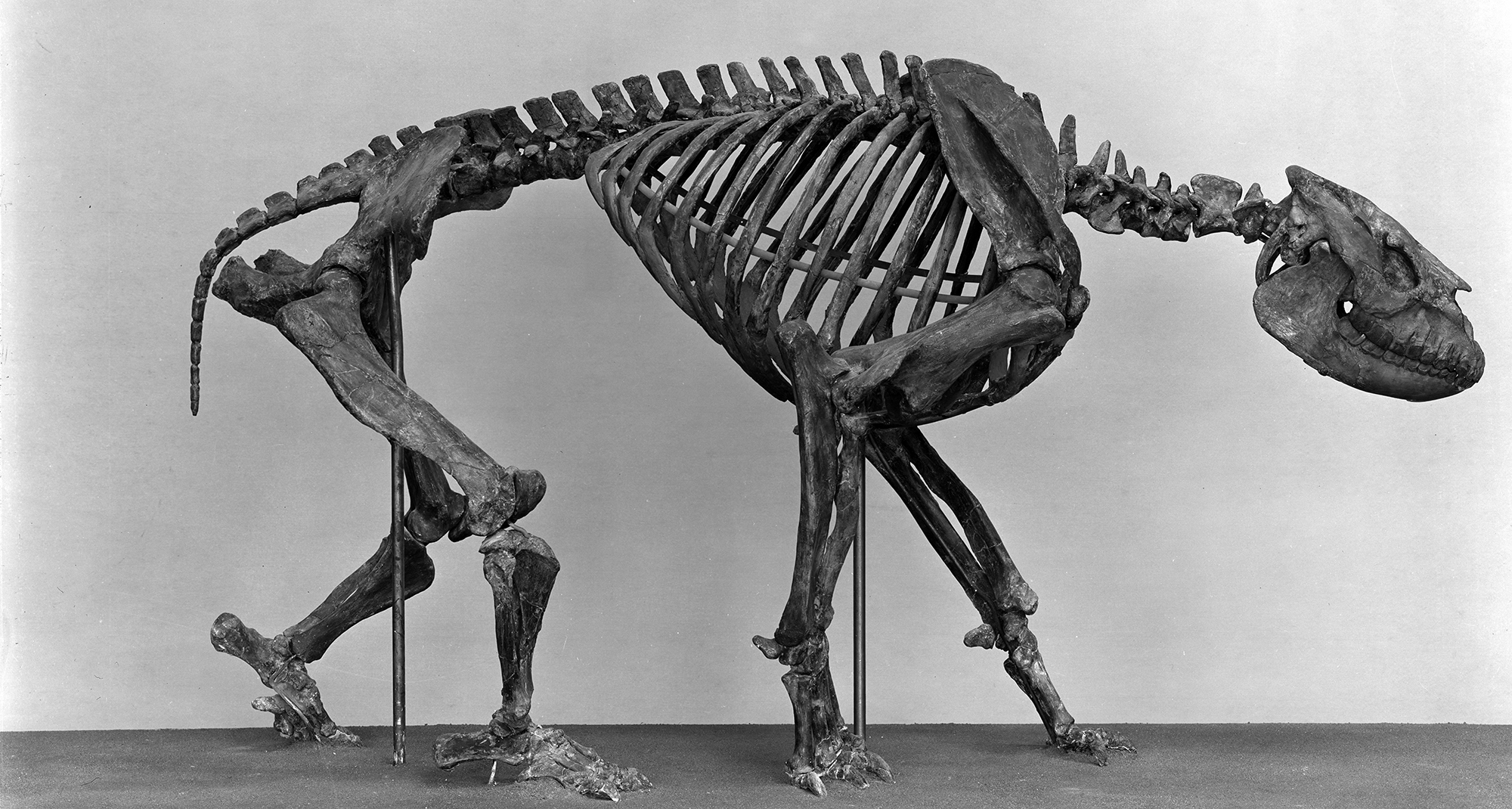
George, however, continued the life of the freelance fossil hunter for a bit longer. He collected for a number of institutions, including a four-year stint with the Field Museum starting in 1922. Working with the Field’s Elmer Riggs, George traveled to Argentina and Bolivia to collect ground sloths and other Cenozoic mammals.
In 1927, George decided to return to Hays, Kansas, where his father started collecting fossils some sixty years earlier. He began teaching at Fort Hays State University, and helped found a natural history museum there. When George passed away in 1969, that museum was renamed the Sternberg Museum of Natural History to honor the remarkable Sternberg family and their contributions to our understanding of past worlds.
References
Graham, M.R. 2019. Professional fossil preparators at the British Museum (Natural History), 1843–1990. Archives of Natural History 46:2.
Rogers, K. The Sternberg Fossil Hunters: A Dinosaur Dynasty. Missoula, Montana, 1991: Mountain Press Publishing Company.
Sternberg, C.H. 1909. The Life of a Fossil Hunter.
Sternberg, C.H. 1917. Hunting Dinosaurs in the Badlands of the Red Deer River, Alberta, Canada.
Tanke, D.H. and Currie, P.J. 2009. A history of Albertosaurus discoveries in Alberta, Canada. Canadian Journal of Earth Science 47:1197–1211.
Tanke, D.H., Hermes, N.L., and Guldberg, T.E. 2001. The 1916 Sinking of the SS Mount Temple: Historical Perspectives on a Unique Aspect of Alberta’s Paleontological Heritage. Canadian Palaeobiology.


 EXTINCT MONSTERS