Monthly Archives: November 2014

The Last American Dinosaurs Has Arrived!

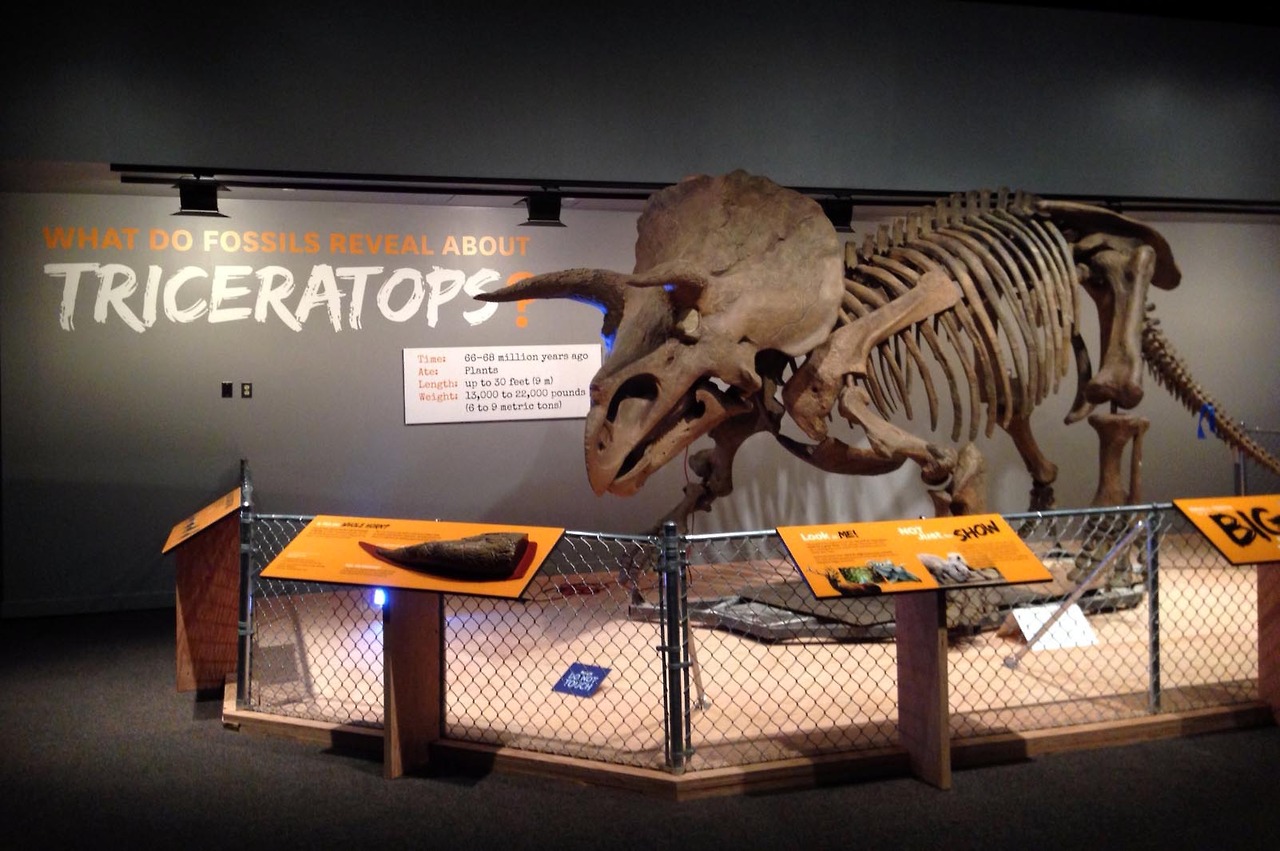
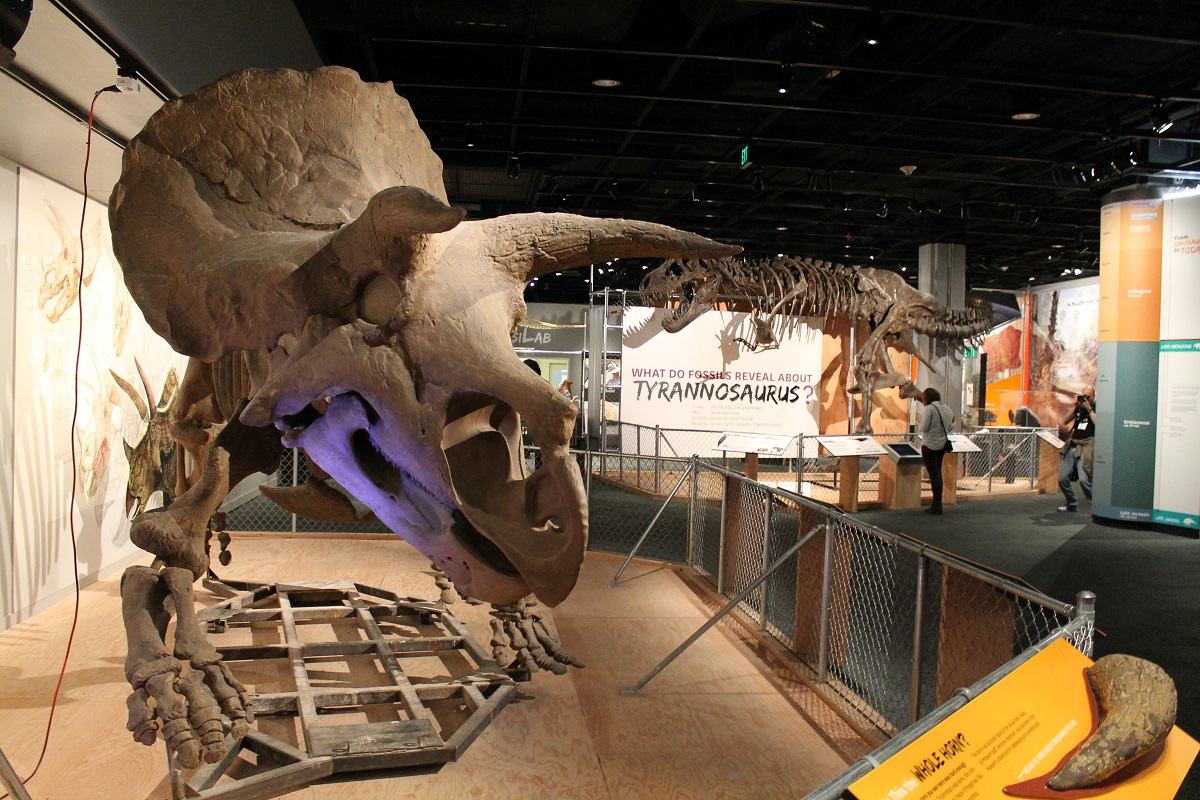
Hatcher greets visitors

Hatcher the Triceratops greets visitors at the entrance to The Last American Dinosaurs.

Dinosaurs are once again on display at the National Museum of Natural History. Opening just in time for Thanksgiving weekend, “The Last American Dinosaurs” provides a much-needed dose of paleontology while the main fossil hall is being renovated. I was fortunate enough to take part in a preview tour for social media users – you can check out the storified version, or read on for photos and my initial thoughts on the new exhibit.
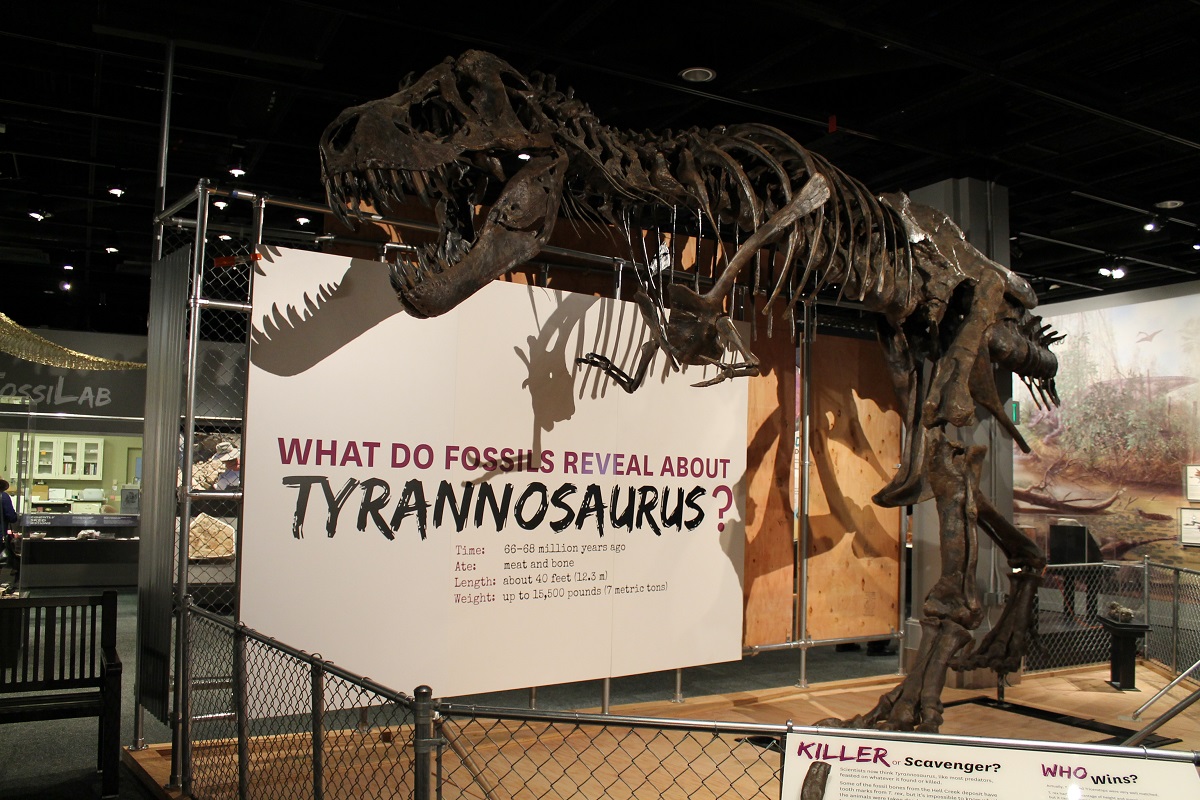
Stan is cool

Stan the T. rex is sure to be a crowd-pleaser.

Babies

Triceratops growth series reveals how much we’ve learned about the lives of dinosaurs over the last 25 years.

As promised, there are plenty of dinosaurs on view. Specifically, these are the dinosaurs of Maastrichtian North America, the last of these animals to grace this continent before the extinction event 66 million years ago. In addition to the mounted skeletons of Triceratops and Tyrannosaurus discussed in the previous post, be on the lookout for a hatchling and juvenile Triceratops, an Edmontosaurus, and bits and pieces from dromaeosaurs and pachycephalosaurs.

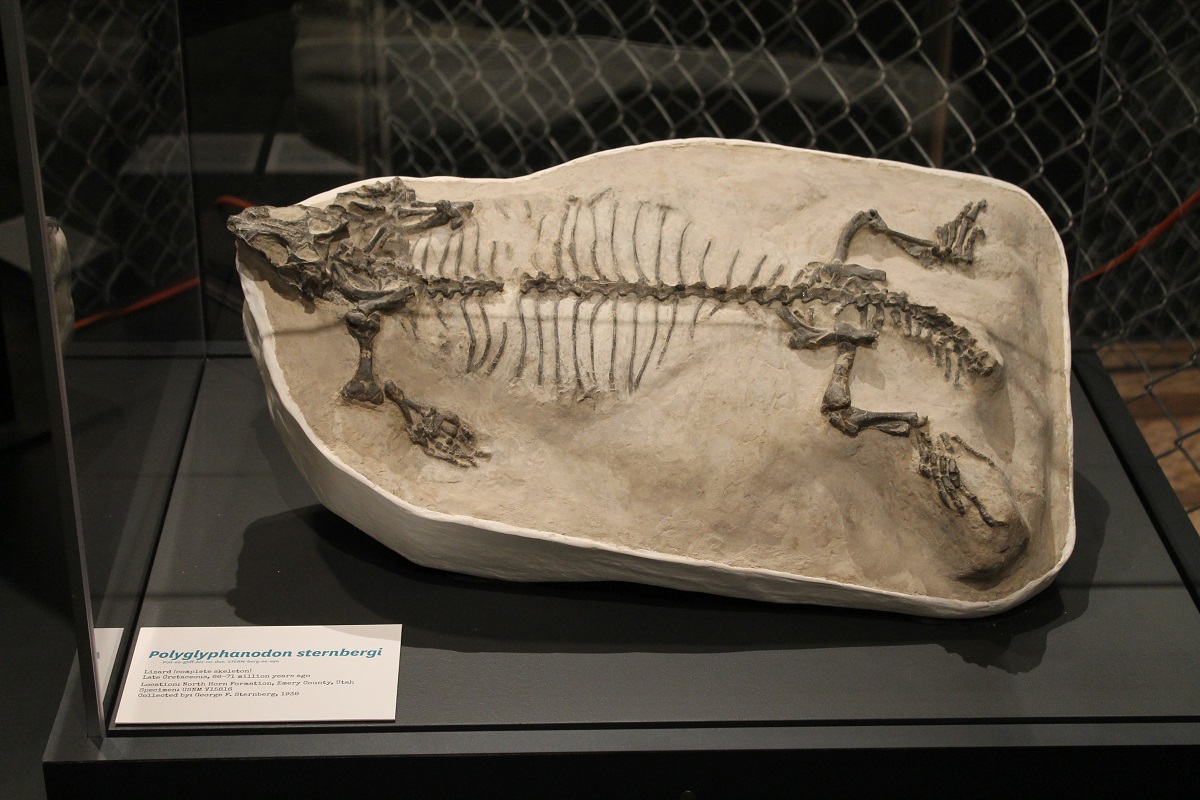
However, the dinosaurs are just the tip of the iceberg. As lead curator Hans-Dieter Sues explained within the first few minutes of the tour, the central message of this exhibit is that dinosaurs were only one part of a complex ecosystem. To that end, the dinosaurs of The Last American Dinosaurs are outnumbered by a menagerie of of reptiles, mammals, invertebrates, and plants that shared their world, most of which are on display for the first time. These specimens come from a variety of sources. Some, including turtles and fossil leaves, were collected by NMNH paleontologists in North Dakota specifically for this exhibit. Others, like the lizard Polyglyphanodon, have been in the museum’s collection since the 1930s but have never before been put on display. I also spotted a few casts sourced from Triebold Paleontology, including the mammal Didelphodon and the alligator-like Stangerochampsa

Gilmore specimen

This Polyglyphanodon was collected by Charles Gilmore in the 1930s.
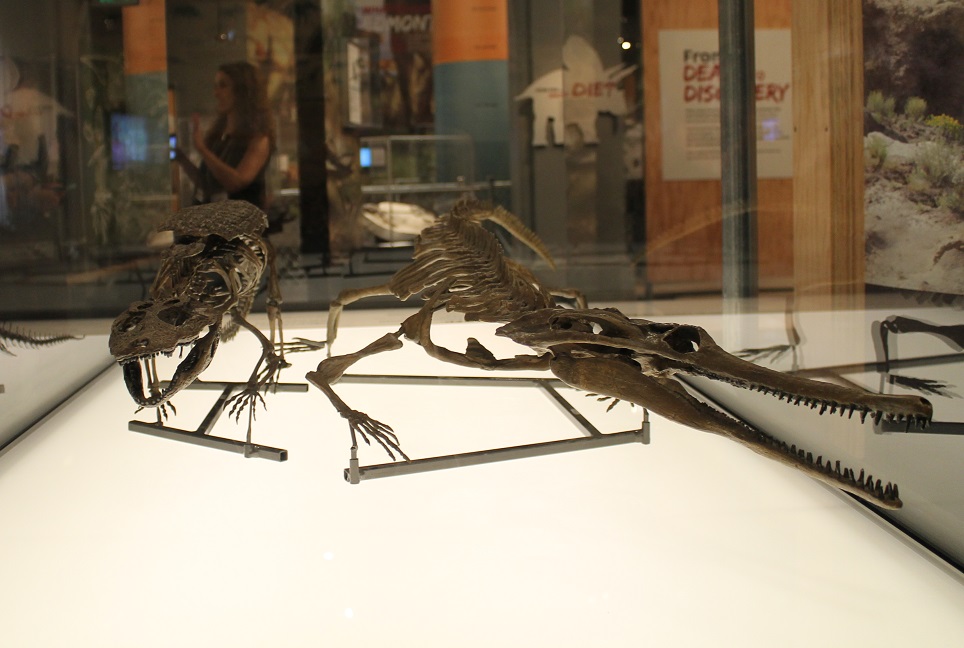
crocs

Stangerochampsa and Champsosaurus are examples of animals that survived the K/T extinction.

Much like the Human Origins exhibit, The Last American Dinosaurs incorporates the faces of Smithsonian researchers and staff throughout the displays. There are large photos showing the museum’s scientists at work in the field, and the popular windowed FossiLab has found a new home in this exhibit. In addition, a large area is deservedly devoted to scientific illustrator Mary Parrish, chronicling the methods she uses to turn fossil data into gorgeously detailed renderings of prehistoric animals and environments. Videos of Parrish and others at work can be seen here.

I’m definitely a fan of this personalized approach to science communication. In-house scientists are museums’ most important and unique resources, and placing them front-and-center reminds visitors that science is done by real and diverse people, not caricatures in lab coats. A human face goes a long way toward making the process of doing science relateable to visitors.
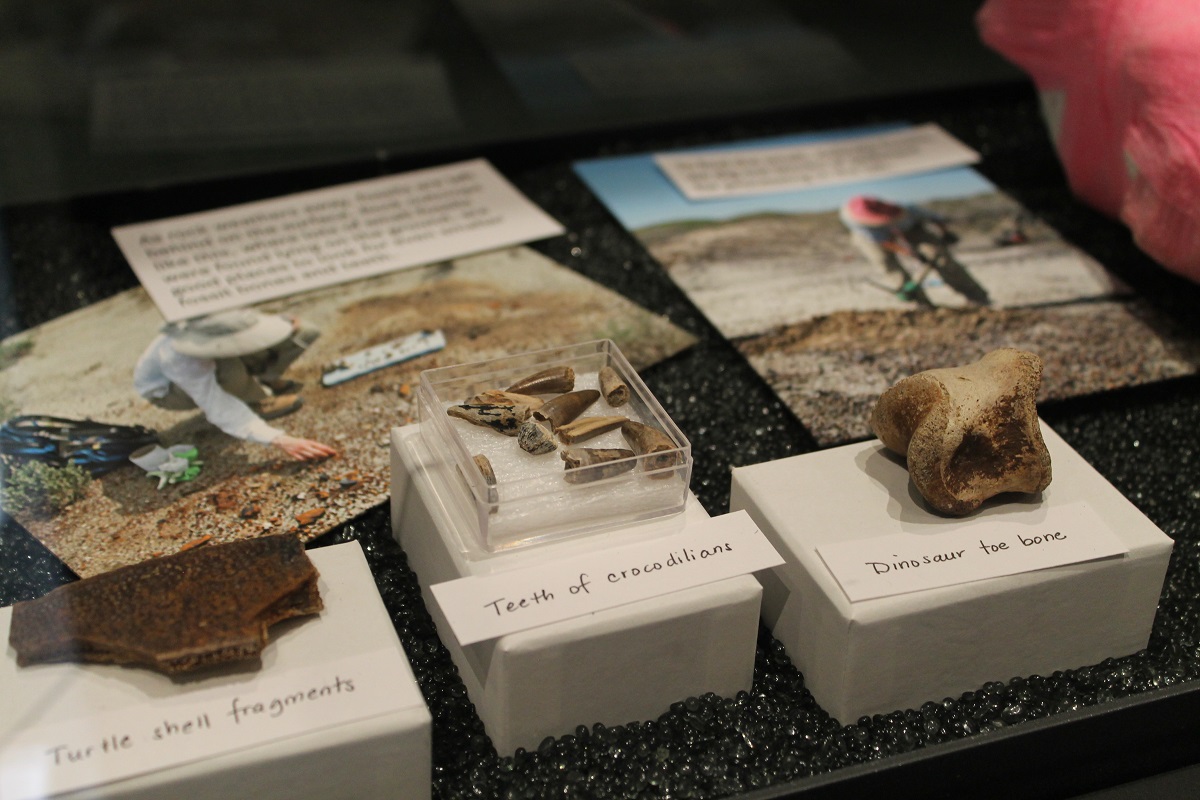
new stuff

Handwritten labels on these fresh from the field fossils provide a personal touch.

The phenomenon of extinction is another important theme in The Last American Dinosaurs. The exhibit details how an asteroid impact combined with several other factors to radically alter the environment worldwide, causing 70% of species to die out (fun fact: ambient temperatures in North America directly after the impact were comparable to the inside of a brick pizza oven). However, the exhibit goes on to make direct comparisons between the K/Pg extinction event and the anthropogenic extinctions of today. Habitat destruction, introduction of invasive species, and climate change caused by burning fossil fuels are instigators of environmental upheaval as powerful as any space rock.

extinction

This moa and dodo remind visitors that extinction isn’t limited to the distant past.

In this way, The Last American Dinosaurs is a warm-up for the key messages of the new fossil hall. The overarching theme of the planned exhibit is that “Earth’s distant past is connected to the present and shapes our future.” It will showcase how living things and their environments are interdependent, and change over time. Crucially, it will also demonstrate how our understanding of how life has changed over time is important for understanding and mitigating our impact on present-day ecosystems. The Last American Dinosaurs is evidently a testing ground for how these ideas will resonate with audiences.

paleoart

Historic models of Agathaumas and Triceratops by Charles Knight and Charles Gilmore.

In designing modern paleontology exhibits, museum workers have tried many approaches to squelch the idea of the dinosaur pageant show and instead convey how the science of paleontology is relevant to our understanding of the world around us. Back in 1995, the American Museum of Natural History tried a cladistic arrangement with a focus on biodiversity. More recently, the Field Museum used the process of evolution to frame the history of life on Earth. While there are certainly overlaps with what has come before, the “modern implications of environmental change over deep time” approach under development at NMNH is fairly novel, and also quite timely. Some of the displays in The Last American Dinosaurs hit pretty close to home, and I’m eager to find out how visitors respond.

6 Comments

Filed under dinosaurs, exhibits, fossil mounts, mammals, marginocephalians, museums, NMNH, ornithopods, paleoart, reptiles, reviews, science communication, theropods

Hatcher, Stan, and the Changing Identities of Fossil Mounts

Photo by the author

Hatcher the Triceratops and Stan the T. rex in the NMNH fossil hall, early 2014. Photo by the author.

Although the east wing fossil halls are closed for renovation until 2019, the National Museum of Natural History will not be without a dinosaur display for much longer. An interim exhibit entitled “The Last American Dinosaurs” will open later this month, occupying the space that formally held the “Written in Bone” exhibition. The Last American Dinosaurs will cover a small but important slice of the age of dinosaurs: the final ecosystem to grace North America before the extinction event 66 million years ago. While the new exhibit will feature several show-stealing dinosaurs, the main message is that these animals lived within a complete and complex ecosystem, just like the animals of today. The exhibit will also cover the phenomenon of extinction, and how massive environmental change (whether caused by a giant space rock or by human activity) can drastically alter the course of life on Earth.

What I’d like to discuss in this post are the two dinosaurian centerpieces of the exhibit: Hatcher the Triceratops and Stan the Tyrannosaurus. Both mounts stood in the classic fossil hall for years, and I’ve already written extensively about each of them. Nevertheless, these two dinosaurs nicely encapsulate the history of mounted fossil skeletons, as well as the changing face of museum paleontology. As the ambassadors to the Smithsonian’s dinosaur collection for the next five years, I think it’s worth revisiting their origin stories.

The First Triceratops

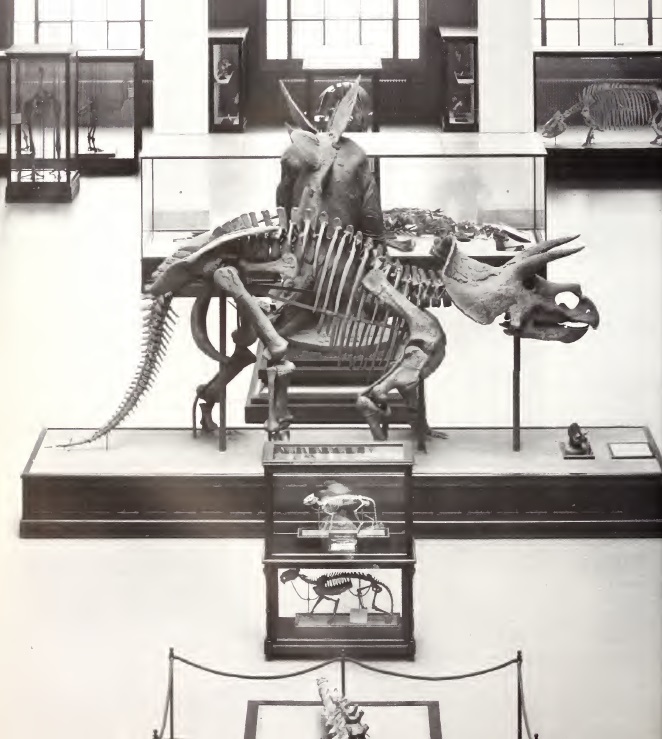
Hatcher in Hall of Extinct Monsters

This Triceratops stood in the NMNH fossil hall for nearly 90 years. Photo courtesy of the Smithsonian Institution Archives.

The Smithsonian Triceratops hails from what we might call the golden age of museum paleontology. Mounted dinosaur skeletons were an integral part of the rise of large urban natural history museums at the turn of the 20th century. The opening of the American western frontier revealed an unprecedented treasure trove of fossils, far greater than what was previously known in Europe. As a result, paleontology became one of the first realms of science in which Americans were leaders, and patriotism was a significant factor in the growing public enthusiasm for extinct monsters. Wealthy benefactors of recently formed institutions like the American Museum of Natural History and the Field Columbian Museum envisioned the mounted skeletons of dinosaurs as an opportunity to increase attendance and public interest, and they provided ample funding to find fossils for display. These efforts were not wasted, as the golden age fossil mounts have been enjoyed for generations…and most are still on display today.

It’s easy to get caught up in the romanticism of this era of discovery and exposition. Golden age fossil mounts were forged into being entirely in-house. At a given museum, the same small group of staff was frequently responsible for finding, preparing, describing, naming and mounting a new dinosaur. As such, fossil mounts were typically exclusives to particular museums, and they garnered significant amounts of institutional and regional pride. New York had “Brontosaurus” and Tyrannosaurus. Pittsburgh had Diplodocus. And for more than 20 years, Washington, DC had the world’s only mounted Triceratops.

Hatcher in Sunday star

A spread in the June 11, 1905 Sunday Star profiled the Smithsonian Triceratops. Image courtesy of the Smithsonian Institution Archives.

Built in 1905 by Charles Gilmore and Norman Boss, the Smithsonian Triceratops has been a Washington, DC attraction for longer than the Lincoln Memorial. Like most turn of the century dinosaur mounts, it is not a single specimen but a composite of several individuals. The fossils were recovered from Wyoming by the prolific fossil hunter John Bell Hatcher, working in the employ of O.C. Marsh and the United States Geological Survey*. USNM 4842, the most complete partial skeleton available, provided the torso and pelvis, while the remains of at least six other Triceratops filled in the rest of the mount.

*Incidentally, this means the Triceratops doesn’t quite fit the story I outlined above. It was not discovered or named by Smithsonian scientists – instead, the Smithsonian inherited the fossils Marsh collected for the federal government when he was through with them.

Even though it was a slightly disproportionate chimera, for experts and laypeople alike the Smithsonian Triceratops mount was Triceratops. Virtually every illustration of the animal for decades after the mount’s debut dutifully copied its every eccentricity, including the slightly undersized head and excessively sprawled forelimbs. If you can strain your eyes to read Sunday Star article above, it’s also interesting to see how the mount was presented to the public. Even in an era when museum displays were unapologetically created by experts for experts, the Triceratops is repeatedly likened to a fantastical monster. Although the creation of the mount was an important anatomical exercise for the small community of professional paleontologists, it seems that for most visitors a display like this primarily served as whimsical entertainment.

Hatcher_tempdisplay

Hatcher was moved to his new home on the second floor at the beginning of the summer. Photo by the author.

After a brief stint in the original United States National Museum (now called the Arts and Industries Building), Gilmore and Boss’s Triceratops was transferred the east wing of the present-day NMNH in 1911. It remained there for 90 years, until the aging and deteriorating fossils were finally disassembled and retired to the collections. In their place, Smithsonian staff created an updated replica skeleton, called “Hatcher”, from digital scans of the original bones. This version is the Triceratops that will be on display in The Last American Dinosaurs.

A Prefab Tyrannosaurus?

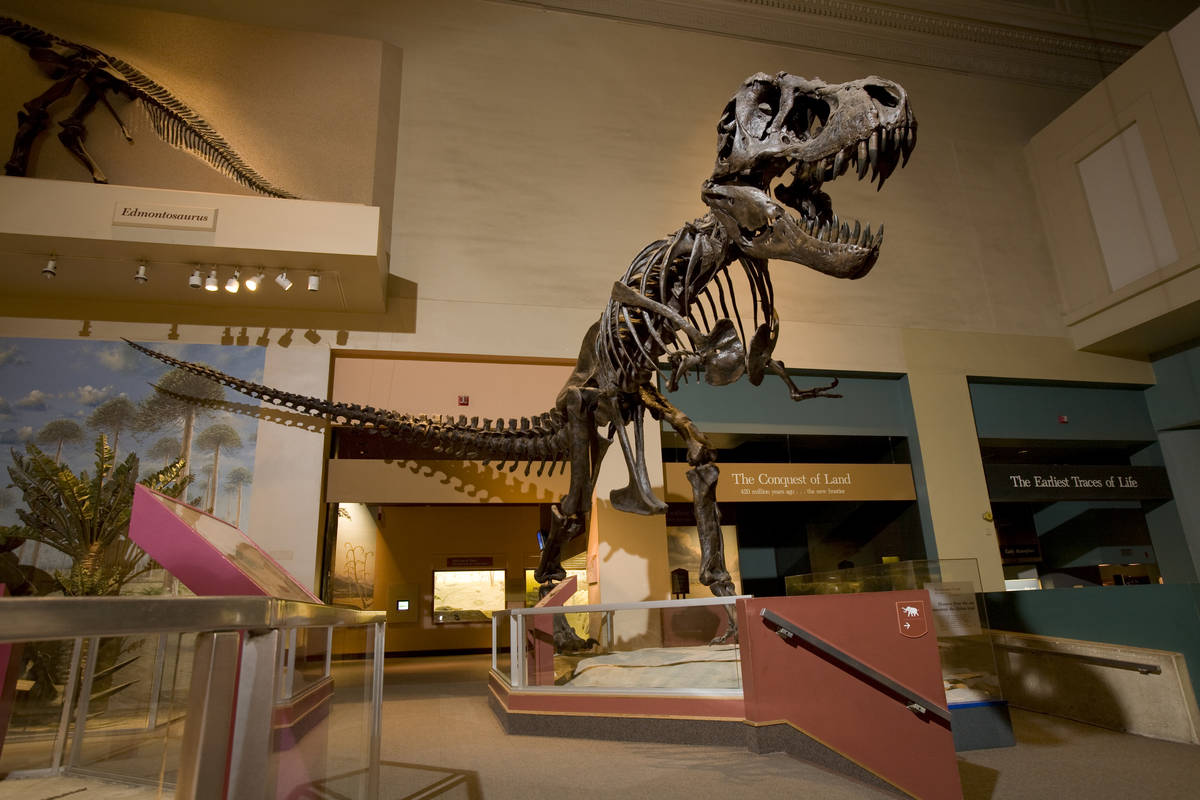
Stan. Photo by Chip Clark.

Stan the T. rex, as seen in the classic NMNH fossil hall. Photo by Chip Clark.

Since 2000, Hatcher the Triceratops was in a permanent face-off with another replica mount, Stan the Tyrannosaurus. Unlike Hatcher, Stan is not based on fossils in the Smithsonian collection. This T. rex cast was purchased from the Black Hills Institute, a private company that  produces and sells replica fossil skeletons (as well as original specimens, which is another issue entirely). Discovered by avocational fossil hunter Stan Sacrison in 1987, Stan the dinosaur was excavated and is now owned by BHI. Since 1995, BHI has sold dozens of Stan replicas to museums and other venues. The Smithsonian acquired its version in 1999, in part because of visitor demand for the world’s most famous dinosaur, but also apparently as a consolation prize for missing out on Sue.

Clearly, much has changed in the way museums source their dinosaurs. Rather than creating fossil mounts on-site, museums frequently contract out the production to exhibit fabrication companies like Research Casting International, Gaston Design, and the aforementioned Black Hills Institute. These companies can construct mounts using fossils or casts from a particular museum’s collection, but they also offer catalogs of made-to-order skeletons. Thanks to these exhibit companies, more or less identical copies of certain dinosaurs are now on display all over the world.  In Stan’s case, the Smithsonian version has a twin just seven miles north at the Discovery Communications building in Silver Spring.

Stan can be set up in a under an hour. This version was recently displayed at Farmington Museum.

Stan replicas can be set up in a under an hour. This version was recently displayed at New Mexico’s Farmington Museum. Source

An argument could be made that this degree of replication lessens the impact and cultural value of dinosaur displays. How much allure does a mount have when identical versions can be seen at dozens of other locations, including corporate offices and amusement parks? I would counter that this is a small price to pay when we consider the substantial educational benefits of this unprecedented availability of dinosaur skeletons. Widespread casts like Stan give people all over the world the opportunity to see a T. rex in person, an experience that was until recently limited to those with the means to travel to a handful of large cities. Typically priced in the tens of thousands of dollars, dinosaur casts certainly aren’t cheap, but they are still within the means of many small to mid-sized local museums.

Furthermore, these casts are hardly rolling off of assembly lines. They are exact replicas of real fossils, and require a tremendous amount of experience and skill to produce. Mounts are manufactured as needed, and are customized to meet the needs of the specific museum. Meanwhile, museums still employ scientists who collect new fossils for their collections. The difference is that these collecting trips usually seek to answer specific research questions, rather than going after only the biggest and most impressive display specimens. Finally, museums definitely haven’t outsourced exhibit production entirely. All summer at NMNH, in-house preparators have been working in collaboration with contractors from Research Casting International to dismantle the historic fossil exhibits in preparation for the upcoming renovation.

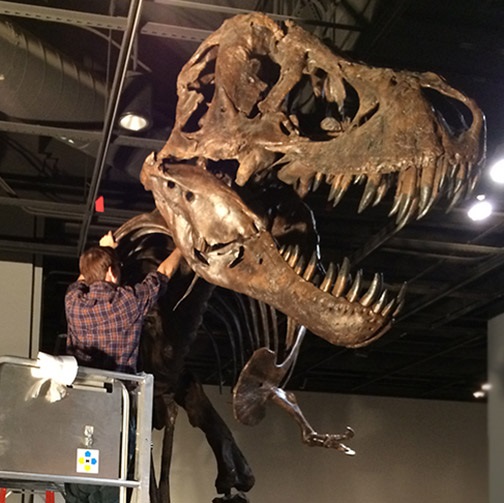
Reassembling Stan upstairs. Photo by Abby Telfer.

Reassembling Stan for The Last American Dinosaurs. Photo by Abby Telfer.

There’s one more change for the better in modern paleontology exhibits. When the Smithsonian Triceratops was first introduced to the world in 1905, natural history displays tended to focus on the breadth of collections. Curators composed exhibits with other experts in mind, and the non-scholars that actually made up the majority of museum visitors were not directly catered to. Without any context to work with, fossil mounts were little more than toothy spectacles for most visitors. Today, museum staff create exhibits that tell stories. The Last American Dinosaurs has been explicitly designed to contextualize the dinosaurs – to show how they fit into the history of life on Earth, and why their world is meaningful today. How successful will this be? I’ll report back after the exhibit opens on November 25th.

2 Comments

Filed under dinosaurs, exhibits, fossil mounts, history of science, marginocephalians, museums, NMNH, reptiles, theropods