Monthly Archives: February 2015

Framing Fossil Exhibits: Phylogeny

This is the third part of an on-again, off-again series about organizational and interpretive approaches in large-scale paleontology exhibits (see the introduction and walk through time entries). This time, I’ll be discussing exhibits arranged according to phylogenetics – that is, the evolutionary relationships among living things. Natural history museums have displayed specimens according to their place on the tree of life since the days of Charles Wilson Peale, and more than any other organizational scheme, phylogeny is the way biologists think about the living world. Perhaps unsurprisingly, this arrangement was more common in the past, when exhibits were typically designed by and for experts. Examples of these old-school displays include the fossil mammal gallery at the Peabody Museum of Natural History and the paleontology halls at the University of Kansas Natural History Museum (neither has been thoroughly overhauled since the 1950s).

peabody mammals

The jargon-heavy signage in the Peabody Museum’s classic fossil mammal exhibit is probably ignored by most visitors. Photo by the author.

Modern natural history museums rarely attempt phylogenetic exhibits. In vertebrate paleontology, an understanding of the evolutionary relationships of animals as identified via minute anatomical details is fundamental to our science. However, most people simply don’t think about the world in this way. For example, I was halfway through my first semester teaching an undergraduate anatomy course when I realized that most of the class didn’t really understand what a mammal is. The students were familiar with the word “mammal” and could provide some examples, but they couldn’t articulate what sets mammals apart from other animals, and the relationship of mammals to other vertebrates within the tree of life was all new to them. It’s easy to forget that even the most basic elements of evolutionary classification are specialized knowledge, even among biology students.

Describing the history of life on Earth chronologically is relatively easy—museum visitors intuitively understand the forward progression of time. But scientific classification (as opposed to colloquial categorization) requires a lot of explanation up front, and it’s easy to overwhelm an audience with jargon. While not impossible (see Neil Shubin’s masterful Your Inner Fish), it is very difficult to explain phylogeny to a general audience in a relatable and approachable way.

In 1995, the American Museum of Natural History attempted to do just that with the most recent renovation of its historic 4th floor fossil halls. This evolutionary arrangement was a major change for AMNH, since this space had a “walk through time” layout for most of the 20th century. In the accompanying book Discovering Dinosaurs in the American Museum of Natural History, curators Norell, Gaffney, and Dingus explain that phylogenetics (and the cladistic methodology in particular) is the only way to approach the study of prehistoric life in an objective way. Patterns of evolutionary relationships revealed by cladistic analyses are hard evidence in a field of study traditionally characterized by idle speculation. Norell and colleagues argue that the new exhibit arrangement shows visitors the credibility and scientific rigor behind modern paleontology.
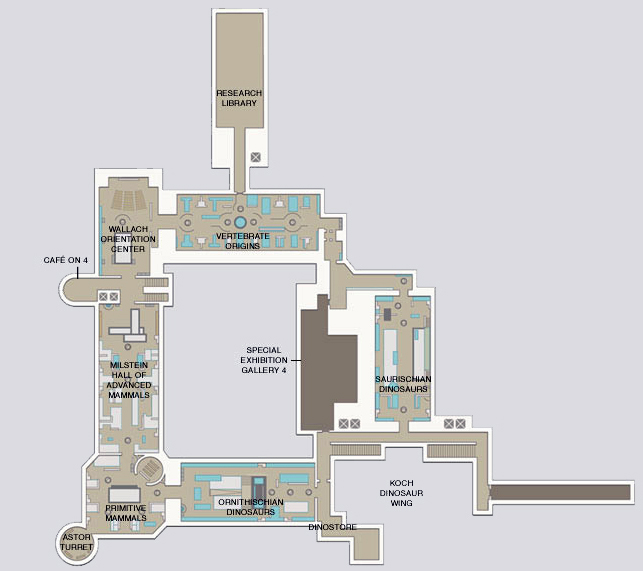
4th floor of AMNH.

Map of the fossil halls on the 4th floor of AMNH. Source

Communicating the rigorous and trustworthy nature of scientific conclusions is a worthy goal, and the choice to ground the AMNH exhibit in this way seems almost prophetic given the litany of speculation-heavy paleontology “documentaries” that have proliferated in the years since it opened. Scientific rigor is definitely a running theme here – sign after sign explains that popularly depicted dinosaur behaviors like parental care and pack-hunting are largely untestable speculation. To a degree, this label copy takes the fun out of an undeniably fun subject, but I can appreciate the effort to legitimize paleontological science in the public eye. Overall, the AMNH exhibits represent an attempt to train visitors to look at fossils the way scientists do, and the phylogenetic layout is central to that goal.

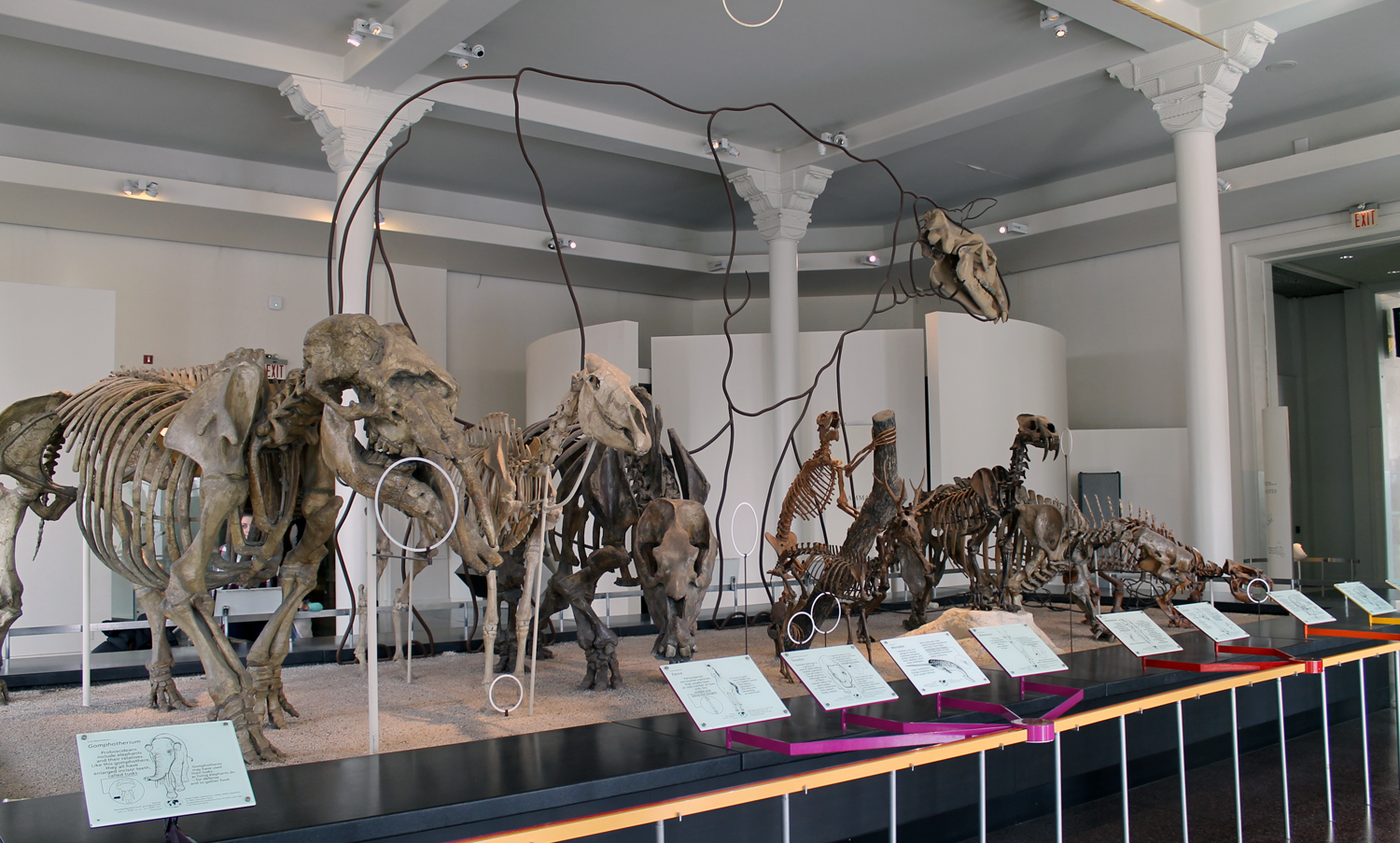
In the exhibit, visitors are meant to walk through a cladogram of chordates. You’ll pass through large halls dedicated to broad groups like saurischian dinosaurs and advanced mammals, while visiting smaller cul-de-sacs that  represent narrower clades like ornithomimids and testudines. A central black path guides you through the evolution of life, and centrally-situated pillars along your route identify major evolutionary innovations, such as jaws or the ability to reproduce on land. The insanely comprehensive vertebrate fossil collections at AMNH make this institution uniquely capable of putting so much diversity on display (although non-tetrapods are woefully underrepresented). Meanwhile, an open floor plan allows you to spend as much or as little time in each area as you wish, and ample natural lighting goes a long way toward making it possible to study specimens in detail.
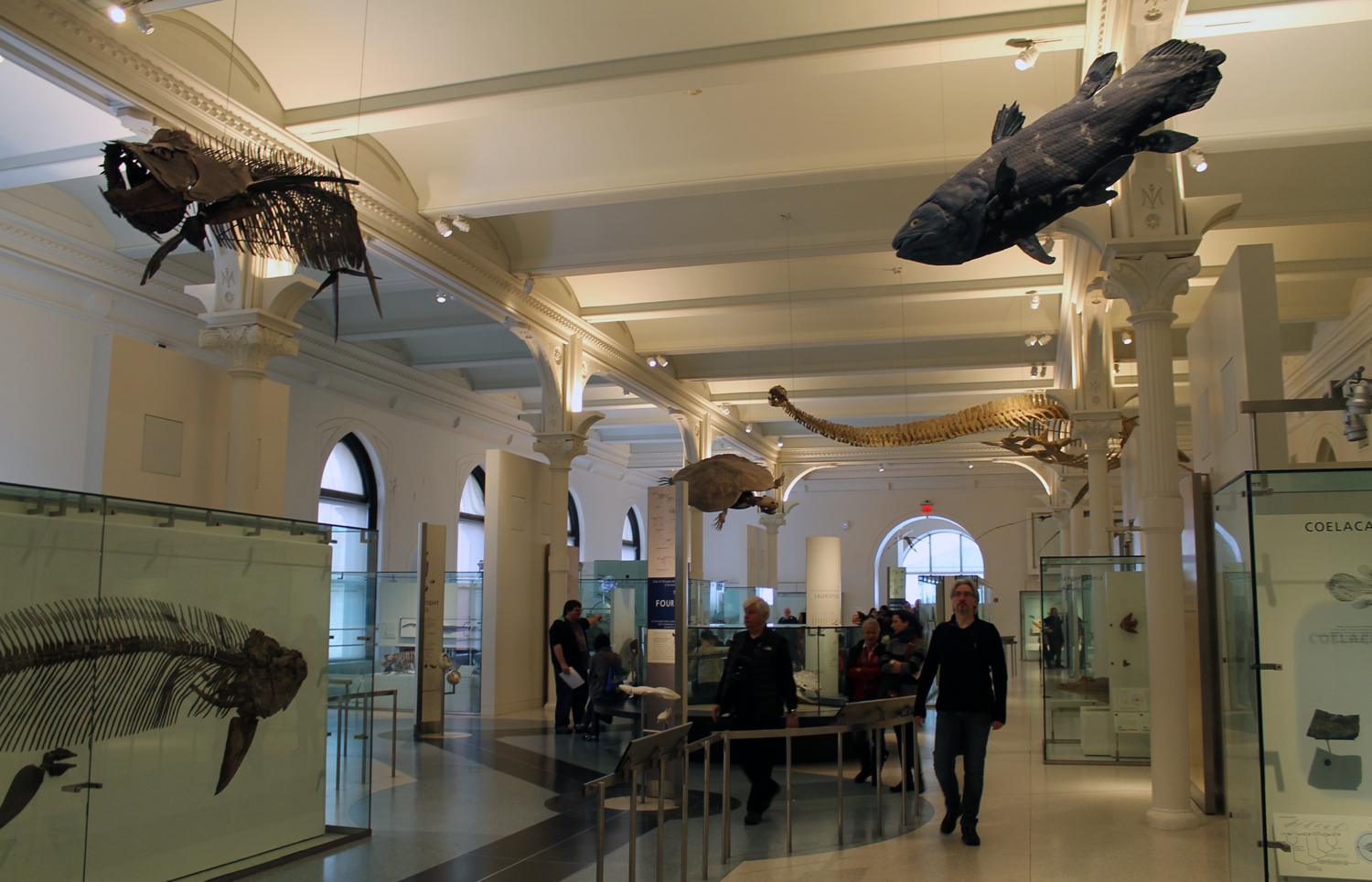
follow the path for now

Pillars mark major evolutionary milestones in the Hall of Vertebrate Origins. Photo by the author.
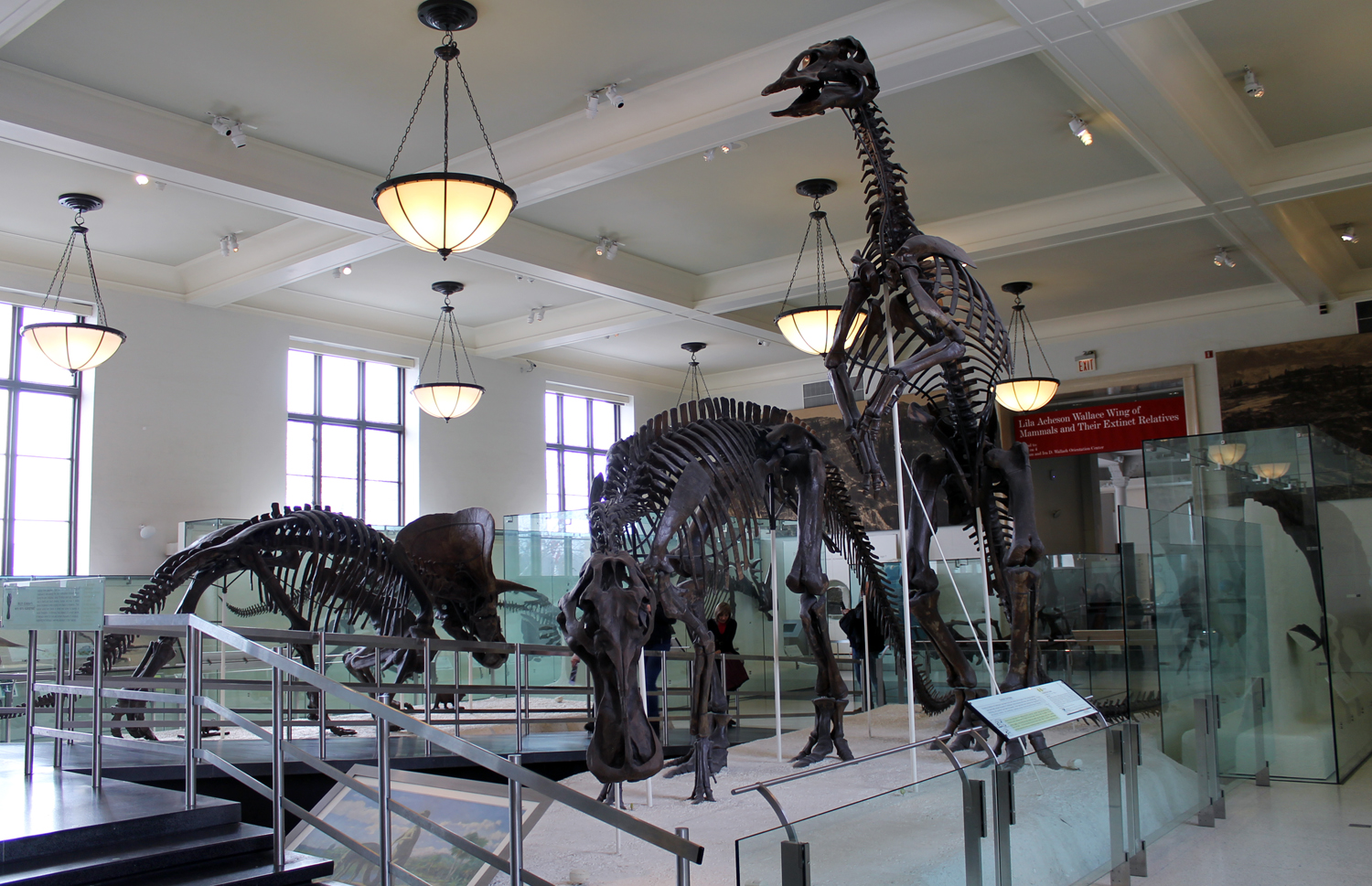
path disappears among dinosaurs

The evolutionary pathway becomes considerably less obvious among the dinosaurs. Photo by the author.

Nevertheless, I agree with Riley Black that the AMNH fossil halls don’t do the best job communicating the story of vertebrate evolution to their core audience. The underlying purpose of any exhibit structure is to provide meaning and context for objects – to help visitors see them as more than neat things to look at. According to visitor surveys, the default mode of understanding for most people passing through a paleontology exhibit is what I’ve been calling “dinosaur pageantry.” After seeing the exhibit, most visitors will recall a list of cool skeletons they saw. A few might consider which ones are meat-eaters and which ones are plant-eaters, but without further prompting that’s all we can usually expect from non-specialists. It’s the museum’s job to give visitors the intellectual tools to contextualize those fossils in a more sophisticated way, but there’s a fine line to walk. Provide too little information and nobody learns anything, but provide too much and the content is ignored. Unfortunately, the AMNH exhibits fall into the “overkill” category.

As discussed, phylogeny is complicated, often counter-intuitive, and largely unfamiliar to many visitors. To overcome this, the AMNH designers rely on a fairly long orientation film, which introduces the concept of categorizing organisms based on shared derived characteristics. There are a few problems with this. First there’s the film itself, which dives right into the traits that characterize different groups – like the stirrup-shaped stapes of derived mammals and the temporal fenestrae of archosaurs – without explaining why these traits are significant. To a layperson, these probably seem like really inconsequential things to hang a whole group on. The video also presents a cladogram of vertebrates without explaining how to read it. As Torrens and Barahona demonstrate, interpreting a phylogenetic tree is a specialized skill that many natural history museum visitors lack. Second, I saw no incentive or instruction to actually start my visit to the 4th floor in the orientation hall. There are no less than four entrances to the fossil exhibits, so many visitors won’t know there is an orientation film (I sure didn’t) until they’re halfway through the galleries. Finally, there’s the reliance on media in general: do we really want visitors to spend even a portion of their time in an exhibit full of real fossils watching a video in a darkened room? Telling visitors what to think in a narrated video is easy, but it’s not nearly as meaningful as showing them the same concept with specimens (or better yet, coaxing them to reach conclusions themselves).
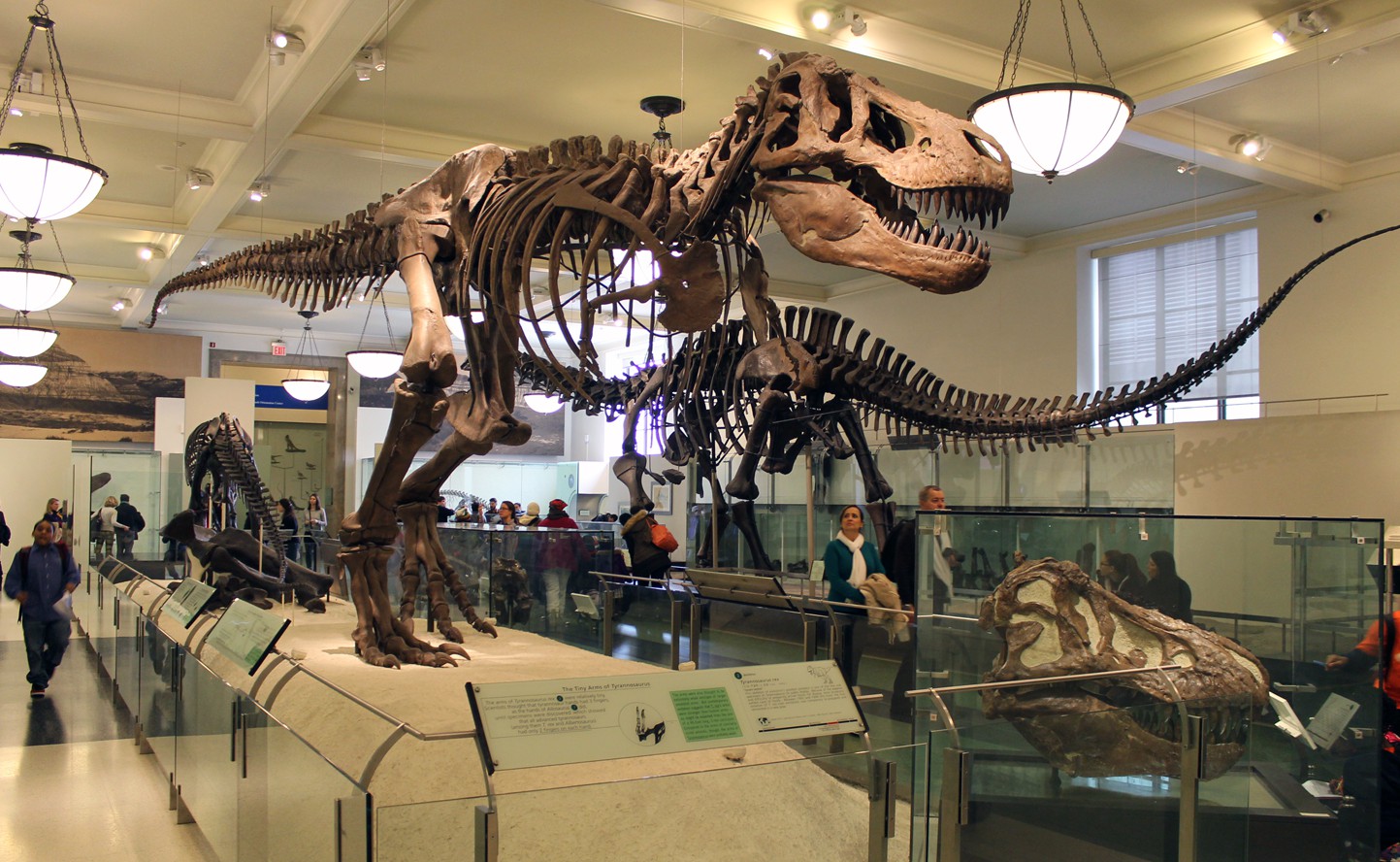
Hall of Saurischian Dinosaurs, American Museum of Natural History. Photo by the author.

Iconic mounts in the Hall of Saurischian Dinosaurs are iconic. Photo by the author.

Within the actual fossil halls, interpretation remains stubbornly unapproachable. For example, the sign introducing proboscidians tells visitors that this group is defined primarily by eye sockets located near the snout. An observant visitor might wonder why scientists rely on such an obscure detail, as opposed to the obvious trunks and tusks. There’s a good teaching moment there concerning why some characteristics might face more selection pressure (and thus change more radically) than others, but instead visitors are only offered esoteric statements. Relatedly, the exhibit does little to prioritize information. Most label text is quite small, and there’s a lot of it. Compare this to Evolving Planet at the Field Museum, where there is a clear hierarchy of headings and sub-headings. Visitors can read the main point of a display without even stopping, and parents can quickly find relevant information to answer their charges’ questions (rather than making something up).

Evolving Planet also compares favorably to the AMNH fossil halls in its informative aesthetics and spatial logic. At FMNH, walls and signs in each section are distinctly color-coded, making transitions obvious and intuitive. Likewise, consistent iconography  – such as the mass extinction zones – helps visitors match recurring themes and topics throughout the exhibit. AMNH, in contrast, has a uniform glass and white-walled Apple Store aesthetic. It’s visually appealing, but doesn’t do much to help visitors navigate the space in a meaningful way.
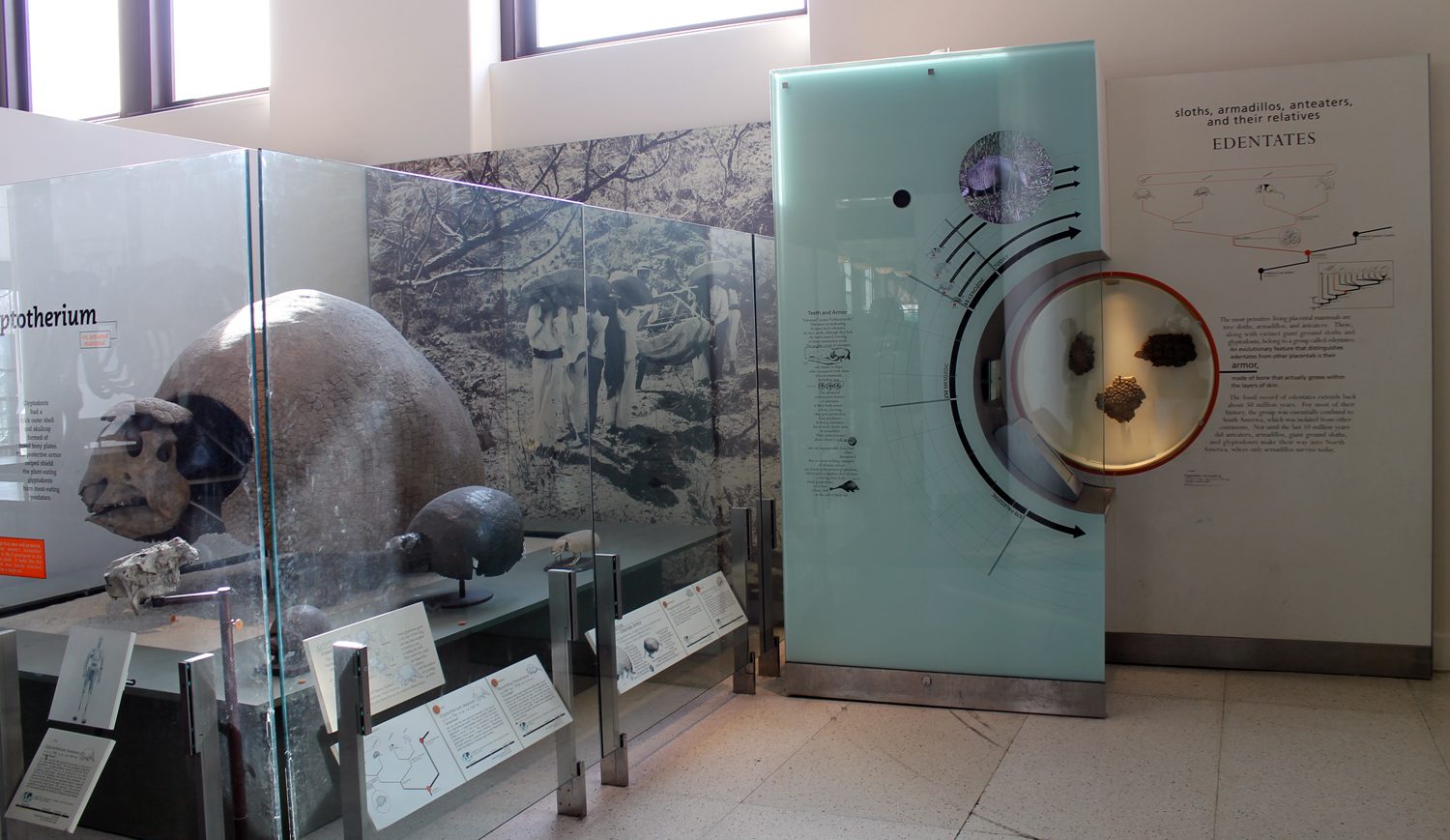
edentates aren't real

Phylogenetic interpretations change quickly – Edentata is no longer considered a natural group. Photo by the author.

The phylogenetic layout introduces a number of other unique interpretive challenges. Since there is no temporal axis,  it’s often unclear whether the lineage in a particular cul-de-sac cluster went extinct, continued on, or gave rise to another group elsewhere in the exhibit. Visitors that want to know which animals lived contemporaneously are out of luck. Meanwhile, the exhibit sometimes uses modern animal skeletons to fill out displays where fossil examples are limited, such as bats and primates. While these are labeled, the text is too small to be seen from a distance. The evolutionary organization is also burdened by the fact that phylogenetics is a fast-moving and often changing field of study. While the order of geologic time periods will never change, the 20 year-old displays at AMNH are already out of date in several details. For example, there is a cul-de-sac devoted to edentates, which is now considered polyphyletic, and a cladogram in the Hall of Saurischian Dinosaurs incorrectly places tyrannosaurids among the carnosaurs.
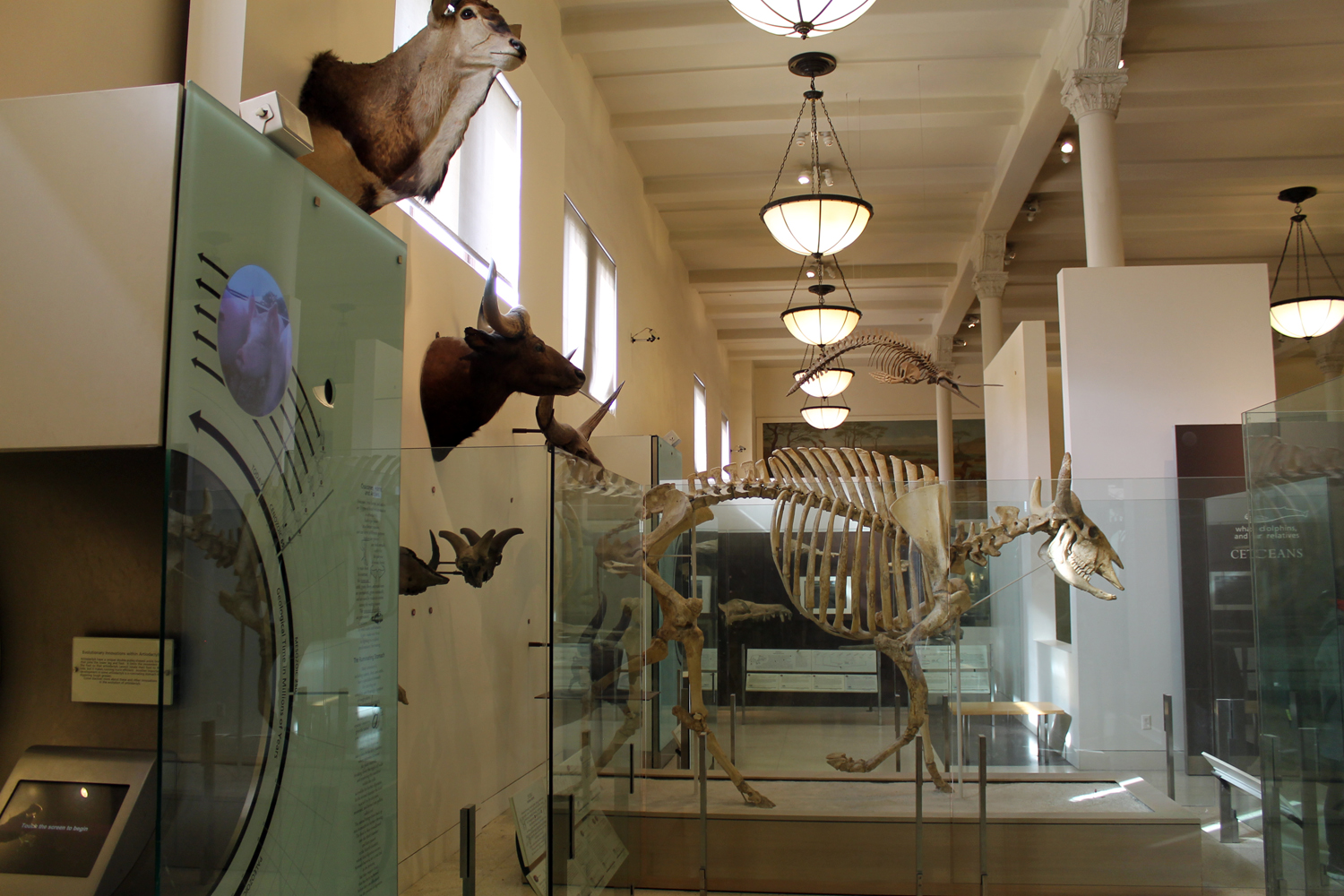
Cows and broken videos

Glass architecture lets visitors see through displays and get a sense of what lies beyond. Photo by the author.
Neat comparison of mammal teeth. Too bad there's no obvious label.

This display is a great example of the diversity in mammal teeth, but it’s a confusing centerpiece for the Hall of Primitive Mammals. Photo by the author.

The AMNH fossil exhibits excel in many respects, chiefly in the amazing diversity and quantity of specimens on display. The exhibit throws a lot of good science at visitors, but falters in explaining why it matters. The point of all this is not to nit-pick the design choices at AMNH, but to reiterate that phylogenetically-arranged fossil exhibits are really hard to pull off. This is not the most intuitive way to introduce the history of life, or even the process of evolution. With so much background to cover, perhaps a more structured and linear layout would be better. In fact, a lot of my issues with the AMNH fossil exhibits seem to stem from a disconnect between the phylogenetic interpretive content and the wide-open aesthetics. Open exhibits can be great, but in this case it hinders the learning opportunities for self-guided groups of visitors. It’s difficult to imagine a typical visitor, arriving with their family or another mixed-age group, having the patience to make sense of it all. Regrettably, such visitors default to the dinosaur pageantry level of understanding, making all the work invested in creating a meaningful exhibit space for naught.

References

Norell, M, Gaffney, E, and Dingus, L. (1995). Discovering Dinosaurs in the American Museum of Natural History. New York, NY: Alfred A. Knopf, Inc.

Torrens, E. and Barahona, A. (2012). Why are Some Evolutionary Trees in Natural History Museums Prone to Being Misinterpreted? Evolution: Education and Outreach 1-25.

14 Comments

Filed under AMNH, dinosaurs, exhibits, fish, FMNH, fossil mounts, mammals, museums, opinion, reptiles, reviews, systematics

Missourium: Hiding in Plain Sight

A while back I wrote about Albert Koch, the 19th century showman who made a tidy profit assembling and touring chimeric composites of fossil bones. Koch’s monsters – an exaggerated mastodon called “Missourium” and two alleged sea serpents made from whale fossils – were a hit with the public but an embarrassment to scientists. At the time, ideas like extinction and the great age of the Earth were very new, and Koch’s fraudulent commodification of fossil evidence made it harder for legitimate researchers to be taken seriously.

The mastodon once called Missourium in the Mammal hall. Source

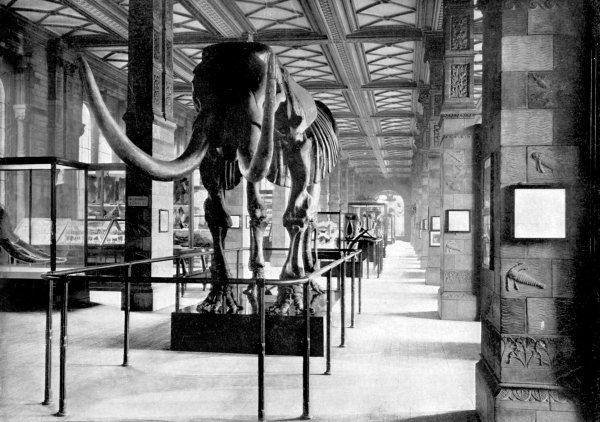
Is this mastodon at NHM actually the legendary Missourium? Source

One thing I breezed over in the previous post was the eventual fate of Koch’s creations. It is widely reported that the whales (which Koch alternatively called “Hydrargos” and “Hydrarchos”) met rather dramatic ends: one perished in the Great Chicago Fire of 1871, while the other was purchased by the Royal Anatomical Museum in Munich Berlin and was subsequently blown up during World War II. But what about Missourium? Following Simpson, I wrote that the mount was sold to the British Museum (now the Natural History Museum), and left it at that.

However, Mike Taylor recently asked whether Missourium might still be on display in South Kensington today:

I didn’t know that the “Missourium” was sold to the British Museum! Do you know what they did with it? I don’t suppose anyone has the specimen number? Is it possible that they got rid of all the fakery and mounted it in the mammal hall, and that it stands there today under the shadow of the whale?(Link to comment)

After some very modest digging, I found that Mike’s hunch was exactly right. General googling revealed that several authors, including McMillian, Debus, and Fuller, had concluded that the NHM mastodon and Missourium were one and the same, but none of them offered a proper citation. While I have no reason to doubt these authors, I still wanted a primary source. I eventually found that in a 1991 article by NHM preparator William Lindsay, which details the process of moving the mastodon to its current home in the Mammals Gallery, and confirms its identity as a remounted Missourium.

An insane illsutration that accompanied Koch's traveling exhibit.

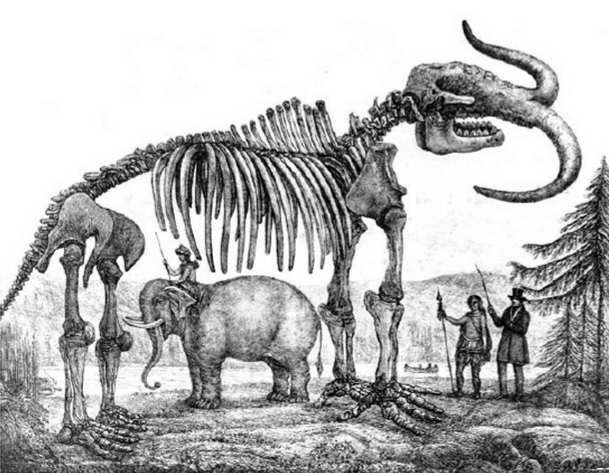
This insane illustration of Missourium in its natural habitat accompanied Koch’s traveling exhibit.

As far as we know, Koch retrieved all the fossils that made up Missourium from a single Benton County, Missouri spring in 1840 (Hoy confirmed the locality and found several additional bones in 1871). Koch used the bones of at least two individuals to assemble a chimeric super-mastodon, which he displayed in St. Louis. Most notably, Koch spliced a number of extra vertebrae into the spinal column, extending the mount’s length to 32 feet. To appeal to local audiences – and to differentiate his creation from Peale’s mastodon – Koch named the beast Missourium, and proclaimed it to be the skeleton of the biblical Leviathan. In 1841, Koch sold his St. Louis showroom and took Missourium on tour, eventually winding up in the Egyptian Hall of Piccadilly, London.

Local specialists, including Gideon Mantell, were initially impressed by the display. However, attitudes soured in February 1842 when Richard Owen presented a scathing critique of Koch’s work to the Geological Society of London. In his lecture, Owen made some cursory remarks about the inaccurately articulated skeleton, but he was primarily concerned with confirming that Missourium was nothing more than a run-of-the-mill American mastodon. Owen was a trendsetter, then as well as now, and for decades afterward his fellow naturalists took every opportunity to take Koch to task. For example, James Dana allowed that “the credit is due him of having performed a great service to science by his collections”, but tore into Koch’s publications to prove that he “was quite ignorant of geology and without scientific training.”

It is therefore ironic that Owen himself gave Koch one of the biggest paydays of his life when he bought Missourium on behalf of the British Museum. In exchange for the skeleton, Koch made off with a $2000 downpayment (about $65,000 today), plus $1000 a year for the rest of his life. It seems museums have been paying extortion prices for display-caliber fossils for a long time.

Armature

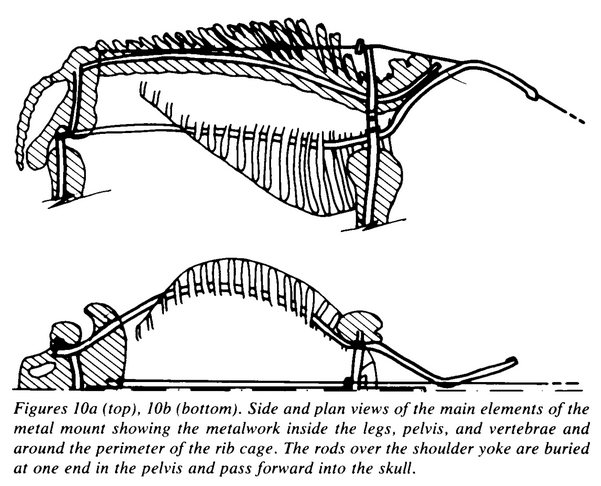
Diagram of the mastodon’s internal armature. Figure 10 of Lindsay 1991.

Museum technicians, including an individual named J. Flower, disassembled Missourium and rebuilt it into a proper mastodon. Reduced to a length of 20 feet, the remounted skeleton (now OR15913) was placed in the historic fossil mammals exhibit and remained there for almost 150 years. In 1991, the mastodon was selected for inclusion in the new Mammals Gallery at NHM, which combines both fossil and modern specimens. Although William Lindsay and colleagues had only limited time to restore and move the skeleton, they gained fascinating insight into 19th century mounting practices. As shown above, the internal metal armature was virtually identical to 20th century counterparts. A hand-wrought iron beam threaded through each vertebra provided the mount’s central anchor point. Four additional iron bars skewered the appendicular elements and connected to the vertebral beam inside the pelvis and under the shoulder girdle. An enlarged foramen magnum allowed the vertebral beam to enter the back of the skull, which turned out to be composed almost entirely of papier-mâché. A real palate and set of upper teeth were buried in the paper cranium, supported by a cradle of wood and copper wire. Amazingly, an 1881 issue of The Weekly Dispatch used in a cursory repair to the skull was still legible.

historic photo of mastodon

Missourium remounted as a standard mastodon in the historic fossil mammals hall. Source

As to be expected from anything on display for a century and a half, the mastodon was in rough shape. As usual, vibration damage was the primary culprit, and Lindsay discovered that the spongy bone in the femur and cervical vertebrae had been crushed beneath the weight of the iron armature. Although NHM staff weren’t able to completely disarticulate the skeleton, they separated it into seven pieces for transport. A coating of polyvinyl acetate was applied to consolidate the fragile fossils, and larger cracks were filled in with putty. Meanwhile, the deteriorating replica skull was retired and replaced with a glass-reinforced plastic cast. The original tusks are still included in the display, however, which is unusual among proboscidian mounts.

Missourium was the third mounted fossil skeleton ever assembled, after Bru’s Megatherium and Peale’s mastodon. Although they’ve each been reconfigured and restored at various points in time, all three specimens are still on exhibit today. While any object that has been on public display for 150 years (or more) is fascinating, I find it especially compelling that so few fossil mounts have ever been taken off exhibit. Public demand, institutional inertia, and the challenges of safely disarticulating a historic mount all contribute to the incredible longevity of these displays, but time inevitably takes its toll on fragile fossils. I can’t help but wonder how many more generations of visitors will be able to view the mastodon that was once Missourium before a mounted display becomes untenable.

References

British Museum (1904). The History of the Collections Contained in the Natural History Departments of the British Museum. London, UK: British Museum (Natural History) and Longmans and Co.

Dana, J.D. (1875). On Dr. Koch’s Evidence with regard to the Contemporaneity of Man and the Mastodon in Missouri. The American Journal of Science and Arts 9:335-346.

Hoy, P.R. (1871). Dr. Koch’s Missourium. The American Naturalist 5:3:147-148.

Lindsay, W. (1991). “Mammoth” Task. Curator 34:4:261-272.

Owen, R. (1842). Report on the Missourium now exhibiting at the Egyptian Hall, with an inquiry into the claims of the Tetracaudodon to generic distinction. Proceedings of the Geologic Society of London 3:3:82.

Simpson, G.G. (1942). The Beginnings of Vertebrate Paleontology in North America. Proceedings of the American Philosophical Society. 86:1:130-188.

7 Comments

Filed under anatomy, fossil mounts, history of science, mammals, museums, NHM

Installation art in the service of science

totes awesome

Unbridled awesome. Photo by the author.

Earlier this week, Dippy the Diplodocus gave me an opportunity to discuss mounted fossil skeletons as objects imbued with cultural and historical meaning. Today, I’d like to take that a step further and discuss them as art. Hold on tight, because it’s about to get interdisciplinary up in here.

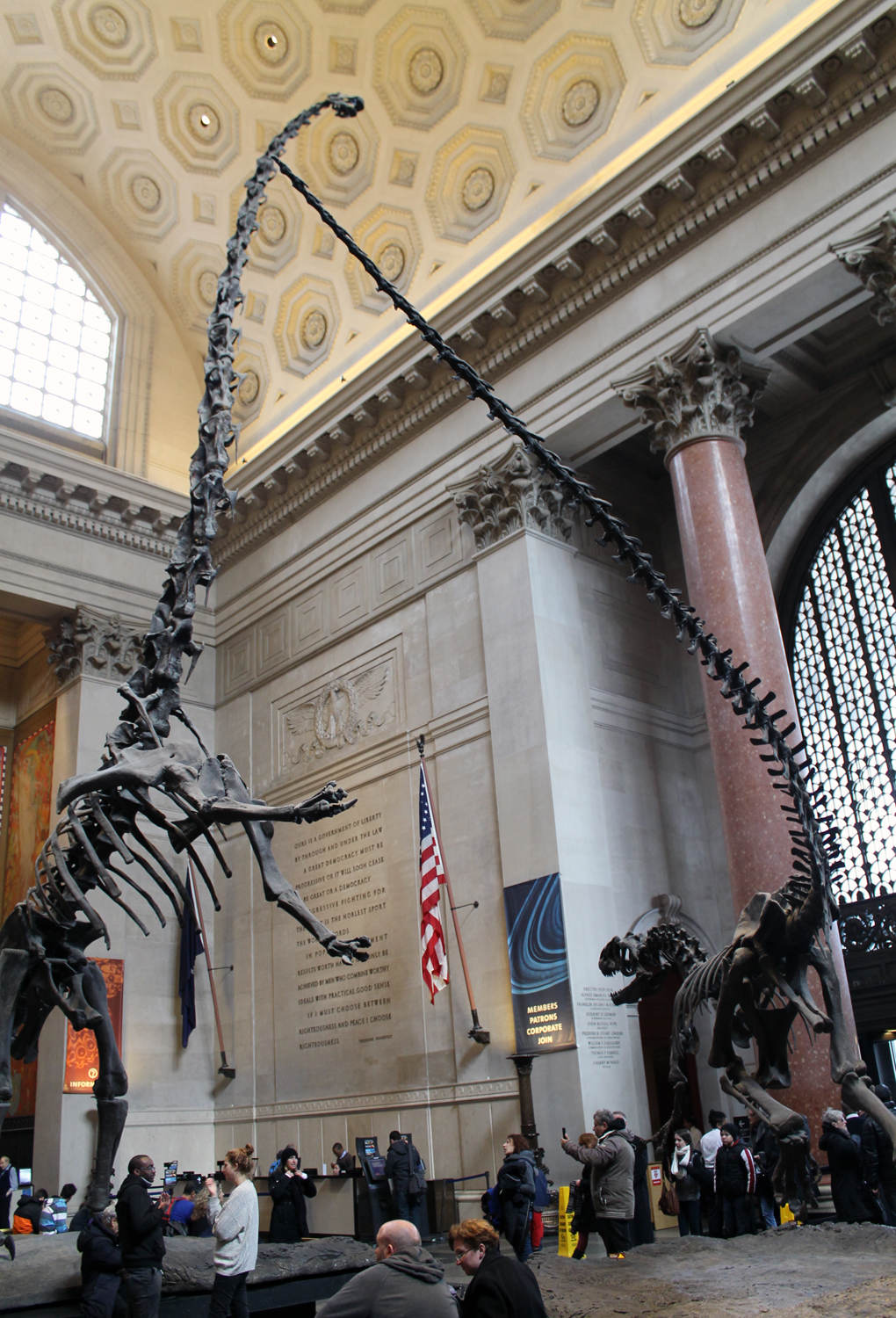
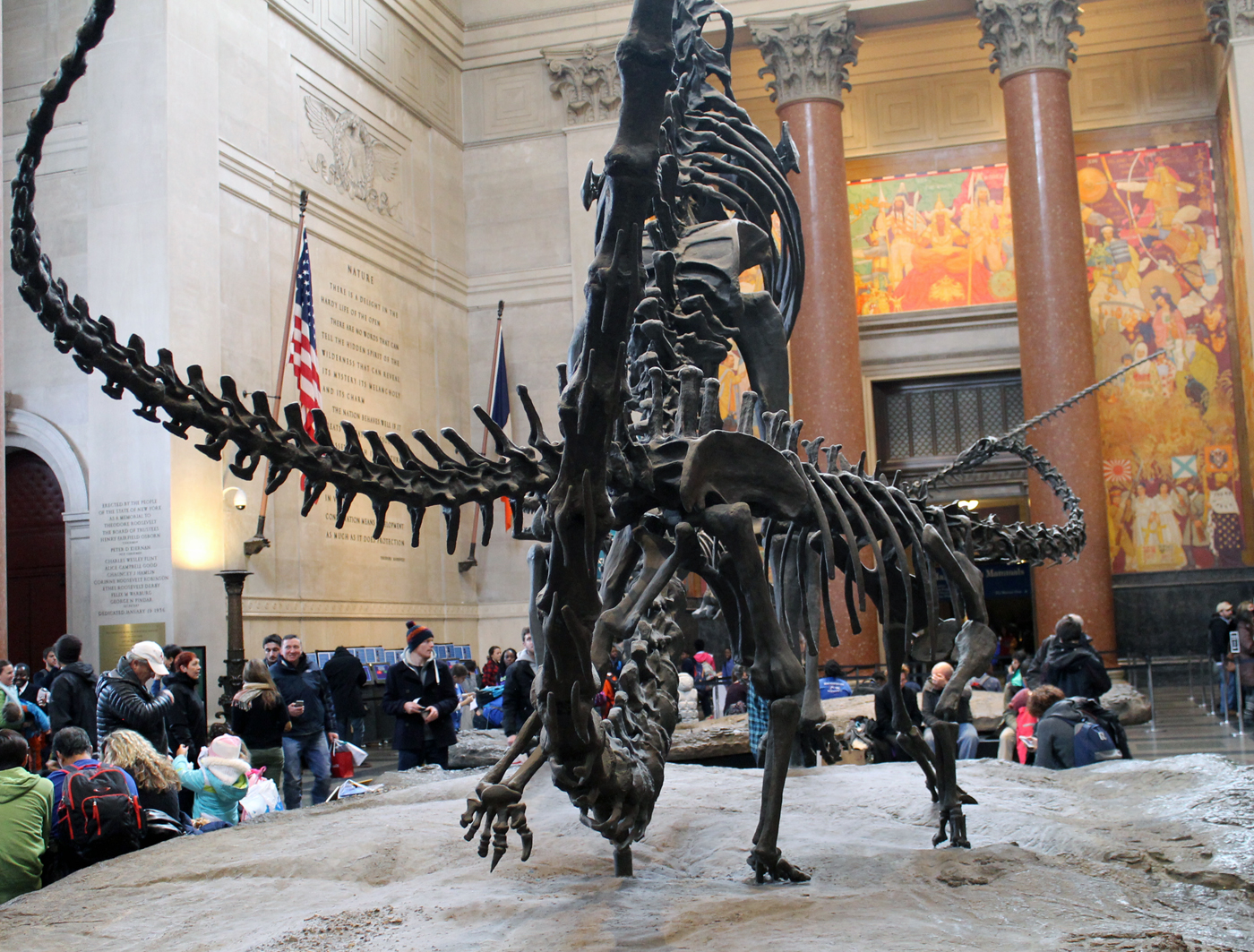
The Barosaurus and Allosaurus encounter at the American Museum of Natural History is one of the most amazing fossil displays in the world. Within the historic Theodore Roosevelt Rotunda, an adult Barosaurus skeleton rears to a height of fifty feet to protect its offspring from a charging Allosaurus. Although all three skeletons are glass-reinforced polyester and polyurethane foam casts (by necessity – it would be unwise to mount real fossil bones in such a precarious manner), they are based directly on real specimens. The adult Barosaurus is a cast of AMNH 6341, which was excavated by Earl Douglass at Dinosaur National Monument in 1923. The Allosaurus is a cast of DMNH 1483. The young Barosaurus is the most speculative of the lot and mostly consists of sculpted bones, but it includes casts of real juvenile sauropod vertebrae.

Looking past its physical properties, this display comes with an explicit pedagogical agenda. AMNH paleontologist Mark Norrell stated that the objective was “to imagine dinosaurs as living organisms, facing challenges similar to those that confront animals today.” When the exhibit was built in 1991, it was considered important to showcase what active, hot-blooded dinosaurs might be capable of. In this case, we have a portrayal of considerable speed and agility, as well as a suggestion of parental care and group living. The mount and its associated signage also invite visitors to consider the nature of the fossil record, and what questions paleontologists can and cannot definitively answer. We don’t know whether Barosaurus would have protected or even lived with its young. We don’t know if Allosaurus would have attempted to attack an animal more than three times its size. Even the ability of Barosaurus to rear up on two legs has been the subject of some debate. While not enormously far-fetched, this is still an imaginative reconstruction – one which challenges visitors to consider the evidence behind this and other displays throughout the museum.

However, even this sort of interpretation does not fully capture the experience of observing this tableau – there is something else going on here. The dynamic poses give the dinosaurs a startling presence, and it is scarcely possible not to imagine them as living animals. Visitors must consider what it would be like to encounter an Allosaurus charging at full speed, or to stand beneath a multi-ton sauropod. Standing in the center of the room, the viewer is literally surrounded by the mounts, and necessarily becomes a participant in the drama. Even if we ignore the representational identities of the dinosaurs and think of this display as a set of abstract shapes, it is still decisively monumental. The mise-en-scène draws the viewer’s eye around the room and up the neck of the Barosaurus, toward the vaulted ceiling. The scene can thus be described as a visual and physical intervention that draws each and every visitor that enters the rotunda into a shared performance.

Fancy fisheye photo.

The visitors themselves become part of the installation by providing a human scale. Source

As impressive as the mounts are on their own, they cannot be divorced from the Theodore Roosevelt Rotunda that surrounds them. Aesthetically, the grandiose nature of the skeletons compliments the neoclassical architecture. The site-specific composition also encourages visitors to look around the room and take note of structural elements they might have missed (e.g. the ceiling). But the room itself is far from a neutral exhibition space. It is a public monument to the first President Roosevelt, who Donna Haraway calls “the patron saint for the museum.” In addition to an array of canvases depicting scenes from Roosevelt’s public life,  quotations are etched into the walls under the headings Youth, Manhood, Nature, and The State. Roosevelt’s words, literally carved in stone, speak to his appreciation of the natural world, his support for what he called “the strenuous life”, and his belief in living honorably and compassionately. Were it not for the throngs of tourists, this space could be mistaken for a shrine.

There are a few possible ways to interpret  the relationship between the dinosaurs and the hall around them. We could cast the adult Barosaurus as Roosevelt’s idealized citizen. Rather than letting the Allosaurus pick off it’s more vulnerable companion, it stands its ground, for “the highest form of success comes not to the man who desires mere easy peace, but to the man who does not shrink from danger, from hardship, or from bitter toil.” Alternatively, we could follow Haraway and consider this space a monument to hyper-masculinity and paternalistic oppression. Haraway slams the Roosevelt Rotunda (which implies a male audience at the exclusion of others) and the adjacent Hall of African Mammals (which displays artificially-assembled nuclear families, always with a male leader) as products of the wealth and privilege of the early-20th century aristocracy. But if we assume – as many visitors apparently do – that the defending Barosaurus is female, the dinosaurs might be read as a direct critique of the institution’s history. While political and sociological readings probably didn’t come up much when these mounts were being constructed, intent isn’t the whole story. This is a public space, and visitors can and will make conscious and unconscious connections between the various objects on view. Besides, this wouldn’t be the first time fossils have been entwined with presidential politics.

Different

The fossils weren’t created to be displayed in this space, but the mounts were. Photo by the author.

A museum display always involves the staging or framing of the world. It is this infusion of creative choice that moves  fossil mounts beyond the realm of science and into art. As Polliquin puts it, a specimen from nature “permits or invites experience, wheras a work of art is intentionally made for an experience.” Whether they are composed of real fossils or casts thereof, fossil mounts are purposefully constructed to exist in the museum environment. Paradoxically, they are both the objects of scrutiny and the exhibit context. This is not something to hide or be ashamed of, but to celebrate. These mounts embody aesthetic  beauty, deep history, and rich culture, and these elements are just as important as their scientific value when we consider their role in the museological landscape.

References

Haraway, D. (1985). Teddy Bear Patriarchy: Taxidermy in the Garden of Eden, New York City, 1908-1936. Social Text 11:20-64.

Kohlstedt, S.G. (2005). “Thoughts in Things” Modernity, History, and North American Museums. Isis 96:4:586-601.

Lindsay, W., Larkin, N. and Smith, N. (1996). Displaying Dinosaurs at the Natural History Museum, London. Curator 39:4:262-279.

Norrell, M.A., Dingus, L.W. and Gaffney, E.S. (1991). Barosaurus on Central Park West. Natural History 100:12:36-41.

Polliquin, R. (2012). The Breathless Zoo: Taxidermy and the Cultures of Longing. University Park, PA: Pennsylvania State University Press.

Vogel, S. (1991). Always True to the Object, in Our Fashion. Exhibiting Cultures: The Poetics and Politics of Museum Displays. Washington, DC: Smithsonian Institution Press.

3 Comments

Filed under AMNH, dinosaurs, education, exhibits, fossil mounts, museums, paleoart, reptiles, sauropods, theropods

I Have Opinions About Dippy

1st cast in spot of honor

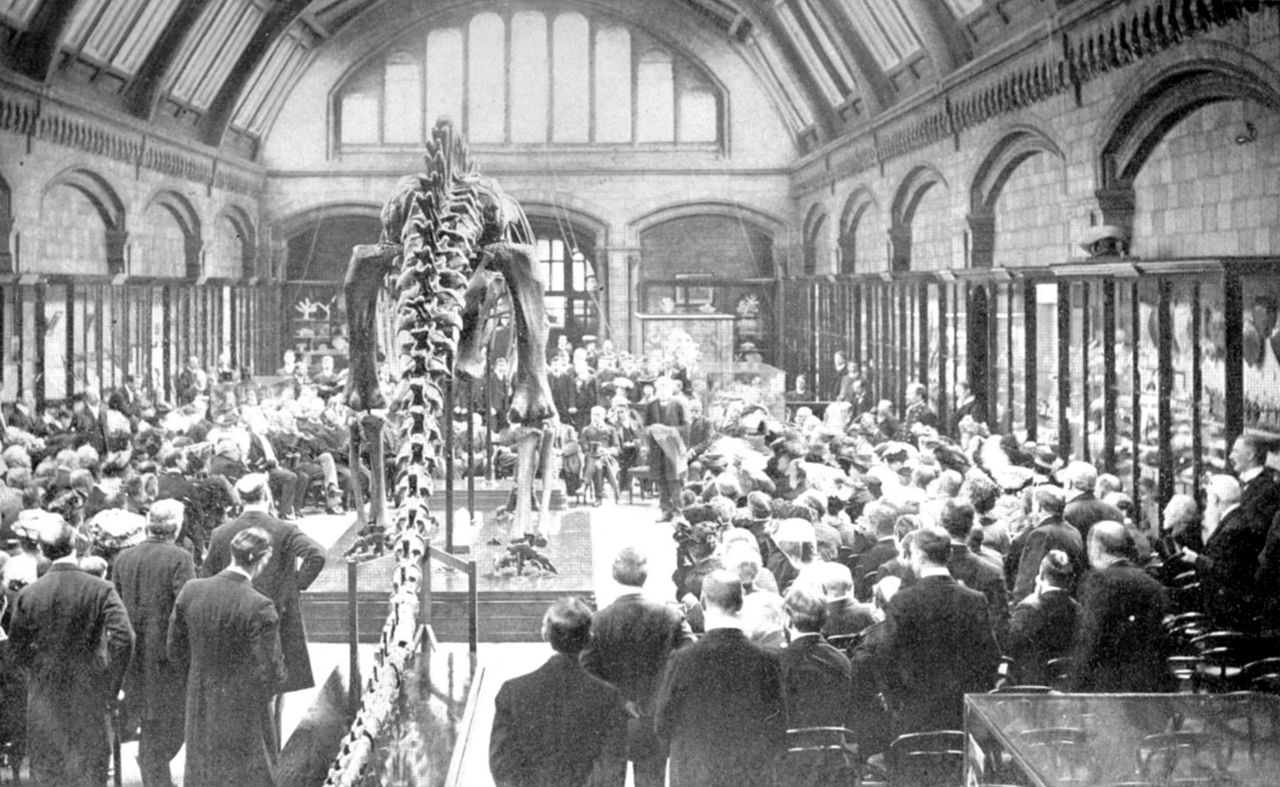
Dippy the Diplodocus has been at London’s Natural History Museum since 1905. Source

Historic fossil mounts are usually taken for granted. Classics like the the AMNH Tyrannosaurus (which turns 100 this year!) have been enjoyed by generations of visitors, and it seems out of the question that they might ever be retired from display. Such was the case with Dippy the Diplodocus at London’s Natural History Museum – this cast of the CMNH original has been at the museum since 1905, and has been the centerpiece of Hintze Hall since 1979. It was therefore something of a shock when the NHM announced on Thursday that plans are afoot to replace Dippy with a blue whale skeleton. For a few hours, at least, this was huge news. #Savedippy was trending internationally, memes were created, and petitions sprang up to keep the mount in place. To me, it was inspiring to see how much people care about this mounted skeleton. I’ve repeatedly argued on this blog that fossil mounts take on second lives in museums, and have cultural and historical meaning independent of their identities as scientific specimens. The outpouring of love for Dippy is as clear an example as I could ever hope for.

Things seemed to calm down once a few editorials in favor of the change made the rounds, most notably pieces at the Huffington Post, the Conversation, and the Telegraph. These authors make a strong case for the blue whale: it’s the largest animal to ever exist, but it’s on the brink of extinction. It reminds us of our role as stewards of the planet, and the impacts the choices we make today will have on future generations. Meanwhile, the opposition hasn’t offered much beyond “kids like dinosaurs.” Personally, I’m not steadfastly opposed to the change. A whale is an excellent symbol for the importance of protecting the natural world, and it certainly beats losing exhibit space to a new cafe or gift shop. I’ve also never been to the NHM, and my heart already belongs to another Diplodocus, so I don’t really have a dog in this fight. Still, Dippy is an irreplaceable monument deeply entrenched in history, and certainly deserves a thoughtful defense.

The MNH released this concept art of the new display. Source

Exhibit company Casson Mann prepared this concept art of the new display. Source

To review, the original Dippy fossils were collected in 1899 near Medicine Bow, Wyoming by a team funded by Andrew Carnegie. The Pittsburgh-based industrialist/philanthropist wanted to make a name for his newly-founded Carnegie Museum of Natural History by displaying the first-ever mounted skeleton of a sauropod dinosaur. The Diplodocus discovered by Carnegie’s team was (and still is) one of the most complete sauropod specimens ever found. Nevertheless, they lost the race to public display: the American Museum of Natural History unveiled its composite “Brontosaurus” mount in March of 1905*, while Carnegie was still waiting for his museum building to be finished. Not to be bested by the New York competition, Carnegie offered a complete plaster cast of the Diplodocus skeleton to King Edward VII. The replica now known as Dippy was on display in London before the end of the year. After completing a mount of the original fossils at CMNH in 1907, Carnegie went on to produce seven more Diplodocus casts, which he gifted to various European heads of state (read the full story here). In addition, at least four other Dippy replicas have been created since Carnegie’s death in 1919. Whether we consider all versions or just the London cast, Dippy the Diplodocus is among the most-viewed animal skeletons in the world. Its cultural impact, particularly in Europe, is astounding. More than any other specimen, it can be argued that this one made “dinosaur” a household word throughout the world.

*Natural history historian Ilja Nieuwland once commented that the first cast – the one still on display in London – was temporarily assembled in a Pittsburgh warehouse the Pittsburgh Exposition Society Hall in 1904. It could therefore be claimed that this was actually the first sauropod mount.

diplodocus_nocopyright

The Diplodocus cast in London debuted two years before the Pittsburgh original.

And yet, one of the recurring arguments to replace Dippy in the Hintze Hall is that it’s “just a copy” or worse, “a fake.” Of course, referring to a fossil cast in this way is a flagrant misrepresentation. Casts are exact replicas of real specimens, full stop. You can read about the reasons casts are made in the Fossil Mount FAQs, but suffice it to say that replicas like Dippy are just as useful to researchers as the originals they are based on in most respects – some have even been used for microscopic analysis. At the very least, it’s downright inflammatory to dismiss a cast as though it were a P.T. Barnum-era forgery.

But let’s say we don’t care about that, and we must adhere to a conception of authenticity that doesn’t allow for casts. Even then, this particular cast is a 109 year-old historic icon. Despite being made of plaster, this replica introduced the world to the immensity of deep time. Carnegie himself described it as way to foster international peace. It gave the multilingual troops in the first world war a shared word with which to refer to tanks. It was a harbinger of globalization and mass production. And yes, it has enchanted generation upon generation of schoolchildren. NHM director Michael Dixon said that the blue whale will bring the museum’s “societally relevant research” to the forefront, but you’d be hard-pressed to find a natural history specimen more societally relevant than Dippy.

Blue whale model at AMNH. Photo by the author.

Never let it be said that blue whales aren’t impressive. This model at AMNH is staggeringly huge. Photo by the author.

That brings me to the most irksome pro-whale argument. Michael Rundle contends that the whale “is “more profound than Dippy could ever be. We still share a planet, and a destiny, with this weightless behemoth.” It is true that blue whales are incredible, awe-inspiring animals, with a fate that depends directly on our own commitment to preservation. At the entrance to the NHM, the whale skeleton will be a powerful tool for educating audiences about the fragile condition of the world around us. But dinosaurs are just as relevant to ecological education. The best way to understand the modern biodiversity crisis is to look to the past. The fossil record lets us observe how organisms have responded to climate change, habitat loss, and invasive species over 4.5 billion years. In turn, this information helps us make informed choices about our future. A sauropod like Dippy is a particularly useful teaching tool. It could demonstrate how keystone herbivores can shape their environment. Or it could be compared to a mammoth or an elephant to show how different flora can lead to the evolution of completely different megaherbivores. The NHM’s rhetoric in favor of the whale unfortunately reinforces the idea that past life is dead, gone, and irrelevant. Nothing could be futher from the truth.

Plus, nothing’s cooler than a sauropod.

13 Comments

Filed under dinosaurs, exhibits, fossil mounts, history of science, mammals, museums, NHM, opinion, reptiles, sauropods, science communication