Monthly Archives: August 2017

The Field Museum Shuffles its Dinosaurs

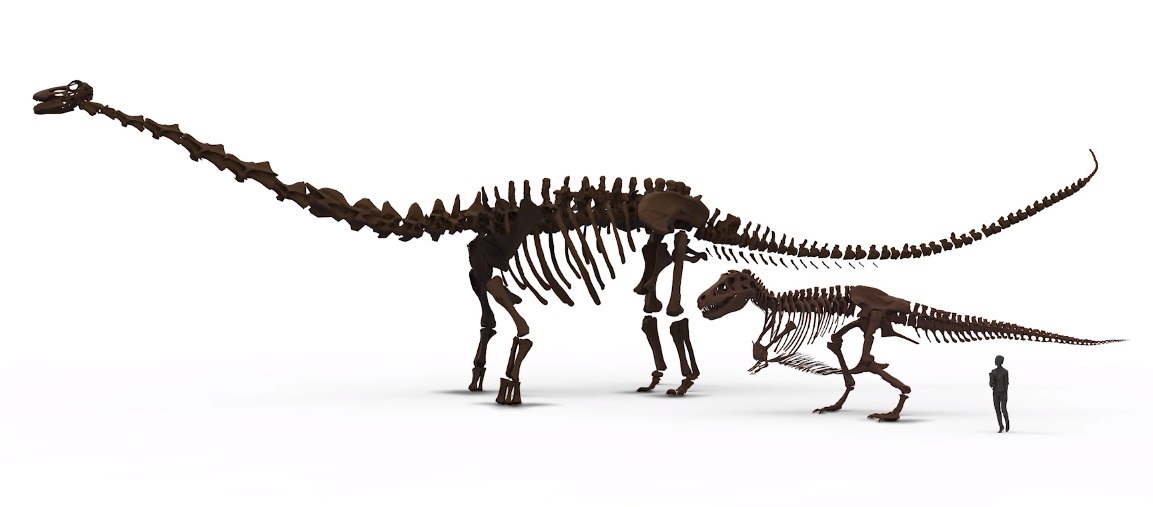
Rendering of Patagotitan and the Sue remount. Source

This morning, The Field Museum of Natural History announced two big changes to its dinosaur exhibits. First, the indispensable Sue the Tyrannosaurus will move from its prime location in the central Stanley Field Hall and into Evolving Planet, the museum’s permanent paleontology exhibit. Next, a cast of the South American sauropod Patagotitan will take Sue’s place in the main hall. Sue will be disassembled just a few months from now in February 2018. Patagotitan will be installed later next year, and Sue’s new home on the second floor opens in Spring 2019 (perhaps deliberately, this is within weeks of the National Fossil Hall’s reopening at the Smithsonian).

Sue has been the Field Museum’s defining attraction since the skeleton was acquired in 1997. It is the most complete Tyrannosaurus yet found, but it is also more than a natural history specimen. Sue is part of the pantheon of Chicago landmarks, and the public’s association of the mount with the city it resides in has all but eclipsed the legal battle that preceeded it’s acquisition.
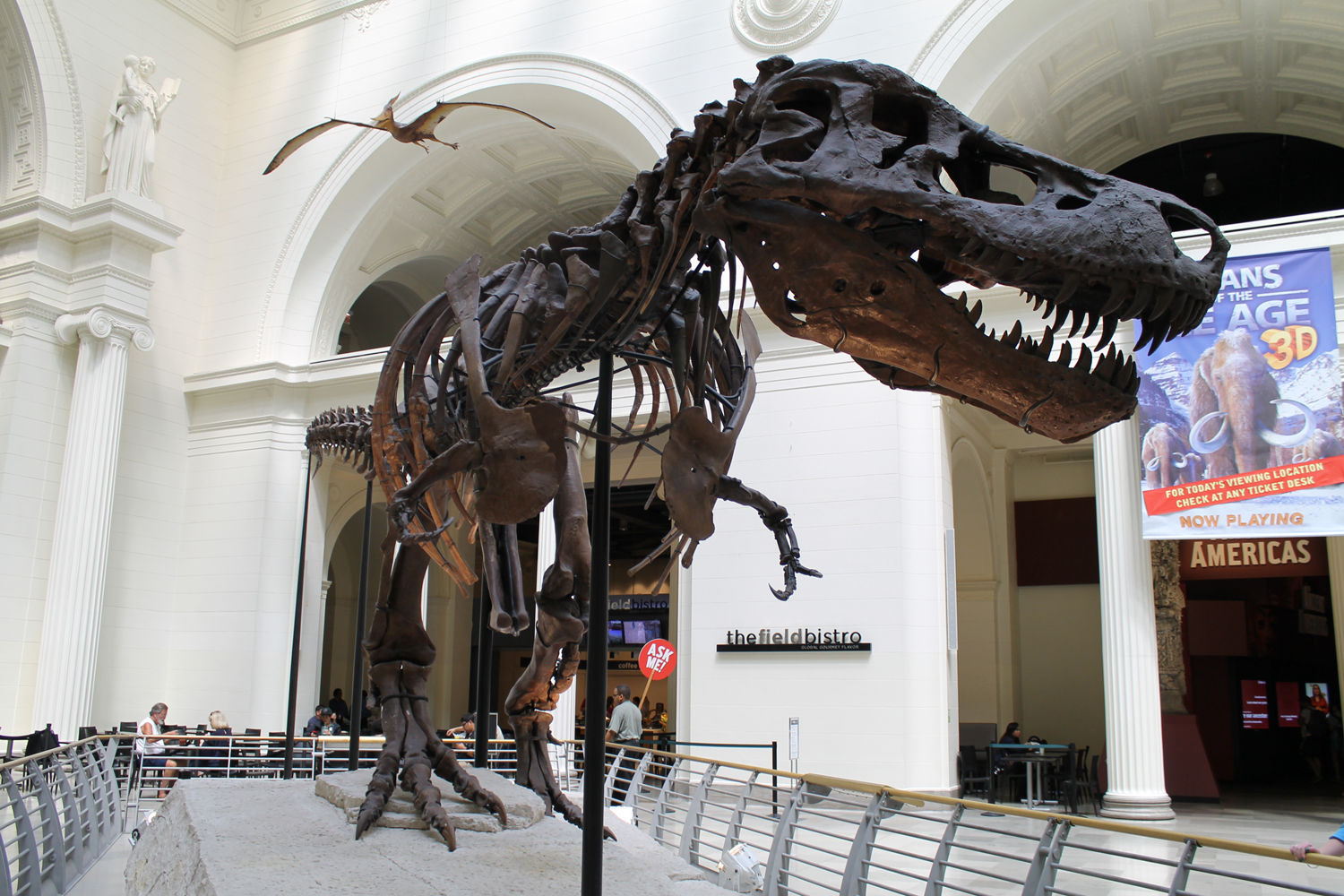
The current Sue mount has a touch of “grenade-swallowing syndrome.” Photo by the author.

Nevertheless, the Sue mount that has been on display for 17 years is not perfect. Assembled by Phil Fraley Productions, the mount has been the subject of grumbling among tyrannosaur specialists for years: the coracoids are too far apart, the furcula is incorrectly placed, the posterior ribs are unnaturally bowed out, and so forth. Happily, Sue will be getting thoroughly updated during the move. In addition to correcting the various anatomical problems, the new mount will reintroduce Sue to its gastralia (belly ribs), which have been displayed separately since 2000, and change her crouching pose to a standing one. As Collections Manager Bill Simpson explains in the announcement video, “we now know more about how a T. rex skeleton should look and Sue is going to reflect those changes.”

Sue 2.0 will take over the second floor space occupied by the recently shuttered 3-D theater. Accessible as an annex to the dinosaur section of Evolving Planet, the Sue exhibit will contextualize the Tyrannosaurus with other fossils from the Hell Creek Formation.

Rendering of Patagotitan in the Stanley Field Hall. Source

Patagotitan is the same animal that the American Museum of Natural History billed as “the titanosaur” two years ago. Argentina’s newest megasauropod was first announced in 2014 but was formally named and published by José Carballido and colleagues just three weeks ago. While not technically the biggest known sauropod, Patagotitan is the only dinosaur in its class known  from reasonably complete remains. The skeleton itself will be more or less identical to the cast Research Casting International produced for AMNH. However, instead of being crammed into a small room, this Patagotitan will have space to stretch out, its neck craning to look over the second story mezzanine. The Field Museum exhibits team also wants visitors to be able to walk under and even touch the cast skeleton.

What do I think about all this (asked nobody)? I’m thrilled with the plans for Sue – it’s great that even though Sue is such an important symbol for the Field Museum, they don’t consider it a static piece. Much credit is due for the museum’s willingness to invest in their star attraction by keeping it up to the latest scientific standard. In addition, I never entirely liked how disassociated Sue was from the rest of the paleontology displays, and it’s nice to know that somebody at the museum must have felt the same way. There’s something to be said for giving the skeleton pride of place, but ultimately I think museumgoers will be better served by seeing Sue contextualized within the story of life on Earth.

While I love me some megasauropods, I can’t help but be less excited by the Patagotitan. I realize that most people don’t go to every natural history museum, but two identical casts already exist. To be fair, the Field Museum Patagotitan will be in a very different setting from its AMNH predecessor (although it may turn out rather like the Royal Ontario Museum Futalognkosaurus). Still, I would rather have seen something more unique to the Field Museum. One idea would be to bring back the Brachiosaurus reconstruction, and display it side-by-side with a remount of the historic Apatosaurus currently in Evolving Planet. Both specimens are tied to the museum’s own expeditionary history, and together would tell the remarkable story of Elmer Riggs. The Apatosaurus in particular could anchor a Field Museum retrospective, while images of the three different locations it has been displayed in since 1908.

The last time a sauropod graced the Stanley Field Hall. Source

Somebody more cynical than me might point out that switching up iconic displays is becoming a predictable way for museums to generate press and manufacture controversy. For example, the Natural History Museum in London got no less than three media splashes when they announced Dippy the Diplodocus was to be replaced, actually removed Dippy, and finally unveiled the remounted blue whale in Hintze Hall earlier this summer. Nevertheless, there is a strong case to be made that stirring up public reactions in this way is an effective way to keep the people interested in their museums. As Field Museum president Richard Lariviere told the Chicago Tribune, “the public doesn’t understand that the science…we convey is changing on an almost hourly basis here. I talk to people all the time who think that since they’ve been to the Field Museum 10 years ago they’ve seen it. By transforming the central space, we hope to convey that exact message.”

At any rate, we’re in for some great new dinosaur displays at the Field Museum over the next couple years. What do you think of the upcoming changes?
6 Comments

Filed under dinosaurs, exhibits, FMNH, fossil mounts, museums, opinion, sauropods, theropods

A 21st Century Hall of Mammals – Part 2

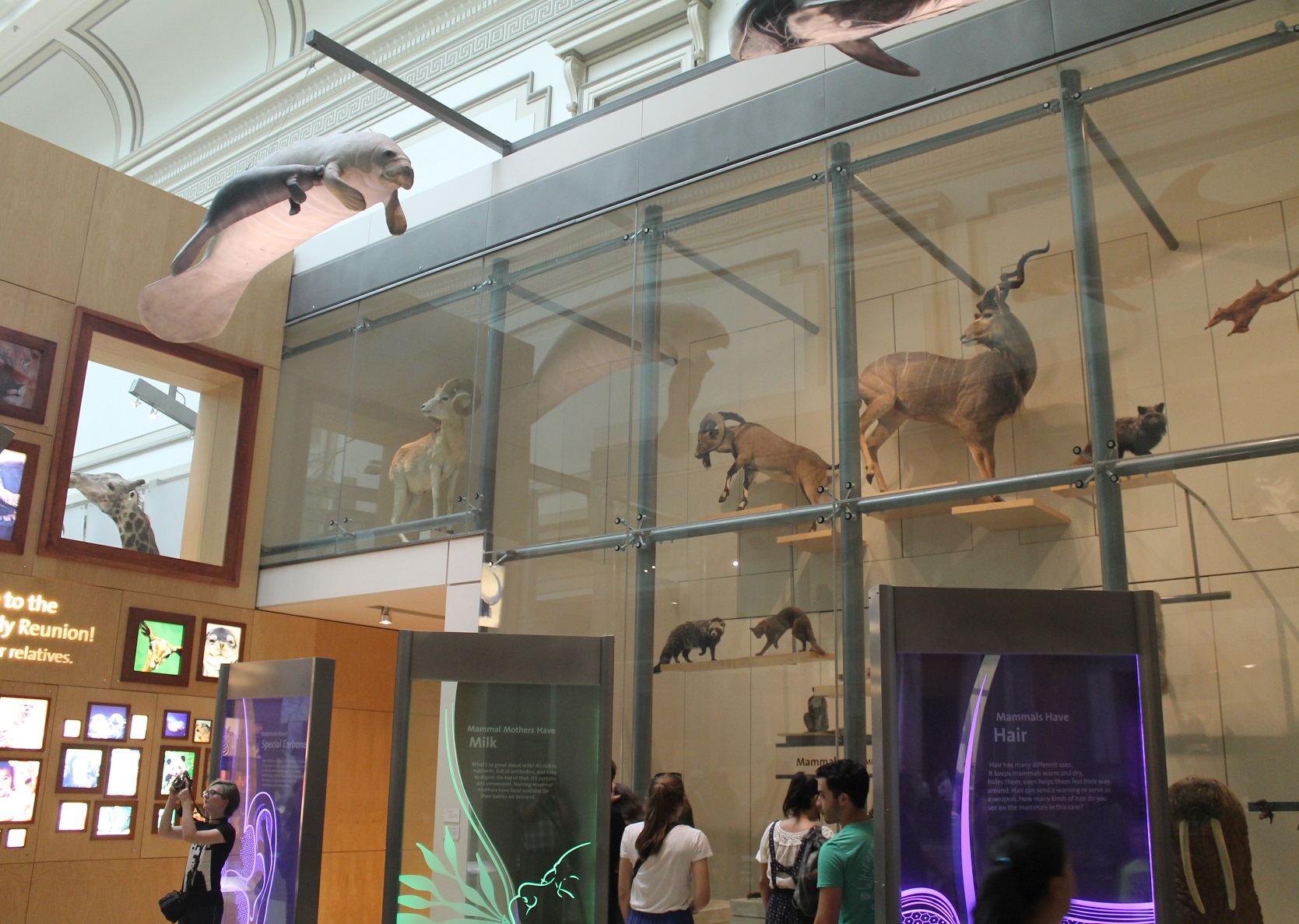
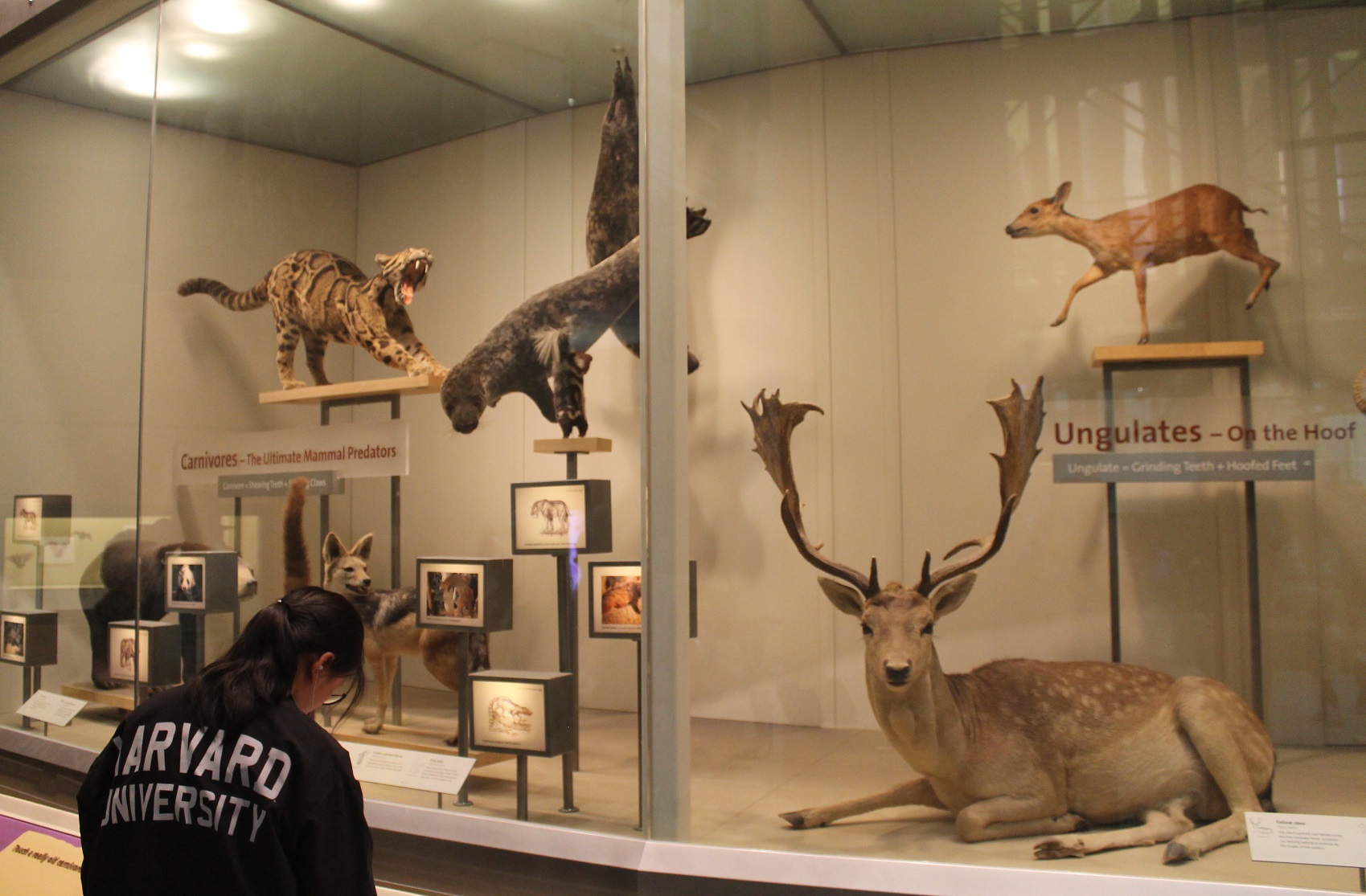
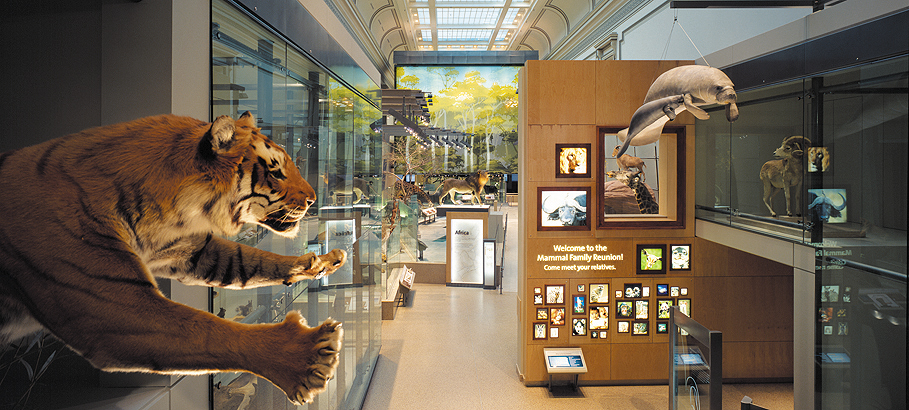
Old and new taxidermy pieces introduce visitors to their extended family tree. Source

Start with A 21st Century Hall of Mammals – Part 1.

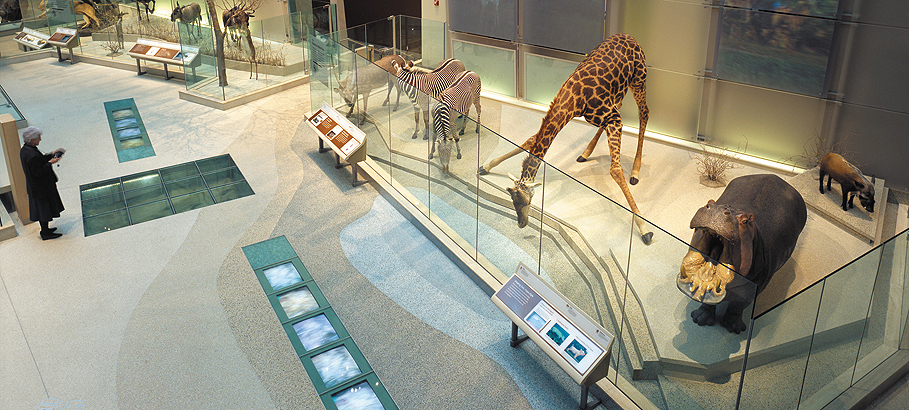
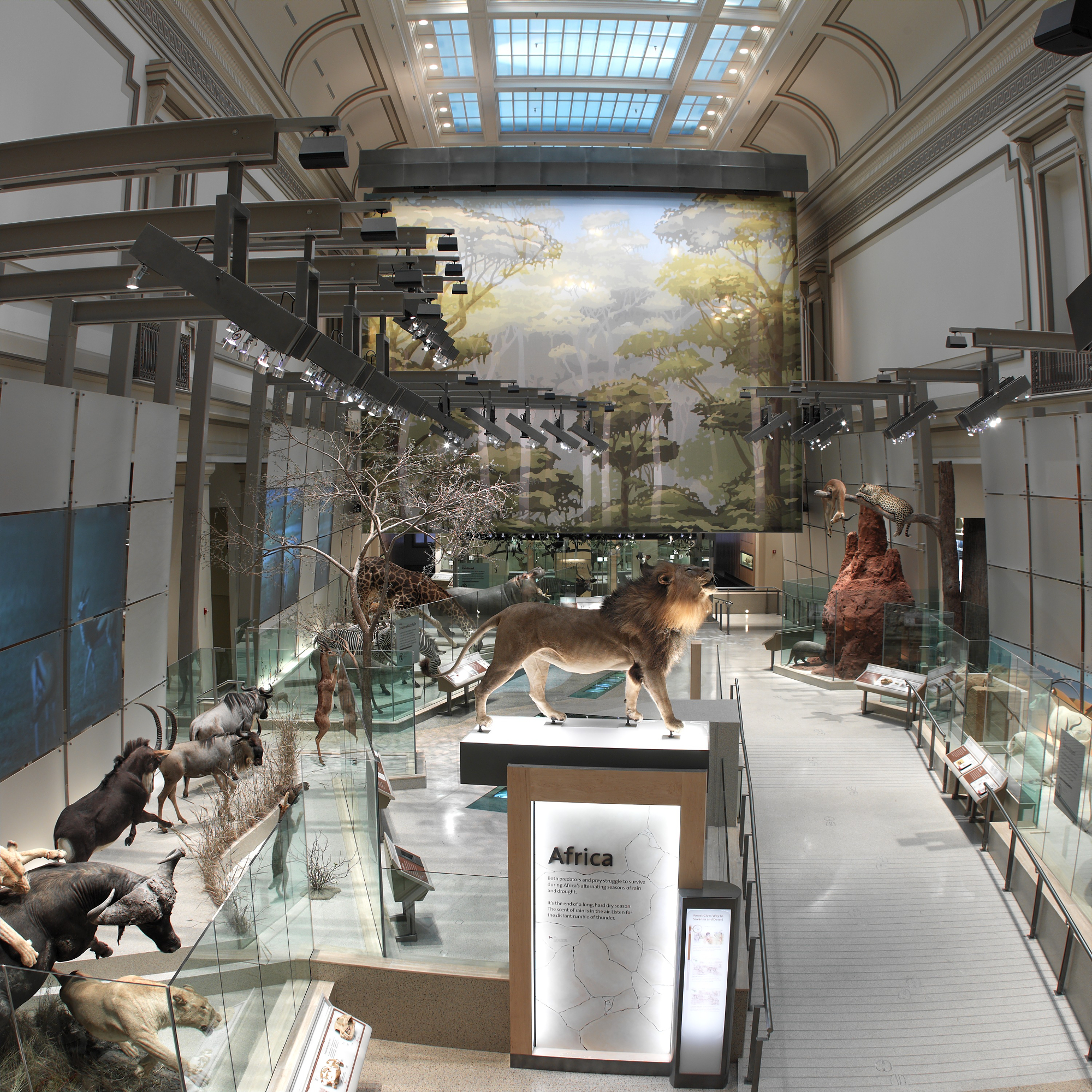
The Kenneth E. Behring Family Hall of Mammals opened at the National Museum of Natural History in November 2003. The hall’s airy, minimalist aesthetic represented a radical departure from traditional wildlife exhibits, shaking off taxidermy’s dusty reputation and utilizing the museum’s mammal collection to tell the story of evolution for modern audiences. As we saw last time, developing such an exhibit was not without controversy—everything from the source of funding to the ethics of demolishing historic dioramas came under intense scrutiny. In this post, we’ll explore the work that went into building the exhibit, and how the team’s bold vision eventually paid off.

Building the Animals

The Hall of Mammals cost $31 million and involved over 300 people. However, the job of constructing or updating the 274 taxidermy mounts was largely done by three individuals. John Matthews and Paul Rhymer were the Smithsonian’s last full-time taxidermy specialists. Rhymer in particular was a 3rd generation legacy—his grandfather had worked on the now-dismantled dioramas in the old mammal halls. The newcomer was Ken Walker, an award-winning taxidermist who moved to Washington from Alberta to work on the exhibit.

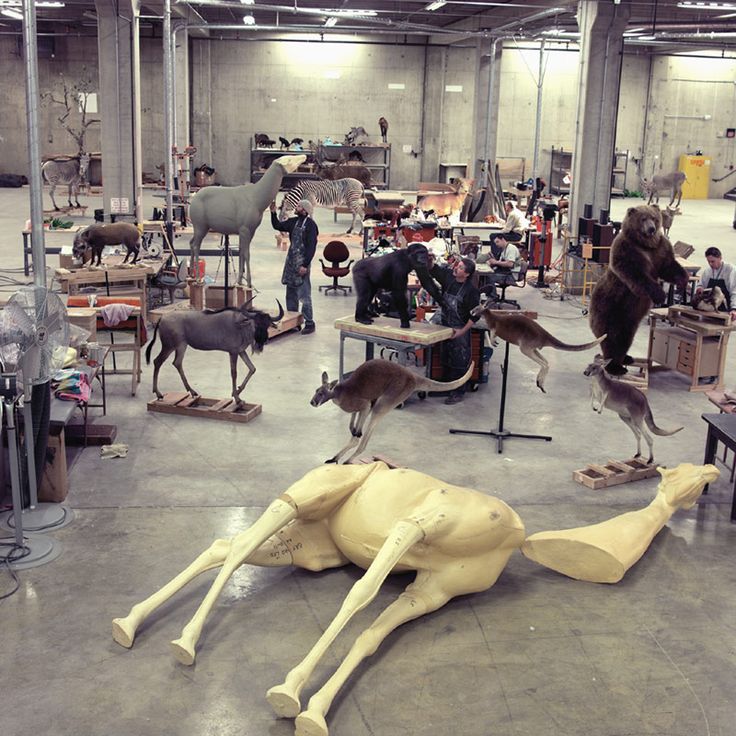
Beasts take shape in a massive workshop just outside the beltway.

Matthews, Rhymer, and Walker set up shop in a 50,000-square-foot studio in northern Virginia. As museum taxidermists, they took no shortcuts in making the animals they built look right. The process for a creating a given mount would start with hours of research, using photos and videos to get a sense of the animal being recreated. The goal is to get inside the creature’s head, to understand how it thinks, moves, and behaves. Next, the artist builds a clay sculpture, either from scratch or using a commercial mannequin as a starting point. It is at this stage that the pose and attitude are set, and the bulge of every bone and muscle must be perfect. Only then can the tanned skins be stitched onto the sculpture and final adjustments be made. A single animal can take 100 hours or more to create.

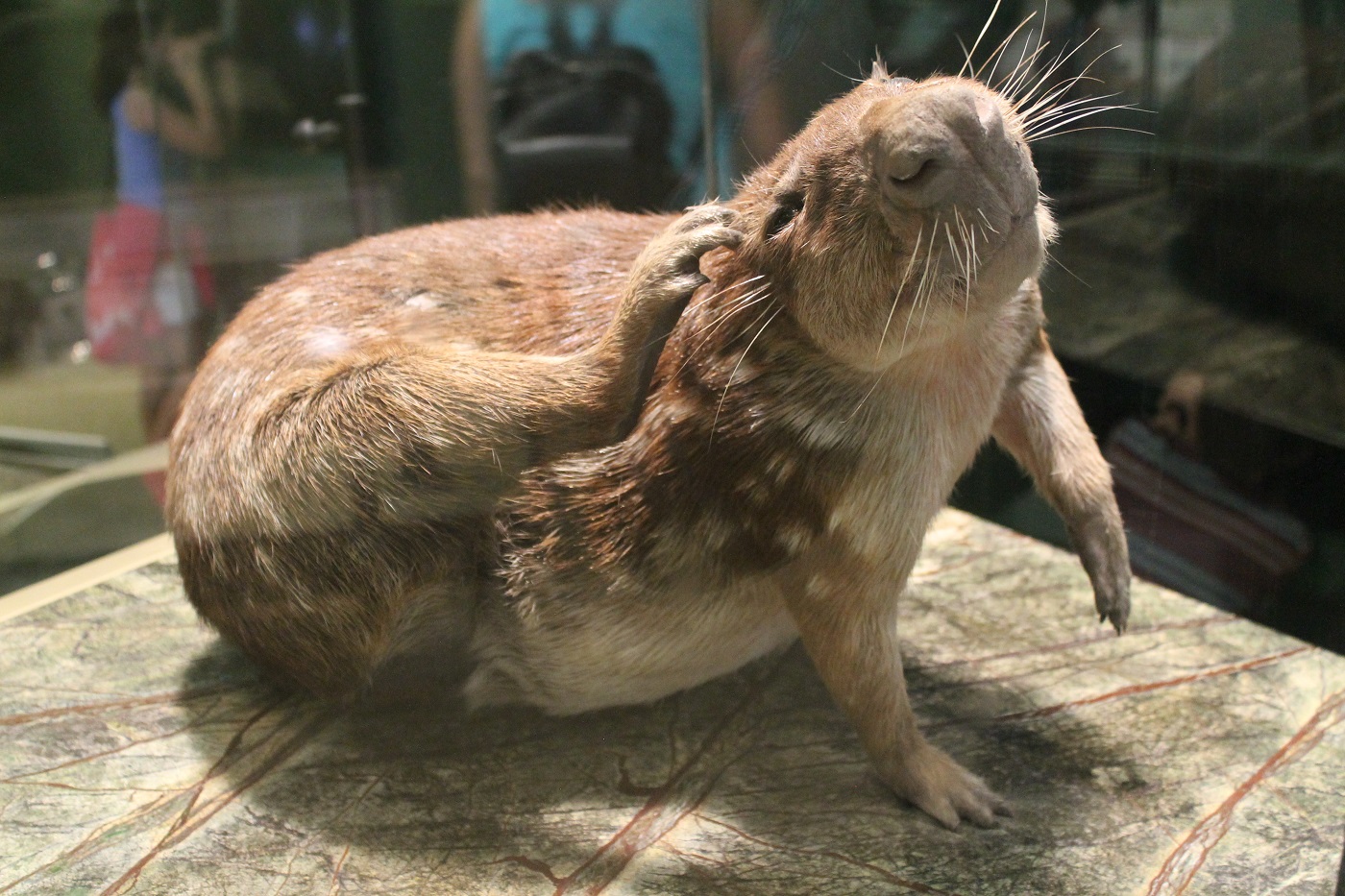
Making the animals for the Hall of Mammals was particularly challenging because the designers called for so many dramatic and unusual behaviors. These animals aren’t just standing around—the gerenuk is stretching to full height in order to browse from a tree, the bobcat is leaping to catch a bird in mid flight, and the giraffe is spreading its forelimbs and bending down to drink. Cutaways reveal an anteater’s tongue snaking into an insect nest and a blackfooted ferret interloping in a prairie dog burrow. Achieving this level of dynamism with clay, wax, and dead fur is only possible with a top-notch understanding of biomechanics.

This paca scratching itself behind the ear is an example of the expressive and dynamic mounts produced for the Hall of Mammals. Photo by the author.

90% of the featured animals are on display for the first time, and the pelts came from a variety of sources. NMNH sent out a wishlist to museums, zoos, research facilities, and private collectors. A tree kangaroo came from the National Zoo’s offsite research facility in Virginia. The okapi had recently died of old age at Chicago’s Brookfield Zoo. The playpus and koala were imported from Australia, and the leopard, jackal, and Chinese water deer were from Kenneth Behring’s personal collection.

All of the animals came from existing collections—nothing was killed specifically for the new exhibit. Given modern sensibilities and the museum’s conservation-oriented mission, this was a laudable decision. Nevertheless, using old specimens created many new challenges. The tiger and panda that had been at NMNH for over a century had faded fur, which had to be dyed. The orangutan was a lab animal preserved in a vat of alcohol. The fur was usable, but the face and hands were ruined, and had to be reconstructed. Only a male lemur was available, but some clever alterations turned it into a female carrying a baby. The Brookfield zoo okapi had hooves which were overgrown from lack of use. The taxidermists filed them down to make the animal look like its wild counterparts. In many cases, the taxidermists were not merely making dead animals look  alive, they were creating imaginary lives that these individuals never actually had.

Creating the Space

While the taxidermists were working 10 to 12 hour days building the animals, yet another team was working on creating the spaces they would inhabit. The animals would be set in minimalist, conceptual environments—a terraced floor suggests a watering hole, and metal poles and plastic tubes stand in for branches and trees. The specimens are presented like sculptures in an art gallery, or perhaps trendy gadgets at a tech showcase.

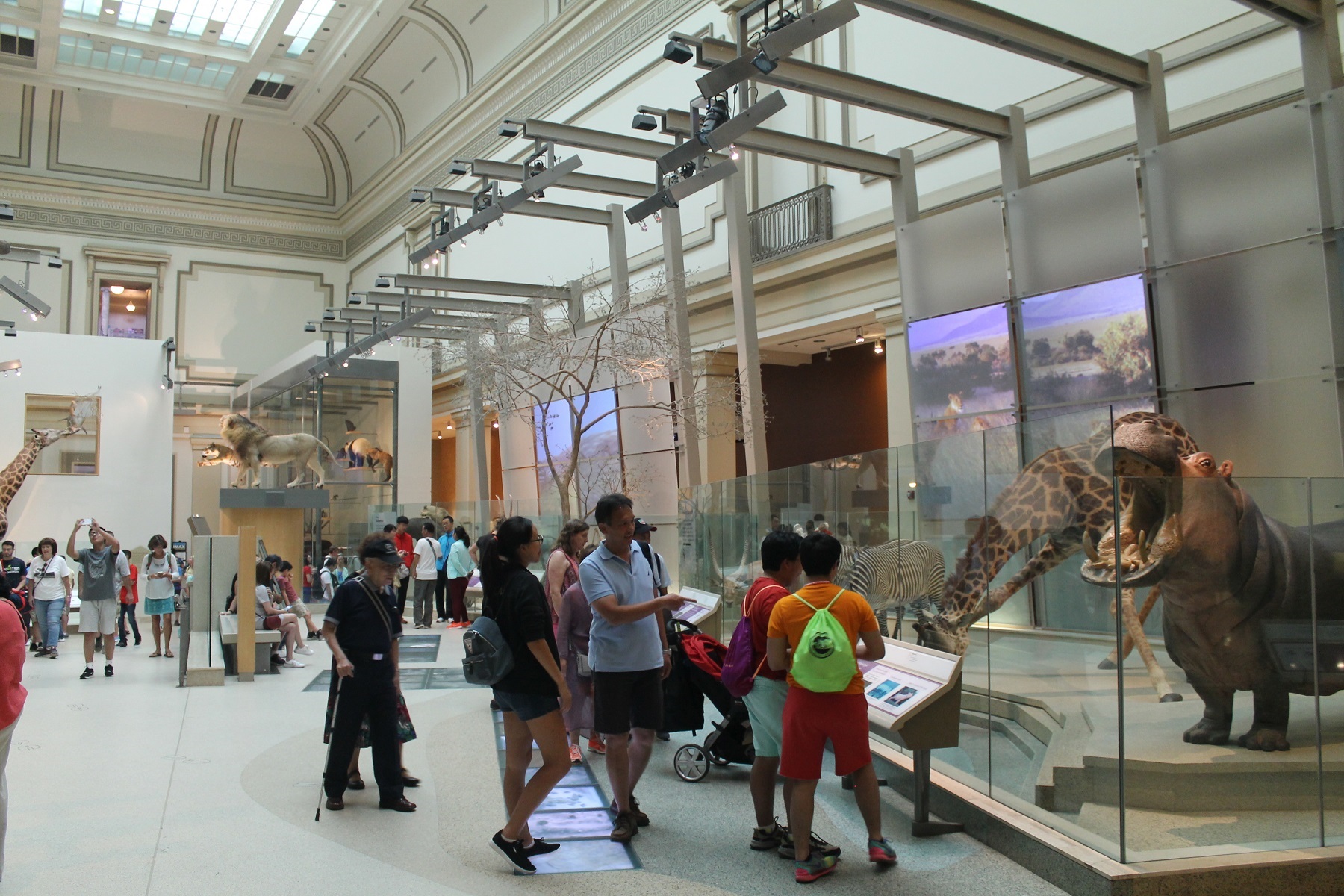
Visitors explore the Apple Store of taxidermy. Photo by the author.

A key aspect of the new hall is the restoration of the west wing’s original Beaux Arts architecture. Designed by the historic Washington architectural firm Hornblower and Marshall, the space was originally a three-story neoclassical chamber with a large skylight and ornate plaster and chrome embellishments. Over the years, false walls had been added to carve the hall into ever smaller spaces to accommodate new exhibits. The original architects may have been on to something, however. NMNH gets upwards of seven million visitors every year, and crowding is a common complaint. To help mitigate this, the Hall of Mammals design team wanted to return to the wide open floor plan, with lots of space for visitor traffic and multiple viewing angles on most specimens. Starting in 1999, Hayes, Seay, Mattern and Mattern spent two years restoring the west wing to its former glory.

Since the new exhibit furnishings couldn’t touch the historic structure of the building, creating the hall was like assembling a building within a building. The designers settled on a steel framework that would visually separate the new exhibits in the center of the hall from the classic architecture. The metal structures double as mounts for the exhibit’s complex lighting systems, and also recall the ribcage of a whale. The choice to display some of the taxidermy pieces in open settings has been a point of contention from a conservation standpoint. The mounts placed in open air, rather than climate controlled cases, can be expected to deteriorate over time. According to Project Manager Sally Love, this was a deliberate trade-off. “We felt it was important to break barriers between the animals and our visitors” said Love, “and the animals not behind glass are ones that we can more readily obtain replacements for.”

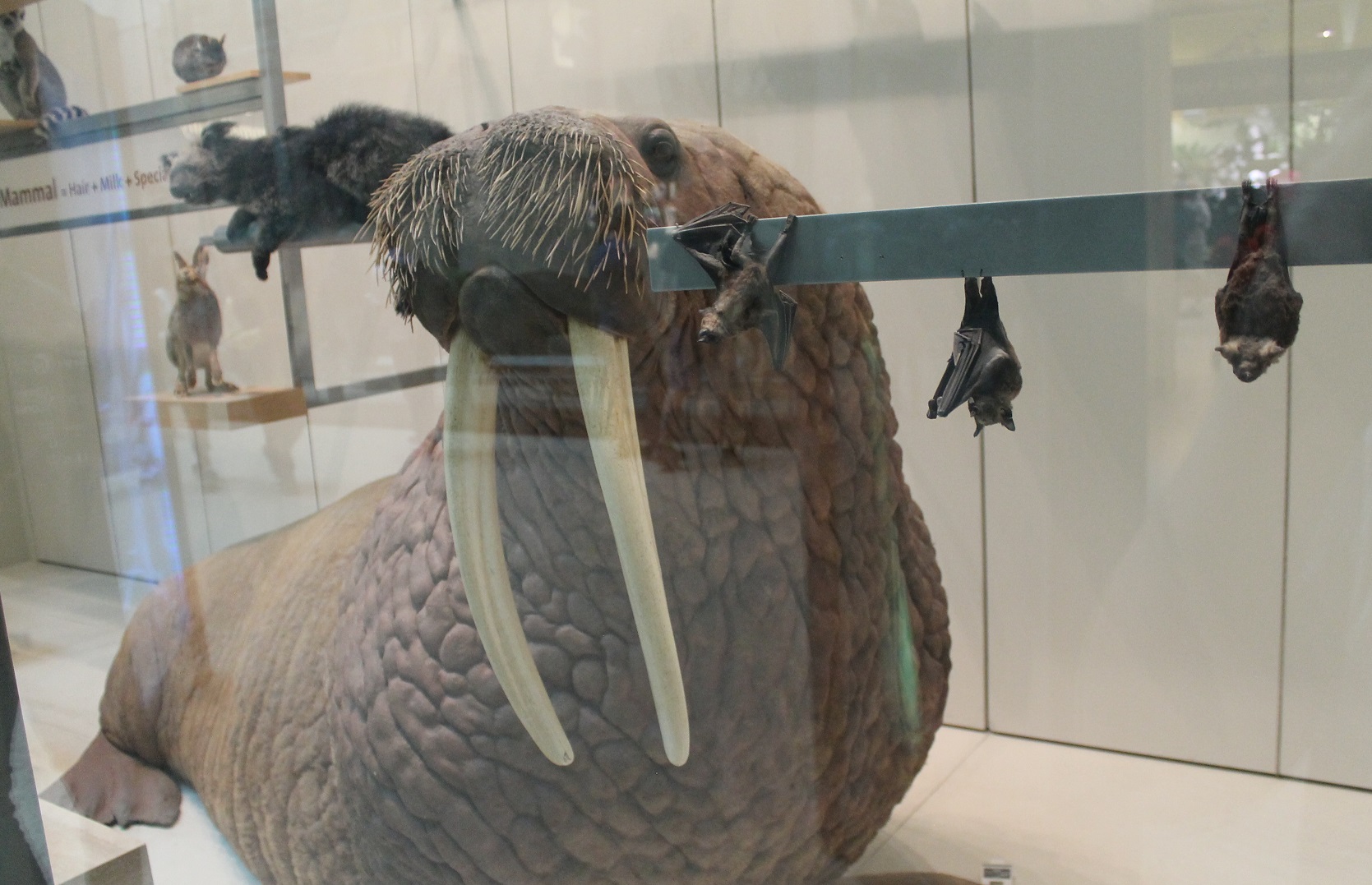
The Hall of Mammals uses contrast as a key visual motif – in this case the huge walrus juxtaposed with tiny bats. Photo by the author.

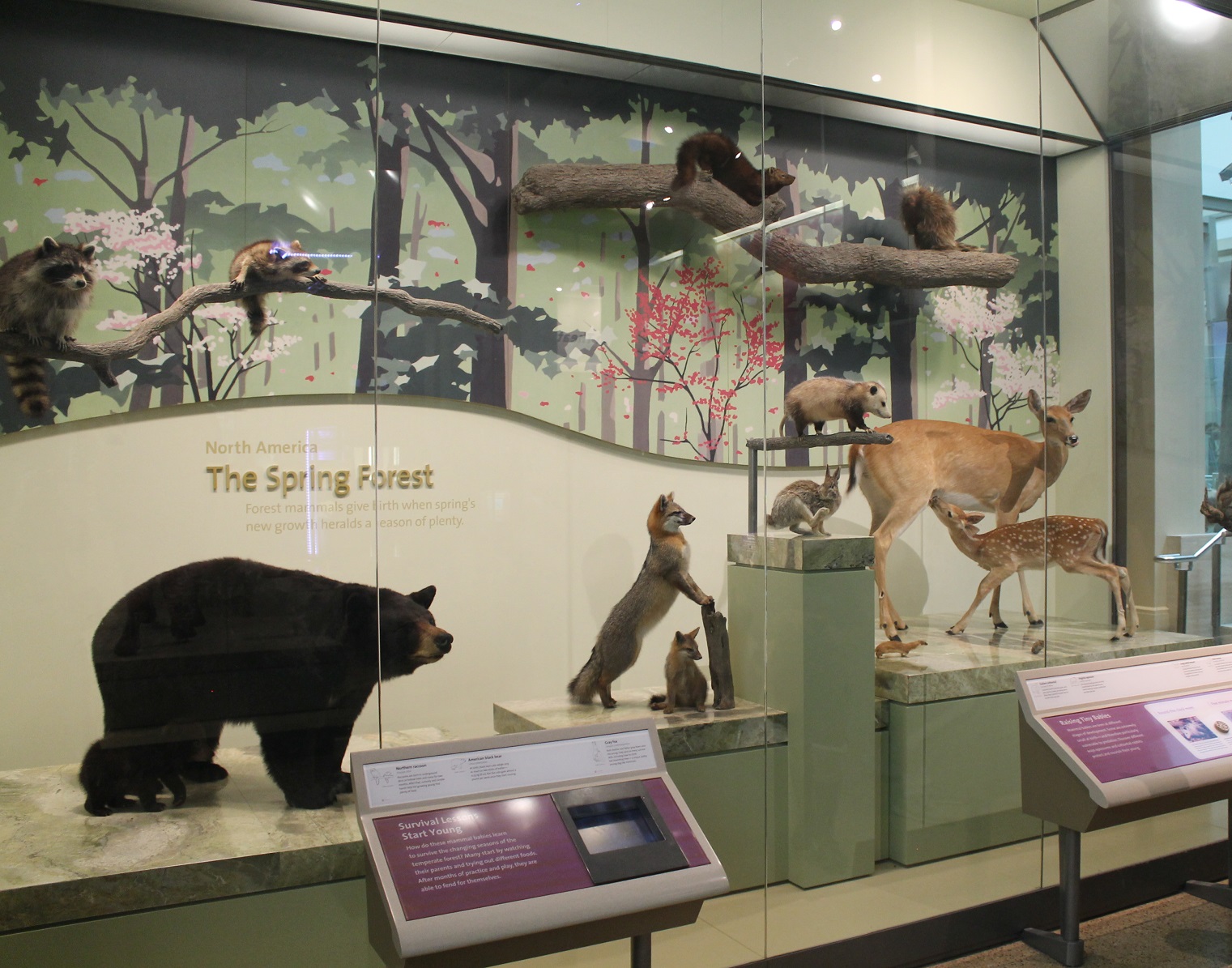
Throughout the hall, the architecture is meant to compliment and support the hall’s  interpretive themes. The exhibit drives home the point that mammals are tremendously diverse, but also similar in key ways due to their common ancestry. The entry space, flanked by two-story cases of taxidermy specimens, illustrates that diversity. Contrast is a key visual motif: large animals beside small ones, specimens exhibited high and low, and so on. Height in particular is used to keep visitors looking in all directions. A leopard snoozes on a branch over visitors’ heads, while a platypus in its burrow can only be seen by crouching down. Meanwhile, the perimeter of the hall is devoted to animals that share particular habitats, referencing the impact environmental change has had on mammalian evolution.

Animals of the North American forest. Photo by the author.

Among the most exciting parts of the exhibit is the east African watering hole in the center of the hall. Since the taxidermy mounts are static, the designers filled the space with video screens and dynamic lighting to keep the scene in motion. Footage of animals in motion cycles on rear-projected frosted-glass panels behind the mounts, while screens set in the floor show footprints and evidence of changing seasons. Suzanne Powaduik designed the immersive light effects, which repeat every ten minutes. The highlight is a thunderstorm heralding the arrival of the rainy season, accomplished with sound effects and a xenon flasher. Director of Exhibits Stephen Petri explains how the special effects tie in with the exhibit’s narrative: “evolution occurs over long periods of time but is a response to changes that happen moment to moment.”

Legacy

The completed Hall of Mammals occupies 25,000 square feet, minus about 3,000 annexed by a gift shop and special exhibit space. It contains 274 taxidermy specimens, 12 fossil replicas, and numerous sculptures and interactives. The hall is the culmination of five years of work – a long time to be sure, but a breakneck pace compared to the 25 years it took to complete the classic Akeley Hall of African Mammals at AMNH. It was also one of the biggest taxidermy projects attempted in the past 80 years, and for at least a little while, it made Matthews, Rhymer, Walker, and their peculiar trade into stars.

Although the animals themselves are motionless, light, sound, and video fill the space around them with life. Source

The Hall of Mammals received at least nine industry awards, and has become a benchmark for exhibits in development today. Teachers have also praised the exhibit – writer Sharon Berry’s text is pitched for families, and written with National Science Foundation Life Science Standards in mind. While the exhibit has showy special effects and some playground-like elements, the meaning and message is omnipresent.

While historic wildlife dioramas are incredible works of art and science, they are absolutely of another time. Indeed, a major part of their appeal is that they are a look into the past, to an era when naturalists believed ecosystems could be summed up in a window box. For all their meticulous detail, dioramas have never been able to truly recreate nature. They are uncanny reflections of nature, filtered through the worldview of their creators. Dioramas have great cultural and intellectual value, and it is a tragedy whenever one of these irreplaceable time capsules is lost. At the same time, though, NMNH should be commended for stepping outside the box (so to speak). The Hall of Mammals does not attempt to replicate the experience of viewing living wildlife – it showcases the diversity of nature in a way that only a museum can. It’s gorgeous, engaging, informative…and it’s a beast all its own.

References

Liao, A. 2003. Natural history exhibits venture beyond black-box dioramas. Architectural Record 11:04:275279.

Milgrom, M. 2010. Still Life: Adventures in Taxidermy. New York, NY: Mariner Books.

National Park Service. 2004. Mammal Hall Study Report: Evaluation by National Park Service Media Specialists of New Exhibits at the National Museum of Natural History, Smithsonian Institution, Washington, Dc. https://www.nps.gov/hfc/pdf/imi/si-mammal-hall-report.pdf

Parrish, M. and Griswold, B. 2004. March 2004 Meeting Report: Mammals on Parade. Guild of Natural Science Illustrators. http://www.gnsi.science-art.com/GNSIDC/reports/2004Mar/mar2004.html

Polliquin, R. 2012. The Breathless Zoo: Taxidermy and the Cultures of Longing. University Park, PA: The Pennsylvania University Press.

Trescott, J. 2003. Look Alive! The Washington Post. https://www.washingtonpost.com/archive/lifestyle/2003/07/14/look-alive/d1944407-ffbb-4e1f-8e06-06cd9ddec57d

3 Comments

Filed under exhibits, mammals, museums, NMNH

A 21st Century Hall of Mammals – Part 1

The Hall of Mammals upon its 2003 opening. Photo by John Steiner, courtesy of the Smithsonian Institution Archives.

A century ago, before zoos were widespread and before wildlife videos were a click away, mounting animal pelts on mannequins was the best way to bring nature to an increasingly industrialized populace. Today, taxidermy exhibits seem inherently antiquated, even creepy. Taxidermy is by no means a dead art (competitions are still going strong), but the practice has certainly lost some of its grandeur. For most, the aversion to taxidermy begins and ends with the discomfort of being confronted with a dead animal. There is of course far more complexity to unpack, from the uneasy suspension of disbelief stemming from seeing an animal skin made to look alive to the taxidermy piece’s multifaceted identities (including natural specimen, work of art, historic relic, and so forth). Who was this creature, and how did it die? How did it end up on display? How long has this animal endured its second life? These are the questions that fill visitors’ minds when confronted with a taxidermy exhibits. This presents a challenge for museums seeking to continue to use these specimens to educate visitors about ecology, evolution, and biodiversity. That is the problem staff at the National Museum of Natural History took on when they set out to create a taxidermy hall for a contemporary audience.

Out with the Old

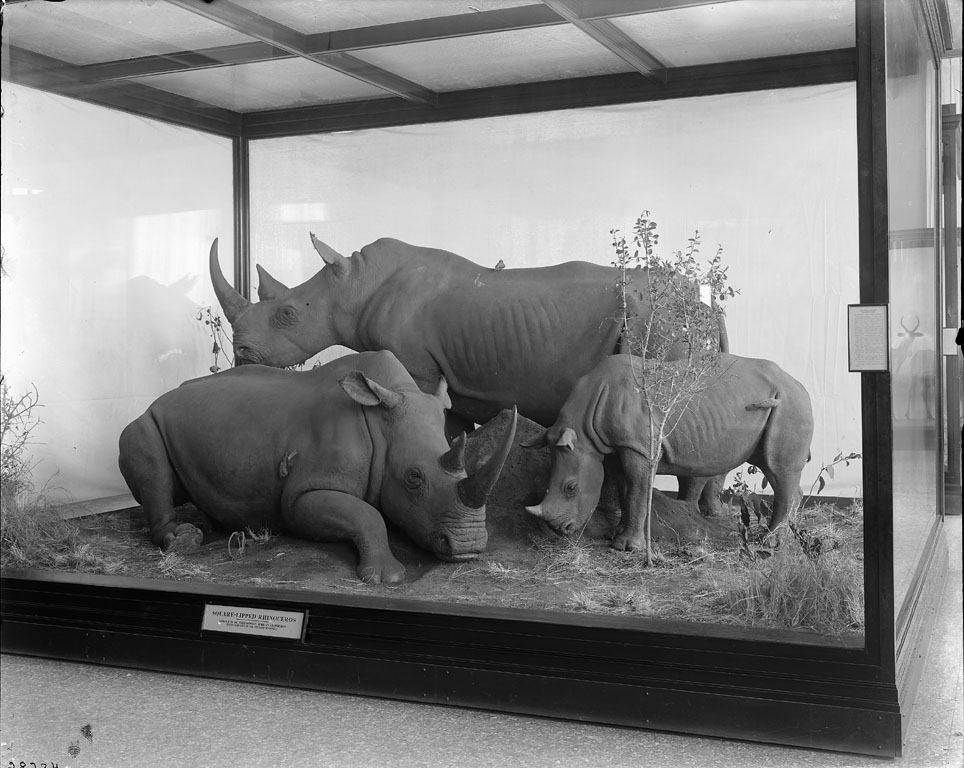
Like any century-old natural history museum, NMNH has a long history of taxidermy displays. Animal mounts filled the original United States National Museum and the Smithsonian’s various world’s fair exhibits. These specimens came from a variety of sources, including private donations and collecting expeditions by Smithsonian researchers. Several animals, such as the hippo mounted by William Brown, lived and eventually died at the National Zoo. Some of the museum’s most famous taxidermy mounts are the animals collected for the Smithsonian by Theodore Roosevelt’s expedition to Uganda, Kenya, and Sudan in 1909. Putting the Roosevelt specimens on display was a priority when the building that is now NMNH opened in 1910. The prepared animals—including a family of lions, a giraffe, three northern white rhinos, and many others—filled an entire room in the new building’s west wing.

Northern white rhinos collected during the Roosevelt expedition, as displayed in 1915. Photo courtesy of the Smithsonian Institution Archives.

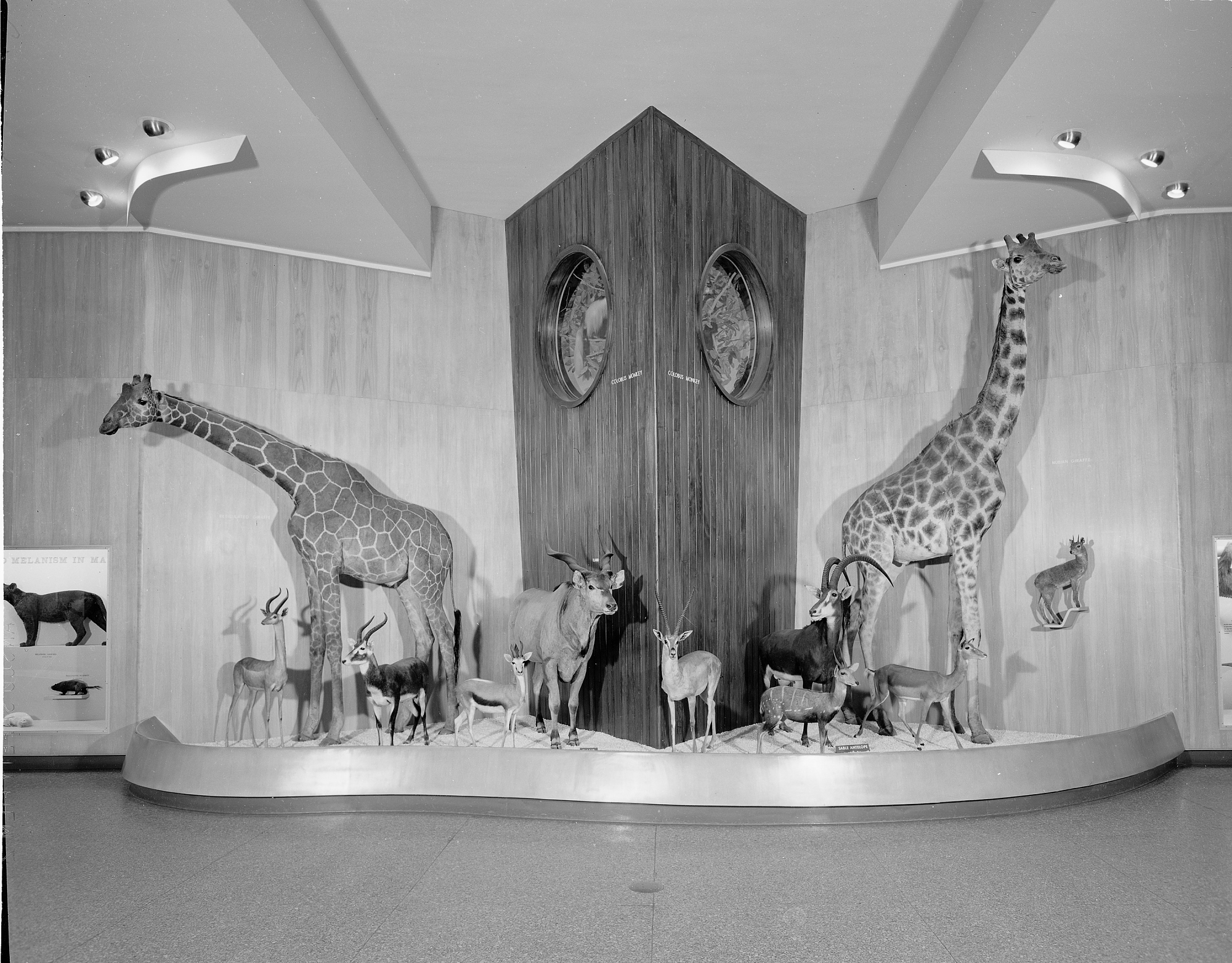
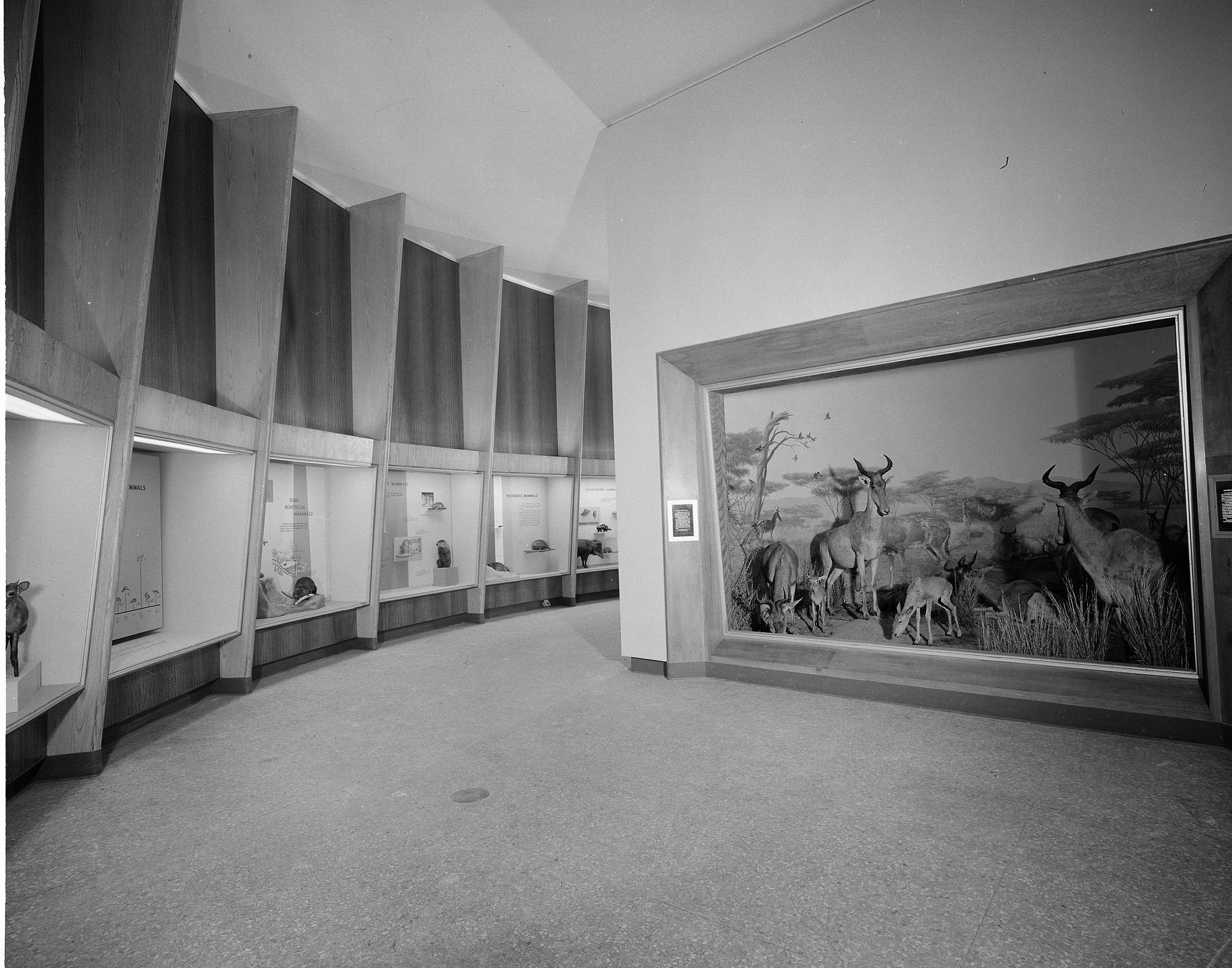
In the late 1950s, the NMNH west wing was completely remodeled as part of a Smithsonian-wide modernization project. The wing’s center hall became the Marine Ecosystems exhibit (starring a life-like blue whale model), while the U-shaped corridors surrounding it were rebranded as the World of Mammals Hall and the North American Mammals Hall. In the new exhibits, many specimens were grouped into realistic dioramas, complete with lush foreground landscapes and background murals. Other animals filled more sterile cases dedicated to particular subjects, such as “Mammals versus Climate” and “Dogs of the World.”

African ungulates in the 1959 World of Mammals exhibit. Photo courtesy of the Smithsonian Institution Archives.

By the mid-1990s, the modernized exhibits were looking a little rough around the edges. Many of the taxidermy pieces were over 80 years old, and the fur had become faded or frayed. The exhibit text was wordy and overly technical for the average museumgoer. In 1998, the Smithsonian Institutional Studies Office underwent a detailed evaluation of the mammal exhibits, which involved interviewing hundreds of visitors about their reactions to the halls. Overall, visitors seemed satisfied with the exhibits, but the evaluation nevertheless provided a lot of useful information.

The 1959 exhibits mixed complete dioramas with simpler cases covering specific topics. Photo courtesy of the Smithsonian Institution Archives.

Although more than half of museum visitors passed through the mammal exhibits, it was seldom seen as the main attraction. For most visitors, the mammal halls were neither the first exhibit they saw, nor their favorite part of the museum. Older visitors tended to respond better to the mammal exhibits than children or teenagers, who saw the halls as old, boring, or creepy. Indeed, the yuck factor of the taxidermy and the specter of death in general was on many visitors’ minds. While they were often not comfortable talking about it, many visitors expressed concern about the fact that the animals on display were dead, and wondered about how they ended up that way. Out of 750 visitors, 11% were sad or uneasy about the taxidermy and 5% were outright disturbed.

In with the New

In 1997, California real estate developer Kenneth Behring donated $20 million to fund a new mammal hall at NMNH. At the time, this was the largest single donation the museum had ever received, and it presented an exciting opportunity. However, there was a conflict of interest: Behring was a big game hunter with a history of going after threatened species. For example, earlier that year Behring drew criticism from the Humane Society after killing a Kara-Tau argali (an endangered mountain sheep) in Kazakhstan. In a news release, Behring stated that he followed all applicable laws and always obtained proper permits, but many individuals—both within and outside the Smithsonian—were concerned that his hunting activities conflicted with the museum’s conservation-oriented mission. What’s more, Behring’s donation included 22 animals from his own collection, and the Smithsonian was accused of allowing him to buy his way into the institution’s prestigious exhibits.

While the Kenneth E. Behring Family Hall of Mammals bears the donor’s name, and several of his personal trophies are on display, NMNH staff have made it very clear that Behring had no say in the exhibit’s message or content. That was just as well, because developing the exhibit internally proved plenty difficult. Pencils were allegedly thrown during meetings, and one conservator chose to retire rather than work on the new hall.

Several individuals can rightly claim authorship of the Hall of Mammals, including Project Manager Sally Love and Writer Sharon Barry. However, the primary advocate for the hall’s striking and controversial design was Associate Director of Exhibits Robert “Sully” Sullivan. Sullivan envisioned a wide open hall, forgoing enclosed dioramas and instead displaying animals in simple settings with lots of negative space. The idea was to keep the focus on the animals, their anatomy, and their behavior. This steel-and-glass, contemporary aesthetic had more in common with trendy tech showrooms than traditional taxidermy displays, and not everyone was initially on board.

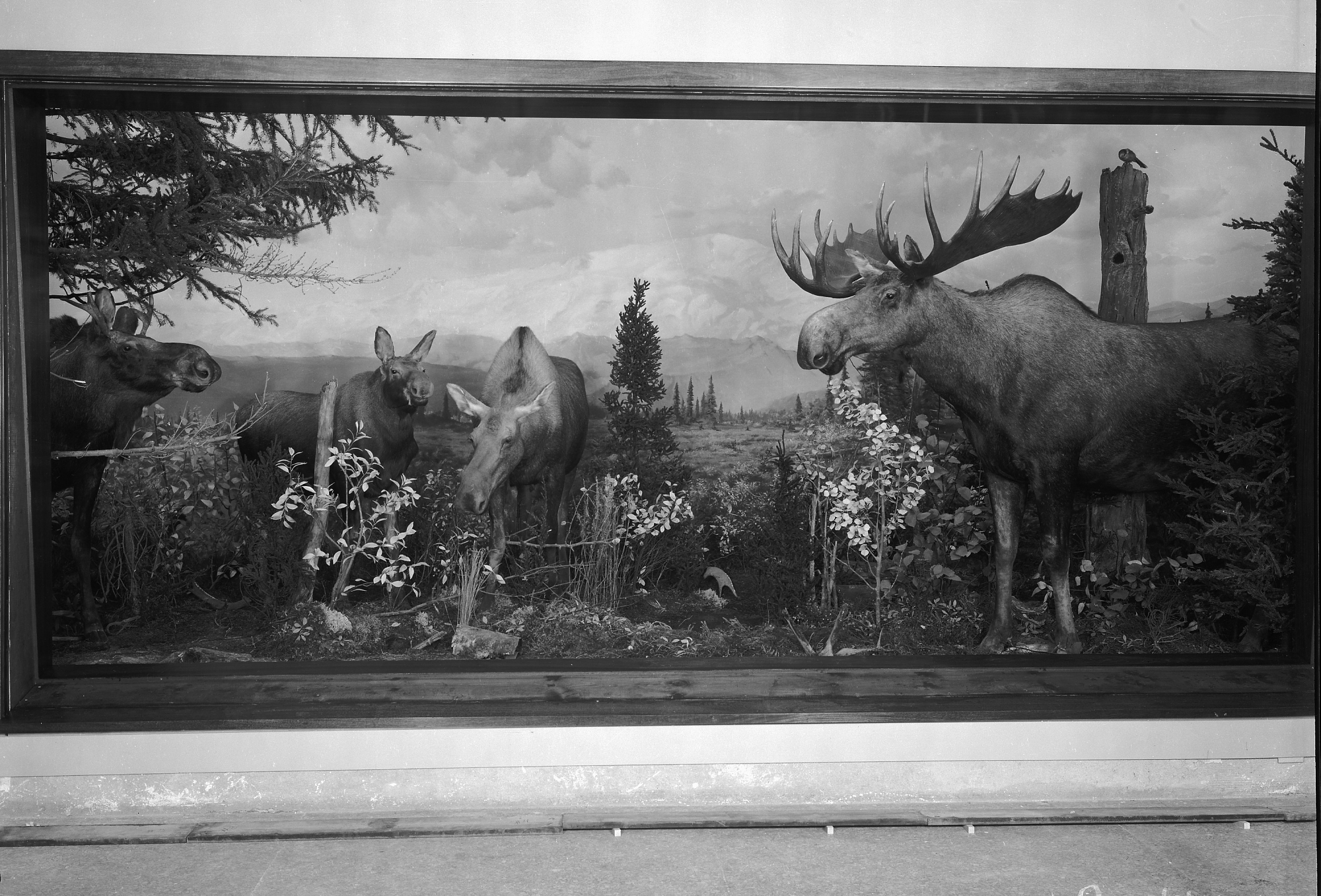
This Alaskan moose group was one of several dioramas dismantled to make way for the new Hall of Mammals. Photo courtesy of the Smithsonian Institution Archives.

Unfortunately, the bold new vision could not be accomplished without destroying the old exhibits, including the historic dioramas. In the early 20th century, the proliferation of habitat dioramas radically transformed museums. Dioramas were accessible to broad audiences and brought with them the idea that museum exhibits should tell stories. These exhibits even had a tangible effect on the increasingly urban public’s interest in conservation. Today, historic museum dioramas are often considered quaint, but in their day they represented a bold fusion of art, technology, and science.

According to Lawrence Heaney of the Field Museum of Natural History, the NMNH dioramas “were not particularly good.” Still, they were important historical artifacts and represented a huge amount of work on the part of the craftspeople who created them. After inspecting the exhibits, NMNH conservators reported that it would be possible to preserve the dioramas intact for some future use. However, top officials decided that this would be too expensive, and all of the dioramas were ultimately demolished. Some of the taxidermy mounts were cleaned up for the new exhibit, while others were passed on to other museums. Still others would up homeless, and were ultimately dismantled and harvested for parts.

The minimalist watering hole in the Hall of Mammals. Photo by the author.

While some traditionalists fretted about Sullivan’s push to eliminate the dioramas, he also made waves with his restructuring of the exhibit team. In the past, curators had primary authorship over exhibit content, but Sullivan wanted to democratize the process. He gave designers and educators a greater voice, and insisted that their specialized knowledge be heard. While many applauded the recognition Sullivan brought to professionals whose work was usually undervalued, others weren’t so sure. Research staff avoided exhibit work during Sullivan’s tenure because they felt they were being railroaded into plans that had already been made. It was a tense period, and for a time, there were no curators on the Hall of Mammals team. Fortunately, Curator of Vertebrate Paleontology Anna K. Behrensmeyer and senior mammal specialist (and former NMNH director) Robert Hoffman eventually stepped up as advisers for the project. They brought to the table a phylogenetic approach that enhanced the strictly regional layout that had been planned for the exhibit.

Phylogeny became a key theme once Behrensmeyer and Hoffman joined the exhibit team. Photo by the author.

Yet another challenge emerged when the architectural firm NMNH hired to collaborate on the design restructured their staff midway through the project. No longer getting the results they wanted, NMNH hired a new firm—Reich+Petch Design International—to finish the job, at the cost of a multi-month delay. The new exhibit architects determined that the first draft simply had too much content. If all the planned displays were included, the Hall of Mammals would be very crowded and visitor traffic flow would be encumbered. The team confirmed this by laying out a mock-up of the floor plan on the National Mall. After walking through the space, the exhibit team decided to cut about 40% of the content and tighten up the interpretive themes. The hall’s final design is all about evolution, and our own place in the mammal family tree.

With a plan in place, construction and fabrication were set to begin. We’ll cover that in the next post. Stay tuned!

References

Institutional Studies Office. 1999. Examining Mammals: Three Studies of Visitor Responses to the Mammals Hall in the National Museum of Natural history. Washington, DC: Smithsonian Institution.

Marsh, D.E. 2014. From Extinct Monsters to Deep Time: An ethnography of fossil exhibits production at the Smithsonian’s National Museum of Natural History. http://circle.ubc.ca/handle/2429/50177

Milgrom, M. 2010. Still Life: Adventures in Taxidermy. New York, NY: Mariner Books.

National Park Service. 2004. Mammal Hall Study Report: Evaluation by National Park Service Media Specialists of New Exhibits at the National Museum of Natural History, Smithsonian Institution, Washington, Dc. https://www.nps.gov/hfc/pdf/imi/si-mammal-hall-report.pdf

Parrish, M. and Griswold, B. 2004. March 2004 Meeting Report: Mammals on Parade. Guild of Natural Science Illustrators. http://www.gnsi.science-art.com/GNSIDC/reports/2004Mar/mar2004.html

Trescott, J. 2003. Look Alive! The Washington Post. https://www.washingtonpost.com/archive/lifestyle/2003/07/14/look-alive/d1944407-ffbb-4e1f-8e06-06cd9ddec57d

Ulaby, N. 2010. Smithsonian Taxidermist: A Dying Job Title. All Things Considered, National Public Radio. http://www.npr.org/templates/story/story.php?storyId=125914878

Leave a comment

Filed under exhibits, mammals, museums, NMNH