Category Archives: dinosaurs

The Stan Gallery

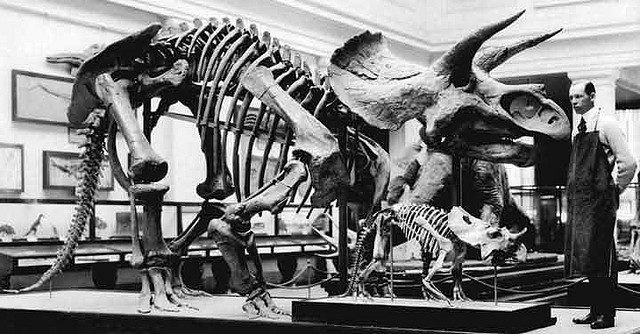
The first-ever mounted skeleton of Tyrannosaurus rex went on display at the American Museum of Natural History in 1915, and for nearly 30 years, the New York museum was the only place in the world where one could see the world’s most famous dinosaur in person. The situation today could not be more different. More than 50 individual Tyrannosaurus specimens of varying degrees of completeness are now known, and thanks to casting technology the number of Tyrannosaurus skeletons on display may well exceed one hundred.

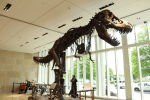
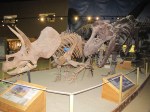
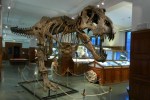
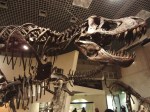
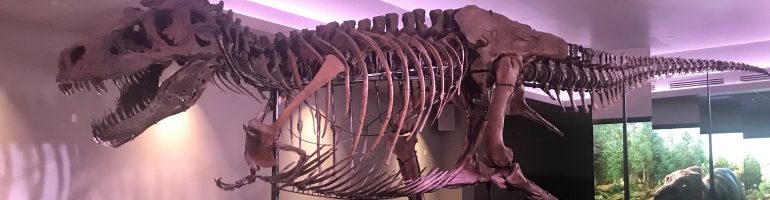
A significant fraction of those displays are casts of BHI 3033, the T. rex specimen more commonly known as Stan. Excavated in South Dakota in 1992 by the Black Hills Institute (a for-profit outfit specializing in excavating, preparing and mounting fossils), Stan is significant for being over two-thirds complete and for including the best preserved Tyrannosaurus skull yet found. Since 1996, BHI has sold dozens of casts of the complete Stan skeleton (missing bones are filled in with casts from the original AMNH T. rex, among others) to museums and other venues around the world. At a relatively affordable $100,000 plus shipping, even small local museums and the occasional wealthy individual can now own a Tyrannosaurus mount. Stan is, by a wide margin, the most duplicated and most exhibited dinosaur in the world today. As of 2008, BHI had sold more than 30 Stan casts, and that number has grown substantially since then, particularly with the increased interest in dinosaur displays in Asia.

One might argue that this extreme amount of replication lessens the cultural value of museum displays. What allure do museums have when the specimens on display are fiberglass replicas, of which identical versions can be seen at dozens of other venues, including corporate offices and amusement parks? I would counter that this is a small price to pay when we consider the immense educational benefits of this unprecedented availability of dinosaur skeletons. Children and adults around the world now have  the opportunity to see a T. rex in person, an experience that was until recently limited to citizens of a handful of large cities. What’s more, the huge body of research on Tyrannosaurus makes it a veritable model organism for vertebrate paleontology, so increasing access to T. rex fossils for international scientists is definitely helpful.

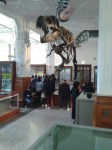
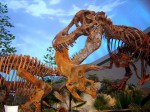
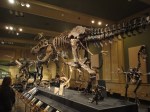
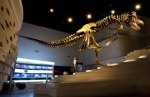
Besides, a fossil mount is far more than the fossil bones it is composed of. Mounts are in equal measures natural specimens and man-made objects, works of installation art designed to communicate a story through pose, posture and a carefully arranged mise-en-scene. Below are 14 examples of Stan on display, highlighting the great range attainable with a single dinosaur.

Image sources: Orientation UofMa_leistra, Bill and Sandra WayneReluctant Drifter, Roadschooling America, dinonikes, Texas Tigers, Momotarou2012, Helana Handbasket and Marie Thomas.

5 Comments

February 2, 2014 · 11:55 am

Review: Ultimate Dinosaurs at the Cincinnati Museum Center

Ultimate Dinosaurs: Giants from Gondwana premiered in June 2012 with considerable fanfare at the Royal Ontario Museum (ROM) in Toronto. Developed by a ROM team led by David Evans and Matthew Vavrek, Ultimate Dinosaurs showcased the dinosaurs of the southern hemisphere, demonstrating how geographic isolation created Mesozoic ecosystems remarkably different from the menageries we are used to seeing in North American museum displays. The exhibit included 20 dinosaur mounts in all, including many taxa never before seen in museums above the equator.

I never made it to the inaugural showing of Ultimate Dinosaurs, but fortunately the show is now on the road. I saw it at the Cincinnati Museum Center (CMC) earlier this week, where it will remain through January 5th before moving on to Minneapolis. The exhibit assuredly does not disappoint…read on for many pictures and my musings on the design.

DPP_0001

The first room features Triassic and early Jurassic archosaurs.

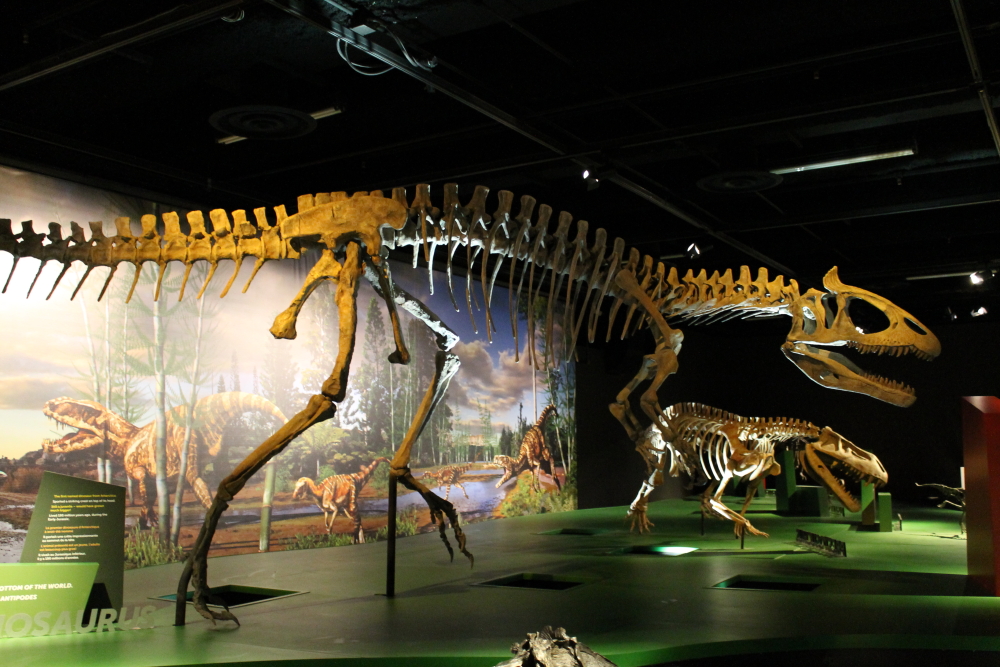
Huge banners displayed outside the CMC and in the main lobby are impossible to miss, but the Ultimate Dinosaurs exhibit itself is hidden away on the lower level, with the entrance at the end of a quiet corridor. Aside from a video screen showing a shifting map of Gondwana, no proper introduction is provided. Visitors immediately find themselves in the first large room of fossil mounts, featuring Triassic and early Jurassic archosaurs like Herrerasaurus, Eoraptor, Cryolophosaurus and the rauisuchian Prestosuchus. This first batch of mounts is lined up on an elevated platform that runs along the right side of the room. Like all the mounts in Ultimate Dinosaurs, these are casts, and are plainly assembled in “chunks”: numerous bone elements casted together as single pieces. While these shortcuts are obvious up close, this mode of construction does allow for remarkably dynamic poses, and there is no obstructive armature to block one’s view. Behind the dinosaurs is the first of several gorgeous Julius Csotonyi murals, a lively panorama of life reconstructions in a naturalistic setting.

In front of every mount is an array of attractive signs in bright, solid colors. Information is mostly provided in short sound bites or bullet points, highlighting sensible information like the animal’s diet, the meaning of its name, where it was discovered, and why it is scientifically noteworthy. There is also at least one touchscreen in front of each mount, which includes several more pages of information for the more dedicated visitor. I really liked the similar touchscreen displays at the Carnegie Museum, and these are equally impressive. This is technology used intelligently, contributing to but not overwhelming the primary display, while using space in an economical way. I was also impressed by the succinctness of the text. It is very difficult to condense information into short blurbs that visitors can absorb with no more than a quick glance, but the Ultimate Dinosaurs writers balanced accuracy, intrigue and brevity on every single sign. Hats off to them!

Visitors were having a hell of a time pronouncing Cryolophosaurus.

Visitors were having a hell of a time pronouncing Cryolophosaurus.

Turning left at the Massospondylus at the far end of the first room, visitors enter a long and largely empty corridor. The left wall is adorned with a series of signs explaining the historical discovery of and evidence for continental drift, and herein lies my primary concern with the exhibit as a whole. The story being told in Ultimate Dinosaurs, regarding plate tectonics and its effect on evolution, is an important one. Paleobiogeography is key to understanding how the natural world we know today came to be. What’s more, it’s a great example of science in action, consisting of a handful of intuitive, evidence-based concepts that can be applied to new situations and clarify new discoveries.  As such, paleobiogeography ought to frame the entire exhibit. I would have placed the big ideas and central questions (Why are similar organisms sometimes found on opposite sides of oceans? What happens when populations or ecosystems are isolated from one another?) at the beginning, and ensured that they were reinforced in every display with recurring terms, imagery and motifs. The paleobiogeography story should guide the visitor’s experience and understanding of the exhibit.

Instead, Ultimate Dinosaurs at the CMC relegates the big ideas to secluded corners and easily-missed signs. The text itself is very clear and well-written, and supported by attractive, intuitive graphics, but it’s hidden away and or otherwise overshadowed by lists of factoids about each dinosaur. My largely unsubstantiated suspicion is that the original designers of Ultimate Dinosaurs at the ROM intended for the paleobiogeography story to be much more explicit, but this vision was compromised somewhat in order to fit the exhibit into the space available at the CMC. The unfortunate result is that the most critical information is introduced in an unorganized manner, and the exhibit is weaker for it.

Suchomimus peers in from the right, Amargasaurus and

Suchomimus peers in from the right, Malawisaurus in the middle, Argentina in back.

After passing through the switchbacking corridor, visitors reach the primary showroom. This is an enormous space filled with huge, impressive dinosaur mounts. Like the rest of the exhibit, this gallery is quite dark, with floor lights and the occasional overhead light highlighting the dinosaurs. The darkness helps to hide the unadorned walls and ceilings of the multipurpose space being used, but thankfully does not hinder one’s view of the dinosaurs. And the dinosaurs certainly do not disappoint. Even though they are casts, this exhibit was my first opportunity to see the likes of Armagasaurus, Suchomimus, Ouranosaurus and many others in person. I could walk around them, take in their scale and compare them to one another and to myself, experiences that no image or documentary can provide.

Majungasaurus and Rapetosaurus strike an extreme pose.

Majungasaurus and Rapetosaurus strike an extreme pose.

Most of the dinosaurs are in lively poses, as though the animal was frozen midstride, but a few are especially dynamic. Little Rahonavis is suspended from the ceiling, as though leaping for prey or perhaps engaging in a controlled glide to the forest floor. The Majungasaurus and Rapetosaurus, which are the only mounts directly interacting with one another, are particularly interesting. The attacking Majungasaurus has its foot up on the flank of the Rapetosaurus, and the sauropod is in a rather unusual squatting pose, with its forelimbs at what appears to be maximum flexion. I will leave it to the experts to decide whether this extreme pose is plausible, but this nevertheless serves as a reminder of what can be learned by assembling a skeleton in three-dimensional space.

Carnotaurus

Carnotaurus and Amargasaurus.

The mounts are clustered on three islands, representing Argentina, Madagascar and Niger. I do wish this organization had been made clearer to visitors, perhaps with large banners over the islands naming the dinosaurs’ location of origin. Clustered at the feet of the mounts are small cases containing a mix of original and casted fossils. Some of those are quite relevant and provide further context to the mounts: for instance, a collection of North African fossil fish near the Suchomimus illustrate the spinosaur’s probable diet. Other cases are a bit more perplexing. A series of cervical vertebrae from the North American sauropod Suuwassea is arbitrarily situated among the Madagascar mounts, and cases of cephalopods and Carboniferous plants are similarly out of place. Most of these oddball fossil displays did not come from the ROM, but were added by the CMC from their own collections. Although these fossils are fascinating and should absolutely be on display, I don’t think randomly interjecting them among the Gondwanan dinosaurs was the way to go. These displays interrupt the primary storyline and probably should have been placed elsewhere.

CWC addition

These additions from the CMC are neat, but a bit out of place.

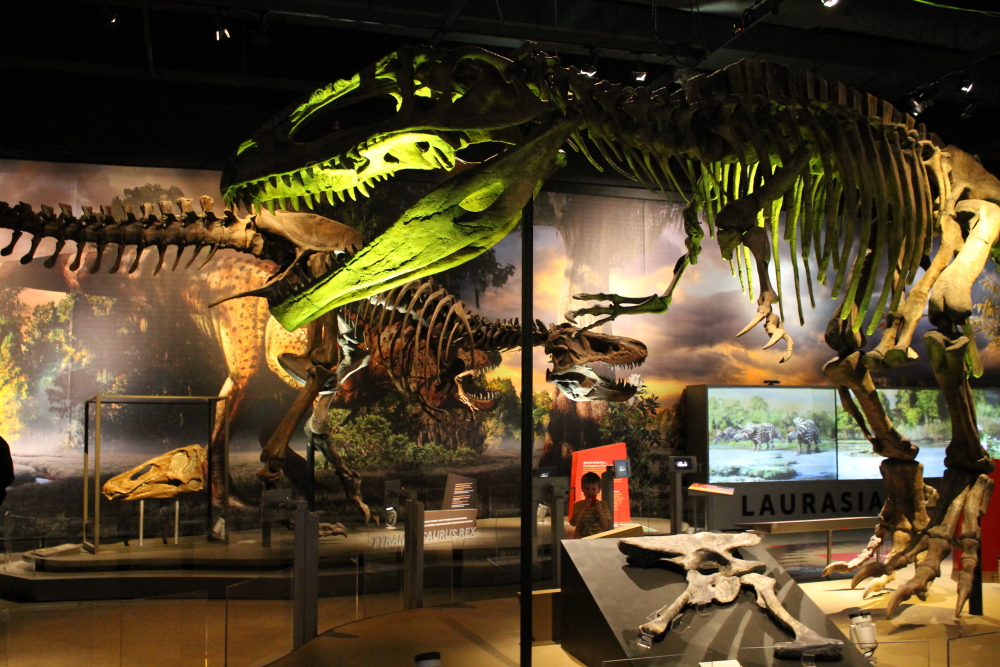
The final room showcases the exhibit’s two largest mounts, Tyrannosaurus and Giganotosaurus. It is undeniably exciting to see these two giant predators side by side, and compare how these ostensibly similar carnivores were nevertheless subtly adapted to tackle different prey. I would have made this point more obvious than the exhibit does, but I suppose sometimes you need to step back and let your specimens speak for themselves.

This room also features the much-ballyhooed “augmented reality” gimmick. These are tablet-sized screens found alongside the mounts. When you point these at the Tyrannosaurus and Giganotosaurus skeletons, a CG version of dinosaur appears on the screen. Panning and tilting the tablet in front of the mount causes your view of the CG version to adjust accordingly. I found these sort of interesting, but they were not nearly as impressive as the mounts themselves. Unfortunately, the CG dinosaurs simply didn’t look very good. I am all for the use of technology in museum exhibits, but only if it plays to our strengths. In this case, the CG dinosaurs are directly and unfavorably comparable to a wide range of films and television shows that people can see without leaving home. As hubs for lifetime learning, museums can and should offer more than that.

Tyrannosaurus and Giganotosaurus side by side. Eat it up, internet.

Tyrannosaurus and Giganotosaurus side by side. Eat it up, internet.

Despite my nitpicks, Ultimate Dinosaurs really does live up to its name. This is a very handsomely designed exhibit, and an great opportunity to see mounts of exotic dinosaur taxa. If you are at all interested in paleontology, catching this exhibit is a no-brainer. But even if you’re not, this is a rare chance to see what the vertebrate fossil record has to offer beyond T. rex and Triceratops, and learn a bit about how our world came to be.

Edit: I had mistakenly said the murals were created by Raul Martin. They are the work of Julius Csotonyi.

7 Comments

Filed under dinosaurs, exhibits, fossil mounts, museums, ornithopods, reptiles, reviews, sauropods, theropods

First Full-Sized Dinosaurs: From Crystal Palace to Hadrosaurus

Last time, we covered how Albert Koch turned a tidy profit with his less-than-accurate fossil mounts, leading credible paleontologists to avoid involvement with full-sized reconstructions of extinct animals for much of the 19th century. With the exceptions of Juan Bautista Bru’s ground sloth and Charles Peale’s mastodon, all the fossil mounts that had been created thus far were horrendously inaccurate chimeras assembled by often disreputable showmen. Serious scientists were already struggling to disassociate themselves from these sensationalized displays of imaginary monsters, so naturally they avoided degrading their work further by participating in such frivolous spectacle.

The prevailing negative attitude toward fossil mounts among academics would begin to shift in 1868, when paleontologist Joseph Leidy and artist Benjamin Waterhouse Hawkins collaborated on a mount of Hadrosaurus, the first dinosaur to be scientifically described in America and the first dinosaur to be mounted in the world. While prehistoric animals were well known by the mid-19th century, the Hadrosaurus was so bizarre, so utterly unlike anything alive today, that it truly opened people’s eyes to the unexplored depths of the Earth’s primordial history. I have written about the Hadrosaurus mount before, but its creation was such a landmark event in the history of paleontology and particularly the public understanding of prehistory that it deserves to be contextualized more thoroughly.

Discovering Dinosaurs in Britain

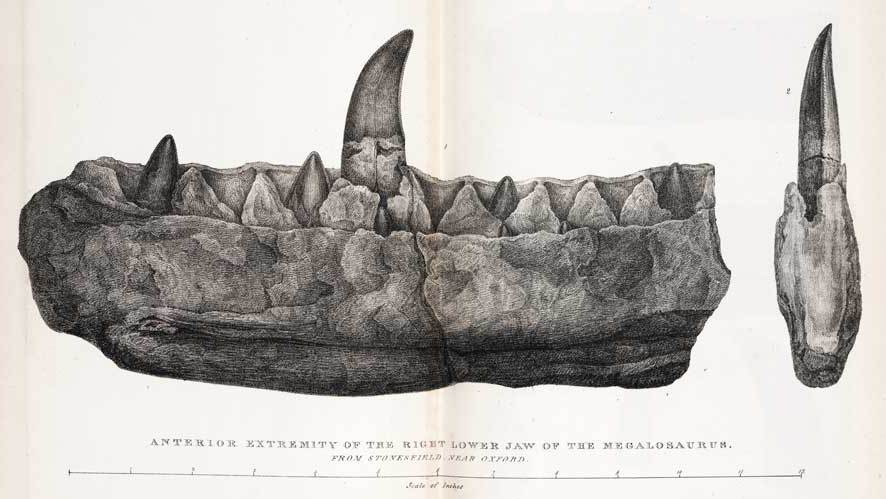
In the early 1800s, American fossil hunters were busy poring over the bones mammoths, mastodons and other mammals. Across the Atlantic, however, it was all about reptiles. Scholars were pulling together the first cohesive history of life on earth, and Georges Cuvier was among the first to recognize distinct periods in which different sorts of creatures were dominant. There had been an Age of Mammals in the relatively recent past during which extinct animals were not so different from modern megafauna, but it was preceded by an Age of Reptiles, populated by giant-sized relatives of modern lizards and crocodilians. The marine ichthyosaurs and plesiosaurs unearthed by Mary Anning on the English coast were the first denizens of this era to be thoroughly studied, but they were soon followed by discoveries of terrestrial creatures. In 1824, geologist William Buckland received a partial jaw and a handful of postcranial bones found in the Oxfordshire shale. Recognizing the remains as those of a reptile, Buckland named the creature Megalosaurus, making it the first scientifically described non-avian dinosaur (honoring the unspoken agreement to ignore “Scrotum humanum”).
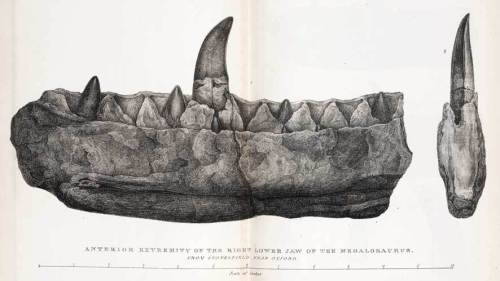
The partial jaw of Megalosaurus, the first named dinosaur.

The partial jaw of Megalosaurus, the first named dinosaur.

Of course, the word “dinosaur” did not yet exist. As covered by virtually every text ever written on paleontological history, it was anatomist Richard Owen who formally defined Dinosauria in 1842 as a distinct biological group. Owen defined dinosaurs based on anatomical characteristics shared by Megalosaurus and two other recently discovered prehistoric reptiles, Iguanodon and Hylaeosaurus (fatefully, and somewhat arbitrarily, he excluded pterosaurs and doomed paleontologists and educators to forever reminding people that pterodactyls are not dinosaurs). In addition to being an extremely prolific author (he wrote more than 600 papers in his lifetime), Owen was a talented publicist and quite probably knew what he was unleashing. The widely publicized formal definition of dinosaurs, accompanied by displays of unarticulated fossils at the Glasgow Museum, was akin to announcing that dragons were real. By giving dinosaurs their name, Owen created an icon for the prehistoric past that the public could not ignore.

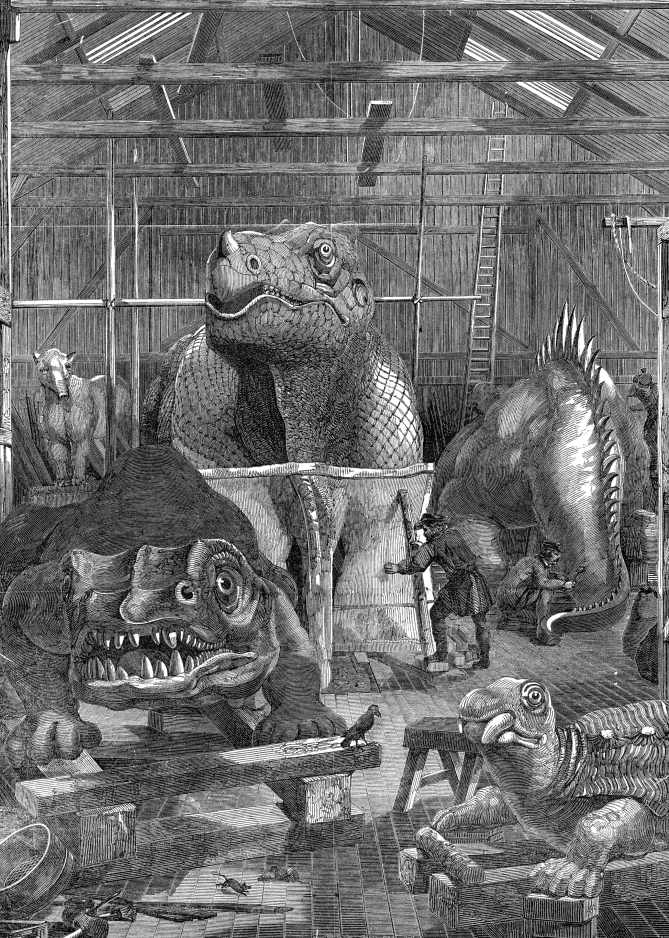
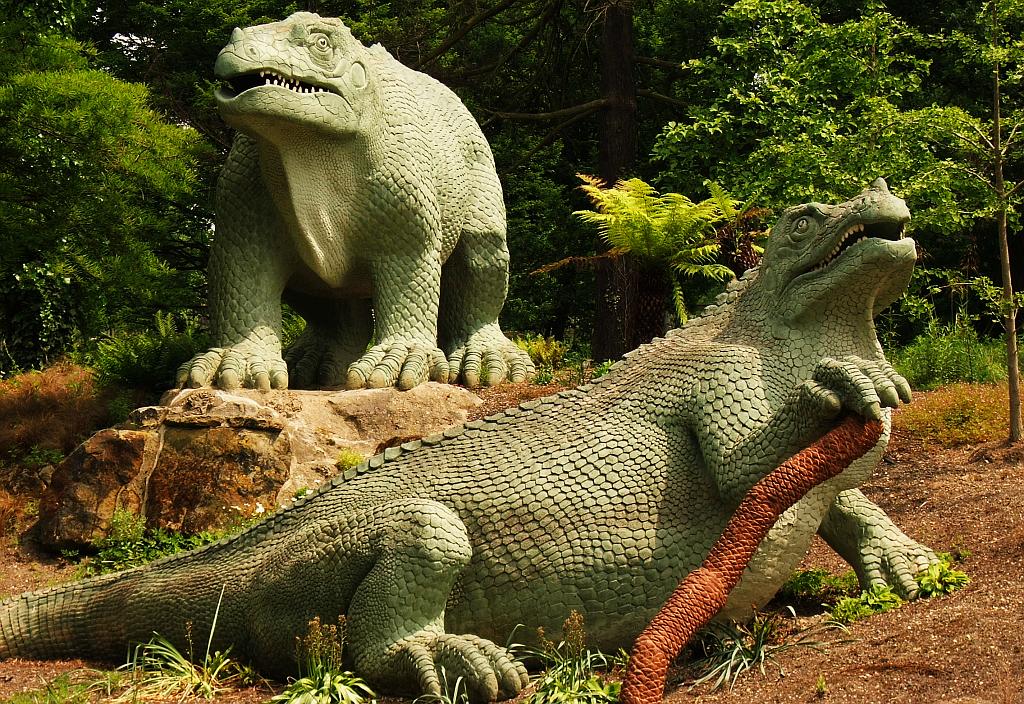
“Dinosaur” soon became the word of the day in Victorian England. Looking to capitalize on this enthusiasm for paleontology, the Crystal Palace Company approached Owen in 1852 to oversee the creation of an unprecedented new exhibit. The company was building a park in the London suburb of Sydenham, meant to be a permanent home for the magnificent Crystal Palace, which had been built the previous year for the Great International Exhibition of the Works and Industry of All Nations. Concerned that the palace would not draw visitors to the park on its own, the Crystal Palace Company commissioned Owen and scientific illustrator Benjamin Waterhouse Hawkins to create a set of life-sized sculptures of dinosaurs and other prehistoric creatures, the first of their kind in the world. The sculptures were a tremendous undertaking: the Iguanodon, for instance, was supported by four 9-foot iron columns, and its body was built up with brick, tile and cement. Hawkins then sculpted its outer skin from more than 30 tons of clay. All told, more than a dozen animals were built, including Megalosaurus, Iguanodon, Hylaeosaurus and an assortment of marine reptiles and mammals.
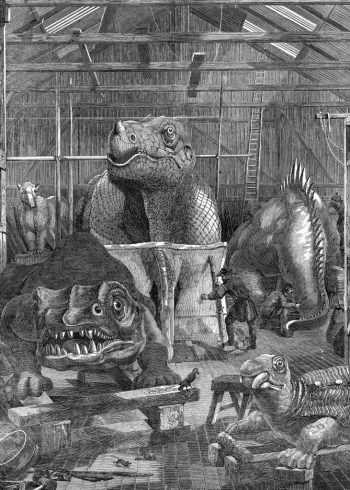
The Crystal Palace dinosaurs under construction in Hawkin's studio.

The Crystal Palace dinosaurs under construction in Hawkin’s studio.

Queen Victoria herself presided over the opening ceremony of Crystal Palace Park in 1854, which was attended by 40,000 people. This was an important milestone because up until that point, only the broadest revelations in geology and paleontology made it out of the academic sphere. But as Hawkins himself put it, the Crystal Palace dinosaurs “might be properly described as one vast and combined experiment of visual education” (Hawkins 1853, 219). The general public could see firsthand the discoveries and conclusions of the most brilliant scientists of their age, in a format that could not only be readily understood and appreciated, but experienced. Full-sized reconstructions of prehistoric animals, including fossil mounts, continue to be built today for precisely this reason.
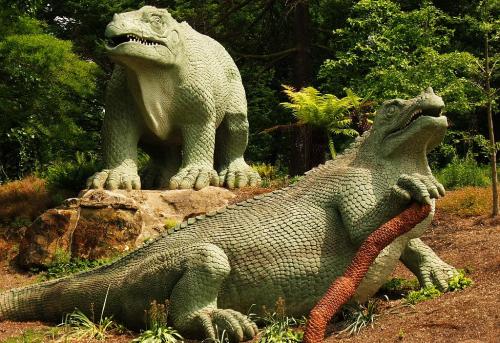
Recently restored Iguanodon sculptures. Wikimedia Commons.

Recently restored Iguanodon sculptures at Crystal Palace Park. Source

While the Crystal Palace dinosaurs are important historic artifacts and beautiful works of art in their own right, they have not aged well as accurate reconstructions. Owen only had the scrappiest of dinosaur fossils to work with, enough to conclude that they were reptiles and that they were big but not much else. As a result, the Megalosaurus and Iguanodon sculptures look like rotund lizards, as though a monitor lizard or iguana gained the mass and proportions of an elephant. By modern standards, these beasts look pretty ridiculous as representations of dinosaurs, but they were quite reasonable given what was known at the time, at least for a few years.

Dinosaurs of the Jersey Shore

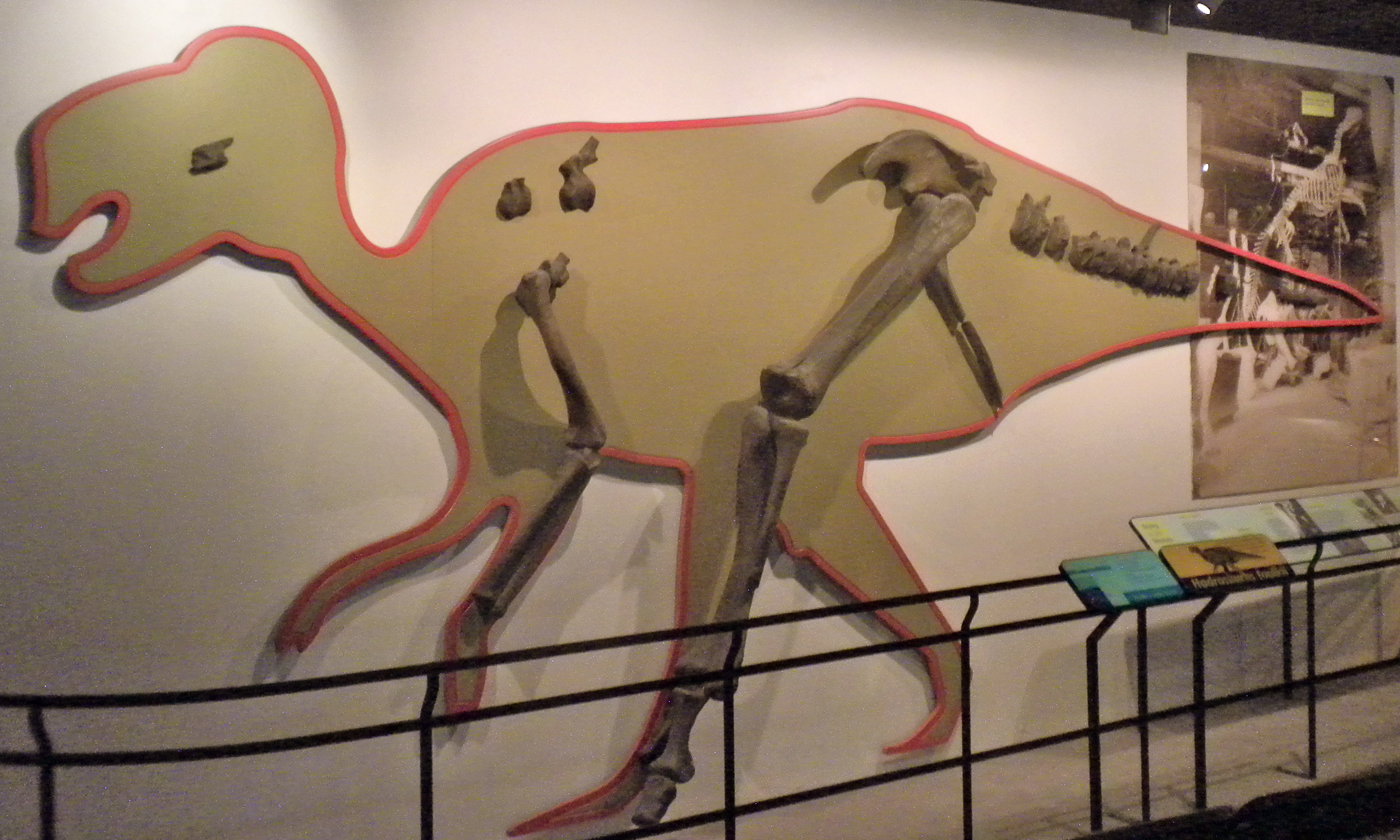
And so at last Hadrosaurus enters the story. Just four years after the unveiling of the Crystal Palace sculptures, the first American dinosaur was found on a farm near Haddonfield, New Jersey (dinosaur footprints and teeth had been found earlier, but their affinity with the European reptiles was not recognized until later). William Foulke, a lawyer and geology enthusiast affiliated with the Philadelphia-based Academy of Natural Sciences, was at his winter home in Haddonfield when he paid a visit to his neighbor, John Hopkins. Hopkins told Foulke that he occasionally found large fossils on his land, which he generally gave away to interested friends and family members. With Hopkins’ permission, Foulke searched the site where the fossils had been found with the assistance of paleontology and anatomy specialist Joseph Leidy. Also a member of the Academy of Natural Sciences, Leidy is considered the founder of American paleontology and during the mid-1800s, he was the preeminent expert on the subject. At the Haddonfield site, Foulke and Leidy uncovered approximately a third of a dinosaur skeleton, including two  nearly complete limbs, 28 vertebrae, a partial pelvis, scattered teeth and two jaw fragments.
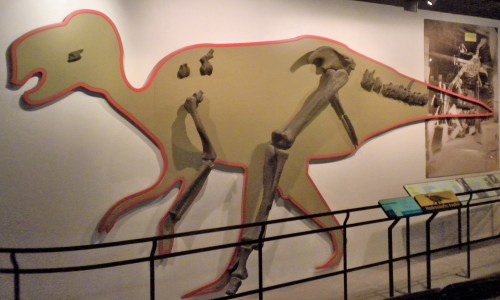
All known Hadrosaurus fossils, presently on display at the Academy of Natural Sciences.

All known Hadrosaurus fossils, presently on display at the Academy of Natural Sciences.

Now in possession of the most complete dinosaur skeleton yet found, Leidy began studying the fossils of what he would name Hadrosaurus foulkii (Foulke’s bulky lizard) in Philadelphia. The teeth in particular told Leidy that Hadrosaurus was similar to the European Iguanodon. Like IguanodonHadrosaurus was plainly an herbivore, and for reasons left unspecified Leidy surmised that it was amphibious, spending most of its time in freshwater marshes. Leidy noted that Hadrosaurus was a leaner and more gracile animal than Owen’s Crystal Palace reconstructions, but he was particularly interested in “the enormous disproportion between the fore and hind parts of the skeleton” (Leidy 1865). Given the large hindlimb and small forelimb, Leidy reasoned that Hadrosaurus was a habitual biped, and likened its posture to a kangaroo, with an upward-angled trunk and dragging tail. As such, we can credit Leidy for first envisioning the classic Godzilla pose for dinosaurs, which has been known to be inaccurate for decades but remains deeply ingrained in the public psyche.

Although the new information gleaned from Hadrosaurus made it clear that the Crystal Palace sculptures were hopelessly inaccurate, Leidy had been impressed by the Sydenham display and wanted to create a similar public attraction in the United States. Leidy invited Hawkins to prepare a new set of prehistoric animal sculptures for an exhibit in New York’s Central Park. Hawkins set up an on-site studio and began constructing a life-sized Hadrosaurus, in addition to a mastodon, a ground sloth and Laelaps, another New Jersey dinosaur. Unfortunately, Hawkins’ shop was destroyed one night by vandals, apparently working for corrupt politicians. What remained of the sculptures was buried in Central Park and the exhibit was cancelled.

Edit 4/20/2017: Leidy was not actually involved in planning the ill-fated Central Park display. Thanks to Raymond Rye for the tip!

The “Bulky Lizard” Mount

Instead of abandoning the project entirely, Hawkins and Leidy redirected the resources they had already prepared for the Central Park exhibit into a display at the Academy of Natural Sciences museum in Philadelphia. Leidy decided he wanted a mounted skeleton of Hadrosaurus, rather than a fully fleshed model as was originally planned. Such a display had not appeared in a credible museum since Charles Peale created his mastodon mount, but if anybody could get a fossil mount to be taken seriously, it was Leidy.

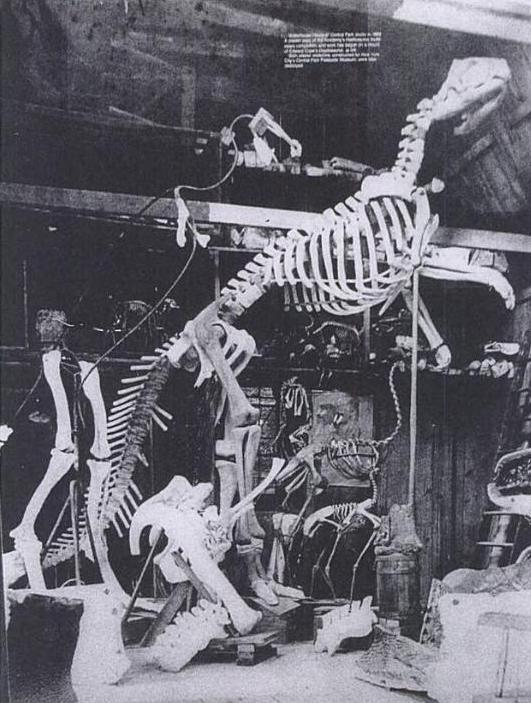
With only a partial Hadrosaurus skeleton to work with, Hawkins had to sculpt many of the bones from scratch, in the process inventing many of the mounting techniques that are still in use nearly a century and a half later. For instance, Hawkins created mirrored duplicates of the left limb bones for use on the animal’s right side, and reconstructed best-guess stand-ins for the skull, scapulae and much of the spinal column using modern animals as reference. Based on photographs like the one below, it appears that portions of the vertebral column were cast as large blocks, rather than individual vertebrae. The mount  was supported by a shaped metal rod running through the vertebrae, as well as a single vertical pole extending from the floor to the base of the neck. In fact, very little of the armature appears to have been externally visible, suggesting that making the skeleton as aesthetically clean as possible was a priority.
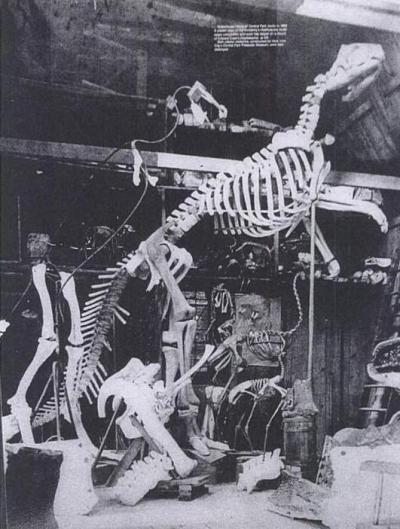
Hawkin's studio

Hadrosaurus under construction in Hawkins’ studio. Note the flightless bird mounts used for reference. From Carpenter et al. 1994.

The Hadrosaurus mount had a few eccentricities that are worth noting. First, the mount has seven cervical vertebrae, which is characteristic of mammals, not reptiles. Likewise, the scapulae and pelvis are also quite mammal-like. Hawkins was apparently using a kangaroo skeleton as reference in his studio, and it is plausible that this was the source of these mistakes. In addition, Hawkins had virtually no cranial material to work with (despite several repeat visits to the Haddonfield site by Academy members searching for the skull), so he had to make something up. He ended up basing the his sculpted skull on an iguana, one of the few exclusively herbivorous reptiles living today. Although fossils of Hadrosaurus relatives would later show that this was completely off the mark, it was very reasonable given what was known at the time.

The Hadrosaurus mount was unveiled at the Academy of Natural Sciences musuem in 1868, and the response was overwhelming. The typical annual attendance of 30,000 patrons more than doubled that year to 66,000, and the year after that saw more than 100,000 visitors. Traffic levels were so high that the Academy had to decrease the number of days it was open and enforce limits on daily attendance in order to prevent damage to the rest of the collection. Soon, the Academy was forced to relocate to a new, larger building in downtown Philadelphia, which it still occupies today.

The audience for the Hadrosaurus mount was expanded greatly in the 1870s by three plaster copies of the skeleton, which were sent to Princeton University in New Jersey, the Smithsonian Institution in Washington, DC and the Royal Scottish Museum in Edinburgh (the first dinosaur mount displayed in Europe). The Smithsonian copy had a particularly mobile existence: it was first displayed in  the castle on the south side of the National Mall, moved to the dedicated paleontology display in the Arts and Industries Building around 1890, and finally traded to the Field Museum in Chicago later in the decade. In Chicago, the Hadrosaurus was displayed in a spacious gallery alongside mounts of Megaloceros and Uintatherium, and it is in this context that the best surviving photographs of the Hadrosaurus mount were taken. Sadly, by the early 1900s all three casts had been destroyed or discarded by their host institutions, since they had either deteriorated badly or were deemed too inaccurate for continued display. The original Philadelphia mount was also dismantled, although the Hadrosaurus fossils are still at the Academy.

Hadrosaurus cast on display at the Field Museum. Field Museum Photo Archives.

Hadrosaurus cast on display at the Field Museum. Field Museum Photo Archives.

Why was the Hadrosaurus mount such a big deal? For one thing, it was different from previous fossil mounts in that it was the product of the best scientific research of the day. This was not the work of a traveling showman but a display created by the preeminent scientific society of the era, with all the mystique and prestige that came with it. Most importantly, however, the Hadrosaurus mount presented the first ever opportunity to stand in the presence of a dinosaur. By the mid-19th century, western civilization had had ample opportunity to come to terms with the fact that organisms could become extinct, but for the most part the fossils on display were similar to familiar animals like horses, elephants and deer. The Hadrosaurus, however, was virtually incomparable to anything alive today. It was a monster from a primordial world, incontrovertible evidence that the Earth had once been a very different place. By comparison, the Crystal Palace sculptures were essentially oversized lizards, and therefore fairly relateable.  The Hadrosaurus was the real turning point, the moment the public got their first glimpse into the depths of prehistory. For 15 years, the Hadrosaurus was the only real dinosaur on display anywhere in the world, so it is no wonder that people flocked to see it.

Of course, the Hadrosaurus was only the beginning of the torrent of dinosaur fossils that would be unearthed in the late 19th century. It would prove to be but a hint at the amazing diversity and scale of the dinosaurs that would be revealed in the American west, as well as the scores of fossil mounts that would soon spring up in museums.

References

Carpenter, K., Madsen, J.H. and Lewis, L. (1994). “Mounting of Fossil Vertebrate Skeletons.” In Vertebrate Paleontological Techniques, Vol. 1. Cambridge, UK: Cambridge University Press.

Leidy, J. (1865). “Cretaceous Reptiles of the United States.” Smithsonian Contributions to Knowledge. 14: 1-102. 

Waterhouse Hawkins, B. (1853). “On Visual Education as Applied to Geology.” Journal of the Society of Arts. 2: 444-449.
4 Comments

Filed under anatomy, dinosaurs, field work, fossil mounts, history of science, museums, ornithopods, paleoart, reptiles

There are “fake” fossil mounts after all…in China

I’m always bummed when I hear museum-goers describe fossil mounts, particularly those that are entirely or partially made up of casts, as “fakes.” It is inaccurate, if not inflammatory to describe mounts in this way, and I always make sure to offer a correction (see this ancient post of mine or Christopher Norris’s much better explanation for details).

Well, it turns out I was wrong, or at least trapped in a western-centric worldview. There are fossil mounts that can and should be called fake…in China. Earlier today, Brian Switek linked to a brief radio story at CRIEnglish about the recent appearance of dinosaur-themed parks throughout China. According to the clip, local governments throughout China have been competing to built the biggest and best dinosaur park. The parks are apparently the equivalent of attention-grabbing and income-building public works projects, such as stadiums or fancy shopping centers, that are created regularly in the U.S. But while these new parks might have been inspired by the torrent of spectacular, paradigm-shifting fossils found in China over the last two decades, they are not museums. These are amusement parks, featuring robotic and fiberglass awesomebro dinosaurs. They are entertainment, not educational or scientific enterprises by any stretch of the imagination.

So where are these municipal dinosaur theme parks getting their dinosaurs? As it turns out, there are literally dozens of new companies in China that exist entirely to supply these attractions. I had encountered some of these sites before, but didn’t know the context of their existence until now. Google “China robotic dinosaurs” or something similar and you’ll find them. Most of these products are what they are: big, goofy looking animatronic dinosaurs that aren’t especially attractive but at least can’t be mistaken for scientific reconstructions. But then I saw the “dinosaur skeletons”:

It’s possible that parts of these might be casts, but I doubt it. These are pretty much abominations, sculpted with little regard for the actual appearance of these dinosaurs, or animal anatomy in general. I’ve written at length about how the public conception of dinosaurs is irreversibly intertwined with its conception of museums. When we think of fossils, we think of grand museum halls populated by towering skeletons. This connection is so ingrained that mounted skeletons have become, in the public eye, the only proper way to display dinosaurs. It’s therefore not unexpected that these companies would capitalize on that association.

The problem is that unlike a mural or life-sized model, which are obviously reproductions, mounted skeletons retain the aura of authenticity that comes from displaying known fossils. To display a skeleton is to imply that we are seeing real specimens, or at least replicas standing in for specimens that exist somewhere else. Displaying “dinosaur skeletons” with no regard for accuracy ruins that association. For nearly 200 years, fossil mounts have been symbols of credible science, and I hate to see that good reputation sullied.

Leave a comment

Filed under dinosaurs, exhibits, fossil mounts, opinion

D.C. area fossils on WAMU

Matt Carrano of the National Museum of Natural History, Alan Dooley of the Virginia Museum of Natural History and Dave Hacker of Maryland’s Dinosaur Park were interviewed on the Kojo Nnamdi show this afternoon. You can listen to the stream here. Topics covered include the 2019 re-opening of the NMNH fossil halls, local Cretaceous and Miocene paleoenvironments, the harm caused by commercial fossil collecting and the Discovery Channel C. megalodon travesty. Since I work for the MNCPPC at Dinosaur Park and have been involved with NMNH in the past, this is all quite near and dear to me. If you’ve got 20-30 minutes, it’s well worth a listen!

1 Comment

Filed under Dinosaur Park, dinosaurs, field work, NMNH

The Gilmore Models: Where are they now?

Regular readers of this site (if there are any) undoubtedly know Charles Whitney Gilmore as the Smithsonian paleontologist who, between 1903 and 1964, led in the creation of most of the mounted dinosaur skeletons that remain on display at the National Museum of Natural History today. You don’t necessarily have to be in Washington, DC to see Gilmore’s reconstructions, however. In addition to being an expert anatomist and fossil preparator, Gilmore was a formidable sculptor, and during his tenure at the Smithsonian he produced a number of gorgeous life reconstructions of prehistoric animals. Plaster copies of these models were gifted or sold to large and small museums in North America and Europe, including the Sternberg Museum of Natural History, the University of Kansas Natural History Museum and the Hunterian Museum at the University of Glasgow. These models were typically displayed alongside isolated fossil elements to give a sense of the entire animal at institutions where complete mounts were unfeasible.

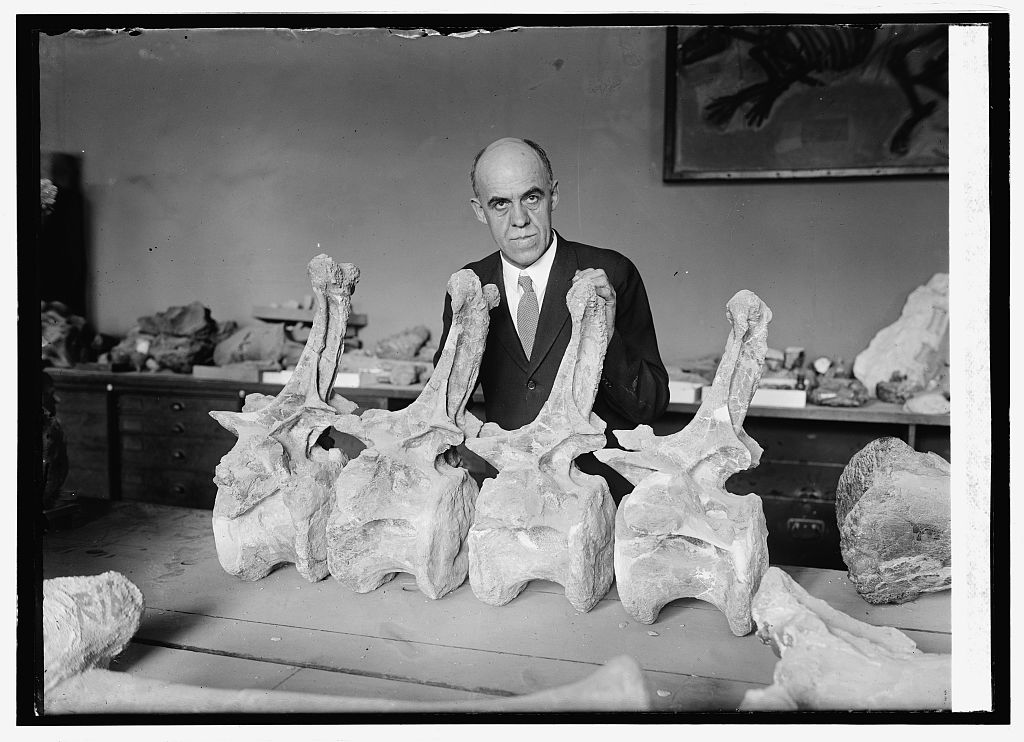
Gilmore with Diplodocus vertebrae.

Charles Gilmore, or Chucky G, as he was known to his friends.

Unfortunately, many of the museums that acquired copies of Gilmore’s models in the 1920s and 30s seem to have lost the detailed provenance of these acquisitions (not a rare occurrence, as museums must track literally millions of objects and historic records on paper do not always survive). The Hunterian Museum has the best records regarding these models that I am aware of, and incidentally their online catalog is the source of most of the photographs in this post.

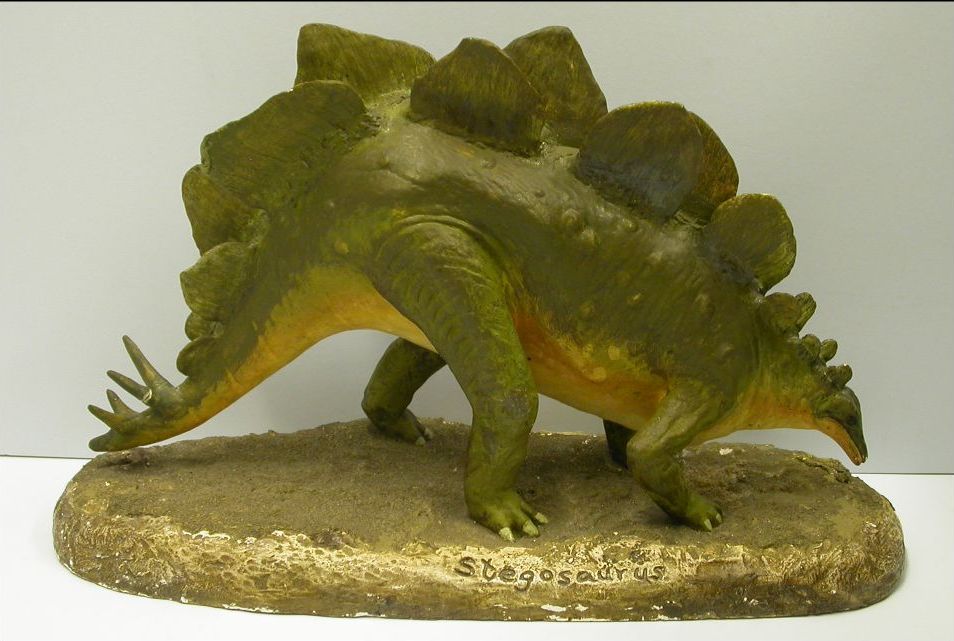
Stegosaurus model in plaster of paris. Image courtesy of the Hunterian Museum and Art Gallery.

Stegosaurus model in plaster of paris. Image courtesy of the Hunterian Museum and Art Gallery.

While Gilmore’s models are obviously far from accurate by modern standards, a closer inspection reveals that Gilmore was familiar with every inch of the fossils in his care, and put that knowledge to use in his sculptures. The Stegosaurus above, for instance, is a perfect match for Gilmore’s full-sized mount in terms of pose and proportion. Undoubtedly, physically assembling an actual skeleton is among the best ways to become familiar with how an animal would work in three dimensions. In particular, note that unlike many contemporary reconstructions, Gilmore did not fudge the number or position of the plates; they’re all accounted for.

Stegosaurus model in plaster of paris. Image courtesy of the Hunterian Museum and Art Gallery.

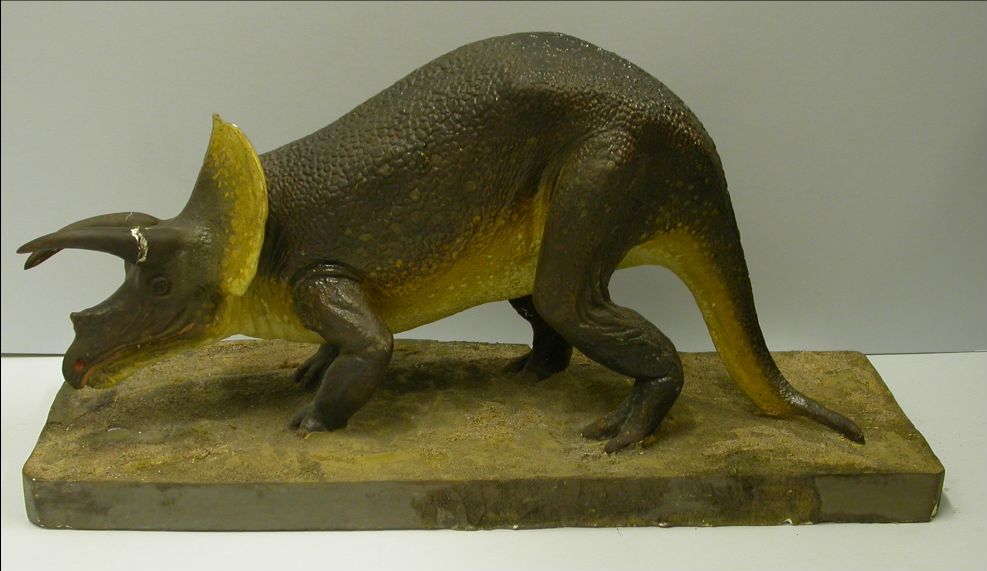
Triceratops model in plaster of paris. Image courtesy of the Hunterian Museum and Art Gallery.

The Triceratops model exhibits a number of interesting choices. The classic bowed ceratopsian forelimbs (which Gilmore first proposed after finding no other way to articulate them in his 1905 Triceratops mount) are clearly in evidence, but my eye is drawn to the scrawny, lizard-like hindlimbs. Comparing this model to Gilmore’s mount, there would appear to be virtually no muscle back there. The size of the head is yet another remnant of the mounting process. Since his Triceratops mount was a composite of numerous specimens, Gilmore used the skull of an inappropriately small animal, and apparently carried the chimeric proportions to this sculpture. The lack of cheeks and extremely thick neck are also characteristic of older ceratopsian reconstructions, although I can’t comment on precisely when or why that look went out of style.

Stegosaurus model in plaster of paris. Image courtesy of the Hunterian Museum and Art Gallery.

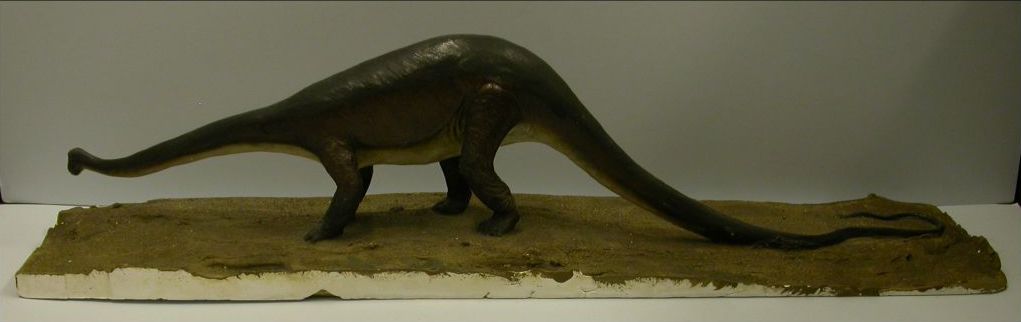
Diplodocus model in plaster of paris. Image courtesy of the Hunterian Museum and Art Gallery.

This Diplodocus has a much more defined shape than most mid-century sauropod reconstructions. Note in particular the sloping back, which peaks at the sacrum. This differs from the 1907 Diplodocus mount at the Carnegie Museum of Natural History, which had a completely horizontal spinal column. When Gilmore led the creation of the Smithsonian Diplodocus mount, he had the opportunity to use a vertebral column that was found articulated in situ, and was thus able to more accurately portray the shape of the animal’s midsection.

Ceratosaurus
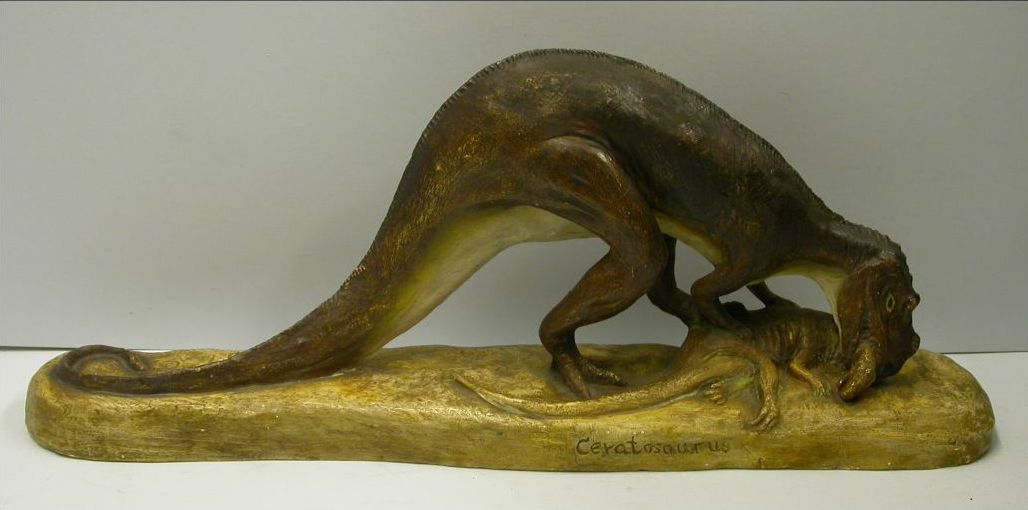
Ceratosaurus. Image courtesy of the Hunterian Museum and Art Gallery.

Gilmore’s Ceratosaurus is the liveliest of the set, and is the only one that doesn’t strictly adhere to the pose of a corresponding fossil mount. Delivering a killing blow to a hapless ornithopod, one can easily imagine the energetic pounce that preceded this scene. I will point out, though, that this guy’s hindquarters are enormous. 

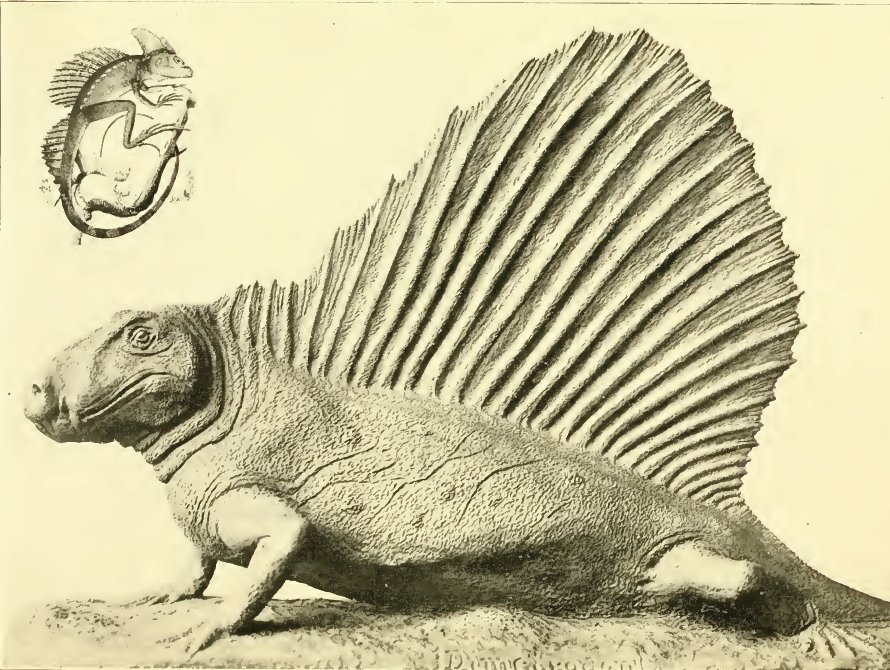
Gilmore's stub-tailed Dimetrodon. Image from Gilmore 1939.
Gilmore’s stub-tailed Dimetrodon model. 

Gilmore also sculpted some non-dinosaurs, including at least one prehistoric horse and the Dimetrodon pictured above. Note the teensy stub of a tail, which this model actually shared with Gilmore’s mount of the pelycosaur. The lips obscuring most of the teeth except for a couple incisors is an unusual choice, and I’m not sure what inspired it. This image is from Gilmore’s 1939 paper on Dimetrodon, and the Basiliscus basiliscus in the corner provides a helpful comparison to a contemporary animal with a similar dorsal sail.

In addition to the models shown here, Gilmore created sculptures of “Anatosaurus”, “Brachyceratops” and a Cenozoic horse, as well as busts of Styracosaurus and Corythosaurus (and there may well have been others I haven’t seen). As mentioned, copies of these mounts were distributed to museums and possibly private collections throughout the 20s and 30s, and I have no idea how many were actually made. A few museums, such as the Sternberg Museum, actually have these models on display, but at other institutions they have been relegated to storage. Objects like these present an unusual challenge for collections managers. They were accessioned as scientific representations, but their value has shifted over the last century to the realm of art and history. While these models are undoubtedly important, they are probably no longer useful at many of the institutions that hold them. As such, the Gilmore models exemplify that museum collections are not necessarily static, but change in meaning as the years go by.

If you work at an institution that has one or more Gilmore models in its collection, feel free to leave a comment. I’d love to start a working database of where copies of these models have ended up!

References

Gilmore, C.W. (1939). “A Mounted Skeleton of Dimetrodon gigas in the United States National Museum, with Notes on the Skeletal Anatomy.” Proceedings of the US National Museum 56:2300:525-539.

Gilmore, C.W. (1932) “On a newly mounted skeleton of Diplodocus in the United States National Museum.” Proceedings of the United States National Museum 81:1-21.

11 Comments

Filed under collections, dinosaurs, history of science, NMNH, paleoart, reptiles

The NMNH fossil halls, circa 1963

c.02

A revamp for the dinosaur displays in Hall 2. Courtesy of the Smithsonian Institution Archives.

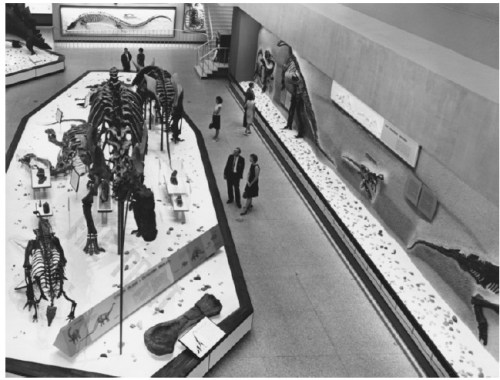
Since the NMNH building opened in 1910 as the United States National Museum, the east wing has been home to fossil displays. Although there have been many small adjustments and additions to the exhibits over the years, we can separate the east wing’s layout into three main periods. From 1910 t0 1945, the exhibits were primarily under the stewardship of Charles Gilmore. Called the “Hall of Extinct Monsters”, this iteration was somewhat haphazard in its layout and generally resembled a classic “cabinet of curiosity” approach to exhibit design. Gilmore’s version of the east wing remained in place until 1963, when the space was redesigned as part of the Smithsonian-wide modernization project. In the updated halls, there was a directed effort to compartmentalize exhibits based on the subdivisions of the Museum’s research staff, with each area of the gallery becoming the responsibility of a different curator. A second renovation was carried out in several stages starting in 1980. This version, which was open until 2014, was part of the new museology wave that started in the late 1970s. As such, the exhibits form a more cohesive narrative of the history of life on earth, and much of the signage carries the voice of educators, rather than curators.

Of course, the field of paleontology has advanced by leaps and bounds since the early 1980s, and NMNH staff have made piecemeal updates to the galleries when possible, including restorations of deteriorating mounts, and additional signage that addresses the dinosaurian origin of birds and the importance of the fossil record for understanding climate change. A third renovation is currently underway and will be completed in 2019.

But I’m getting ahead of myself. The purpose of this post is to provide an overview of the NMNH fossil halls as they stood in 1963, after the first major renovation. This iteration of the east wing was long gone before I was born, so this information is pieced together from historic photographs, archived exhibit scripts, and correspondence among the individuals involved in the modernization project (my thanks to the staff of the Smithsonian Institution Archives for their assistance in accessing these materials). Perhaps unsurprisingly, records of the dinosaur gallery are by far the most thorough. Information on the other halls is considerably harder to come by, so if any readers who saw the older exhibits in person remember any details, it would be fantastic if you could share them.

Layout of the USNM east wing, circa 1963.

Layout of the USNM east wing, circa 1963.

As mentioned, the Smithsonian underwent a thorough modernization project in the middle of the 20th century. The modernization committee, chaired by Frank Taylor (the eventual director-general of Smithsonian museums), was established in 1948. Under the committee’s guidance, most of the institution’s exhibits were redesigned between 1953 and 1963. Keep in mind that at the time, the United States National Museum was the only Smithsonian museum – it would not be divided into the National Museum of Natural History and the National Museum of History and Technology (now the National Museum of American History) until 1964.

Completed in 1963, the USNM fossil exhibits were among the last to be modernized. Only a small number of specimens were added that had not already been on view in the previous version of the space – in fact, many specimens were removed. The changes primarily focused on the layout of the exhibit, turning what was a loosely organized set of displays into a series of themed galleries. The east wing included four halls in 1963, the layout of which can be seen in the map above. Each hall was the responsibility of a particular curator. Nicholas Hotton oversaw Paleozoic and Mesozoic reptiles in Hall 2. David Dunkle was in charge of fossil fish in Hall 3. Porter Kier oversaw fossil invertebrates and plants in Hall 4. Finally, Charles Gazin, head curator of the Paleontology Division, was responsible for Cenozoic mammals in Hall 5. Each curator had a central role in selecting specimens for display and writing accompanying label copy.

Invertebrates and Fossil Plants

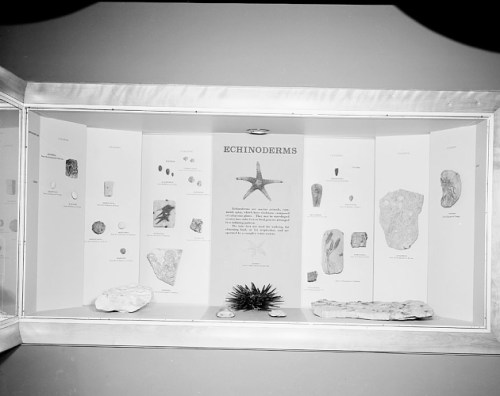
echinoderms1961

Echinoderm fossil display in Hall 4. Courtesy of the Smithsonian Institution Archives.

It is likely that part of the reason the fossil halls were late on the modernization schedule was that the curators of the Paleontology Division were not terribly interested in exhibits or outreach. There were no staff members in the division exclusively devoted to exhibit work, so the task of designing the new exhibit space was an added burden for the research staff. As invertebrate paleontology curator G. Arthur Cooper put it in a 1950 memo, “all divisions of Geology at present are in an apathetic state toward exhibition.”

Nevertheless, work on the east wing halls had begun by 1957, if not a bit earlier. The first of the new exhibits to be worked on was Hall 4, featuring fossil invertebrates and plants. The long and narrow space was divided into four sections: the first introduced the study of fossils and how they are preserved, the second was devoted to paleobotany, the third contained terrestrial and marine invertebrates, and the forth provided an overview of geological time. Cooper described the new exhibit as a progressive story of the expansion of life, “its stem connecting all life which is now culminating in man.”

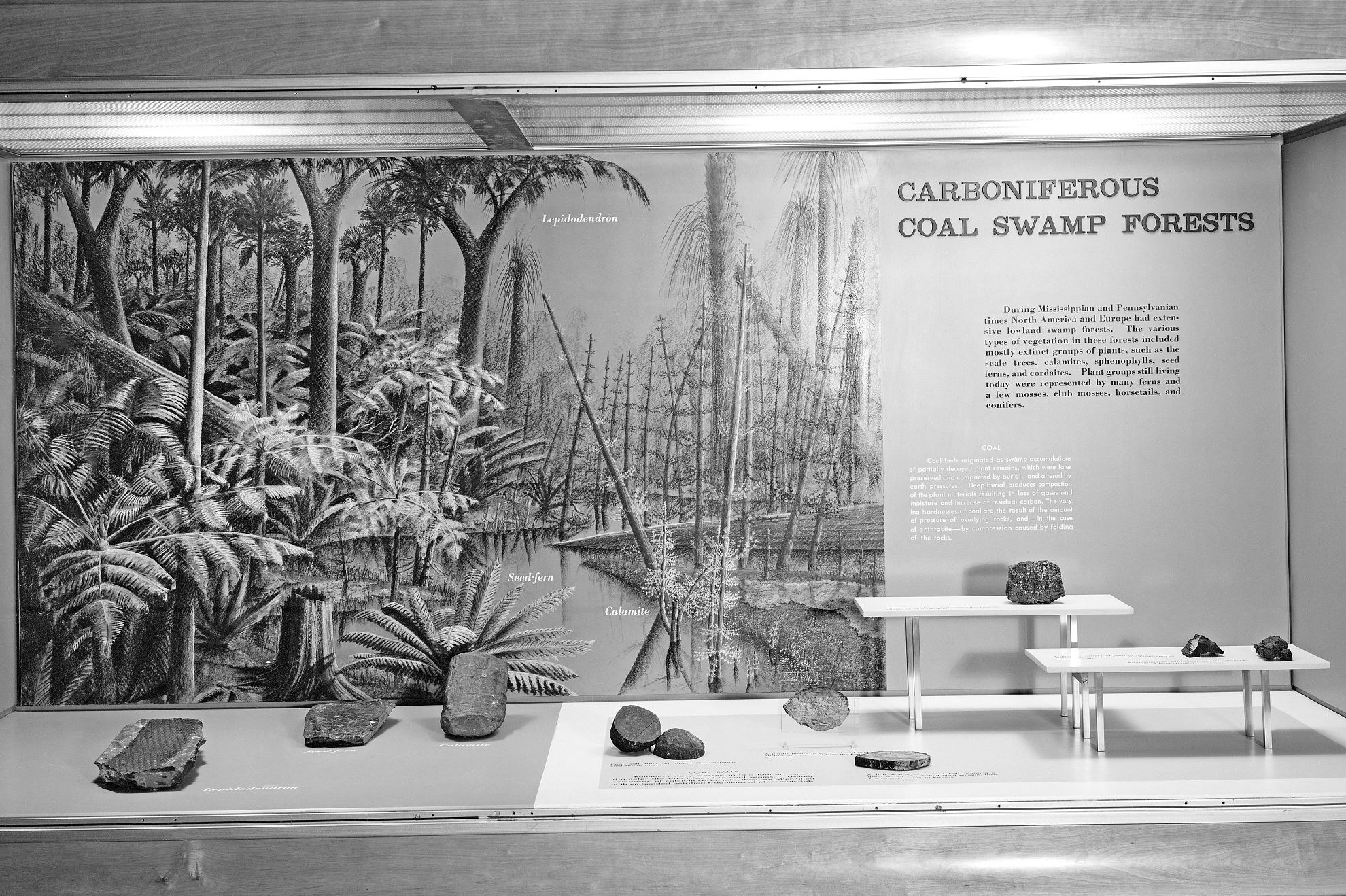
Carboniferous coal swamp fossils in Hall 4. Photo courtesy of the Smithsonian Institution Archives.

In addition to a variety of fossil specimens, Hall 4 featured a series of dioramas built by George Merchand, an exhibit specialist from Ann Arbor, Michigan. Merchand built at least 4 dioramas between 1957 and 1958, each depicting representative invertebrate marine fauna from a different Paleozoic period. Most, if not all, of these dioramas were retained during the 1980s renovation and remained on view through 2014.

Fossil Fishes and Amphibians

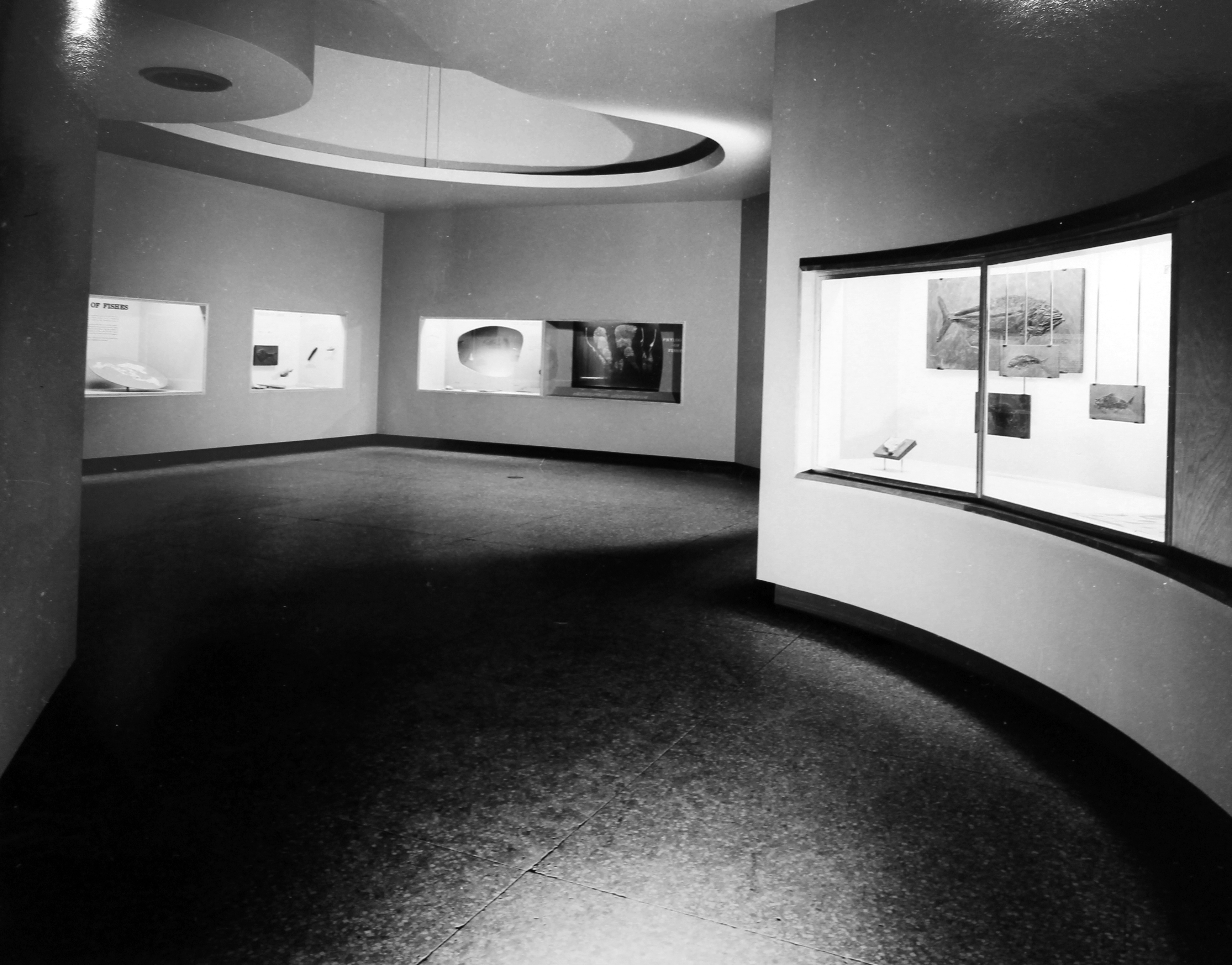
Fossil fishes in Hall 3. Photo courtesy of the Smithsonian Institution Archives.

Fossil fish and a smattering of amphibians were located in Hall 3, on the far east side of the wing. This space would be converted into “Mammals in the Limelight” in the 1980s. David Dunkle, for whom everyone’s favorite placoderm Dunkleosteus is named, was in charge of this gallery during his tenure at USNM between 1946 and 1968. The specimens on view were arranged temporally, starting with placoderms on the south side and progressing into actinopterygians and basal amphibians on the north end. Among the more prominently displayed specimens were Xiphactinus, Seymouria, and “Buettneria” (=Koskinonodon). The hall also contained a replica of the recently discovered modern coelacanth, and small diorama of a Carboniferous coal swamp.

Dinosaurs and Other Reptiles

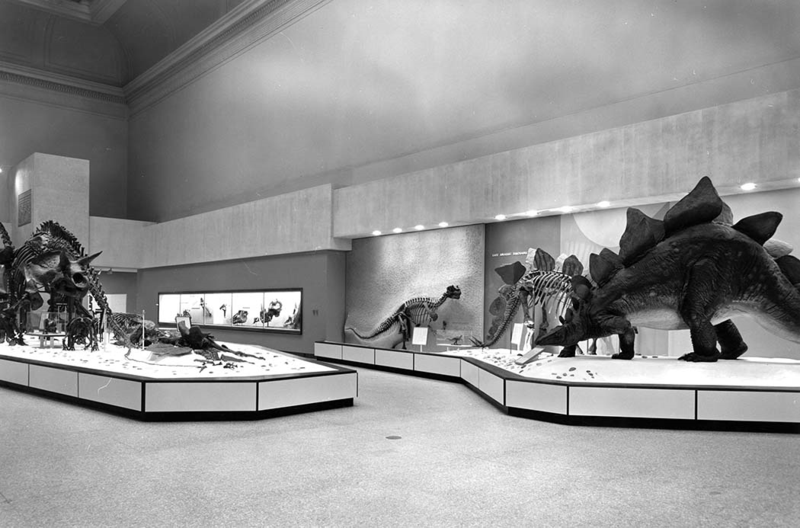
Dinosaurs in Hall 2, as seen facing west. Photo courtesy of the Smithsonian Institution Archives.

Hall 2, featuring dinosaurs and other reptiles, was the main draw for most visitors. It was not, however, a major priority for the Smithsonian research staff. The museum had not had a dinosaur specialist since Gilmore passed away in 1945 and indeed, dinosaurs were not an especially popular area of study among mid-century paleontologists in general. As such, responsibility for Hall 2 fell to Nicholas Hotton, at the time a brand-new Associate Curator. Later in his career, Hotton would be best known as an opponent to the dinosaur endothermy movement, but in the early 1960s he was most interested in early amniotes and the origin of mammals.

Hotton’s display of South African synapsids and amphibians. Photo courtesy of the Smithsonian Institution Archives.

Perhaps due to the general disinterest among USNM curators, changes to the dinosaur exhibits were mostly organizational. Most of the free-standing dinosaur mounts built by Gilmore and his team were collected on a single central pedestal. Preferring not to tackle the massive undertaking of disassembling and remounting the 70-foot Diplodocus skeleton, the exhibit designers left the sauropod in place and clustered the smaller moutns around it. In the new arrangement, the Diplodocus was flanked by the two Camptosaurus and prone Camarasaurus on its right and by Triceratops and Brachyceratops on its left. The Stegosaurus stenops holotype, splayed on its side in a recreation of how it was first discovered, was placed behind the sauropods at the back of the platform.

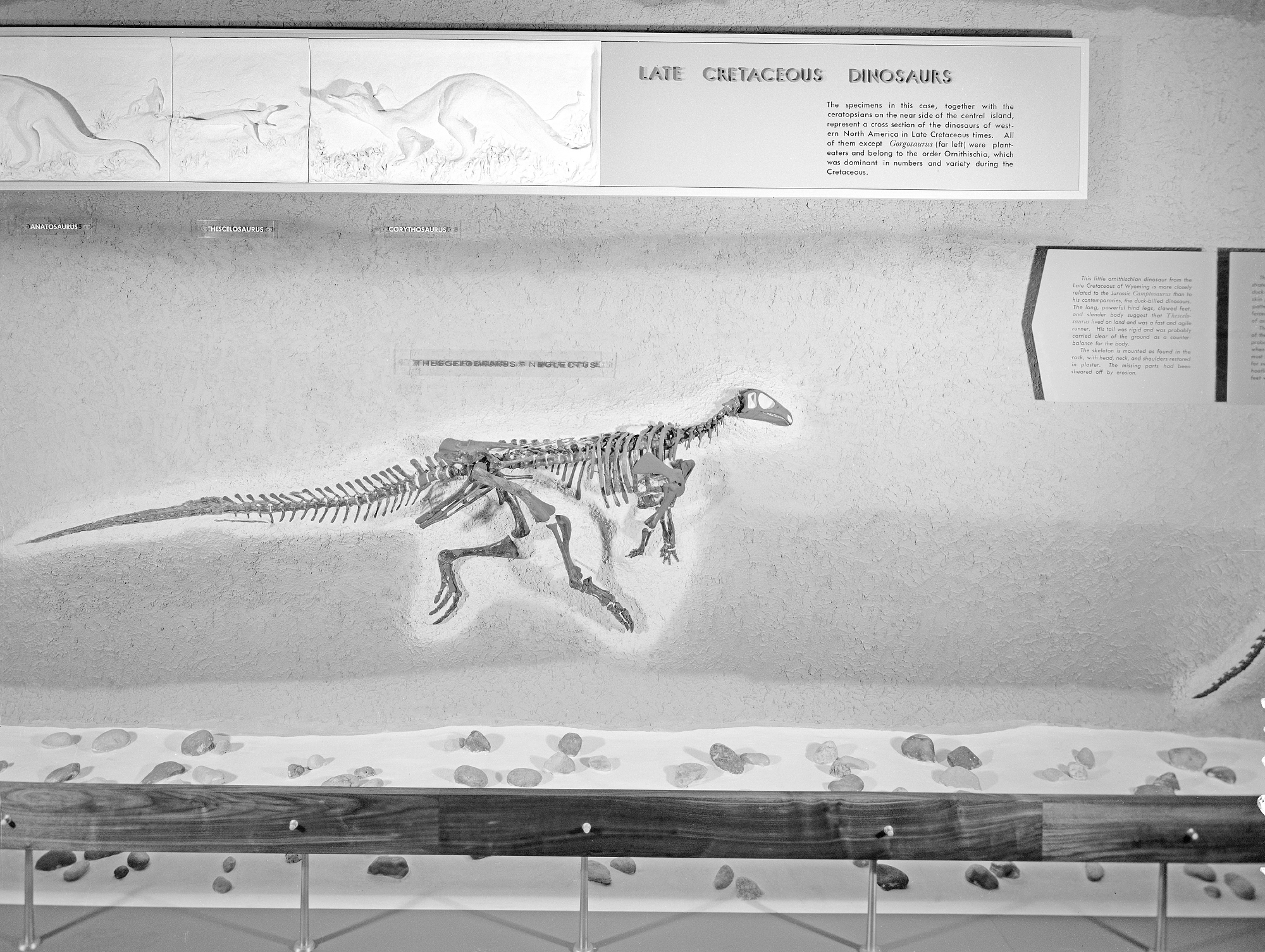
Close up of Thescelosaurus on the south wall. Photo courtesy of the Smithsonian Institution Archives.

 The north and south walls of Hall 2 were lined with additional specimens. On the south side, Gilmore’s relief mounts of Ceratosaurus and Edmontosaurus (called “Anatosaurus” in this exhibit) were joined by the gallery’s one new dinosaur, a relief mount of Gorgosaurus in a death pose. The north wall featured a long, narrow, glass-enclosed case illustrating the basics of dinosaur classification. In addition to saurischian and ornithischian pelves, the case featured skulls representing most of the major dinosaur groups. Amusingly, all but two of these skulls (Triceratops and Diplodocus) were labeled with names that are no longer considered valid. These skulls included “Antrodemus” (Allosaurus), “Trachodon” (Edmontosaurus) “Procheneosaurus” (probably Corythosaurus)  and “Monoclonius” (Centrosaurus).

In the southwest corner of Hall 2 (where FossiLab is today), visitors could see the Museum’s two free-standing Stegosaurus: the fossil mount constructed by Gilmore in 1913 and the charmingly ugly papier mache version, which had received a fresh coat of paint. Finally, the rear (east) wall of Hall 2 held Gilmore’s relief mounted Tylosaurus.

Mammals

c.11

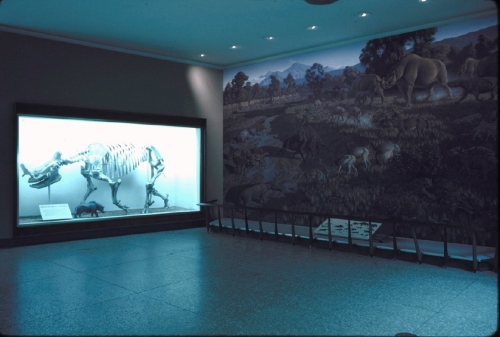
Brontotherium and Matternes’ Oligocene mural in Hall 5. Photo courtesy of the Smithsonian Institution Archives.

Fossil mammals were exhibited in Hall 5, a corridor-like space accessible from the main rotunda and via two doorways on the north side of Hall 2. After 1990, this space would house the “Life in the Ancient Seas” exhibit. Charles Gazin, head curator of the Division of Paleontology, was in charge of this space on paper, but my impression is that his attention was elsewhere during its design and construction. Gazin was apparently approached by the modernization committee several times during the 1950s, but was reluctant to commit his time to a major renovation project. Gazin had been spending a great deal of time at a Pliocene dig site in Panama, and the collection of new fossils proved more interesting than designing displays. As Gazin tersely explained, “It is a little difficult to concentrate objectively on exhibition problems here in the interior of Panama.”

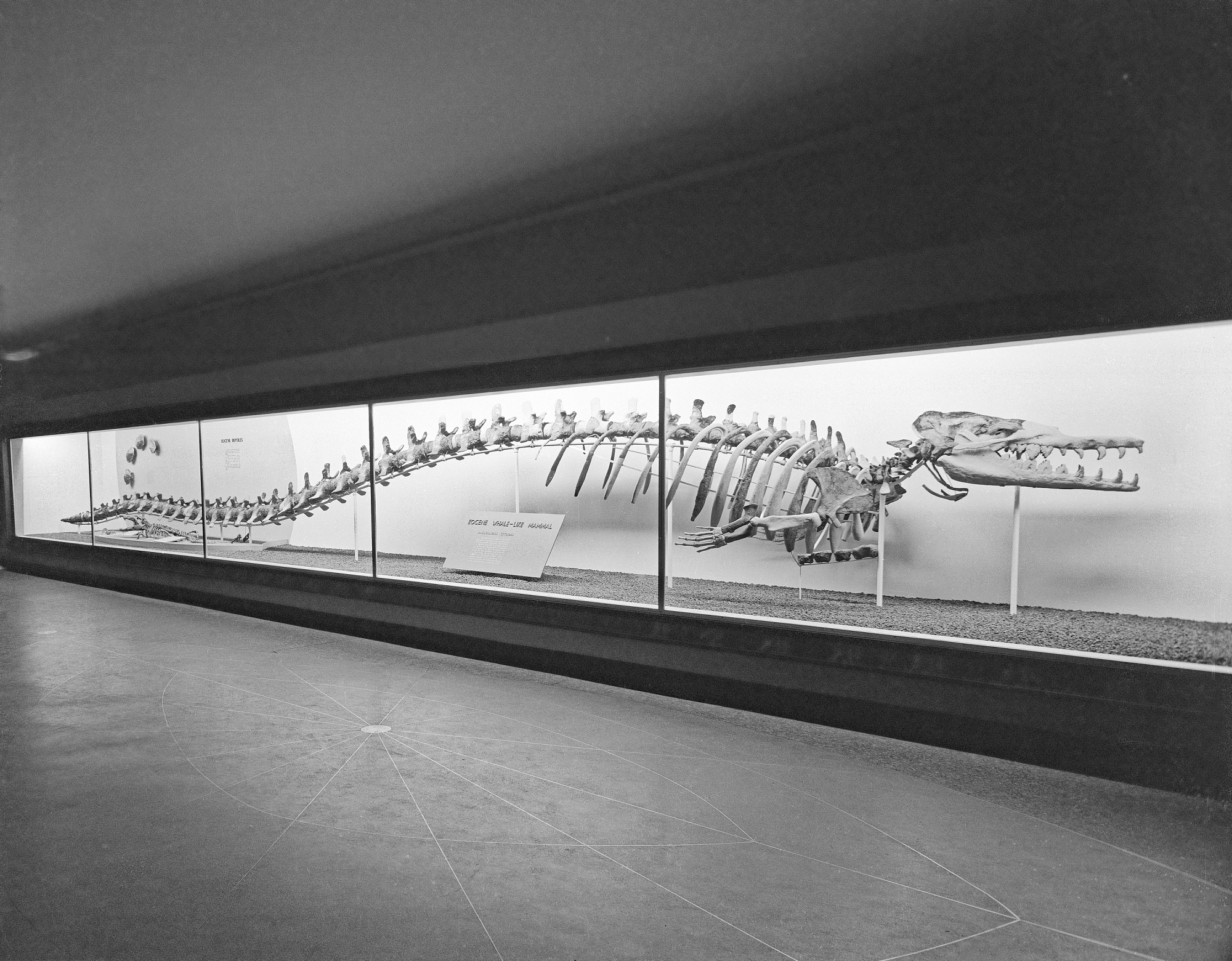
Basilosaurus and Cenozoic reptiles in Hall 5. Photo courtesy of the Smithsonian Institution Archives.

Nevertheless, Gazin’s interest in Cenozoic mammals ensured that his gallery was exceptionally thorough. Thanks to Gazin’s own collecting expeditions throughout the 1950s, the new fossil mammals galleries contained representatives of nearly all major mammal groups, from every epoch from the Paleocene through the Pliocene (the Pleistocene was deliberately excluded, as a separate ice age exhibit was also in the works). Classic mounts from the Gilmore era like Basilosaurus and Teleoceras were joined by dozens of less showy specimens like rodents, small perissodactyls, and early primates. The new exhibit also introduced the first wave of Jay Matternes’ much-beloved murals, illustrating the changing flora and fauna in North America over the course of the Cenozoic.

Unveiling and Reactions

The new east wing galleries officially opened on June 25, 1963. According to the press release, “the new exhibit features in colorful and dramatic settings more than 24 skeletons and skulls of the largest land animals the world has ever known.” The exhibits were officially unveiled with a late afternoon ceremony, in which Carol Hotton (Nicholas Hotton’s daughter) cut the ribbon and the lights to Hall 2 were suddenly turned on to dramatic effect.

Unfortunately, the new exhibits were not universally loved by the museum staff. The wing had been planned a set of compartmentalized exhibits, each corresponding to a subdivision of the Division of Paleontology, with a different curator taking responsibility for each hall. While seeming sensible on paper, this plan turned out to be a logistical nightmare, and a common cause for complaint among Division staff for the next decade. In addition, Gazin in particular voiced concerns as early as January 1964 that the design of the new halls was entirely inadequate for preventing accidental or deliberate damage to specimens by visitors. The mounts in Hall 2 were raised only about a foot off the ground, and were not protected by any sort of guard rail or barrier. As a result, within a few months of the exhibit’s unveiling, several ribs and vertebral processes had been broken off or stolen from CamarasaurusGorgosaurus, Ceratosaurus and others.

With the notable caveat that I never saw the 1963 exhibits in person, I would say that this is aesthetically my least favorite iteration of the east wing. The grandiose, institutional Greco-Roman architecture originally displayed in the Hall of Extinct Monsters was replaced with what can only be described as extremely 1960s design. Solid earth-tone colors, wood paneling and wall-to-wall carpeting gave the halls a much more austere character. While the efforts to categorize specimens into thematic zones was commendable for a museum of that era, the label copy (written by the curators) was still highly pedantic and verbose. As such, the 1963 fossil halls seem to have been very much of their time. While the designers were working to avoid the overt religiosity and grandeur of turn of the century museums, they had not yet reached the point of developing truly audience-centered educational experiences. The result was an exhibit that was humble, yet still largely inacessible. Perhaps for this reason, the 1963 fossil halls were the shortest-lived at NMNH to date, being replaced within 20 years of their debut.

This post was updated and edited on January 8, 2018.

Leave a comment

Filed under dinosaurs, exhibits, Extinct Monsters, fish, fossil mounts, history of science, mammals, museums, NMNH, reptiles, science communication

A Triceratops for Lawrence

In an earlier post, I described how the Smithsonian’s Triceratops was the first free-standing mount of this animal ever created, and the eccentricities of its proportions and posture would define how the species would be depicted in artwork and other reconstructions for the better part of a century. I should have clarified, however, that this was not the first time Triceratops fossils were put on public exhibit. That honor goes to the University of Kansas Natural History Museum, which was founded in 1864 and is still operational today.

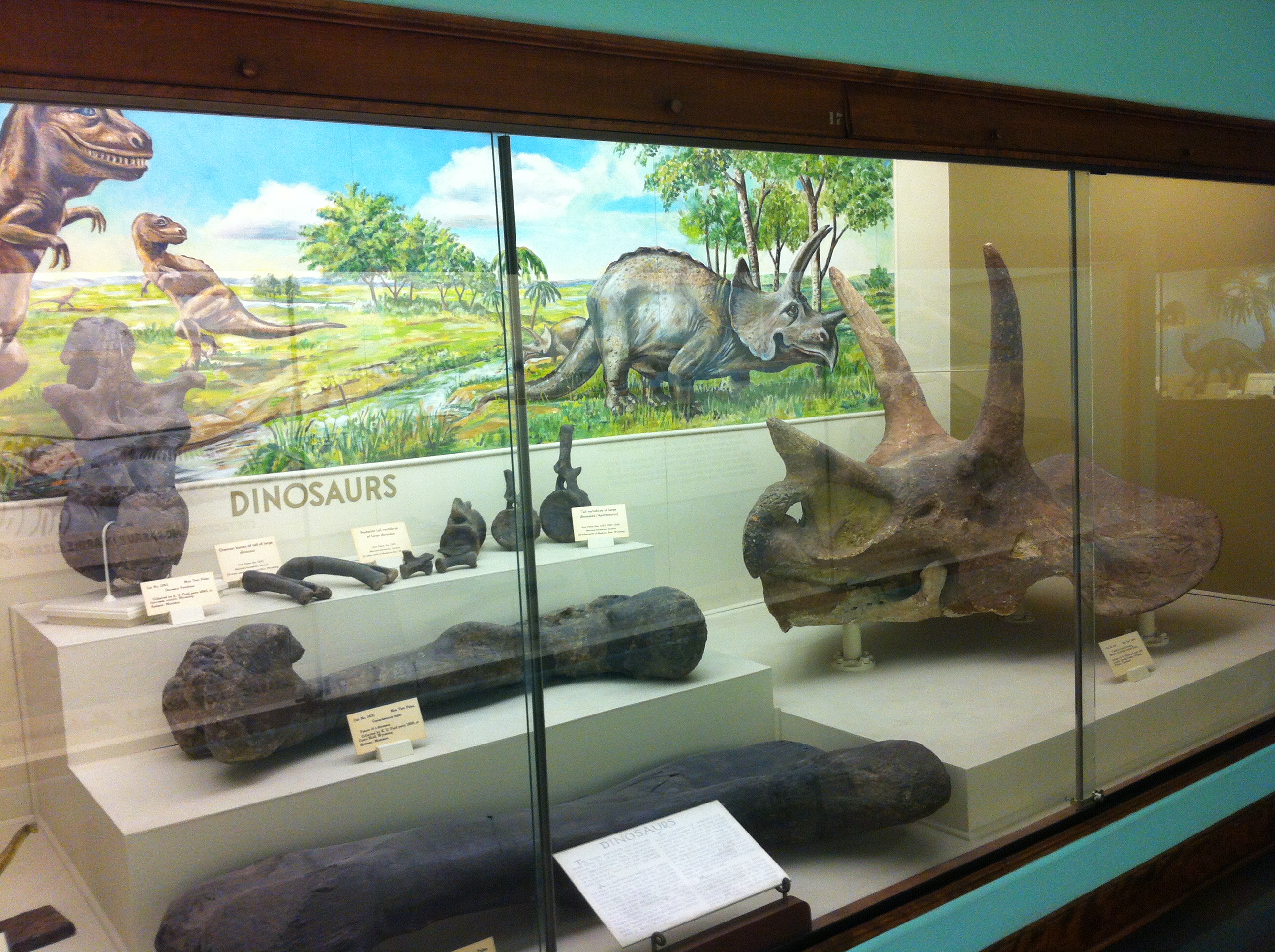
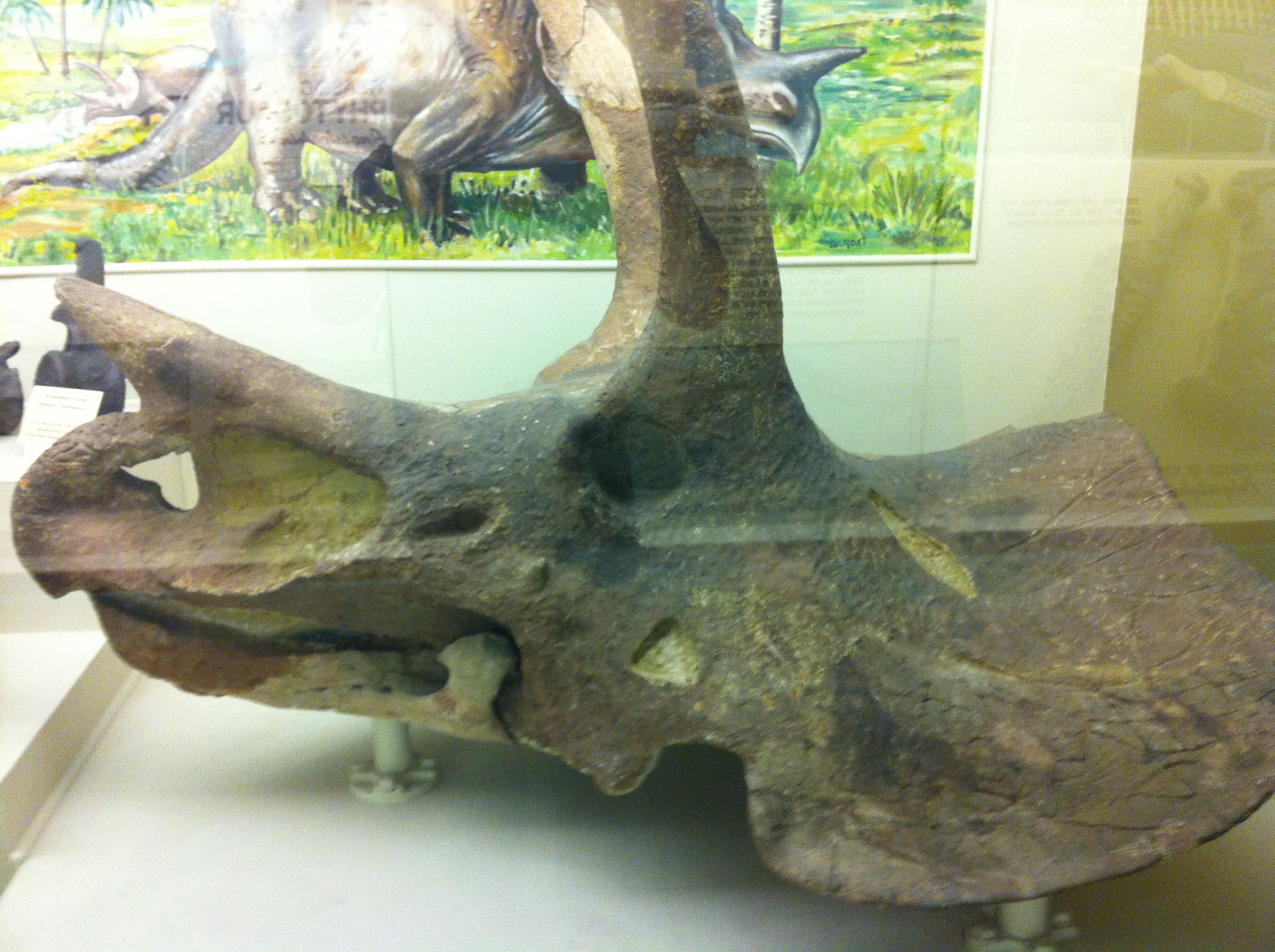
Among the Museum’s basement paleontology exhibits is a case of dinosaur fossils that has literally gone unchanged since the 1950s. Although this time capsule of mid-century museum design is of some historical interest, it would be nice if those sauropod limb bones weren’t labeled “Brontosaurus” (to be clear, the whole museum doesn’t look like this, the staff has been slowly but surely modernizing the exhibits). Of particular importance is the Triceratops skull (specimen 422) on the left side of the case. While there is no historical information on its label, this specimen has been with the museum for over 115 years, having been unearthed and put on display only six years after O.C. Marsh first named and described Triceratops.

The dinosaur case at the KU Natural History Museum, untouched since the 1950s.

The dinosaur case at the KU Natural History Museum, untouched since the 1950s.

The story of the KU Triceratops is not well-known, although it is the subject of the somewhat hard-to-find book (neither the Museum nor the KU library has a copy) A Triceratops Hunt in Pioneer Wyoming. In the summer of 1895, a team from the University ventured into the frontier lands of of eastern Wyoming with the explicit goal of finding a Triceratops for display at the young Natural History Museum. The team was led by Samuel Wendell Williston, founder of the University’s geology department. Although Williston’s specialty was entomology, he had previously worked under Marsh at Yale and was well-acquainted with the plethora of dinosaurs on which his mentor had published. Also on the expedition were KU Regent James Polk Sams, and two individuals whose names are quite familiar to anyone with an interest in the history of paleontology, Barnum Brown and Elmer Riggs. Brown would, of course, go on to be the star fossil hunter at the American Museum of Natural History, while Riggs would become a curator at the Field Museum of Natural History. In 1895, however, both were students, and not especially interested in fossil collecting or paleontology. 

The team found the Triceratops they were looking for on July 9, near the confluence of Lightning and Lance Creeks. By July 22, the skull was fully excavated and crated for a journey by train back to Lawrence. The fossil apparently garnered a fair amount of attention on the journey; while Triceratops is well known today, in 1895 few had any idea that animals such as this had ever walked the Earth. And yet, here was clear, physical evidence of an extinct animal like nothing alive in the modern world, and it would soon be displayed for all to see in the University of Kansas Museum.

Triceratops skull retrieved by the 1895 Wyoming expedition.

Triceratops skull retrieved by the 1895 Wyoming expedition.

The 1895 expedition was not tremendously productive scientifically, the fossils found that summer resulting in only three short papers. However, the journey, and the Triceratops skull that was brought back, did end up being quite important for paleontology. The expedition inspired Brown and Riggs to pursue careers in paleontology, and as Brinkman and colleagues write in Triceratops Hunt in Pioneer Wyoming, “they would hunt bones for the rest of their lives, to the great benefit of science, and might never have done so had not circumstances landed them in the circle of Williston’s influence in the summer of 1895.”

Furthermore, by setting out with the clear goal to find a dinosaur for display, the University of Kansas team were trailblazers in a movement that would lead to the inseparable connection between dinosaurs and museums in popular culture today. In the first decade of the 20th century, newly burgeoning large urban museums openly competed to find and display the largest and most spectacular dinosaurs. Exhibits like the AMNH Brontosaurus, the Carnegie Museum of Natural History Diplodocus and, of course, the Smithsonian Triceratops brought millions of Americans into museums, ensuring that to this day, when we think of museums, we think of dinosaur skeletons (and vice versa). In spite of the somewhat dingy basement display it currently finds itself in, the University of Kansas Triceratops was an early trendsetter and a profound example of the intersection of science and history.

Reference

Kohl, M.F., Martin, L.D. and Brinkman, P., eds. (2004). Triceratops Hunt in Pioneer Wyoming: The Journals of Barnum Brown and J.P. Sams. Glendoo, WY: High Plains Press.

4 Comments

Filed under dinosaurs, field work, fossil mounts, history of science, marginocephalians, museums, reptiles

Allan McCollum’s fossil art

Click here if the embedded video doesn’t work.

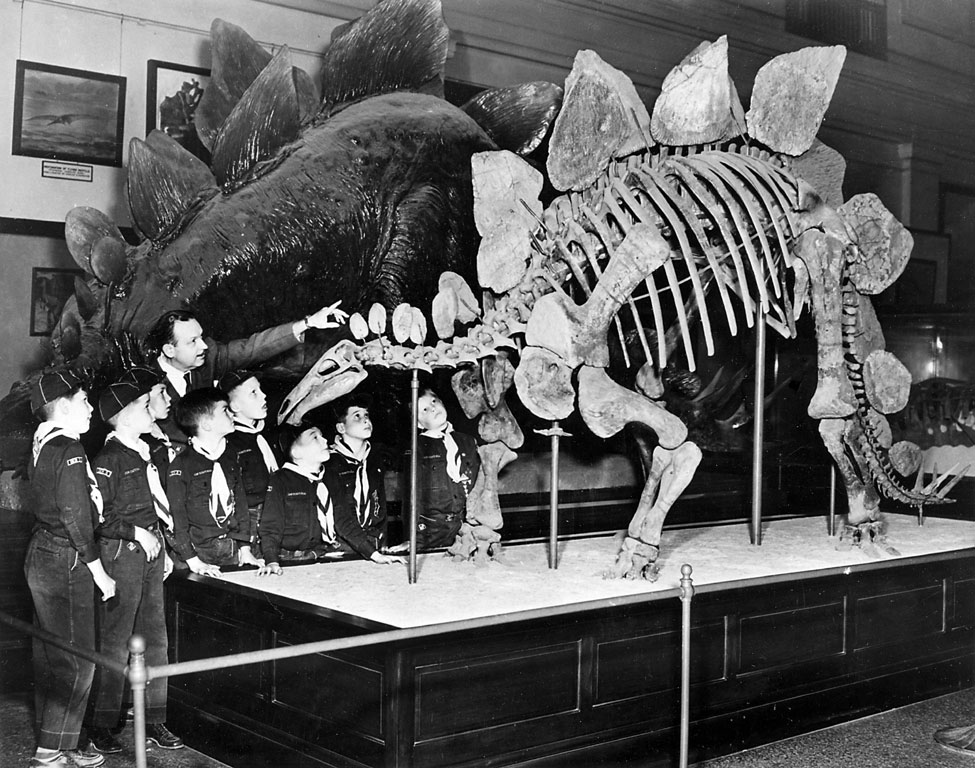
My first love is natural science, but I also fancy myself an amateur art enthusiast, particularly for performance and installation pieces from the last 50 years or so. I am fascinated by art that directly engages the viewer, art that is not complete without the involvement of the spectator. As it happens, mounted fossil skeletons are a great example of  installation art, although they are not deliberately constructed as such. The size and presence of a dinosaur skeleton, such as the Stegosaurus below, necessarily incorporates the viewers’ human scale into the experience. Viewers are not merely spectators but participants in a shared performance. Nevertheless, fossils are nearly always displayed and interpreted as scientific specimens, rather than art objects.

Stegosaurus fossil mount and life-size model circa 1913. Photo courtesy of the Smithsonian Institution Archives.

Stegosaurus fossil mount and life-size model at USNM circa 1913. Photo courtesy of the Smithsonian Institution Archives.

One important exception occurs in the work of prolific New York-based artist Allan McCollum. McCollum’s installations frequently address repetitive labor and industrial manufacturing, often incorporating hundreds or thousands of similar but subtly unique objects. Each piece is the product of many small actions, gradually assembled over time. In the early 1990s, the artist turned his attention to fossils, particularly their historic meaning and aesthetic appeal.

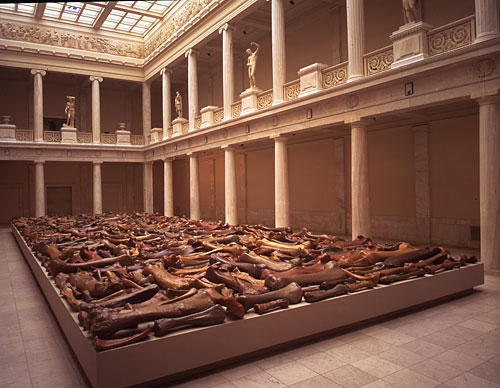
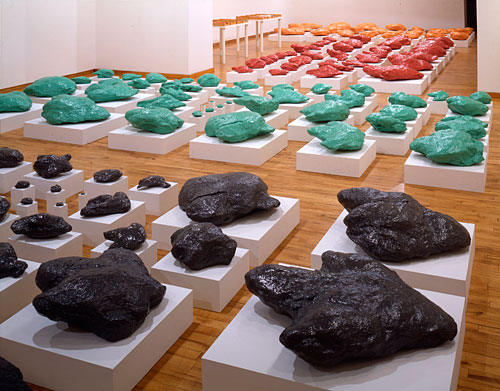
"Lost Objects" by Allan McCollum. Image from Art21.

“Lost Objects” by Allan McCollum. Image from Art21.

In 1991, McCollum collaborated with the Carnegie Museum of Natural History to produce “Lost Objects”, displayed next door at the Carnegie Museum of Art. Using molds taken from dinosaur fossils (apparently all limb bones) in the CMNH collection, the artist produced several hundred fossil casts for the installation shown above. To me, this piece is a reflection on the global sharing of fossil material permitted by casting technology. In the Art21 video at the top of this post, McCollum briefly discusses the prominence of casts among the dinosaur mounts that are a staple at natural history museums. Dinosaur skeletons are virtually never found complete, and mounts are often filled in with casts of specimens held by other museums. For example, the National Museum of Natural History Diplodocus mount incorporates casts of the left hindlimb and much of the neck of the Carnegie Diplodocus. What’s more, casted duplicates of the entire Carnegie Diplodocus can be seen in London, Berlin and several other cities in Europe and Latin America, and casts of the American Museum of Natural History Tyrannosaurus are on display in Denver and  Philadelphia. It would be an impressive sight if all the casts of certain fossil specimens scattered around the world were reunited in one room, a monument to the knowledge gained from a century of scholarly collaboration. It would also commemorate the intangible excitement generated by dinosaur mounts, made possible only through the duplication and sharing of casts.

MCollum also comments that “there aren’t as many dinosaur bones in the world as we think.” Perhaps, then, “Lost Objects” is a reflection on the scarcity of intact fossils, by showing an impossibly large collection that no museum could hope to amass. Let’s just hope he wasn’t trying to comment on the alleged mass-production of casts cheapening the original fossils and the museums that hold them, because he’d be dead wrong (EDIT: He wasn’t, see comments).

mccollumnaturalcopies

“Natural Copies” by Allan McCollum. Image from Art21.

In 1995, McCollum followed up on “Lost Objects” with “Natural Copies, a series of casted dinosaur footprints produced in collaboration with the College of Eastern Utah Prehistoric Museum. For the artist, this piece was a reflection on the idea that 150 million-year-old fossils can be valued as cultural history. The footprints in question were found by the hundreds in a Utah coal mine. While many ended up at the museum, others were collected by miners to display at home. The fossils took on a second life as symbols the community’s workforce and natural heritage, irrelevant to the dinosaurs that produced the tracks but important all the same. McCollum’s work separates the fossils from their typical scientific context so that viewers may reflect on their cultural meaning and even the aesthetic beauty of their form.

So what’s the point of these installations? These appropriations of fossils as aesthetic pieces has no bearing on the science of paleontology, and in fact may obscure information about how the animals that left these traces lived and behaved. And yet, from the moment a fossil is first seen by human eyes, whether it is an ammonite preserved in a split open rock or the glint of a vertebrate bone weathering out of a hillside, it becomes meaningful on a human scale. For the discoverer, the researcher who describes the fossil, the institution that holds it in its collection and the visitor who sees the fossil on display, that specimen has cultural value. This does not diminish the value of fossils as natural specimens, but rather enhances their importance.

1 Comment

Filed under collections, dinosaurs, fossil mounts, museums, paleoart

Another JP4 Feathers Post

Okay, I’ll bite.

A week ago, Jurassic Park 4 director Colin Treverrow tweeted two words and a hashtag that set the corners of the internet I hang out in aflame for days afterward. The dinosaurs in the upcoming third sequel will not have feathers, in defiance of the twenty years of irrefutable fossil evidence that has come to light since the original film’s 1993 release. Reactions to this news demonstrate a clear divide among dinosaur enthusiasts: there are those who hate the idea of scientifically inaccurate dinosaurs appearing in mass media, and those who are enamored with the “classic” dinosaurs of their youth, and vocally resist any change. And in this case, I don’t really agree with either.

The problem is that dinosaurs straddle two different roles in our culture. There is the scientific reality of their existence, informed by careful scrutiny of hard evidence. Brilliant researchers collect and interpret fossils, broadening our understanding of not only the lives of dinosaurs, but how life on earth evolves and adapts to change in general. As a science educator, this is the perspective on dinosaurs I am usually invested in.

But dinosaurs also have what John Conway calls “awesomebro” appeal. From this angle, dinosaurs are appealing because they are monsters with big teeth and are generally super cool. This is coupled with an innate association of dinosaurs with early childhood that people are remarkably protective of. For example, on Brian Switek’s 10 Dinosaur Myths that Need to Go Extinct article for Tor Publishing, commenter Alan B. declares “I don’t care what anyone says, the dinos we learned about when I was in grade school were awesome! And given a choice between factual and awesome, I will choose awesome every time!” Clearly there is a a bit of tongue-in-cheek humor at play here, but comments like this appear virtually anywhere feathered dinosaurs are discussed. Many people genuinely care about their “classic” dinosaurs, and react negatively to new discoveries that threaten the dinosaur paradigm they associate with childhood bliss.

As Conway points out, the typical reaction of anyone with a vested interest actual scientific paleontology is to reject and belittle pop-culture dinosaurs whenever possible. Unfortunately, this we’re-right-and-you’re-wrong approach veers into deficit model territory, and doesn’t seem to accomplish much other than make the rift among dinosaur enthusiasts more antagonistic. It makes our audience of potential learners defensive, even angry, that scientists are “ruining” dinosaurs. And focusing conversations on the fact that popular conceptions of dinosaurs are wrong removes focus from the real benefits of researching past life.

I think it would be more helpful to recognize the validity and significance of pop-culture dinosaurs, but to work towards separating them in the public consciousness from real dinosaurs. A potential conversation: You think the Jurassic Park Raptors are cool? Great, so do I, but I think they’re cool in the way other movie monsters like the Predator or the T-1000 are cool. But perhaps you’d be interested in learning about the real animal Velociraptor mongoliensis that the movie Raptors were inspired by? My point is, the widespread appreciation/nostalgia for pop-culture dinosaurs (or fantasy dinosaurs, or classic dinosaurs, or awesomebro dinosaurs, whatever you want to call them) is potentially valuable, but I think it often gets dismissed too gruffly. If would-be educators are outright dismissing what their audience is bringing to the conversation, that audience has little incentive to learn more.

3 Comments

Filed under dinosaurs, education, movies, opinion, reptiles, science communication