Over the last few years, I’ve gradually been assembling what I imaginatively call the Big Spreadsheet. It’s a record of every single vertebrate fossil on display at a number of natural history museums, mostly in the United States (so far I haven’t been bold enough to include invertebrates or plants). The Big Spreadsheet tracks basic “tombstone” information about each fossil—what it is, where it was found, how old it is, and so forth. Where possible, I’m also tracking collectors, preparators, original display dates, remounts, and trades with other institutions, among other things.
The Big Spreadsheet differs from things like the Paleobiology Database in that I’m specifically focused on what is or has been on public display. Museums only display a fraction of their collections, and the decisions concerning what is worth displaying are made by people with varying preferences and goals. Perhaps the objective is to showcase what’s unique or unusual in the collection. Or perhaps it’s to comprehensively tell the story of evolution. Maybe there’s a focus on local fossils, fossils collected by specific people, or fossils that represent species that visitors would (or wouldn’t) recognize. There’s no one right way to make a fossil exhibit, but the choices that individuals make nevertheless influence how audiences understand the history of life on Earth and how we come to know about it.
My hope is that the Big Spreadsheet will eventually be complete enough that it can be used to tease out quantitative answers to the questions that vex those of us that are interested in how the public thinks about prehistory. For example, maybe it could illustrate which taxa are over or under-represented in public displays, or if narratives are skewed toward certain localities. Maybe we could see the influence certain individuals (say, the Sternbergs) have had on the public’s view of paleontology. Or maybe we could track the degree to which western museums exploit specimens extracted from colonized lands.
I don’t think the Big Spreadsheet is ready for any of those questions yet. But it is interesting to take a peek at how certain museums measure up to one another with their display collections. The charts below divvy up the data from some of the biggest natural history museums: the American Museum of Natural History (AMNH), the National Museum of Natural History (NMNH), the Field Museum of Natural History (FMNH), the Royal Ontario Museum (ROM), and the Natural History Museum in London (NHM).
Here we can see the overall number of vertebrate fossils on display at each of these museums, and how they sort out by type. One obvious conclusion is that AMNH has an outrageously high number of fossils on display compared to its peers. Note that the difference between a mounted skeleton and an in situ skeleton is sometimes a judgement call (many skeletons displayed in relief are not fully removed from their matrix, but have been partially reposed or have missing elements added).
This chart shows how many fossils on display at each museum are “originals” versus replicas (I’ve counted anything that includes at least some real material as original). These five museums mostly display original fossils, although the ratio is highest at FMNH and lowest at NHM and NMNH. Fish fossils really throw the score, however—these numbers would look different if we were only considering big, charismatic tetrapods.
This chart compares the percentage of fossils on display from each era of the Phanerozoic (the last 541 million years). The Paleozoic gets shorted across the board—it represents about 50% of the Phanerozoic but the percentage of Paleozoic vertebrate fossils on display never tops 20%. Meanwhile, the Cenozoic (12% of the Phanerozoic) seems quite over-represented—that is, if temporal proportionality is ever a goal in creating these displays.
Here, we compare the percentage of fossils on display by region. Any passing familiarity with the history of science will make the focus on North America and Europe rather unsurprising.
This last chart breaks down the percentages by animal type. I’m sure the categories will make some readers squirm, but I’m going for culturally meaningful categories here, not evolutionary meaningful ones. It strikes me that just looking at the numbers of fossils in each category doesn’t necessarily capture the impact on visitors. For instance, dinosaur and mammal skeletons tend to take up a lot more space than fish. I wonder if there’s a way to control for square footage of gallery space and come up with an “impression score” of some kind for each of these groups.
If anyone’s interested in collaborating on the Big Spreadsheet, please give me a shout! I’m particularly keen on connecting with folks with a better statistical background, as well as anyone interested in tallying up fossils on display in the western United States and Canada.
An overview of the Hall of Vertebrate Origins. Photo by the author.
Spending a day at the American Museum of Natural History is always a joy. Particularly in its fourth floor fossil halls, AMNH stands head and shoulders above peer museums in the sheer breadth of collections on display. Something in the ballpark of 600 fossil vertebrate specimens are included, including no less than 135 mounted skeletons. Many of these represent taxa that cannot be seen anywhere else in North America. With each visit, however, I feel more and more that the AMNH fossil halls are showing their age. This is not surprising—the current exhibition opened in stages between 1994 and 1996. Strange as it seems to aging millennials like myself, that was 30 years ago. By comparison, the prior iteration of the fossil halls was completed in 1956, and was 31 years old when renovation planning began in 1987.
The “Brontosaur Hall,” part of the midcentury iteration of the AMNH fossil exhibits. Photo courtesy of the AMNH Research Library.
In their time, the current fossil halls were a monumental accomplishment—taking nine years to complete and costing $44 million (which would be more than $90 million today). Steering the ship was Lowell Dingus, a paleontologist by training who assumed the role of Project Director for the renovation. Dingus led a twenty-person team of AMNH researchers, writers, and preparators dedicated to the project, and Ralph Appelbaum Associates was hired to design a new look for the halls.
Initially, the intention was to only replace the two oldest halls, which featured Cenozoic mammal fossils. Some of these displays had not been altered since the 1920s, and others were boarded over because so many specimens had been removed for study or conservation. But when George Langdon and William Moynihan took over museum leadership positions, they decided to expand the project to include the two dinosaur halls. With the further addition of a new Hall of Vertebrate Origins (in a space previously occupied by the library) and a fourth floor Orientation Center, the project rapidly ballooned to cover 40,000 square feet of exhibit space and the entire story of vertebrate evolution.
On the design side, the team sought to restore the original architecture in each hall, ensuring that both the specimens and the spaces they occupied would come, as Dingus put it, “as close to their original grandeur as possible.” In many cases, century-old architectural elements—such as windows and molded ceilings—were still intact behind panels that had been installed over them during previous renovations. These features were painstakingly restored, or when necessary, recreated. Classic decorative elements, from the colonnades to the elegant chandeliers, were reintroduced.
The former “Brontosaur Hall” is now the Hall of Saurischian Dinosaurs. Photo by the author.
Dingus also had transformative plans for the fourth floor’s interpretation and organization. Rather than the traditional walk through time that characterized the midcentury exhibits, the renovated halls would be arranged according to phylogenetic classification: visitors were meant to explore the vertebrate family tree as they moved through the fourth floor galleries. Each large hall represented a major branch, and was further divided into smaller alcoves representing specific groups, like turtles, artiodactyls, or ornithomimid dinosaurs.
While this organization closely matched how paleontologists think about life on Earth (particularly those at AMNH who helped pioneer the cladistic methodology), it is unfamiliar to most visitors. For Dingus and his colleagues, this wasn’t a flaw—it was the point. “Is it enough simply to discuss what visitors want to know about,” Dingus wrote at the time, “or do exhibitions have a responsibility to broaden their audiences’ horizons by presenting challenging information?”
Dingus was planting a big, blue AMNH flag on one side of an ongoing debate about the role of museums and the purpose of their exhibits. “There is a prominent, contemporary school of exhibition design that advocates giving the visitor only what he or she asks for,” he wrote. “I vehemently disagree with this philosophy. We cannot pitch all the information to the lowest common denominator of interest and intellect.”
Dingus was likely referring to the philosophy championed by Michael Spock, who was at that time the Vice President for Public Programming at the Field Museum of Natural History. Spock had previously gained industry attention for his exploratory, interactive exhibitions at the Boston Children’s Museum. At the Field Museum, his approach was to make exhibitions “for someone, rather than about something.” Under Spock, projects began by asking community members what they were curious about, rather then by dictating what was important. Spock-era exhibits were filled with interactive and touchable displays meant to illustrate scientific concepts—some more successfully than others. They also tended to embrace a “less is more” aesthetic, taking deep dives into a few examples rather than trying to represent the full breadth of the museum’s collection.
For better or worse, Dingus’s fossil halls at AMNH could not be more different than the ones Spock oversaw at the Field Museum. There are no levers to pull, no “Dial-a-Dinosaur” phones, and certainly no rideable trilobites (all features of the early 90s Field Museum). Instead, the focus is on the fossils, and—as mentioned—there are far more of them on display than at any comparable museum. The closest things to interactives are the computer terminals, which allow visitors to select from menus of scientist-narrated videos.
A display of fossil horses at AMNH. Photo by the author.
As it happened, Spock’s version of the Field Museum fossil halls barley lasted a decade, while Dingus’s AMNH exhibits remain mostly unchanged today: aside from the Patagotitan in the Orientation Center, the next largest addition might be a Tiktaalik cast skull in one case in the Hall of Vertebrate Origins. So how have the AMNH halls fared?
I sympathize with Dingus’s aim to “promote science literacy and develop a better awareness of how science can help illuminate the world.” That said, the AMNH fossil halls are clear example of a debunked educational style known as the “deficit model”—briefly, this is an approach to teaching that assumes students are empty vessels that can be simply filled with information. Moreover, I’m not convinced that the phylogenetic arrangement of the halls is particularly helpful for most visitors. The AMNH fossil halls are perfect for college students already learning about the diversity of life. But for most everyone else, the organization is opaque at best and a hindrance to understanding at worst. Making sense of phylogeny requires a lot of groundwork up front—even something as basic as knowing which direction to read a tree is not common knowledge. The Meryl Streep-narrated video in the Orientation Hall attempts to bridge this gap, but it’s overlong and not terribly engaging. Meanwhile, the multi-entrance, cyclical shape of the fourth floor means that only a fraction of visitors are actually starting in the Orientation Hall.
An example of a graphic with bizarre kerning and layout choices. Photo by the author.
Within the galleries, the central pillars that update visitors on where they are in the tree are generally ignored. Part of the problem is that displays which highlight the three-fingered hand, the stirrup-shaped stapes, and other seemingly minor features that unify evolutionary groups are not especially compelling. And although I appreciate the wide open and well-lit spaces, I think the design of the halls might be working against the interpretation. It’s hard to tell where one grouping ends and another begins when every surface is either white or made of glass.
Speaking of unhelpful design, there are some bewildering graphic design choices in these halls. On a single graphic, text may switch from center to left to right justification, randomly change in font and/or size, or be interrupted by illustrations placed in the middle of paragraphs. Sometimes paragraphs or even sentences run across multiple surfaces, and some text is printed on the glass barriers in front of fossils, making it even harder to read. I don’t want to harp on this forever so I’ll just link to some more chaotic examples here, here, here, and here.
A corner devoted to the Edentates, which is no longer considered a real evolutionary group. Photo by the author.
Simply put, I’d be very surprised if many visitors are engaging with the phylogenetic organization, or even wondering why the fossils they’re looking at are displayed together. Remember: most visitors come in mixed-aged groups. The trip to the museum is a social experience, and interactions occur among visitors as much as they occur between visitors and the exhibits. The best museums anticipate and meet the needs of these visitors. Too much information, or irrelevant information, is just as bad as too little. I’m all for “broadening horizons” with “challenging” content, but the exhibit needs to be accessible first.
Even if the AMNH fossil halls are pitched above most visitors’ levels of interest, background knowledge, and patience, is the information at least reliable? Much of it is, but phylogeny is inherently volatile, and many groupings (to say nothing of particular genera and species) in the exhibit have been out of date for decades. Visitors in 2024 are being told that tyrannosaurs are a kind of carnosaur (they’re actually coelurosaurs), that pangolins, aardvarks, and sloths form a group called Edentates (they’re actually distantly related), and that primates and rodents are closely related to bats (they’re not). But other groupings in these halls have fared better: the exhibition definitively states that birds are a kind of dinosaur, an idea that enjoys near-universal acceptance today but was reasonably disputable in the early 90s.
Early 20th century tail-draggers. Photo by the author.
On top of the outdated information scattered throughout the halls, about a dozen of the mounted dinosaur skeletons are in old-fashioned, tail-dragging poses. These were known to be inaccurate at the time of the last renovation, but the budget only covered remounting two of them (the Apatosaurus and the Tyrannosaurus).
And just to be exhaustive in covering issues with the existing halls, many paleontologists over the years have discovered that the museum has no easy way to open the large glass cases that house some of AMNH’s most unique and significant fossils. Specimens like the Barosaurus, the Gorgosaurus pair, and the Corythosaurus mummy can only be accessed with the help of hired glaziers, and the museum requires scientists to cover the expense. This is well beyond most research budgets, and as a result, many of these world-famous and one-of-a-kind specimens have not been studied closely in decades.
So it’s fair to ask, why haven’t the AMNH fossil halls been updated yet? To be clear, the museum’s scientific and exhibitions staff are fully aware of everything I mentioned above. I’m sure the biggest hurdle is that a thorough renovation would be really, really expensive. For comparison, the NMNH renovation that took place between 2014 and 2019 cost $110 million ($70 million to restore the century-old east wing and $40 million for the exhibition itself). There’s also the cost in visitation to consider: if AMNH is anything like its peers, a big part of its operating budget comes from visitor admissions (for readers outside the United States, most of our museums are private nonprofits and do not get direct government support). Take away the most popular exhibition in the building for any length of time, and that income drops sharply.
A cast of Tyrannosaurus rex in the AMNH traveling exhibition T. rex: The Ultimate Predator. Photo by the author.
From context clues, I don’t think a top-to-bottom renovation of the permanent fossil halls is coming any time soon. AMNH only recently hired a new fossil reptile curator, Roger Benson, in 2023. And the museum just opened a brand-new wing called the Gilder Center, which took five years and $465 million to build. The museum also just announced that it has temporary custody of Apex, a privately-owned Stegosaurus skeleton. According to a press release, Apex will eventually be the centerpiece of a new passageway connecting the Gilder Center to the permanent fossil halls (the real skeleton until 2028 or so, then a cast). I’d be surprised if we hear anything about a full-scale renovation until after Apex has left the building.
To their credit, the AMNH exhibitions team hasn’t exactly been idle when it comes to dinosaur displays. Over the last two decades, they’ve been rolling out a series of fossil-centric traveling exhibitions, including The World’s Largest Dinosaurs, Dinosaurs Among Us, Extreme Mammals, and T. rex: The Ultimate Predator. Each of these temporary shows has been up-to-date with new science and high-tech exhibtry. When the time comes, I’m sure this team could do great work on new permanent fossil galleries.
But for now, what are your hopes for the eventual AMNH renovation? What do you want to see changed or introduced? What should stay the same? Please leave a comment with your ideas!
References
Dingus, L. 1996. Next of Kin: Great Fossils at the American Museum of Natural History. New York, NY: Rizzoli International Publications, Inc.
Honan, W.H. 1990. Say Goodbye to the Stuffed Elephants. The New York Times Magazine.
Spiegel, A.N., Evans, E.M., Frazier, B., Hazel, A., Tare, M., Gram, W., and Diamond, J. 2012. Changing Museum Visitors’ Conceptions of Evolution. Evolution: Education and Outreach 5:1:43-61.
Torrens, E. and Barahona, A. 2012. Why are Some Evolutionary Trees in Natural History Museums Prone to Being Misinterpreted? Evolution: Education and Outreach 1-25.
A partially prepared tyrannosaur skeleton in a field jacket. Photo by the author.
Earlier this month, I had the a chance to see the “Dueling Dinosaurs,” which debuted at the North Carolina Museum of Natural Science (NCMNS) in April. Consisting of virtually complete skeletons of a tyrannosaur and Triceratops preserved side-by-side, this fossil is either the find of the century, or just another example of overhyped, overstudied, and overpriced Hell Creek dinosaurs—it depends on who you ask. But NCMNS has made it more than that, placing the fossil at the center of an ambitious project to improve science literacy by removing all barriers to the process.
Commercial collector Clayton Phipps discovered the skeletons in 2006, on private ranchland in Montana. Having never worked on anything so large before, Phipps teamed up with the Black Hills Institute for the initial preparation and assessment of the fossil. The skeletons were put up for auction in 2013, resulting in what has become a familiar din of competing voices. The sellers heralded the rarity and quality of the fossil, proclaiming it to be a clear example of dinosaurs that perished while locked in combat. Paleontologists countered that a fight-to-the-death scenario was unlikely, and without scientific study, the circumstances of the dinosaurs’ demise could not be known. Furthermore, in the event that the fossil went to a private buyer, there would be no opportunity to study it. The so-called Dueling Dinosaurs were poised to become yet another example of a high-profile specimen sold into private hands, where they could never contribute to scientific and public knowledge.
As it happened, the auction was a failure, and bidding never reached the reserve price. Behind the scenes, however, the Friends of the North Carolina Museum of Natural Science—a non-profit organization that supports the state-run museum—had put forth an offer of six million dollars for the fossil. To be clear, a mid-sized public museum like NCMNS absolutely does not have $6 million on hand for specimen acquisition. The funding came from private donations solicited by the Friends organization.
A partially prepared Triceratops skull in a field jacket. Photo by the author.
The offer was accepted, but there was another hurdle: a legal challenge over ownership of the land the fossil was found on. In Montana, surface rights (ranching, farming, etc.) and mineral rights (oil, coal, uranium, etc.) to the same parcel of land can be split among different owners. When the Dueling Dinosaurs fossil was collected, arrangements were made with surface landowners Lige and Mary Ann Murray, but other parties had partial claim to the mineral property. Those individuals—Jerry and Bo Severson—sued, arguing that fossils are minerals and should belong to them. In 2020, the Montana Supreme court ruled that for legal purposes, fossils are “land” and therefore belong to surface landowners. With the sale completed, the next stage in the Dueling Dinosaurs story could begin.
Concept render of Dueling Dinosaurs lab and exhibit by HH Architecture. Source
Having already pushed for the acquisition of the fossil, NCMNS Head of Paleontology Lindsay Zanno took charge of the project. Her vision was to create a completely open fossil preparation lab. Rather than being behind glass, the scientists working on the Dueling Dinosaurs would be available for conversation with the public whenever the museum was open. As Zanno explained in an interview, “I conceived the Dueling Dinosaurs project to take the public on a live scientific journey, to illuminate how science works, to show who scientists are and what we look like, and to increase trust in the scientific process.”
To accomplish this, NCMNS hired local firm HH Architecture. They designed the state-of-the-art lab to Zanno’s specifications within the Nature Research Center, the second wing of NCMNS that opened in 2012. The addition also includes two flanking exhibit galleries and street-facing, floor-to-ceiling windows, which allow passerby to see into the lab.
LED images of the three hypotheses cycle across a central display in the first gallery. Photo by the author.
Visitors enter the Dueling Dinosaurs exhibit on the Nature Research Center’s ground floor. The first gallery introduces visitors to the ecosystem of Late Cretaceous Montana. Green panels and walls situate visitors in this verdant environment. After passing small cases with turtle, crocodile, fish, and plant fossils (the purchase of the Dueling Dinosaurs included access to the discovery site, but these are on loan from the Denver Museum of Nature and Science), visitors reach a large display introducing the central mystery of the Dueling Dinosaurs. The exhibit presents three possible scenarios that could have resulted in the dinosaurs being preserved together: duel (a fight to the death), dinner (the tyrannosaur perished while scavenging on Triceratops), or disaster (the animals died separately and were washed together in a flash flood). Color-coded LED outlines of the dinosaurs illustrate the three scenarios in front of an illustrated backdrop.
While these scenarios are presented as being equally plausible, most paleontologists agree that the “disaster” scenario is the likeliest of the three. The real purpose of the exhibit’s presentation is to introduce visitors to the process of stating a hypothesis and finding supporting evidence. Remember, a major part of the rationale behind acquiring the fossil and creating this is exhibit was to show the public what scientists do, and why scientific conclusions are trustworthy. This inquiry-based display attempts to coax visitors through the process of considering the available evidence, and letting it lead them to a conclusion.
Projected images and text augment a sculpture of the fossils. Photo by the author.
Visitors’ next stop is the lab itself, but traffic is controlled by a roughly 4-minute media presentation at the far end of the first gallery. Relief sculptures of the Dueling Dinosaurs skeletons at 50% scale are the centerpiece of this display. Projected images to the left and right—and on the sculpture itself—illustrate the story of where the fossil came from and what scientists hope to learn from it. Certain moments, like a laser scan across the fossil, suggest at least a little inspiration from the SUE show at the Field Museum. The animated tyrannosaur and Triceratops that appear throughout this and other media pieces in the exhibition were created by Urvogel Games, the people behind the dinosaur simulator game Saurian.
Once inside the lab, nothing but a short plexi barrier separates visitors from the preparators at work. As a former/occasional fossil preparator myself, I can tell you that this space is really, really impressive. It’s not enormous, but it’s big enough to comfortably hold four large jacketed matrix blocks. A 10 ton capacity crane looms overhead, and pneumatic hook-ups for air scribes and dust collectors are within reach throughout the space. I was particularly impressed by a rig that can rotate large jackets on their vertical axis, allowing them to be prepared from multiple directions. No less than seven preparators have been hired to staff this lab, so visitors should find people working all the time. Part of the preparators’ responsibility is to be available to answer questions. Typically, one person is posted by the barrier while the rest of the team works in the background.
An overview of the public lab. Photo by author.
The second gallery space is not about the Dueling Dinosaurs specifically, but about the tools and techniques paleontologists use to learn about the past from fossils. The most prominent displays are a cast of Nothronychus (a dinosaur described by Zanno and colleagues) and a nest of oviraptorosaur eggs from Utah. Visitors can touch the tools used by fossil preparators, perform a simulated CT scan of a Thescelosaurus skull, and look through a microscope at growth lines in a sectioned dinosaur bone. I was told this gallery wasn’t quite finished, which might be why it felt unfocused to me. A more prominent header and summative statement at its entrance about the purpose of the gallery might help.
“Science has an accessibility problem,” Zanno said in an interview, “and mistrust in science is rising. We have to bring science out of the back corners and basements…and let our community see who we are and what we do.” The Dueling Dinosaurs exhibition has done exactly that—visitors could not be closer to the process of preparing and studying these fossils without being handed an air scribe. So how is that working out?
Visitors explore interactive stations in the second gallery. Photo by the author.
I detected a hint of frustration coming from the team members I spoke to. Too many visitors are fundamentally misunderstanding what they are seeing in the lab. They assume the preparators are actors and the fossils are fake, and are often incredulous when told otherwise. The concept that a museum is a place where new science happens is also surprising to a plurality of visitors. One strategy the team has employed is to set up a table of matrix and fragments for the preparator on interpretive duty to sort through. That way, they are clearly working on something when visitors enter and are less likely to be mistaken as an actor or volunteer. Still, if visitors are struggling to recognize real scientists in a real lab when presented with them, the need for access to science in action may be even greater than anticipated.
This might be a “when you have a hammer, everything looks like a nail” situation, but I think some reframing of the exhibition and how its presented could go a long way. Right now, the experience is titled “Dueling Dinosaurs,” which is undoubtedly compelling, but elicits its own set of expectations and assumptions about what visitors will see and do. Why not present the experience as what it really is—an opportunity to meet real paleontologists in their place of work? Would it be possible to reverse the order of visitor flow, so they see the gallery about how paleontology is done first, then visit the lab, then finish by learning about the Dueling Dinosaurs as a case study?
A media-based interactive allows visitors to apply different color patterns to an animated Triceratops, rendered in real time. Photo by the author.
Preparing the fossil is expected to take about five years. The goal is to keep the skeletons in their death positions and eventually display them in relief, somewhat like the model in the media presentation. How much matrix to remove is a moving target. The tyrannosaur’s skull has already been CT scanned multiple times with disappointing results. More matrix will need to be cleared to get a good image of the inside of the skull. Meanwhile, extensive skin impressions are preserved across both skeletons, and the team hopes to leave much of this in place. The process is being slowed somewhat by the need to scrape and chip away irreversible glue that was applied by the original preparators.
Aside from determining whether the dinosaurs actually died fighting (don’t count on it), one of the most anticipated answers the project is expected to provide is the identity of the tyrannosaur. When the fossil was at the Black Hills Institute, Pete Larson concluded that it was a Nanotyrannus—a controversial name applied to fossils that many paleontologists think are actually juvenile Tyrannosaurus rex. Indeed, when the fossil was up for auction, it was marketed as a young T. rex, probably for the sake of name recognition. The NCMNS team will eventually weigh in after studying the skeleton more thoroughly.
The lab itself is expected to remain in place once the Dueling Dinosaurs are prepared. The museum already has other very large fossils awaiting preparation.
If you’re able to visit Raleigh, I highly recommend visiting the Dueling Dinosaurs, the open prep lab, and the rest of NCMNS (the museum is free). You can also monitor the preparation process online. Many thanks to Jennifer Anné, Paul Brinkman, Elizabeth Jones, Christian Kammerer, and Eric Lund for speaking to me about the exhibition. Any factual errors are my own.
The south-facing entrance to the Hall of Human Origins. Photo by the author.
As covered in the previous post, the National Museum of Natural History’s Hall of Human Origins, which opened in 2010, is an exceptionally well-conceived and well-crafted exhibition. In certain circles, however, there has been a persistent strain of criticism that I feel like I would be remiss not to address.
Shortly after the Hall of Human Origins opened, articles in the New Yorker andThinkProgress called attention to the fact that the exhibition was created with $15 million from David Koch (the full title of the exhibition is the David H. Koch Hall of Human Origins). Koch, who died in 2019, and his brother Charles are probably best known as billionaires who support a range of libertarian causes, including right-wing political candidates and climate change deniers. Their fortune comes from Koch Industries, a massive energy (read: oil) and manufacturing conglomerate.
David Koch bankrolled socially and environmentally destructive policies for decades, and I don’t think it’s a stretch to say that few individuals have left such a damaging anti-science legacy. But credit where it’s due: the Koch Foundation has also supported museums, public broadcasting, and other institutions associated with education and the arts. Many of these contributions are related to Koch’s personal interest in fossils, especially dinosaurs and human ancestors.
The Humans Change the World sub-section. Photo by the author.
In a ThinkProgress piece published a few months after the Hall of Human Origins opened, author Joe Romm suggested that the exhibition’s creators downplayed the seriousness of anthropogenic climate change at Koch’s behest. According to Romm, the hall’s “huge flaw is that it leaves visitors with the distinct impression that human-caused global warming is no big deal.” Additional articles inThinkProgress,Hyperallergic, and Equinox made similar accusations. Each article zeroed in on a recurring theme in the exhibition’s text: that hominin evolution was driven in part by a need to adapt to a changing climate. As Ryan Little put it in Hyperallergic, the exhibition “craftily insinuates that fluctuating climates, whenever, wherever, and however they occur, are a source of astonishing human ingenuity, while also managing to suggest…that in the grand geological scheme of things, climate change is no big deal.”
There is absolutely a conversation to be had about the pros and cons of museums accepting money from problematic sources (NMNH caught heat a few years earlier when it accepted funding and specimen donations from Kenneth Behring). And there is always cause to be vigilant about corporate interests making their way into public institutions. Nevertheless, a recent re-visit to the Hall of Human Origins has convinced me that any critics suggesting that the exhibition downplays climate change—or that Koch had any influence over its content—are fundamentally misguided.
One of multiple graphic panels describing present-day climate change, why it’s happening, and how we know. Photo by the author.
There are two issues in play here. First, I think the authors are missing the bigger evolutionary picture. There is nothing new or untested about the concept of a connection between the changing Earth and the evolution of life on it (that is, interaction between the geosphere and biosphere). Examples are seemingly innumerable. Hoofed mammals evolved long legs for running and large, grazing teeth when grasslands replaced forests in the Miocene. Radiations of new species evolved when North and South America collided, allowing animals access to new habitats. Dire wolves got smaller when the climate got colder and food was harder to come by. And that’s just in the last 30 million years. Why wouldn’t human ancestors evolve in response to a changing environment, when it’s been a primary driver of evolution throughout our planet’s history?
The second issue is that it’s plainly incorrect to say that the Hall of Human Origins does not address recent anthropogenic climate change, or clearly state its cause. There is an entire 1,500 square foot sub-gallery called “Humans Change the World,” which investigates how garbage, livestock, habitat destruction, and yes, carbon dioxide emissions are damaging the planet. The famous hockey stick graph of global temperature, with its spike in the last century, appears at least three times, including at the exhibition’s south-facing entrance. The exhibition states, repeatedly, that “the global climate is warming as a result of increasing levels of atmospheric greenhouse gases generated by human activities.”
A media piece with the caption, “We’ve produced so much CO2 that we’ve warmed the planet.” Photo by the author.
It would be difficult for a visitor to explore the Hall of Human Origins and miss the references to anthropogenic climate change. It would be even more difficult to conclude that the exhibition is somehow putting a positive spin on it—the images of belching smokestacks and piles of garbage are not subtle. And yet, that is exactly what multiple authors have alleged, as recently as 2019. This is fascinating to me, because it speaks to the power of the narratives visitors bring with them to any museum experience.
In the previous post, I mentioned an evaluation of the Hall of Human Biology and Evolution at AMNH, which found that visitors were imposing teleologic narratives onto the exhibition, in spite of deliberate efforts to counteract this. Visitors expected evolution to be a linear, progressive process, and they unwittingly interpreted what they’re seeing in a way that matched those expectations. Perhaps a similar phenomenon is occurring in the Hall of Human Origins. Many of us are used to seeing Koch’s name associated with aggressive lobbying against climate change mitigation. In that context, the narrative that an exhibition bearing his name would have a similar message is compelling, even sensible. But it isn’t borne out by the actual content on display.
At the heart of the Deep Time exhibition, a theater demonstrates how humans are causing unprecedented change to the planet, while also highlighting potential solutions. Photo by the author.
Again, it’s reasonable to be wary of corporate interests making their way into public institutions. Perhaps museums that accept funding from questionable sources have a responsibility to go above and beyond in assuring their audiences that those funding sources are not influencing exhibition content (or anything else they produce).
To their credit, this seems to be something NMNH has taken very seriously. As discussed, the Hall of Human Origins devotes considerable floorspace to the message that climate change is an unavoidable part of humanity’s legacy. And in 2019, the museum went even further. The massive paleontology exhibition known as Deep Time was also funded in part by the Koch Foundation, and bears David Koch’s name. Here, a central overlook (visible from everywhere in the hall) is devoted to the message that human industrial activity is warming the climate, and that this change comes with dire consequences. Even more so than in the Hall of Human Origins, this statement is presented in clear, matter-of-fact language. The centrality of this location and its proximity to the dinosaurs makes the climate narrative unmissable.
As the third most-visited museum in the world (behind the Louvre and Musée d’Orsay), NMNH is uniquely situated to reach audiences that may never have seen the evidence for climate change presented in a clear, non-political context. They have clearly risen to the occasion, and I just think they deserve some credit for it.
Scott, M. and Giusti, E. 2013. Designing Human Evolution Exhibitions: Insights from Exhibitions and Audiences. Museums and Social Issues 1:1:49–68
Sideris, L. 2019. The Last Biped Standing? Climate Change and Evolutionary Exceptionalism at the Smithsonian Hall of Human Origins. Equinox Publishing.
A bronze Homo heidelbergensis figure crouches over a hearth, offering visitors a piece of meat. Photo by the author.
I don’t know how well you remember the twenty-aughts, but it was a high point for conflict over teaching evolution in the United States. Thanks to lobbying by the Discovery Institute and others, denial of evolution had become an ideological litmus test for conservatives. Organized strategies to impose religious fundamentalism on public school classrooms cropped up nationwide, and these efforts were taken to court on multiple occasions. It was in the midst of all this that the National Museum of Natural History (NMNH) developed and opened its Hall of Human Origins—in sight of Capitol Hill, no less.
In this politically charged climate, one might imagine an exhibition about human evolution would need to be highly didactic, or even combative. But rather than taking an antagonistic stance, the Hall of Human Origins leads with a question: what does it mean to be human? The exhibition presents fossil evidence for how the human species came to be, but also invites visitors to make connections with their own lives and experiences. Fourteen years out from the hall’s March 17, 2010 opening, it’s instructive to look back at the exhibition’s development. How did this visitor-centric interpretive approach come to be, and how has the museum’s audience responded to the exhibition? And in hindsight, would the exhibition’s creators do anything differently?
Origins
More than 50 million visitors have passed through the Hall of Human Origins, but lead curator Rick Potts jokes that about a million of those visits should probably be attributed to him. Indeed, the exhibition and its unique interpretive approach have been on his mind for decades. He first formulated the question “what does it mean to be human?” when teaching anthropology courses at Yale in the early 1980s. The question always inspired a great discussion, and Potts thought it might make an interesting basis for an exhibit about human evolution.
Potts pitched his idea for a human evolution exhibition immediately upon taking a position at NMNH in 1985. Smithsonian secretary Robert Adams liked the concept, but progress on the exhibition stalled within a few years. It was difficult to get any major exhibition off the ground at NMNH during the 80s and 90s because of the lack of consistent leadership. With eleven permanent and acting directors between 1981 and 2003, there was no way to build up momentum for big, multi-year projects. Eventually, Cristián Samper settled into a comparatively lengthy directorship (2003–2012), and greenlit the human evolution exhibition under the working title, What Does it Mean to be Human?
An L-shaped, 15,000 square foot space (which previously contained parts of the North American Mammals and Native American Cultures exhibitions) was designated the future home of the Hall of Human Origins. The core project team began meeting regularly in 2007. Kathleen Gordon was the exhibition developer and Junko Chinen was project manager. Briana Pobiner, Jennifer Clark, and Matt Tocheri joined Potts as in-house scientific advisors. As with most permanent exhibitions at NMNH over the past 25 years, content was developed internally while the 3-D and graphic design was produced in collaboration with the Toronto-based design firm Reich + Petch.
One of the team’s first tasks was to articulate what an exhibition based around a question would actually be about. The objective was to welcome visitors’ perspectives, but the hall itself couldn’t be a blank canvas. Exploring ways in which the exhibition could address varied perspectives led to some dead ends. One early idea was to feature a section about creation stories from around the world. But while the intention was to be inclusive and respectful of visitors coming to the exhibition from religious backgrounds, the section came across as a straw man, set up in order to be knocked down by the scientific perspective taken by the rest of the exhibition. Choosing which creation stories to include was also a problem, as was the use of terms like “story” and “myth” in the first place.
Instead, the team decided to fill out the exhibition with potential answers to a variation on the central question: What makes us human? Walking upright. Making tools. Living in social groups. Communicating with symbols. Creative expression. These are all valid answers. And crucially, they are potentially meaningful to everyone, regardless of whether the visitor is approaching the question from a more scientific perspective, or a more spiritual one. The exhibition presents the evidence for how and when each of these traits evolved, but leaves it up to the visitor to decide which they feel is most important to their humanity. By encouraging each visitor to take part in the process of making meaning, the exhibition implicitly rejects the prevailing perspective that there are only two ways to view the origins of humanity, and that those perspectives are mutually exclusive.
Organizing the exhibition around “things that make us human” also helped the team discourage the misconception that evolution is progressive or teleological. Visitors are often predisposed to think of evolution like a ladder, where each stage is a more advanced, improved form of what came before. An evaluation of the Hall of Human Biology and Evolution at the American Museum of Natural History found that many visitors viewing the dioramas saw a progression from the small, dark-skinned Homo erectus to the tall, white Neanderthals. The exhibition’s designers had specifically tried to avoid this by arranging the dioramas cyclically, and by including labels explaining that evolution does not have a preordained direction or goal—populations merely adapt to maximize their success in the present environment. Nevertheless, preconceived ideas are powerful, and even these mitigative efforts were apparently not enough. In contrast, the NMNH Hall of Human Origins is not strictly chronological, nor does it focus on one hominin species at a time. This reduces the temptation to plot each display onto a directional axis. It also helps that the hall runs in two directions, and can be entered from either end.
Design
Overview of Hall of Human Origins. Photo by the author.
The design of the Hall of Human Origins feels respectful, even reverent. A palette of tans, browns, and other earth tones keep the space from looking garish, and evokes the importance of exploring the deep ancestry of our species. A core design element is a wall of densely-packed horizontal layers, a refrence to the stratigraphic context in which fossils are found. The wall is punctuated by larger-than-life relief sculptures, each one related to one of the key attributes of humanity covered by the exhibition. For example, a hominin with a spear facing an elephant represents how tool use opened up new food sources.
For Briana Pobiner, it was particularly important that the hall’s design put a human face on science. Many people think of science as something cold and distant, but warm up to it when they get to know the individuals behind it. To that end, the exhibition includes three “snapshots in time”—interactive media installations where a scientist on screen (one of which is Pobiner herself) guides visitors through a particular archaeological puzzle. The hall also includes 24 “how do we know” graphics. Each one includes a photo of a scientist in some way affiliated with the Human Origins Program and who contributed to the exhibition content, with a first-person account of how scientists interpret evidence and reach a conclusion. Pobiner says that teachers are particularly fond of these, and sometimes ask students on field trips to find all of them.
One ring to rule them all. Photo by the author.
The Hall of Human Origins includes nearly 300 objects. Most are casts, as hominin fossils are typically held in their countries of origin. There are a couple dozen originals, however, including archaeological artifacts and a Neanderthal skeleton from Shanidar Cave, in Iraq. This individual was one of several excavated in the 1950s during a collaborative project between the Smithsonian and the Iraqi Director General of Antiquities. The Iraqi government permitted this single skeleton to be held at NMNH, and it remains the only Neanderthal in the western hemisphere. Among the replicas on display is a partial skeleton of Homo floresiensis. Often called “the Hobbit” by its discoverers, this species was brand new to science when the exhibition was under development. Pobiner clued me in to an easter egg I had missed for fourteen years: the Hobbit has a gold ring on its finger.
Reconstructions
Bronze figures of a Neanderthal woman and child. Photo by the author.
Many natural history exhibits have the advantage of large, iconic objects that grab visitor attention, like sauropods, elephants, or whales. But hominin fossils are small, often fragmentary, and difficult to interpret. They wouldn’t be able to carry an exhibition for non-specialists on their own. In order to visualize the lives of past hominins, the team turned to paleoartist John Gurche.
The Hall of Human Origins was not Gurche’s first project with the Smithsonian. Between 1980 and 1985, he painted the iconic Tower of Time for the (now retired) Fossils: History of Life exhibition, as well as a backdrop for a lungfish diorama and a series of fossil horse reconstructions. This also wasn’t his first foray into reconstructing extinct hominins. Among many other projects, Gurche was briefly attached to Potts’s first attempt to get a human evolution exhibition off the ground, and he produced a life-sized model of Lucy the Australopithecus afarensis for the Denver Museum of Nature and Science in 1996.
For the Hall of Human Origins, Gurche created a new Lucy diorama, eight full-color busts, and five bronze figures with landforms. The busts are astonishingly life-like. Each one was sculpted in clay over a replica skull—first the muscle, then the skin. These sculptures were molded in fiberglass and cast in a silicone mix that could be tinted with different skin tones. The eyeballs are acrylic, and required a painstaking 30-step process to create. Finally, the hairs (hundreds of thousands per bust) were punched in one at a time. “If people react to your sculptures by feeling a little creeped out because they sense a living presence there,” Gurche wrote, “you know you’ve done well.”
A promotional image of Gurche’s eight hominin busts. From humanorigins.si.edu.
Gurche began the bronzes in a similar way, sculpting their anatomy layer by layer over a posed cast skeleton. Choosing the behavior to depict for each species was a major point of discussion for the exhibition team. Each figure needed to capture the essence of that species, while also representing a recognizable aspect of the human experience. It was decided early that Paranthropus boisei and Homo erectus should be subtly interacting, since they coexisted in Tanzania and Kenya. In the final exhibition, the Homo erectus is looking warily at Paranthropus as she carries a dead gazelle back to her family. Homo floresiensis is shown being knocked over by an unseen predator, highlighting the species’ vulnerability. And the Neanderthal woman is showing a child how to make clothing by perforating a hide with an awl and clamping it in her teeth. No detail was too small—for example, the Neanderthal woman is squatting because many Neanderthals have ankle joint wear similar to modern populations that spend a lot of time squatting.
Response
In spite of large headers proclaiming it “treasured remains” of “a real Neanderthal,” this display receives less attention than the development team would like. Photo by the author.
In the years since the Hall of Human Origins opened, the team that created it has gotten a good idea of which aspects are working, and which are not. The bronzes are extremely popular, both as photo ops and as interactive experiences. A display doesn’t need a button or a lever to be interactive—the bronzes are practically crying out to be touched. The fact that they share space with visitors—rather than being captured behind glass—forces people to confront them, size them up, and consider how they are like and unlike themselves. I’m particularly enchanted by the Homo heidelbergensis (top of the page), who appears to be calling visitors to interact by offering a piece of meat. The bronze figures are also toddler magnets. Even at a non-verbal age, children are drawn to them. Museum Educator Margery Gordon recalls there was some internal concern about nudity, but ultimately few, if any, visitors complained.
By timing and tracking visitors, NMNH staff have determined that the “Morphing Station” photo booth is the most popular element in the exhibition. This interactive media piece takes photos of visitors and overlays them onto the face of one of the eight busts, showing what each person might look like as a member of another species. This concept was actually proposed by the science team, and the Reich + Petch designers were surprised that they wanted something so frivolous. But in fact, the photo booth perfectly matched the team’s goal to center each visitor and encourage them to engage with their evolutionary past on their own terms.
Meanwhile, the real Neanderthal skeleton has proven to be the biggest challenge for capturing visitor attention. The development team placed it in the center of the exhibition, and hoped that it would be a must-see focal point. However, conservation requirements mean that the Neanderthal case is dimly lit, and each bone is individually packed in cushioning foam. Hard to see and harder to interpret, the disarticulated skeleton continues to be overlooked by a majority of visitors. The team has re-designed the graphics and lighting around the Neanderthal multiple times in an effort to communicate that this is a rare chance to see a real skeleton.
The educational efforts undertaken with the Hall of Human Origins did not end in 2010. A Broader Social Impacts Committee, with a rotating membership of scientists, clergy, teachers, and others, was formed in 2009 and continues to meet. In-gallery and online talks about how the study of human evolution intersects with social issues are held regularly. A 1200 square foot version of the exhibition travels to libraries, community centers, and even seminaries. And Pobiner continues to work with educators to create better tools for teaching students about evolution. Persistence, it seems, is key in ensuring the exhibition’s content continues to reach new audiences.
When the Hall of Human Origins began development, about 40% of Americans agreed that humans developed over millions of years from other forms of life. This number hadn’t meaningfully changed since Gallup and other polling organizations began asking the question in the early 1980s. But in the last decade, that number has climbed to 55%. Miller and colleagues suggest that this change is related to declining religious affiliation. It’s also possible that agenda-setting right wing lobbyists have moved on to other anti-science projects, like climate change denial and rejection of vaccines. Whether this trend continues remains to be seen, but if more people are indeed open to exploring where our species came from, then there is more need than ever for experiences like the Hall of Human Origins.
Many thanks to Human Origins Education Program Specialist Briana Pobiner and Curator of Biological Anthropology Rick Potts for speaking with me as I was writing this article. Opinions and any factual errors are my own.
References
Gurche, J. 2013. Shaping Humanity: How Science, Art, and Imagination Help Us Understand Our Origins. New Haven: Yale University Press.
Miller, J.D., Scott, E.C., Huffaker, J.S. 2021. Public acceptance of evolution in the United States, 1985–2020. Public Understanding of Science 31:2.
Pobiner, B. 2016. Accepting, understanding, teaching, and learning (human) evolution: Obstacles and opportunities. American Journal of Biological Anthropology. 159:61:232–274
Potts, R. 2010. Presenting Human Evolution to the Public: The Smithsonian’s Hall of Human Origins. Anthronotes 31:1
Scott, M. and Giusti, E. 2013. Designing Human Evolution Exhibitions: Insights from Exhibitions and Audiences. Museums and Social Issues 1:1:49–68
Two weeks ago, another volley was fired in the ongoing Spinosaurus wars. Long known only from remains that were destroyed during World War II, this North African dinosaur has been the subject of numerous scientific publications over the last decade thanks to a newly discovered partial skeleton, which was first described in 2014. With its long, narrow snout, daschund-like hind limbs, and a six-foot ornamental sail on its back, Spinosaurus was an extreme and unusual dinosaur, and it’s easy to see why it’s of such interest to paleontologists, laypeople, and children alike.
Reconstructed Spinosaurus skeleton at the Hong Kong Science Center. Photo by Hong Kong Tourism Board
Nevertheless, the profound weirdness of Spinosaurus has also made it contentious. What was this animal doing that necessitated the evolution of such bizarre features? Paleontologists agree that it was a specialized fish-eater, as evidenced by its long snout, straight, conical teeth, and nostrils high up on its head (enabling it to breath while keeping its mouth submerged). But while some authors (e.g. Hone and Holtz 2020) imagine Spinosaurus as a heron-like animal, snatching fish from the shallows while wading or standing on the shore, others (e.g. Ibrahim et al. 2020) see evidence for a creature that was at home in the water, swimming after its prey. Naturally, there is also a full gradient of options between the extremes.
The newest publication, by Paul Sereno and colleagues, ground-truths some details of Spinosaurus anatomy. The authors compared parts like the feet and the tail vertebrae to modern animals, and also employed a digital model of Spinosaurus to virtually test its buoyancy and stability in water. Their primary conclusion: largely due to the tall sail on its back, Spinosaurus would have struggled to swim in deep water.
This is valuable data that helps refine our understanding of Spinosaurus, specifically by constraining the list of ways it could have obtained its fishy prey. Sereno and colleagues argue that Spinosaurus didn’t dive or pursue fish in open water, but their results don’t preclude the possibility that it spent most of its time around water or even in the water (indeed, there is still ample evidence that it did).
I hope it’s clear that I have no qualm with the content of the paper itself. Instead, what drove me to start hacking at my keyboard today was the title: “Spinosaurus is not an aquatic dinosaur.” Within the paper, Sereno and colleagues define an “aquatic” animal as one “adapted for life primarily, or solely, in water with severely reduced functional capacity on land.” Bony fish, whales, penguins, and sea turtles are provided as examples. The authors go on to clarify that crocodiles and waterfowl do not meet the criteria for aquatic life. Hippos, sea otters, and pond turtles would also not qualify as aquatic based on this definition. The authors provide the term “semiaquatic” to cover these sorts of animals, and ultimately conclude that Spinosaurus itself was semiaquatic.
Hippos spend most of their time fully or nearly submerged, but by the definition in Sereno et al. 2022, they are not aquatic. Photo by cloudzilla, CC BY.
I would argue that this use of the word aquatic is counterintuitive to all but the most dedicated specialists, and that its use in the title obfuscates the authors’ own conclusions. The definition of aquatic in common parlance is “of, in, or pertaining to water.” A hippo, for example, would be uncontroversially considered aquatic by most people, since it spends much of its time nearly or fully submerged. Therefore, I find no fault with the legions of people who saw the title and inferred that the authors were arguing that Spinosaurus did not spend time in or near water at all. Some might say that people ought to read the paper before drawing conclusions, but the title should be the first step on that journey. It certainly shouldn’t misrepresent the contents of the paper. This paper could have just as easily been titled “Spinosaurus was a semiaquatic dinosaur” and there would be no confusion.
I don’t mean to call out this paper specifically, and I certainly don’t think the habits and habitat of Spinosaurus are of crucial public interest. However, I do see this paper’s title as emblematic of a bad habit among specialists, scientific or otherwise. It’s an insistence on using a technical definition for a word or phrase, even if that word or phrase is widely understood to mean something else.
In a 2011 paper about barriers to public understanding of climate change, Somerville and Hassol provided a list of terms that have scientific meanings that are distinct from their popular meanings (below). Later, a crowd-sourced spreadsheet expanded the list. A case in point: for biologists, a mutation refers to any change in a gene. But for most English speakers, a mutation is inherently negative, and can have deadly consequences (or makes things really big really fast). A correct context for mutation is critical to understanding what evolution is, and how it works.
Table of frequently misunderstood scientific terms from Somerville and Hassol 2011.
In a particularly consequential example, the World Health Organization and other authorities avoided calling the COVID-19 virus “airborne” for well over a year. Why? In part, because they were adhering to a definition of airborne that excludes particles above a certain size, or which haven’t been demonstrated to linger in the air for a certain amount of time. A virus can be in the air, but not be technically airborne. Of course, anyone who isn’t an infectious disease expert would reasonably—but incorrectly—conclude that a virus that is “not airborne” isn’t transmitted by breathing. Many factors contributed to the failure to contain COVID-19, but the use of counterintuitive jargon in messaging for a wide audience certainly did not help.
There is, I suppose, a certain nobility in declaring that “words have meaning,” and attempting to lead by example in their use. Likewise, there are certain words that have no common alternative, and must be introduced in order to communicate (synapsid and multituberculate come to mind). But new ideas stick better when they are built on existing knowledge—replacing ideas your audience already has is much harder. If you think the science you are communicating is important and worth knowing, why not meet your audience where they already are? Attention spans are short, so we need to use the limited attention we get wisely.
References
Fabbri, M., Navalón, G., Benson, R.B.J., Pol, D., O’Connor, J., Bhullar, B.S., Erickson, G.S., Norell, M.A., Orkney, A., Lamanna, M.C., Zouhri, S., Becker, J., Emke, A., Dal Sasso, C., Maganuco, S., Auditore, M., and Ibrahim, N. 2022. Subaqueous foraging among carnivorous dinosaurs.Nature 603:852–857.
Just a few weeks after the new SUE gallery opened at the Field Museum, a smaller team was convened to create a new traveling exhibition about the famous Tyrannosaurus rex. The original traveling exhibit—A T. rex Named SUE—launched in 2000 and ran for more than fifteen years, touring all over North America, Europe, and Asia. But the components were getting worn out, some of the science was lukewarm, and the market for traveling dinosaur exhibits had gotten more competitive. Our task was to build a bigger, better SUE exhibit, using the assets we had just developed for the permanent gallery as a starting point.
Finding an angle
In the permanent SUE gallery, we could rely on the drawing power of the real skeleton of the most complete adult Tyrannosaurus ever found. The traveling exhibit, however, would have to use a cast. That meant we needed to put greater emphasis on storytelling, and as Exhibition Developer, storytelling was my responsibility. To figure out what kind of story we wanted to tell, we started by checking in on our peers. The American Museum of Natural History had just opened the temporary exhibit T. rex: The Ultimate Predator, so the design team and I traveled to New York to have a look.
The visual language of T. rex the Ultimate Predator is stark, angular, and black-and-white. Photo by the author.
T. rex: The Ultimate Predator considers the evolutionary history of Tyrannosaurus rex. The exhibition is about the entire tyrannosaur family and explores how the traits that define T. rex gradually accumulated over a hundred million years. Because this story exists in the realm of cladograms and morphometric analyses, the design language is sparse, almost clinical. The life-sized models, fossils, and illustrations seem to float in a black-and-white void. This visual style pairs well with the story being told, and the team behind T. rex: The Ultimate Predator did some phenomenal work. However, it was clear that we wanted to go in a different direction.
We decided that our exhibit—now titled SUE: The T. rex Experience—would be about the relationship between the titular dinosaur and their environment. The Hell Creek Formation (the rock layer in which SUE was found) preserves one of the most well-studied ecosystems from the Age of Dinosaurs. That meant that we could reconstruct SUE’s life and times in detail, showcasing the world this famous predator lived in and giving visitors a sense of what it was like to be a T. rex.
A narrated light show tells SUE’s story. Photo by Chris Schneider.
The Hell Creek environment was a place of danger and opportunity for SUE, and it was important that our star Tyrannosaurus was never divorced from that context. This environmental focus dovetailed with the story told by the SUE fossil itself. SUE is exquisitely preserved and is the subject of dozens of scientific papers—we know more about this individual than almost any other dinosaur. From how SUE grew up and grew old to how they got injured and sick, SUE’s skeleton tells the life story of the oldest—and therefore the most successful—T. rex known to science. Put another way, we wanted to make SUE a character (to the extent that was scientifically credible, of course). By spotlighting the evidence for SUE’s hard life as an apex predator, we hoped the exhibit would inspire visitors to empathize with this long-dead dinosaur, while discouraging them from conceptualizing T. rex as a fantastical monster.
SUE’s world
SUE: The T. rex Experience immerses visitors in the Hell Creek environment. Scientific advisors Tom Cullen and Az Klymiuk were instrumental in this regard, bringing a focus on the methods used to reconstruct paleoenvironments—including isotopic analysis of microfossils and sedimentology. Not only is this ecological perspective something that visitors specifically asked for during our audience studies, I think it sets our exhibit apart from other paleontology exhibits and media. For example, learning that summertime in Hell Creek brought temperatures of 75 to 85° F and around 80 inches of rain (and how we know) makes the prehistoric past tangible and tactile in a way that the usual dinosaur stats and trivia rarely do.
A picture is worth a thousand words: this panoramic mural illustrates both the Hell Creek ecosystem and SUE’s place in it. Photo by Chris Schneider.
An exhibit is more than a collection of facts, of course. It’s a story told through physical space, assembled from words, specimens, images, interactives, and media. We leveraged all of these tools to place visitors in the world of Tyrannosaurus rex. Nearly every display is set against a verdant backdrop of Hell Creek swamps and forests (in fact, we made a point of ensuring every image of T. rex is situated in its habitat). Some of these images are pulled from the animated scenes produced for the permanent SUE gallery, but we also commissioned original artwork by Beth Zaiken. It’s easy to get lost in Zaiken’s extraordinary panoramic mural, which vividly captures the waterlogged, angiosperm-dominated forests of the Hell Creek ecosystem. I’m particularly fond of this take on SUE, shown presiding over their kingdom with the relaxed confidence of modern apex predators (lions and alligators have the same energy).
Fossils from SUE’s world are divided into three microhabitats: upland forest, shore of the inland sea, and lowland river (shown here). Photo by Chris Schneider.
The habitat reconstructions are ground-truthed by a variety of Cretaceous fossils, including some never-before-exhibited Field Museum specimens. These include a huge paddlefish, a range of beautiful leaves and fronds, and an articulated Edmontosaurus tail. We rounded out the displays with casts of the most iconic Hell Creek fossils from other museums, such as the AMNH Ankylosaurus and Royal Ontario Museum Acheroraptor. The complete Triceratops skeleton is none other than Hatcher from NMNH. Standing in an imposing, defensive posture, Hatcher ably demonstrates the risks that a top predator like SUE had to face in order to stay fed.
SUE’s caretaker Bill Simpson had wanted to pair the T. rex with a Triceratops for over 20 years. Photo by Chris Schneider.
Visitors to SUE: The T. rex Experience won’t just see Hell Creek—they’ll hear, feel, and smell it too. There are ten touchable casts and replications in the exhibit, including a reconstruction of SUE’s skull as it looked when it was first excavated. Meredith Whitfield developed the physical interactives: you can simultaneously hear and feel the infrasonic rumble a T. rex could have produced at a bone conduction platform, and—if you really want to—you can smell SUE’s rancid breath. The scent is actually synthetic rotting flesh, used for training disaster response dogs. I smelled it once, and have no pressing need to do so again!
For us 90s kids, the image of SUE’s smushed, partially-prepared skull is at least as iconic as the mounted skeleton, so I was thrilled we could recreate it for this exhibit. Photo by the author.
As in the permanent SUE gallery, a media overlay ties everything together. Animated scenes of the Cretaceous world are projected on a 20-foot screen, and overhead lights change color in sync with the time of day in the animations. A primordial soundscape of birds, frogs, and insects can be heard throughout the hall. Finally, a light show produced by Latoya Flowers and rigged by Paul Horst takes visitors on a tour of SUE’s skeleton. This narrated presentation highlights SUE’s battle scars, signs of illness, and more.
SUE in the flesh
Of course, another way to make an exhibit stand out is to build a really big toy. We partnered with the exhibit fabrication maestros at Blue Rhino Studio to realize SUE in the flesh. Blue Rhino had already collaborated with the Field Museum on Mammoths and Mastodons, Antarctic Dinosaurs, and the flock of pterosaurs in Stanley Field Hall, but SUE was a much bigger undertaking.
The miniature maquette in front of the full-scale model. Photo by the author.
More than a dozen artists took part in building SUE, but I’m told this was primarily Jim Burt’s baby. Burt started the process by sculpting a miniature maquette in clay. The maquette was build directly over a 1/12th scale 3-D print of SUE’s skeleton, ensuring that the proportions were exactly right. At the Field Museum, Tom Cullen and Bill Simpson provided several rounds of anatomical revisions, paying particularly close attention to the arrangement of cornified bumps and knobs on SUE’s face. Of course, it wouldn’t be SUE without also including some of the scars and injuries SUE is famous for. The result is a restoration of not just any T. rex, but a specific old and punch-drunk individual that has lived a tough life but is still thriving.
Jim Burt feeds Deadmonto to SUE. Photo by the author.
Why is SUE eating a young Edmontosaurus? The primary reason is gravity. This model doesn’t have the same weight distribution as a real Tyrannosaurus, and it had to be light enough to break down and travel every few months. We needed a third point of contact with the ground to ensure maximum stability, and the Edmontosaurus prey was the coolest way to accomplish that. By design, it’s initially ambiguous whether SUE killed or scavenged this animal, but a close look at the muddy substrate reveals a set of tracks—Deadmonto’s last steps. What happens next? Imagine SUE horking down the Edmontosaurus whole, not unlike this seagull.
After the maquette was approved, the Blue Rhino team had it scanned, then milled out of giant blocks of foam at full size. It then took about six months to sculpt in the fine details (down to each individual scale) and paint SUE’s burgundy hide. In addition to being an extraordinary artistic creation, this model is a feat of engineering. While it looks seamless, it breaks down into chunks that fit through a standard six-foot door. It’s also light enough that a single person can push it across the floor.
The finished model. Photo courtesy of Blue Rhino Studio.
This model must be seen in person to fully appreciate—not just the amount of detail but the sheer size. SUE is absolutely massive, but when you look at the skeleton with gastralia in place and consider the muscles needed to move this beast around, it’s hard to imagine T. rex any other way.
As I’ve said previously, working with SUE is a humbling experience. It means standing on the shoulders of dozens of researchers, preparators, artists, educators, and more who have contributed to our understanding of this incredible fossil since it was unearthed. I’m delighted to have had the opportunity to join their ranks and help bring SUE to the next generation, and am indebted to my colleagues who willed this latest iteration of SUE into reality. It wasn’t lost on us that SUE: The T. rex Experience debuted 30 years after Sue Hendrikson discovered the fossil—approximately the same amount of time that SUE was alive during their previous existence on Earth. SUE’s second life is now longer than their first, so here’s to the next 30 years.
About ten years ago, a team at the National Museum of Natural History set out to reinvent their aging fossil halls for a new generation. Paleontology exhibitions had occupied the building’s east wing since 1911, and while there had been several renovations and additions, thesewerealwaysadditive. The result was a crowded and jumbled space, a hodge-podge of displays created by different people, at different times, for different reasons. In the early 2000s, a new core team—including Project Manager and Developer Siobhan Starrs, Designer Pauline Dolovich, and Curators Matt Carrano, Kay Behrensmeyer, and Scott Wing—had a once-in-a-lifetime opportunity to clear the east wing from wall to wall and start over with a blank slate. Their task was to fill 31,000 square feet with the story of life on Earth, with the latest science and a modern understanding of how visitors use museums in mind.
The result is breathtaking. Deep Time, as the new exhibition is colloquially known, sets a high standard for excellence in natural history exhibitions. What follows is a brief discussion of some the hall’s many successes. I will undoubtably have more to say in the coming weeks.
Themes
The Time Spiral, illustrated by Julius Csotonyi, appears at both entrances to Deep Time. It is the spiritual successor to John Gurche’s Tower of Time.
As has been well publicized, Deep Time contains a strong message about how humans are changing the Earth in unprecedented ways. This is introduced the moment visitors enter the exhibition, with an illustrated spiral of time that ends in a mirror. The implication is simple, but direct: we are part of the story of our planet.
Throughout the hall, visitors are reminded of humanity’s connection to the rest of the planet in different ways. In one corner, an interactive (admirably starring a gender-neutral cartoon host) illustrates the evolutionary origins of different features of the human body. In the Quaternary section, large graphics present the percentage of megafauna on each continent that went extinct as humans spread around the globe.
The bridge is a highly-visible and centrally-located destination in the Deep Time hall.
The hardest-hitting message, however, is about the modern climate crisis. The fact that industrial activity is profoundly warming the climate—a change that comes with dire consequences—is presented in clear, matter-of-fact language. It’s not preachy, it’s not political, it’s just the truth. The exhibition does not explicitly say we should stop harming the planet (although we should), but it clearly presents the evidence that we are, and that we have the ability to stop. This information is centered on an overlook called “the bridge.” The centrality of this location and its proximity to the dinosaurs makes the climate narrative unmissable. The nature of the modern media landscape is such that many NMNH visitors may well have never seen this message presented in non-political terms. I’m eager to see the results.
Layout
The Jurassic and Permian are visible from the Cretaceous.
One of the earliest decisions in Deep Time’s development was to restore the original architecture. This had already been done in the north and west wings for the Ocean and Mammals halls, and restoring the east wing would bring back the building’s intended symmetry. This choice dovetailed with an acknowledgement of visitors’ tendency to pinball around an exhibition, rather than view displays in a prescribed order. The team decided to welcome this spirit of exploration. The new hall can be navigated in any order, but still makes sense as a cohesive story.
Most of the displays are on island platforms. Each platform represents a particular time period, and for the most part, specimens displayed together represent species that would have coexisted in a single ecosystem. Big, show-stopping skeletons are in the center, while smaller specimens and accompanying labels and interactives can be found around the perimeter. Vertical pillars, which are visible from across the hall, indicate where each platform is in time. Meanwhile, mass extinctions are represented by large walls that physically divide the space. The result is a hall where it’s always clear whether the display you’re looking at is earlier or later in time than any other display, even though you can circulate among the islands at will.
The remounted Diplodocus can be seen from anywhere in Deep Time, as well as from the rotunda.
NMNH gets several million visitors each year, so traffic flow is a major concern. This was a problem in the old hall, where decades of partial renovations had resulted in several frustrating bottlenecks. The new hall allocates nearly 50% of its floor space to visitor movement. A central avenue allows quick movement around the exhibition. Visitors short on time can pop in and “snack” on a few displays, rather than investing in the whole meal. Unlike linear exhibitions, visitors can backtrack without disrupting the traffic flow.
Furthermore, most of the hall can be viewed from multiple perspectives. Another function of the bridge is to provide an elevated vantage point. From the overlook, visitors can see Tyrannosaurus and Diplodocus over the heads of the crowd. Digital interactives show highlights on a 3-D model of the hall, helping visitors think about the entire history of life all at once. Actually, this is one area where I wish the developers had gone further. I would have loved to see displays that encouraged visitors to compare the animals visible on either side of the mass extinctions, or to think about what environmental factors led to the evolution of very different megaherbivores (the sauropods and proboscideans) at different points in time.
Animals
Dimetrodon prepares to scavenge Ophiacodon, while Xenacanthus and Diplocaulus swim below.
Lead Curator Matt Carrano came to the project with a vision. He wanted the mounted skeletons to read as animals, not as monsters or trophies. That meant they should be doing the sorts of things that animals do. Nearly every mount tells a story. The well-publicized Tyrannosaurus is dismembering a Triceratops: look closely and you’ll see fractured ribs, a broken horn, and that the Triceratops‘s head is actually separated from its body. The Eremotherium is plucking Osage oranges from a tree, referencing the hypothesis that these inedible fruits were cultivated by recently-extinct megafauna. A Menoceras is lying on its side in a characteristic rhino resting pose. The Stegoceras is scratching its jaw. Each pose gives the mounted skeletons a reality that is rarely seen in fossil exhibits. These are the remains of once-living creatures, after all. They got hurt, hungry, tired, and itchy.
Although the resting Menoceras bears a certain resemblance to the Roosevelt white rhino on the other side of the museum, this was a lucky accident rather than a deliberate quote.
Another more subtle reason these mounts are so successful is that the animals’ feet are always touching the ground. Many mounted skeletons are elevated on their supports, which makes the interplay between the armature and the base (typically built separately) easier to manage but also makes the skeletons look like they’re hovering. Grounding the animals’ feet was extremely challenging: ultimately, beds of gravel were used to smooth out the point of contact. Few visitors are likely to notice this achievement specifically, but the result is that each skeleton is imbued with weight and energy rarely seen in similar displays.
Placing the ground sloth at the entrance was an early design decision.
Research Casting International prepared and constructed most of the mounted skeletons, while NMNH preparators handled the rest in-house. The scope of the mounting and remounting of fossil skeletons for Deep Time is probably unprecedented. For comparison, the renovation of the American Museum of Natural History paleontology halls in the mid 90s involved two remounts (Tyrannosaurus and Apatosaurus) and around ten new skeletons. By my rough count, Deep Time has 40 remounts and 13 brand-new mounts, to say nothing of the work that went in to dismantling the skeletons from the old hall that have been returned to collections.
Discovery
The Jurassic diorama, one of more than a dozen new scenes created for Deep Time.
It wasn’t until my second day exploring Deep Time that I noticed the dioramas cycle between day and night. I can only imagine the challenge the designers faced in arguing for this feature. It doesn’t have any particular educational purpose, after all, and only a small fraction of visitors are likely to notice it. Still, for those who do notice (I’m picturing a child poring over every detail of the miniature landscape while their parents wait impatiently), the effect is beautiful and magical. Those are the moments exhibition creators strive for.
Good thing that glass is there or we’d be in a real pickle.
A stroll through Deep Time is filled with similar moments of discovery, on many different scales. Follow the gaze of the two bronze Ice Age humans and you’ll realize they’re reacting to the Smilodon stalking nearby. Look beneath the platforms where Tyrannosaurus and Dimetrodon are standing and find a secret world of freshwater fossils. Although there are few levers to pull and wheels to turn in the exhibition, tactile experiences abound. There are touchable fossil casts, and a plethora of life-sized bronzes to interact with. I’m particularly enamored with the Mesozoic and early Cenozoic mammals: these are difficult to conceptualize with fossils alone and the bronzes bring them to digging, scratching, yawning life.
Seriously, these guys rule.
There are a hundred more examples, but I should stop for now. In short, Deep Time is an incredible exhibition. You should visit, and then visit several more times, because you’ll undoubtably discover new things to wonder at.
Reference
Marsh, D.E. 2019. Extinct Monsters to Deep Time: Conflict, Compromise, and the Making of the Smithsonian’s Fossil Halls. New York, NY: Berghan Books.
After visiting the La Brea Tar Pits and the Natural History Museum of Los Angeles County, we headed to Claremont to check out the Raymond M. Alf Museum of Paleontology. I had heard lots of good things about the Alf Museum and have been wanting to check it out for some time. Many, many thanks to Curator Andy Farke (as well as Lucy Herrero and Gabriel Santos) for generously taking the time to show us around!
The Alf Museum is housed in a distinctive circular building, with a peccary mosaic over the door.
The Alf Museum is extremely unique. Located at the Webb School in Claremont, it is the only nationally accredited museum on a high school campus. The museum grew out of the collection of Webb teacher Raymond Alf. Though he was not a paleontologist by training, Alf became hooked on fossils after finding a Miocene peccary skull on a 1936 trip to the Mojave Desert. Alf continued to take students fossil hunting year after year, building a sizable collection in the basement of the library and any other storage space he could find. In 1968, alumi and school administrators came together to establish the non-profit Alf Museum, with Raymond Alf himself serving as its first director. Alf passed away in 1999, but lived long enough to see his museum become an internationally recognized research institution.
Webb School students continue to take an active part in collecting and research at the museum. All students go through a paleontology course in 9th grade, and about a fifth of the student body remains involved afterward. 95% of the museum’s 140,000 fossils were found by students on “peccary trips” to California, Utah, and Arizona. Students also lead tours and work in the state-of-the-art fossil prep and digitization labs. To date, 28 students have co-authored technical papers before graduating, all of which are proudly displayed at the museum.
Alf and a group of students collected this Permian reptile trackway in 1967 near Seligman, Arizona.
In the Hall of Footprints, mounted skeletons are cleverly placed over real fossil trackways.
There are two exhibits at the Alf Museum, each taking up one of the two floors. The lower level houses the Hall of Footprints, which was last renovated in 2002. This exhibit showcases one of the largest fossil trackway collections in the United States. Trace fossils on display range from Permian reptiles and insects to Cenozoic elephants and camels, as well as important holotypes like the world’s only known amphicyonid (bear-dog) trackway. To quote Dr. Farke, much of the footprint collection was acquired by “being stupid.” Despite being miles from any road, Alf and his students would cut colossal track-bearing slabs out of the bedrock by hand. Between the logistical problems and the availability of digitization techniques like photogrammetry, few modern ichnologists would condone Alf’s practices. On the other hand, his recklessness ensured that these fossils are available for study today, even after many of the source localities have weathered away or been vandalized.
The main level’s Hall of Life is a more traditional walk through time, but with an Alf Museum spin. Visitors follow the circumference of the annular building, starting with the origin of the universe and progressing chronologically through the major milestones in the evolution of life on Earth. The bigger, showier aspects of the exhibit are not unique to the museum. There’s a cast of the Red Deer River Centrosaurus from the American Museum of Natural History, and a composite cast of a Cleveland-Lloyd Allosaurus. A model of the famous transitional fish Tiktaalik has an identical twin at the Field Museum. Like many modern exhibits, walls are filled in with large murals and a varied color palate is used to demarcate themed sections. Different audio tracks throughout the exhibit are subtlety employed in the same way (the sound of buzzing prairie insects symbolizing the rise of grasslands in the Cenozoic is particularly inspired).
Original and cast specimens from the Paleozoic are illustrated by one of several murals by Karen Carr.
Once one looks past the more ostentatious parts of the display, the Alf Museum really gets interesting. Since Dr. Farke was involved in the Hall of Life’s 2011 renovation, he could explain the design choices in detail. Some of these follow Farke’s own sensibilities. For instance, the scientific method and the evidence for evolution are strongly emphasized. Most labels are implicitly written to answer the question how do we know? Interactives tend to be of the analog variety, and multimedia is only used to illustrate things that could not be effectively shown with a static display. One example is a video where a computer model of a pterosaur skeleton demonstrates the quadrupedal launch hypothesis.
Expressive Dinictis and Hyaenodon mounts welcome visitors to the Cenozoic.
“What are you going to do with your moment in time?”
Nevertheless, in both large and small ways the main themes of the exhibit are modeled after Raymond Alf’s own teaching philosophies. Following Alf’s lead in trusting students to treat specimens mindfully and respectfully, many objects are not in cases and within arm’s reach. The circular halls harmonize with the “spiral of time,” Alf’s preferred metaphor for the geological record (and circles and spirals are a recurring visual motif throughout the museum). Perhaps most importantly, the Hall of Life’s walk through time doesn’t end in the past but in the present. This final section includes nods to the archaeological record, as well as cases featuring new research and discoveries by Webb School students. The message is that despite our short time on Earth, humans have had a profound impact on the planet and every individual has a part to play in the larger story of the universe. As Alf repeatedly asked his students, “what are you going to do with your moment in time?”
Student stories and quotes can be found throughout the exhibits.
The most thought-provoking thing that Farke told me was that the Alf Museum is intended for three distinct audiences. There are the regular museum visitors, seeking a generalized look at paleontology. Then there are current Webb School students, who make use of the museum as part of their classes. Finally, there is the larger cohort of Webb alumni, who want to see specimens they remember from decades past (including fossils they collected themselves) and to reflect on their time at the school and on Raymond Alf himself. It is the nods to this third group that make the Alf Museum’s exhibits uncommonly special. Even as an outsider who had never met a Webb student and was just learning about Alf’s legacy, I found that the museum has a palpable sense of community.
Between the photos of beaming students on peccary trips to the unattributed Raymond Alf quotes printed high on the walls, the shared experiences of the Webb School community are intractably situated within the exhibits. Objects on display are illustrative specimens, but they are also more. Each one represents a rich tapestry of people, places, and experiences, and embodies a sort of collective memory starting with its discovery and extending into the present day. For me, at least, this is what natural history is all about.
Tyrannosaurus and Triceratops skeletons look particularly cool against a purple backdrop.
The Children’s Museum of Indianapolis (TCM) is one of the best museums in the United States, particularly for paleontology. That may sound surprising for those unfamiliar with the museum. A typical children’s museum serves an important function by providing young people an opportunity to create and explore, but their exhibits usually amount to glorified playgrounds. Despite its name, TCM is something else entirely.
Founded in 1925 and growing by leaps and bounds ever since, TCM is a bona fide research institution. Numerous staff curators oversee a growing collection of historical, anthropological, and natural science objects that are regularly studied by visiting researchers. TCM’s dinosaur holdings are particularly impressive, including the Dracorex hogwartsi holotype and the first Tyrannosaurus found with its furcula (wishbone) intact. The museum’s paleontologists collect new specimens from the field every year. Other highlights include a collection of 50,000 historic toys from 120 countries, 2,500 traditional garments and textiles from around the world, and hundreds of original paintings and sculptures of prehistoric creatures donated by John Lazendorf.
In 1976, TCM joined forces with Purdue University to excavate this mastodon in Greenfield, Indiana.
The exhibits at TCM include objects that are as fascinating and unique as those on display at any top tier history or science museum. And unlike typical children’s museums, TCM’s exhibits aren’t pitched exclusively at children but at families learning together. It sounds like a subtle distinction, but the effects are profound. Interactivity in one form or another is generally seen as critical to children’s learning in a museum context. However, all opportunities for interaction are not made equal, and “free choice” interactivity (such as pressing buttons and turning cranks) is increasingly seen as an ineffectual teaching tool. Educators and exhibit designers have found far more success with “scaffolding,” which is the practice of creating exhibits that are simultaneously pitched to multiple audiences. Scaffolded exhibits might include content for different age levels, or for visitors with passing familiarity with a topic as well as those with deep knowledge.
At TCM, scaffolding is used to coach parents and guardians to effectively guide children’s investigations. Wherever there is a display that is sure to attract kids’ attention, there is signage nearby to help parents ask open-ended questions, direct attention to a particular aspect of the exhibit, prompt hypotheses, or suggest connections to personal experiences. In this way, the scaffolded exhibits channel a positive educational experience for children through a trusted and familiar source of information (their parents). This also means that there’s no letting kids loose in an exhibit as though it were a playpen. Parents and guardians are given the tools they need to participate in their children’s learning process, and probably learn something interesting for themselves along the way.
Even for adults with more independent children in tow (or traveling alone!) there’s plenty to see and do. Indeed, the effort to provide quiet, contemplative experiences alongside more participatory ones is one of the most commendable aspects of the TCM exhibits. Visitors can view Dale Chiuly’s five-story blown glass sculpture, Fireworks of Glass. In the archaeology lab, they can watch conservation specialists restore artifacts collected from shipwrecks off the coast of the Dominican Republic. If they so choose, visitors can even grapple with the challenging themes presented in “The Power of Children,” an exhibit that highlights the accomplishments of children that stood up against disease, institutionalized racism, and genocide.
Gorgosaurus, Maiasaura, and Bambiraptor populate one of the main tableaus in DinoSphere.
All the best that TCM has to offer is on display in the epic paleontology exhibit, DinoSphere. The peculiar name references the fact that the exhibit occupies a globe-shaped addition to the main building that once held an Imax theater. Rather than removing the giant screen and fancy audio system, they’ve been put to use in creating a uniquely immersive experience. A series of vivid skyscapes is projected over a 22-minute cycle: a red sunrise fades into cobalt tones at midday and a deep purple at night. This is supplemented by a chorus of bird and insect sounds, and certain corners of the exhibit smell of cedar and magnolia (this isn’t the only place where scents are used – at one particularly inspired station, visitors can sniff a duckbilled dinosaur, which smells like cross between a cow and bottom of a birdcage).
Impressive as these elements are, DinoSphere is more than a special effects show. More than twenty complete skeletons of Cretaceous animals are on display, including ten real dinosaur mounts. For those keeping track, that’s as many as are in the Smithsonian and the Field Museum exhibits combined. Sourced primarily from the commercial market (including the Black Hills Institute, which also constructed the mounts)*, many of these specimens are truly unique. There’s Leonardo, a Brachylophosaurus preserved with large areas of skin and muscle impressions, and the most complete Gorgosaurus yet found, which has a visible brain tumor among many other fascinating lesions and maladies.
*Yes, this isn’t 100% ideal. But at least the specimens are in a publicly accessible collection now.
Original fossils and artwork by Michael Skrepnick and Cliff Green are offered as inspiration at this drawing station.
True to form, there are many opportunities for participation in the DinoSphere. For one thing, the exhibit strongly encourages exploration. A cursory walk through the gallery is not enough to get the total experience. You have to look high and low and occasionally behind doors to find all the specimens on display. For example, there’s a Didelphodon jaw in a burrow close to the base of the Tyrannosaurus and Triceratops tableau. For visitors that respond better to a more personal connection, some rather gifted interpreters are on continuous patrol. When we visited TCM in December, I was fortunate enough to watch Mookie Harris in action. He has a great repertoire with toddlers, but was just as happy to dive into more complex concepts with older children and adults.
Then there’s the dinosaur art gallery. Away from the noise and bustle of the DinoSphere proper, visitors can view samples from the Lazendorf collection in a quiet, contemplative setting (David at Love in the Time of Chasmosaurs got a behind-the-scenes look at the rest of the collection – check out his photos and the rest of his TCM posts). Scaffolded signage encourages families to view the artwork with a critical eye, comparing the illustrated and sculpted dinosaurs to original fossils and separating rigorous reconstruction from artistic interpretation. There are also plenty of drawing stations, complete with prompts and sample artwork for inspiration. The whole gallery is a wonderful way to introduce visitors to the blurred lines between art and science, and I’ve never seen anything quite like it.
Fun fact: I prepped a couple of the tail vertebrae in this Hypacrosaurus mount during a brief but inspiring “internship” when I was 13.
To sum up, if you’re looking for world-class fossil exhibits, don’t limit yourself to the big acronyms (AMNH, FMNH, and so forth). You might want to wait a couple years, though. During our visit, we were graciously invited into the fossil prep lab, where Curator William Ripley filled us in on the museum’s future plans. It rhymes with “Triassic expansion” and the TCM paleontology team is currently collecting new skeletons from a quarry in Wyoming. Can’t wait!
References
Andre, L., Durksen, T., and Volman, M.L. 2016. Museums as avenues of learning for children: a decade of research. Learning Environments Research 20: 1: 47-76.
Museum admission, archive visits, travel, and so forth can be expensive. If you can, please consider supporting this blog by leaving a tip. Any amount is appreciated!

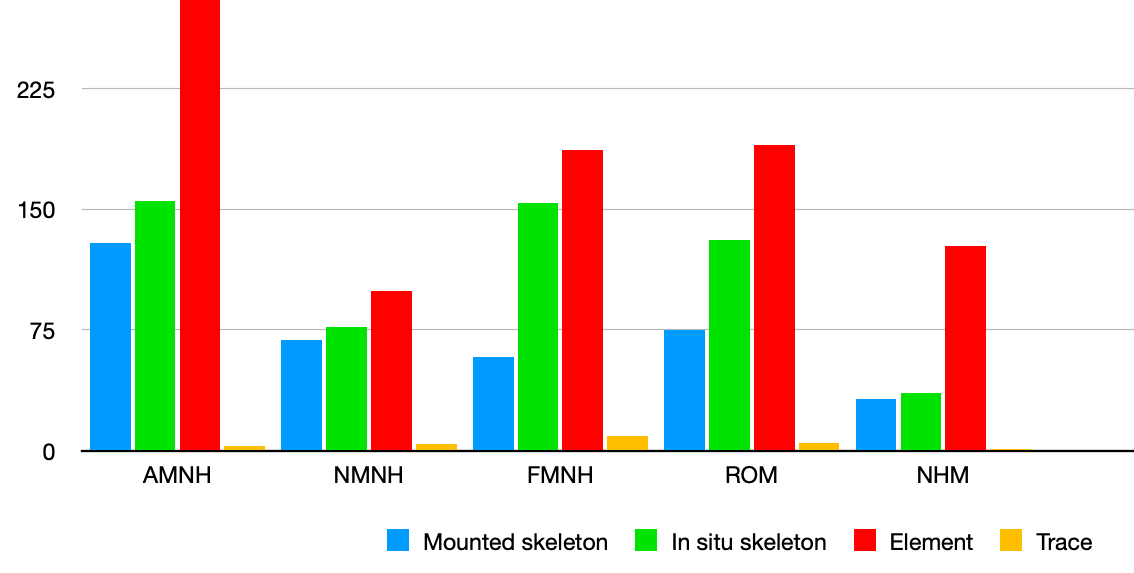
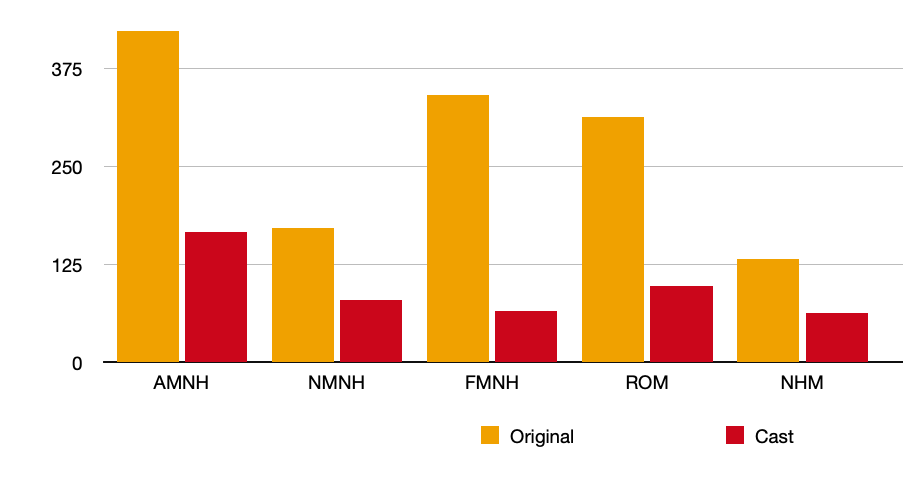
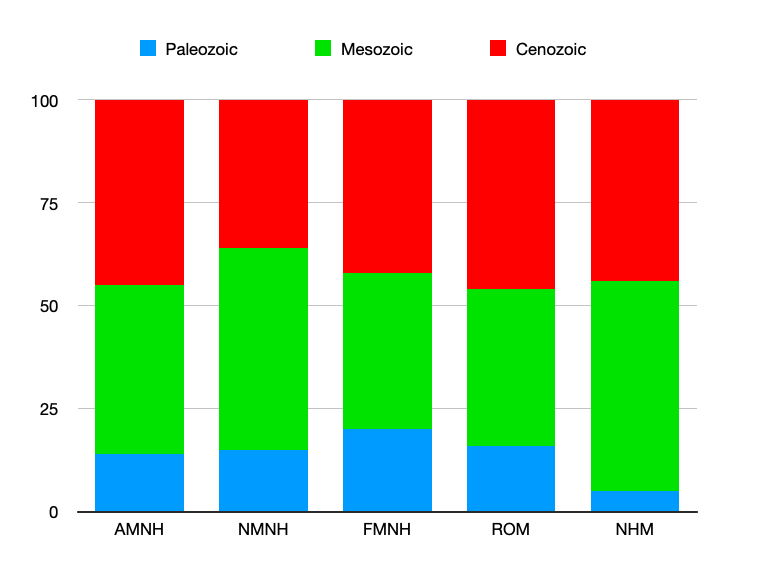
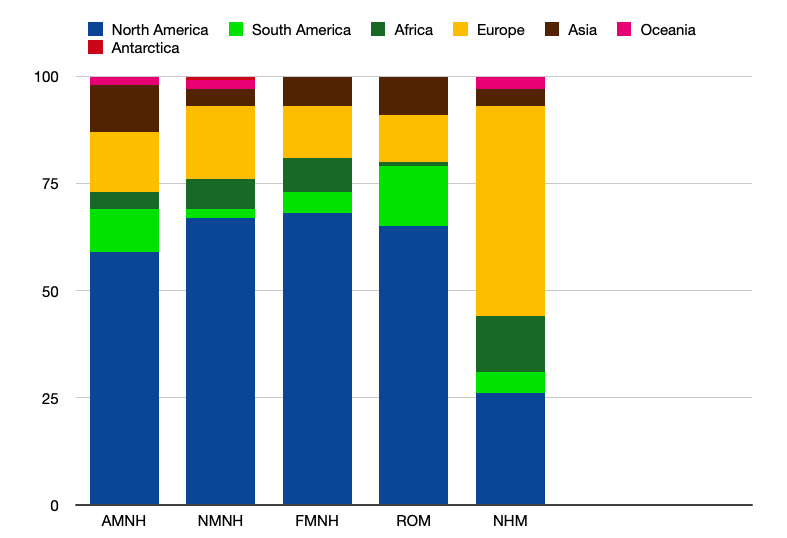


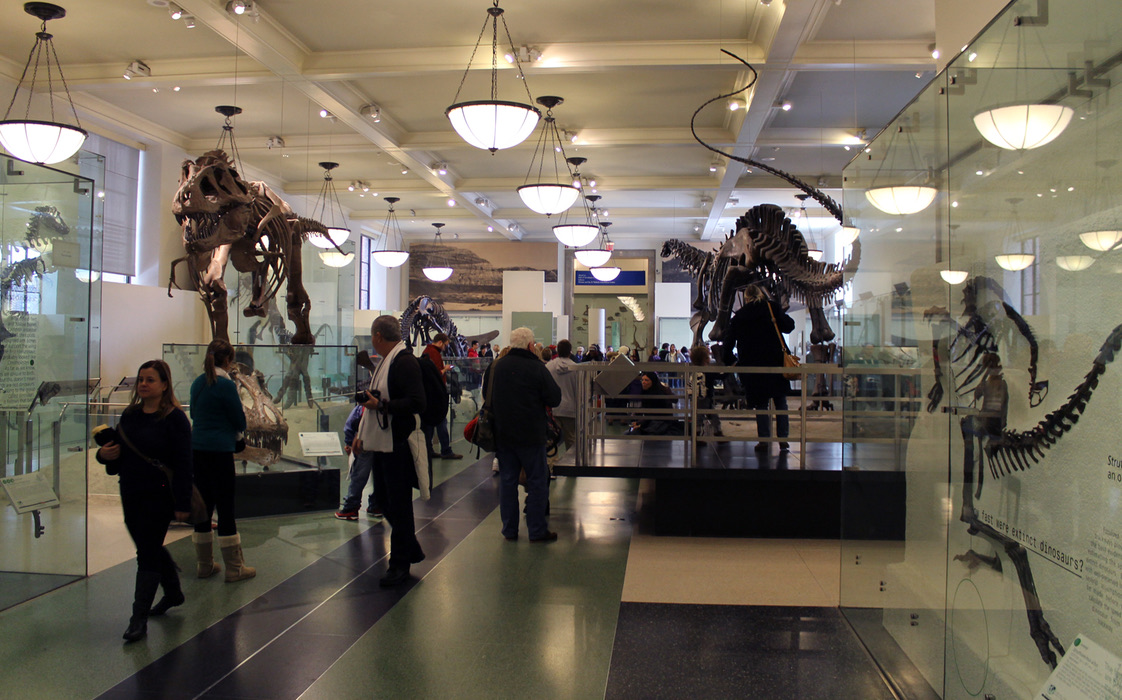

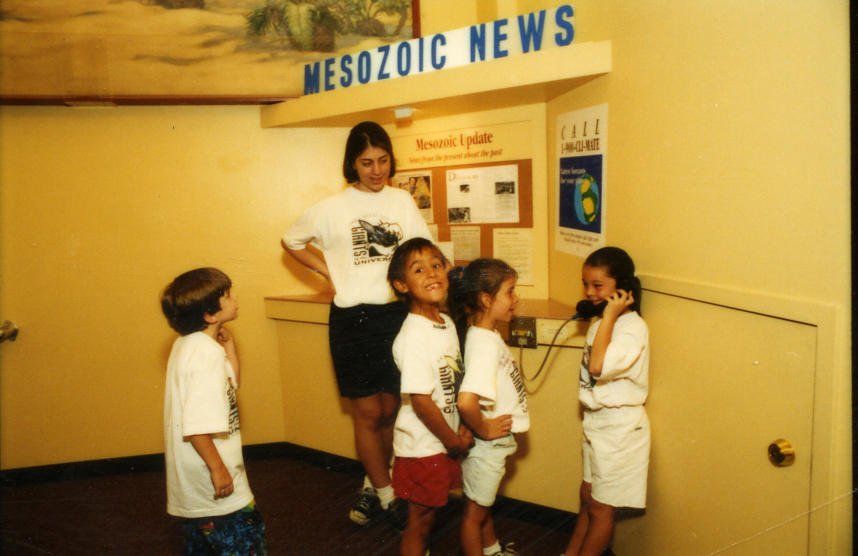
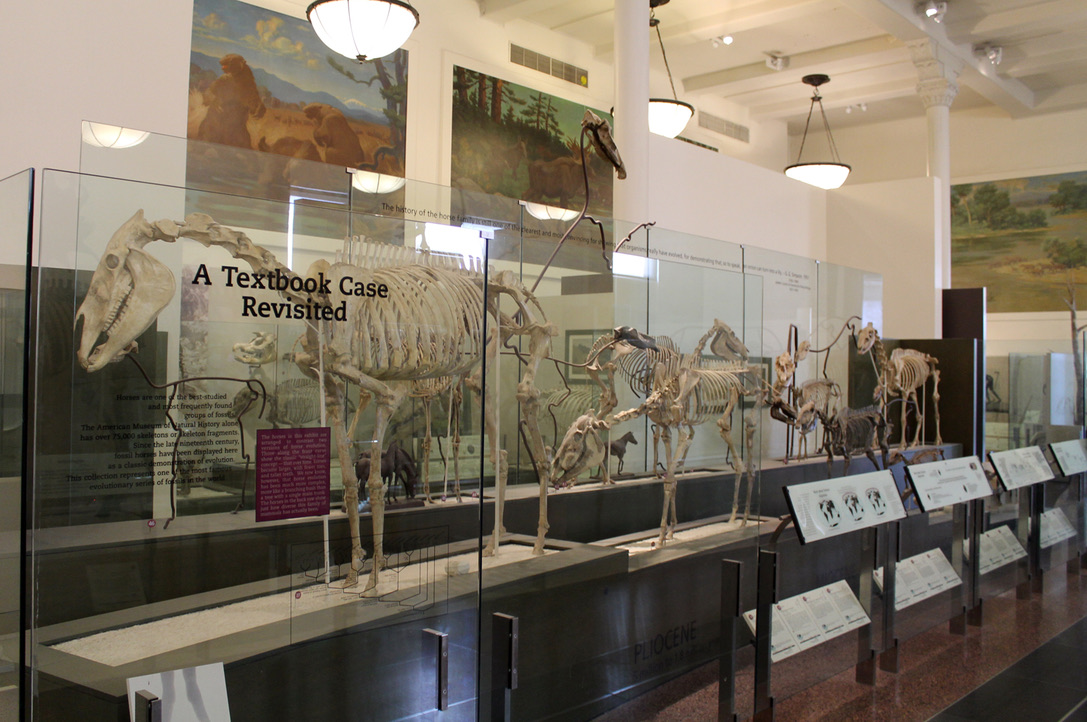
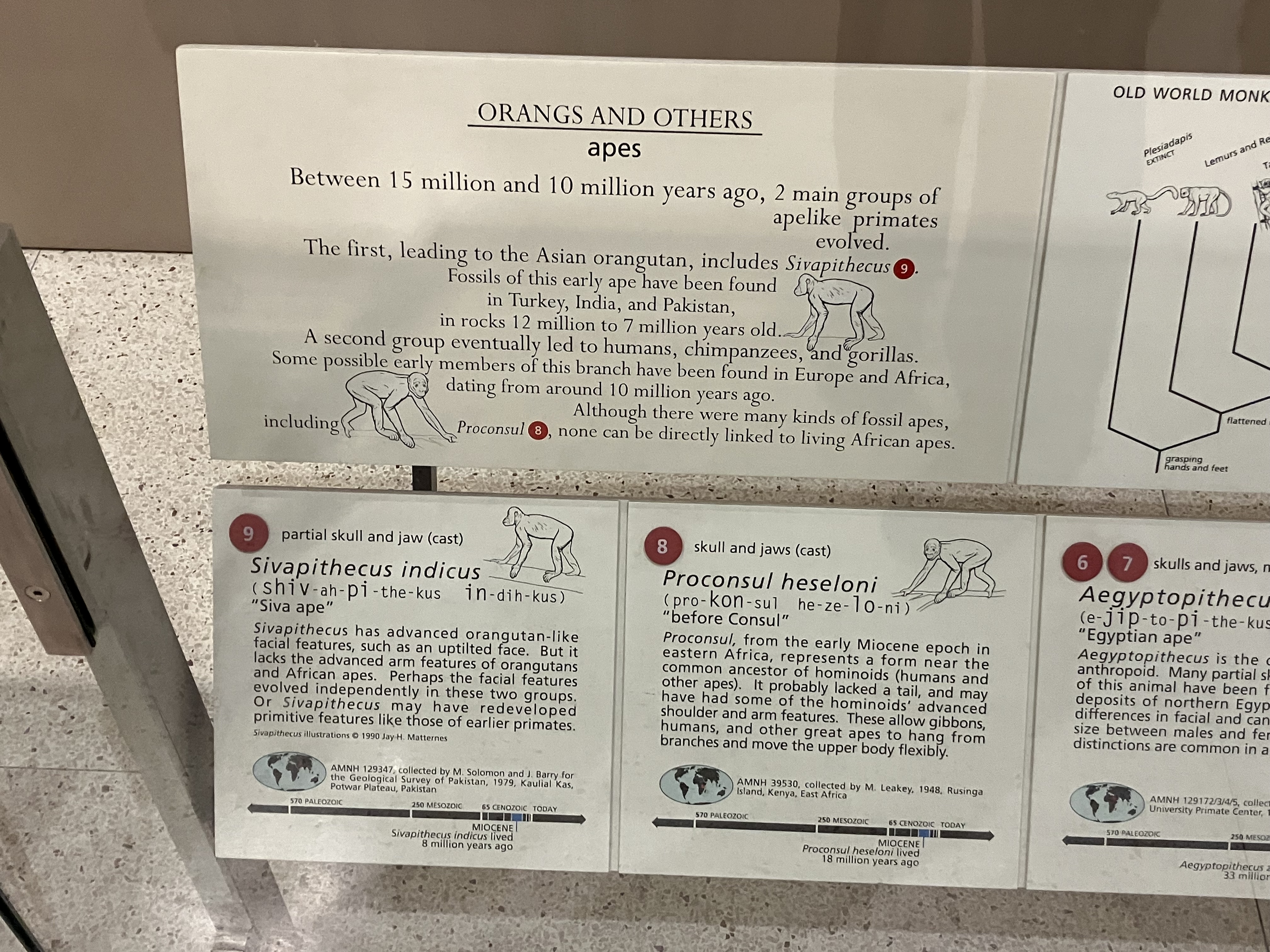
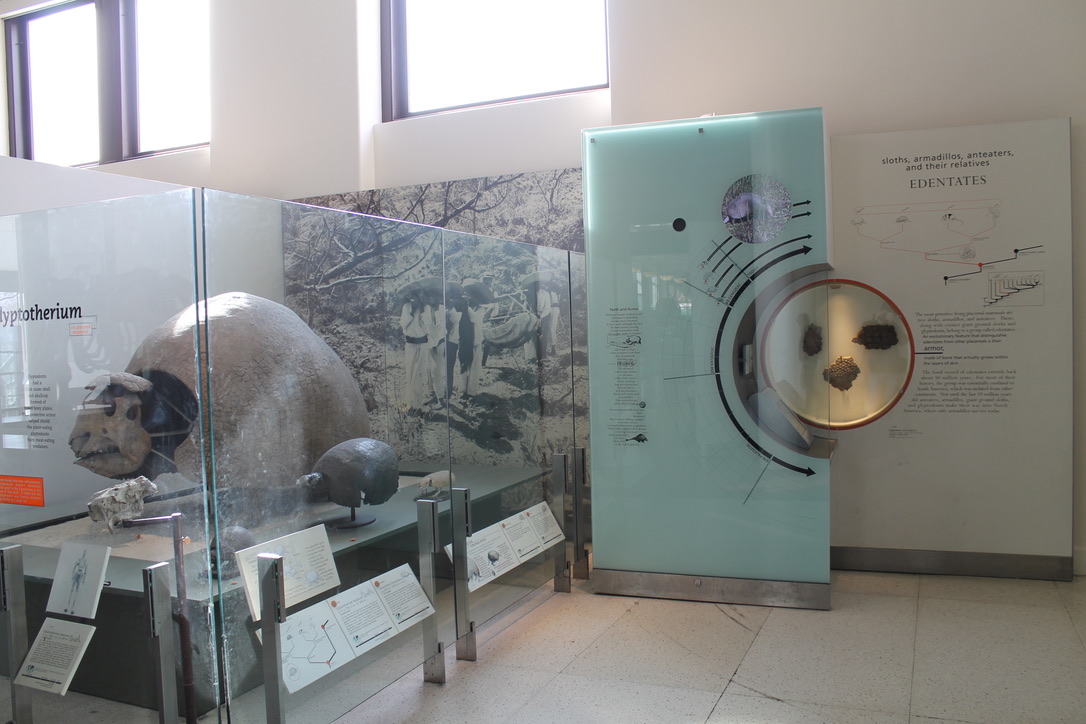
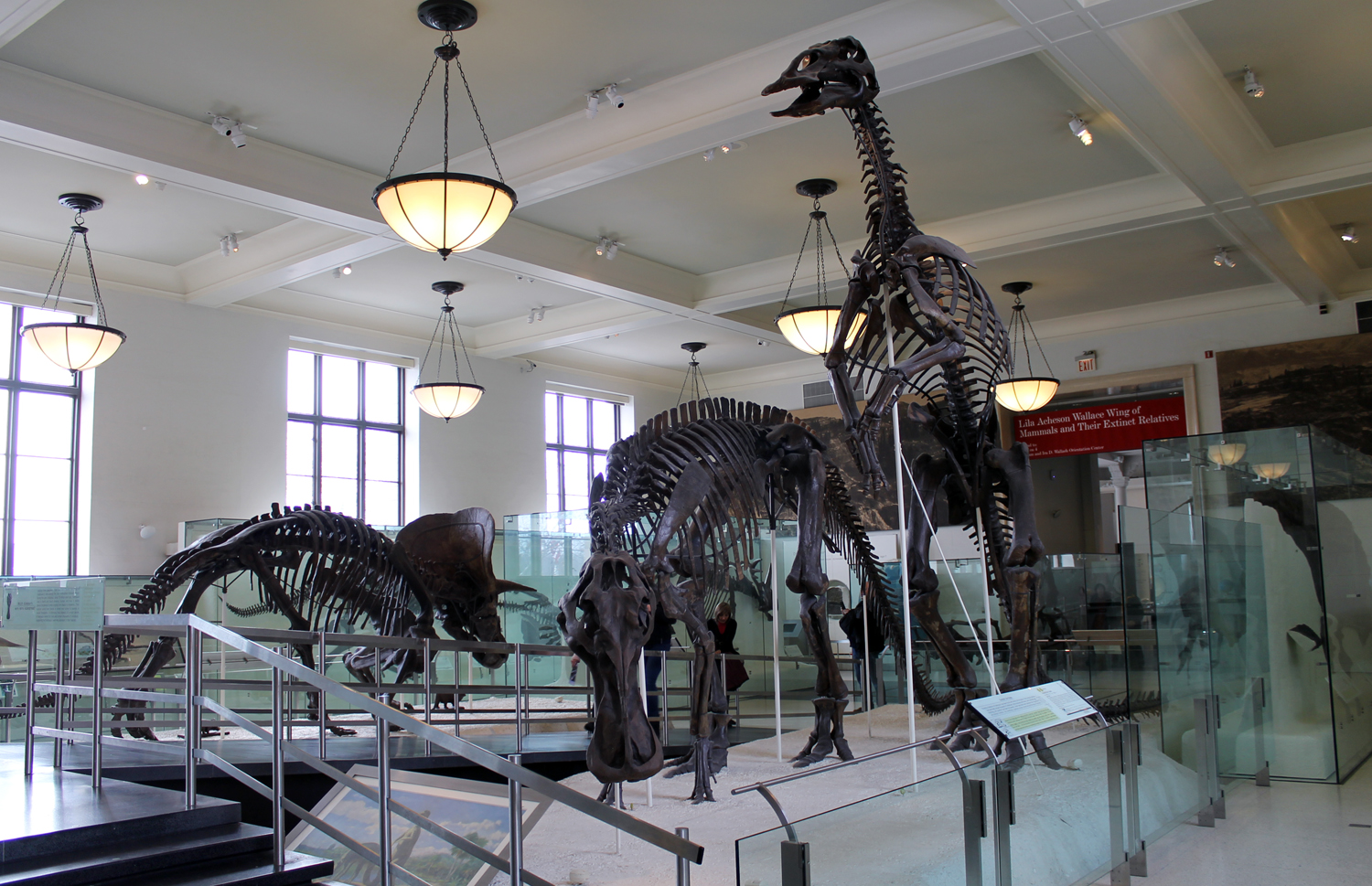
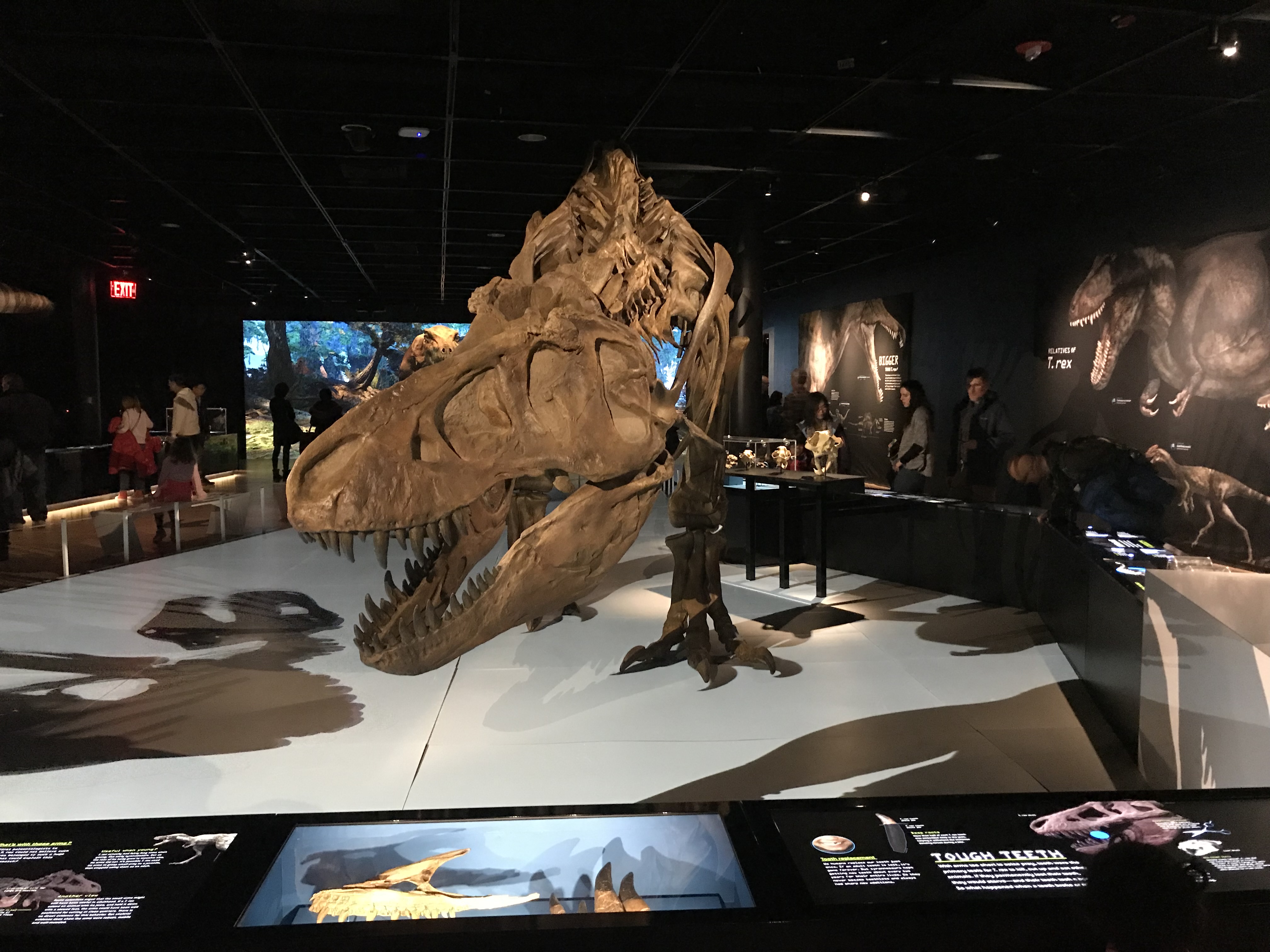

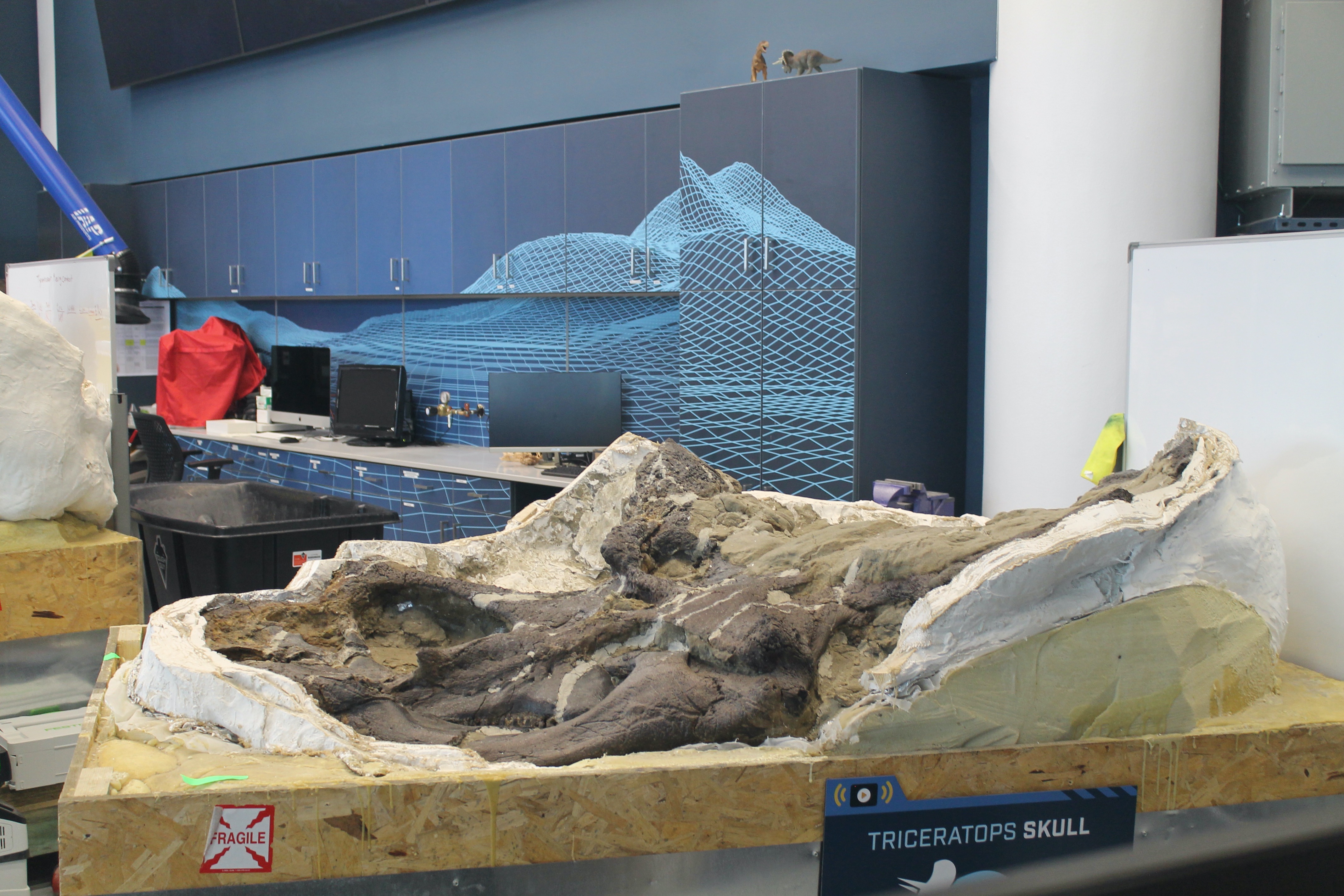
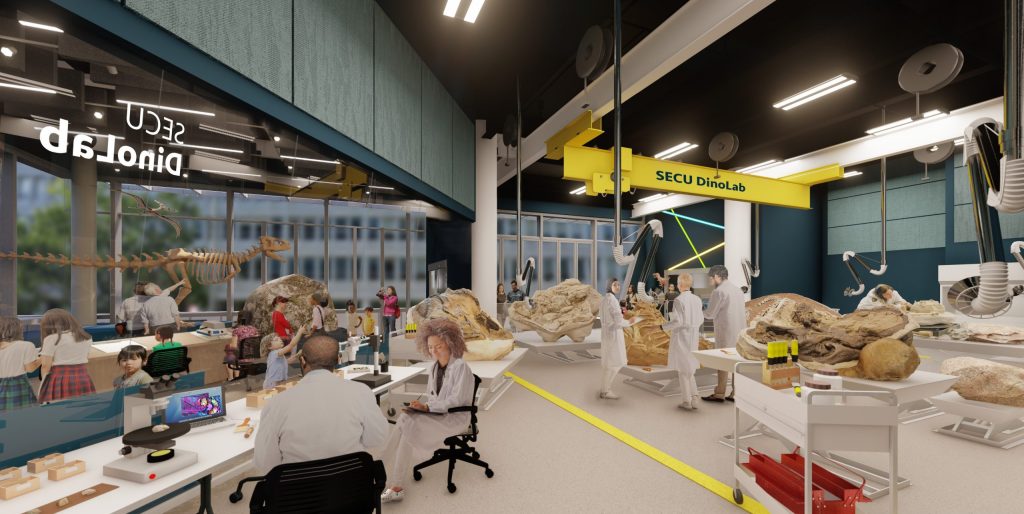
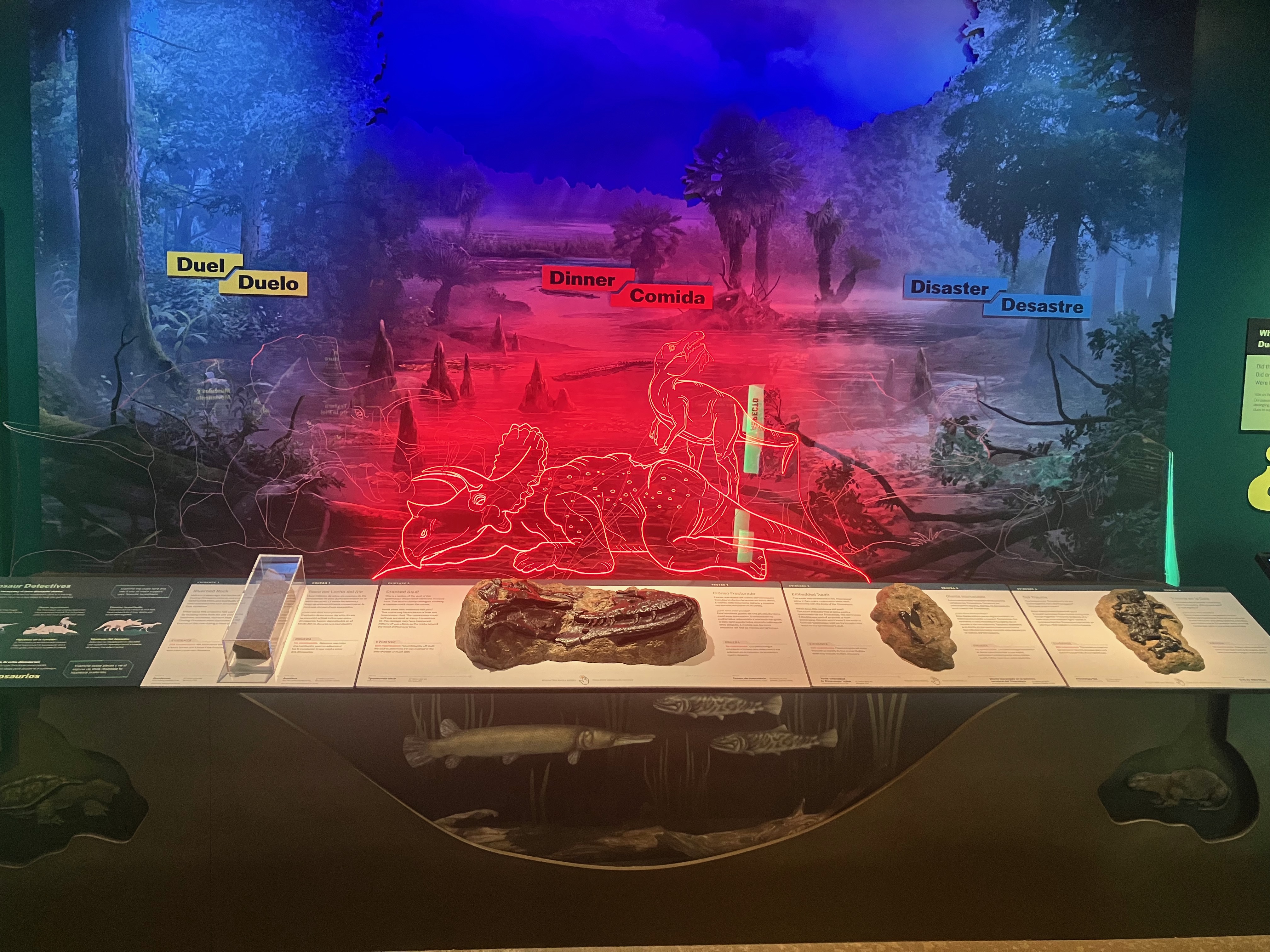

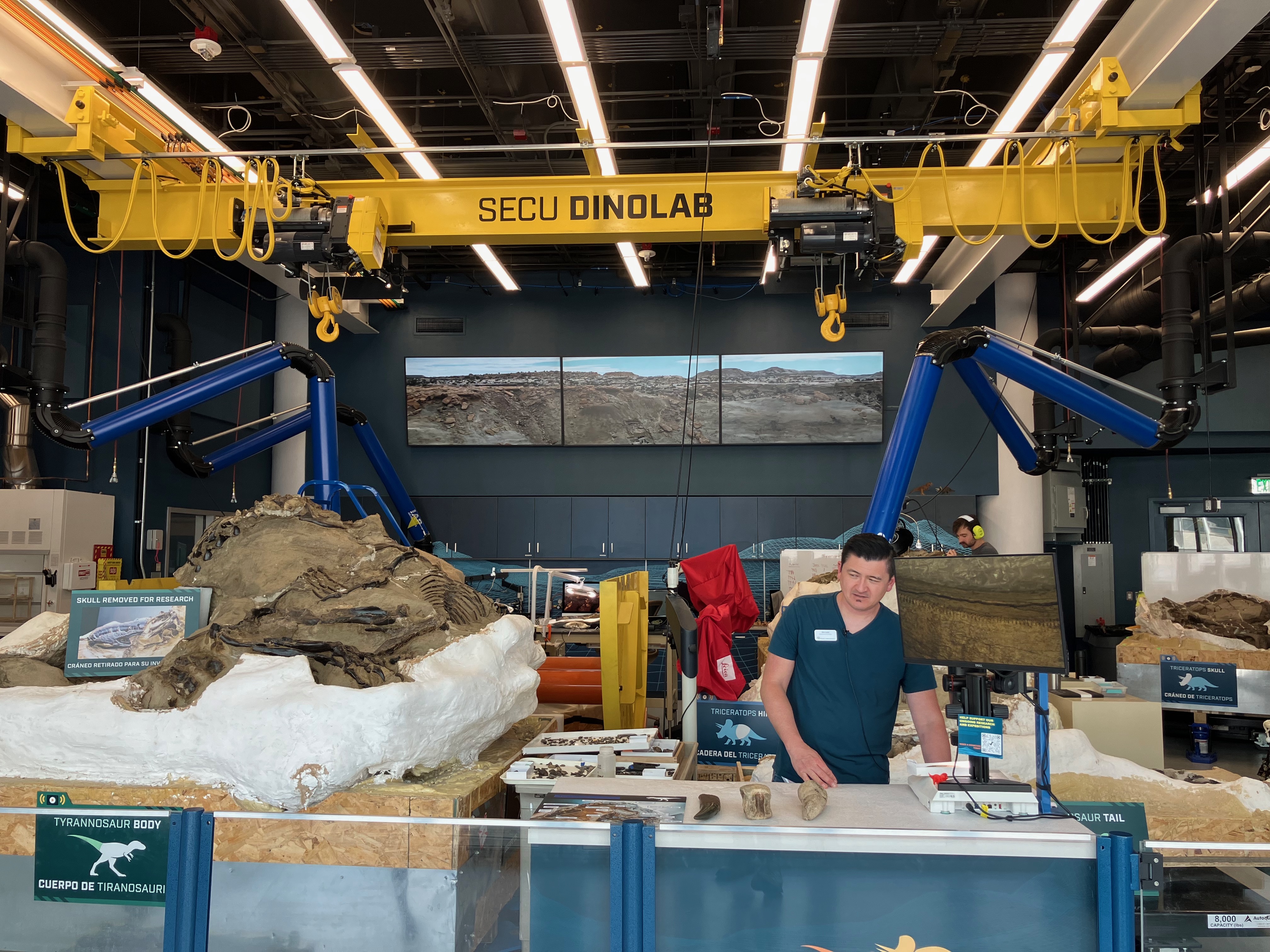
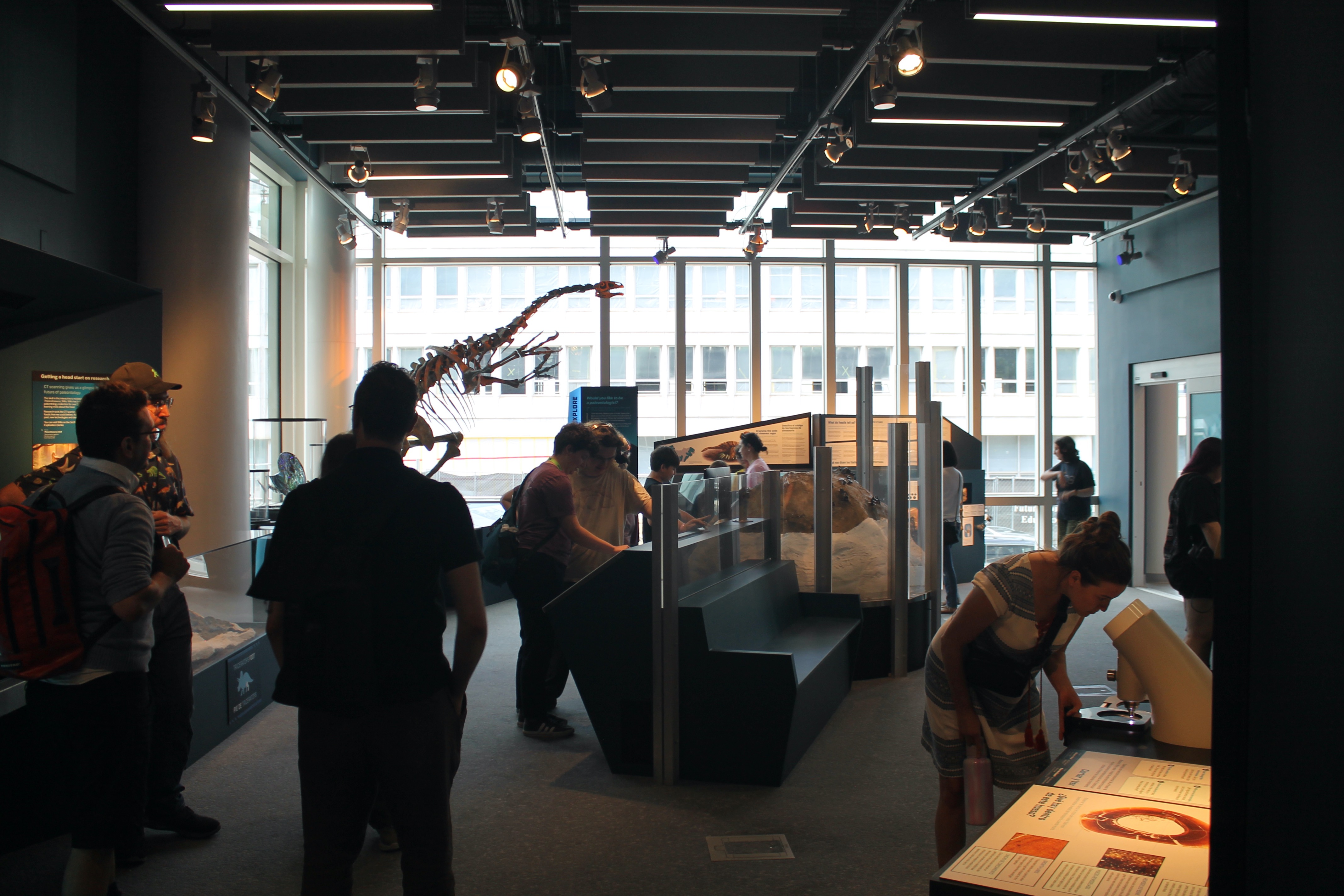
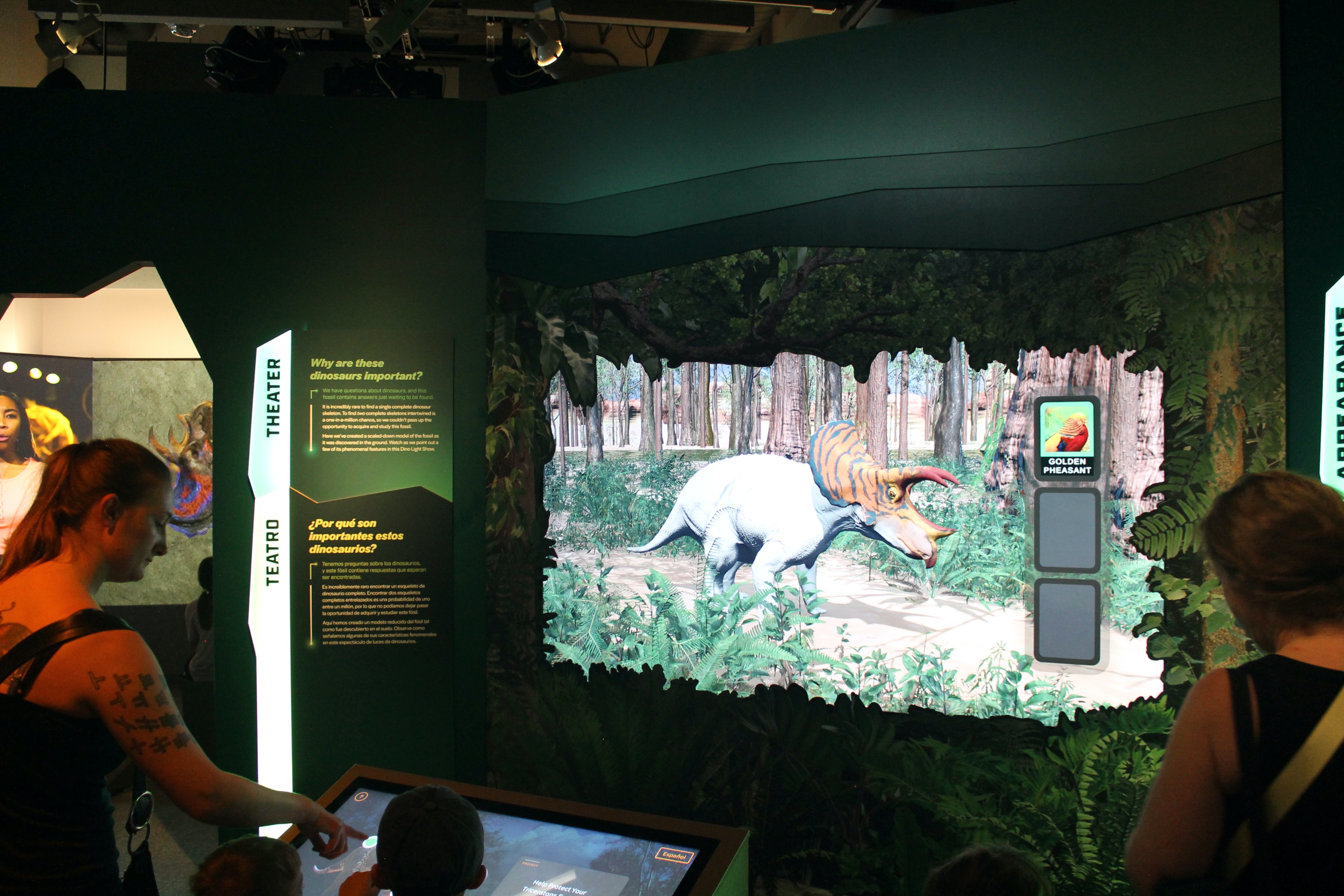


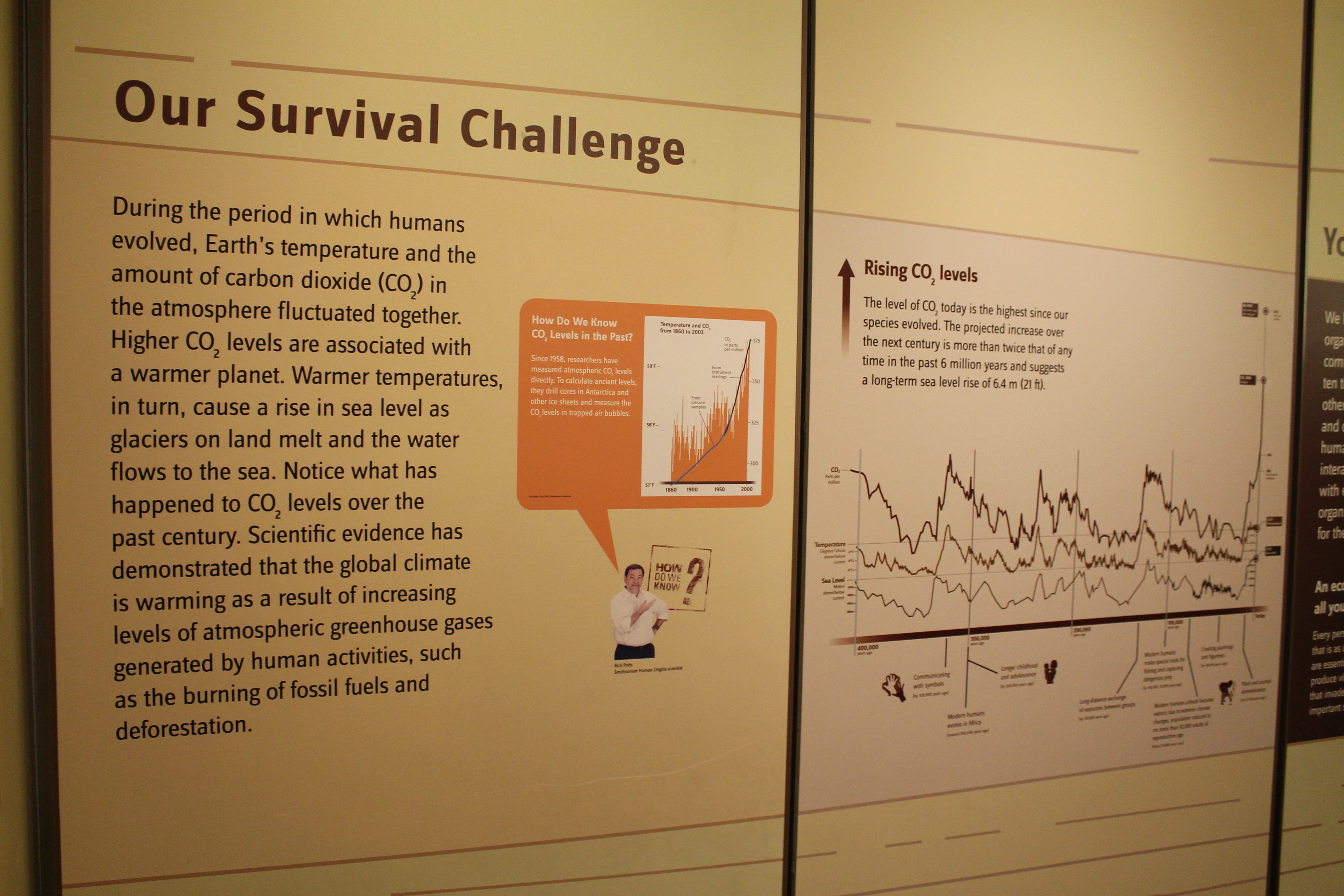
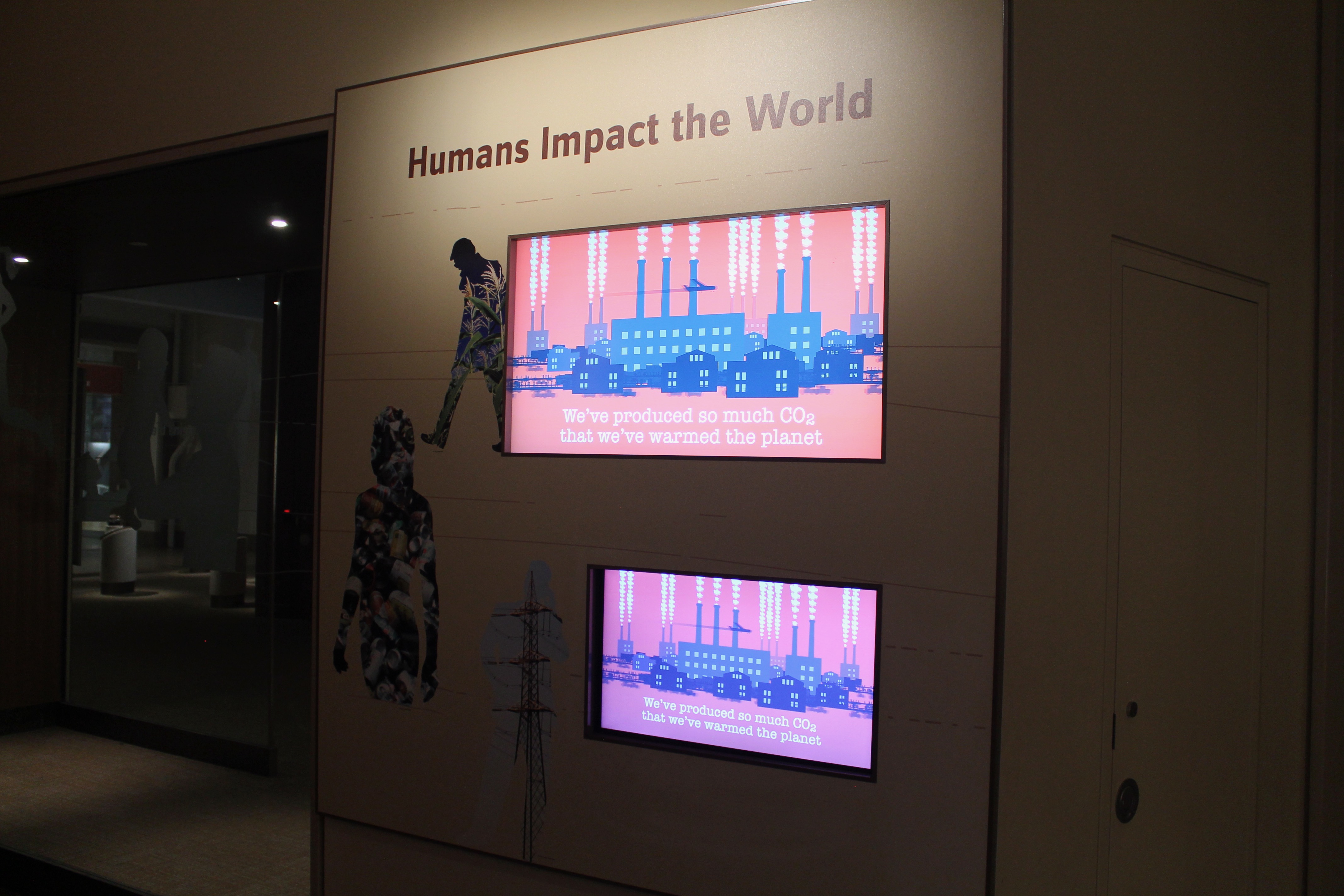
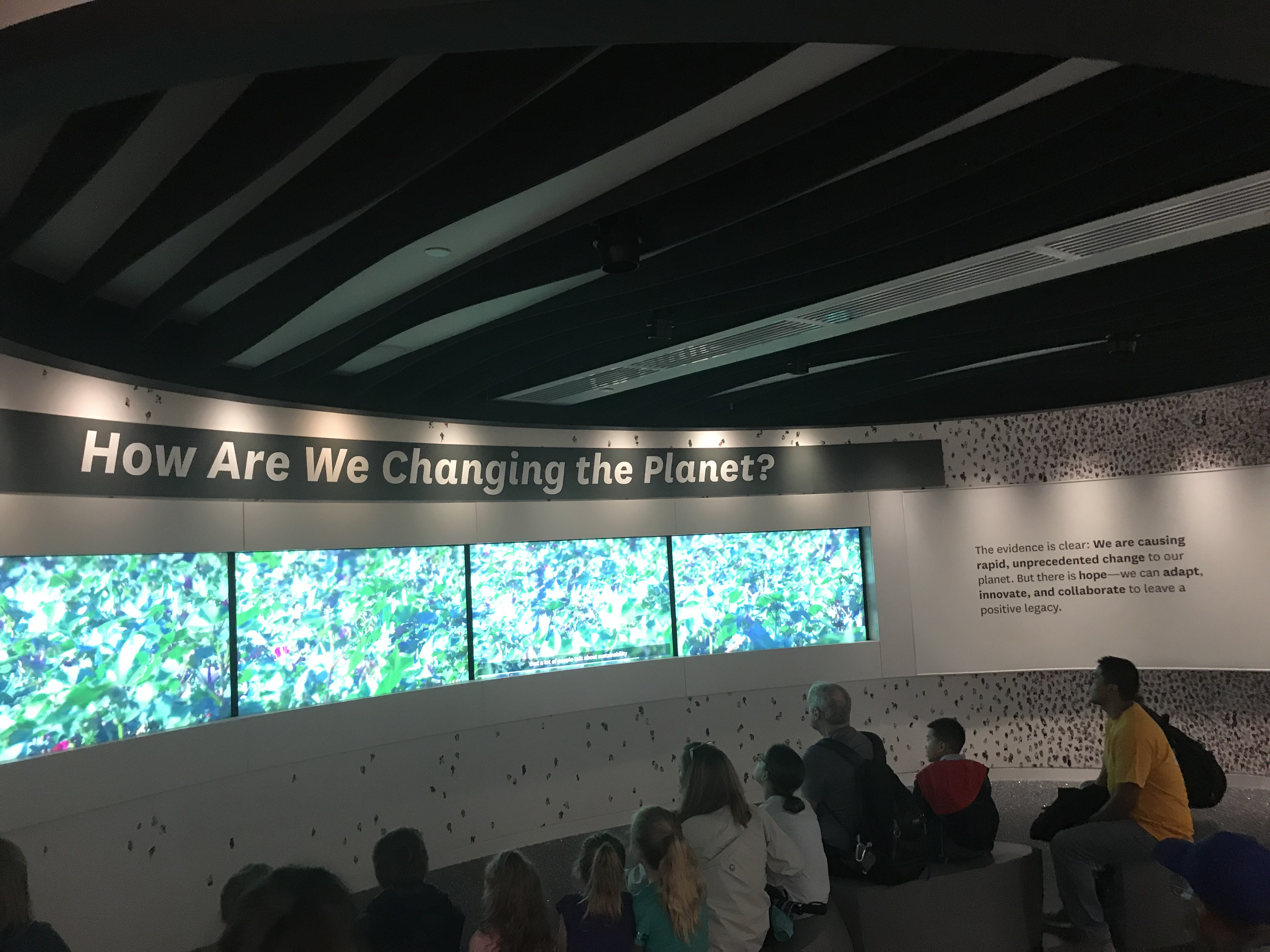


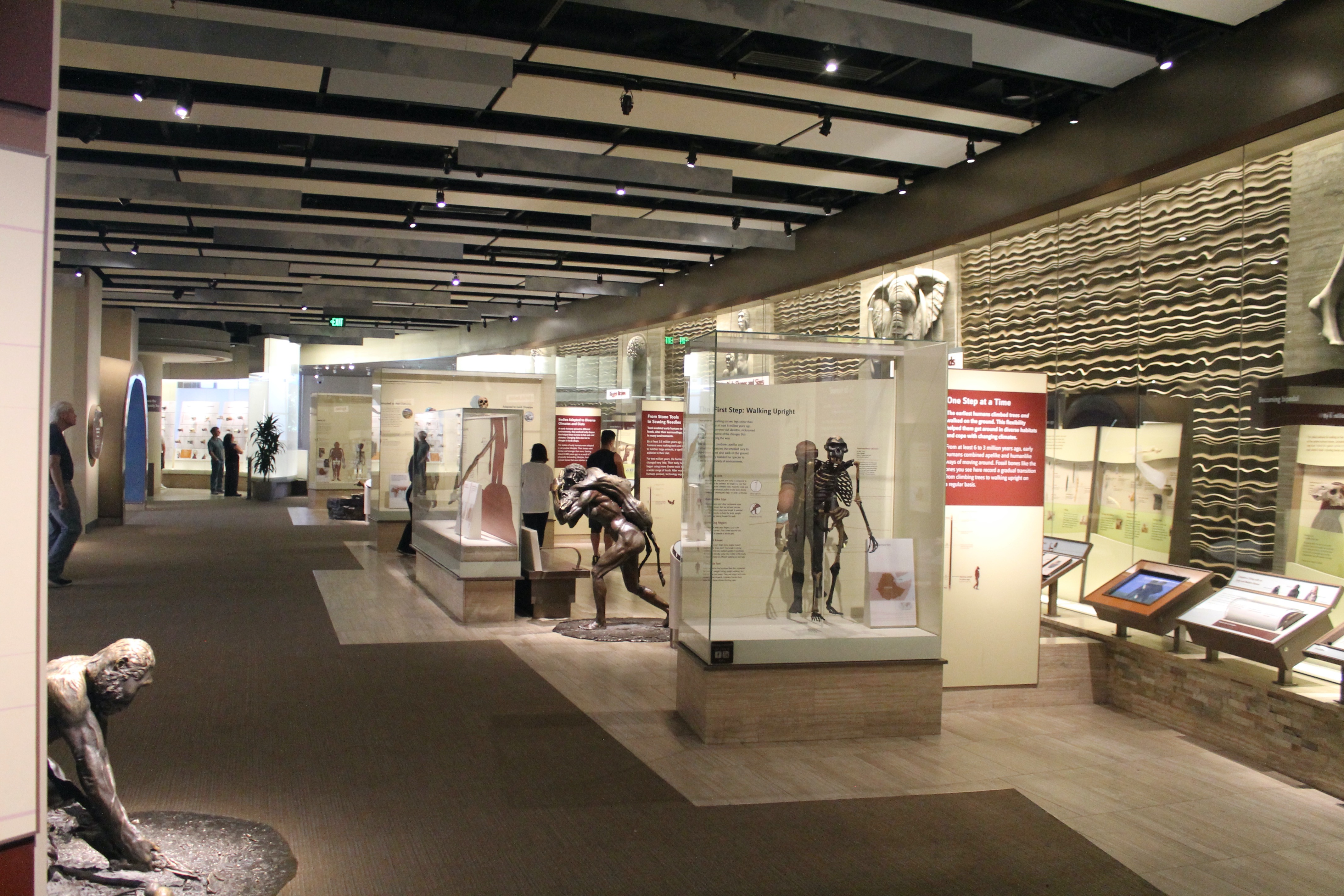


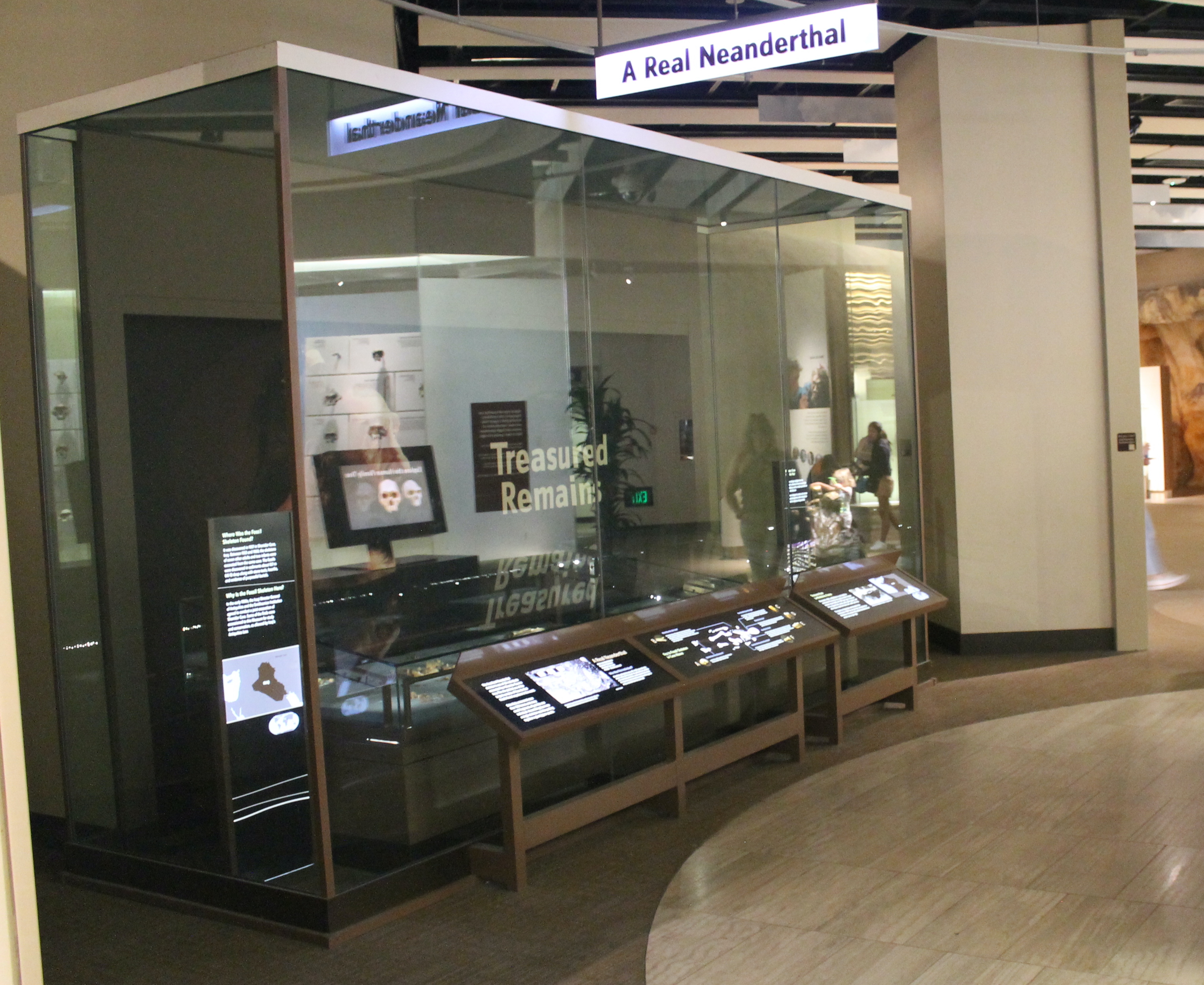

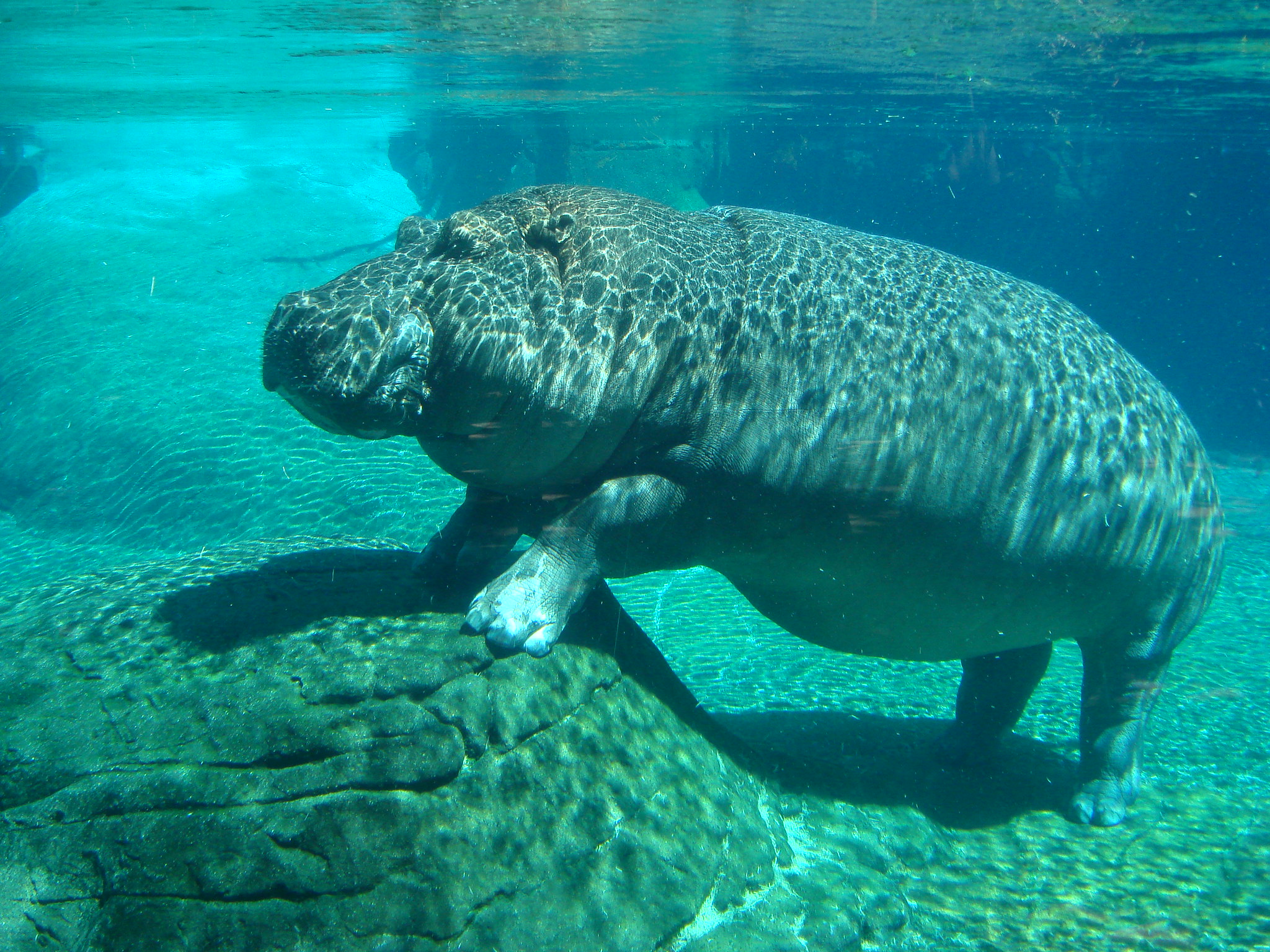
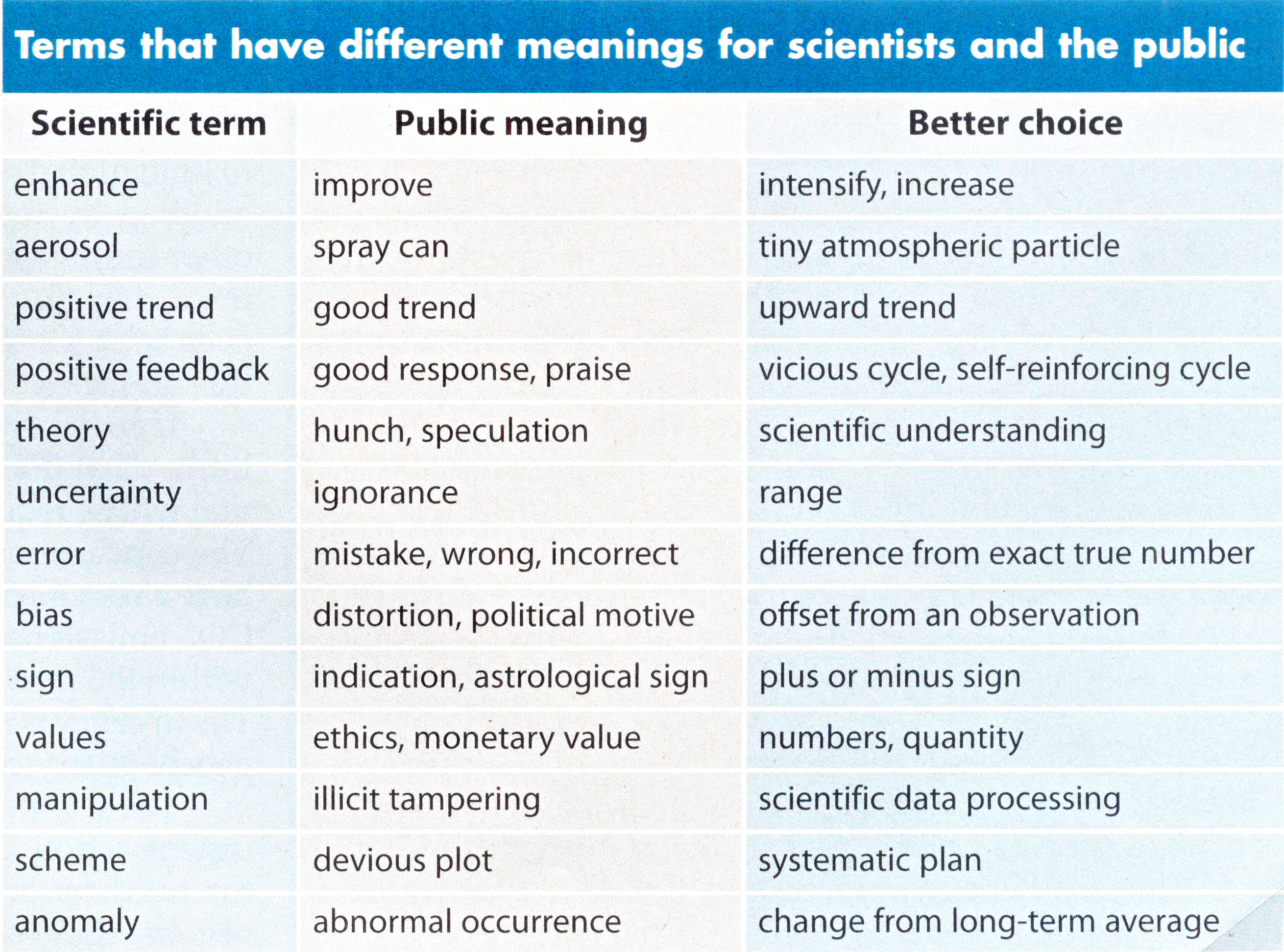

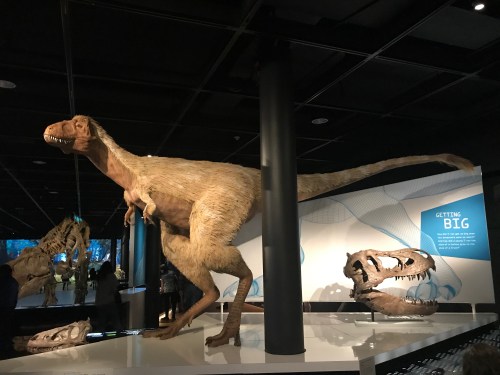
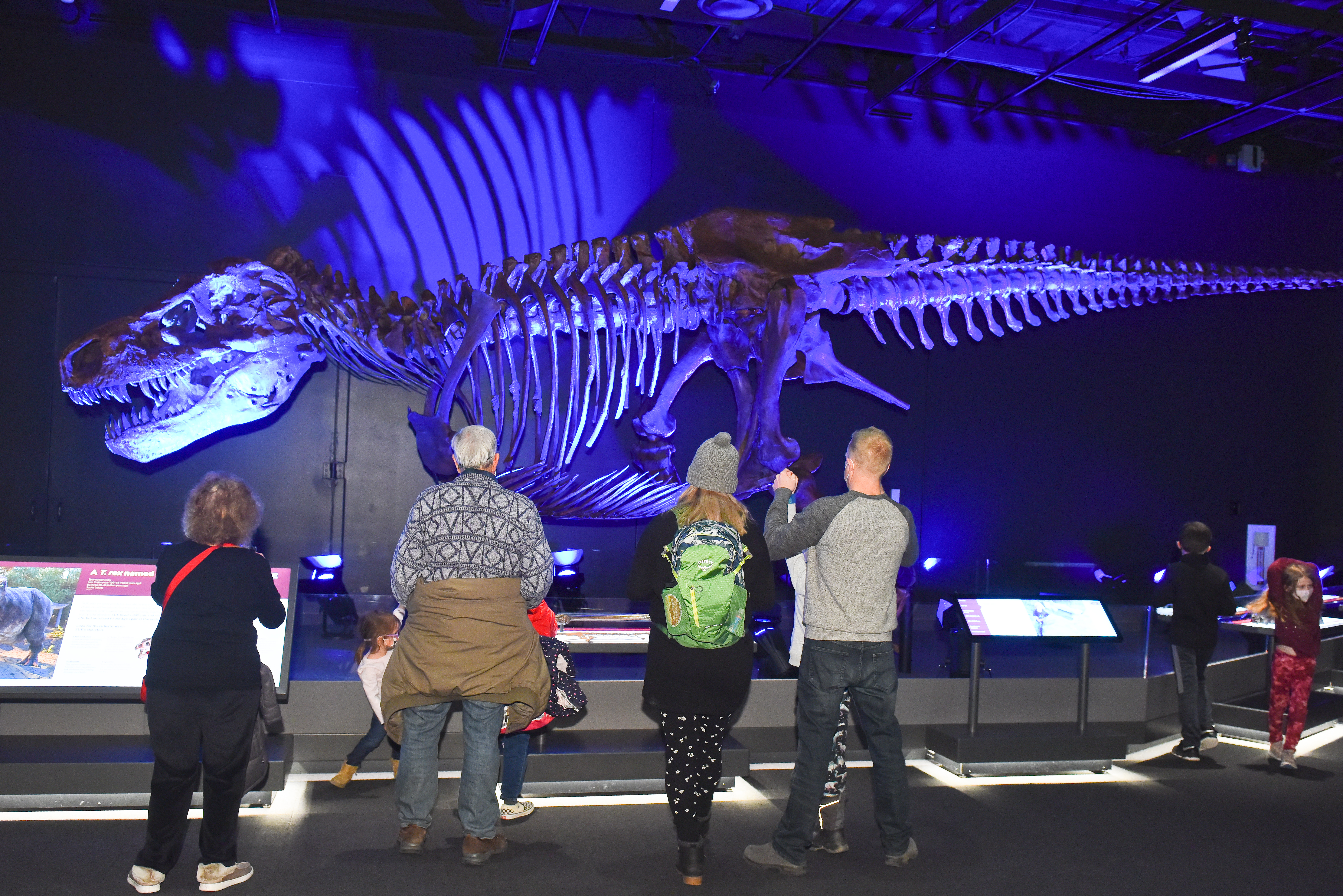

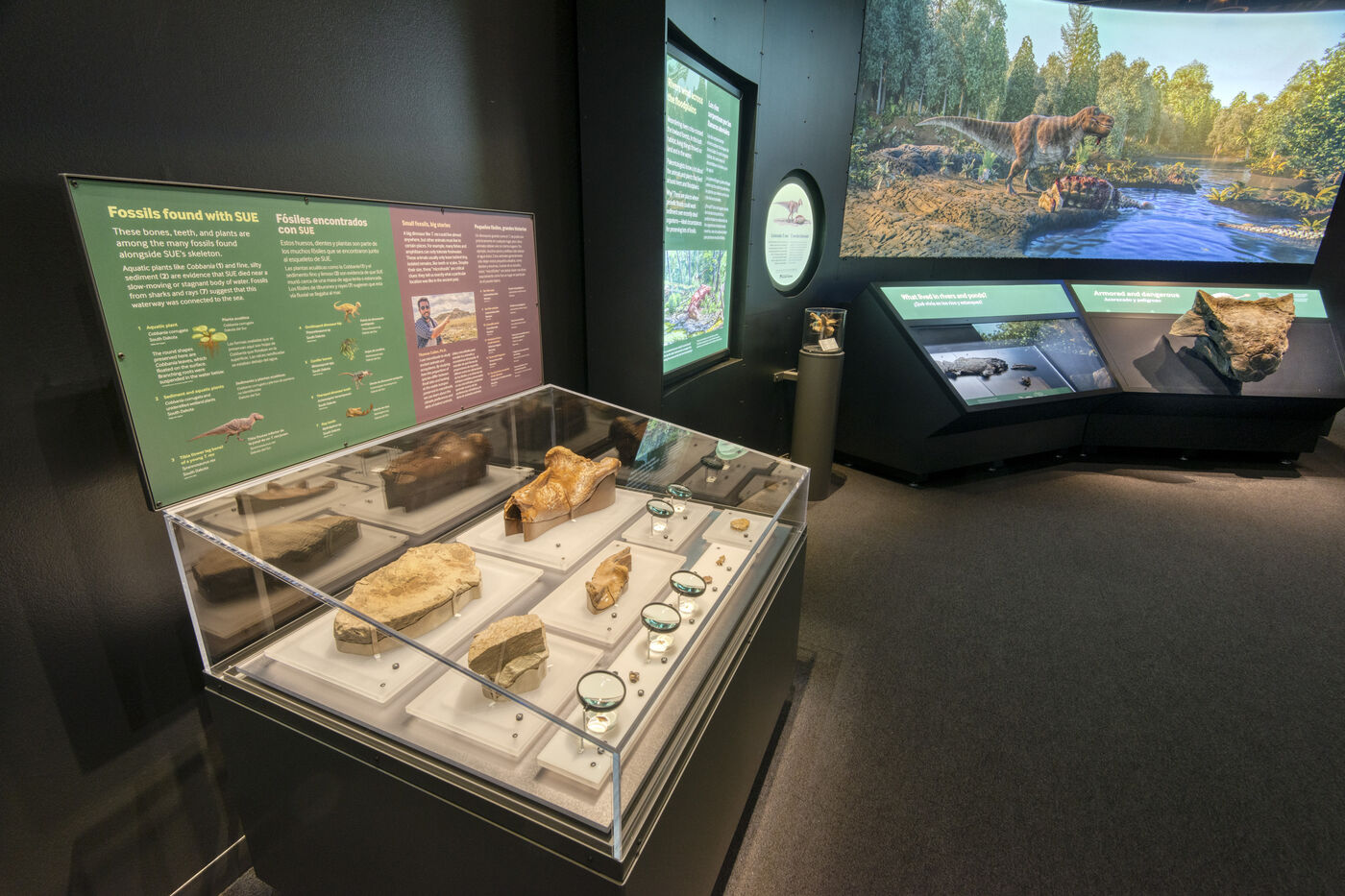
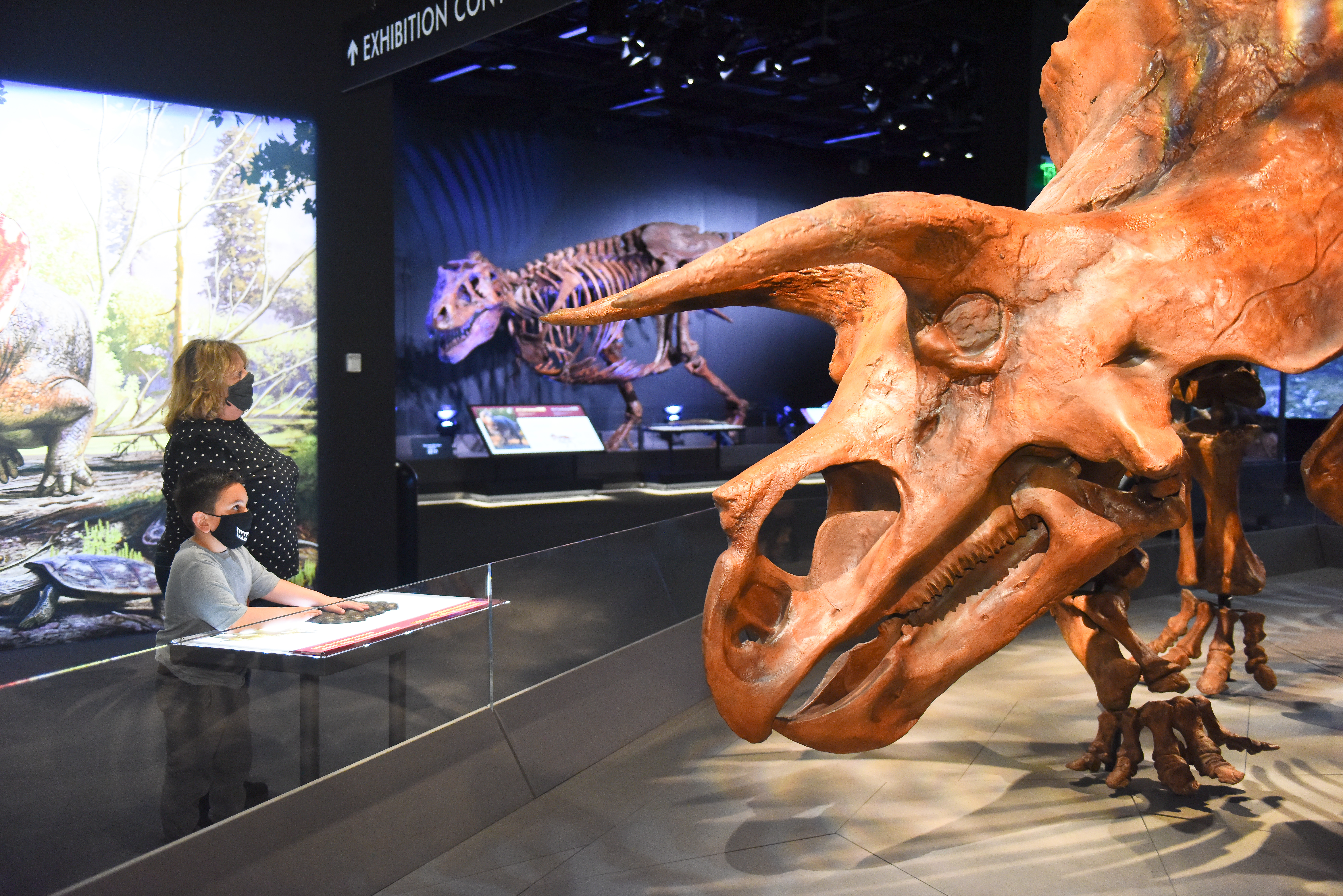
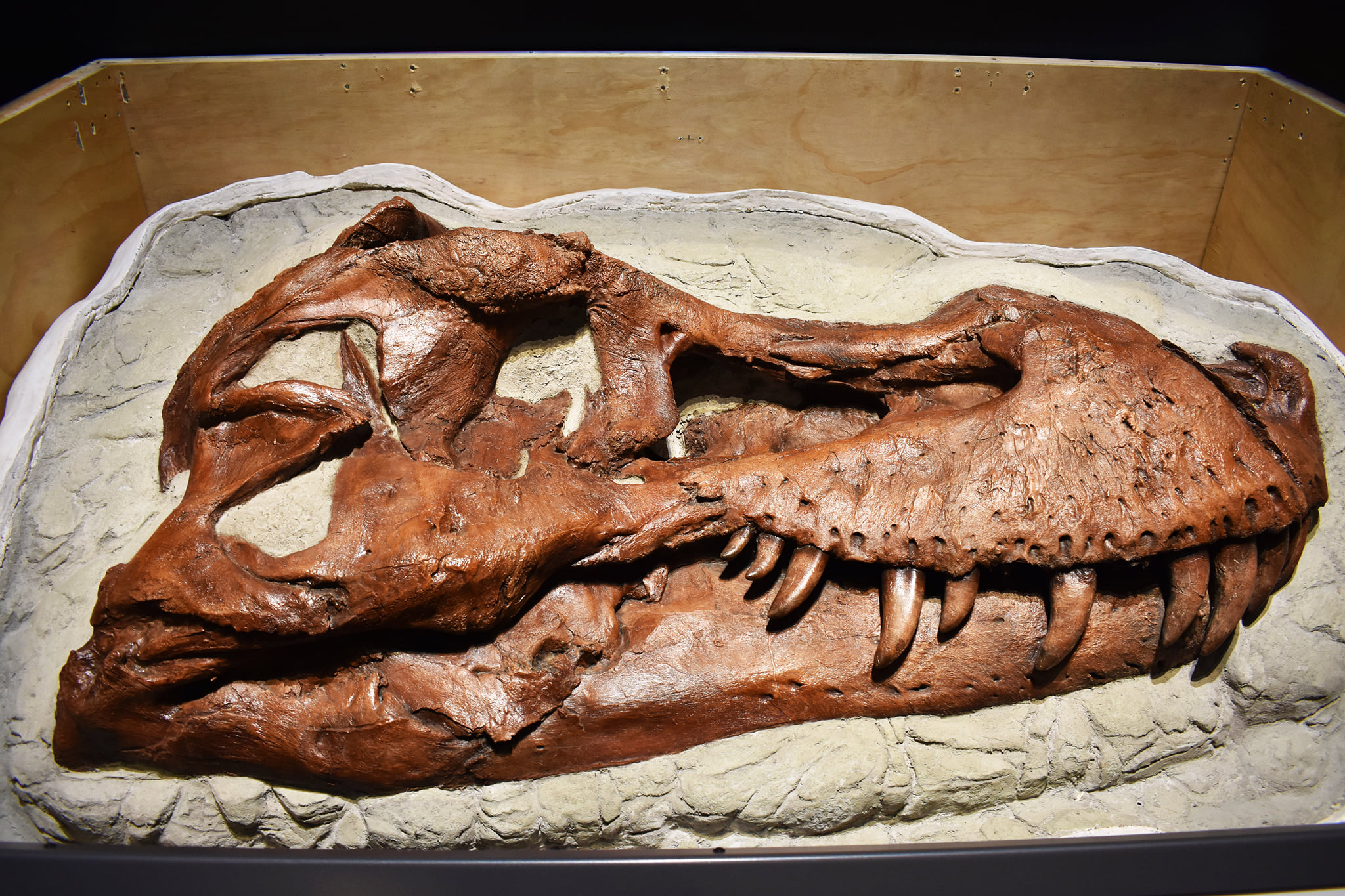

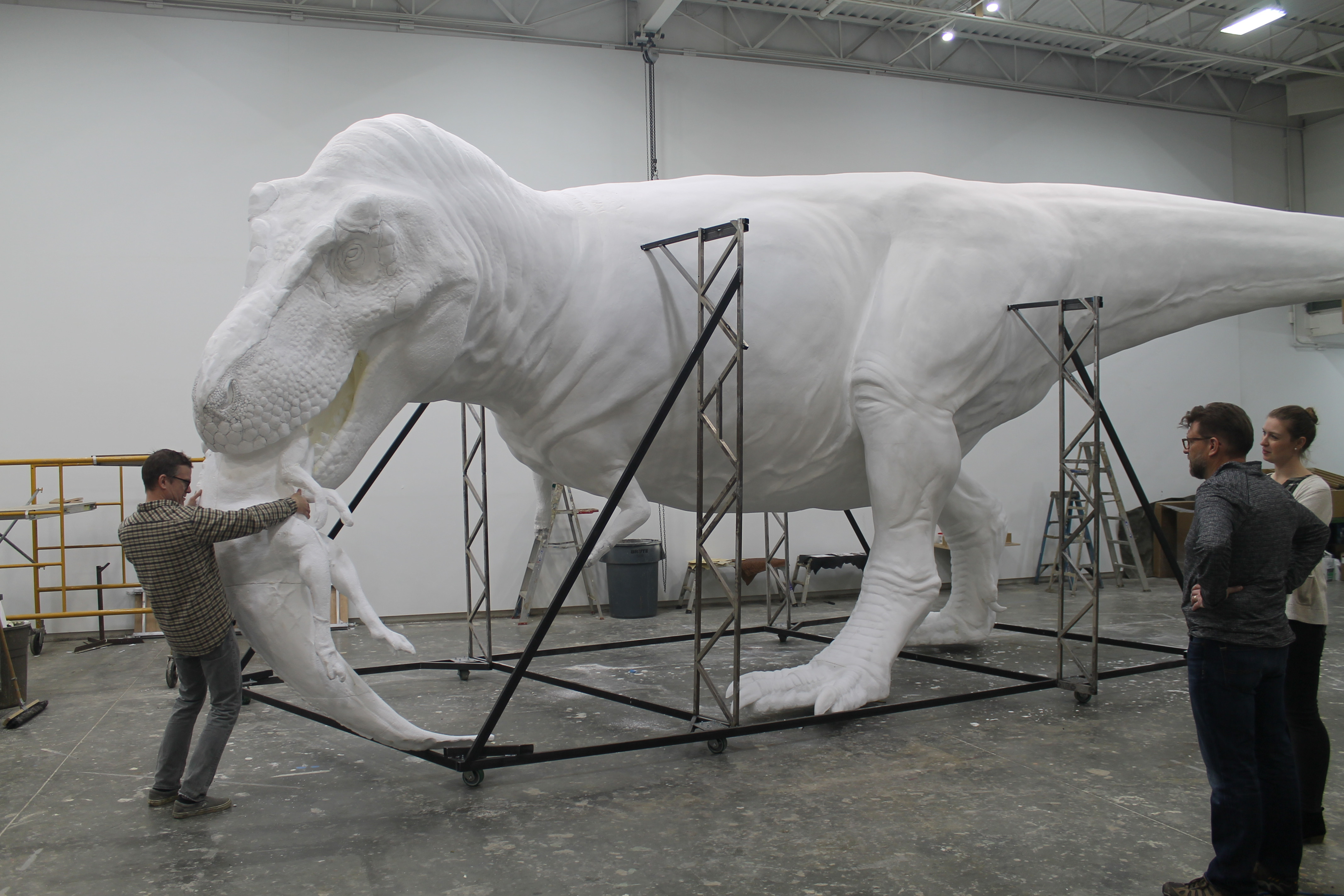

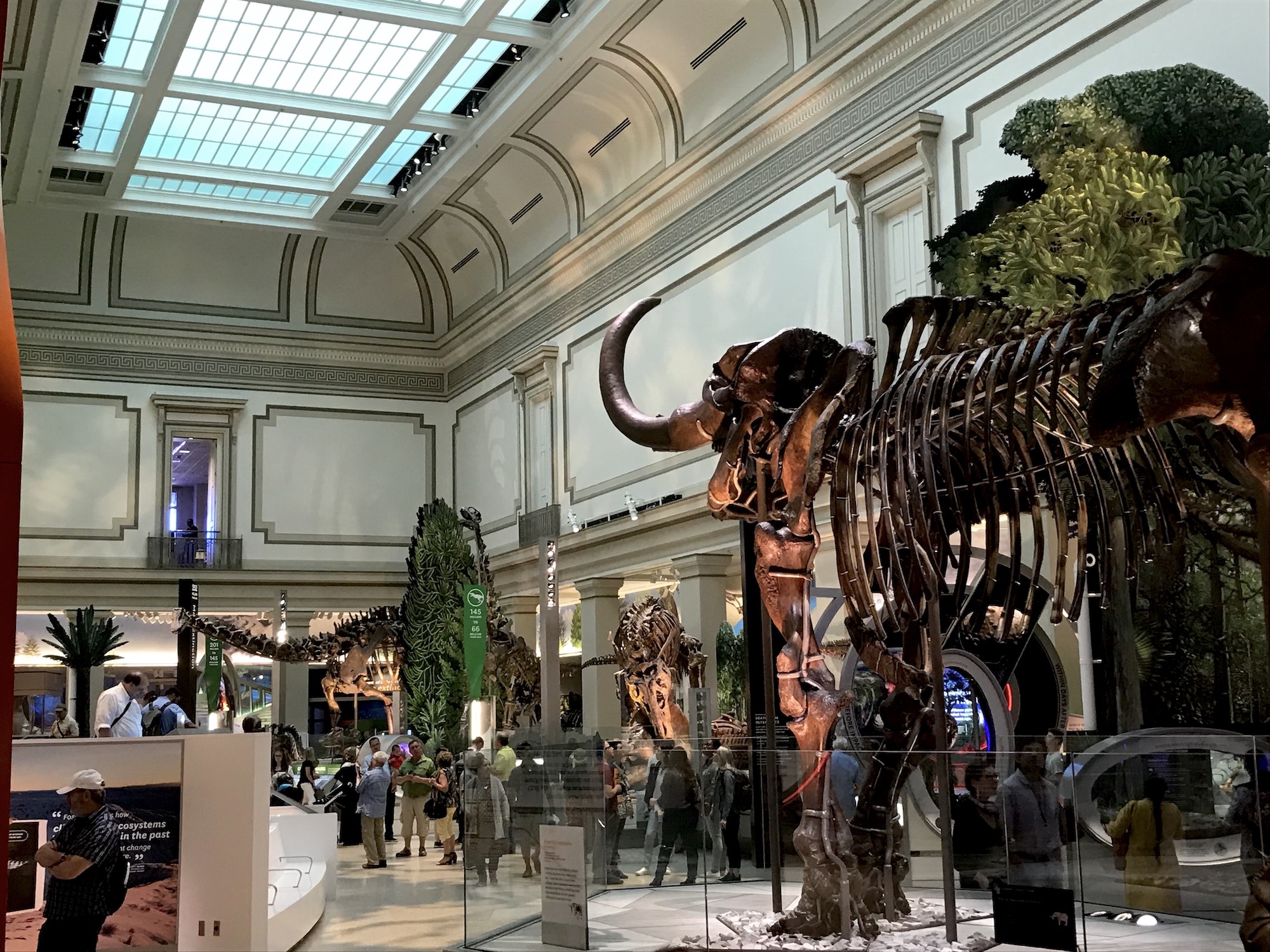
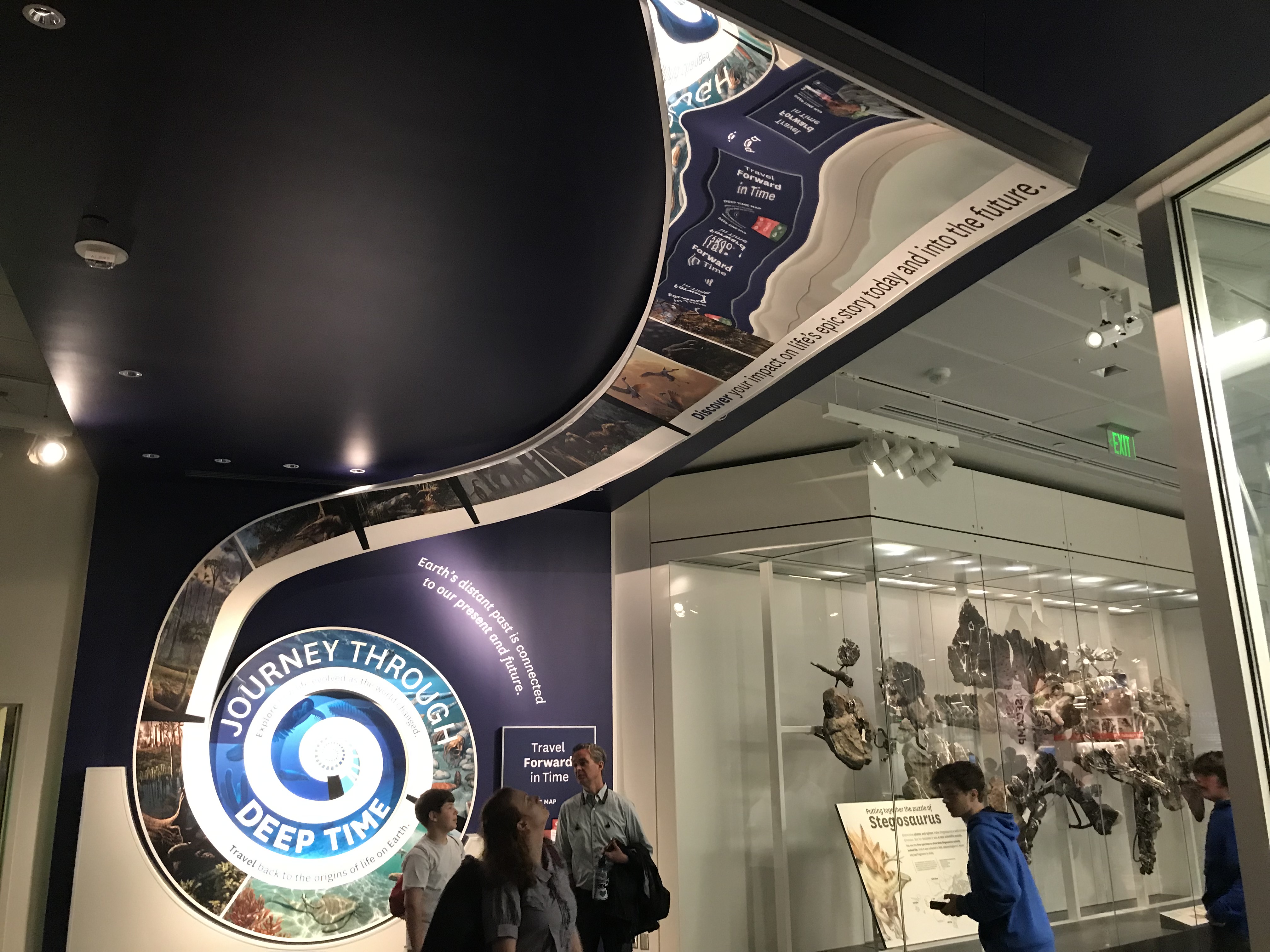
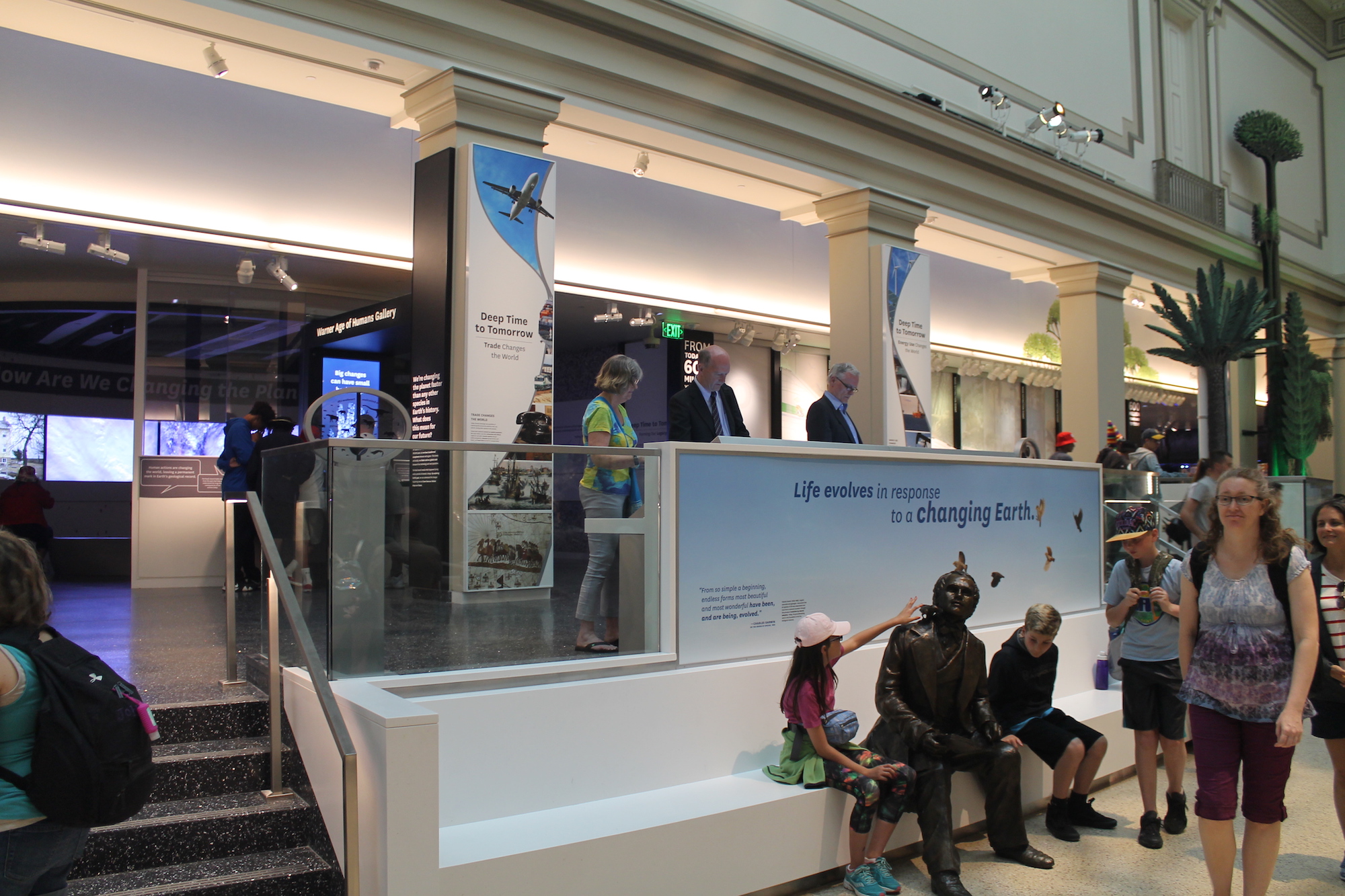
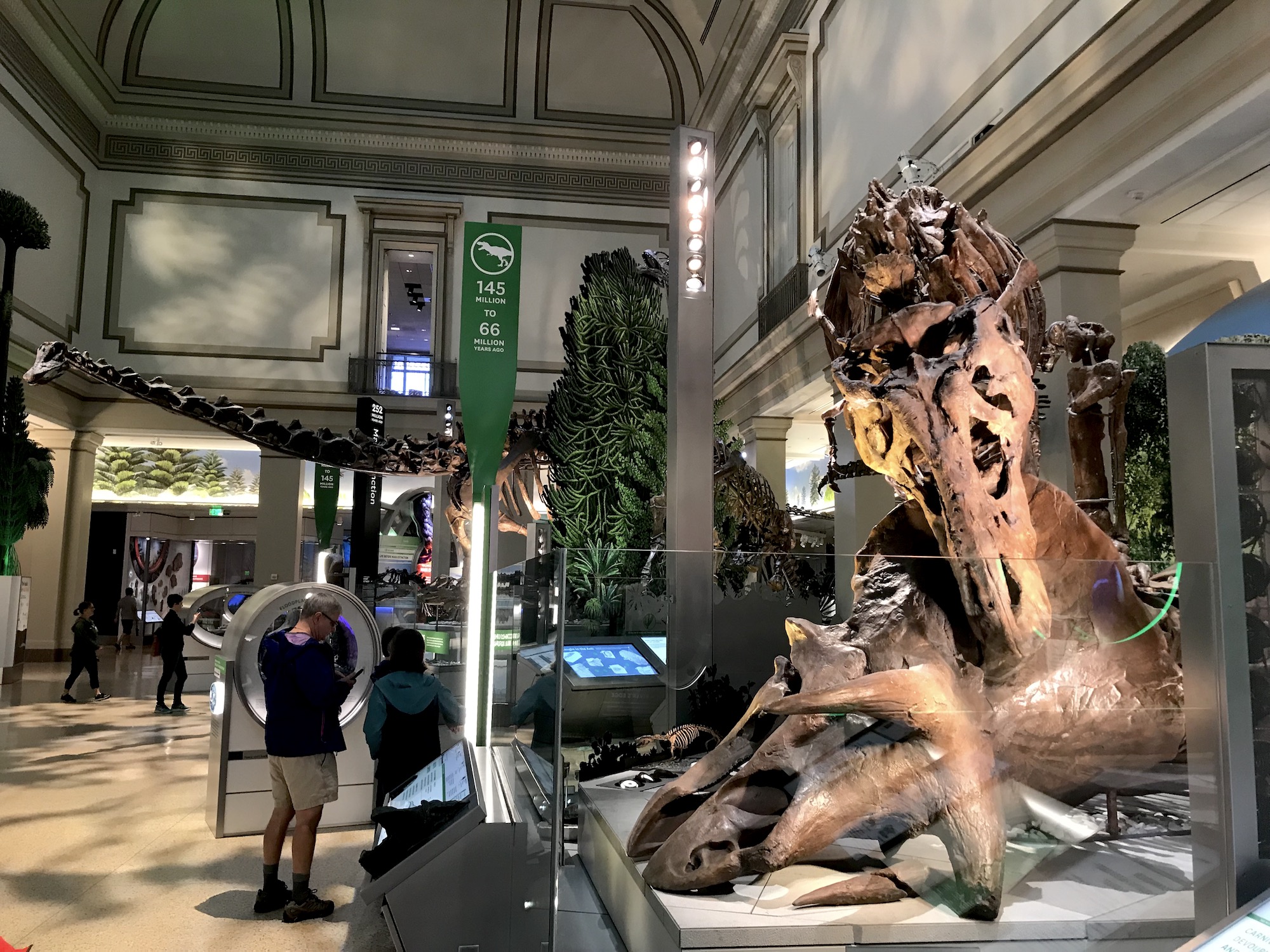
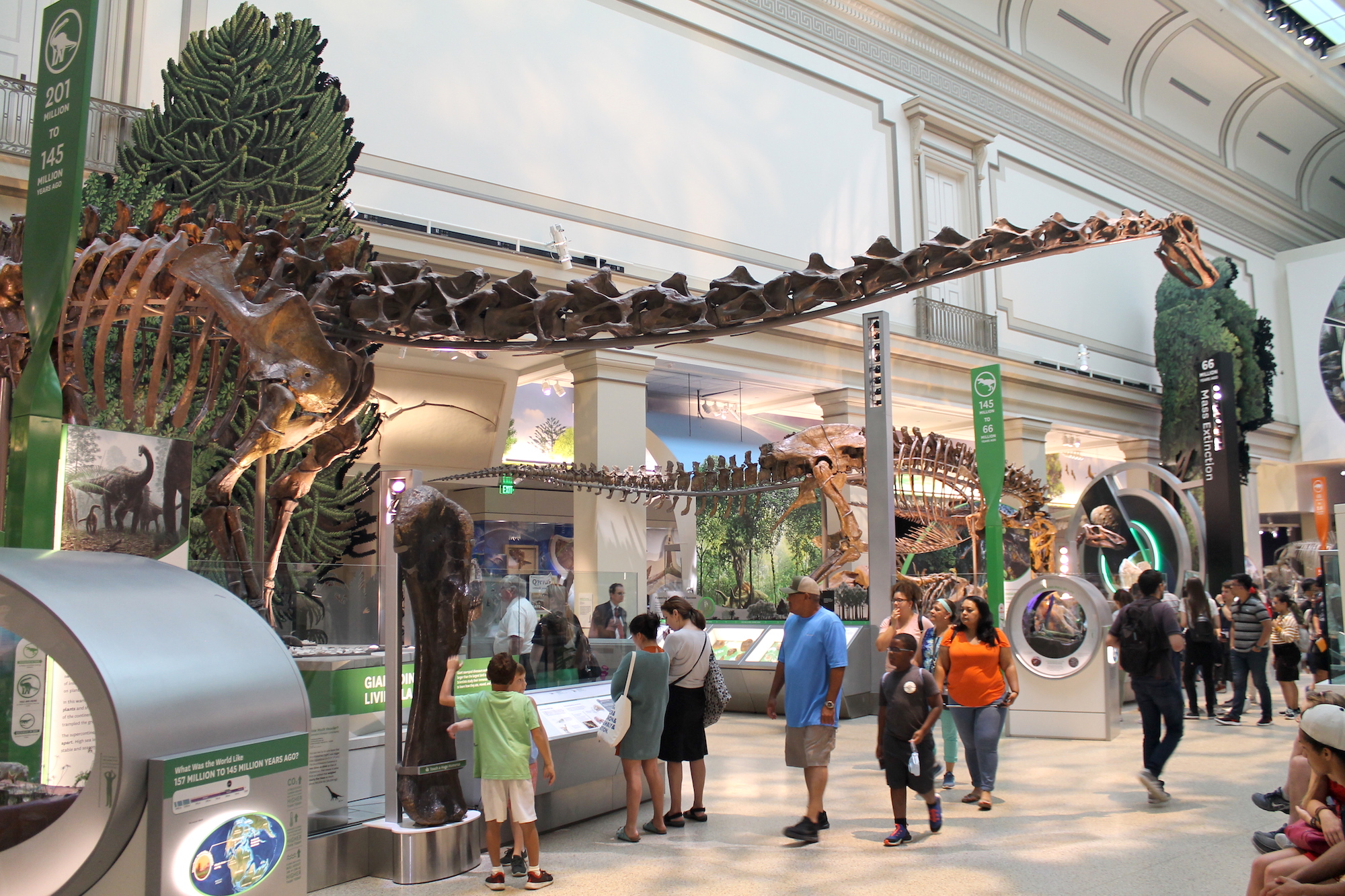
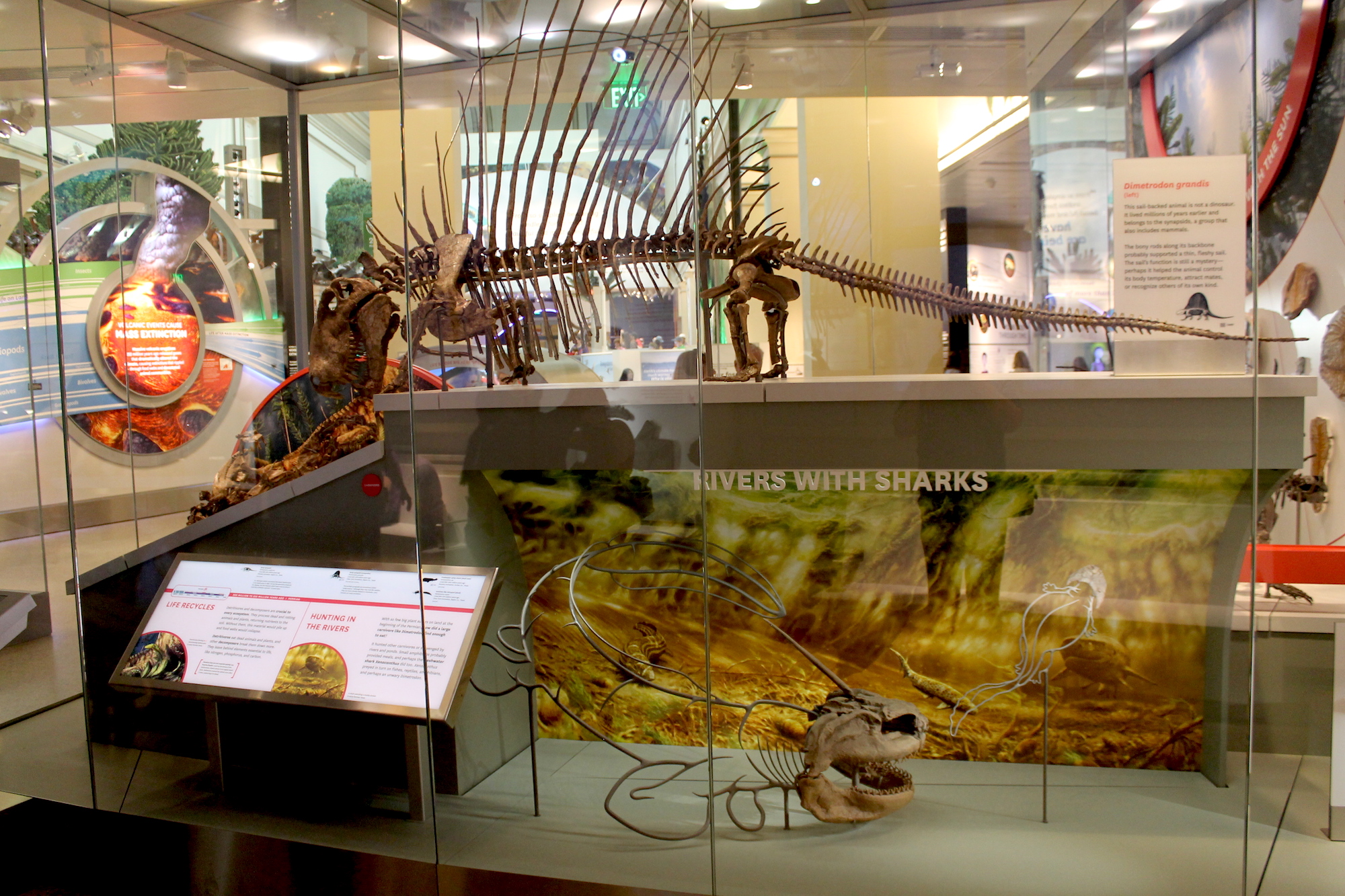
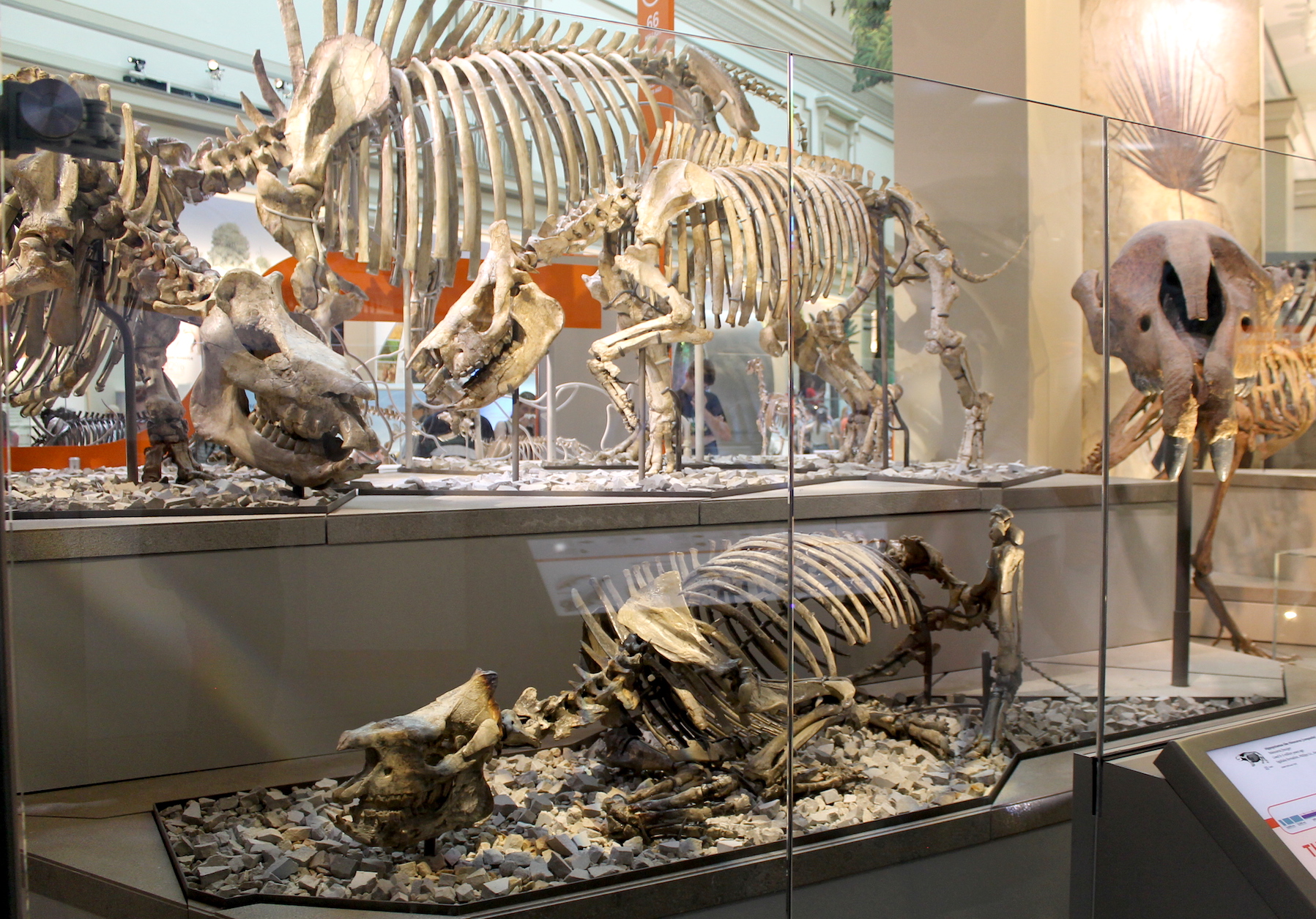
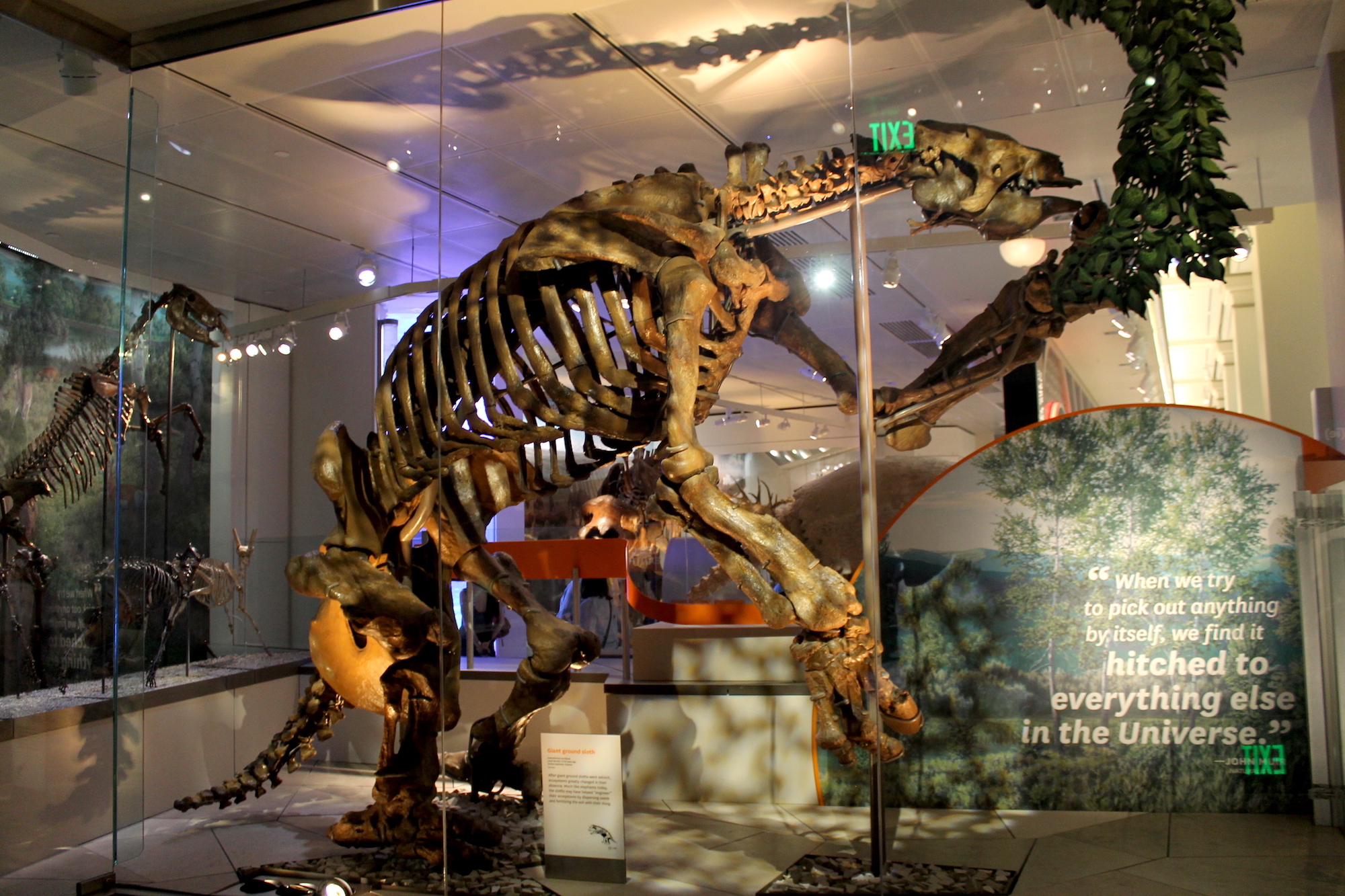
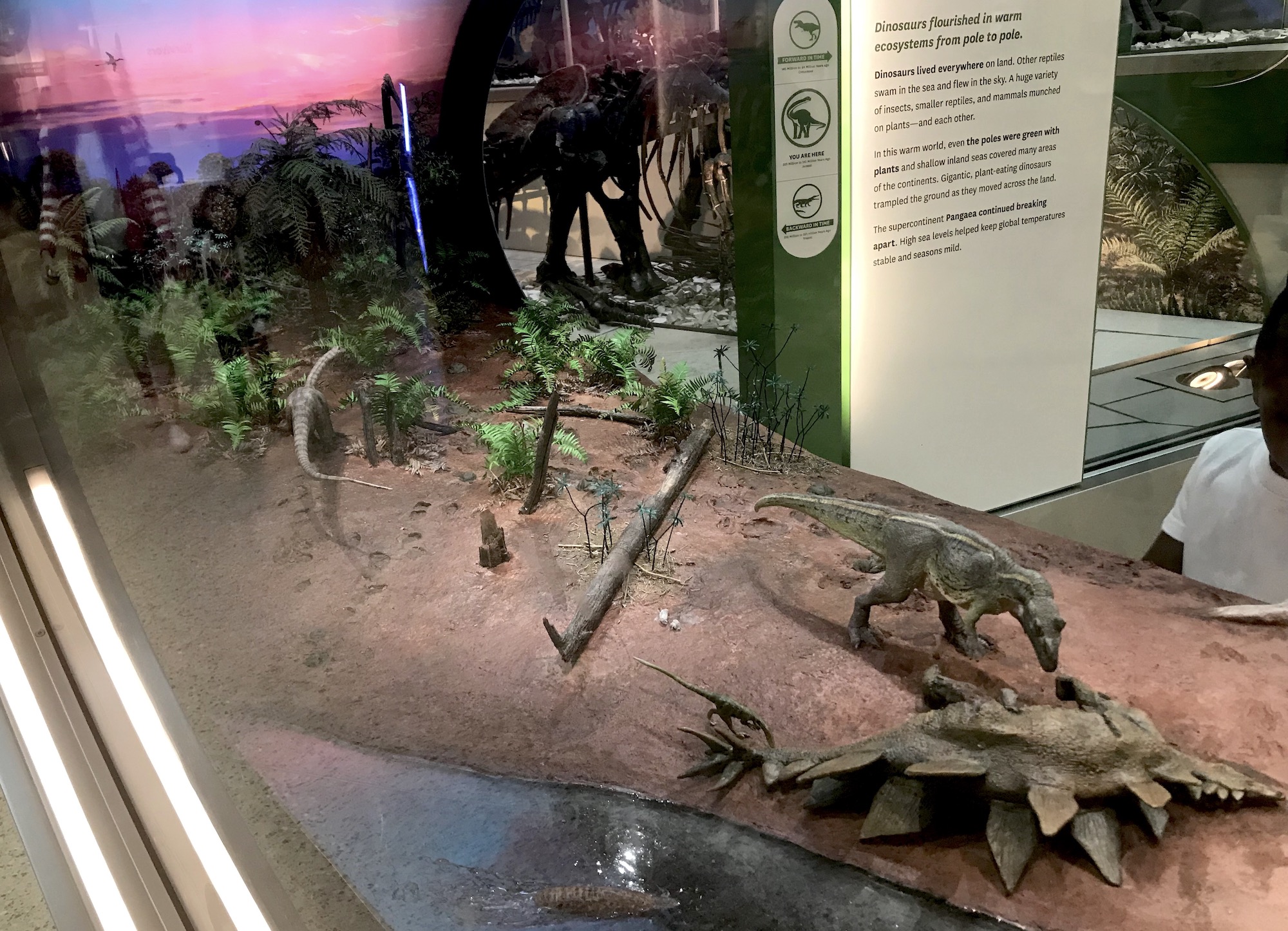

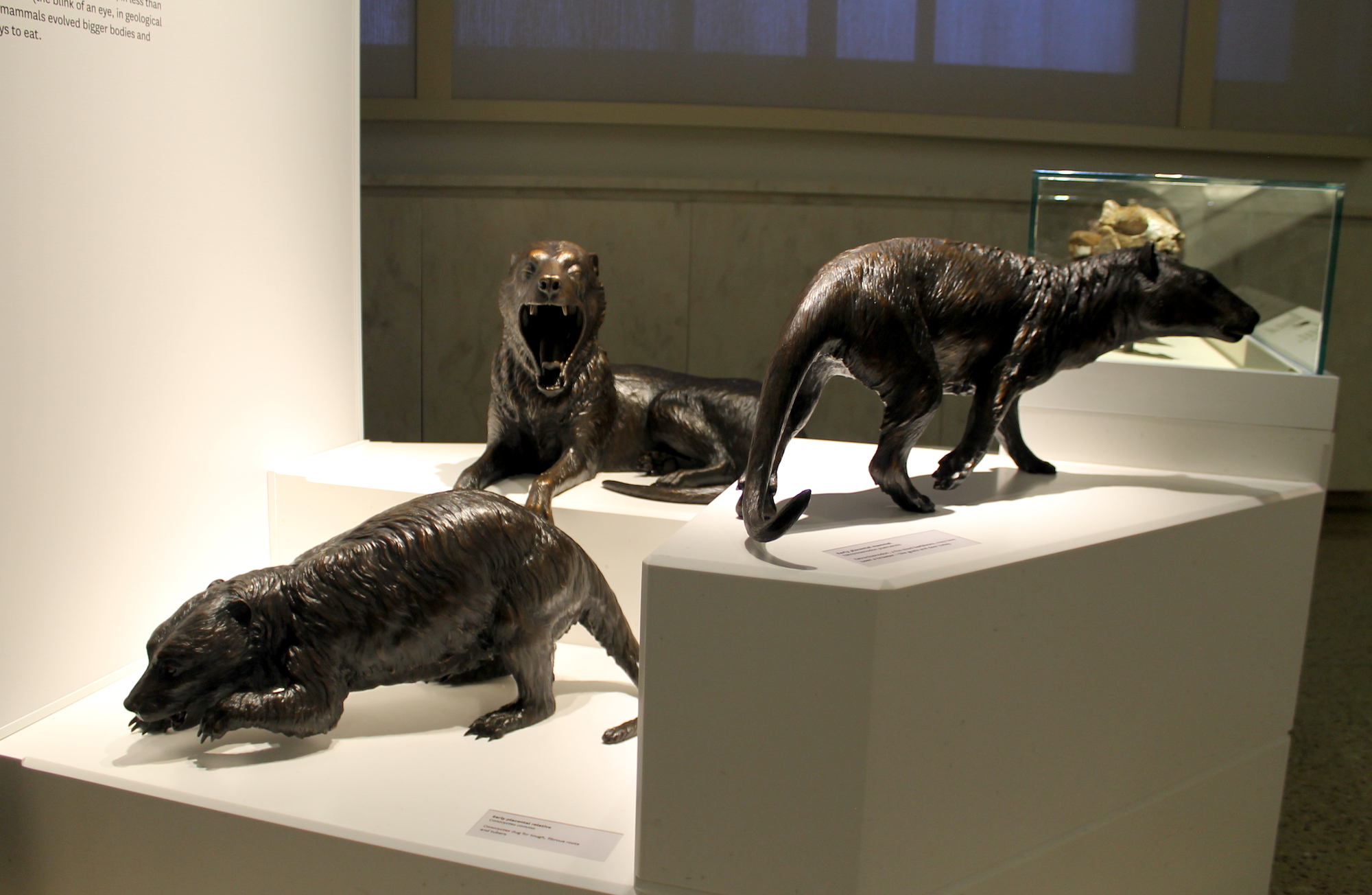
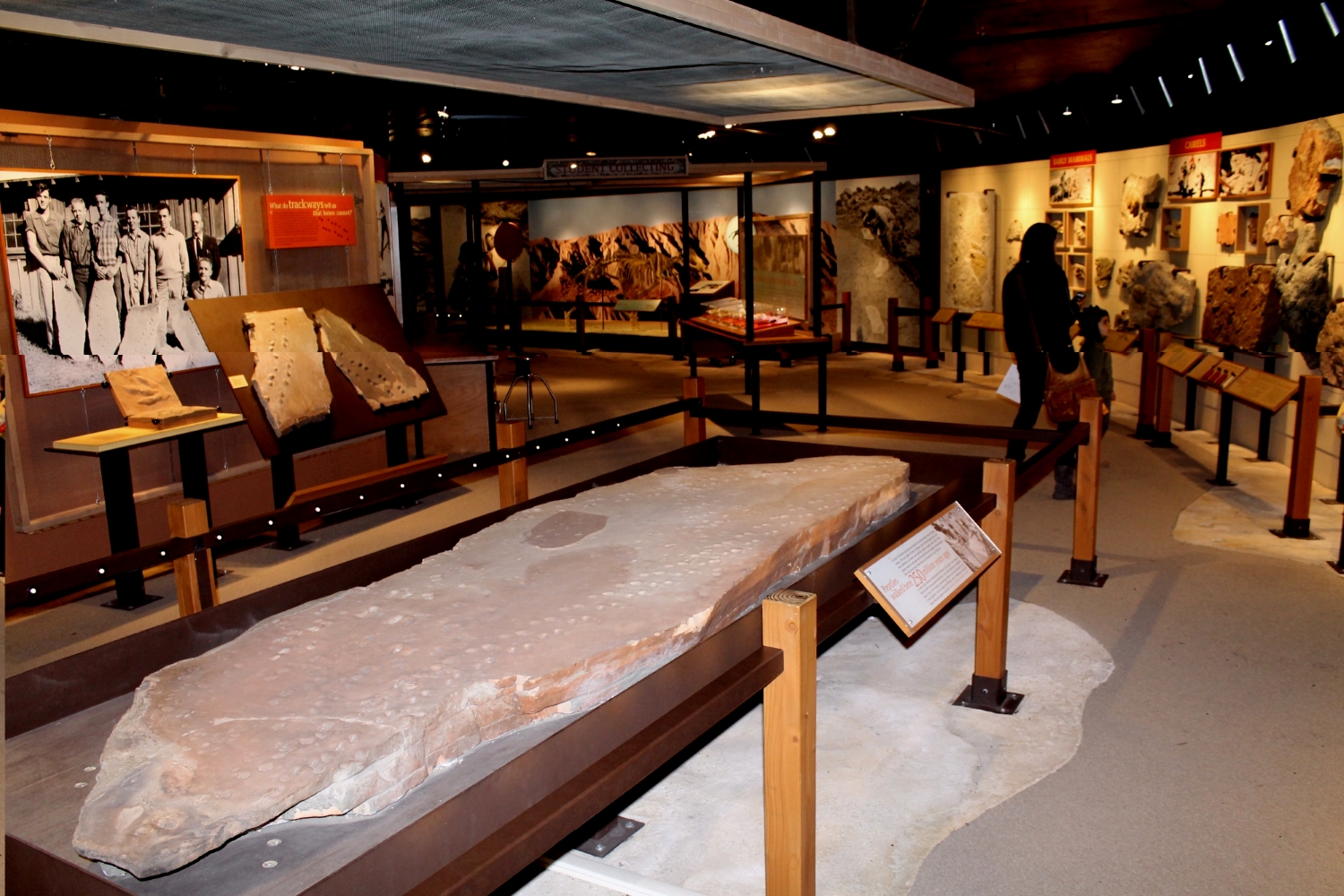
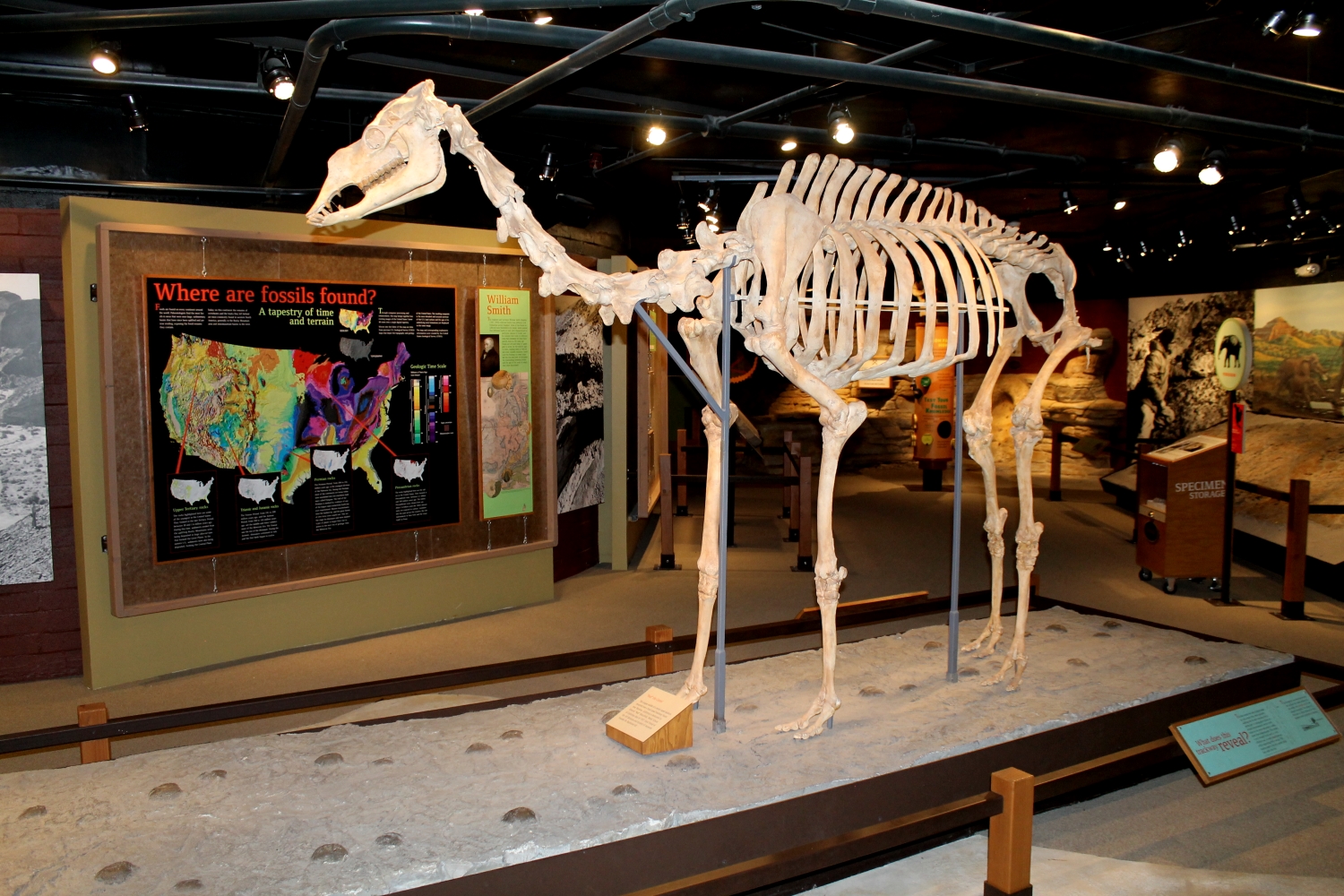
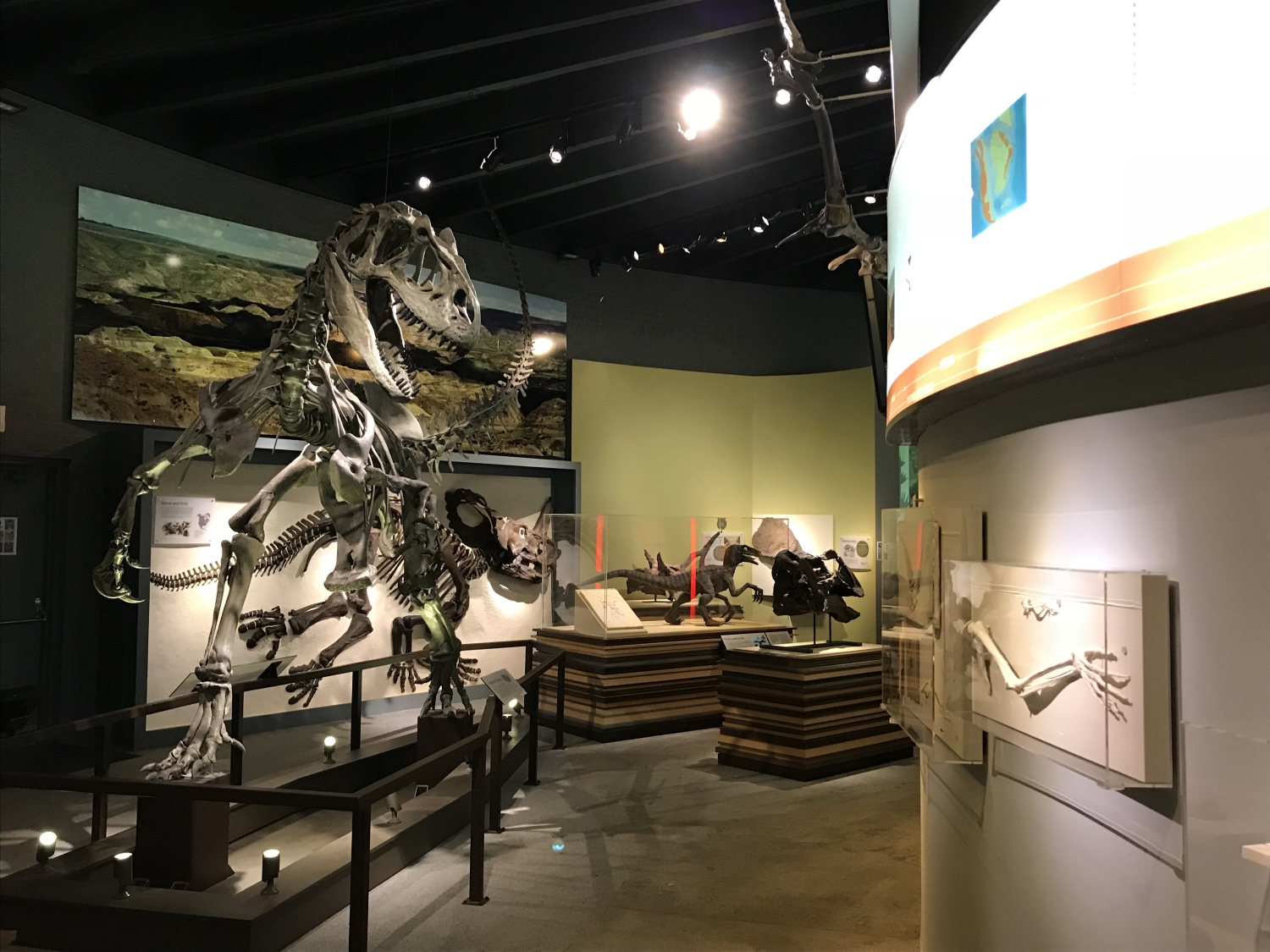

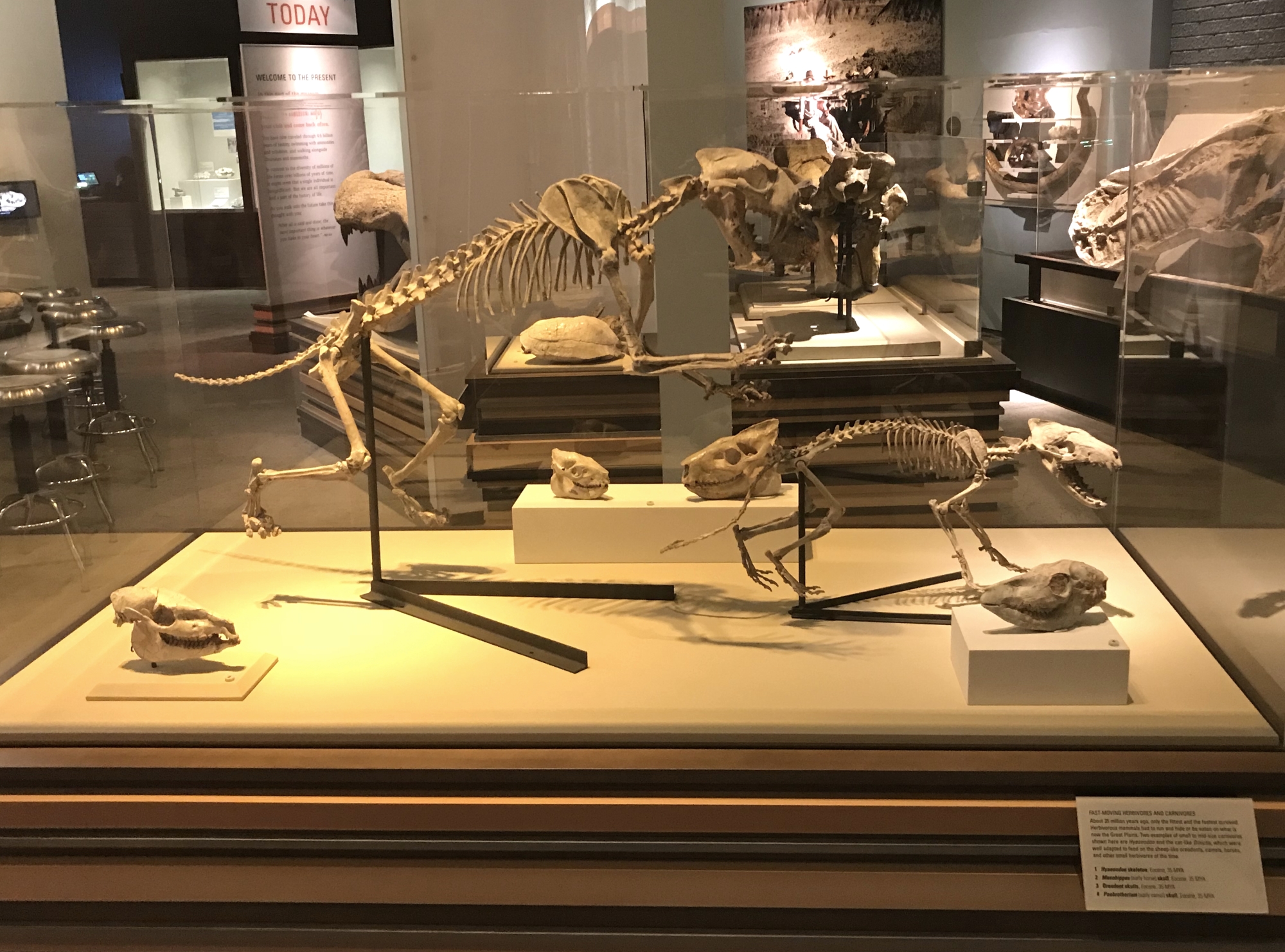
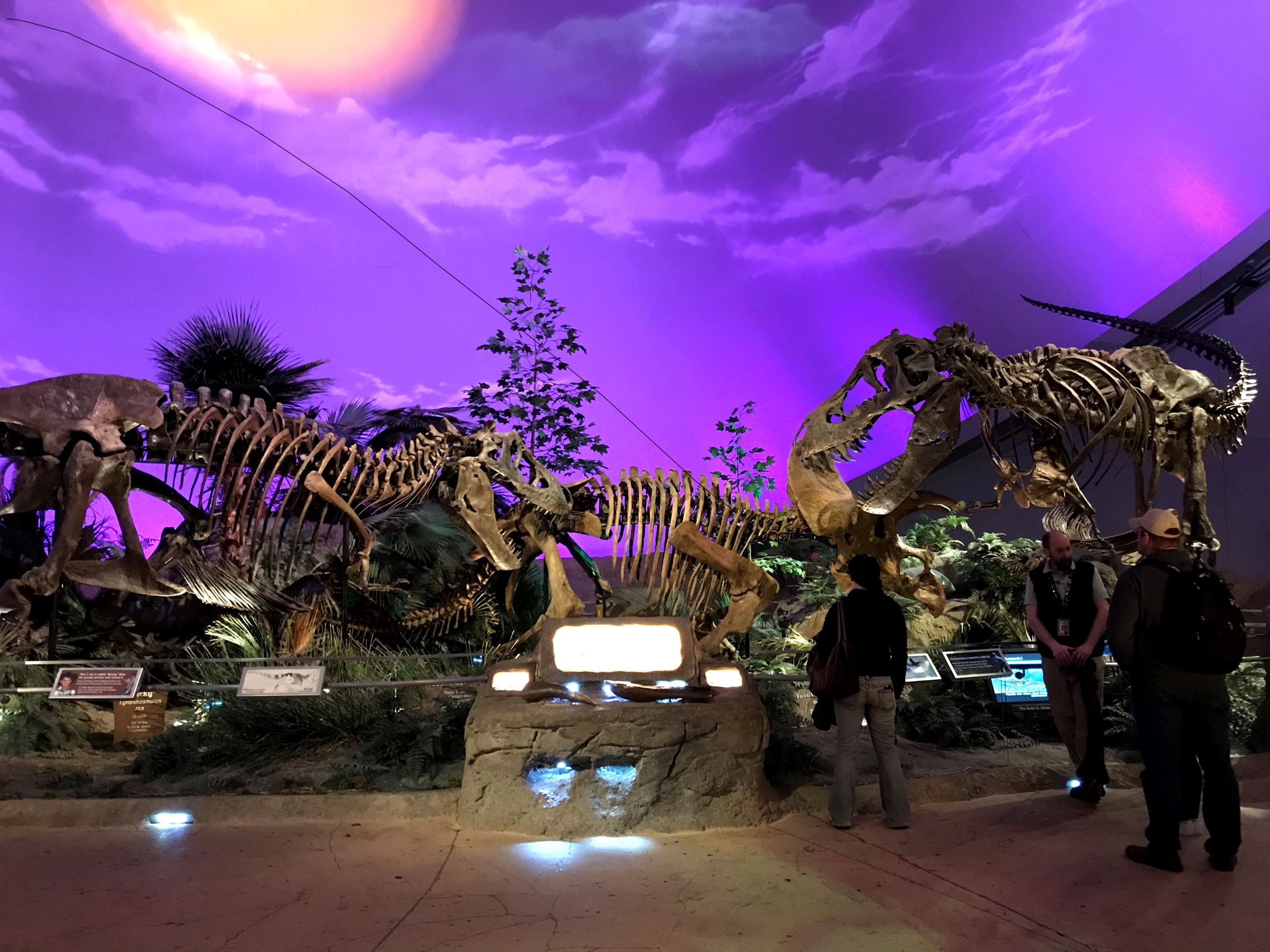
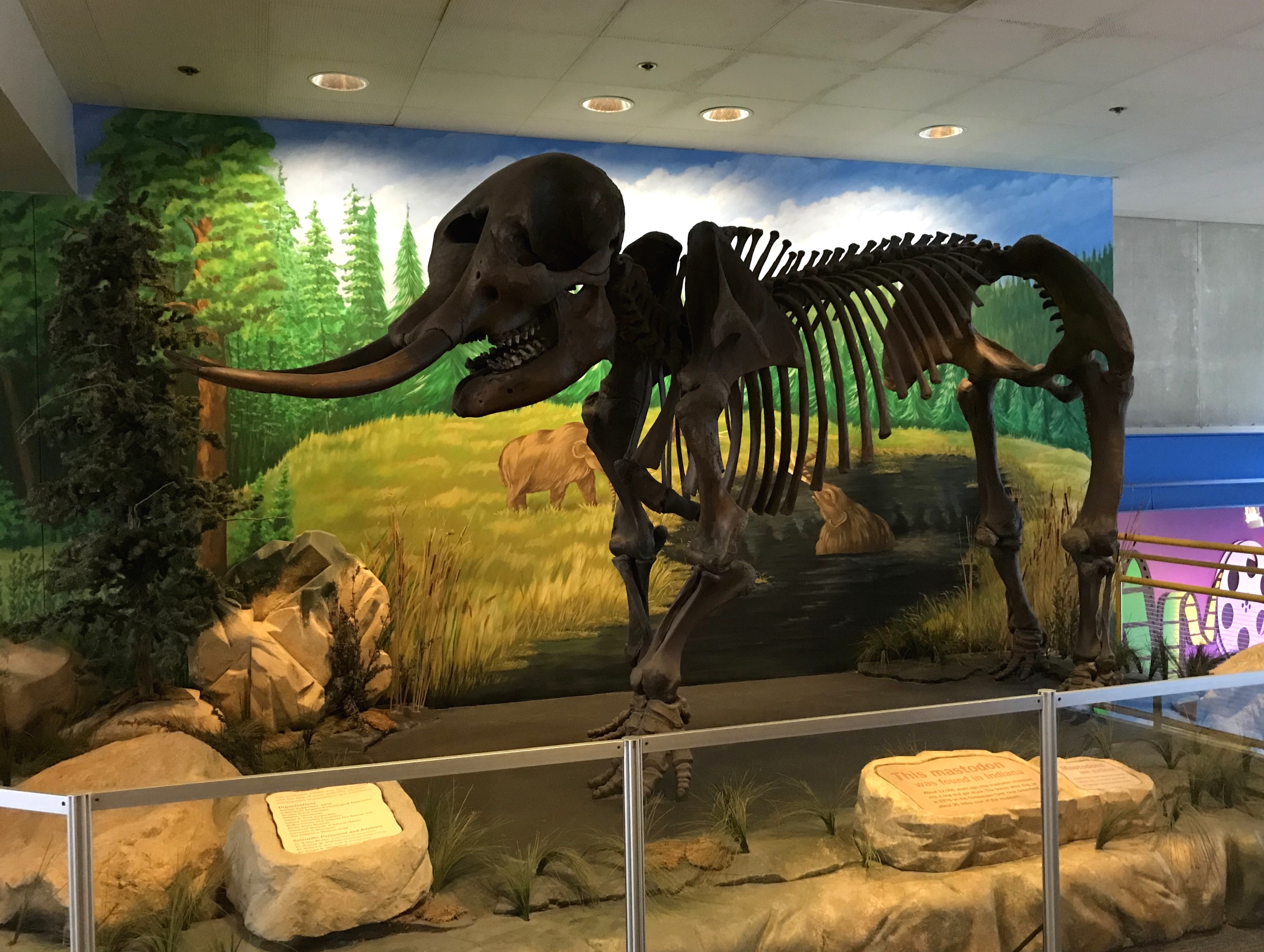
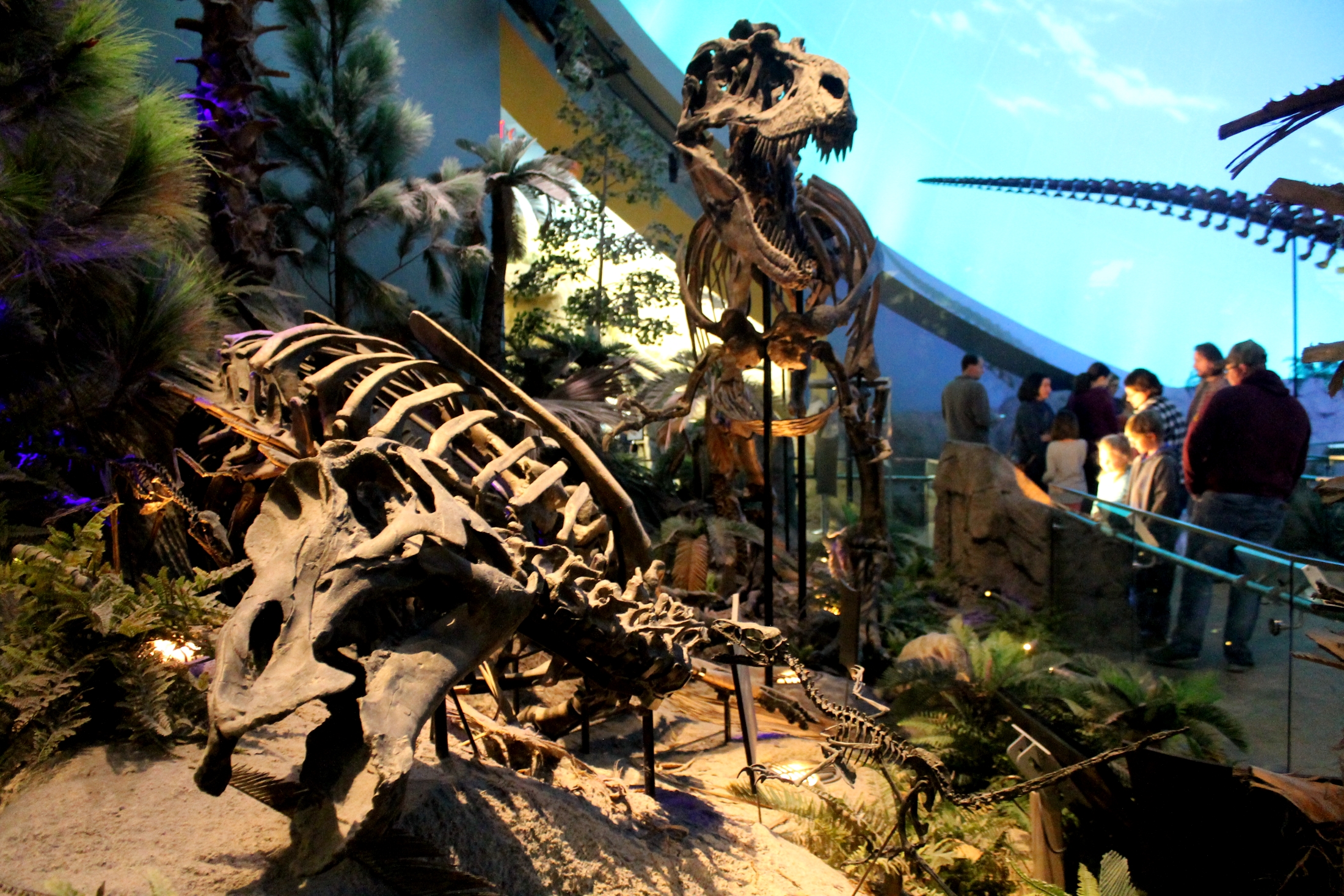
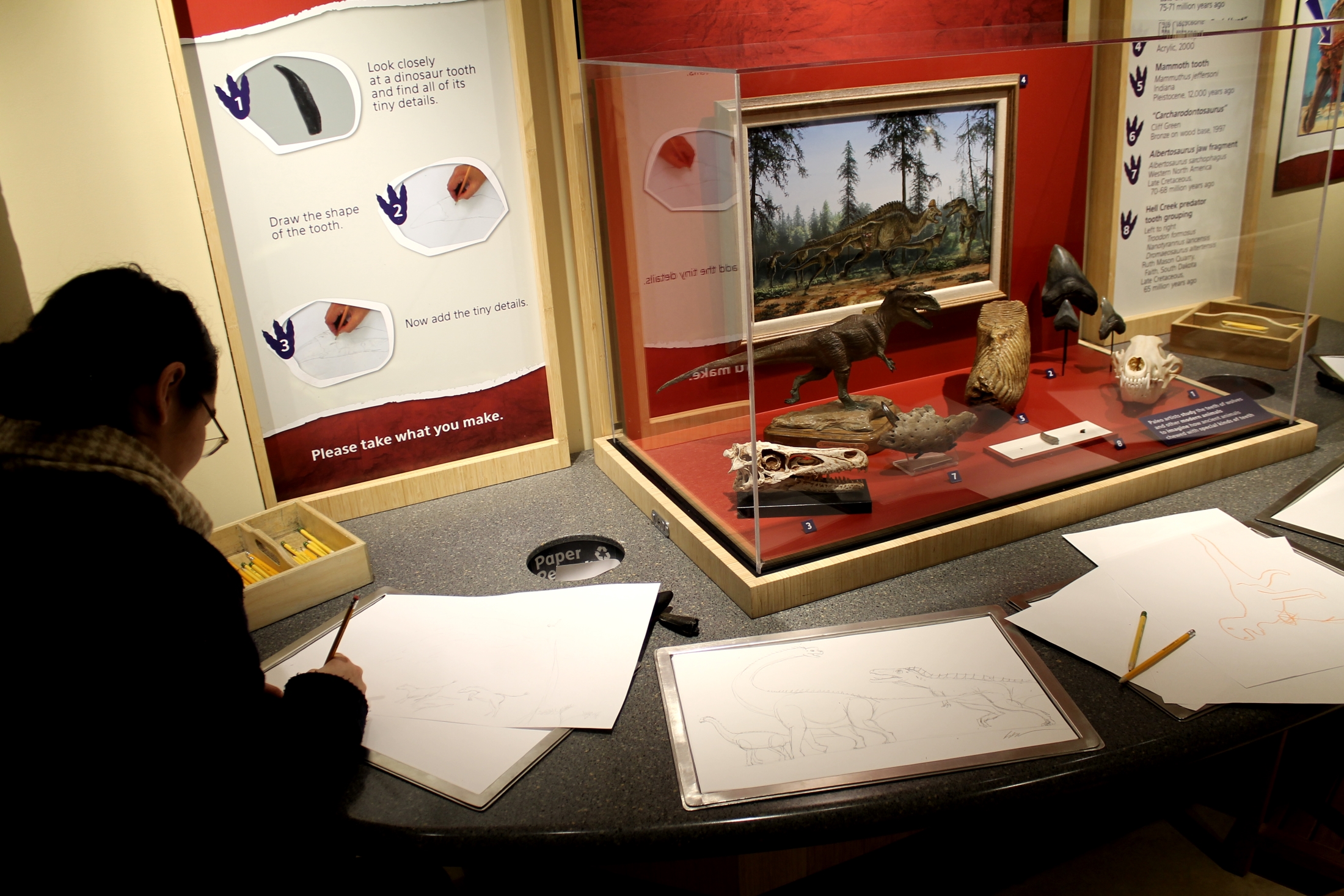
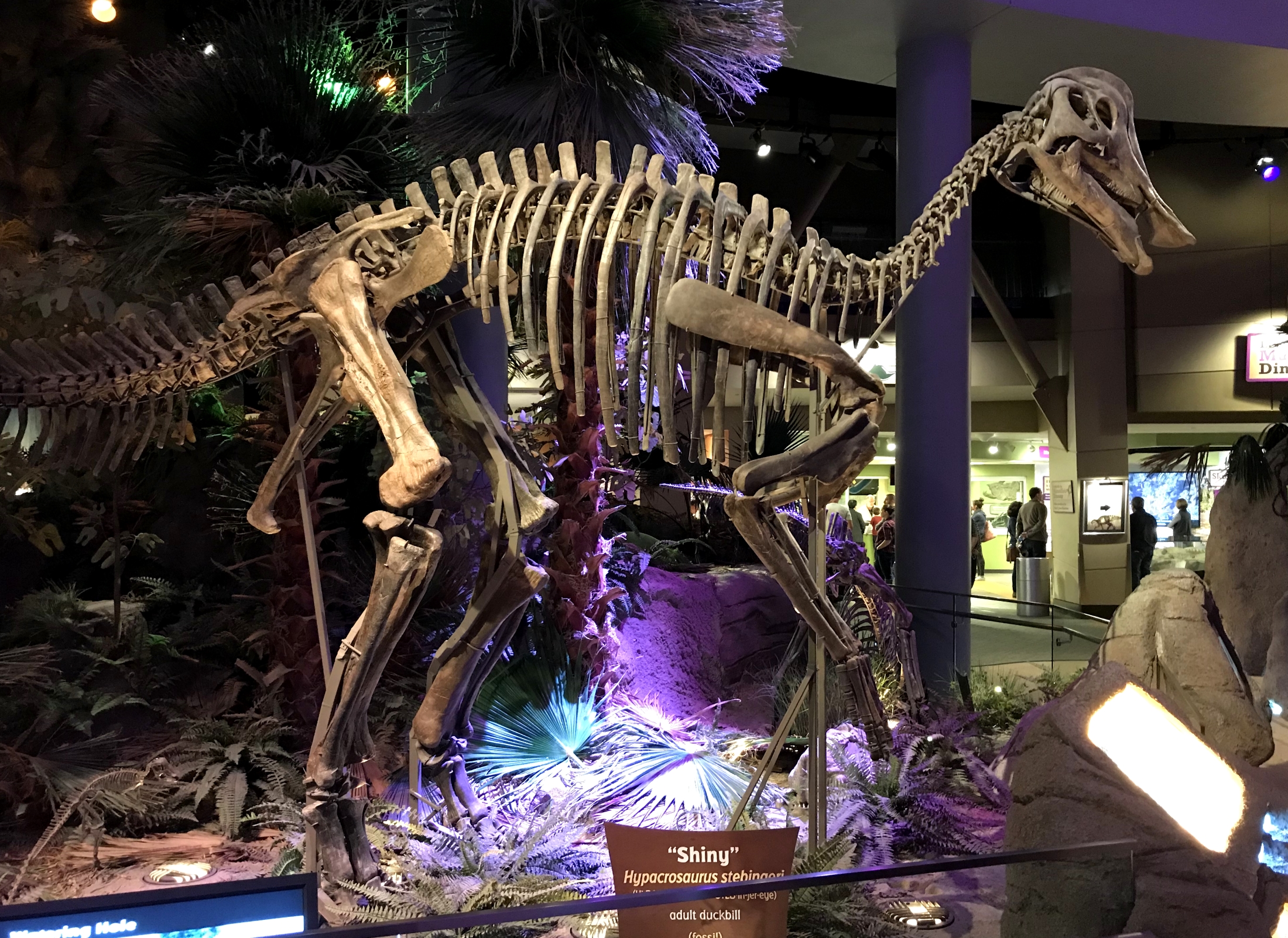


 EXTINCT MONSTERS