Science journalism: no longer even pretending to be educational

This morning (for me, afternoon in the U.K.), Ananyo Bhattacharya offered up a very frustrating opinion piece at the Guardian, arguing that the inherently flawed practices of mainstream science journalism are ideal, because journalists apparently know better than scientists. Excellent responses have already been posted at geologygeek and  Southern Fried Science, but I figure there’s still room to jump into the fray.

My first concern with Dr. Bhattacharya’s editorial is his assumption that science and scientists are fundamentally boring, and it is up to journalists to liven things up. Even if it means spinning the original paper beyond recognition, fabricating an irrelevant hook, dropping quotes out of context, or inventing controversy where none exits. Now, Dr. Bhattacharya’s background is in physics and protein crystallography, so maybe he has a point about that being dry. However, he is drawing on the myth that all scientists are stodgy boffins incapable of expressing anything without the jargon of their own esoteric specialty. Such people exist, but in my experience many, if not most scientists are engaging and skillful communicators. I dare anyone to hear a public lecture by Matt Carrano and not be impressed. Scientists have to be able to communicate to a wider audience; these days it’s a requirement for getting grants. Science is already interesting, and there is no more engaging source of information than a passionate and knowledgeable expert. As such, it is condescending for Dr. Bhattacharya to imply that scientists need journalists to “contextualize” the story (read: miss the point of the paper entirely in order to make it palatable). In particular, I must take issue with the assertion that journalists know better than the scientists who did the research which caveats are critical to understanding the issue being discussed.

I’m also concerned that Dr. Bhattacharya defends brevity out of “respect for readership”, but goes on to argue that journalists should be free to spin, exaggerate and misrepresent stories at their own discretion. If media outlets are only offering asinine and inconsequential science stories, rather than information that is actually relevant and useful, I would not call that respect for readership. But then Dr. Bhattacharya drops this bombshell:

There’s a fundamental misapprehension among many in the scientific community that the principal job of science journalists is to communicate the results of their work to the general public. It’s not.

I think that’s the problem in a nutshell. Actually communicating (accurate and reliable) information is not the media’s concern.

3 Comments

January 18, 2012 · 2:51 am

Part 3: In Which Ben Gets to the Point

I’ve spent a couple posts raining hate on the media’s portrayal of science and  exuberantly praising science bloggers. I’d like to wrap this series up with a few suggestions for how the excellent science communication in blogs might be applied to other media, specifically museums. Science blogs currently reach a relatively small audience, but the strategies for science communication employed by bloggers can be utilized by media forms that attract far more people.

Museums occupy the lower middle range of visibility among science communication venues. America’s most-visited natural history museum, the National Museum of Natural History, had seven million visitors in 2009, a number which pales in comparison to the 431 million homes reached by the Discovery Channel, but which is considerably higher than the 500,000 2011 subscribers to Scientific American magazine. Nevertheless, museums require special recognition in that they are among the most trusted of media forms. 86% of Americans view museums as a trustworthy source of information, substantially higher than the number of Americans that trust books (61%), television (49%) or newspapers (41%). Since museums are blessed with such high public trust, the stakes are higher for museums to report information accurately.

The New Museums

The museum field has undergone a significant revolution since the 1970s, trading its traditionally academic leadership for an audience-focused and education-based model. This change is beneficial because museums are now beholden to serving the needs of the public, and are trying (and occasionally succeeding) to serve increasingly diverse audiences. Visitors are now seen as active participants in the learning process, rather than passive spectators. This new paradigm has, however, made museums vulnerable to the same pitfalls that plague other media forms. Some in the museum field have noted that concern for public interests has been in some cases led astray by devotion to entertainment. Many newer exhibits sacrifice scholarship and educational value for gimmicks and sensationalism, not unlike the practices in science journalism.

An additional hurdle facing museums is the difficulty of communicating science through objects. Museums are based around objects, but science is based on ideas and concepts. Traditionally, science exhibits would place a spotlight on spectacular objects, but would communicate very little information about why those objects are important and what scientists can learn from them. For example, a paleontology exhibit is typically centered on the enormous mounted skeletons of dinosaurs, but visitors can only learn so much from this kind of display. The audience will surely be impressed by the size of the skeletons, but will leave without understanding what those skeletons tell us about the age of the earth, the evolution and diversity of life, and the place of humans in the natural world. The lack of science in science museums is an oversight that has unfortunately stood the test of time, and museums would do well to reconsider their approach to science communication.

New Strategies

Museum workers are moving toward an audience-centered institutional mission, but have struggled to do so without resorting to the same non-educational sensationalism seen in attempts at science communication in other media. Science blogs, however, are achieving this goal right now: they foster dialogue between scientists and laypeople, without sacrificing intellectual substance.
One of the most important aspects of science blogs is that they introduce audiences to real people doing real science. Firstly, the public gains direct access to the scientific process, which instills appreciation in the reliability of scientific conclusions. Additionally, communicating with working scientists and seeing the work they do demythologizes the process of making knowledge. Science is shown as a tangible process that anybody can become involved with or contribute to. Putting a human face on the scientific process is a powerful tool for engaging the public, and one that some museums have already started using. For instance, as part of the “The Scientist is In” program at the National Museum of Natural History, staff curators set up shop in the exhibit halls, where they answer visitor questions and discuss their current research. This program has proved popular both among visitors and the scientists, who appreciate the opportunity to find out what their audiences are interested in. The implication from “The Scientist is In” and from science blogs is that the idea that scientists are universally poor communicators is false. Public education need not be the exclusive domain of education specialists, and many scientists are eager and willing to take part. Indeed, it is good practice to limit the number of layers of interpretation, as this often contributes to distortion of facts.

Another strong practice of science blogs is encouraging interaction from readers. Blog audiences enter gainful conversations with bloggers, and both parties benefit from this process. Museums can mimic this by inviting visitors to form and share their own conclusions. Process-focused science exhibits can show visitors what kinds of information scientists use to make interpretations, and then invite visitors to try it for themselves. For instance, an exhibit could use a variety of animal skeletons to demonstrate how scientists use indicators like gait and posture to determine how extinct animals may have behaved. The goal is to make the museum exhibit an interactive and intellectually involving experience. Involvement nurtures passion for content, which encourages repeat visits and deeper engagement. This is a new concept for museums, which have traditionally positioned themselves as institutions of intellectual authority. Unfortunately, there is little data on how to successfully integrate web-style discourse into a physical exhibit, because very few museums have tried it. Museums will have to be proactive in order to encourage substantive interaction with the exhibit content, or even among visitors. Some museums have successfully integrated user-generated content into exhibit spaces. For example, the “Playing with Science” exhibit at the London Science Museum invited visitors to place photographs of their own objects into the exhibit, alongside brief statements of the objects’ importance. However, something as simple as a comment board can also encourage visitors to respond intelligently to exhibit content.

Finally, museums should refocus content interpretation away from objects for their own sake and toward ideas. As stated previously, the public’s understanding of science is hindered by the media’s focus on encapsulated facts and discoveries, rather than broad, unifying concepts. Most scientific concepts are inherently logical and do not require specialized knowledge to understand if communicated properly. Evolution via natural selection is a good example. The concept that genetic variations within a population of organisms succeed or fail based on suitability to the present environment is easy to grasp, but a troublingly small percentage of the population is familiar with it. Even among visitors to natural history museums, who are more likely to accept evolution as true than the general population, less than a third are familiar with how natural selection works. Evolution is most important concept in biology and unifies the field. Therefore, it would not be difficult to integrate evolutionary concepts into virtually any exhibit on natural sciences. Communication of scientific concepts like evolution is more important for building science literacy than sharing scattered facts and impressive objects. Objects are excellent teaching tools, but are better when used as examples of underlying ideas.

Science communication in the media is at a tipping point. As the media has edged away from education and toward lowest-common-denominator entertaining, the public need for distinguishing reliable and unreliable information has increased. The misleading and inaccurate presentation of science in the media is woefully unhelpful for supporting an active and informed citizenry. Museums, with their high visibility and public trust, are well positioned to take steps toward reversing this trend. However, museum workers must first strike a balance between the sometimes conflicting goals of public appeal and accuracy. Science blogs are an excellent model for reliable, involving and applicable science communication, but they operate on a much smaller scale than museums. The challenge for museums, and any other media forms up to the challenge, will be to translate the strategies employed by blogs at the micro scale to large institutions.

Selected References

Diamond, Judy, and Margaret Evans. “Museums Teach Evolution.” Evolution. 61.6 (2007): 1500-1506.

Gregory, Jane, and Steve Miller. Science in Public: Communication, Culture and Credibility. New York: Plenum Press, 1998.

MacFadden, Bruce J., Betty A. Dunckel, Shari Ellis, Lynn D. Dierking, Linda Abraham-Silver, Jim Kisiel and Judy Koke. “Natural History Museum Visitors’ Understanding of Evolution.” Bioscience. 57.10 (2007): 875-882.

McLean, Kathleen. “Museum Exhibitions and the Dynamics of Dialogue.” Reinventing the Museum: Historical and Contemporary Perspectives on the Paradigm Shift. Ed. Gail Anderson. Lanham: Altamira, 2004. 193-211.

Simon, Nina. “Discourse in the Blogosphere: What Museums Can Learn from Web 2.0.” Museums and Social Issues. 2.2 (2007): 257-274.

Leave a comment

Filed under dinosaurs, museums, NMNH, science communication

Part II: Why Science Blogs are Neat

Returning to the shameless term paper recycling extravaganza, this post will cover the recent success of science bloggers. This discussion is based pretty much entirely on the blogs I read, which are mostly vert paleo-related. I can only assume that molecular biologists, physicists and those poor, brave souls in paleobotany have similar online communities. Once again, thanks to Matt Wedel and Brian Switek for their thoughts, experience and quotability.

Of the 112 million blogs on the internet, science blogs represent a small but growing subset of some 1,200 active contributors. Describing his reasons for co-founding the paleontology blog Sauropod Vertebrae Picture of the Week, Mathew Wedel admits, “if we had a goal at first, it was just to talk about how cool sauropod vertebrae are” (Wedel 2011). However, science blogs have since evolved into a valuable resource for both scientists and laypeople. First, science blogs have the advantage of being written by practicing scientists and other experts in their fields, and therefore remove the distortive barrier typically imposed by the media. As such, they provide a unique opportunity for scientists to communicate directly to interested lay people, and to hear what their audience has to say. Blogs can create public awareness of research or scientific concepts deemed irrelevant by the media, and can rapidly provide commentary or corrections to more widely dispersed reports. Science blogs have also proved invaluable for fostering networks of academic peers, but my concern here is with popularization.

Science blogs also embrace a pluralistic conception of academia that is typically obscured by mainstream media. Whereas the media presents scientists as an invariably unified professional entity, blogs reveal the specific positions and interests of individual scientists, humanizing the discipline in the process. SV-POW is once again a prime example. Posts like this one  reveal the little-publicized controversy over for-profit versus open-access academic journals. The comments generated indicate disagreement, or at least varying levels of apathy, within the scientific community. Similarly, Brian Switek’s recent post on Hell Creek ceratopsian diversity emphasizes the normalcy of scientific debate, combating the widespread assumption that any published paper is definitive truth. The public benefits from these conversations because it provides exposure to important issues in knowledge making that are normally not accessible.

Most importantly, by providing audiences with a direct link to working scientists and accounts of their everyday activities, science blogs demythologize the process of creating knowledge. As Wedel explains, blogs are well positioned to integrate the public into the scientific process:

“If we have one overriding goal now, it’s to break down the artificial walls between interested people, regardless of training or background. And by that I mean the scientific process, what we call making science, and the communication of science in both academic and popular settings. A century ago most science was citizen science. The rise of national funding agencies like NSF and NIH has allowed a lot more professional scientists to do science, but along the way we lost something, which is the idea that any curious, disciplined person can contribute to human knowledge. We firmly believe in that, and we’re doing what we can to bring it back.” (Wedel 2011)

This is a critical point because, as discussed in the previous post, the current standards for science communication do not encourage public participation. Information about science is fed to audiences in a one-way exchange. Science blogs break this mold by encouraging a productive dialogue between scientists and laypeople. They encourage the public to actively contribute to the scientific process, and provide a forum for this knowledge to be shared.

Science blogs are still a young media form, and their potential for communication remains largely untested. Nevertheless, the field is growing rapidly, and scientists who blog are gaining much more respect in the academic community (Switek 2011). While there was once skepticism about quality control in the blog medium, increasing numbers of scientists are entering the fray, and it is now reasonable to foresee most labs including somebody blogging about their work by default. Currently, the majority of the public, even those with strong interest in science, are unaware that this forum exists. Science bloggers, however, are encouraged by their increasing visibility, and some are optimistic that blogs will change the way science is communicated to the public.

Selected References

Batts, Shelly A., Nicholas J. Anthis and Tara C. Smith. “Advancing Science through Conversations: Bridging the Gap between Blogs and the Academy.” PLoS Biology. 6.9 (2008): 1837-1841.

Switek, Brian. Email Interview. 19 Oct 2011.

Wilkins, John S. “The Roles, Reasons and Restrictions of Science Blogs.” Trends in Ecology and Evolution. 23.8 (2008): 411-413.

Wedel, Mathew. Email Interview. 24 Oct 2011.

Leave a comment

Filed under museums, science communication

Scientific Literacy: They’re Doing It Wrong

It’s that time of year when student bloggers start recycling term papers and calling them new blog posts. To jump squarely on that bandwagon, please find enclosed in the next few posts an abridged and modified version of some of my museum studies work. The short version is that science communication in the media, including museum exhibits, has been hijacked in the name of substance-free entertainment in the interest of attracting as many eyeballs as possible. However, the rising popularity of science blogs over the past few years presents an encouraging model for presenting science in an approachable and engaging manner without sacrificing veracity. After some background on why and how the media has been systematically ineffectual at communicating science, I’ll point out some things science bloggers are doing right and what museums and other media forms can learn from them.

One more thing: A huge thank you to Matt Wedel and Brian Switek, who answered my questions about their blogs and their thoughts on science communication. Since they’re more articulate than I am, I’ve included some quotes below.

Why Should We Care About Scientific Literacy?

NSF defines scientific literacy as knowing basic facts and concepts about science and, most importantly, understanding how science works. NSF has been running nationwide surveys on science literacy since 1972, and the results are not encouraging. The majority of the general public knows only a few scattered facts about science, but few can articulate important concepts, such as now evolution works. More critically, only 3% of those surveyed could answer “what does it mean to study something scientifically?”. Most Americans are unfamiliar with the scientific process, or how scientists actually find out the things they know.

An appreciation of the scientific process is extremely important. Scientifically literate individuals can recognize when ideas have been tested in an unbiased manner, and can critically evaluate information for themselves. This is a valuable skill not only in keeping up with important science news, but also in assessing the validity of any type of information. For instance, valuing fairly evaluated information is crucial for meaningful participation in elections and the legal system.

The need for a scientifically literate citizenry is arguably at an all-time high. Americans are bombarded with ever-increasing amounts of information, and require the intellectual tools to separate what is reliable from what is not. In particular, people need to be able to recognize unsupported claims by politicians, such as Michelle Bachmann’s assertions that global warming is not supported by science and that vaccines cause autism. Authoritative statements are meaningless without knowledge of where the information came from and why it is believable. Furthermore, scientific research is often relevant to people’s lives, especially work concerning climate change and alternative energy.

Science in the Media

The mass media is the primary venue for communicating science to the public. As discussed here, “media” refers to the broad and amorphous spectrum of books, television, newspapers, museum exhibits and virtually all other platforms intended to convey information to a wide audience. Science undoubtedly has a strong presence in the media: most media outlets dedicate at least some resources to science coverage, and magazines, cable networks and museums dedicated entirely to science communication are plentiful and easily accessible. Unfortunately, the manner in which science is portrayed and discussed in the media is highly counterproductive. Inaccuracy, misleading emphasis and sensationalism are rampant, and the very structure of how science is communicated is flawed.

Earlier this year, several large and small media outlets, including Fox, CBS, the Huffington Post and Science Daily focused their coverage of the annual conference of the Geological Society of America on a talk that purported that a highly intelligent and self-aware “kraken” was responsible for an interesting arrangement of prehistoric fossils. Despite the fact that this story was unsubstantiated by evidence and clearly absurd, the press passed it along to their audience without any further research or commentary. Had any of the reporters taken a moment to verify the story with experts, they would have been told in no uncertain terms that the “kraken” had no scientific merit. Unfortunately, this incident highlights the reality that the editorial process often favors sensationalist stories that will attract a larger audience over an accurate presentation of information.

The “kraken” story may have been trivial, but the practice of favoring sensationalism over veracity has much more serious implications when journalists pass on bogus claims for miracle cures, or push the myth that vaccines cause autism. While there has been no thorough investigation of whether science communication in the media is more or less accurate than any other topics, it is clear that the media is not as concerned as it should be with communicating reliable science information to the public.

Even when the media manages to communicate science information accurately, its emphasis is not conducive to generating long-term public interest or to fairly representing the scientific community. Few news outlets venture beyond reporting the latest publications in Science and Nature, limiting audiences to only a small sample of the wide variety of research being published on a daily basis. Additionally, the media tends to overdramatize and exaggerate science stories, making “every incremental advance sound like a huge revolution” (Wedel 2011). As a result, the public is quick to conclude that no science stories are as monumental as they are made out to be, or worse, that scientists themselves are prone to jumping to conclusions. This situation thoroughly misrepresents the scientific process, as publication is just the beginning of scientific deliberation and debate (Switek 2011). Furthermore, every discovery is not a revolution, nor should it be: scientific progress is based on generations of incremental additions to our body of knowledge.

Unfortunately, the working practices of scientists and media workers vary considerably. Media methodologies have developed out of a contest for attention, and therefore media professionals typically rely on practices that will gain the largest audience. Sensationalism and fabricated controversy are the objectionable results of this system. Media also favors active and highly visual content, which does not mesh well with much of the work done by scientists. Science occurs mostly in people’s heads, and discoveries are often drawn out over months or years. As such, media presentations of science are often padded with misleading theatrics, such as animated fighting dinosaurs or researchers walking down hallways for no reason. Simply put, the modern media system favors spectacle over education, and is ill-suited to communicating science in an accurate or reliable way.

What about Academia?

Scientists are the best informed about their research and its ramifications, and therefore are arguably the best people to share that information. But although much of the criticism of the media’s portrayal of science has come from the academic community, scientists themselves are not always skilled communicators (but many are!). Although it is now expected that scientists engage the public regarding the content and impact of their research, this is a relatively recent phenomenon. Unfortunately, there is still little institutionalized support for scientists who endeavor to communicate to the public. Public lectures and popular articles are not counted by tenure committees or academic auditors as publications, and scientists that frequently reach out to wider audiences, such as Stephen Hawking, Jane Goodall or Robert Bakker, are unduly criticized by their peers.

At a philosophic level, the dissemination of scientific information to the masses has followed the “deficit model”, in which scientists are assumed to have privileged access to truth and the public is considered to have nothing to contribute. This perspective is not only condescending, it is counterproductive to generating public interest in science. If the public is told that it is irrelevant to the process of knowledge-making, there is no reason to expect people to be enthusiastic about the scientific process. Furthermore, laypeople can and have made enormous contributions to science, and can bring new perspectives and ideas that scientists may not have considered. For their part, scientists are not infallible, and it is unrealistic to assume that they always have the best answers. Complaints about public misconceptions are common among academics, but if scientists are unwilling to engage in dialogue with their audiences, these misconceptions will continue.

What Should the Public Know?

There is strong agreement among science communication specialists (e.g. Brok, Diamond and Evans, Gregory and Miller, Nuijens) that the key to understanding science is understanding how scientific knowledge is actually produced. Knowledge of specific facts and discoveries can be interesting and worthwhile, but this information is meaningless without context. Information gains significance only when its relevance, implications and place among current research trends is understood. Additionally, the media’s focus on new discoveries can potentially harm the public’s view of science. New ideas in science are typically contested, and may hold up or be discarded after intensive scrutiny. This is part of the scientific method and is the normal state of affairs. Unfortunately, when the public only sees new ideas, as well as different scientists reaching different conclusions from the same supposed facts, it is inevitable that doubts will arise regarding the integrity of scientists in general.

Ideally, if the public understands anything about science, it should be the nature of the scientific research process. The public ought to know how the scientific method works, and why it is a powerful tool. If the media communicates anything about science, it should be the integrity of the scientific method, from testable and verifiable hypotheses to repeated, objective observation. With this information, the public will appreciate the high standard to which scientific conclusions are held, and the value and trustworthiness of continuously-verified theories, such as evolution. Likewise, the public will understand that any disagreement among scientists is an important part of the process of creating knowledge.

To accomplish this, the media should focus on the ongoing process of scientific research, rather than milestone discoveries. Not only will exposure to the practices of training, peer-review and continuous peer scrutiny support the reliability of the scientific process, but the portrayal of what scientists do on a day-to-day basis will put a much-needed human face on the field. Besides creating a more accurate portrayal of science as a discipline, a focus on the scientific process will provide the public with the tools to evaluate the reliability of any new information, from the realm of science or elsewhere.

Next time, I’ll get to the point: science blogs, and their applications for museums.

Selected References

Batts, Shelly A., Nicholas J. Anthis and Tara C. Smith. “Advancing Science through Conversations: Bridging the Gap between Blogs and the Academy.” PLoS Biology. 6.9 (2008): 1837-1841.

Broks, Peter. Understanding Popular Science. Berkshire: Open University Press, 2006.

Diamond, Judy, and Margaret Evans. “Museums Teach Evolution.” Evolution. 61.6 (2007): 1500-1506.

Enseki, Carol. “Public Trust and Accountability.” New Standard. 2006: 1-2, 8.

Gregory, Jane, and Steve Miller. Science in Public: Communication, Culture and Credibility. New York: Plenum Press, 1998.

Nuijens, Frank. “Why the World Needs Better Science Journalism.” MediaShift. 29 Nov 2011. Web.

Rothschild, David. “Bad Journalism Promotes Bad Science.” Plagiarism Detection and Prevention Blog. 11 Oct 2011. Web.

Switek, Brian. Email Interview. 19 Oct 2011.

Wedel, Mathew. Email Interview. 24 Oct 2011.

Leave a comment

Filed under museums, science communication

Jurassic Park is awesome and a milestone for paleontology…

…deal with it.

What follows was partially written several months ago and never finished. I dug it up again due to the resurgence of JP interest with Steven Spielberg’s announcement.

I was six years old when Jurassic Park came out. I was crazy about dinosaurs, but my parents had been told that the movie was way too scary for a kid my age. Since Aliens was already on my short list of favorite films at that point, this seems a moot point, but by the time my parents warmed up to taking me to see JP, it was at a second run theater. I don’t remember seeing it at the theater, but I do remember my endless viewings of my VHS copy, and the tattered box remembers too.

I still enjoy Jurassic Park immensely. It means a lot to me, but surprisingly, that feeling is not shared by the entirety of the paleontological community (as a student/intern, I put myself in a very broad definition of that collective). As an example, take a look at Dr. David Hone’s admittedly 3-year old post about the film. While Dr. Hone is generally positive, he expresses annoyance about the inaccurate portrayals of dinosaurs and paleontologists that have so firmly entrenched themselves in the public consciousness as a result of Jurassic Park. Similar complaints turn up from time to time on the Dinosaur Mailing List as well.

I, for one, have to disagree. When I’m chatting with people about vert paleo, something I genuinely enjoy, I’m thrilled when Jurassic Park enters the conversation. It’s such a genuinely entertaining movie that people remember it well, 18 years after it’s release. What’s more, it’s a movie that made many people think about what they were watching: what dinosaurs were like, and how we know what we do about them. This is an excellent jumping-off point for any discussion about paleontology, because it is a shared frame of reference. At work, I have become well acquainted with the fact that very few people understand Deep Time, or have ever given it any thought at all. But people know Jurassic Park, and I am very grateful for it as a starting point in the education process.

What’s more, we can complain all we like about what Jurassic Park got wrong, but I’m more impressed by how much it got right. Jurassic Park was the first widely disseminated look at believable dinosaurs, and it single-handedly brought post-Dinosaur Renaissance conceptions of dinosaurs to everyone.

Unfortunately, as I mentioned, Jurassic Park is 18 years old now. It took awhile, but it seems to no longer be the go-to source of dinosaur knowledge for many Americans. The seemingly endless parade of shitty “documentaries” on cable TV, as well as fare like Dinosaur Train, are crowding Jurassic Park off its perch. And that is why I’m optimistic about the announcement of Jurassic Park 4. The original film was a fantastic resource not only for paleontology education, but science education in general. If a new sequel can match or approach that level of quality, then our job as educators will be much easier.

I also have a bunch of thoughts about Jurassic Park that I feel like sharing but don’t really have a place for above. Read on at your own risk.

  • One time when I was watching Jurassic Park with friends, somebody commented that Grant’s jaw dropping and staggering about at the sight of the Brachiosaurus was really bad acting. I beg to differ…I imagine I would do much the same thing.
  • The CGI dinosaurs get all the credit, but they are on screen for less than two minutes. Stan Winston’s flawless puppets and animatronics are the real stars of the show.
  • In fact, the dinosaurs as a whole don’t get much screen time. There’s barely a dinosaur to be seen for the first hour. Credit to Spielberg for great pacing and constructing fantastic set-piece sequences that get the most out of very few dinosaur scenes.
  • Grant’s dig site at the beginning of the film cracks me up. Putting aside the completely articulated skeleton for the moment, the rag-tag assortment of people present doesn’t make much sense, and the assortment of clutter in the trailer seems rather useless too.
  • Jurassic Park can (and has) be used as a basic introduction to cloning, genetics and chaos theory. Molecular biologists and mathematicians can nit-pick the movie as much or more as paleontologists can, but at the end of the day it’s an effective way to introduce the public to ideas they might not otherwise be exposed to.
  • It’s kind of funny that the idea of cloning was science fiction in the late 1980s when Michael Crichton wrote the book.
  • What was Gennaro asking Hammond about “auto-erotica?” What could that possibly mean besides what I think it means? Seriously, I would love an explanation.

Leave a comment

Filed under dinosaurs, education, movies, opinion, science communication

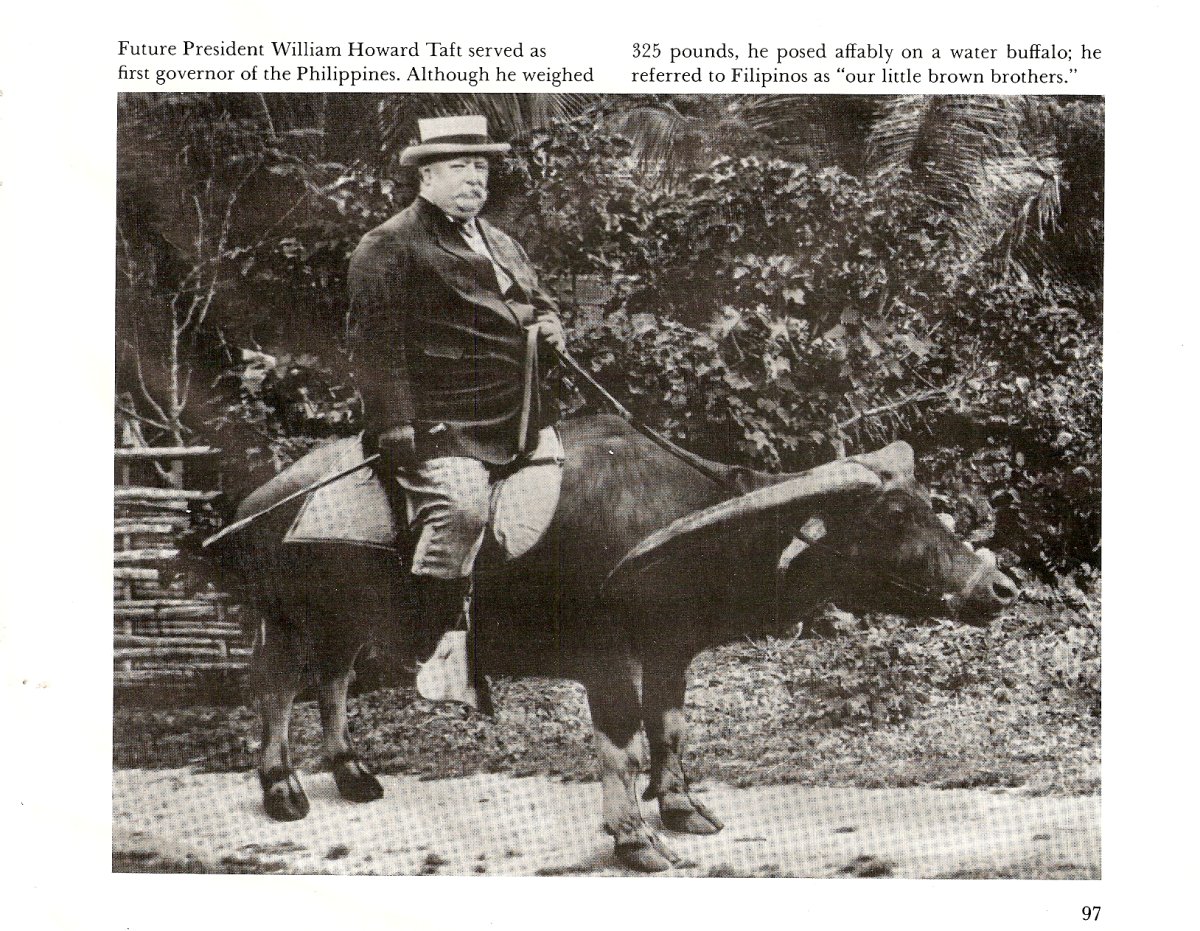
Colonialism

I’ll let this speak for itself.

This is a scan from a mid-90’s issue of Smithsonian Magazine. Afraid I do not have an exact citation. I should probably work on that.

Leave a comment

Filed under anthropology, history of science, mammals

Pictures from the field


Just a few pictures from my time fossil prospecting in NE Arizona. Ain’t that desert pretty? More on why the late Triassic and microstrat is cool later.


Leave a comment

Filed under field work, museums

The World’s Largest Dinosaurs (AMNH Part 1)

I spent the weekend in New York, and was able to spend a full day at the American Museum of Natural History. I’m a fan of New York, it’s just brimming with culture and has a neighborliness that one doesn’t see many other places. It had been much too long since I had been there, and even longer since I had been to AMNH. There’s a fair bit of brain dumping I’d like to accomplish on the topic of the museum, so I’ll probably  be posting thoughts on the  permanent paleobiology galleries and the mobile app fairly soon. For now, however, I really need to take a moment to gush about The World’s Largest Dinosaurs.

A typical dinosaur exhibit is based on the spectacle of the mounted skeletons. The curtain is raised on the strange and spectacularly large dinosaur bones, everybody oohs and ahhs, and that is all most/many visitors get out of it. Moreover, people leave (and probably came in with) the impression that paleontologists are people who dig up dinosaur bones and then put them on display. Such is not the case with The World’s Largest Dinosaurs, a new temporary exhibit at AMNH.

Life-size Mamenchisaurus. From http://gothamist.com.

The World’s Largest Dinosaurs is unique because it is not focused on skeletal mounts. There are no mounts to speak of in the gallery, and in fact, there are very few fossils on display at all. This exhibit provides a window into what vertebrate paleontologists do after they dig up the bones. Specifically, it is about sauropod biology. There has been a lot of really fascinating research into sauropod biology in the last 10-15 years, asking and answering questions such as, how did they carry all that weight? How did they reproduce? How did they get enough to eat? And of course, what’s the deal with those pneumatic bones? These questions are all explored in this exhibit.

A crappy image of an interactive display.

The layout of The World’s Largest Dinosaurs is very effective. Visitors are oriented in a narrow space that clearly lays out the topic at hand. Using skeletons of modern animals as comparisons, the questions that the very existence of sauropods raise are introduced to visitors (i.e., how did they get away with being so effin big?). Once the question is laid out, the exhibit opens up into a large space with many stations that address different research questions. The “ooh and ahh” factor is covered by a life-size model of a Mamenchisaurus in the center of the gallery, which doubles as a projection screen: animations of the circulatory, respritory and reproductive systems are displayed right on the model, accompanied by narration (see below).

Mamenchisaurus projection screen. From http://gothamist.com.

I was at AMNH on what turned out to be a very crowded day (no surprise, it was a rainy day on a holiday weekend), but I managed to get into the day’s earliest time slot, before it got too packed. When I was there at least, it was quiet enough for people to see the exhibits, and to get ahold of the interactives. As such, I observed people around me engaging with and understanding the material. Kids were working through the problems presented in the exhibit, despite the attempts of their parents to dumb down their experience and herd them through faster. The non-paleo people I were interested enough to read just about everything. Importantly, I heard no complaints that there weren’t many fossils on display. This is interesting, given how vocal some museum visitors can be about the exhibition of casts. Evidently, The World’s Largest Dinosaurs succeeded in entertaining and educating people without traditional mounted skeletons. I think this could potentially be a very big deal, and could cause museums to rethink the way paleontology exhibits are designed.

1 Comment

Filed under AMNH, dinosaurs, museums, reviews, science communication

Science, Art and Gregory Paul

Freelance paleoartist, researcher and author Gregory Paul has recently issued what amounts to a Cease and Desist to illustrators making use of his skeletal restorations of dinosaurs in paid projects. Paul argues that when other artists use his reconstructions,”often but not always the result is that other’s work possesses the ‘Greg Paul look”, and that this is a violation of copyright which has hindered his ability to secure commissions. Paul’s statement can be seen here, with  rebuttals here, and here. I would also encourage reading the thoughtful responses to the issue by artists and others in the paleontological community on the DML archives.

Torvosaurus by Gregory Paul. Image borrowed from http://www.kheper.net.

Gregory Paul is of course one of the most influential individuals working on dinosaurs today. His work, particularly in Predatory Dinosaurs of the World, is probably the most frequently cited inspiration in my generation of paleophiles (perhaps because it isn’t cool to say Jurassic Park anymore). In particular, his series of intensively researched skeletal restorations (representing virtually every dinosaur known from sufficient material) are ubiquitous resources for paleontologists, and are a beloved resource among professional and hobbyist dinosaur artists. Even when his reconstructions are not directly utilized, the white-bones-on-black-outline presentation and one-foot-raised posture (see above) created by Paul have become an unofficial standard.

Now Paul is telling us that playtime is over. He has stated in no uncertain terms that creating dinosaur art based on his reconstructions without his consent and compensation is a copyright violation. The skeletal restorations require extensive research, travel to collections, original photography, and cross-scaling (which I won’t pretend to understand). Moreover, Paul has stated that other artists need to start doing the same, personally researching every dinosaur illustrated from the ground up, rather than relying disproportionately on his work.

I think Paul makes many fair points. In particular, the practice of producing uncredited Gregory Paul knockoffs at low prices is problematic, and his financial concerns are valid. Paul is in a (as far as I know) unique position among individuals producing quality paleontological restorations in that he does not have a university or museum position; his art is his business and livelihood, a fact which should be respected.

Giraffatitan and Ceratosaurus by Gregory Paul. Image borrowed from http://sodinossauros.blogspot.com.

Nevertheless, although I have complete sympathy for Paul’s predicament, I do have to take issue with some of his arguments, explained below.

1. I am concerned that Paul has framed the argument by defining paleoart as  a commercial commodity, and not as art or science. Everybody needs to make a living and romanticized ideals only get you so far, but science (and art) is all about sharing. By performing and publishing research, a scientist is providing her community and society with knowledge. Scientists continue to make new discoveries and continue to illustrate the many fascinating facets of the universe around us. As I see it, that is the point of science, but when you say, “this information that I discovered is mine, and only I can use it and built on it,” science becomes a business enterprise. We’ve already seen some of the complications of copyrighting genes. Do we really want to extend that to other fields? Paul’s situation is a little different because he is individually responsible for the majority of useful dinosaur skeletal restorations available. The principle, however, should be the same: when research is published, the knowledge gained from it becomes a shared commodity that others can learn from and expand on.

2. In his second rebuttal, Paul addresses the “slippery slope” that if skeletal drawings are off limits, than perhaps published photographs, measurements or even museum mounts could be as well. Paul argues that this is irrelevant because no scientist would object to others making use of their work when conducting further research. This seems like a completely inadequate excuse, because it gives Paul’s work special status that he is not extending to other researchers. The question remains that if one person objects to other scientists making use on their research, than what happens if others follow suit? The entire scientific process would grind to a halt.

3. Paul argues that he was key in establishing the “new look” of dinosaurs in the 1970s and 80s. What he means by “new look”, however, is not clear. Paul’s artwork and research was absolutely central in the transformation of our understanding of dinosaurs from slow, dim-witted monsters to active and socially complex animals (the work of Robert Bakker, John Ostrom, and, undeniably, the artists involved in Jurassic Park were also important). However, if Paul is attempting to claim some ownership of the fact that dinosaurs were, on the whole, fleet-footed and active animals, that seems as unreasonable as James Watson and Francis Crick claiming ownership of the fact that DNA is a double helix (oh wait…). If however, Paul is merely referring to the many artists who’s dinosaur depictions end up with the same emaciated, two-dimensional, dynamic-but-lifeless look of Paul’s, than this is a valid criticism. I hope to find clarification before jumping to conclusions about Paul trying to copyright scientific facts that he happens to have popularized.

Quetzalcoatlus and Daspletosaurus by Gregory Paul. Image borrowed from http://blogevolved.blogspot.com.

Finally, I found what I interpreted to be an attempt to discourage up-and-coming paleoartists from joining the field to be extremely off-putting.

If you are thinking that gee wiz doing your own technical research and restorations sure sounds like a pain in the butt, or may be beyond your knowledge base, and you don’t want to risk doing inaccurate restorations or do not think paying me a fee is workable, then there is another alternative. Perhaps it is better if you do something else. I know, it’s lots of fun illustrating dinosaurs. But if you cannot produce high quality, original paleorestorations is it really a good idea to be in the business? If you for example like the Greg Paul look do you really want to be underbidding me? Does not make sense when you mull it over.

I read this as “this is my field, you will never be as good as me, so don’t even try.” Well gee wiz Mr. Paul, isn’t that a nice thing to say to the legions of fans and admirers whose image of you ranges from “brilliant” to “godly.” Yes, Paul’s work is excellent, and few can duplicate it’s quality, but it doesn’t seem especially constructive to actively discourage others from working in the field.

This is a difficult issue, particularly because the economic factors probably have to weigh more heavily than ideological ones. I hope Mr. Paul’s statement gets wide circulation, and continues to inspire debate on what we should value about science.

11 Comments

Filed under dinosaurs, opinion, paleoart

More Fun at the Carnegie Museum

I just have to share this picture, also from the Carnegie Museum of Natural History (see previous post). While the “Dinosaurs in their Time” gallery is fantastic, this has to be one of the worst museum displays I’ve ever seen, as well as one of the most fascinating.

Leave a comment

Filed under CMNH, collections, education, exhibits, museums, opinion, theropods