Tag Archives: museums

Their hands were everywhere: the Morrison Natural History Museum

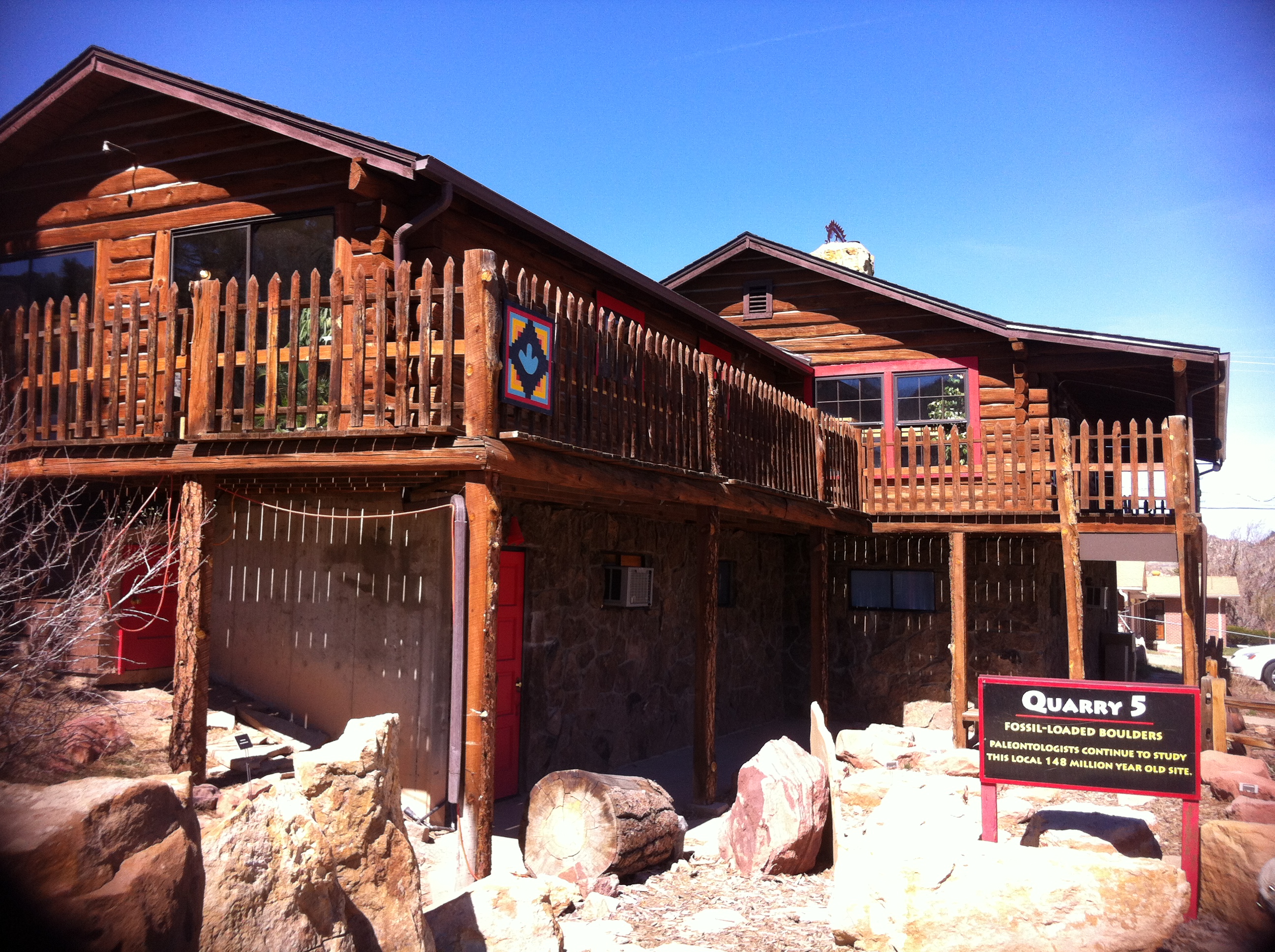
Outside the Morrison Natural History Museum. Doesn’t look like much…

Last week, I had a fantastic experience at the Morrison Natural History Museum, a little gem tucked away in the tiny town of Morrison, Colorado, on the north side of Denver. Since its opening in 1985, the Museum has served as a local educational resource covering the region’s plentiful paleontological resources. According to its website, the Museum is primarily a teaching institution. An affiliated foundation raises funds to bring local students on field trips, in support of the Museum’s mission to nurture “an understanding of and respect for the deep past.” In keeping with this teaching institution, gentle touching of all the fossils and casts is encouraged. This policy, and the design choices that go with it, are what truly set the Morrison Museum exhibits apart.

Paleontologically-inclined people are of course familiar with the Morrison Formation, the sequence of Upper Jurassic beds that extends across much of the western United States. The formation, which extends some 600,000 square miles, was named for the town of Morrison, where fossils were first discovered in 1877. The Morrison formation is probably best known as the epicenter of the “bone wars” between Othniel Charles Marsh and Edward Drinker Cope, who each led competing teams of fossil hunters across the region, attempting to best one another’s discoveries. Marsh and Cope were affiliated with the Peabody Museum in New Haven and the Academy of Natural Sciences in Philadelphia, respectively, so the fossils they collected all ended up back east. Indeed, while the Morrison region is among the most important and productive places for finding dinosaurs in the country, comparatively few of the treasures found there have remained in the region. The Morrison Natural History Museum therefore exists, at least in part, as a dedicated local repository and interpretative center for the region’s natural history.

The 1st floor Jurassic exhibit.

The Museum’s exhibit space is tiny, only 2000 square feet, but it is chock full of awesome. The exhibition consists of three main rooms, each one representing a geological time period. In the first floor Jurassic gallery, highlights include partial casts of Allosaurus and Apatosaurus,  the holotype of Stegosaurus, trackways attributed to Stegosaurus and a baby sauropod, and some original 19th century lithographic prints from Marsh’s monographs. For those interested in the history of paleontology, and of science in general, those prints are particularly fascinating.

Infant sauropod trackway with model of probable trackmaker.

Cretaceous and Cenozoic exhibits are found on the second floor. Most of the objects here are casts, most notably full skeletons of Platycarpus and Pteranodon, and skulls of Triceratops, Tylosaurus and a Columbian Mammoth. There are also a number of live animals on display, including a very charismatic monitor lizard thoughtfully placed next to its close relatives, the mosasaurs.

Original 19th century lithograph prints of fossil illustrations by Marsh’s team.

The signs and labels in the exhibit are noteworthy for their succinctness and clarity. It can be extremely challenging for writers of museum copy to provide appropriate depth of content without confusing, boring or alienating audiences with too much text. Overlong and unfocused labels are particularly common in small museums, where most of the copy is written by a single curator bent on sharing everything he or she knows about a topic. On the other end of the spectrum, larger, committee-designed exhibit labels can be too brief, too simple and too narrowly focused on the exhibit’s educational goals to be of much use to anybody. Happily, the Morrison Museum avoids both of these pitfalls. Labels are simple and attractive, but still informative and up-to-date. I was rather impressed by the economical way in which they addressed the most important topics in paleontology.

An example of a brief but content-rich label.

Obviously, the fossils and other objects on display are fantastic, and many, like the trackways, are quite unique. However, as mentioned above, one of the most remarkable aspects of the Museum is that touching of all the fossils and casts is encouraged.  Few objects are behind glass; everything is out in the open for people to touch and examine up close. There are many in the museum field who would be horrified by such an arrangement. When putting objects on exhibit, it is a given that they are considered consumable. No matter what precautions are taken, anything put on display will inevitably suffer damage. Of course, the flip side is that exhibit designers want to allow visitors to get as close to the objects as possible. The Morrison Museum has taken this to the extreme. The fossils, many one them irreplaceable holotype specimens, are fully exposed to accidental or intentional abuse by visitors. This is a very bold move on the part of the Museum, and it makes the point that the knowledge visitors can gain from full access to objects is more valuable that the objects themselves.

I won’t lie, my initial reaction upon seeing this exhibit layout was open-mouthed horror. But after spending some time in the space, I think the Morrison Museum may be on to something. This is a great way to tap into the multiple intelligences of visitors. Obviously, this system only works because the Museum’s attendance is on the low side (I would hate to see what the summer hordes at NMNH or AMNH would do if they were allowed to run wild among the mounts),  but given these circumstances I think the open-access approach is a great educational tool.

Overall, I was very pleased with my visit to the Morrison Museum. The volunteer staff knowledgable, passionate and helpful, the exhibits were excellent, and the handful of other visitors passing through (mostly young children) seemed genuinely engaged. The Museum is well worth a stop for anyone in the Denver area, and may well be a worthwhile model for other museums to follow.

3 Comments

Filed under dinosaurs, mammals, museums, paleoart, reptiles, reviews, science communication

Part II: Why Science Blogs are Neat

Returning to the shameless term paper recycling extravaganza, this post will cover the recent success of science bloggers. This discussion is based pretty much entirely on the blogs I read, which are mostly vert paleo-related. I can only assume that molecular biologists, physicists and those poor, brave souls in paleobotany have similar online communities. Once again, thanks to Matt Wedel and Brian Switek for their thoughts, experience and quotability.

Of the 112 million blogs on the internet, science blogs represent a small but growing subset of some 1,200 active contributors. Describing his reasons for co-founding the paleontology blog Sauropod Vertebrae Picture of the Week, Mathew Wedel admits, “if we had a goal at first, it was just to talk about how cool sauropod vertebrae are” (Wedel 2011). However, science blogs have since evolved into a valuable resource for both scientists and laypeople. First, science blogs have the advantage of being written by practicing scientists and other experts in their fields, and therefore remove the distortive barrier typically imposed by the media. As such, they provide a unique opportunity for scientists to communicate directly to interested lay people, and to hear what their audience has to say. Blogs can create public awareness of research or scientific concepts deemed irrelevant by the media, and can rapidly provide commentary or corrections to more widely dispersed reports. Science blogs have also proved invaluable for fostering networks of academic peers, but my concern here is with popularization.

Science blogs also embrace a pluralistic conception of academia that is typically obscured by mainstream media. Whereas the media presents scientists as an invariably unified professional entity, blogs reveal the specific positions and interests of individual scientists, humanizing the discipline in the process. SV-POW is once again a prime example. Posts like this one  reveal the little-publicized controversy over for-profit versus open-access academic journals. The comments generated indicate disagreement, or at least varying levels of apathy, within the scientific community. Similarly, Brian Switek’s recent post on Hell Creek ceratopsian diversity emphasizes the normalcy of scientific debate, combating the widespread assumption that any published paper is definitive truth. The public benefits from these conversations because it provides exposure to important issues in knowledge making that are normally not accessible.

Most importantly, by providing audiences with a direct link to working scientists and accounts of their everyday activities, science blogs demythologize the process of creating knowledge. As Wedel explains, blogs are well positioned to integrate the public into the scientific process:

“If we have one overriding goal now, it’s to break down the artificial walls between interested people, regardless of training or background. And by that I mean the scientific process, what we call making science, and the communication of science in both academic and popular settings. A century ago most science was citizen science. The rise of national funding agencies like NSF and NIH has allowed a lot more professional scientists to do science, but along the way we lost something, which is the idea that any curious, disciplined person can contribute to human knowledge. We firmly believe in that, and we’re doing what we can to bring it back.” (Wedel 2011)

This is a critical point because, as discussed in the previous post, the current standards for science communication do not encourage public participation. Information about science is fed to audiences in a one-way exchange. Science blogs break this mold by encouraging a productive dialogue between scientists and laypeople. They encourage the public to actively contribute to the scientific process, and provide a forum for this knowledge to be shared.

Science blogs are still a young media form, and their potential for communication remains largely untested. Nevertheless, the field is growing rapidly, and scientists who blog are gaining much more respect in the academic community (Switek 2011). While there was once skepticism about quality control in the blog medium, increasing numbers of scientists are entering the fray, and it is now reasonable to foresee most labs including somebody blogging about their work by default. Currently, the majority of the public, even those with strong interest in science, are unaware that this forum exists. Science bloggers, however, are encouraged by their increasing visibility, and some are optimistic that blogs will change the way science is communicated to the public.

Selected References

Batts, Shelly A., Nicholas J. Anthis and Tara C. Smith. “Advancing Science through Conversations: Bridging the Gap between Blogs and the Academy.” PLoS Biology. 6.9 (2008): 1837-1841.

Switek, Brian. Email Interview. 19 Oct 2011.

Wilkins, John S. “The Roles, Reasons and Restrictions of Science Blogs.” Trends in Ecology and Evolution. 23.8 (2008): 411-413.

Wedel, Mathew. Email Interview. 24 Oct 2011.

Leave a comment

Filed under museums, science communication

The World’s Largest Dinosaurs (AMNH Part 1)

I spent the weekend in New York, and was able to spend a full day at the American Museum of Natural History. I’m a fan of New York, it’s just brimming with culture and has a neighborliness that one doesn’t see many other places. It had been much too long since I had been there, and even longer since I had been to AMNH. There’s a fair bit of brain dumping I’d like to accomplish on the topic of the museum, so I’ll probably  be posting thoughts on the  permanent paleobiology galleries and the mobile app fairly soon. For now, however, I really need to take a moment to gush about The World’s Largest Dinosaurs.

A typical dinosaur exhibit is based on the spectacle of the mounted skeletons. The curtain is raised on the strange and spectacularly large dinosaur bones, everybody oohs and ahhs, and that is all most/many visitors get out of it. Moreover, people leave (and probably came in with) the impression that paleontologists are people who dig up dinosaur bones and then put them on display. Such is not the case with The World’s Largest Dinosaurs, a new temporary exhibit at AMNH.

Life-size Mamenchisaurus. From http://gothamist.com.

The World’s Largest Dinosaurs is unique because it is not focused on skeletal mounts. There are no mounts to speak of in the gallery, and in fact, there are very few fossils on display at all. This exhibit provides a window into what vertebrate paleontologists do after they dig up the bones. Specifically, it is about sauropod biology. There has been a lot of really fascinating research into sauropod biology in the last 10-15 years, asking and answering questions such as, how did they carry all that weight? How did they reproduce? How did they get enough to eat? And of course, what’s the deal with those pneumatic bones? These questions are all explored in this exhibit.

A crappy image of an interactive display.

The layout of The World’s Largest Dinosaurs is very effective. Visitors are oriented in a narrow space that clearly lays out the topic at hand. Using skeletons of modern animals as comparisons, the questions that the very existence of sauropods raise are introduced to visitors (i.e., how did they get away with being so effin big?). Once the question is laid out, the exhibit opens up into a large space with many stations that address different research questions. The “ooh and ahh” factor is covered by a life-size model of a Mamenchisaurus in the center of the gallery, which doubles as a projection screen: animations of the circulatory, respritory and reproductive systems are displayed right on the model, accompanied by narration (see below).

Mamenchisaurus projection screen. From http://gothamist.com.

I was at AMNH on what turned out to be a very crowded day (no surprise, it was a rainy day on a holiday weekend), but I managed to get into the day’s earliest time slot, before it got too packed. When I was there at least, it was quiet enough for people to see the exhibits, and to get ahold of the interactives. As such, I observed people around me engaging with and understanding the material. Kids were working through the problems presented in the exhibit, despite the attempts of their parents to dumb down their experience and herd them through faster. The non-paleo people I were interested enough to read just about everything. Importantly, I heard no complaints that there weren’t many fossils on display. This is interesting, given how vocal some museum visitors can be about the exhibition of casts. Evidently, The World’s Largest Dinosaurs succeeded in entertaining and educating people without traditional mounted skeletons. I think this could potentially be a very big deal, and could cause museums to rethink the way paleontology exhibits are designed.

1 Comment

Filed under AMNH, dinosaurs, museums, reviews, science communication

More Fun at the Carnegie Museum

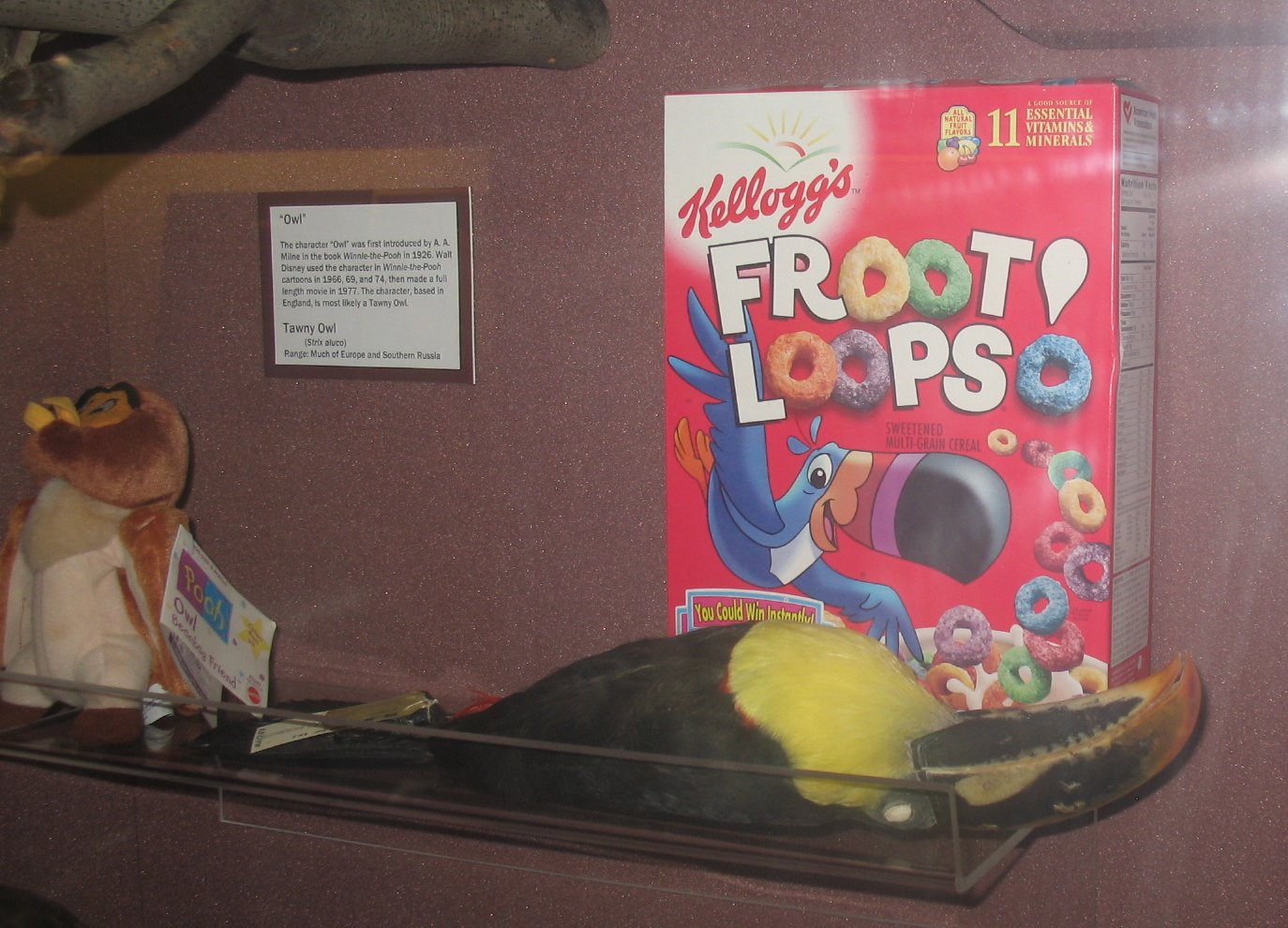
I just have to share this picture, also from the Carnegie Museum of Natural History (see previous post). While the “Dinosaurs in their Time” gallery is fantastic, this has to be one of the worst museum displays I’ve ever seen, as well as one of the most fascinating.

Leave a comment

Filed under CMNH, collections, education, exhibits, museums, opinion, theropods