Over the last few years, I’ve gradually been assembling what I imaginatively call the Big Spreadsheet. It’s a record of every single vertebrate fossil on display at a number of natural history museums, mostly in the United States (so far I haven’t been bold enough to include invertebrates or plants). The Big Spreadsheet tracks basic “tombstone” information about each fossil—what it is, where it was found, how old it is, and so forth. Where possible, I’m also tracking collectors, preparators, original display dates, remounts, and trades with other institutions, among other things.
The Big Spreadsheet differs from things like the Paleobiology Database in that I’m specifically focused on what is or has been on public display. Museums only display a fraction of their collections, and the decisions concerning what is worth displaying are made by people with varying preferences and goals. Perhaps the objective is to showcase what’s unique or unusual in the collection. Or perhaps it’s to comprehensively tell the story of evolution. Maybe there’s a focus on local fossils, fossils collected by specific people, or fossils that represent species that visitors would (or wouldn’t) recognize. There’s no one right way to make a fossil exhibit, but the choices that individuals make nevertheless influence how audiences understand the history of life on Earth and how we come to know about it.
My hope is that the Big Spreadsheet will eventually be complete enough that it can be used to tease out quantitative answers to the questions that vex those of us that are interested in how the public thinks about prehistory. For example, maybe it could illustrate which taxa are over or under-represented in public displays, or if narratives are skewed toward certain localities. Maybe we could see the influence certain individuals (say, the Sternbergs) have had on the public’s view of paleontology. Or maybe we could track the degree to which western museums exploit specimens extracted from colonized lands.
I don’t think the Big Spreadsheet is ready for any of those questions yet. But it is interesting to take a peek at how certain museums measure up to one another with their display collections. The charts below divvy up the data from some of the biggest natural history museums: the American Museum of Natural History (AMNH), the National Museum of Natural History (NMNH), the Field Museum of Natural History (FMNH), the Royal Ontario Museum (ROM), and the Natural History Museum in London (NHM).
Here we can see the overall number of vertebrate fossils on display at each of these museums, and how they sort out by type. One obvious conclusion is that AMNH has an outrageously high number of fossils on display compared to its peers. Note that the difference between a mounted skeleton and an in situ skeleton is sometimes a judgement call (many skeletons displayed in relief are not fully removed from their matrix, but have been partially reposed or have missing elements added).
This chart shows how many fossils on display at each museum are “originals” versus replicas (I’ve counted anything that includes at least some real material as original). These five museums mostly display original fossils, although the ratio is highest at FMNH and lowest at NHM and NMNH. Fish fossils really throw the score, however—these numbers would look different if we were only considering big, charismatic tetrapods.
This chart compares the percentage of fossils on display from each era of the Phanerozoic (the last 541 million years). The Paleozoic gets shorted across the board—it represents about 50% of the Phanerozoic but the percentage of Paleozoic vertebrate fossils on display never tops 20%. Meanwhile, the Cenozoic (12% of the Phanerozoic) seems quite over-represented—that is, if temporal proportionality is ever a goal in creating these displays.
Here, we compare the percentage of fossils on display by region. Any passing familiarity with the history of science will make the focus on North America and Europe rather unsurprising.
This last chart breaks down the percentages by animal type. I’m sure the categories will make some readers squirm, but I’m going for culturally meaningful categories here, not evolutionary meaningful ones. It strikes me that just looking at the numbers of fossils in each category doesn’t necessarily capture the impact on visitors. For instance, dinosaur and mammal skeletons tend to take up a lot more space than fish. I wonder if there’s a way to control for square footage of gallery space and come up with an “impression score” of some kind for each of these groups.
If anyone’s interested in collaborating on the Big Spreadsheet, please give me a shout! I’m particularly keen on connecting with folks with a better statistical background, as well as anyone interested in tallying up fossils on display in the western United States and Canada.
Gryposaurus makes an impression amidst other dinosaurs in Past Worlds, the NHMU paleontology exhibition. Photo by the author.
I visited the Natural History Museum of Utah (NHMU) earlier this week, and I need to take a moment to applaud its exceptionally beautiful and well-conceived paleontology hall.
NHMU is part of the University of Utah. It resided in its original home on the Salt Lake City campus from 1969 to 2011, when the museum relocated to a new, purpose-built facility in the foothills near Red Butte Canyon. Several design firms contributed to the Rio Tinto Center (the name for the building in which the museum resides), but the permanent exhibitions—including the paleontology hall—are the work of good ol’ Ralph Appelbaum Associates (RAA). For the unfamiliar, RAA is a dominant player in the field of museum design that is often associated with projects of profound cultural and historic significance, like the US Holocaust Memorial Museum and the National Museum of African American History and Culture. RAA has fewer natural history projects in its lengthy catalog of commissions. Near as I can tell, their only other paleontology-centric project was the fourth floor fossil halls at AMNH. I’m not a huge fan of many of the design choices made in those halls, so it’s interesting to see what 20 years and a different client can mean.
Large windows and frequent access to the outdoors are standout features of the NHMU building. Photo by the author.
The 44,000 square feet of permanent exhibitions at NHMU flow linearly across the building’s five floors, which visitors can explore from bottom to top or top to bottom. Conceived as a single experience, the exhibitions don’t feel like discreet units—instead, they flow seamlessly into one another as visitors climb or descend along switchbacking paths through the building. I want to call attention to the design of the museum as a whole because it manages to be both stylish and meaningful. Unlike some other museums with bold architecture (looking at you, ROM), the building manages to make a visual statement without hindering visitor experience or usable exhibit space.
Past Worlds as seen from the Jurassic. Photo by the author.
The paleontology hall—entitled Past Worlds—occupies about half of the total exhibit space, and fittingly it is the first area visitors encounter if they choose to start at the bottom. The hall is open and spacious, but visitors cannot access the entire exhibition at once. Instead, they follow a zigzagging, switchbacking path, with new sight lines opening up as they go. Monumental elements—namely, the dinosaur skeletons, wall murals, and immersive dioramas—are encountered multiple times from different perspectives.
One example is a life-sized diorama of the lake bottom where fossils of the Green River Formation were preserved. Visitors first see this tableau from an “underwater” perspective. Then, some time later, visitors encounter this same scene again, now looking down from the “surface.” Elsewhere, dinosaur skeletons that can be seen from different vantages are interpreted in multiple ways, depending on what else visitors can currently see and compare them to. This series of reveals and payoffs reminds me of the carefully constructed experiential narratives in theme parks, but precisely applied to help visitors learn about ecology and geology. It’s really cool.
Uintatherium and Patriofelis foreground multiple layers of mounted skeletons. Photo by the author.
The hall’s color palate is a mix of earth tones and grayscale. Some of this comes from the mounted skeletons, which range from the charcoal gray of Morrison fossils on one end of the space to brown and beige Cretaceous and Cenozoic fossils on the other. Four giant, vertically oriented murals also contribute to the look and feel of the space. Corresponding to the Jurassic, Cretaceous, Paleogene, and Quaternary areas of the hall, these black-and-white murals focus on the flora and landscapes of these eras—you have to look closely to find the animals. I couldn’t find a label identifying the artist, but the murals’ dark foregrounds and bright backgrounds remind me of the original King Kong (or if you want to be fancy, the engravings of Gustav Doré).
Local tyrants Lythronax and Teratophoneus get the most attention, but an obligatory cast of the Wankel/Nation’s T. rex is also present. Photo by the author.
As suggested by the murals, the overall space is arranged chronologically. However, the switchbacking path through the exhibition means that visitors start in the recent past and move back to the Jurassic, before reversing direction and moving forward in time. While a time axis is present, Past Worlds is less about presenting a comprehensive narrative of the history of life and more about zeroing in on a few particular ecosystems that once existed in Utah. These include the Morrison Formation of the Jurassic, the Cedar Mountain, Kaiparowits, and North Horn Formations of the Cretaceous, the Green River Formation of the Paleogene, and the recent Ice Ages. These deep dives into specific habitat groups are relatable, digestible, and easy to contrast with one another and the modern world—indeed, I have been not-so-subtly trying to coax the paleontology exhibits at my own institution in the same direction.
The mounted skeletons have fared well, considering that they’re all in open air and easy to reach. Photo by the author.
Past Worlds features hundreds of fossil specimens, nearly all from Utah or adjacent states. There are more than 40 mounted skeletons, many of which were firsts for me—I’ve never seen a mounted Marshosaurus, Akainacephalus, or Patriofelis before! Notably, all but one of the standing mounts (the Gryposaurus) are casts. This is not due to a lack of material—most of the mounts are based on fossils from NHMU’s collection. Clearly, somebody made the decision to draw a firm line between the real specimens and the dynamic reconstructions—a line that other museums have traditionally blurred. I think it’s fair for some visitors to be disappointed by this, but using casts allows for some lively and energetic displays. The group of Allosaurus swarming a Barosaurus mired in mud is particularly evocative (and incidentally, the way the sauropod’s tail sweeps under the path and curls overhead is so cool). Besides, there are plenty of real fossils to see, many of which are very strikingly displayed. I was impressed by an in situ hadrosaur skeleton under the floor, which seamlessly merges with a vertical case of Kaiparowits fossils that appears to be rising out of the ground.
I’m not sure how easy this is for scientists to access, but it sure looks neat. Photo by the author.
Individual labels are commendably brief, and tie each fossil to the larger stories being told. I was pleasantly surprised that the ID lists the discoverer and the preparator of each fossil, when known. Most labels also include a skeletal diagram showing where individual bones fit into the larger skeleton, but these were frustratingly small and almost impossible to make out (a problem shared with similar graphics at NMNH).
There are plenty of touchable displays, but media is used sparingly. A highlight is a four-part program in which scientists propose different possible causes for the Cleveland-Lloyd assemblage of Jurassic fossils. Visitors are then prompted to vote on which hypothesis is most convincing. The program is several minutes long, but visitors appeared to be staying for the entire thing, and causing a traffic bottleneck in the process.
As you can assuredly tell, I was extremely impressed by NHMU. Meaningful design and a thoughtful approach to visitor experience combine with accessible interpretation and some extraordinary fossils to create a truly outstanding example of a natural history exhibition.
Last year, I posted a quick and dirty table showing when each of the major display fossils at the Field Museum was first exhibited. This is a quick and dirty followup, based on a suggestion Lukas Rieppel made at a convening of historians of paleontology last week.
These maps illustrate where the Field Museum’s star fossils were collected. I’ve separated them by time chunks to make them easier to look at. Note that these time ranges cover year of first display, which is usually but not necessarily close to the year of collection or acquisition. Lines connect the fossils’ origins back to Chicago. Gray lines indicate fossils collected by Field Museum staff. Red lines indicate fossils that were purchased, traded for, or inherited (e.g. the transfer of the University of Chicago geology museum’s collections to the Field after its 1948 closure). Pink lines represent casts—in most cases, Field Museum scientists were involved in studying the specimens, but the originals are at other institutions.
Illustrations by Julián Bayona, Tracy Heath, Jagged Fang Designs, T. Michael Keesey, Michael Taylor, and Steven Traver, via phylopic.org.
In this first map, we see fossils coming to Chicago from two directions. There are purchased composite mounts of well-known mammals from Ice Age Europe—the Irish elk Megaloceros and the cave bear Ursus speleaus. Then there are the fossils collected by Elmer Riggs in the great plains and Rocky Mountain regions of the United States. Upon being hired in 1898, Riggs spent his first few field seasons in areas that were already known to yield impressive, display-caliber skeletons. He collected brontotheres in the White River badlands of South Dakota, then moved on to sauropod dinosaurs in the Morrison Formation of western Colorado.
Illustrations by Julián Bayona, William Gearty, Scott Hartman, T. Michael Keesey, Thomas W. LaBarge, Steven Traver, and Michael Tripoli, via phylopic.org.
In this map, we start to see the results of the Captain Marshall Field Expeditions to Argentina and Bolivia (1923–1927) on display. South American fossil mammals would become a specialty of Riggs and the Field Museum. The museum also collected early Paleogene fossils from Colorado, including the pantodont Barylambda. They traded with other museums for famous or important species to round out the exhibits—for example, a bison from the La Brea Tar Pits and an “American zebra” from the Hagerman quarry in Idaho.
Illustrations by Julián Bayona, Dmitry Bogdanov, Matt Celeskey, Andrew Farke, FunkMonk, T. Michael Keesey, Roberto Días Sibaja, and Antoine Verriére, via phylopic.org.
The collections inherited from the University of Chicago make a big impact on the midcentury map. All of the Field Museum’s display skeletons of Permian animals from Texas and South Africa were part of that acquisition. Meanwhile, the board of trustees arranged to purchase a Canadian Daspletosaurus from the American Museum of Natural History, which was displayed alongside a Lambeosaurus collected by Riggs and company in 1922.
With the exception of a new cast skull for Apatosaurus, no significant changes or additions were made to the fossil halls between 1961 and the early 1990s.
Illustrations by dannj, Tasman Dixon, Ivan Iofrida, Scott Hartman, Tracy Heath, T. Michael Keesey, Matt Martyniuk, Mathew Wedel, and Emily Willoughby, via phylopic.org.
The last 30 years have seen the greatest range of origin points for fossils on display: everything from Arctodus, collected just a couple hundred miles away in Indiana to Cryolophosaurus from Antarctica. This map also shows a near-total change in focus from Cenozoic and Permian animals to Mesozoic dinosaurs. And while earlier dinosaur displays were mostly from North America, there has been particular interest in this period in dinosaurs from the global south.
I’m going to stop there and leave the rest to you, dear reader. Beyond my brief notes here, what other trends do these maps suggest? What connections to global or local political or cultural trends do you see? Are there other museums where you know or suspect a different pattern? Feel free to comment!
Tylosaurus and Archelon skeletons soar overhead in the Peabody Museum’s brand-new lobby. Photo by the author.
For decades, the Yale Peabody Museum of Natural History (YPM) was a museum frozen in time, with no comprehensive updates to its paleontology halls since the 1950s. Then, around 2010, serious discussions began about overhauling the dinosaur and fossil mammal exhibits. Fundraising started in 2015, and in 2018, the museum announced that it had received a $160 million donation—enough to renovate not just the paleontology halls, but the entire museum. YPM closed its doors at the beginning of 2020, and on March 26 of this year, it reopened to the public once again.
Technically, this is a soft opening. The third floor—which houses the museum’s classic taxidermy dioramas—has not yet opened, and a scattering of cases around the museum are empty as of this writing. Still, there is plenty to see: during the renovation, YPM gained a new, multi-story lobby (connecting the museum to the academic building next door), as well as new collections facilities, classrooms, and 50% more exhibit space. And most importantly, the paleontology halls are open and just about complete.
A Geosternbergia cast demonstrates its quad-launching technique in the museum’s entryway. Photo by the author.
The remaking of the YPM exhibitions was a collaborative effort between internal staff (led by Kailen Rogers, Chris Norris, Susan Butts, Jacques Gauthier, and others) and two outside design firms—Centerbrook Architects and Planners provided the high-level design of museum and surrounding area , while Reich + Petch worked on specific exhibit elements and graphic design.
I spent a few hours at YPM last week, and the new halls were absolutely worth the wait. What I found most striking is that the paleontology halls feel at once new and familiar. The dimensions of the dinosaur and fossil mammal halls (officially, the Burke Hall of Dinosaurs and A World of Change) remain identical, and they are still anchored by Rudolph Zallinger’s magnificent fresco murals—The Age of Reptiles and The Age of Mammals. Charles Beecher’s relief mounted Edmontosaurus was left in place, and the overall layout and flow of the spaces have not been radically altered. On the other hand, white walls and new windows and skylights have transformed what had been fairly gloomy spaces into bright, open expanses. There are dozens of new specimens on display, in addition to plenty of returning ones. And a third gallery has been added to the paleontology wing: called The Human Footprint, this space explores how humans have interacted with the natural world over the past hundred thousand years or so.
The remounted Stegosaurus looks back toward Zallinger’s Age of Reptiles. Photo by the author.
The primary themes of the paleontology exhibits are displayed at the entrance to Burke Hall: “life affects the environment and the environment affects life” and “extinctions change everything.” Much like Deep Time at the National Museum of Natural History, YPM’s exhibits emphasize that the evolution of life on Earth did not occur in a vacuum, but as part of a continuously changing global system. This narrative does have a time axis—visitors follow along from the Edicaran to the present day—but the precise devisions of geologic time are often de-emphasized in favor of the broad environmental transitions that triggered evolutionary innovations.
This presentation of the evolution of life compliments the existing Zallinger murals. Painted between 1942 and 1967, these are among the most iconic images of prehistoric life ever created. Although some of the animal reconstructions are outdated, Zallinger was in other ways ahead of his time. Rather than giving the geologic periods hard borders, he artfully wove the sections together so that each one fades imperceptibly into the next. The viewer can see that the flora, fauna, and climate are changing over time, but it’s a gradient, not a ladder. Incidentally, it was not a given that the Zallinger murals would be preserved. Great credit is due to the YPM team for not only retaining the murals, but utilizing them as a key part of the new exhibition’s narrative.
Brontosaurus reclaims its place as the centerpiece of the dinosaur hall. Photo by the author.
One clear advantage of a wall-to-wall renovation is that the exhibits are much better organized than before. In the old dinosaur hall, visitors encountered an essentially random succession of displays: from modern sea turtles to Triassic trees and from a Cretaceous mosasaur to a Quaternary mastodon. Now, the displays run chronologically, and more or less in sync with the Zallinger mural. Visitors can follow the history of life in the sea on the west side of the hall, and the history of terrestrial life on the east side. I also suspect that placing Brontosaurus and a brontothere as central anchors in their respective halls was a deliberate choice.
A very large Megacerops stands on a central platform in the reimagined Cenozoic hall. Photo by the author.
Research Casting International remounted several historic skeletons with characteristic artistry and skill. I will have a separate article about the mounted skeletons sometime soon, but the remounts are Brontosaurus, Stegosaurus, Deinonychus, Archelon, Moropus, Megaloceros, a mastodon, and a dodo. Brand new mounted skeletons include Tylosaurus, Poposaurus, and a Geosternbergia family of four (plus a few secret mounts outside the neighboring Marsh Auditorium). At least fifteen existing mounts have returned. As Postdoctoral Fellow Advait Jukar explained to me, the goal for the mounted skeletons was to portray “living, breathing animals, rather than looking like they’re posing for a portrait.” For example, the aggressive rutting posture of the Irish elk was directly inspired by the classic bull moose diorama at the American Museum of Natural History.
Mounted skeletons aside, there are some really extraordinary fossils in these halls. Some of the specimens that caught my eye include a geode bird egg with an embryonic skeleton inside, the bizzare Arsinotherium from Egypt’s Fayum region, a Nothrotheriops with patches of hair and skin, and the early Jurassic dinosaurs Podokosaurus and Anchisaurus.
Remounted Irish elk and mastodon in the Human Footprint gallery. Photo by the author.
While many of the fossils speak for themselves, the halls are also populated with several new models and replications, which imbue the extinct species on display with life and personality. The towering Gastornis created by Blue Rhino Studio is the clear standout—I like that it looks like its gazing longingly back toward the Mesozoic dinosaurs in the adjacent hall. Other highlights include a slab of Edicaran weirdos and the mammal Rapenomamus attacking a Psittacosaurus at the feet of Brontosaurus (I would have liked to see a baby sauropod as the prey, but maybe that would be too much for squeamish visitors).
Meanwhile, the YPM team made some selective forays into the realm of media and digital interactives. Most (possibly all?) of these take the form of slideshows on large touchscreens. These are an effective way to condense a lot of information into a limited space, and allow for some visitor choice in what topics interest them. I thought an interactive where visitors could explore the propagation of horses, humans, and tomatoes around the world was particularly well done.
Gastornis is a highlight of the Cenozoic Hall. Photo by the author.
I would expect an institution like Yale to be protective of its legacy and history, so I was surprised to find a prominently placed rebuke of superstar 19th century paleontologist O.C. Marsh in the dinosaur hall. As Advait described it, this is an “and” statement: Marsh was instrumental in shaping our understanding of prehistory and evolution and he collected from Native land without permission, looted graves, and was academically dishonest.
The call-out of Marsh wasn’t the only unexpectedly progressive element in the new exhibits. A brontothere fossil is interpreted with a poem by a trans teenager, which criticizes imperialistic scientists for imposing their way of knowing upon the world. Elsewhere, a display of fossils from the Santa Fe Formation in Argentina is accompanied by printed labels solely in Spanish—perhaps a statement about whose voices should be heard when interpreting the natural heritage of a given region. Natural History Conservator Mariana di Giacomo told me that these displays are part of an effort to include a wider range of perspectives in YPM exhibits. Other examples include musings from artist Ray Troll on being a “highly motivated fish” and psychologist Eli Lobowitz’s take on why kids love dinosaurs.
Deinonychus and Poposaurus are the largest saurian carnivores on display. Photo by the author.
My critiques of the new paleontology halls are pretty limited. There are more typos and inconsistencies in the labels than there ought to be, particularly in the age ranges given for certain specimens. I overheard multiple visitors concluding that the Edmontosaurus skeleton was a T. rex, and I suspect an image of Tyrannosaurus placed in front of the Edmontosaurus is to blame. In one area, the writer uses terms like “stem reptile,” “early stem land egglayer,” and “stem amniote” as common names for various species. Even with some specialized knowledge I don’t understand what distinction they were trying to make, and I can’t imagine those terms are helpful for most visitors.
The most pervasive issue is the inconsistent quality of 2-D life reconstructions used on graphics throughout the halls. With a few exceptions, it appears that the exhibition’s creators used whatever images were available, including stock renders and illustrations pulled from Wikipedia. For many people (especially children) unaccustomed to interpreting bones, life reconstructions can be more meaningful than the actual fossils. It’s worth budgeting for original, quality artwork whenever possible. Put that $41 billion Yale endowment to use!
A graphic with a particularly uninspired illustration from a stock image provider. Photo by the author.
Speaking of Yale’s effectively bottomless pockets, the best news about the new YPM is that it’s 100% free. This is an excellent precedent to set: there’s no better way to welcome a broader audience and remove barriers from engagement with science than doing away with admission fees. I hope other museums follow YPM’s lead on this front and work to free themselves from reliance on admission income.
So, I have a confession to make. In January of this year, I started working on an in-depth article about the Hall of Human Origins at the National Museum of Natural History. It was going to cover everything: John Gurche’s sculptures, the design and narrative of the gallery, the challenges of opening an exhibition about human evolution on the National Mall, and even the misguided accusations that the hall contains climate change denial. It’s a great story, and I really want to write it up. So I’m giving myself a public ultimatum: it has to be done before the end of the year.
In the meantime, I’d like to share something I whipped up for social media (I’m primarily on BlueSky these days, if anyone’s looking for me). The annotated photos below show the year that each of these fossil mounts at the Field Museum first went on display. A complete list of currently-displayed mounts and their debut years is at the end of the post.
“Ungulate row” in the current Evolving Planet exhibition. Photo by John Weinstein, modified from original.
I find this interesting for a number of reasons. For one thing, it’s a reminder of the age of many museum exhibits. Multiple generations have come to see these fossils—a few of them predate the current Field Museum building by decades. But these dates are also a succinct recounting of the history of vertebrate paleontology at the Field. The oldest mounts—the mastodon and Irish elk—were leftovers from the Field Columbian Exposition, and presumably were purchased from the Ward’s Natural Science catalog.
The Ice Age menagerie in Evolving Planet. Photo by the author.
After that, a couple of dinosaurs join the fray. These were the result of Elmer Riggs’ first expeditions for the Field Museum. He was hired specifically to collect dinosaurs that could match the displays at AMNH and elsewhere, after all. Riggs’ real interest was in mammals, however, and by the 1910s we see that his department is exclusively mounting North American fossil mammals for display. In 1925, we begin to see the results of the Captain Marshall Field Expeditions (1923–1927) on display, as South American animals like Glyptodon and Aglaocetus join the exhibits.
Around 1948, the University of Chicago’s Museum of Geology closed down, and turned its collections over to the Field Museum. The University of Chicago had a particularly strong collection of Permian animals from Texas and South Africa, and there was an immediate flurry of activity to get those on display at the Field. A few of the University specimens went on exhibit as-is, but many (including Bradysaurus and Aulacephalodon) were disassembled and remounted by Orville Gilpin and others.
The dinosaur hall in Evolving Planet. Photo by the author.
After 1960, there was an extremely long period in which no new fossil mounts were added to the exhibits. The fossil halls languished without update until the end of the 20th century, with the opening of Life Over Time. Up until that point, the Field Museum had very few dinosaurs on display, but Life Over Time made dinosaurs its centerpiece. A growing popular interest in dinosaurs during the late 1980s, not to mention a certain 1993 movie, was probably the cause. Since that time, nearly all the new additions to the fossil exhibits have been dinosaurs. And with the exception of Arctodus in 2006, there have been no additions to the ranks of mounted mammal skeletons since the doldrums began in 1960.
That’s it for now, but let’s see about that Human Origins article before the end of the year!
O. megalodon jaws a the American Museum of Natural History. Photo by the author.
You’ve probably seen the gaping jaws of Otodus megalodon (or “megalodon,” as it is colloquially known) in a natural history museum. Perhaps they’re set on the ground where they can frame a group photo, or maybe they’re suspended from the ceiling so you can imagine the rest of the shark rocketing toward you. In any case, every one of these O. megalodon jaws is a sculpted model with real (or cast) teeth embedded in it. Fossil jaws like this have never been found. Nor do scientists expect to ever find intact O. megalodon jaws—shark skeletons are made of cartilage, meaning they lack the mineral content and endurance of bone. Some fossilized shark skeletons are known, but they tend to be from smaller varieties. In the case of O. megalodon, we mostly just have teeth.
Why would a museum display a model of something that has never been found? Because paleontologists are quite confident that a real O. megalodon jaw would look just like this. For one thing, the general shape of modern lamniform shark jaws isn’t especially variable. Comparisons with modern sharks also allow scientists to determine where a fossil tooth fits into the mouth—in the front, to the side, or toward the back. There simply isn’t that much room for guesswork in the reconstruction, at least as far as the jaws are concerned.
I’ve been thinking about the accusation of “fake” again, as it pertains to fossil exhibitions (this is hardly new territory for this blog). One often hears from dissatisfied members of the public that the fossil skeletons on display at any given museum are fake—sometimes with the accusation that the real bones are “hidden” or “in storage” but occasionally with the conspiratorial angle that the creatures on display have been partially or fully invented. Museum workers do their best to explain: casts are exact copies made from molds of original fossils. Fossil skeletons are usually incomplete, but we can substitute casts from other individuals or mirror parts from the opposite side of the body. Plenty of mounted skeletons are made of original fossils, and at bigger museums, most of them are. And so forth.
Thalassomedon casts in pursuit of fish at the Denver Museum of Nature and Science. Photo by the author.
And yet, the cry of “fake” isn’t exactly wrong, either. Many displays contain some amount of sculpted material. In the case of the ubiquitous meg jaws, most of the object by volume is reconstruction. Lukas Rieppel cheekily describes early 20th century dinosaur mounts as “mixed media sculptures, having been cobbled together from a large number of disparate elements that include plaster, steel, and paint, in addition to fossilized bone.” He’s right, and what’s more, even complete skeletons don’t come out of the ground assembled on metal armatures.
So here’s my take: calling fossil mounts fake isn’t wrong, but it also isn’t relevant. The point of the O. megalodon jaws at the start of this post isn’t to show you the real fossil teeth—they’re kind of hard to see suspended fifteen feet off the ground. No, the point is to give the extinct shark that left those teeth behind form, life, and context. The visual and visceral experience of a 10-foot mouth rushing down at you provides a better understanding of what O. megalodon was all about then a case of teeth laid flat in a case ever could.
SUE in the Field Museum’s Evolving Planet exhibition. Photo by the author.
The same applies to just about any mounted fossil skeleton you’ve ever seen, whether it includes original material or is entirely cast. The purpose of these displays isn’t to show fossils as they were found. These are works of installation art, custom built for the space and in dialogue with their surroundings, including with visitors themselves. Take SUE the T. rex in their 2018 gallery on the Field Museum’s second floor. When SUE was in the cavernous, half-acre expanse of Stanley Field Hall, visitors often remarked that SUE looked small. In order to emphasize SUE’s size in the new space, the designers hid the skeleton behind a scrim wall. Instead of first seeing SUE from several hundred feet away, visitors don’t meet the T. rex until it’s looming over them, and they feel quite small in comparison. The T. rex skeleton and the space around it were arranged and composed in order to invoke a precise emotional response.
Often, the display evokes a specific hypothesis. The rearing Barosaurusin the AMNH rotunda is a classic example. We don’t know for sure whether Barosaurus could rear up on its back legs, or whether it would defend its offspring from a charging Allosaurus. But this is the story the exhibit’s creators chose to tell, using articulated fossil casts as their medium. In short, a display like this lets visitors without a detailed background in skeletal anatomy and animal behavior see the fossils the way that scientists do.
Bison diorama at the Denver Museum of Nature and Science. Photo by the author.
It’s worth drawing a comparison between mounted fossil skeletons and the other iconic natural history display, the taxidermy diorama. Imagine looking at this exquisite diorama of a rolling bison at the Denver Museum of Nature and Science, and dismissing it because it’s not real. The bison is, for the most part, a fabrication: it’s mostly clay or foam by volume, and it’s built over a wood and metal armature. It has no bones, muscle, blood, or viscera, and the only original part, the hide, has been treated with an assortment of preservatives. Meanwhile, the grass may well be paper or fabric, the background landscape is a painting, and the warmth from the sun is an electric light. This diorama is almost completely fake, but to say so is to entirely miss the point. If physical reality is all that matters, this display has nothing to offer that you can’t get from a leather sofa.
A well-made taxidermy diorama uses artificial materials to evoke the attitude, behavior, context, and essence of a living animal. A reconstructed fossil skeleton does precisely the same thing (although it is limited to the part of the extinct animal that we know best). So the next time someone dismisses a fossil exhibit as “fake,” try reframing the conversation. The reality of these displays doesn’t come from the material they’re made from, it comes from the combined knowledge and skill of preparators, artists, and scientists.
References
Rieppel, L. 2019. Assembling the Dinosaur: Fossil Hunters, Tycoons, and the Making of a Spectacle. Cambridge, MA: Harvard University Press.
Poliquin, R. 2012. The Breathless Zoo: Taxidermy and the Cultures of Longing. University Park, PA: The Pennsylvania State University Press.
In the previous “quick bite” post, I introduced the dinosaurs on display at the Field Museum of Natural History (FMNH) that were collected in the early 20th century. This time, we’ll take a look at some of the dinosaurs collected and first displayed “in living memory”—that is to say, in the last three decades or so. I’ve skipped a few that either don’t have much available provenance (like the juvenile Maiasaura) or don’t have a very interesting story (like the off-the-shelf Deinonychus cast).
In comparing the early and more recent dinosaur installations at FMNH, it is immediately apparent that the latter group covers a much wider geographical range. The older mounted skeletons were all recovered in the western United States and Canada, while the new batch comes from all over the world, especially the global south. Local scientists were usually involved in the research, and in most cases the original fossils remained in or were ultimately returned to their countries of origin.
Tyrannosaurus rex (PR 2081)
SUE in Stanley Field Hall, ca. 2015. Photo by the author.
As one of the world’s most thoroughly-researched and best-known dinosaurs, SUE the T. rex scarcely requires an introduction. SUE is the most complete adult Tyrannosaurus ever found, with 90% of the skeleton intact. Approximately 30 years old at the time of their death, SUE is also the eldest T. rex known, and within the margin of error for the title of largest.
SUE was discovered in 1990 by Sue Hendrickson on ranchland near Faith, South Dakota. At the time, Hendrickson was working with the Black Hills Institute, a private company that specializes in collecting and exhibiting fossils. BHI’s claim to the fossil became the subject of a legal battle involving landowner Maurice Williams, the Cheyenne River Tribal Council, and the US Department of the Interior. With little legal precedent for ownership disputes over fossils, it took until 1995 for the District Court to award Williams the skeleton. Williams announced that he would put SUE on the auction block, and paleontologists initially worried that the priceless specimen would disappear into the hands of a wealthy collector. Those fears were put to rest in 1997 when FMNH won SUE with financial backing from McDonald’s and Disney.
The museum wasted no time making the most of the celebrity specimen. The preparation team expanded to twelve people, who spent 35,000 hours over the next three years extracting SUE’s skeleton from the rock. Chris Brochu was brought on board to write a detailed monograph, which is still a definitive source on Tyrannosaurus rex anatomy. Meanwhile, Phil Fraley built the metal armature upon which the skeleton would be mounted. SUE debuted in FMNH’s cavernous Stanley Field Hall on May 17, 2000 with the dropping of a curtain.
SUE held court in Stanley Field Hall for nearly 20 years, but in 2018 it was time for a change. That year, SUE was relocated to a new, 6,500 square foot gallery within the Evolving Planet exhibition. In contrast with the neoclassical expanse of Stanley Field Hall, this “private suite” gives the T. rex some much-needed context. SUE is now situated in an immersive reconstruction of the waterlogged forests of Late Cretaceous South Dakota. The mounted skeleton itself received an update, overseen by Pete Makovicky, Tom Cullen, and Bill Simpson. Garth Dallman and colleagues from Research Casting International (RCI) modified the original mount to correct a range of issues, like the articulation of the right knee and the position of the shoulders. SUE was also reunited with their gastralia—the rib-like bones that were embedded in the belly muscles.
Cryolophosaurus ellioti (PR 1821)
Cryolophosaurus partial skull in the Antarctic Dinosaurs exhibition. Photo by the author.
Excavating fossils is challenging in the best of conditions, but add the treacherous climate of Antarctica to the mix and it becomes a truly astounding feat. In 1991, William Hammer of Augustana College led a team that discovered and excavated the first Antarctic dinosaur to be named and described: the moose-sized theropod Cryolophosaurus. While bad weather prevented them from excavating the entire skeleton, Hammer and colleagues managed to collect the rear portion of the skull and jaw, as well as parts of the pelvis and hind limbs. The specimens were given to FMNH, the largest fossil repository near Hammer’s institution.
Hammer returned to the Cryolophosaurus site in 2010, joined by Nate Smith, Josh Matthews, and FMNH’s Pete Makovicky. Working in minus 15 F conditions, the team excavated more of the holotype skeleton. Some overlapping bones, including a second braincase, clarified that at least two individuals were present in the quarry.
For many years, Cryolophosaurus had only a minor role in FMNH exhibitions. In Evolving Planet, it is represented only by a cast of the partial skull. In 2018, however, the museum debuted Antarctic Dinosaurs, a traveling exhibition all about the 2010 expedition. Cryolophosaurus is the star of the show: most of the holotype is displayed in a series of cases, alongside a complete standing cast created by RCI. While other museums have displayed Cryolophosaurus reconstructions, the Antarctic Dinosaurs cast is more up-to-date in many respects—for instance, it’s narrow skull more closely resembles Dilophosaurus than Allosaurus.
Rapetosaurus krausei (PR 2209)
Juvenile Rapetosaurus in Evolving Planet. Photo by the author.
It’s hard to imagine now, but as recently as the mid-1990s, very little was known about titanosaurs. These Cretaceous sauropods were mostly known from isolated bones, and it wasn’t even clear if they were more closely related to diplodocoids like Diplodocus and Apatosaurus or to macronarians like Camarasaurus and Brachiosaurus. That changed in 2001, when Kristina Curry Rogers and Catherine Forster published the first description of Rapetosauruskrausei.
The new genus and species was based on fossils collected a few years earlier on a Mahajanga Basin Project expedition in northwest Madagascar. Organized by the State University of New York at Stony Brook and the local Universite d’Antananarivo, the Mahajanga Basin Project has been exploring fossil outcrops in this region since 1993. The project has been tremendously successful, yielding numerous new species and revolutionizing our understanding of vertebrate evolution in the southern hemisphere.
Rogers and Forster designated one of two adult Rapetosaurus skulls as the holotype, but most of our information about this animal comes from a 15-foot, 75% complete juvenile skeleton. To this day, this fossil is the most complete titanosaur ever found, and the only titanosaur known from both a skull and the majority of its postcranial skeleton. From their high-set eyes to their ludicrously wide bodies, much of what is known about the shape of titanosaurs comes from this specimen. Details of this skeleton also helped confirm that titanosaurs are macronarian sauropods.
As one of the funders of the MBP expeditions, the Field Museum became the repository for the juvenile Rapetosaurus skeleton. The fossil was mounted for display in 2006, when the paleontology halls were refreshed and retitled as Evolving Planet.
Buitreraptor gonzalezorum (MPCA 245 and others)
Buitreraptor cast under construction—note the unrestored skull cast being used as a placeholder. Many thanks to Matthew Aaron Brown for sharing this photo.
Fossils of Buitreraptor, a goose-sized dromaeosaur, were first collected in Patagonia, Argentina in 2004. The Field Museum’s Pete Makovicky was joined by Sebastián Apesteguia and Federico Agnolín in describing the new dinosaur the following year. Buitreraptor is notable for being the oldest known South American dromaeosaur (about 98 million years old), and for being one of the most completely known unlagiine dromaeosaurs—bizarre creatures with exceptionally long and narrow snouts. The holotype specimen was prepared at FMNH before being returned to the Museo Provincial de Cipolletti Carlos Ameghino in Río Negro, Argentina.
Finished Buitreraptor cast in Evolving Planet. Photo by the author.
The Evolving Planet team did not originally intend to include Buitreraptor, but as the exhibition neared completion it was noted that the bird evolution display—which only featured Deinonychus and a pair of small models—looked a little sparse. With most of the hall already installed and the opening just months away, preparators Connie Van Beek, Matthew Aaron Brown, and Jim Holstein were tapped to create a mounted cast of Buitreraptor. The preparators first built a prototype by wiring together available casts of the original fossils. They then moved on to the final version, which involved reconstructing the missing extremities (arms, feet, and ribs) and creating a “re-inflated” version of the specimen’s crushed skull. The entire project was completed in less than two months.
Patagotitan mayorum (MPEF 2400 and others)
Field Museum and Museo Paleontológico Egidio Feruglio staff worked together to assemble Máximo in May 2018. Photo by the author.
In 2017, plans took shape to reimagine Stanley Field Hall, as has happened several times since the current FMNH building opened in 1921. Part of the plan was to relocate SUE to a dedicated gallery in Evolving Planet, but what could take the place of the star T. rex? The museum found their answer in Patagotitan, a recently discovered titanosaur that is a contender for the world’s largest dinosaur.
Patagotitan mayorum was discovered on the Mayo family farm near La Flecha, Argentina in 2010. Between 2012 and 2014, Diego Pol and colleagues at the Museo Paleontológico Egidio Feruglio (MEF) excavated the find, which turned out to be a bone bed of six individuals. The new genus and species was named and published in 2018.
The FMNH cast is actually the second Patagotitan display in the United States. In 2015 (before the animal had a name), the American Museum of Natural History commissioned RCI to create a cast for the Wallach Orientation Center, part of the loop of fossil halls on the New York museum’s 4th floor. By placing Patagotitan in a relatively small space, the AMNH designers emphasized the sauropod’s great size. Standing in a slightly crouched pose with its head extending into an adjacent hall, the mount overwhelms the space.
Máximo has plenty of room to spread out in Stanley Field Hall. Photo by the author.
In contrast, the FMNH Patagotitan—nicknamed Máximo—has room to spread out. In the half-acre, four story expanse of Stanley Field Hall, visitors can stand at a reasonable distance and take in the 122-foot skeleton all at once. They can also look Máximo in the eye socket from the upper level balcony. Rather than work with RCI on the project, FMNH commissioned the mount from MEF directly. It was designed and built in Trelew, Argentina, and shipped to Chicago via cargo ship. The installation took four days in May 2018. The process didn’t go entirely without a hitch—under the skylight in Stanley Field Hall, the original paint job on the cast bones looked like raw meat. But even with the need for an emergency repaint of the entire skeleton, Máximo was completed on time and has been greeting FMNH visitors ever since.
Spinosaurus aegyptiacus (FSAC-KK-11888)
The Prehistoric Minds team prepares to add legs to Spinosaurus. Photo by the author.
The Field Museum’s newest dinosaur debuted just two weeks ago as of this writing (and is, in fact, why I’ve been sitting on this post for months). Postdoctoral researcher Matteo Fabbri approached the Exhibitions department in Fall 2022 with the prospect of acquiring a Spinosaurus cast. Less than a year later, that cast has joined Patagotitan in Stanley Field Hall, suspended twelve feet off the floor in a swimming pose.
Thanks to its dragon-like shape and star turn in Jurassic Park III, Spinosaurus is a very popular dinosaur, but until recently it has been quite poorly known. The 1912 holotype specimen—consisting of a partial jaw, several dorsal vertebrae, and a few other odds and ends—was inadvertently destroyed in the bombing of Munich during World War II. It wasn’t until 2008 that another skeleton was found in southern Morocco. The new specimen revealed that Spinosaurus was even weirder than previously thought: not only did it have an elongated, crocodile-like skull and a sail on its back, it also had a long body, short legs, and a newt-like tail fin.
Spinosaurus hangs 12 feet above the floor. Photo by the author.
Very few Spinosaurus casts have ever been displayed. One was made for the retired Spinosaurus: Lost Giant of the Cretaceous traveling exhibit. Another appeared in last year’s The Big Eight: Dinosaur Revelation in Hong Kong. But as far as I can tell, the only other permanent Spinosaurus skeleton on display is at Japan’s Kitakyushu Museum of Natural History. That makes the FMNH cast the only mount of its kind in the western hemisphere.
It’s also the most up-to-date Spinosaurus on display. As part of the team that has been studying Spinosaurus for the last 15 years, Fabbri ensured that cervical vertebrae collected at the original discovery site just six months ago were incorporated into the mount. All told, about 50% of the skeleton is cast from the Morocco specimen, while the rest is reconstructed.
Like Máximo, the Spinosaurus was built overseas. Simone Maganuco and colleagues constructed the skeleton in Italy, then traveled with it to Chicago to help with the installation. The lightweight cast—which only weighs 700 pounds—was hanging in its permanent position after just ten hours of work.
Press coverage of the installation (with appearances from a certain overenthusiastic nerd) can be seen here and here.
References
Brochu, C.A. 2003. Osteology of Tyrannosaurus rex: Insights from a nearly complete skeleton and high-resolution computed tomographic analysis of the skull. Journal of Vertebrate Paleontology 22:1–138.
Curry Rogers, K., Forster, C.A. 2001. The last of the dinosaur titans: a new sauropod from Madagascar. Nature 412:6746:530–534.
Hammer, W.R. and Hickerson, W.J. 1994. A Crested Theropod Dinosaur from Antarctica. Science 264: 828–830.
Grande, L. 2017. Curators: Behind the Scenes of Natural History Museums. Chicago, IL: University of Chicago Press.
Ibrahim, N., Maganuco, S., Dal Sasso, C., Fabbri, M., Auditore, M., Binedellini, G., Martill, D.M., Zourhi, S., Matterelli, D., Unwin, D.M., Wiemann, J., Bonadonna, D., Amane, A., Jakubczak, J., Joger, U., Lauder, G.V., and Pierce, S.E. 2020. Tail-propelled aquatic locomotion in a theropod dinosaur. Nature 581(7806):1–4.
Makovicky, P.J., Apesteguía, S., and Agnolín, F.L. 2005. The earliest dromaeosaurid theropod from South America. Nature 437: 1007–1011.
Smith, N.D., Makovicky, P.J., Hammer, W.R., and Currie, P.J. 2007. Osteology of Cryolophosaurus ellioti from the Early Jurassic of Antarctica and implications for early theropod evolution. Zoological Journal of the Linnean Society 151: 377–421.
About a year ago, I wrote this post about the dinosaurs of the London Natural History Museum, admittedly in a bit of a hurry. The post has proven very popular, which leads me to conclude there’s interest in more “quick bite” articles about the specimens on display at various museums. I’ll see about putting together more of these in the future.
For now, I’ll start close to home, with the dinosaurs on display at Chicago’s Field Museum of Natural History (FMNH). This entry is about the most notable specimens that were acquired outside the living memory of current staff. I’ll follow up with an article about more recent acquisitions sometime soon. It’s important to note that while I’m focusing on dinosaurs here, the real meat of the Field Museum’s vertebrate paleontology collection is in its Cenozoic holdings. Those too will need to be a topic for another time.
The first dinosaur discovered by Field Museum paleontologists was nothing less than the biggest land animal known at the time. On July 4, 1900, the museum’s first paleontologist Elmer Riggs and his assistant H.W. Menke came upon a set of enormous bones in western Colorado. Riggs—who was specifically hired two years earlier to find dinosaurs for the nascent museum—named the new dinosaur Brachiosaurus altithorax in 1903. The individual bones were set in display cabinets (left image, below) around the same time. Comprising about 25% of the skeleton, Riggs did not consider the find complete enough to assemble into a standing mount. Nevertheless, the museum commissioned a replica Brachiosaurus skeleton about 90 years later, basing the missing pieces on the related Giraffatitan.
New Brachiosaurus fossils have proven elusive. While several individual bones have been found, the holotype collected by Riggs and Menke remains the most complete example of this famous dinosaur.
Riggs and Menke found another sauropod in western Colorado in 1900, and returned the following year to excavate it. This time, they had the back two-thirds of an apatosaurine sauropod, complete save for the distal portions of the limbs and tail. As museum leaders were unwilling to fund a search for more sauropod material, Riggs mounted the partial skeleton in 1908 (left image, above).
The sauropod remained in this unfinished state until the 1950s, when preparator Orville Gilpin arranged to acquire another incomplete sauropod. Gilpin had excavated the specimen with Jim Quinn near Moab, Utah in 1941, and knew that it was a perfect complement to the skeleton on display. Long-time museum president Stanley Field (nephew of founder Marshall Field) had repeatedly resisted requests from the paleontology staff to complete the mount, but allegedly relented after overhearing a visitor ask which side of the half-dinosaur was the front. Gilpin built an armature for the neck and shoulders of the newly acquired specimen (right image, above), and finished the mount with casts of Apatosaurus forelimbs and a Camarasaurus skull from the Carnegie Museum of Natural History. The Field Museum finally had a complete sauropod on display, which was unveiled at the April 1958 Members’ Night.
“Apatosaurus” as it is currently displayed in Evolving Planet. Photo by the author.
In 1992, the composite sauropod was dismantled and relocated to the new Life Over Time exhibition on the other side of the building. The museum hired Prehistoric Animal Structures, Inc.—a now-shuttered company specializing in mounting fossil skeletons—to do the work. The updated sauropod debuted in 1994, now posed as though looking at visitors on a nearby elevated walkway. The sauropod remained in place when Life Over Time became Evolving Planet in 2006, though with the walkway gone it now appears to be admiring the Charles Knight murals on the wall.
A note on nomenclature: Riggs identified this skeleton as Apatosaurus, but the label was changed to Brontosaurus in the mid-20th century, when Apatosaurus fell out of common parlance. The name Apatosaurus returned to labels in 1994. However the most recent word on this specimen—from Tschopp et. al 2015—is that it’s not Apatosaurus nor Brontosaurus, but likely another, yet unnamed taxon.
Triceratops horridus (P 12003)
The skull of FMNH P 12003 as it is currently displayed in the SUE gallery. Photo by the author.
In 1904, Riggs moved on from the Jurassic-aged rocks of Colorado to the Cretaceous of Carter County, Montana. Today, this part of southeast Montana is lousy with paleontologists. There’s even an annual shindig for field crews held at the Carter County Museum in Ekalaka. However, Riggs’ expedition was among the first to visit the region from a large museum. The most significant find of the summer was a Triceratops skull and partial skeleton from just west of the Chalk Buttes.
The skull was prepared by 1905 and has been in every iteration of the Field Museum’s paleontology halls. The unusually thick brow horns were recently confirmed to be real bone, but it’s possible that they were originally from another, larger specimen (edit: There is real bone inside the horns, but they are padded with a lot of plaster reconstruction—see comments). The remainder of the skeleton remains in storage.
Gorgosaurus libratus (PR 2211)
Elmer the Gorgosaurus as it was last displayed, in 2017’s Specimens: Unlocking the Secrets of Life. Photo by the author.
Most collecting was paused during World War I, but shortly after the war, Marshall Field III funded new expeditions in all four of the Field Museum’s major research areas (Zoology, Botany, Geology, and Anthropology). Riggs led three of these expeditions, one to Alberta and two to Argentina and Bolivia. Riggs saw the 1922 Alberta trip as something of a practice run, since he hadn’t been in the field in years, and some on his team had never done fieldwork at all.
Still, the crew was serious about bringing in fossils. Riggs decided to go to the Red Deer River region of Alberta, a place where his former colleague and classmate Barnum Brown had unearthed numerous near-complete dinosaurs for the American Museum of Natural History. Riggs also hired fossil hunter George F. Sternberg, who already knew the area well, to join him on the 14-week expedition.
After returning from Alberta, Riggs was busy getting ready for the upcoming expeditions to South America, and most of the field jackets remained unopened for years, or even decades. One jacket lingered until 1999, when the large team of preparators assembled to prep SUE the T. rex decided to crack it open.
Inside, they found the virtually complete hips, hindlimbs, and tail of a four-year-old Gorgosaurus, which they named Elmer. Riggs’ notes indicated that the skull ought to have been present, but the preparators only found a few teeth. Further investigation revealed that the partial skull had been in its own jacket with a different number, and that it had been loaned to the University of California at Berkeley in the 1970s. The Berkeley scientists had subsequently lost the fossil, but (fortunately) made a cast of it, which was later returned to the Field Museum.
Elmer was included in the touring exhibition Dinosaurs: Ancient Fossils, New Discoveries, and most recently in 2017’s Specimens: Unlocking the Secrets of Life. It is currently off exhibit.
According to Riggs, the “prize find” of the 1922 Alberta expedition was a Lambeosaurus found by Sternberg. Even in the field, it was clear that the skeleton was completely intact, save for the head, part of the neck, and the tip of the tail. Sternberg’s field notes indicate that the weathered side included a number of large skin impressions. The Lambeosaurus was jacketed and excavated in eight sections, totaling about three tons of rock and fossil.
Like Elmer the Gorgosaurus, the Lambeosaurus was left unprepared while Field Museum preparators focused on the fossils from South America. In 1947, the University of Chicago closed its geology museum and donated its collections to the Field Museum, pushing the Alberta fossils even further down the queue. Stanley Kuczek finally prepared the Lambeosaurus in 1954, when it was slated to be paired with Daspletosaurus in a new display (more below).
Kuczek prepared only the unweathered (face-down in the field) side of the skeleton, so the skin impressions Sternberg reported are still embedded in the matrix under the fossil. A Lambeosaurus skull from the University of Chicago collection (UC 1479) was used to complete the display. Sternberg’s Lambeosaurus remains the most complete non-bird dinosaur at the Field Museum, and a (perhaps unsung) highlight of the collection.
The Field Museum’s Daspletosaurus, sometimes called “Gorgeous George,” was collected by Barnum Brown of the American Museum of Natural History in 1914. It came from the same region of Alberta that Riggs and company would visit eight years later. At the time, the partial skeleton was considered an example of Gorgosaurus, of which the New York museum already had three. In 1955, Field Museum board member Louis Ware offered to buy the American Museum’s spare tyrannosaur, and soon the fossil was on its way to Chicago.
Orville Gilpin mounted the skeleton—which has been known as Daspletosaurus since 1999—for display. He elected to create a completely free-standing mount, with no visible armature. This required drilling through each of the vertebrae to thread a steel pipe through, as well as splitting the right femur. These destructive practices would never be undertaken today, but in the mid 20th century, dinosaurs were seen as display pieces first and scientific specimens second.
Daspletosaurus in Evolving Planet. Photo by the author.
Like the “Apatosaurus,” Gorgeous George was revealed to the public during Members’ Night. The skeleton was placed at the south end of the museum’s central Stanley Field Hall, standing over Sternberg’s Lambeosaurus as though it had just brought down the herbivore. In 1992, Prehistoric Animal Structures, Inc. remounted the Daspletosaurus in a more accurate horizontal posture, once again poised over its Lambeosaurus prey. The real skull has never been mounted on the skeleton, but it is currently on display near the museum’s east entrance.
Parasaurolophus cyrtocristatus (P 27393)
Parasaurolophus in Evolving Planet. Photo by the author.
The Parasaurolophus cyrtocristatus holotype was found by Charles Sternberg (father of George) in 1923, near Fruitland, New Mexico. It made it to the Field Museum through a series of exchanges, but was not prepared until the 1950s. John Ostrom published a description of the skeleton and partial skull in 1961, noting that it was nearly identical to Parasaurolophus walkeri from Alberta, except for the crest on the back of its head. While P. walkeri has a long, backward-projecting crest, the New Mexico species has a short crest that curves downward.
The Parasaurolophus was first exhibited in 1994, as part of Life Over Time. The 70% complete skeleton was mounted directly to a wall, with illustrations of the missing bones behind it. Ten years later, Research Casting International was brought in to turn the Parasaurolophus into a complete standing mount. Like most modern mounts, the armature is designed so that each bone can be removed individually for study or conservation. Captured in a graceful walking pose, the Parasaurolophus is—in my opinion—the most elegant and evocative dinosaur mount at the Field Museum.
References
Brinkman, P. 2000. Establishing vertebrate paleontology at Chicago’s Field Columbian Museum, 1893–1898. Archives of Natural History 27:81–114.
Brinkman, P. 2010. The Second Jurassic Dinosaur Rush: Museums and Paleontology in America at the Turn of the 20th Century. Chicago: University of Chicago Press.
Brinkman, P. 2013. Red Deer River shakedown: a history of the Captain Marshall Field paleontological expedition to Alberta, 1922, and its aftermath. Earth Sciences History 32:2:204-234.
Erickson, G.M, Makovicky, P.J., Currie, P.J., Norell, M.A., Yerby, S.A., and Brochu, C.A. 2004. Gigantism and life history parameters of tyrannosaurid dinosaurs. Nature 430:722–775.
Forster, C.A. 1996. Species resolution in Triceratops: cladistic and morphometric approaches. Journal of Vertebrate Paleontology 16:2:259–270.
Gilpin, O. 1959. A free-standing mount of Gorgosaurus. Curator: The Museum Journal 2:2:162–168.
Ostrom, J.H. 1961. A new species of hadrosaurian dinosaur from the Cretaceous of New Mexico. Journal of Paleontology 35:3:575–577.
A scaffold of foreboding surrounds the Brachiosaurus cast. Photo by the author.
Earlier this year, the Brachiosaurus cast skeleton that stood on the Field Museum’s northwest terrace was retired. On display for 23 years (and 23 brutal Chicago winters), the replica was suffering from a rusting armature and extensive cracking. Deemed structurally unsound, it was dismantled the week of June 12. Though we lament the loss of the long-necked sentinel over DuSable Lake Shore Drive, the legacy of Brachiosaurus—the Field Museum’s first dinosaur—lives on.
The story of Brachiosaurus begins with the museum’s founding, nearly 130 years ago. The Field Columbian Museum opened in Chicago on June 2, 1894 as a permanent home for the collection assembled at the previous year’s World Columbian Exposition. While the collection boasted thousands of zoological, botanical, anthropological, and geological objects, it had but a single dinosaur: a replica skeleton of Hadrosaurus. Based on the original at the Philadelphia Academy of Natural Sciences, the model was badly out of date by the 1890s. Oliver Farrington, the Field’s original geology curator, considered it an embarrassment and petitioned director Frederick Skiff to hire a vertebrate paleontology specialist to collect better material. Skiff passed the request on the board, but was denied—with a building full of uncataloged specimens, they saw no need to obtain anything new.
The board changed their minds in 1898, when the Carnegie Museum and American Museum of Natural History announced plans to find sauropod dinosaurs for display. The resume of Elmer Riggs, a recent University of Kansas graduate with ample fossil hunting experience, happened to be on Skiff’s desk, and so Riggs was hired to collect dinosaurs for the museum.
In 1900, Riggs was prospecting near Grand Junction, Colorado with assistant Harold William Menke and camp cook Victor Dames. Their quarry was an exhibit-worthy specimen of Brontosaurus, the largest known dinosaur at that time. On July 4, Menke made a promising find: a giant limb bone that was the right size to be a Brontosaurus femur. The group began excavating and eventually revealed additional limb bones, nine-foot ribs, an articulated series of dorsal vertebrae, the sacrum, and a scattering of other bones. The course-grained, pebbly matrix suggested burial in a fast-moving river, which probably swept away the missing parts. All told, they had about 25% of a skeleton—not enough to mount for display but still worth collecting.
Once the fossils were back at the museum and undergoing preparation, Riggs confirmed something he had probably suspected in the field. Menke’s six-foot, seven-inch limb bone wasn’t a femur, it was a humerus. The humerus of Brontosaurus was well under five feet, so this animal was substantially larger. With his 1903 publicationintroducing Brachiosaurus altithorax to the world, Riggs emphasized its record size—and encouraged the press to make a meal of it.
Brachiosaurus was a win for the Field Museum: the first newly described dinosaur to come out of the nascent institution was also the biggest ever (a title Brachiosaurus would hold for the better part of the century). But while many of the individual bones were put on display in 1908, the holotype wasn’t complete enough to assemble into a standing mount. Instead, another find from Riggs’ 1900 Colorado expedition—the Fruita Apatosaurus—became the museum’s first mounted sauropod.
When the Field Museum was exploring the idea to create a complete replica Brachiosaurus, an unknown staffer (“M”) drew up this illustration to show how much would need to be reconstructed. This image is stitched together from multiple scans.
It would be almost ninety years before the museum revisited the prospect of putting Brachiosaurus on display. In the early 1990s, the Exhibitions department was hard at work remaking its paleontology halls from the ground up. This project would eventually open as Life Over Time in 1994, but in the meantime it was agreed that a showstopping symbol was needed outside the exhibit proper.
That showstopper could only be Brachiosaurus. The Field Museum hired Prehistoric Animal Structures, Inc.—a now-shuttered company specializing in mounted fossil skeletons—to make it happen. Commonly abbreviated as PAST, the company was founded by Gilles Danis, who previously created many of the Royal Tyrell Museum’s opening day exhibitions.
Fortunately for Danis and his team, there was more Brachiosaurus (and Brachiosaurus adjacent) fossil material to work with then in Riggs’ day. A handful of specimens referred to Brachiosaurus altithorax (mostly individual bones) had since turned up in the western United States, but the bulk of information came from a pair of Tanzanian skeletons. In 1914, German paleontologist Warner Janensch determined that these specimens were a second species of Brachiosaurus—Brachiosaurus brancai. More recently, the Tanzanian brachiosaur has been moved to its own genus, and is now known as Giraffatitan brancai. While there are a number of key differences, Giraffatitan and Brachiosaurus are one another’s closest known relatives, making the former a reasonable reference for the unknown parts of the latter.
To reconstruct Brachiosaurus for the Field Museum, the PAST crew started by taking molds of the Brachiosaurus holotype bones. Next, Danis and Donna Sloan traveled to the Museum für Naturkunde in Berlin, where the Giraffatitan fossils are housed. While they were not allowed to make casts, Danis and Sloan took extensive measurements. Stephen Godfrey used this information to sculpt the missing parts of Brachiosaurus, including the head, neck, tail, and feet.
A few adjustments were made along the way. First, the PAST crew inflated the limb bones slightly, so that the steel armature would fit inside. Second, the museum wanted visitors to be able to walk under the Brachiosaurus, but its torso wasn’t quite long enough to meet the minimum fire egress requirements. PAST solved the problem by quietly duplicating two of the vertebrae in the dorsal series. In an amusing twist, these stretch-limo proportionsmay have inadvertently been correct. Danis named the finished replica Ernestine, because “Ernestine is an awkward name and Brachiosaurus is an awkward-looking thing.”
Ernestine the Brachiosaurus has stood in the United terminal at O’Hare since 1999. Photo by the author.
On June 29, 1993 (a Tuesday), Danis, three PAST crew members, and six Field Museum staffers assembled Ernestine in the museum’s central Stanley Field Hall. Reporters from the Chicago Sun-Times and Tribune were present to document the construction (scans of these articles are at the end of this post). Seven hours later, Brachiosaurus was complete, on its feet for the first time in 152 million years. At 41 feet tall, the replica skeleton was tall enough to peer over the second floor mezzanine and into the entrance to Life Over Time.
By coincidence, Ernestine’s debut was less than three weeks after the release of Jurassic Park—which happened to feature a Brachiosaurus in an iconic opening scene. The film quickly became the highest-grossing of all time, and launched a global wave of dino-mania. While he was busy finishing up and installing the Brachiosaurus, Danis was fielding calls left and right for his services. Even hotels were inquiring about putting dinosaur skeletons in their parking lots. His response? “If they can put up the cash for them, we’ll put them up!”
The outdoor Brachiosaurus on a rare sunny day. Photo by the author.
Ernestine’s stint in Stanley Field Hall wound up being short-lived. The Field Museum acquired SUE the Tyrannosaurus in 1997, and the mounted skeleton took the sauropod’s place in May 2000. Ernestine was relocated to O’Hare International Airport, where it remains today. Meanwhile, the museum commissioned a second Brachiosaurus replica to be displayed outdoors. Made from durable, all-weather plastic resin, the outdoor Brachiosaurus stood on the northwest terrace for the next 23 years. Notably, it outlasted SUE’s time in Stanley Field Hall: the Tyrannosaurus was relocated to its own gallery in 2018, and a cast of the Argentinian sauropod Patagotitan now occupies the Field Museum’s central space.
The Brachiosaurus display in the Field Museum’s Science Hub includes parts of the holotype, a replica skull, and more. Photo by the author.
Now that the outdoor Brachiosaurus replica has been retired, it’s fair to ask what’s next for the Field Museum’s first dinosaur. Ernestine will remain at the airport for the foreseeable future, but plans for the northwest terrace have not yet solidified. In the meantime, a popup exhibit rhapsodizing Brachiosaurus recently opened in the Science Hub—a rotating exhibit space where interpreters are always present. I was happy to write the labels for this display, which tells the story of Brachiosaurus from its discovery to the removal of the outdoor skeleton (in far fewer words than this post). The exhibit includes the sculpted skull of the outdoor Brachiosaurus and parts of the holotype—including the tail vertebrae, which haven’t been on public view since the 1920s. Be sure to stop by if you’re in the area, but be quick: Science Hub exhibits typically last only six months or so.
References
Brinkman, P.D. 2010. The Second Jurassic Dinosaur Rush: Museums and Paleontology in America at the Turn of the Twentieth Century. University of Chicago Press: Chicago, IL.
So wrote American Museum of Natural History fossil collector Albert Thomson in his September 1917 field notes. At that point, Thomson been collecting mammal fossils at Agate Springs nearly every year since 1907—and was still finding rhino bones in such abundance that they formed a seemingly impenetrable layer.
Located in northwest Nebraska and dating to about 22 million years ago, the Agate Springs bone bed is an aggregation of fossilized animals on an astonishing scale. Like the Carnegie quarry at Dinosaur National Monument, it provides a snapshot of an ecosystem at a moment in geologic time. But while a high estimate of the individual dinosaurs represented at Carnegie Quarry is in the hundreds, the main bone bed at Agate Springs may well contain tens of thousands of animals. The vast majority of fossils come from the tapir-sized rhino Menoceras, scrambled and packed together in a layer up to two feet thick. Moropus, Daeodon, and an assortment of other hoofed animals and small carnivores have also been found. These animals may have gathered during a drought and succumbed to thirst or disease, before the returning rains rapidly buried their remains. It’s also possible that the bone bed represents a mass drowning during a flash food. Since different parts of the site vary in density, Agate Springs likely represents multiple mortality events over a number of years.
Tableau of cast fossil skeletons at the Agate Fossil Beds National Monument visitor center. Photo by the author.
Today, less than 30% of the Agate Springs bone bed has been excavated, but not for a lack of effort. Teams from a half dozen museums visited the site between 1900 and 1925, with the Carnegie Museum of Natural History (CM), the University of Nebraska State Museum (UNSM), and the American Museum of Natural History (AMNH) establishing large-scale excavations and returning year after year. As we shall see, the relationships between these teams were not always amicable, making this period at Agate Springs a window into the preoccupations of museum workers at the turn of the century. Agate Springs also illustrates how east coast paleontologists interacted with and relied on local people, defending their social capital as jealously as any fossil deposit. Finally, museums’ interest in Agate Springs in the mid 20th century exemplifies how exhibitions had evolved during the intervening period.
The setting
Agate Springs is unceded Sioux territory, occupied by settlers after the Kansas-Nebraska Act of 1854. James Cook purchased the treeless tract of rolling hills from his father-in-law in 1887, naming it Agate Springs after the rocky banks of the nearby Niobrara River. James and Kate Cook established a ranch where they raised horses and cattle, and Agate Springs became a popular stop for travelers on their way to Cheyenne, Wyoming.
The Cooks were aware of bones weathering out of the hills as far back as 1885, when the land was still owned by Kate’s father. James knew that scientists were on the lookout for fossils in the region—by one account he worked for O.C. Marsh as a translator in 1874. Once the ranch was established, he began writing to museums, including UNSM in Lincoln and the Carnegie Museum in Pittsburgh, inviting them to visit Agate Springs. A UNSM party led by Erwin Barbour was the first to drop by, spending a night at the Cook homestead in July 1892. Chiefly concerned with collecting “devil’s corkscrews” (ancient beaver burrows) north of the Niobrara, Barbour sent his student F.C. Kenyon to check out the bones Cook promised in the nearby hills. Kenyon collected as much as he could carry, but his report apparently did not excite Barbour, and the UNSM party moved on.
It would be twelve years before another paleontologist visited Agate Springs. Olaf Peterson of the Carnegie Museum stopped by the ranch in early August of 1904, at the end of a tumultuous field season in western Nebraska. Peterson had received a telegram on July 4 that his brother-in-law, boss, and mentor John Bell Hatcher had died of typhoid. Peterson intended to cut the season short, but Carnegie Museum director William Holland denied the request, writing in no uncertain terms that Peterson was to continue his work in Nebraska. Later in July, Peterson fell ill himself, and spent several days recovering in Fort Robinson. Suffice it to say, Peterson was not in the best of moods when he arrived at Agate Springs.
Nevertheless, the outcrops Peterson saw at Agate Springs revitalized his spirit. Accounts differ on what part of the site Cook showed him (this will be important shortly), but when he returned east two weeks later he was raving about a quarry with “ten skulls within a six-foot radius.” In Pittsburgh, Peterson and Holland began drawing up plans for an ambitious excavation the following year. In their view, they had staked a claim to the site: just like contemporary gold and oil prospectors, turn-of-the-century paleontologists lived by the rule of “dibs.” For the museum crowd, being the first scientist to “discover” a quarry meant an entitlement to control the site and the resources it produced. This included both the physical fossils and the privilege to describe and interpret those fossils—controlling the site meant controlling scientific knowledge.
Dueling quarries
Cook either didn’t know about such customs, or didn’t care. To his credit, Cook was never interested in monetizing the fossils at Agate Springs. By all accounts, he simply wanted to share with the world the knowledge that the bone bed represented. He was concerned that it was so expansive that no single team could uncover all its secrets. On May 26, 1905, Cook wrote to Barbour, inviting him to share in the bounty he had shown Peterson the previous summer, explaining that it was “so large that [the Carnegie team] could not work it out in years, so there is plenty of material for other parties to work with.”
On other occasions, Barbour had taken a cautious stance when corresponding with landowners. In this case, however, he could barely contain the enthusiasm in his reply. In a single letter, Barbour reminded Cook that UNSM had visited 12 years before and therefore should have collecting rights, asked Cook to place a literal flag on the site claiming it for the University of Nebraska, offered to hire Cook’s 18 year-old son Harold as a field assistant, and appealed to Cook’s state pride by listing the out-of-state institutions that were removing Nebraska’s fossil heritage each year.
Carnegie Hill and University Hill today. Photo by the author.
That summer, Peterson and Barbour opened quarries on two neighboring buttes at Agate Springs, which came to be known as Carnegie Hill and University Hill. While the two parties were cordial neighbors, letters exchanged by Holland, Barbour, and Cook demonstrate that the museum directors were uncomfortable with the situation. Holland repeatedly wrote to Cook, claiming that his team was more skilled than Barbour’s and warning that it would be bad for science if the fossils and geological data were split between two institutions. Harold Cook didn’t appreciate Holland’s condescending tone. In a note to his father pinned to one of the letters, he wrote that “a letter of this kind is the work of a pinheaded, egotistical, educated fool.”
The Carnegie and UNSM teams returned to Agate Springs in 1906, but spent the summer of 1907 elsewhere. The elder Cook took the opportunity to invite yet more paleontologists, and teams from AMNH, the Yale Peabody Museum, and Amherst College showed up to collect fossils.
Meanwhile, Holland began a campaign to wrest control of the site by any means necessary. He became particularly focused on the narrative of who discovered the bone bed. According to Holland, Cook had shown Peterson the smaller, less dense site that would be come to be known as Quarry A. Peterson then went prospecting on his own and found the primary bone bed that straddled the two buttes. Holland went on to argue that regardless of who first saw the fossils, Peterson earned credit for the discovery because he was the first trained scientist on the scene, and therefore the first individual to correctly identify the age and identity of the animal remains.
Cook rejected Holland’s retelling of the events of August 1904, insisting that he had known of the bone bed for years before he showed it to Peterson. In many ways, the two men were talking past each other. Cook found Holland’s insistence on claiming the discovery for Peterson nonsensical and disrespectful—he knew his own land, and he was the one who invited the paleontologists in the first place. Holland, on the other hand, was staking a claim among his fellow academics. He needed to demonstrate that the Carnegie Museum had been at Agate Springs first, so that other institutions would yield to his authority to interpret and publish on the fossils.
Harold Cook’s homestead cabin, recently fixed up and painted. Photo by the author.
Late in 1907, Holland visited the Cooks’ ranch in person for the first time. He offered to buy the fossil-bearing land outright, doubtlessly planning to block the other museums from accessing it. At this point, James Cook made the awkward discovery that Carnegie Hill and University Hill were actually just outside his official holdings, in the public domain. Holland moved to purchase the land, but Harold Cook beat him to it, building a cabin and filing a homestead claim in March 1908. In their gentlemanly rancher way, the Cooks told Holland to get lost, and the Carnegie Museum left Agate Springs for good.
Playing nice
While Holland had managed to sour his relationship with a remarkably welcoming and accommodating landowner, Barbour did the opposite. In letters to Cook, he regularly acknowledged the rancher as the discoverer of the site. He visited the Cooks frequently and employed Harold in the UNSM quarry, training the younger Cook into a formidable fossil prospector and anatomist. Soon Harold was studying at the University of Nebraska under Barbour, and a few years later, Harold and Barbour’s daughter Elinor were married. Barbour also named a few species after the Cooks, including Moropus cooki.
AMNH director Henry Osborn and field manager Albert Thomson had a similarly positive relationship with the Cooks. The New York museum took over Carnegie Quarry in 1908, and Osborn visited several times to express his gratitude. Like Barbour, he paid Harold for his time, labor, and expertise. Later, Osborn invited Harold to work at AMNH during the off-season. In return, AMNH was permitted to collect at Agate Springs for nearly two decades. Thomson returned almost every year through 1923, and the museum accumulated so many Menoceras and Moropus fossils that it began selling and trading them to other institutions.
Menoceras and Moropus slab at the National Museum of Natural History. Photo by the author.
The reward for staying in the Cooks’ good graces was clear. UNSM and AMNH paleontologists gained access to the Agate Spring quarries for many years, accumulating large collections. They earned accolades from publications, public interest from the skeletons they placed on exhibit, and even monetary rewards from selling the excess specimens. Meanwhile, the Carnegie Museum was shut out after their first few seasons of collecting because Holland was, if not outright hostile to the Cooks, unable to communicate effectively with the ranchers. For American paleontologists at the turn of the century, social capital was a critical resource. Positive relationships with landowners and other individuals in the fossil-rich western states earned them access to land, information about the terrain, and networks of eyes on the ground, any of which might lead them to the next important quarry.
You get a rhino block, and you get a rhino block…
The scale and intensity of the Agate Springs excavations decreased after 1910, and in the early 20s, Thompson and the AMNH crew closed up shop, believing they had found examples of every species that could be found. By that time, the site’s value for museums had shifted. Rather than being a bonanza of specimens to collect, categorize, and publish on, Agate Springs had become a place to quickly and easily obtain display-worthy fossils. As Hunt puts it, the site was a “storehouse of good exhibit materials, to be tapped when needed by museums wishing to mount a rhino or two.”
Today, Agate Springs fossils—acquired in the field or via trade—are on display at large and small museums all over North America. Many of these are mounted skeletons of rhinos, camels, and Moropus, but there is also a particular abundance of large, incompletely prepared slabs, which provide viewers with a small window into the Agate Springs bone bed. Because of the sheer density of bones, the early 20th century excavation teams quickly stopped jacketing fossils individually, and instead began preparing out large blocks, typically four to six feet across. The blocks were hardened with shellac, and reinforced with wood planks around their borders. Pulleys and cranes were required to lift the largest blocks out of the quarries. In the early years, the intention was to fully excavate these blocks at their respective museums. It’s not clear which museum first placed a complete block on exhibit, but the idea proved popular. Many later visitors to Agate Springs, from James Gidley of the National Museum of Natural History in 1909 to Elmer Riggs of the Field Museum of Natural History in 1940, came with the express purpose of collecting intact slabs for display.
Menoceras slab on display at the Field Museum of Natural History. Photo by the author.
The popularity of fossil blocks from Agate Springs coincides with a shift in philosophy toward exhibitions at natural history museums. While early 20th century exhibits were catalogs of life, emphasizing the breadth of the museum’s collection, by the 1920s and 30s many museums had begun moving toward narrative exhibits. Displays were intended to communicate ideas, and objects served as illustrations of those ideas. The fossil blocks from Agate Springs were ready-made illustrations of a number of paleontology concepts, from the process of taphonomy to the task of excavation millions of years later. Most have remained on display to this day, a fact that James Cook would undoubtably be pleased with.
An incomplete list of museums in possession of Agate Springs blocks follows. Do you know of others? Please leave a comment!
Carnegie Museum of Natural History
American Museum of Natural History
University of Nebraska State Museum
Field Museum of Natural History
National Museum of Natural History
Royal Ontario Museum
Denver Museum of Nature and Science
Yale Peabody Museum of Natural History
Harvard Museum of Comparative Zoology
University of Wyoming Geological Museum
South Dakota School of Mines and Technology
Wesleyan University Geology Museum
University of Austin Texas Memorial Museum
University of Michigan Museum of Natural History
Science Museum of Minnesota
Fort Robinson State Park Trailside Museum
References
Agate Fossil Beds: Official National Park Handbook. Washington, DC: National Park Service.
Hunt, R.M. 1984. The Agate Hills: History of Paleontological Excavations, 1904-1925.
Vetter, J. 2008. Cowboys, Scientists, and Fossils: The Field Site and Local Collaboration in the American West. Isis 99:2:273-303.
Skinner, M.F., Skinner, S.M., Gooris, R.J. 1977. Stratigraphy and Biostratigraphy of Late Cenozoic Deposits in Central Sioux County, Western Nebraska. Bulletin of the American Museum of Natural History 158:5:265-370.
Museum admission, archive visits, travel, and so forth can be expensive. If you can, please consider supporting this blog by leaving a tip. Any amount is appreciated!
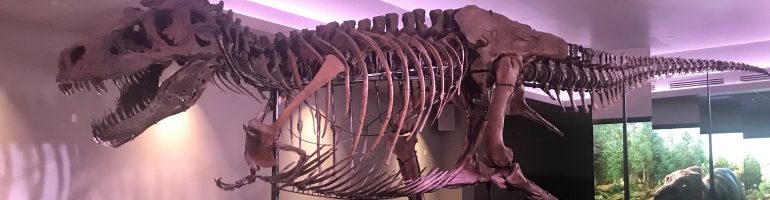
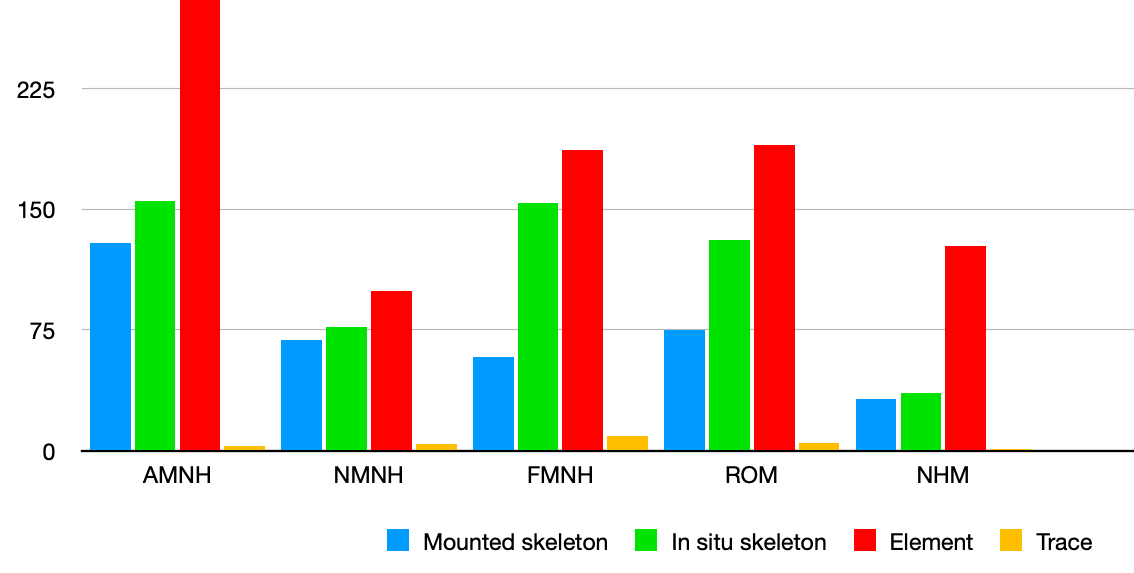
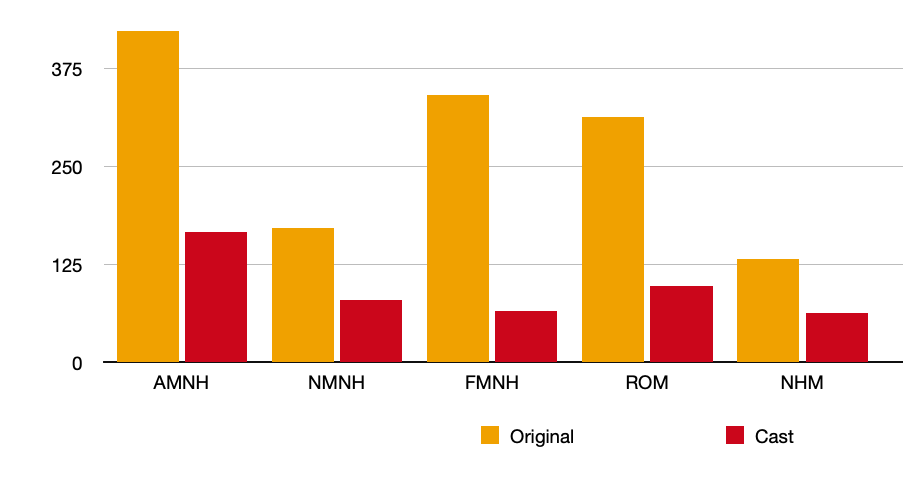
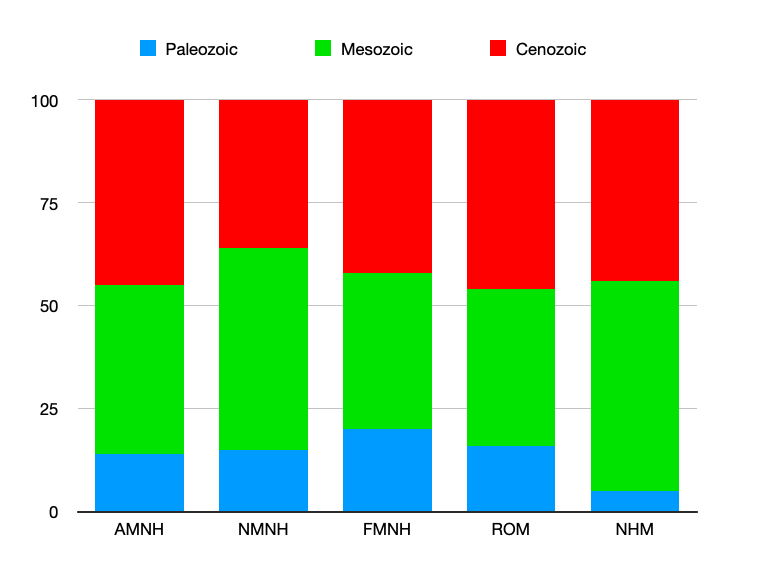
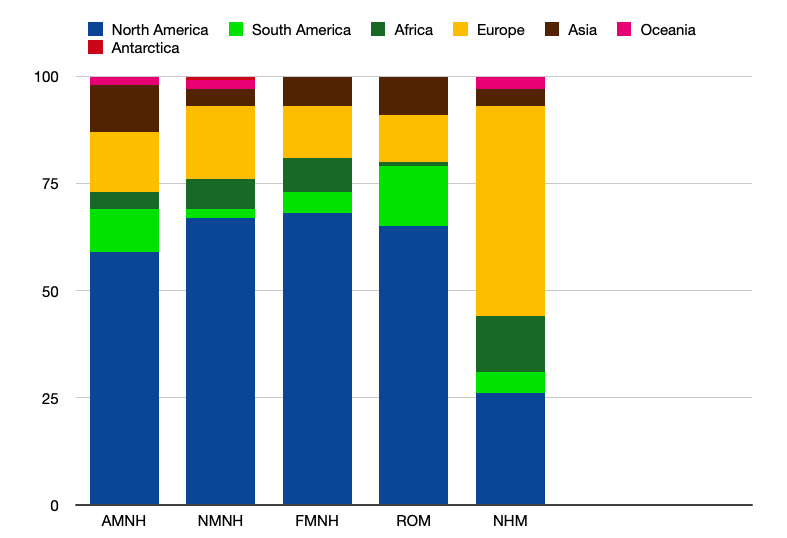

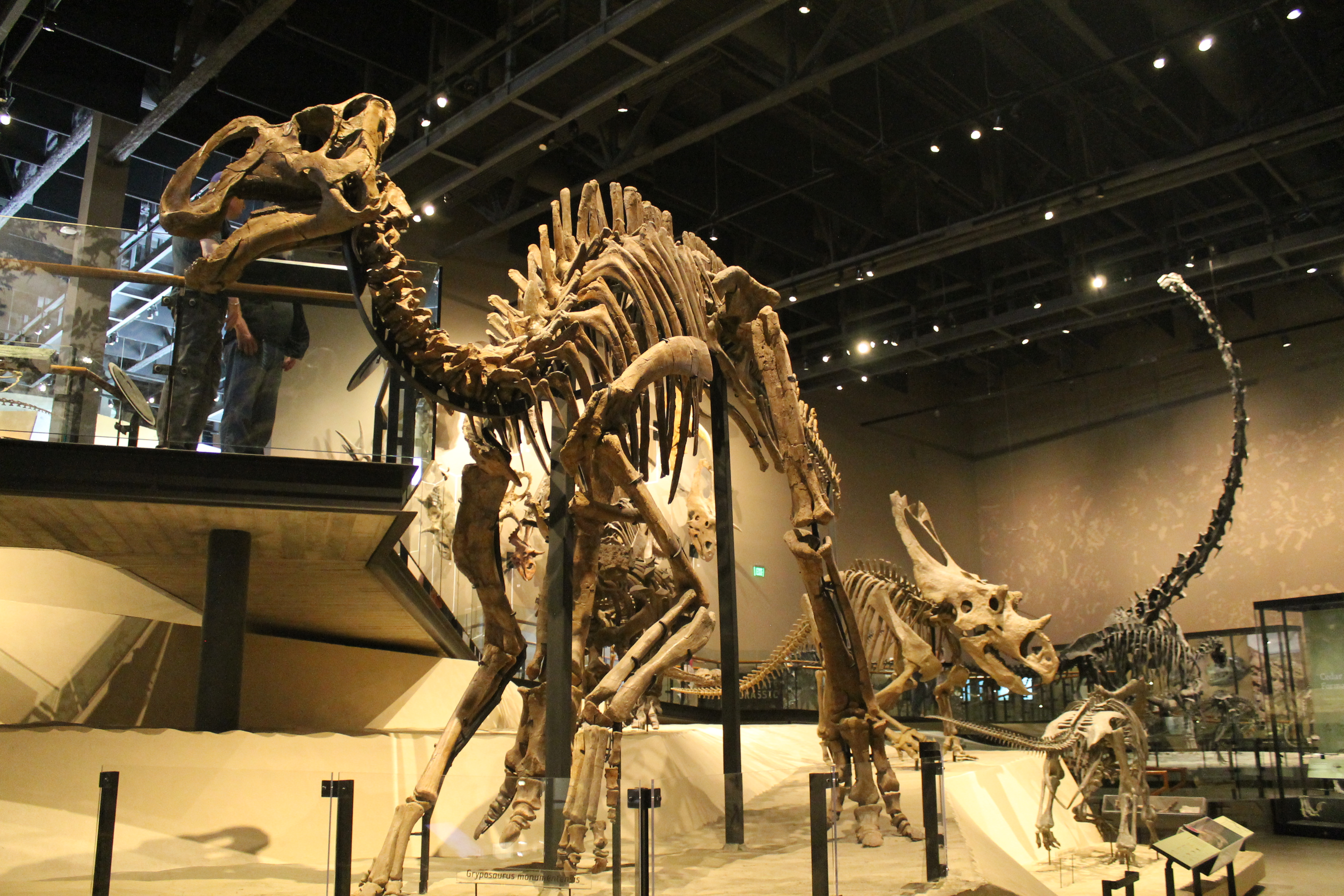
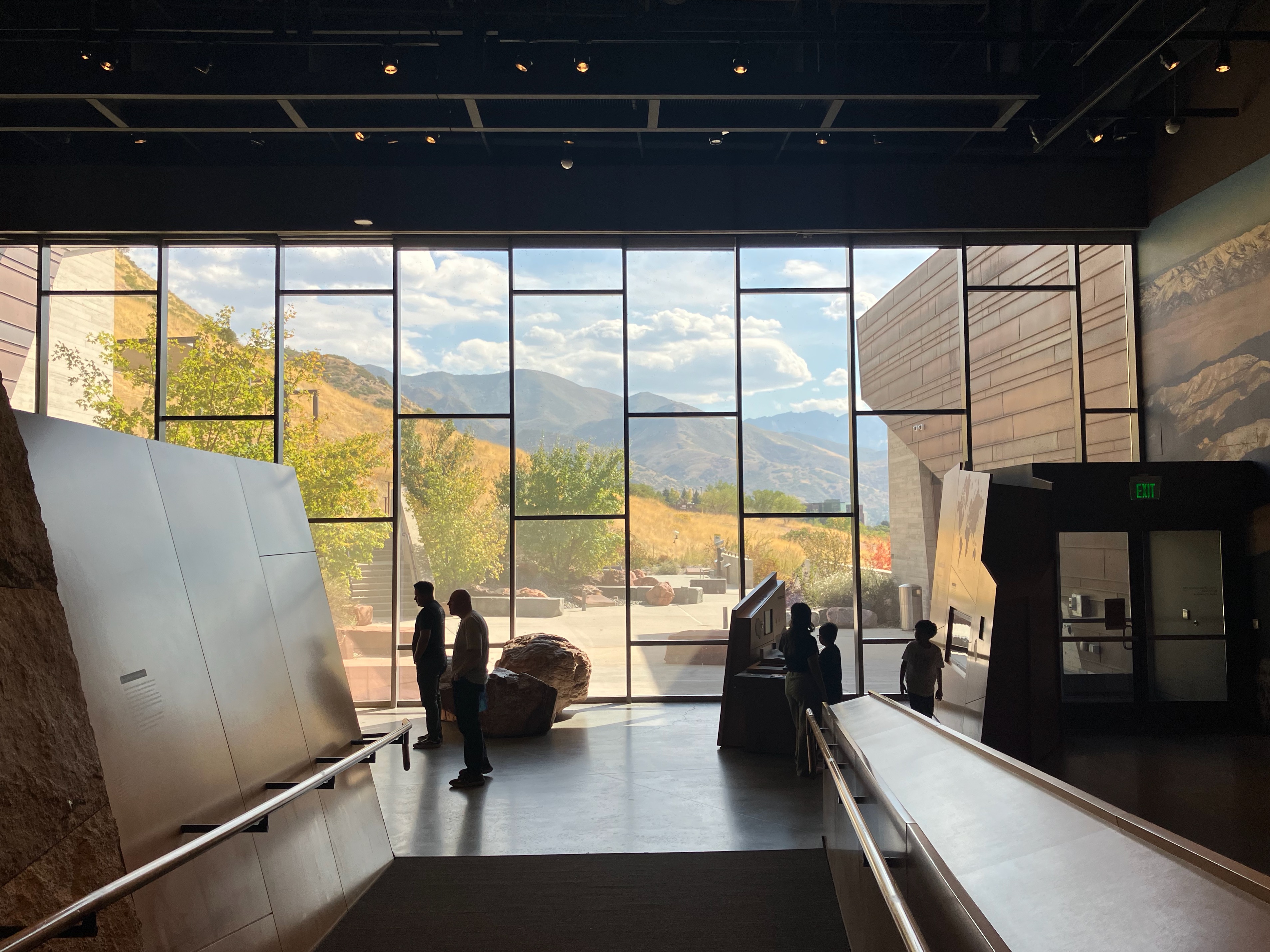
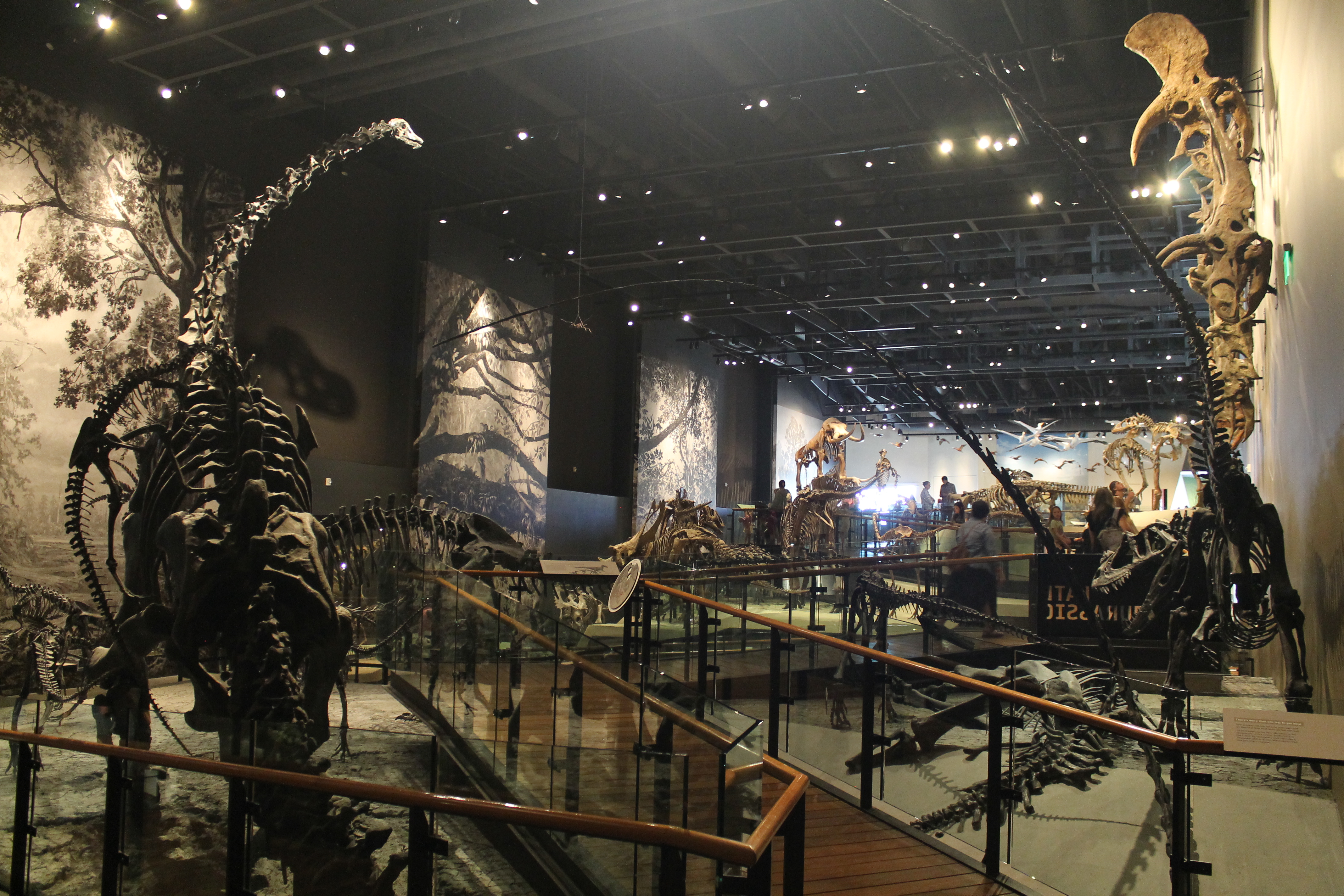

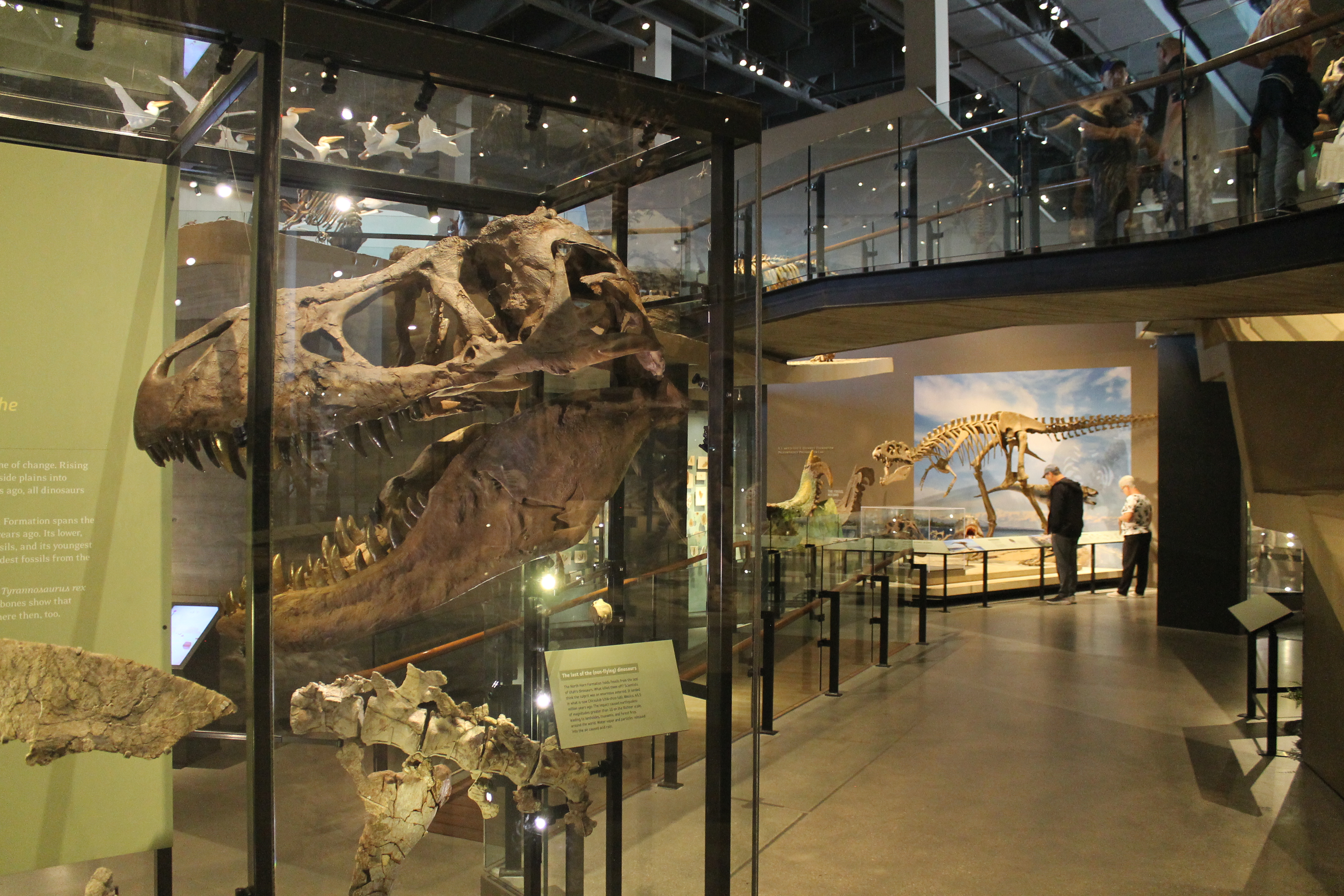
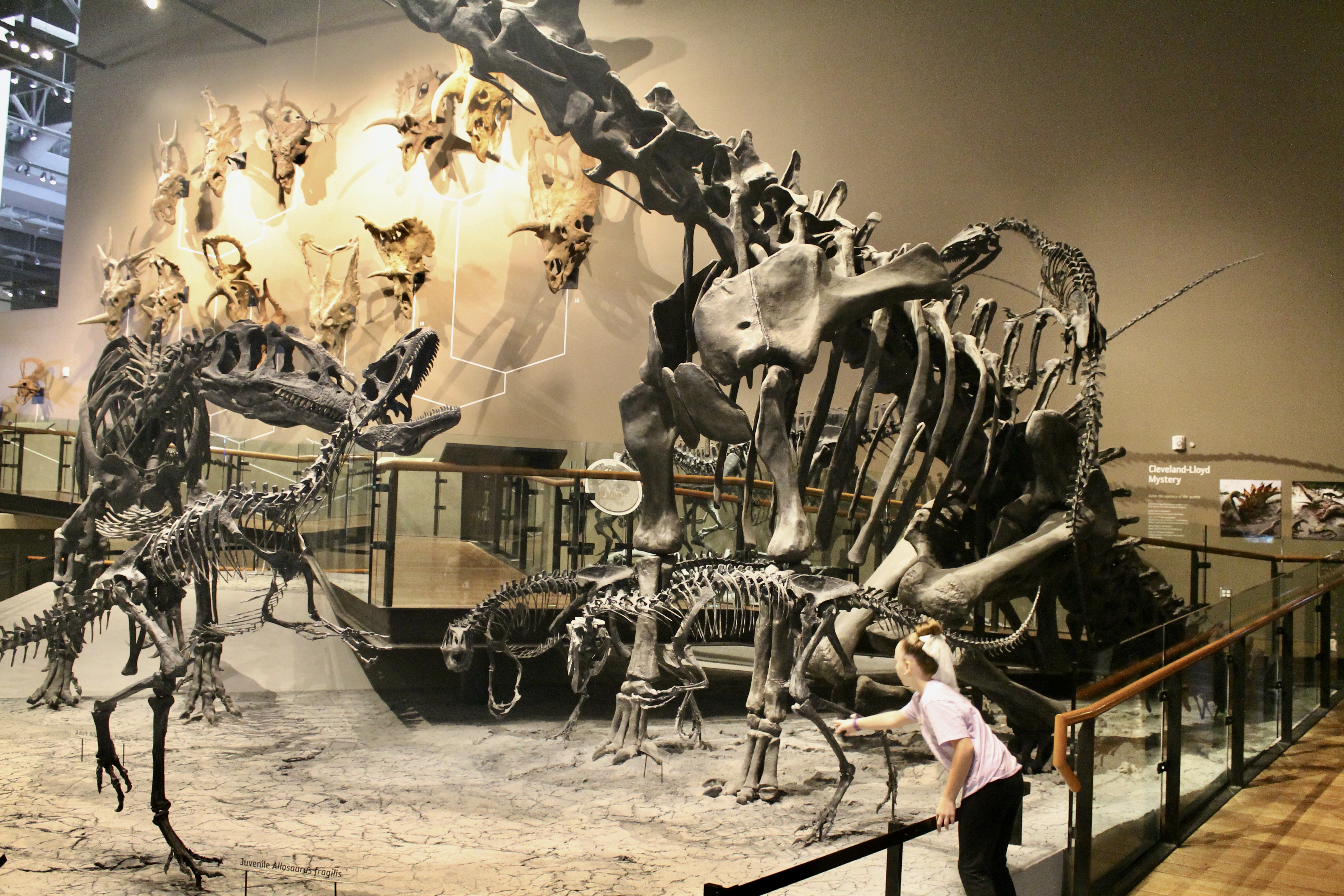
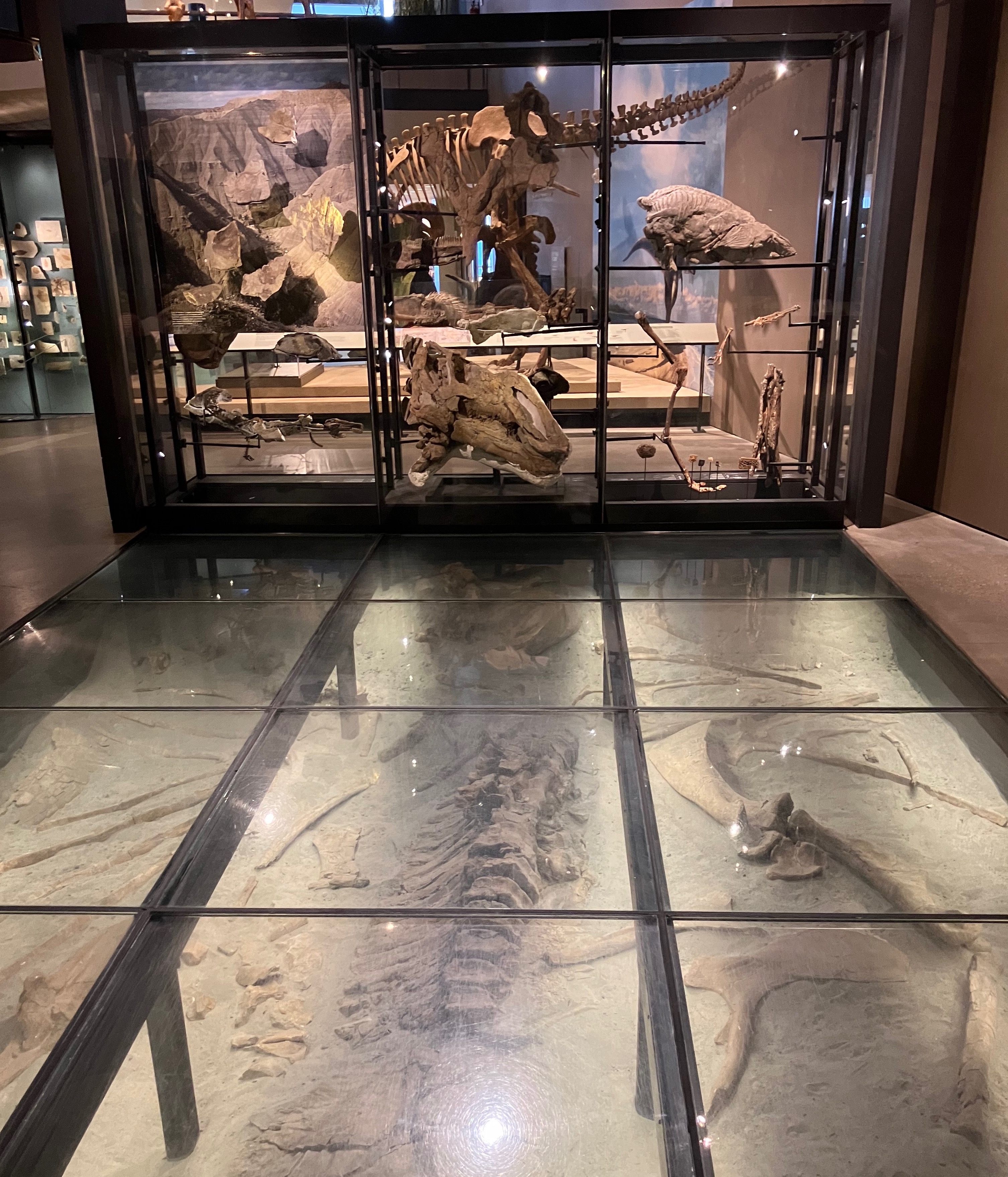


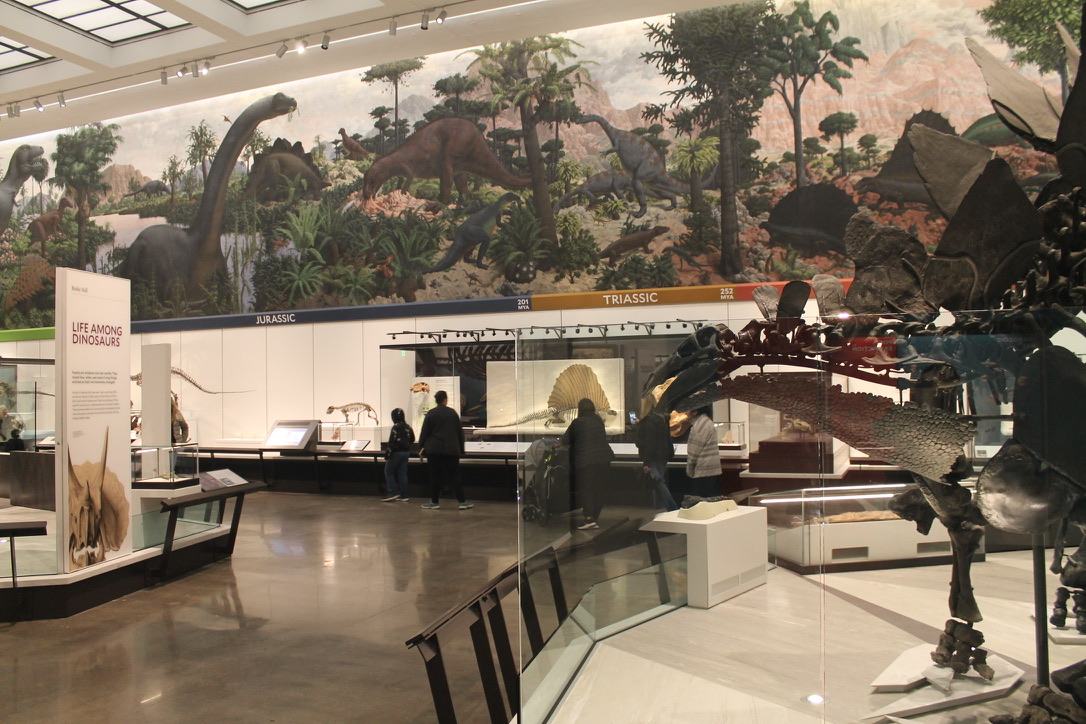
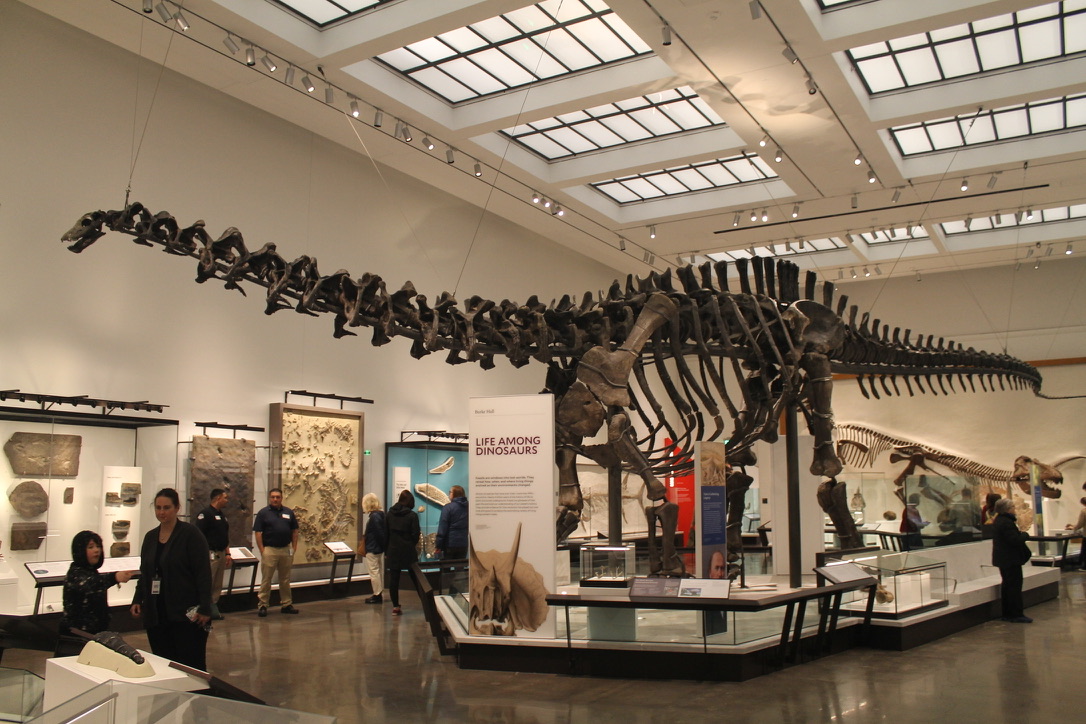
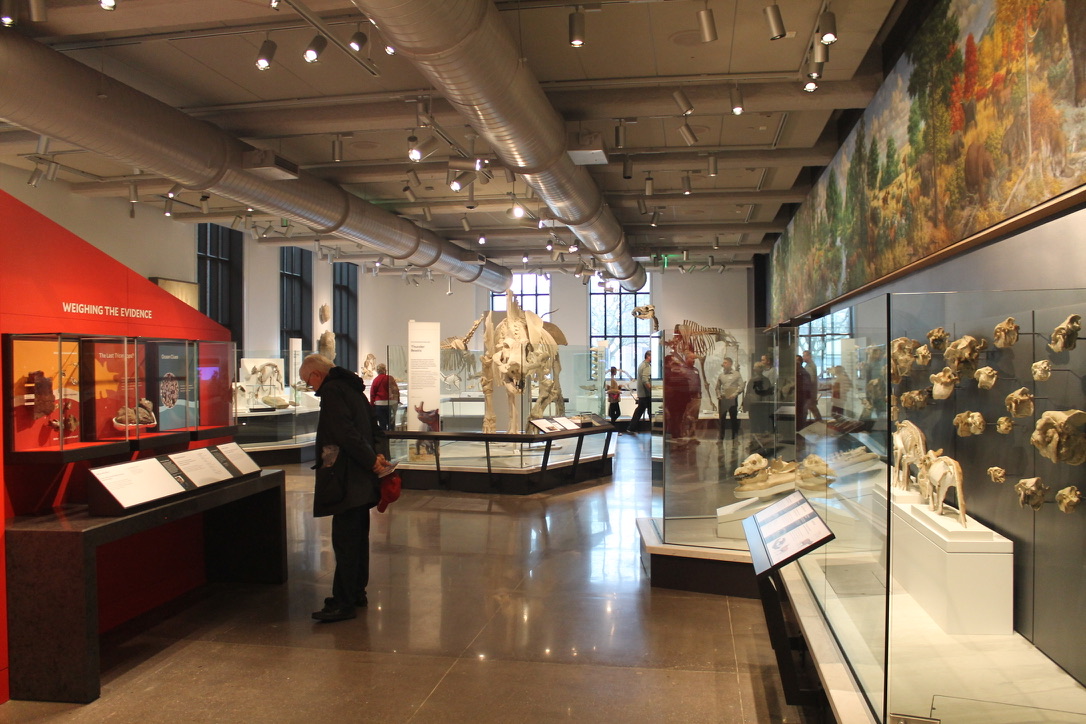


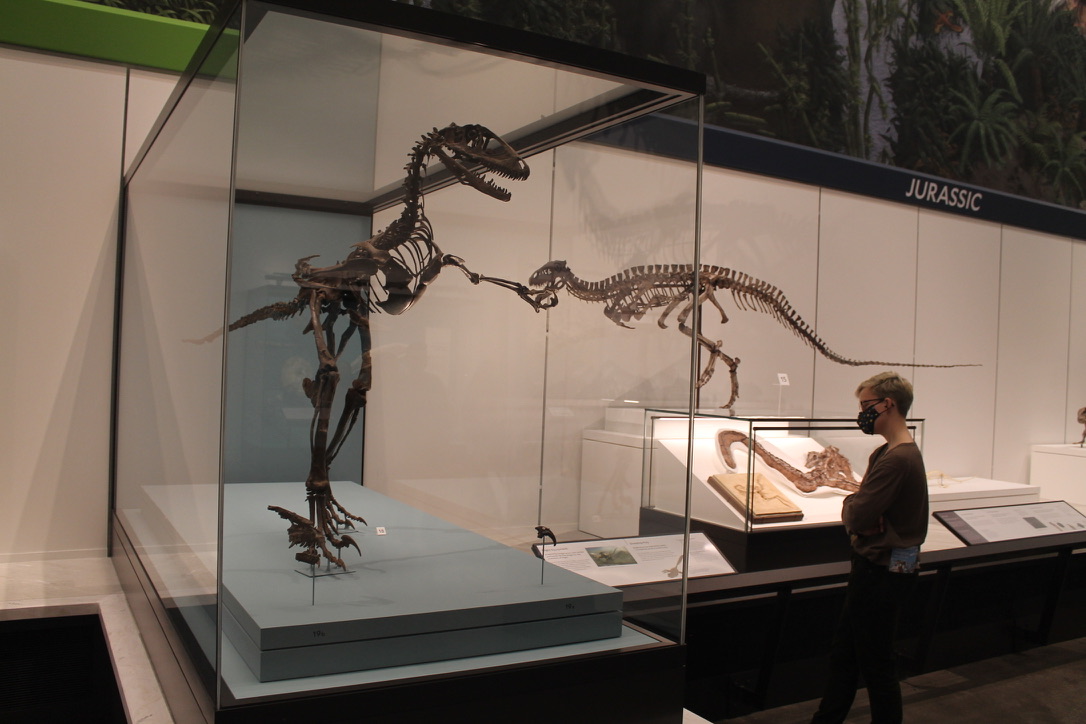

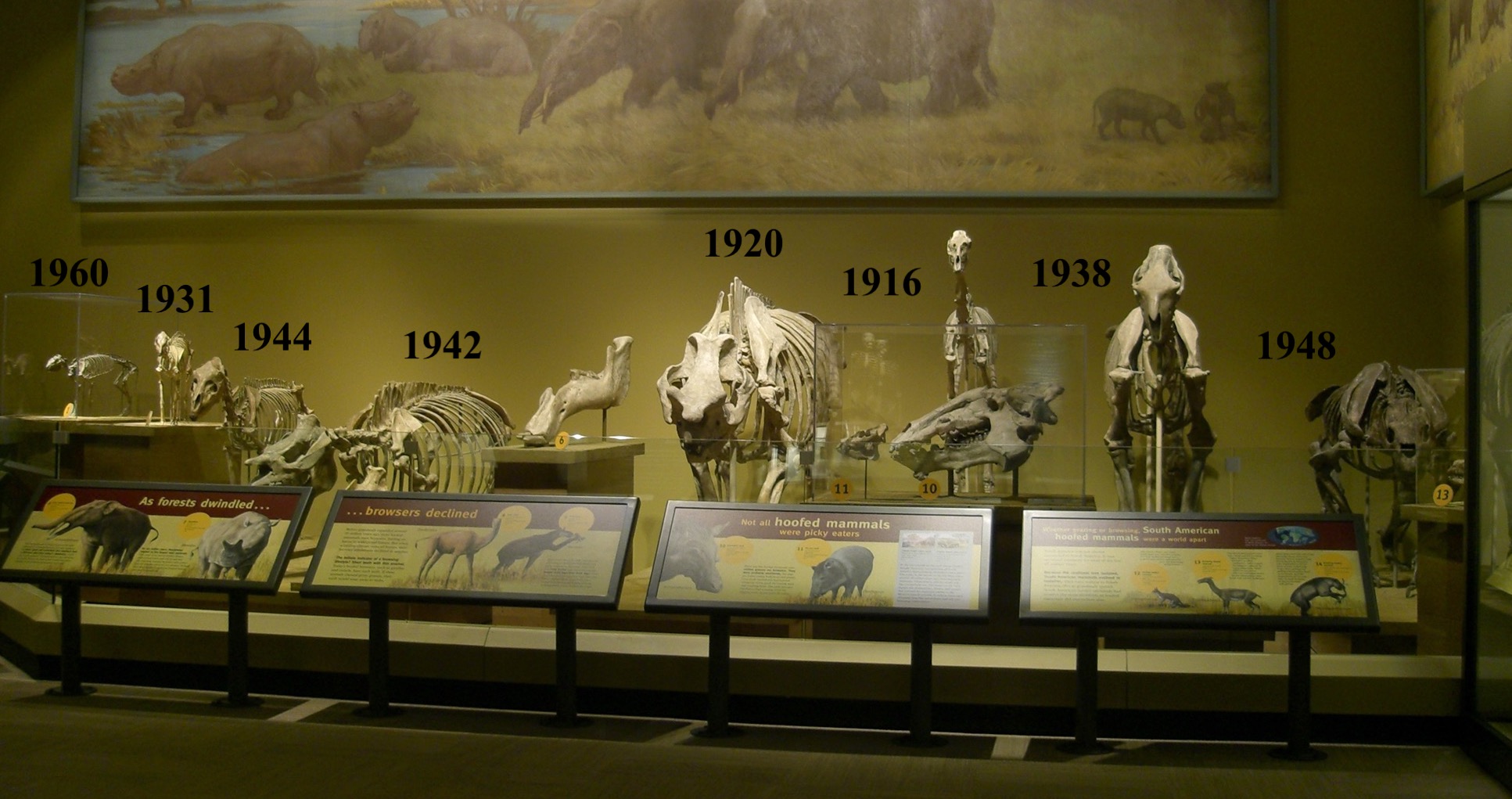
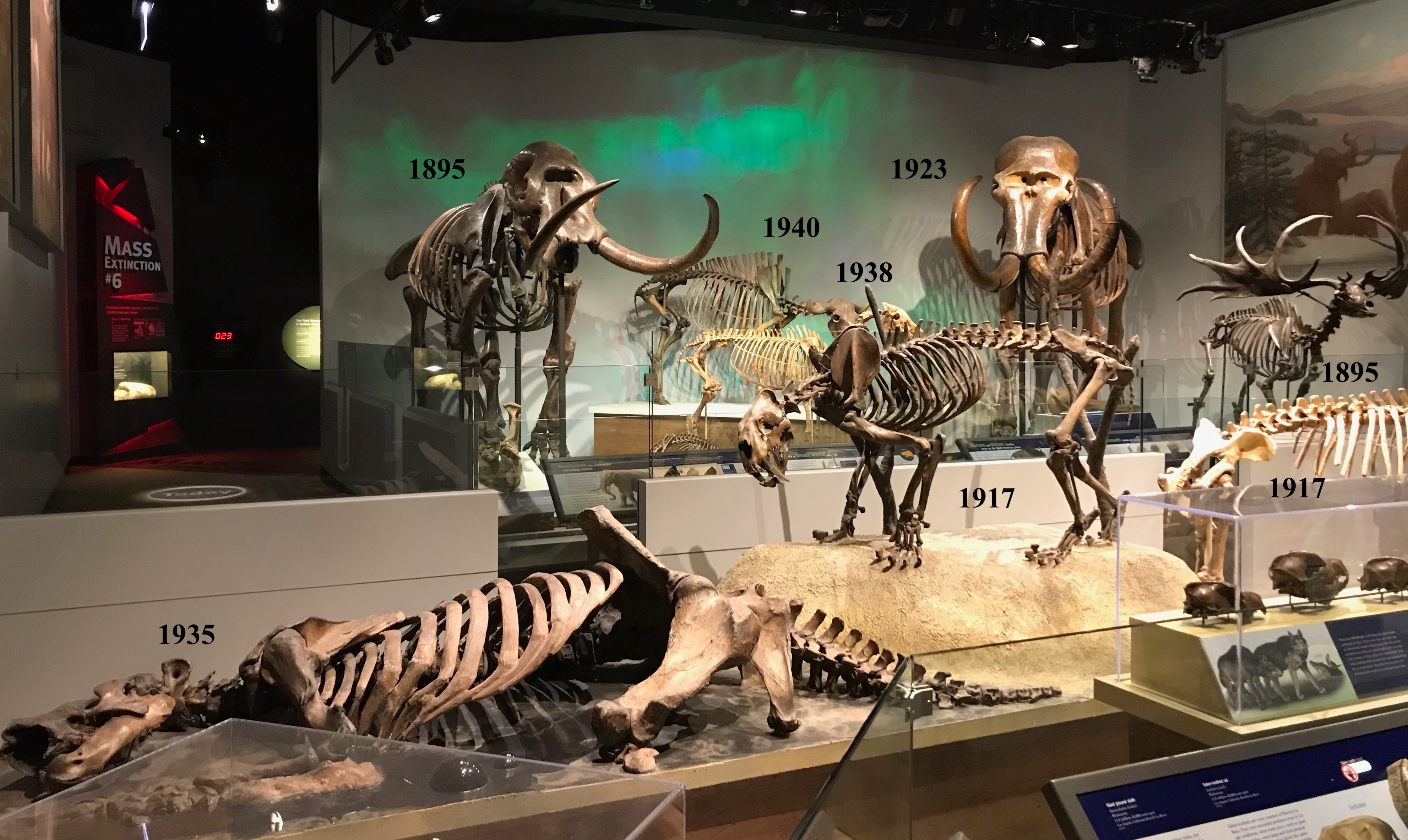
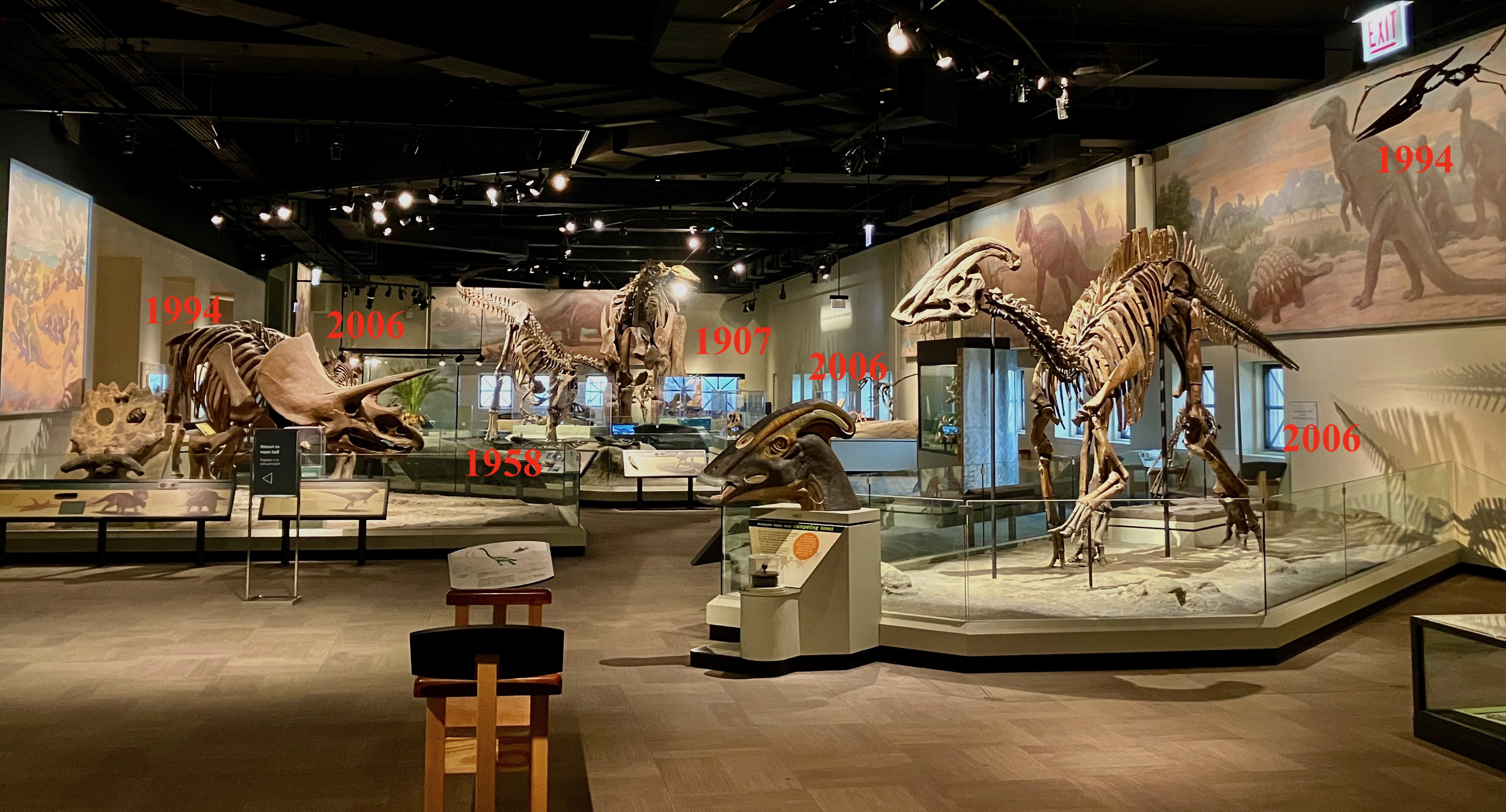
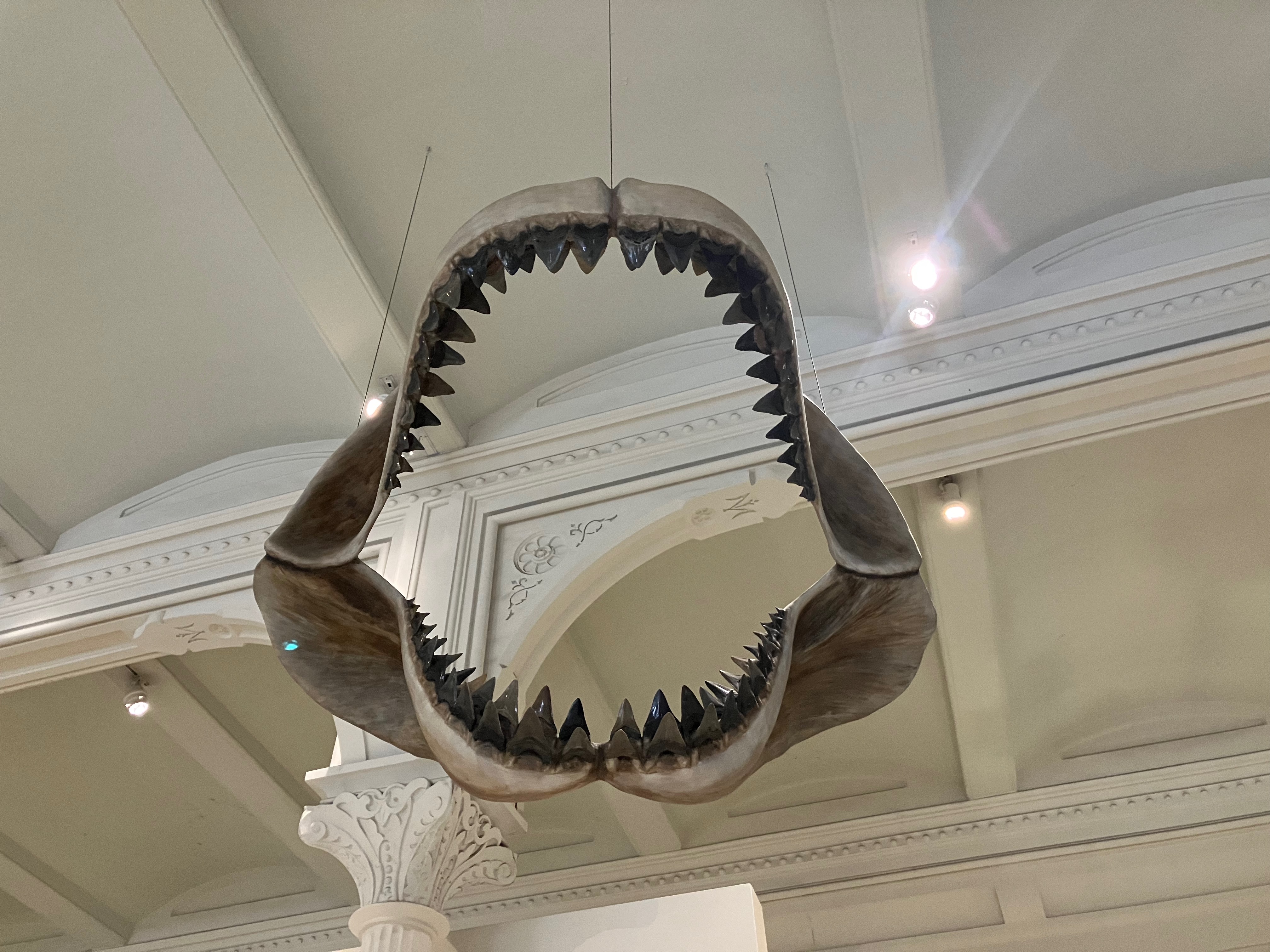


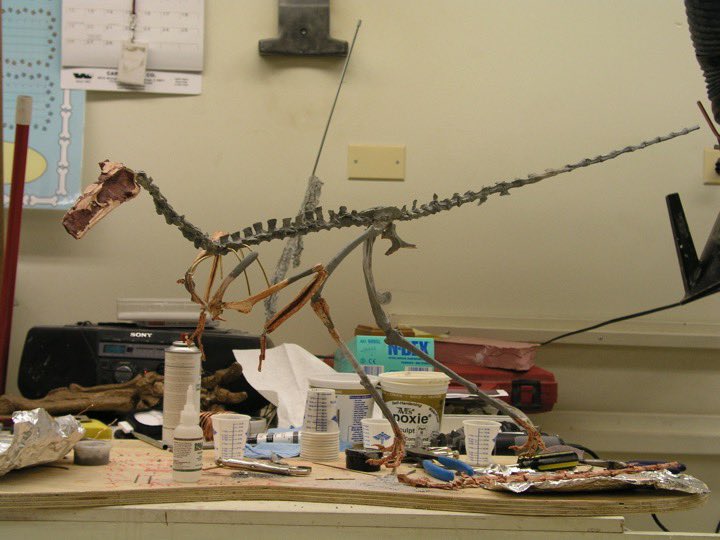


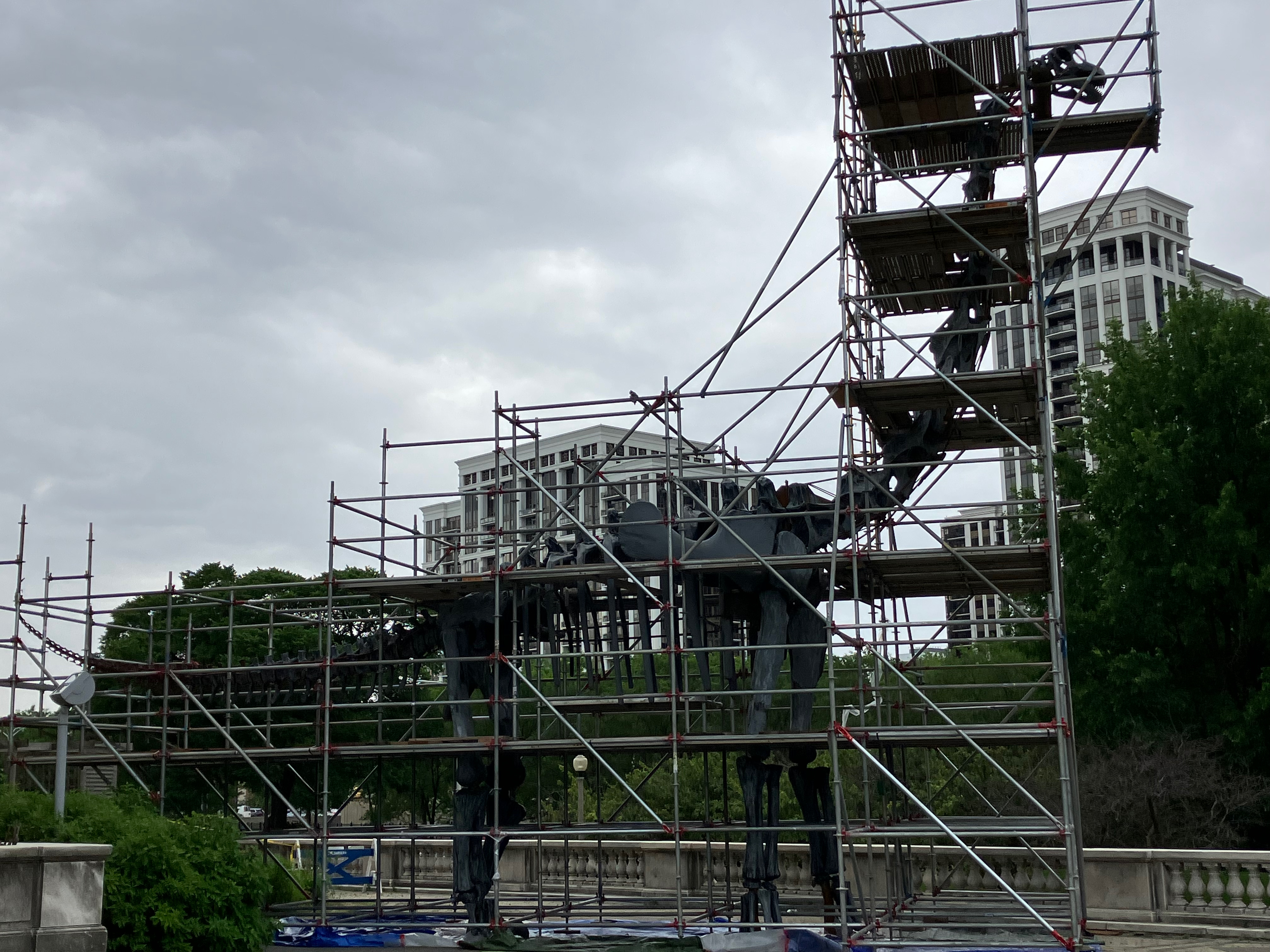


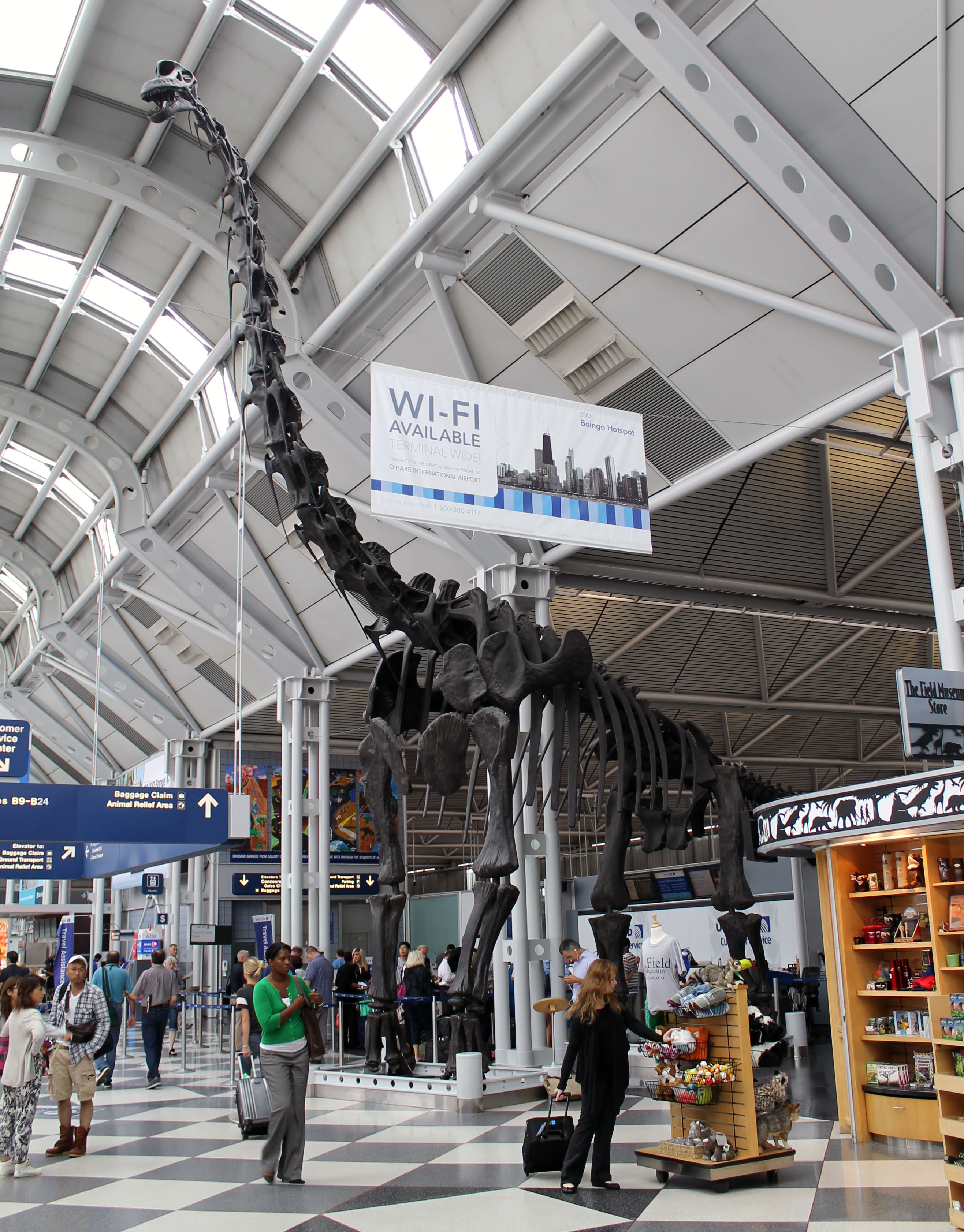


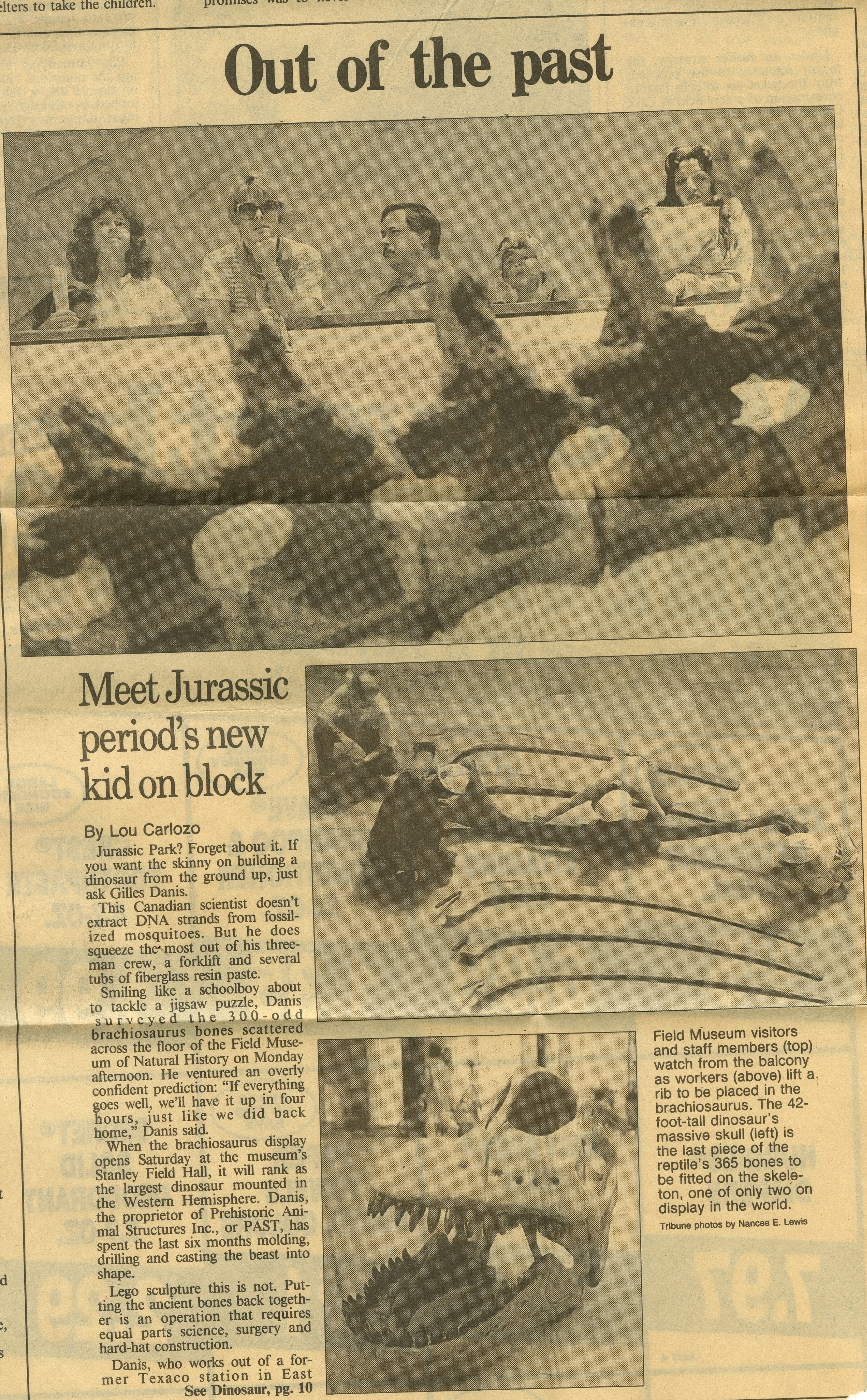
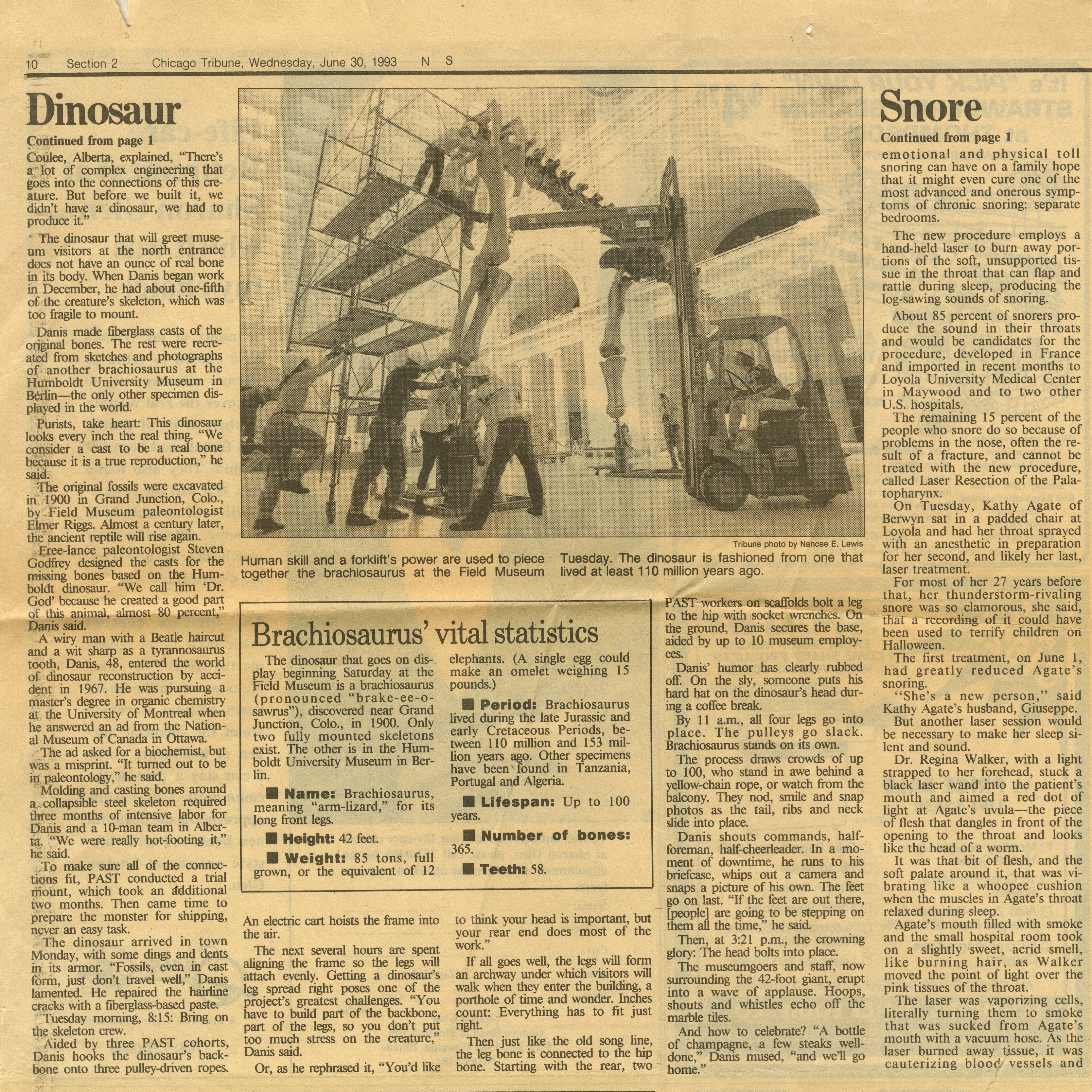
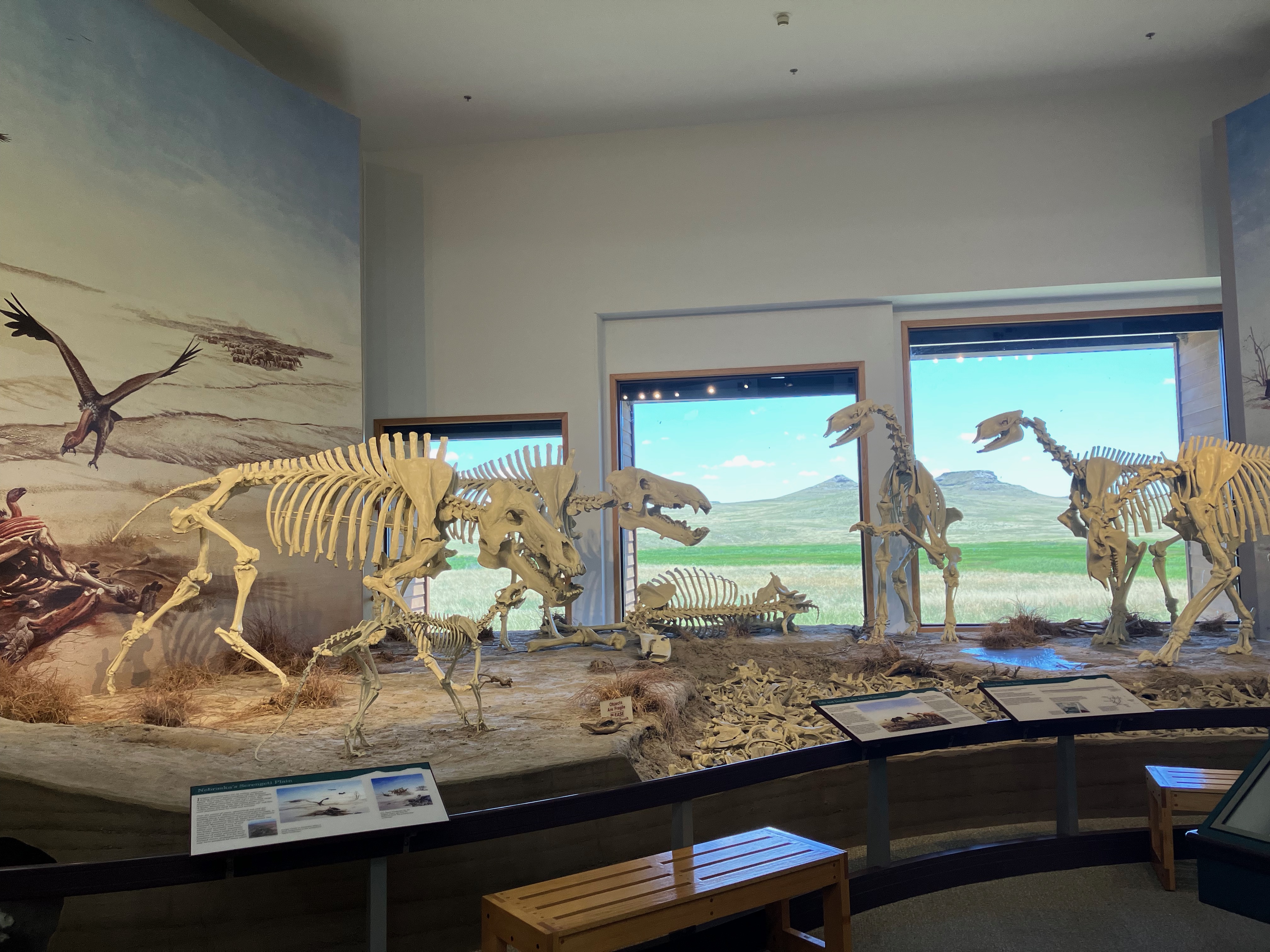
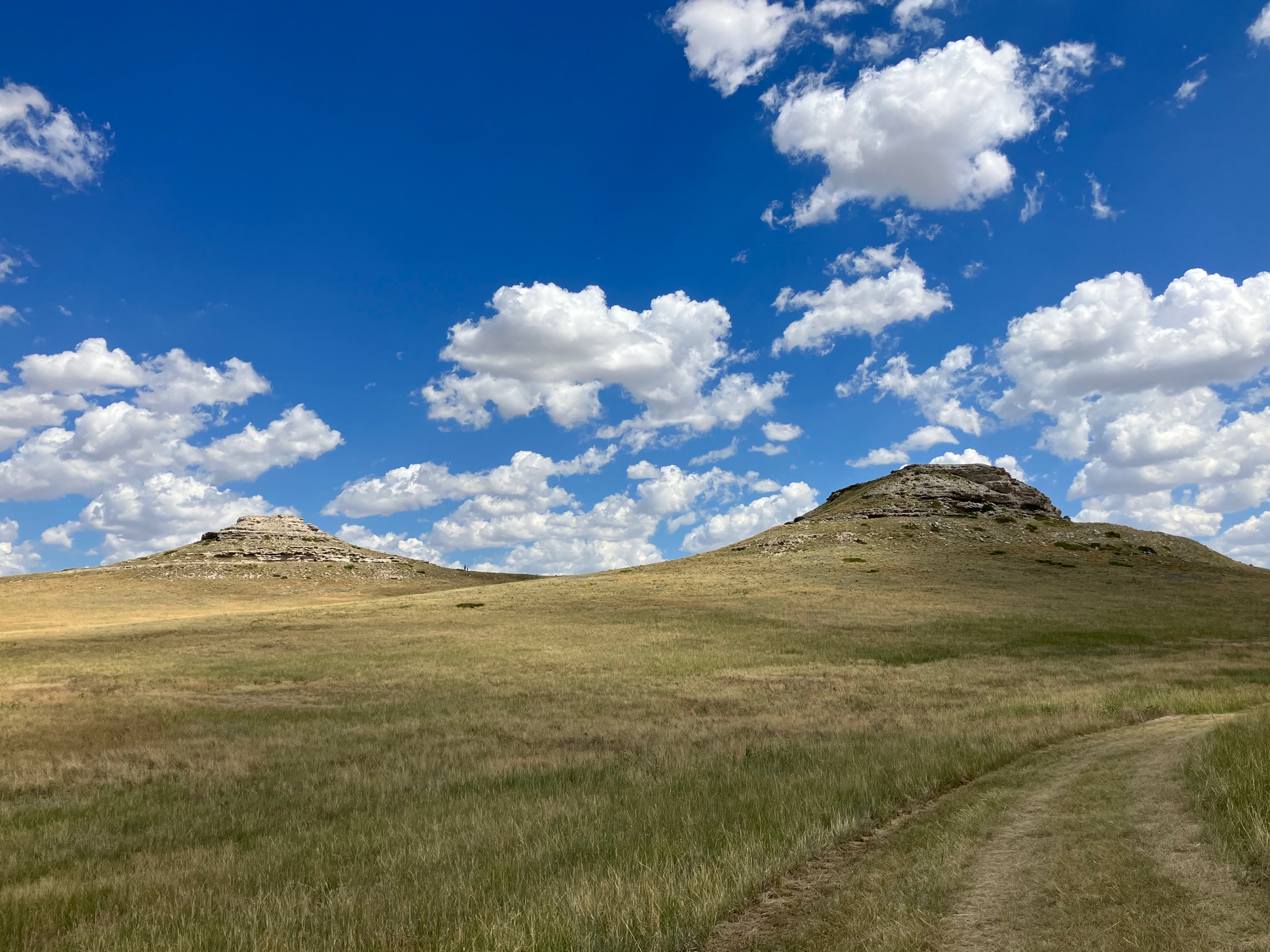
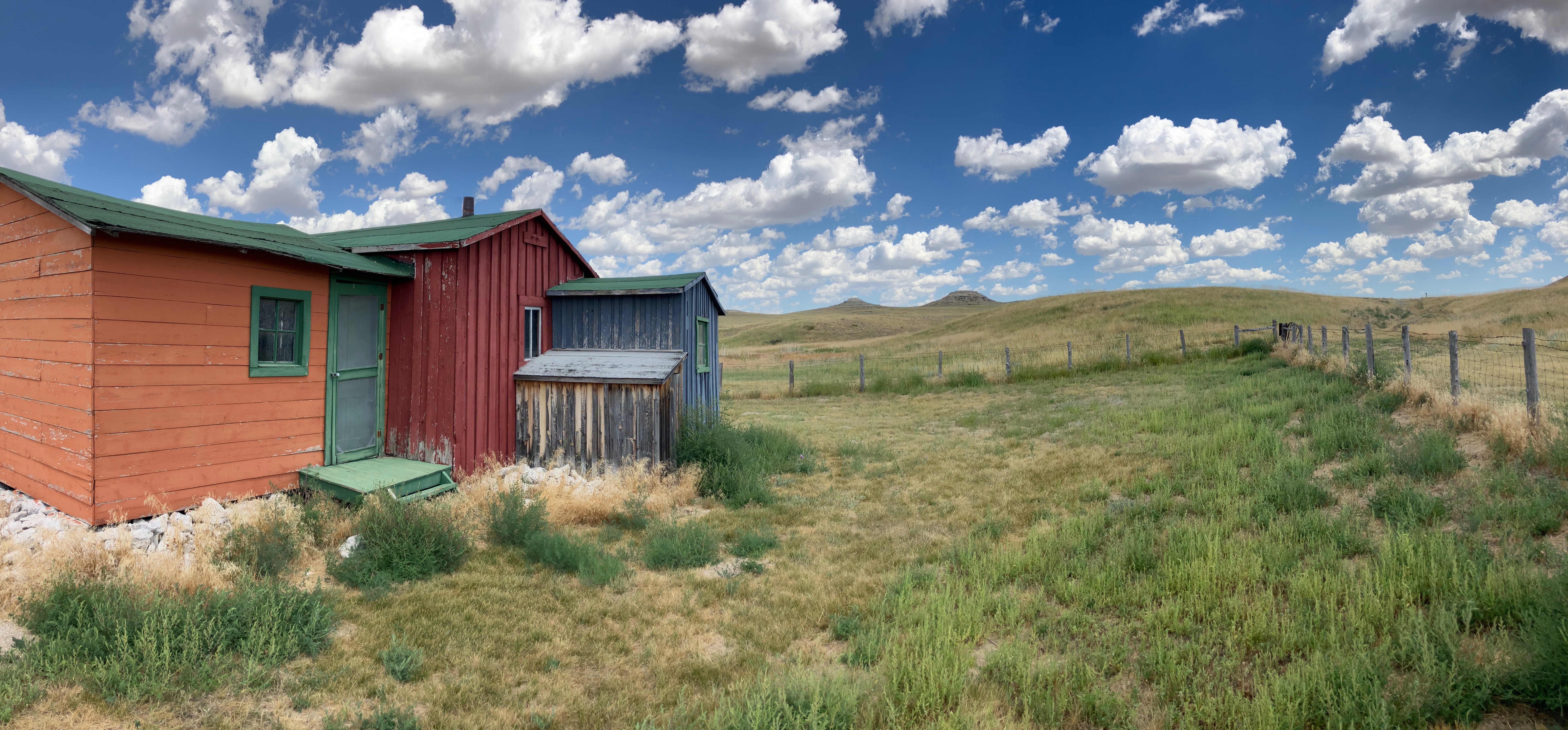
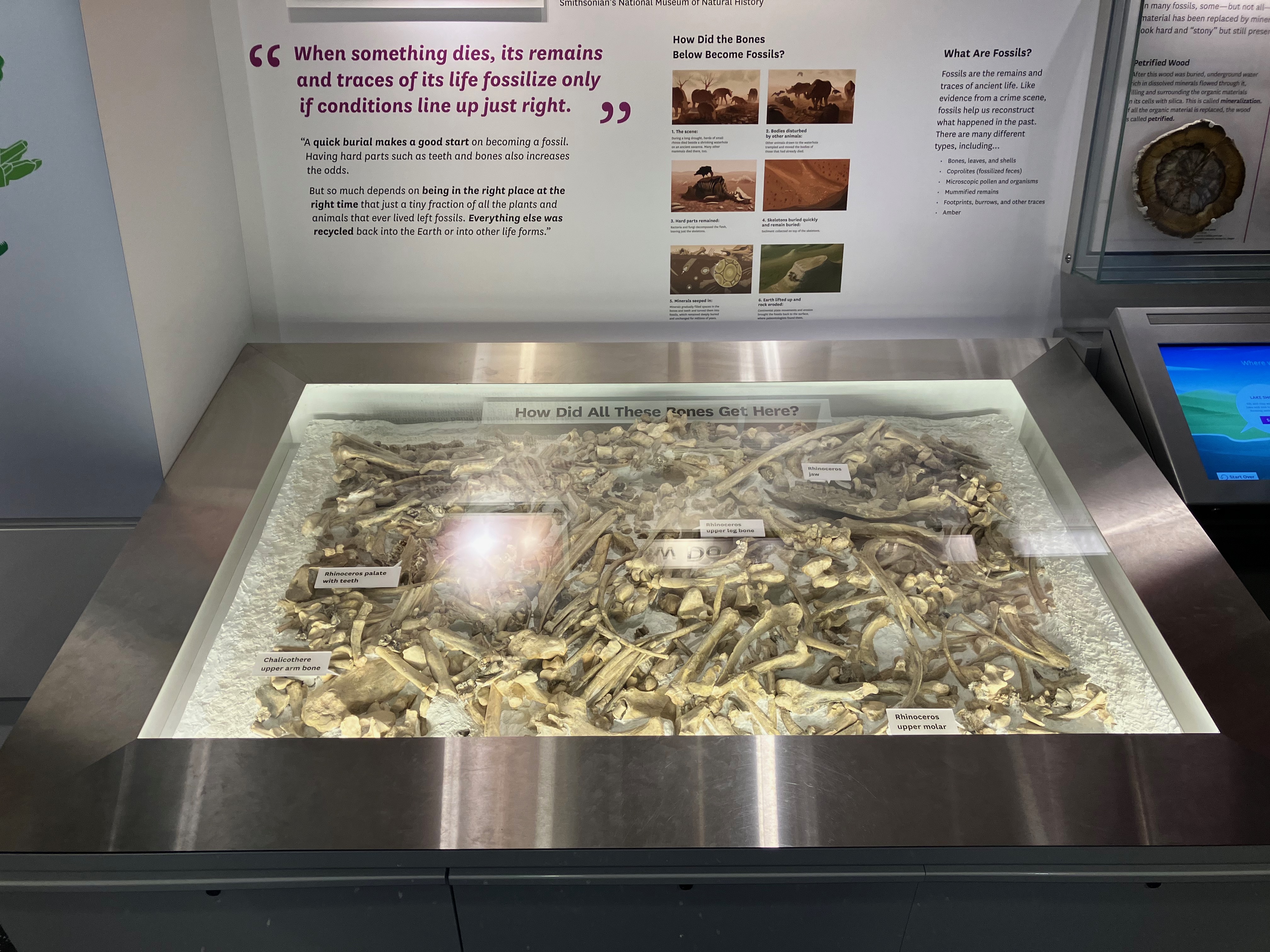
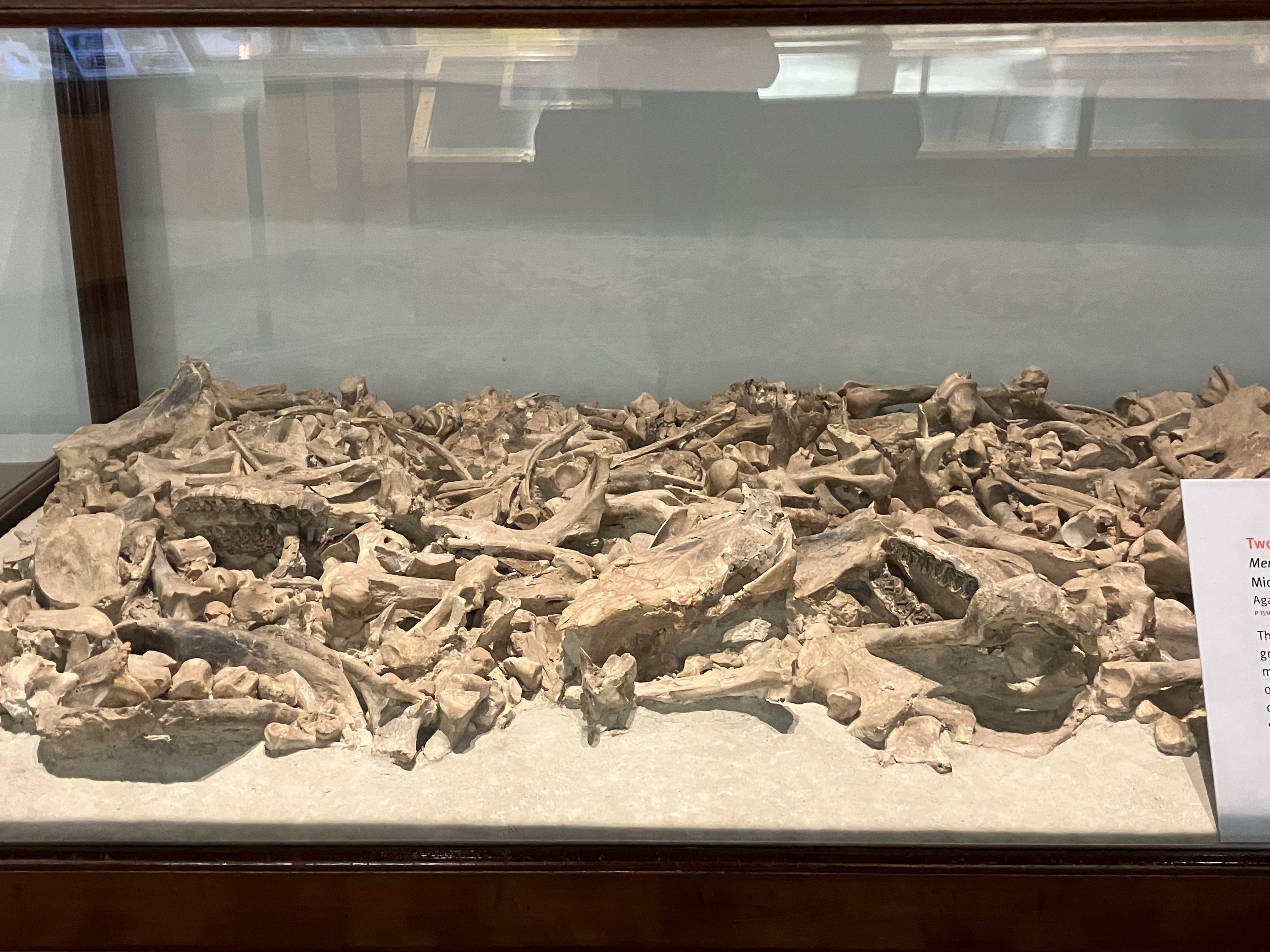


 EXTINCT MONSTERS
