Museums and the Triceratops Posture Problem – Part 1

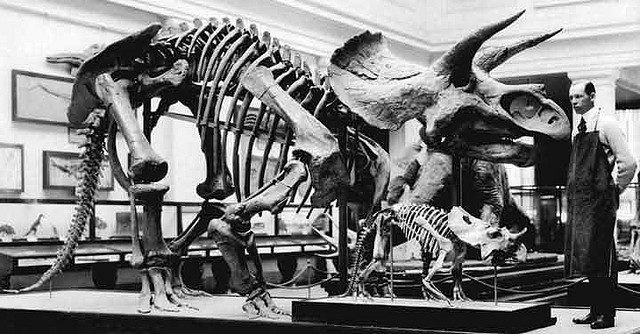
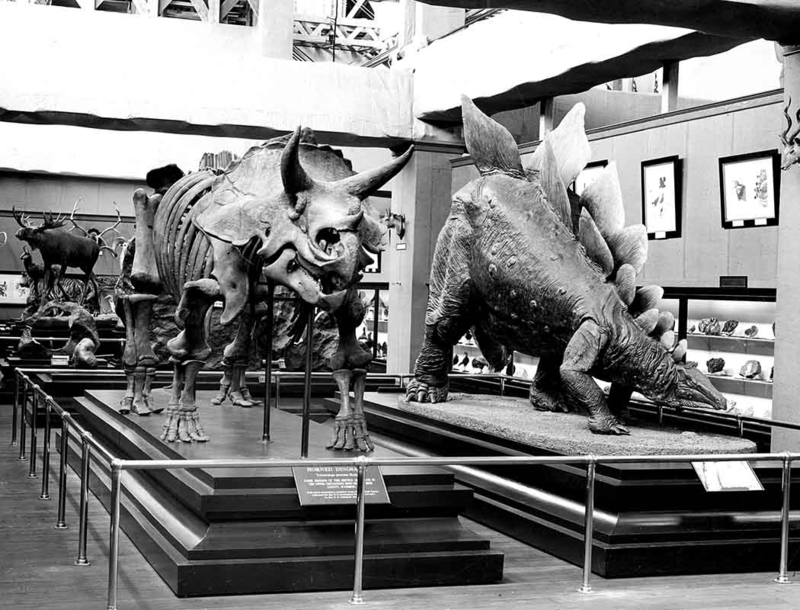
The Triceratops in the Hall of Extinct Monsters, circa 1911. Photo from NMNH on flickr.

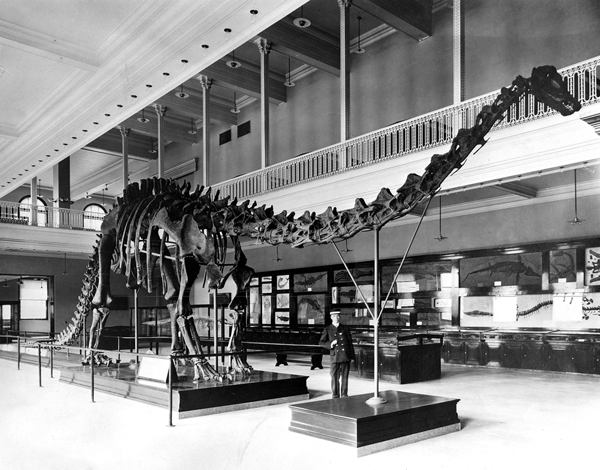
The world’s first Triceratops mount at the United States National Museum, built in 1905. Photo courtesy of the Smithsonian Institution Archives.

We know more about dinosaurs today than previous generations of researchers would have ever thought possible. Who would have guessed that in the 21st century, we would have direct evidence for the color of some species, or a detailed understanding of the life history and ontogeny of others? Modern paleontologists can delve deeper into the biology and ecology of extinct animals than ever before, so it comes as a surprise when a very basic question about dinosaur physiology has gone without a definitive answer for well over a century.

For 125 years, paleontogists have struggled to understand how large ceratopsids like Triceratops held their forelimbs. Usually, someone with a good understanding of anatomy can assemble a tetrapod skeleton without much difficulty. Vertebrates are all built along the same basic body plan, and bones fit together in the same general way. However, the forelimb bones of Triceratops and its relatives are quite perplexing. The head of the humerus, which articulates with the scapula, is off-center and extends backward from the shaft. Meanwhile, the lesser tubercle, a tiny nubbin on a human humerus, is enormous and boxy. Taken together, these two traits make it so that if Triceratops held its arm erect and under its body, like most dinosaurs did, the humerus would either puncture the rib cage or be completely dislocated from the shoulder. The simplest way to solve this is to orient the humerus so that the arms project at right angles from the torso, like the sprawling limbs of a lizard. But this just looks wrong. First, ceratopsid hindlimbs are plainly meant to stand straight up, so sprawling forelimbs make Triceratops look mismatched, like the front end a tortoise was sewn to the back end of a rhino. Second, and perhaps more importantly, a sprawling posture would inhibit speed and maneuverability in what is otherwise a very powerfully-built animal. The posture of Triceratops and its kin would ultimately have had a dramatic impact on the animal’s behavior, lifestyle, and ecological role.

Paleontologists haven’t spent the last century just scratching their heads over this problem. Ceratopsid forelimbs have inspired a considerable amount of research over the years, as scientists continue to develop new methods and new tools to explore the biomechanics of prehistoric animals. My intent with this post is not to thoroughly recount the history of ceratopsid forelimb research (if you’re interested, most of the articles referenced below are freely available online). Instead, I’d like to explore the central role museum displays have played in this debate. An artist drawing a two-dimensional image of Triceratops can fudge the orientation of the limbs (and many have), but the team building a mounted skeleton needs to know exactly how to articulate the bones. The ceratopsid posture question first arose in the process of building a mounted Triceratops skeleton for display, and museum mounts continue to be referenced by researchers looking to “ground truth” their ideas. While museum mounts usually exist primarily for education and display, in the case of the ceratopsid forelimb question these exhibits have been central to the process of studying fossil evidence and creating knowledge.

Early Reconstructions

Marsh's 1891 restoration of Triceratops.

Marsh’s 1888 restoration of Triceratops.

O.C. Marsh published the first illustrated reconstruction of a Triceratops skeleton in 1888. Marsh was legendary in his attention to detail, and the restoration holds up reasonably well today – better, in fact, than his illustrations of Stegosaurus and Brontosaurus. Contemporary scientists had no complaints, even though Marsh had given the Triceratops vertical forelimbs. Other dinosaurs had erect limbs, as does the superficially similar modern rhino, so why shouldn’t Triceratops? Marsh’s reconstruction was brought to three-dimensional life in 1901, when the Smithsonian Institution commissioned a life-sized papier mache replica of a Triceratops skeleton for the Pan-American Exposition in Buffalo. Since the model was hand-sculpted, not casted from original fossils, artist F.A. Lucas had no trouble making Triceratops stand up straight, exactly as portrayed by Marsh. After appearing again at a Smithsonian exhibit in St. Louis, the model was given to the London Natural History Museum, where it remains on display today. Meanwhile, newly hired United States National Museum preparator Charles Gilmore began work on a mounted Triceratops skeleton composed of original fossils.

St. Louis Expo

Straight-legged Triceratops model at the Pan American Expo in St. Louis. Source

Gilmore’s 1905 Triceratops mount was the first real skeleton of a ceratopsid ever assembled for display (first image). Like virtually all dinosaur mounts of the era, the skeleton was a composite of several specimens and a few sculpted pieces. All the Triceratops fossils at Gilmore’s disposal were collected by John Bell Hatcher in the late 19th century, and inherited by the Smithsonian as part of the Marsh collection. USNM 4842, a partial skeleton consisting mostly of a torso and pelvis, formed the basis for the mount, but at least six other individuals were also incorporated. Gilmore selected the skull USNM 2100 because it was more complete and less distorted than the other Triceratops skulls available, but it was on the small side compared to the body. Likewise, the left humerus was about 40% smaller than the right, and conspicuously three-toed Edmontosaurus hindfeet were used (no Triceratops feet had been found at the time). In the process of building his Triceratops, Gilmore had to make several changes to the idealized Triceratops envisioned by Marsh, most notably the orientation of the forelimbs. Not only was it apparently impossible to articulate the humerus in an upright position, but as Gilmore explained it, “a straightened form of leg would so elevate the anterior portion of the body as to have made it a physical impossibility for the animal to reach the ground with its head.”

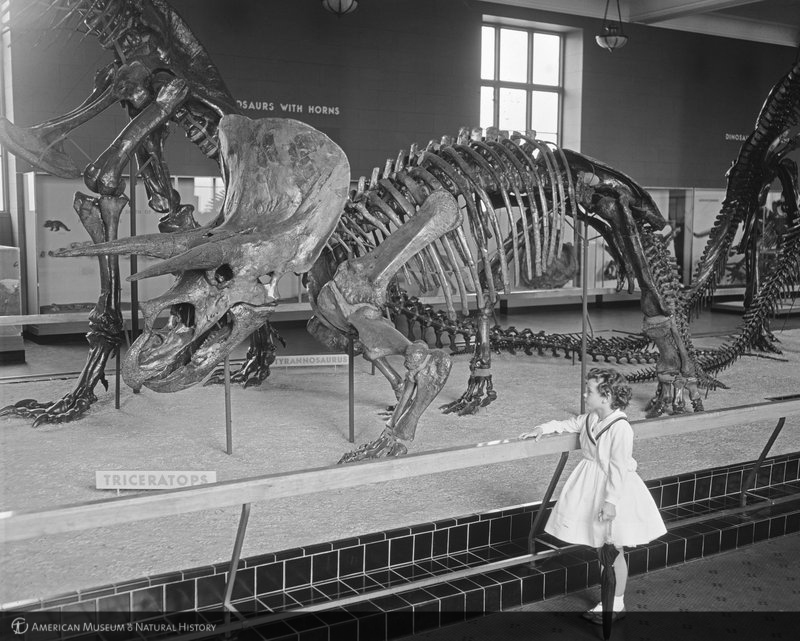
The American Museum of Natural History produced their own Triceratops mount in 1923. Like its USNM predecessor, the AMNH Triceratops was a composite of several specimens. AMNH 5033, discovered by Barnum Brown in Montana and consisting of most of the dorsal vertebral column, ribs, and pelvic girdle, made up the largest portion of the mount. The skull was recovered by Charles Sternberg in Wyoming, and many of the appendicular bones were sculpted or cast from Smithsonian specimens. Preparator Charles Lang spent over 263 working days on the project, and much of that time was reportedly spent puzzling over the forelimbs. Lang studied living and preserved specimens of a variety of tetrapods, including rhinos, lizards, crocodiles, and tortoises, trying to find a living analogue for the strangely shaped ceratopsid bones. He ended up articulating the forelimbs so that they were even more widely splayed than Gilmore’s reconstruction, to the point that the back of the Triceratops slopes dramatically forward, and the head is almost dragging along the ground. In an accompanying paper, Henry Osborn asserted that “nothing short of a horizontal humerus and completely everted elbow would permit proper articulation of the facets.” By way of explanation, Osborn offered that this posture might have been helpful in withstanding a frontal impact.

triceratops

American Museum of Natural History Triceratops mount, circa 1959. Photo courtesy of theAMNH Research Library.

Together, the Washington and New York Triceratops mounts, with their mismatched tortoise-in-the-front, rhino-in-the-back posture, would come to define both popular and scientific conceptions of ceratopsids for the better part of a century. Other museums followed Gilmore and Lang’s lead and built sprawling ceratopsids of their own, including Richard Lull’s 1929 Centrosaurus at the Peabody Museum of Natural History and Kenneth Carpenter’s 1986 Chasmosaurus at the Academy of Natural Sciences. Even as recently as 1995, AMNH curators chose not to change a single bone on the historic Triceratops mount while modernizing their exhibit.

Voices of Dissent

Robert Bakker was one of the first to challenge the ceratopsid forelimb orthodoxy. In 1986, Bakker criticized Gilmore and Lull’s museum mounts and resurrected Marsh’s original interpretation of a straight-legged Triceratops. His reasoning was that the ceratopsid glenoid fossa (the concavity on the scapula that holds the head of the humerus) was more like the narrow cup of a horse or rhino than the wide trough of a lizard. Bakker went as far as to suggest that Triceratops and its kin might have been able to run or even gallop. Gregory Paul and others piled on, arguing that earlier researchers had run into trouble articulating Triceratops forelimbs because they had made the ribcage too broad. If the ribs were articulated so that the animal had flat flanks, the elbow apparently wouldn’t get in the way. Additional evidence for an upright stance came from a set of ceratopsid trackways described by Martin Lockley and Adrian Hunt. The trackways showed forefeet in line with the hindfeet, suggesting that front and back legs were not mismatched, after all.

This cast of the AMNH Triceratops at the Field Museum replicates the sprawling posture. Photo by the author.

This cast of the AMNH Triceratops at the Field Museum replicates the sprawling posture of the original. Photo by the author.

However, paleontologists like Peter Dodson were unmoved by these new arguments. Dodson proposed that the trackways had been misinterpreted: since ceratopsids are wider at the hips than at the shoulders, evenly spaced front and back prints should imply that the animal was holding its forelimbs out farther than its hindlimbs. Dodson was concerned that the rhino analogy was being taken too far: Triceratops looked like a rhino, so reasearchers were trying their hardest to make it move and behave like a rhino.

As Kenneth Carpenter explained in a comment last year, dinosaurs can do anything on paper, but physically assembling a skeleton forces you to confront the reality of what the bones can and cannot do. In the last decade, two new Triceratops mounts provided paleontologists the opportunity to re-explore this process, with more complete specimens and modern technology at their disposal. Next time, we’ll take a look at what the new Triceratops displays at the National Museum of Natural History and the Los Angeles County Natural History Museum can tell us about ceratopsid posture and lifestyle.

References

Bakker, R.T. 1986. The Dinosaur Heresies: New Theories Unlocking the Mystery of Dinosaurs and Their Extinction. New York, NY: Citadel Press.
Dodson, P. 1996. The Horned Dinosaurs: A Natural History. Princeton, NJ: Princeton University Press.

Fujiwara, S. 2009. A Reevaluation of the Manus Structure in Triceratops (Ceratopsia: Ceratopsidae). Journal of Vertebrate Paleontology 29:4:1136-1147.

Fujiwara, S. and Hutchinson, J.R. 2012. Elbow Joint Adductor Movement Arm as an Indicator of Forelimb Posture in Extinct Quadrupedal Tetrapods. Proceedings of the Royal Society 279: 2561-2570.

Gilmore C.W. 1905.The Mounted Skeleton of Triceratops prorsus. Proceedings of the U.S. National Museum 29:1426:433-435.

Makovicky, P. 2012. Marginocephalia. The Complete Dinosaur, 2nd Edition. Eds. Brett-Surman, M.K., Holtz, T.R. and Farlow, J.O. Bloomington, IN: Indiana University Press.

Osborn, H.F. 1933. Mounted Skeleton of Triceratops elatus. American Museum Novitates 654:1-14.

Paul, G.S. and Christiansen, P. 2000. Forelimb Posture in Neoceratopsian Dinosaurs: Implications for Gait and Locomotion. Paleobiology 26:3:450-465.

2 Comments

Filed under AMNH, anatomy, dinosaurs, fossil mounts, history of science, marginocephalians, museums, NMNH, reptiles

Framing Fossil Exhibits, Part 1

This post started out as a review of “Evolving Planet”, the expansive paleontology exhibit at the Field Museum of Natural History. The short version is that it’s very good exhibit constrained by a somewhat frustrating layout. We’ll get back to that eventually, but first it’s worth considering the purpose of large-scale fossil exhibits in a more general sense.

Fossils, particularly the mounted skeletons of dinosaurs and other prehistoric animals, have been central to the identity of natural history museums since the late 19th century. In the early days, public exhibits were afterthoughts to the primary work of the museum (research and curation of collections), and if there was any logic behind their layout, it was an aesthetic logic. Typically posed in neutral, trophy-like stances on centrally-situated pedestals, mounted skeletons were the highlights of a natural history display for most visitors. For anyone not trained in comparative anatomy, however, these exhibits ultimately amounted to prehistoric pageantry. People could marvel at the great size of the animals, but there was very little to be learned besides the names of the species in question.

Hadrosaurus cast on display at the Field Museum. Field Museum Photo Archives.

A typically random assortment of fossil specimens at the Field Colombian Museum, ca. 1898. Image courtesy of the Field Museum Photo Archives.

These days, we try to do better. Exhibits are designed with a clear narrative structure, as well as specific learning goals for the audience. The focus of the narrative varies depending on the exhibit and the team behind it, but most modern natural history exhibits are explicitly designed to answer “how” as well as “what.” For paleontology displays, this means telling the story of life on Earth while also communicating how scientists collect and interpret evidence to put that story together. Crafting an exhibit has been compared to writing a popular nonfiction book, except designers are using the three-dimensional space of the exhibition hall as their medium. In this way, modern exhibits are more about ideas than specimens, or at least, the specimens are present primarily to illustrate the major scientific principles being communicated.

That’s how it works on paper, anyway. Despite this focus on education (and institutional mandates to provide learning opportunities for the widest possible audience), visitor surveys show that dinosaur pageantry is still the default mode of understanding for the majority of people passing through paleontology exhibits. No matter how carefully we craft our stories, most visitors still leave these displays recalling little more than a list of cool specimens they saw. Dinosaur pageantry has its place and can be employed for good. Dinosaurs and other prehistoric animals are undeniably impressive and spectacular, and it is absolutely worth taking advantage of that fact. We want people to pay attention to science, and in that respect mounted skeletons of favorite dinosaurs are great ambassadors to the world of research and discovery. The challenge is getting past the attention-grabbing stage. Prior experience has led visitors to expect that dinosaur pageantry is all paleontology has to offer, and many seem unprepared or unwilling to commit to a deeper understanding.

peabody mammals

The great hall at the Peabody Museum of Natural History, one of the last unmodified early 20th century fossil displays in the US. Photo by the author.

So are these people just hopeless rubes? Should exhibits be tailored only to visitors that care enough to put in the effort to understand? It should go without saying that this condescending attitude is completely wrongheaded and goes against the very spirit of museums. Education is half about knowing your content and half about knowing your audience. If visitors are not picking up on the content as desired, then a reassessment of who those visitors are is in order. Many museum exhibits still seem to be pitched at interested adults traveling alone with all the time in the world. This is a good description of many of my museum visits, but I’m also part of an increasingly small fraction of museum visitors. Most people who come to natural history museums come in groups of friends or family, and these groups often represent a range of ages. What’s more, most visitor interactions while in the museum will not be with the exhibits, but with each other. For the typical visitor, the museum experience is primarily a social one.

With this demographic in mind, a textbook on the wall (or a long video lecture*) is the last thing natural history museum audiences need. Visitors are absorbing exhibit content while simultaneously navigating a complicated, unfamiliar space. In the case of parents, they are also monitoring the attention span, hunger, and bathroom needs of their charges. Caught up in this whirlwind of information, visitors frequently fall back on what they already know. In the case of paleontology exhibits, this often means identifying familiar dinosaurs and ignoring the more intellectually challenging contextual information.

*It’s worth pointing out that a long video is NOT an improvement over a long label. Transferring label copy to a video or computer terminal does not inherently make the exhibit more interactive or more interesting. In fact, when the disruptive noise and need to wait for the next showing are taken into account, poorly implemented multimedia is probably less useful than traditional text labels.

The challenge for exhibit design, then, is dealing with the fact that visitors are not passively ingesting information. Visitors passing through an exhibit pull out relevant pieces of information and filter them through the lens of their existing worldview. Exhibit designers want visitors to also learn new information and challenge their preconceptions, but it’s easy to go too far. Survey after survey has shown that visitors do not appreciate exhibits that force them to move (or think) on rails. For practical reasons noted above, few visitors are able to look at every display, watch every orientation video, and work through every interactive in the prescribed order. Visitors need flexibility in order to make the exhibit experience their own. Finding the balance between providing informative context and providing a customizable experience is quite challenging, and not every exhibit succeeds.

struggling to contain the dinosaurs

The dinosaur hall in “Evolving Planet” at the Field Museum. Photo by the author.

On top of that, paleontology exhibits are particularly difficult to design because of problems with relatability. The story of life on Earth is immense, complex, and frequently counter-intuitive. It’s not enough to just explain what happened, we have to explain the history and methodologies of the half-dozen scientific disciplines that have contributed to to our understanding of that narrative. Even something so basic as the numerical age of a given fossil taxon requires a deluge of explanation to convey how we know. And all of this needs to be conveyed concisely, without being alienating, overwhelming, or condescending. Most importantly, it has to be made relevant to what audiences already know and understand.

Over the years, major natural history museums have attempted a variety of organizational strategies for their fossil exhibits. Each of these has been an attempt to break the dinosaur pageantry barrier and to portray the true complexity and relevance of paleontological science. Some arrangements, like taxonomical organization, have generally fallen out of favor. Others, like chronological presentations of life through time, are reliable mainstays that have been re-imagined in varied ways at different institutions. Still others, including cross-sections of specific extinct ecosystems, biogeography, and environmental change over time are relatively new and untested.

Keeping everything in this meandering introduction in mind, the upcoming series of posts will explore the strengths and weaknesses of each approach from the perspectives of science communication, aesthetics, and for lack of a better term, hospitality for non-expert audiences. Stay tuned!

References

Asma, S.T. 2001. Stuffed Animals and Pickled Heads: The Culture and Evolution of Natural History Museums. New York, NY: Oxford University Press.

Falk, J.H. and Dierking, L.D. 1992. The Museum Experience. Washington, DC: Whalesback Books.

Wands, S., Donnis, E. and Wilkening, S. 2010. “Do Guided Tours and Technology Drive Visitors Away?” History News 93:8:21-23.

2 Comments

Filed under dinosaurs, education, exhibits, fossil mounts, history of science, museums, opinion, science communication

Extinct Monsters Updated

artists conception

This early artist’s conception of the new NMNH fossil hall was on display on closing day.

Way back in 2012, I wrote a series of posts on the history of fossil displays at the National Museum of Natural History. Now that the old exhibit is closed for five years of renovation, it seemed like a good idea to go back and revise the old articles. That, and it can be very painful to read things I wrote over a year ago. Each of the seven posts, plus the launch page, have been substantially updated with new information, new images, and less abuse of the passive voice. You can check out the new articles via the Extinct Monsters link at the top of the page, or by clicking here.

Leave a comment

Filed under dinosaurs, exhibits, Extinct Monsters, fossil mounts, mammals, museums, NMNH, reptiles

Mount Making at MMFC14

This past week, I had the fantastic opportunity to be a part of the Mid-Mesozoic Field Conference. I can’t possibly offer enough praise to conference leaders ReBecca Hunt-Foster, Jim Kirkland, and John Foster for pulling off this amazingly informative journey across the Colorado plateau. Unfortunately, since we live in a world where it’s a bad idea to post images of fossil localities, and it’s downright toolish to share details about unpublished research, I won’t be posting a ton about the conference right now.

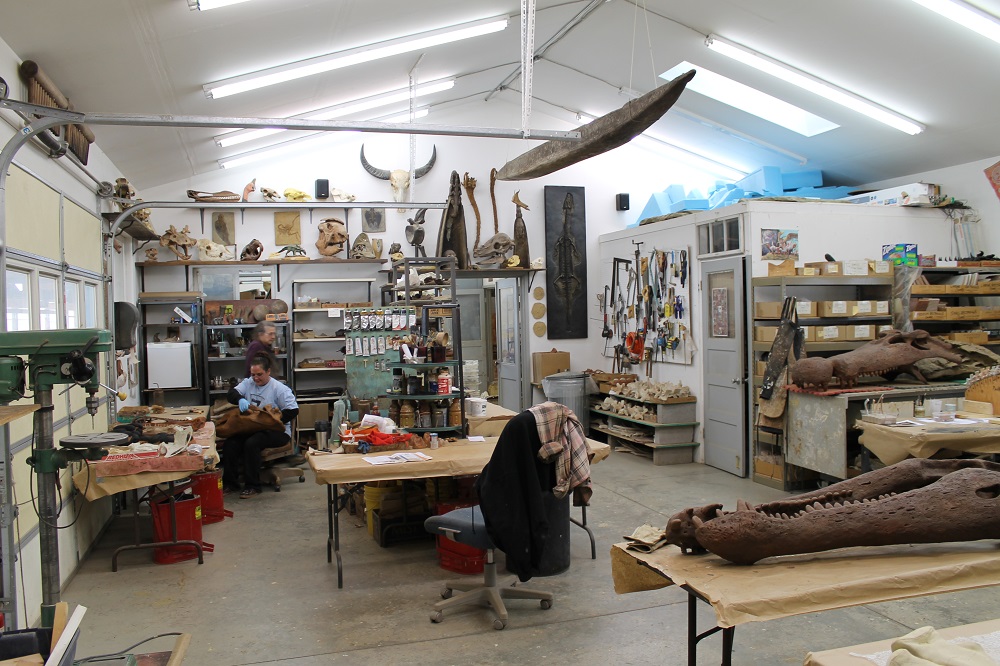
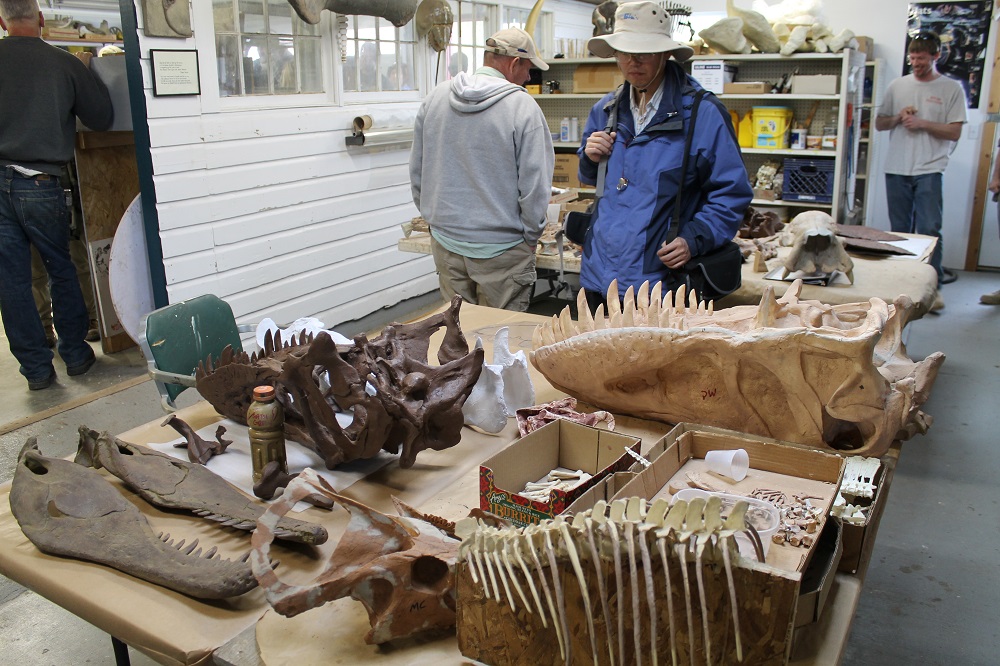
What I can share, however, are two stops we made that are especially relevant to this blog. The first is the Gaston Design workshop in Fruita, Colorado. Rob Gaston and his team specialize in casting and sculpting fossil replicas, and their mounted skeletons are on display all over North America, but especially at younger museums in the western interior. Gaston showed us how they mold, cast, and sculpt fossil replicas, a process that relies a great deal more on artistic and technical skill than fancy equipment.

gaston2

gaston3

gaston4

gaston1

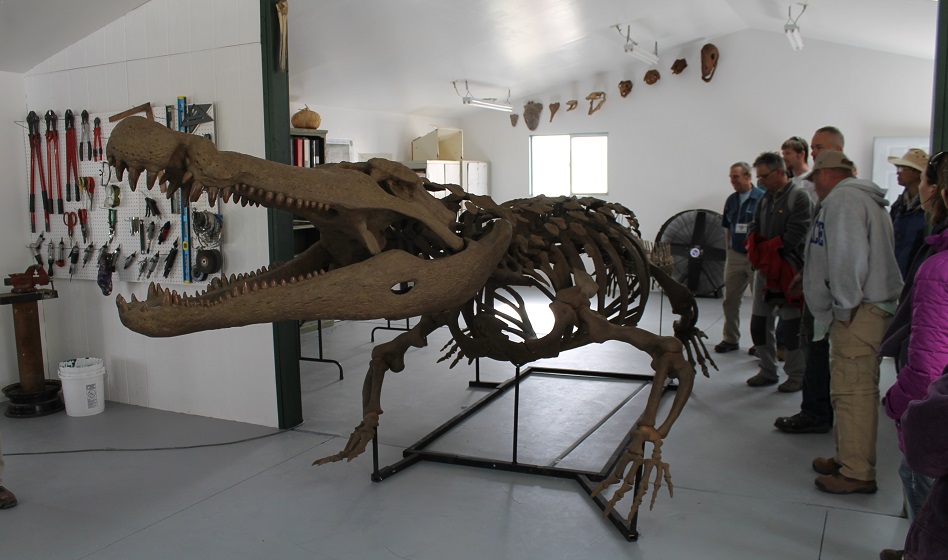
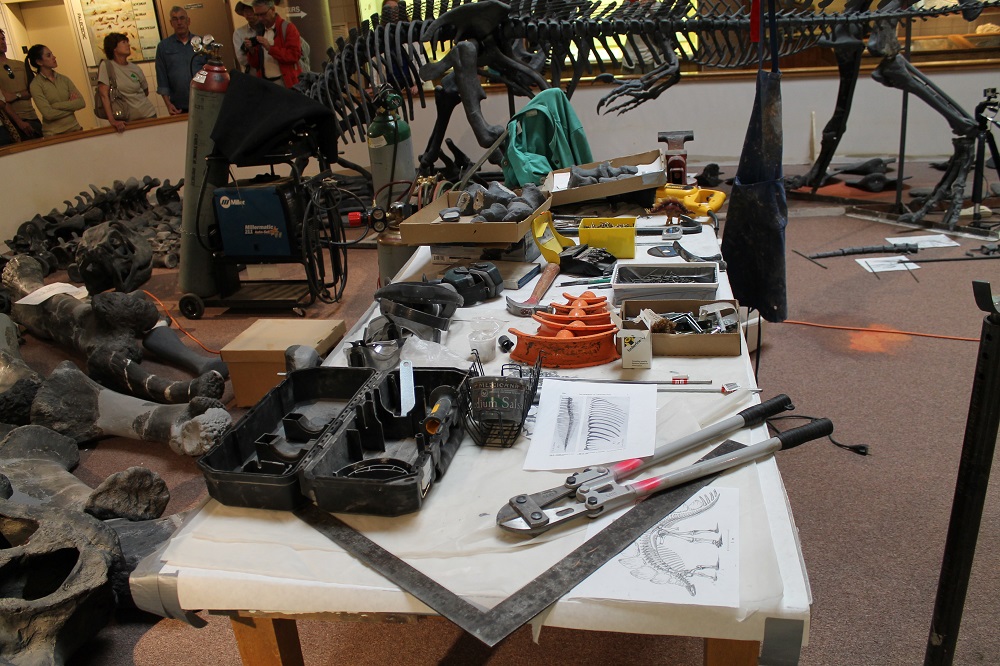
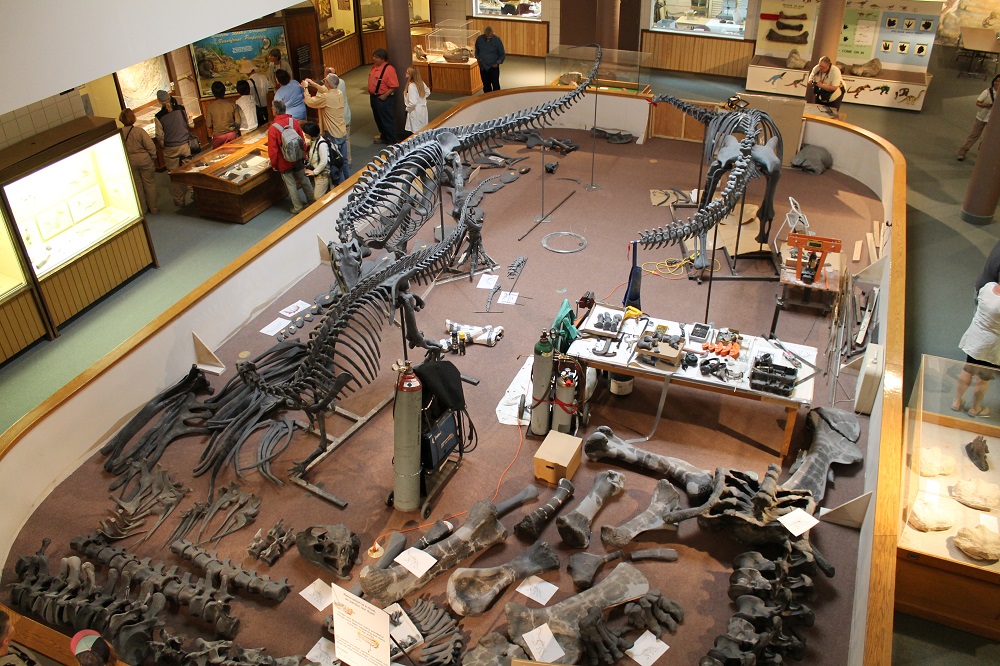
This second set of photos is from the College of Eastern Utah Prehistoric Museum in Price, Utah. Ken Carpenter, the museum’s new director, has taken on the task of completely remounting the menagerie of Morrison dinosaurs in the center of the paleontology wing (some photos of the old mounts here). The original AllosaurusCamptosaurus and Stegosaurus mounts from the late 1980s suffered from an unfortunate case of the tail-drags, and the Camarasaurus had previously been relegated to a death pose. Carpenter’s new mounts, which combine original fossils with new and old reconstructed bones, are much livelier. The stated goal of the project is to encourage visitors to imagine what it would be like to encounter these animals in life. What’s really awesome, though, is that the mounts are being built right in the exhibit, so that visitors can see the progress and the tools and techniques used to build these displays. At present, Allosaurus and Camptosaurus are finished, work on Stegosaurus is underway, and the Camarasaurus skeleton is laid out in pieces.

price1

price2

price3

Sorry to post such a short tease of the awesome stuff we saw at the conference. My head is absolutely packed with information and ideas, so hopefully there will be opportunities to share more soon!

Leave a comment

Filed under dinosaurs, field work, fossil mounts, museums, paleoart

Fossil Mount FAQs


Parasaurolophus

Parasaurolophus at the Field Museum of Natural History. Source

I’ve added a Fossil Mount FAQs document to the top of the page. As the name suggests, this is meant to answer some of the questions about mounted fossil skeletons that I am regularly asked during outreach programs. Right now, the document mostly covers how mounts are created and how they can be interpreted, but I plan to expand the list of questions as needed. Please leave a comment if there is something you think should be included.

Leave a comment

Filed under dinosaurs, fossil mounts, museums

Displaying the Tyrant King – Part 3

Subtlety is unnessesary when T. rex is involved.

Who needs subtlety when you have a T. rex?

Start with Displaying the Tyrant King Part 1 and Part 2.

Tyrannosaurus rex displays changed for good in the 1990s thanks to two individuals, one real and one fictional. The latter was of course the T. rex from the film Jurassic Park, brought to life with a full-sized hydraulic puppet, game-changing computer animation, and the inspired use of a baby elephant’s screeching cry for the dinosaur’s roar. The film made T. rex real – a breathing, snorting, drooling animal unlike anything audiences had ever seen. Jurassic Park was a tough act to follow, and in one way or another, every subsequent museum display of the tyrant king has had to contend with the shadow cast by the film’s iconic star.

The other dinosaur of the decade was Sue, who scarcely requires introduction. First and foremost, Sue is the most complete Tyrannosaurus ever found, with 80% of the skeleton intact. Approximately 28 years old at the time of her death, Sue is also the eldest T. rex known, as well as one of the largest. The specimen’s completeness and exquisite preservation has allowed paleontologists to ascertain an unprecedented amount of information about the lifestyle of meat-eating dinosaurs. In particular, Sue’s skeleton is riddled with fractured and arthritic bones, as well as evidence of gout and parasitic infection that together paint a dramatic picture of the rough-and-tumble world of the late Cretaceous.

From South Dakota to Chicago

Sue at Disney World

Cast of Sue at Walt Disney World, Orlando. Source

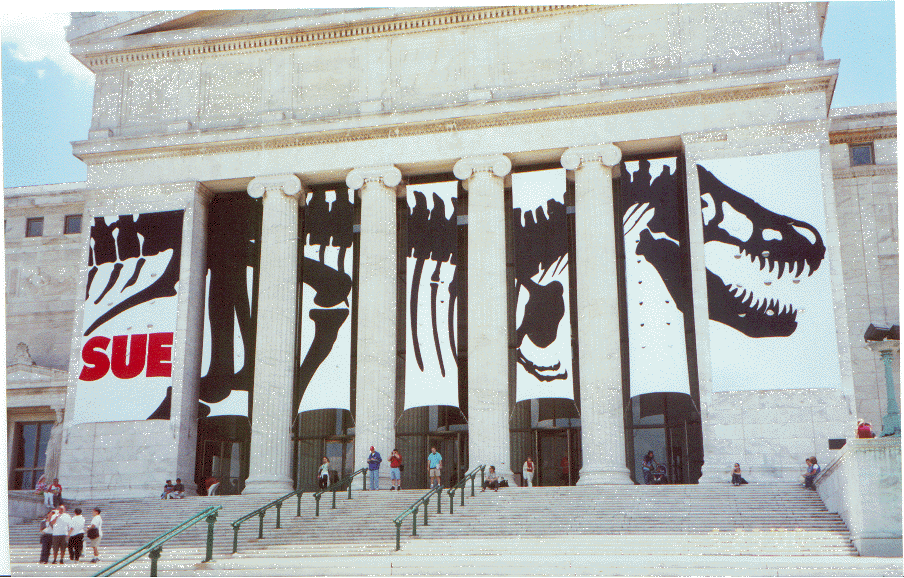
It was the events of Sue’s second life, however, that made her the fossil the world knows by name. Sue was discovered in the late summer of 1990 by avocational fossil hunter Susan Hendrickson (for whom the specimen is named) on the Cheyenne River reservation in South Dakota. Peter Larson of the Black Hills Institute, a commercial outfit that specializes in excavating, preparing, and exhibiting fossils, initially intended to display the Tyrannosaurus at a new facility in Hill City, but soon became embroiled in an ugly four-way legal battle with landowner Maurice Williams, the Cheyenne council, and the United States Department of the Interior. With little precedent for ownership disputes over fossils, it took until 1995 for the District Court to award Williams the skeleton. Williams soon announced that he would put Sue on the auction block, and paleontologists initially worried that the priceless specimen would disappear into the hands of a wealthy collector, or end up in a crass display at a Las Vegas casino. Those fears were put to rest in 1997 when Chicago’s Field Museum of Natural History won Sue with financial backing from McDonald’s and Disney. Including the auctioneer’s commission, the price was an astounding $8.36 million.

FMNH and its corporate partners did not pay seven figures for Sue solely to learn about dinosaur pathology.  Sue’s remarkable completeness would be a boon to scientists, but her star power was at least as important for the Museum. Sue was a blockbuster attraction that would bring visitors in the door, and her name and likeness could be marketed for additional earned income. As FMNH President John McCarter explained, “we do dinosaurs…so that we can do fish” (quoted in Fiffer 2000). Particularly in the late 1990s, with Jurassic Park still fresh in people’s minds, a Tyrannosaurus would attract visitors and generate funds, which could in turn fund less sensational but equally important research, like ichthyology and entomology.

Still, some worried that McCarter, whose background was in business, not science, was exploiting an important specimen as a marketing gimmick at the expense of the Museum’s educational mission. This echoed similar concerns voiced 80 years earlier, when the original mounted Tyrannosaurus was introduced at the American Museum of Natural History. As president of AMNH, Henry Osborn oversaw the creation of grandiose and dramatic exhibits, with the intent to draw crowds and justify private and municipal financial support. When the Museum unveiled the Tyrannosaurus mount, Osborn held a lavish publicity gala for the New York elite and members of the press. The buzz generated by Osborn’s promotion resulted in lines around the block and front page headlines, but the attention was focused on the spectacle of the dinosaur rather than the science behind it. Many academics derided this as lowest common denominator pandering, while others, like anthropologist Franz Boas, grudgingly accepted that “it is a fond delusion of many museum officers that the attitude of the public is a more serious one, but the majority do not want anything beyond entertainment.”

Original skull of Sue the T. rex, displayed on the upper mezzanine. Photo by the author.

FMNH was under similar scrutiny as museum staff revealed their plans for Sue. The role of the corporate sponsors that paid for the fossils was a particular cause for concern, and the marketing team knew it. Although the idea of T. rex-themed Happy Meals was briefly on the table, McDonald’s and Disney wisely opted to present themselves only as patrons of science. McDonald’s got its name on the new fossil preparation lab at FMNH and Disney got a mounted cast of Sue to display at Walt Disney World, but the principal benefit to the two companies was high-profile exposure in association with youth science education. The Museum retained control over the message, highlighting Sue’s importance to paleontology and only coyly admitting her role as a promotional tool. Likewise, FMNH is the sole profiteer from the litany of shirts, hats, toys, mugs, and assorted trinkets bearing the Sue name and logo that are continually sold at the Museum and around Chicago.

You May Approach Her Majesty

Once Sue arrived at FMNH, the Museum did not hold back marketing the dinosaur as a must-see attraction. A pair of Sue’s teeth went on display days after the auction, which expanded organically into the “Sue Uncrated” exhibit, where visitors could watch the plaster-wrapped bones being unpacked and inventoried. Meanwhile, McDonald’s prepared an educational packet on Sue that was distributed to 60,000 elementary schools.

The main event, of course, was the mounted skeleton, which needed to be ready by the summer of 2000. This was an alarmingly short timetable, and the FMNH team had to hit the ground running. Much of Sue’s skeleton was still buried in rock and plaster. The bones needed to be prepared and stabilized before they could be studied, and they needed to be studied before they could be mounted. In addition, two complete Sue casts had to be fabricated: one for Disney World and one for a McDonald’s-sponsored traveling exhibit. The casts were produced by Research Casting International, the Toronto-based company that recently built the mounted menagerie for “Ultimate Dinosaurs“. Phil Fraley Productions, the same exhibit company that rebuilt the American Museum and Carnegie Museum T. rex mounts, was tapped to mount Sue’s original skeleton.

The mounted skeleton of Sue in the Stanley Field Hall. Photo by the author.

Unlike every other Tyrannosaurus mount before or since, Sue can hardly be called a composite. With the exception of a missing arm, left foot, a couple ribs, and small number of other odds and ends, the mounted Sue skeleton is composed of real fossils from a single individual. FMNH public relations latched onto this fact, emphasizing in press releases that while “many museums are displaying replicas of dinosaur skeletons, the Field Museum has strengthened its commitment to authenticity. This is Sue.” Just as they did with the AMNH Tyrannosaurus, Fraley’s team built an armature with individual brackets securing each bone, allowing them to be removed with relative ease for research and conservation. No bolts were drilled into the bones and no permanent glue was applied, ensuring that the fossils incur only minimal damage for the sake of the exhibit. Despite these improvements over historic mount-making techniques, however, the Sue mount does have some inexplicable anatomical errors. The coracoids should be almost touching in the middle of the chest, but the shoulder girdles are mounted so high on the rib cage that there is a substantial space between them. Consequently, the furcula (wishbone) is also positioned incorrectly.

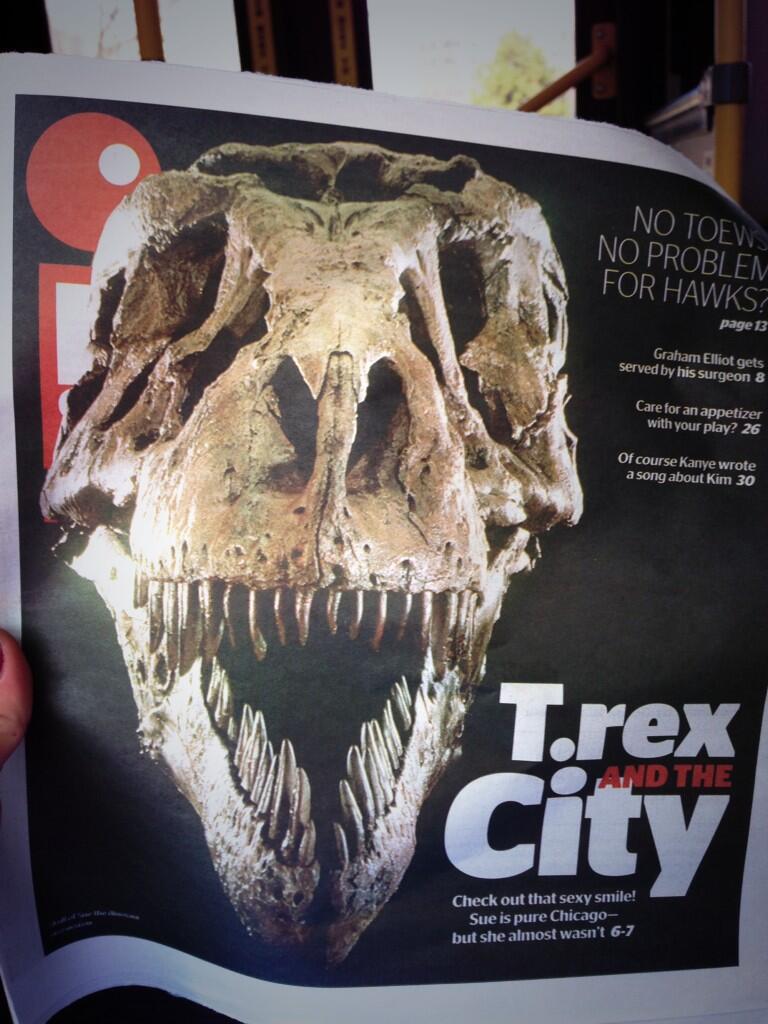
After a private event not unlike the one held by Osborn in 1915, Sue was revealed to the public on May 17, 2000 with the literal raising of a curtain. A week-long series of celebrations and press junkets introduced Sue to Chicago, and she has been one of the city’s biggest attractions every since. All the publicity paid off, at least in the short term: FMNH attendance soared that year from 1.6 million to 2.4 million. 14 years later, Sue the Tyrannosaurus is still known by name, and is even used as the voice of FMNH on twitter. Interestingly, Sue’s new identity as a Chicago landmark seems to have all but eclipsed the legal dispute that was her original source of fame. A recent RedEye cover story goes so far as to proclaim this South Dakotan skeleton as “pure Chicago.”

 The Nation’s T. rex

This customized truck transported the Nation’s T. rex from Montana to Washington, DC.

This year, another Tyrannosaurus specimen has rocketed to Sue-like levels of notoriety. MOR 555, also known as “Wankel Rex”, is being transferred to the Smithsonian National Museum of Natural History, where it will eventually be mounted for long-term display. Now dubbed “the Nation’s T. rex“, the promotion of this specimen has mirrored that of Sue in many ways. Front-page media coverage, first-person tweets from the dinosaur and even an official song and dance contest herald the arrival of the fossils from their previous repository, the Museum of the Rockies in Montana. Much like the “Sue Uncrated” exhibit, the process of unpacking the unarticulated bones will soon be on view in a temporary display called “The Rex Room.” Meanwhile, the very name “Nation’s T. rex” is a provocative invented identity akin to Sue’s new status as a Chicagoan.

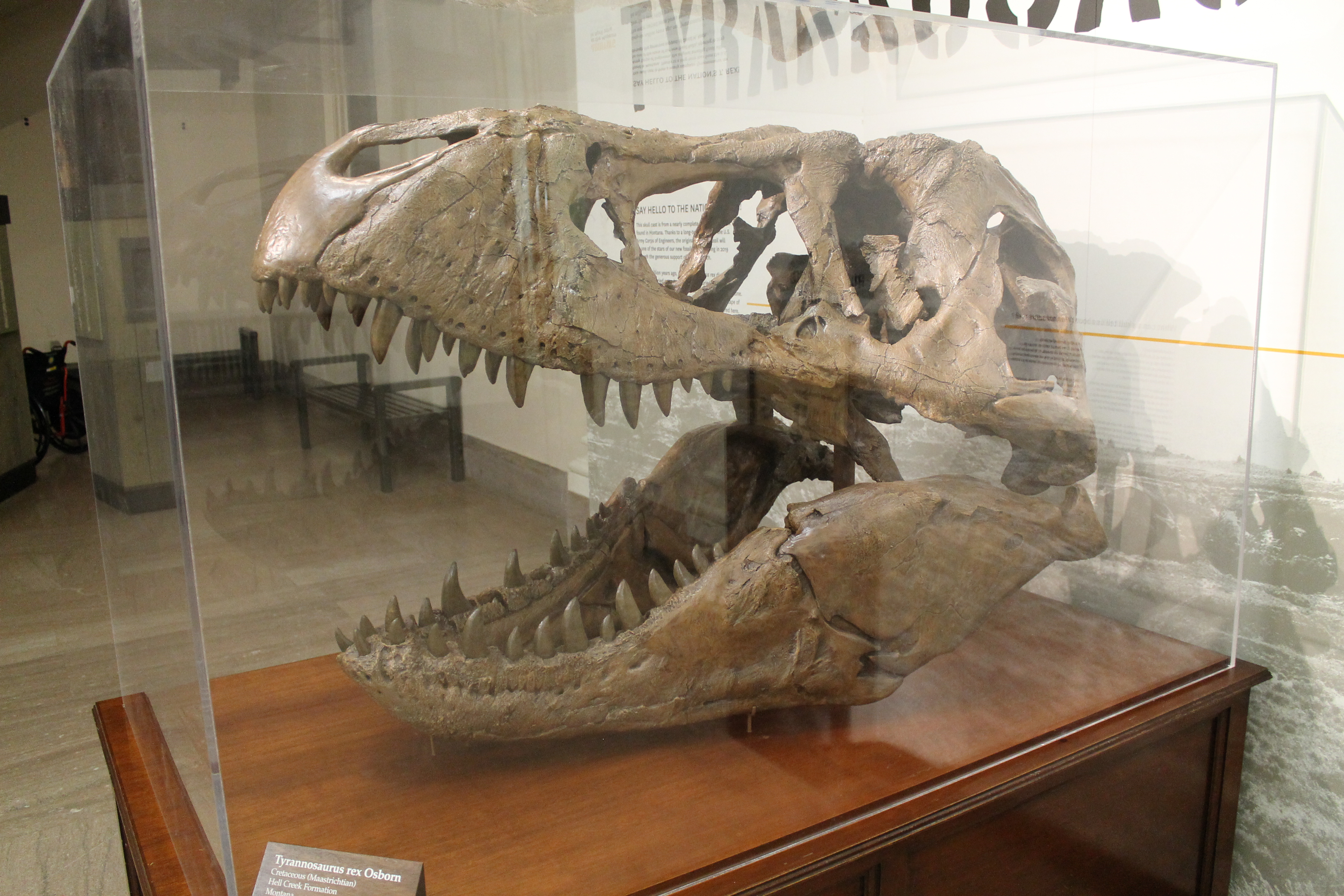
Nevertheless, the Nation’s T. rex does not quite live up to Sue’s mystique. This Tyrannosaurus is neither as large nor as complete as Sue, and there was no prolonged legal battle or frantic auction in its past. The 60% complete skeleton was found in 1988 by Montana rancher Kathy Wankel, on land owned by the US Army Corps of Engineers. The fossils are now on a 50 year loan from from the Corps to the Smithsonian, (presumably) a straightforward transfer between federal agencies. In addition, MOR 555 is by no means a new specimen. Several casts of the skeleton are already on display, including exhibits at the Royal Ontario Museum, the Museum of the Rockies, the Perot Museum of Nature and Science, and even the Google campus. In fact, a cast of the MOR 555 skull has been on display at NMNH for years.

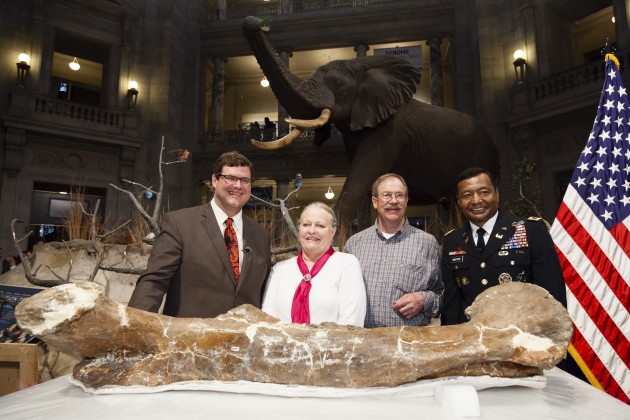
NMNH Director Kirk Johnson, fossil hunter Kathy Wankel, her husband Bob Wankel, and Lt. Gen. Thomas Bostick preside over the arrival of the Nation’s T. rex at the Smithsonian. Source

With that in mind, the hype around the Nation’s T. rex might seem like much ado about nothing. As this series has demonstrated, the number of Tyrannosaurus skeletons on exhibit, whether original fossils or casts, has exploded in recent years. A quarter century ago, New York and Pittsburgh were the only places where the world’s most famous dinosaur could be seen in person. Today, there may well be over a hundred Tyrannosaurus mounts worldwide, most of which are identical casts of a handful of specimens. Acquiring and displaying a T. rex is neither risky nor ambitious for a natural history museum. No audience research or focus groups are needed to know that the tyrant king will be a hit. And yet, excessive duplication of a sure thing might eventually lead to monotony and over-saturation.

So far, such fears appear to be unfounded. A specimen like Sue or the Nation’s T. rex is ideal for museums because it is at once scientifically informative and irresistibly captivating. Museums do not need to choose between education and entertainment because a Tyrannosaurus skeleton effectively does both. And even as ever more lifelike dinosaurs grace film screens, museums are still the symbolic home of T. rex. The iconic image associated with Tyrannosaurus is that of a mounted skeleton in a grand museum hall, just as it was when the dinosaur was introduced to the world nearly a century ago. The tyrant king is an ambassador to science that unfailingly excites audiences about the natural world, and museums are lucky to have it.

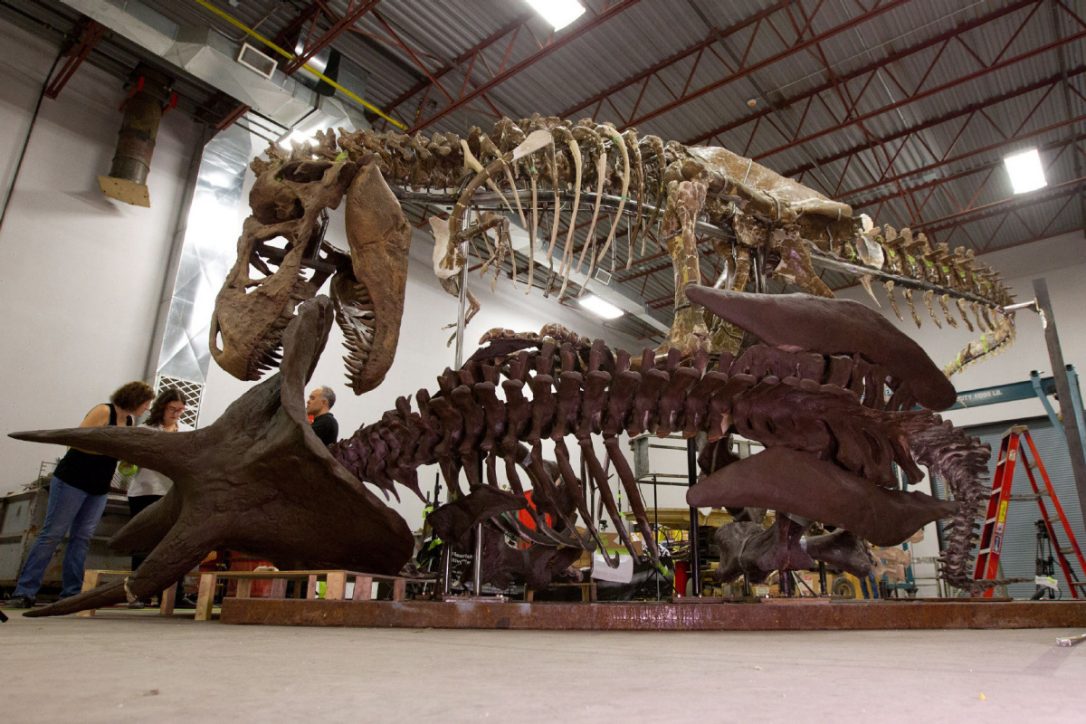
The Nation’s T. rex in its final pose at the Research Casting International workshop.

This week, NMNH will be celebrating all things Tyrannosaurus, starting with a live webcast of arrival of the Nation’s T. rex on Tuesday morning. Stay tuned to this blog for further coverage of the events!

References

Asma, S.T. 2001. Stuffed Animals and Pickled Heads: The Culture and Evolution of Natural History Museums. New York, NY: Oxford University Press.

Boas, F. 1907. Some Principles of Museum Administration. Science 25:650:931-933.

Counts, C.M. 2009. Spectacular Design in Museum Exhibitions. Curator 52: 3: 273-289.

Fiffer, S. 2000. Tyrannosaurus Sue: The Extraordinary Saga of the Largest, Most Fought Over T. rex ever Found. New York, NY: W.H. Freeman and Company.

Larson, N. 2008. “One Hundred Years of Tyrannosaurus rex: The Skeletons.” Tyrannosaurus rex: The Tyrant King. Larson, Peter and Carpenter, Kenneth, eds. Bloomington, IN: Indiana University Press.

Lee, B.M. 2005. The Business of Dinosaurs: The Chicago Field Museum’s Nonprofit Enterprise. Unpublished thesis, George Washington University.

Rainger, R. 1991. An Agenda for Antiquity: Henry Fairfield Osborn and Vertebrate Paleontology at the American Museum of Natural History, 1980-1935. Tuscaloosa, AL: University of Alabama Press.

Switek, B. 2013. My Beloved Brontosaurus: On the Road with Old Bones, New Science and our Favorite Dinosaurs. New York, NY: Scientific American/Farrar, Straus and Giroux.

5 Comments

Filed under dinosaurs, FMNH, fossil mounts, history of science, movies, museums, NMNH, reptiles, science communication, theropods

Displaying the Tyrant King – Part 2

Old meets new

Old meets new: The classic Carnegie T. rex (CM 9380) is now paired with a cast of Peck’s Rex (MOR 980). Photo by the author.

Start with Displaying the Tyrant King – Part 1.

In 1915, the American Museum of Natural History unveiled the first mounted skeleton of Tyrannosaurus rex ever constructed. The Carnegie Museum of Natural History followed suit with their Tyrannosaurus mount in 1941, and for most of the 20th century New York and Pittsburgh were the only places in the world where the tyrant king could be seen in person. Nevertheless, these displays propelled Tyrannosaurus to universal stardom, and the instantly recognizable dinosaur appeared in countless books, films, and other media for years to come.

The omnipresence of T. rex was secured in part by two additional museum displays, ironically at institutions that did not have any actual Tyrannosaurus fossils on hand. The Field Museum of Natural History commissioned Charles Knight to paint a series of prehistoric landscapes in 1928, the most recognizable of which depicts a face-off between Triceratops and a surprisingly spry Tyrannosaurus. In 1947, Rudolph Zallinger painted a considerably more bloated and lethargic T. rex as part of his Age of Reptiles mural at the Peabody Museum of Natural History. Both paintings would be endlessly replicated for decades, and would go on to define the prehistoric predator in the public imagination.

Rex Renaissance

Despite enduring public enthusiasm, scientific interest in dinosaurs declined sharply in the mid-20th century, and new discoveries were few and far between. This changed rather suddenly with the onset of the “dinosaur renaissance” in the 1970s and 80s, which brought renewed energy to the discipline in the wake of evidence that dinosaurs had been energetic and socially sophisticated animals. The next generation of paleontologists endeavored to look at fossils in new ways to understand dinosaur behavior, biomechanics, ontogeny, and ecology. Tyrannosaurus was central to the new wave of research, and has been the subject of hundreds of scientific papers since 1980. More interest brought more fossil hunters into the American west, leading to an unprecedented expansion in known Tyrannosaurus fossils. Once considered vanishingly rare, Tyrannosaurus is now known from over 50 individual specimens across a wide range of ages and sizes. Extensive research on growth rate, cellular structure, sexual dimorphism, speed, and energetics, to name but a few topics, has turned T. rex into a veritable model organism among dinosaurs.

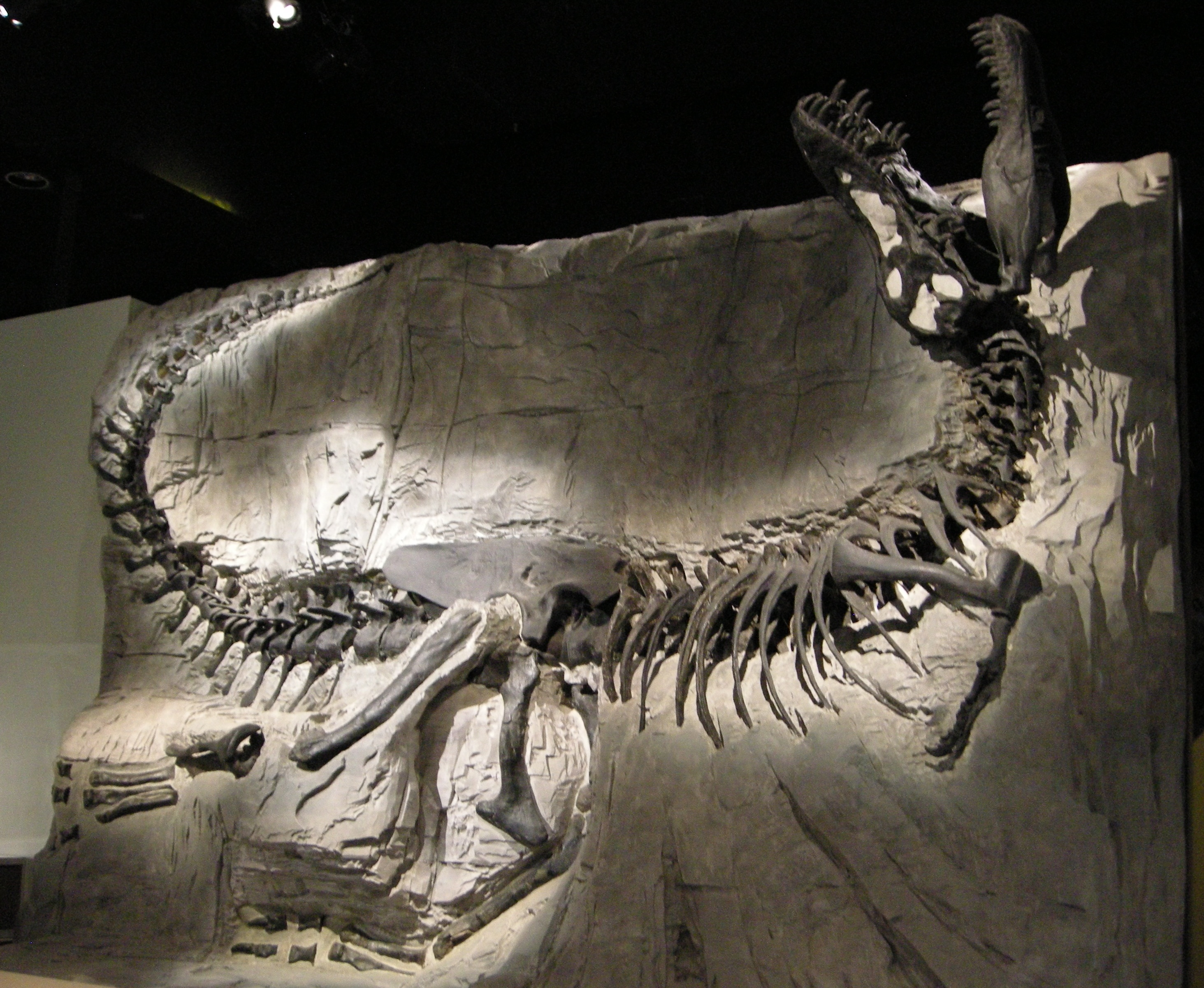
RTMP 81.6.1, aka Black Beauty, mounted in relief at the Royal Tyrell Museum. Source.

RTMP 81.6.1, aka Black Beauty, mounted in relief at the Royal Tyrell Museum. Source

The most celebrated Tyrannosaurus find from the early years of the dinosaur renaissance came from Alberta, making it the northernmost and westernmost T. rex to date. The 30% complete “Black Beauty” specimen, so named for the black luster of the fossilized bones, was found in 1980 by a high school student and was excavated by paleontologist Phil Curie. The original Black Beauty fossils were taken on a tour of Asia before finding a permanent home at the newly established Royal Tyrell Museum in Drumheller, Alberta. In lieu of a standing mount, Black Beauty was embedded in a faux sandstone facade, mirroring the environment in which the fossils were found and the animal’s presumed death pose. This relief mount set Black Beauty apart from its AMNH and CMNH predecessors, and even today it remains one of the most visually striking Tyrannosaurus displays.  Since the original specimen consisted of less than half of a skeleton, much of this display is made up of sculpted bones, including the pelvis, scapula, and most of the ribs. The mounted skull is a cast, but the real skull is displayed behind glass nearby. A complete cast of Black Beauty in a traditional free-standing mount is also on display at the Swedish Museum of Natural History in Stockholm.

The World’s Most Replicated Dinosaur

Driven by the increased public demand for dinosaurs, many museums without Tyrannosaurus fossils of their own have purchased complete casts from other institutions. In 1986, the Academy of Natural Sciences in Philadelphia opened “Discovering Dinosaurs”, the world’s first major exhibit showcasing active, endothermic dinosaurs. The centerpiece of the exhibit was a cast of the original AMNH Tyrannosaurus, posed for the first time in the horizontal posture that we now know was the animal’s habitual stance. The following year, another AMNH cast appeared in the lobby of Denver Museum of Nature and Science in a strikingly bizarre pose, with one leg kicking high in the air. The mount’s designer Robert Bakker intended to push boundaries and demonstrate what a dynamic and energetic Tyrannosaurus might be capable of, although the mount has subsequently been described as dancing, kicking a soccer ball, or peeing on a fire hydrant. Meanwhile, The Royal Tyrell Museum prepared a mount of RTMP.81.12.1 (a specimen consisting of a relatively small number of postcranial bones) that was filled in with AMNH casts, including the highly recognizable skull.

Cast

Tyrannosaurus cast at the Denver Museum of Nature and Science. Source

Since the late 1990s, however, casts of another specimen have overtaken AMNH 5027 for the title of most ubiquitous T. rex. BHI 3033, more commonly known as Stan, was excavated in South Dakota in 1992 by the Black Hills Institute, a for-profit outfit specializing in excavating, preparing, and mounting fossils. Stan is significant for being over two-thirds complete and for including the best-preserved Tyrannosaurus skull yet found. BHI has sold dozens of casts of the Stan skeleton to museums and other venues around the world. At a relatively affordable $100,000 plus shipping, even small local museums and the occasional wealthy individual can now own a Tyrannosaurus mount. With over 50 casts sold as of 2017, Stan is, by a wide margin, the most duplicated and most exhibited dinosaur in the world.

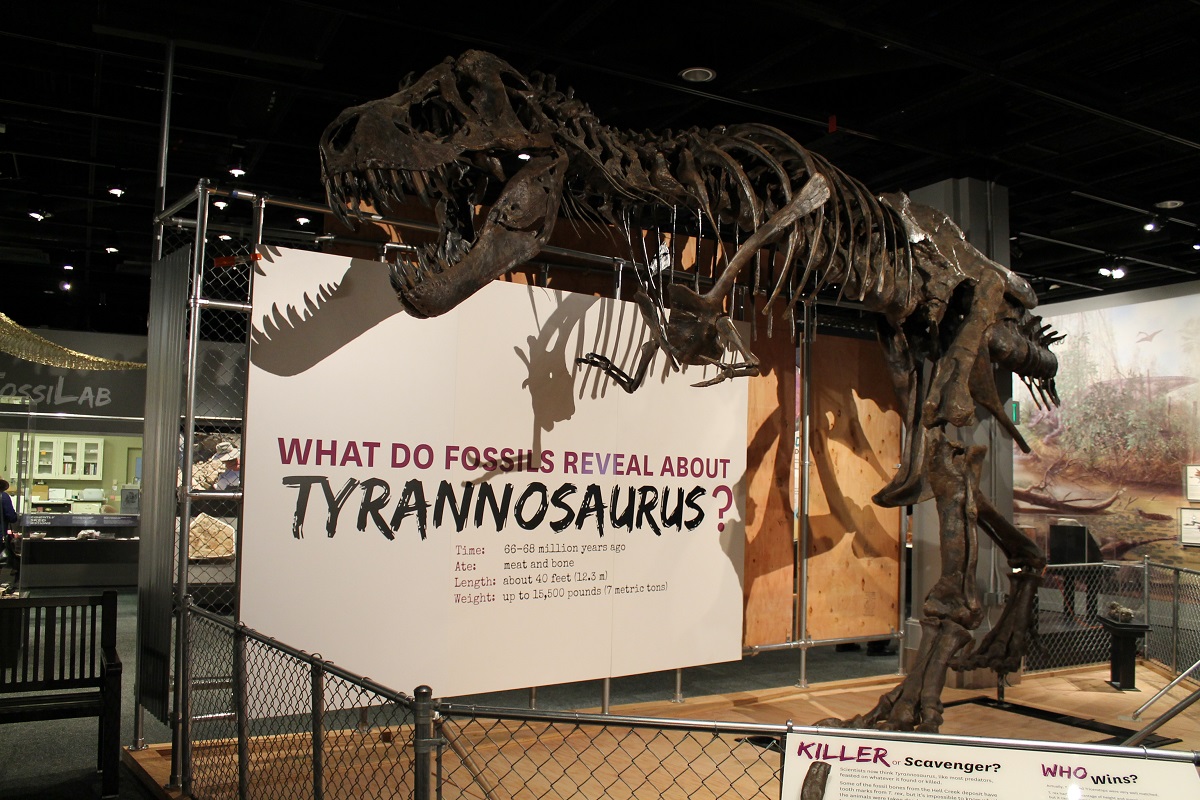
Stan the Tyrannosaurus at the National Museum of Natural History. Photo by the author.

Stan the Tyrannosaurus at the National Museum of Natural History. Photo by the author.

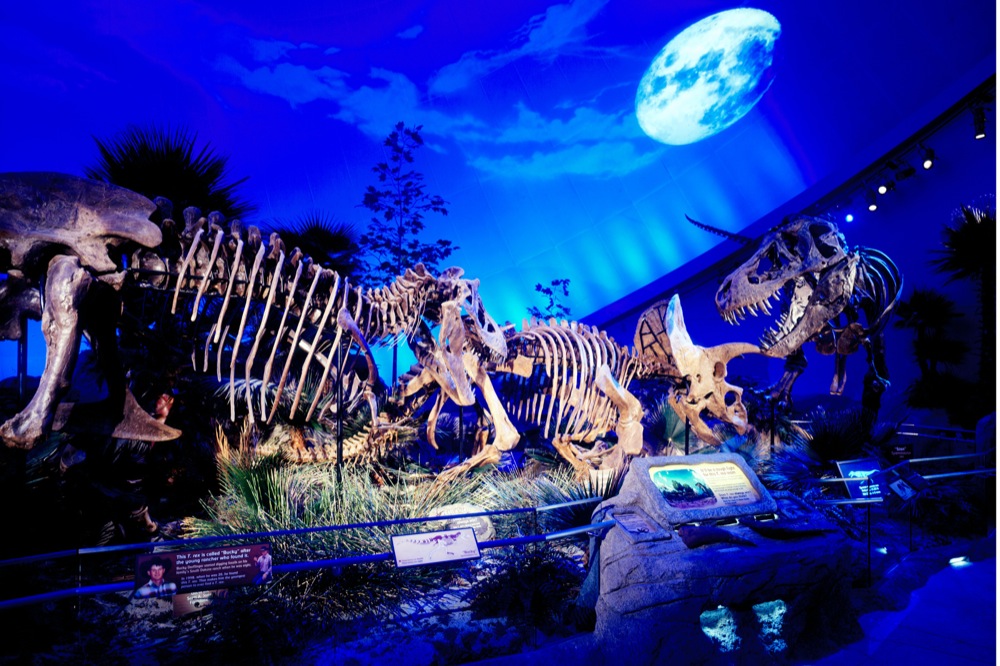
All these new Tyrannosaurus mounts are forcing museums to get creative, whether they are displaying casts or original fossils. Predator-prey pairings are a popular display choice: for example, the Houston Museum of Natural Science T. rex is positioned alongside an armored Denversaurus, and the Los Angeles Natural History Museum matches the tyrant dinosaur with its eternal enemy, Triceratops. Meanwhile, the growing number of juvenile Tyrannosaurus specimens has allowed for family group displays. A second T. rex exhibit at LACM features an adult, subadult and baby, while the Children’s Museum of Indianapolis pairs a Stan cast with the original skeleton of Bucky, a “teenage” T. rex. The most unique Tyrannosaurus mount so far is certainly the copulating pair at the Jurassic Museum of Asturias.

Tyrannosaurus versus Denversaurus at the Houston Museum of Nature and Science. Photo by the author.

Each of these displays gives a substantially different impression of Tyrannosaurus. Depending on the mount, visitors might see T. rex as a powerful brute, a fast and agile hunter, or a nurturing parent (or a gentle lover). Each mount is accurate insofar that a real Tyrannosaurus probably adopted a similar stance at some point, but the museum’s choice of pose nevertheless influences visitors’ understanding of and attitude toward the dinosaur.

Restoring the Classics

With dozens of new Tyrannosaurus mounts springing up across the country and around the world, the original AMNH and CMNH displays began to look increasingly obsolete. Unfortunately, modernizing historic fossil mounts is an extremely complex and expensive process. The early 20th century technicians that built these displays generally intended for them to be permanent: bolts were drilled directly into the bones and gaps were sealed with plaster that can only be removed by manually chipping it away. What’s more, the cumulative effects of rusting armatures, fluctuating humidity, and vibration from passing crowds have considerably damaged historic mounts over the course of their decades on display.

AMNH 5027 was restored and remounted in 1995.

AMNH 5027 was restored and remounted in 1995. Photo by the author.

Despite these challenges, AMNH and CMNH have both been able to restore and update their classic Tyrannosaurus displays. While fossil mounts used to be built in-house, often by the same people who found and described those fossils, modern mounting projects are typically outsourced to specialist companies. Phil Fraley Productions, an exhibit fabrication company based in the Pittsburgh suburbs, was responsible for both T. rex restorations. At AMNH, Jeanne Kelly spent two years disarticulating and conserving each bone before Phil Fraley’s crew took over to build the new armature. The new mount not only corrected the dinosaur’s posture, but improved visitors’ view of the fossils by removing obstructive vertical supports. Instead, most of the skeleton’s weight is now supported by steel cables hanging from the ceiling.  Each bone is secured to an individual metal bracket, allowing researchers to easily remove elements for study as necessary. A new cast of the skull was also prepared, this time with open fenestrae for a more natural appearance. Rather than attempting to match the dramatic and showy T. rex mounts at other museums, the AMNH team chose a comparatively subdued stalking pose. A closed mouth and subtly raised left foot convey a quiet dignity befitting this historically significant display.

Historically, the 1941 CMNH Tyrannosaurus had never quite lived up to its New York predecessor. Although it incorporated the Tyrannosaurus type specimen, it was mostly composed of casts from the New York skeleton, and it sported an unfortunately crude replica skull. It is therefore ironic that CMNH now exhibits the more spectacular T. rex display, one which finally realizes Osborn’s ambitious plan to construct an epic confrontation between two of the giant predators. As they had with the AMNH mount, Phil Fraley’s team dismantled the original display and painstakingly removed many layers of paint, shellac, and plaster from the bones. Michael Holland contributed a new restored skull, actually a composite of several Tyrannosaurus skulls. The restored holotype T. rex now faces off with a cast of “Peck’s Rex”, a specimen recovered from Montana in 1997. Despite the difficulty of modernizing the historic specimen, the team reportedly developed a healthy respect for turn of the century mount-makers like Adam Hermann and Arthur Coggeshall, who developed the techniques for making enduring displays of fragile fossils that are still being refined today.

Continue to Displaying the Tyrant King Part 3.

References

Colbert, E.H., Gillette, D.D. and Molnar, R.N. “North American Dinosaur Hunters.” The Complete Dinosaur, Second Edition. Brett-Surman, M.K., Holtz, T.R. and Farlow, J.O., eds.Bloomington, IN: Indiana University Press.

Dingus, L. 1996. Next of Kin: Great Fossils at the American Museum of Natural History. New York, NY: Rizzoli International Publications, Inc.

Johnson, K. and Stucky, R.K. 2013. “Paleontology: Discovering the Ancient History of the American West.” Denver Museum of Nature and Science Annals, No. 4.

Larson, N. 2008. “One Hundred Years of Tyrannosaurus rex: The Skeletons.” Tyrannosaurus rex, The Tyrant King. Larson, Peter and Carpenter, Kenneth, eds. Bloomington, IN: Indiana University Press.

Naish, D. 2009. The Great Dinosaur Discoveries. Berkeley, CA: University of California Press.

Norell, M., Gaffney, E.S. and Dingus, L. 1995. Discovering Dinosaurs: Evolution, Extinction, and the Lessons of Prehistory.  Berkeley, CA: University of California Press.

Psihoyos, L. 1994. Hunting Dinosaurs. New York, NY: Random House, Inc.

4 Comments

Filed under AMNH, CMNH, dinosaurs, fossil mounts, history of science, museums, NMNH, paleoart, reptiles, theropods

Displaying the Tyrant King – Part 1


The original Tyrannosaurus rex mount at the American Museum of Natural History. Photo from Dingus 1996.

The original Tyrannosaurus rex mount at the American Museum of Natural History. Photo from Dingus 1996.

Woodrow Wilson is in the white house. The first World War is raging in Europe, but the United States is not yet involved. The women’s suffrage movement is picking up speed. And you just heard that the skeleton of an actual dragon is on display at the American Museum of Natural History in New York. It is difficult to imagine a time before every man, woman, and child in the developed world knew the name Tyrannosaurus rex, but that world existed not even a century ago. In 1915, AMNH unveiled the very first mounted skeleton of the tyrant lizard king, immediately and irrevocably cementing the image of the towering reptilian carnivore in the popular psyche.

Today, Tyrannosaurus is a celebrity among dinosaurs, appearing in every form of media imaginable. More importantly, however, it is an icon for paleontology and an ambassador to science. The cult of T. rex began in the halls of museums, and museums remain the prehistoric carnivore’s symbolic home. The mounted skeletons in museums provide the legendary T. rex its credibility: these are the authentic remains of the giant predator that once stalked North America. And yet, most of the dozens of  Tyrannosaurus skeletons on display around the world are casts, and none of them represent complete skeletons (rather, they are filled in with spare parts from other specimens and the occasional sculpted bone). These are sculptures as well as scientific specimens, works of installation art composed by artists, engineers, and scientists. Herein lies the paradox presented by all fossil mounts: they are natural specimens and constructed objects, embodying a challenging duality between the realms of empiricism and imagination.

Tyrannosaurus mount is at once educational and spectacular. Both roles were embraced at AMNH in 1915, and these dual identities have defined T. rex displays ever since. 14 years ago, FMNH PR 2081, also known as Sue, became a star attraction for the Field Museum of Natural History and the city of Chicago at large. Later this month, another T. rex will unwittingly take on a similar role: on April 15th, MOR 555, an 80% complete Tyrannosaurus specimen discovered in Montana, will be dubbed “The Nation’s T. rex and entered into the Smithsonian National Museum of Natural History collection with considerable fanfare.

Skull cast of MOR 555, soon to be "The Nation's T. rex", at NMNH.

Skull cast of MOR 555, soon to be “The Nation’s T. rex“, at the National Museum of Natural History. Photo by the author.

This three part series is a look back at how the tyrant king has defined, and been defined by, the museum experience. Part 1 will cover the circumstances surrounding the creation of the iconic original Tyrannosaurus mount in New York, as well as its successor in Pittsburgh. Part 2 will explore the changing role of Tyrannosaurus in museums caused by a surge of new fossil finds and a revolution in our understanding of dinosaurs. Finally, Part 3 will conclude with a discussion of the positives and negatives of a modern world saturated in all things T. rex.

The Original Tyrant

Between 1890 and 1910, the United States’ large urban natural history museums entered into a frenzied competition to find and display the largest and most spectacular dinosaur skeletons. Although the efforts of paleontologists O.C. Marsh and E.D. Cope in the late 19th century fleshed out the scientific understanding of Mesozoic reptiles, it was these turn-of-the-century museum displays that brought dinosaurs into the public sphere. Bankrolled by New York’s wealthy aristocrats and led by the ambitious mega-tool Henry Osborn, AMNH won the fossil race by most any measure. The New York museum completed the world’s first mounted skeleton of a sauropod dinosaur in 1905, and also left its Chicago and Pittsburgh competitors in the dust with the highest visitation rate and the most fossil mounts on display.

Osborn’s goal was to establish AMNH as the global epicenter for paleontology research and education, and in 1905 he revealed his ace in the hole: two partial skeletons of giant meat-eating dinosaurs uncovered by fossil hunter Barnum Brown. In a deceptively brief paper in the Bulletin of the American Museum of Natural History, Osborn described the fossils from Wyoming and Montana, coining the names Dynamosaurus imperiosus and Tyrannosaurus rex (a follow-up paper in 1906 reclassified “Dynamosaurus” as a second Tyrannosaurus specimen). Fully aware of what a unique prize he had in his possession, Osborn wasted no time leveraging the fossils for academic glory (and additional funding from benefactors). He placed the unarticulated Tyrannosaurus fossils on display at AMNH shortly after his initial publication, and commissioned legendary artist Charles Knight to prepare a painting of the animal’s life appearance.

In 1908, Brown collected a much more complete Tyrannosaurus specimen (AMNH 5027), with over 50% of the skeleton intact, including the first complete skull and a significant portion of the torso. With this specimen in hand, AMNH technician Adam Hermann and his team began work on a mounted Tyrannosaurus skeleton to join the Museum’s growing menagerie of mounted dinosaurs and prehistoric mammals. Inspired by the Museum’s collection of taxidermy mounts in dynamic habitat dioramas, and seeking to accentuate the spectacle of his reptilian monster, Osborn initially wanted to mount two Tyrannosaurus skeletons facing off over a dead hadrosaur. He even published a brief description complete with illustrations of the projected scene (shown below). However, the structural limitations inherent to securing heavy fossils to a steel armature, as well as the inadequate amount of Tyrannosaurus fossils available, made such a sensational display impossible to achieve.

Model of unrealized T. rex showdown mount from Osborn 1913.

Model of unrealized T. rex showdown mount. Image from Osborn 1913.

Instead, Hermann prepared a single Tyrannosaurus mount, combining the 1908 specimen with plaster casts of leg bones from the 1905 holotype. The original skull was impractically heavy, so a cast was used in its place. Finally, missing portions of the skeleton, including the arms, feet, and most of the tail, were sculpted by hand using bones from Allosaurus as reference. During the early 20th century, constructing fossil mounts was a relatively new art form, and while Hermann was one of the most talented and prolific mount-makers in the business, his techniques were somewhat unkind to the fossil material. Bolts were drilled directly into the fragile bones to secure them to the armature, and in some cases steel rods were tunneled right through the bones. Any fractures were sealed with plaster, and reconstructed portions were painted to be nearly indistinguishable from the original fossils. Like most of the early AMNH fossil mounts, preserving the integrity of the Tyrannosaurus bones was often secondary to aesthetic concerns like concealing the unsightly armature.

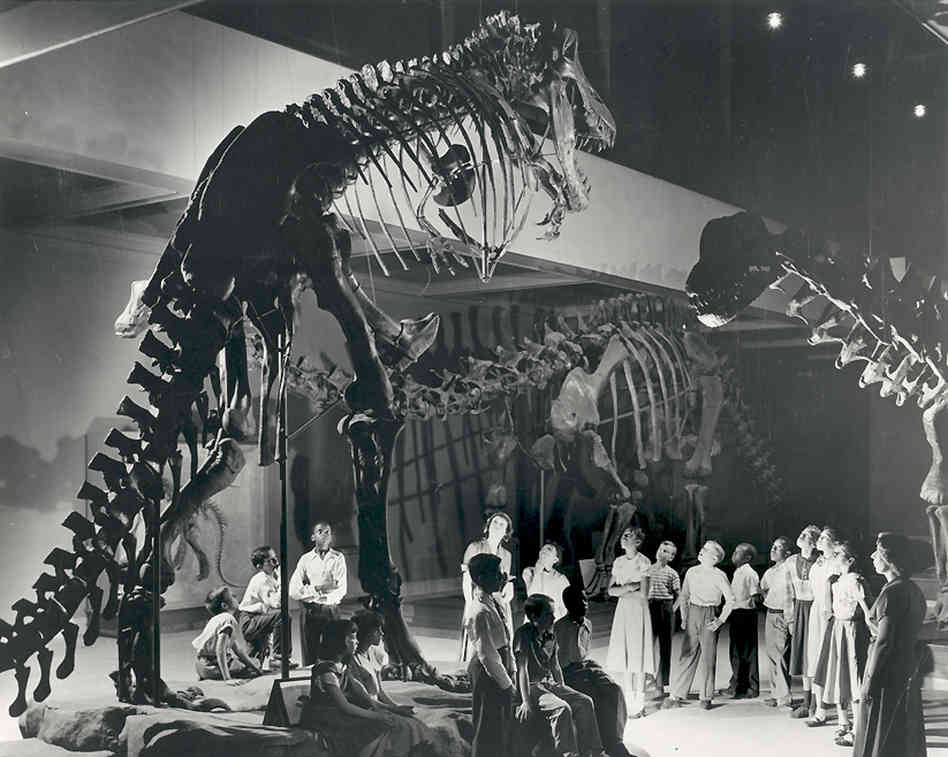
Tyrannosaurus and others in AMNH Dinosaur Hall, 1927. Photo courtesy of AMNH Research Library.

AMNH Tyrannosaurus, ca. 1940. Photo courtesy of the AMNH Research Library.

The completed Tyrannosaurus mount, a magnificent sculptural combination of bone, plaster, and steel, was unveiled in 1915 to stunned audiences. The December 3rd New York Times article was thick with hyperbole, declaring the dinosaur “the prize fighter of antiquity”, “the king of all kings in the domain of animal life,” “the absolute warlord of the earth” and “the most formidable fighting animal of which there is any record whatsoever” (and people say that today’s science journalism is sensationalist!). With its tooth-laden jaws agape and a long, dragging lizard tail extending its length to over 40 feet, the Tyrannosaurus was akin to a mythical dragon, an impossible monster from a primordial world. This dragon, however, was real, albeit safely dead for 66 million years.

Today, we know that the original AMNH Tyrannosaurus mount was inaccurate in many ways. The upright, tail-dragging pose, which had been the most popular attitude for bipedal dinosaurs since Joseph Leidy’s 1868 presentation of Hadrosaurus, is now known to be incorrect. More complete Tyrannosaurus skeletons have revealed that the tail reconstructed by Osborn and Hermann was much too long.  The Allosaurus-inspired sculpted feet were too robust, the legs (casted from the 1905 holotype), were too large compared to the rest of the body, and the hands had too many fingers (the mount was given proper two-fingered hands when it was moved in 1927). It would be misleading to presume that the prehistoric carnivore’s skeleton sprang from the ground exactly as it was presented, but it is equally problematic to reject it as a fake. There are many reasons to criticize Osborn’s leadership at AMNH, but he did not exhibit outright forgeries. The 1915 Tyrannosaurus mount was a solid representation of the best scientific data available at the time, presented in an evocative and compelling manner.

The AMNH Tyrannosaurus mount was no less than an icon: for paleontology, for its host museum, and for the city of New York. The mount has been a New York attraction for longer than the Empire State Building, and for almost 30 years, AMNH was the only place in the world where visitors could see a T. rex in person. In 1918, Tyrannosaurus would make its first Hollywood appearance in the short film The Ghost of Slumber Mountain. This star turn was followed by roles in 1925’s The Lost World and 1933’s King Kong, firmly establishing the tyrant king’s celebrity status. It is noteworthy that special effects artist Willis O’Brian and model maker Marcel Delgado copied the proportions and posture of the AMNH display exactly when creating the dinosaurs for each of these films. The filmmakers apparently took no artistic liberties, recreating Tyrannosaurus precisely how the nation’s top scientists had reconstructed it in the museum.

A T. rex for Pittsburgh

In 1941, AMNH ended it’s Tyrannosaurus monopoly and sold the incomplete type specimen (the partial skeleton described in Osborn’s 1905 publication) to Pittsburgh’s Carnegie Museum of Natural History. While it is sometimes reported that this transfer took place to keep the valuable fossils out of harm’s way during World War II (e.g. Larson 2008), the deal was apparently underway well before the United States became involved in the war. Having paid an astounding $100,000 ($1.7 million in today’s dollars) for the fossils, CMNH staff wasted no time in assembling a mount of their own. The Tyrannosaurus holotype only included only about 15% of the skeleton, so most of Pittsburgh mount had to be made from casts and sculpted elements. Somewhat pointlessly, the skull fragments included with the specimen were buried inside a plaster skull replica, making them inaccessible to researchers for several decades. Completed in less than a year, the CMNH Tyrannosaurus was given an upright, tail-dragging posture very much like its AMNH predecessor.

Carnegie Museum of Natural History. Photo from NPR.

CM 9380 at the Carnegie Museum of Natural History. Source

The mid-20th century is sometimes called the “quiet phase” in vertebrate paleontology. After enjoying public fame and generous federal support during the late 1800s, paleontology as a discipline was largely marginalized when experiment-driven “hard” sciences like physics and molecular biology rose to prominence. By the 1950s and 60s, the comparably small number of researchers studying ancient life were chiefly concerned with theoretical models for quantifying trends in evolution. Although the aging dinosaur displays at American museums remained popular with the public, these animals were perceived as evolutionary dead-ends, of little interest to the majority of scientists. Between 1908 (when Brown found the iconic AMNH Tyrannosaurus skeleton) and 1980, only four largely incomplete Tyrannosaurus specimens were found, and no new mounts of this species were built.

Continue to Displaying the Tyrant King Part 2.

References

Dingus, L. (1996). Next of Kin: Great Fossils at the American Museum of Natural History. New York, NY: Rizzoli International Publications, Inc.

Glut, D. 2008. “Tyrannosaurus rex: A century of celebrity.” Tyrannosaurus rex, The Tyrant King. Larson, Peter and Carpenter, Kenneth, eds. Bloomington, IN: Indiana University Press.

Hermann, A. 1909. “Modern Laboratory Methods in Vertebrate Paleontology.” Bulletin of the American Museum of Natural History 21:283-331.

Larson, N. 2008. “One Hundred Years of Tyrannosaurus rex: The Skeletons.” Tyrannosaurus rex, The Tyrant King. Larson, Peter and Carpenter, Kenneth, eds. Bloomington, IN: Indiana University Press.

“Mining for Mammoths in the Badlands: How Tyrannosaurus Rex Was Dug Out of His 8,000,000 Year old Tomb,” The New York Times, December 3, 1905, page SM1.

Naish, D. 2009. The Great Dinosaur Discoveries. Berkeley, CA: University of California Press.

Osborn, H.F. 1906. “Tyrannosaurus, Upper Cretaceous Carnivorous Dinosaur.” Bulletin of the American Museum of Natural History 22:281-296.

Osborn, H.F. 1913. “Tyrannosaurus, Restoration and Model of the Skeleton.” Bulletin of the American Museum of Natural History 32:9-92.

Rainger, Ronald 1991. “An Agenda for Antiquity: Henry Fairfield Osborn and Vertebrate Paleontology at the American Museum of Natural History, 1890-1935. Tuscaloosa, Alabama. University of Alabama Press.

Wesihampel, D.B. and White, Nadine M. 2003.The Dinosaur Papers: 1676-1906. Washington, DC: Smithsonian Books.

1 Comment

Filed under AMNH, CMNH, dinosaurs, fossil mounts, history of science, movies, museums, NMNH, reptiles, theropods

So that Hadrosaurus skull…

In 1868, paleontologist Joseph Leidy and artist Benjamin Waterhouse Hawkins collaborated on a freestanding mounted skeleton of Hadrosaurus. This was the first time dinosaur fossils had ever been displayed in this way, and the exhibit captured the public imagination like nothing before it. I’ve already written lots about the Hadrosaurus mount (see First Full-Sized Dinosaurs and A Visit to the Academy of Natural Sciences), but it seems there is still more to say.

Hawkin's studio

Hadrosaurus mount under construction in Hawkins’ studio. Image from Carpenter et al. 1994.

Today, I’m interested in the Hadrosaurus head, or rather, the sculpted replica that stood in for its head. As I’ve covered before, the Hadrosaurus fossils recovered near Haddonfield, New Jersey accounted for less than a third of the animal’s skeleton. With two nearly complete limbs, 28 vertebrae, a partial pelvis and scattered teeth, Hadrosaurus was the most complete dinosaur known at the time, but a great deal of it was still unknown. Specifically, Hawkins had to create a skull from scratch, and conventional wisdom (e.g. these articles) has always been that he based his reconstruction on the skull of an iguana. That makes a certain amount of sense, since Leidy interpreted the Haddonfield teeth as having belonged to an herbivore, and an iguana is a contemporary herbivorous reptile.

Astrodon teeth lower left.

Hadrosaurus teeth and dentary (plus some Astrodon teeth on the lower left). From Leidy 1865.

Let’s explore that claim a little more, though. The plate above presumably represents the entirety of the Hadrosaurus cranial material Leidy and Hawkins had to work with. In addition to an assortment of isolated teeth, they had two sections of a dental battery – that is, the grinding surface made up of interlocking teeth that we now know is typical of large ornithopods. One of the battery portions came from the lower jaw (Figs. 24 and 25) and one came from the upper (Fig. 26). The sculpted Hadrosaurus skull, which Academy of Nautral Sciences Associate Curator Ted Daeschler confirms is the only surviving part of the historic mount, is pictured below. Note that Hawkins plainly incorporated the dental batteries into his reconstruction, rather than straight rows of iguana-style teeth.

Hadrosaurus replica skull at Academy of Natural Sciences. Source

Hadrosaurus replica skull at Academy of Natural Sciences. Source

So in at least one detail, the Hadrosaurus model skull is not just a scaled-up version of an iguana. The thing is, though, now that I’m really looking at it, the model doesn’t look much like an iguana skull at all beyond the basic silhouette. Look at that broadly flared jugal, the strongly curved postorbital and especially the way the premaxilla and maxilla curve downward in a beakish fashion. None of these characteristics are present on your run-of-the-mill iguana skull, but they are so extreme and precisely modeled that I would be very surprised if expert anatomists like Leidy and Hawkins simply invented them.

Labeled Iguana iguana skull by Udo Savalli.

Labeled Iguana iguana skull by Udo Savalli.

What does this mean? There are a few options.

  1. Hawkins and Leidy didn’t closely reference anything when creating the Hadrosaurus skull, and just made something up.
  2. Hawkins and Leidy based the Hadrosaurus skull on some contemporary reptile other than a green iguana.
  3. Hawkins and Leidy had more Hadrosaurus cranial fossils than we know about.

Option three is, of course, the interesting one, and is where I would appreciate if any actual hadrosaurid experts in the house would let me know if I’m talking nonsense. But don’t those peculiar non-iguana-like characters on the sculpted Hadrosaurus skull look just a bit like the actual hadrosaurid skulls that would be found in the 20th century?

Kritosaurus skull at AMNH.

Kritosaurus skull at AMNH. Photo by WikiMedia user Ryan Somma.

That downward-tilting rostrum in particular looks suspiciously similar. Is it possible that there was a more complete Hadrosaurus skull at the Haddonfield site, but it was lost or destroyed before Leidy’s publication? Maybe it was considered too fragmentary to collect and was left in the field, or maybe it fell apart in transit (J.B. Hatcher hadn’t invented field jacketing yet). Hawkins might have attempted to interpret sketches or hazy descriptions of lost material, and ended up with the model skull that survives today. I realize that this isn’t much to go on, and that it’s impossible to prove without some thorough archival research. But it is cool to think that maybe, just maybe, there was a bit more to the first American dinosaur than we known about.

References

Carpenter, K., Madsen, J.H. and Lewis, L. (1994). “Mounting of Fossil Vertebrate Skeletons.” In Vertebrate Paleontological Techniques, Vol. 1. Cambridge, UK: Cambridge University Press.

Leidy, J. (1865). “Cretaceous Reptiles of the United States.” Smithsonian Contributions to Knowledge Vol. 14, Article VI.

4 Comments

Filed under dinosaurs, fossil mounts, history of science, museums, ornithopods, reptiles

What’s the deal with Astrodon?

In Laurel, Maryland, a trail of banners depicting a herd of the sauropod dinosaur Astrodon johnstoni leads the way to Dinosaur Park, the site of a historically significant fossil deposit. At the Maryland Science Center in Baltimore, a life-sized Astrodon sculpture towers over the “Dinosaur Mysteries” exhibit. And since 1998, Astrodon has been the official state dinosaur of Maryland, joining other state symbols like the black-eyed susan and Baltimore oriole. In short, Astrodon is a sort of mascot for mid-Atlantic paleontology. Named in 1858 for fossils found in a Prince George’s County iron mine, the appeal of Astrodon for Marylanders is obvious: it’s a home-grown dinosaur in a region that is not widely recognized for its fossil resources, and the story of its discovery also calls attention to the state’s industrial heritage.

But what sort of animal was Astrodon, and how much do paleontologists truly know about it? Compared to many other extinct animals found around the world, the fossil record for Astrodon is and always has been fairly poor. The name Astrodon was first bestowed upon nothing more than isolated teeth, and although other fragmentary remains attributed to Astrodon have been uncovered over the past 150 years, reconstructions of the Maryland sauropod are mostly derived from the fossils of relatives found elsewhere. What’s more, the name Astrodon has a convoluted history, having been applied haphazardly to fossils found across the country and even around the world. For these reasons, some paleontologists would prefer that the name Astrodon not be used at all.

Lacking a scientific consensus on what sort of animal the Maryland sauropod was or even what it should be called, I find myself in a difficult position as an educator. How can the messy and contentious taxonomy of Astrodon be condensed into something teachable? Is simplifying or downplaying this controversy doing our audience a disservice, and to what degree?

The taxonomic history of Astrodon

The first scientifically recognized North American dinosaur fossils were found in the Mid-Atlantic region, a scant 17 years after dinosaurs were first recognized as a biological group in 1842. Joseph Leidy’s Hadrosaurus from the New Jersey coast is credited as the first American dinosaur to be described, but Astrodon was a close second. During the mid-19th century, iron mining was big business in central Maryland. Miners extracted large boulders of siderite, or iron ore, from open pit mines throughout Prince George’s County, and these miners were the first in the region to discover dinosaur bones and teeth. The siderite was being mined from clay deposits now known as the Arundel Formation, part of the larger Potomac Group that extends throughout Maryland (the Potomac Group was laid down during the Early Cretaceous period, between 125 and 113 million years ago). Members of the Maryland Academy of Sciences recognized the fossils from the Arundel clay as similar to the English fossil reptiles that Richard Owen had recently unified as Dinosauria. In 1858, academy member Christopher Johnston published a description of a set of teeth from the iron mines in the American Journal of Dental Science, which he named “Astrodon” (Joseph Leidy turned this informal name into a proper binomial, Astrodon johnstoni, in his 1865 review of North American fossil reptiles).

Today, most paleontologists consider it poor judgment to name a new taxon based only on teeth. When scientists describe a newly discovered organism, they designate a type specimen, which is used to define that taxon in perpetuity. But when the type specimen is especially fragmentary, or only consists of a small part of the organism, it poses a problem for future researchers. In the case of Astrodon, no newly discovered fossils other than teeth can be confidently referred to the same species. In 1858, however, paleontological norms were very different. All dinosaur fossils known at the time were exceedingly incomplete: scientists knew that dinosaurs were reptiles and that they were very big and not much else. Any new fossils, even teeth, represented a major addition to our understanding of the life appearance and diversity of these extinct animals. For modern paleontologists, Johnston’s published description of the Astrodon teeth is vague and uninformative, but in his day, these fossils were distinct from anything else yet known.

Astrodon teeth lower left.

Astrodon teeth are on the lower left.

In December of 1887, famed paleontologist Othneil Charles Marsh sent his best fossil hunter, John Bell Hatcher, to search the area in Prince George’s County where Astrodon was discovered. Judging from Hatcher’s journal entries, he didn’t have a great time. It rained and snowed almost constantly, and on several days his team didn’t bother to show up for work. Although Hatcher managed to find numerous dinosaur, crocodile and turtle fossils, these finds did not match the quality of the fossils Hatcher had been finding in the western states, and no return trips were made. Nevertheless, Marsh saw fit to name two new dinosaur species from the material Hatcher collected: Pluerocoelus altus and Pluerocoelus nanus. Neither taxon was named for material that would be considered diagnostic if found today: P. altus was based on a tibia and fibula, while P. nanus was based on four nonadjacent vertebrae.

By this time, more complete dinosaur fossils from the American west were beginning to reveal a clearer picture of dinosaur diversity. Based on the shape and size of the fossils collected by Hatcher, Marsh determined that they belonged to sauropods, the group of long-necked herbivores that includes Diplodocus and Apatosaurus. More specifically, Marsh recognized that the Arundel sauropods were similar to “Morosaurus” (now called Camarasaurus) from Colorado. Today, the lineage of stocky, broad-nosed sauropods that includes Camarasaurus and its closest relatives are called macronarians. Unfortunately, by modern standards Marsh’s descriptions of P. altus and P. nanus are rudimentary in nature, and no distinguishing characteristics not common to all macronarian sauropods were offered.

Pleurocoelus elements. Image from NMNH Backyard Dinosaurs.

Pleurocoelus (or Astrodon?) fossils collected by Hatcher. Image from NMNH online exhibit Backyard Dinosaurs.

Contra Marsh, Hatcher suspected that there was only one sauropod in the Arundel Formation. P. altus and P. nanus were probably growth stages of one species, and the Astrodon teeth, now recognized as typical of macronarians, probably came from the same animal, as well. Since the International Code of Zoological Nomenclature decrees that the first published name given to a taxon has priority, Astrodon would take precedence over Pluerocoelus. Later, Charles Gilmore published a review of the Arundel fossils, in which he concurred with Hatcher that P. altus was a junior synonym of Astrodon, but retained P. nanus as a separate species.  

Then things started getting really complicated. While paleontologists were still debating how many sauropod species existed in the Arundel clay, Marsh and others had started naming lots of new species of Pluerocoelus. Fossils found in Texas, Oklahoma and even the U.K. were all thrown into the Pluerocoelus bucket, including P. montanusP. valdensisP. becklesii and P. suffosus. For much of the 20th century, Pluerocoelus was a classic wastebasket taxon, into which any and all sauropod fossils from early Cretaceous strata were casually thrown. Since the Pluerocoelus type specimens designated by Marsh were insufficient to define the taxon based on morphology, the name became little more than a temporal marker. Adding to the confusion, researchers continued to disagree over whether all these new Pluerocoelus species should be sunk into the earlier genus Astrodon.

In recent years, some progress has been made toward untangling this mess of early Cretaceous sauropods. There is a general consensus that fossils not found in Maryland’s Potomac Group differ substantially from the Arundel sauropods and should never have been referred to Pluerocoelus or Astrodon. New names have been proposed for the midwestern sauropods, including Astrophocaudia and Paluxysaurus. However, removing the non-Maryland fossils from the discussion merely returns us to the original set of problems: how many sauropods are represented in the Arundel clay, what were they like in life, and what should we call them?

Creating a coherent picture of Astrodon

Unfortunately, the answers to these questions depend on who you ask. The most thorough review of Arundel sauropods from the last decade was published by Kenneth Carpenter and Virginia Tidwell in 2005. Carpenter and Tidwell reaffirmed Hatcher’s conclusion that Pluerocoelus is synonymous with Astrodon, and that as the earliest published name, Astrodon has priority. This decision is apparently based only on the fact that the fossils came from the same stratum, however, since the Astrodon holotype cannot be compared to anything besides other teeth. For this reason, Michael D’Emic proposed in 2012 that the names Astrodon and Pluerocoelus are nomen dubia and should both be dropped entirely. Ultimately, neither solution is practical for identifying the sauropod fossils that continue to be collected from the Arundel Formation. Either we blindly refer any and all sauropod fossils to Astrodon, even though we lack a usable holotype, or we have no label available at all.  One solution would be to establish a new type specimen (called a neotype) for Astrodon, but this has yet to be done.

Both camarasaur and brachiosaur shaped Astrodon reconstructions are equally reasonable.

Both camarasaur and brachiosaur-shaped Astrodon reconstructions are reasonable. Artwork by Dmitry Bogdanov, via Wikipedia.

While many more sauropod fossils have been found in the Arundel clay since Hatcher’s 1887 expedition, we do not have enough material to fully elucidate what these animals looked like. Size estimates have varied enormously, from as little as 30 feet to as much as 80 feet in length. The assortment of fossil bones and teeth that have been found tell us we have a macronarian sauropod, and we can reconstruct its general shape based on more completely known relatives. However, macronarians were a fairly diverse bunch, ranging from the comparatively stocky camarasaurs to high-shouldered, elongate brachiosaurs. Carpenter and Tidwell describe the Arundel sauropod fossils, particularly the limb bones, as being fairly slender, but still more robust than those of Brachiosaurus. They do recognize, however, that nearly all known Arundel sauropod fossils come from juveniles, which may vary proportionally from adults. Because the precise affinities of Astrodon are unclear, artistic reconstructions vary substantially. The National Museum of Natural History’s Backyard Dinosaurs exhibit and website shows a camarasaur-shaped sauropod, while the life-sized sculpture at the Maryland Science Center is based on the brachiosaur Giraffatitan. At Dinosaur Park in Laurel, meanwhile, both versions are on display. More fossils, ideally cervical vertebrae or more complete adult material, are needed to clarify what the Arundel sauropod looked really like.

Teaching Astrodon

When I show people the teeth and partial bones attributed to Astrodon during public programs, I am almost always asked, “if that’s all you’ve found, how do you know what the whole animal looked like?”  As demonstrated by this post, it takes 1,700 words and counting to give a proper answer, which is too much for all but the most dedicated audiences. Nevertheless, to do anything less is to skip crucial caveats and information. Scientists are choosy about the words they use, filling explanations with “probablys” and “almost certainlys”, but they do so with good reason: when one’s job is to create and communicate knowledge, there is no room for ambiguity about what is and is not known. It is therefore just a bit dishonest to say that a large sauropod called Astrodon that was related to Brachiosaurus lived in Maryland, and yet I do so every week. How can I possibly sleep at night?

I’ll admit it can be difficult, but I get by because using one proviso-free name for the Maryland sauropod seems to be  informative and helpful to my audience. I only have people’s attention for so long, and I’d rather not spend that time on tangents about how Astrodon should really be called Pluerocoelus or why my use of either name is imprecise and problematic. I want visitors to walk away understanding how paleontologists assemble clues from sedimentary structures and anatomical comparisons to reconstruct ancient environments and their inhabitants. I’d like for visitors to practice making observations and drawing conclusions, and understand how paleontology is a meticulous science that can be relevant to their lives. “Paleontologists are weirdly obsessed with changing names” is not one of the most important things to know about paleontology.

Taxonomy, the science of naming and identifying living things, is unquestionably valuable. Biologists would be lost without the ability to differentiate among taxa. From my perspective, however, the public face of paleontology tends to overemphasize taxonomic debates in lieu of more informative discussions. There will always be somebody willing to argue whether Tarbosaurus bataar should be sunk into Tyrannosaurus, or to give incorrect explanations for why we lost “Brontosaurus.” In the end, though, these debates have more to do with people’s preferences than the actual biology of these animals. Astrodon may not be a diagnostic taxon in the strictest sense, but we need to call our fossils something, and taxonomic labels exist to be informative and useful. If asked, I’m always happy to provide the full story. But for the time being, Astrodon seems to be working just fine.

References

Carpenter, K. and Tidwell, V. 2005. Reassessment of the Early Cretaceous sauropod Astrodon johnstoni Leidy 1865 (Titanosauriformes). In Carpenter and Tidwell (eds.), Thunder-Lizards: The Sauropodomorph Dinosaurs. Bloomington, IA: Indiana University Press.

D’Emic M.D. 2012. Revision of the sauropod dinosaurs of the Lower Cretaceous Trinity Group, southern USA, with the description of a new genus. Journal of Systematic Paleontology, iFirst 2012, 1-20.

Gilmore, C.W. 1921. The fauna of the Arundel Formation of Maryland. Proceedings of the United States National Museum. 59: 581-594.

Kranz, P.M. Dinosaurs in Maryland. 1989. Published by Maryland Geological Survey, Department of Natural Resources, Educational Series No. 6.

Marsh, O.C. 1888. Notice of a New Genus of Sauropoda and Other New Dinosaurs from the Potomac Formation.

Please note that the usual disclaimer applies: views or opinions expressed here are mine, and do not reflect any institution with which I am affiliated.

1 Comment

Filed under citizen science, Dinosaur Park, dinosaurs, field work, history of science, reviews, sauropods, systematics