Category Archives: field work

The Artist in His Museum: Peale’s Mastodon

In 1801, naturalist and painter Charles Wilson Peale assembled in Philadelphia the skeleton of a mastodon (Mammut americanum).While Peale’s mastodon was not the first fully assembled fossil animal put on display, it was assuredly the first display of this type to capture widespread public attention, particularly in the United States. What’s more, the mastodon became an important symbol for the untold natural wonders of the American continent, which was still largely unexplored (by European colonists) at the beginning of the 19th century. Finally, Peale’s mastodon made clear to the public one of the most important principles of modern biology: the idea that organisms can become extinct.

The Peale Museum mastodon, as illustrated by Charles Peale's son, Rembrandt. The Peale Museum mastodon, as illustrated by Charles Peale’s son, Rembrandt.

An extinct giant

The story of the mastodon mount actually began a full century before the 1806 debut. In 1705, a farmer in Claverack, New York found an enormous tooth that had eroded out of a hillside. The farmer traded the tooth to a local politician, and it eventually made it its way into the hands of New York’s colonial governor, Edward Hyde, 3rd Earl of Clarendon. Hyde in turn sent the tooth to London, describing it as a remnant of an antediluvian giant. As word of the remains of a giant spread, other Americans soon began reporting similar finds. Throughout the colonies, giant bones, teeth, and tusks began to be uncovered. While early reports called these fossils the remains of “incognitum,” or “the unknown,” naturalists caught on reasonably quickly that these were not the bones of giant men but of elephant-like creatures.

At this point a brief digression on etymology and taxonomy is required. For most of the 19th century, the American fossil elephants were invariably called “mahmot” or “mammoth.” This was an Anglicization of the Old Vogul term maimanto (meaning earth-horn), which referred to giant tusks occasionally found in Siberia. It is unclear, however, who first made the correct connection between the frozen mammoths of Siberia and the American fossil skeletons. Credit for adopting “mammoth” as a synonym for “big” goes to Thomas Jefferson, who was fascinated by paleontology and the mammoth fossils in particular.

It was not until 1817 that French anatomist Georges Cuvier recognized that there were at least two types of extinct American proboscideans: the taller mammoths and stockier mastodons. Unequivocally demonstrating the staggering repression of the Victorian era, Cuvier coined the name “mastodon,” meaning nipple tooth, because apparently he thought the animal’s most distinguishing feature was that its teeth looked like breasts.

Boobs? Couvier, you poor bastard. Cuvier, you poor bastard.

The American elephantine fossils raised difficult questions for naturalists. The fossils clearly belonged to animals that had never been seen alive, which meant that the entire species must have died out. This concept of extinction was new to science, and it challenged the biblically-inspired presumption that all species had originated in a single creation event. Cuvier was a leader in the 19th century scientific movement known as catastrophism–the idea that extinctions were the result of periodic disasters, such as floods. While Cuvier himself rejected the idea that populations of organisms could avoid extinction by adapting and changing, his work on extinction would prove important when Charles Darwin worked out the process of evolution several decades later.

Unearthing the mastodon

In 1789, Nicholas Collin of the American Philosophical Society proposed a search for a complete mammoth skeleton, in order to resolve the animal’s identity and the question of its extinction once and for all. Collin’s call was answered by Charles Wilson Peale, founder of America’s first modern museum. Peale is best known today as a portrait artist during the American Revolution, but he was also the founder of the Peale Museum in Philadelphia. Although semi-formal collections of interesting natural specimens had existed before, Peale uniquely fashioned his institution as a space for public education, rather than a private vanity project. On the second floor of Philadelphia’s Independence Hall, Peale arranged displays of mammals, birds, and plants in a scala naturae, which was the contemporary understanding of natural order. Peale intended the museum to be a public resource that would improve visitors’ moral character through lessons in science, as was made clear by the slogan printed on every ticket, “the birds and beasts will teach thee.”

In 1799, a farmer named John Masten reported that he had found bones of “an animal of uncommon magnitude” on his land outside Newburgh, New York. Masten gathered a large party of friends and neighbors to help excavate the find. This proved to be a little too much fun: the crowd eventually descended into alcohol-fueled chaos, and many of the fossils were destroyed. Nevertheless, Peale decided to pay Masten a visit, with the hope of securing mammoth fossils for his museum. Peale ended up paying Masten $200 for the surviving fossils, plus another $100 for the right to search his land for more remains. Peale returned to Masten’s farm with a better-organized crew and $500 in additional funding from the American Philosophical Society. The ensuing excavation is the subject of Peale’s 1806 painting, The Exhumation of the Mastodon, shown below.

“The Exhumation of the Mastodon” by Charles Peale, 1806.

Although highly dramatized, The Exhumation of the Mastodon provides the best available record of the event. Since the pit where Masten first found the bones had filled with water, Peale oversaw the construction of a huge wooden wheel, which drove a conveyor belt hauling buckets of water out of the work site. Peale himself can be seen on the right, presiding over his small army of excavators. The well-publicized project eventually uncovered most of a mastodon. Exploring a few nearby farms, Peale’s workers eventually accumulated enough material to build a complete skeleton, most notably a mandible found on another farm down the road. In what was either showmanship or genuine confusion regarding the diets of elephants, Peale said of the find, “Gracious God, what a jaw! How many animals must have been crushed beneath it!” (quoted in Simpson 1942, 159).

The mastodon on exhibit

Once the mastodon skeleton had been transported to Philadelphia, the process of building the mount fell upon Peale’s son Rembrandt and Moses Williams, a free man of color who worked for the Peales. It took three months to articulate the skeleton, although sadly the details of how it was mounted on its armature are lost to history. Initiating a practice that would become necessity for most fossil mounts in years to come, Rembrant filled in missing parts of the mastodon skeleton (the top of the cranium and the tail) with sculpted elements. In addition, wooden discs were placed between vertebrae, slightly exaggerating the mount’s total length.

The completed mastodon mount was unveiled in 1802, in the main hall of the American Philosophical Society. Shortly thereafter, it was moved to the Peale Museum at Independence Hall. For 50 cents (plus regular admission), the visiting public could marvel at the creature Peale touted as “the first of American animals” and “the largest of terrestrial beings.” The mastodon (still being called a mammoth at that time) was a sensation, stirring up fascination with natural science, the prehistoric past, and no small amount of ours-is-bigger-than-yours patriotism in the young United States. In 1822, Peale would commemorate the unveiling of the mastodon with his self portrait, The Artist in His Museum. Ever the showman, Peale ensured that the skeleton in his painting is only barely visible below the rising curtain.

“The Artist in His Museum” by Charles Peale, 1822.

After Peale’s death in 1827 his museum floundered, and was eventually reduced from a meritorious educational institution into a circus of cheap spectacle. It shut down for good in 1848, and the mastodon (by then one of many similar mounts) was put up for auction. There are several conflicting accounts of what became of the mount, including the suggestion that it was destroyed in a fire, but in fact Peale’s mastodon has survived to the present day. Johann Jakob Kaup purchased the skeleton for the Landesmuseum in Durmstadt, Germany, and it has remained on display there ever since.
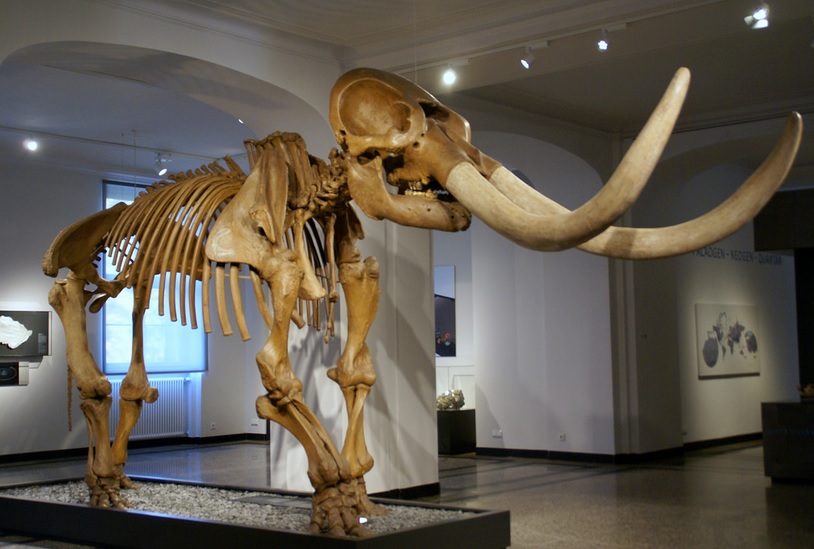
Germany Peale’s mastodon survives in Durmstadt, Germany. Source

Peale’s mastodon left an unmistakable legacy for both paleontology and public education. Today, the public conception of prehistory is inseparably connected to the image of towering mounted skeletons in museum halls. But fossils do not come out of the ground bolted to steel armatures, so it is largely thanks to Peale that mounts have become the most enduring means of sharing paleontology with the public.

References

Carpenter, K., Madsen, J.H. and Lewis, L. (1994). Mounting of Fossil Vertebrate Skeletons. Vertebrate Paleontological Techniques, Vol. 1. Cambridge, UK: Cambridge University Press.

Connriff, R. (2010). Mammoths and Mastodons: All American Monsters. Smithsonian Magazine. http://www.smithsonianmag.com/science-nature/Mammoths-and-Mastodons-All-American-Monsters.html

Semonin, P. (2000). American Monster: How the Nation’s First Prehistoric Creature Became a Symbol of National Identity. New York, NY: New York University Press.

Simpson, G.G. (1942). The Beginnings of Vertebrate Paleontology in North Ameirca. Proceedings of the American Philosophical Society 86:130-188.
4 Comments

Filed under field work, fossil mounts, history of science, mammals, museums

D.C. area fossils on WAMU

Matt Carrano of the National Museum of Natural History, Alan Dooley of the Virginia Museum of Natural History and Dave Hacker of Maryland’s Dinosaur Park were interviewed on the Kojo Nnamdi show this afternoon. You can listen to the stream here. Topics covered include the 2019 re-opening of the NMNH fossil halls, local Cretaceous and Miocene paleoenvironments, the harm caused by commercial fossil collecting and the Discovery Channel C. megalodon travesty. Since I work for the MNCPPC at Dinosaur Park and have been involved with NMNH in the past, this is all quite near and dear to me. If you’ve got 20-30 minutes, it’s well worth a listen!

1 Comment

Filed under Dinosaur Park, dinosaurs, field work, NMNH

A Triceratops for Lawrence

In an earlier post, I described how the Smithsonian’s Triceratops was the first free-standing mount of this animal ever created, and the eccentricities of its proportions and posture would define how the species would be depicted in artwork and other reconstructions for the better part of a century. I should have clarified, however, that this was not the first time Triceratops fossils were put on public exhibit. That honor goes to the University of Kansas Natural History Museum, which was founded in 1864 and is still operational today.

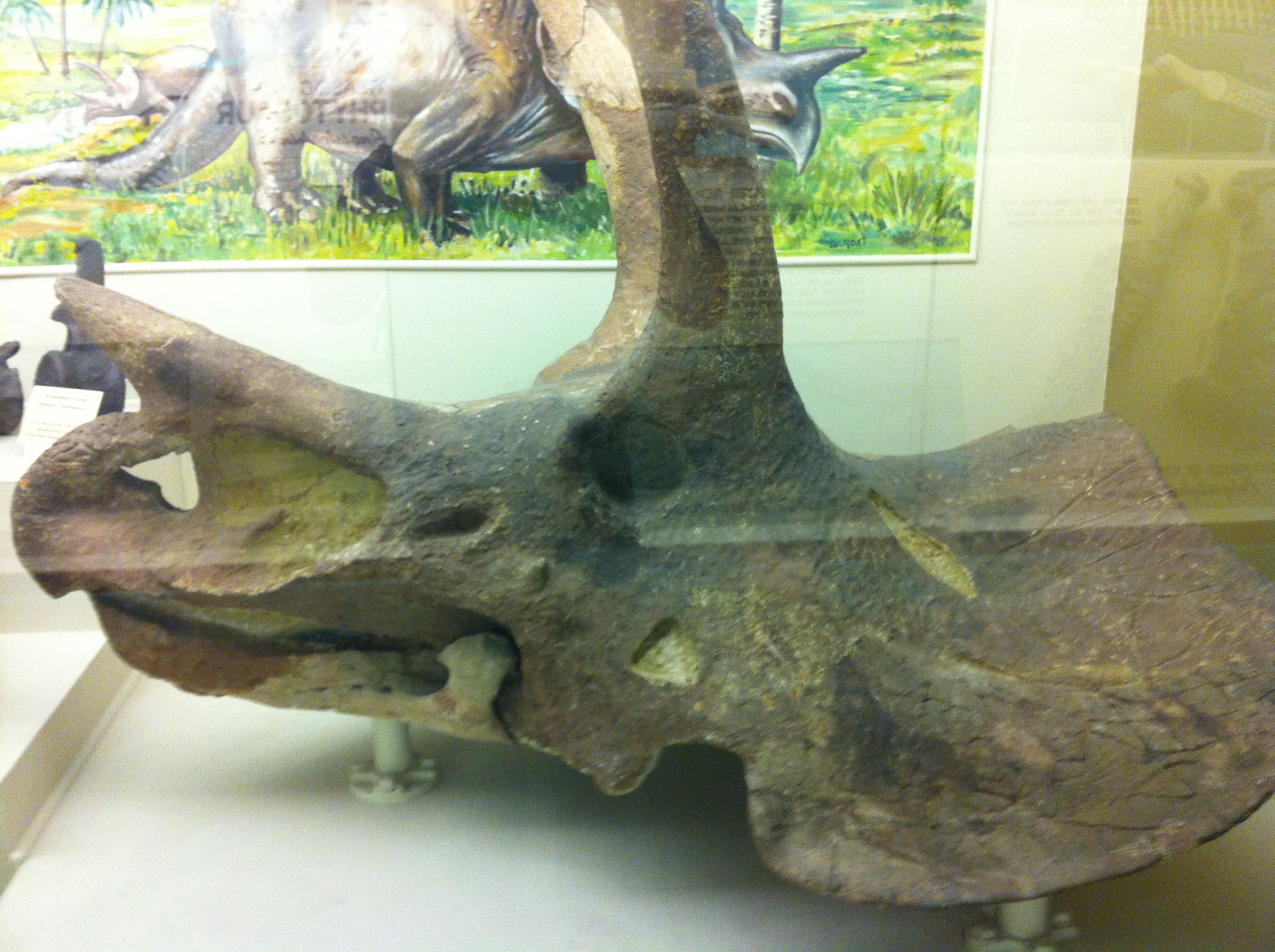
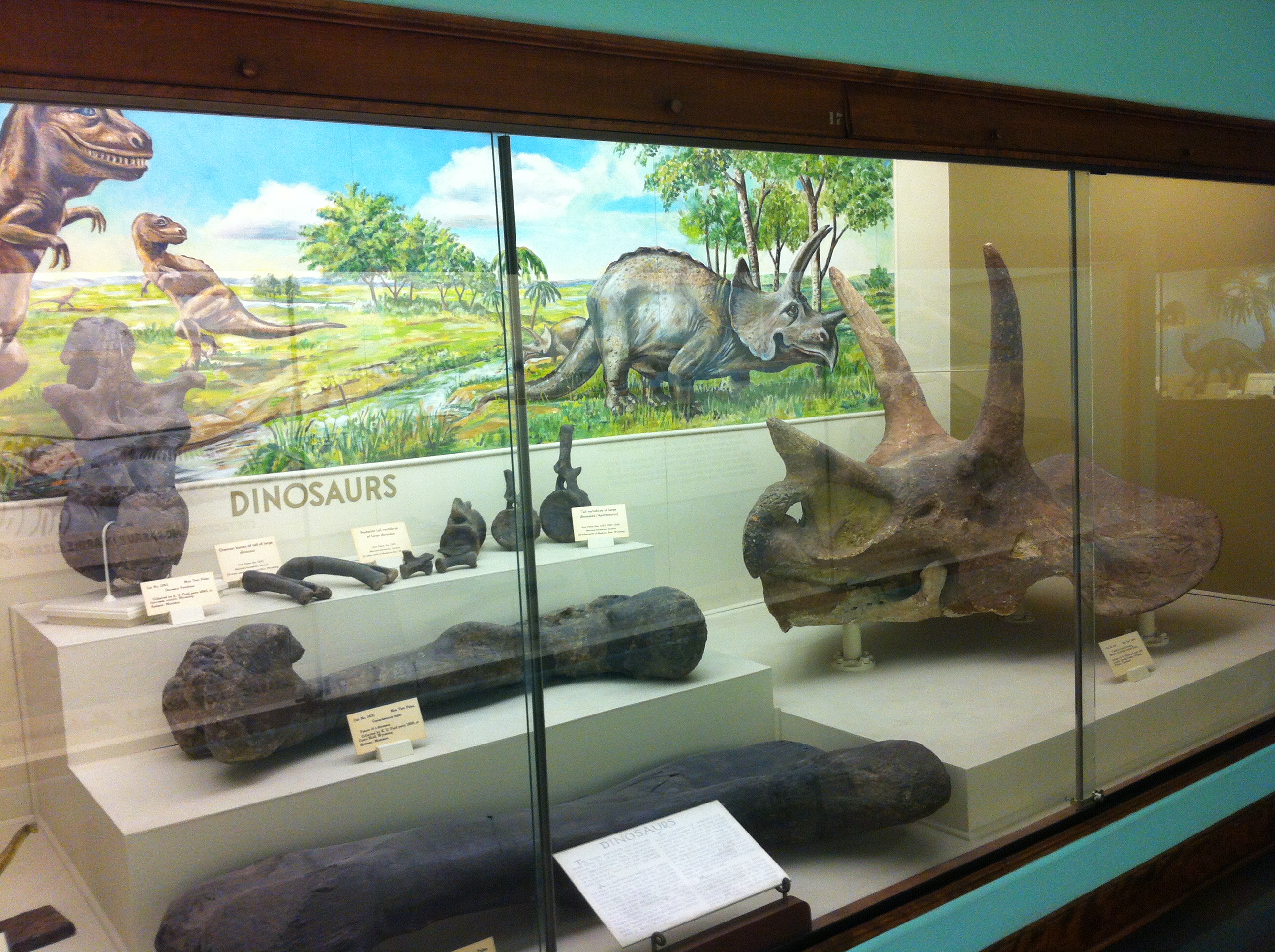
Among the Museum’s basement paleontology exhibits is a case of dinosaur fossils that has literally gone unchanged since the 1950s. Although this time capsule of mid-century museum design is of some historical interest, it would be nice if those sauropod limb bones weren’t labeled “Brontosaurus” (to be clear, the whole museum doesn’t look like this, the staff has been slowly but surely modernizing the exhibits). Of particular importance is the Triceratops skull (specimen 422) on the left side of the case. While there is no historical information on its label, this specimen has been with the museum for over 115 years, having been unearthed and put on display only six years after O.C. Marsh first named and described Triceratops.

The dinosaur case at the KU Natural History Museum, untouched since the 1950s.

The dinosaur case at the KU Natural History Museum, untouched since the 1950s.

The story of the KU Triceratops is not well-known, although it is the subject of the somewhat hard-to-find book (neither the Museum nor the KU library has a copy) A Triceratops Hunt in Pioneer Wyoming. In the summer of 1895, a team from the University ventured into the frontier lands of of eastern Wyoming with the explicit goal of finding a Triceratops for display at the young Natural History Museum. The team was led by Samuel Wendell Williston, founder of the University’s geology department. Although Williston’s specialty was entomology, he had previously worked under Marsh at Yale and was well-acquainted with the plethora of dinosaurs on which his mentor had published. Also on the expedition were KU Regent James Polk Sams, and two individuals whose names are quite familiar to anyone with an interest in the history of paleontology, Barnum Brown and Elmer Riggs. Brown would, of course, go on to be the star fossil hunter at the American Museum of Natural History, while Riggs would become a curator at the Field Museum of Natural History. In 1895, however, both were students, and not especially interested in fossil collecting or paleontology. 

The team found the Triceratops they were looking for on July 9, near the confluence of Lightning and Lance Creeks. By July 22, the skull was fully excavated and crated for a journey by train back to Lawrence. The fossil apparently garnered a fair amount of attention on the journey; while Triceratops is well known today, in 1895 few had any idea that animals such as this had ever walked the Earth. And yet, here was clear, physical evidence of an extinct animal like nothing alive in the modern world, and it would soon be displayed for all to see in the University of Kansas Museum.

Triceratops skull retrieved by the 1895 Wyoming expedition.

Triceratops skull retrieved by the 1895 Wyoming expedition.

The 1895 expedition was not tremendously productive scientifically, the fossils found that summer resulting in only three short papers. However, the journey, and the Triceratops skull that was brought back, did end up being quite important for paleontology. The expedition inspired Brown and Riggs to pursue careers in paleontology, and as Brinkman and colleagues write in Triceratops Hunt in Pioneer Wyoming, “they would hunt bones for the rest of their lives, to the great benefit of science, and might never have done so had not circumstances landed them in the circle of Williston’s influence in the summer of 1895.”

Furthermore, by setting out with the clear goal to find a dinosaur for display, the University of Kansas team were trailblazers in a movement that would lead to the inseparable connection between dinosaurs and museums in popular culture today. In the first decade of the 20th century, newly burgeoning large urban museums openly competed to find and display the largest and most spectacular dinosaurs. Exhibits like the AMNH Brontosaurus, the Carnegie Museum of Natural History Diplodocus and, of course, the Smithsonian Triceratops brought millions of Americans into museums, ensuring that to this day, when we think of museums, we think of dinosaur skeletons (and vice versa). In spite of the somewhat dingy basement display it currently finds itself in, the University of Kansas Triceratops was an early trendsetter and a profound example of the intersection of science and history.

Reference

Kohl, M.F., Martin, L.D. and Brinkman, P., eds. (2004). Triceratops Hunt in Pioneer Wyoming: The Journals of Barnum Brown and J.P. Sams. Glendoo, WY: High Plains Press.

4 Comments

Filed under dinosaurs, field work, fossil mounts, history of science, marginocephalians, museums, reptiles

Extinct Monsters: The Marsh Dinosaurs, Part II

Read the Marsh Dinosaurs, Part I or start the Extinct Monsters series from the beginning.

During the first decade of the 20th century, the United States National Museum paleontology department was located in an offsite building in northwest Washington, DC. It was here that preparators Charles Gilmore, Norman Boss, and James Gidley slowly but surely worked through the literal trainloads of fossil specimens O.C. Marsh had acquired for the United States Geological Survey. The Marsh Collection included unknown thousands of specimens, many of them holotypes, and there was no shortage of gorgeous display-caliber material. Even after the “condemnation of worthless material” Gilmore and his team quickly filled the available exhibit space in the Arts and Industries Building with mounted skeletons.

The Ceratosaurus

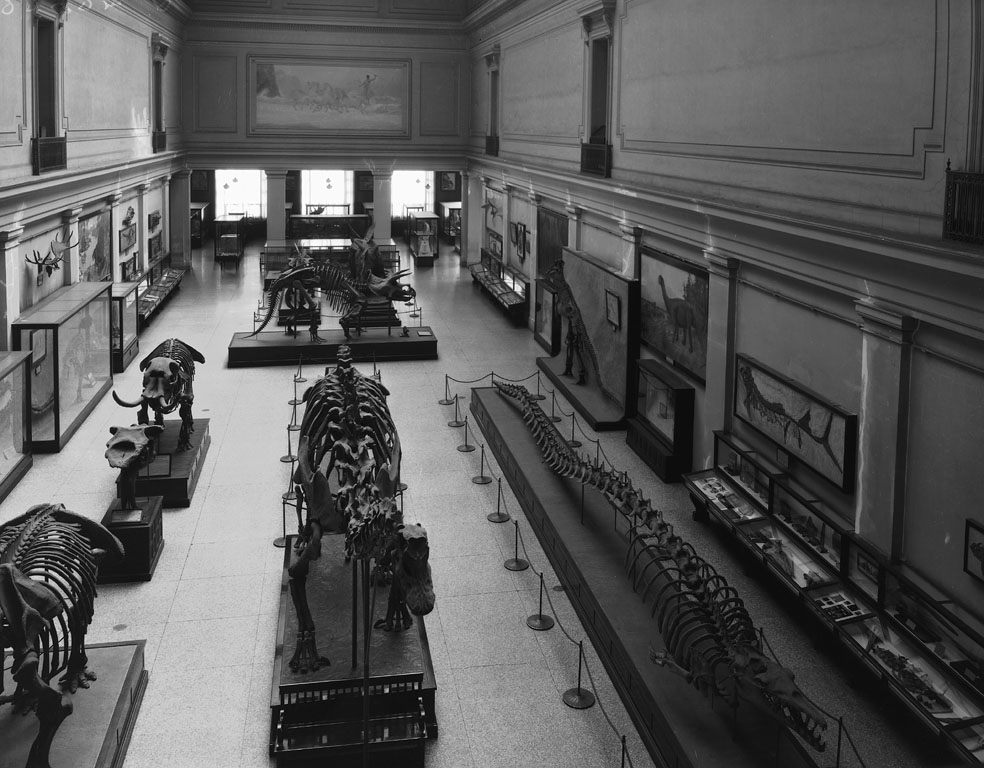
With no more display space and plenty more fossils, it was fortunate that the USNM moved to a new, larger building in 1910. In this iconic, green-domed building (now the National Museum of Natural History), the paleontology department received newly furnished collections spaces and the entire east wing to fill with display specimens. The evocatively titled Hall of Extinct Monsters provided a new home for the mounted skeletons already constructed for the old exhibit, as well as plenty of room for new displays.

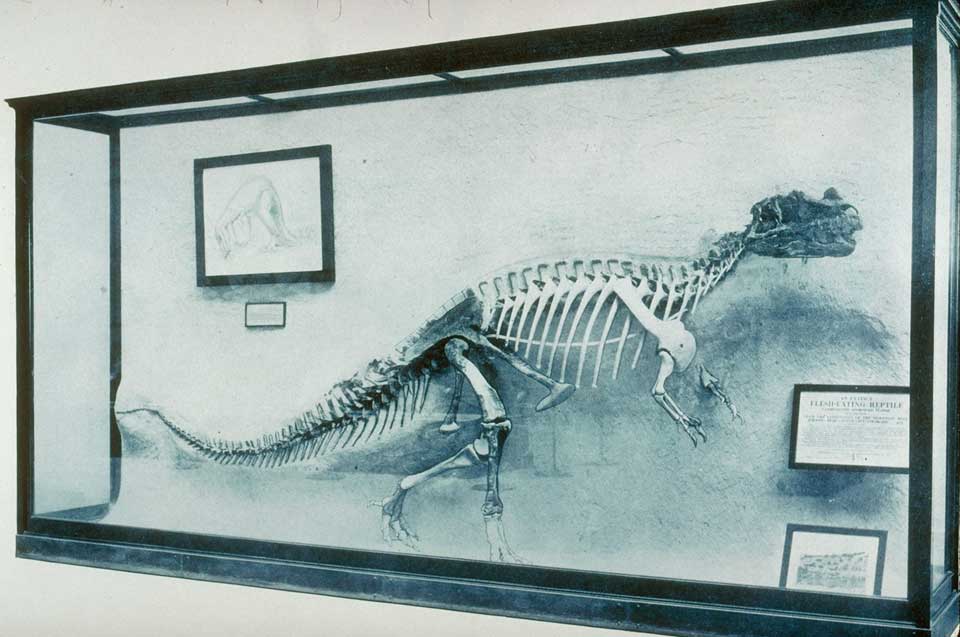
The Ceratosaurus nasicornis holotype was originally housed in a glass case. Image courtesy of the Linda Hall Library.

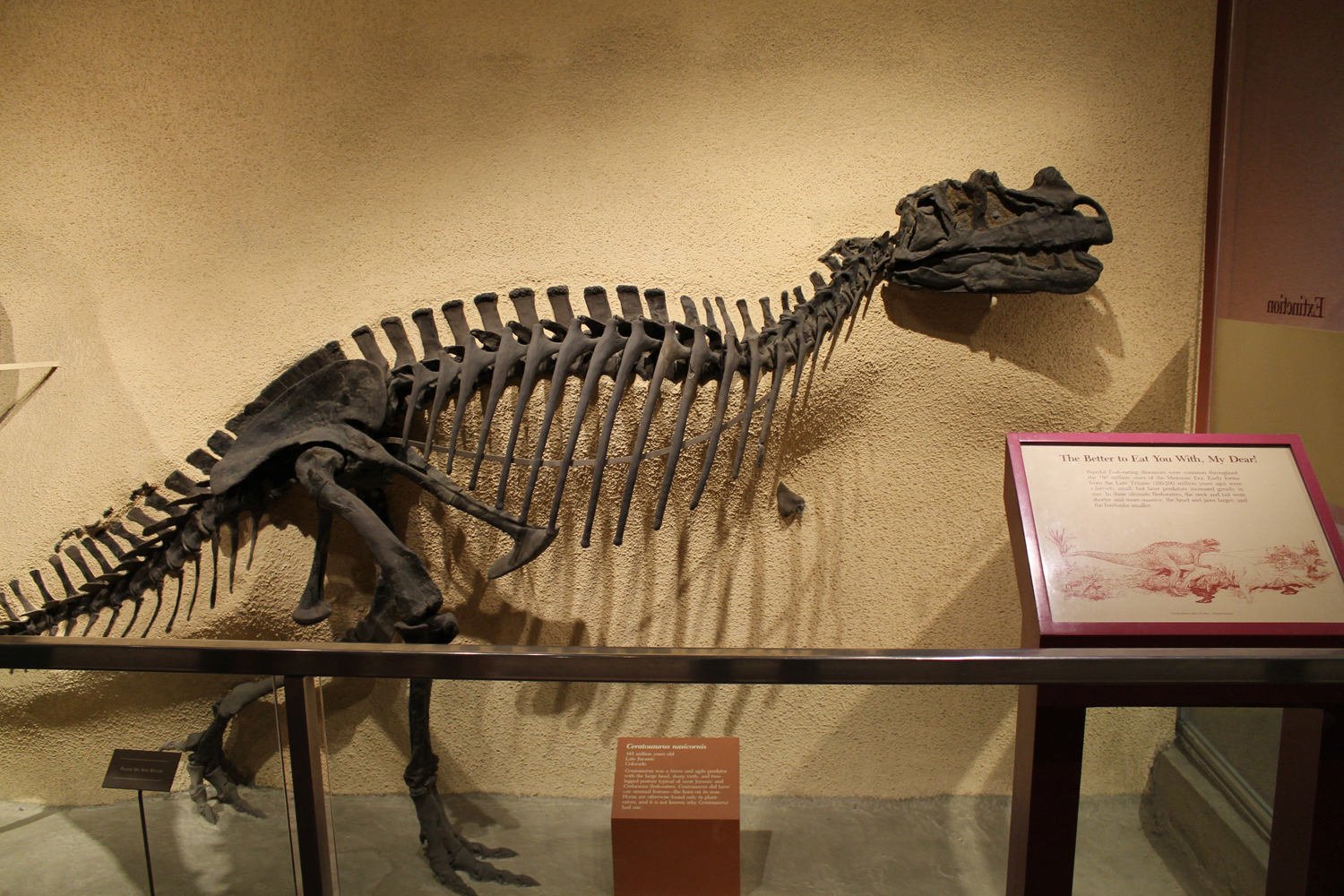
Ceratosaurus. Photo by the author.

The delicate arms of Ceratosaurus were removed several years prior to the hall’s closing. Photo by the author.

One of the first new additions was the type specimen of Ceratosaurus nasicornis (USNM 4735), mounted in relief. Marshall Felch led the excavation of this specimen in 1883 at a quarry near Cañon City, Colorado. The nearly complete skeleton received a cursory description from Marsh upon its discovery, but it was Gilmore who described it properly in 1920, ten years after it was put on display. When it was introduced to the Hall of Extinct Monsters, this was the only Ceratosaurus specimen yet found, making the mount a USNM exclusive. The skeleton was originally displayed in a glass case, but during the 1963 renovation it was placed in a more open setting.

Even today, Ceratosaurus is only known from a handful of specimens. For this reason, the original Ceratosaurus fossils will not be returning when the current renovation is completed in 2019. The new hall will instead feature a three-dimensional, standing cast of this skeleton. The original fossils are now in the museum’s collections, available for proper study for the first time in over a century.

The Camptosaurus

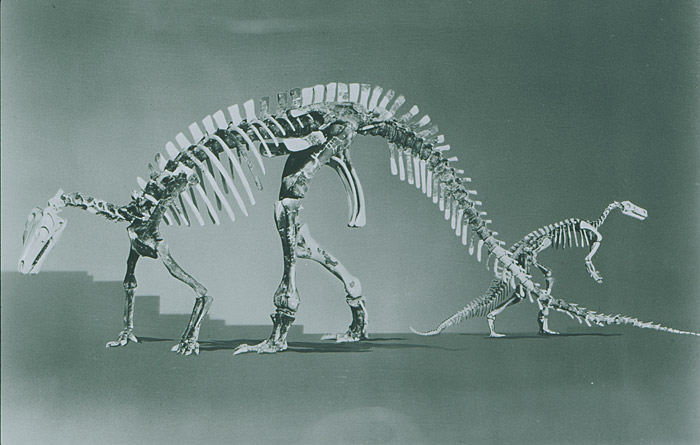
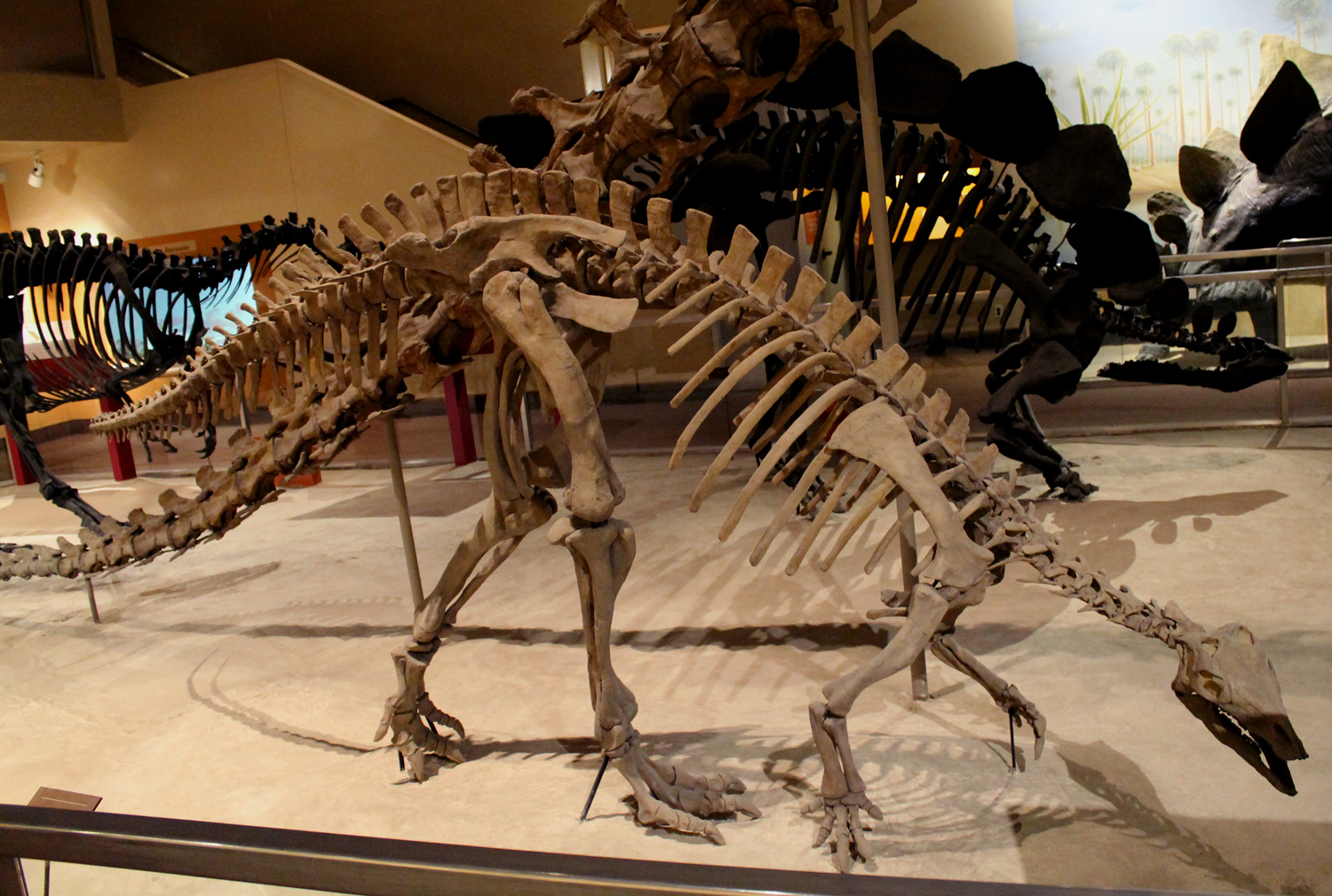
In 1912, two mounted skeletons of Camptosaurus, one large (USNM 4282) and one small (USNM 2210), were introduced to the Hall of Extinct Monsters. William Read excavated both specimens at Quarry 13 in the Como region of Wyoming a quarter of a century earlier. Representing the first-ever mounted skeletons of Camptosaurus, these specimens have had a rather complex taxonomical history. Marsh initially described both specimens as Camptosaurus nanus, a new species within the genus Camptosaurus (the type species was Camptosaurus dispar, also coined by Marsh). After the fossils were acquired by the USNM, Gilmore re-described the larger individual as a new species, Camptosaurus browni. This designation remained until the 1980s, when Peter Galton and H.P. Powell determined that C. nanus and C. browni were actually both growth stages of C. dispar.

Regardless of what they are called, both specimens were remarkably well-preserved and reasonably complete. Most of the skeletal elements of the larger Camptosaurus came from a single individual that was found articulated in situ. However, some of the cervical vertebrae came from another specimen from the same quarry, and the skull, pubis, and some of the ribs were reconstructed. Of particular interest is the right ilium, which has been punctured all the way through by a force delivered from above. Gilmore postulated that “the position of the wounds suggest…that this individual was a female who might have received the injuries during copulation.” The smaller “C. nanus” was also found mostly complete, but two metatarsals came from a different individual and the skull and left forelimb were sculpted.

The original pair of Camptosaurus mounts. Image from Backyard Dinosaurs.

Gilmore supervised the creation of both mounts, and constructed the larger individual himself. Norman Boss took the lead on the smaller specimen. As with the other dinosaur skeletons, the mount was centered on an inch-thick steel rod bent to conform to the shape of the vertebral column. Bolts were drilled directly into the vertebrae to attach them to the armature, and the vertebral foramina were filled with liberal amounts of plaster to secure them to the rod. A similar process was used to assemble each of the limbs, and the ribs were supported by a wire cage.

Gilmore aimed to correct many specifics of Marsh’s  original illustrated reconstruction of Camptosaurus. To start, he shortened the presacral region to make a more compact torso. Marsh had also inexplicably illustrated Camptosaurus with lumbar vertebrae (a characteristic exclusive to mammals), which Gilmore corrected. Finally, Marsh had reconstructed the animal as an obligate biped, but Gilmore  determined that “Camptosaurus used the quadrupedal mode of progression more frequently than any other known member of Ornithopoda.” Accordingly, the larger Camptosaurus mount was posed on all fours. The completed Camptosaurus mounts were placed together in a freestanding glass case toward the rear of the Hall of Extinct Monsters. In 1962 the pair was moved to the left of the Diplodocus on the central pedestal of the redesigned exhibit. During the 1981 renovation they were moved a few feet back, so that they were alongside the sauropod’s tail.

This cast replaced the original Camptosaurus mount in 2010. Photo by the author.

This cast replaced the original Camptosaurus mounts in 2010. Photo by the author.

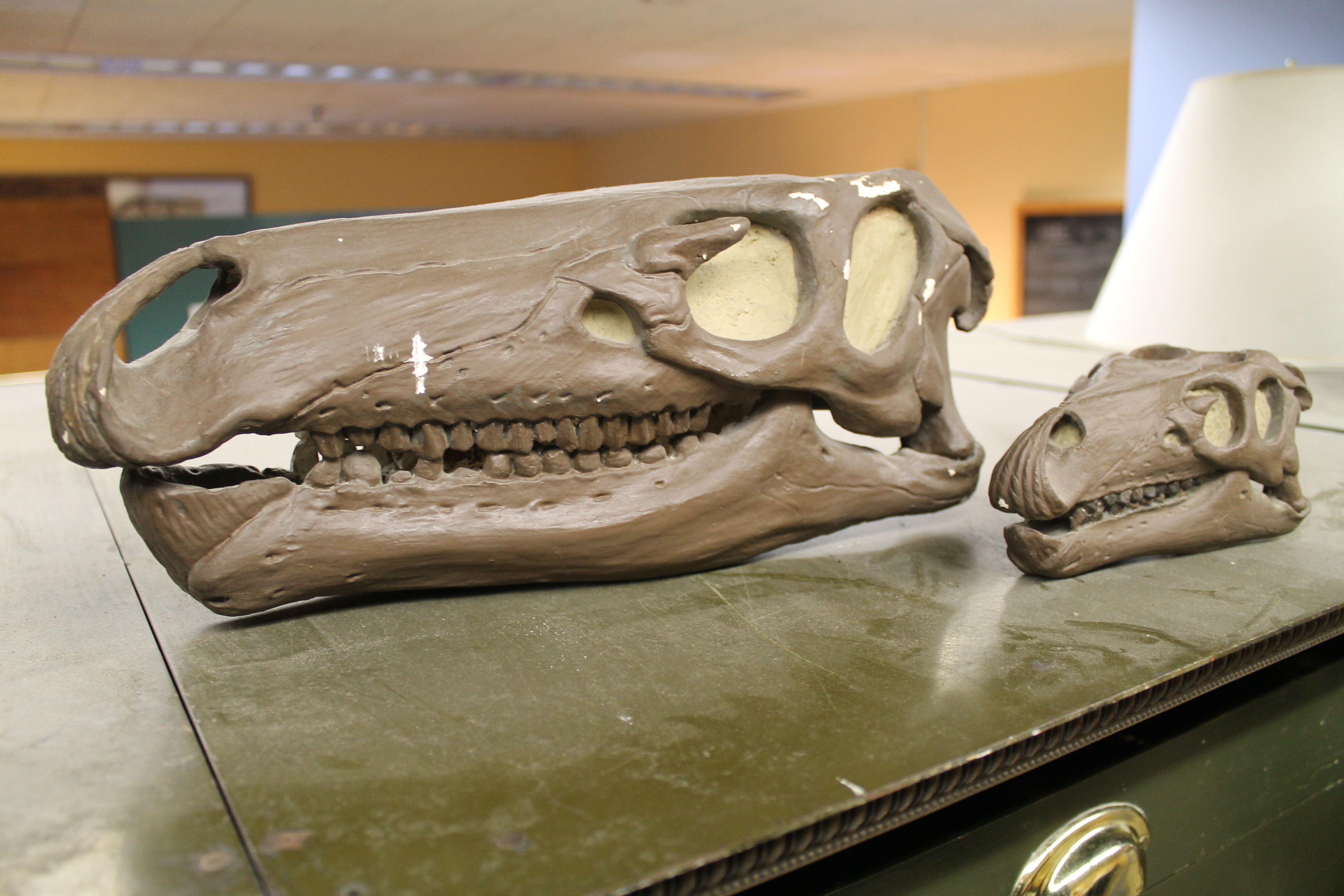
The retired plaster skulls of the original Camptosaurus mounts. Photo by the author.

The retired plaster skulls of the original Camptosaurus mounts. Photo by the author.

Both Camptosaurus skeletons taken off exhibit in 2010 and replaced with a cast of the adult. The delicate fossils, which had suffered from considerable wear and tear over the past hundred years, were stabilized and stored individually for their protection. The new mount has a number of upgrades to reflect our improved understanding of dinosaur anatomy. The arms are closer together and the palms face inward, because the pronated (palms down) hands on Gilmore’s version have been determined to be a physical impossibility. The new mount also features a completely different skull. The rectangular model skull used on the original mount was based on Iguanodon, but new discoveries show that the skull of Camptosaurus was more triangular in shape. Both the adult and juvenile Camptosaurus will appear in the new National Fossil Hall.

The Stegosaurus

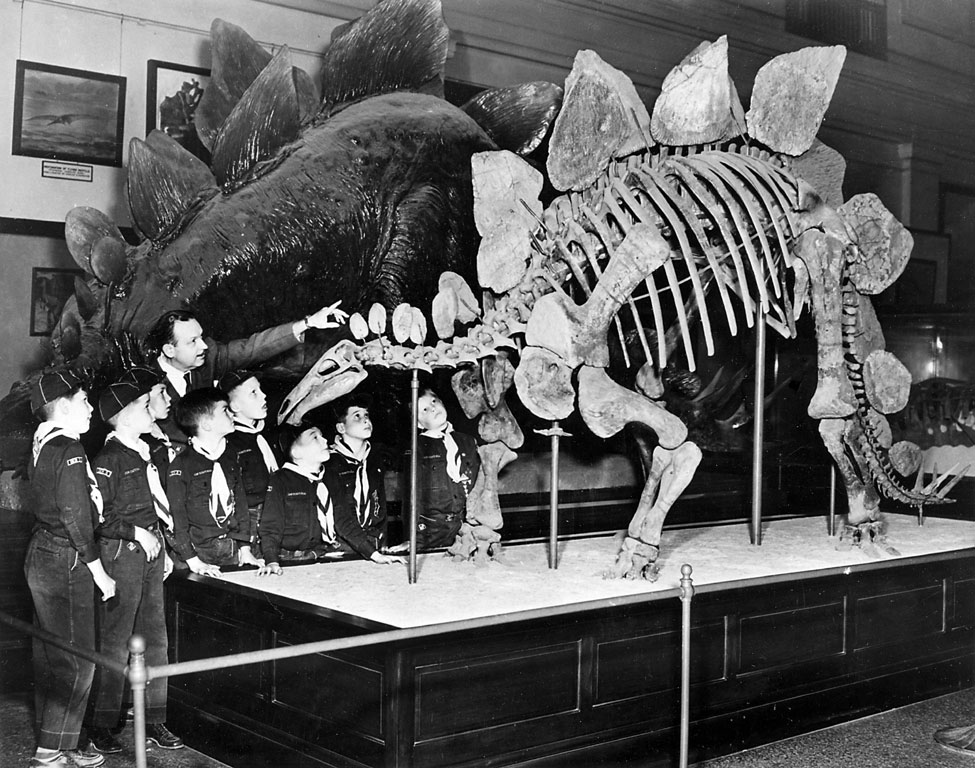
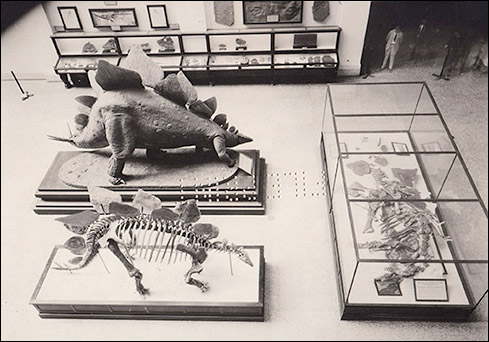
The Smithsonian’s first Stegosaurus exhibit was a life-sized model built for the 1904 World’s Fair in St. Louis. This model found its way into the Hall of Extinct Monsters in 1910. In 1913, the model was joined by a mounted Stegosaurus skeleton found at the same Cañon City quarry as the Ceratosaurus. A third Stegosaurus, the holotype of S. stenops, was introduced in 1918. Lovingly called the “roadkill” Stegosaurus, USNM 4934 is remarkable in part because it was found completely articulated. In fact, before its 1886 discovery by Marshall Felch, it was unknown exactly how the animal’s plates were positioned on its back.

Standing Stegosaurus mount and life-size model, circa 1950. Photo courtesy of the Smithsonian Institution Archives.

Stegosaurus

Stegosaurus model, standing mount, and “roadkill” on display in the Hall of Extinct Monsters. Source

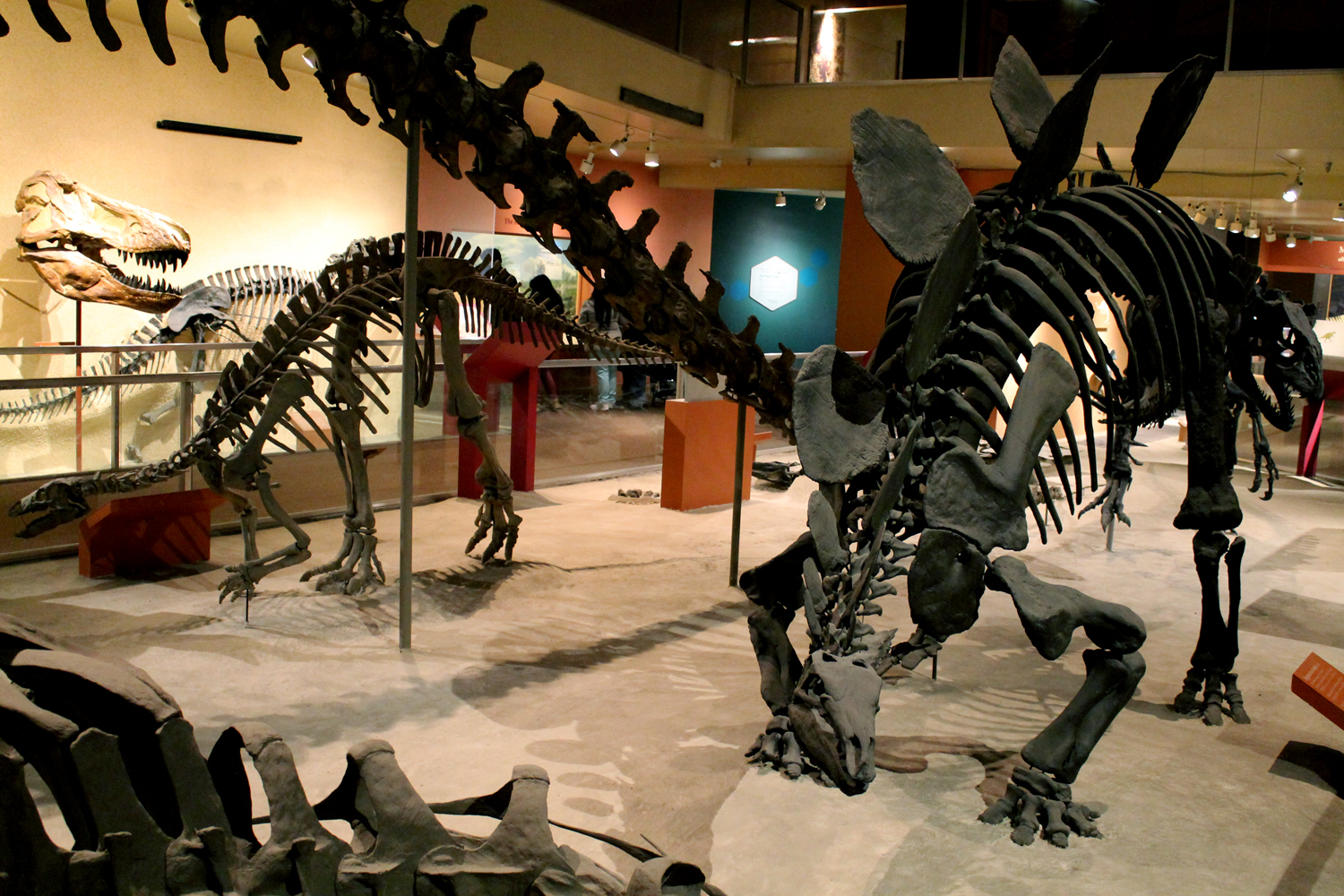
All three Stegosaurus displays were moved in 1963 and 1981. In Fossils: The History of Life, the Stegosaurus skeletons were positioned flanking the Diplodocus in the central display area, with the standing mount on the right and the roadkill skeleton on the left. The model Stegosaurus stood opposite the mount. Just like the Triceratops and Camptosaurus, many decades on display took their toll on the standing Stegosaurus, so in 2003 the fossils were removed from the exhibit. Dismantling the Stegosaurus was particularly challenging because of the large amount of plaster applied by the mount’s creators. In some cases the plaster infill had to be removed with hand tools, which put further pressure on the fossils. Additionally, the rod supporting the backbone had been threaded right through each of the vertebrae, and was extremely difficult to remove. A casted Stegosaurus mount in a more active pose was returned to the exhibit in 2004.

Cast of Stegosaurus and Camptosaurus. Photo by the author.

Casts of Stegosaurus and Camptosaurus. Photo by the author.

Roadkill stego

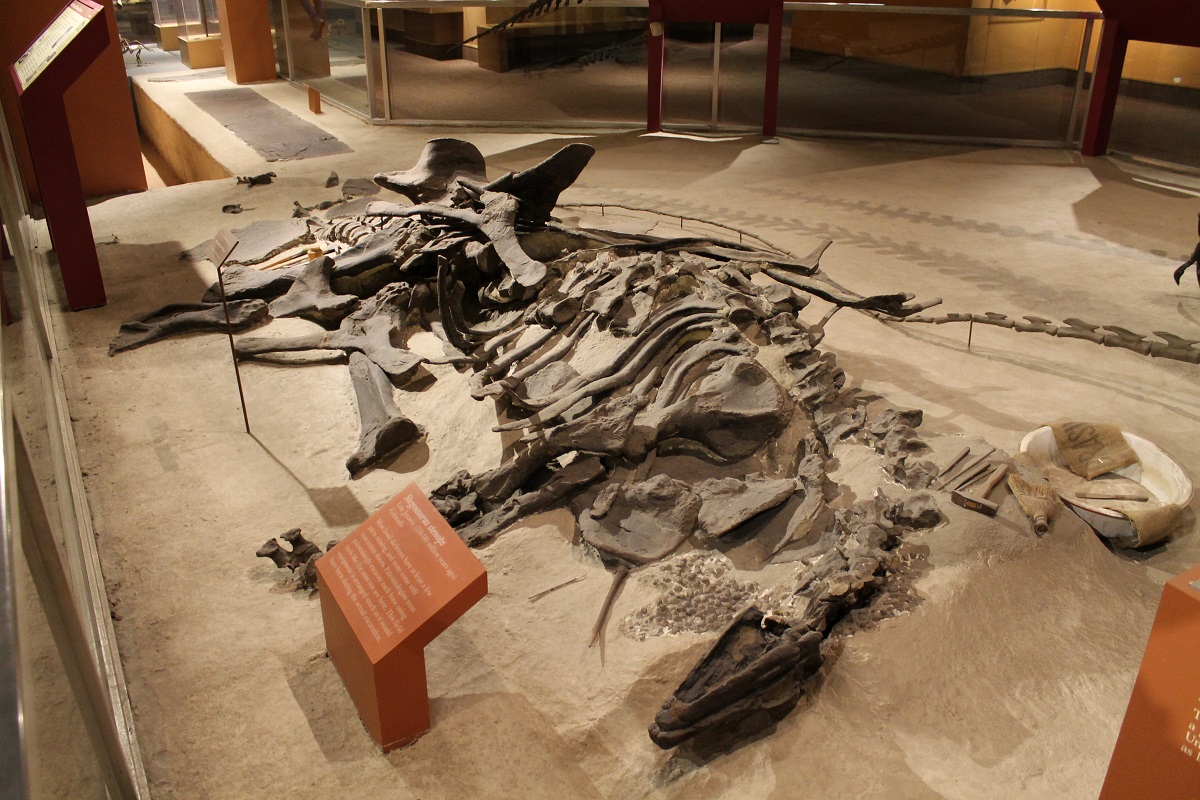
“Roadkill” Stegosaurus in 2014. Photo by the author.

After 110 years on display at the Smithsonian, the model Stegosaurus has been donated to the Museum of the Earth in Ithaca. The roadkill Stegosaurus, however, will feature prominently in the new National Fossil Hall, mounted upright on the wall by the exhibit’s secondary entrance. The 2004 Stegosaurus cast had a number of anatomical issues and will not be returning – instead, it will be replaced by an updated cast made from the same original fossils.

The Marsh dinosaurs have been of critical importance in our understanding of the Mesozoic world, but at this point these fossils are historic artifacts as well. When they were uncovered, the American civil war was still a recent memory, and railroads had only recently extended to the western United States. Before the first world war they had been assembled into mounts, and for more than a century these fossils have been mesmerizing and inspiring millions of visitors. Several of these mounts, including the Triceratops, Ceratosaurus and Camptosaurus, were the first reconstructions of these species to ever appear in the public realm, and therefore defined popular interpretations that have lasted for generations. Some visitors may lament that many of the original specimens have been recently been replaced with replicas, but the fact is that these are irreplaceable and invaluable national treasures. They inform us of our culture, and our dedication to expanding knowledge and our rich natural history. We only get one chance with these fossils, and that is why the absolute best care must be taken to preserve them for future generations.

References

Gilmore, C.W. 1912 “The Mounted Skeletons of Camptosaurus in the United States National Musuem.” Proceedings of the US National Museum 14:1878.

Gilmore, C.W. 1941 “A History of the Division of Vertebrate Paleontology in the United States National Museum.” Proceedings of the United States National Museum 90.

Jabo, S. 2012. Personal communication.

Leave a comment

Filed under collections, dinosaurs, exhibits, Extinct Monsters, field work, fossil mounts, history of science, museums, NMNH, ornithopods, reptiles, theropods, thyreophorans

Extinct Monsters: Ice Age Giants

Click here to start the NMNH series from the beginning.

The old fossil mammal exhibits at the National Museum of Natural History were notable for their sheer diversity. From rabbits to elephants and from bats to whales, virtually every major group of North American mammals, particularly eutherian (placental) mammals, was represented. By my count, there were no less than 48 mounted mammal skeletons on display (not including individual skulls and other parts) in 2014, arranged by time period and distributed across three sizable halls.

The comprehensive nature of these exhibits was largely thanks to C.L. Gazin, head curator of the Division of Vertebrate Paleontology in the 1950s and 60s. During the modernization of the fossil halls in the early 1960s, Gazin focused his efforts on assembling a complete narrative of Cenozoic mammal evolution. The six-part exhibit debuted in 1961 in Hall 5, and was relocated two decades later to Hall 3. Gazin also initiated the construction of the adjacent Ice Age exhibit, although it would not be permanently opened to the public until 1974.

Now that the fossil halls are being renovated, NMNH staff face the enormous task of disassembling and restoring the dozens of historic mammal skeletons. Many will return when the exhibit reopens in 2019, but others may be retired to the collections if they are deemed too fragile for continued display, or if they are not illustrative of the story being told in the new exhibit.

The Megaloceros

This Megaloceros

This Megaloceros has the distinction of being the Smithsonian’s first mounted skeleton composed of original fossils. Photo by the author.

The Smithsonian’s first mounted fossil skeletons went on display in 1871 in the building colloquially called “the castle.” The exhibit included plaster casts of the ground sloth Megatherium, the tortoise Colossochelys and the glyptodont Scistopleurum, all made from originals at the British Museum. The following year saw the addition of the giant deer Megaloceros (USNM V 7051) — the Smithsonian’s first mounted skeleton composed of original fossils. The Smithsonian purchased this complete Megaloceros, which was uncovered in an Irish peat bog, from Philadelphia-based antiques dealer Thomas and Sons. The mount was assembled by none other than Benjamin Waterhouse Hawkins, the sculptor who created the famous Crystal Palace dinosaurs.

Note basilo

Megaloceros in the southeast court of the Arts and Industries building, circa 1896. The British Museum Megatherium cast can be seen on the left. Source

When construction of the original United States National Museum (what is now called the Arts and Industries Building) was completed in 1881, all of the fossil displays were moved to the new setting. Vertebrate fossils found a home in the 80,000 square foot southeast court. Gradually, the Megaloceros and British Museum casts were joined by many more crowd-pleasing skeletons, including a copy of the Philadelphia Hadrosaurus, an Edmontosaurus, a Triceratops, and a mastodon (discussed below). By the time the USNM was preparing to move to yet another new building across the national mall in 1910, the southeast court had become quite crowded. Unfortunately, the Megatherium and Collossochelys never made it to the new location. These casts were discarded due to the damage they had accumulated while on display. Although the glyptodont cast was still on exhibit as of 1940, it too was eventually destroyed. Happily, the Megaloceros survived, and has been included in each subsequent iteration of the fossil exhibits.

Starting in 1974, the Megaloceros was displayed alongside the extinct bird Diornis in the Ice Age hall. It’s weight was partially supported by cables descending from the ceiling, which proved to be a problem when it came time to disassemble it in July 2014. Rather than attempting to lift the delicate skull and heavy antlers off the armature, the exhibit team strapped the skull to a mechanical lift so that it could be slowly and gently lowered to the floor. In the new National Fossil Hall, the Megaloceros will be sitting on the ground. This pose was selected in order to bring the spectacular antlers to visitors’ eye level.

The Mastodon

The Indiana mastodon in the Hall of Extinct Monsters. Photo courtesy of the Smithsonian Institution Archives.

In 1901, Michigan farmer Levi Wood found a well-preserved, nearly complete Mammut americanum (USNM 2106) in a peat swamp on his land. The USNM purchased the rights to excavate the skeleton from Wood and began work that same year. The specimen turned out to be virtually complete, save for the forelimbs and left hindlimb. Alban Stewart mounted the skeleton, adding a left hindlimb from another mastodon specimen from Missouri, and filling in other missing elements with plaster replicas. The completed mount was first exhibited at the Louisiana Purchase Exposition in St. Louis, Missouri in 1904.

For a time, there were two mastodon mounts on display in the Hall of Extinct Monsters. Photo courtesy of the Smithsonian Institution Archives.

After the Exposition, the Michigan mastodon was added to the fossil displays in the  southeast court of the Arts and Industries Building. It remained there for four years, before joining the rest of the paleontology exhibits and collections in the move to the new USNM building.

In 1915, a second mastodon (USNM V 8204) from Indiana was added to the Hall of Extinct Monsters. The matching set can be seen on the left side of the image above, with the plaster skull of a Deinotherium (USNM V 1917) positioned between them. The larger Indiana mastodon persisted through the 1963 and 1981 renovations, and will return with an energetic trumpeting pose in 2019. NMNH loaned the Michigan mastodon to the Oregon Zoo for many years. It has since been returned, dismantled, and retired to the collections.

The Stegomastodon

Stegomastodon in 2014. Photo by the author.

Stegomastodon in 2014. Photo by the author.

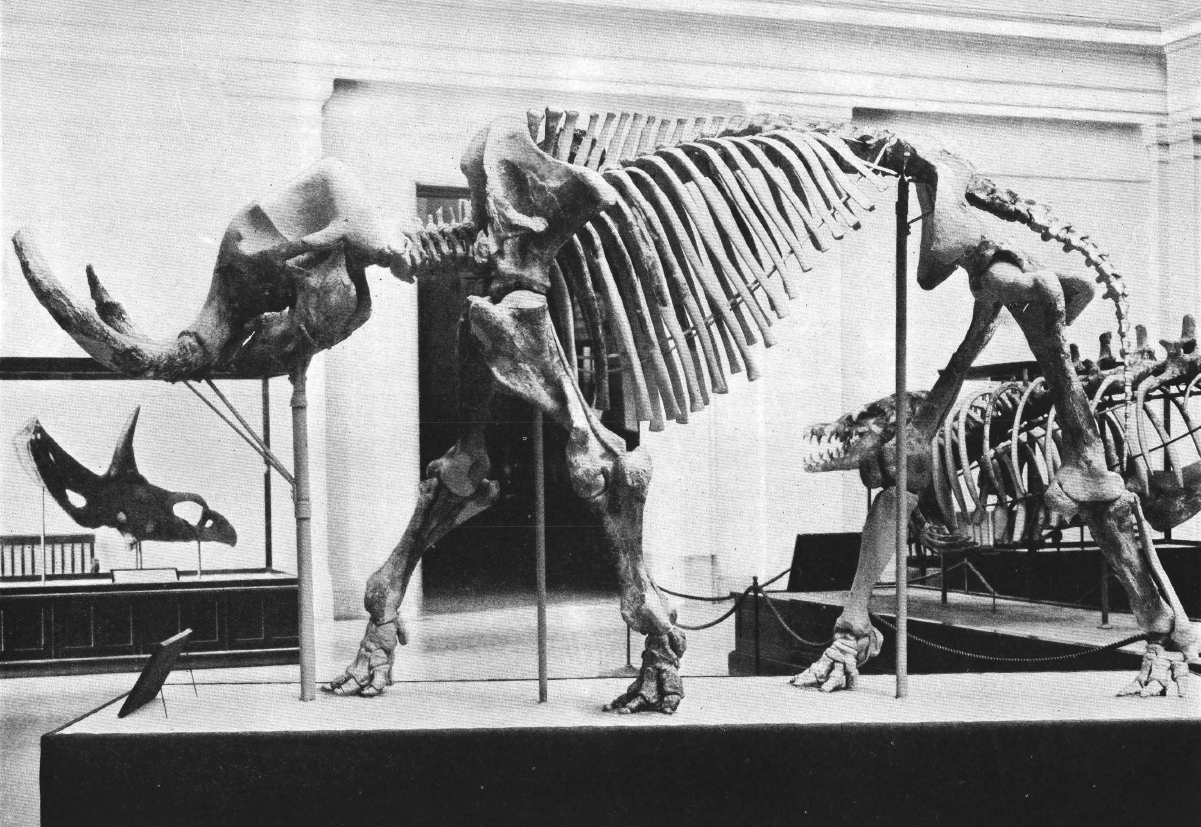
The young male Stegomastodon (USNM 10707) was collected by James Gidley and Kirk Bryan collected this skeleton in the San Pedro Valley of Arizona. This 1921 collecting trip also produced the museum’s Glyptotherium. While the genus Stegomastodon was erected in 1912, Gidley referred his specimen to a new species, S. arizonae, due to its more “progressive” physiology and slightly younger age. By 1925, the skeleton was mounted and on display in the Hall of Extinct Monsters. While the original mount used the real fossil tusks, these were eventually replaced with facsimiles.

Stegomastodon with

Stegomastodon with its original tusks. Photo from Gidley 1925.

The Stegomastodon will not be returning when the National Fossil Hall reopens in 2019. For one thing, there are already two big elephants on display: the mammoth and the mastodon. Elephants take up a lot of space, and a third proboscidean offers diminishing returns when compared to the amount of floor space it requires. More importantly, the Stegomastodon is a holotype specimen, and the exhibit team elected to remove most of these important specimens from the public halls. This is both to keep them safe from the damaging effects of vibration, humidity, and fluctuating temperature, as well as to make them more accessible to researchers.

The Eremotherium pair

Eremotherium

The unique and impressive Eremotherium pair. Photo by the author.

The immense pair of giant ground sloths (USNM V 20867 and USNM V 20872) are among the most impressive and unique skeletal mounts at NMNH. Many a visitor has ascended the ramp to the Ice Age gallery only to stop and stare at them. Unlike the Megaloceros, mastodon, and many others, these were new additions added during the 1960s modernization. Gazin’s team recovered the fossils in Panama between 1950 and 1951, bringing back over 100 plaster jackets representing at least eight individual sloths of the genus Eremotherium.

sou

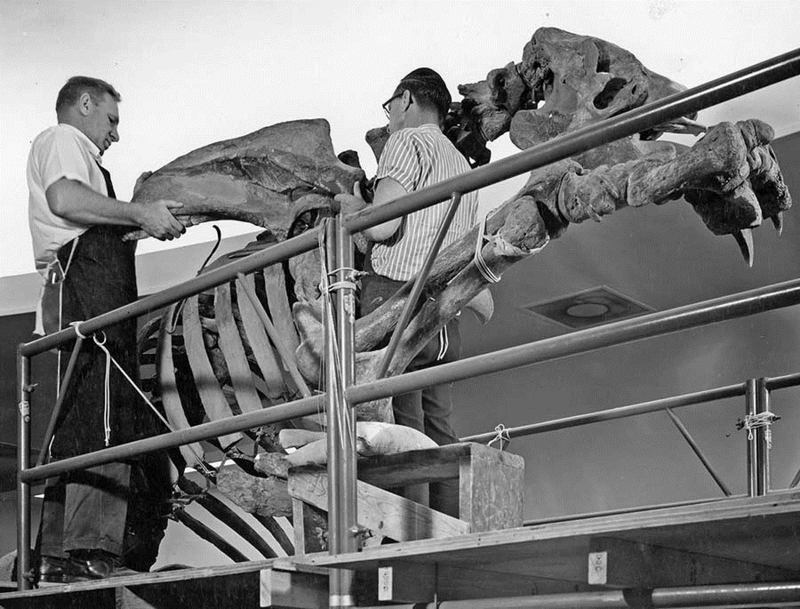
John Ott and Gladwyn Sullivan attach the scapula of the standing sloth. Source

Assistant Curator of Cenozoic Mammals Clayton Ray oversaw the assembly of the two Eremotherium mounts in 1969. Both the larger standing sloth and smaller kneeling one are composites of fossils from many individuals (there are also plenty of reconstructed bones, easily spotted by their solid beige coloration). Most of the surplus bones were repatriated to Panama before the mounts went on display. The sloths were originally positioned back-to-back on a central platform, accentuated by an illuminated opening in the ceiling. However, this layout only lasted a few years. In 1974, the Quaternary Hall was completely reorganized into the Hall of Ice Age Mammals and the Age of Man. In the new arrangement, the Eremotherium pair was relocated to a corner at the north end of the gallery. In 2019, only one Eremotherium will be on display.

The Mammoth

Chimera mammoth

This mammoth was assembled from as many as 70 individual specimens. Photo by the author.

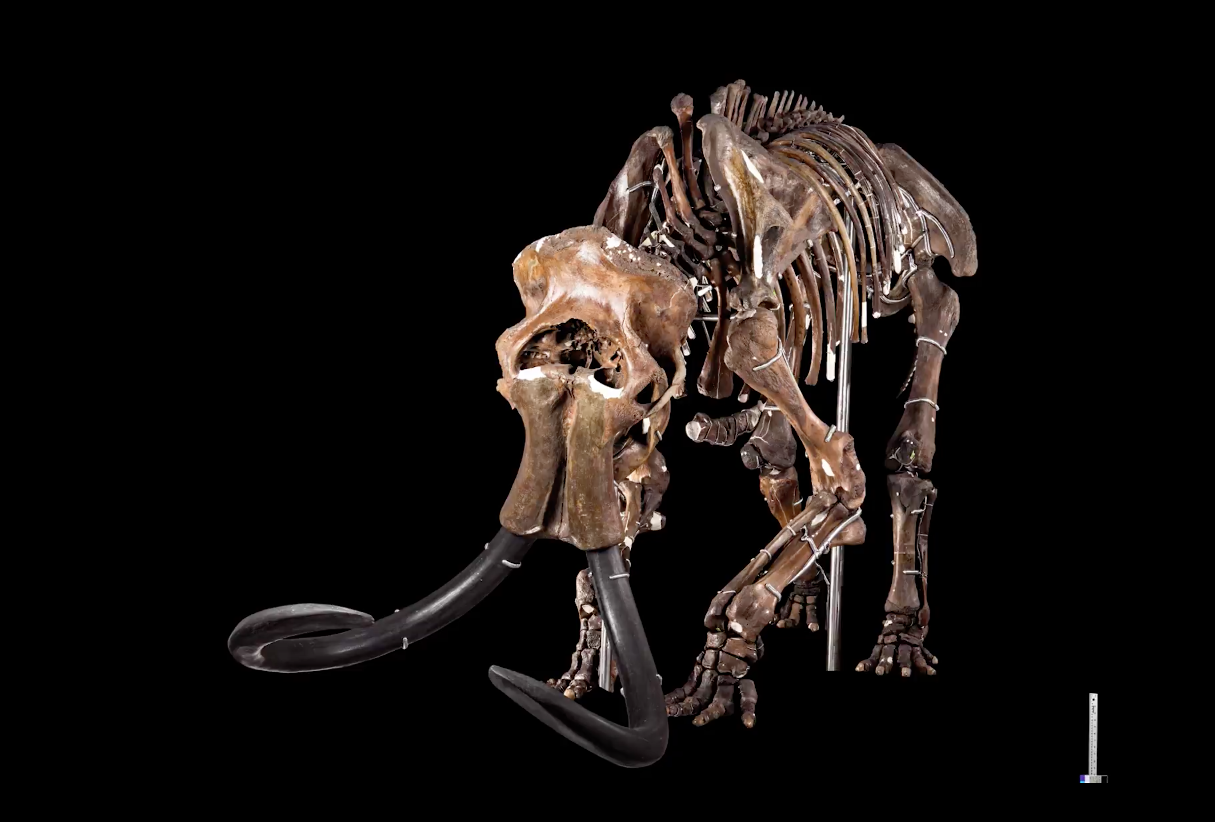
Although it was always labeled as a woolly mammoth (Mammuthus primigenius), the Smithsonian’s third proboscidian skeleton (USNM V 23792) is actually a composite of over fifty individual specimens, some of which probably belong to the more southerly Columbian mammoth (Mammuthus columbi). Most of these fossils were acquired in a trade with the American Museum of Natural History in the 1960s, specifically to build a mounted skeleton for the Ice Age hall. Perhaps because they were acquired for display, rather than study, the origin of these fossils was not well-recorded. It is only now that the mammoth has been disassembled that collections staff can begin to to learn more about this iconic chimera. Some of the bones are marked with the year and location of their collection, crucial details for piecing together their provenance.

The mammoth in its new, snow-shoveling pose. Photo courtesy of the Smithsonian Newsdesk.

In the new fossil hall, the mammoth will be leaning forward, pushing its great tusks across the ground as though it were brushing away snow. In the meantime, the original mount was digitally scanned, and the model is freely available from Smithsonian 3D.

References

Carrano, M. 2018. Pers. comm.

Gazin, C.L. 1956.  Exploration for the remains of giant ground sloths in Panama. Smithsonian report, 341-354.

Gidley, J.W. 1925. Fossil Proboscidea and Edentata of the San Pedro Valley, Arizona. Shorter Contributions to General Geology (USGS). Professional Paper 140-B, 83-95.

Gilmore, C.W. 1906. Notes on Some Recent Additions to the Exhibition Series of Vertebrate Fossils. Proceedings of the United States National Museum No. 30.

Gilmore, C.W.  1941. A History of the Division of Vertebrate Paleontology in the United States National Museum. Proceedings of the United States National Museum No. 90.

Marsh, D.E. 2014. From Extinct Monsters to Deep Time: An ethnography of fossil exhibits production at the Smithsonian’s National Museum of Natural History. http://circle.ubc.ca/handle/2429/50177

3 Comments

Filed under Extinct Monsters, field work, fossil mounts, history of science, mammals, museums, NMNH

Extinct Monsters: Gilmore’s Diplodocus

Click here to start the Extinct Monsters series from the beginning.

More than 80 years ago, Smithsonian paleontologist Charles Whitney Gilmore supervised the installation of the mounted Diplodocus skeleton known as USNM 10865. In December 2014, that same skeleton was finally disassembled for conservation and eventual re-mounting.This post is about the history of this particular mount: where it came from, who put it together, and what it has and continues to tell us about prehistory.

Predecessor at CMNH

The story of the NMNH Diplodocus mount actually began in Pittsburgh, Pennsylvania around the turn of the century. In November of 1898, Steel tycoon-turned-philanthropist Andrew Carnegie read that the remains of a giant “Brontosaurus” had been discovered in Wyoming. Carnegie’s interest was piqued and the following year, he contributed $10,000 to the Carnegie Museum of Natural History (which he had founded two years earlier) to find a complete “Brontosaurus” – or something like it – for display in Pittsburgh. Perhaps proving that money can indeed buy anything, on July 4th, 1989 the CMNH team found a reasonably complete sauropod skeleton in Sheep Creek Basin, Wyoming. CMNH Curator of Paleontology John Bell Hatcher declared the specimen to be a new species, which he named for the Museum’s benefactor: Diplodocus carnegii.

Back in Pittsburgh, the task of preparing and mounting the fossils fell to preparator Arthur Coggeshall and his staff.  Creating a permanent armature for a delicate 84-foot skeleton was a monumental undertaking, beyond anything that had ever been attempted before. Coggeshall used a steel rod, shaped to the contours of the vertebral column, as the basis for the mount. Once the backbone was in place, the limbs, ribs, and other extremities were mounted on steel rods of their own and attached to the rest of the skeleton. The fossils were connected to the steel armature by drilling screws and bolts directly into the bone. Since the original Diplodocus carnegii skeleton was not complete, the mount was supplemented with fossils uncovered during subsequent field seasons at Sheep Creek and elsewhere in Wyoming.

The CMNH Diplodocus was unveiled in 1907 in a brand-new wing that had been constructed to display it. Although the American Museum of Natural History had by that point completed a sauropod mount of their own, the Pittsburgh display was well-received by paleontologists and laypeople alike. Not to be bested by the New York competition, Carnegie also commissioned eight Diplodocus replicas, which he donated to museums throughout Europe and Latin America.

The original CMNH Diplodocus mount, in the hall built specifically to accomodate it. Source

The original CMNH Diplodocus mount, in the hall built specifically to accommodate it. Source

This wave of publicity allowed the paleontology staff at CMNH and elsewhere to continue to undergo large-scale fossil hunting expeditions. In 1909, a team led by Earl Douglass hit the jackpot north of Jensen, Utah. At the site now known as Dinosaur National Monument, CMNH teams excavated over 300 tons of Jurassic fossils over 13 field seasons. The immensely productive “Dinosaur Quarry” site is thought to represent a prehistoric river bar, where dead animals from upsteam accumulated over time. In addition to an assortment of crocodiles and other small reptiles, this location has yielded remains of Apatosaurus, Diplodocus, Stegosaurus, Allosaurus and many other taxa. Although the site was far from exhausted, the CMNH team moved on in 1922, at which point paleontologist Charles Gilmore from the United States National Museum took over.

USNM Excavation at Dinosaur National Monument

Gilmore led the first USNM field season at Dinosaur National Monument in May of 1923. In their final year at the site, the CMNH team had located two partial sauropod skeletons. Gilmore opted to focus on excavating these “in order to secure a mountable skeleton” for display (Gilmore 1932). As with the CMNH team before them, the primary motivation of Gilmore’s team was not scientific research, but to bring back spectacular display specimens. Gilmore was unarguably a phenomenal scientist who made lasting contributions to our knowledge about prehistory, but this focus on impressive displays was typical of early 20th century paleontology. As such, valuable taphonomic and ecological data that would been collected by modern paleontologists was probably destroyed when unearthing this and other exhibition-caliber dinosaur specimens.

Once the excavation began, Gilmore decided that the Diplodocus skeleton dubbed specimen 355 was the best candidate for a mount. The skeleton consisted of an articulated vertebral column, from the 15th cervical to the 5th caudal, a separated but virtually complete tail, the pelvis, both pectoral girdles, much of the rib cage, both humeri, and a complete left hind limb. Unfortunately, the head and most of the neck had eroded out of the hillside and  long since weathered away. Some elements not preserved with specimen 355 were reportedly cherry-picked from another specimen at the same site. Again, this sort of selective excavation is discouraged today, but was typical at the time. On August 8, the team wrapped up and shipped 25 tons of material back to Washington, DC via railway.

Preparation, Mounting and Description

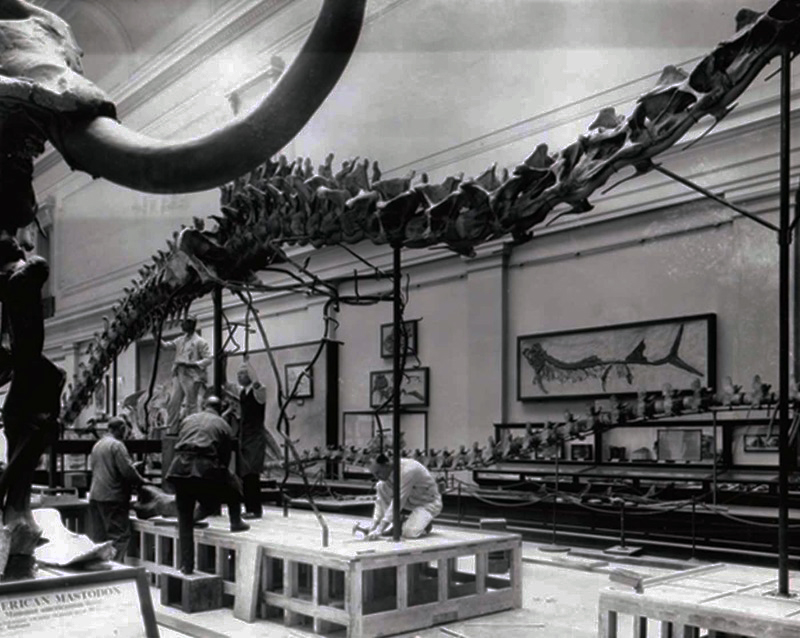
Preparing and mounting the Diplodocus was, according to Gilmore, the single most ambitious undertaking attempted by the department during his tenure.  In his words, “the magnitude of the task, by a small force, of preparing one of these huge skeletons for public exhibition can be fully appreciated only by those who have passed through such an experience” (Gilmore 1932).  Gilmore, along with preparators Norman Boss, Thomas Horne, and John Barrett, spent  2,545 working days over the course of six years preparing the skeleton for exhibition. Gilmore reported that his team  followed the method Arthur Coggeshall had developed at CMNH over 20 years earlier for mounting their sauropod. The vertebral column was assembled first, supported by a series of steel rods. This structure was mounted at the appropriate height on four upright steel beams securely anchored to the floor. Limbs and other extremities were subsequently added, with steel rods shaped to the contours of the fossils supporting each portion of the skeleton.

Diplodocus under construction, ca. 1930. Source

Diplodocus under construction, ca. 1930. Source

Missing parts of the skeleton, including the right hindlimb and the distal portions of the forelimbs, were filled in using casts of the Carnegie Diplodocus. According to Gilmore, the casted elements were colored “to harmonize with the actual bones but with sufficient difference to be at once distinguished from the originals” (Gilmore 1932). This is noteworthy, because the creators of other dinosaur mounts at that time had been known to deliberately disguise artificial elements by painting them to match the fossils. Although the Smithsonian Diplodocus was a composite of multiple specimens and therefore does not represent any single animal that actually existed, the decision to make the casted elements readily visible represents a degree of honesty and integrity that is more common in modern museum displays than it was in Gilmore’s time.

Gilmore presents plans for the in-progress Diplodocus mount at the 1927 Conference of the Future of the Smithsonian. Photo courtesy of the Smithsonian Institution Archives.

In the process of preparing and mounting the Diplodocus (at this point designated USNM 10865), Gilmore was able to further refine our understanding of sauropod physiology. Looking at the specimen, Gilmore was easily able to dismiss notions by earlier workers that Diplodocus had sprawled like a crocodile, asserting that “the crocodilian attitude for Diplodocus involves anotomical imposibilities” (Gilmore 1932). Additionally, since the entire dorsal portion of the vertebral column was present and intact, Gilmore determined that the presacral vertebrae (in the lower back) arch downward, toward the sacrum. The CMNH Diplodocus and AMNH Apatosaurus had been mounted with completely straight backs, so Gilmore was able to create a more accurate mount. Studying the articulated vertebral column also convinced Gilmore to raise the tail higher than in previous sauropod mounts. Although it would be decades before paleontologists started raising the tail completely clear of the ground, this was certainly a step in the right direction. Gilmore refrained, however, from definitively assigning USNM 10865 to a particular species of Diplodocus, since at the time (and to this day, apparently) the differences among the named species of this genus were unclear.

Exhibition and Legacy

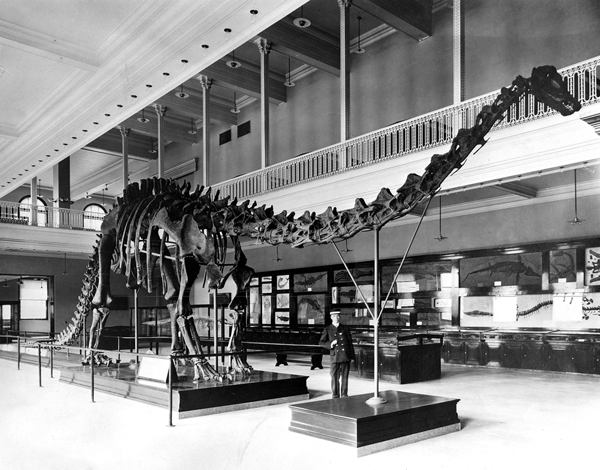
USNM 10865 in the Hall of Extinct Monsters, circa 1932. Photo courtesy of the Smithsonian Institution Archives.

The completed Diplodocus skeleton was 70 feet, 2 inches long and 12 feet, five inches tall at the hips, making it about 14 feet shorter in length than its CMNH counterpart. The mount was introduced to the Hall of Extinct Monsters at the United States National Museum in 1931, positioned atop three pedestals so that visitors could walk right underneath it. The Diplodocus was placed right in the center of the  gallery, facing west so that it could stare down visitors as they entered the hall.

The unveiling of the Diplodocus mount was a big deal, but did not catch the public’s attention in quite the same way as its CMNH predecessor. After all, by 1931 several of the other major natural history museums had had sauropods on display for over two decades. Nevertheless, for residents and visitors in Washington, DC the new mount was an unforgettable look at the life of the past.

The Diplodocus, as it stood from 1963 through 1981. Image courtesy of the Smithsonian Institution Archives.

The Diplodocus, as it stood from 1963 through 1981. Image courtesy of the Smithsonian Institution Archives.

The Diplodocus was not moved during the 1963 modernization of the fossil exhibits, but the walkable area around the mount was significantly reduced. Visitors could no longer walk under the skeleton, or get as close to it. The Diplodocus was not moved during the 1981 renovation, either, but the neck support coming up from the floor was replaced by less intrusive cables suspended from the ceiling. In the new exhibit, the sauropod centerpiece was surrounded by contemporaneous friends from the Morrison Formation, including Stegosaurus, Camptosaurus, Camarasaurus and Allosaurus.

National Museum of Natural History in Washington, DC.

Diplodocus as it stood from 1981-2014. Photo by the author.

From 1931 to 2014, the Diplodocus remained an unchanging fixture of the Museum’s east wing. Although this specimen’s story has not been as widely told as that of the CMNH Diplodocus, the Smithsonian sauropod is certainly just as interesting. For more than 80 years, USNM 10865 has mesmerized generations of viewers with its size and elegance.  What’s more, this specimen, and the associated measurements and drawings meticulously prepared by Gilmore, are frequently referred to in publications by modern paleontologists. For its contributions to public education and to scientific inquiry, USNM 10865 is one to celebrate.

References

Brinkman, P.D. The Second Jurassic Dinosaur Rush: Museums and Paleontology in America at the Turn of the 20th Century. Chicago: University of Chicago Press, 2010.

Gilmore, C.W. “On a Newly Mounted Skeleton of Diplodocus in the United States National Museum.” Proceedings of the United States National Museum 81:1-21, 1932.

Gilmore, C.W. “A History of the Division of Vertebrate Paleontology in the United States National Museum.” Proceedings of the United States National Museum 90, 1941.

3 Comments

Filed under anatomy, CMNH, dinosaurs, exhibits, Extinct Monsters, field work, fossil mounts, history of science, museums, NMNH, reptiles, sauropods

A brief history of mounted dinosaur skeletons

Mounted fossil skeletons, especially those of dinosaurs, are common at medium and large natural history museums. These mounts play a central role in the public’s perception of not only dinosaurs and other prehistoric animals, but of museums as well. However, just as dinosaurs are relatively new to science, fossil mounts have not always been a part of museums. The word dinosaur was coined in 1842 by British anatomist Richard Owen, based on a handful of fragmentary remains of large, extinct reptiles. Nevertheless, the study of dinosaurs did not start in earnest until 1865, when Joseph Leidy of Philadelphia’s Academy of Natural Sciences described Hadrosaurus, the first dinosaur found in the United States, and eventually, the first dinosaur skeleton to be mounted. The western frontier of North America proved to be a richer dinosaur hunting ground than Europe had been, and so vertebrate paleontology was among the first realms of science that American researchers could claim as their own.

The American fossil rush that followed came in two waves. In the 1870s, the field was dominated by the well-publicized but ultimately counterproductive feud between Othneil Charles Marsh of Yale and Edward Drinker Cope of the Academy of Natural Sciences. While these collectors amassed enormous collections of fossils for their respective institutions, their research remained largely out of the public eye.

1868 Hadrosaurus mount at the Academy of Natural Sciences. From http://www.naturalhistorymag.com.

The second wave came at the turn of the 20th century, and was intrinsically related to the rise of the large museums that sprang up in America’s cities at this time. The American Museum of Natural History in New York, the Carnegie Museum of Natural History in Pittsburgh, the Field Museum of Natural History in Chicago and other, similar institutions became involved in a fierce competition to find and display the largest dinosaur (Spalding 1993). At this point, the discipline of paleontology had been marginalized in American universities, in part because of a rising interest in experiment-driven “hard” sciences like molecular biology and physics, but also because the demands of space, labor and money required by paleontological research was prohibitive.

1905 Brontosaurus mount at AMNH. From Dinosaur Tracking.

Instead, paleontologists made their homes at the large natural history museums, which were backed by wealthy benefactors who were impressed by their collections of giant fossils. At the time, it was fashionable for wealthy businesspeople to donate extravagantly to cultural institutions, including museums, in the cities where they made their fortunes. To the benefactors, there was no doubt that paleontologists and their fossil specimens could draw larger crowds than a chemist or physicist ever could. Steel tycoon Andrew Carnegie is credited with conceiving of the idea to display a mounted dinosaur skeleton as the centerpiece of his new museum in Pittsburgh. Carnegie gave CMNH $10,000 to find a giant sauropod dinosaur, preferably just like the Apatosaurus (then called “Brontosaurus”) collected by Marsh 30 years earlier. Patrons of the other large museums followed suit, and by 1905 the Carnegie Museum, the American Museum and the Field Museum all had sauropod mounts on display, along with a menagerie of other dinosaurs and prehistoric animals.

Unfortunately, by modern standards these displays favored spectacle over good science. As mentioned, vertebrate fossils almost never found as complete skeletons, but as scattered and isolated elements. As such, the museum collectors were not racing to find a single, perfect skeleton, but to amass enough individual dinosaur bones to complete a mount. The early 20th century dinosaur mounts are typically composed of fossils found in rocks separated by hundreds of miles and millions of years in age. The collectors did not keep good records of where the fossils came from, so modern museum workers can only guess how many individual dinosaurs make up the mounts they have inherited. For example, the Stegosaurus at the Peabody Museum of Natural History is composed of at least five individuals, and researchers disagree whether the Giraffatitan  at Berlin’s Museum fur Naturkunde is made up of three or five different animals.

A preparator at AMNH assembles the “Brontosaurus” mount. From http://preparation.paleo.amnh.org/5/expeditions.

Additionally, the technicians that created the mounts were attempting something that had never been done before, and perhaps inevitably, poor choices were made during the construction process. Adam Hermann, lead fossil preparatory at the American Museum of Natural History during the early 20th century, used highly destructive techniques when creating fossil mounts. Fossils were connected to steel armatures by drilling screws and bolts directly into the bone, and broken bones and visible sections of the armature were hidden with liberal applications of plaster (Evander 2004). These practices turned out to be essentially irreversible, and modern workers are hesitant to attempt to dismantle old mounts for fear of destroying the fossils entirely.

The creation of the first fossil mounts was chiefly inspired by the vanity of museum benefactors, but their influence on audiences and their ability to draw crowds is undeniable. Although new dinosaur mounts have been constructed over the course of the 20th century, many, if not most, of the historic mounts remain on display, important not only as evidence of prehistoric life, but as icons of the history of science and museums in America.

References

Brinkman, Paul D. (2010.) The Second Jurassic Dinosaur Rush: Museums and Paleontology in America at the Turn of the 20th Century. Chicago, IL: University of Chicago Press.

Evander, Robert L. (2004.) “Armature Damage in a Mounted Specimen.” Presented at Society of Vertebrate Paleontology Annual Conference, Bristol, U.K.

Leave a comment

Filed under dinosaurs, field work, fossil mounts, history of science, mammals, museums, reptiles, science communication

WTF, AAA?

Over the past couple months, as I have hoped in vain that the folks at SV-POW will post cool stuff about sauropods again, I’ve learned a great deal about open-access publishing and the Research Works Act. Kudos to them for creating awareness. The sinister implications of the RWA are well documented around the web, so I’ll just provide the short version.

At present, taxpayer funded research institutions in the U.S., namely the NIH, require that research results must be freely accessible online. This is a reasonable requirement that is hard to argue against: if the public pays for science, the public should be able to see the results. However, this open-access policy gets in the way of the profits of the academic publishing industry. Publishers like Elsevier and Springer have astonishingly high profit margins of 36% or more, dwarfing even those of Apple, and they aim to keep them that way. Academic publishers have a pretty sweet scam going, in which (largely publicly funded) researchers supply the papers and the peer review for free, while the publishers take the full copyright, and charge $30-$50 to view a single article. All the publisher does is format the manuscripts into a physical volume, which is irrelevant since most people now access papers online. Enter RWA, an effort by publishers to push back against increasing awareness of their unnecessary and monopolistic role as gatekeepers of knowledge.

Until this point, the voices of dissent from the academic community seemed to paint a fairly straightforward picture. Researchers, who know the academic publishing industry well, are more-or-less unanimously opposed to the unbridled corporate greed represented by the RWA. But then this business happened (.pdf link). The American Anthropological Association, with which I’ve taken issue before, has thrown in its lot on the side of the publishers. The previously linked AAA statement was a response to the U.S. Office of Science and Technology Policy’s ongoing Request for Information (check out all the responses to date here). The AAA claims that there is currently no problem with the accessibility of research, and that it is unfair to undermine the right of publishers to sell their property at market value. Here are the choice quotes:

We write today to make the case that while we share the mutual objective of enhancing the public understanding of scientific enterprise and support the wide dissemination of materials that can reach those in the public who would benefit from such knowledge (consistent with our association’s mission), broad public access to information currently exists, and no federal government intervention is currently necessary.

Mandating open access to such property without just compensation and lawful procedural limits constitutes, in our view, an unconstitutional taking of private property – copyrighted material – an expropriation without fair market compensation. In our view, such a practice cannot and will not withstand judicial review.

Both of these arguments are nonsense. If the AAA believes that “those in the public who would benefit from such knowledge” currently have appropriate access to research, then their definition of the public must end at researchers at large institutions. As articulated at Neuroanthropology, this insular view is unhelpful and unacceptable, and it is particularly surprising that it is coming from a group of anthropologists. Do the non-profit groups anthropologists work with in developing countries not require access to papers? What about the people the research is about? Interested lay-people? Under the current system, and to an even greater extent should the RWA pass, anybody not affiliated with an institution with a well-funded library* has to pay exorbitant prices out of pocket to view research. As a result, the research remains largely in the academic sphere. Given the political nature of anthropologists in general, it is shocking that the AAA deems this acceptable.

*Side note: Even as a grad student, getting access to papers can be a real problem. Even large universities sometimes only provide access to volumes of journals within a certain date range, and when I’m doing field work or an internship, I can no longer get access.

The second quote is bunk because, as explained previously, the services provided by academic publishers are minimal, if not counterproductive to the dissemination of knowledge, and do not constitute anything that researchers could not do themselves in this information age.

As they did a year ago when they removed the reference to science from their mission statement, the AAA has demonstrated that their interests are not in sync with researchers. Honestly, I don’t know who they are trying to represent. They are working against the interests of serious researchers, advocacy groups who help the people anthropologists work with, and the dissemination of knowledge in general. AAA, please stop.

1 Comment

Filed under anthropology, field work, opinion, science communication

Pictures from the field


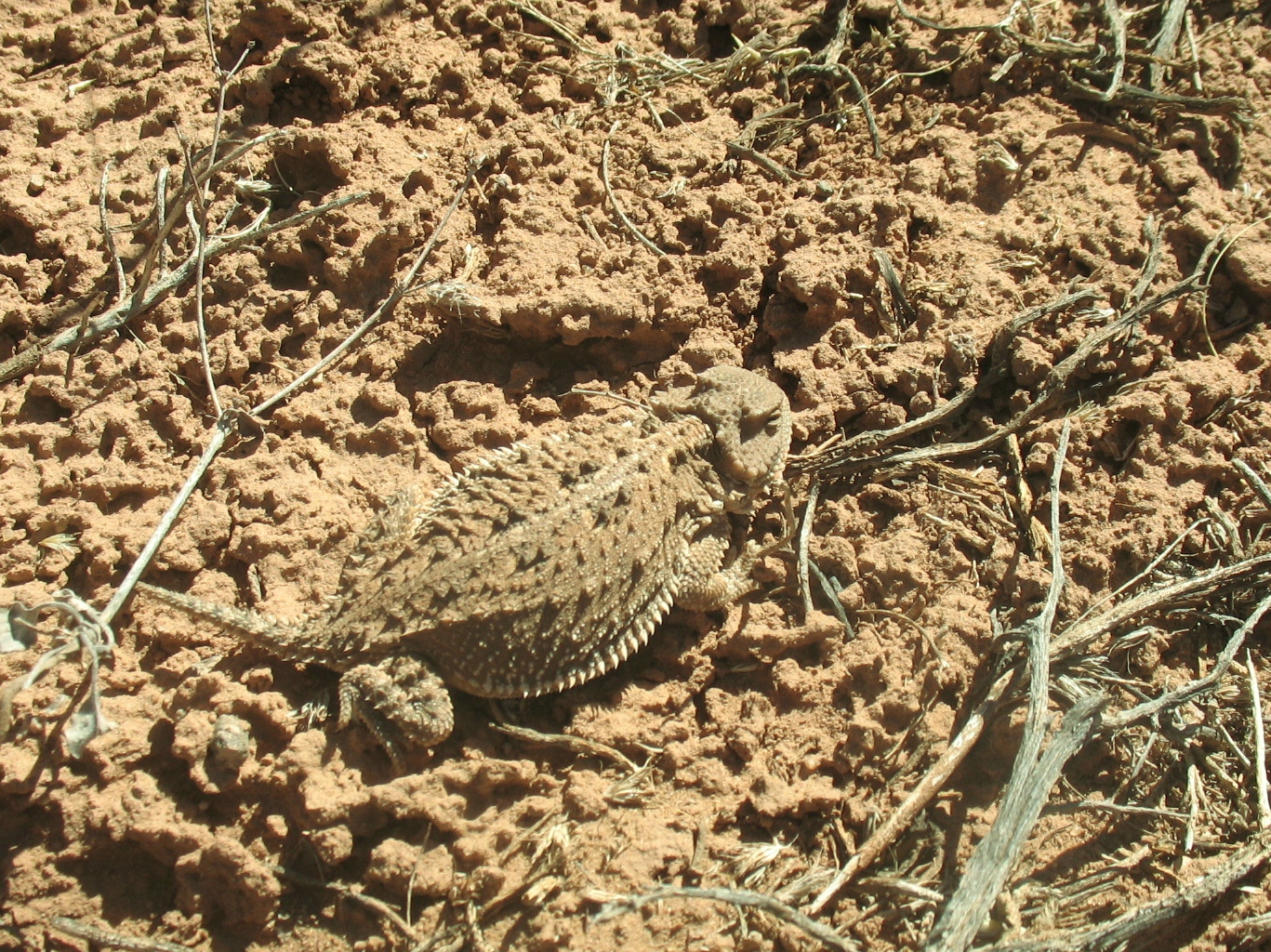
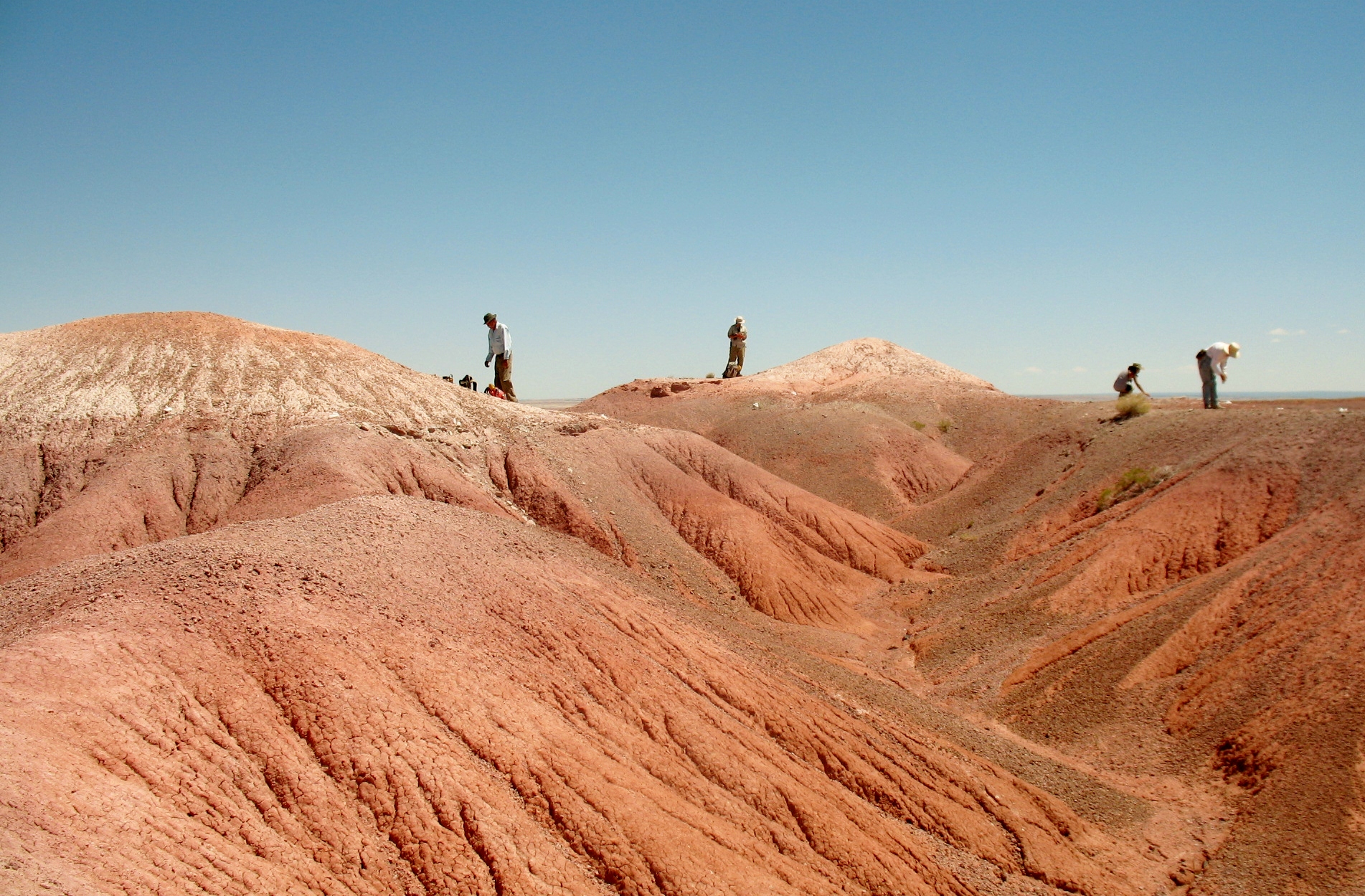
Just a few pictures from my time fossil prospecting in NE Arizona. Ain’t that desert pretty? More on why the late Triassic and microstrat is cool later.


Leave a comment

Filed under field work, museums