Category Archives: mammals

The Last American Dinosaurs Has Arrived!

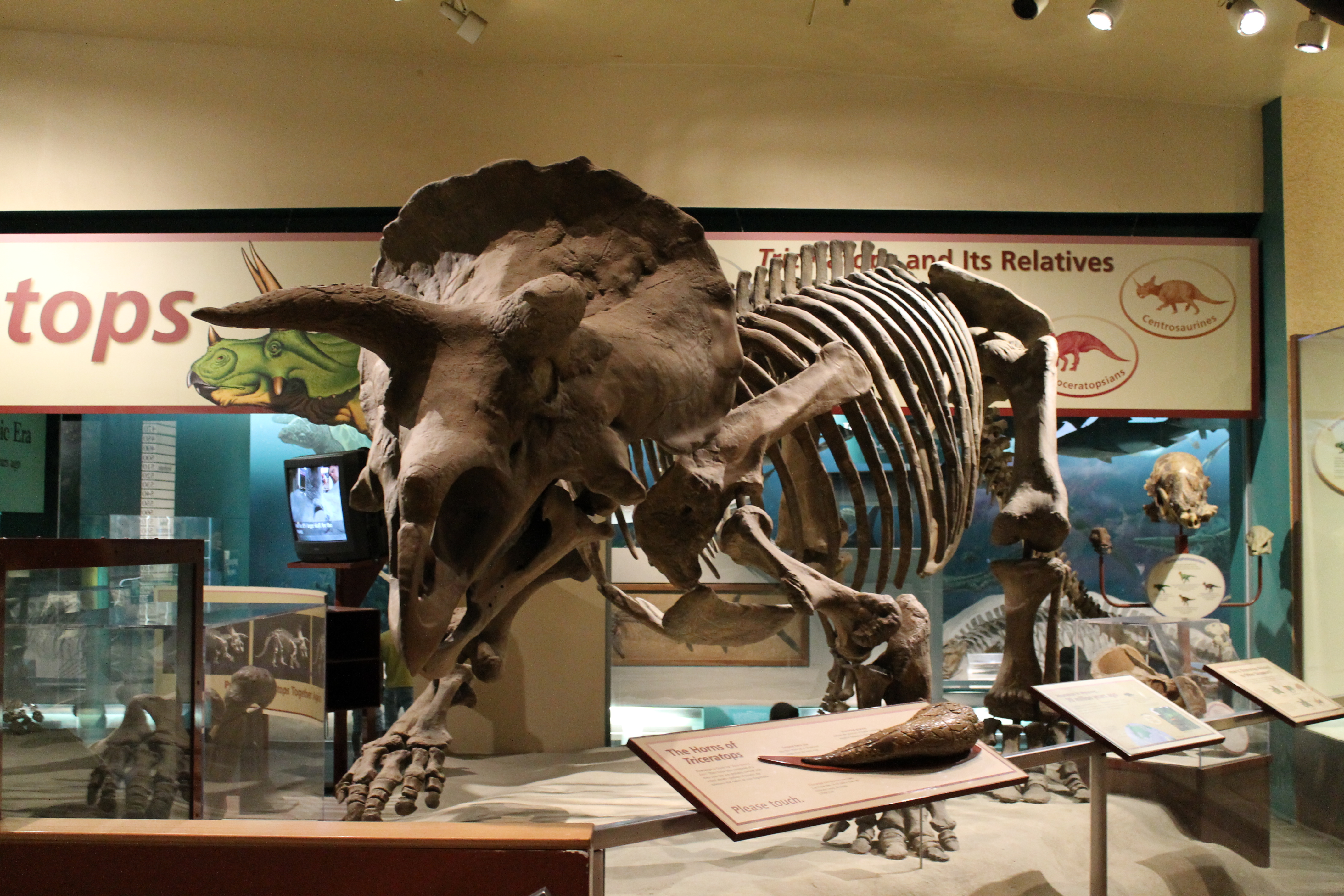
Hatcher greets visitors

Hatcher the Triceratops greets visitors at the entrance to The Last American Dinosaurs.

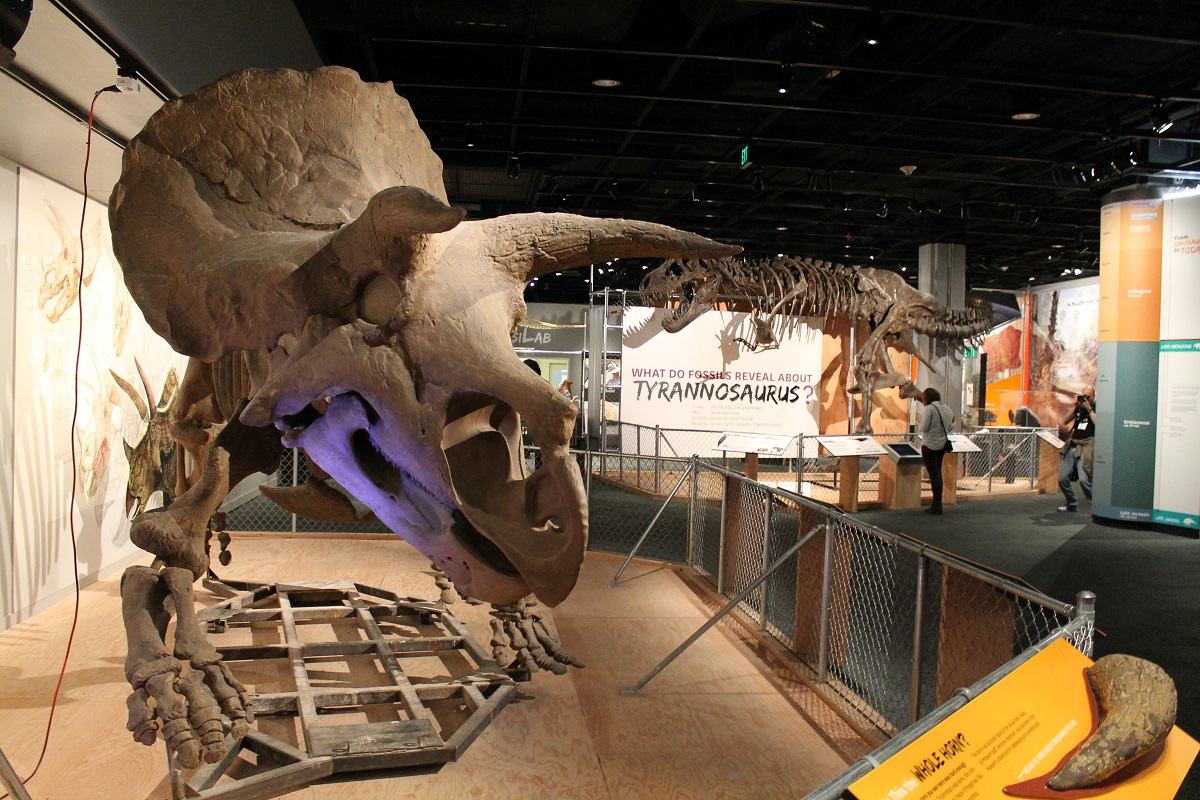
Dinosaurs are once again on display at the National Museum of Natural History. Opening just in time for Thanksgiving weekend, “The Last American Dinosaurs” provides a much-needed dose of paleontology while the main fossil hall is being renovated. I was fortunate enough to take part in a preview tour for social media users – you can check out the storified version, or read on for photos and my initial thoughts on the new exhibit.

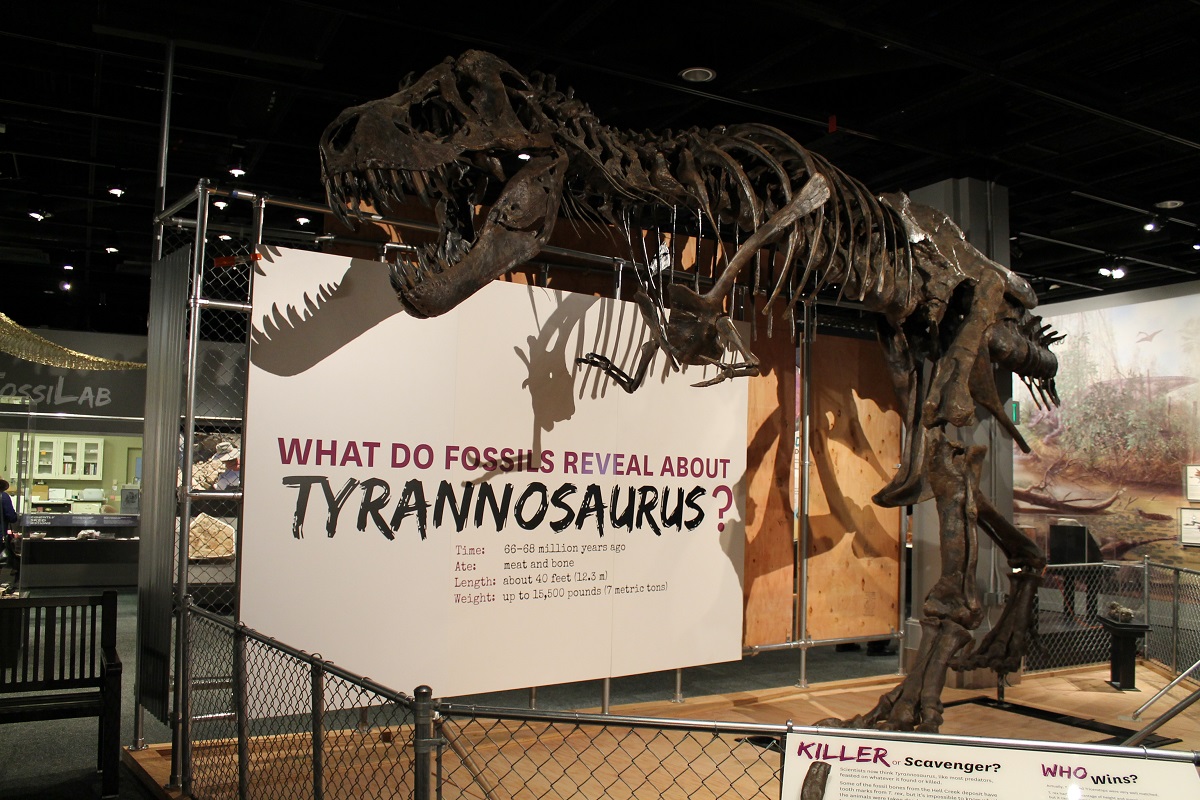
Stan is cool

Stan the T. rex is sure to be a crowd-pleaser.

Babies

Triceratops growth series reveals how much we’ve learned about the lives of dinosaurs over the last 25 years.

As promised, there are plenty of dinosaurs on view. Specifically, these are the dinosaurs of Maastrichtian North America, the last of these animals to grace this continent before the extinction event 66 million years ago. In addition to the mounted skeletons of Triceratops and Tyrannosaurus discussed in the previous post, be on the lookout for a hatchling and juvenile Triceratops, an Edmontosaurus, and bits and pieces from dromaeosaurs and pachycephalosaurs.

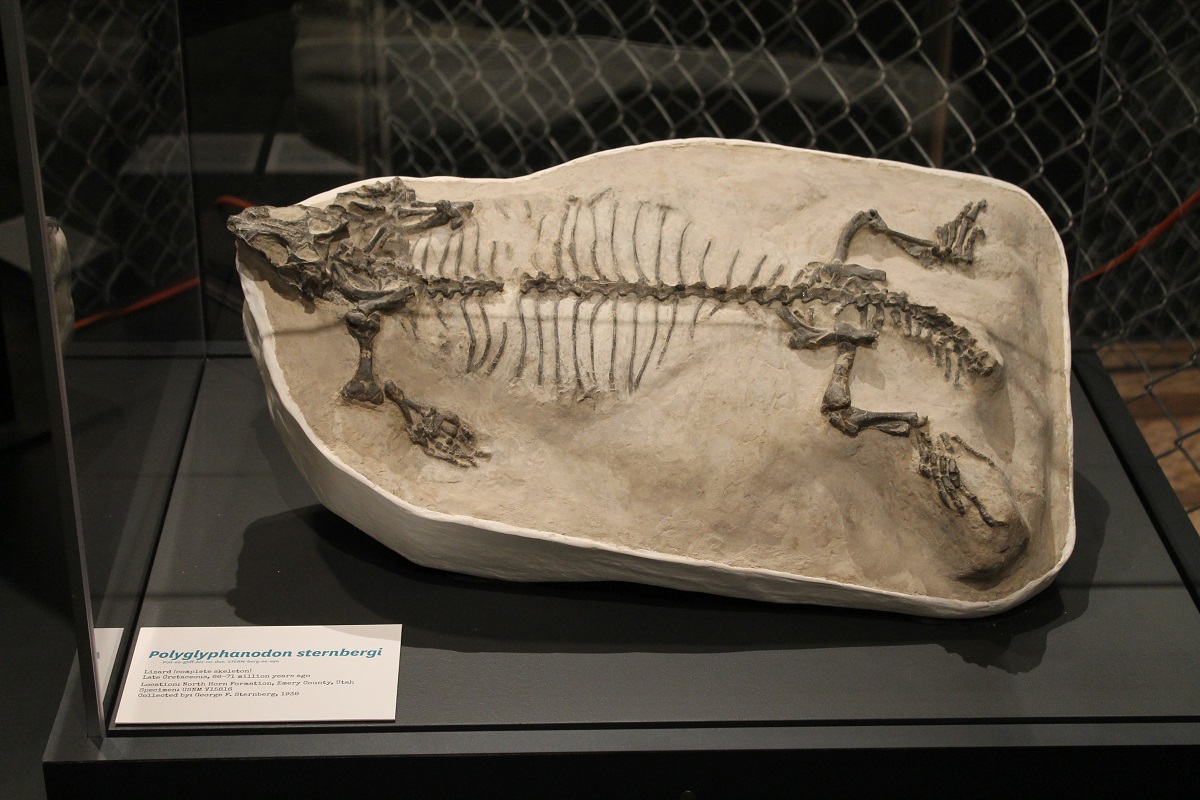
However, the dinosaurs are just the tip of the iceberg. As lead curator Hans-Dieter Sues explained within the first few minutes of the tour, the central message of this exhibit is that dinosaurs were only one part of a complex ecosystem. To that end, the dinosaurs of The Last American Dinosaurs are outnumbered by a menagerie of of reptiles, mammals, invertebrates, and plants that shared their world, most of which are on display for the first time. These specimens come from a variety of sources. Some, including turtles and fossil leaves, were collected by NMNH paleontologists in North Dakota specifically for this exhibit. Others, like the lizard Polyglyphanodon, have been in the museum’s collection since the 1930s but have never before been put on display. I also spotted a few casts sourced from Triebold Paleontology, including the mammal Didelphodon and the alligator-like Stangerochampsa

Gilmore specimen

This Polyglyphanodon was collected by Charles Gilmore in the 1930s.

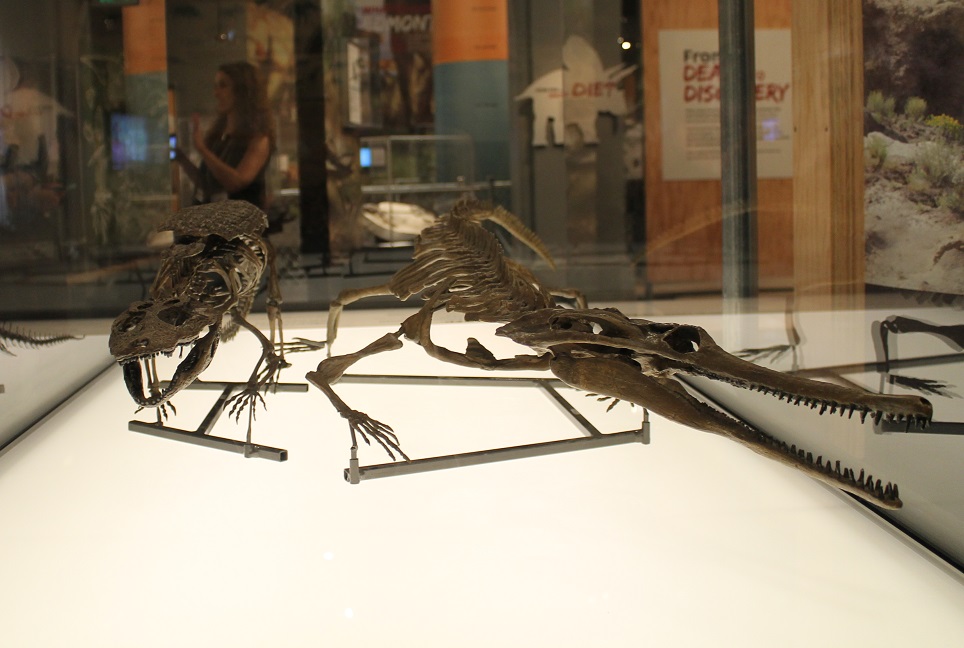
crocs

Stangerochampsa and Champsosaurus are examples of animals that survived the K/T extinction.

Much like the Human Origins exhibit, The Last American Dinosaurs incorporates the faces of Smithsonian researchers and staff throughout the displays. There are large photos showing the museum’s scientists at work in the field, and the popular windowed FossiLab has found a new home in this exhibit. In addition, a large area is deservedly devoted to scientific illustrator Mary Parrish, chronicling the methods she uses to turn fossil data into gorgeously detailed renderings of prehistoric animals and environments. Videos of Parrish and others at work can be seen here.

I’m definitely a fan of this personalized approach to science communication. In-house scientists are museums’ most important and unique resources, and placing them front-and-center reminds visitors that science is done by real and diverse people, not caricatures in lab coats. A human face goes a long way toward making the process of doing science relateable to visitors.

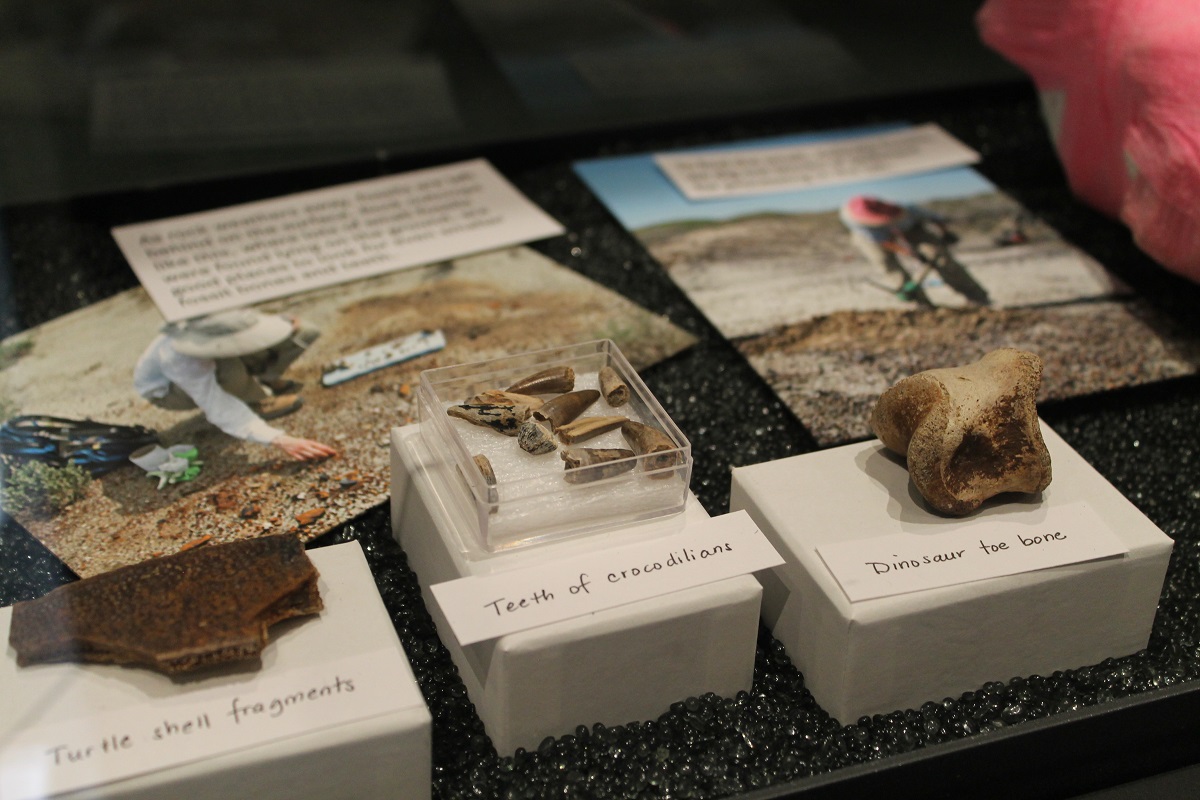
new stuff

Handwritten labels on these fresh from the field fossils provide a personal touch.

The phenomenon of extinction is another important theme in The Last American Dinosaurs. The exhibit details how an asteroid impact combined with several other factors to radically alter the environment worldwide, causing 70% of species to die out (fun fact: ambient temperatures in North America directly after the impact were comparable to the inside of a brick pizza oven). However, the exhibit goes on to make direct comparisons between the K/Pg extinction event and the anthropogenic extinctions of today. Habitat destruction, introduction of invasive species, and climate change caused by burning fossil fuels are instigators of environmental upheaval as powerful as any space rock.

extinction

This moa and dodo remind visitors that extinction isn’t limited to the distant past.

In this way, The Last American Dinosaurs is a warm-up for the key messages of the new fossil hall. The overarching theme of the planned exhibit is that “Earth’s distant past is connected to the present and shapes our future.” It will showcase how living things and their environments are interdependent, and change over time. Crucially, it will also demonstrate how our understanding of how life has changed over time is important for understanding and mitigating our impact on present-day ecosystems. The Last American Dinosaurs is evidently a testing ground for how these ideas will resonate with audiences.

paleoart

Historic models of Agathaumas and Triceratops by Charles Knight and Charles Gilmore.

In designing modern paleontology exhibits, museum workers have tried many approaches to squelch the idea of the dinosaur pageant show and instead convey how the science of paleontology is relevant to our understanding of the world around us. Back in 1995, the American Museum of Natural History tried a cladistic arrangement with a focus on biodiversity. More recently, the Field Museum used the process of evolution to frame the history of life on Earth. While there are certainly overlaps with what has come before, the “modern implications of environmental change over deep time” approach under development at NMNH is fairly novel, and also quite timely. Some of the displays in The Last American Dinosaurs hit pretty close to home, and I’m eager to find out how visitors respond.

6 Comments

Filed under dinosaurs, exhibits, fossil mounts, mammals, marginocephalians, museums, NMNH, ornithopods, paleoart, reptiles, reviews, science communication, theropods

Extinct Monsters Updated

artists conception

This early artist’s conception of the new NMNH fossil hall was on display on closing day.

Way back in 2012, I wrote a series of posts on the history of fossil displays at the National Museum of Natural History. Now that the old exhibit is closed for five years of renovation, it seemed like a good idea to go back and revise the old articles. That, and it can be very painful to read things I wrote over a year ago. Each of the seven posts, plus the launch page, have been substantially updated with new information, new images, and less abuse of the passive voice. You can check out the new articles via the Extinct Monsters link at the top of the page, or by clicking here.

Leave a comment

Filed under dinosaurs, exhibits, Extinct Monsters, fossil mounts, mammals, museums, NMNH, reptiles

The Top Seven Dinosaur Mounts #MuseumDinos

According to Twitter, today is #MuseumDinos day, possibly because it’s the 10th anniversary of the groundbreaking DinoSphere exhibit at the Indianapolis Children’s Museum. At any rate, dinosaurs in museums is a thing I’m kind of interested in, so here’s the first ever DINOSOURS! listicle: the hastily-planned and in-no-way-definitive top seven coolest dinosaur extinct animal mounts from around the world.

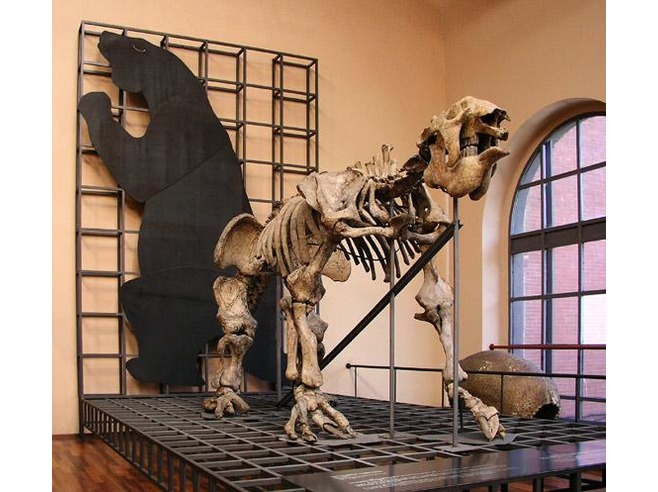
7. MegatheriumMuseo Nacional de Ciencias Naturales

The original Megatherium fossils have been remounted at the Museo Nacional de Ciencias Naturales. Image from TripAdvisor.

Megatherium at the Museo Nacional de Ciencias Naturales. Source

Let’s start with the eldest. There are quite a few ground sloth mounts in the world, but the Megatherium in Madrid has the distinction of being the first assembled skeleton of a prehistoric animal ever put on public display. It’s hard to imagine, but when Juan Bautista Bru created this mount in 1795, biological evolution was completely unknown, and naturalists were just beginning wrap their heads around the idea that organisms could become extinct. This Megatherium was a product of a very different era of human understanding about the natural world, but unlike other historic mounts like the Peale mastodon and Leidy Hadrosaurus, it has survived to the present day.

6. Stegosaurus and Allosaurus, Denver Museum of Nature and Science

Stegosaurus and Allosaurus

Stegosaurus and Allosaurus at the Denver Museum of Nature and Science. Source

In addition to being a respected scientist, Ken Carpenter is among the most skilled fossil mount creators working today. Among his most recognizable work is the Stegosaurus and Allosaurus face-off at the Denver Museum of Nature and Science. Featuring a remount of a historic Stegosaurus specimen and an Allosaurus discovered and mostly excavated by 12-year-old India Wood, this lively display was unveiled in 1995 as the centerpiece of the “Prehistoric Journey” exhibit. In addition to biomechanical accuracy exceeding many other modern mounts, this display by Carpenter and Bryan Small is imbued with remarkable dynamism and energy.

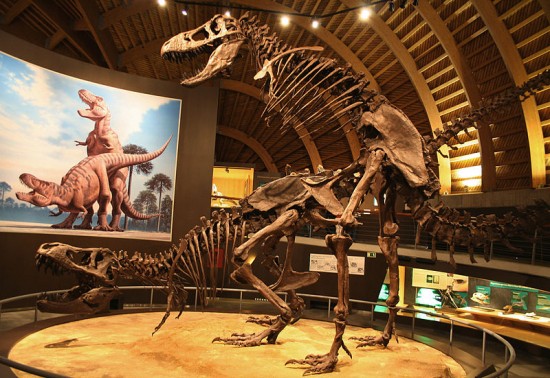
5. Tyrannosaurus pair, Museo Jurasico de Asturias

Tyrannosaurus at Museo Jurasico de Asturias. Source

Tyrannosaurus at Museo Jurasico de Asturias. Source

Then again, there are a lot of fighting dinosaur mounts. I love that dinosaurs had big teeth and killed things as much as the next person, but it’s refreshing to see a mount that showcases some other aspect of these animals’ lives. That said, the Spanish Museo Jurasico de Asturias is, as far as I know, the only museum to display a pair of copulating dinosaurs. The T. rex on the bottom looks like yet another Stan cast, but I’m not sure about the one on top.

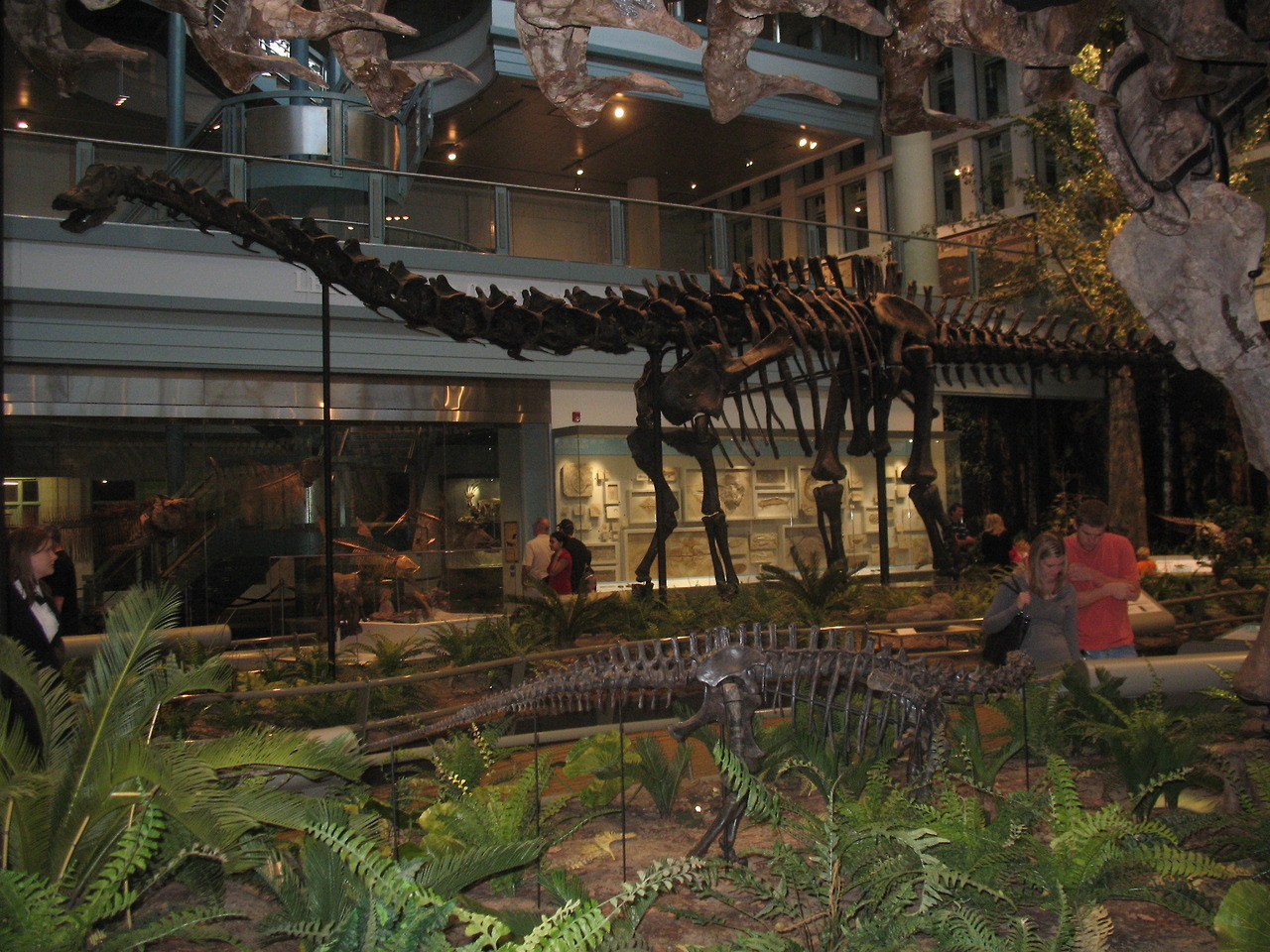
4. Diplodocus, Carnegie Museum of Natural History (and elsewhere)

The original "Dippy" the Diplodocus at the Carnegie Museum of Natural History.

The original “Dippy” the Diplodocus at the Carnegie Museum of Natural History.

Like the Madrid Megatherium, this Diplodocus is intractably situated in history. If the worldwide popularity of dinosaurs could be traced to a single specimen, it would be this one. At the turn of the 20th century, Andrew Carnegie, who funded the creation of the Carnegie Museum in Pittsburgh, demanded that his museum find and display a sauropod dinosaur. This launched the Great American Sauropod Race, a frenzied competition among the United States’ large natural history museums to assemble the biggest dinosaur for display. The American Museum in New York was first across the finish line in 1905 with their composite “Brontosaurus”, although the Diplodocus collected by the CMNH team was a more complete specimen. Not to be outdone by his New York competitors, Carnegie commissioned several casts of the skeleton, which he presented to several cities in Europe and Latin America. Diplodocus casts sprang up seemingly overnight in London, Paris and elsewhere, and the original specimen was unveiled in Pittsburgh in 1907.

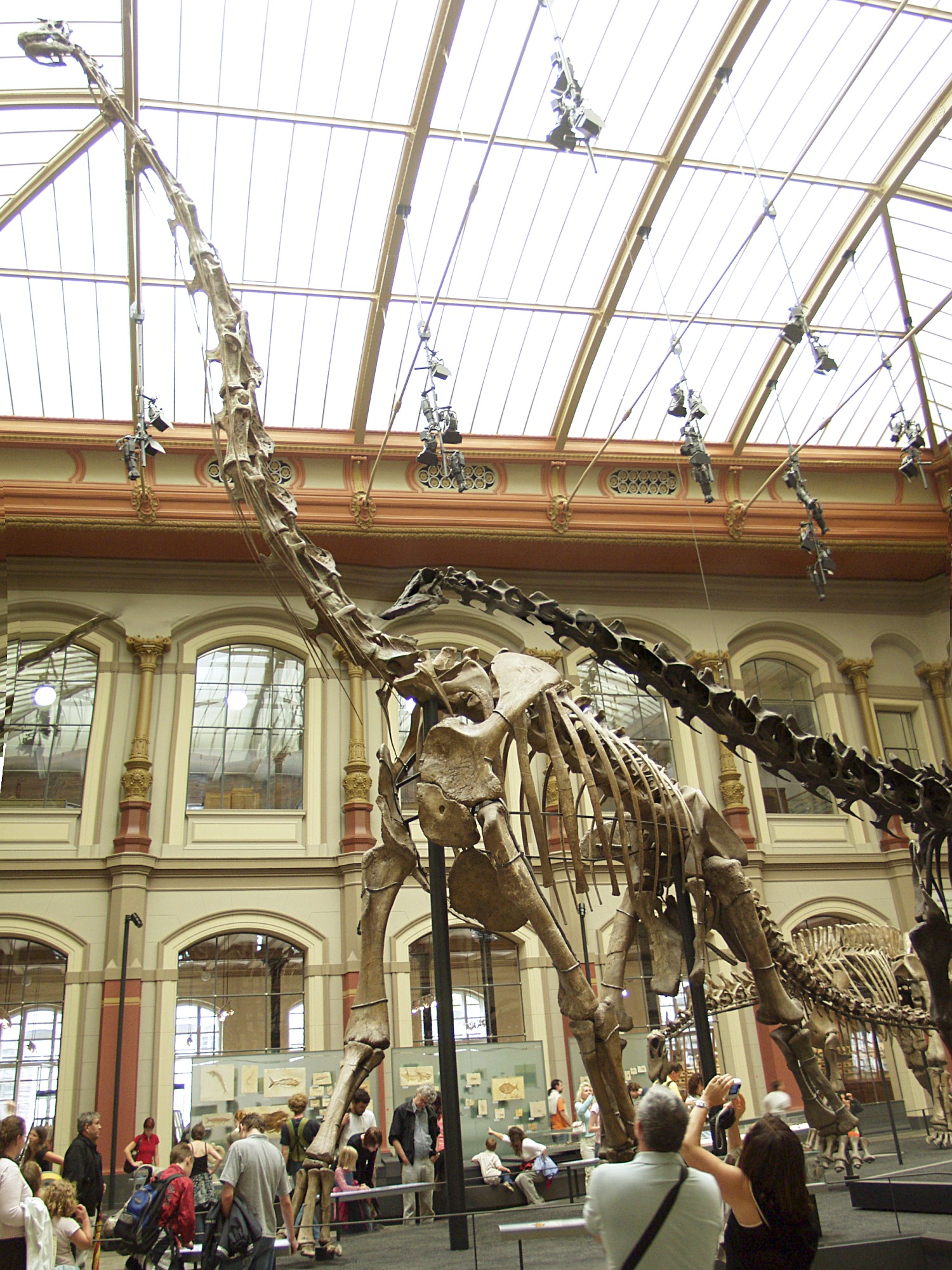
3. GiraffatitanMuseum für Naturkunde

Should the Giraffatitan at Berlin's Museum fur Naturkunde be displayed in Germany? Image from Wikipedia.

The biggest fossil mount in the world. Source

The Berlin Giraffatitan is on this list for two reasons. First, it’s really big. The biggest mount in the world composed mostly of original fossils, as a matter of fact, and big things are awesome. However, this display is also a fascinating example of the cultural meaning natural specimens can take on when placed on display. The fossils themselves were removed from what is now Tanzania under the authority of a colonial government that is no longer considered legitimate or appropriate, and the mount itself was completed in 1935, a time when the hall it was displayed in was filled with swastika flags. The fossils themselves (and the current museum staff that have inherited them) obviously have nothing to do with Nazis or colonial imperialism, but the display they were incorporated into is entrenched in history that should not be ignored or forgotten.

This is actually the second iteration of this display, the bow-legged original having been remounted in 2007.That’s one of the Carnegie Diplodocus casts peeking in from the right, by the way.

2. Triceratops, National Museum of Natural History

Triceratops at the National Museum of Natural History.

Triceratops at the National Museum of Natural History.

Triceratops is objectively the coolest dinosaur ever, and NMNH is the home to the definitive (and first) Triceratops mount. Charles Gilmore and Norman Boss constructed this composite skeleton in 1905 from fossils collected throughout Wyoming, resulting in a mount that was inaccurate in many details; most noticeably, the skull was too small compared to the rest of the body. Nevertheless, this Triceratops was the basis for illustrations in popular books for decades to come. In 2000, Steve Jabo and others retired the original mount, conserving the fossils and replacing them in the exhibit hall with a casted duplicate. Among other improvements, the undersized head was corrected by digitally scanning the original and 3D-printing it at a different scale.

1. Barosaurus and Allosaurus, American Museum of Natural History

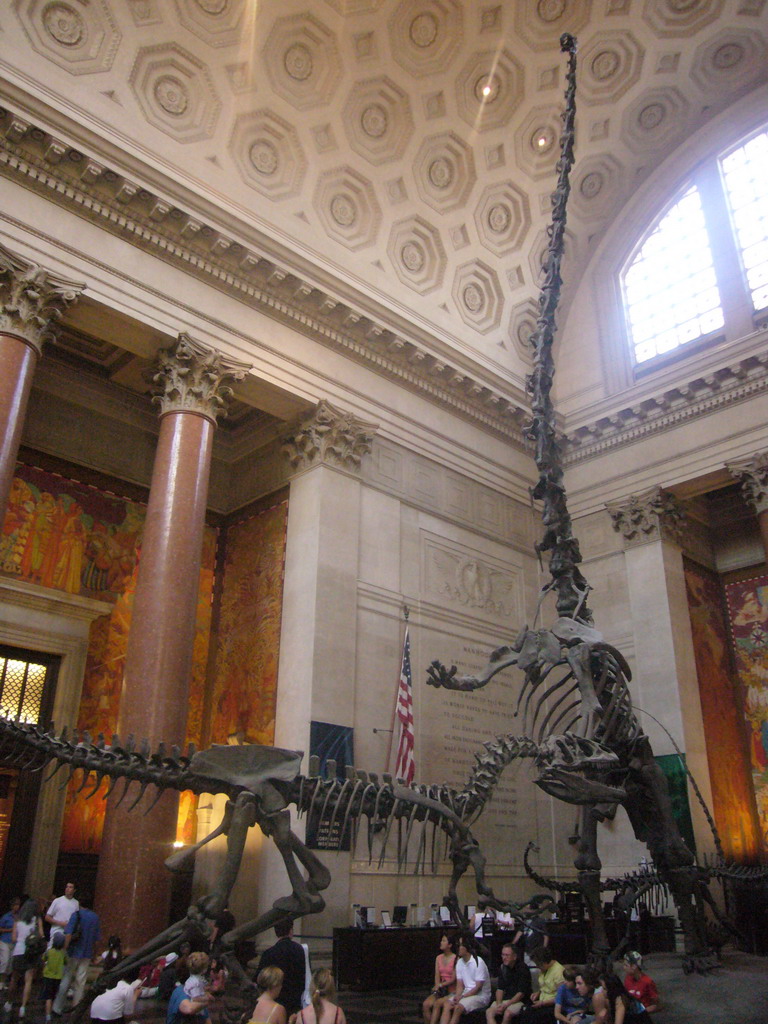
Allosaurus and Barosaurus mount in the Roosevelt rotunda of the American Museum of Natural History. Source: http://www.ourtravelpics.com.

Allosaurus and Barosaurus mount at the American Museum of Natural History. Source

Was there ever any question what would be in first place ? The Barosaurus encounter in the Theodore Roosevelt rotunda at AMNH is a prime contender for the world’s most spectacular fossil mount. What I like most about this exhibit is the purposeful mise-en-scene: the dinosaurs decisively fill the space, drawing the viewer’s eye not only around the room but up the neck of the 50-foot Barosaurus toward the high vaulted ceiling.  Since 2010, visitors have been able to walk between as well as around the mounts, inserting their own human scale into the scene. According to AMNH paleontologist Mark Norrell, the objective of this exhibit was “to imagine dinosaurs as living organisms, facing challenges similar to those that confront animals today.” However, Norrell freely admits that the display was also meant to be a spectacle, emphasizing the “romantic history and grandeur of fossils”.

References

Brinkman, P.D. (2010). The Second Jurassic Dinosaur Rush: Museums and Paleontology in America at the Turn of the 20th Century. Chicago, IL: University of Chicago Press.

Carpenter, K., Madsen, J.H. and Lewis, L. (1994). Mounting of Fossil Vertebrate Skeletons. In Vertebrate Paleontological Techniques, Vol. 1. Cambridge, UK: Cambridge University Press.

López Piñero , J.M. (1988). Juan Bautista Bru (1740-1799) and the Description of the Genus MegatheriumJournal of the History of Biology. 21:1:147-163.

Norrell, M.A., Dingus, L.W. & Gaffney, E.S. (1991). Barosaurus on Central Park West. Natural History, 100(12), 36-41.

3 Comments

Filed under AMNH, CMNH, dinosaurs, fossil mounts, history of science, mammals, museums, NMNH, paleoart, reptiles

Juan Bautista Bru and the First Fossil Mount

The first fossils ever assembled into a freestanding mount belonged to the giant ground sloth Megatherium. The fossils, which were unearthed near Luján in what is now Argentina, were described and mounted in 1795 by Juan Bautista Bru at the Royal Cabinet of Natural History in Madrid. But while the Megatherium mount played an important part in the history of paleontology and in our understanding of the changing Earth, the man who made it possible is scarcely mentioned in the literature. Instead, Bru’s work on Megatherium is typically overshadowed by the involvement of the much better known anatomist Georges Cuvier. Drawing principally from José López Piñero ‘s 1988 paper on Bru, this entry is intended to highlight and acknowledge Bru’s contribution to the practice of mounting fossils for public display.

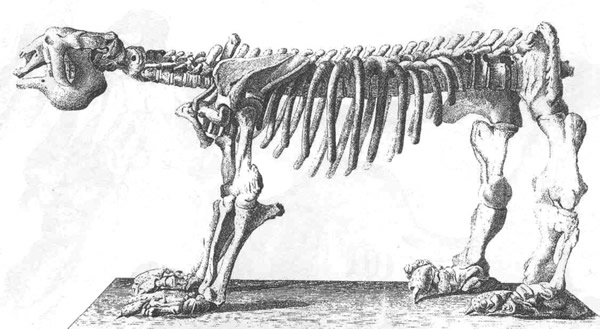
Cuvier's adaptation of Bru's drawing.

Cuvier’s adaptation of Bru’s illustration of the Megatherium mount.

The Megatherium  in question was discovered  in 1789 in what was then the Viceroyalty of Rio de la Plata, on the banks of the Luján River, “a league and a half” from the town of the same name. As region was controlled by the Spanish monarchy at the time (although the Argentine War of Independence was not far off), it was standard procedure for viceroy Marqués de Lorento to ship the important find to Spain with all haste. Packed into seven crates, the nearly complete skeleton was delivered to the Royal Cabinet of Natural History in Madrid, which curated natural specimens from Spanish territories and was among the most respected scientific institutions in Europe.

By the late 1700s, the European Enlightenment was well established, and the pursuit of knowledge about the world through reason and scientific deduction rather than legend or dogma was popular among the societal elite. The study of natural history was deemed particularly important, and institutions like the Royal Cabinet which collected, quantified and published knowledge about the natural world were well-respected and well-funded. However, the meaning of the fossil record still eluded the top minds of the era. A century earlier, Nicolaus Steno had determined that fossils were the remains of once-living organisms, and by the late 1700s some naturalists were starting to come around to the idea that species that once existed had become extinct. Nevertheless, when the Megatherium arrived in Madrid, naturalists still lacked the most important part of the puzzle presented by the fossil record: an understanding of evolution and the interrelatedness of life on Earth.

The task of interpreting the Luján fossils went to Juan Bautista Bru, the “Artist and First Dissector” at the Royal Cabinet. Born in Valencia, Bru had initially tried his hand as a traditional artist, but found little success. After shifting his focus to natural science, Bru joined the Royal Cabinet in 1771 and remained there until his death in 1799. Bru primarily served as a scientific illustrator, combining his artistic skill with his extensive anatomical knowledge to produce gorgeously detailed drawings of biological specimens, as was required before photography became commonplace. He was also responsible for producing taxidermy pieces and occasionally, mounted skeletons of animals.  In 1777, Bru prepared and mounted the skeleton of an elephant that had died at the royal estate in Aranjuez, a task which doubtlessly provided useful practice for mounting the gigantic Megatherium.

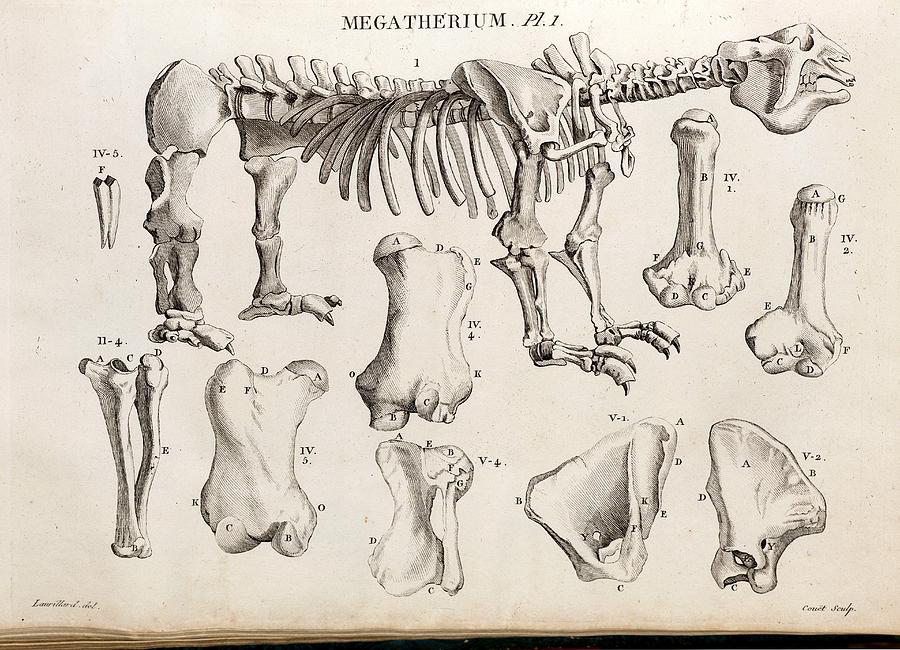
Plate from Bru's monograph

Plate I from Bru’s Megatherium monograph.

Bru devoted four years to studying the Luján fossils, which were complete except for the animal’s tail. He completed his monograph in 1793, which included detailed descriptions of every skeletal element, in addition to 22 plates illustrating the bones from various angles. Among the illustrations was the completely articulated skeleton shown above, which is, incidentally, the first recorded instance of a skeletal drawing illustrating the living form of an extinct animal. Since the mounted skeleton did not go on display until 1795, it is unclear whether Bru based the illustration on the mount or vice versa. Unfortunately, little is known about how Bru created the Megatherium mount, and his drawing provides no information about the armature that supported the massive bones. Since Bru did not discuss the mount’s construction in his monograph, one can only surmise that the techniques he refined over the years building mounts of modern animal skeletons were applicable to the fossils. Wooden armatures were used to mount fossils in the early 1800s, and it is plausible that Bru pioneered this technique. Regardless of how it was supported, the  rhino-sized Megatherium mount was placed on a rectangular wooden platform in a room of the Royal Cabinet already devoted to fossils and minerals.

It is unclear why, but Bru never published his monograph, and this unfortunately resulted in him effectively being scooped by Georges Cuvier in 1796. A representative of the French government working in Santa Domingo acquired a set of proofs of Bru’s monograph and illustration, and passed them along to the Institut de France. The proofs made their way to Cuvier, who was well established as one of the world’s leading experts in anatomy and natural history. Although he had not yet seen the actual fossils, Cuvier wrote a brief article in the journal Magasin Encyclopedique on the South American creature, in which he coined the rather vague name Megatherium americanum, meaning American giant beast. Cuvier’s article was not without error (he claimed the fossils were found in Paraguay), but he did correctly recognize that the animal was an edentate* and was curiously similar to modern tree sloths**. In contrast, Bru’s description of the fossils, while thorough, contained no attempt at classification.

As it happened, Cuvier published a second important article on fossil animals in 1796: his Mémoires sur les espèces d’éléphants vivants et fossiles, in which he established that the mammoth fossils found in the Americas belonged to an extinct relative of modern elephants. The wave of attention Cuvier received that year for his contributions to the young field of paleontology apparently eclipsed any recognition of Bru’s multi-year study of the Megatherium. Bru ended up selling his monograph and illustrations to a publisher, and a translated version eventually appeared in a widely disseminated booklet with Cuvier’s Megatherium article in 1804, five years after Bru’s death.

Megatherium would continue to be important to 19th century paleontologists. Charles Darwin became interested in South American fossils during the second voyage of the HMS Beagle. In particular, the relationship between the extinct ground sloths and their modern relatives contributed to Darwin’s ideas about the succession of species over geologic time. In 1849, the British Museum produced a Megatherium mount of their own, a composite of two skeletons found very near to where the Spanish specimen was first discovered. Plaster casts of this mount would appear in museums on both sides of the Atlantic, and the original cast is still on display in London today (some of the fossils were destroyed during World War II). But while the discovery of Megatherium would be recounted often over the subsequent two centuries, it was Cuvier, not Bru, who was always given credit for introducing the animal to the world. Only in recent years has Bru’s name begun to circulate again in historical accounts.

The original Megatherium fossils have been remounted at the Museo Nacional de Ciencias Naturales. Image from TripAdvisor.

The original Megatherium fossils have been remounted at the Museo Nacional de Ciencias Naturales. Image from Virtual Tourist.

However, there is a bit of happiness at the end of this story. Unlike other early mounts like Peale’s mastodon and Hydrarchos, Bru’s Megatherium has survived to the present day. Remounted on a new steel armature in an approximation of the original quadrupedal pose, the Luján Megatherium fossils are on display at the Royal Cabinet’s spiritual successor, the National Museum of Natural Science in Madrid. On public display for a nearly uninterrupted 218 years, this specimen can  surely be said to have taken on a second life. It was once a giant beast that roamed across the ancient Argentinian plains, and now it is a monument to scientific achievement.

*Edentata is a historic paraphyletic group that includes sloths, anteaters, pangolins and aardvarks. Modern biologists recognize that the new world sloths and anteaters and old world pangolins and aardvarks are not closely related. The name Xenarthra is now used for sloths and their new world relatives.

**Cuvier was working many decades before Charles Darwin published On the Origin of Species, and as such, did not subscribe to the idea that species could change and diversify over time. It is therefore worth noting that while he recognized the similarity between Megatherium and modern sloths, he did not conceive of their relationship in an evolutionary sense (that is, related species sharing a common ancestor). 

References

Argot, C. (2008). Changing Views in Paleontology:
The Story of a Giant (Megatherium, Xenarthra). Mammalian Evolutionary Morphology. Pp 37-50.

López Piñero , J.M. (1988). Juan Bautista Bru (1740-1799) and the Description of the Genus Megatherium. Journal of the History of Biology. 21:1:147-163.

1 Comment

Filed under fossil mounts, history of science, mammals, museums, paleoart

The Chimeric Missourium and Hydrarchos

In 1802, naturalist and painter John Peale unveiled the first mounted fossil skeleton ever put on display in the United States. The mount, a mastodon (Mammut americanum) collected on a farm near Newburgh, New York, immediately captured public attention and inspired a wave of interest in anything old and big. Although Peale charged admission to view the mastodon and somewhat dramatized its importance as “the first of American animals” and “the largest of terrestrial beings”, his primary intent was to educate the public about the natural world. Nevertheless, many American capitalists saw the crowds of people lining up to see Peale’s mastodon and concluded that there was a profit to be made in exhibiting fossils. The best known of these 19th century fossil showmen was surely Albert Koch. Having immigrated to the United States from Germany in 1835, Koch was a contemporary of P.T. Barnum, and like Barnum, he made a career out of exhibiting “curiosities”, some real and some fraudulent or exaggerated. At “Dr. Koch’s” (he never actually earned a doctorate) exhibition hall in St. Louis, Missouri, visitors paying the 50 cent admission fee could view wax sculptures, exotic animals, artifacts from distant countries, extensive miniature dioramas, and alleged freaks of nature. Koch also had a live grizzly bear and several alligators – sources differ on whether or not they were forced to fight for entertainment.

Missourium

In 1840, Koch received word of something much bigger. A Missouri farmer had discovered large fossil bones, and Koch quickly arranged to purchase the find along with the rights to search the farmer’s land for more. Within four months, Koch had assembled a complete mastodon skeleton. More than complete, actually: Koch’s mount included numerous extra vertebrae and ribs from one or more additional mastodon individuals. Like Peale before him, Koch placed blocks of wood between the vertebrae to further exaggerate the animal’s length. The result was a 32-foot mount, nearly twice as long as a typical mastodon. As a final flourish, Koch positioned the mastodon’s tusks pointing upwards, to make the beast look more fearsome. In order to differentiate his creation from Peale’s earlier exhibit, Koch called the creature “Missourium”, although there was no scientific reason to distinguish it from other mastodon finds. Missourium went on display at Koch’s St. Louis establishment later that same year, and proved to be an instant success. In fact, Koch decided that the composite mastodon mount was worth more than then every other display combined. In 1841, he sold the exhibit hall and took Missourium on tour, traveling to New Orleans, Philadelphia, and several other American cities.

Illustration of Missourium. Out-of-copyright image via Laelaps.

Contemporary academics, including the British naturalist Richard Owen, pointed out that Koch’s mount was clearly an incorrectly assembled composite, and expressed disapproval for Koch’s sensationalized treatment of important fossil specimens. Just like famous P.T. Barnum frauds like Joice Heth and the Feejee mermaid, however, the controversy surrounding Missourium’s legitimacy only increased the enthusiasm of the paying public.  As an interesting side note, Koch claimed to have found stone tools and other human artifacts alongside the Missourium fossils. He included a pamphlet with his traveling exhibit which explained that these tools demonstrated that human populations in North America extended much further back in time than had been previously assumed. Koch may well have been telling the truth about where he found the artifacts and would eventually turn out to be correct about the antiquity of American humans. Nevertheless, because of the obviously fraudulent nature of Missourium, scientists of the day saw fit to ignore Koke’s suggestions entirely.

Hydrarchos

Koch sold Missourium to the British Museum in 1843, but he was soon at it again in 1845, when he began scouring Alabama for new display-worthy fossils. This time, Koch was after the bones of the prehistoric whale Basilosaurus cetoides. The Philadelphia-based naturalist and physician Richard Harlan had first described and named Basilosaurus in 1835 (he erroneously thought it was a reptile, hence the name meaning “king lizard”), but its fossils had been well known in the American south for decades before that. Enslaved men and women often ran into the bones while plowing fields, and these fossils were sometimes used as furniture or foundation posts for houses. Between January and April of 1845, Koch traveled across Clarke, Choctaw, and Washington counties, retrieving Basilosaurus remains. His best find was an articulated partial skeleton, including much of the skull, which he unearthed near the Tombigbee River.

After accumulating parts of at least six Basilosaurus individuals, Koch combined the fossils into a 114-foot mount (he would claim that it was 140 feet). Just as he had with Missourium, Koch strung together the vertebrae of multiple animals, extending his creation’s length to an absurd degree. This time, Koch did not even limit himself to whale fossils: as naturalist Jeffries Wyman would point out, many of the elements in Koch’s chimeric creation were actually ammonite shells. Billed as a sea serpent called “Hydrargos sillimani” (named after Yale professor Benjamin Silliman, who was not involved in the project and immediately requested that the reference be removed), the mount was first exhibited at the Apollo Saloon in New York City. Hydrargos, eventually renamed Hyrarchos, proved to be even more popular and profitable than Missourium. Cleverly, Koch had constructed the skeleton not as a single structure but as several modular components secured to wooden boards. This made it easy for the showman to disassemble, transport, and reassemble the display, which he toured throughout the United States and Europe.

Illustration of Hydrarchos in New York.

Illustration of Hydrarchos in New York’s Apollo Saloon.

As they had with Missourium, scientists confronted Koch over his inaccurate and sensationalized displays. Undaunted, Koch eventually sold the Hydrarchos mount to the Prussian King Friedrich Wilhelm IV, who exhibited it in Berlin’s Royal Anatomical Museum despite the insistence by the museum’s experts that the mount was a fraudulent reconstruction. Koch was still not finished, however. In 1848 he completed a second Basilosaurus composite, this one 96 feet long, and again took it on tour. The Mark II Hydrarchos would eventually be sold to Colonel Wood’s Museum in Chicago. E.L. Wood’s “museum” was yet another exhibition of mostly-bogus oddities, like Koch’s original operation in St. Louis. Still, the Basilosaurus mount’s final home can be credited for correctly identifying it as a prehistoric whale. The composite mount was labeled as “Zeuglodon”, a junior synonym coined by Richard Owen when he determined that the Alabama fossils belonged to marine mammals, not reptiles. Properly identified or not, the mount was destroyed along with the rest of Wood’s Museum during the great Chicago fire in 1871. Most of the original Hydrarchos was lost during World War II, although some parts remain at the Humboldt Museum in Berlin.

Modern Influences

Koch’s fossil mounts were frustrating to 19th century paleontologists because they cast unnecessary doubt on their young discipline. The actual bones that made up Missourium and Hydrarchos were genuine, Koch had merely assembled them incorrectly to enhance the appeal and profitability of his displays. To the scientists’ chagrin, when they criticized Koch’s displays, the popular press and the public often misinterpreted their statements and became skeptical of fossil finds in general. During the 19th century, ideas like extinction and the great age of the Earth were very new, and Koch’s spurious commodification of hard evidence made it harder for legitimate researchers to be taken seriously in the public sphere.

In fact, modern paleontologists still have to do damage control when the occasional forgery turns up. In 1999, the discovery of “Archaeoraptor” was widely publicized in National Geographic magazine and elsewhere as a feathered dinosaur that provided important evidence for the dinosaurian origin of birds. Archaeoraptor was not the first feathered dinosaur ever found, but it was one of the early ones, back when the concept of dinosaurs with feathers was still news. Unfortunately, it was only after the National Geographic article had gone to press that paleontologists Xu Xing and Phil Curie determined that the Archaeoraptor specimen, which had been smuggled into the United States from China by an unknown dealer, was actually a composite. Someone in China knew that a complete skeleton was worth more than an incomplete one, and cemented together partial skeletons of several dinosaurs, including Microraptor and Yanornis. When National Geographic retracted the story, however, many readers misunderstood the extent of the forgery. They thought that the feathers, the most exciting part of the find, had been faked, when in reality all the parts of Archaeoraptor were quite real, they just belonged to different animals.

This out-of-copyright image of Hydrarchos provides a good look at the mount's wooden armature. Out-of-copyright image via Laelaps.

This image of Hydrarchos provides a good look at the mount’s wooden armature. Incidentally, the above caption is accurate. Out-of-copyright image via Laelaps.

More than ten years later, writers with creationist agendas and a few scientists who ought to know better are still pushing the myth that Archaeoraptor was a deliberate hoax. Literally hundreds of genuine feathered dinosaur specimens found since then contribute to the scientific consensus that birds area incontrovertibly dinosaurs. And yet, paleontologists are still fighting skepticism inspired by the Archaeoraptor mistake.

19th century paleontologists paid for Koch’s displays in much the same way. Editorials denouncing evolution and the fossil record repeatedly referenced Koch’s ridiculous chimeras, as though these showpieces were representative of paleontologists’ work. I suspect that the general animosity paleontologists of the era felt toward fossil mounts came from dealing with Koch’s legacy. O.C. Marsh, for instance, hated the idea of mounting fossils and refused to let any of his finds be displayed in such a way during his lifetime. It would not be until 1868 and the discovery of the first somewhat complete dinosaur remains that paleontologists would again see mounting as a legitimate means for displaying their finds.

References

Carpenter, K., Madsen, J.H. and Lewis, L. (1994). Mounting of Fossi Vertebrate Skeletons. In Vertebrate Paleontological Techniques, Vol. 1. Cambridge, UK: Cambridge University Press.

Jones, D.E. 1998. Doctor Koch and his “Immense Antidiluvian Monsters.” http://www.alabamaheritage.com/vault/monsters.htm

Rogers, M. 2010. Delia’s Tears: Race, Science and Photography in Nineteenth Century America. New Haven, CT: Yale University Press.

Simpson, G.G. 1942. The Beginnings of Vertebrate Paleontology in North America. Proceedings of the American Philosophical Society. 86:1:130-188.

Switek, B. 2008. “Koch’s “Mammoth” and Human Antiquity.” http://scienceblogs.com/laelaps/2008/06/18/too-little-too-soon/

9 Comments

Filed under fossil mounts, history of science, mammals, museums

The Artist in His Museum: Peale’s Mastodon

In 1801, naturalist and painter Charles Wilson Peale assembled in Philadelphia the skeleton of a mastodon (Mammut americanum).While Peale’s mastodon was not the first fully assembled fossil animal put on display, it was assuredly the first display of this type to capture widespread public attention, particularly in the United States. What’s more, the mastodon became an important symbol for the untold natural wonders of the American continent, which was still largely unexplored (by European colonists) at the beginning of the 19th century. Finally, Peale’s mastodon made clear to the public one of the most important principles of modern biology: the idea that organisms can become extinct.

The Peale Museum mastodon, as illustrated by Charles Peale's son, Rembrandt. The Peale Museum mastodon, as illustrated by Charles Peale’s son, Rembrandt.

An extinct giant

The story of the mastodon mount actually began a full century before the 1806 debut. In 1705, a farmer in Claverack, New York found an enormous tooth that had eroded out of a hillside. The farmer traded the tooth to a local politician, and it eventually made it its way into the hands of New York’s colonial governor, Edward Hyde, 3rd Earl of Clarendon. Hyde in turn sent the tooth to London, describing it as a remnant of an antediluvian giant. As word of the remains of a giant spread, other Americans soon began reporting similar finds. Throughout the colonies, giant bones, teeth, and tusks began to be uncovered. While early reports called these fossils the remains of “incognitum,” or “the unknown,” naturalists caught on reasonably quickly that these were not the bones of giant men but of elephant-like creatures.

At this point a brief digression on etymology and taxonomy is required. For most of the 19th century, the American fossil elephants were invariably called “mahmot” or “mammoth.” This was an Anglicization of the Old Vogul term maimanto (meaning earth-horn), which referred to giant tusks occasionally found in Siberia. It is unclear, however, who first made the correct connection between the frozen mammoths of Siberia and the American fossil skeletons. Credit for adopting “mammoth” as a synonym for “big” goes to Thomas Jefferson, who was fascinated by paleontology and the mammoth fossils in particular.

It was not until 1817 that French anatomist Georges Cuvier recognized that there were at least two types of extinct American proboscideans: the taller mammoths and stockier mastodons. Unequivocally demonstrating the staggering repression of the Victorian era, Cuvier coined the name “mastodon,” meaning nipple tooth, because apparently he thought the animal’s most distinguishing feature was that its teeth looked like breasts.

Boobs? Couvier, you poor bastard. Cuvier, you poor bastard.

The American elephantine fossils raised difficult questions for naturalists. The fossils clearly belonged to animals that had never been seen alive, which meant that the entire species must have died out. This concept of extinction was new to science, and it challenged the biblically-inspired presumption that all species had originated in a single creation event. Cuvier was a leader in the 19th century scientific movement known as catastrophism–the idea that extinctions were the result of periodic disasters, such as floods. While Cuvier himself rejected the idea that populations of organisms could avoid extinction by adapting and changing, his work on extinction would prove important when Charles Darwin worked out the process of evolution several decades later.

Unearthing the mastodon

In 1789, Nicholas Collin of the American Philosophical Society proposed a search for a complete mammoth skeleton, in order to resolve the animal’s identity and the question of its extinction once and for all. Collin’s call was answered by Charles Wilson Peale, founder of America’s first modern museum. Peale is best known today as a portrait artist during the American Revolution, but he was also the founder of the Peale Museum in Philadelphia. Although semi-formal collections of interesting natural specimens had existed before, Peale uniquely fashioned his institution as a space for public education, rather than a private vanity project. On the second floor of Philadelphia’s Independence Hall, Peale arranged displays of mammals, birds, and plants in a scala naturae, which was the contemporary understanding of natural order. Peale intended the museum to be a public resource that would improve visitors’ moral character through lessons in science, as was made clear by the slogan printed on every ticket, “the birds and beasts will teach thee.”

In 1799, a farmer named John Masten reported that he had found bones of “an animal of uncommon magnitude” on his land outside Newburgh, New York. Masten gathered a large party of friends and neighbors to help excavate the find. This proved to be a little too much fun: the crowd eventually descended into alcohol-fueled chaos, and many of the fossils were destroyed. Nevertheless, Peale decided to pay Masten a visit, with the hope of securing mammoth fossils for his museum. Peale ended up paying Masten $200 for the surviving fossils, plus another $100 for the right to search his land for more remains. Peale returned to Masten’s farm with a better-organized crew and $500 in additional funding from the American Philosophical Society. The ensuing excavation is the subject of Peale’s 1806 painting, The Exhumation of the Mastodon, shown below.

“The Exhumation of the Mastodon” by Charles Peale, 1806.

Although highly dramatized, The Exhumation of the Mastodon provides the best available record of the event. Since the pit where Masten first found the bones had filled with water, Peale oversaw the construction of a huge wooden wheel, which drove a conveyor belt hauling buckets of water out of the work site. Peale himself can be seen on the right, presiding over his small army of excavators. The well-publicized project eventually uncovered most of a mastodon. Exploring a few nearby farms, Peale’s workers eventually accumulated enough material to build a complete skeleton, most notably a mandible found on another farm down the road. In what was either showmanship or genuine confusion regarding the diets of elephants, Peale said of the find, “Gracious God, what a jaw! How many animals must have been crushed beneath it!” (quoted in Simpson 1942, 159).

The mastodon on exhibit

Once the mastodon skeleton had been transported to Philadelphia, the process of building the mount fell upon Peale’s son Rembrandt and Moses Williams, a free man of color who worked for the Peales. It took three months to articulate the skeleton, although sadly the details of how it was mounted on its armature are lost to history. Initiating a practice that would become necessity for most fossil mounts in years to come, Rembrant filled in missing parts of the mastodon skeleton (the top of the cranium and the tail) with sculpted elements. In addition, wooden discs were placed between vertebrae, slightly exaggerating the mount’s total length.

The completed mastodon mount was unveiled in 1802, in the main hall of the American Philosophical Society. Shortly thereafter, it was moved to the Peale Museum at Independence Hall. For 50 cents (plus regular admission), the visiting public could marvel at the creature Peale touted as “the first of American animals” and “the largest of terrestrial beings.” The mastodon (still being called a mammoth at that time) was a sensation, stirring up fascination with natural science, the prehistoric past, and no small amount of ours-is-bigger-than-yours patriotism in the young United States. In 1822, Peale would commemorate the unveiling of the mastodon with his self portrait, The Artist in His Museum. Ever the showman, Peale ensured that the skeleton in his painting is only barely visible below the rising curtain.

“The Artist in His Museum” by Charles Peale, 1822.

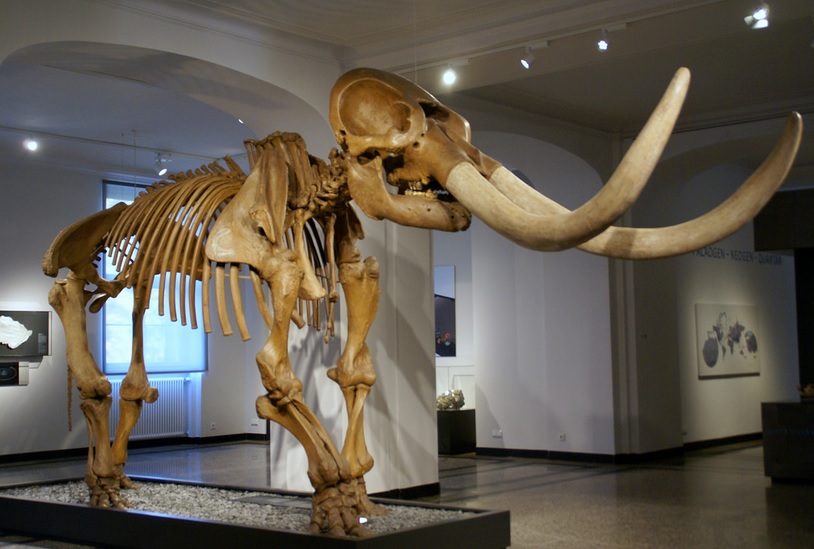
After Peale’s death in 1827 his museum floundered, and was eventually reduced from a meritorious educational institution into a circus of cheap spectacle. It shut down for good in 1848, and the mastodon (by then one of many similar mounts) was put up for auction. There are several conflicting accounts of what became of the mount, including the suggestion that it was destroyed in a fire, but in fact Peale’s mastodon has survived to the present day. Johann Jakob Kaup purchased the skeleton for the Landesmuseum in Durmstadt, Germany, and it has remained on display there ever since.

Germany Peale’s mastodon survives in Durmstadt, Germany. Source

Peale’s mastodon left an unmistakable legacy for both paleontology and public education. Today, the public conception of prehistory is inseparably connected to the image of towering mounted skeletons in museum halls. But fossils do not come out of the ground bolted to steel armatures, so it is largely thanks to Peale that mounts have become the most enduring means of sharing paleontology with the public.

References

Carpenter, K., Madsen, J.H. and Lewis, L. (1994). Mounting of Fossil Vertebrate Skeletons. Vertebrate Paleontological Techniques, Vol. 1. Cambridge, UK: Cambridge University Press.

Connriff, R. (2010). Mammoths and Mastodons: All American Monsters. Smithsonian Magazine. http://www.smithsonianmag.com/science-nature/Mammoths-and-Mastodons-All-American-Monsters.html
Semonin, P. (2000). American Monster: How the Nation’s First Prehistoric Creature Became a Symbol of National Identity. New York, NY: New York University Press.

Simpson, G.G. (1942). The Beginnings of Vertebrate Paleontology in North Ameirca. Proceedings of the American Philosophical Society 86:130-188.

4 Comments

Filed under field work, fossil mounts, history of science, mammals, museums

The Osborn problem

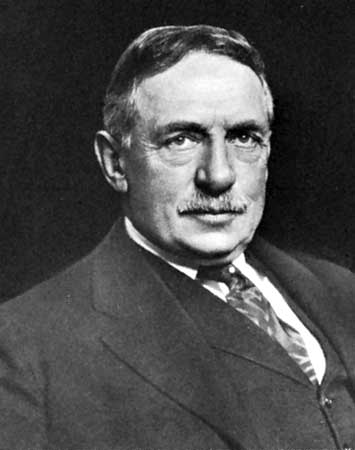
In both paleontology and the museum field, we’ve long contended with what one might call “the Osborn problem.” The legacy of Henry Fairfield Osborn, paleontologist and president of the American Museum of Natural History between 1908 and 1933, is quite important to both fields.  To paleontologists, he is known for accumulating at AMNH one of the largest and most exhaustive fossil collections in the world,  for financing and supporting the careers of legends like Barnum Brown and Charles R. Knight, and of course for naming and describing saurian celebrities like Tyrannosaurus and Velociraptor.

Osborn is also well-regarded by museum specialists for heightening the standards for public exhibitions, investing in lifelike habitat dioramas of taxidermy animals and spectacular mounted dinosaur skeletons in order to make science exciting for a wide audience. Osborn’s devotion to storytelling and drama in the exhibits he curated brought millions of visitors to AMNH and quite literally defined public expectations for what museums should offer to this day.

Henry Fairfield Osborn.

Henry Fairfield Osborn.

In recent decades, however, historical interest in Osborn has been mostly focused on his disreputable personal and political beliefs: Osborn was a flagrant racist and anti-Semite,  an admirer of Adolf Hitler and a strong supporter of research in eugenics. Osborn regularly used his clout to bring material harm to the American working class, lobbying for legislation including the Emergency Quota Act and the Immigration Act of 1924. For what it’s worth, Osborn was also apparently unbearably arrogant and truly dreadful to work with, going as far as to demand lower-ranked museum employees leave the elevator car when he got on.

All this puts paleontologists and museum specialists in an awkward position. Is it acceptable to admire Osborn’s positive achievements in light of his personal politics? After all, Osborn’s views were not terribly unusual among the aristocratic class of his day. Perhaps we shouldn’t condemn the man entirely for not “rising above his time and place” (as Stephen Ambrose argues regarding coming to terms with Thomas Jefferson the slave owner).

Unfortunately, Osborn’s case is complicated by the fact that his bigotry inspired (or at least contributed to) much of his work at AMNH*. To start, Osborn’s scientific work was based on an inaccurate orthogenetic interpretation of evolution. He professed that an ill-defined guiding force shaped life from lesser to greater forms, the effect of which could be seen by comparing “primitive” and “advanced” species, and of course, “primitive” and “advanced” expressions of humanity. While we cannot conclusively link Osborn’s pseudo-evolutionary ideas with his bigoted social agenda, it is certainly convenient for him that he saw people of “Nordic” descent as biologically superior.

*To clarify, none of the exhibits curated by Osborn remain on display and none of my comments here apply to the present day AMNH.

Critically, Osborn did not keep his ideas of natural hierarchy in the ivory tower. He explicitly intended that the exhibition halls of AMNH educate visitors not just about natural science but about the naturally graded order he believed to be characteristic of life on earth. Osborn thought that collections of biological specimens implicitly revealed an upward ascent of life, and that those on top had earned their place through innate superiority. Osborn pronounced that his exhibits would teach morality to new American immigrants, presumably by putting them in their place with the rather hideous racial hierarchy on display in the Hall of the Age of Man. As Donna Haraway puts it in her classic essay Teddy Bear Patriarchy, Osborn’s exhibits were a “gospel of wealth and privilege” that appropriated natural specimens to affirm the American elite’s place at the top of the pecking order.

Tyrannosaurus and others in AMNH Dinosaur Hall, 1927. Photo courtesy of AMNH Research Library.

Tyrannosaurus and others in AMNH Dinosaur Hall, 1927. Photo courtesy of AMNH Research Library.

Museums are understood to be sources of intellectual authority, and deservedly so. But exhibits have authorship, same as any other written work, and Osborn’s legacy demonstrates that the influence of authors and their worldviews can be a powerful force. For example, Osborn arranged the Hall of the Age of Man in what he saw as ascending order, from the ancient peoples of Africa, to North America, and finally Europe. Placed at the end of an exhibit series that started with Cambrian invertebrate fossils before passing through Paleozoic, Mesozoic, and Cenozoic fossil displays, the Age of Man gallery deliberately implied that European-descended humans were the culmination of the entire history of life on Earth.

Meanwhile, the exhibit on fossil horses curated by Osborn depicted small, multi-toed horses of the Eocene gradually becoming larger, losing toes and becoming better at being modern Equus. This orthegenetic representation runs counter to evolution via natural selection as originally proposed by Darwin, and as understood today. Indeed, other paleontologists, including O.C. Marsh, had established in the 19th century that horse evolution more closely resembled a tangled bush, with many overlapping morphological offshoots adapted to varying environmental circumstances. But Osborn had rejected Darwinian evolution in favor of his presumed hierarchy of life, and ensured that his inaccurate story was what was seen by millions of visitors.

So what does Osborn’s legacy mean to paleontologists and museum specialists today? Do we need to qualify every mention of his name with a denouncement of his worldview? Should we always write out “Tyrannosaurus rex Osborn, 1905″ as “Tyrannosaurus rex Osborn the racist jerk, 1905″? At minimum, Osborn’s exhibits are a sobering reminder to all us involved in science education that our field is not immune to bias. The  subjectivity of cultural and historical museum exhibits has been well-explored by scholars like Ames and Weil, but comparatively little reflection has been done on the authorship of exhibits on science and natural history. We rely on the “naturalness” of the objects we display to speak for itself, and to bear the burden of proof for the statements we make. The world around us is knowable, and science is the best tool to learn about it. But explaining what we have learned in any form (books, technical journals, museum exhibits) is an avenue for personal or cultural bias to slip in, and that is why it remains important to actively and regularly check our assumptions.

References

Ames, M.M. (2004). Museums in the Age of Deconstruction. In Reinventing the Museum: Historical and Contemporary Perspectives on the Paradigm Shift. Lanham, MD: AltaMira Press.

Brinkman, P.D. (2010). The Second Jurassic Dinosaur Rush: Museums and Paleontology in America at the Turn of the Twentieth Century. Chicago, IL: University of Chicago Press.

Colbert, E.H. (1968). Men and Dinosaurs: The Search in Field and Laboratory. New York, NY: E.P. Dutton and Co., Inc.

Haraway, D. (1984). Teddy Bear Patriarchy: Taxidermy in the Garden of Eden, New York City, 1908-1936. Social Text 11:20-64.

Kohlstedt, S.G. (2005). Thoughts in Things: Modernity, History and North American Museums. Isis 96:586-601.

Osborn, H.F. (1921). The Hall of the Age of Man in the American Museum. Nature 107:236-240.

6 Comments

Filed under AMNH, anthropology, history of science, mammals, museums, science communication

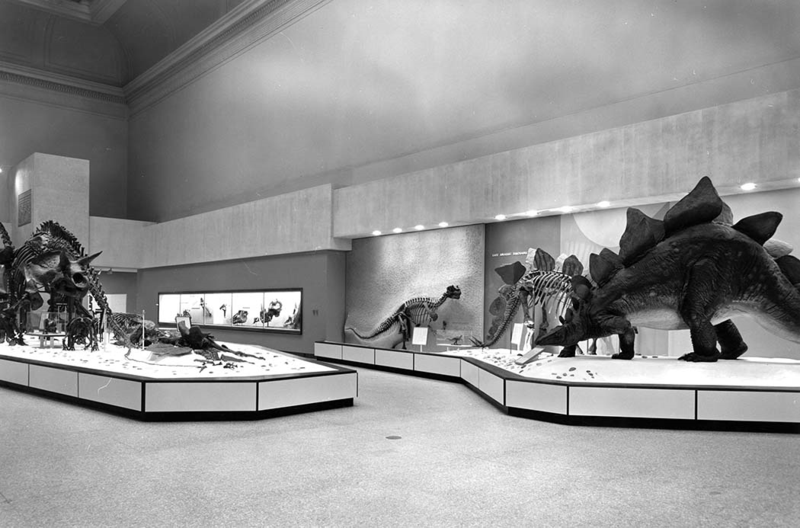
The NMNH fossil halls, circa 1963

c.02

A revamp for the dinosaur displays in Hall 2. Courtesy of the Smithsonian Institution Archives.

Since the NMNH building opened in 1910 as the United States National Museum, the east wing has been home to fossil displays. Although there have been many small adjustments and additions to the exhibits over the years, we can separate the east wing’s layout into three main periods. From 1910 t0 1945, the exhibits were primarily under the stewardship of Charles Gilmore. Called the “Hall of Extinct Monsters”, this iteration was somewhat haphazard in its layout and generally resembled a classic “cabinet of curiosity” approach to exhibit design. Gilmore’s version of the east wing remained in place until 1963, when the space was redesigned as part of the Smithsonian-wide modernization project. In the updated halls, there was a directed effort to compartmentalize exhibits based on the subdivisions of the Museum’s research staff, with each area of the gallery becoming the responsibility of a different curator. A second renovation was carried out in several stages starting in 1980. This version, which was open until 2014, was part of the new museology wave that started in the late 1970s. As such, the exhibits form a more cohesive narrative of the history of life on earth, and much of the signage carries the voice of educators, rather than curators.

Of course, the field of paleontology has advanced by leaps and bounds since the early 1980s, and NMNH staff have made piecemeal updates to the galleries when possible, including restorations of deteriorating mounts, and additional signage that addresses the dinosaurian origin of birds and the importance of the fossil record for understanding climate change. A third renovation is currently underway and will be completed in 2019.

But I’m getting ahead of myself. The purpose of this post is to provide an overview of the NMNH fossil halls as they stood in 1963, after the first major renovation. This iteration of the east wing was long gone before I was born, so this information is pieced together from historic photographs, archived exhibit scripts, and correspondence among the individuals involved in the modernization project (my thanks to the staff of the Smithsonian Institution Archives for their assistance in accessing these materials). Perhaps unsurprisingly, records of the dinosaur gallery are by far the most thorough. Information on the other halls is considerably harder to come by, so if any readers who saw the older exhibits in person remember any details, it would be fantastic if you could share them.

Layout of the USNM east wing, circa 1963.

Layout of the USNM east wing, circa 1963.

As mentioned, the Smithsonian underwent a thorough modernization project in the middle of the 20th century. The modernization committee, chaired by Frank Taylor (the eventual director-general of Smithsonian museums), was established in 1948. Under the committee’s guidance, most of the institution’s exhibits were redesigned between 1953 and 1963. Keep in mind that at the time, the United States National Museum was the only Smithsonian museum – it would not be divided into the National Museum of Natural History and the National Museum of History and Technology (now the National Museum of American History) until 1964.

Completed in 1963, the USNM fossil exhibits were among the last to be modernized. Only a small number of specimens were added that had not already been on view in the previous version of the space – in fact, many specimens were removed. The changes primarily focused on the layout of the exhibit, turning what was a loosely organized set of displays into a series of themed galleries. The east wing included four halls in 1963, the layout of which can be seen in the map above. Each hall was the responsibility of a particular curator. Nicholas Hotton oversaw Paleozoic and Mesozoic reptiles in Hall 2. David Dunkle was in charge of fossil fish in Hall 3. Porter Kier oversaw fossil invertebrates and plants in Hall 4. Finally, Charles Gazin, head curator of the Paleontology Division, was responsible for Cenozoic mammals in Hall 5. Each curator had a central role in selecting specimens for display and writing accompanying label copy.

Invertebrates and Fossil Plants

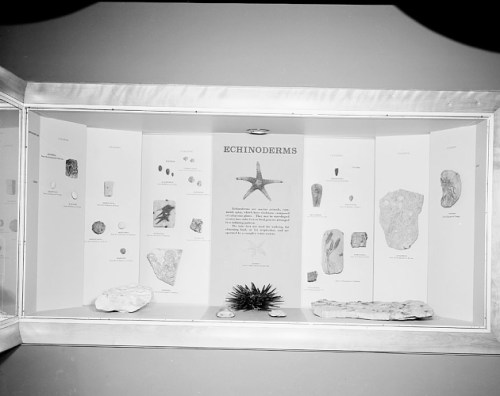
echinoderms1961

Echinoderm fossil display in Hall 4. Courtesy of the Smithsonian Institution Archives.

It is likely that part of the reason the fossil halls were late on the modernization schedule was that the curators of the Paleontology Division were not terribly interested in exhibits or outreach. There were no staff members in the division exclusively devoted to exhibit work, so the task of designing the new exhibit space was an added burden for the research staff. As invertebrate paleontology curator G. Arthur Cooper put it in a 1950 memo, “all divisions of Geology at present are in an apathetic state toward exhibition.”

Nevertheless, work on the east wing halls had begun by 1957, if not a bit earlier. The first of the new exhibits to be worked on was Hall 4, featuring fossil invertebrates and plants. The long and narrow space was divided into four sections: the first introduced the study of fossils and how they are preserved, the second was devoted to paleobotany, the third contained terrestrial and marine invertebrates, and the forth provided an overview of geological time. Cooper described the new exhibit as a progressive story of the expansion of life, “its stem connecting all life which is now culminating in man.”

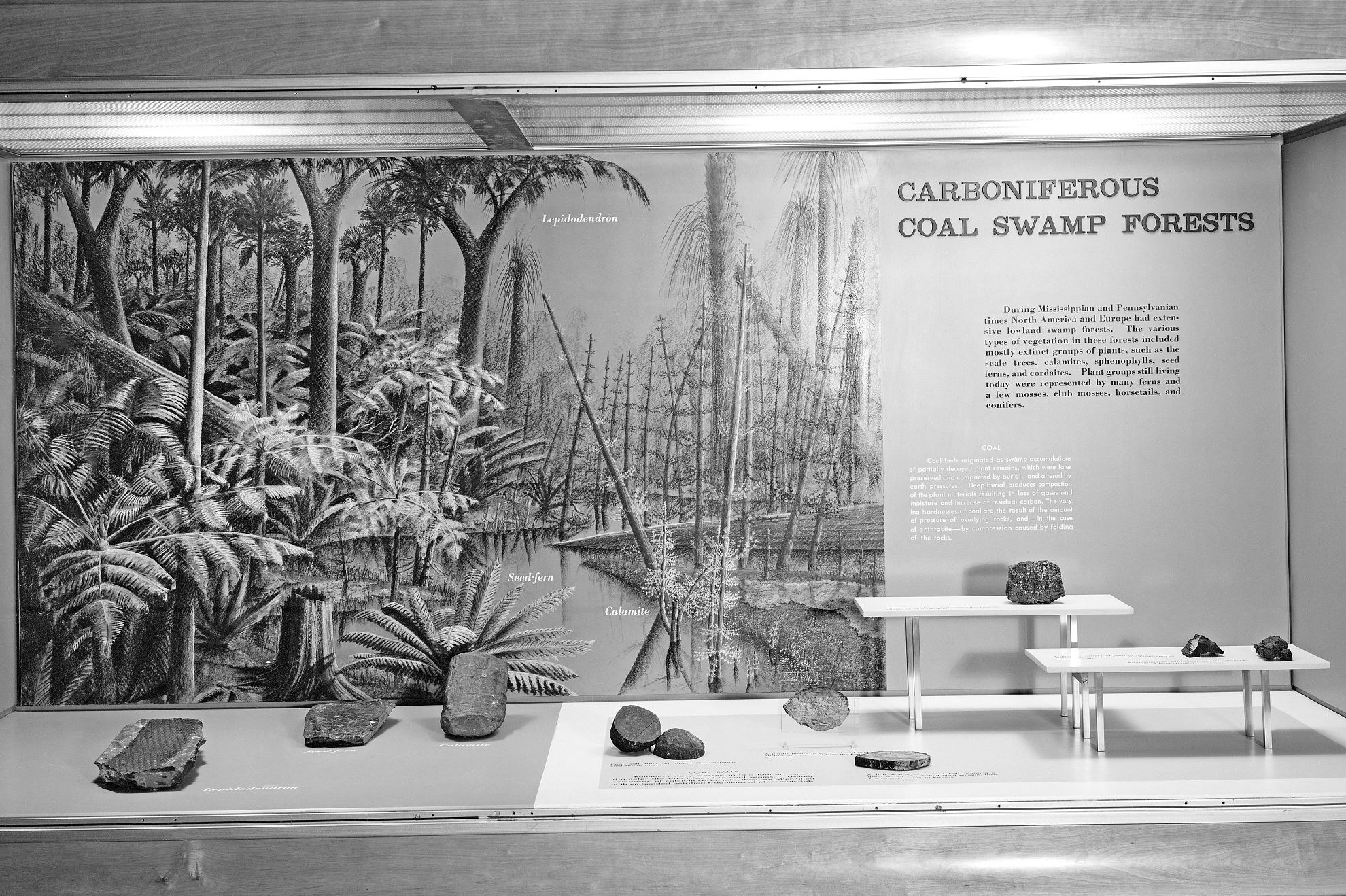
Carboniferous coal swamp fossils in Hall 4. Photo courtesy of the Smithsonian Institution Archives.

In addition to a variety of fossil specimens, Hall 4 featured a series of dioramas built by George Merchand, an exhibit specialist from Ann Arbor, Michigan. Merchand built at least 4 dioramas between 1957 and 1958, each depicting representative invertebrate marine fauna from a different Paleozoic period. Most, if not all, of these dioramas were retained during the 1980s renovation and remained on view through 2014.

Fossil Fishes and Amphibians

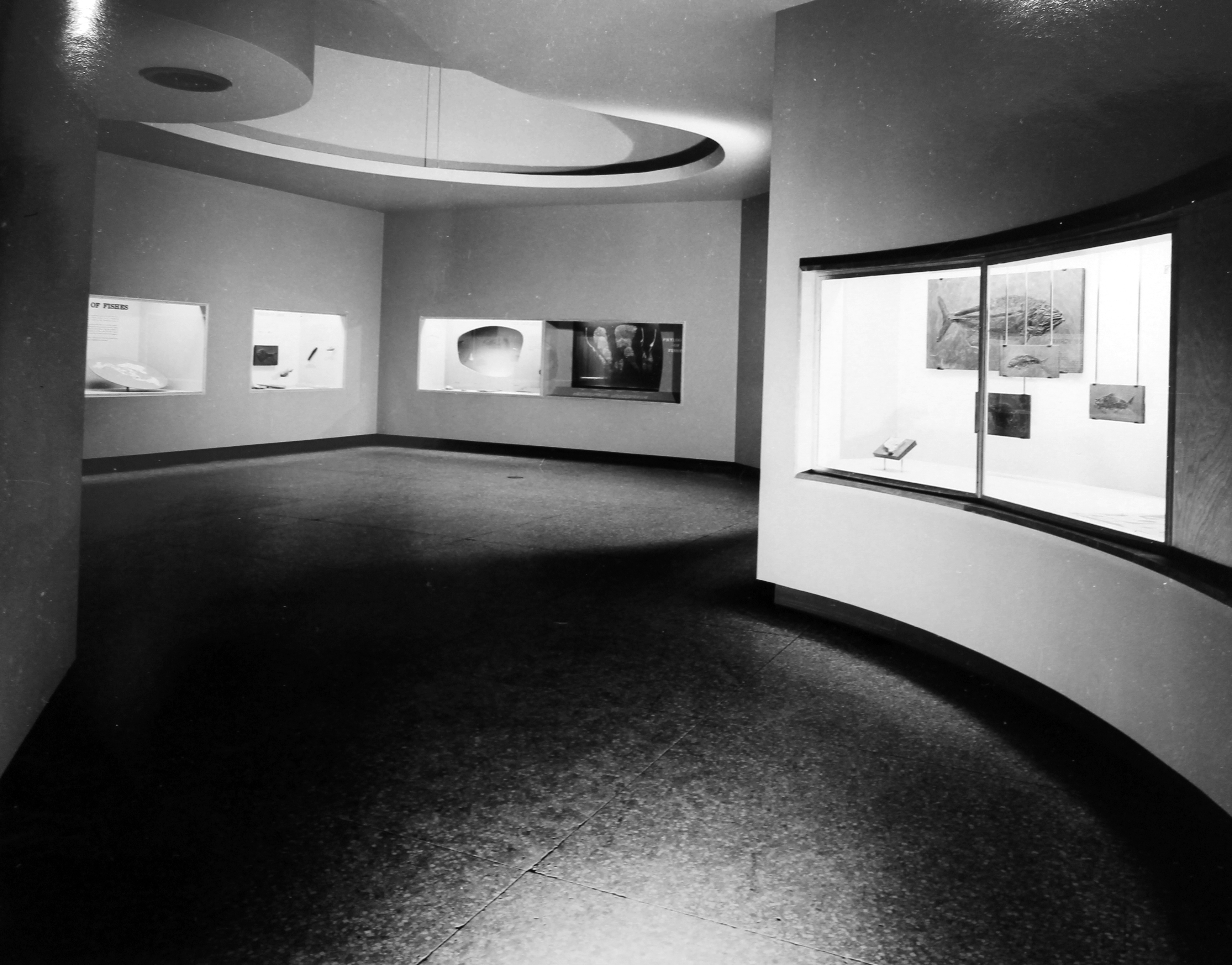
Fossil fishes in Hall 3. Photo courtesy of the Smithsonian Institution Archives.

Fossil fish and a smattering of amphibians were located in Hall 3, on the far east side of the wing. This space would be converted into “Mammals in the Limelight” in the 1980s. David Dunkle, for whom everyone’s favorite placoderm Dunkleosteus is named, was in charge of this gallery during his tenure at USNM between 1946 and 1968. The specimens on view were arranged temporally, starting with placoderms on the south side and progressing into actinopterygians and basal amphibians on the north end. Among the more prominently displayed specimens were Xiphactinus, Seymouria, and “Buettneria” (=Koskinonodon). The hall also contained a replica of the recently discovered modern coelacanth, and small diorama of a Carboniferous coal swamp.

Dinosaurs and Other Reptiles

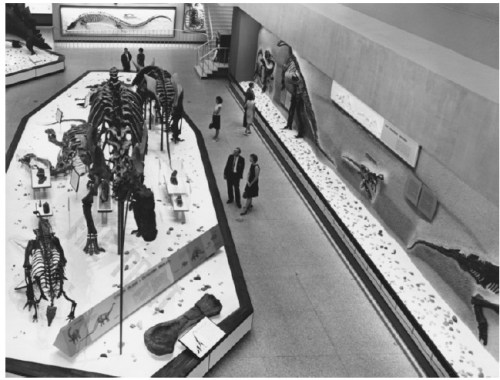
Dinosaurs in Hall 2, as seen facing west. Photo courtesy of the Smithsonian Institution Archives.

Hall 2, featuring dinosaurs and other reptiles, was the main draw for most visitors. It was not, however, a major priority for the Smithsonian research staff. The museum had not had a dinosaur specialist since Gilmore passed away in 1945 and indeed, dinosaurs were not an especially popular area of study among mid-century paleontologists in general. As such, responsibility for Hall 2 fell to Nicholas Hotton, at the time a brand-new Associate Curator. Later in his career, Hotton would be best known as an opponent to the dinosaur endothermy movement, but in the early 1960s he was most interested in early amniotes and the origin of mammals.

Hotton’s display of South African synapsids and amphibians. Photo courtesy of the Smithsonian Institution Archives.

Perhaps due to the general disinterest among USNM curators, changes to the dinosaur exhibits were mostly organizational. Most of the free-standing dinosaur mounts built by Gilmore and his team were collected on a single central pedestal. Preferring not to tackle the massive undertaking of disassembling and remounting the 70-foot Diplodocus skeleton, the exhibit designers left the sauropod in place and clustered the smaller moutns around it. In the new arrangement, the Diplodocus was flanked by the two Camptosaurus and prone Camarasaurus on its right and by Triceratops and Brachyceratops on its left. The Stegosaurus stenops holotype, splayed on its side in a recreation of how it was first discovered, was placed behind the sauropods at the back of the platform.

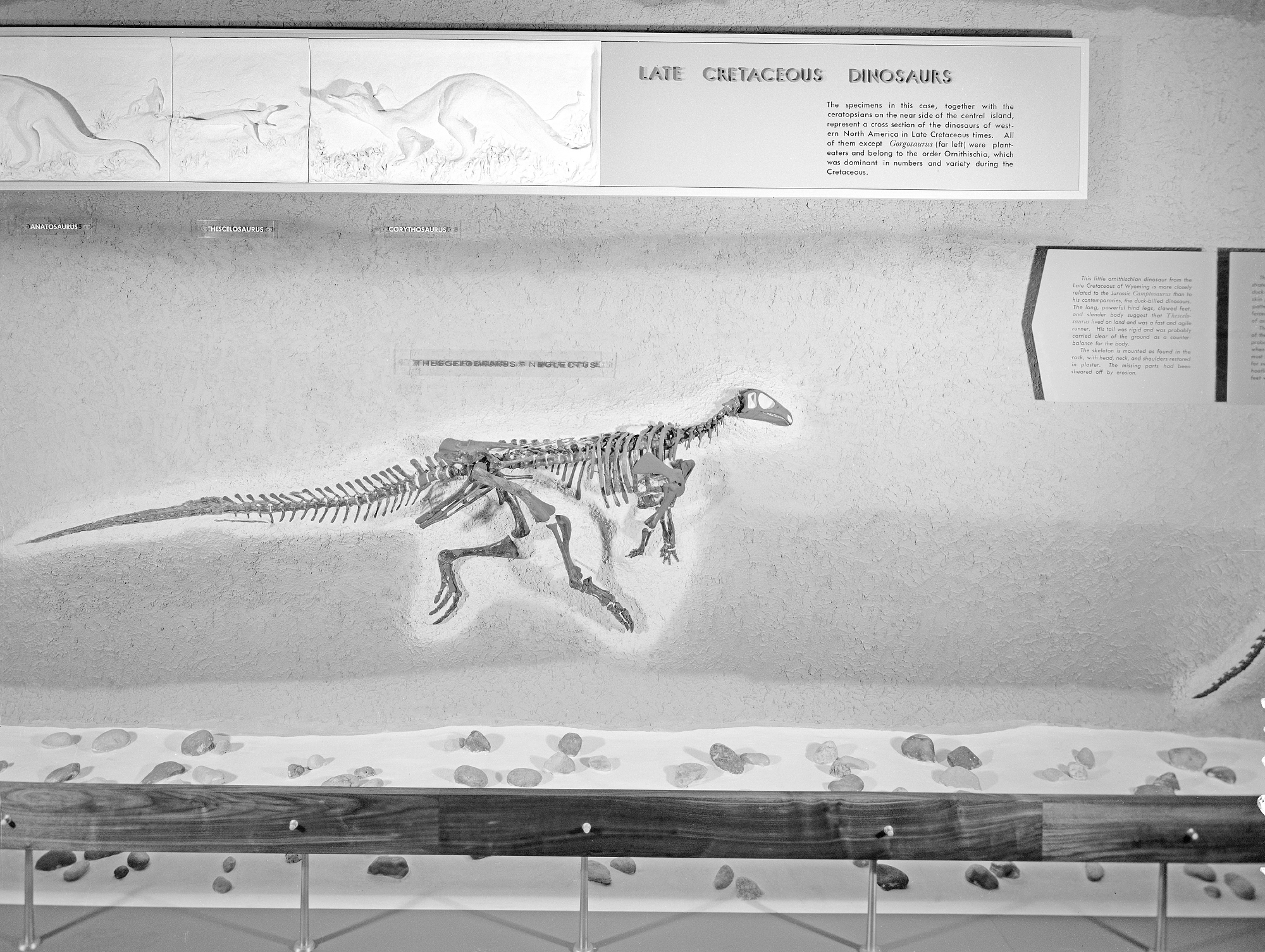
Close up of Thescelosaurus on the south wall. Photo courtesy of the Smithsonian Institution Archives.

 The north and south walls of Hall 2 were lined with additional specimens. On the south side, Gilmore’s relief mounts of Ceratosaurus and Edmontosaurus (called “Anatosaurus” in this exhibit) were joined by the gallery’s one new dinosaur, a relief mount of Gorgosaurus in a death pose. The north wall featured a long, narrow, glass-enclosed case illustrating the basics of dinosaur classification. In addition to saurischian and ornithischian pelves, the case featured skulls representing most of the major dinosaur groups. Amusingly, all but two of these skulls (Triceratops and Diplodocus) were labeled with names that are no longer considered valid. These skulls included “Antrodemus” (Allosaurus), “Trachodon” (Edmontosaurus) “Procheneosaurus” (probably Corythosaurus)  and “Monoclonius” (Centrosaurus).

In the southwest corner of Hall 2 (where FossiLab is today), visitors could see the Museum’s two free-standing Stegosaurus: the fossil mount constructed by Gilmore in 1913 and the charmingly ugly papier mache version, which had received a fresh coat of paint. Finally, the rear (east) wall of Hall 2 held Gilmore’s relief mounted Tylosaurus.

Mammals

c.11

Brontotherium and Matternes’ Oligocene mural in Hall 5. Photo courtesy of the Smithsonian Institution Archives.

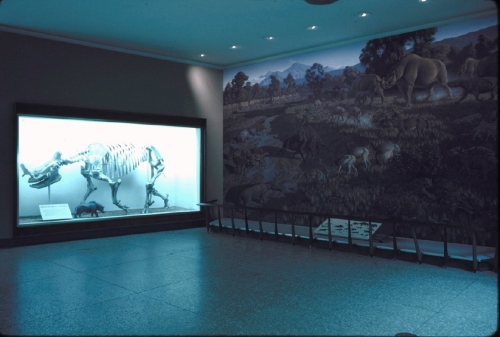
Fossil mammals were exhibited in Hall 5, a corridor-like space accessible from the main rotunda and via two doorways on the north side of Hall 2. After 1990, this space would house the “Life in the Ancient Seas” exhibit. Charles Gazin, head curator of the Division of Paleontology, was in charge of this space on paper, but my impression is that his attention was elsewhere during its design and construction. Gazin was apparently approached by the modernization committee several times during the 1950s, but was reluctant to commit his time to a major renovation project. Gazin had been spending a great deal of time at a Pliocene dig site in Panama, and the collection of new fossils proved more interesting than designing displays. As Gazin tersely explained, “It is a little difficult to concentrate objectively on exhibition problems here in the interior of Panama.”

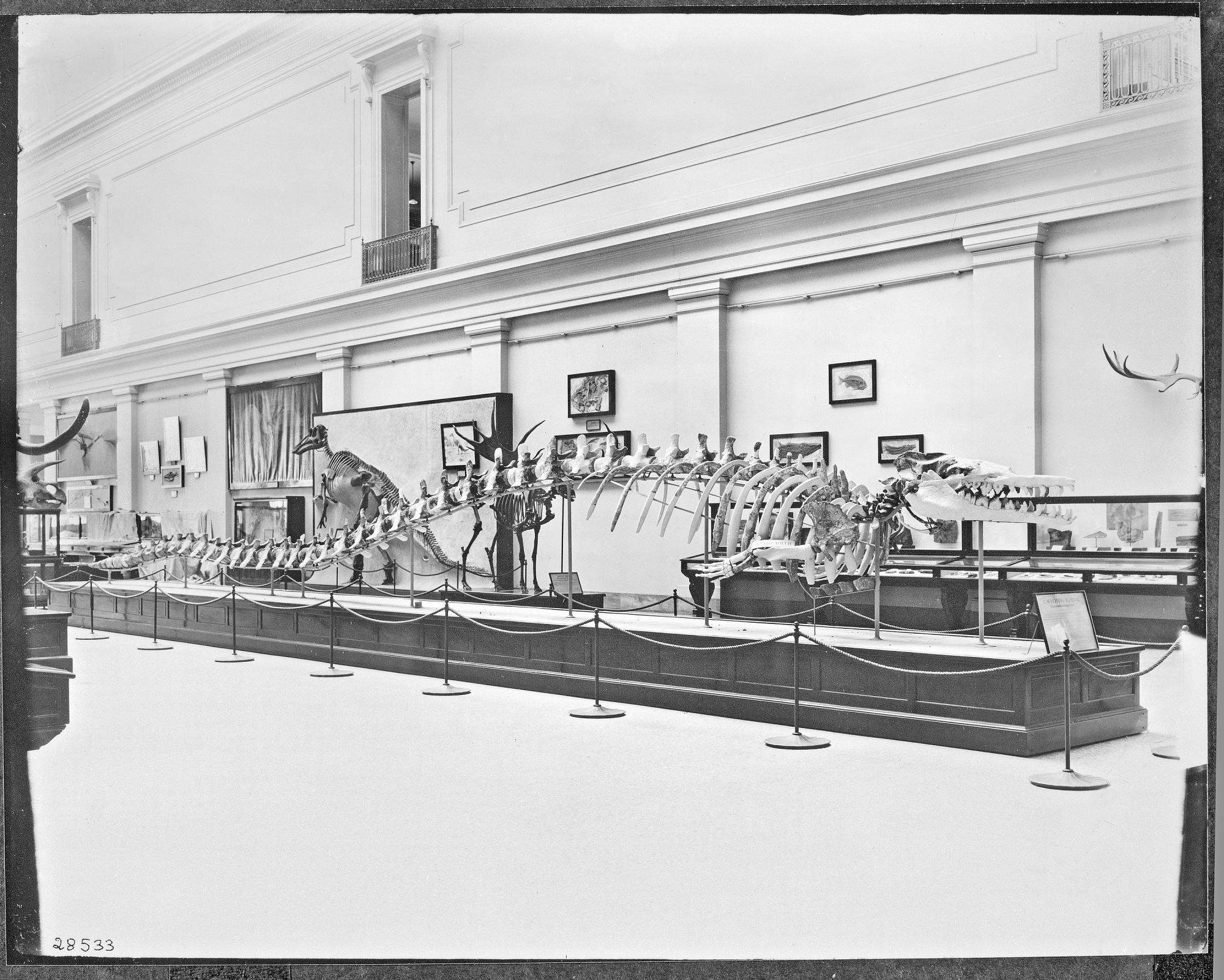
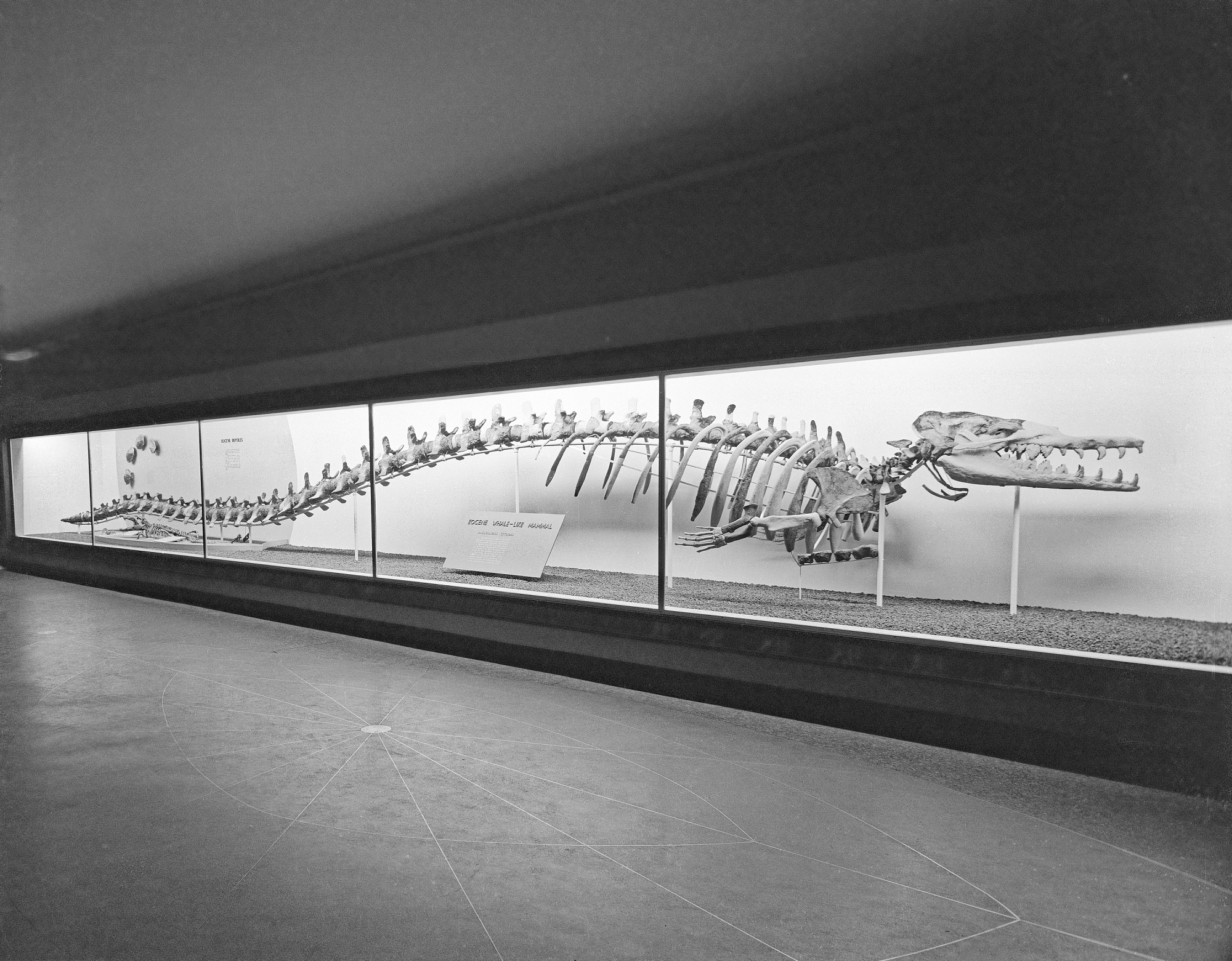
Basilosaurus and Cenozoic reptiles in Hall 5. Photo courtesy of the Smithsonian Institution Archives.

Nevertheless, Gazin’s interest in Cenozoic mammals ensured that his gallery was exceptionally thorough. Thanks to Gazin’s own collecting expeditions throughout the 1950s, the new fossil mammals galleries contained representatives of nearly all major mammal groups, from every epoch from the Paleocene through the Pliocene (the Pleistocene was deliberately excluded, as a separate ice age exhibit was also in the works). Classic mounts from the Gilmore era like Basilosaurus and Teleoceras were joined by dozens of less showy specimens like rodents, small perissodactyls, and early primates. The new exhibit also introduced the first wave of Jay Matternes’ much-beloved murals, illustrating the changing flora and fauna in North America over the course of the Cenozoic.

Unveiling and Reactions

The new east wing galleries officially opened on June 25, 1963. According to the press release, “the new exhibit features in colorful and dramatic settings more than 24 skeletons and skulls of the largest land animals the world has ever known.” The exhibits were officially unveiled with a late afternoon ceremony, in which Carol Hotton (Nicholas Hotton’s daughter) cut the ribbon and the lights to Hall 2 were suddenly turned on to dramatic effect.

Unfortunately, the new exhibits were not universally loved by the museum staff. The wing had been planned a set of compartmentalized exhibits, each corresponding to a subdivision of the Division of Paleontology, with a different curator taking responsibility for each hall. While seeming sensible on paper, this plan turned out to be a logistical nightmare, and a common cause for complaint among Division staff for the next decade. In addition, Gazin in particular voiced concerns as early as January 1964 that the design of the new halls was entirely inadequate for preventing accidental or deliberate damage to specimens by visitors. The mounts in Hall 2 were raised only about a foot off the ground, and were not protected by any sort of guard rail or barrier. As a result, within a few months of the exhibit’s unveiling, several ribs and vertebral processes had been broken off or stolen from CamarasaurusGorgosaurus, Ceratosaurus and others.

With the notable caveat that I never saw the 1963 exhibits in person, I would say that this is aesthetically my least favorite iteration of the east wing. The grandiose, institutional Greco-Roman architecture originally displayed in the Hall of Extinct Monsters was replaced with what can only be described as extremely 1960s design. Solid earth-tone colors, wood paneling and wall-to-wall carpeting gave the halls a much more austere character. While the efforts to categorize specimens into thematic zones was commendable for a museum of that era, the label copy (written by the curators) was still highly pedantic and verbose. As such, the 1963 fossil halls seem to have been very much of their time. While the designers were working to avoid the overt religiosity and grandeur of turn of the century museums, they had not yet reached the point of developing truly audience-centered educational experiences. The result was an exhibit that was humble, yet still largely inacessible. Perhaps for this reason, the 1963 fossil halls were the shortest-lived at NMNH to date, being replaced within 20 years of their debut.

This post was updated and edited on January 8, 2018.

Leave a comment

Filed under dinosaurs, exhibits, Extinct Monsters, fish, fossil mounts, history of science, mammals, museums, NMNH, reptiles, science communication

Drama and natural history

While running errands this morning a thought came to me: a natural history exhibit in a museum is a lot like a stage performance*. When watching a play, the viewer knows she is seeing a performance, but it willing to suspend disbelief so long as the fantasy is well-created. To varying degrees, most modern natural history exhibits engage in the same theatrical relationship with their audiences. Exhibits re-create reality within the museum environment, and visitors accept the performance as truth.

*Actually, I thought “movie” first, but theater is a better analogy because the actors are real and present.

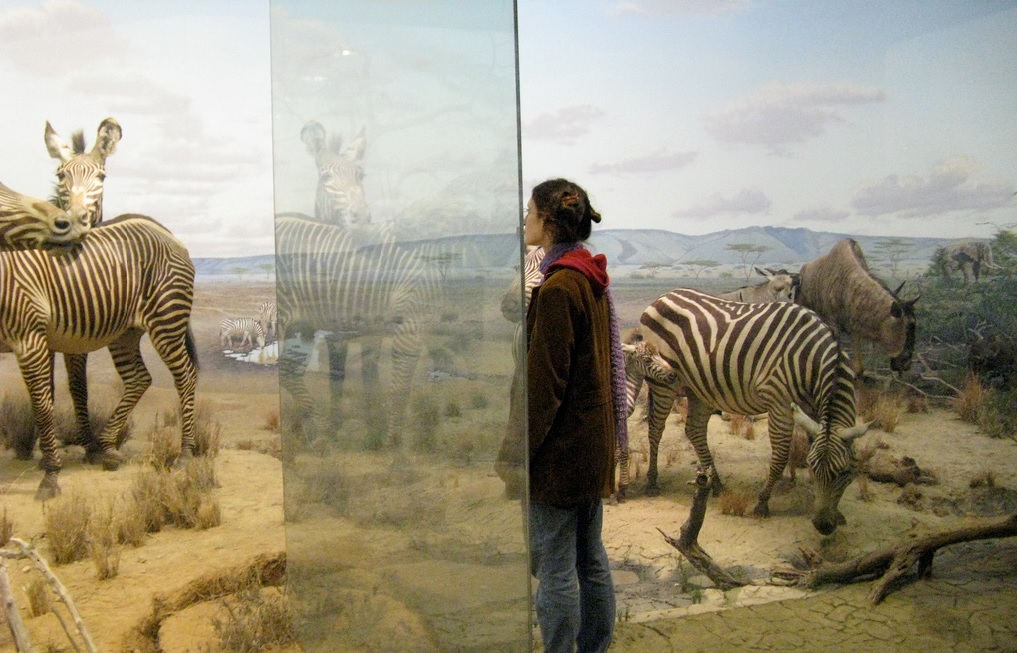
CMNH zebra diorama. Source: amyboemig on flickr.

A rather poignant picture of the CMNH zebra diorama. Source: amyboemig on flickr.

Habitat dioramas featuring taxidermied animals are the most obvious example. Dioramas like the lovely east African savannah scene at the Carnegie Museum of Natural History pictured above are exactingly detailed microcosms modeled after actual environments. The backdrops are typically  based on photographs of real locations. The teams that collected the animal skins would also take samples of leaves and even molds of tree bark, in order to exhibit the ecosystem in toto. And of course, the mannequins on which the animal skins are mounted were sculpted by artists with a strong foundation in anatomical science. And yet, the diorama is clearly not real. Visitors know that they are not looking at an actual game reserve that has been somehow frozen in time. Many viewers might mistake the animals as being “stuffed” (they are in fact sculptures with tanned skins fitted onto them), but  they still recognize some element of artifice.  The animals clearly didn’t end up in the glass-enclosed box on their own accord. And yet, visitors accept the illusion, because they keep coming to museums to learn about the world around us.

The same holds true for most other displays. These dioramas at the New York State Museum are not literally historic Iroquois villages shrunk down to 1/20 scale. The Tyrannosaurus and Triceratops pictured below are not really fighting, nor did they die in a death struggle. Even the Apple Store-eque NMNH Hall of Mammals recreates natural behaviors against a sterile backdrop. Unless the museum is displaying completely decontextualized specimens lying prone on a shelf, there is some degree of theatricality in the exhibit.

Tyrannosaurus and Triceratops at the Children’s Museum of Indianapolis. Source.

The theater analogy begins to go astray, however, when we consider that the performances in natural history exhibits are informed by reality. For the most part, exhibit designers do not place specimens in completely fictitious scenarios; the theatrical element serves to illustrate something real. Perhaps exhibits are more akin to a movie “based on a true story.” But like those movies, there is an undeniable selectivity in how museum workers tell their stories.  Why are the zebra in the CMNH diorama chilling amicably with wildebeest? That is certainly something that real zebra have been known to do, but zebra have also been known to drown lions, trample foals and chew on the cars of obnoxious tourists. For that matter, why does this diorama not include any sign of human pastoralists, who have lived in the same environment as these animals for thousands of years?

Exhibits have human authorship, just like any other document. The manner in which any specimen or object is displayed is inherently subjective, and there will always be emphasis and omissions, intentional or otherwise, that change the way the exhibit is interpreted. Before you misjudge me, dear reader, this is not an argument that there is no objective reality. I wouldn’t even say that it is impossible to understand and perceive objective reality. Scientists do it all the time. But when it comes time to communicate that information, we are creating something new, and choosing what we incorporate and how we express it. Getting back to my original point, we’re putting on a representational show. And that means that what we’re creating only works as long as our audience is willing to participate in the performance.


Leave a comment

Filed under anthropology, fossil mounts, mammals, museums, science communication

Extinct Monsters: Murals and Dioramas

Click here to start the Extinct Monsters series from the beginning.

Fossils are the hard evidence behind paleontology. They tell us not only that prehistoric organisms existed, but hold clues as to how they lived and behaved. However, it is only through  artwork that extinct animals and ecosystems can be brought back to life. Since Benjamin Waterhouse Hawkins built the first life-sized dinosaur sculptures in 1842, skilled artists have played a critical role in visualizing the results of paleontological research and making that information available to a wider audience.

At the National Museum of Natural History, spectacular works of art have always appeared alongside displays of original fossils, firing up the viewer’s imagination and inviting them to visualize the world of prehistory. Although many of these pieces are now scientifically dated, they were on the cutting edge in their time. These artworks remain exquisite works of craftsmanship, invaluable for their decades of contribution to science education.

The Life-Sized Models

The charmingly ugly Stegosaurus is one of the oldest fixtures of the Smithsonian fossil exhibits. F.A.L. Richardson created this model for the the Smithsonian’s exhibition at the St. Louis, Missouri World’s Fair in 1904. Made from papier mâché with a foam skin, the Stegosaurus was based on small sculpture produced by Charles Gilmore. With its sagging belly, sprawling forelimbs, and head held well below the horizontal plane, this Stegosaurus is typical of reconstructions from the early to mid 20th century.

As legend had it, the paper used to fabricate the Stegosaurus was ground-up money from the National Treasury. The model had even earned the nickname “Mr. Moneybags” among some of the museum staff. Curator Emeritus Ray Rye got to the bottom of this in 1981. He contacted the Treasury to find out what was done with worn-out paper money at the turn of the century – apparently it was burned at a plant in Maryland. Nevertheless, at Rye’s request a group of historians from the Treasury took a sample of the Stegosaurus while the hall was closed for construction, and confirmed that it was made from regular paper.

This pudgy papier mache Stegosaurus has been a fixture at the Smithsonian since 1904.

This pudgy Stegosaurus has been a fixture at the Smithsonian since 1904. Photo courtesy of the Smithsonian Institution Archives.

When the Hall of Extinct Monsters opened in 1910, the Stegosaurus was given a spot of honor right in the center of the room. In 1913, a real Stegosaurus skeleton was placed alongside it. Both dinosaurs would remain in place until the exhibit was renovated in 1963. In the reconfigured and renamed Hall of Fossil Reptiles, the model Stegosaurus was relocated to a corner display.  Most recently, the 1981 renovation saw the Stegosaurus model moved to the south side of the gallery, protected by a low plexiglass barrier. This time, it was given a cycad replica for company, and a mural of lush Jurassic jungle behind it. The Stegosaurus remained in this position until the fossil halls closed in 2014.

quetzalcoatlusprogress

The NMNH exhibits team with their nearly-finished Quetzalcoatlus. Image from Thomson 1985.

quetzal2014

The Quetzalcoatlus survived a 2010 earthquake, although the plaster molding above it was damaged. Photo by the author.

The 1981 renovation also saw the introduction of a life-sized model of the pterosaur Quetzalcoatlus. Having been discovered in 1971, the largest flying animal that ever lived was big news at that time. In-house modelmakers spent two years on the project, first sculpting the animal in clay, then casting it in lightweight fiberglass with a steel armature. Paleontologist Nicholas Hotton served as the scientific consultant. Although he was dubious that pterosaurs had any sort of soft body covering, he okayed the use of deer fur to give the model believable texture. However, Hotton nixed the idea of placing a dangling fish in the mouth of the Quetzalcoatlus. Contemporary wisdom was that even giant pterosaurs were extremely light, weighing as little as 75 pounds, so even a 5-pound fish was thought to be enough to disrupt a Quetzalcoatlus in flight.

The Stegosaurus and Quetzalcoatlus both now reside at the Museum of the Earth in Ithaca, New York.

The Murals

The first dedicated prehistoric mammal exhibit at NMNH opened in the summer of 1961. Alongside the array of Cenozoic fossil mounts, the exhibit featured four brand new murals created by paleoartist Jay Matternes (he painted two more for the Ice Age hall several years later). Still active today, Matternes is a prolific artist of both modern and prehistoric wildlife. In addition to the NMNH murals, Matternes has contributed to exhibits at the American Museum of Natural History and the Cleveland Museum of Natural History, as well as numerous publications including National Geographic Magazine.

c.11

Matternes’ Oligocene mural as first exhibited in the 1960s. Photo courtesy of the Smithsonian Institution Archives.

Oligocene and early Miocene murals, as seen in the 1985-2014 iteration of the exhibit, Mammals in the Limelight. Photo by the author.

Each of the murals Matternes contributed to the exhibit depicts North America during an epoch of the Cenozoic, and is displayed behind corresponding fossil mounts. Most of the animals on display coincide with life reconstructions in the murals, so visitors can match the skeletons to images of how they may have looked in life. Matternes’ hyper-detailed style is particularly striking. The environments look nearly photo-real, and not too far removed from the world today. Likewise, the artist’s knowledge of anatomy plainly shows in the utterly lifelike appearances of the animals. I particularly like Matternes’ use of familiar color patterns on the relatives of modern taxa. The Pliocene and Pleistocene murals will be returning in 2019.

Cenozoic

The Cenozoic section of Kish’s 130-foot magnum opus. Source

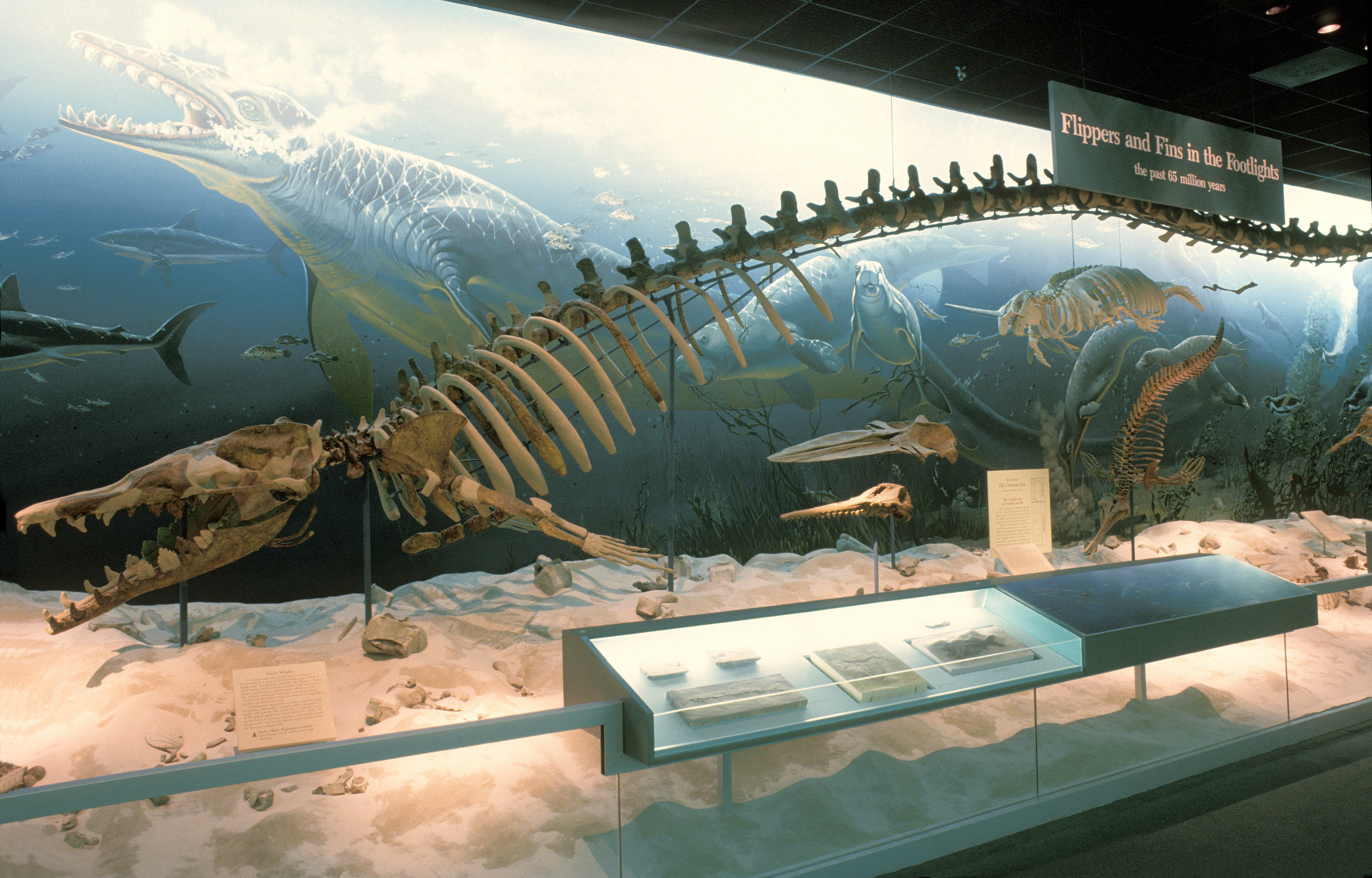
The “Life in the Ancient Seas” exhibit debuted in 1990 with a monumental 130-foot mural by Eleanor Kish. From the explosion of invertebrate diversity in the Cambrian to the proliferation of aquatic mammals in the recent past, the mural spans 541 years of deep time. The project took Kish two years to complete and is, simply put, a masterpiece. Within the exhibit, this meticulously crafted image defines the space’s layout and color palate. It visually separates concepts and themes, and even directs visitor traffic with its strong leftward momentum.

The Dioramas

The dinosaur dioramas were one of my favorite parts of the old NMNH fossil halls. Norman Neal Deaton created three dioramas, representing North America during the Triassic, Jurassic, and Cretaceous. The Mesozoic dioramas were commissioned for the 1963 exhibit renovation, and were on display until 2014. Each 1″:1′ scale diorama is set into a recessed space in the wall and is protected by glass.  The scenes are populated by a menagerie of outdated but gorgeously detailed dinosaurs and contemporary reptiles, set among dense forests of ferns and craggy rock formations. The complexity of the dioramas allows viewers to get lost in them as their eye wanders from one static encounter to the next. I’ve been admiring these scenes since literally before I could talk and I still notice minute details I hadn’t seen before.

The diorama project began in 1963 and took four years to complete. The scenes were initially blocked out by Jay Matternes and Nicholas Hotton, the Curator of Vertebrate Paleontology at the time. Matternes and Hotton worked together on anatomical drawings for each of the animals to be reconstructed, and planned the basic layout of the dioramas. Deaton created the final dioramas at his studio in Newton, Iowa. Deaton had been previously employed at the Smithsonian as an exhibits specialist, but had left to found his own studio in the late 1950s, where he continued to work on projects for the Smithsonian as a contractor. In addition to the dinosaur dioramas, Deaton led the creation of the iconic Fénykövi elephant that stands in the NMNH rotunda today, and has created sculptures and dioramas for dozens of other museums. Deaton is still active today, and much of his 2-D and 3-D work can be seen at his website.

Deaton mailed these slides of his unpainted models to Hotton for approval. Photos courtesy of the Smithsonian Institution Archives.

Deaton mailed these slides of his unpainted models to Hotton for approval. Photos courtesy of the Smithsonian Institution Archives.

Deaton sculpted each of the animals in clay based on the drawings provided by Matternes and Hotton. Nearly every model went through a few incremental adjustments based on notes from Hotton, changing things like the bulk of the muscles or how visible the scapula or pelvis would be under the skin. The soft anatomy was based on modern reptiles, particularly crocodiles, although Deaton found that some of the animals had no obvious analogs. Once the clay models were approved, they were casted in rubber, then painted. Deaton also created the miniature worlds inhabited by the animals, including foliage, muddy riverbanks, and sheer cliffs. The backdrops, however, were painted by Matternes.

The completed dioramas represented the most up-to-date knowledge of the Mesozoic world at that time. Of course, our understanding of dinosaurs has been overhauled significantly since then. Compared to the active, fleet-footed, and often feathered dinosaurs we know today, the inhabitants of the NMNH dioramas at first look a bit ponderous and inert. Inaccuracies are easy to point out: the Ankylosaurus has a weird clubless armadillo tail, the torso of the Diplodocus is much too long, the Cretaceous diorama mixes Hell Creek and Belly River dinosaurs that were separated by at least 20 million years, and there are sprawly tail-draggers aplenty.

Cretaceous diorama by Norman Deaton. Source: flickr.

Cretaceous diorama by Norman Deaton. Photo by the author.

Triassic diorama

Triassic diorama by Norman Deaton. Source

Still, these issues are easy to overlook when one appreciates just how engaging these scenes are. Little details like footprints behind each animal and mud splattered on their feet fill the motionless dioramas with life and the possibility of more adventures in the imagination of the viewer. And several of the models are surprisingly energetic for 60’s dinosaurs. The Ceratosaurus face-biting the Camptosaurus (above) is full of energy, and the Elphrosaurus  is running full-tilt with its tail in the air (and even has propatagia for some reason).

Many of the works of art in the NMNH fossil halls are no longer appropriate as literal representations of prehistoric animals. But that does not mean they are irrelevant relics of mid-century science. Each model and painting is a stunning example of artistry, and more to the point, every inaccuracy is an opportunity to start up a conversation about what we know about prehistory and how we know it. These pieces are time capsules in the history of science, representing different eras of understanding and the researchers that took part in them. I, for one, would hate to see them forgotten.

A big thank you  to Norman Deaton and Raymond Rye for their assistance with this article.

4 Comments

Filed under dinosaurs, Extinct Monsters, history of science, mammals, museums, NMNH, paleoart, reptiles, science communication