Tag Archives: fossils

Beating the orthogenetic horse

According to the rad personalized 2012 review provided by WordPress, the top search engine terms leading people here over the last year were dinosours, horse evolutionary tree, horse evolution tree, horse phylogenetic tree and Daspletosaurus. It’s not too difficult to pick out the pattern there – horse evolution seems to be a major draw, even though I only mentioned it in a single post back in June. I aim to please, so I suppose a more detailed discussion of horse phylogeny is in order. First off, let me recommend Brian Switek’s thorough and thoughtful take on the subject. If you stick around here, you’re going to get more of a tirade.

Most depictions of horse evolution available online, including the one I posted a few months ago that is luring people to this site, are terrible. The typical linear presentation of horses progressively increasing in size from Eohippus to modern Equus, losing toes along the way, misrepresents not only what we know about horses as a group, but how evolution works in general.

This didn’t happen.

Evolution is, of course, neither linear nor progressive: it is primarily the result of populations adapting to thrive in their particular environments. As environments change over time species may evolve or go extinct, but there is no predetermined goal that lineages are reaching for. Modern Equus is not the most “highly evolved” horse – this is, in fact, a misleading if not meaningless concept, because a species’ success is dependent on its ability to thrive in that specific time and place. A modern horse is well adapted for grazing and running fast on open plains, but relocate one to the Eocene cloud forests where Eohippus thrived and it would do very badly.

Furthermore, it has been known for over a century that horses as a group did not consistently grow larger over time or otherwise become more Equus-like. Instead, horses diversified into a variety of forms over the group’s 55 million year existence, each group adapting to different environmental niches across the northern hemisphere. Large and small, forest-dwelling browsers and plains-dwelling grazers, these and all manner of other horses overlapped in time and space over the course of the Cenozoic. As J.W. Gidley of the American Museum of Natural History had worked out as early as 1907, horse evolution was not a linear progression but a tangled bush (just like the evolution of most other clades).
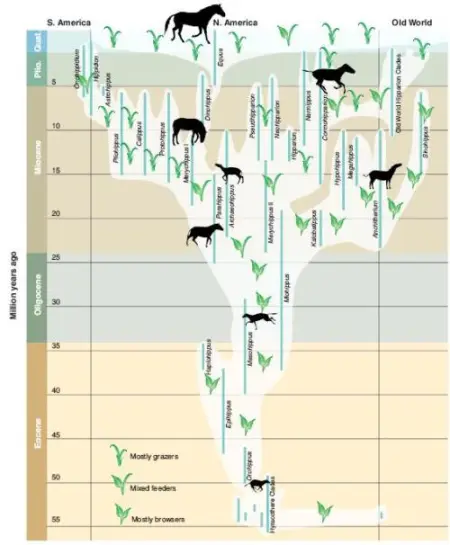
A modern horse phylogeny. From Macfadden 2005, via Laelaps.

A modern horse phylogeny. From MacFadden 2005, via Laelaps.

So where did the orthogenetic depiction of horse evolution come from, and why is it still with us today? The answer highlights the importance of museum exhibits and specimen provenance in the public’s understanding of paleontology, with a dose of jealous personalities for good measure.

In 1859, Charles Darwin published On the Origin of Species, in which he articulated the process of evolution by natural selection virtually exactly as we understand it today. Darwin’s book incited a whirlwind of debate in both scientific and public circles because of its implication that the diversity of life could be attributed to natural forces, rather than an unknowable divine power. Within a decade, however, the vast majority of the scientific community was convinced by the soundness of Darwin’s theory, and to this day billions of individual observations of the natural world tell us that evolution is assuredly true.

One of the many lines of evidence covered in On the Origin of Species is the fossil record, with which we can trace the evolution and extinction of organisms over time, including the ancestors of modern life. However, Chapter 9 of Darwin’s book, “On the Imperfection of the Geological Record” (full text pdf) reads like like a lengthy apology for the incomplete nature of fossil preservation. Today, the use of organized, cladistic methodologies allow paleontologists to piece together detailed phylogenies from fossils, but in Darwin’s day, the evidence was patchier, and he opted to de-emphasise the fossil record’s usefulness to avoid such criticism. As Darwin put it, “we have no right to expect to find in our geological formations an infinite number of of those fine transitional forms.” Unfortunately for paleontology specialists, this led other biologists to believe that fossils could not make any independent contribution to the understanding of evolution. Largely shut out of the biggest biological discovery of all time, paleontologists became stewards of a “second-class discipline” (Sepkoski 2012, 9).

Paleontologists in the late 19th century.

Since biologists interested in evolution considered paleontology mostly irrelevant, late 19th-century paleontologists were left with three options. They could support evolution as best they could and accept that other biologists might not take notice, they could ignore theoretical discussion entirely and focus on purely descriptive studies of morphology, or they could be spiteful and seek alternatives to Darwinian evolution. The second course of action was the most popular well into the 20th century. E.D. Cope seems to be  an example of the third approach, favoring an odd sort of neo-Lamarckism in his book The Origin of the Fittest. Such conceptions of directional change, such as Cope’s Law, are counter to evolution as proposed by Darwin and as understood today. However, a handful of paleontologists stuck with it and endeavored to provide meaningful fossil evidence for evolutionary theory.

Throughout the 1860’s, paleontologist O.C. Marsh amassed an impressive array of fossil horses from Wyoming and elsewhere in the American west. Horse fossils had been found in Europe much earlier, but Marsh’s horse collection was much more complete, and was probably the best fossil record compiled for any vertebrate group at the time. In 1870, the influential British naturalist Thomas “Darwin’s Bulldog” Huxley visited Marsh in New Haven and was suitably impressed: Marsh’s fossils ranged from the Eocene up until the Pleistocene, providing a clear picture of how the horse family had evolved over time. While Darwin had been hesitant to make too big a deal about the fossil record as evidence for evolution, the horse fossils were blatant examples of animals changing over time.

During the same visit, Huxley gave a lecture in New York in which he cited the horse fossils as a fantastic new line of evidence in support of evolution. Unfortunately, Huxley’s lecture (while admittedly aimed at a general audience) tread into some severely teleologic territory. As quoted in The Gilded Dinosaur (Jaffe 2000, 162), Huxley told his audience that “the horse is in many ways a most remarkable animal in as much as it presents us with an example of one the most perfect pieces of machinery in the animal kingdom.” He went on to explain how horse ancestors, from the little four-toed Hyracotherium in the Eocene to increasingly large horses like Merychippus and Pliohippus, gradually perfected the design of the modern horse. According to Huxley, over the course of the Cenozoic horses got bigger, faster, leggier, and generally better at being horses as we know them today. Problematically, this essentialist narrative rather misses the point of evolution as described by Darwin. 

Marsh, like Huxley, was an early advocate of evolution,  but his narrative of horse evolution was more on the mark. Marsh concluded that the smaller early horses with brachydont teeth were well suited for life in the rainforests that covered the western United States 50 million years ago. Horses like we know them today emerged as a direct result of the Earth getting cooler and drier over the course of the Cenozoic, and by the end of the Pleistocene the lineages of forest horses were completely extinct. Equus is with us today not because it is the best horse for any circumstance, but because it was most successful during the ice ages that shaped the modern flora and fauna (it also helped that humans figured out that horses are useful and ensured their survival through domestication).

Unfortunately, Marsh was never enthusiastic about public education, and so the progressive view of horse evolution was the one that made it into the public sphere. The history of horses remained a popular example of evidence for evolution, trotted out over the years by prominent biologists like George Simpson and Stephen Gould. Indeed, it was the first good evolutionary story known from fossils, although by no means the last or the best. In the earliest 1900s, Henry Osborn had a major role in solidifying the orthogenetic horse evolution story in the public eye when he curated the exhibit on the subject at the American Museum of Natural History. It is on the basic premise of this exhibit that the textbook, museum, and web descriptions of linear horse evolution that persist to this day are based.

Photo by the author.

The fossil horses of AMNH. Photo by the author.

After the modern biological synthesis, paleontologists realigned with the rest of biology, and the odd pseudo-evolutionary ideas that persisted in paleontological circles began to fall by the wayside. However, orthogenetic ideas remain common in natural history exhibits on horse evolution to this day (in about 62% of them, according to MacFadden et al. 2012). The reason these exhibits have stuck around isn’t entirely clear. MacFadden and colleagues suggest suggest a lack of inertia or funding for the renovation of exhibits is a factor, but they also point out that even some newer exhibits fall back on linear horse evolution.

The biggest problem is that orthogenetic evolution makes more intuitive sense to non-specialists. We often use the word “evolution” to imply improvement, so it would follow that horses should get bigger and better over time. This is an important misconception to overcome, because, as if we need a reminder, only 15% of Americans believe humans evolved from other animals via strictly natural processes, and an even smaller number can correctly articulate how evolution works. Evolution is the fundamental principle underlying everything we see in the natural world, and it is imperative that a correct understanding of how it works is the basis of any biology education. With the proper background, the real story of horse evolution is a great example of how changing climates effect organisms and ecosystems over time. This is helpful for interpreting the ever-important subject of climate change, but it won’t click until the linear horse evolution story is trampled out for good.

References

Jaffe, M. 2000. The Gilded Dinosaur: The Fossil War Between E.D. Cope and O.C. Marsh and the Rise of American Science. New York, NY: Three Rivers Press.

MacFadden, B.J., Oviedo, L.H., Seymour, G.M. and Ellis, S. 2012. “Fossil Horses, Orthogenesis and Communicating Evolution in Museums.” Evolution, Education and Outreach 5:29-37.

Sepkoski, D. 2012. Rereading the Fossil Record: The Growth of Paleobiology as an Evolutionary Discipline. Chicago, IL: University of Chicago Press.

4 Comments

Filed under AMNH, history of science, mammals, museums, science communication, systematics

Fossil mounts: specimens, showpieces, art and more

A few days ago, Andy Farke posed the following question on twitter:

If fossils are part of our planet’s heritage, and belong to all of us, are museum restrictions on photos ethical?

Farke clarified that he was referring specifically to fossils held in collections, especially those collected on federal land and/or with public funding. Following the same sound logic that makes open access scientific publication a necessity, any scientific work using public resources should be accessible to everyone, including objects in collections.* The question had arisen because some museums bar researchers utilizing collections from using photographs in their published articles (or charge a fee for the privilege). This is a valid concern, but I don’t have enough experience with scientific publishing to explore it properly. Instead, I’d like to hijack the question in order to discuss the murky identity of fossil mounts.

*I’m going to disregard for-profit museums for the time being, suffice it to say such collections exist and can be useful for research as well.

A sampling of fossil collections and curators at the National Museum of Natural History. Source: http://paleobiology.si.edu.

As was already pointed out in response to Farke’s initial question, the public’s right to access photographs of some fossil collections should not necessarily extend to museum exhibits. Any modern museum exhibit worth its salt is far more than specimens on shelves. Exhibits are immersive experiences that use specimens to illustrate a story. A great deal of creative work goes into designing and fabricating an exhibit, and it is not unreasonable for museums to claim ownership of any reproductions, including photographs, if they so choose.

Allosaurus and Barosaurus mount in the Roosevelt rotunda of the American Museum of Natural History. Source: http://www.ourtravelpics.com.

Allosaurus and Barosaurus mounts in the Roosevelt rotunda of the American Museum of Natural History. Source: http://www.ourtravelpics.com.

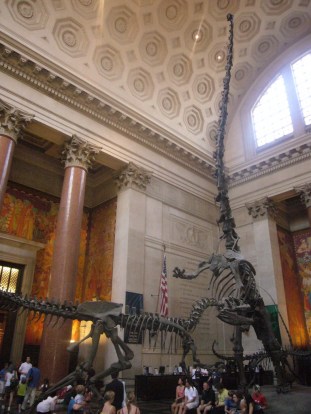
Fossil mounts, however, are a different beast. These structures are difficult to categorize because they are intended both to educate and to entertain. They may incorporate real fossils, or casts taken directly from them, but I would argue that fossil mounts are primarily constructed pieces. With the exception of some more recently extinct mammal taxa, most mounts are composites of casts, sculpted elements and original fossils collected in different places at different times. Steel armatures are custom-made not only to support the specimens but to appropriately fill the exhibit space. Mounts like the striking Barosaurus and Allosaurus encounter in the Roosevelt rotunda at AMNH (above) are designed to make an aesthetic impression as well as to inform. Overall, mounts require a substantial investment of time, labor, money and artistic skill to create and maintain. Experienced researchers typically guide the construction process and the contributions of knowledgeable scientists cannot be overstated, but fossil specimens certainly do not come out of the ground mount-ready. There is a great deal more to making a good mount than stringing vertebrae together in the right order.

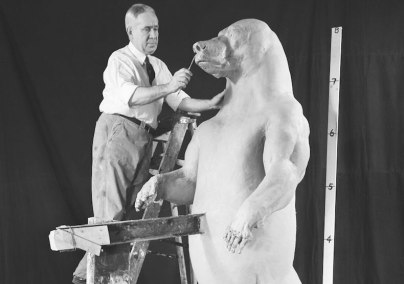
A direct comparison can be made between fossil mounts and the taxidermied animals that are also a staple at natural history museums. A taxidermy mount also incorporates a scientific specimen, the animal’s skin, which if collected using public resources should be accessible to all. Like fossil mounts, however, taxidermy pieces require extensive artistic and technical skill to create, from the steel or wood armature to the clay model that build’s out the animal’s musculature to the eyes and mouth, which are typically sculpted from scratch. It is worth quoting Rachel Poliquin’s excellent The Breathless Zoo at length:

As dead and mounted animals, [taxidermy mounts] are thoroughly cultural objects; yet as pieces of nature, [they] are thoroughly beyond culture. Animal or object? Animal and object? This is the irresolvable tension that defines all taxidermy. (Poliquin 2012, 5-6)

I firmly believe that the results of scientific inquiry belong in the public domain, and it follows that restrictions on the photographic reproduction of collections specimens are inappropriate. Nevertheless, fossil mounts and taxidermied animals are the products of artisans as much as of researchers, and the right to credit and control over this work ought to be respected. This middle ground is awkward to negotiate, and as Poliquin puts it, a means to please all parties might be “irresolvable.”

Robert Rockwell sculpts the internal model for AMNH's taxidermied brown bear. Source: Scientific American.

Robert Rockwell sculpts the internal model for AMNH’s taxidermied brown bear. Source: Scientific American.

To make a non-committal final point, I’d like to mention that it is tempting to be too uptight about copyright, particularly in a museum setting. This past October, I had the pleasure to give a presentation with Alexis Fekete at the Kansas Museum Association’s annual conference. The most interesting part of our session (which was about how web 2.0 tools can help museums) was when audience members, mostly representing small history museums, voiced concerns over making their photography collections available online. There was apprehension about making it too easy for people to copy and sell pictures without permission, which I assume is the primary reasoning behind other museums’ policies prohibiting the publication of fossil images. I’m skeptical, however, that this is the most pressing concern. Perhaps I’m being naïve, but I have no problem with getting information disseminated to genuinely interested people. Creating awareness and enthusiasm for content is part of the general mission of museums, and I’d hate to see overzealous copyright barriers get in the way of that.

References

Poliquin, R. 2012. The Breathless Zoo: Taxidermy and the Cultures of Longing. University Park, PA: Pennsylvania State University Press.

3 Comments

Filed under collections, dinosaurs, fossil mounts, mammals, museums, science communication

Extinct Monsters: The Marsh Dinosaurs, Part II

Read the Marsh Dinosaurs, Part I or start the Extinct Monsters series from the beginning.

During the first decade of the 20th century, the United States National Museum paleontology department was located in an offsite building in northwest Washington, DC. It was here that preparators Charles Gilmore, Norman Boss, and James Gidley slowly but surely worked through the literal trainloads of fossil specimens O.C. Marsh had acquired for the United States Geological Survey. The Marsh Collection included unknown thousands of specimens, many of them holotypes, and there was no shortage of gorgeous display-caliber material. Even after the “condemnation of worthless material” Gilmore and his team quickly filled the available exhibit space in the Arts and Industries Building with mounted skeletons.

The Ceratosaurus

With no more display space and plenty more fossils, it was fortunate that the USNM moved to a new, larger building in 1910. In this iconic, green-domed building (now the National Museum of Natural History), the paleontology department received newly furnished collections spaces and the entire east wing to fill with display specimens. The evocatively titled Hall of Extinct Monsters provided a new home for the mounted skeletons already constructed for the old exhibit, as well as plenty of room for new displays.

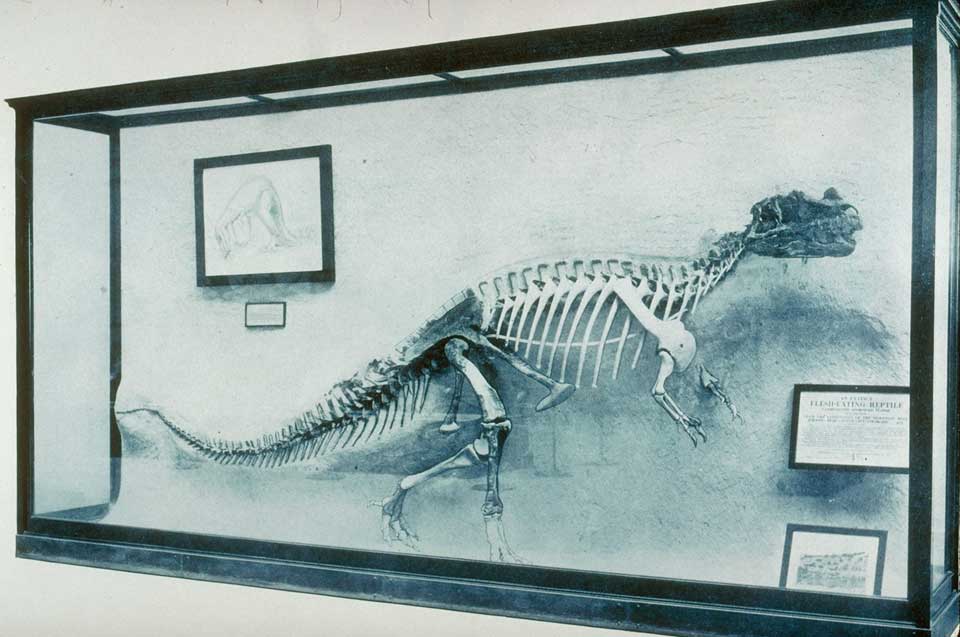
The Ceratosaurus nasicornis holotype was originally housed in a glass case. Image courtesy of the Linda Hall Library.

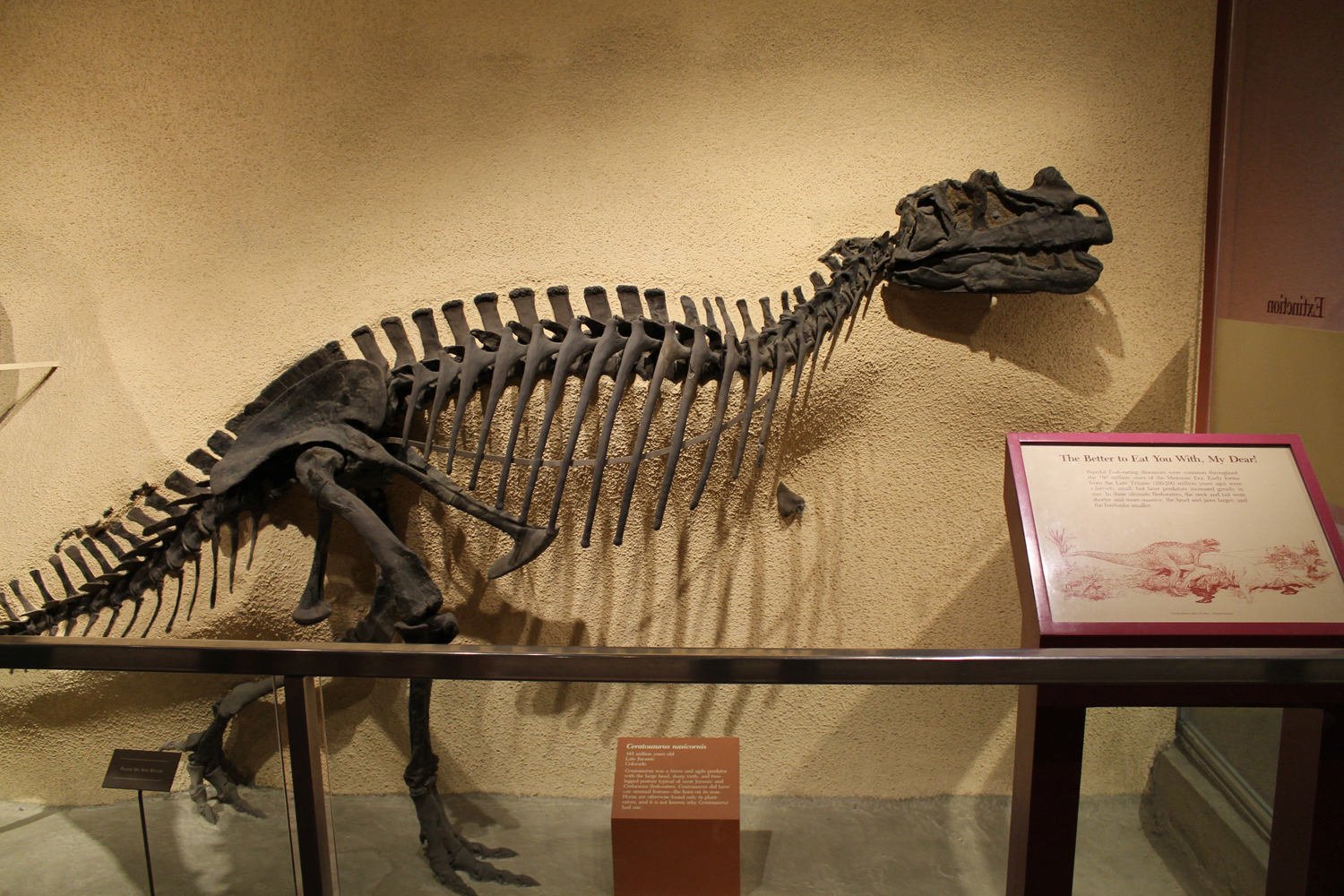
Ceratosaurus. Photo by the author.

The delicate arms of Ceratosaurus were removed several years prior to the hall’s closing. Photo by the author.

One of the first new additions was the type specimen of Ceratosaurus nasicornis (USNM 4735), mounted in relief. Marshall Felch led the excavation of this specimen in 1883 at a quarry near Cañon City, Colorado. The nearly complete skeleton received a cursory description from Marsh upon its discovery, but it was Gilmore who described it properly in 1920, ten years after it was put on display. When it was introduced to the Hall of Extinct Monsters, this was the only Ceratosaurus specimen yet found, making the mount a USNM exclusive. The skeleton was originally displayed in a glass case, but during the 1963 renovation it was placed in a more open setting.

Even today, Ceratosaurus is only known from a handful of specimens. For this reason, the original Ceratosaurus fossils will not be returning when the current renovation is completed in 2019. The new hall will instead feature a three-dimensional, standing cast of this skeleton. The original fossils are now in the museum’s collections, available for proper study for the first time in over a century.

The Camptosaurus

In 1912, two mounted skeletons of Camptosaurus, one large (USNM 4282) and one small (USNM 2210), were introduced to the Hall of Extinct Monsters. William Read excavated both specimens at Quarry 13 in the Como region of Wyoming a quarter of a century earlier. Representing the first-ever mounted skeletons of Camptosaurus, these specimens have had a rather complex taxonomical history. Marsh initially described both specimens as Camptosaurus nanus, a new species within the genus Camptosaurus (the type species was Camptosaurus dispar, also coined by Marsh). After the fossils were acquired by the USNM, Gilmore re-described the larger individual as a new species, Camptosaurus browni. This designation remained until the 1980s, when Peter Galton and H.P. Powell determined that C. nanus and C. browni were actually both growth stages of C. dispar.

Regardless of what they are called, both specimens were remarkably well-preserved and reasonably complete. Most of the skeletal elements of the larger Camptosaurus came from a single individual that was found articulated in situ. However, some of the cervical vertebrae came from another specimen from the same quarry, and the skull, pubis, and some of the ribs were reconstructed. Of particular interest is the right ilium, which has been punctured all the way through by a force delivered from above. Gilmore postulated that “the position of the wounds suggest…that this individual was a female who might have received the injuries during copulation.” The smaller “C. nanus” was also found mostly complete, but two metatarsals came from a different individual and the skull and left forelimb were sculpted.

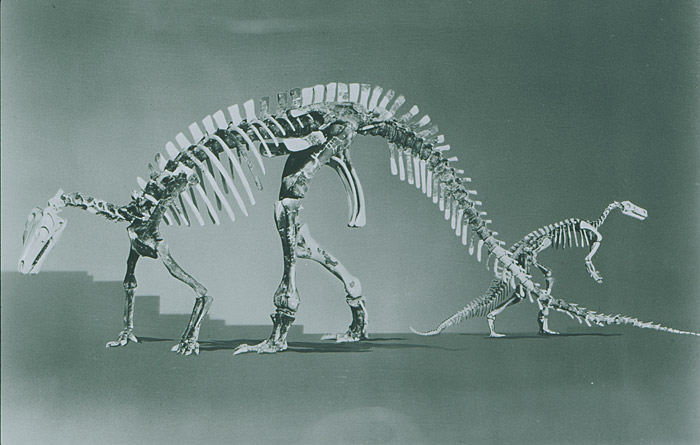
The original pair of Camptosaurus mounts. Image from Backyard Dinosaurs.

Gilmore supervised the creation of both mounts, and constructed the larger individual himself. Norman Boss took the lead on the smaller specimen. As with the other dinosaur skeletons, the mount was centered on an inch-thick steel rod bent to conform to the shape of the vertebral column. Bolts were drilled directly into the vertebrae to attach them to the armature, and the vertebral foramina were filled with liberal amounts of plaster to secure them to the rod. A similar process was used to assemble each of the limbs, and the ribs were supported by a wire cage.

Gilmore aimed to correct many specifics of Marsh’s  original illustrated reconstruction of Camptosaurus. To start, he shortened the presacral region to make a more compact torso. Marsh had also inexplicably illustrated Camptosaurus with lumbar vertebrae (a characteristic exclusive to mammals), which Gilmore corrected. Finally, Marsh had reconstructed the animal as an obligate biped, but Gilmore  determined that “Camptosaurus used the quadrupedal mode of progression more frequently than any other known member of Ornithopoda.” Accordingly, the larger Camptosaurus mount was posed on all fours. The completed Camptosaurus mounts were placed together in a freestanding glass case toward the rear of the Hall of Extinct Monsters. In 1962 the pair was moved to the left of the Diplodocus on the central pedestal of the redesigned exhibit. During the 1981 renovation they were moved a few feet back, so that they were alongside the sauropod’s tail.

This cast replaced the original Camptosaurus mount in 2010. Photo by the author.

This cast replaced the original Camptosaurus mounts in 2010. Photo by the author.

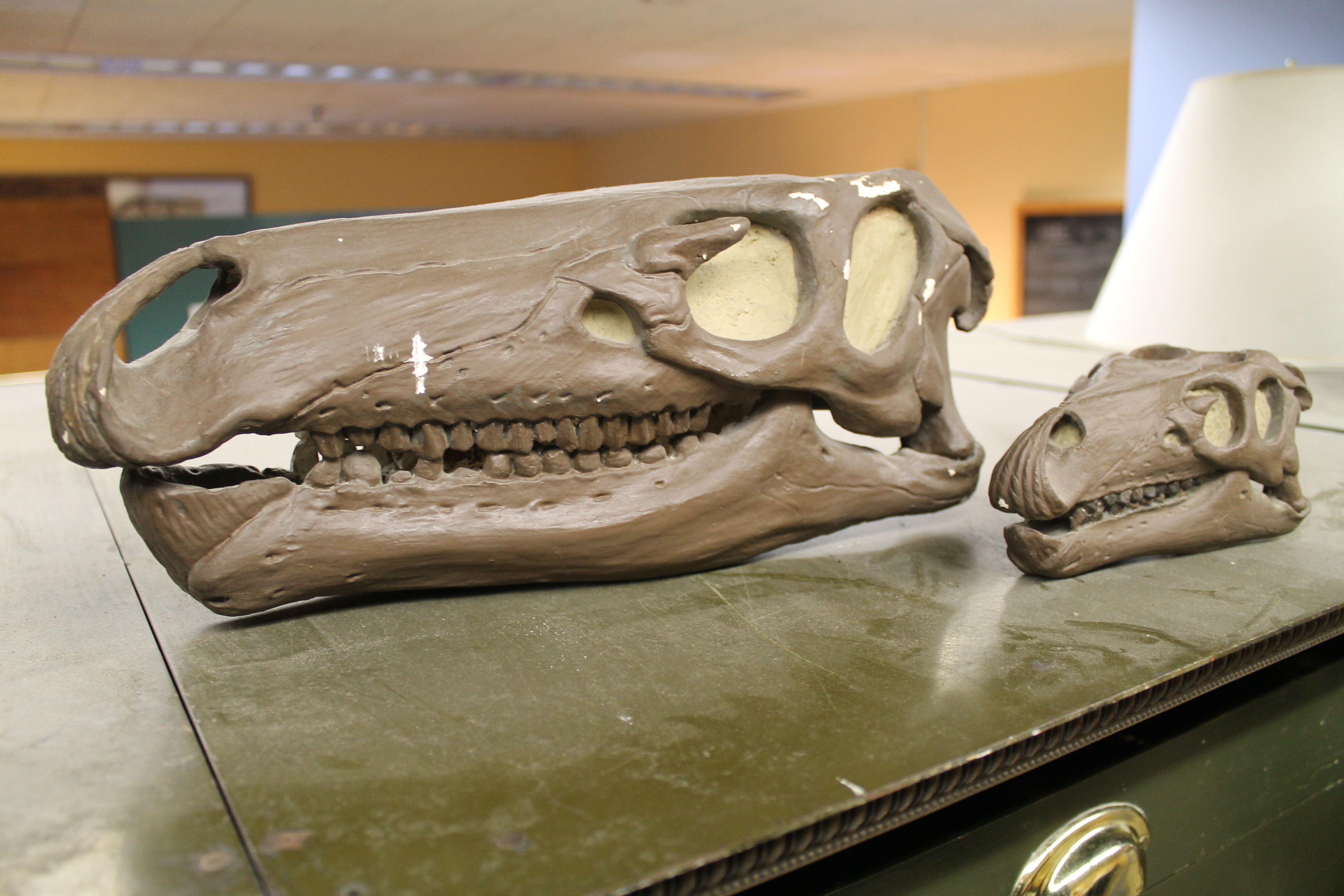
The retired plaster skulls of the original Camptosaurus mounts. Photo by the author.

The retired plaster skulls of the original Camptosaurus mounts. Photo by the author.

Both Camptosaurus skeletons taken off exhibit in 2010 and replaced with a cast of the adult. The delicate fossils, which had suffered from considerable wear and tear over the past hundred years, were stabilized and stored individually for their protection. The new mount has a number of upgrades to reflect our improved understanding of dinosaur anatomy. The arms are closer together and the palms face inward, because the pronated (palms down) hands on Gilmore’s version have been determined to be a physical impossibility. The new mount also features a completely different skull. The rectangular model skull used on the original mount was based on Iguanodon, but new discoveries show that the skull of Camptosaurus was more triangular in shape. Both the adult and juvenile Camptosaurus will appear in the new National Fossil Hall.

The Stegosaurus

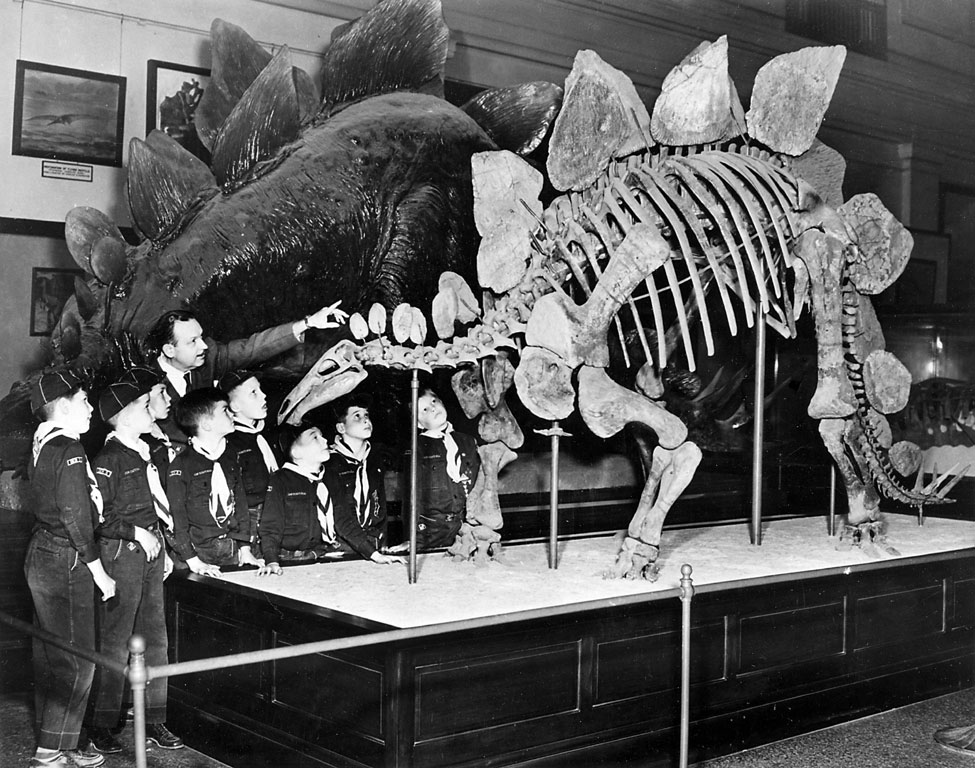
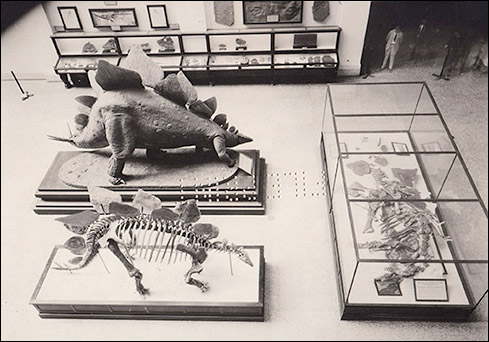
The Smithsonian’s first Stegosaurus exhibit was a life-sized model built for the 1904 World’s Fair in St. Louis. This model found its way into the Hall of Extinct Monsters in 1910. In 1913, the model was joined by a mounted Stegosaurus skeleton found at the same Cañon City quarry as the Ceratosaurus. A third Stegosaurus, the holotype of S. stenops, was introduced in 1918. Lovingly called the “roadkill” Stegosaurus, USNM 4934 is remarkable in part because it was found completely articulated. In fact, before its 1886 discovery by Marshall Felch, it was unknown exactly how the animal’s plates were positioned on its back.

Standing Stegosaurus mount and life-size model, circa 1950. Photo courtesy of the Smithsonian Institution Archives.

Stegosaurus

Stegosaurus model, standing mount, and “roadkill” on display in the Hall of Extinct Monsters. Source

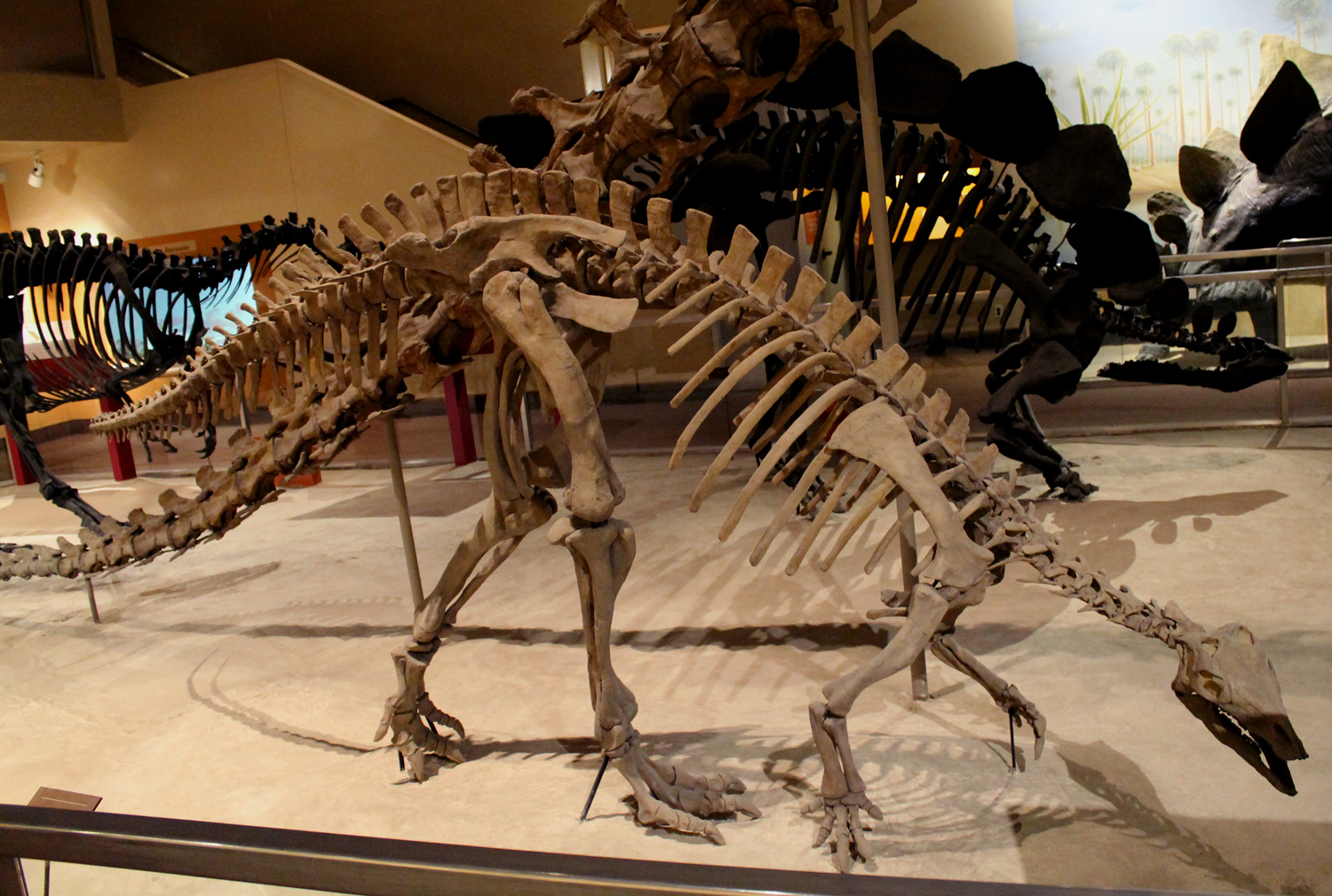
All three Stegosaurus displays were moved in 1963 and 1981. In Fossils: The History of Life, the Stegosaurus skeletons were positioned flanking the Diplodocus in the central display area, with the standing mount on the right and the roadkill skeleton on the left. The model Stegosaurus stood opposite the mount. Just like the Triceratops and Camptosaurus, many decades on display took their toll on the standing Stegosaurus, so in 2003 the fossils were removed from the exhibit. Dismantling the Stegosaurus was particularly challenging because of the large amount of plaster applied by the mount’s creators. In some cases the plaster infill had to be removed with hand tools, which put further pressure on the fossils. Additionally, the rod supporting the backbone had been threaded right through each of the vertebrae, and was extremely difficult to remove. A casted Stegosaurus mount in a more active pose was returned to the exhibit in 2004.

Cast of Stegosaurus and Camptosaurus. Photo by the author.

Casts of Stegosaurus and Camptosaurus. Photo by the author.

Roadkill stego

“Roadkill” Stegosaurus in 2014. Photo by the author.

After 110 years on display at the Smithsonian, the model Stegosaurus has been donated to the Museum of the Earth in Ithaca. The roadkill Stegosaurus, however, will feature prominently in the new National Fossil Hall, mounted upright on the wall by the exhibit’s secondary entrance. The 2004 Stegosaurus cast had a number of anatomical issues and will not be returning – instead, it will be replaced by an updated cast made from the same original fossils.

The Marsh dinosaurs have been of critical importance in our understanding of the Mesozoic world, but at this point these fossils are historic artifacts as well. When they were uncovered, the American civil war was still a recent memory, and railroads had only recently extended to the western United States. Before the first world war they had been assembled into mounts, and for more than a century these fossils have been mesmerizing and inspiring millions of visitors. Several of these mounts, including the Triceratops, Ceratosaurus and Camptosaurus, were the first reconstructions of these species to ever appear in the public realm, and therefore defined popular interpretations that have lasted for generations. Some visitors may lament that many of the original specimens have been recently been replaced with replicas, but the fact is that these are irreplaceable and invaluable national treasures. They inform us of our culture, and our dedication to expanding knowledge and our rich natural history. We only get one chance with these fossils, and that is why the absolute best care must be taken to preserve them for future generations.

References

Gilmore, C.W. 1912 “The Mounted Skeletons of Camptosaurus in the United States National Musuem.” Proceedings of the US National Museum 14:1878.

Gilmore, C.W. 1941 “A History of the Division of Vertebrate Paleontology in the United States National Museum.” Proceedings of the United States National Museum 90.

Jabo, S. 2012. Personal communication.

Leave a comment

Filed under collections, dinosaurs, exhibits, Extinct Monsters, field work, fossil mounts, history of science, museums, NMNH, ornithopods, reptiles, theropods, thyreophorans

Extinct Monsters: Ice Age Giants

Click here to start the NMNH series from the beginning.

The old fossil mammal exhibits at the National Museum of Natural History were notable for their sheer diversity. From rabbits to elephants and from bats to whales, virtually every major group of North American mammals, particularly eutherian (placental) mammals, was represented. By my count, there were no less than 48 mounted mammal skeletons on display (not including individual skulls and other parts) in 2014, arranged by time period and distributed across three sizable halls.

The comprehensive nature of these exhibits was largely thanks to C.L. Gazin, head curator of the Division of Vertebrate Paleontology in the 1950s and 60s. During the modernization of the fossil halls in the early 1960s, Gazin focused his efforts on assembling a complete narrative of Cenozoic mammal evolution. The six-part exhibit debuted in 1961 in Hall 5, and was relocated two decades later to Hall 3. Gazin also initiated the construction of the adjacent Ice Age exhibit, although it would not be permanently opened to the public until 1974.

Now that the fossil halls are being renovated, NMNH staff face the enormous task of disassembling and restoring the dozens of historic mammal skeletons. Many will return when the exhibit reopens in 2019, but others may be retired to the collections if they are deemed too fragile for continued display, or if they are not illustrative of the story being told in the new exhibit.

The Megaloceros

This Megaloceros

This Megaloceros has the distinction of being the Smithsonian’s first mounted skeleton composed of original fossils. Photo by the author.

The Smithsonian’s first mounted fossil skeletons went on display in 1871 in the building colloquially called “the castle.” The exhibit included plaster casts of the ground sloth Megatherium, the tortoise Colossochelys and the glyptodont Scistopleurum, all made from originals at the British Museum. The following year saw the addition of the giant deer Megaloceros (USNM V 7051) — the Smithsonian’s first mounted skeleton composed of original fossils. The Smithsonian purchased this complete Megaloceros, which was uncovered in an Irish peat bog, from Philadelphia-based antiques dealer Thomas and Sons. The mount was assembled by none other than Benjamin Waterhouse Hawkins, the sculptor who created the famous Crystal Palace dinosaurs.

Note basilo

Megaloceros in the southeast court of the Arts and Industries building, circa 1896. The British Museum Megatherium cast can be seen on the left. Source

When construction of the original United States National Museum (what is now called the Arts and Industries Building) was completed in 1881, all of the fossil displays were moved to the new setting. Vertebrate fossils found a home in the 80,000 square foot southeast court. Gradually, the Megaloceros and British Museum casts were joined by many more crowd-pleasing skeletons, including a copy of the Philadelphia Hadrosaurus, an Edmontosaurus, a Triceratops, and a mastodon (discussed below). By the time the USNM was preparing to move to yet another new building across the national mall in 1910, the southeast court had become quite crowded. Unfortunately, the Megatherium and Collossochelys never made it to the new location. These casts were discarded due to the damage they had accumulated while on display. Although the glyptodont cast was still on exhibit as of 1940, it too was eventually destroyed. Happily, the Megaloceros survived, and has been included in each subsequent iteration of the fossil exhibits.

Starting in 1974, the Megaloceros was displayed alongside the extinct bird Diornis in the Ice Age hall. It’s weight was partially supported by cables descending from the ceiling, which proved to be a problem when it came time to disassemble it in July 2014. Rather than attempting to lift the delicate skull and heavy antlers off the armature, the exhibit team strapped the skull to a mechanical lift so that it could be slowly and gently lowered to the floor. In the new National Fossil Hall, the Megaloceros will be sitting on the ground. This pose was selected in order to bring the spectacular antlers to visitors’ eye level.

The Mastodon

The Indiana mastodon in the Hall of Extinct Monsters. Photo courtesy of the Smithsonian Institution Archives.

In 1901, Michigan farmer Levi Wood found a well-preserved, nearly complete Mammut americanum (USNM 2106) in a peat swamp on his land. The USNM purchased the rights to excavate the skeleton from Wood and began work that same year. The specimen turned out to be virtually complete, save for the forelimbs and left hindlimb. Alban Stewart mounted the skeleton, adding a left hindlimb from another mastodon specimen from Missouri, and filling in other missing elements with plaster replicas. The completed mount was first exhibited at the Louisiana Purchase Exposition in St. Louis, Missouri in 1904.

For a time, there were two mastodon mounts on display in the Hall of Extinct Monsters. Photo courtesy of the Smithsonian Institution Archives.

After the Exposition, the Michigan mastodon was added to the fossil displays in the  southeast court of the Arts and Industries Building. It remained there for four years, before joining the rest of the paleontology exhibits and collections in the move to the new USNM building.

In 1915, a second mastodon (USNM V 8204) from Indiana was added to the Hall of Extinct Monsters. The matching set can be seen on the left side of the image above, with the plaster skull of a Deinotherium (USNM V 1917) positioned between them. The larger Indiana mastodon persisted through the 1963 and 1981 renovations, and will return with an energetic trumpeting pose in 2019. NMNH loaned the Michigan mastodon to the Oregon Zoo for many years. It has since been returned, dismantled, and retired to the collections.

The Stegomastodon

Stegomastodon in 2014. Photo by the author.

Stegomastodon in 2014. Photo by the author.

The young male Stegomastodon (USNM 10707) was collected by James Gidley and Kirk Bryan collected this skeleton in the San Pedro Valley of Arizona. This 1921 collecting trip also produced the museum’s Glyptotherium. While the genus Stegomastodon was erected in 1912, Gidley referred his specimen to a new species, S. arizonae, due to its more “progressive” physiology and slightly younger age. By 1925, the skeleton was mounted and on display in the Hall of Extinct Monsters. While the original mount used the real fossil tusks, these were eventually replaced with facsimiles.

Stegomastodon with

Stegomastodon with its original tusks. Photo from Gidley 1925.

The Stegomastodon will not be returning when the National Fossil Hall reopens in 2019. For one thing, there are already two big elephants on display: the mammoth and the mastodon. Elephants take up a lot of space, and a third proboscidean offers diminishing returns when compared to the amount of floor space it requires. More importantly, the Stegomastodon is a holotype specimen, and the exhibit team elected to remove most of these important specimens from the public halls. This is both to keep them safe from the damaging effects of vibration, humidity, and fluctuating temperature, as well as to make them more accessible to researchers.

The Eremotherium pair

Eremotherium

The unique and impressive Eremotherium pair. Photo by the author.

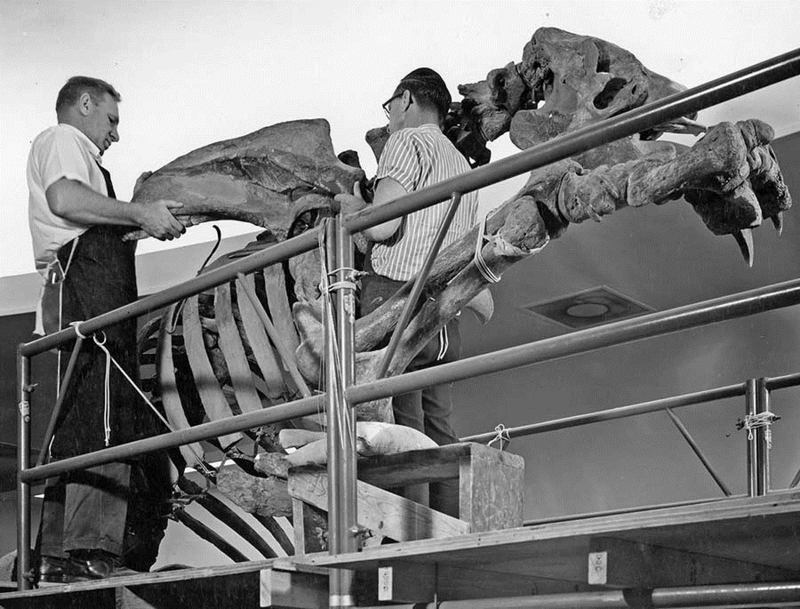
The immense pair of giant ground sloths (USNM V 20867 and USNM V 20872) are among the most impressive and unique skeletal mounts at NMNH. Many a visitor has ascended the ramp to the Ice Age gallery only to stop and stare at them. Unlike the Megaloceros, mastodon, and many others, these were new additions added during the 1960s modernization. Gazin’s team recovered the fossils in Panama between 1950 and 1951, bringing back over 100 plaster jackets representing at least eight individual sloths of the genus Eremotherium.

sou

John Ott and Gladwyn Sullivan attach the scapula of the standing sloth. Source

Assistant Curator of Cenozoic Mammals Clayton Ray oversaw the assembly of the two Eremotherium mounts in 1969. Both the larger standing sloth and smaller kneeling one are composites of fossils from many individuals (there are also plenty of reconstructed bones, easily spotted by their solid beige coloration). Most of the surplus bones were repatriated to Panama before the mounts went on display. The sloths were originally positioned back-to-back on a central platform, accentuated by an illuminated opening in the ceiling. However, this layout only lasted a few years. In 1974, the Quaternary Hall was completely reorganized into the Hall of Ice Age Mammals and the Age of Man. In the new arrangement, the Eremotherium pair was relocated to a corner at the north end of the gallery. In 2019, only one Eremotherium will be on display.

The Mammoth

Chimera mammoth

This mammoth was assembled from as many as 70 individual specimens. Photo by the author.

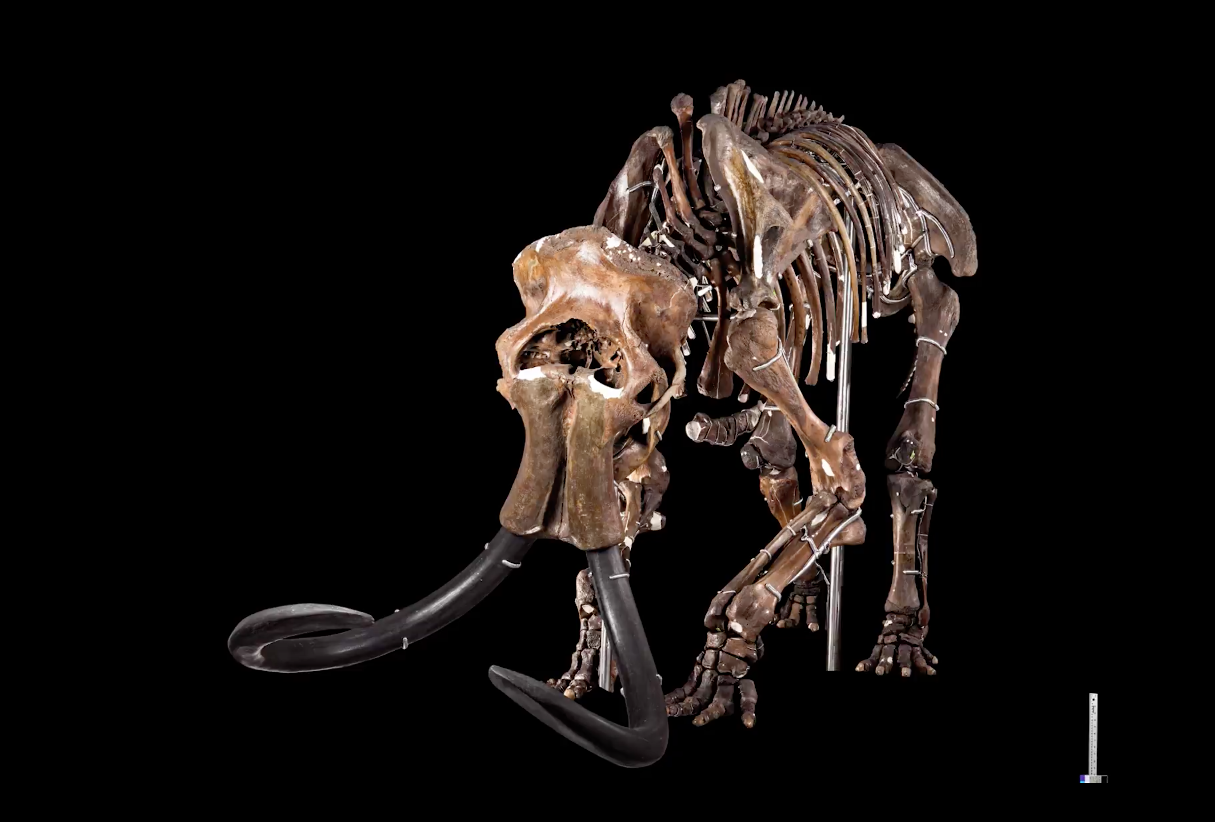
Although it was always labeled as a woolly mammoth (Mammuthus primigenius), the Smithsonian’s third proboscidian skeleton (USNM V 23792) is actually a composite of over fifty individual specimens, some of which probably belong to the more southerly Columbian mammoth (Mammuthus columbi). Most of these fossils were acquired in a trade with the American Museum of Natural History in the 1960s, specifically to build a mounted skeleton for the Ice Age hall. Perhaps because they were acquired for display, rather than study, the origin of these fossils was not well-recorded. It is only now that the mammoth has been disassembled that collections staff can begin to to learn more about this iconic chimera. Some of the bones are marked with the year and location of their collection, crucial details for piecing together their provenance.

The mammoth in its new, snow-shoveling pose. Photo courtesy of the Smithsonian Newsdesk.

In the new fossil hall, the mammoth will be leaning forward, pushing its great tusks across the ground as though it were brushing away snow. In the meantime, the original mount was digitally scanned, and the model is freely available from Smithsonian 3D.

References

Carrano, M. 2018. Pers. comm.

Gazin, C.L. 1956.  Exploration for the remains of giant ground sloths in Panama. Smithsonian report, 341-354.

Gidley, J.W. 1925. Fossil Proboscidea and Edentata of the San Pedro Valley, Arizona. Shorter Contributions to General Geology (USGS). Professional Paper 140-B, 83-95.

Gilmore, C.W. 1906. Notes on Some Recent Additions to the Exhibition Series of Vertebrate Fossils. Proceedings of the United States National Museum No. 30.

Gilmore, C.W.  1941. A History of the Division of Vertebrate Paleontology in the United States National Museum. Proceedings of the United States National Museum No. 90.

Marsh, D.E. 2014. From Extinct Monsters to Deep Time: An ethnography of fossil exhibits production at the Smithsonian’s National Museum of Natural History. http://circle.ubc.ca/handle/2429/50177

3 Comments

Filed under Extinct Monsters, field work, fossil mounts, history of science, mammals, museums, NMNH

Extinct Monsters: History of Smithsonian Fossil Exhibits

Click here to start the Extinct Monsters series from the beginning.

Upon his death in 1829, British scientist James Smithson left his fortune to the United States government to found “at Washington…an establishment for the increase and diffusion of knowledge.” Congress used Smithson’s estate to establish the publicly funded Smithsonian Institution in 1846, which has since grown into an expansive research institute and museum complex that is recognized the world over. Vertebrate paleontology has been an important part of the Smithsonian’s agenda since the beginning, and this article by Ray Rye provides a compelling history of the scientific staff and their research. This post will take a slightly different approach, summarizing the changing public face of Smithsonian paleontology in the form of its genre-defining exhibits.

In 1847, Joseph Henry, the Smithsonian’s first secretary, started construction on the original Smithsonian building, which today is colloquially known as “the castle.” The first vertebrate paleontology exhibit housed within its walls consisted of a trio of casted skeletons: the ground sloth Megatherium, the glyptodont Scistopleurum, and the tortoise Collossochelys. These exhibits were probably obtained through Ward’s Natural Science Establishment. The Smithsonian’s first skeletal mount made from original fossils was a Megaloceros, purchased from antiquities dealers Thomas and Sons in 1872.

Exhibits like this one at USNM were deemed incomprehensible and inspired early reform

Basilosaurus, Megatherium, and Megaloceros are visible in the southwest court of the first United States National Museum. Image courtesy of the Smithsonian Institution Archives.

1881 saw the completion of the original United States National Museum, next door to the castle (this structure is now called the Arts and Industries Building). The southwest court was dedicated to osteology and paleontology, and the existing skeletal mounts were placed here among rows of cases containing smaller specimens. At this point in time, the Smithsonian had very few permanent staff members, instead relying mostly on scholars serving in unpaid “honorary” positions to curate the growing national collection. Famed paleontologist O.C. Marsh (the beardier half of the “bone wars” rivals) was the honorary curator of vertebrate paleontology. Under contract with the United States Geological Survey, Marsh supervised numerous field expeditions to the American west and oversaw the collection of untold thousands of fossil specimens. When Marsh died in 1899 the fossils he collected for the government were relocated from Yale University (his home institution) to the Smithsonian.

Gilmore and the Hall of Extinct Monsters

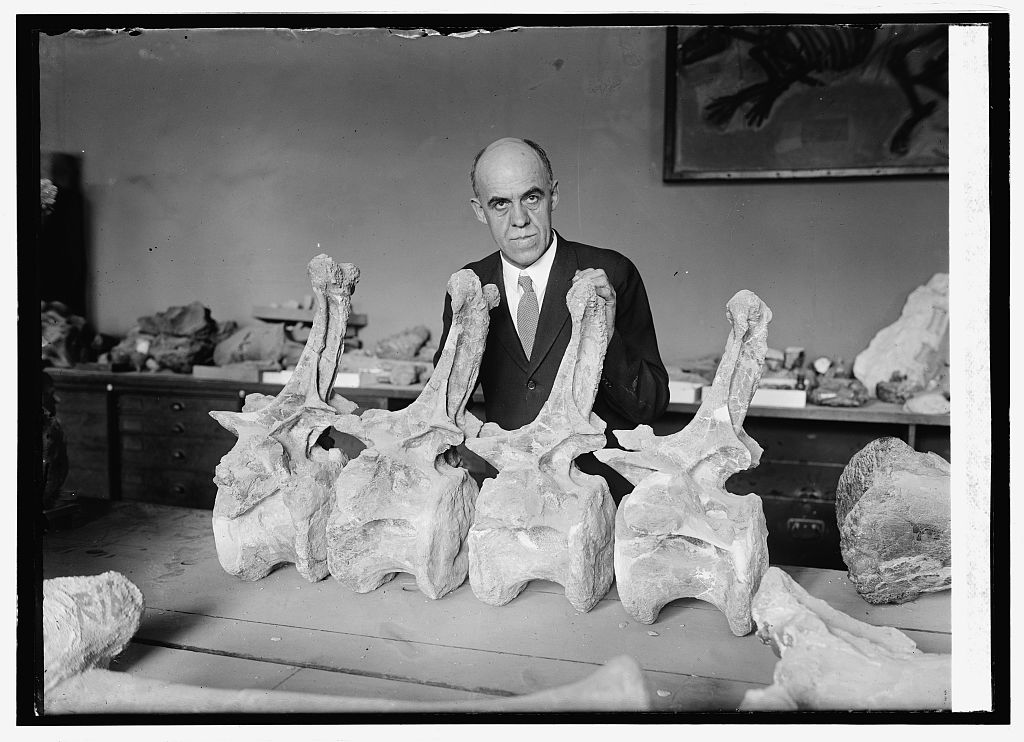
Gilmore with Diplodocus vertebrae.

C.W. Gilmore with some Diplodocus vertebrae. Image courtesy of the Smithsonian Institution Archives.

Charles Whitney Gilmore was a student in mine engineering at the University of Wyoming when he became involved in the Carnegie Museum’s fossil hunting expeditions in 1899. Recognizing the young man’s enthusiasm and talent, John Bell Hatcher hired Gilmore immediately after his graduation in 1901. Gilmore worked with Hatcher for two field seasons, but in 1903 he moved to Washington, DC upon being offered a position as a full-time preparator at the USNM. He was promoted to Curator of Vertebrate Paleontology in 1924, and is fondly remembered as an exceptionally modest but extraordinarily productive scientist. As curator, Gilmore led sixteen fossil-hunting expeditions to the western interior. Gilmore’s most enduring contribution to paleontology, however, is his extensive body of descriptive publications on the Marsh fossils. His monographs on Apatosaurus, Camarasaurus, Ceratosaurus, and many others are still regularly cited today.

Along with preparators Norman Boss and James Gidley, Gilmore is responsible for creating most of the mounted dinosaur skeletons that are on display at the Smithsonian. The first dinosaur mount Gilmore and his team completed was Edmontosaurus, which went on display in the original USNM building in 1904. Gilmore would go on to supervise the construction of Triceratops (the first mount of this taxon in the world), Camptosaurus, Stegosaurus, DimetrodonCeratosaurus, Diplodocus, and numerous other displays that have been enjoyed by generations of museum visitors.

extinctmonstersfront_1913

The Hall of Extinct Monsters, sometime before 1929. Image courtesy of the Smithsonian Institution Archives.

Congress authorized the construction of a new United States National Museum on the north side of the National Mall in 1911. In contrast to the Victorian style of the original building, the new museum sported neoclassical granite construction which matched the aesthetic of the other federal buildings. Exactly when the museum opened is the subject of some debate. Collections and offices began moving across the mall via horse and wagon in 1908, and part of the first floor opened to the public on March 17th, 1910. Nevertheless, it was not until 1911 that all the exhibit spaces were ready for visitors, including the evocatively titled “Hall of Extinct Monsters” in the museum’s east wing. This cavernous space devoted to fossil displays was primarily under Gilmore’s stewardship, and generally resembled a classic “cabinet of curiosity” approach to exhibit design. Gilmore and his team would gradually fill the Hall of Extinct Monsters will new specimens over the coming decades, culminating in the towering Diplodocus mount completed in 1932.

Modernization and Renaissance

Gilmore retired in 1945, and vertebrate paleontology research at the USNM, particularly in dinosaurs, quieted in his absence. Charles Gazin, Gilmore’s successor as Curator of Vertebrate Paleontology, specialized in mammals, and the museum remained without a curator specializing in dinosaurs until Matt Carrano was hired in 2003. In 1957, the USNM split into two subdivisions, the Museum of Natural History and the Museum of History and Technology. The Smithsonian’s history collections were moved to a new building next door, now called the National Museum of American History, and other collections gradually dispersed into 20-some other Smithsonian museums. The site of the disbanded USNM was officially renamed the National Museum of Natural History in 1967, and remains the home of natural sciences and anthropology.

The Diplodocus, as it stood from 1963 through 1981. Image courtesy of the Smithsonian Institution Archives.

The Hall of Fossil Reptiles lasted from 1962 to 1981. Image courtesy of the Smithsonian Institution Archives.

The Hall of Extinct Monsters persisted largely unchanged until 1962, when it was finally renovated as part of a Smithsonian-wide modernization project. The fossil exhibits were among the last to be updated, in part due to ambivalence from the paleontology curators. The department did not employ any staff members exclusively devoted to exhibit work, so the task of reinventing the displays was an added burden for the research staff. As such, the changes to the hall ended up being more cosmetic than structural. The largest mount, Gilmore’s Diplodocus, was too difficult to disassemble and move, so the new exhibit was designed around it. Solid earth tones and wall-to-wall carpet replaced the original neoclassical aesthetic. The John Elliot mural Diana of the Tides, positioned high on the east wall, was simply boarded over during construction (and has remained so ever since).

The 1981 renovation saw the addition of a mezzanine over the dinosaur exhibit. Source

In 1974, the addition of the Hall of Ice Age Mammals and the Rise of Man expanded the paleontology display space beyond the east wing. Further renovations took place in three stages starting in 1979. Entitled “Fossils: The History of Life”, the overhauled exhibit complex represented a significant departure from earlier iterations of this space. While the previous renovation arranged specimens according to taxonomy and curatorial specialties, “The History of Life” followed the evolutionary progression of fossil plants and animals through time. The new exhibits also differed from prior efforts in that they were not put together exclusively by curators. Instead, the design process was led by educators and exhibits specialists, who sought curatorial input at all stages. The new specimens and displays also required the once spacious hall to be carved up into a maze of small rooms and narrow corridors. Even with the additional floor space provided by a new balcony over the dinosaurs, the east wing had become quite crowded.

Of course, the science of paleontology has advanced by leaps and bounds since the 1980s, and NMNH staff have made piecemeal updates to the exhibits when possible. These changes include restorations of deteriorating mounts, the addition of a cast of Stan the Tyrannosaurus, and a few revised signs addressing the dinosaurian origin of birds and new dates for geologic time periods. Still, the east wing remained largely the same for over 30 years, and began to look a bit tired next to the brand-new exhibits that have opened at NMNH over the last decade.

Looking Ahead

The NMNH fossil halls closed on April 27th, 2014 for a five year renovation project. For the first time, the east wing was completely gutted and its underlying infrastructure overhauled. Aging specimens like the 1932 Diplodocus and the 1911 Ceratosaurus were be painstakingly disassembled and conserved, and the space itself was restored to its original Beaux Arts splendor. The re-imagined exhibit is arranged in reverse chronological order: visitors  start among mammoths and ground sloths in the Pleistocene and move backward in time through increasingly alien-looking versions of North America. Unlike the present exhibit, however, an open floor plan will allow visitors to get a sense of what they’re in for from the moment they walk into the hall.

4-07

Mesozoic section of the new Hall of Fossils – Deep Time. Concept art on display in the Last American Dinosaurs exhibit at NMNH.

The overall theme is change over geologic time, highlighting the myriad ways that climate, geography, evolution, and other living and nonliving systems interact and shape the world’s environments. Not all the classic mounts will make it into the new space (Brachyceratops, Zygorhiza, and Stegomastodon are among the retirees), but there are many new additions, including the Nation’s T. rex The result will be a compelling mix of classic early 20th century museum aesthetics and modern visitor-focused educational strategies.

References

Gilmore, C.W.  (1941). A History of the Division of Vertebrate Paleontology in the United States National Museum. Proceedings of the United States National Museum No. 90.

Rye, R. (2002.) History of the NMNH Paleobiology Department. http://paleobiology.si.edu/history/rye.html

Sues, H. and Marsh, D. (2013). Charles Whitney Gilmore: The Forgotten Dinosaur Hunter. http://paleobiology.si.edu/history/gilmore.html

Yochelson, E.L. (1985). The National Museum of Natural History: 75 Years in the Natural History Building. Washington, DC: Smithsonian Institution Press.

1 Comment

Filed under collections, dinosaurs, exhibits, Extinct Monsters, fossil mounts, history of science, mammals, museums, NMNH, reptiles

Extinct Monsters at NMNH

National Museum of Natural History in Washington, DC.

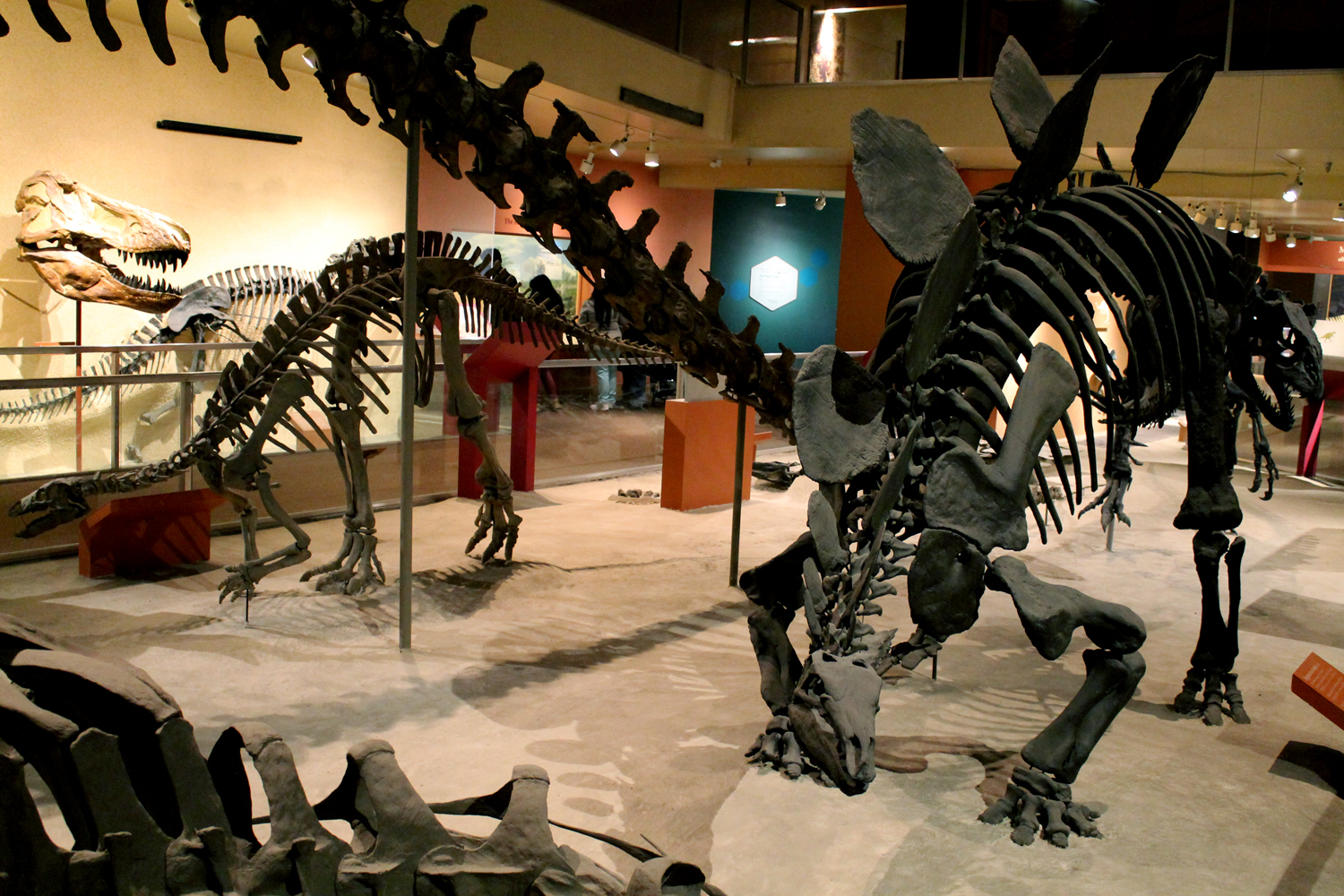
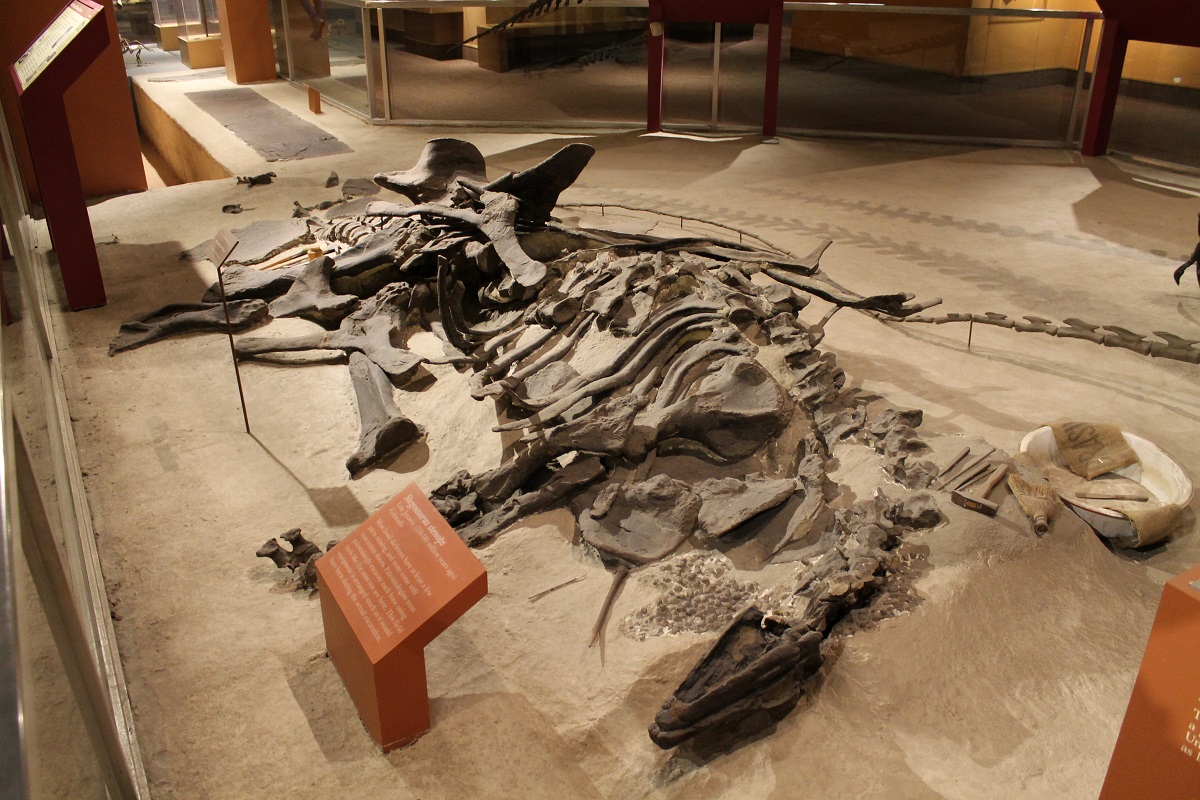
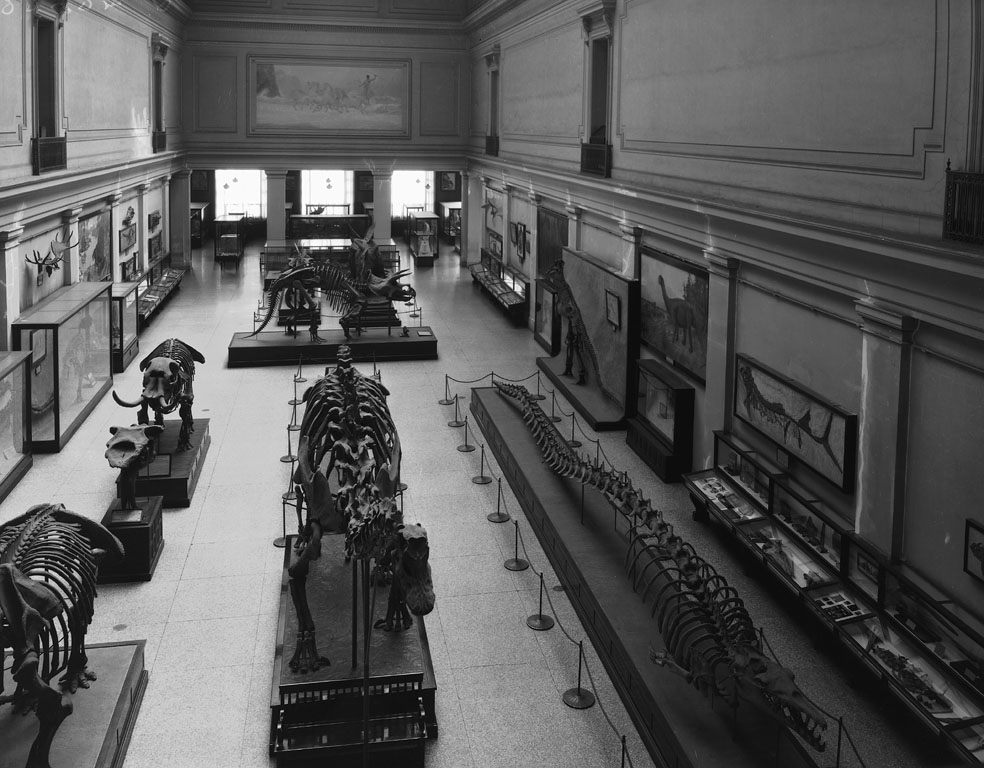
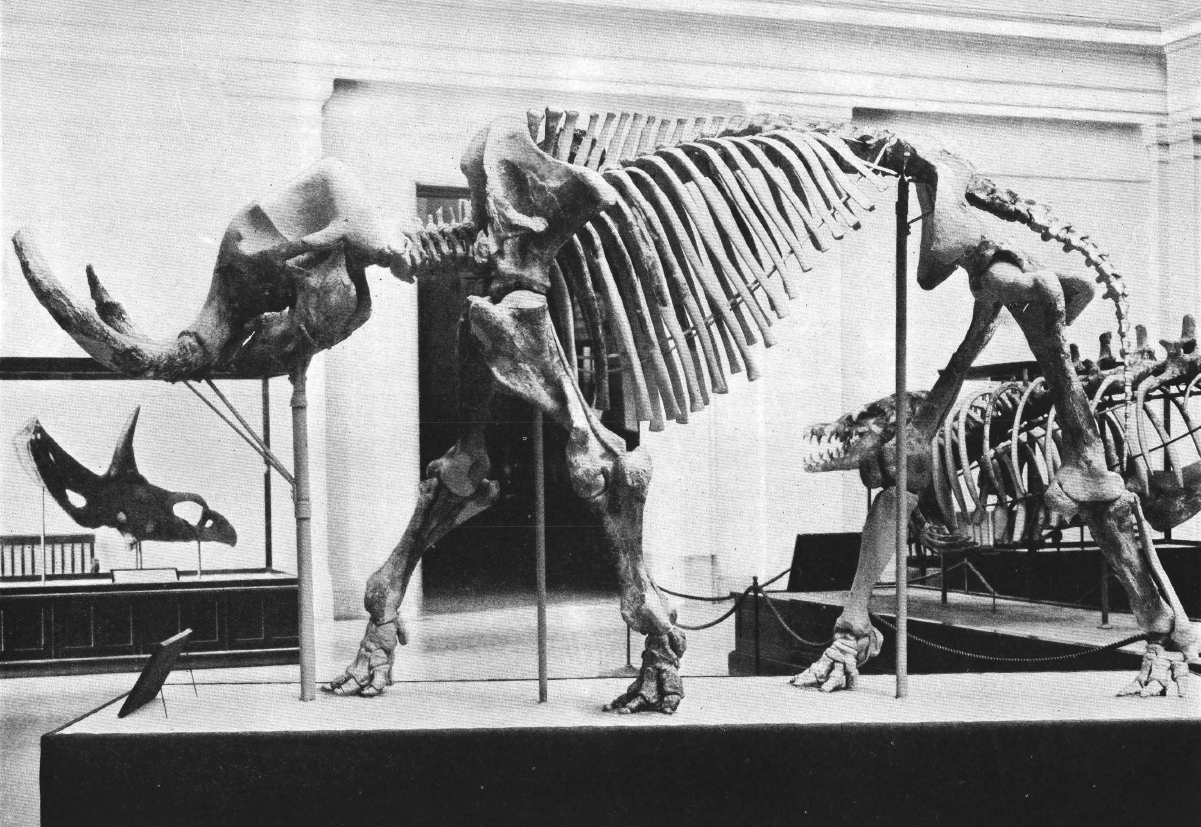
The dinosaurs at the National Museum of Natural History. Photo by the author.

Easily the best thing about living in the Washington, DC area is the plethora of free, public museums that make up the Smithsonian Institution. Tens of millions converge on the mall each year to this national center of learning, but for locals like myself, these museums are part of the backdrop of our lives. From field trips to rainy days to awkward first dates, the Smithsonian museums are an integral part of the DC experience. Still, I’d wager that I’ve spent more time at the museums than most residents, and the lion’s share of that time has been in the Paleobiology halls at the National Museum of Natural History.

When I was very young, my parents supported my interest in dinosaurs by taking me to the Museum at least monthly. Later, stopping at the Museum for a bit of quiet contemplation among the dinosaur mounts would prove irresistible whenever I was nearby. And over the course of two lengthy internships, I still occasionally took the long route across the Museum,  cutting through the Paleobiology hall to take another look at the abscess on the pelvis of the Camptosaurus, to check out something I’ve recently read about diplodocoid vertebrae for myself, or even to hear the all-too-familiar narration of the evolution of the horse one more time. In short, these galleries at NMNH have been and continue to be largely responsible for my life-long love of paleontology. They mean a lot to me.

It is no secret that NMNH has recently received a generous donation to renovate the Paleontology halls. The exhibits have changed incrementally over the course of my lifetime, including the remounting of at least three specimens and updated signage, but the exhibits are absolutely overdue for a major overhaul. In comparison to the NMNH’s new Ocean Hall and Hall of Human Origins, not to mention newer paleontology exhibits at peer institutions like CMNH and AMNH, the Paleobiology halls look quite tired. What’s more, the science of paleontology has exploded since the last major renovation in 1981, and there is tons of new information to cover.

It is an exciting time for the NMNH Paleobiology hall, but  looking into this exhibit’s past proves to be just as interesting. From the Smithsonian’s inheritance of fossils from government-funded expeditions of O.C. Marsh to the nationwide rush for dinosaur mounts in the early 20th century, to the dinosaur renaissance of the 1970s, the history of the Paleobiology hall mirrors the history of scientific and popular interest in prehistory over the past century. Many of the specimens in the hall have been on display longer than the NMNH building has existed, and seeing how their physical positioning and interpretation has changed over the years tells a fascinating story about the intersection of science, education and icons of American culture. In this series, I will attempt to tell that story as accurately as I can manage. Notable people and specimens will be introduced, and each iteration of the Paleobiology gallery will be explored.

A Road Map

Use this hub to explore the history of the NMNH Paleobiology halls. The following list will become links as the articles are completed.

Introduction

History of Paleobiology at the Smithsonian

The Marsh Dinosaurs, Part I

The Marsh Dinosaurs, Part II

BasilosaurusMegaloceros, and Other Mammals

The Brachyceratops

Gilmore’s Diplodocus

Murals, Models and Dioramas

Selected References

“A Brief History.” Celebrating 100 Years. 2010. Smithsonian National Museum of Natural History. Accessed July 2, 2012.<http://www.mnh.si.edu/onehundredyears/brief_history.htm>

Brinkman, P.D. The Second Jurassic Dinosaur Rush: Museums and Paleontology in America at the Turn of the 20th Century. Chicago: University of Chicago Press, 2010.

Gilmore, C.W. “The mounted skeleton of Triceratops prorsus.” Proceedings of the United States National Museum 29:433-435, 1905.

Gilmore, C.W. “On a newly mounted skeleton of Diplodocus in the United States National Museum.” Proceedings of the United States National Museum 81:1-21, 1932.

Gilmore, C.W. “A History of the Division of Vertebrate Paleontology in the United States National Museum.” Proceedings of the United States National Museum 90: 1941.

“History of the Dinosaur Collection.” Dinosaurs. Department of Paleobiology, Smithsonian National Museum of Natural History. Accessed July 2, 2012. <http://paleobiology.si.edu/dinosaurs/index.html>

Leave a comment

Filed under dinosaurs, Extinct Monsters, fossil mounts, history of science, mammals, museums, NMNH

A brief history of mounted dinosaur skeletons

Mounted fossil skeletons, especially those of dinosaurs, are common at medium and large natural history museums. These mounts play a central role in the public’s perception of not only dinosaurs and other prehistoric animals, but of museums as well. However, just as dinosaurs are relatively new to science, fossil mounts have not always been a part of museums. The word dinosaur was coined in 1842 by British anatomist Richard Owen, based on a handful of fragmentary remains of large, extinct reptiles. Nevertheless, the study of dinosaurs did not start in earnest until 1865, when Joseph Leidy of Philadelphia’s Academy of Natural Sciences described Hadrosaurus, the first dinosaur found in the United States, and eventually, the first dinosaur skeleton to be mounted. The western frontier of North America proved to be a richer dinosaur hunting ground than Europe had been, and so vertebrate paleontology was among the first realms of science that American researchers could claim as their own.

The American fossil rush that followed came in two waves. In the 1870s, the field was dominated by the well-publicized but ultimately counterproductive feud between Othneil Charles Marsh of Yale and Edward Drinker Cope of the Academy of Natural Sciences. While these collectors amassed enormous collections of fossils for their respective institutions, their research remained largely out of the public eye.

1868 Hadrosaurus mount at the Academy of Natural Sciences. From http://www.naturalhistorymag.com.

The second wave came at the turn of the 20th century, and was intrinsically related to the rise of the large museums that sprang up in America’s cities at this time. The American Museum of Natural History in New York, the Carnegie Museum of Natural History in Pittsburgh, the Field Museum of Natural History in Chicago and other, similar institutions became involved in a fierce competition to find and display the largest dinosaur (Spalding 1993). At this point, the discipline of paleontology had been marginalized in American universities, in part because of a rising interest in experiment-driven “hard” sciences like molecular biology and physics, but also because the demands of space, labor and money required by paleontological research was prohibitive.

1905 Brontosaurus mount at AMNH. From Dinosaur Tracking.

Instead, paleontologists made their homes at the large natural history museums, which were backed by wealthy benefactors who were impressed by their collections of giant fossils. At the time, it was fashionable for wealthy businesspeople to donate extravagantly to cultural institutions, including museums, in the cities where they made their fortunes. To the benefactors, there was no doubt that paleontologists and their fossil specimens could draw larger crowds than a chemist or physicist ever could. Steel tycoon Andrew Carnegie is credited with conceiving of the idea to display a mounted dinosaur skeleton as the centerpiece of his new museum in Pittsburgh. Carnegie gave CMNH $10,000 to find a giant sauropod dinosaur, preferably just like the Apatosaurus (then called “Brontosaurus”) collected by Marsh 30 years earlier. Patrons of the other large museums followed suit, and by 1905 the Carnegie Museum, the American Museum and the Field Museum all had sauropod mounts on display, along with a menagerie of other dinosaurs and prehistoric animals.

Unfortunately, by modern standards these displays favored spectacle over good science. As mentioned, vertebrate fossils almost never found as complete skeletons, but as scattered and isolated elements. As such, the museum collectors were not racing to find a single, perfect skeleton, but to amass enough individual dinosaur bones to complete a mount. The early 20th century dinosaur mounts are typically composed of fossils found in rocks separated by hundreds of miles and millions of years in age. The collectors did not keep good records of where the fossils came from, so modern museum workers can only guess how many individual dinosaurs make up the mounts they have inherited. For example, the Stegosaurus at the Peabody Museum of Natural History is composed of at least five individuals, and researchers disagree whether the Giraffatitan  at Berlin’s Museum fur Naturkunde is made up of three or five different animals.

A preparator at AMNH assembles the “Brontosaurus” mount. From http://preparation.paleo.amnh.org/5/expeditions.

Additionally, the technicians that created the mounts were attempting something that had never been done before, and perhaps inevitably, poor choices were made during the construction process. Adam Hermann, lead fossil preparatory at the American Museum of Natural History during the early 20th century, used highly destructive techniques when creating fossil mounts. Fossils were connected to steel armatures by drilling screws and bolts directly into the bone, and broken bones and visible sections of the armature were hidden with liberal applications of plaster (Evander 2004). These practices turned out to be essentially irreversible, and modern workers are hesitant to attempt to dismantle old mounts for fear of destroying the fossils entirely.

The creation of the first fossil mounts was chiefly inspired by the vanity of museum benefactors, but their influence on audiences and their ability to draw crowds is undeniable. Although new dinosaur mounts have been constructed over the course of the 20th century, many, if not most, of the historic mounts remain on display, important not only as evidence of prehistoric life, but as icons of the history of science and museums in America.

References

Brinkman, Paul D. (2010.) The Second Jurassic Dinosaur Rush: Museums and Paleontology in America at the Turn of the 20th Century. Chicago, IL: University of Chicago Press.
Evander, Robert L. (2004.) “Armature Damage in a Mounted Specimen.” Presented at Society of Vertebrate Paleontology Annual Conference, Bristol, U.K.

Leave a comment

Filed under dinosaurs, field work, fossil mounts, history of science, mammals, museums, reptiles, science communication

Their hands were everywhere: the Morrison Natural History Museum

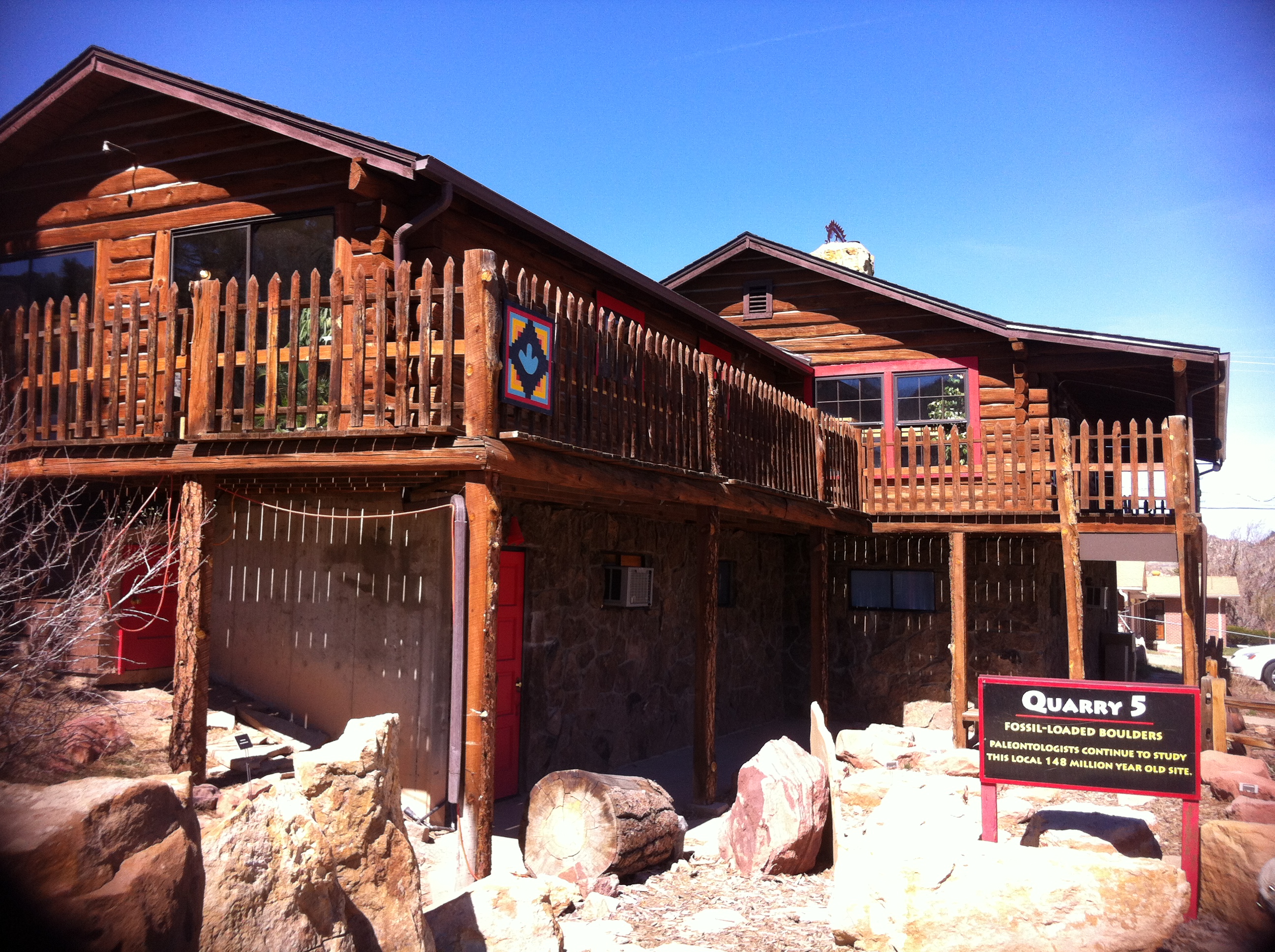
Outside the Morrison Natural History Museum. Doesn’t look like much…

Last week, I had a fantastic experience at the Morrison Natural History Museum, a little gem tucked away in the tiny town of Morrison, Colorado, on the north side of Denver. Since its opening in 1985, the Museum has served as a local educational resource covering the region’s plentiful paleontological resources. According to its website, the Museum is primarily a teaching institution. An affiliated foundation raises funds to bring local students on field trips, in support of the Museum’s mission to nurture “an understanding of and respect for the deep past.” In keeping with this teaching institution, gentle touching of all the fossils and casts is encouraged. This policy, and the design choices that go with it, are what truly set the Morrison Museum exhibits apart.

Paleontologically-inclined people are of course familiar with the Morrison Formation, the sequence of Upper Jurassic beds that extends across much of the western United States. The formation, which extends some 600,000 square miles, was named for the town of Morrison, where fossils were first discovered in 1877. The Morrison formation is probably best known as the epicenter of the “bone wars” between Othniel Charles Marsh and Edward Drinker Cope, who each led competing teams of fossil hunters across the region, attempting to best one another’s discoveries. Marsh and Cope were affiliated with the Peabody Museum in New Haven and the Academy of Natural Sciences in Philadelphia, respectively, so the fossils they collected all ended up back east. Indeed, while the Morrison region is among the most important and productive places for finding dinosaurs in the country, comparatively few of the treasures found there have remained in the region. The Morrison Natural History Museum therefore exists, at least in part, as a dedicated local repository and interpretative center for the region’s natural history.

The 1st floor Jurassic exhibit.

The Museum’s exhibit space is tiny, only 2000 square feet, but it is chock full of awesome. The exhibition consists of three main rooms, each one representing a geological time period. In the first floor Jurassic gallery, highlights include partial casts of Allosaurus and Apatosaurus,  the holotype of Stegosaurus, trackways attributed to Stegosaurus and a baby sauropod, and some original 19th century lithographic prints from Marsh’s monographs. For those interested in the history of paleontology, and of science in general, those prints are particularly fascinating.

Infant sauropod trackway with model of probable trackmaker.

Cretaceous and Cenozoic exhibits are found on the second floor. Most of the objects here are casts, most notably full skeletons of Platycarpus and Pteranodon, and skulls of Triceratops, Tylosaurus and a Columbian Mammoth. There are also a number of live animals on display, including a very charismatic monitor lizard thoughtfully placed next to its close relatives, the mosasaurs.

Original 19th century lithograph prints of fossil illustrations by Marsh’s team.

The signs and labels in the exhibit are noteworthy for their succinctness and clarity. It can be extremely challenging for writers of museum copy to provide appropriate depth of content without confusing, boring or alienating audiences with too much text. Overlong and unfocused labels are particularly common in small museums, where most of the copy is written by a single curator bent on sharing everything he or she knows about a topic. On the other end of the spectrum, larger, committee-designed exhibit labels can be too brief, too simple and too narrowly focused on the exhibit’s educational goals to be of much use to anybody. Happily, the Morrison Museum avoids both of these pitfalls. Labels are simple and attractive, but still informative and up-to-date. I was rather impressed by the economical way in which they addressed the most important topics in paleontology.

An example of a brief but content-rich label.

Obviously, the fossils and other objects on display are fantastic, and many, like the trackways, are quite unique. However, as mentioned above, one of the most remarkable aspects of the Museum is that touching of all the fossils and casts is encouraged.  Few objects are behind glass; everything is out in the open for people to touch and examine up close. There are many in the museum field who would be horrified by such an arrangement. When putting objects on exhibit, it is a given that they are considered consumable. No matter what precautions are taken, anything put on display will inevitably suffer damage. Of course, the flip side is that exhibit designers want to allow visitors to get as close to the objects as possible. The Morrison Museum has taken this to the extreme. The fossils, many one them irreplaceable holotype specimens, are fully exposed to accidental or intentional abuse by visitors. This is a very bold move on the part of the Museum, and it makes the point that the knowledge visitors can gain from full access to objects is more valuable that the objects themselves.

I won’t lie, my initial reaction upon seeing this exhibit layout was open-mouthed horror. But after spending some time in the space, I think the Morrison Museum may be on to something. This is a great way to tap into the multiple intelligences of visitors. Obviously, this system only works because the Museum’s attendance is on the low side (I would hate to see what the summer hordes at NMNH or AMNH would do if they were allowed to run wild among the mounts),  but given these circumstances I think the open-access approach is a great educational tool.

Overall, I was very pleased with my visit to the Morrison Museum. The volunteer staff knowledgable, passionate and helpful, the exhibits were excellent, and the handful of other visitors passing through (mostly young children) seemed genuinely engaged. The Museum is well worth a stop for anyone in the Denver area, and may well be a worthwhile model for other museums to follow.

3 Comments

Filed under dinosaurs, mammals, museums, paleoart, reptiles, reviews, science communication