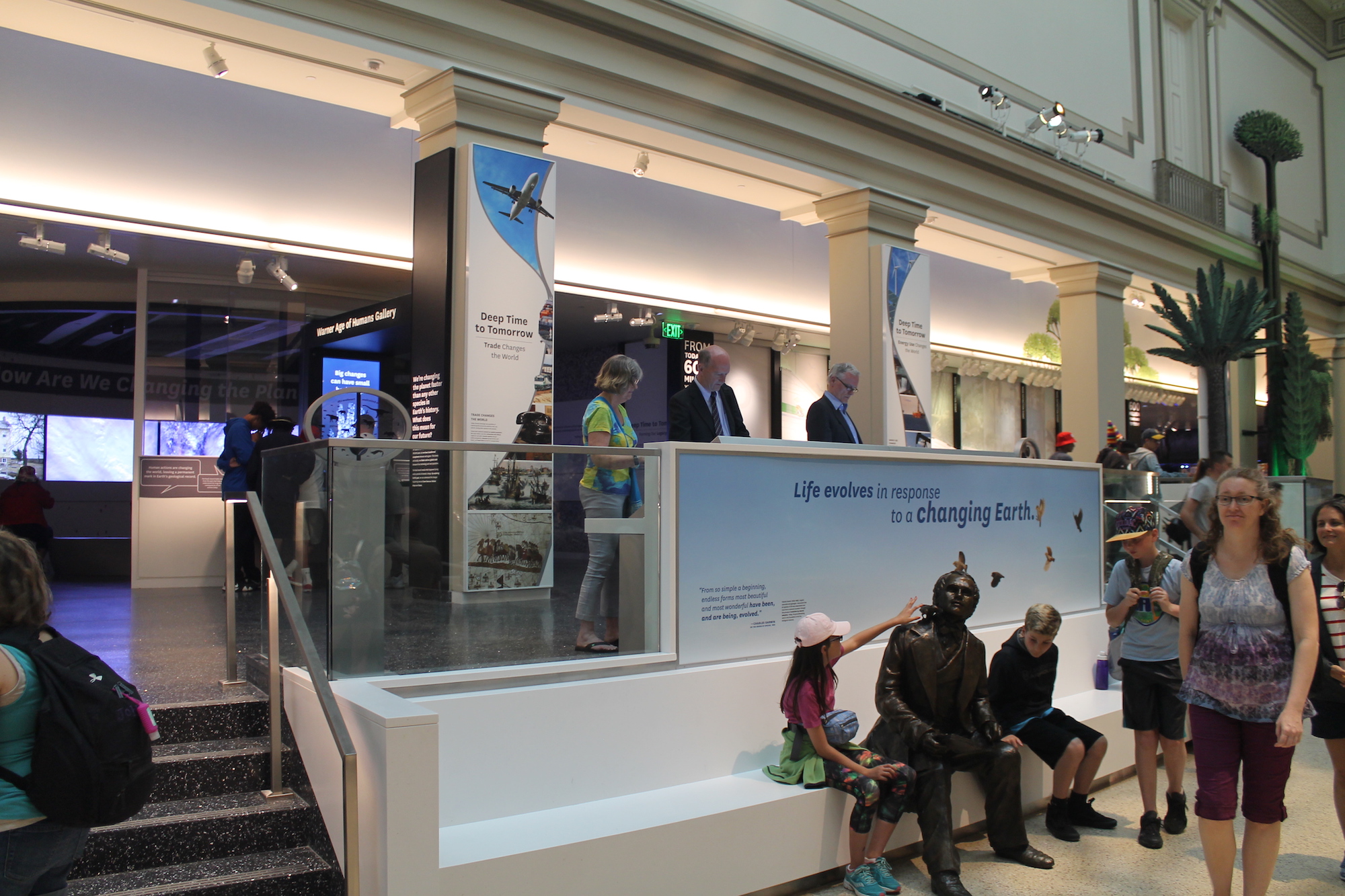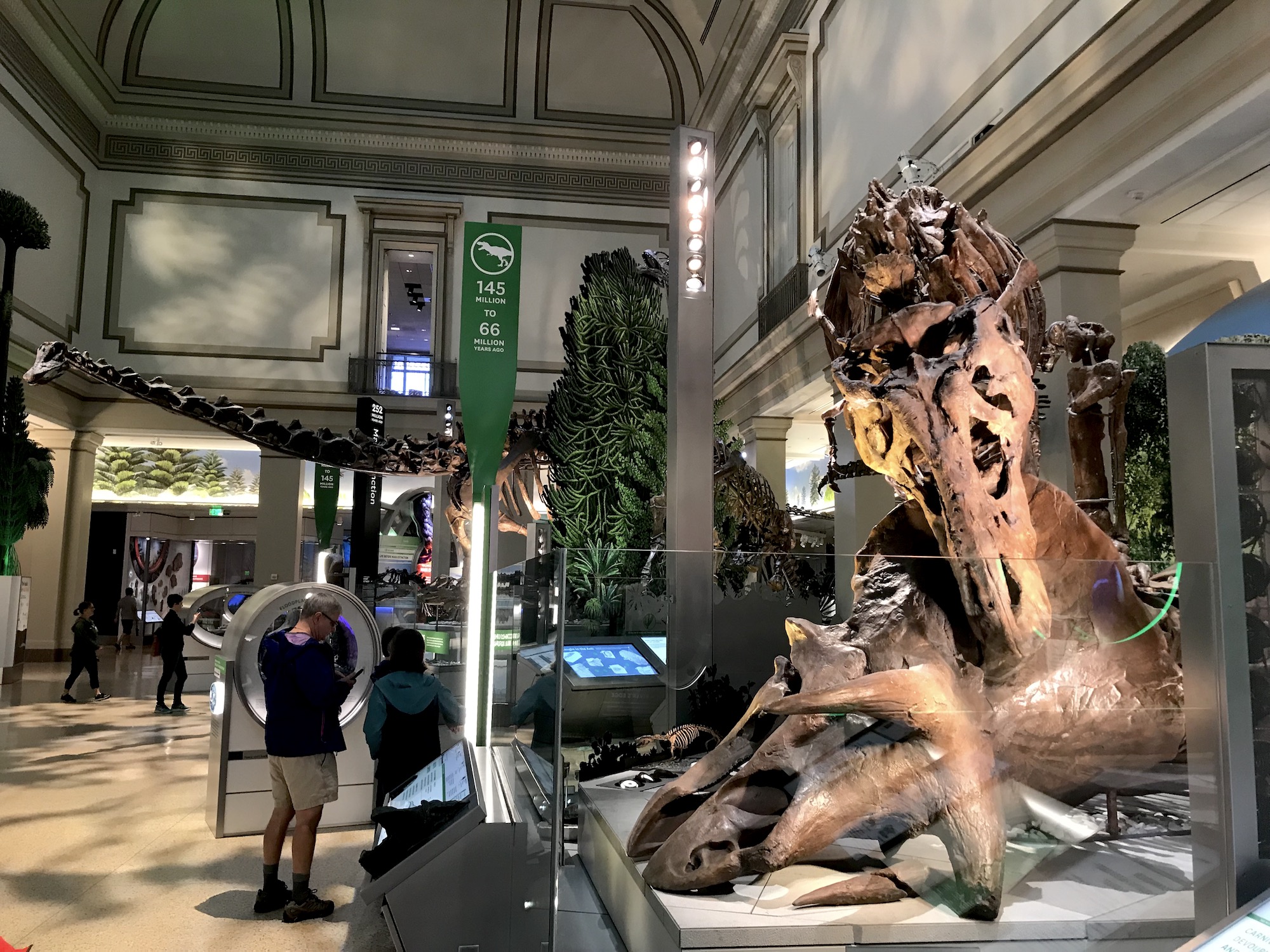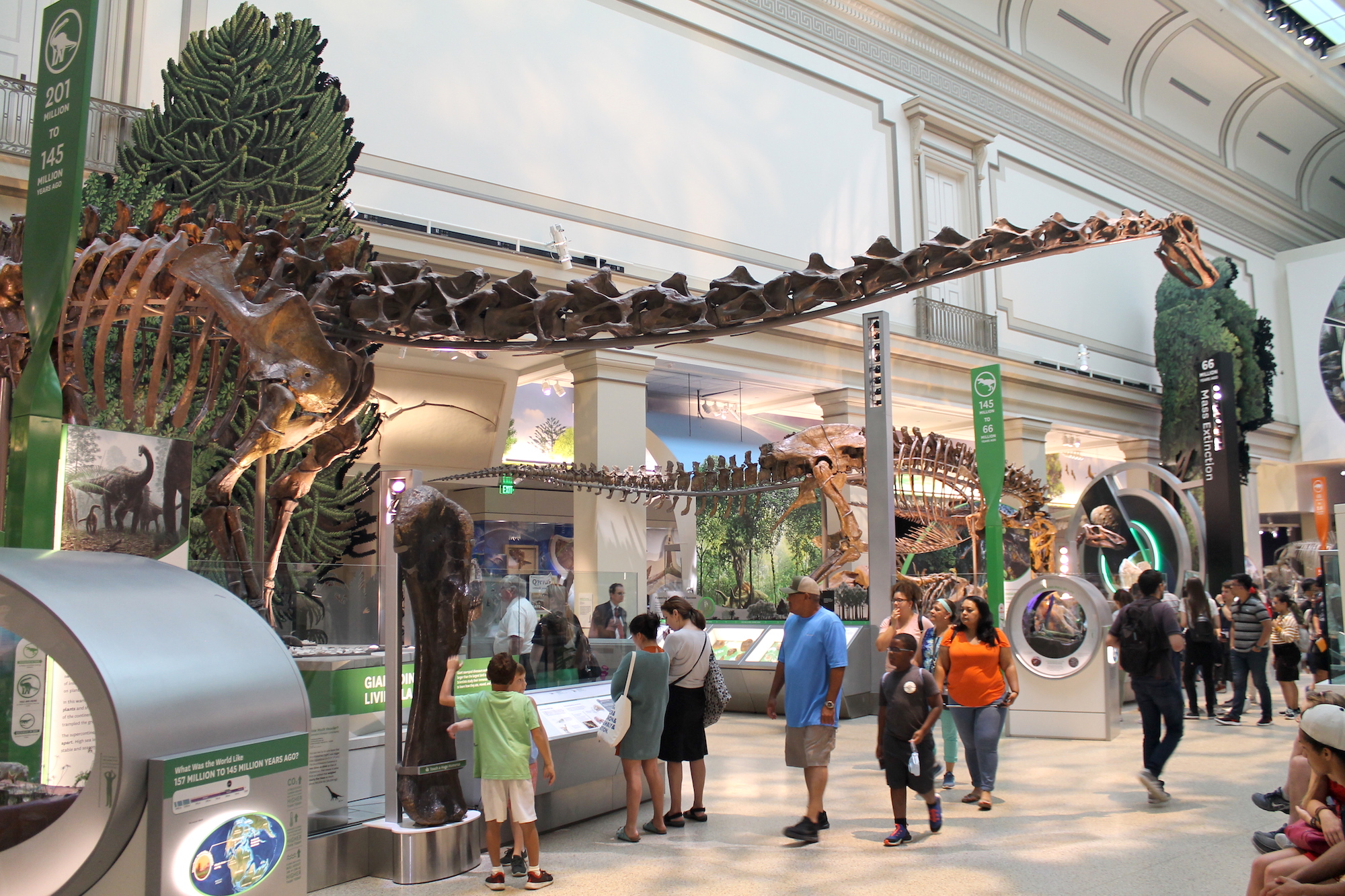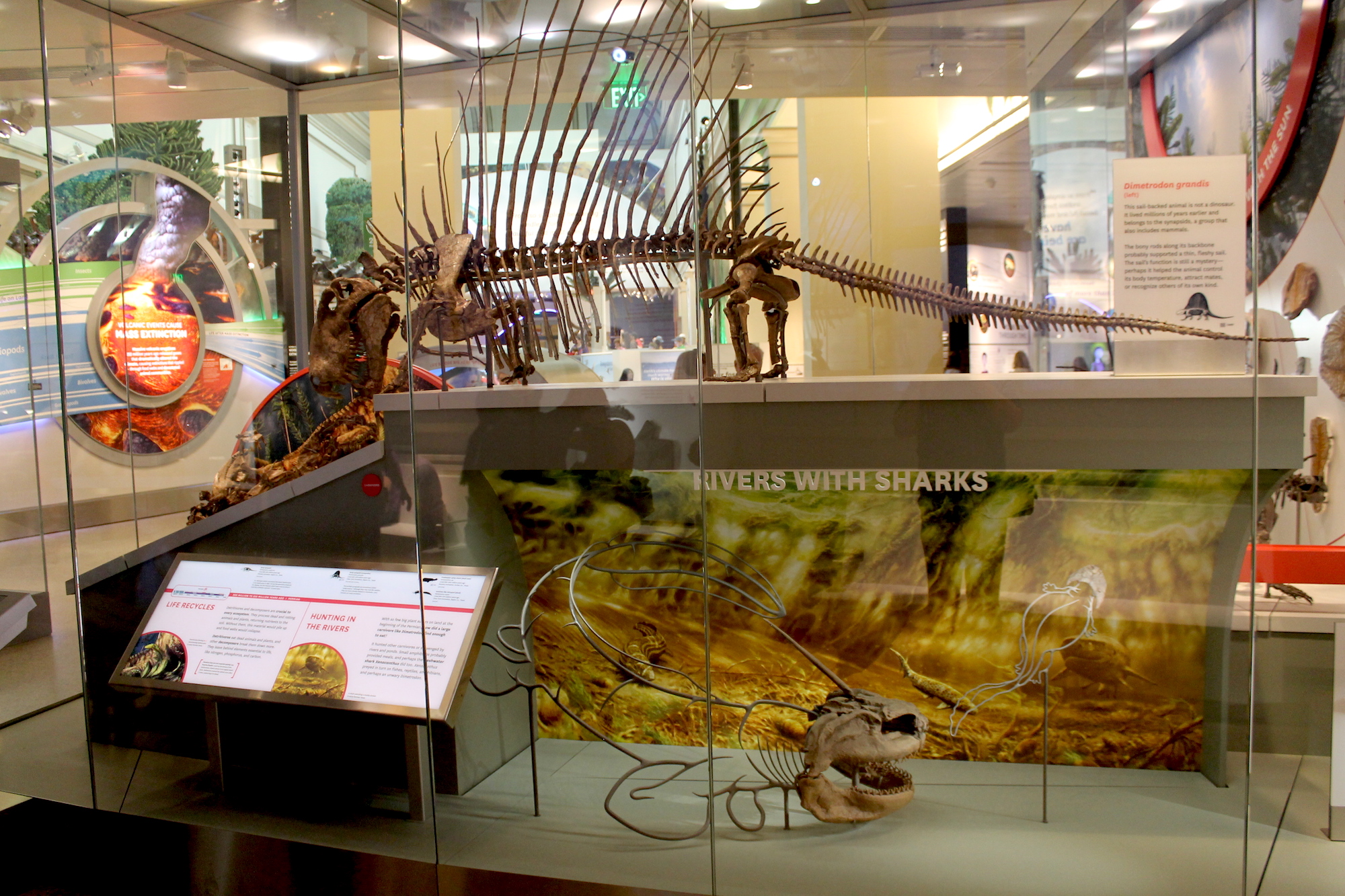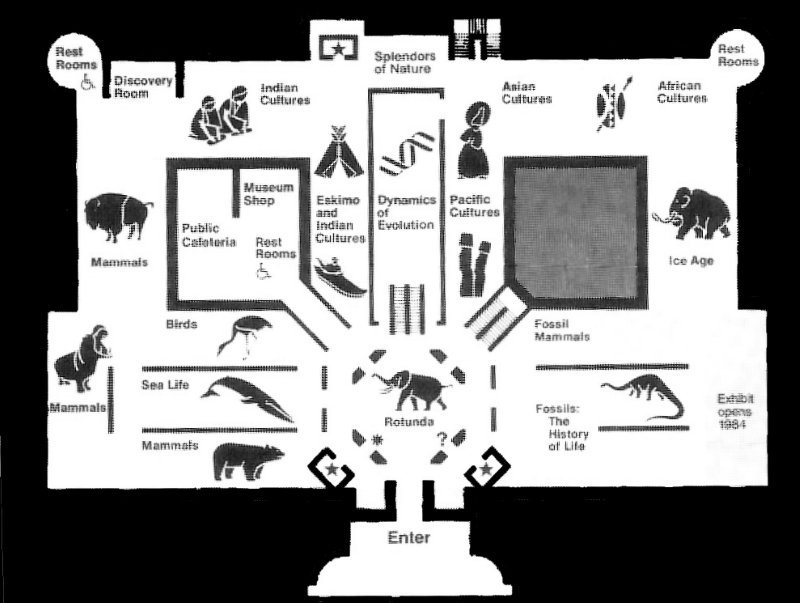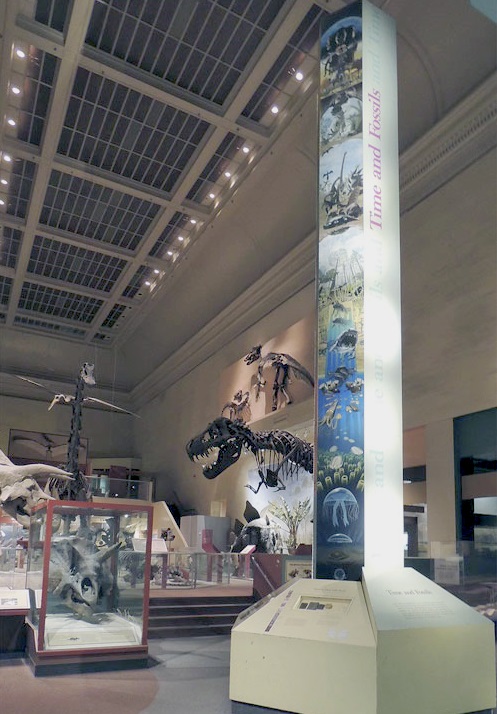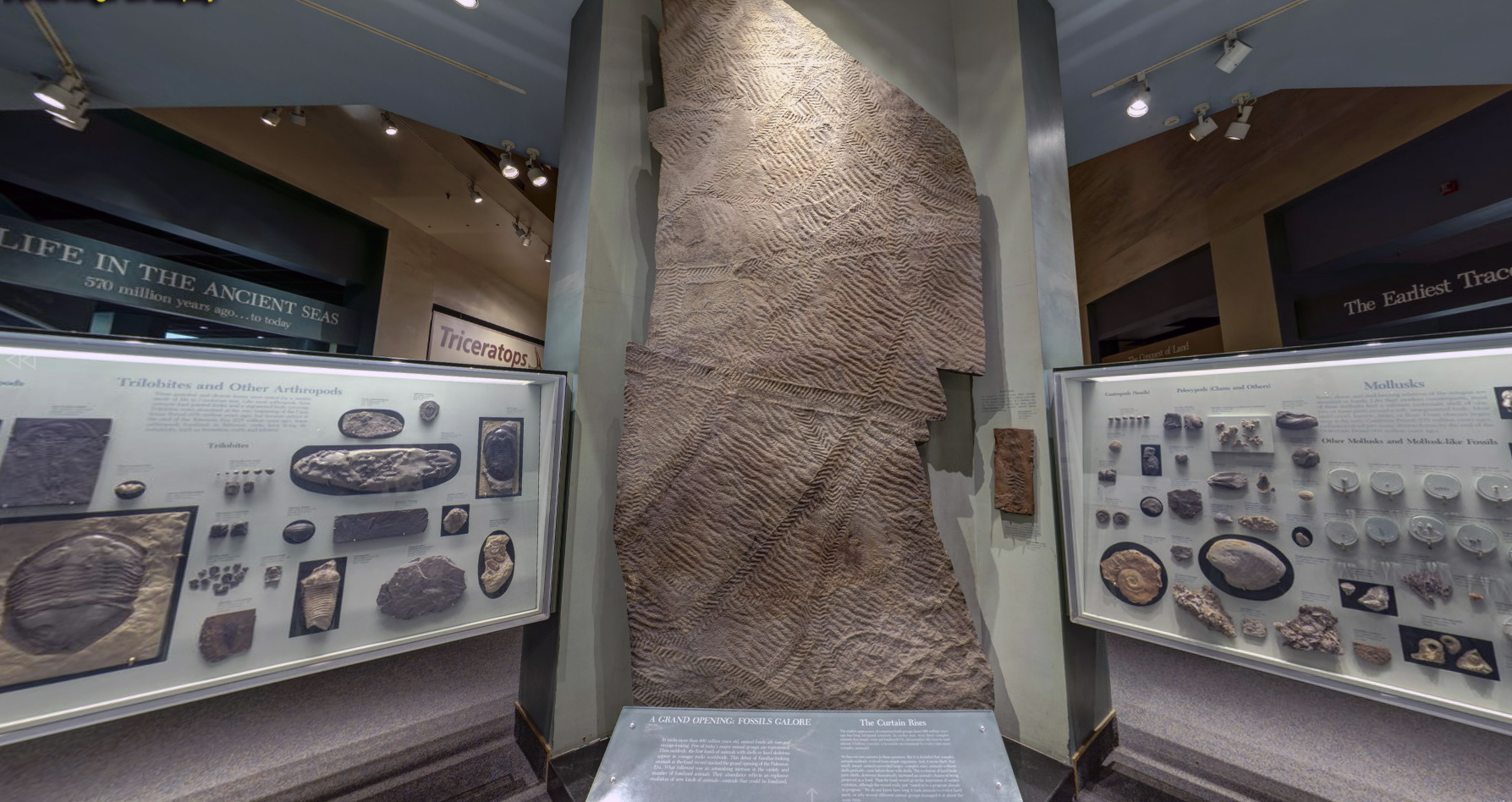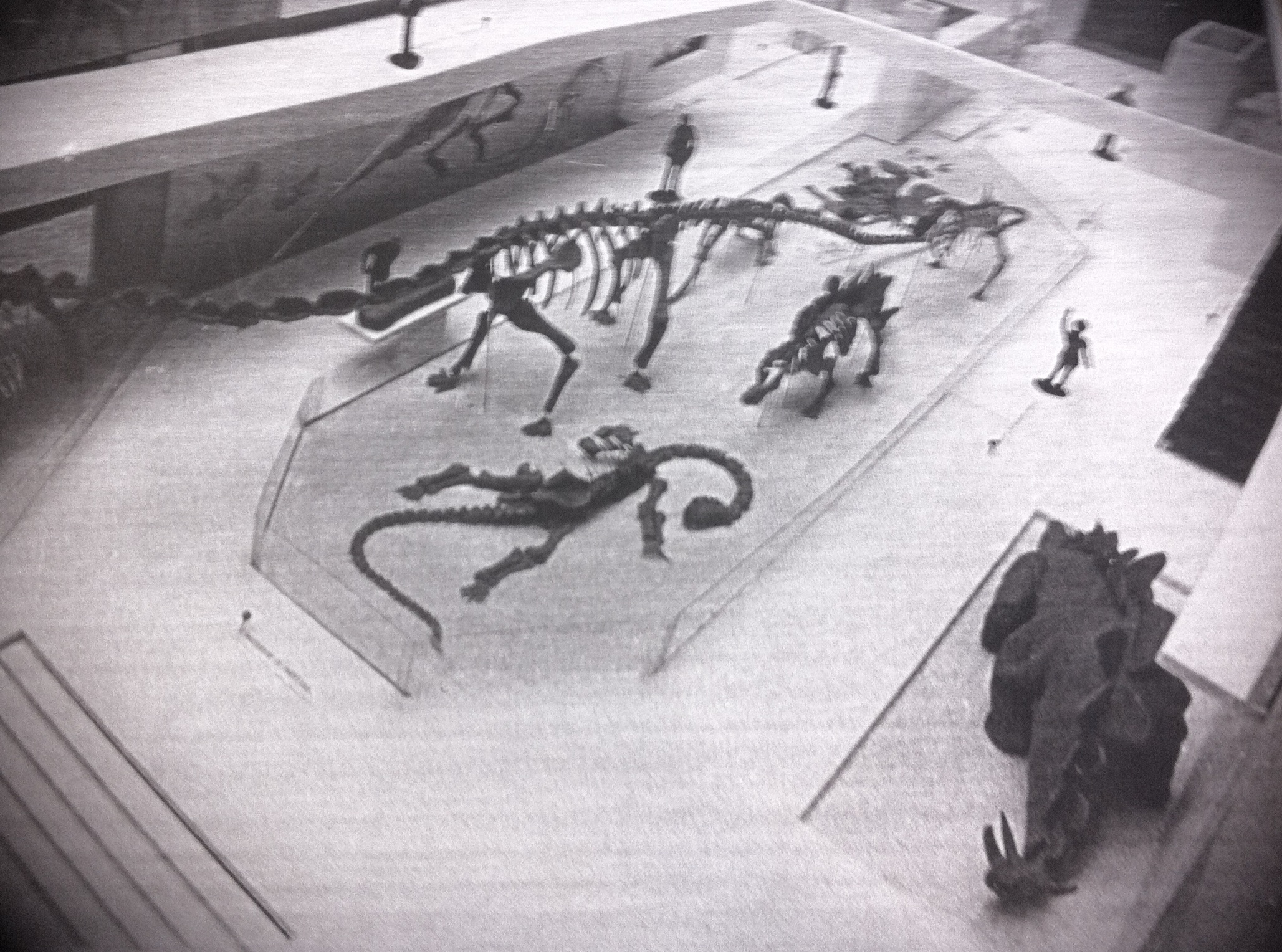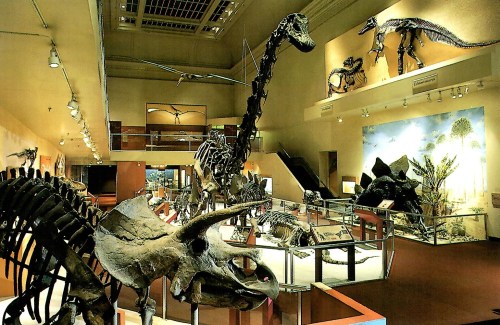
Category Archives: NMNH

Interpreting the most-touched dinosaur bone of all time

In 1943, sawmill operator Daniel Edward Jones and his wife Vivian went prospecting for uranium west of their home in Delta, Colorado. In a gully near Potter Creek, they came upon a nearly seven foot-long dinosaur bone eroding out of the ground. It’s unclear exactly how and when they managed to excavate and remove the gigantic fossil, but sometime before 1955, the Joneses collected the bone and donated it to the Smithsonian Institution. That bone—identified as the humerus of a Brachiosaurus altithorax—has been on display at the National Museum of Natural History ever since.

The Potter Creek humerus (USNM V 21903) never made much of a splash scientifically. It wasn’t mentioned in any research paper until 1987, when Jim Jensen figured it alongside several other Brachiosaurus bones he collected at the same locality. The referral to Brachiosaurus has been questioned (e.g. Taylor 2009), but without any closely related dinosaurs known from Late Jurassic North America, researchers have generally been happy to use the available name.

Arguably, the Potter Creek humerus has a greater legacy as an object on display, and more specifically as an object to be touched. Since 1955, the fossil has been in easy reach of visitors, and has often been accompanied by signage inviting visitors to touch it. Extrapolating slightly from available visitation statistics and multiplying by the number of years on display, this fossil could easily have been touched by over 200 million people—possibly as many as 400 million. I’m unaware of any other dinosaur specimen that has been handled by that many individuals.

Let’s take a look at how the most-touched dinosaur bone of all time (if you know of other contenders for that title, please let me know!) has been interpreted over the years.

Photo courtesy of the Smithsonian Institution Archives.

One of the largest known dinosaur limb bones

This humerus (upper arm bone) of the sauropod dinosaur Brachiosaurus alithorax was found by Mr. D.E. Jones of Delta, Colorado. It is from the Morrison formation, of late Jurassic age (about 130,000,000 years ago), in Montrose County, Colorado. Brachiosaurus was a giant among dinosaurs, much larger than the familiar Brontosaurus; it may have weighed as much as 55 tons. It is distinguished from other dinosaurs by the fact that its front legs were somewhat longer than its hind legs. This feature, the great length of the neck, and the projecting nostrils on top of the head seem to have been adaptations to its presumed life habits. Brachiosaurus was a plant eater that walked along the bottoms of lakes, lifting its head to breathe above the surface of the water. Brachiosaurus is known from North America, Africa, and Europe. This humerus is 6 feet 10 inches long, its position in the body of Brachiosaurus is shown in the sketch, where the humerus is drawn in red. Note the much smaller humerus in the nearby skeleton of the dinosaur Diplodocus.

As mentioned, the Potter Creek humerus was first put on display at NMNH in 1955. It was mounted on a wooden pedestal in front of the Diplodocus skeleton, near the front of the museum’s spacious fossil hall. As seen in the photo above, the bone’s damaged shaft was not restored, although some sort of consolidant must have been applied to keep it from crumbling all over the floor.

The 181-word text panel accompanying the fossil was likely written by curator Charles Gazin, who had led the Vertebrate Paleontology division since 1946. The text is quite long and meanders through several distinct topics—addressing what the specimen is, who found it, how old it is, where it was found, how big the animal was, what the animal looked like, how the animal behaved, where else the animal lived, the exact size of the bone, and finally how it would fit into a complete skeleton. The text does not address any qualities of the fossil that visitors can actually observe until the very end.

Consideration of how visitors use museum exhibits—and how exhibits can best meet visitors’ needs—was in its infancy at this time. At NMNH and most of its peer institutions, labels were written by curators—experts in their fields but not necessarily in best practices for communicating with broad audiences. Exhibit text was by experts, for experts, and any visitors not up to parsing dense paragraphs like this one were left to make their own meaning of the exhibits.

It is notable, however, that this label compares the Potter Creek humerus to the nearby Diplodocus. As was typical of natural history exhibits at the time, the NMNH fossil hall wasn’t arranged in any particular order. Specimens were placed on platforms or in free-standing cases. This modular design allowed the hall to be rearranged with relative ease when new specimens were acquired, but it did not lend itself to any sort of overarching narrative for the displays. This passing reference to another specimen was as close to narrative cohesion as exhibits of this era could get.

Photo courtesy of the Smithsonian Institution Archives.

Would you like to touch a dinosaur bone?

This is a humerus (arm bone) of the sauropod Brachiosaurus alithorax. The position of the bone and the appearance of the animal are shown in the accompanying drawing. A close relative of Diplodocus and Camarasaurus, Brachiosaurus was the bulkiest land animal that ever lived, weighing about 55 tons. Like other sauropods, he spent most of his time in ponds, lakes, or rivers. If you want to be able to tell your friends that you touched a dinosaur bone, here is your chance.

The NMNH fossil halls were updated in 1963 as part of a decade-long, Smithsonian-wide modernization project. For the first time, an exhibit design specialist worked with the curators to compose the paleontology exhibits. Designer Ann Karras considered how visitors would move through the space, and attempted to create a coherent story of the evolution of life over time. Text panels were part of the aesthetics and organization of the exhibition, and were written with consistent style and terminology.

The text accompanying the Potter Creek humerus may have been written by Barbara Craig, and by modern standards, it’s pretty good (ignoring the now-debunked idea that sauropods spent their time in the water, and the choice to use a masculine pronoun for a dinosaur of unknown sex). The header is a call to action, inviting visitors to touch the fossil. The remaining 82 words are snappy and useful—the object is clearly identified, and the accompanying illustration is referenced right away. Visitors can find the information they want (what am I looking at? What should I do here?) right away, without having to fight through excessively long or wordy prose. It’s remarkable how well this label adheres to the standards for exhibit text that Beverly Serrell would first put forward over twenty years later.

Photo by Michael Brett-Surman.
Photo by Flickr user grafxmangrafxman.

Size in dinosaurs—how big is enormous?

Early dinosaurs were relatively small—about the size of the smaller Camptosaurus displayed to your left. However, these “small” dinosaurs were already larger than most land animals of their time. Although some lines of dinosaurs never got much larger, most produced huge forms. The average live weight of a dinosaur was about 5 tons. No other land-dwelling reptiles have ever approached this size and only about 2 percent of land-dwelling mammals have done so. The smallest dinosaur known, though no larger than a chicken, was still larger than 80 percent of all land mammals living today.

Brachiosaurus leg bone

The bone displayed below and in green in the drawing is from the upper part of the front leg of Brachiosaurus, one of the largest of all dinosaurs. Although Diplodocus had a longer neck and tail, Brachiosaurus was much taller and more massive and outweighed Diplodocus by several tons. Bones of a still larger animal similar to Brachiosaurus have been found in Colorado.

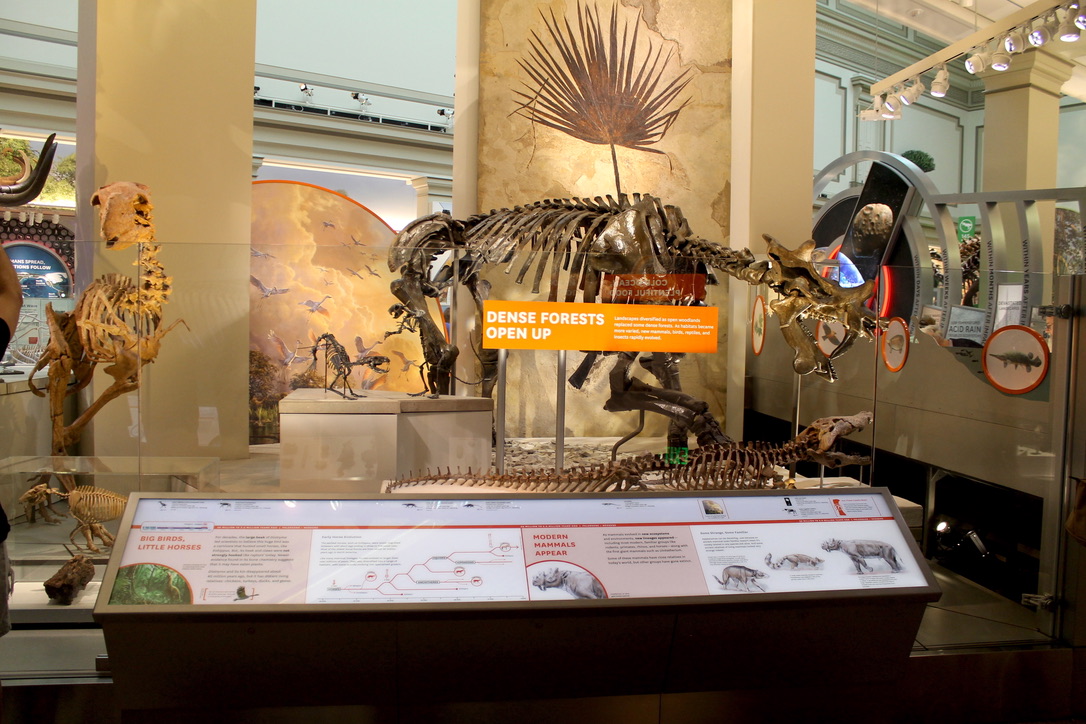
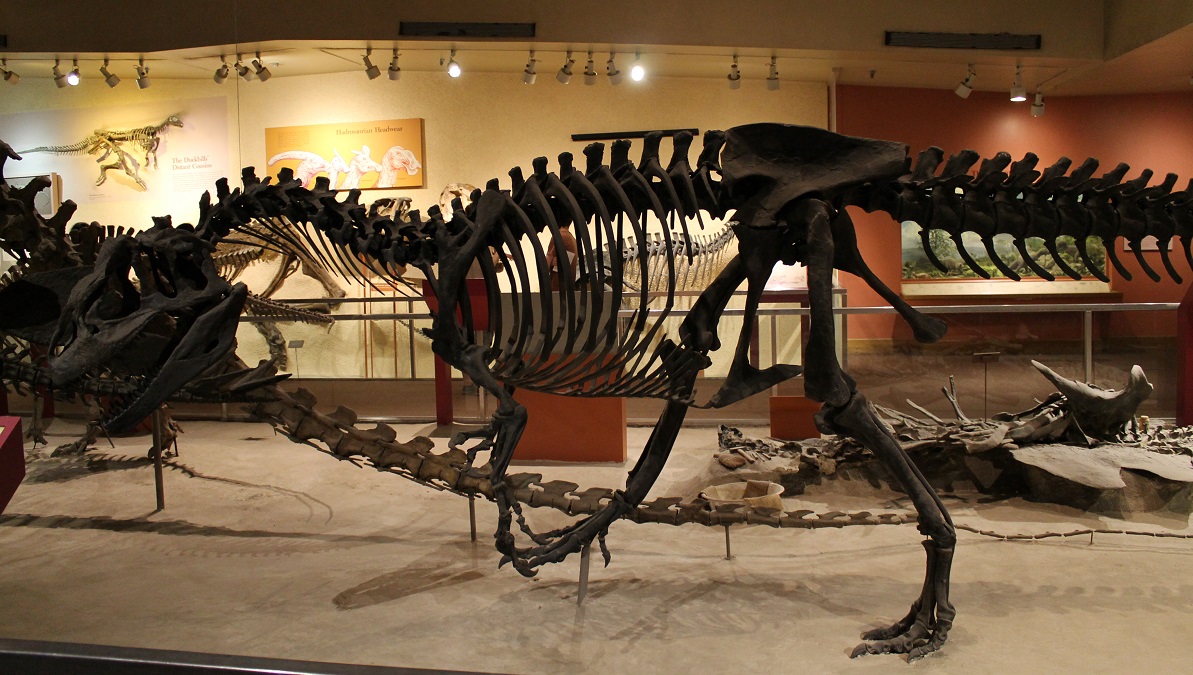
The dinosaur exhibits at NMNH were next updated in 1982. This time, the Potter Creek humerus was relocated to the right side of Diplodocus. With all of the mounted skeletons in a central corral and behind a plexiglass barrier, the role of the humerus as a designated touchable fossil was exceptionally clear. During the renovation, a fiberglass cowl was affixed to the damaged part of the humerus. This restoration makes the bone appear thicker than it actually is.

The accompanying text was written by postdoctoral research associates Jessica Harrison and George Stanley, under advisement from curator Nicolas Hotton. Their task was to balance the needs of visitors with demands for precise language from scientists. The resulting label is twice as long as the previous version and, I would argue, not nearly as useful. The primary text isn’t about the humerus at all—instead it discusses the range of dinosaur sizes and compares them to modern animals. The humerus is finally mentioned toward the bottom of the graphic, where it is once again compared to Diplodocus. For some reason, the donor is listed as Tony Jones.

Photo by the author.

How much heavier?

Sauropod dinosaur (arm bone)

Brachiosaurus altithorax

Lived 152 million years ago

Morrison Formation, Montrose Co., Colorado

USNM 21903

Donated by Eddie and Vivian Jones

You can see by it’s arm bone that Brachiosaurus (right) was bigger than Diplodocus (in front of you). The Brachiosaurus humerus is two times as thick as that of Diplodocus. That means it came from an animal that weighed nearly five times as much, about 140,000 lbs (64,000 kg)!

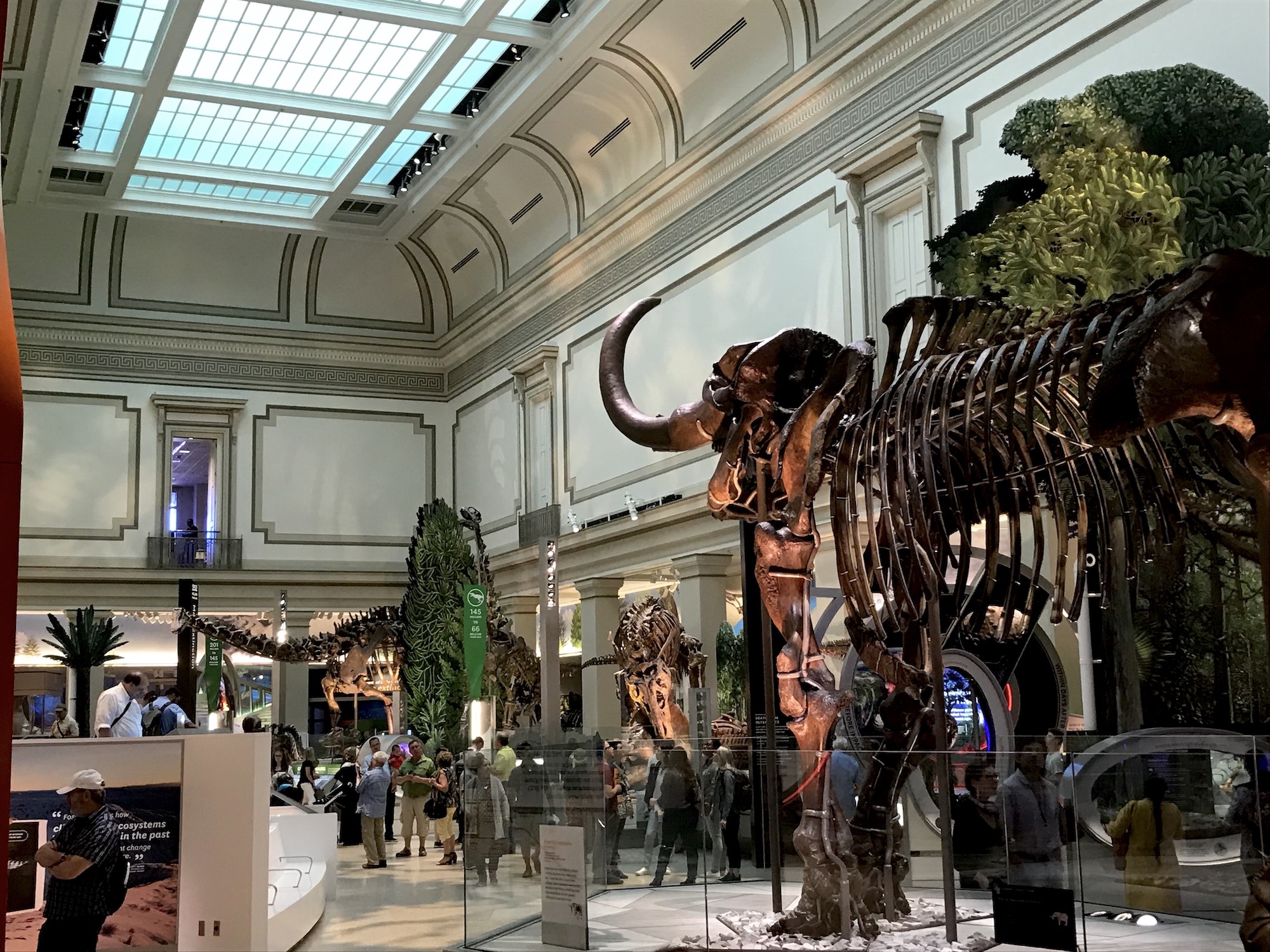
The most recent renovation of the NMNH fossil halls was completed in 2019. For the first time, the Potter Creek humerus is mounted vertically, in the orientation it would have held in a living Brachiosaurus. While requiring a sturdier and more sophisticated mounting structure, this display gives visitors a clearer understanding of the fossil before them.

Angela Roberts Reeder was the lead writer of the current exhibit text, assisted by several co-writers. At 51 words, this is the shortest label for the Potter Creek humerus yet. Some of the basic information—the animal’s name, how old the fossil is, and where it was found—is collapsed into a standardized and compact “tombstone” ID block. The remaining text covers a single subject: the mathematical relationship between the bone’s width and the living weight of the animal it belonged to.

This is considered good practice. According to Serrell, visitors are primarily concerned with the objects on display, not the exhibit text. They will look for text if they expect it to answer their immediate questions and improve their understanding. Visitors will quickly scan the available text, and if it doesn’t seem to be helping them, they will move on. Therefore, exhibit text needs to get to the point, and fast. Short labels aren’t about dumbing things down—they’re about finding the right words to communicate important ideas to the largest possible number of people.

Reeder’s label for the Potter Creek humerus is a great example. It immediately answers the most likely questions: “what is this thing?” and “how big was the dinosaur it came from?” Then, taking advantage of that momentary attention, it enhances visitors’ understanding by explaining how scientists can know the size of an animal from a single bone. The standardized ID block resolves most further questions without making visitors hunt though a long paragraph. Rather than trying to tackle too many concepts at once, this label omits any information on the life appearance or habits of Brachiosaurus.

Looking at the four generations of interpretation of the Potter Creek humerus, there are some recurring themes. The size of the bone and the animal it belonged to has always been referenced. And there is always an accompanying illustration showing where the bone fits into a complete Brachiosaurus. However, the earlier labels addressed the life habits of living sauropods with greater specificity (and as it turns out, inaccuracy—Brachiosaurus did not spend all its time wallowing in lakes in rivers). The newer labels are somewhat more technical, in that they focus on comparative measurements among fossils. This is surprising—I would have expected that earlier generations of paleontologists would have been more concerned with comparing figures and less interested in the total biology and ecology of extinct animals.

I was also surprised that there was not a clear trend toward shorter text. Instead, the length of the label has oscillated with each generation. And it’s worth noting that the earliest label is not burdened with excessive scientific jargon. The language has always been clear—what varies is how it is organized and how long it is overall.

References

D’Emic, M.D. and Carrano, M.T. 2019. Redescription of brachiosaurid sauropod dinosaur material from the Upper Jurassic Morrison Formation, Colorado, USA. The Anatomical Record 303:4:732–758.

Jensen, J.A. 1987. New brachiosaur material from the Late Jurassic of Utah and Colorado. Great Basin Naturalist 47:592–608.

Marsh, D.E. 2014. From Extinct Monsters to Deep Time: An ethnography of fossil exhibits production at the Smithsonian’s National Museum of Natural History. http://circle.ubc.ca/handle/2429/50177

Serrell, B. 2015. Exhibit Labels: An Interpretive Approach (2nd Edition). Rowman and Littlefield.

Taylor, M.P. 2009. A re-evaluation of Brachiosaurus altithorax Riggs 1903 (Dinosauria, Sauropoda) and its genetic separation from Giraffatitan brancai (Janesch 1914). Journal of Vertebrate Paleontology 29:3:787–803.

3 Comments

Filed under Deep Time, dinosaurs, exhibits, museums, NMNH, sauropods, science communication

No, the Hall of Human Origins doesn’t downplay climate change

The south-facing entrance to the Hall of Human Origins. Photo by the author.

As covered in the previous post, the National Museum of Natural History’s Hall of Human Origins, which opened in 2010, is an exceptionally well-conceived and well-crafted exhibition. In certain circles, however, there has been a persistent strain of criticism that I feel like I would be remiss not to address.

Shortly after the Hall of Human Origins opened, articles in the New Yorker and ThinkProgress called attention to the fact that the exhibition was created with $15 million from David Koch (the full title of the exhibition is the David H. Koch Hall of Human Origins). Koch, who died in 2019, and his brother Charles are probably best known as billionaires who support a range of libertarian causes, including right-wing political candidates and climate change deniers. Their fortune comes from Koch Industries, a massive energy (read: oil) and manufacturing conglomerate.

David Koch bankrolled socially and environmentally destructive policies for decades, and I don’t think it’s a stretch to say that few individuals have left such a damaging anti-science legacy. But credit where it’s due: the Koch Foundation has also supported museums, public broadcasting, and other institutions associated with education and the arts. Many of these contributions are related to Koch’s personal interest in fossils, especially dinosaurs and human ancestors.

The Humans Change the World sub-section. Photo by the author.

In a ThinkProgress piece published a few months after the Hall of Human Origins opened, author Joe Romm suggested that the exhibition’s creators downplayed the seriousness of anthropogenic climate change at Koch’s behest. According to Romm, the hall’s “huge flaw is that it leaves visitors with the distinct impression that human-caused global warming is no big deal.” Additional articles in ThinkProgress, Hyperallergic, and Equinox made similar accusations. Each article zeroed in on a recurring theme in the exhibition’s text: that hominin evolution was driven in part by a need to adapt to a changing climate. As Ryan Little put it in Hyperallergic, the exhibition “craftily insinuates that fluctuating climates, whenever, wherever, and however they occur, are a source of astonishing human ingenuity, while also managing to suggest…that in the grand geological scheme of things, climate change is no big deal.”

There is absolutely a conversation to be had about the pros and cons of museums accepting money from problematic sources (NMNH caught heat a few years earlier when it accepted funding and specimen donations from Kenneth Behring). And there is always cause to be vigilant about corporate interests making their way into public institutions. Nevertheless, a recent re-visit to the Hall of Human Origins has convinced me that any critics suggesting that the exhibition downplays climate change—or that Koch had any influence over its content—are fundamentally misguided.

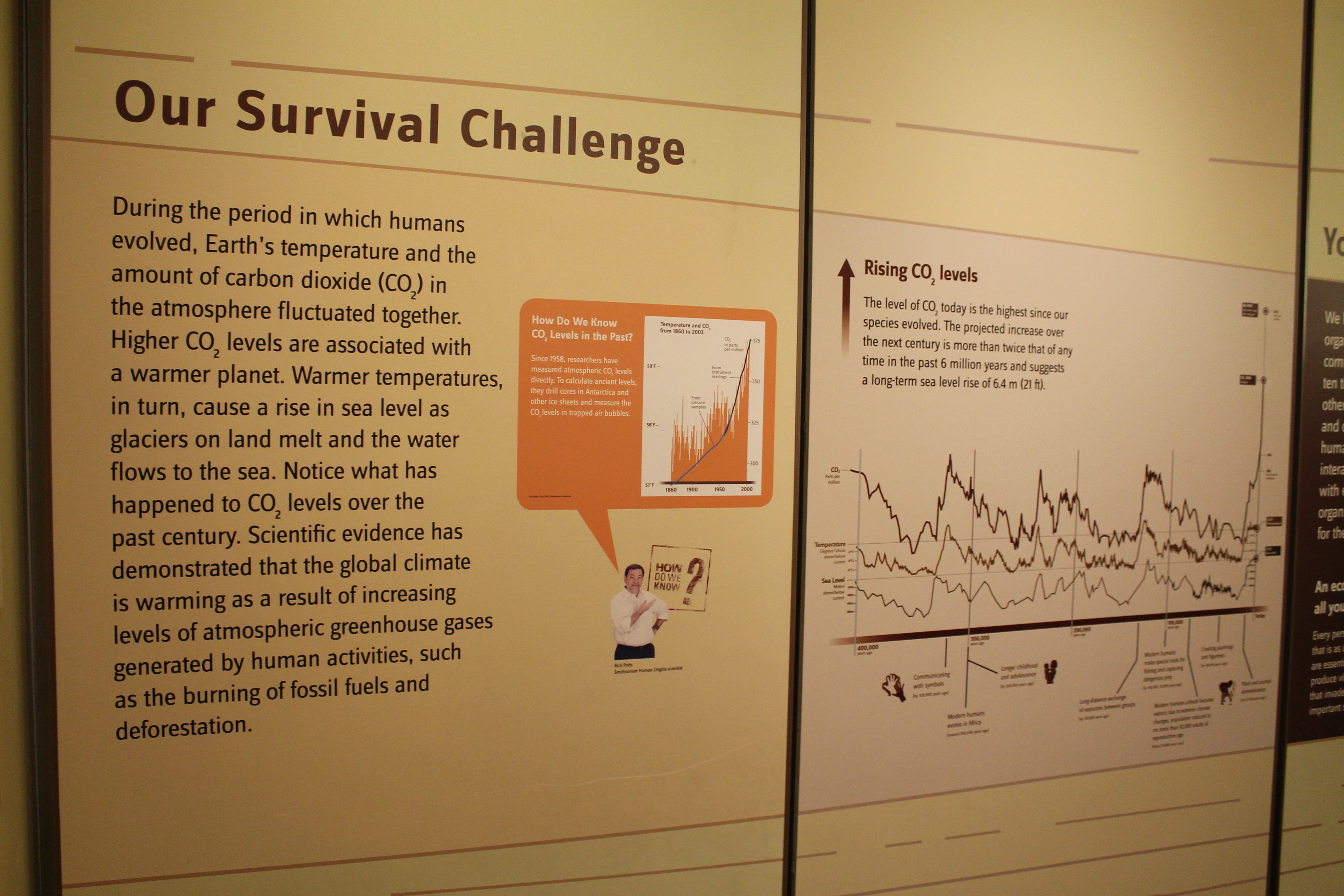
One of multiple graphic panels describing present-day climate change, why it’s happening, and how we know. Photo by the author.

There are two issues in play here. First, I think the authors are missing the bigger evolutionary picture. There is nothing new or untested about the concept of a connection between the changing Earth and the evolution of life on it (that is, interaction between the geosphere and biosphere). Examples are seemingly innumerable. Hoofed mammals evolved long legs for running and large, grazing teeth when grasslands replaced forests in the Miocene. Radiations of new species evolved when North and South America collided, allowing animals access to new habitats. Dire wolves got smaller when the climate got colder and food was harder to come by. And that’s just in the last 30 million years. Why wouldn’t human ancestors evolve in response to a changing environment, when it’s been a primary driver of evolution throughout our planet’s history?

The second issue is that it’s plainly incorrect to say that the Hall of Human Origins does not address recent anthropogenic climate change, or clearly state its cause. There is an entire 1,500 square foot sub-gallery called “Humans Change the World,” which investigates how garbage, livestock, habitat destruction, and yes, carbon dioxide emissions are damaging the planet. The famous hockey stick graph of global temperature, with its spike in the last century, appears at least three times, including at the exhibition’s south-facing entrance. The exhibition states, repeatedly, that “the global climate is warming as a result of increasing levels of atmospheric greenhouse gases generated by human activities.”

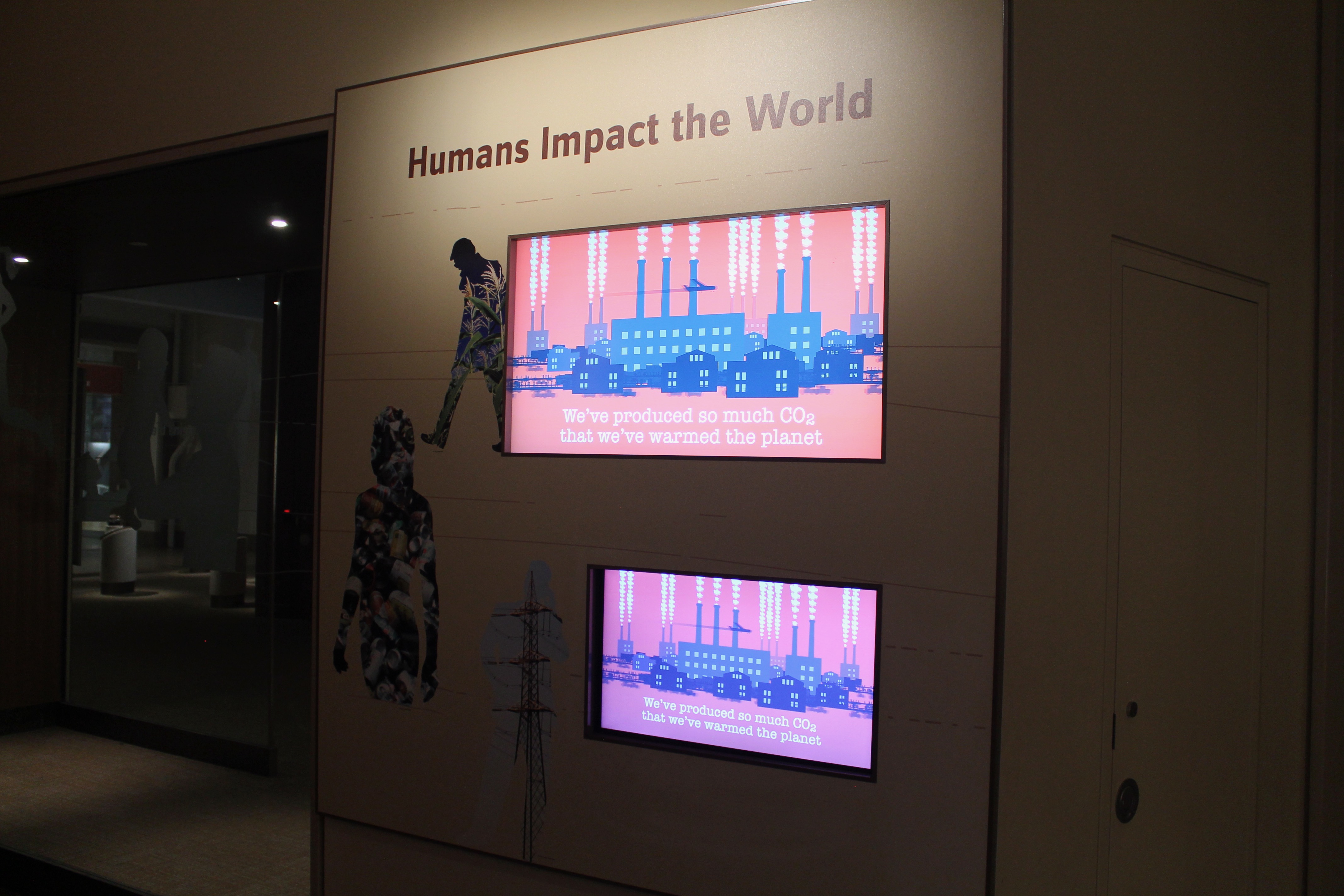
A media piece with the caption, “We’ve produced so much CO2 that we’ve warmed the planet.” Photo by the author.

It would be difficult for a visitor to explore the Hall of Human Origins and miss the references to anthropogenic climate change. It would be even more difficult to conclude that the exhibition is somehow putting a positive spin on it—the images of belching smokestacks and piles of garbage are not subtle. And yet, that is exactly what multiple authors have alleged, as recently as 2019. This is fascinating to me, because it speaks to the power of the narratives visitors bring with them to any museum experience.

In the previous post, I mentioned an evaluation of the Hall of Human Biology and Evolution at AMNH, which found that visitors were imposing teleologic narratives onto the exhibition, in spite of deliberate efforts to counteract this. Visitors expected evolution to be a linear, progressive process, and they unwittingly interpreted what they’re seeing in a way that matched those expectations. Perhaps a similar phenomenon is occurring in the Hall of Human Origins. Many of us are used to seeing Koch’s name associated with aggressive lobbying against climate change mitigation. In that context, the narrative that an exhibition bearing his name would have a similar message is compelling, even sensible. But it isn’t borne out by the actual content on display.

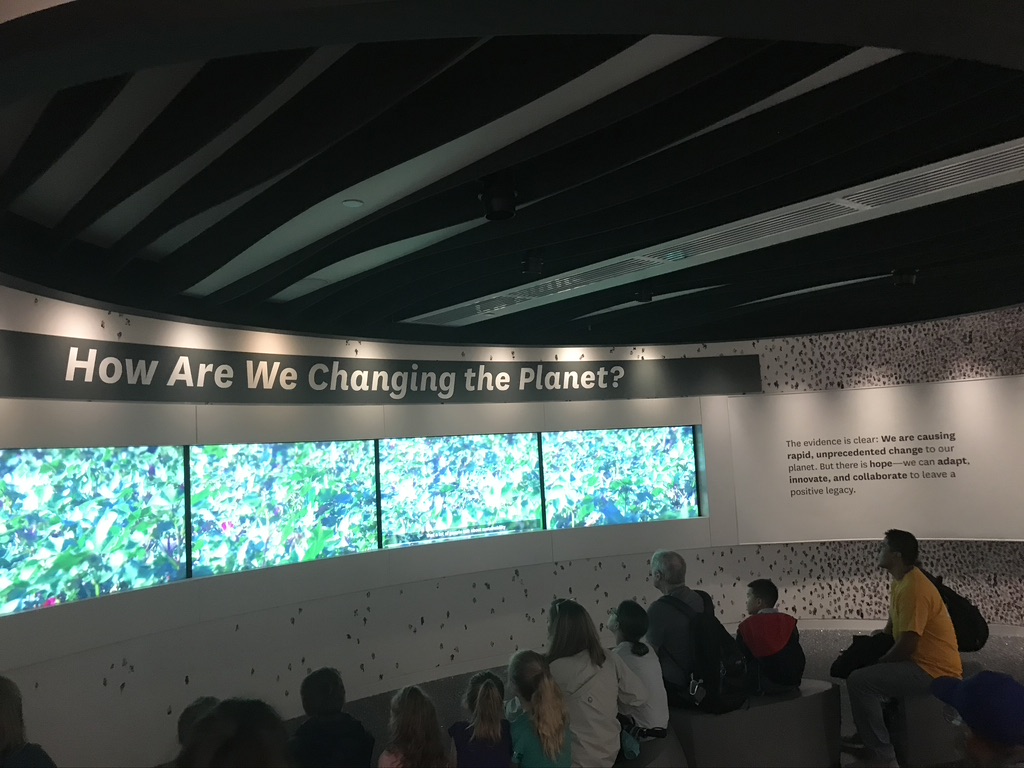
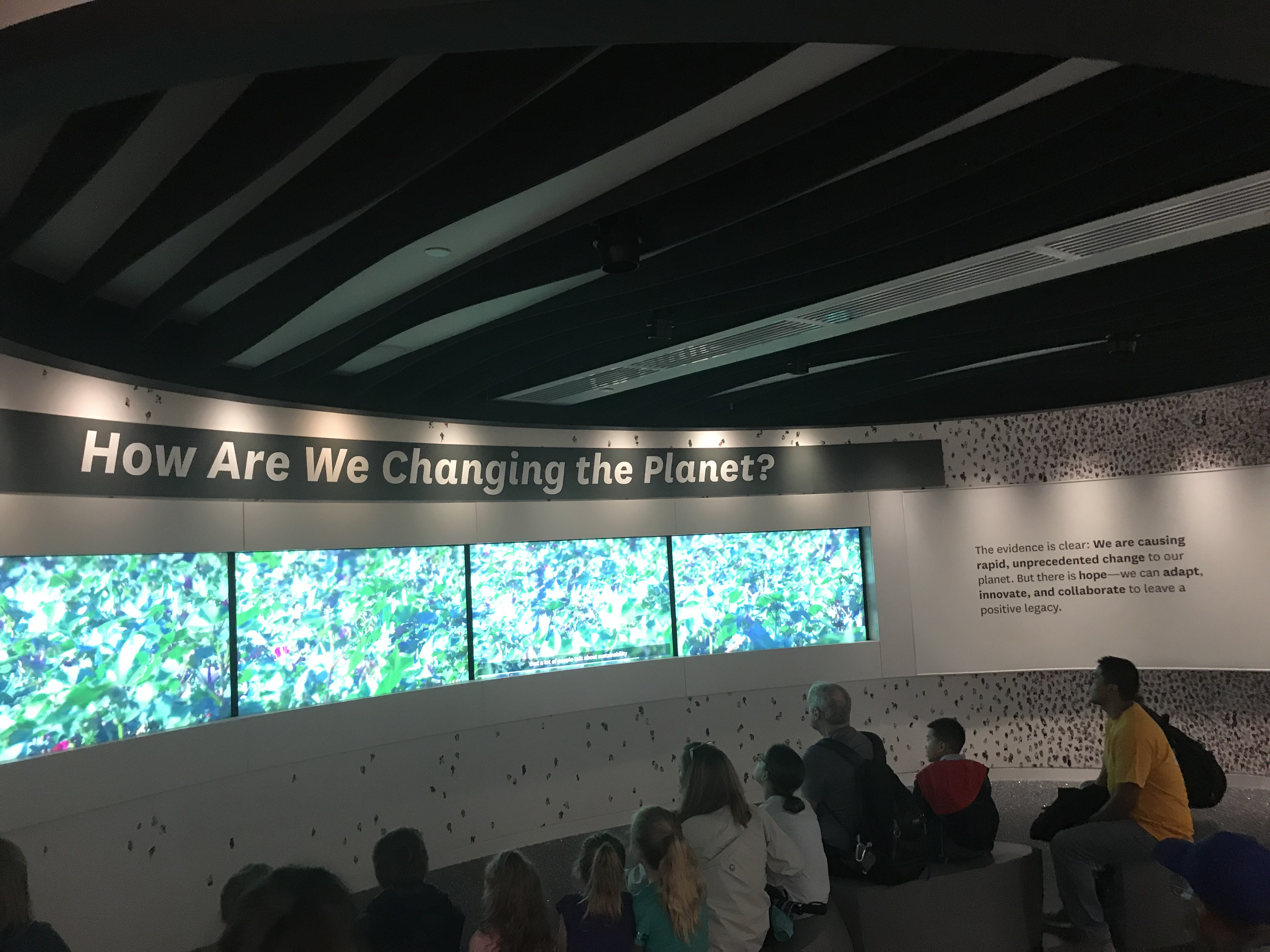
At the heart of the Deep Time exhibition, a theater demonstrates how humans are causing unprecedented change to the planet, while also highlighting potential solutions. Photo by the author.

Again, it’s reasonable to be wary of corporate interests making their way into public institutions. Perhaps museums that accept funding from questionable sources have a responsibility to go above and beyond in assuring their audiences that those funding sources are not influencing exhibition content (or anything else they produce).

To their credit, this seems to be something NMNH has taken very seriously. As discussed, the Hall of Human Origins devotes considerable floorspace to the message that climate change is an unavoidable part of humanity’s legacy. And in 2019, the museum went even further. The massive paleontology exhibition known as Deep Time was also funded in part by the Koch Foundation, and bears David Koch’s name. Here, a central overlook (visible from everywhere in the hall) is devoted to the message that human industrial activity is warming the climate, and that this change comes with dire consequences. Even more so than in the Hall of Human Origins, this statement is presented in clear, matter-of-fact language. The centrality of this location and its proximity to the dinosaurs makes the climate narrative unmissable.

As the third most-visited museum in the world (behind the Louvre and Musée d’Orsay), NMNH is uniquely situated to reach audiences that may never have seen the evidence for climate change presented in a clear, non-political context. They have clearly risen to the occasion, and I just think they deserve some credit for it.

References

Elbein, A. 2014. The right’s dinosaur fetish: Why the Koch brothers are obsessed with paleontology. Salon.

Levinthal, D. 2015. Spreading the free-market gospel: What’s new and interesting about the Koch brothers approach to funding academics. The Atlantic.

Scott, M. and Giusti, E. 2013. Designing Human Evolution Exhibitions: Insights from Exhibitions and Audiences. Museums and Social Issues 1:1:49–68

Sideris, L. 2019. The Last Biped Standing? Climate Change and Evolutionary Exceptionalism at the Smithsonian Hall of Human Origins. Equinox Publishing.

1 Comment

Filed under anthropology, Deep Time, education, exhibits, mammals, museums, NMNH, opinion, science communication

The Hall of Human Origins, 14 years later

A bronze Homo heidelbergensis  figure crouches over a hearth, offering visitors a piece of meat. Photo by the author.

I don’t know how well you remember the twenty-aughts, but it was a high point for conflict over teaching evolution in the United States. Thanks to lobbying by the Discovery Institute and others, denial of evolution had become an ideological litmus test for conservatives. Organized strategies to impose religious fundamentalism on public school classrooms cropped up nationwide, and these efforts were taken to court on multiple occasions. It was in the midst of all this that the National Museum of Natural History (NMNH) developed and opened its Hall of Human Origins—in sight of Capitol Hill, no less.

In this politically charged climate, one might imagine an exhibition about human evolution would need to be highly didactic, or even combative. But rather than taking an antagonistic stance, the Hall of Human Origins leads with a question: what does it mean to be human? The exhibition presents fossil evidence for how the human species came to be, but also invites visitors to make connections with their own lives and experiences. Fourteen years out from the hall’s March 17, 2010 opening, it’s instructive to look back at the exhibition’s development. How did this visitor-centric interpretive approach come to be, and how has the museum’s audience responded to the exhibition? And in hindsight, would the exhibition’s creators do anything differently?

Origins

More than 50 million visitors have passed through the Hall of Human Origins, but lead curator Rick Potts jokes that about a million of those visits should probably be attributed to him. Indeed, the exhibition and its unique interpretive approach have been on his mind for decades. He first formulated the question “what does it mean to be human?” when teaching anthropology courses at Yale in the early 1980s. The question always inspired a great discussion, and Potts thought it might make an interesting basis for an exhibit about human evolution.

Potts pitched his idea for a human evolution exhibition immediately upon taking a position at NMNH in 1985. Smithsonian secretary Robert Adams liked the concept, but progress on the exhibition stalled within a few years. It was difficult to get any major exhibition off the ground at NMNH during the 80s and 90s because of the lack of consistent leadership. With eleven permanent and acting directors between 1981 and 2003, there was no way to build up momentum for big, multi-year projects. Eventually, Cristián Samper settled into a comparatively lengthy directorship (2003–2012), and greenlit the human evolution exhibition under the working title, What Does it Mean to be Human?

An L-shaped, 15,000 square foot space (which previously contained parts of the North American Mammals and Native American Cultures exhibitions) was designated the future home of the Hall of Human Origins. The core project team began meeting regularly in 2007. Kathleen Gordon was the exhibition developer and Junko Chinen was project manager. Briana Pobiner, Jennifer Clark, and Matt Tocheri joined Potts as in-house scientific advisors. As with most permanent exhibitions at NMNH over the past 25 years, content was developed internally while the 3-D and graphic design was produced in collaboration with the Toronto-based design firm Reich + Petch.

Organization

Map of the Hall of Human Origins. From humanorigins.si.edu.

One of the team’s first tasks was to articulate what an exhibition based around a question would actually be about. The objective was to welcome visitors’ perspectives, but the hall itself couldn’t be a blank canvas. Exploring ways in which the exhibition could address varied perspectives led to some dead ends. One early idea was to feature a section about creation stories from around the world. But while the intention was to be inclusive and respectful of visitors coming to the exhibition from religious backgrounds, the section came across as a straw man, set up in order to be knocked down by the scientific perspective taken by the rest of the exhibition. Choosing which creation stories to include was also a problem, as was the use of terms like “story” and “myth” in the first place.

Instead, the team decided to fill out the exhibition with potential answers to a variation on the central question: What makes us human? Walking upright. Making tools. Living in social groups. Communicating with symbols. Creative expression. These are all valid answers. And crucially, they are potentially meaningful to everyone, regardless of whether the visitor is approaching the question from a more scientific perspective, or a more spiritual one. The exhibition presents the evidence for how and when each of these traits evolved, but leaves it up to the visitor to decide which they feel is most important to their humanity. By encouraging each visitor to take part in the process of making meaning, the exhibition implicitly rejects the prevailing perspective that there are only two ways to view the origins of humanity, and that those perspectives are mutually exclusive.

Organizing the exhibition around “things that make us human” also helped the team discourage the misconception that evolution is progressive or teleological. Visitors are often predisposed to think of evolution like a ladder, where each stage is a more advanced, improved form of what came before. An evaluation of the Hall of Human Biology and Evolution at the American Museum of Natural History found that many visitors viewing the dioramas saw a progression from the small, dark-skinned Homo erectus to the tall, white Neanderthals. The exhibition’s designers had specifically tried to avoid this by arranging the dioramas cyclically, and by including labels explaining that evolution does not have a preordained direction or goal—populations merely adapt to maximize their success in the present environment. Nevertheless, preconceived ideas are powerful, and even these mitigative efforts were apparently not enough. In contrast, the NMNH Hall of Human Origins is not strictly chronological, nor does it focus on one hominin species at a time. This reduces the temptation to plot each display onto a directional axis. It also helps that the hall runs in two directions, and can be entered from either end.

Design

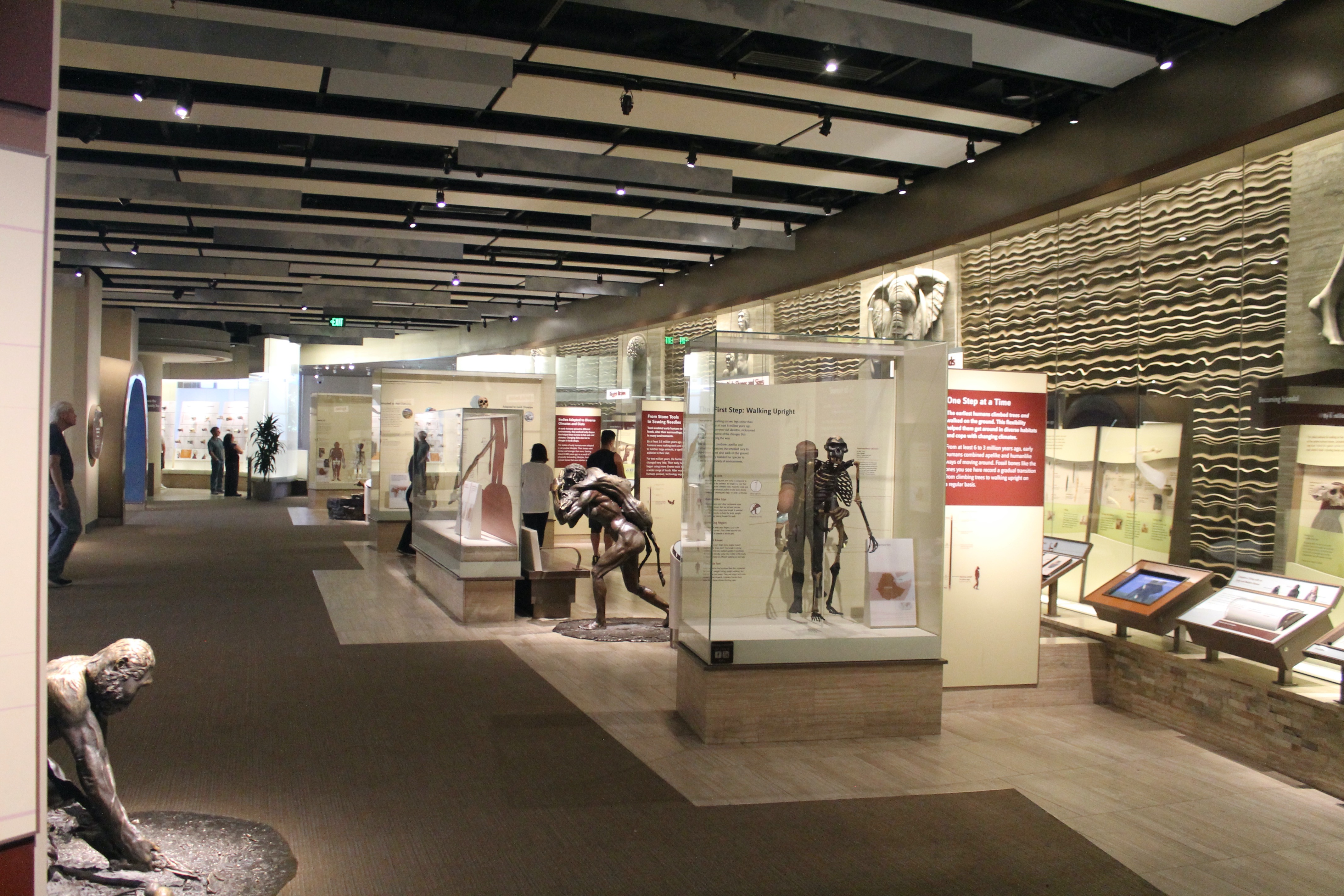
Overview of Hall of Human Origins. Photo by the author.

The design of the Hall of Human Origins feels respectful, even reverent. A palette of tans, browns, and other earth tones keep the space from looking garish, and evokes the importance of exploring the deep ancestry of our species. A core design element is a wall of densely-packed horizontal layers, a refrence to the stratigraphic context in which fossils are found. The wall is punctuated by larger-than-life relief sculptures, each one related to one of the key attributes of humanity covered by the exhibition. For example, a hominin with a spear facing an elephant represents how tool use opened up new food sources.

For Briana Pobiner, it was particularly important that the hall’s design put a human face on science. Many people think of science as something cold and distant, but warm up to it when they get to know the individuals behind it. To that end, the exhibition includes three “snapshots in time”—interactive media installations where a scientist on screen (one of which is Pobiner herself) guides visitors through a particular archaeological puzzle. The hall also includes 24 “how do we know” graphics. Each one includes a photo of a scientist in some way affiliated with the Human Origins Program and who contributed to the exhibition content, with a first-person account of how scientists interpret evidence and reach a conclusion. Pobiner says that teachers are particularly fond of these, and sometimes ask students on field trips to find all of them.

One ring to rule them all. Photo by the author.

The Hall of Human Origins includes nearly 300 objects. Most are casts, as hominin fossils are typically held in their countries of origin. There are a couple dozen originals, however, including archaeological artifacts and a Neanderthal skeleton from Shanidar Cave, in Iraq. This individual was one of several excavated in the 1950s during a collaborative project between the Smithsonian and the Iraqi Director General of Antiquities. The Iraqi government permitted this single skeleton to be held at NMNH, and it remains the only Neanderthal in the western hemisphere. Among the replicas on display is a partial skeleton of Homo floresiensis. Often called “the Hobbit” by its discoverers, this species was brand new to science when the exhibition was under development. Pobiner clued me in to an easter egg I had missed for fourteen years: the Hobbit has a gold ring on its finger.

Reconstructions

Bronze figures of a Neanderthal woman and child. Photo by the author.

Many natural history exhibits have the advantage of large, iconic objects that grab visitor attention, like sauropods, elephants, or whales. But hominin fossils are small, often fragmentary, and difficult to interpret. They wouldn’t be able to carry an exhibition for non-specialists on their own. In order to visualize the lives of past hominins, the team turned to paleoartist John Gurche.

The Hall of Human Origins was not Gurche’s first project with the Smithsonian. Between 1980 and 1985, he painted the iconic Tower of Time for the (now retired) Fossils: History of Life exhibition, as well as a backdrop for a lungfish diorama and a series of fossil horse reconstructions. This also wasn’t his first foray into reconstructing extinct hominins. Among many other projects, Gurche was briefly attached to Potts’s first attempt to get a human evolution exhibition off the ground, and he produced a life-sized model of Lucy the Australopithecus afarensis for the Denver Museum of Nature and Science in 1996.

For the Hall of Human Origins, Gurche created a new Lucy diorama, eight full-color busts, and five bronze figures with landforms. The busts are astonishingly life-like. Each one was sculpted in clay over a replica skull—first the muscle, then the skin. These sculptures were molded in fiberglass and cast in a silicone mix that could be tinted with different skin tones. The eyeballs are acrylic, and required a painstaking 30-step process to create. Finally, the hairs (hundreds of thousands per bust) were punched in one at a time. “If people react to your sculptures by feeling a little creeped out because they sense a living presence there,” Gurche wrote, “you know you’ve done well.”

A promotional image of Gurche’s eight hominin busts. From humanorigins.si.edu.

Gurche began the bronzes in a similar way, sculpting their anatomy layer by layer over a posed cast skeleton. Choosing the behavior to depict for each species was a major point of discussion for the exhibition team. Each figure needed to capture the essence of that species, while also representing a recognizable aspect of the human experience. It was decided early that Paranthropus boisei and Homo erectus should be subtly interacting, since they coexisted in Tanzania and Kenya. In the final exhibition, the Homo erectus is looking warily at Paranthropus as she carries a dead gazelle back to her family. Homo floresiensis is shown being knocked over by an unseen predator, highlighting the species’ vulnerability. And the Neanderthal woman is showing a child how to make clothing by perforating a hide with an awl and clamping it in her teeth. No detail was too small—for example, the Neanderthal woman is squatting because many Neanderthals have ankle joint wear similar to modern populations that spend a lot of time squatting.

Response

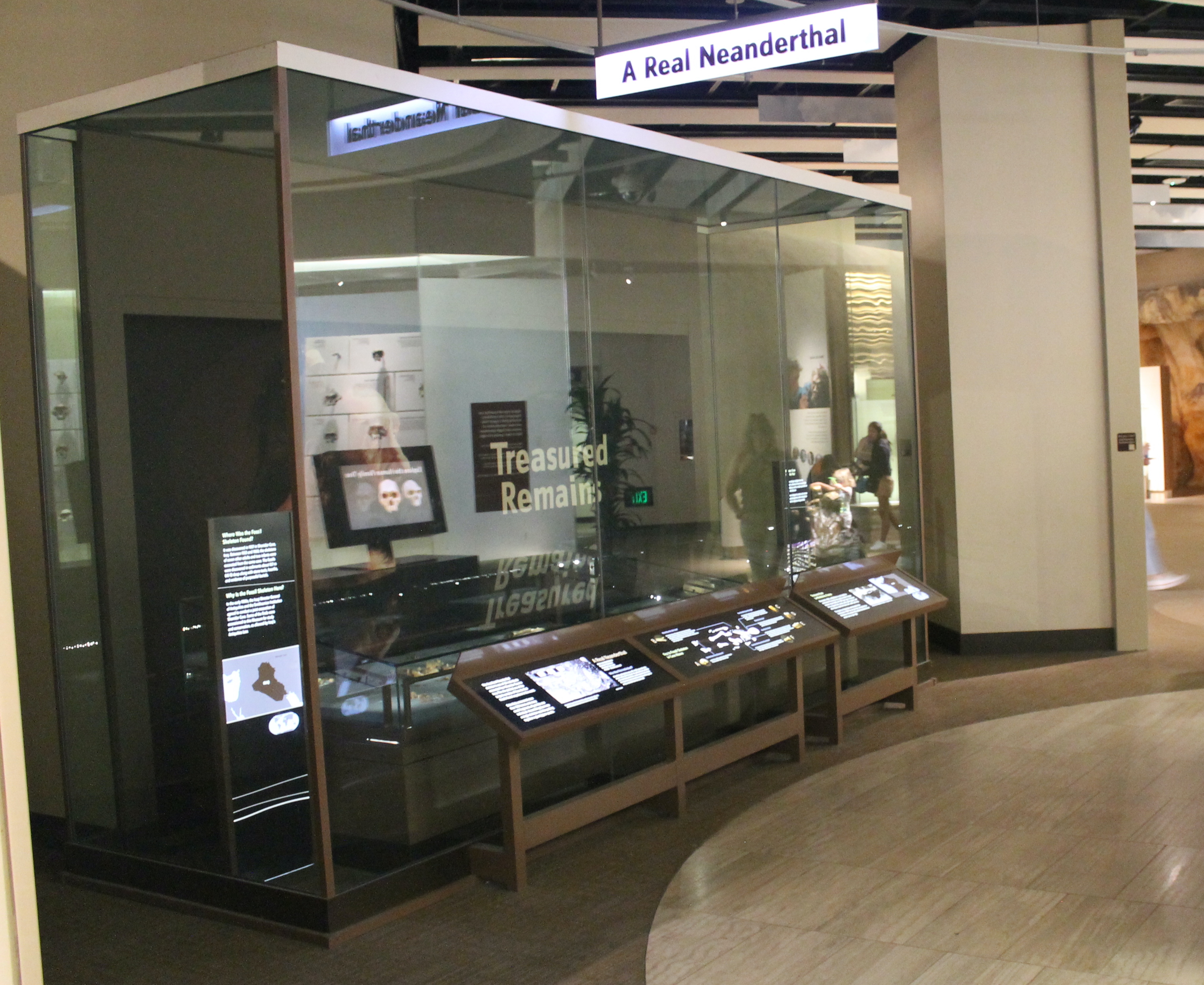
In spite of large headers proclaiming it “treasured remains” of “a real Neanderthal,” this display receives less attention than the development team would like. Photo by the author.

In the years since the Hall of Human Origins opened, the team that created it has gotten a good idea of which aspects are working, and which are not. The bronzes are extremely popular, both as photo ops and as interactive experiences. A display doesn’t need a button or a lever to be interactive—the bronzes are practically crying out to be touched. The fact that they share space with visitors—rather than being captured behind glass—forces people to confront them, size them up, and consider how they are like and unlike themselves. I’m particularly enchanted by the Homo heidelbergensis (top of the page), who appears to be calling visitors to interact by offering a piece of meat. The bronze figures are also toddler magnets. Even at a non-verbal age, children are drawn to them. Museum Educator Margery Gordon recalls there was some internal concern about nudity, but ultimately few, if any, visitors complained.

By timing and tracking visitors, NMNH staff have determined that the “Morphing Station” photo booth is the most popular element in the exhibition. This interactive media piece takes photos of visitors and overlays them onto the face of one of the eight busts, showing what each person might look like as a member of another species. This concept was actually proposed by the science team, and the Reich + Petch designers were surprised that they wanted something so frivolous. But in fact, the photo booth perfectly matched the team’s goal to center each visitor and encourage them to engage with their evolutionary past on their own terms.

Meanwhile, the real Neanderthal skeleton has proven to be the biggest challenge for capturing visitor attention. The development team placed it in the center of the exhibition, and hoped that it would be a must-see focal point. However, conservation requirements mean that the Neanderthal case is dimly lit, and each bone is individually packed in cushioning foam. Hard to see and harder to interpret, the disarticulated skeleton continues to be overlooked by a majority of visitors. The team has re-designed the graphics and lighting around the Neanderthal multiple times in an effort to communicate that this is a rare chance to see a real skeleton.

The educational efforts undertaken with the Hall of Human Origins did not end in 2010. A Broader Social Impacts Committee, with a rotating membership of scientists, clergy, teachers, and others, was formed in 2009 and continues to meet. In-gallery and online talks about how the study of human evolution intersects with social issues are held regularly. A 1200 square foot version of the exhibition travels to libraries, community centers, and even seminaries. And Pobiner continues to work with educators to create better tools for teaching students about evolution. Persistence, it seems, is key in ensuring the exhibition’s content continues to reach new audiences.

When the Hall of Human Origins began development, about 40% of Americans agreed that humans developed over millions of years from other forms of life. This number hadn’t meaningfully changed since Gallup and other polling organizations began asking the question in the early 1980s. But in the last decade, that number has climbed to 55%. Miller and colleagues suggest that this change is related to declining religious affiliation. It’s also possible that agenda-setting right wing lobbyists have moved on to other anti-science projects, like climate change denial and rejection of vaccines. Whether this trend continues remains to be seen, but if more people are indeed open to exploring where our species came from, then there is more need than ever for experiences like the Hall of Human Origins.

Many thanks to Human Origins Education Program Specialist Briana Pobiner and Curator of Biological Anthropology Rick Potts for speaking with me as I was writing this article. Opinions and any factual errors are my own.

References

Gurche, J. 2013. Shaping Humanity: How Science, Art, and Imagination Help Us Understand Our Origins. New Haven: Yale University Press.

Miller, J.D., Scott, E.C., Huffaker, J.S. 2021. Public acceptance of evolution in the United States, 1985–2020. Public Understanding of Science 31:2.

Pobiner, B. 2016. Accepting, understanding, teaching, and learning (human) evolution: Obstacles and opportunities. American Journal of Biological Anthropology. 159:61:232–274

Potts, R. 2010. Presenting Human Evolution to the Public: The Smithsonian’s Hall of Human Origins. Anthronotes 31:1

Scott, M. and Giusti, E. 2013. Designing Human Evolution Exhibitions: Insights from Exhibitions and Audiences. Museums and Social Issues 1:1:49–68

7 Comments

Filed under education, exhibits, mammals, museums, NMNH, paleoart, science communication

Rhinos too thick: Fossils and flattery at Agate Springs

“No progress at all. Rhinos too thick.”

So wrote American Museum of Natural History fossil collector Albert Thomson in his September 1917 field notes. At that point, Thomson been collecting mammal fossils at Agate Springs nearly every year since 1907—and was still finding rhino bones in such abundance that they formed a seemingly impenetrable layer.

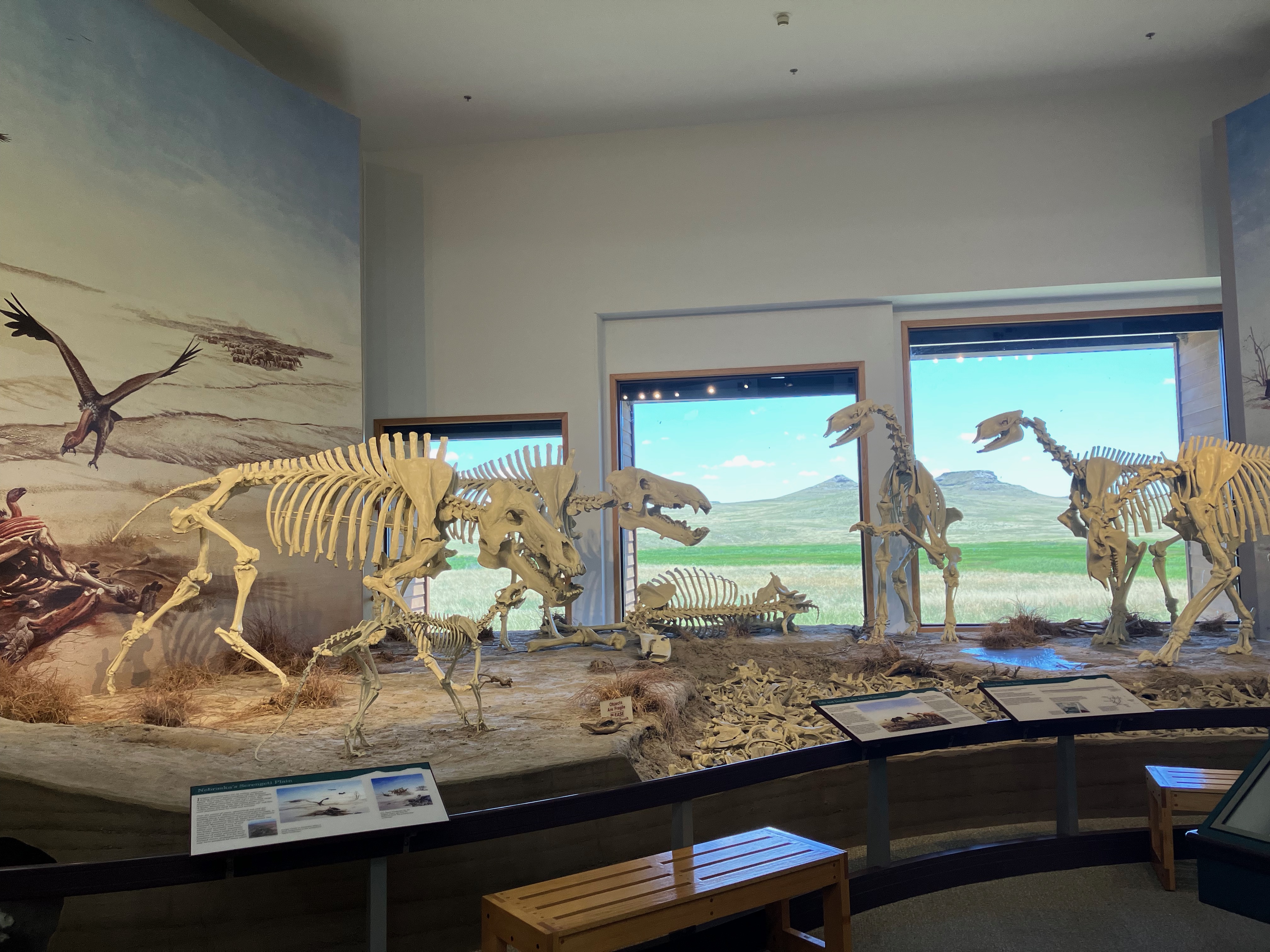
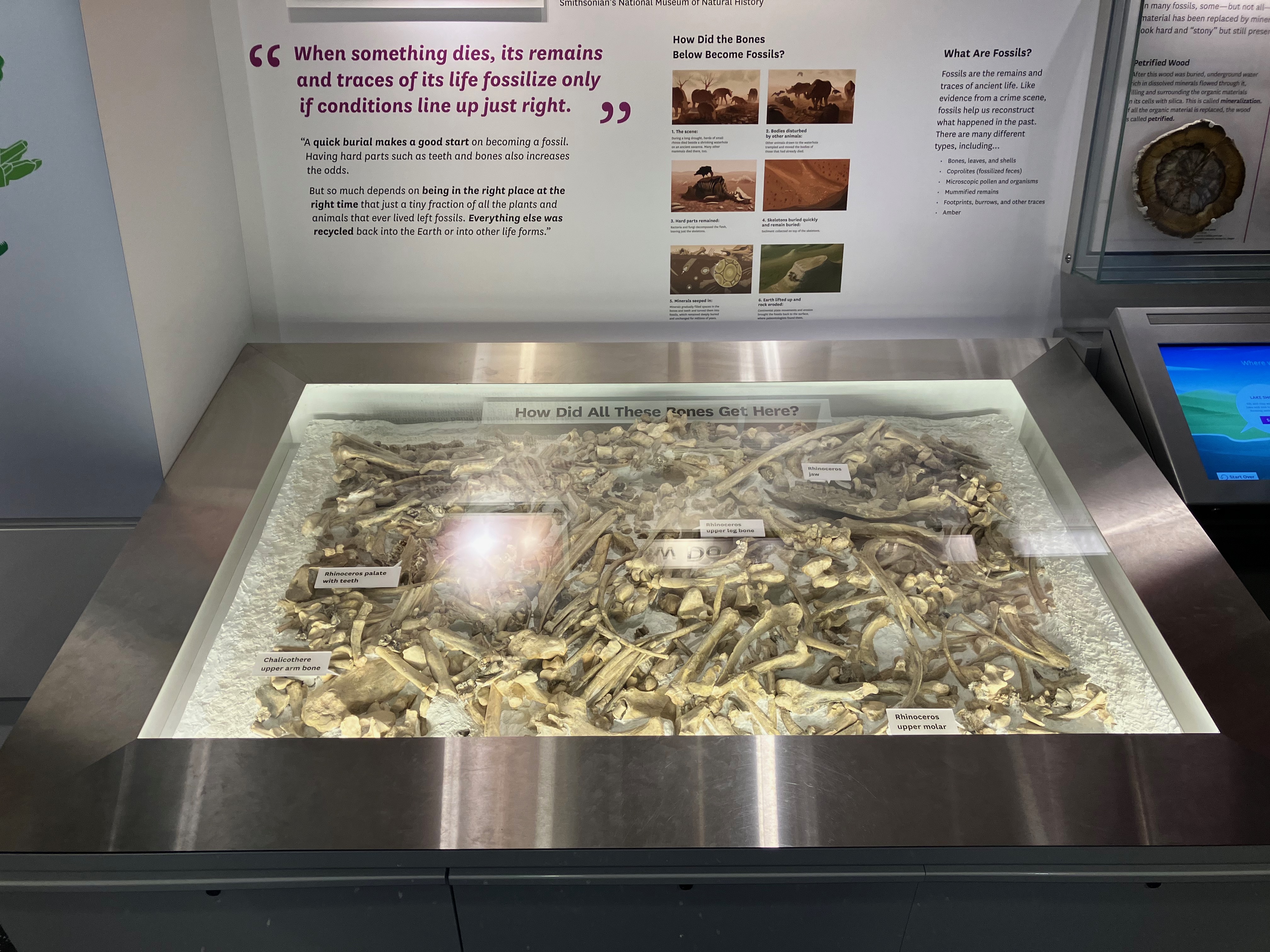
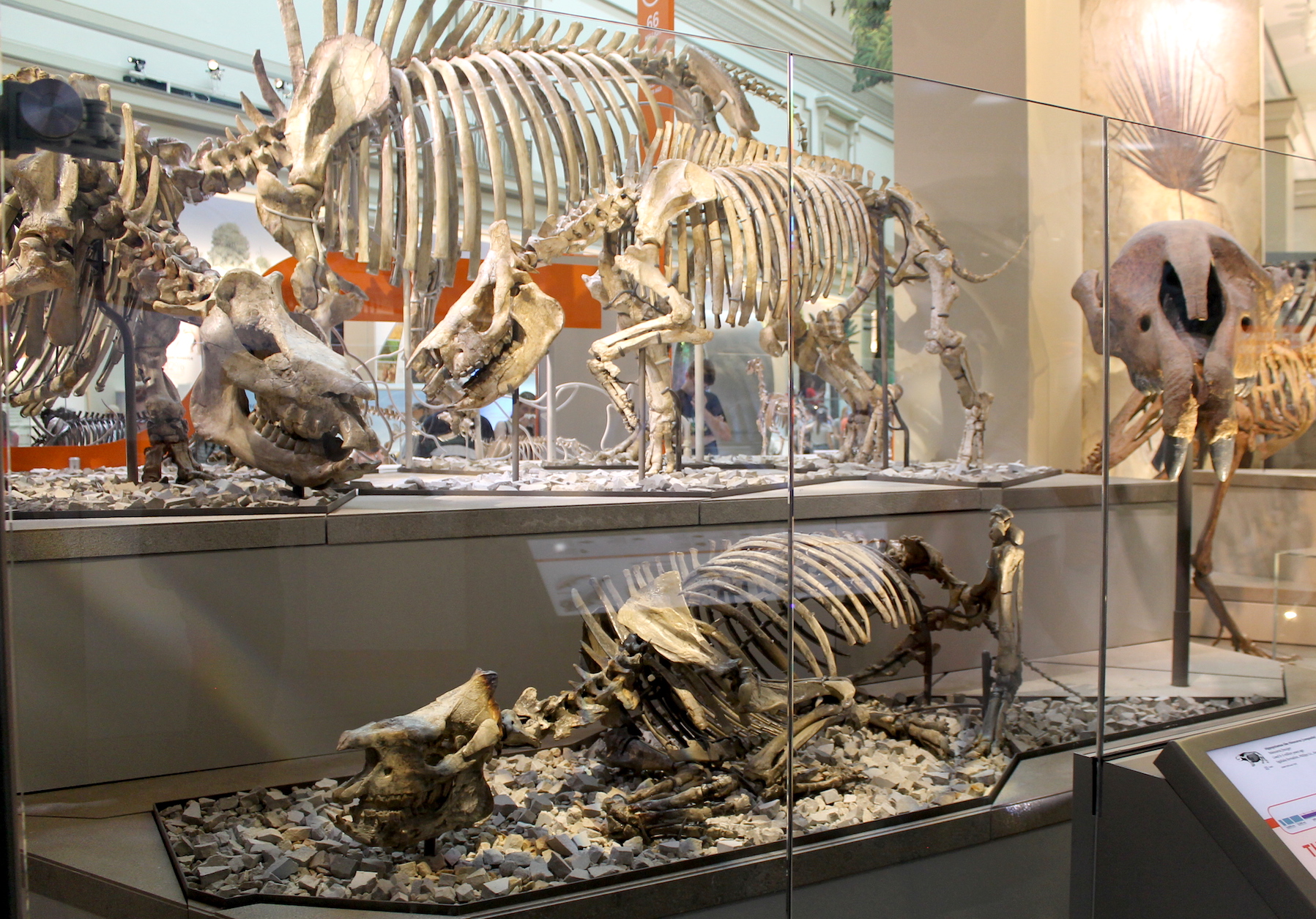
Located in northwest Nebraska and dating to about 22 million years ago, the Agate Springs bone bed is an aggregation of fossilized animals on an astonishing scale. Like the Carnegie quarry at Dinosaur National Monument, it provides a snapshot of an ecosystem at a moment in geologic time. But while a high estimate of the individual dinosaurs represented at Carnegie Quarry is in the hundreds, the main bone bed at Agate Springs may well contain tens of thousands of animals. The vast majority of fossils come from the tapir-sized rhino Menoceras, scrambled and packed together in a layer up to two feet thick. Moropus, Daeodon, and an assortment of other hoofed animals and small carnivores have also been found. These animals may have gathered during a drought and succumbed to thirst or disease, before the returning rains rapidly buried their remains. It’s also possible that the bone bed represents a mass drowning during a flash food. Since different parts of the site vary in density, Agate Springs likely represents multiple mortality events over a number of years.

IMG_1185

Tableau of cast fossil skeletons at the Agate Fossil Beds National Monument visitor center. Photo by the author.

Today, less than 30% of the Agate Springs bone bed has been excavated, but not for a lack of effort. Teams from a half dozen museums visited the site between 1900 and 1925, with the Carnegie Museum of Natural History (CM), the University of Nebraska State Museum (UNSM), and the American Museum of Natural History (AMNH) establishing large-scale excavations and returning year after year. As we shall see, the relationships between these teams were not always amicable, making this period at Agate Springs a window into the preoccupations of museum workers at the turn of the century. Agate Springs also illustrates how east coast paleontologists interacted with and relied on local people, defending their social capital as jealously as any fossil deposit. Finally, museums’ interest in Agate Springs in the mid 20th century exemplifies how exhibitions had evolved during the intervening period.

The setting

Agate Springs is unceded Sioux territory, occupied by settlers after the Kansas-Nebraska Act of 1854. James Cook purchased the treeless tract of rolling hills from his father-in-law in 1887, naming it Agate Springs after the rocky banks of the nearby Niobrara River. James and Kate Cook established a ranch where they raised horses and cattle, and Agate Springs became a popular stop for travelers on their way to Cheyenne, Wyoming.

The Cooks were aware of bones weathering out of the hills as far back as 1885, when the land was still owned by Kate’s father. James knew that scientists were on the lookout for fossils in the region—by one account he worked for O.C. Marsh as a translator in 1874. Once the ranch was established, he began writing to museums, including UNSM in Lincoln and the Carnegie Museum in Pittsburgh, inviting them to visit Agate Springs. A UNSM party led by Erwin Barbour was the first to drop by, spending a night at the Cook homestead in July 1892. Chiefly concerned with collecting “devil’s corkscrews” (ancient beaver burrows) north of the Niobrara, Barbour sent his student F.C. Kenyon to check out the bones Cook promised in the nearby hills. Kenyon collected as much as he could carry, but his report apparently did not excite Barbour, and the UNSM party moved on.

It would be twelve years before another paleontologist visited Agate Springs. Olaf Peterson of the Carnegie Museum stopped by the ranch in early August of 1904, at the end of a tumultuous field season in western Nebraska. Peterson had received a telegram on July 4 that his brother-in-law, boss, and mentor John Bell Hatcher had died of typhoid. Peterson intended to cut the season short, but Carnegie Museum director William Holland denied the request, writing in no uncertain terms that Peterson was to continue his work in Nebraska. Later in July, Peterson fell ill himself, and spent several days recovering in Fort Robinson. Suffice it to say, Peterson was not in the best of moods when he arrived at Agate Springs.

Nevertheless, the outcrops Peterson saw at Agate Springs revitalized his spirit. Accounts differ on what part of the site Cook showed him (this will be important shortly), but when he returned east two weeks later he was raving about a quarry with “ten skulls within a six-foot radius.” In Pittsburgh, Peterson and Holland began drawing up plans for an ambitious excavation the following year. In their view, they had staked a claim to the site: just like contemporary gold and oil prospectors, turn-of-the-century paleontologists lived by the rule of “dibs.” For the museum crowd, being the first scientist to “discover” a quarry meant an entitlement to control the site and the resources it produced. This included both the physical fossils and the privilege to describe and interpret those fossils—controlling the site meant controlling scientific knowledge.

Dueling quarries

Cook either didn’t know about such customs, or didn’t care. To his credit, Cook was never interested in monetizing the fossils at Agate Springs. By all accounts, he simply wanted to share with the world the knowledge that the bone bed represented. He was concerned that it was so expansive that no single team could uncover all its secrets. On May 26, 1905, Cook wrote to Barbour, inviting him to share in the bounty he had shown Peterson the previous summer, explaining that it was “so large that [the Carnegie team] could not work it out in years, so there is plenty of material for other parties to work with.”

On other occasions, Barbour had taken a cautious stance when corresponding with landowners. In this case, however, he could barely contain the enthusiasm in his reply. In a single letter, Barbour reminded Cook that UNSM had visited 12 years before and therefore should have collecting rights, asked Cook to place a literal flag on the site claiming it for the University of Nebraska, offered to hire Cook’s 18 year-old son Harold as a field assistant, and appealed to Cook’s state pride by listing the out-of-state institutions that were removing Nebraska’s fossil heritage each year.

IMG_1238

Carnegie Hill and University Hill today. Photo by the author.

That summer, Peterson and Barbour opened quarries on two neighboring buttes at Agate Springs, which came to be known as Carnegie Hill and University Hill. While the two parties were cordial neighbors, letters exchanged by Holland, Barbour, and Cook demonstrate that the museum directors were uncomfortable with the situation. Holland repeatedly wrote to Cook, claiming that his team was more skilled than Barbour’s and warning that it would be bad for science if the fossils and geological data were split between two institutions. Harold Cook didn’t appreciate Holland’s condescending tone. In a note to his father pinned to one of the letters, he wrote that “a letter of this kind is the work of a pinheaded, egotistical, educated fool.”

The Carnegie and UNSM teams returned to Agate Springs in 1906, but spent the summer of 1907 elsewhere. The elder Cook took the opportunity to invite yet more paleontologists, and teams from AMNH, the Yale Peabody Museum, and Amherst College showed up to collect fossils.

Meanwhile, Holland began a campaign to wrest control of the site by any means necessary. He became particularly focused on the narrative of who discovered the bone bed. According to Holland, Cook had shown Peterson the smaller, less dense site that would be come to be known as Quarry A. Peterson then went prospecting on his own and found the primary bone bed that straddled the two buttes. Holland went on to argue that regardless of who first saw the fossils, Peterson earned credit for the discovery because he was the first trained scientist on the scene, and therefore the first individual to correctly identify the age and identity of the animal remains.

Cook rejected Holland’s retelling of the events of August 1904, insisting that he had known of the bone bed for years before he showed it to Peterson. In many ways, the two men were talking past each other. Cook found Holland’s insistence on claiming the discovery for Peterson nonsensical and disrespectful—he knew his own land, and he was the one who invited the paleontologists in the first place. Holland, on the other hand, was staking a claim among his fellow academics. He needed to demonstrate that the Carnegie Museum had been at Agate Springs first, so that other institutions would yield to his authority to interpret and publish on the fossils.

IMG_1235

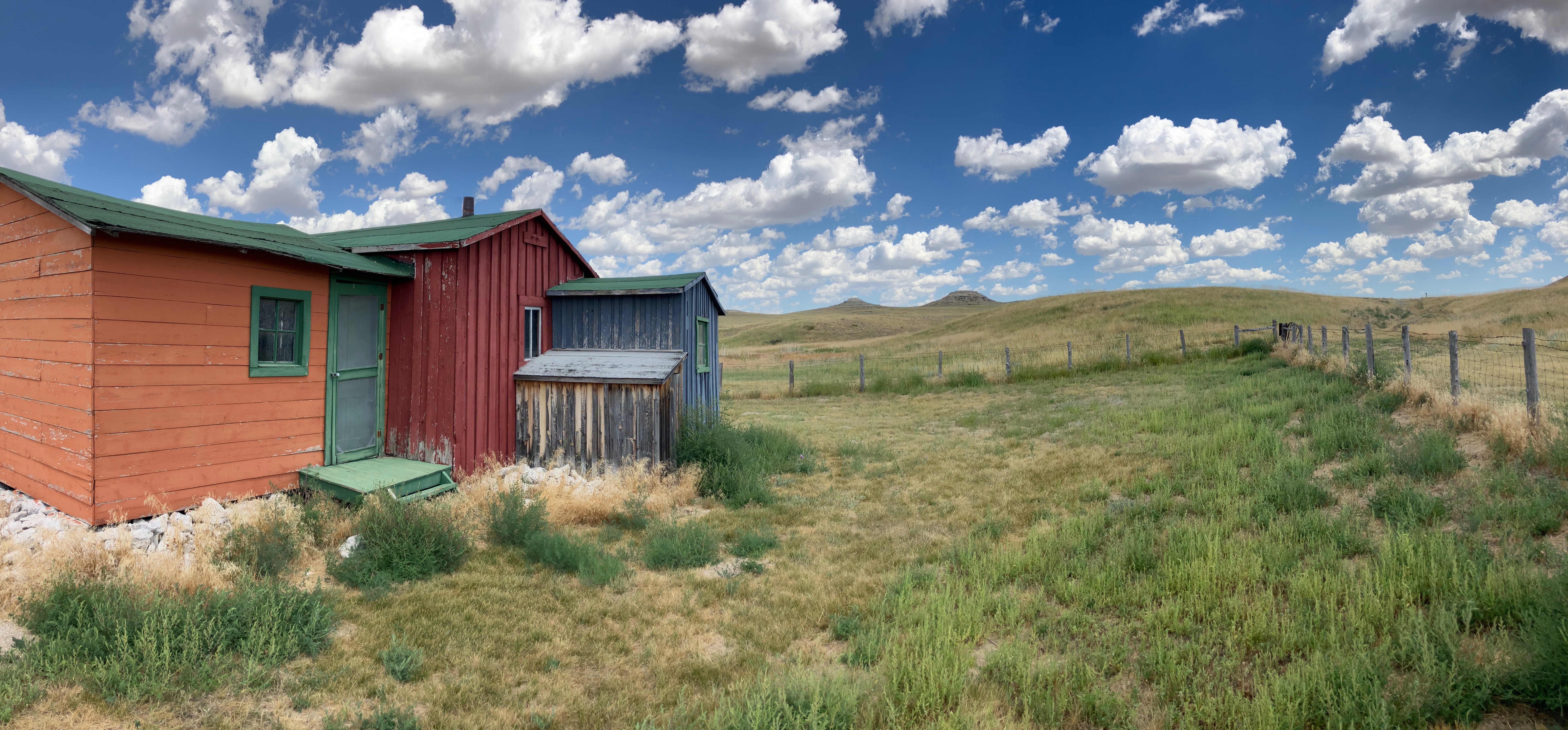
Harold Cook’s homestead cabin, recently fixed up and painted. Photo by the author.

Late in 1907, Holland visited the Cooks’ ranch in person for the first time. He offered to buy the fossil-bearing land outright, doubtlessly planning to block the other museums from accessing it. At this point, James Cook made the awkward discovery that Carnegie Hill and University Hill were actually just outside his official holdings, in the public domain. Holland moved to purchase the land, but Harold Cook beat him to it, building a cabin and filing a homestead claim in March 1908. In their gentlemanly rancher way, the Cooks told Holland to get lost, and the Carnegie Museum left Agate Springs for good.

Playing nice

While Holland had managed to sour his relationship with a remarkably welcoming and accommodating landowner, Barbour did the opposite. In letters to Cook, he regularly acknowledged the rancher as the discoverer of the site. He visited the Cooks frequently and employed Harold in the UNSM quarry, training the younger Cook into a formidable fossil prospector and anatomist. Soon Harold was studying at the University of Nebraska under Barbour, and a few years later, Harold and Barbour’s daughter Elinor were married. Barbour also named a few species after the Cooks, including Moropus cooki.

AMNH director Henry Osborn and field manager Albert Thomson had a similarly positive relationship with the Cooks. The New York museum took over Carnegie Quarry in 1908, and Osborn visited several times to express his gratitude. Like Barbour, he paid Harold for his time, labor, and expertise. Later, Osborn invited Harold to work at AMNH during the off-season. In return, AMNH was permitted to collect at Agate Springs for nearly two decades. Thomson returned almost every year through 1923, and the museum accumulated so many Menoceras and Moropus fossils that it began selling and trading them to other institutions.

IMG_0328

Menoceras and Moropus slab at the National Museum of Natural History. Photo by the author.

The reward for staying in the Cooks’ good graces was clear. UNSM and AMNH paleontologists gained access to the Agate Spring quarries for many years, accumulating large collections. They earned accolades from publications, public interest from the skeletons they placed on exhibit, and even monetary rewards from selling the excess specimens. Meanwhile, the Carnegie Museum was shut out after their first few seasons of collecting because Holland was, if not outright hostile to the Cooks, unable to communicate effectively with the ranchers. For American paleontologists at the turn of the century, social capital was a critical resource. Positive relationships with landowners and other individuals in the fossil-rich western states earned them access to land, information about the terrain, and networks of eyes on the ground, any of which might lead them to the next important quarry.

You get a rhino block, and you get a rhino block…

The scale and intensity of the Agate Springs excavations decreased after 1910, and in the early 20s, Thompson and the AMNH crew closed up shop, believing they had found examples of every species that could be found. By that time, the site’s value for museums had shifted. Rather than being a bonanza of specimens to collect, categorize, and publish on, Agate Springs had become a place to quickly and easily obtain display-worthy fossils. As Hunt puts it, the site was a “storehouse of good exhibit materials, to be tapped when needed by museums wishing to mount a rhino or two.”

Today, Agate Springs fossils—acquired in the field or via trade—are on display at large and small museums all over North America. Many of these are mounted skeletons of rhinos, camels, and Moropus, but there is also a particular abundance of large, incompletely prepared slabs, which provide viewers with a small window into the Agate Springs bone bed. Because of the sheer density of bones, the early 20th century excavation teams quickly stopped jacketing fossils individually, and instead began preparing out large blocks, typically four to six feet across. The blocks were hardened with shellac, and reinforced with wood planks around their borders. Pulleys and cranes were required to lift the largest blocks out of the quarries. In the early years, the intention was to fully excavate these blocks at their respective museums. It’s not clear which museum first placed a complete block on exhibit, but the idea proved popular. Many later visitors to Agate Springs, from James Gidley of the National Museum of Natural History in 1909 to Elmer Riggs of the Field Museum of Natural History in 1940, came with the express purpose of collecting intact slabs for display.

IMG_0005

Menoceras slab on display at the Field Museum of Natural History. Photo by the author.

The popularity of fossil blocks from Agate Springs coincides with a shift in philosophy toward exhibitions at natural history museums. While early 20th century exhibits were catalogs of life, emphasizing the breadth of the museum’s collection, by the 1920s and 30s many museums had begun moving toward narrative exhibits. Displays were intended to communicate ideas, and objects served as illustrations of those ideas. The fossil blocks from Agate Springs were ready-made illustrations of a number of paleontology concepts, from the process of taphonomy to the task of excavation millions of years later. Most have remained on display to this day, a fact that James Cook would undoubtably be pleased with.

An incomplete list of museums in possession of Agate Springs blocks follows. Do you know of others? Please leave a comment!

  • Carnegie Museum of Natural History
  • American Museum of Natural History
  • University of Nebraska State Museum
  • Field Museum of Natural History
  • National Museum of Natural History
  • Royal Ontario Museum
  • Denver Museum of Nature and Science
  • Yale Peabody Museum of Natural History
  • Harvard Museum of Comparative Zoology
  • University of Wyoming Geological Museum
  • South Dakota School of Mines and Technology
  • Wesleyan University Geology Museum
  • University of Austin Texas Memorial Museum
  • University of Michigan Museum of Natural History
  • Science Museum of Minnesota
  • Fort Robinson State Park Trailside Museum

References

Agate Fossil Beds: Official National Park Handbook. Washington, DC: National Park Service.

Hunt, R.M. 1984. The Agate Hills: History of Paleontological Excavations, 1904-1925. 

Vetter, J. 2008. Cowboys, Scientists, and Fossils: The Field Site and Local Collaboration in the American West. Isis 99:2:273-303.

Skinner, M.F., Skinner, S.M., Gooris, R.J. 1977. Stratigraphy and Biostratigraphy of Late Cenozoic Deposits in Central Sioux County, Western Nebraska. Bulletin of the American Museum of Natural History 158:5:265-370.

3 Comments

Filed under AMNH, CMNH, collections, dinosaurs, DMNS, exhibits, field work, fossil mounts, history of science, museums, NMNH, ornithopods, sauropods, theropods, thyreophorans

T. rex in Context: Deep Time’s Cretaceous Display

A little over a year ago, the National Museum of Natural History re-opened its paleontology halls after a five-year renovation. As I detailed in a previous post, the new exhibition—called Deep Time—is exceptional. Breathtaking to look at, intuitive to explore, and (of course) brimming with fascinating specimens, Deep Time sets a high standard for excellence in natural history exhibitions.

Today, I’d like to take a closer look at one display in Deep Time, the Cretaceous tableau, and elaborate on what makes it so effective. Many thanks to Designers Pauline Dolovich and Fang Pin Lee, Developer Siobhan Starrs, and Curator Matt Carrano for discussing their work with me.

The Cretaceous display tells a story through its carefully-composed design.

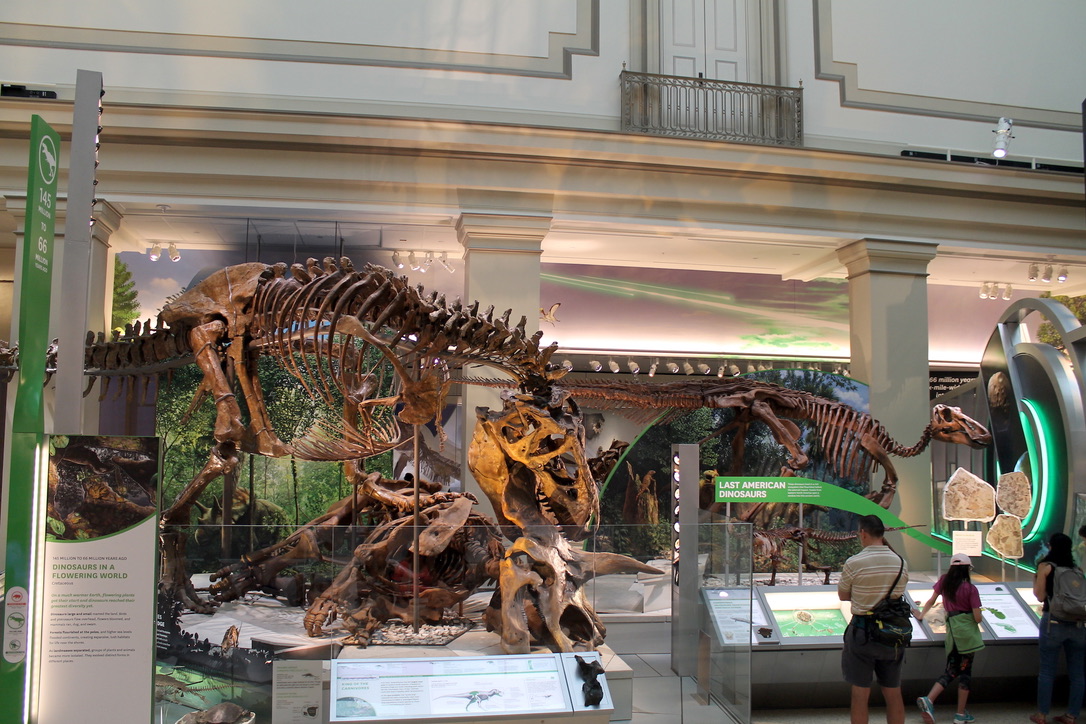
The Cretaceous display is home to Deep Time’s centerpiece, the Tyrannosaurus rex. As was well-covered by various media outlets in the months and years leading up to the exhibition’s opening, the “Nation’s T. rex” was discovered in 1988 on Army Corps of Engineers land, and is now on loan to the Smithsonian. Although it’s one of the most thoroughly-studied Tyrannosaurus specimens around, this is the first time the real skeleton has been assembled into a standing mount. Like many of the mounted skeletons in Deep Time, the T. rex strikes a dynamic pose that evokes the behavior of the living animal. In this case, the Tyrannosaurus is prying the head off a prone Triceratops.

Obviously, the T. rex draws a crowd. It’s hard to imagine any visitor passing through Deep Time without stopping to see it. But while the exhibit team acknowledged and emphasized the spectacular nature of the tyrant king, they also harnessed its star power to make a broader statement. Tyrannosaurus was part of a rich ecosystem of plants and animals, and while this apex predator had an impact on the entire community (eating some animals, providing leftovers for others), T. rex and other meat-eating dinosaurs were far outnumbered by the turtles, lizards, salamanders, and insects they lived alongside. By placing Tyrannosaurus within its ecological context, the display makes the seemingly fantastic dinosaur much more real. This reinforces one of the exhibition’s overarching themes: life in the past functioned much like life in the present, and studying past life can inform our understanding of the world today. It’s no accident that this cross-section of a prehistoric ecosystem is at the center of the hall, and includes its most popular specimen.

To avoid cluttering the historic architecture of the east wing, the designers integrated display lighting into the platforms.

While the Cretaceous display tells a complex story that is integral to the narrative of the exhibition as a whole, its footprint is remarkably compact. This efficient use of space is the result of a long and methodical design process. Designers Fang Pin Lee and Pauline Dolovich envisioned a broad avenue across the entire hall, which would accommodate large crowds (NMNH gets up to eight million visitors each year) and allow quick access to any part of the exhibition. This avenue needed to double as a central social space, where groups could congregate around built-in seating and look out onto the various displays. But more space for visitors means less space for specimens, and dinosaurs need a lot of room. Lee and Dolovich used digital renders and a miniature model to find the optimal position for the 40-foot Tyrannosaurus and its companions. This was a careful balancing act—they had to keep the T. rex visible from multiple approaches while working around the twin rows of structural columns down the center of the hall.

With ample space for visitor traffic, long sight lines, and some very large skeletons in the mix, there was precious little room in the Cretaceous display for text panels. This worked in the display’s favor, because it meant that much of the message had to be communicated through the design. For example, the Tyrannosaurus poised over its Triceratops meal evokes the predator’s role in the ecosystem, while conveniently reducing the footprint the two skeletons would require if displayed independently. Meanwhile, a cutaway in the platform next to the T. rex‘s foot contains an alligator, a turtle, clams, and aquatic plants. While only subtly implying the presence of a pond or river (the alligator skeleton is posed as though swimming along the surface, while lotus-like flowers “float” nearby), this area demonstrates these organisms’ ecological relationship to T. rex by placing them literally underfoot.

Stangerochampsa swims among floating Nelumbago leaves in an implied waterway.

To the right of Tyrannosaurus, a densely-layered series of specimens and display elements provides a nuanced look at the Hell Creek ecosystem within a limited amount of space. In the back, a pair of large murals by Julius Csotonyi set the stage: this was a lush, green world dense with weedy flowering plants (as opposed to the open conifer forests dinosaurs are often depicted in). To the left, a lone Torosaurus is dwarfed by the forest around it. To the right, an Edmontosaurus group tramples through the undergrowth, disturbing the smaller Thescelosaurus and Polyglyphanodon. Skeletons of Edmontosaurus, Thescelosaurus, and the aquatic reptile Champsosaurus stand in front of the murals, alongside three slabs of fossil leaves.

A vivid green panel among the skeletons spells out the key takeaway: these plants and animals were part of a single ecosystem that existed in North America at the end of the Age of Dinosaurs. Similar header panels can be found throughout the exhibition, and the writers iterated on the text for years. These short phrases had to convey the context and significance of a display at a glance, even if these were the only words a visitor read. The team settled on the headline “T. rex in Context” for the Cretaceous display, but when test audiences began visiting the hall, this proved to be a mistake. Because the words appeared so close to the Edmontosaurus, visitors were concluding that the hadrosaur was a T. rex. With weeks to go before opening, the team opted to replace the headline with the tried-and-true “Last American Dinosaurs.

Those vertical mounts for the fossil leaf slabs are incredible.

The final layer in the Cretaceous display is the rail at the very front. Smaller specimens—the lizard Polyglyphanodon, several fossil leaves, and an assortment of microfossils—are mounted in cases, while a dinosaur bone with insect damage is out in the open where it can be touched. The text on the rail is almost superfluous, but it is cleverly divided by trophic level. One panel addresses primary producers, another herbivores, and a third carnivores and decomposers. The plants and small animals are given the same amount of attention as the dinosaurs, reinforcing that all of these organisms have their part to play in the community.

Taken together, the elements of the Cretaceous display encourage deep looking without requiring a great deal of reading. Visitors drawn by the star power of the Tyrannosaurus find themselves surveying the “beautiful density” of specimens and display elements. They may notice minute details, like platform tiles slanted and dislodged as though by the movement of the dinosaurs, or the broken Triceratops horn that has rolled away from the skeleton. Intuitively, they understand that they’re looking at the complete ecological context of T. rex, and that this ecosystem is just as diverse and complex as those of today. If they choose to read the text panels, visitors will learn details like the names of the animals or the feeding strategies of different herbivores, but most of the information is conveyed through the layout alone. This is the mark of an uncommonly well-designed museum display.

5 Comments

Filed under Deep Time, dinosaurs, exhibits, fossil mounts, marginocephalians, museums, NMNH, ornithopods, paleoart, theropods

Deep Time is a masterpiece

A spectacle of evolution.

About ten years ago, a team at the National Museum of Natural History set out to reinvent their aging fossil halls for a new generation. Paleontology exhibitions had occupied the building’s east wing since 1911, and while there had been several renovations and additions, these were always additive. The result was a crowded and jumbled space, a hodge-podge of displays created by different people, at different times, for different reasons. In the early 2000s, a new core team—including Project Manager and Developer Siobhan Starrs, Designer Pauline Dolovich, and Curators Matt Carrano, Kay Behrensmeyer, and Scott Wing—had a once-in-a-lifetime opportunity to clear the east wing from wall to wall and start over with a blank slate. Their task was to fill 31,000 square feet with the story of life on Earth, with the latest science and a modern understanding of how visitors use museums in mind.

The result is breathtaking. Deep Time, as the new exhibition is colloquially known, sets a high standard for excellence in natural history exhibitions. What follows is a brief discussion of some the hall’s many successes. I will undoubtably have more to say in the coming weeks.

Themes

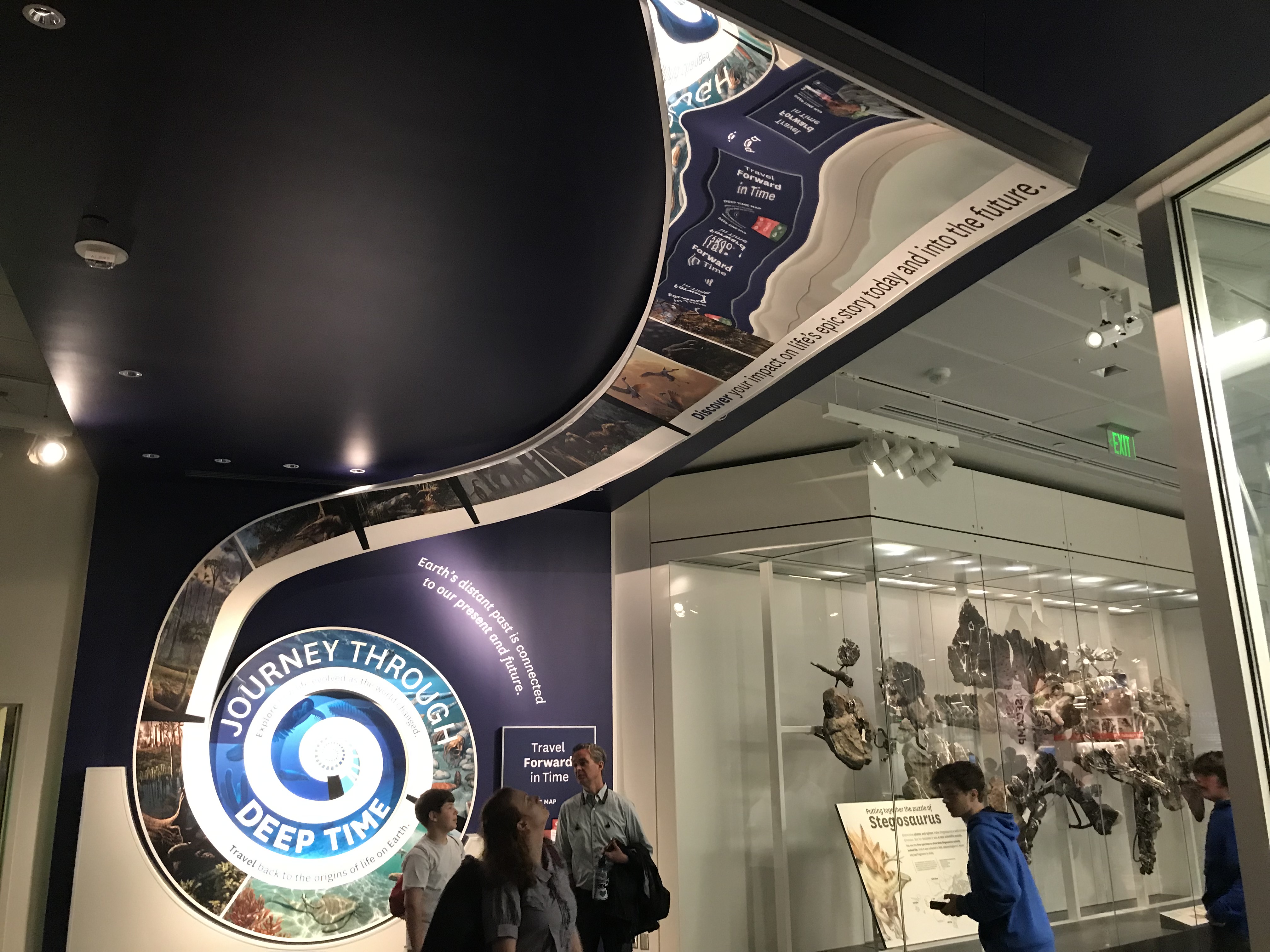
The Time Spiral, illustrated by Julius Csotonyi, appears at both entrances to Deep Time. It is the spiritual successor to John Gurche’s Tower of Time.

As has been well publicized, Deep Time contains a strong message about how humans are changing the Earth in unprecedented ways. This is introduced the moment visitors enter the exhibition, with an illustrated spiral of time that ends in a mirror. The implication is simple, but direct: we are part of the story of our planet.

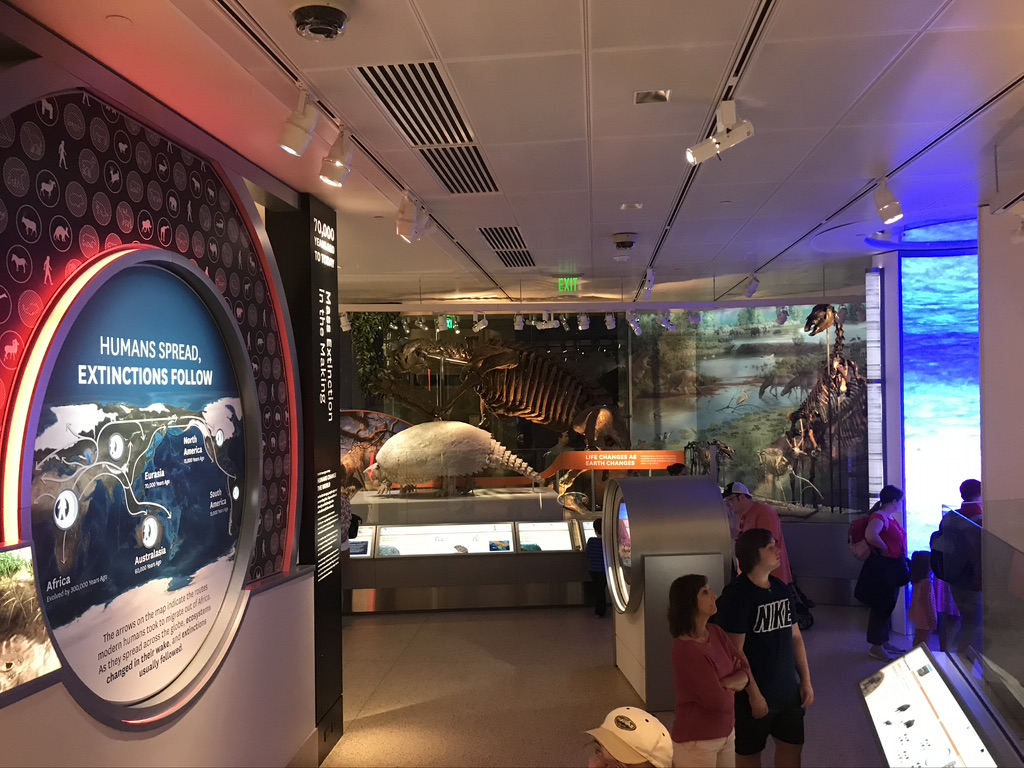
Throughout the hall, visitors are reminded of humanity’s connection to the rest of the planet in different ways. In one corner, an interactive (admirably starring a gender-neutral cartoon host) illustrates the evolutionary origins of different features of the human body. In the Quaternary section, large graphics present the percentage of megafauna on each continent that went extinct as humans spread around the globe.

The bridge is a highly-visible and centrally-located destination in the Deep Time hall.

The hardest-hitting message, however, is about the modern climate crisis. The fact that industrial activity is profoundly warming the climate—a change that comes with dire consequences—is presented in clear, matter-of-fact language. It’s not preachy, it’s not political, it’s just the truth. The exhibition does not explicitly say we should stop harming the planet (although we should), but it clearly presents the evidence that we are, and that we have the ability to stop. This information is centered on an overlook called “the bridge.” The centrality of this location and its proximity to the dinosaurs makes the climate narrative unmissable. The nature of the modern media landscape is such that many NMNH visitors may well have never seen this message presented in non-political terms. I’m eager to see the results.

Layout

The Jurassic and Permian are visible from the Cretaceous.

One of the earliest decisions in Deep Time’s development was to restore the original architecture. This had already been done in the north and west wings for the Ocean and Mammals halls, and restoring the east wing would bring back the building’s intended symmetry. This choice dovetailed with an acknowledgement of visitors’ tendency to pinball around an exhibition, rather than view displays in a prescribed order. The team decided to welcome this spirit of exploration. The new hall can be navigated in any order, but still makes sense as a cohesive story.

Most of the displays are on island platforms. Each platform represents a particular time period, and for the most part, specimens displayed together represent species that would have coexisted in a single ecosystem. Big, show-stopping skeletons are in the center, while smaller specimens and accompanying labels and interactives can be found around the perimeter. Vertical pillars, which are visible from across the hall, indicate where each platform is in time. Meanwhile, mass extinctions are represented by large walls that physically divide the space. The result is a hall where it’s always clear whether the display you’re looking at is earlier or later in time than any other display, even though you can circulate among the islands at will.

The remounted Diplodocus can be seen from anywhere in Deep Time, as well as from the rotunda.

NMNH gets several million visitors each year, so traffic flow is a major concern. This was a problem in the old hall, where decades of partial renovations had resulted in several frustrating bottlenecks. The new hall allocates nearly 50% of its floor space to visitor movement. A central avenue allows quick movement around the exhibition. Visitors short on time can pop in and “snack” on a few displays, rather than investing in the whole meal. Unlike linear exhibitions, visitors can backtrack without disrupting the traffic flow.

Furthermore, most of the hall can be viewed from multiple perspectives. Another function of the bridge is to provide an elevated vantage point. From the overlook, visitors can see Tyrannosaurus and Diplodocus over the heads of the crowd. Digital interactives show highlights on a 3-D model of the hall, helping visitors think about the entire history of life all at once. Actually, this is one area where I wish the developers had gone further. I would have loved to see displays that encouraged visitors to compare the animals visible on either side of the mass extinctions, or to think about what environmental factors led to the evolution of very different megaherbivores (the sauropods and proboscideans) at different points in time.

Animals

Dimetrodon prepares to scavenge Ophiacodon, while Xenacanthus and Diplocaulus swim below.

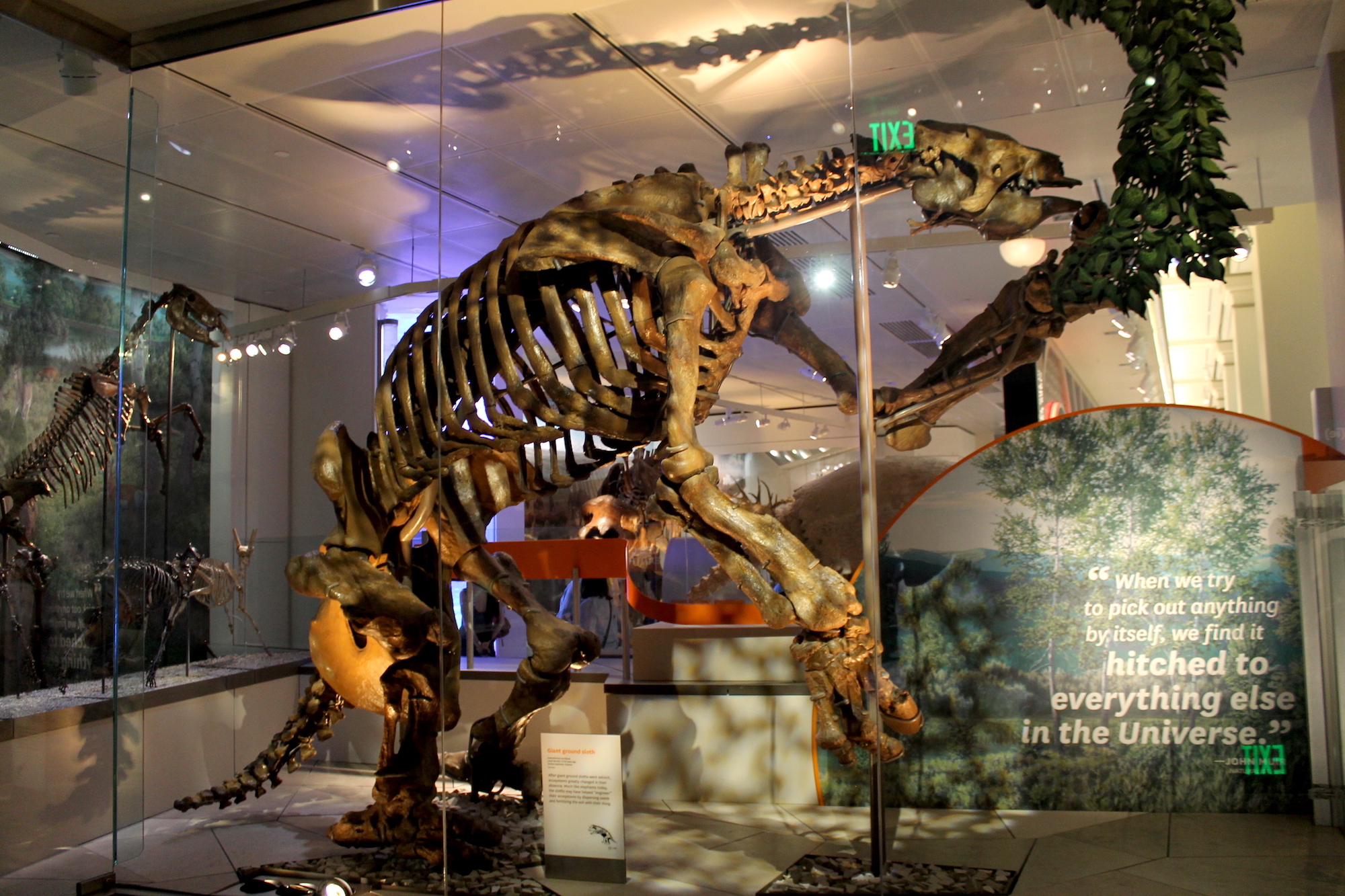
Lead Curator Matt Carrano came to the project with a vision. He wanted the mounted skeletons to read as animals, not as monsters or trophies. That meant they should be doing the sorts of things that animals do. Nearly every mount tells a story. The well-publicized Tyrannosaurus is dismembering a Triceratops: look closely and you’ll see fractured ribs, a broken horn, and that the Triceratops‘s head is actually separated from its body. The Eremotherium is plucking Osage oranges from a tree, referencing the hypothesis that these inedible fruits were cultivated by recently-extinct megafauna. A Menoceras is lying on its side in a characteristic rhino resting pose. The Stegoceras is scratching its jaw. Each pose gives the mounted skeletons a reality that is rarely seen in fossil exhibits. These are the remains of once-living creatures, after all. They got hurt, hungry, tired, and itchy.

Although the resting Menoceras bears a certain resemblance to the Roosevelt white rhino on the other side of the museum, this was a lucky accident rather than a deliberate quote.

Another more subtle reason these mounts are so successful is that the animals’ feet are always touching the ground. Many mounted skeletons are elevated on their supports, which makes the interplay between the armature and the base (typically built separately) easier to manage but also makes the skeletons look like they’re hovering. Grounding the animals’ feet was extremely challenging: ultimately, beds of gravel were used to smooth out the point of contact. Few visitors are likely to notice this achievement specifically, but the result is that each skeleton is imbued with weight and energy rarely seen in similar displays.

Placing the ground sloth at the entrance was an early design decision.

Research Casting International prepared and constructed most of the mounted skeletons, while NMNH preparators handled the rest in-house. The scope of the mounting and remounting of fossil skeletons for Deep Time is probably unprecedented. For comparison, the renovation of the American Museum of Natural History paleontology halls in the mid 90s involved two remounts (Tyrannosaurus and Apatosaurus) and around ten new skeletons. By my rough count, Deep Time has 40 remounts and 13 brand-new mounts, to say nothing of the work that went in to dismantling the skeletons from the old hall that have been returned to collections.

Discovery

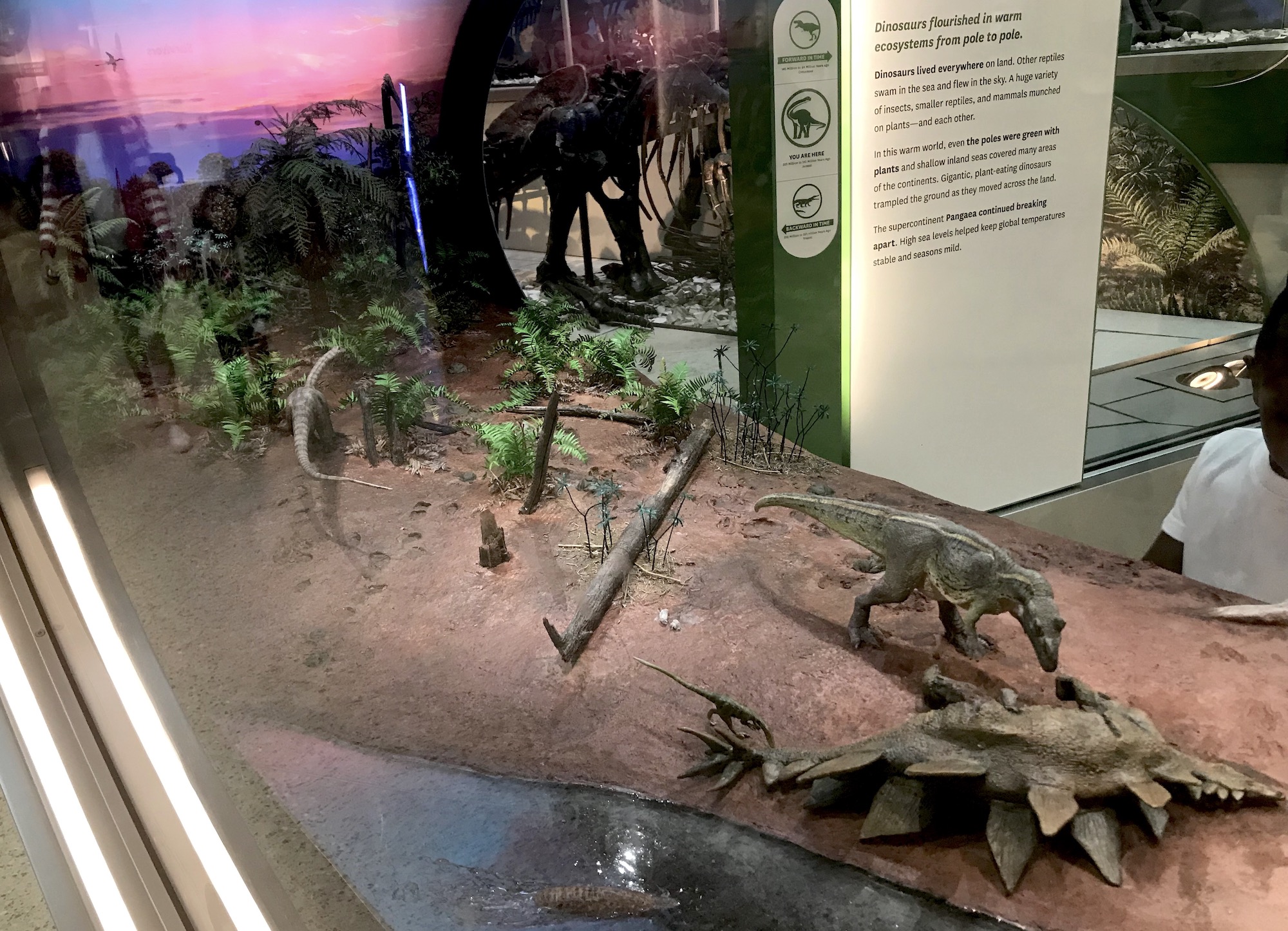
The Jurassic diorama, one of more than a dozen new scenes created for Deep Time.

It wasn’t until my second day exploring Deep Time that I noticed the dioramas cycle between day and night. I can only imagine the challenge the designers faced in arguing for this feature. It doesn’t have any particular educational purpose, after all, and only a small fraction of visitors are likely to notice it. Still, for those who do notice (I’m picturing a child poring over every detail of the miniature landscape while their parents wait impatiently), the effect is beautiful and magical. Those are the moments exhibition creators strive for.

Good thing that glass is there or we’d be in a real pickle.

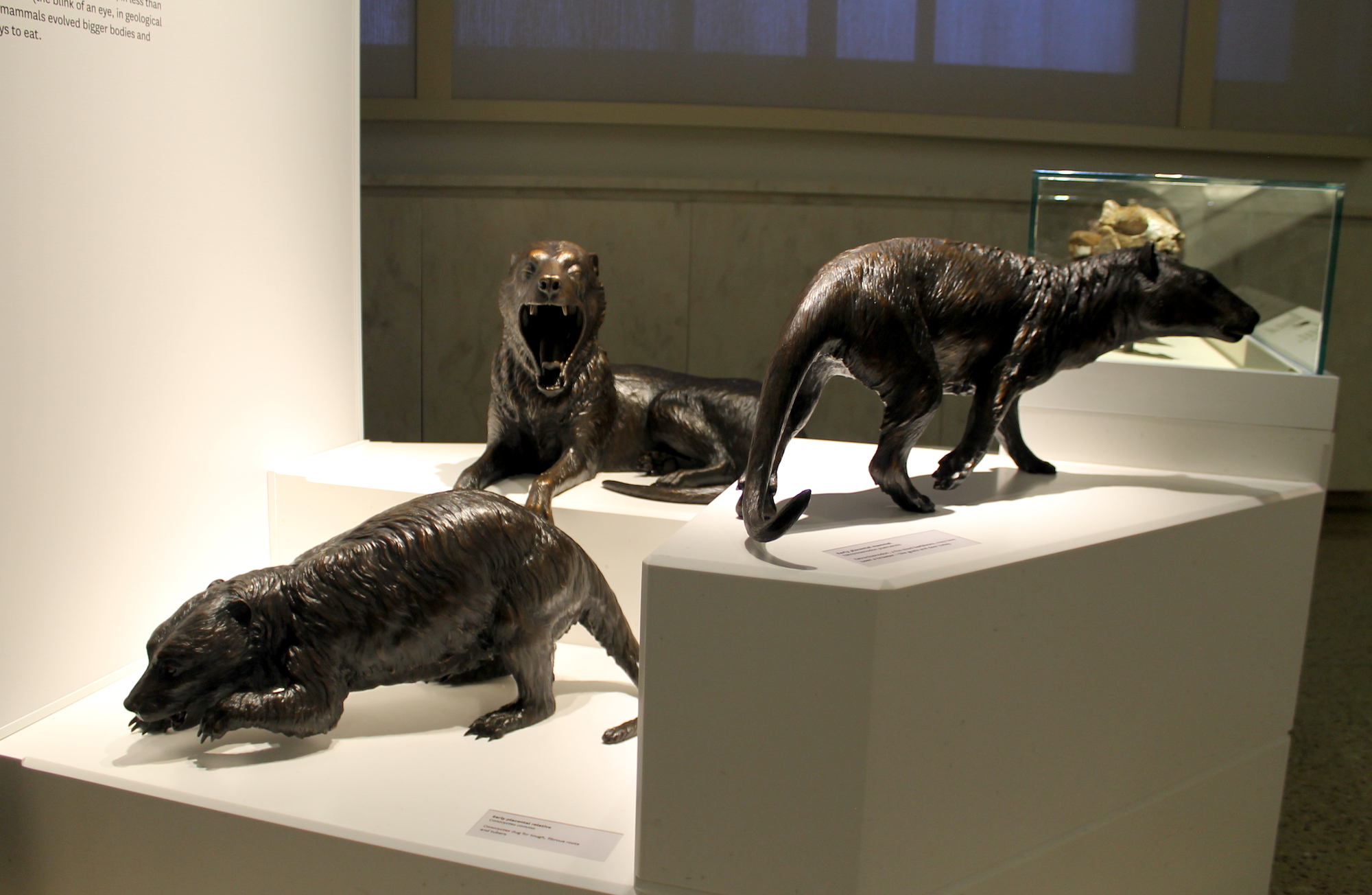
A stroll through Deep Time is filled with similar moments of discovery, on many different scales. Follow the gaze of the two bronze Ice Age humans and you’ll realize they’re reacting to the Smilodon stalking nearby. Look beneath the platforms where Tyrannosaurus and Dimetrodon are standing and find a secret world of freshwater fossils. Although there are few levers to pull and wheels to turn in the exhibition, tactile experiences abound. There are touchable fossil casts, and a plethora of life-sized bronzes to interact with. I’m particularly enamored with the Mesozoic and early Cenozoic mammals: these are difficult to conceptualize with fossils alone and the bronzes bring them to digging, scratching, yawning life.

Seriously, these guys rule.

There are a hundred more examples, but I should stop for now. In short, Deep Time is an incredible exhibition. You should visit, and then visit several more times, because you’ll undoubtably discover new things to wonder at.

Reference

Marsh, D.E. 2019. Extinct Monsters to Deep Time: Conflict, Compromise, and the Making of the Smithsonian’s Fossil Halls. New York, NY: Berghan Books.

6 Comments

Filed under Deep Time, dinosaurs, education, exhibits, fossil mounts, mammals, museums, NMNH, opinion, reviews

One Year to Deep Time

When the fossil halls at the National Museum of Natural History closed for renovation in 2014, five years seemed like an interminable amount of time to wait for the reopening. But the NMNH crew has been hard at work, and suddenly the June 2019 debut of the new National Fossil Hall is almost in sight. I’ve mostly avoided reporting on each and every bit of information pertaining to the new exhibit, but as we approach the one-year-to-opening milestone the drip is likely to become a deluge. That means that this is probably a good time to do a round-up of everything that has been officially revealed about the new exhibit up to this point.

The East Wing Restored

The original architectural grandeur is back. Images from of the Smithsonian Institution Archives and the Washington Post.

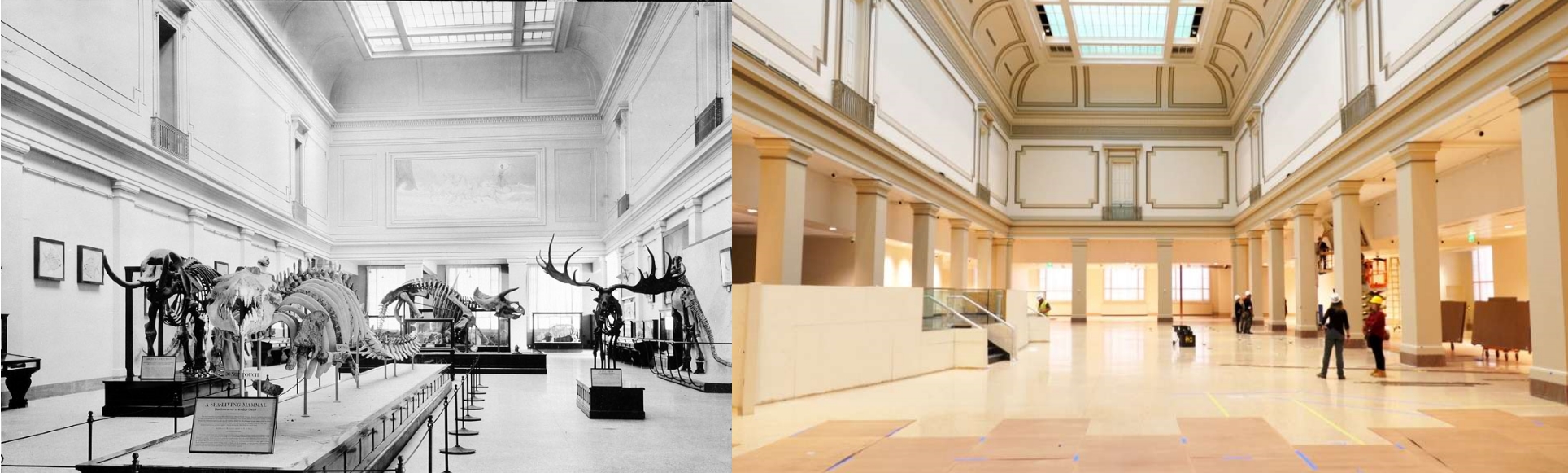
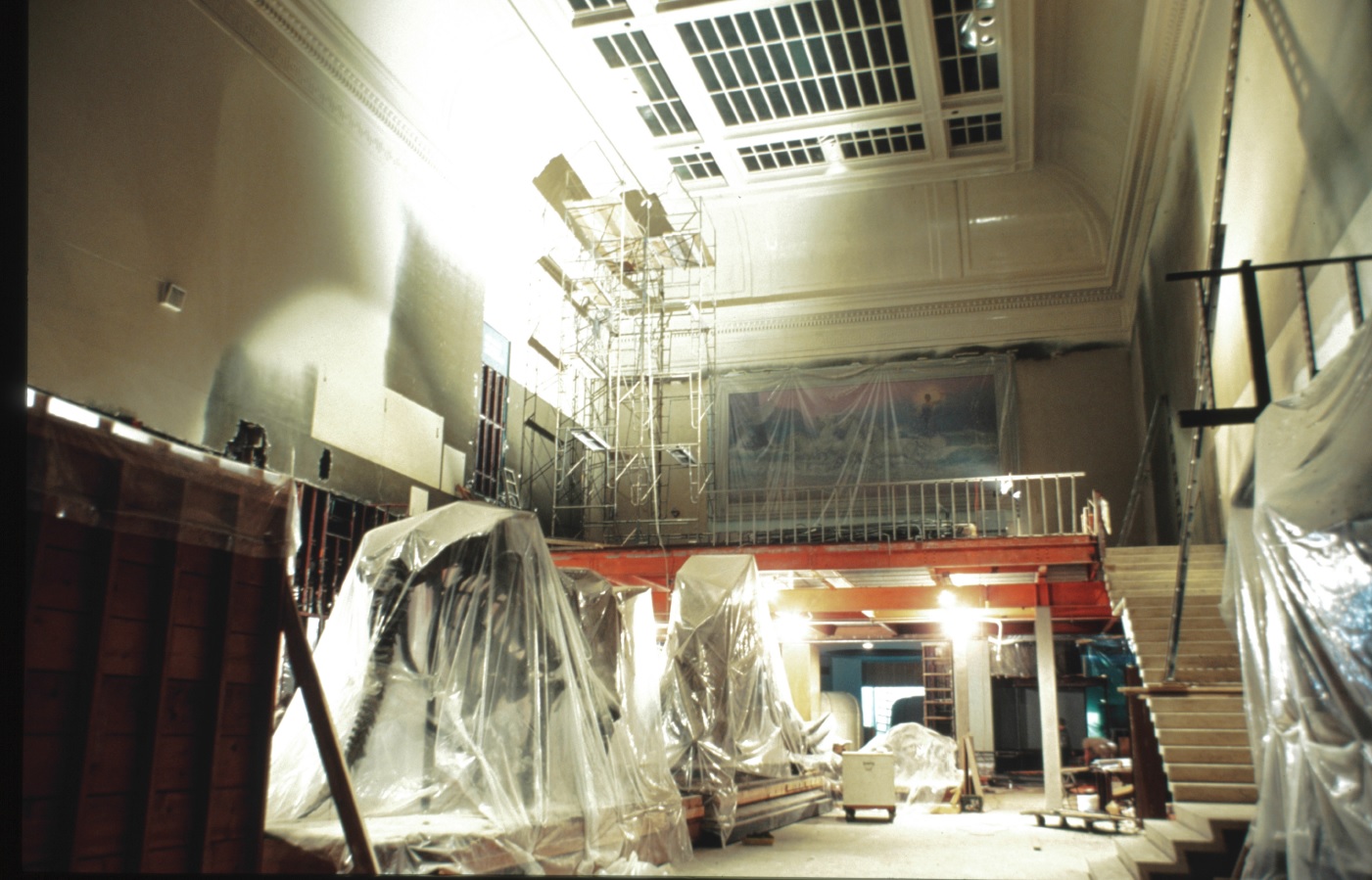
The building that is now NMNH opened in 1910. Its granite-heavy, Beaux Arts construction was a departure from the Victorian style of the first United States National Museum, but it looked right at home with the other federal buildings around the National Mall. As originally designed, the building resembled a squat “T” from above, with three large wings (facing east, north, and west) extending from a central rotunda. The east wing — a vast space with bay windows, intricate plaster detailing, and a skylight three stories up — has always housed fossil displays. Over the course of the 20th century, however, the once spacious hall was repeatedly carved into smaller sections. Windows and architectural flourishes were covered up, and by the time the last round of renovations was completed in 1985 the east wing had become cramped and gloomy.

A major part of the current renovation has been returning the space to its original glory. Grunley Construction spent two years restoring and recreating the east wing’s 1910 architecture, as well as updating infrastructure and improving the space’s energy efficiency. Most of this process was visible via webcam. Last November, the Washington Post provided some stunning floor-level photos of the restored hall. Wide open and filled with natural light, the renovated hall is glorious to behold, even without the fossils.

A Story of Environmental Change

Many exhibits and books about paleontology portray the evolution of life as though it occurred in a vacuum. In fact, the evolution of animals and plants is primarily driven by environmental upheaval — changing climate, shifting geography, and so forth. Sometimes this relationship goes the other way, and keystone organisms (such as grass in the Neogene or humans in the present day) drastically change the world around them. Environmental change over time is at the heart of the National Fossil Hall’s story. It’s worth quoting the official theme statement in full:

Visitors to the Museum will be able to explore how life, environments, and ecosystems have interacted to form and change our planet over billions of years. By discovering and harnessing the tools and methods paleobiologists use to study fossils, visitors will gain a deeper understanding of how the world works.

The distant past affects all of us today and will continue to do so in the future. How will climate change impact the natural world and our daily lives? How can we make informed choices about our ecosystems as individuals and as a species? How can we all become informed citizens of a changing planet?

These themes are reflected by the physical layout of the exhibit, which is chronological but not strictly proportional. Specimens are clustered onto islands situated throughout the open floorplan, each representing North America at a particular point in time. While anchored by a few charismatic mounts, the islands also include all manner of small animals, invertebrates, and plants that were part of that environment. In this way, each island shows a complete ecosystem that existed at a particular time. Moving among these displays, visitors should get a sense of how phenomena like climate change and faunal interchange can completely transform an ecosystem over millions of years.

During the development process, curators and exhibit specialists agreed that the hall should not be an encyclopedia of past life. Instead, everything ties back to main story. Big, showy specimens like dinosaurs are contextualized as products of environmental change. Meanwhile, fossils that visitors might otherwise overlook but are critical to our understanding of ecological change over time, like pollen grains or leaves, are literally and figuratively pedestaled to emphasize their importance.

The Nation’s T. rex

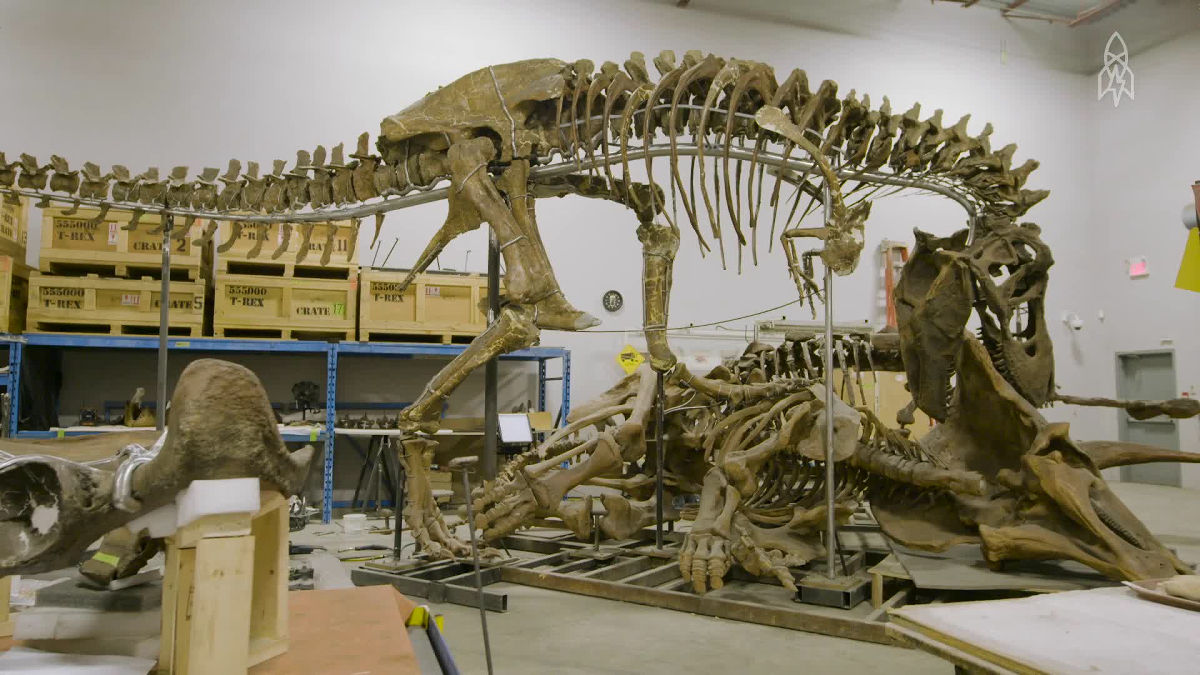
The Nation’s T. rex, temporarily assembled in the Research Casting International workshop. Image by Great Big Story.

The centerpiece of the National Fossil Hall is a real Tyrannosaurus rex skeleton — the first real T. rex (as opposed to a cast) the Smithsonian has ever displayed. The specimen in question has been known as the “Wankel Rex” since it was discovered by avocational fossil hunter Kathy Wankel in 1988. It has been held in trust at Bozeman, Montana’s Museum of the Rockies, but since it came from Army Corps of Engineers land it is technically owned by the U.S. federal government. Although several casts of the Wankel Rex are on display around the world, the original fossils have never before been assembled into a standing mount. That’s changing now that the fossils have been transferred to the Smithsonian.

Curator Matt Carrano designed a deliriously cool pose, with the Tyrannosaurus poised as though prying the head off of a prone Triceratops. NMNH is visited by eight million people every year, so the Wankel Rex (now the Nation’s T. rex) will soon be the most viewed T. rex skeleton in the world. The Nation’s T. rex story has been covered by the Washington Post, NPR, National Geographic, and Smithsonian Magazine, among many others.

Poses that Show Behavior

The remounted mammoth demonstrates plausible behavior. Left image by the author, right image from Smithsonian Magazine.

Historically, mounted fossil skeletons were most often given anatomically neutral poses. This was a structural engineering necessity as much as it was a curatorial preference. However, modern technology has made it possible to safely display casts and even real skeletons in surprisingly dynamic poses. At many museums, this has usually manifested as mounted skeletons fighting or simply roaring at each other. In contrast, the NMNH team has endeavored to create dynamic mounts that show a greater variety of interesting behavior evidenced by the fossil record. For example, the remounted mammoth (shared during a talk by NMNH Director Kirk Johnson) is pushing its tusks along the ground, as if clearing snow off the grass. The Allosaurus (headless in the right image) is crouching next to a nest mound. Even the aforementioned T. rex and Triceratops scene is inspired by real research into T. rex feeding mechanics.

The Anthropocene

Most exhibits about the history of life close at some point in the past, but the National Fossil Hall continues the story into the present day. We are in the midst of an extinction event of our own making, and anthropogenic climate change, habitat destruction, and invasive species are as dangerous as any asteroid. During our very limited time on Earth, humans have altered the climate, the rate of erosion, and the acidity of oceans. Whether or not you think adopting “Anthropocene” as a formal geologic unit is reasonable, we have inarguably changed the planet in geologically measurable ways.

Curator Scott Wing discussed his approach to interpreting the age of humans in a Geological Society of America talk and in an Earth Matters blog post. The key is to make it clear that in spite of our destructive potential, humans have the power to mitigate and manage the consequences of altering the world around us. The exhibit will show visitors how they can take responsibility for humanity’s collective legacy.

Marsh Dinosaurs Re-imagined

An updated Stegosaurus replaces the 2004 cast, which replaced the original 1913 mount. Images from the Smithsonian Institution Archives and Kirk Johnson on twitter.

The new Edmontosaurus cast replaces the original mount, which had gone unmodified since 1904. Images by NMNH Paleobiology and Will S.

Most of the dinosaur skeletons exhibited at NMNH were assembled before 1920. Originally excavated by O.C. Marsh’s crews in the 19th century, these specimens have gone on to lead second lives on display, and have been seen by generations of visitors. Nevertheless, time has taken its toll. Some mounts have been rendered out-of-date by new discoveries, while others have gradually deteriorated due to fluctuating temperature and humidity, not to mention constant vibration from passing crowds. Before the fossil halls closed in 2014, NMNH preparators had already dismantled three historic dinosaurs (Triceratops, Stegosaurus, and Camptosaurus) and replaced them with updated casts. Returning these fossils to the collections ensures their continued safety, while also giving paleontologists a chance to study them for the first time in decades.

The renovation has been an opportunity to give other at-risk specimens the same treatment. It was especially important to get the real Ceratosaurus, Edmontosaurus, and Thescelosaurus skeletons off the exhibit floor because these are all holotypes — the original specimens that were used to define the species. Set in plaster on the exhibit walls, these important skeletons were virtually inaccessible. And as the preparators discovered when they removed them, they had not even been fully extracted from the rock they were found in. The real fossils are now available for research, while casts with lively poses and up-to-date anatomy will take their place on display (before anyone panics, the new exhibit will still feature several real dinosaur skeletons).

The Pocahontas Mine

As reported by the Bluefield Daily Telegraph, a Smithsonian crew of paleobotanists, geologists, and exhibits specialists visited the historic Pocahontas Exhibition Mine last November. This coal mine near Pocahontas, Virginia operated from 1882 to 1938, when ceased production and became a tourist attraction. The Smithsonian crew took photographs, video, and silicon molds of the mine’s walls, which are covered with Carboniferous-era plant impressions. A reconstruction of the fossiliferous mine will anchor the Carboniferous section of the exhibit.

Treasures from the Collection

A near-perfect Ophiacodon from Texas. Photo via the NMNH Department of Paleobiology.

A typical natural history museum has less than one percent of its collection on display at any time, and NMNH is no exception. In addition to introducing brand-new specimens and updating old ones, the renovation is an opportunity to bring a variety of never-before-displayed objects from the collections to the display floor. Of the hundreds of specimens earmarked for display, I can only highlight a few.  There’s the historic cast of the plesiosaur Rhomaleosaurus, which has been in the collection since 1895 but never displayed. There’s the skull of the tusked whale Odobenocetops, which preparator Michelle Pinsdorf profiled in a webcast last year. Carrano showed NPR’s Adam Cole a sauropod osteoderm, collected decades ago but only identified recently. And then there’s the near-perfect Ophiacodon pictured above, collected in 1988 by Arnie Lewis and Nicholas Hotton. I remember this guy from my intern days, when it was referred to as “sleeping beauty.”

Research Casting International will start installing the large skeletons this summer, and then the countdown to opening day begins in earnest. Here’s wishing the NMNH team all the best as their years of work finally comes to fruition!

7 Comments

Filed under dinosaurs, exhibits, Extinct Monsters, fossil mounts, mammals, museums, NMNH, ornithopods, theropods, thyreophorans

Looking Back at Fossils: History of Life

The renovated hall 2 upon its initial completion. Photo from Kopper 1982.

It is with some trepidation that I attempt to tell the story of the third incarnation of the National Museum of Natural History’s paleontology exhibits.  For one thing, this was “my” space, insofar that any of us feel ownership over familiar public spaces. I explored these halls regularly as a toddler. I volunteered there as a teenager and interned there after college. More recently, I’ve found myself working among these same displays on a number of occasions as a museum professional*. As such, it is difficult to establish an appropriate amount of cognitive distance, even now that the galleries have been cleared from wall to wall, and new exhibits are being installed in their place.

“Fossils: History of Life” closed for renovation in April 2014. Because this exhibition existed largely unchanged for most of my life, a part of me likes to think of it as something that has always been there. Nevertheless, these displays were designed and built by specific people at a specific point in time. And while the specimens, artwork, and craftsmanship in Fossils: History of Life were nothing short of iconic, the process of putting those pieces together was surprisingly contentious. The creation of this exhibition was beset by internal strife and controversy, as conflicts that had been simmering for decades about the very nature of museums finally came to bear.

The Story So Far

The east wing of the National Museum of Natural History (prior to 1964, the United States National Museum) has been home to fossil displays since the current building opened in 1910. From opening day to 1945, the exhibits were primarily under the stewardship of Curator of Vertebrate Paleontology Charles Gilmore. Intermittently called the “Hall of Extinct Monsters,” this iteration was somewhat haphazard in its layout. Like many early 20th century exhibitions, the galleries were filled with a sampling of static objects from the collections, occasionally accompanied by an explanatory painting, map, or model. Gilmore’s version of the east wing remained in place until 1962, when the space was redesigned as part of a Smithsonian-wide modernization project. Between 1953 and 1963, the modernization committee chaired by Frank Taylor oversaw improvements of nearly all of the National Museum’s exhibits. Taylor pushed for exhibitions that catered to laypeople, rather than specialists. Paths visitors might travel through the space, common visitor questions, and consistent aesthetics were all considered when overhauling the east wing fossil halls.

Modernization-era version of hall 2, completed in 1962. Photo courtesy of the Smithsonian Institution Archives.

As Rader and Cain convincingly argue, the transition from exhibits dominated by cases of specimens with minimal interpretation to story-driven learning experiences began in most American museums at the beginning of the 20th century. However, this was not the case at the Smithsonian. By the 1950s, the National Museum had developed a reputation as an old-fashioned place. Its neo-classical exhibition halls mostly contained rows of cases jam-packed with specimens, and that was the way the curatorial staff liked it. Entomologist Waldo Schmitt summed up the prevailing institutional attitude when he said that exhibits should be nothing more than “show windows for displaying our wares and accomplishments.” Curators like Schmitt worried that shoehorning objects into generalized narratives about nature and anthropology would distort or occlude their meaning and provenance. NMNH Director Remington Kellogg agreed, and Taylor’s modernization committee faced an uphill battle with every exhibit they sought to make more broadly accessible.

It was a stalemate between two competing visions for what a museum should be. The 1962 fossil hall renovation at NMNH experimented with dioramas, color-coded signage, and text divided into area titles, headings, and subheadings, but compared to peer institutions it was hardly revolutionary. This could be partially attributed to the design process, in which the development of each of the four east wing galleries (halls 2, 3, 4, and 5) was led by a different curator. As a result, the galleries landed in different places on the spectrum between traditionally-arranged specimens and cohesive narratives.
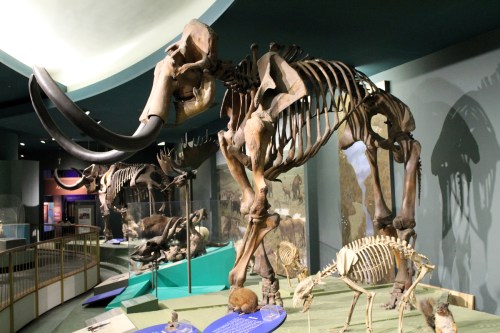
The 1974 Ice Age Hall was a turning point for NMNH exhibits. Photo by the author.

Nevertheless, a turning point was on the horizon. The east wing modernization plan also called for the annexing of hall 6 (formerly the home of geology exhibits) as a dedicated Hall of Quaternary Vertebrates. In part due to the larger number of new specimens being prepared for display, this Quaternary Hall was repeatedly delayed. By the time hall 6 was ready to reopen in 1970, its old-fashioned organization was no longer what administrators wanted. In 1973, Director Porter Kier decided to shut down the nascent Quaternary Hall and assemble a new team to redesign it. A group of geologists, anthropologists, paleontologists, and education specialists reworked the exhibit into an interdisciplinary exploration of the ice ages. Continental glaciation, the evolution and extinction of large mammals, and the rise of humans were all presented as a single, holistic story. For NMNH staff, it was clear that the 1974 Hall of Ice Age Mammals and the Rise of Man represented the future of exhibition at the museum. From that point onward, exhibit design would be a collaborative process between curators, educators, and exhibit specialists. Moreover, the galleries themselves would be seen more like fully-formed architectural spaces, rather than modular associations of artifacts. Above all, the primary purpose of exhibits would be the education and engagement of visitors.

Planning “History of Life”

After the positive reception of the Ice Age Hall, Kier were eager to retool the rest of the ever-popular paleontology galleries in the same manner. In early 1977, he appointed fossil cnidarian specialist Ian Macintyre to chair a committee of curators tasked with devising an overarching plan for the exhibit renovation. Joining Macintyre was Daniel Appelman (geology), Robery Emry (fossil mammals), Leo Hickey (fossil plants), Nicholas Hotton (fossil reptiles), Kenneth Towe (early atmosphere), and Thomas Waller (fossil mollusks). In June, the group submitted their theme statement:

The fundamental theme which has been developed in the context of a single all-encompassing hall is the history of the progress of life as revealed by the geological record in terms of:

  1. The great periods of time involved in the evolution of life forms preserved
  2. The changing environmental conditions associated with the evolutionary process
  3. The increase in diversity and complexity of life forms

The phrase “all-encompassing hall” is key. The curators agreed that, unlike the 1962 iteration, the new exhibit should have a single voice and follow a single narrative. This decision was influenced not only by changing expectations for exhibits, but also by recent developments in their own department. The NMNH Division of Paleontology had been disbanded in 1963, and paleontologists were reorganized into the Department of Paleobiology. The new title represented a push among research staff to focus less on descriptive systematics and more on how the fossil record can inform our understanding of evolution and ecology. Macintyre’s team wanted to bring the same change of focus to the new exhibit.
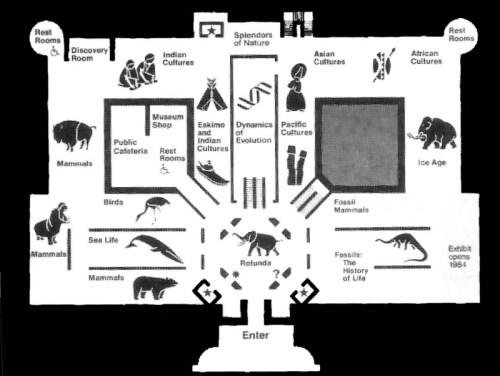
Visitor map of NMNH ground floor, circa 1982. Adapted from Yochelson 1985.

The curators spent the next year hashing out the hall in further detail. Early on, the group agreed that an illustrated column of geologic time should be the exhibit’s centerpiece. This would eventually manifest as the “Tower of Time,” with key artwork provided by John Gurche. The group also decided to break the main “progress of life” concept into several smaller storylines, which they counterintuitively called “highlights.” The highlights would include “The Earliest Traces of Life,” “Conquest of the Land,” “Reptiles: Masters of the Land,” “Living Fossils,” “Fossils and Industry,” and “Mammals in the Limelight,” among others.

Each highlight would correspond to a part of the east wing exhibit space. The central, high-ceilinged hall 2 would be occupied by Reptiles: Masters of the Land, which included the dinosaurs, as well as a substantial display of of Paleozoic marine invertebrates at the rotunda-side entrance. A new mezzanine and ramp over hall 2 would include Living Fossils, Fossils and Industry, the evolution of flight, and fossil fishes. Hall 4 would feature Earliest Traces of Life and Conquest of the Land. Mammals in the Limelight would occupy hall 3, and hall 5 would remain empty for the time being. For practical reasons, the highlights would each be overseen by a different subcommittee of specialists, and they would be built and unveiled on a staggered schedule. Still, the main committee would oversee the entire process and make sure the writing and visual design of each section came across as parts of a cohesive whole.
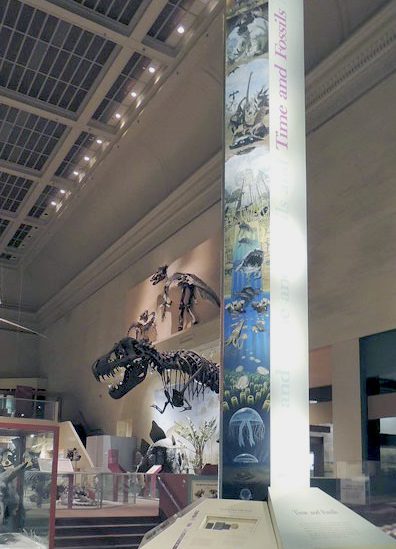
John Gurche’s Tower of Time was the centerpiece of the exhibit. Photo by Mary Parrish. Source

Between the lines, the need to include dinosaurs was apparently seen as a nuisance by at least some of the curators. There were no dinosaur specialists on the exhibit team, and indeed, NMNH had not employed one since Gilmore retired in 1945. Although the dinosaur renaissance was picking up speed by the late 70s, for NMNH paleontologists dinosaurs were overexposed and less interesting than their own research subjects. The museum’s eleven dinosaur mounts were decades-old relics, but their popularity among visitors obligated the curators to include them. Disarticulating and remounting the skeletons was not in the budget, and many of the dinosaurs were too big to cart out of the hall in one piece. That left the exhibit team with the unenviable task of finding places for the existing mounts in addition to all the new specimens and models they wanted to add, while still leaving enough room for visitors to get around. As internal legend has it, the giant slab of Climactichnites tracks was placed at the front of hall 2 specifically to block the view of the dinosaurs from the rotunda.

You’ll look at invertebrate fossils first, and you’ll like it! Photo by Loren Ybarrondo. Screen capture from NMNH Virtual Tour.

Although Macintyre and his curator colleagues were the only formal members of the exhibit committee, the Department of Exhibits was also involved from the start. Exhibits staff at NMNH had increased from six people in the 1960s to over 30 by 1985. This expanded force included all manner of artists, architects, industrial designers, and communications specialists, and they had an impressive on-site workshop to make use of their talents. In the 1980s, everything from silk-screened signage to cabinetry to dioramas could be created in-house. However, the increased professionalization of exhibits specialists required curators to relinquish some of the control they historically had over displays.

This, unfortunately, led to the two departments regularly butting heads. Curators complained that exhibits staff did not know enough of the science, and that the ideas they were generating simplified content to the point of being inaccurate. Meanwhile, exhibits staff had to deal with the fact that the curators had final approval authority over all content, but typically saw the exhibit work as secondary to their research obligations. Deadlines were routinely missed, leading to frenzied, last-minute crunch periods. The result was signage with avoidable errors making it the exhibit floor, and a culture of finger pointing in all directions.
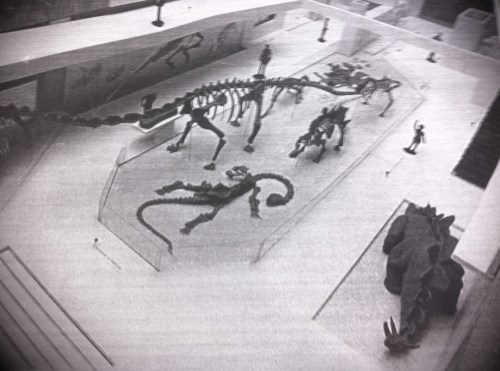
This clay and paper model of the reconfigured hall 2 was produced during the planning period. Courtesy of the Smithsonian Institution Archives (but the terrible photo is my fault).

John Elliot’s Diana of the Tides fresco was briefly visible during the renovation of hall 2. Photo courtesy of the Smithsonian Institution Archives.

Two postdoctoral research associates—Jessica Harrison and George Stanley—were brought on board to help with the exhibit design and construction. Harrison and Stanley had offices in both the Exhibits and Paleobiology departments, and were well-liked by both groups of staff. The most difficult part of their job was drafting label copy. Text had to be rewritten again and again to please educators who found it too technical and content specialists who demanded more precision and detail. Harrison in particular was widely praised for effectively explaining scientific concepts to the exhibits staff and for guiding the key themes of the exhibit from concept to completion.

Specimens and Artwork

The east wing exhibits formally closed for renovation on May 29, 1979. In spite of the administrative-level disagreements, the museum’s technical staff was producing great creative work in short order. The recent expansion of the Department of Exhibits meant that nearly everything that went into the exhibit was created in-house (today, large exhibitions are often created in collaboration with contractors). Only the biggest construction projects, such as the addition of a mezzanine over hall 2, had to be contracted out.
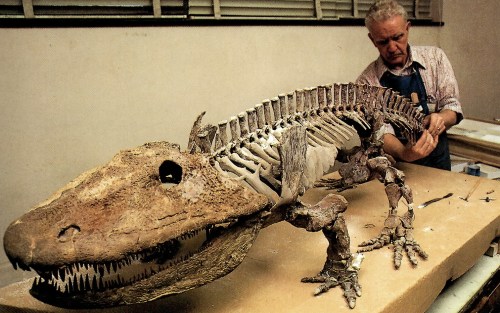
A preparator puts the finishing touches on Eryops. Photo from Smith 1994 (previously labeled Arnie Lewis, see comments).

Scores of never-before-exhibited specimens were prepared for Fossils: History of Life. Examples include a 4.6 billion-year-old meteorite from Australia and the reconstructed jaws of Carcharocles megalodon. Preparator Arnold Lewis led the creation of the new mounted skeletons, which included Eryops and Strobodon. Some existing mounts were updated, including Dimetrodon, which was given a longer tail. The most ambitious new mount was Allosaurus, or as Hotton insisted on calling it, “Antrodemus.” The Allosaurus (USNM 4734) came to NMNH in the 1890s with the rest of the Marsh collection, but only the skull and a few other pieces had ever been displayed. Lewis spent two years creating the mount. He started by preparing the bones that had never been completely freed from the matrix they were found in. After laying the skeleton out in a giant sandbox, Lewis secured the bones one at a time to a custom steel armature. This form-fitting structure proved to be almost invisible against the dark grey bones. Unlike most theropod mounts of the time, Lewis’s Allosaurus included belly ribs, modeled in rubber after those of a crocodile.

Antro – er, Allosaurus. Photo by the author.

Fossils: History of Life also called for a number of new paintings and dioramas. Peter Sawyer painted a cyclorama of a primordial Archean landscape for the Earliest Traces of Life section. Robert Hynes contributed several murals, as well, including a beach scene and a Cooksonia marsh for Conquest of the Land. In addition to the key art on the Tower of Time, John Gurche provided illustrations for the horse evolution cul-de-sac and the backdrop for a new lungfish diorama. Jay Matternes’ Cenozoic murals were carried over from the old exhibit.
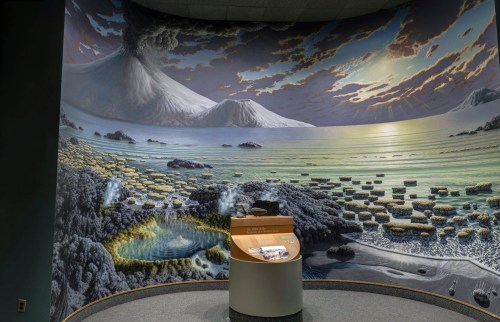
Sawyer’s recreation of Archean Greenland. Photo by Loren Ybarrondo. Screen capture from NMNH Virtual Tour.
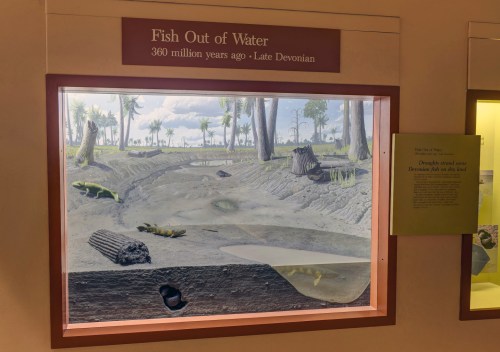
Diorama depicting the earliest land vertebrates, with a background by John Gurche. Photo by the author.

George Merchand’s marine dioramas and Norman Deaton’s dinosaur dioramas were reused, while the NMNH exhibits shop produced several brand new displays. In addition to the aforementioned lungfish scene, these included a recreation of the Burgess Shale environment and a group of eurypterids patrolling the Silurian shallows. There was also a walk-through diorama of a Cretaceous Maryland forest, featuring reconstructions of some of the earliest flowering plants.

The Smithsonian’s central exhibit shop handled the most challenging projects. Their biggest contribution was the life-sized Quetzalcoatlus model. The artists started with a clay miniature, then moved on to a 1/6th scale fiberglass model. With final approval from Nicholas Hotton and Jessica Harrison, the team moved on to the 40-foot final version. The wings were constructed like those of airplanes, with a hollow steel rod supporting wood and aluminum trusses. The wing membranes were plastic, and translucent in the right light. The head and legs were sculpted in clay then cast in plastic, and the body was covered in deer fur. Exhibits Central also built a set of cycads to accompany the historic Stegosaurus model. Several of these were real conifers, freeze dried and covered in glycerin.
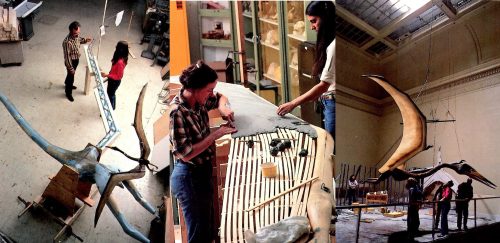
How to built a Quetzalcoatlus in the late 70s. Photos from Kopper 1982.

Finally, Fossils: History of Life included some of NMNH’s first forays into video displays. The “Enter Life” film explored possible scenarios for biogenesis. An animated film starring “Frank Anchorfish” and “Arthur Pod” (voiced by DC-area newscasters) was a whimsical take on the challenges of moving from the aquatic to the terrestrial realm. A popular, albeit short lived, part of the exhibit was “A Star is Hatched,” which featured clips from Hollywood dinosaur movies accompanied by discussion of dinosaurs’ pop culture significance.

Legacy

On April 17, 1980, Hall 4 – with exhibits covering the origins of life, the transition to life on land, and Paleozoic and Mesozoic plants – was the first part of the east wing to reopen. The dinosaur-filled hall 2 followed on December 4, 1981. These initial phases of Fossils: History of Life were generally well-received by the public, although some media critics scoffed at the silly puns and cultural references in the label copy (“A duckbill in every pot,” “the better to eat you with, my dear,” and so forth). Robert Emry took over for Ian Macinyre as lead curator for the final phase of development and construction. After a few delays, Mammals in the Limelight in hall 3 was ready for visitors on May 30, 1985.

Behind the scenes, the occasionally tense working relationships and difficulty meeting deadlines contributed to major changes to how exhibits are put together at NMNH. When Richard Fiske took over as Director in 1983, he promoted Beth Miles, Sheila Mutchler, and Sue Voss from the Department of Exhibits to formal members of the paleontology exhibit team. A dedicated project manager position was added, and formal guidelines were prepared for exhibit-related duties. A key part of this formalized exhibit protocol was explicit acknowledgement that exhibits (not research and collections) are the public face of the museum and therefore the primary impetus for public support. Maintaining that support meant creating visitor-focused exhibits that are as relatable, educational, and entertaining as possible. This effectively killed the old idea of exhibits as mere showrooms for collections. Research and collections staff were no less important to the identity and purpose of the museum, but as far as exhibits were concerned their content knowledge would have to go hand in hand with other kinds of expertise. Exhibits and education specialists took leadership roles on future exhibit projects, a system which remains in place to this day.
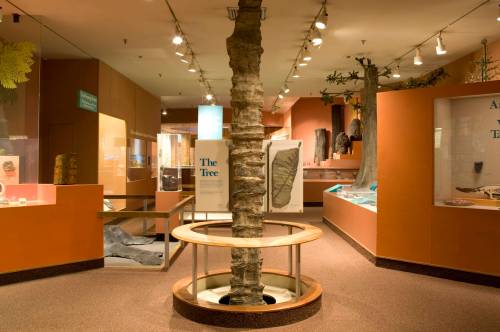
A Callixylon trunk was a focal point in hall 4. Photo by Chip Clark.

Fossils: History of Life saw many changes over its 33 year life span. A Star is Hatched was one of the first displays to go. While popular among visitors, scientific staff hated the film because it trivialized exhibit content and featured long-outdated images of dinosaurs (interacting with modern humans, no less). The theater built for A Star is Hatched was eventually demolished and replaced with a windowed fossil prep lab, which became one of the most popular parts of the exhibit complex. An enclosure housing a live caiman in the Living Fossils area of the mezzanine only lasted as long as the animal. When the caiman died, the exhibit was boarded up and never replaced. Later, the Flowering Plant Revolution area – including the walk-through diorama – was dismantled to make way for a concessions stand. The largest addition to the east wing was Life in the Ancient Seas, an exhibit of marine fossils that filled the unused portion of hall 5. Completed in 1990, Life in the Ancient Seas nearly doubled the number of specimens in the fossil halls and added a splash of color with Ely Kish’s 150-foot mural of extinct marine life.
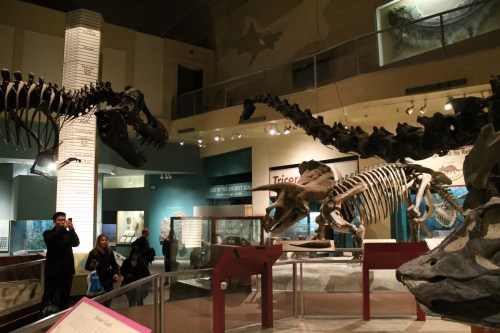
Hall 2 in 2013, with Stan the T. rex and the revised Hatcher the Triceratops in place. Photo by the author.

More recently, three of the historic dinosaur mounts were taken off exhibit and replaced with updated casts. Triceratops, Camptosaurus, and Stegosaurus had been on display since 1905, 1912, and 1913, respectively, and a century of vibration from passing crowds and fluctuating temperature and humidity had taken their toll on the fragile fossils. Ralph Chapman took the opportunity to turn the Triceratops into the world’s first digitized dinosaur, pioneering a process that is standard practice today. The Triceratops that returned to the hall in 1999 was made from foam and plastic molded directly from digital scans of the original fossils. It was accompanied by a mini-exhibit that explained how the new mount was made, and featured artwork by Bob Walters in addition to several new original and cast skulls. Shortly thereafter, NMNH acquired a cast of Stan the Tyrannosaurus as a conciliation prize for missing out on SueCamptosaurus and Stegosaurus were removed and replaced more quietly, but these mounts are of note because much of the casting and restoration work was done by a crew of veteran volunteers.

The mezzanine over hall 2 was closed for safety reasons after a 2011 earthquake. These exhibits never reopened, which meant that visitors could no longer see the pterosaurs, phytosaurs, and Xiphactinus. In the exhibit’s final years, an assortment of new signs were added, including updates to geologic time scale and an explanation of the dinosaur-bird connection. Unfortunately, these updates amounted to little more than bandaids for an increasingly tired exhibit.
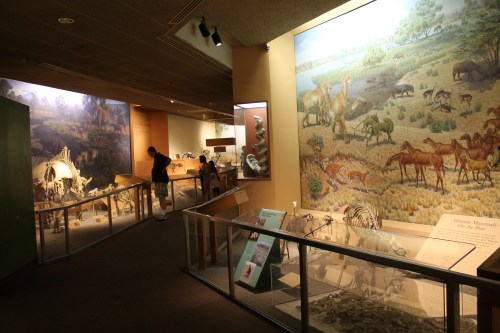
Hall 3’s Mammals in the Limelight was delayed for over a year but finally opened in 1985. Photo by the author.

In retrospect, Fossils: History of Life was conceived at an inopportune time. Some aspects, like the focus on biology and evolution rather than classical systematics, were cutting-edge. However, much of the exhibit content was quickly outmoded by sweeping changes to the field of paleontology that occurred during the 80s and 90s. Conservative ideas about dinosaur endothermy and bird evolution were obsolete within a decade, as was much of the pre-cladistics taxonomy and the central theme of evolution as progress. The exhibit team could not have known how different our understanding of paleontology would be just a few years after the renovated halls debuted.

Moreover, the fact that Fossils: History of Life was built over the skeleton of the 1963 renovation (which was, in turn, built on top of the original east wing exhibits) proved to be a significant handicap. Since the space was never completely gutted, the designers had to work around existing specimens and structures, such as the 80-foot Diplodocus and the three separate doorways off of the rotunda. As a result, creating a logical path for visitors to follow through the halls proved impossible. Updates and additions to the exhibit only exacerbated the issue. As it stood in its final years, there was no way to view Fossils: History of Life in historical order without repeatedly doubling back. Bottlenecks that impeded traffic flow were also a problem, especially during mid-afternoon rush hour at the T. rex.

Despite these issues, Fossils: History of Life was seen – and loved – by tens of millions of visitors during its 34 years on display. After many false starts, in 2012 NMNH was finally able to secure the funding needed to overhaul the east wing properly. For the first time, the five galleries are getting a top-to-bottom revamp: every specimen has been removed and every corner of the exhibit has been redesigned, word by word and inch by inch. The bad news was that this process would take five years. Word about the lengthy closing resulted in minor outrage, particularly from parents of young children. After four decades of designing, building, maintaining, and updating the hall, Museum staff understood completely. As Director Kirk Johnson told the Washington Post, “it’s an iconic, favorite space. People have made lots of memories here.”

Additional photos are below.

*Please note that this is my personal blog and I am solely responsible for its content. For official information from NMNH and the Smithsonian Institution please see  Digging the Fossil Record and the Department of Paleobiology.

References

Bohaska, S. 2013. Personal communication.

Kopper, P. 1982. The National Museum of Natural History: A Smithsonian Museum. New York, NY: Harry N. Abrams, Inc.

Marsh, D.E. 2014. From Extinct Monsters to Deep Time: An ethnography of fossil exhibits production at the Smithsonian’s National Museum of Natural History. http://circle.ubc.ca/handle/2429/50177

Park, E. 1981. A Remarkable Tower of Time Tells the Story of Evolution. Smithsonian Magazine. December 1981, pp. 99 –114.

Parrish, M. 2014. Memories of John Gurche at the National Museum of Natural History. Journal of Natural Science Illustration. 2014:1. https://gnsi.org/journal/memories-john-gurche-national-museum-natural-history

Parrish, M. 2017. Personal communication.

Post, R.C. 2013. Who Owns America’s Past? The Smithsonian and the Problem of History. Baltimore, MD: Johns Hopkins University Press.

Rader, K.A. and Cain, V.E.M. 2014. Life on Display: Revolutionizing US Museums of Science & Natural History in the Twentieth Century. Chicago, IL: University of Chicago Press.

Smith, N. 1994. Official Guide to the National Museum of Natural History/National Museum of Man. Washington, DC: Smithsonian Institution Press.

1986. Statement by the Secretary. Smithsonian Year 1985: Annual Report of the Smithsonian Institution for the Year Ended September 30, 1985. Washington, DC, Smithsonian Institution.

Thomson, P. 1985. Auks, Rocks, and the Odd Dinosaur: Inside Stories from the Smithsonian’s Museum of Natural History. New York,  NY: Thomas Y. Crowell.

Wolf, R.L. and Tymitz, B.L. 1978. Whatever Happened to the Giant Wombat: An Investigation of the Impact of the Ice Age Mammals and the Emergence of Man Exhibit. Washington, DC: Smithsonian Institution.

Yochelson, E.L. 1985. The National Museum of Natural History: 75 Years in the Natural History Building. Washington, DC: Smithsonian Institution Press.

10 Comments

Filed under dinosaurs, exhibits, fossil mounts, mammals, museums, NMNH, paleoart

A 21st Century Hall of Mammals – Part 2

Old and new taxidermy pieces introduce visitors to their extended family tree. Source

Start with A 21st Century Hall of Mammals – Part 1.

The Kenneth E. Behring Family Hall of Mammals opened at the National Museum of Natural History in November 2003. The hall’s airy, minimalist aesthetic represented a radical departure from traditional wildlife exhibits, shaking off taxidermy’s dusty reputation and utilizing the museum’s mammal collection to tell the story of evolution for modern audiences. As we saw last time, developing such an exhibit was not without controversy—everything from the source of funding to the ethics of demolishing historic dioramas came under intense scrutiny. In this post, we’ll explore the work that went into building the exhibit, and how the team’s bold vision eventually paid off.

Building the Animals

The Hall of Mammals cost $31 million and involved over 300 people. However, the job of constructing or updating the 274 taxidermy mounts was largely done by three individuals. John Matthews and Paul Rhymer were the Smithsonian’s last full-time taxidermy specialists. Rhymer in particular was a 3rd generation legacy—his grandfather had worked on the now-dismantled dioramas in the old mammal halls. The newcomer was Ken Walker, an award-winning taxidermist who moved to Washington from Alberta to work on the exhibit.

Beasts take shape in a massive workshop just outside the beltway.

Matthews, Rhymer, and Walker set up shop in a 50,000-square-foot studio in northern Virginia. As museum taxidermists, they took no shortcuts in making the animals they built look right. The process for a creating a given mount would start with hours of research, using photos and videos to get a sense of the animal being recreated. The goal is to get inside the creature’s head, to understand how it thinks, moves, and behaves. Next, the artist builds a clay sculpture, either from scratch or using a commercial mannequin as a starting point. It is at this stage that the pose and attitude are set, and the bulge of every bone and muscle must be perfect. Only then can the tanned skins be stitched onto the sculpture and final adjustments be made. A single animal can take 100 hours or more to create.

Making the animals for the Hall of Mammals was particularly challenging because the designers called for so many dramatic and unusual behaviors. These animals aren’t just standing around—the gerenuk is stretching to full height in order to browse from a tree, the bobcat is leaping to catch a bird in mid flight, and the giraffe is spreading its forelimbs and bending down to drink. Cutaways reveal an anteater’s tongue snaking into an insect nest and a blackfooted ferret interloping in a prairie dog burrow. Achieving this level of dynamism with clay, wax, and dead fur is only possible with a top-notch understanding of biomechanics.

This paca scratching itself behind the ear is an example of the expressive and dynamic mounts produced for the Hall of Mammals. Photo by the author.

90% of the featured animals are on display for the first time, and the pelts came from a variety of sources. NMNH sent out a wishlist to museums, zoos, research facilities, and private collectors. A tree kangaroo came from the National Zoo’s offsite research facility in Virginia. The okapi had recently died of old age at Chicago’s Brookfield Zoo. The playpus and koala were imported from Australia, and the leopard, jackal, and Chinese water deer were from Kenneth Behring’s personal collection.

All of the animals came from existing collections—nothing was killed specifically for the new exhibit. Given modern sensibilities and the museum’s conservation-oriented mission, this was a laudable decision. Nevertheless, using old specimens created many new challenges. The tiger and panda that had been at NMNH for over a century had faded fur, which had to be dyed. The orangutan was a lab animal preserved in a vat of alcohol. The fur was usable, but the face and hands were ruined, and had to be reconstructed. Only a male lemur was available, but some clever alterations turned it into a female carrying a baby. The Brookfield zoo okapi had hooves which were overgrown from lack of use. The taxidermists filed them down to make the animal look like its wild counterparts. In many cases, the taxidermists were not merely making dead animals look  alive, they were creating imaginary lives that these individuals never actually had.

Creating the Space

While the taxidermists were working 10 to 12 hour days building the animals, yet another team was working on creating the spaces they would inhabit. The animals would be set in minimalist, conceptual environments—a terraced floor suggests a watering hole, and metal poles and plastic tubes stand in for branches and trees. The specimens are presented like sculptures in an art gallery, or perhaps trendy gadgets at a tech showcase.

Visitors explore the Apple Store of taxidermy. Photo by the author.

A key aspect of the new hall is the restoration of the west wing’s original Beaux Arts architecture. Designed by the historic Washington architectural firm Hornblower and Marshall, the space was originally a three-story neoclassical chamber with a large skylight and ornate plaster and chrome embellishments. Over the years, false walls had been added to carve the hall into ever smaller spaces to accommodate new exhibits. The original architects may have been on to something, however. NMNH gets upwards of seven million visitors every year, and crowding is a common complaint. To help mitigate this, the Hall of Mammals design team wanted to return to the wide open floor plan, with lots of space for visitor traffic and multiple viewing angles on most specimens. Starting in 1999, Hayes, Seay, Mattern and Mattern spent two years restoring the west wing to its former glory.

Since the new exhibit furnishings couldn’t touch the historic structure of the building, creating the hall was like assembling a building within a building. The designers settled on a steel framework that would visually separate the new exhibits in the center of the hall from the classic architecture. The metal structures double as mounts for the exhibit’s complex lighting systems, and also recall the ribcage of a whale. The choice to display some of the taxidermy pieces in open settings has been a point of contention from a conservation standpoint. The mounts placed in open air, rather than climate controlled cases, can be expected to deteriorate over time. According to Project Manager Sally Love, this was a deliberate trade-off. “We felt it was important to break barriers between the animals and our visitors” said Love, “and the animals not behind glass are ones that we can more readily obtain replacements for.”

The Hall of Mammals uses contrast as a key visual motif – in this case the huge walrus juxtaposed with tiny bats. Photo by the author.

Throughout the hall, the architecture is meant to compliment and support the hall’s  interpretive themes. The exhibit drives home the point that mammals are tremendously diverse, but also similar in key ways due to their common ancestry. The entry space, flanked by two-story cases of taxidermy specimens, illustrates that diversity. Contrast is a key visual motif: large animals beside small ones, specimens exhibited high and low, and so on. Height in particular is used to keep visitors looking in all directions. A leopard snoozes on a branch over visitors’ heads, while a platypus in its burrow can only be seen by crouching down. Meanwhile, the perimeter of the hall is devoted to animals that share particular habitats, referencing the impact environmental change has had on mammalian evolution.

Animals of the North American forest. Photo by the author.

Among the most exciting parts of the exhibit is the east African watering hole in the center of the hall. Since the taxidermy mounts are static, the designers filled the space with video screens and dynamic lighting to keep the scene in motion. Footage of animals in motion cycles on rear-projected frosted-glass panels behind the mounts, while screens set in the floor show footprints and evidence of changing seasons. Suzanne Powaduik designed the immersive light effects, which repeat every ten minutes. The highlight is a thunderstorm heralding the arrival of the rainy season, accomplished with sound effects and a xenon flasher. Director of Exhibits Stephen Petri explains how the special effects tie in with the exhibit’s narrative: “evolution occurs over long periods of time but is a response to changes that happen moment to moment.”

Legacy

The completed Hall of Mammals occupies 25,000 square feet, minus about 3,000 annexed by a gift shop and special exhibit space. It contains 274 taxidermy specimens, 12 fossil replicas, and numerous sculptures and interactives. The hall is the culmination of five years of work – a long time to be sure, but a breakneck pace compared to the 25 years it took to complete the classic Akeley Hall of African Mammals at AMNH. It was also one of the biggest taxidermy projects attempted in the past 80 years, and for at least a little while, it made Matthews, Rhymer, Walker, and their peculiar trade into stars.

Although the animals themselves are motionless, light, sound, and video fill the space around them with life. Source

The Hall of Mammals received at least nine industry awards, and has become a benchmark for exhibits in development today. Teachers have also praised the exhibit – writer Sharon Berry’s text is pitched for families, and written with National Science Foundation Life Science Standards in mind. While the exhibit has showy special effects and some playground-like elements, the meaning and message is omnipresent.

While historic wildlife dioramas are incredible works of art and science, they are absolutely of another time. Indeed, a major part of their appeal is that they are a look into the past, to an era when naturalists believed ecosystems could be summed up in a window box. For all their meticulous detail, dioramas have never been able to truly recreate nature. They are uncanny reflections of nature, filtered through the worldview of their creators. Dioramas have great cultural and intellectual value, and it is a tragedy whenever one of these irreplaceable time capsules is lost. At the same time, though, NMNH should be commended for stepping outside the box (so to speak). The Hall of Mammals does not attempt to replicate the experience of viewing living wildlife – it showcases the diversity of nature in a way that only a museum can. It’s gorgeous, engaging, informative…and it’s a beast all its own.

References

Liao, A. 2003. Natural history exhibits venture beyond black-box dioramas. Architectural Record 11:04:275279.

Milgrom, M. 2010. Still Life: Adventures in Taxidermy. New York, NY: Mariner Books.

National Park Service. 2004. Mammal Hall Study Report: Evaluation by National Park Service Media Specialists of New Exhibits at the National Museum of Natural History, Smithsonian Institution, Washington, Dc. https://www.nps.gov/hfc/pdf/imi/si-mammal-hall-report.pdf

Parrish, M. and Griswold, B. 2004. March 2004 Meeting Report: Mammals on Parade. Guild of Natural Science Illustrators. http://www.gnsi.science-art.com/GNSIDC/reports/2004Mar/mar2004.html

Polliquin, R. 2012. The Breathless Zoo: Taxidermy and the Cultures of Longing. University Park, PA: The Pennsylvania University Press.
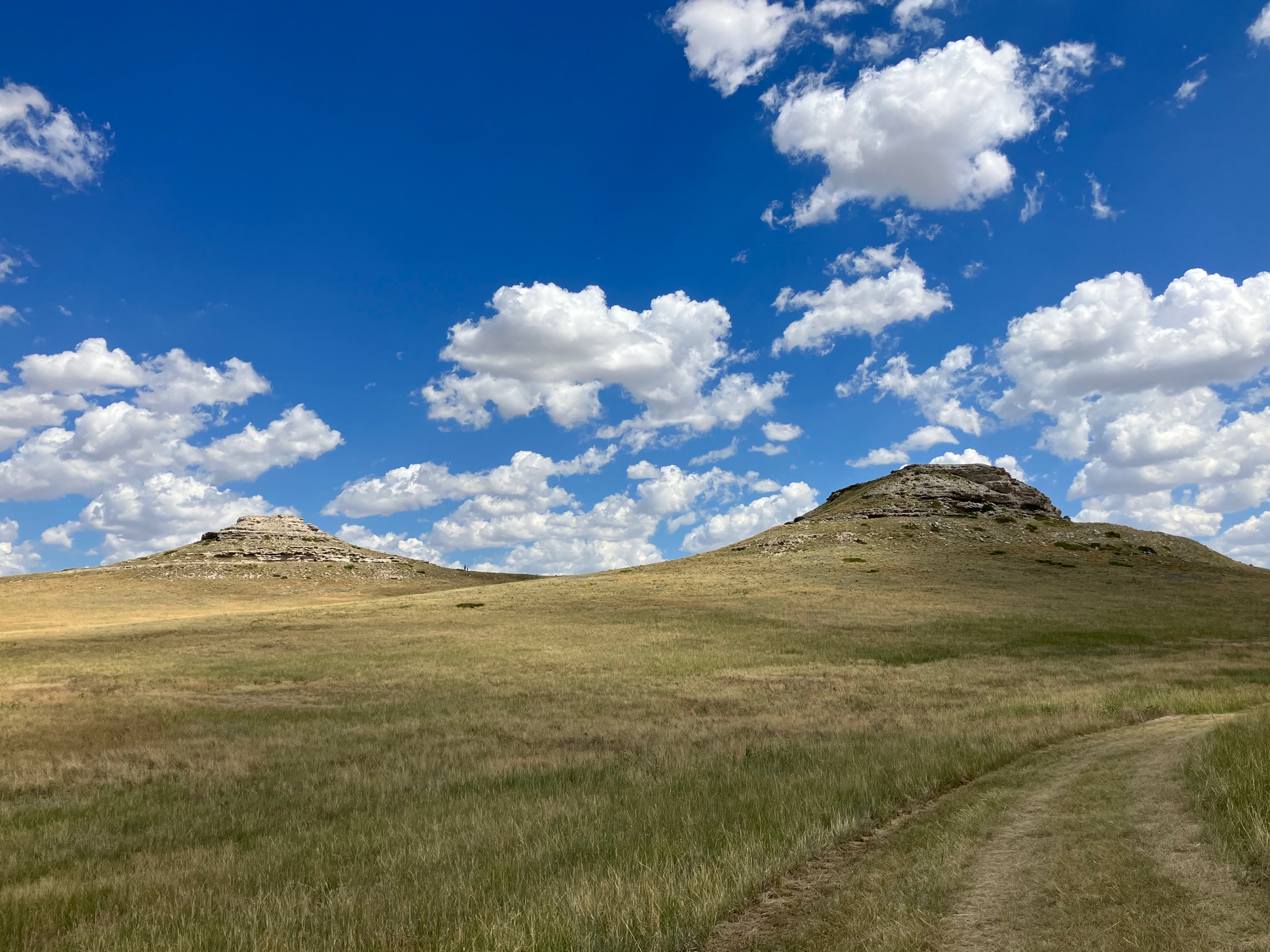
Trescott, J. 2003. Look Alive! The Washington Post. https://www.washingtonpost.com/archive/lifestyle/2003/07/14/look-alive/d1944407-ffbb-4e1f-8e06-06cd9ddec57d

3 Comments

Filed under exhibits, mammals, museums, NMNH

A 21st Century Hall of Mammals – Part 1

The Hall of Mammals upon its 2003 opening. Photo by John Steiner, courtesy of the Smithsonian Institution Archives.

A century ago, before zoos were widespread and before wildlife videos were a click away, mounting animal pelts on mannequins was the best way to bring nature to an increasingly industrialized populace. Today, taxidermy exhibits seem inherently antiquated, even creepy. Taxidermy is by no means a dead art (competitions are still going strong), but the practice has certainly lost some of its grandeur. For most, the aversion to taxidermy begins and ends with the discomfort of being confronted with a dead animal. There is of course far more complexity to unpack, from the uneasy suspension of disbelief stemming from seeing an animal skin made to look alive to the taxidermy piece’s multifaceted identities (including natural specimen, work of art, historic relic, and so forth). Who was this creature, and how did it die? How did it end up on display? How long has this animal endured its second life? These are the questions that fill visitors’ minds when confronted with a taxidermy exhibits. This presents a challenge for museums seeking to continue to use these specimens to educate visitors about ecology, evolution, and biodiversity. That is the problem staff at the National Museum of Natural History took on when they set out to create a taxidermy hall for a contemporary audience.

Out with the Old

Like any century-old natural history museum, NMNH has a long history of taxidermy displays. Animal mounts filled the original United States National Museum and the Smithsonian’s various world’s fair exhibits. These specimens came from a variety of sources, including private donations and collecting expeditions by Smithsonian researchers. Several animals, such as the hippo mounted by William Brown, lived and eventually died at the National Zoo. Some of the museum’s most famous taxidermy mounts are the animals collected for the Smithsonian by Theodore Roosevelt’s expedition to Uganda, Kenya, and Sudan in 1909. Putting the Roosevelt specimens on display was a priority when the building that is now NMNH opened in 1910. The prepared animals—including a family of lions, a giraffe, three northern white rhinos, and many others—filled an entire room in the new building’s west wing.

Northern white rhinos collected during the Roosevelt expedition, as displayed in 1915. Photo courtesy of the Smithsonian Institution Archives.

In the late 1950s, the NMNH west wing was completely remodeled as part of a Smithsonian-wide modernization project. The wing’s center hall became the Marine Ecosystems exhibit (starring a life-like blue whale model), while the U-shaped corridors surrounding it were rebranded as the World of Mammals Hall and the North American Mammals Hall. In the new exhibits, many specimens were grouped into realistic dioramas, complete with lush foreground landscapes and background murals. Other animals filled more sterile cases dedicated to particular subjects, such as “Mammals versus Climate” and “Dogs of the World.”

African ungulates in the 1959 World of Mammals exhibit. Photo courtesy of the Smithsonian Institution Archives.

By the mid-1990s, the modernized exhibits were looking a little rough around the edges. Many of the taxidermy pieces were over 80 years old, and the fur had become faded or frayed. The exhibit text was wordy and overly technical for the average museumgoer. In 1998, the Smithsonian Institutional Studies Office underwent a detailed evaluation of the mammal exhibits, which involved interviewing hundreds of visitors about their reactions to the halls. Overall, visitors seemed satisfied with the exhibits, but the evaluation nevertheless provided a lot of useful information.

The 1959 exhibits mixed complete dioramas with simpler cases covering specific topics. Photo courtesy of the Smithsonian Institution Archives.

Although more than half of museum visitors passed through the mammal exhibits, it was seldom seen as the main attraction. For most visitors, the mammal halls were neither the first exhibit they saw, nor their favorite part of the museum. Older visitors tended to respond better to the mammal exhibits than children or teenagers, who saw the halls as old, boring, or creepy. Indeed, the yuck factor of the taxidermy and the specter of death in general was on many visitors’ minds. While they were often not comfortable talking about it, many visitors expressed concern about the fact that the animals on display were dead, and wondered about how they ended up that way. Out of 750 visitors, 11% were sad or uneasy about the taxidermy and 5% were outright disturbed.

In with the New

In 1997, California real estate developer Kenneth Behring donated $20 million to fund a new mammal hall at NMNH. At the time, this was the largest single donation the museum had ever received, and it presented an exciting opportunity. However, there was a conflict of interest: Behring was a big game hunter with a history of going after threatened species. For example, earlier that year Behring drew criticism from the Humane Society after killing a Kara-Tau argali (an endangered mountain sheep) in Kazakhstan. In a news release, Behring stated that he followed all applicable laws and always obtained proper permits, but many individuals—both within and outside the Smithsonian—were concerned that his hunting activities conflicted with the museum’s conservation-oriented mission. What’s more, Behring’s donation included 22 animals from his own collection, and the Smithsonian was accused of allowing him to buy his way into the institution’s prestigious exhibits.

While the Kenneth E. Behring Family Hall of Mammals bears the donor’s name, and several of his personal trophies are on display, NMNH staff have made it very clear that Behring had no say in the exhibit’s message or content. That was just as well, because developing the exhibit internally proved plenty difficult. Pencils were allegedly thrown during meetings, and one conservator chose to retire rather than work on the new hall.

Several individuals can rightly claim authorship of the Hall of Mammals, including Project Manager Sally Love and Writer Sharon Barry. However, the primary advocate for the hall’s striking and controversial design was Associate Director of Exhibits Robert “Sully” Sullivan. Sullivan envisioned a wide open hall, forgoing enclosed dioramas and instead displaying animals in simple settings with lots of negative space. The idea was to keep the focus on the animals, their anatomy, and their behavior. This steel-and-glass, contemporary aesthetic had more in common with trendy tech showrooms than traditional taxidermy displays, and not everyone was initially on board.

This Alaskan moose group was one of several dioramas dismantled to make way for the new Hall of Mammals. Photo courtesy of the Smithsonian Institution Archives.

Unfortunately, the bold new vision could not be accomplished without destroying the old exhibits, including the historic dioramas. In the early 20th century, the proliferation of habitat dioramas radically transformed museums. Dioramas were accessible to broad audiences and brought with them the idea that museum exhibits should tell stories. These exhibits even had a tangible effect on the increasingly urban public’s interest in conservation. Today, historic museum dioramas are often considered quaint, but in their day they represented a bold fusion of art, technology, and science.

According to Lawrence Heaney of the Field Museum of Natural History, the NMNH dioramas “were not particularly good.” Still, they were important historical artifacts and represented a huge amount of work on the part of the craftspeople who created them. After inspecting the exhibits, NMNH conservators reported that it would be possible to preserve the dioramas intact for some future use. However, top officials decided that this would be too expensive, and all of the dioramas were ultimately demolished. Some of the taxidermy mounts were cleaned up for the new exhibit, while others were passed on to other museums. Still others would up homeless, and were ultimately dismantled and harvested for parts.

The minimalist watering hole in the Hall of Mammals. Photo by the author.

While some traditionalists fretted about Sullivan’s push to eliminate the dioramas, he also made waves with his restructuring of the exhibit team. In the past, curators had primary authorship over exhibit content, but Sullivan wanted to democratize the process. He gave designers and educators a greater voice, and insisted that their specialized knowledge be heard. While many applauded the recognition Sullivan brought to professionals whose work was usually undervalued, others weren’t so sure. Research staff avoided exhibit work during Sullivan’s tenure because they felt they were being railroaded into plans that had already been made. It was a tense period, and for a time, there were no curators on the Hall of Mammals team. Fortunately, Curator of Vertebrate Paleontology Anna K. Behrensmeyer and senior mammal specialist (and former NMNH director) Robert Hoffman eventually stepped up as advisers for the project. They brought to the table a phylogenetic approach that enhanced the strictly regional layout that had been planned for the exhibit.
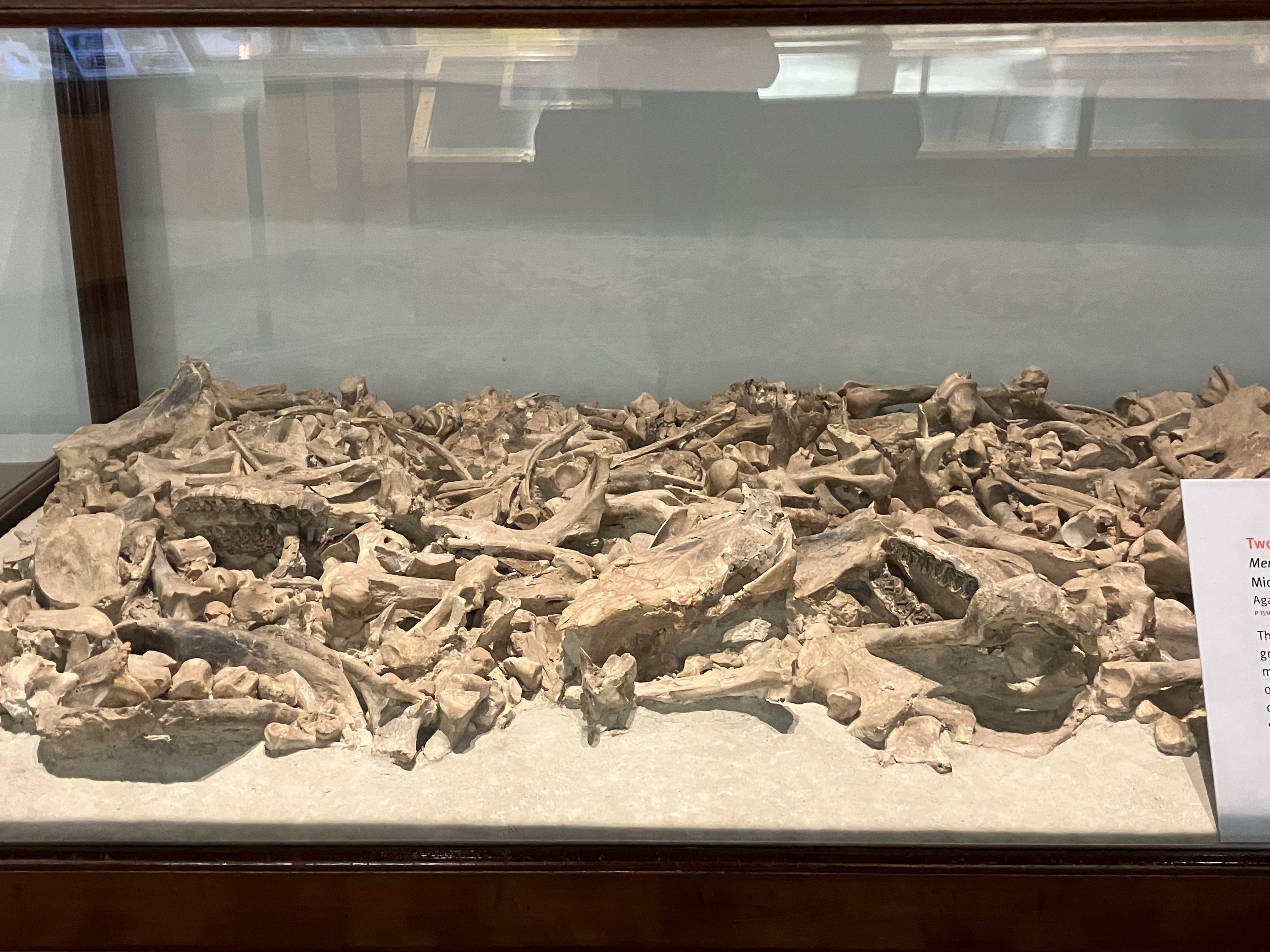
Phylogeny became a key theme once Behrensmeyer and Hoffman joined the exhibit team. Photo by the author.

Yet another challenge emerged when the architectural firm NMNH hired to collaborate on the design restructured their staff midway through the project. No longer getting the results they wanted, NMNH hired a new firm—Reich+Petch Design International—to finish the job, at the cost of a multi-month delay. The new exhibit architects determined that the first draft simply had too much content. If all the planned displays were included, the Hall of Mammals would be very crowded and visitor traffic flow would be encumbered. The team confirmed this by laying out a mock-up of the floor plan on the National Mall. After walking through the space, the exhibit team decided to cut about 40% of the content and tighten up the interpretive themes. The hall’s final design is all about evolution, and our own place in the mammal family tree.

With a plan in place, construction and fabrication were set to begin. We’ll cover that in the next post. Stay tuned!

References

Institutional Studies Office. 1999. Examining Mammals: Three Studies of Visitor Responses to the Mammals Hall in the National Museum of Natural history. Washington, DC: Smithsonian Institution.

Marsh, D.E. 2014. From Extinct Monsters to Deep Time: An ethnography of fossil exhibits production at the Smithsonian’s National Museum of Natural History. http://circle.ubc.ca/handle/2429/50177

Milgrom, M. 2010. Still Life: Adventures in Taxidermy. New York, NY: Mariner Books.
National Park Service. 2004. Mammal Hall Study Report: Evaluation by National Park Service Media Specialists of New Exhibits at the National Museum of Natural History, Smithsonian Institution, Washington, Dc. https://www.nps.gov/hfc/pdf/imi/si-mammal-hall-report.pdf
Parrish, M. and Griswold, B. 2004. March 2004 Meeting Report: Mammals on Parade. Guild of Natural Science Illustrators. http://www.gnsi.science-art.com/GNSIDC/reports/2004Mar/mar2004.html

Trescott, J. 2003. Look Alive! The Washington Post. https://www.washingtonpost.com/archive/lifestyle/2003/07/14/look-alive/d1944407-ffbb-4e1f-8e06-06cd9ddec57d

Ulaby, N. 2010. Smithsonian Taxidermist: A Dying Job Title. All Things Considered, National Public Radio. http://www.npr.org/templates/story/story.php?storyId=125914878

Leave a comment

Filed under exhibits, mammals, museums, NMNH