Tag Archives: dinosaurs

Bully for Camarasaurus

Note: This post was written in 2014. It predates Emanuel Tschopp and colleagues’ landmark paper which, among other things, resurrected the genus Brontosaurus. I’ve attempted to update the taxonomy where appropriate, but it may still be a bit of a mess.

The story of the mismatched head of Brontosaurus is one of the best known tales from the history of paleontology. I think I first heard it while watching my tattered VHS copy of More Dinosaurs—scientists had mistakenly mounted the skull of Camarasaurus on an Apatosaurus skeleton, and the error went unnoticed for decades. The legend has been repeated countless times, perhaps because we revel in the idea that even experts can make silly mistakes. Nevertheless, I think it’s time we set the record straight: nobody ever mistakenly placed a Camarasaurus skull on Apatosaurus. The truth is a lot more nuanced—and a lot more interesting—than a simple case of mistaken identity.

Intrinsically related to the head-swap story is the replacement of “Brontosaurus” with “Apatosaurus” in the popular lexicon. This is well covered elsewhere, so I’ll be brief. Scientific names for animals are governed by the International Code of Zoological Nomenclature, which includes the principle of priority: if an organism has been given more than one name, the oldest published name is the correct one. Leading 19th century paleontologist O.C. Marsh named Apatosaurus ajax in 1877, based on a vertebral column discovered in the Morrison Formation of Colorado. Two years later, Marsh introduced Brontosaurus excelsus to the world, from a more complete specimen uncovered in rocks of the same age in Wyoming. Like many of Marsh’s publications, these descriptions were extremely brief, offering a scant two paragraphs for each taxon. However, Marsh did provide a longer description of Brontosaurus in 1883, complete with the first-ever restoration of the complete skeleton.

This is not a Camarasaurus skull.

Come play with us, Brontosaurus…forever and ever and ever. Photo courtesy of the AMNH Research Library.

In 1903, Elmer Riggs of the Field Museum of Natural History underwent a survey of sauropod fossils held at various museums and concluded that Brontosaurus excelsus was too similar to Apatosaurus to merit its own genus. The name “Brontosaurus” was dropped, and the species became Apatosaurus excelsus for most of the 20th century. However, a substantial re-evaluation of diplodocoid sauropods by Emanuel Tschopp and colleagues in 2015 reversed Riggs’ decision. So the name Brontosaurus is back, but keep in mind that the species excelsus never actually went anywhere—it was just hidden under the Apatosaurus umbrella. Following Tschopp et al., Apatosaurus and Brontosaurus were distinct animals that lived in the same environment.

So how does the mismatched head fit into all of this? The short answer is that it doesn’t. The fact that some Apatosaurus mounts had incorrect heads for much of the 20th century has nothing to do with which name was being used at any given time, although the two issues have often been conflated in popular books. I suspect the two stories got mixed up because paleontologists were pushing to correct both misconceptions around the same time during the dinosaur renaissance.
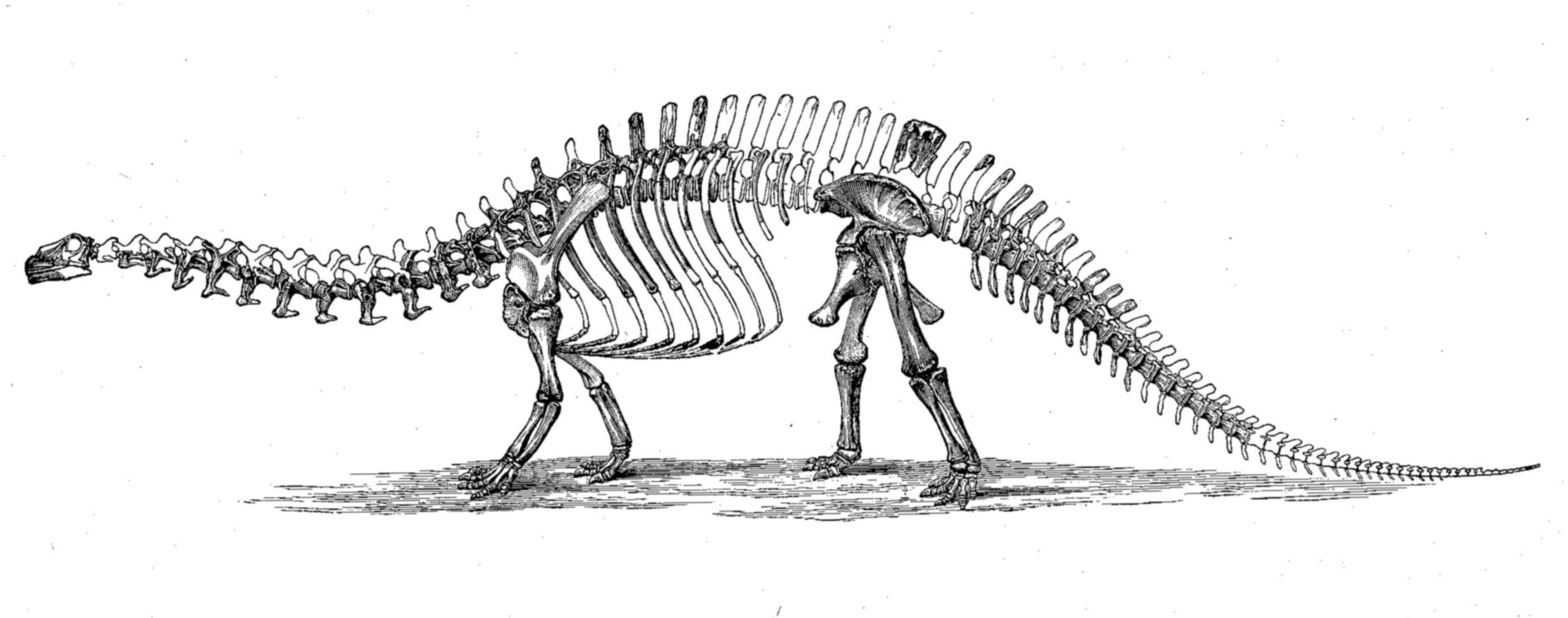
Marsh's Brontosaurus

Marsh’s second and definitive Brontosaurus reconstruction, first published in 1891.

Let’s go back to Marsh’s 1891 Brontosaurus reconstruction*, pictured above. The Brontosaurus type specimen did not include a head, and many have reported that Marsh used a Camarasaurus skull in this illustration. However, this would not have been possible, because the first complete Camarasaurus skull wasn’t discovered until 1899. What Marsh had instead was a few fragmentary bits of Camarasaurus cranial material, plus a snout and jaw (USNM 5730) now thought to be Brachiosaurus (more on this at SV-POW). Although these pieces were found far from the Brontosaurus quarry, Marsh extrapolated from them to create the best-guess skull that appears in his published reconstruction.

*Note that this is the second of two Brontosaurus reconstructions commissioned by Marsh. The first drawing, published in 1883, has somewhat different skull, but it still does not resemble Camarasaurus. 

Although Stephen Gould states in his classic essay “Bully for Brontosaurus” that Marsh mounted the Brontosaurus holotype at the Yale Peabody Museum, Marsh never saw his most famous dinosaur assembled in three dimensions. In fact, Marsh strongly disliked the idea of mounting fossil skeletons, considering it a trivial endeavor of no benefit to science. Instead, it was Adam Hermann of the American Museum of Natural History, supervised by Henry Osborn, who built the original Brontosaurus/Apatosaurus mount (AMNH 460), six years after Marsh’s death in 1899.
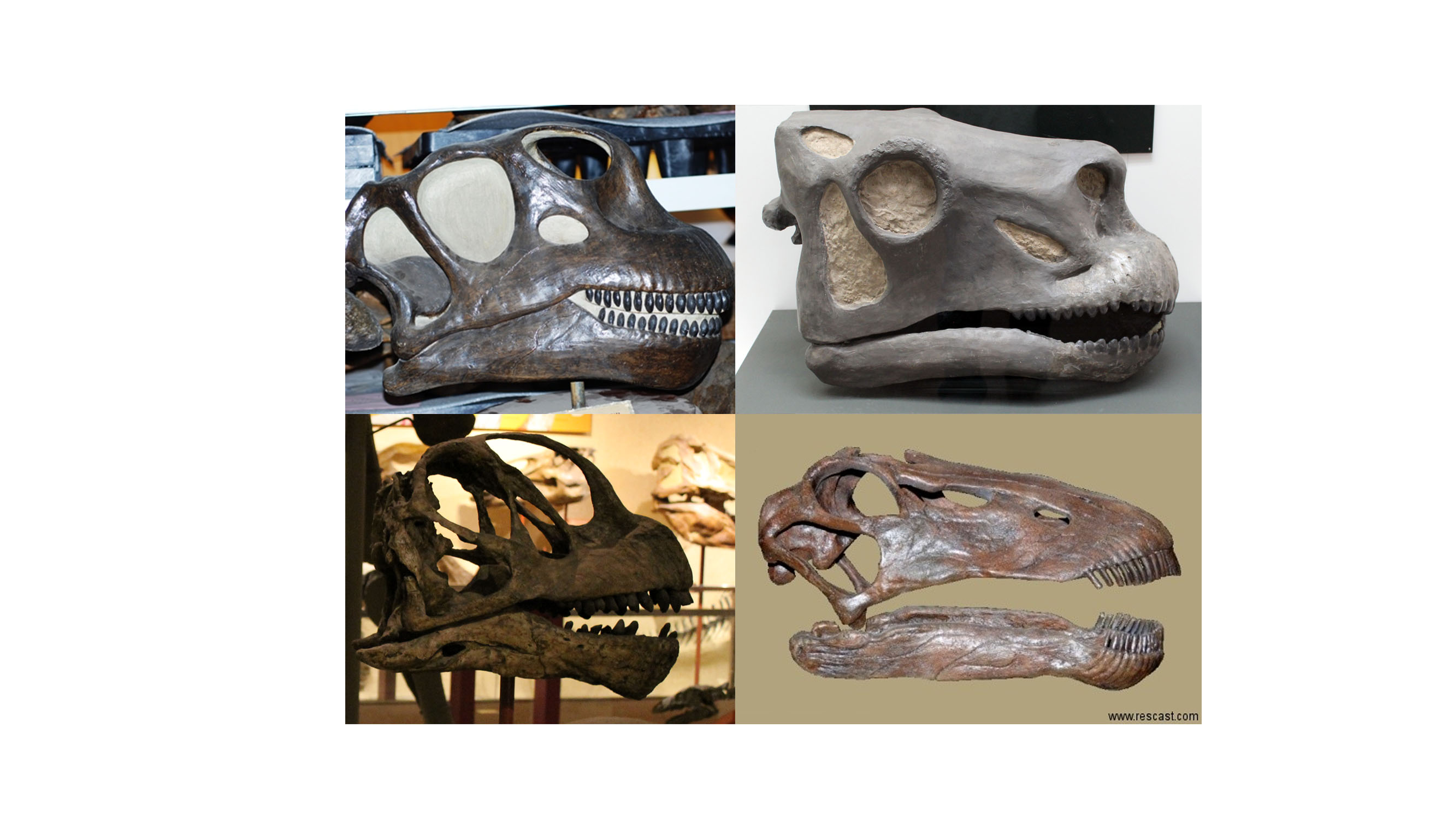
Counterclockwise from top:

Clockwise from top: AMNH sculpted skull (Source), Peabody Museum sculpted skull, real Apatosaurus skull (Source), and real Camarasaurus skull.

To create the mounted skeleton, Hermann combined fossil material from four separate individuals. All of the material had been collected by AMNH teams in Wyoming specifically for a display mount—and to beat Andrew Carnegie at building the first mounted sauropod. Like Marsh, however, they failed to find an associated skull (a Camarasaurus-like tooth was allegedly found near the primary specimen, but it has since been lost). Even today, sauropod skulls are notoriously rare, perhaps because they are quick to fall off and roll away during decomposition. Instead, Hermann was forced to make a stand-in skull in plaster. Osborn explained in an associated publication that this model skull was “largely conjectural and based on that of Morosaurus” (Morosaurus was a competing name for Camarasaurus that is no longer used).

Was it really, though? The sculpted skull is charmingly crude, so the overt differences between the model and a real Camarasaurus skull (top and bottom left in the image above) might be attributed to the simplicity of the model. Note that there isn’t even an open space between the upper and lower jaws! Still, Hermann’s model bears a striking resemblance to Marsh’s illustration in certain details, principally the elongate snout and the very large, ovoid orbit. It’s reasonable to assume that Hermann used Marsh’s speculative drawing as a reference, in addition to any actual Camarasaurus material that was available to him. At the very least, it is incorrect to say that AMNH staff mistakenly gave the mount a Camarasaurus skull, since Osborn openly states that it is a “conjectural” model.
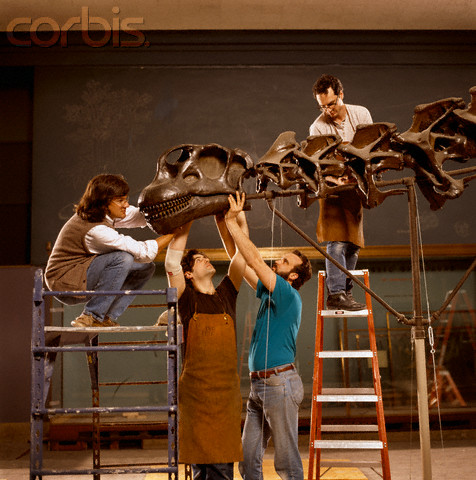
A young Mark Norell

A young Mark Norell leads the removal of the sculpted skull from the classic AMNH Apatosaurus. Source

In 1909, a team led by Earl Douglass  of the Carnegie Museum of Natural History finally discovered a real Apatosaurus skull (third image, lower right). They were working at the eastern Utah quarry that is now Dinosaur National Monument, excavating the most complete Apatosaurus skeleton yet found (CM 3018). The skull in question (cataloged as CM 11162) was not connected to the skeleton, but Douglass had little doubt that they belonged together. Back at the Carnegie Museum, director William Holland all but confirmed this when he found that the skull fit neatly with the skeleton’s first cervical vertebra. As he wrote at the time, “this confirms…that Marsh’s Brontosaurus skull is a myth.”

The Carnegie team prepared and mounted the new Apatosaurus, and Holland initially planned to use the associated skull. However, when Osborn heard about this he threatened to ruin Holland’s career if he went through with it. You see, the new skull looked nothing like the round, pseudo-Camarasaurus model skull on the AMNH mount. Instead, it was flat and broad, like a more robust version of Diplodocus. Osborn wasn’t about to let Holland contradict his museum’s star attraction, and Holland backed down, never completing his planned publication on the true nature of Apatosaurus. Meanwhile, the mounted skeleton at the Carnegie Museum remained headless until Holland’s death in 1932. After that, museum staff quietly added a Camarasaurus-like skull. This was an important event, as it would be the first time an actual cast skull of Camarasaurus (as opposed to a freehand sculpture) would be attached to a mounted Apatosaurus skeleton. While I’ve had no luck determining precisely who was involved, Keith Parsons speculated that the decision was made primarily for aesthetic reasons.

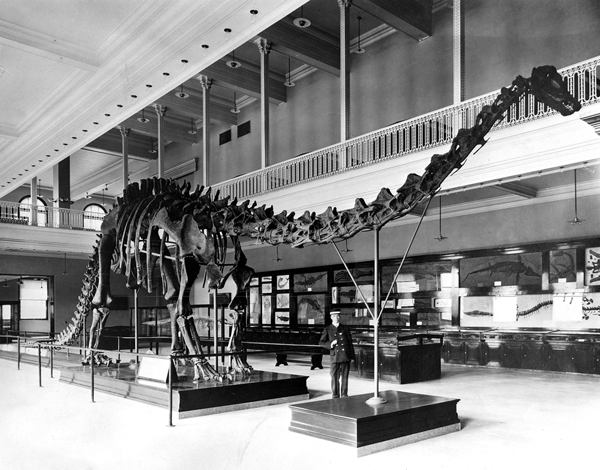
Carnegie Museum Brontosaurus circa 1934. Source

Carnegie Museum Apatosaurus alongside the famed Diplodocus, sometime after 1934. Source

Elmer Riggs assembled a third Apatosaurus mount (FMNH P 25112) at the Field Museum in 1908. Riggs had recovered the articulated and nearly complete back end of the sauropod near Fruita, Colorado in 1901, but was unable to secure funding for further collecting trips to complete the mount. Riggs was forced to mount his half Apatosaurus as-is, and the absurd display stood teetering on its back legs for 50 years. Finally, Riggs’ successor Orville Gilpin acquired enough Apatosaurus fossils to complete the mount in 1958. As usual, no head was available, so Gilpin followed the Carnegie Museum’s lead and gave the mount a cast Camarasaurus skull.
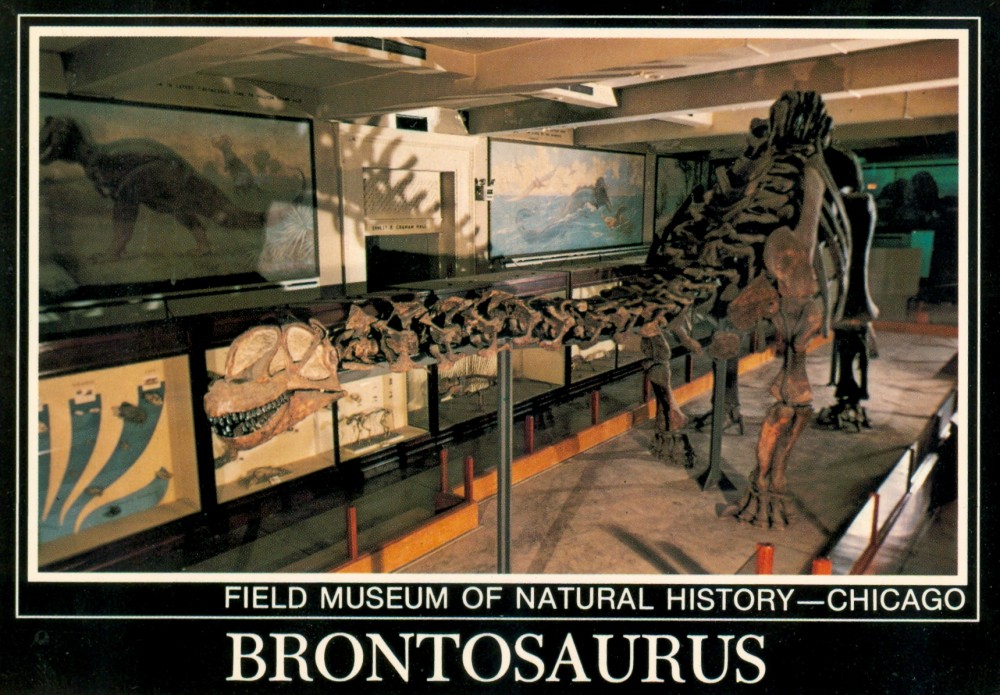
The completed mount as it stood in the 1970s, Camarasaurus head and all.

Orville Gilpin finally completed the FMNH Apatosaurus in 1958.

The last classic apatosaurine mount was built at the Yale Peabody Museum of Natural History in 1931, using Marsh’s original Brontosaurus excelsus holotype (YPM 1980) and a lot of plaster padding. The skull this mount originally sported (third image, upper right) is undoubtedly the strangest of the lot. A plaster replica sculpted around a small portion of a real Camarasaurus mandible, this model doesn’t look like any known sauropod. The overall shape is much more elongated than either Camarasaurus or the AMNH model, and may have been inspired by Marsh’s hypothetical illustration. Other details, however, are completely new. The anteorbital fenestrae are thin horizontal slashes, rather than the wide openings in previous reconstructions, while the tiny, forward-leaning nares don’t look like any dinosaur skull—real or imaginary—I’ve ever seen. The sculptor is sadly unknown, but this model almost looks like a committee-assembled combination of the Marsh drawing, the AMNH model, and CM 11162 (a.k.a. the real Apatosaurus skull).

During the mid-20th century, vertebrate paleontology lapsed into a quiet period. Although the aging dinosaur displays at American museums remained popular with the public, these animals came to be perceived as evolutionary dead-ends, of little interest to the majority of scientists. The controversies surrounding old mounts were largely forgotten, even among specialists, and museum visitors saw no reason not to accept these reconstructions (museums are, after all, one of the most trusted sources of information around).
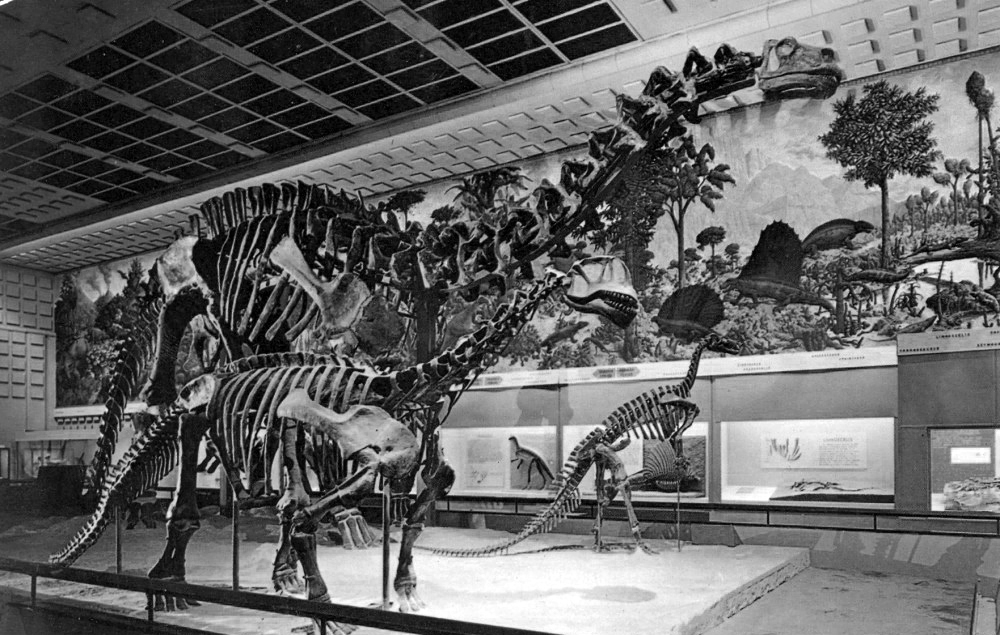
A postcard

The Peabody Brontosaurus with its original head. Note that the Camarasaurus in the foreground also has a sculpted skull.

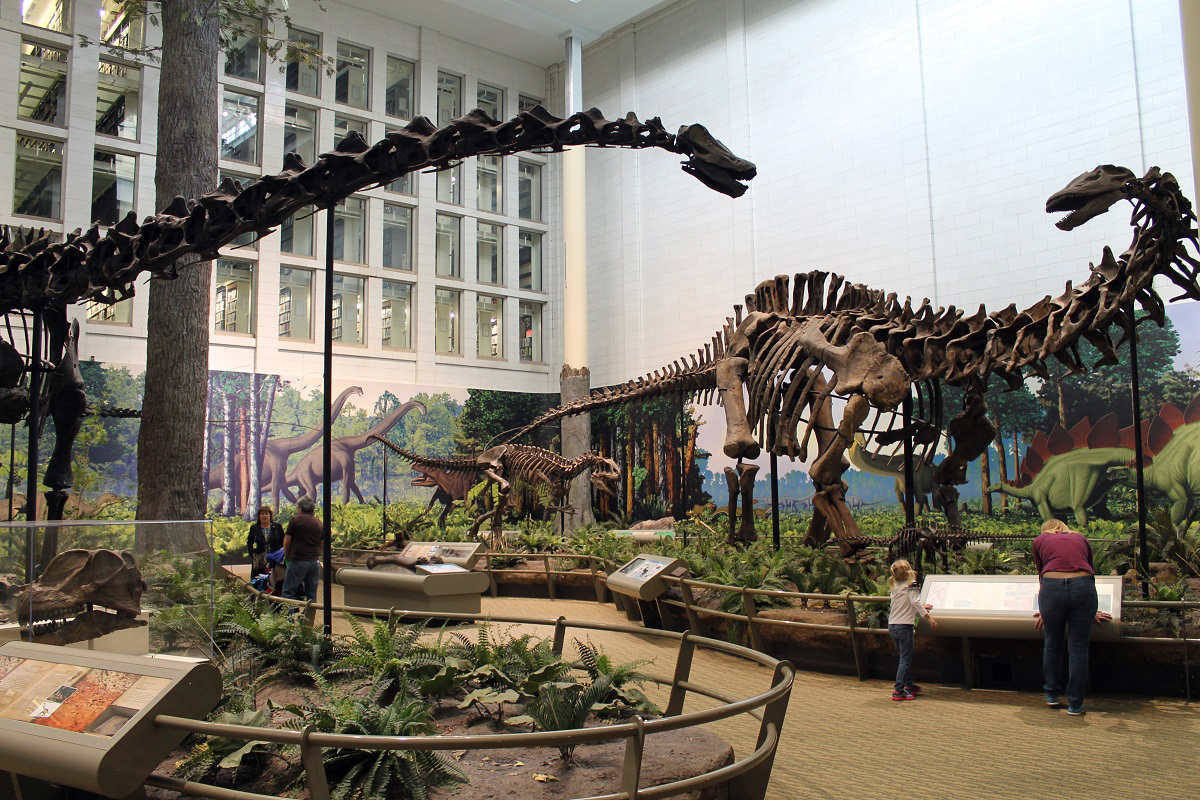
This changed with the onset of the dinosaur renaissance in the 1970s and 80s, which brought renewed energy to the discipline in the wake of new evidence that dinosaurs had been energetic and socially sophisticated animals. In the midst of this revolution, John McIntosh of Wesleyan University re-identified the real skull of Apatosaurus. Along with David Berman, McIntosh studied the archived notes of Marsh, Douglass, and Holland and tracked down the various specimens on which reconstructed skulls had been based. They determined that Marsh’s restoration of the Brontosaurus skull, long accepted as dogma, had in fact been almost entirely arbitrary. Following the trail of guesswork, misunderstandings, and scientific inertia, McIntosh and Berman proved that Holland had been right all along. The skull recovered at Dinosaur National Monument along with the Carnegie Apatosaurus was in fact the only legitimate skull ever found from an apatosaurine up to that point. In 1981, McIntosh himself replaced the head of the Peabody Museum Brontosaurus with a cast of the Carnegie skull. AMNH, the Field Museum, and the Carnegie Museum followed suit before the decade was out.
aess

Remounted Apatosaurus at the Carnegie Museum. Photo by the author.

Given the small size of the historic community of dinosaur specialists, it may have been particularly vulnerable to the influences of a few charismatic individuals. To wit, Marsh’s speculative Brontosaurus skull was widely accepted despite a lack of compelling evidence, and Osborn was apparently able to bully Holland out of publishing a find that contradicted the mount at AMNH. What’s more, the legend of the mismatched Brontosaurus skull somehow became distorted by the idea that either Marsh or Osborn had accidentally given their reconstructions the head of Camarasaurus. This is marginally true at best, since both men actually oversaw the creation of composite reconstructions which only passingly resembled Camarasaurus. Nevertheless, the idea that the skull of Camarasaurus was a passable substitute for that of Apatosaurus was apparently well-established by the 1930s, when Carnegie staff hybridized the two sauropods for the first time. Even today, there are numerous conflicting versions of this story, and it is difficult to sort out which details are historically accurate and which are merely assumed.

I’d like to close by pointing out that while the head-swap story is often recounted as a scientific gaffe, it is really an example of science working as it should. Although it took a few decades, the mistakes of the past were overcome by sound evidence. Despite powerful social and political influences, evidence and reason eventually won out, demonstrating the self-corrective power of the scientific process.

References

Berman, D.S. and McIntosh, J.S. 1975. Description of the Palate and Lower Jaw of the Sauropod Dinosaur Diplodocus with Remarks on the Nature of the Skull of ApatosaurusJournal of Paleontology 49:1:187-199.

Brinkman, P. 2006. Bully for Apatosaurus. Endeavour 30:4:126-130.

Gould, S.J. 1991. Bully for Brontosaurus: Reflections in Natural History. New York, NY: W.W. Norton and Company.

Osborn, H.F. 1905. Skull and Skeleton of the Sauropodous Dinosaurs, Morosaurus and BrontosaurusScience 22:560:374-376.

Parsons, K.M. 1997. The Wrongheaded Dinosaur. Carnegie Magazine. November/December:38.

Tschopp, E., Mateus, O., and Benson, R.B.J. 2015. A specimen-level phylogenetic analysis and taxonomic revision of Diplodocidae (Dinosauria, Sauropoda). PeerJ 3:e857. https://doi.org/10.7717/peerj.857
9 Comments

Filed under AMNH, CMNH, dinosaurs, field work, FMNH, fossil mounts, history of science, museums, reptiles, sauropods, systematics

Exhibit Review: Kenosha Dinosaur Museum

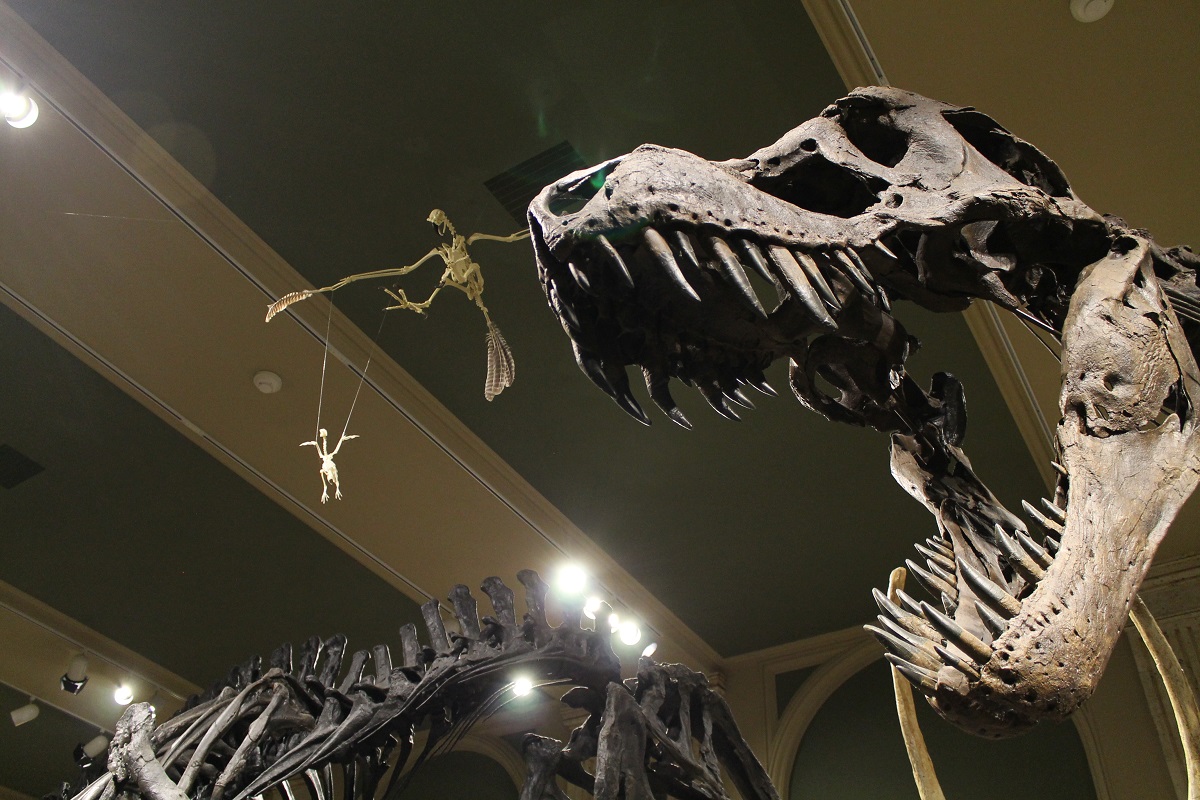
Stan and an eagle.

Stan the Tyrannosaurus with a modern eagle. Photo by the author.

Last week, I had a chance to visit the Dinosaur Discovery Museum in Kenosha, Wisconsin. I had no idea this place existed until recently, but it’s a short drive north from the Chicago area, and has apparently been open since 2006. The Museum is a joint venture between the municipally funded Kenosha Public Museum system and Carthage College, and is housed in a lovely 1930s post office (on the National Register of Historic Places). As I understand it, the Dinosaur Discovery Museum was initially imagined as a space to host the undergraduate paleontology program at the College, which is led by Dr. Thomas Carr. While the Museum does include a working fossil prep lab and displays of recent finds from Carr’s field expeditions in Montana and South Dakota, the primary draw for most visitors is the permanent exhibit hall. Although less than 100 feet across, this space is packed with more theropod mounts than I have ever seen in one place.

Nary an ornithiscian in sight. Photo by the author.

Nary an ornithiscian in sight. Photo by the author.

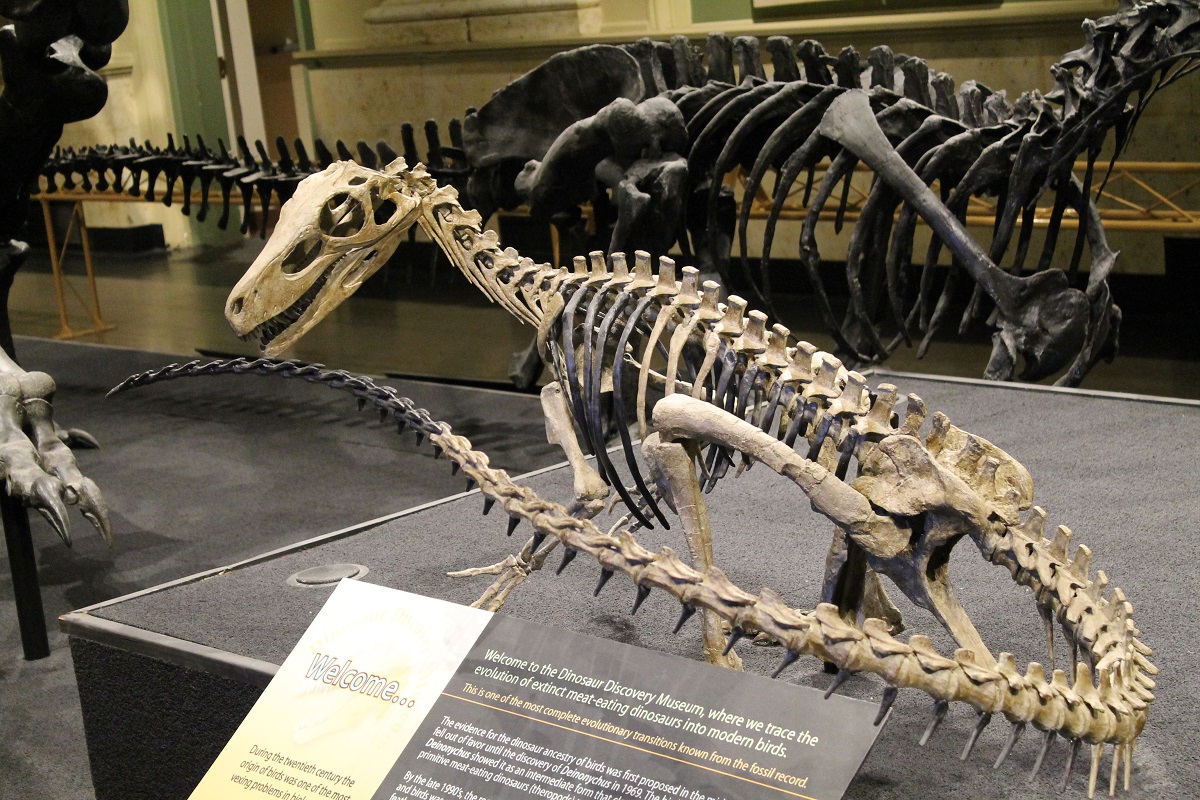
Naturally, the theme of this theropod-centric exhibit is bird evolution. Circling the central pedestal counter-clockwise, visitors can see the radiation of theropods from primitive forms like Herrerasaurus to larger ceratosaurs and tetanurans and finally to increasingly bird-like coelurosaurs. The Dinosaur Discovery Museum must have gotten a very generous initial donation, because they seem to have bought out virtually the entire catalog of casts from both the Black Hills Institute and Triebold Paleontology.

Hererrasaurus

A squatting Hererrasaurus is one of many unusually posed mounts at the Dinosaur Discovery Museum. Photo by the author.

Many of the casts were familiar to me, including the ubiquitous Stan, the Acrocanthosaurus from the North Carolina Museum of Natural Sciences, and the Anzu from the Carnegie Museum of Natural History. Nevertheless, it’s extremely cool to see such a complete range of theropod diversity in one place. I could directly compare any bone from a given mount to the same bone on any other, or even to the helpful selection of modern bird skeletons. The only thing that would make this exhibit more complete would be the inclusion of  growth series from the taxa for which this is known, like Tyrannosaurus and Allosaurus. And for the record, jaded paleophiles, T. rex looks really impressive alongside this menagerie. Overrated, my eye.

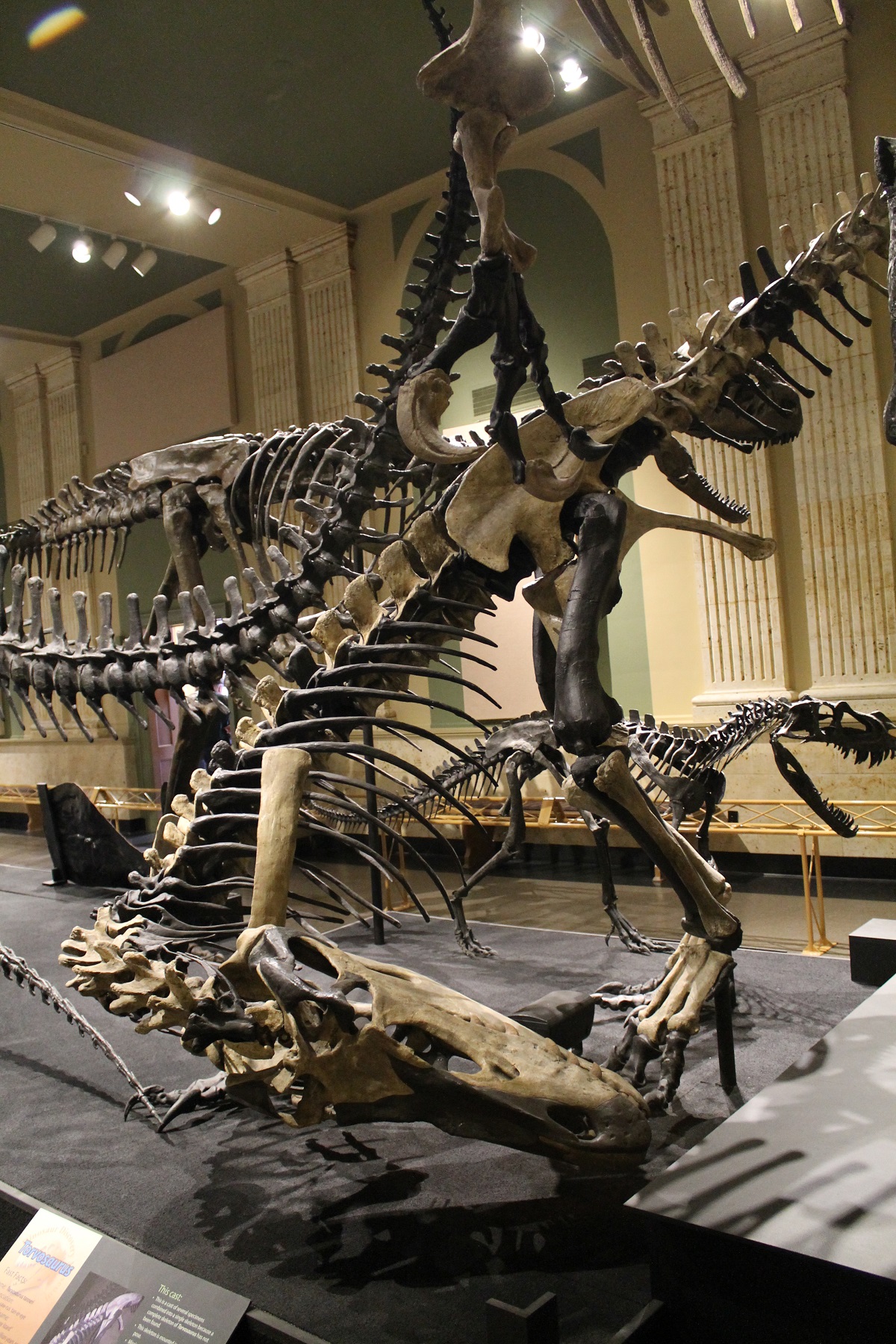
Torvosaurus scratches its jaw.

Torvosaurus scratches its jaw. Photo by the author.

Unlike some exhibits, the Dinosaur Discovery Museum does not shy away from the fact that all the skeletons on display are casts. Most of the mounts are very obviously painted in two colors, showing precisely which bones are based on real finds and which are sculpted reconstructions. Unfortunately, a handful of mounts inexplicably lack this information, which could confuse some visitors. One helpful side effect of displaying casts is that the dinosaurs can be placed in a variety of life-like poses. These theropods are not all staring straight ahead with mouths agape – instead, we are treated to displays like the Torvosaurus above, which is scratching its head with its foot.

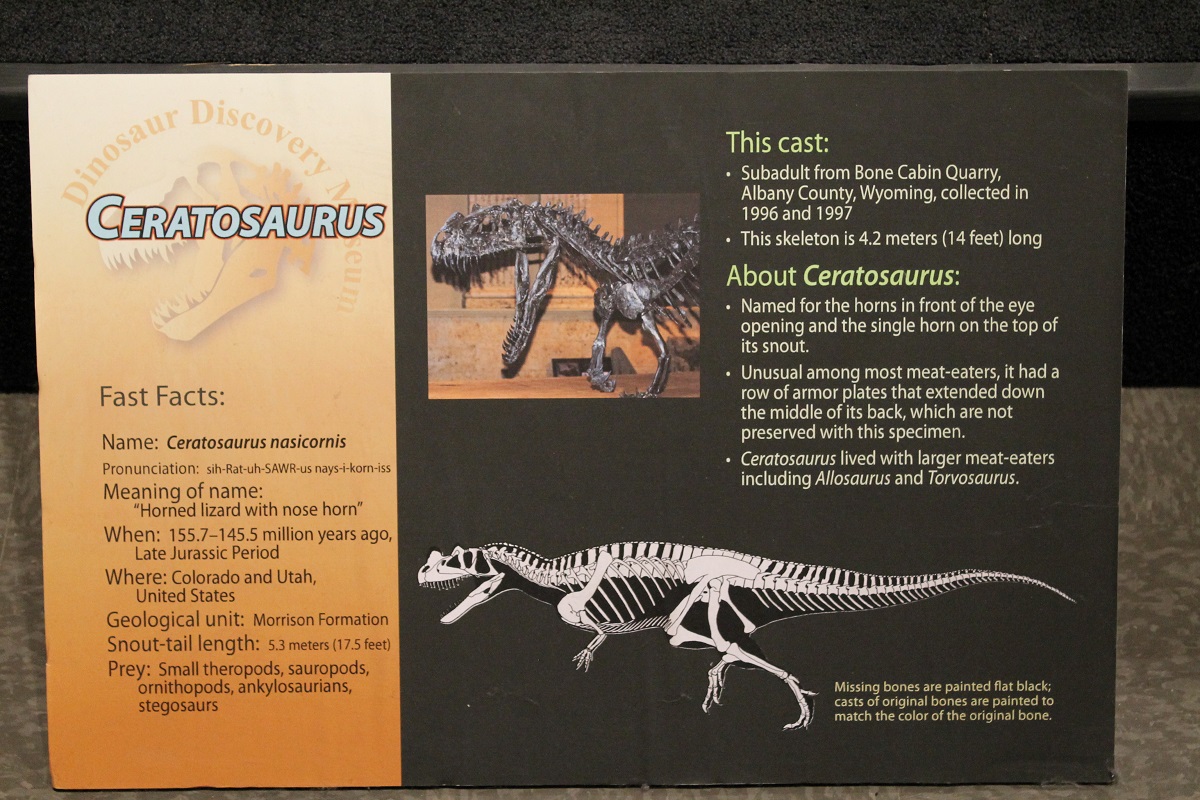
Ceratosaurus sign.

Signs like this accompany each dinosaur. Photo by the author.

The signage is of similarly high quality. Each dinosaur is accompanied by an attractive panel that provides expected information like the animal’s diet and time period, as well as a very helpful section identifying the quarry where the fossils were found and in most cases, the repository housing the original specimen. Additional signs on the walls cover the origin and extinction of dinosaurs, as well as the many lines of evidence that birds are surviving dinosaurs. Although they look a bit wordy at a distance, these signs are quite well-written for inclined to peruse them.

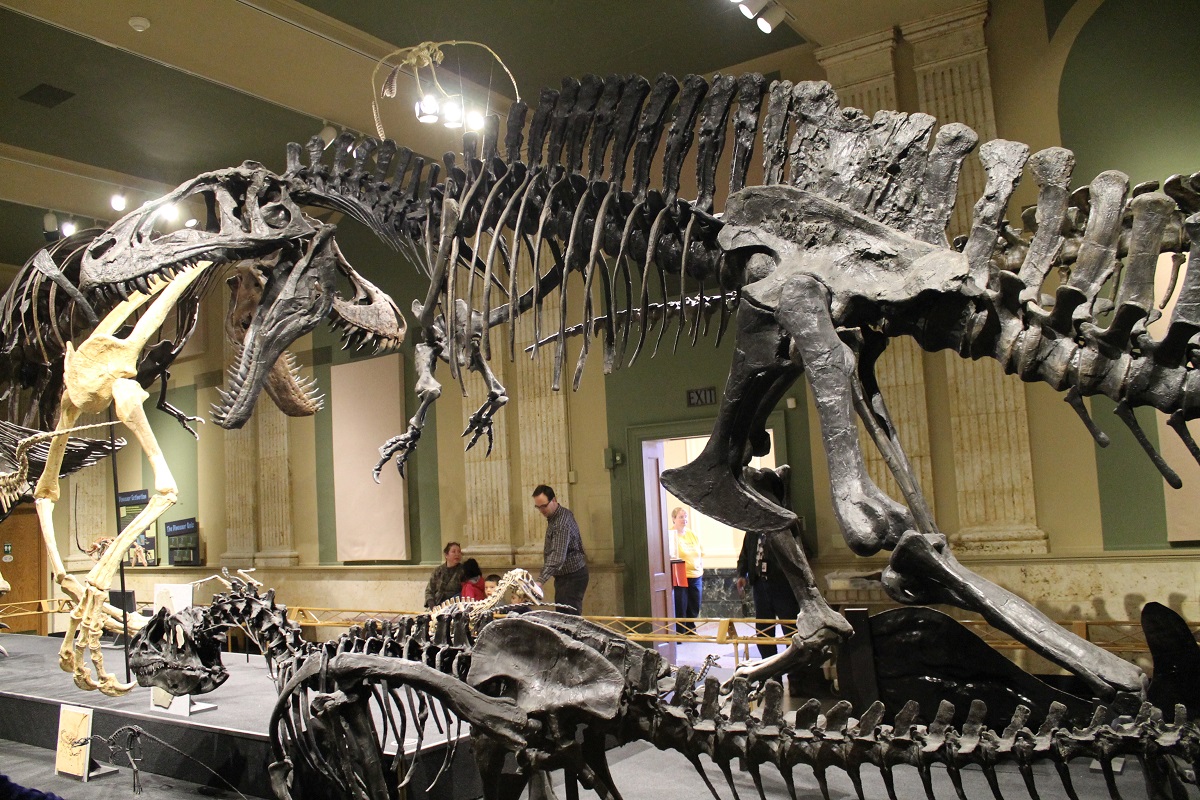
Acrocanthosaurus.

Acrocanthosaurus and an Allosaurus at rest. Photo by the author.

Also of note is a children’s room on the lower level, featuring (sigh) a sandbox dig and some very helpful and enthusiastic volunteers. Indeed, children’s activities appear to be the Dinosaur Discovery Museum’s strong suit. A look at their website reveals that kid’s programs are scheduled every weekend, and special events like dinosaur ornament making and flashlight tours occur throughout the year.

Clearly, I was impressed by my visit to the Dinosaur Discovery Museum. It’s wonderful that an educational opportunity like this exists in a semi-rural community, something that would have been unheard of not so long ago (did I mention it’s free?). What’s more, the exhibit hall is a great resource for specialists interested in comparing a variety of theropods first-hand. If you ever find yourself in the area, this little museum is definitely worth a visit.

1 Comment

Filed under dinosaurs, education, exhibits, fossil mounts, museums, reptiles, reviews, science communication, theropods

National Fossil Day 2014

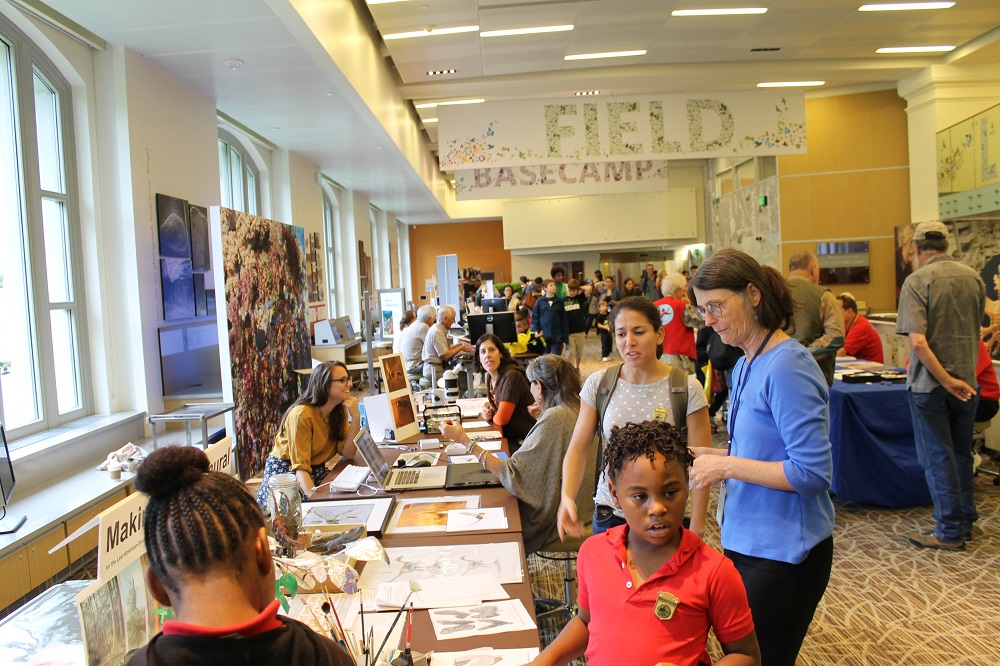
Happy National Fossil Day! This will just be a quick photo post covering the events at the National Museum of Natural History today. The National Park Service started the day with a junior paleontologist swearing-in ceremony, where students from a dozen area schools learned about the importance of protecting and preserving public lands and natural resources.

Photo by

Photo by the National Park Service.

The main show was in the Q?rius education center, where museum staff and volunteers showed off their latest work and discoveries. Visitors could see tiny mammal bones and teeth plucked from matrix collected in Haitian caves, and work through a particularly inspired activity demonstrating how geologists correlate layers in different parts of the world.

nfd2

Photo by the author.

Photo by

Photo by the National Park Service.

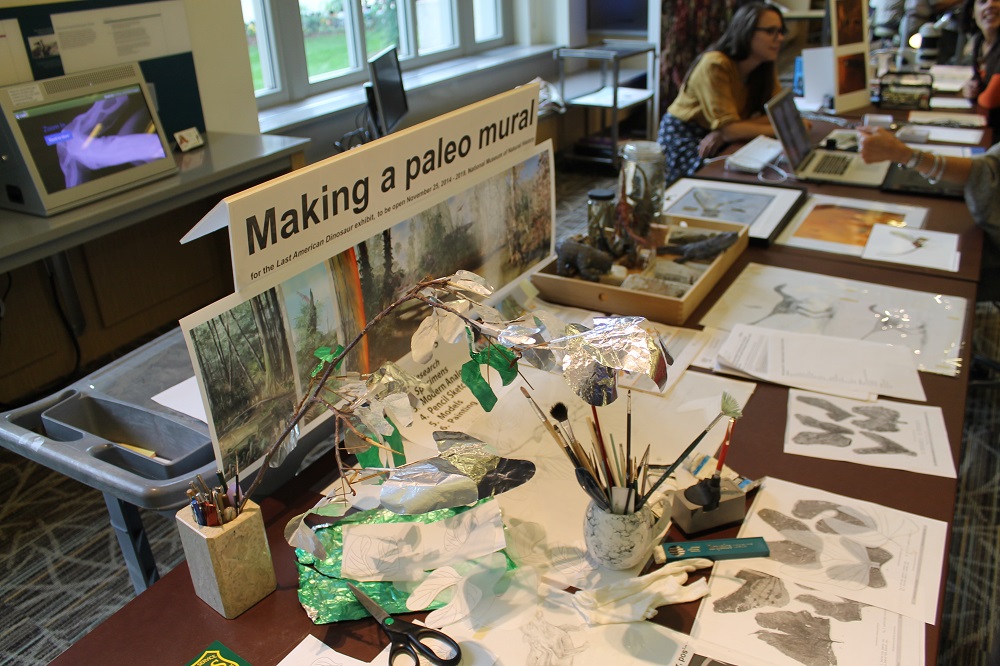
Resident scientific illustrator Mary Parrish had a particularly fascinating display, showcasing the methods and materials she uses to create accurate paintings of prehistoric environments. Note the aluminum foil leaves used as models to paint from, as well as the hand-made macquettes used to block out scenes and experiment with poses. Also on view was a draft of the giant Hell Creek mural that will be on display in The Last American Dinosaurs, opening in November.

nfd3

Photo by the author.

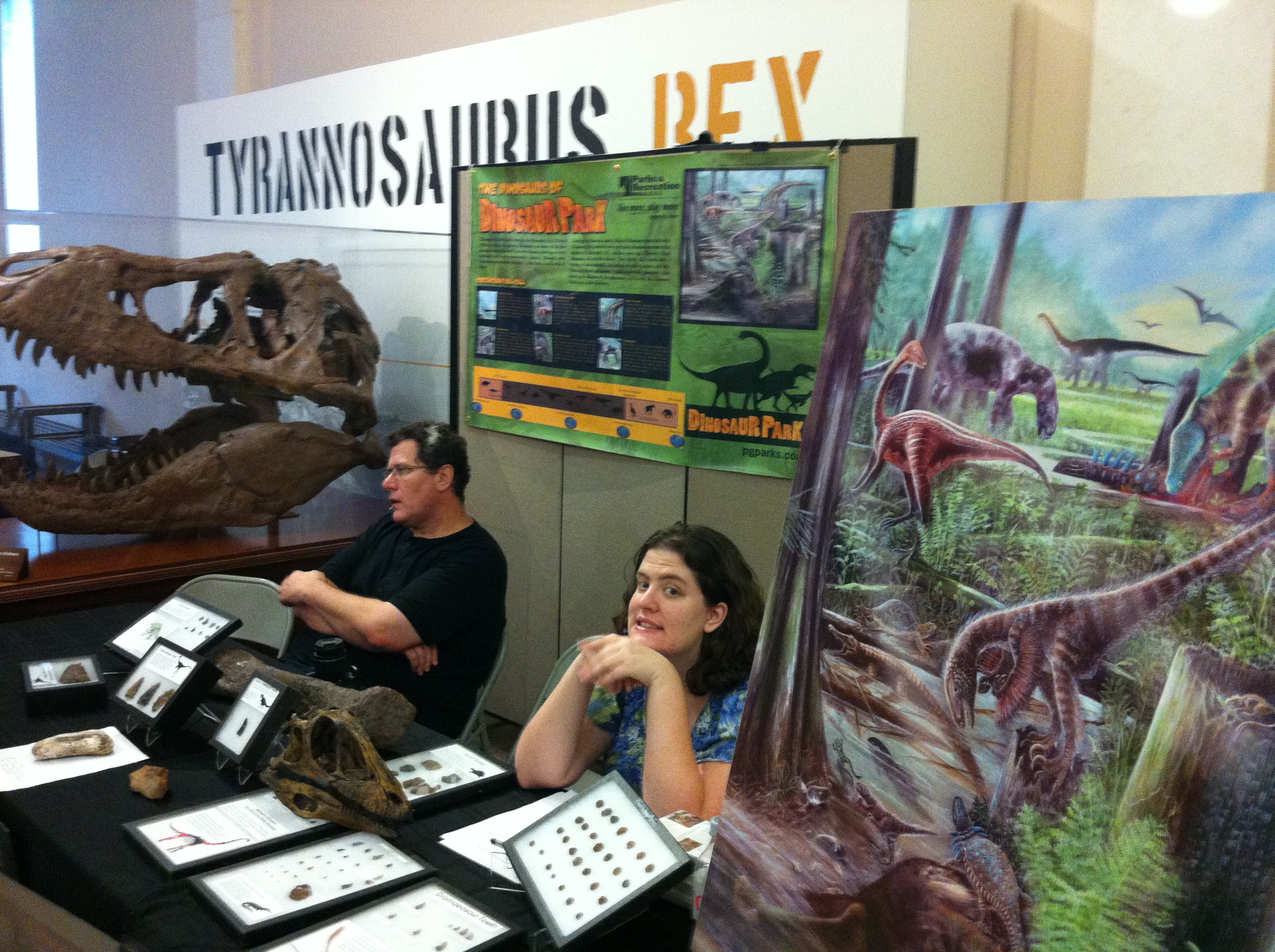
Out in the lower level lobby, the National Park Service, Bureau of Land Management, US Forest Service, National Science Foundation, Calvert Marine Museum, and Maryland Dinosaur Park had activities and displays. Here’s our display of recently discovered fossils from Cretaceous Maryland, slightly overshadowed by the Nation’s T. rex. We talked with visitors about Maryland’s role in the history of dinosaur science, the importance of the early Cretaceous as the origin of the world we know today, and our citizen science programs at the Park in Laurel.

image

Photo by the author.

Photo by the author.

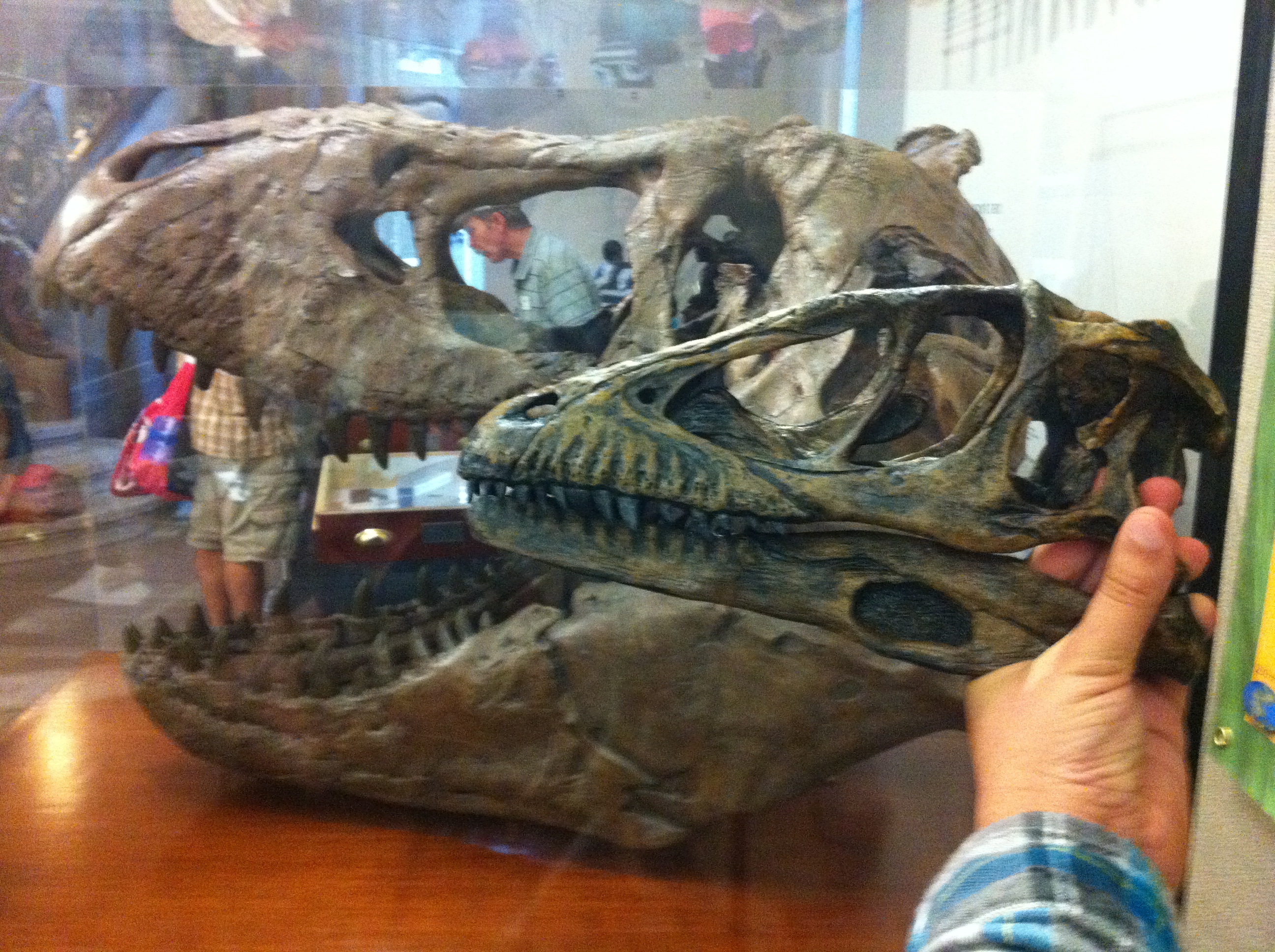
Our Deinonychus replica looks a little small next to the Nation’s T. rex. Photo by the author.

National Fossil Day is all about generating awareness and enthusiasm for fossils and the study of the Earth’s natural history. In that, I think the event was quite successful. We talked to nearly 400 people, all of them enthusiastic and eager to learn about local prehistory and the process of discovering the ancient past. It was also a fun opportunity to catch up with people – the Washington area paleontology scene isn’t very big!

Thank you to the National Park Service for coordinating this event, and to the Smithsonian for hosting it!


Leave a comment

Filed under citizen science, Dinosaur Park, dinosaurs, exhibits, museums, NMNH, paleoart, science communication

Spinosaurus at the National Geographic Museum

IMG_2341

Research Casting International has done it again with a beautiful reconstructed skeleton of a swimming Spinosaurus. Photo by the author.

Yesterday, Nizar Ibrahim and National Geographic made a tremendous splash with their long-awaited announcement of a new Spinosaurus specimen. Spinosaurus is a widely recognized and beloved dinosaur (particularly among what one might call the dinosaur fandom community), but paradoxically it is known from only the scrappiest of fossil remains. What’s more, the holotype specimen is long gone – destroyed in the bombing of Munich during World War II. No doubt the enigmatic nature of Spinosaurus is a major part of its appeal. At any rate, the new paper by Ibrahim and colleagues describes the never-before-seen hindlimbs and pelvis of Spinosaurus, and proposes that the dinosaur’s anatomy – and behavior – were far more extreme than previously assumed. The new specimen reveals that Spinosaurus had narrow hips and legs barely longer than its arms. This was not an animal built for running on land, and a quadrupedal posture is not out of the question. What’s more, Spinosaurus limb bones are surprisingly dense for a theropod, not unlike the heavy bones of seals and early whales. Ibrahim and colleagues paint a picture of Spinosaurus as an animal that was at least as at-home in the water as it was on land.

The news has provoked the usual cycle of rampant speculation among dino fans, dismissal of sensationalism by some professionals, and even well-reasoned, evidence-based criticism. After the fervor dies down, we can assess whether this hypothesis holds water. In the meantime, though, I must applaud the tremendously impressive show National Geographic has put on. As part of the media roll-out that started yesterday afternoon, National Geographic has prepared both a television special and a traveling exhibit revolving around Spinosaurus. Some might scoff at all the hype over a partial skeleton, but I’d call this science outreach at its best, put on by some of the most experienced folks in the business.

IMG_2376

This Spinosaurus sculpture will be a fixture outside the National Geographic Building on 17th street until January. Photo by the author.

“Spinosaurus: Lost Giant of the Cretaceous” opened this morning at the National Geographic Explorer’s Hall in Washington, DC, and in this post I’d like to share my initial impressions. Visitors approaching from M Street are greeted by a life-sized Spinosaurus sculpture, posed over a half-eaten fish. This superb model was produced by the Italian studio GeoModel, and was apparently over a year in the making. Conceptual art and behind-the-scenes photos can be seen here. I’m not sure if the model has quite the extreme proportions that are proposed in the paper, but it’s not like I actually measured it. Regardless, this is a stunning piece  that will be a DC fixture through the end of the year.

The shrine to Ernst Stromer at the exhibit's entrance. Photo by the author.

The shrine to Ernst Stromer at the exhibit’s entrance. Photo by the author.

Once you’ve gone inside and paid your admission (I remember when this museum was free…oh well), you can enter the Spinosaurus exhibit proper. Interestingly, the exhibit is framed not as a science lesson but as a historical account. The first objects on display are documents and other possessions of Ernst Stromer, the German paleontologist who originally described Spinosaurus in 1915. Passing through a narrow corridor, you’ll see a reconstruction of the Spinosaurus holotype as it was displayed at the Bavarian State Collection in Munich, a Moroccan fossil shop, and even a replica of the cave where a Mysterious Bedouin Stranger led Ibrahim to the new find. Each stop is supplemented by a video mixing talking-head interviews with somewhat silly re-enactments of historic events. I particularly liked Stromer being berated by his Nazi boss.

Reconstruction of the holotype

I never dreamed I’d ever see an exact reconstruction of the Spinosaurus holotype, which was destroyed during World War II. Photo by the author.

I thought this method of storytelling was quite clever. By focusing on the role of Spinosaurus in world history, the exhibit can grab the attention of adult visitors that would usually dismiss dinosaurs as kids’ stuff. National Geographic’s shtick has always been presenting stories of intrepid scientists on adventures in distant locales, and there is plenty of that in evidence here. This sort of exoticism is probably a little problematic, but the gorgeous images of the Moroccan desert were clearly having the desired effect on some of my fellow visitors. Usually, I would complain about the over-reliance on long videos, but people seemed to be watching them all the way to the end, so I guess I’ll keep quiet this time.

Spinosaurus!

Spinosaurus in all its glory. Photo by the author.

Once the history lesson is over, the exhibit opens up into a larger display space. This is similar to what was done in “The World’s Largest Dinosaurs” – a narrow entry gallery introduces visitors to the topic at hand and the central questions being discussed, then visitors are freed to look at what they find interesting in whatever order they choose. All in all, this layout is a good compromise between the need to convey a specific educational message and the need to let visitors make the exhibit experience their own.

The star of the show is of course the reconstructed skeleton of Spinosaurus, yet another fantastic display piece by Research Casting International. Check out a time-lapse video of the mount being assembled here. What wasn’t clear from the grainy preview images that were flying around the internet a couple months ago is that the Spinosaurus is actually in a swimming pose. Its legs are posed in mid-paddle, and its head is turned to the right to snag a model sawfish. Above all, the mount is big. So big, in fact, that I couldn’t find anywhere in the gallery where I could photograph it all at once. I’d love to see this thing alongside Sue.

IMG_2372

The process of 3D printing digital fossils, explained. Photo by the author.

Happily, the exhibit takes the time to acknowledge that the Spinosaurus mount is not only a cast, but a composite of many fossil specimens. There is even a small display showcasing the process by which fossils are scanned and 3-D printed at a consistent scale. It’s great that the exhibit explains the evidence that led to the aquatic Spinosaurus reconstruction, showcasing the process of making and testing a scientific hypothesis.

Around the perimeter of the Spinosaurus gallery are displays of the other paleofauna of the Kem Kem region in Morocco, which Paul Sereno and company have been assembling for many years. There are models of azdarchid pterosaurs and coelocanth fish, as well as a Deltadromeus skeleton and skulls of  Carcharodontosaurus and Rugops (all heavily-reconstructed casts). All of these displays explore the question of how so many carnivores could co-exist in one environment. The answer provided is that each predator was specialized to hunt a different kind of prey: Spinosaurus chased fish, Carcharodontosaurus ate big herbivorous dinosaurs and (this will undoubtedly annoy some) Rugops is presented as an obligate scavenger.

friends

Some Kem Kem friends: Deltadromeus and Carcharodontosaurus. Photo by the author.

I have virtually nothing negative to say about the Spinosaurus exhibit. This is a great story, well told, and I was thoroughly impressed by nearly every part of it. The only thing that might be a sore point for some is that there are very few authentic fossils on display. A single dorsal spine is the only real bone representing Spinosaurus. Nevertheless, the exhibit team has shown precisely how to dramatize the process of scientific discovery, while still making the process transparent and relateable. Bravo.


11 Comments

Filed under dinosaurs, exhibits, fossil mounts, history of science, museums, reviews, science communication, theropods

Museums and the Triceratops Posture Problem – Part 2

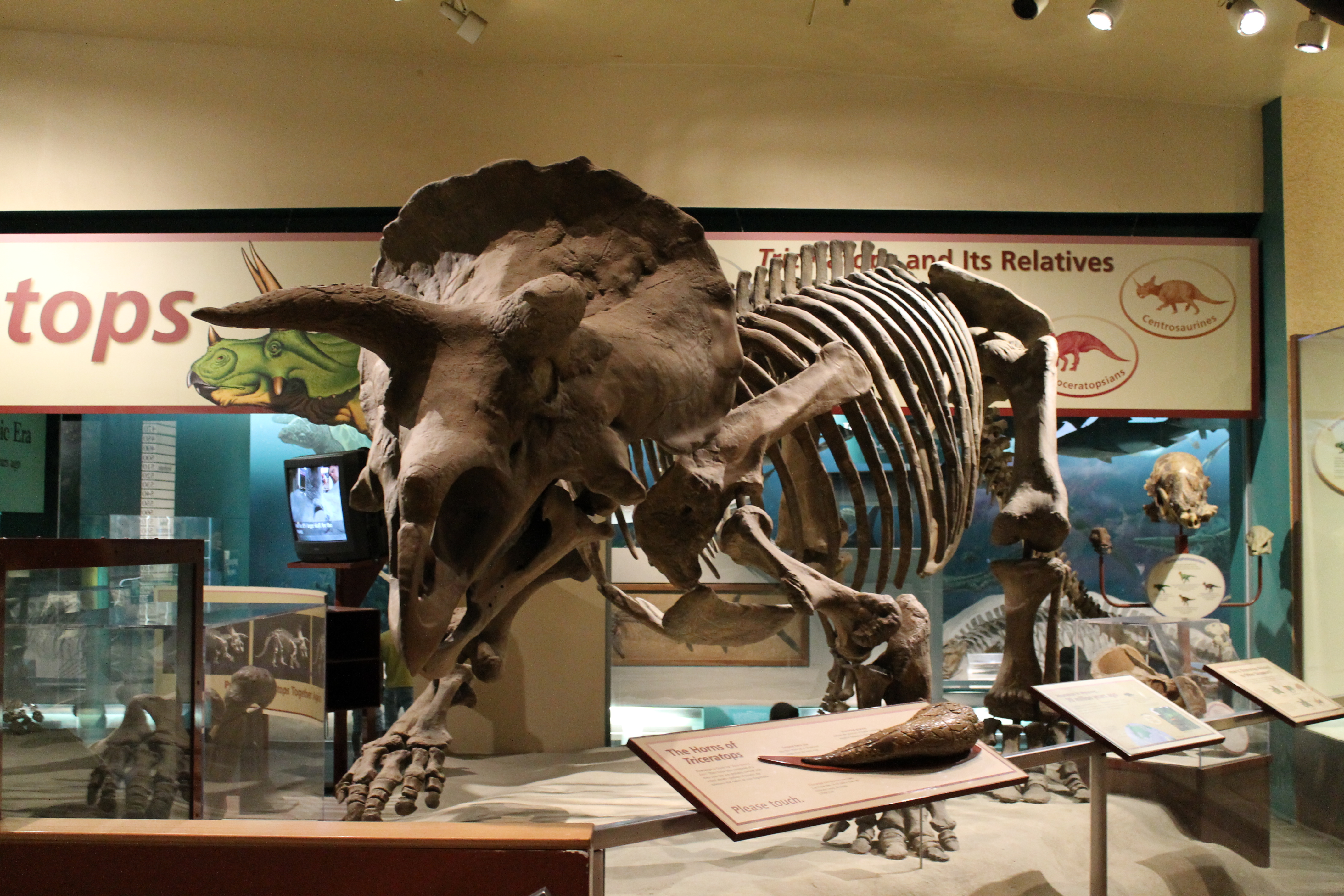
Triceratops at the National Museum of Natural History.

Triceratops “Hatcher” at the National Museum of Natural History. Photo by the author.

Back in July, I wrote about how the forelimb posture of ceratopsian dinosaurs like Triceratops has puzzled paleontologists for more than a century. Most quadrupedal dinosaurs held their front legs straight under their bodies, and it would make sense if Triceratops and its kin did the same. However, when researchers attempted to physically articulate skeletons for museum displays, they found that that the humerus would only fit properly with the scapula if it projected horizontally from the torso – like the sprawling limbs of a lizard. Over the years, new specimens, new research methods, and new technologies have all been used to help resolve this conundrum, but a consensus has not yet been reached. Of particular interest to me is the unusually central role mounted skeletons in museums have played in this biomechanical mystery. The previous post covered the historic Triceratops mounts; this entry will take a look at some more recent Triceratops displays in American museums.

The Hatcher Project

In 1998, a visitor looking at the Triceratops mount at the National Museum of Natural History happened to sneeze. To her alarm, the sneeze was enough to knock a small fragment of bone off the pelvis and onto the floor. The visitor thoughtfully informed security, and after a thorough conservation assessment by Kathy Hawks, it was determined that the 93-year-old mount needed to come off exhibit, and soon. The delicate fossils had served valiantly through 23 presidential administrations, but now it was time for the skeleton to be disassembled and preserved for posterity.

Retiring the classic Triceratops gave Ralph Chapman, head of the Museum’s Applied Morphometrics Laboratory, an opportunity to take on a project he had been germinating for some time. Chapman wanted to demonstrate the potential of 3-D scanning technology for paleontology research by creating a high-resolution digital duplicate of a dinosaur skeleton. Today, the process of making and studying digital copies of fossils is both widespread  and remarkably straightforward, but in the late 1990s it was practically science fiction. Nevertheless, the historic Triceratops was an ideal digitization candidate for several reasons. First, the digital assets would reduce handling of the delicate and aging original fossils. Second, exact copies of the scanned bones could be made from milled foam and plastics to create a replacement exhibit mount. Finally, a digital Triceratops would be a great opportunity to revisit the ceratopsid posture problem in a new way.

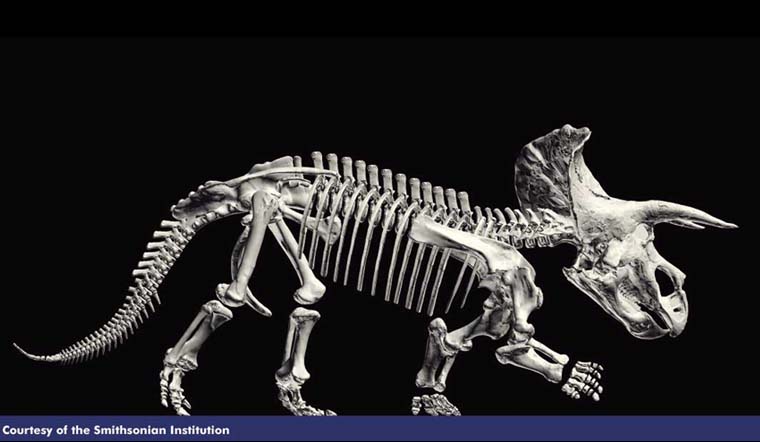
digital hatcher

A rendering of the digital Hatcher. Source

The ensuing Hatcher Project (the Triceratops was named in honor of John Bell Hatcher, who found the original fossils in the late 19th century) was a collaboration between Museum staff and several industry experts, including Lisa Federici of Scansite 3-D Services and Arthur Andersen of Virtual Surfaces, Inc. The first step was to place stickers on 100 key points on the Triceratops. These points were recorded with a surface scanner, so that the historic mount could be digitally recreated in its original pose. After that, fossil preparators Steve Jabo and Pete Kroehler carefully dismantled the skeleton. Each bone from the skeleton’s right side* was then scanned individually, producing 20 gigabytes of data (you’re supposed to gasp…again, this was the late 90s).

*Bones from the right side were mirrored to reproduce the left half of the skeleton. 

Since the original mount had been a somewhat disproportionate composite, the team made a few changes when building the new digital Hatcher. Some elements, including the undersized skull, were enlarged to match the rest of the skeleton. In addition, parts that had either been sculpted or were not actually Triceratops bones – such as the dorsal vertebrae and the hindfeet – were replaced with casts acquired from other museums. The result was the world’s first complete digital dinosaur, and shortly afterward, the first full-sized replica skeleton generated from digital assets.

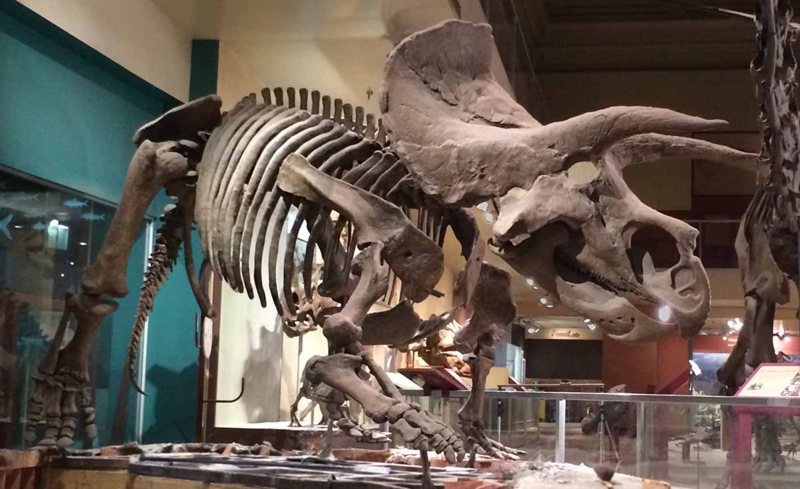
Updated "Hatcher" mount's rarely seen right side. Source

Hatcher’s seldom seen right side was briefly exposed recently, before the mount was moved to a temporary second floor location. Source

In April 2000, the Hatcher team convened at NMNH to determine how the new replica mount would be posed. Chapman, Jabo, and Kroehler were joined by Kent Stevens of the University of Oregon, Brenda Chinnery of Johns Hopkins University, and Rolf Johnson of the Milwaukee Public Museum (among others) to spend a day working with a 1/6th scale model produced by stereolithography specialist Jason Dickman. The miniature Hatcher allowed the researchers to physically test the skeleton’s range of motion without the difficulty of manipulating heavy fossils.

The day was full of surprises. The team was impressed by the wide range of motion afforded by the ball and socket joint connecting the Triceratops skull to the atlas. They also found that the elbow joints could lock, which may have been helpful for shock absorption when the animal smashed things with its face. Nevertheless, when it came time to articulate the humerus and scapula, the team essentially validated Charles Gilmore’s original conclusion that sprawling forelimbs worked best (although the new Hatcher mount stands a little straighter than the historic version, and a lot straighter than the New York Triceratops). While other paleontologists had used indirect evidence (like evenly spaced trackways and wide nasal cavities for sucking down lots of oxygen) to support the idea that Triceratops was a straight-legged, fast-moving rhino analogue, articulating the actual bones showed once again that ceratopsid forelimbs had to sprawl.

Houston and Los Angeles Mounts

LACM Triceratops mount. Photo by Heinrich Mallison, many more here.

LACM Triceratops mount. Photo by Heinrich Mallison, many more here.

Hatcher is the Triceratops I am best acquainted with, and I can’t help but think of it as the definitive example of this animal. However, two new Triceratops mounts demonstrate a radically different take on ceratopsid posture. In 2011, the Natural History Museum of Los Angeles County completed a thoroughly renovated dinosaur hall, which features a brand-new Triceratops mount at its entrance. Like Hatcher, this skeleton is a composite of several specimens, in this case excavated in Montana by LACM teams between 2002 and 2004. Phil Fraley Productions, the exhibit fabrication company behind Sue and the Carnegie Museum dinosaurs, was responsible for mounting the fossils. The primary specimen (LACM 141459, which provided the skull and right forelimb) is notable because it included a completely intact and articulated front leg. Although the analysis of this important find has yet to be published, exhibit curator Luis Chiappe tellingly chose an erect, rather than sprawling, forelimb posture.

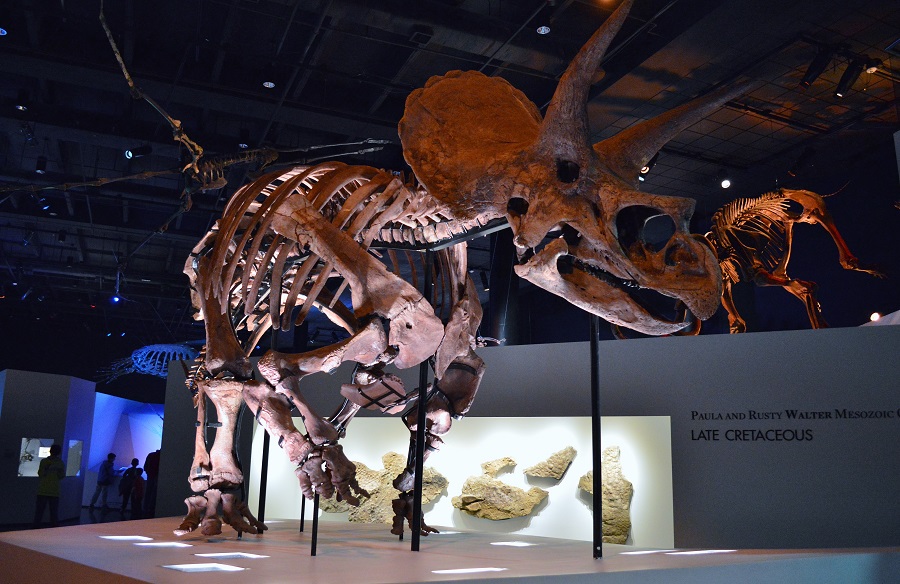
Meanwhile, the Houston Museum of Nature and Science opened its colossal, 30,000 square foot Hall of Paleontology in 2012. Among the dozens of mounted skeletons on display is Lane, reportedly the most complete Triceratops ever found. The museum purchased the skeleton from the Black Hills Institute, and the company also constructed the display mount. Robert Bakker, who curates the Hall of Paleontology, specifically requested that Lane be given a straight-legged, trotting pose. With two legs off the ground, this display emanates strength and speed.

"Lane" at Houston Museum

“Lane” at Houston Museum of Nature and Science. Source

So how did the Los Angeles and Houston exhibit teams manage to construct plausible-looking, straight-legged Triceratops mounts? Since full descriptions of either specimen have not been published, it’s hard to say for sure. From the look of it, however, the new mounts both have narrower, flatter rib cages (as suggested by Paul and Christiansen), which allows more room for the elbow. Likewise, the shoulder girdles are lower than Hatcher’s, and they seem to have been rotated closer to the front of the chest. Also note that the forelimbs of the Los Angeles and Houston mounts are not completely erect – they are strongly flexed at the elbow, as is typical of many quadrupedal mammals.

These new mounts don’t mean the Triceratops posture problem is resolved, though. The angle of the ribs and the position of the scapula are apparently both touchy subjects, so alternate interpretations are sure to arise in the future. After all, Triceratops forelimb posture isn’t just an esoteric bit of anatomical trivia: it has major implications for the speed and athleticism of an extremely successful keystone herbivore. Understanding the limitations on this animal’s movement and behavior can contribute to our understanding of the ecosystem and environmental pressures in late Cretaceous North America. As such, I am eagerly awaiting the next round in this 100-plus year investigation.

A big thank you to Rebecca Hunt-Foster and Ralph Chapman for sharing their time and expertise while I was writing this post!

References

Chapman, R. Personal communication.

Chapman, R., Andersen, A., Breithaupt, B.H. and Matthews, N.A. 2012. Technology and the Study of Dinosaurs. The Complete Dinosaur, 2nd Edition. Bloomington, IN: Indiana University Press.

Fujiwara, S. and Hutchinson, J.R. 2012. Elbow Joint Adductor Movement Arm as an Indicator of Forelimb Posture in Extinct Quadrupedal Tetrapods. Proceedings of the Royal Society 279: 2561-2570.

Hunt-Foster, R. Personal communication.

Paul, G.S. and Christiansen, P. 2000. Forelimb Posture in Neoceratopsian Dinosaurs: Implications for Gait and Locomotion. Paleobiology 26:3:450-465.

16 Comments

Filed under anatomy, dinosaurs, fossil mounts, history of science, marginocephalians, museums, NMNH, reptiles

The Diplodocus seen ’round the world

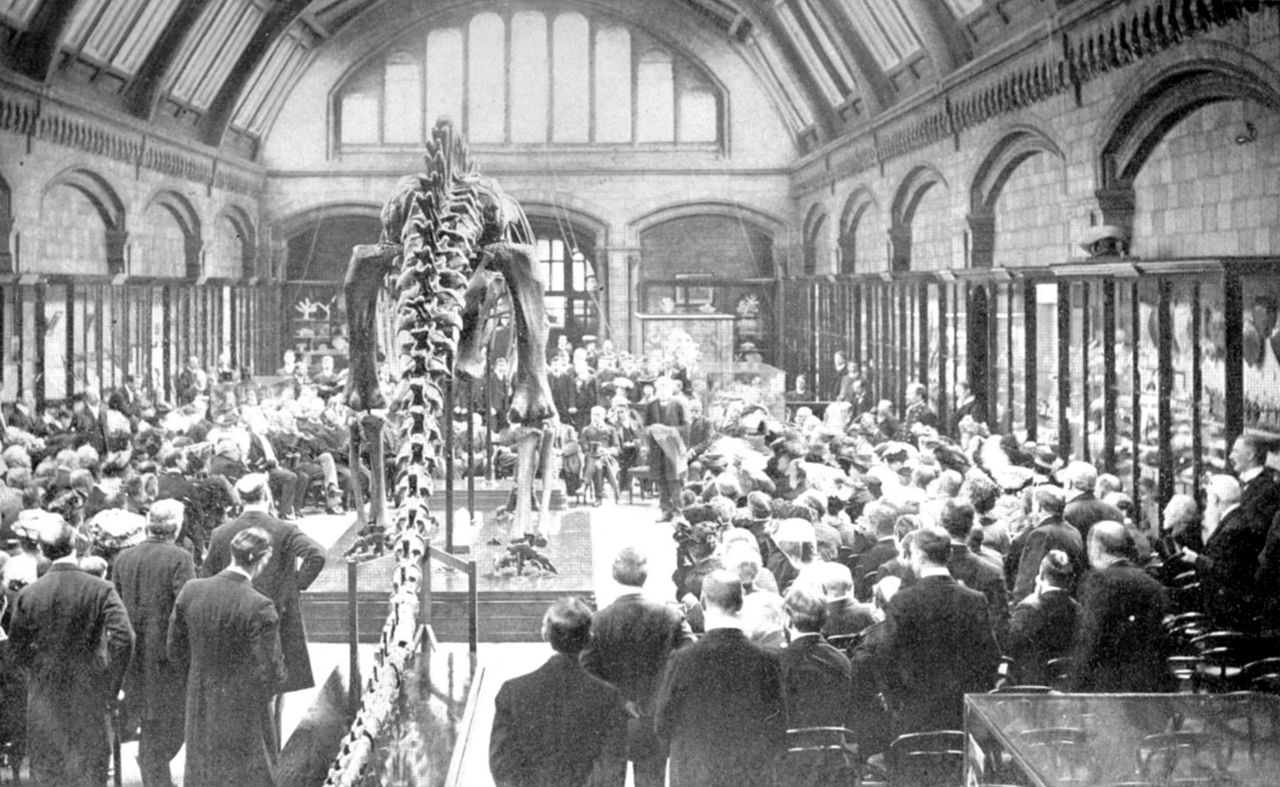
1st cast in spot of honor

The first cast of the Carnegie Diplodocus holds court at London’s Natural History Museum. Source

The story of Andrew Carnegie’s Diplodocus will surely be well known to most readers. As the legend goes, Carnegie the millionaire philanthropist saw a cartoon in the November 1898 New York Journal depicting a sauropod dinosaur peering into the window of a skyscraper. He immediately contacted the paleontology department at the newly established Carnegie Museum of Natural History in Pittsburgh, and offered ample funding to find a sauropod skeleton for display. So began a frantic competition among the United States’ large urban museums to be the first to collect and mount a sauropod—the bigger the better.

The American Museum of Natural History was first across the finish line, unveiling their composite Apatosaurus in February of 1905. By that time, the Carnegie team had already found a sauropod skeleton of their own—a Diplodocus—near Medicine Bow, Wyoming. Unfortunately, they had nowhere to display it, as the Carnegie Museum building was still far from finished. Unwilling to be bested by his New York competition, Andrew Carnegie offered his chum King Edward VII a complete plaster replica of the Diplodocus, and hired a team of modelmakers to help make it happen. The arrival of the facsimile Diplodocus at the British Museum (now the Natural History Museum) in London was celebrated with a white tie event presided over by Carnegie and Baron Avebury, who spoke on behalf of the king. The London Diplodocus was on display two months after the AMNH Apatosaurus, and the original skeleton was unveiled in Pittsburgh in 1907.

diplodocus_nocopyright

In March 1905, a classy shindig celebrated the arrival of the first replica Diplodocus in London.

That’s usually where the Diplodocus story ends, with a footnote that nine more Diplodocus replicas were later manufactured and presented to heads of state throughout Europe and Latin America. I’d like to explore those subsequent displays in more detail. The Carnegie Diplodocus was the first mass-produced dinosaur, and by 1932 it appeared in no less than ten virtually identical displays across three continents. Taylor characterizes Carnegie’s sauropod as “the single most viewed skeleton of any animal in the world”, and its scientific, social, and even political ramifications are both wide-reaching and fascinating.

Building a Sauropod

The original CMNH Diplodocus mount, in the hall built specifically to accomodate it. Source

The real CM 84 has been displayed in Pittsburgh since 1907. Source

The Diplodocus in question is specimen CM 84, recovered in 1899 in Albany County, Wyoming. The skeleton was about 60% intact and remains one of the most complete sauropod specimens ever found. The ubiquitous John Bell Hatcher described the fossils in 1901, coining the new species Diplodocus carnegiei after the project’s benefactor. Arthur Coggeshall of the Carnegie Museum was primarily responsible for preparing and casting the fossils. He was initially supervised by Hatcher, but William Holland took over when Hatcher died in 1904. Holland deferred to Hatcher’s judgement in most cases, although he was not shy about voicing his disagreement. For example, Hatcher had reconstructed the Diplodocus forefeet with slightly elevated digits, but Holland (incorrectly) thought they should be flat and splayed.

As is typical of dinosaur mounts, the incomplete primary specimen was supplemented with other fossils to produce a full skeleton. The skull, for instance, was a cast of USNM 2673, a specimen on display at the Smithsonian. A number of missing bones, including most elements of the forelimbs, were sculpted using a smaller Diplodocus specimen for reference. Although it took longer to produce than the AMNH Apatosaurus, contemporary paleontologists generally agreed that Carnegie’s Diplodocus was the superior sauropod mount. Not only was its pose more natural and lifelike, but the underlying steel armature was cleverly hidden. It’s difficult to overstate the challenges of assembling a mounted skeleton on this scale, and in its day the Diplodocus was the best in the world.

Roll Call

dip_mexico

The Chopo University Museum in Mexico City received the 9th Diplodocus cast in 1929. Source

As mentioned, the first replica Diplodocus was unveiled in London in 1905, and the original fossils were ready for display in 1907. French and German dignitaries were present at an event in Pittsburgh celebrating its completion, and Andrew Carnegie promised both countries Diplodocus casts of their own. Once again, Coggeshall and Holland led the creation of the new mounts, a task they would repeat many times in the years to come. Playing precisely to cartoonish national stereotypes, the Germans provided a detailed plan and ambitious schedule for the project, while the French acted coy, then threw a lavish party when the mount was ready. Diplodocus replicas were on display at the National Natural History Museum in Paris and the Humboldt Museum in Berlin before the end of 1908, but the Pittsburgh team already had orders for a new batch of mounts. By early 1910, three new Diplodocus were on exhibit at the Museum for Paleontology and Geology in Bologna, Italy, the Natural History Museum in Vienna, Austria, and the Zoological Museum in St. Petersburg, Russia. The La Plata Museum in Buenos Aires, Argentina and the National Museum of Natural Science in Madrid, Spain received their Diplodocus mounts in 1912 and 1913, respectively, bringing the total number of replicas up to eight by the onset of World War I.

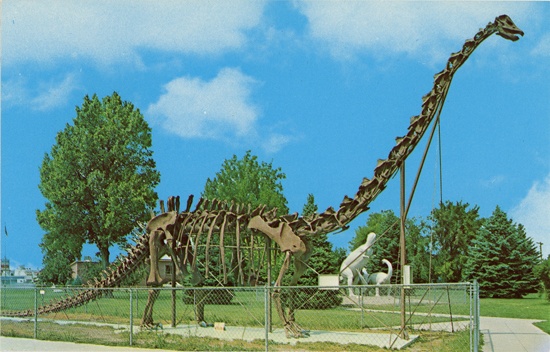
The war put a damper on this friendly exchange of dinosaurs, and Carnegie’s death in 1919 brought the Diplodocus diaspora to a temporary end. However, in 1929 Louise Carnegie, wife of Andrew, commissioned an additional cast as a gift for Alfonso Herrera of the Chopo University Museum in Mexico City. Herrera originally asked for a bronze cast for outdoor display, but when this proved prohibitively expensive, a plaster version was produced instead. In 1932, the Carnegie Museum traded a Diplodocus replica for a collection of German fossils from the Paleontological Museum in Munich. This copy has never been mounted or displayed. The last Diplodocus cast from the original molds was forged in 1957. Made from concrete, this mount was displayed outdoors for many years at the Utah Field House Museum in Vernal, Utah.

goofy vernal field house concrete cast

The 11th and final facsimile Diplodocus made from the original molds was this concrete version, on exhibit in Vernal, Utah for many years.

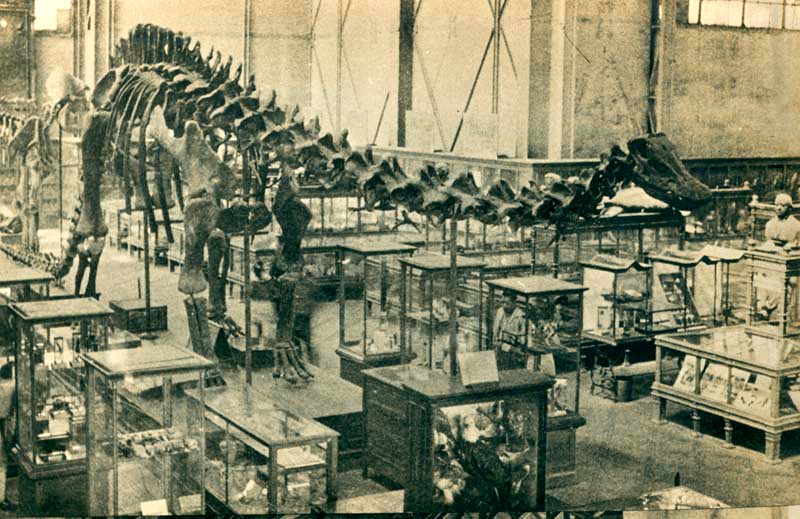
Most of the historic Diplodocus mounts remain on display today. The London Diplodocus was taken off exhibit during World War II, but in 1979 it was given a position of honor in the museum’s entrance hall. Later, it was completely restored and remounted with its tail held aloft. The Berlin, Buenos Aires, and Bologna Diplodocus mounts have also been upgraded with modern poses, but the others retain their historic, tail-dragging posture, looking exactly as they did a century ago. The St. Petersburg mount was circulated among a number of Russian museums, and may have been destroyed in an effort to make new molds from the bones (Edit: The Russian mount is still on display at the Orlov Museum for Paleontology—see comments). The concrete Diplodocus in Vernal has likewise been retired, but it was used to create two new casted skeletons, now on display in Utah and Nevada.

Opportunities for Science

St. Petersburg

The weird bow-legged Diplodocus in St. Petersburg looks more like the original USNM Triceratops than Tornier’s take on the sauropod.  Source

The sudden availability of identical Diplodocus skeletons presented an unusual opportunity for international scientists, allowing researchers based thousands of miles apart to study and compare notes on the same bones. Perhaps inevitably, a few European scientists were not happy with Holland and Coggeshall’s take on the sauropod. The best-known dissenter was Gustav Tornier, who rejected the straight-limbed reconstruction of Diplodocus, arguing instead that the sauropod sprawled like a crocodile. The German scientist provided an illustration of this alternate stance, in which the poor dinosaur’s arms appear to project from the base of its neck. Holland responded with a particularly harsh rebuttal (backed by several European scientists), and Tornier declined to push the issue further in print.

Dinosaurs for everyone

La plata

Diplodocus cast number seven at the La Plata Museum in Buenos Aires. Source

The most lasting influence of the Carnegie Diplodocus is certainly it’s cultural impact. If any one specimen can be credited with inspiring the global popularity of dinosaurs, it was this one. Thanks to Carnegie, citizens of 11 different nations had their first opportunity to stand in the presence of a giant dinosaur, and to experience the scale and splendor of a creature that completely dwarfed any modern land animal. In every nation where a new Diplodocus was installed, the local press adored the creature, never failing to point out its tiny head and presumed stupidity. Diplodocus was an endearing oaf, and for a time, its name was synonymous with dinosaurs and prehistory in general.

What was the significance of Diplodocus to all these people? It’s difficult not to think of it as a vanity project for Andrew Carnegie*, an opportunity to rub shoulders with European royalty and flaunt his wealth and generosity. One might also consider the Diplodocus an expression of America’s economic and technological might, or perhaps a harbinger of the United States’ role in globalization and mass production. French writer Octave Mirbeau seemed to be thinking along those lines when he lamented the mighty dinosaur being reduced to a crass, populist display. According to Carnegie himself, however, the goal was nothing less than world peace: he wanted to bring people together over their shared enthusiasm for the dinosaur. Too bad World War I came along and ruined the sauropod love-in.

*If the accolades went to anyone’s head, it was Holland’s. During his world tour assembling sauropod mounts, he was given countless awards, including the French Legion of Honor and German Knight’s Cross. Holland carefully added each new medal to his portrait at the Carnegie Museum.
Original Diplodocus

The original Diplodocus skeleton was remounted at the Carnegie Museum in 2007. Photo by the author.

On both sides of the Atlantic, Diplodocus was a shared point of reference and a beloved symbol. Most commonly, Diplodocus was the butt of a joke: from politicians to athletes to heavy machinery, anything big, slow, and not especially bright was likened to the dinosaur. My favorite anecdote on the subject comes from Nieuwland: during World War I, soldiers from different nations with different languages had the word “Diplodocus” in common, and used it to describe the heavy, plodding tanks.

Today, we think of Diplodocus and it’s ilk very differently. Sauropods weren’t ungainly dolts—they were surprisingly nimble and extremely successful megaherbivores, unchallenged in their dominance for 140 million years. Still, it’s difficult to think of single fossil that has matched the global cultural impact of CM 84. There are far more copies of Stan the T. rex on display, and Sue is widely known by name, but really, the only contender that even comes close is Archaeopteryx. With eleven versions still on display, Carnegie’s legendary Diplodocus lives on.

References

Brinkman, P.D. 2010. The Second Jurassic Dinosaur Rush: Museums and Paleontology in America at the Turn of the 20th Century. Chicago, IL: University of Chicago Press.

Holland, W.J. 1906. The osteology of Diplodocus Marsh with special reference to the restoration of the skeleton of Diplodocus carnegiei Hatcher, presented by Mr. Andrew Carnegie to the British Museum, May 12, 1905. Memoirs of the Carnegie Museum. Vol. 2, No. 6, 225-278.

Nieuwland, I. 2010. The colossal stranger: Andrew Carnegie and Diplodocus intrude European Culture, 1904-1912. Endeavour. Vol 34, No. 2.

Taylor, M.P. 2010. Sauropod dinosaur research: a historical review. Geological Society, London, Special Publications. Vol. 343, pp. 361-386.

28 Comments

Filed under CMNH, dinosaurs, fossil mounts, history of science, museums, reptiles, sauropods

Museums and the Triceratops Posture Problem – Part 1

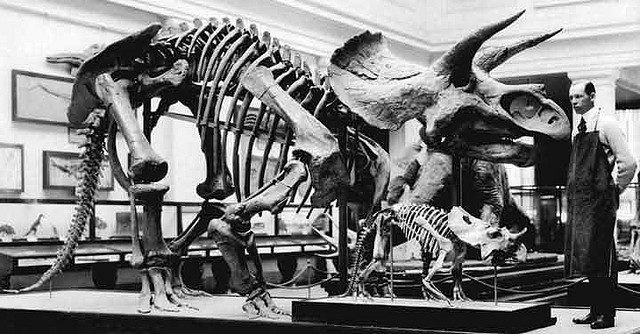
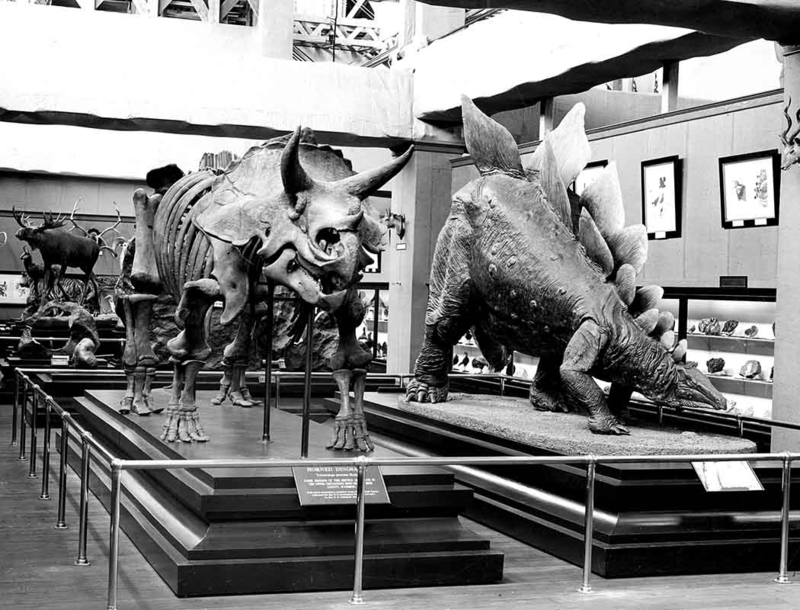
The Triceratops in the Hall of Extinct Monsters, circa 1911. Photo from NMNH on flickr.

The world’s first Triceratops mount at the United States National Museum, built in 1905. Photo courtesy of the Smithsonian Institution Archives.

We know more about dinosaurs today than previous generations of researchers would have ever thought possible. Who would have guessed that in the 21st century, we would have direct evidence for the color of some species, or a detailed understanding of the life history and ontogeny of others? Modern paleontologists can delve deeper into the biology and ecology of extinct animals than ever before, so it comes as a surprise when a very basic question about dinosaur physiology has gone without a definitive answer for well over a century.

For 125 years, paleontogists have struggled to understand how large ceratopsids like Triceratops held their forelimbs. Usually, someone with a good understanding of anatomy can assemble a tetrapod skeleton without much difficulty. Vertebrates are all built along the same basic body plan, and bones fit together in the same general way. However, the forelimb bones of Triceratops and its relatives are quite perplexing. The head of the humerus, which articulates with the scapula, is off-center and extends backward from the shaft. Meanwhile, the lesser tubercle, a tiny nubbin on a human humerus, is enormous and boxy. Taken together, these two traits make it so that if Triceratops held its arm erect and under its body, like most dinosaurs did, the humerus would either puncture the rib cage or be completely dislocated from the shoulder. The simplest way to solve this is to orient the humerus so that the arms project at right angles from the torso, like the sprawling limbs of a lizard. But this just looks wrong. First, ceratopsid hindlimbs are plainly meant to stand straight up. Sprawling forelimbs make Triceratops look mismatched, like the front end a tortoise sewn was to the back end of a rhino. Second, and perhaps more importantly, a sprawling posture would drastically inhibit speed and maneuverability in what is otherwise a very powerfully-built animal. The posture of Triceratops and its kin would ultimately have had a dramatic impact on the animal’s behavior, lifestyle, and ecological role.

Paleontologists haven’t spent the last century just scratching their heads over this problem. Ceratopsid forelimbs have inspired a considerable amount of research over the years, as scientists continue to develop new methods and new tools to explore the biomechanics of prehistoric animals. New technologies have been developed and refined specifically to help determine how Triceratops and its relatives walked and stood. Nevertheless, my intent with this post is not to thoroughly recount the history of ceratopsid forelimb research (if you’re interested, most of the articles referenced below are freely available online). Instead, I’d like to explore the central role museum displays have played in this debate. An artist drawing a two-dimensional image of Triceratops can fudge the orientation of the limbs (and many have), but the team building a mounted skeleton needs to know exactly how to articulate the bones. The ceratopsid posture question first arose in the process of building a mounted Triceratops skeleton for display, and museum mounts continue to be referenced by researchers looking to “ground truth” their ideas. While museum mounts usually exist primarily for education and display, in the case of the ceratopsid forelimb question these exhibits have long been central to the process of studying fossil evidence and creating knowledge.

Early Reconstructions

Marsh's 1891 restoration of Triceratops.

Marsh’s 1888 restoration of Triceratops.

O.C. Marsh published the first illustrated reconstruction of a Triceratops skeleton in 1888. Marsh was legendary in his attention to detail, and the restoration holds up reasonably well today – better, in fact, than his illustrations of Stegosaurus and “Brontosaurus.” Contemporary scientists had no complaints, even though Marsh had given the Triceratops vertical forelimbs. Other dinosaurs had erect limbs, as does the superficially similar modern rhino, so why shouldn’t Triceratops? Marsh’s reconstruction was brought to three-dimensional life in 1901, when the Smithsonian Institution commissioned a life-sized papier mache replica of a Triceratops skeleton for the Pan-American Exposition in Buffalo. Since the model was hand-sculpted, not casted from original fossils, artist F.A. Lucas had no trouble making Triceratops stand up straight, exactly as portrayed by Marsh. The model appeared again at a Smithsonian exhibit in St. Louis, but was apparently lost or destroyed shortly afterwards. In its place, newly hired United States National Museum preparator Charles Gilmore began work on a mounted Triceratops skeleton composed of original fossils.

St. Louis Expo

Straight-legged Triceratops model at the Pan American Expo in St. Louis. Source

Gilmore’s 1905 Triceratops mount was the first real skeleton of a ceratopsid ever assembled for display (first image). Like virtually all dinosaur mounts of the era, the skeleton was a composite of several specimens and a few sculpted pieces. All the Triceratops fossils at Gilmore’s disposal were collected by John Bell Hatcher in the late 19th century, and inherited by the Smithsonian as part of the Marsh collection. USNM 4842, a partial skeleton consisting mostly of a torso and pelvis, formed the basis for the mount, but at least six other individuals were also incorporated. Gilmore selected the skull because it was more complete and less distorted than the other Triceratops skulls available, but it was also on the small side compared to the body. Likewise, the left humerus was about 40% smaller than the right, and conspicuously three-toed Edmontosaurus hindfeet were used (no Triceratops feet had been found at the time). In the process of building his Triceratops, Gilmore had to make several changes to the idealized Triceratops envisioned by Marsh, most notably the orientation of the forelimbs. Not only was it apparently impossible to articulate the humerus in an upright position, but as Gilmore explained it, “a straightened form of leg would so elevate the anterior portion of the body as to have made it a physical impossibility for the animal to reach the ground with its head.”

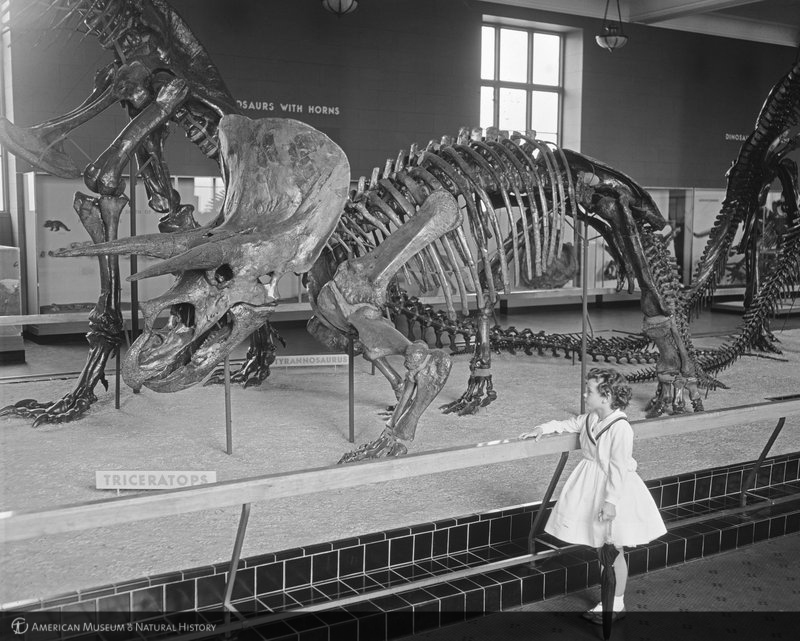
The American Museum of Natural History produced their own Triceratops mount in 1923. Like its USNM predecessor, the AMNH Triceratops was a composite of several specimens. AMNH 5033, discovered by Barnum Brown in Montana and consisting of most of the dorsal vertebral column, ribs, and pelvic girdle, made up the largest portion of the mount. The skull was recovered by Charles Sternberg in Wyoming, and many of the appendicular bones were sculpted or cast from Smithsonian specimens. Preparator Charles Lang spent over 263 working days on the project, and much of that time was reportedly spent puzzling over the forelimbs. Lang studied living and preserved specimens of a variety of tetrapods, including rhinos, lizards, crocodiles, and tortoises, trying to find a living analogue for the strangely shaped ceratopsid bones. He ended up articulating the forelimbs so that they were even more widely splayed than Gilmore’s reconstruction, to the point that the back of the Triceratops slopes dramatically forward, and the head is almost dragging along the ground. In an accompanying paper, Henry Osborn asserted that “nothing short of a horizontal humerus and completely everted elbow would permit proper articulation of the facets.” By way of explanation, Osborn offered that this posture might have been helpful in withstanding a frontal impact.

triceratops

American Museum of Natural History Triceratops mount, circa 1959. Photo courtesy of the AMNH Research Library.

Together, the Washington and New York Triceratops mounts, with their mismatched tortoise-in-the-front, rhino-in-the-back posture, would come to define both popular and scientific conceptions of ceratopsids for the better part of a century. Other museums followed Gilmore and Lang’s lead and built sprawling ceratopsids of their own, including Richard Lull’s 1929 Centrosaurus at the Peabody Museum of Natural History and Kenneth Carpenter’s 1986 Chasmosaurus at the Academy of Natural Sciences. Even as recently as 1995, AMNH curators chose not to change a single bone on the historic Triceratops mount while modernizing their exhibit.

Voices of Dissent

Robert Bakker was one of the first to challenge the ceratopsid forelimb orthodoxy. In 1986, Bakker criticized Gilmore and Lull’s museum mounts and resurrected Marsh’s original interpretation of a straight-legged Triceratops. His reasoning was that the ceratopsid glenoid fossa (the concavity on the scapula that holds the head of the humerus) was more like the narrow cup of a horse or rhino than the wide trough of a lizard. Bakker went as far as to suggest that Triceratops and its kin might have been able to run or even gallop. Gregory Paul and others piled on, arguing that earlier researchers had run into trouble articulating Triceratops forelimbs because they had made the ribcage too broad. If the ribs were articulated so that the animal had flat flanks, the elbow apparently wouldn’t get in the way. Additional evidence for an upright stance came from a set of ceratopsid trackways described by Martin Lockley and Adrian Hunt. The trackways showed forefeet in line with the hindfeet, suggesting that front and back legs were not mismatched, after all.

This cast of the AMNH Triceratops at the Field Museum replicates the sprawling posture. Photo by the author.

This cast of the AMNH Triceratops at the Field Museum replicates the sprawling posture of the original. Photo by the author.

However, paleontologists like Peter Dodson were unmoved by these new arguments. Dodson proposed that the trackways had been misinterpreted: since ceratopsids are wider at the hips than at the shoulders, evenly spaced front and back prints should imply that the animal was holding its forelimbs out farther than its hindlimbs. Dodson was concerned that the rhino analogy was being taken too far: Triceratops looked like a rhino, so reasearchers were trying their hardest to make it move and behave like a rhino.

As Kenneth Carpenter explained in a comment last year, dinosaurs can do anything on paper, but physically assembling a skeleton forces you to confront the reality of what the bones can and cannot do. In the last decade, two new Triceratops mounts provided paleontologists the opportunity to re-explore this process, with more complete specimens and modern technology at their disposal. Next time, we’ll take a look at what the new Triceratops displays at the National Museum of Natural History and the Los Angeles County Natural History Museum can tell us about ceratopsid posture and lifestyle.

References

Bakker, R.T. 1986. The Dinosaur Heresies: New Theories Unlocking the Mystery of Dinosaurs and Their Extinction. New York, NY: Citadel Press.

Dodson, P. 1996. The Horned Dinosaurs: A Natural History. Princeton, NJ: Princeton University Press.

Fujiwara, S. 2009. A Reevaluation of the Manus Structure in Triceratops (Ceratopsia: Ceratopsidae). Journal of Vertebrate Paleontology 29:4:1136-1147.

Fujiwara, S. and Hutchinson, J.R. 2012. Elbow Joint Adductor Movement Arm as an Indicator of Forelimb Posture in Extinct Quadrupedal Tetrapods. Proceedings of the Royal Society 279: 2561-2570.

Gilmore C.W. 1905.The Mounted Skeleton of Triceratops prorsus. Proceedings of the U.S. National Museum 29:1426:433-435.

Makovicky, P. 2012. Marginocephalia. The Complete Dinosaur, 2nd Edition. Eds. Brett-Surman, M.K., Holtz, T.R. and Farlow, J.O. Bloomington, IN: Indiana University Press.

Osborn, H.F. 1933. Mounted Skeleton of Triceratops elatus. American Museum Novitates 654:1-14.

Paul, G.S. and Christiansen, P. 2000. Forelimb Posture in Neoceratopsian Dinosaurs: Implications for Gait and Locomotion. Paleobiology 26:3:450-465.

2 Comments

Filed under AMNH, anatomy, dinosaurs, fossil mounts, history of science, marginocephalians, museums, NMNH, reptiles

Framing Fossil Exhibits, Part 1

This post started out as a review of “Evolving Planet”, the expansive paleontology exhibit at the Field Museum of Natural History. The short version is that it’s very good exhibit constrained by a somewhat frustrating layout. We’ll get back to that eventually, but first it’s worth considering the purpose of large-scale fossil exhibits in a more general sense.

Fossils, particularly the mounted skeletons of dinosaurs and other prehistoric animals, have been central to the identity of natural history museums since the late 19th century. In the early days, public exhibits were afterthoughts to the primary work of the museum (research and curation of collections), and if there was any logic behind their layout, it was an aesthetic logic. Typically posed in neutral, trophy-like stances on centrally-situated pedestals, mounted skeletons were the highlights of a natural history display for most visitors. For anyone not trained in comparative anatomy, however, these exhibits ultimately amounted to prehistoric pageantry. People could marvel at the great size of the animals, but there was very little to be learned besides the names of the species in question.

Hadrosaurus cast on display at the Field Museum. Field Museum Photo Archives.

A typically random assortment of fossil specimens at the Field Colombian Museum, ca. 1898. Image courtesy of the Field Museum Photo Archives.

These days, we try to do better. Exhibits are designed with a clear narrative structure, as well as specific learning goals for the audience. The focus of the narrative varies depending on the exhibit and the team behind it, but most modern natural history exhibits are explicitly designed to answer “how” as well as “what.” For paleontology displays, this means telling the story of life on Earth while also communicating how scientists collect and interpret evidence to put that story together. Crafting an exhibit has been compared to writing a popular nonfiction book, except designers are using the three-dimensional space of the exhibition hall as their medium. In this way, modern exhibits are more about ideas than specimens, or at least, the specimens are present primarily to illustrate the major scientific principles being communicated.

That’s how it works on paper, anyway. Despite this focus on education (and institutional mandates to provide learning opportunities for the widest possible audience), visitor surveys show that dinosaur pageantry is still the default mode of understanding for the majority of people passing through paleontology exhibits. No matter how carefully we craft our stories, most visitors still leave these displays recalling little more than a list of cool specimens they saw. Dinosaur pageantry has its place and can be employed for good. Dinosaurs and other prehistoric animals are undeniably impressive and spectacular, and it is absolutely worth taking advantage of that fact. We want people to pay attention to science, and in that respect mounted skeletons of favorite dinosaurs are great ambassadors to the world of research and discovery. The challenge is getting past the attention-grabbing stage. Prior experience has led visitors to expect that dinosaur pageantry is all paleontology has to offer, and many seem unprepared or unwilling to commit to a deeper understanding.

peabody mammals

The great hall at the Peabody Museum of Natural History, one of the last unmodified early 20th century fossil displays in the US. Photo by the author.

So are these people just hopeless rubes? Should exhibits be tailored only to visitors that care enough to put in the effort to understand? It should go without saying that this condescending attitude is completely wrongheaded and goes against the very spirit of museums. Education is half about knowing your content and half about knowing your audience. If visitors are not picking up on the content as desired, then a reassessment of who those visitors are is in order. Many museum exhibits still seem to be pitched at interested adults traveling alone with all the time in the world. This is a good description of many of my museum visits, but I’m also part of an increasingly small fraction of museum visitors. Most people who come to natural history museums come in groups of friends or family, and these groups often represent a range of ages. What’s more, most visitor interactions while in the museum will not be with the exhibits, but with each other. For the typical visitor, the museum experience is primarily a social one.

With this demographic in mind, a textbook on the wall (or a long video lecture*) is the last thing natural history museum audiences need. Visitors are absorbing exhibit content while simultaneously navigating a complicated, unfamiliar space. In the case of parents, they are also monitoring the attention span, hunger, and bathroom needs of their charges. Caught up in this whirlwind of information, visitors frequently fall back on what they already know. In the case of paleontology exhibits, this often means identifying familiar dinosaurs and ignoring the more intellectually challenging contextual information.

*It’s worth pointing out that a long video is NOT an improvement over a long label. Transferring label copy to a video or computer terminal does not inherently make the exhibit more interactive or more interesting. In fact, when the disruptive noise and need to wait for the next showing are taken into account, poorly implemented multimedia is probably less useful than traditional text labels.

The challenge for exhibit design, then, is dealing with the fact that visitors are not passively ingesting information. Visitors passing through an exhibit pull out relevant pieces of information and filter them through the lens of their existing worldview. Exhibit designers want visitors to also learn new information and challenge their preconceptions, but it’s easy to go too far. Survey after survey has shown that visitors do not appreciate exhibits that force them to move (or think) on rails. For practical reasons noted above, few visitors are able to look at every display, watch every orientation video, and work through every interactive in the prescribed order. Visitors need flexibility in order to make the exhibit experience their own. Finding the balance between providing informative context and providing a customizable experience is quite challenging, and not every exhibit succeeds.

struggling to contain the dinosaurs

The dinosaur hall in “Evolving Planet” at the Field Museum. Photo by the author.

On top of that, paleontology exhibits are particularly difficult to design because of problems with relatability. The story of life on Earth is immense, complex, and frequently counter-intuitive. It’s not enough to just explain what happened, we have to explain the history and methodologies of the half-dozen scientific disciplines that have contributed to to our understanding of that narrative. Even something so basic as the numerical age of a given fossil taxon requires a deluge of explanation to convey how we know. And all of this needs to be conveyed concisely, without being alienating, overwhelming, or condescending. Most importantly, it has to be made relevant to what audiences already know and understand.

Over the years, major natural history museums have attempted a variety of organizational strategies for their fossil exhibits. Each of these has been an attempt to break the dinosaur pageantry barrier and to portray the true complexity and relevance of paleontological science. Some arrangements, like taxonomical organization, have generally fallen out of favor. Others, like chronological presentations of life through time, are reliable mainstays that have been re-imagined in varied ways at different institutions. Still others, including cross-sections of specific extinct ecosystems, biogeography, and environmental change over time are relatively new and untested.

Keeping everything in this meandering introduction in mind, the upcoming series of posts will explore the strengths and weaknesses of each approach from the perspectives of science communication, aesthetics, and for lack of a better term, hospitality for non-expert audiences. Stay tuned!

References

Asma, S.T. 2001. Stuffed Animals and Pickled Heads: The Culture and Evolution of Natural History Museums. New York, NY: Oxford University Press.

Falk, J.H. and Dierking, L.D. 1992. The Museum Experience. Washington, DC: Whalesback Books.

Wands, S., Donnis, E. and Wilkening, S. 2010. “Do Guided Tours and Technology Drive Visitors Away?” History News 93:8:21-23.

2 Comments

Filed under dinosaurs, education, exhibits, fossil mounts, history of science, museums, opinion, science communication

Extinct Monsters Updated

artists conception

This early artist’s conception of the new NMNH fossil hall was on display on closing day.

Way back in 2012, I wrote a series of posts on the history of fossil displays at the National Museum of Natural History. Now that the old exhibit is closed for five years of renovation, it seemed like a good idea to go back and revise the old articles. That, and it can be very painful to read things I wrote over a year ago. Each of the seven posts, plus the launch page, have been substantially updated with new information, new images, and less abuse of the passive voice. You can check out the new articles via the Extinct Monsters link at the top of the page, or by clicking here.

Leave a comment

Filed under dinosaurs, exhibits, Extinct Monsters, fossil mounts, mammals, museums, NMNH, reptiles

Mount Making at MMFC14

This past week, I had the fantastic opportunity to be a part of the Mid-Mesozoic Field Conference. I can’t possibly offer enough praise to conference leaders ReBecca Hunt-Foster, Jim Kirkland, and John Foster for pulling off this amazingly informative journey across the Colorado plateau. Unfortunately, since we live in a world where it’s a bad idea to post images of fossil localities, and it’s downright toolish to share details about unpublished research, I won’t be posting a ton about the conference right now.

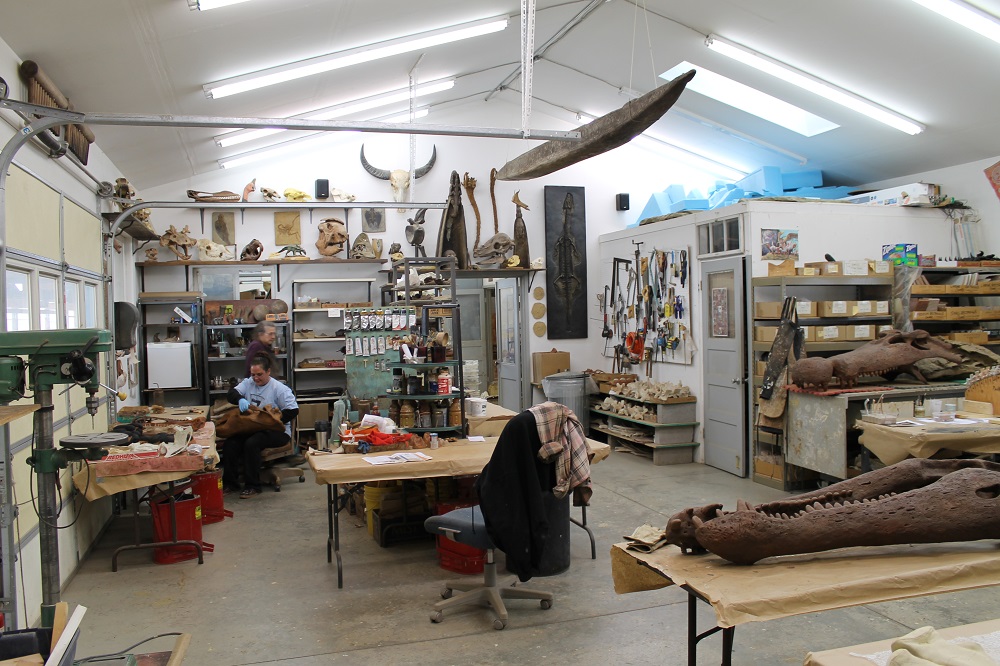
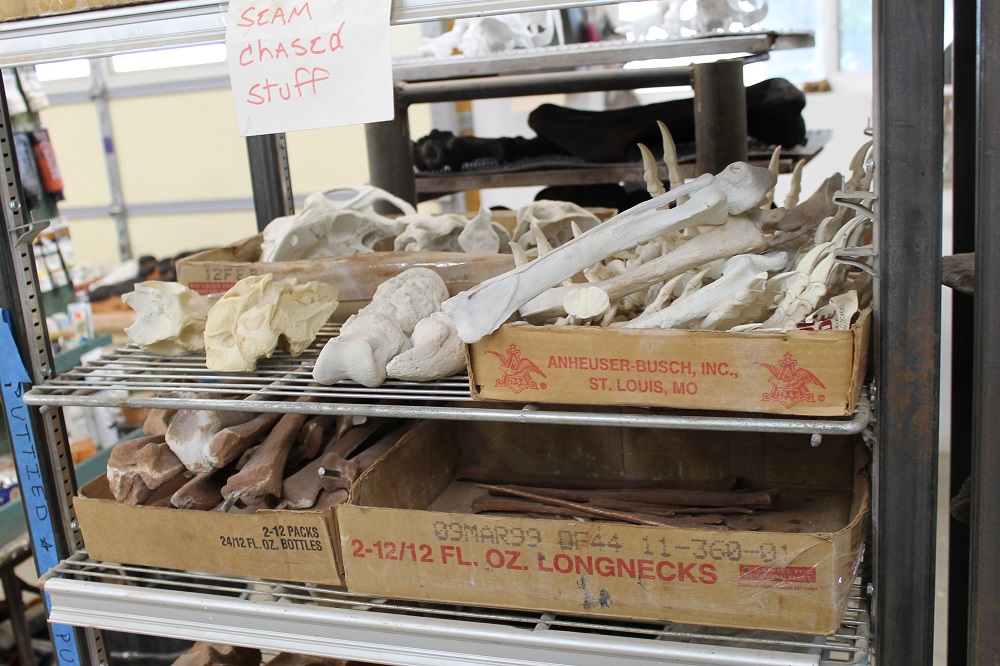
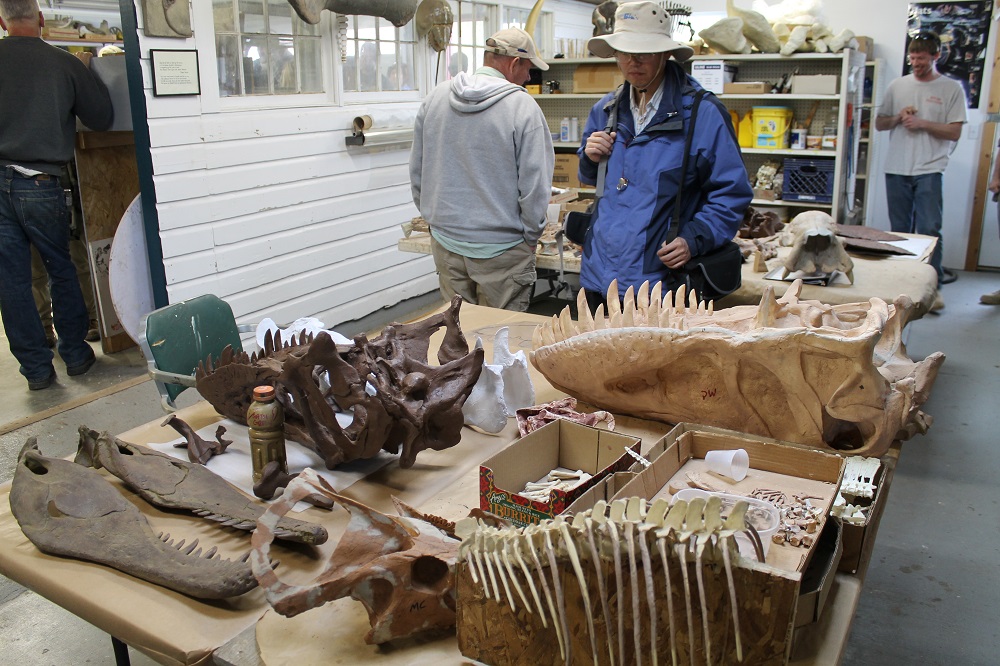
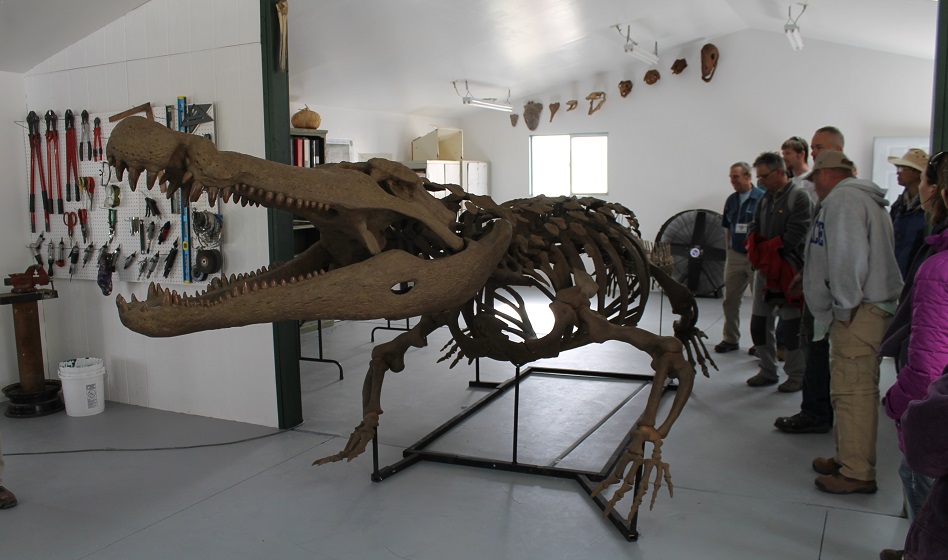
What I can share, however, are two stops we made that are especially relevant to this blog. The first is the Gaston Design workshop in Fruita, Colorado. Rob Gaston and his team specialize in casting and sculpting fossil replicas, and their mounted skeletons are on display all over North America, but especially at younger museums in the western interior. Gaston showed us how they mold, cast, and sculpt fossil replicas, a process that relies a great deal more on artistic and technical skill than fancy equipment.

gaston2

gaston3

gaston4

gaston1

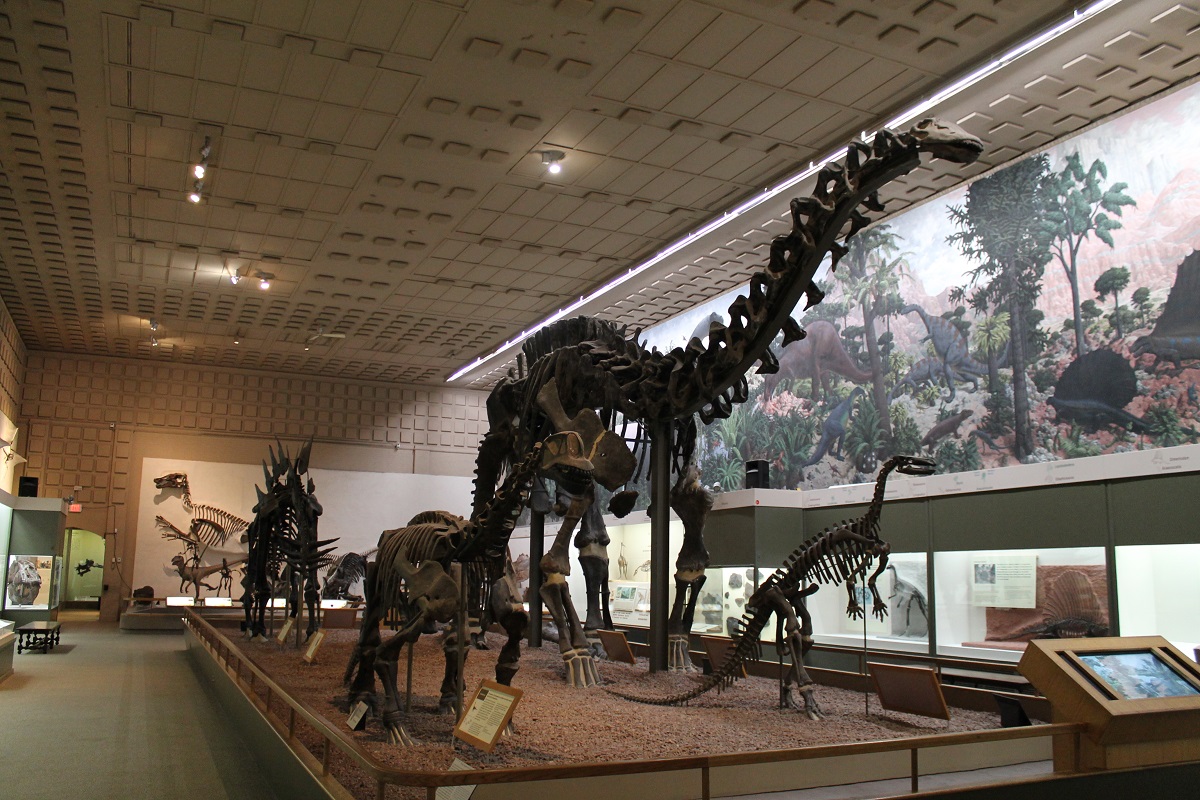
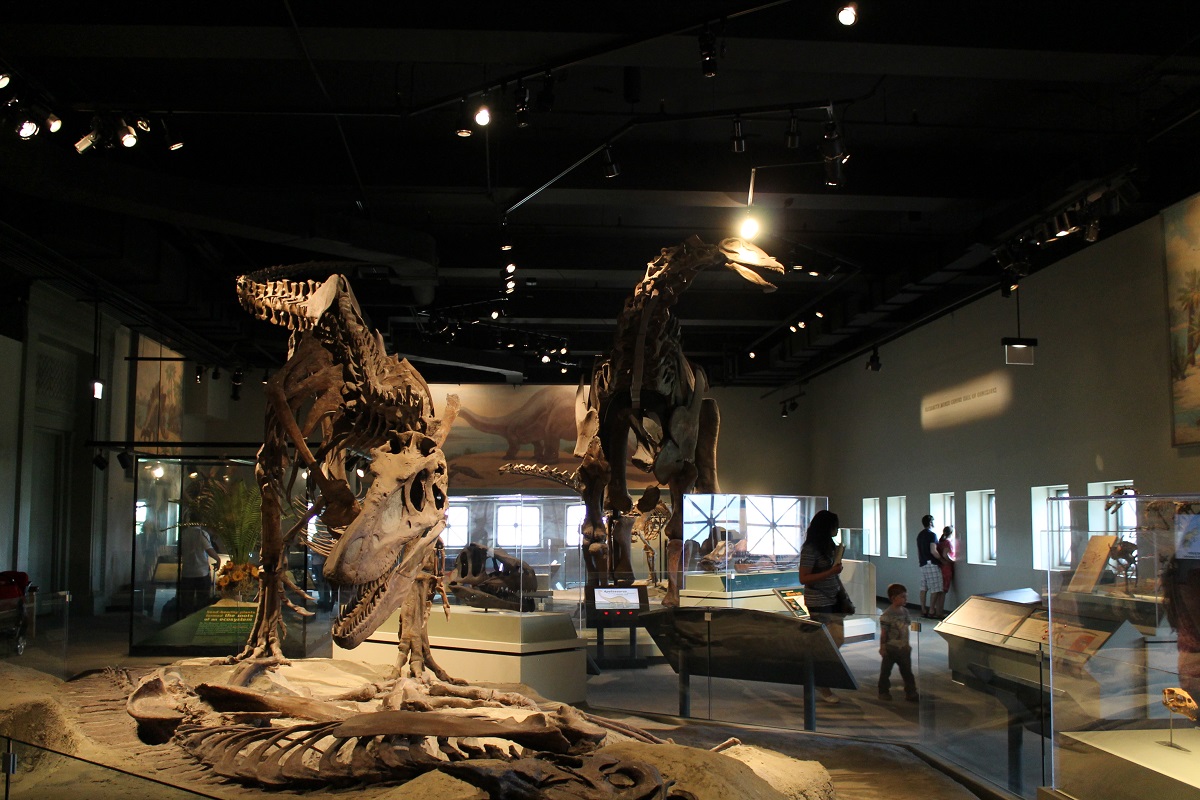
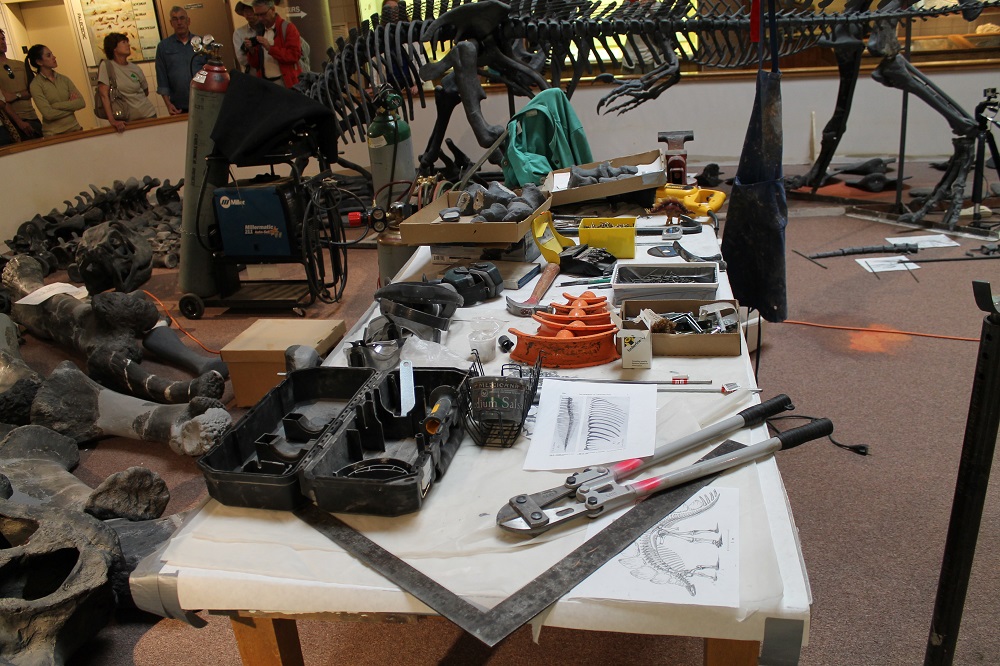
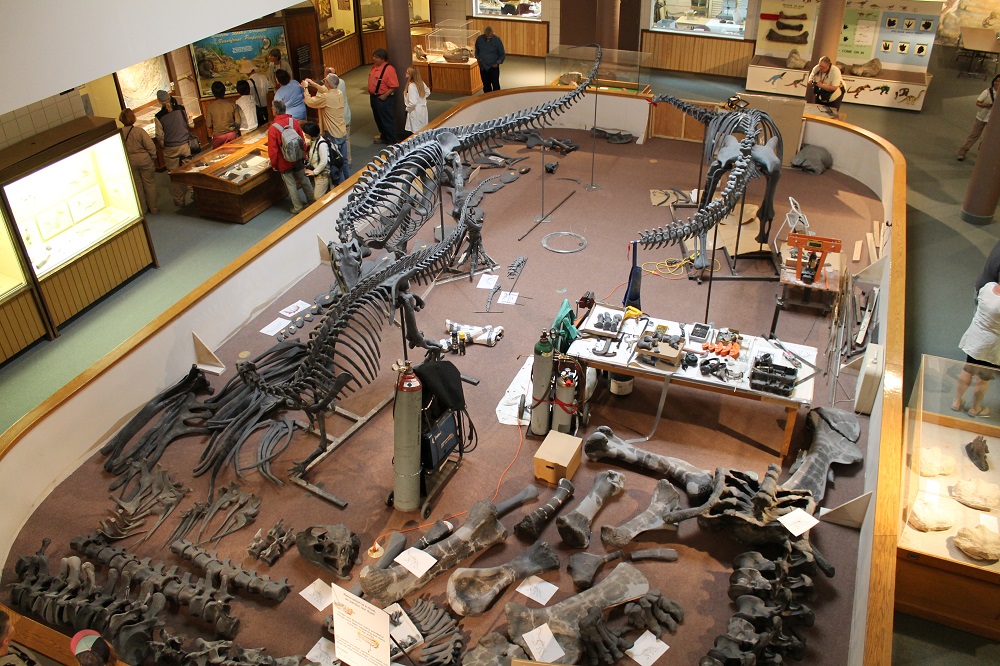
This second set of photos is from the College of Eastern Utah Prehistoric Museum in Price, Utah. Ken Carpenter, the museum’s new director, has taken on the task of completely remounting the menagerie of Morrison dinosaurs in the center of the paleontology wing (some photos of the old mounts here). The original AllosaurusCamptosaurus and Stegosaurus mounts from the late 1980s suffered from an unfortunate case of the tail-drags, and the Camarasaurus had previously been relegated to a death pose. Carpenter’s new mounts, which combine original fossils with new and old reconstructed bones, are much livelier. The stated goal of the project is to encourage visitors to imagine what it would be like to encounter these animals in life. What’s really awesome, though, is that the mounts are being built right in the exhibit, so that visitors can see the progress and the tools and techniques used to build these displays. At present, Allosaurus and Camptosaurus are finished, work on Stegosaurus is underway, and the Camarasaurus skeleton is laid out in pieces.

price1

price2

price3

Sorry to post such a short tease of the awesome stuff we saw at the conference. My head is absolutely packed with information and ideas, so hopefully there will be opportunities to share more soon!

Leave a comment

Filed under dinosaurs, field work, fossil mounts, museums, paleoart