Category Archives: history of science

AMNH 5027 at 100

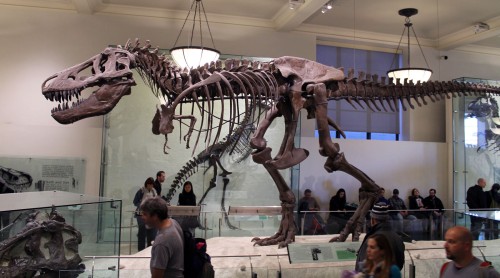
In December 1915, the American Museum of Natural History unveiled the very first mounted Tyrannosaurus rex skeleton, irrevocably cementing the image of the towering reptilian carnivore in the popular psyche. For a generation, AMNH was the only place in the world where one could see T. rex in person. Despite the tyrant king’s fame, old books emphasize the rarity of its fossils. The situation is very different today. In the last 30 years, the number of known Tyrannosaurus specimens has exploded. Once elusive, T. rex is now one of the best known meat-eating dinosaurs, and real and replica skeletons can be seen in museums around the world. The AMNH mount is no longer the only T. rex around, nor is it the biggest or most complete. It was, however, the first, and in a few weeks it will mark the 100th anniversary of its second life. Below is a partially recycled recap of this mount’s extraordinary journey.

Photo by the author.

AMNH 5027 in November 2015. Photo by the author.

The mount known as AMNH 5027 is actually a composite of material from two individuals. The first is the Tyrannosaurus rex holotype (originally AMNH 973, now CM 9380), which was discovered by Barnum Brown and Richard Lull during an AMNH expedition to Montana in 1902. The find consisted of little more than the pelvis, a single femur, one arm and shoulder, and fragmentary portions of the jaw and skull. Nevertheless, this was enough for AMNH director Henry Osborn to publish a brief description in 1905, as well as coin the species’ brilliantly evocative name. That same year, Adam Hermann prepared a plaster replica of the animal’s legs and pelvis, using Allosaurus fossils as reference when sculpting the missing lower legs and feet. This partial mount was initially displayed alongside the skeleton of a large ground bird, in order to accentuate the anatomical similarities.

Brown located a better Tyrannosaurus specimen in 1908. Apparently fearing poaching or scooping, Osborn wrote to Brown that he wished to “keep very quiet about this discovery, because I do not want to see a rush into the country where you are working.” After vanquishing many tons of horrific sandstone overburden, Brown returned to New York with what was at the time the most complete theropod specimen ever found. In addition to an “absolutely perfect” skull, the new find included most of the rib cage and spinal column, including the first half of the tail (Osborn 1916). Lowell Dingus would later describe this second specimen (the true AMNH 5027) as “a nasty old codger”, suffering from severe arthritis and possibly bone cancer. These pathologies were undoubtedly painful and probably debilitating.

Model of unrealized T. rex showdown mount from Osborn 1913.

Model of the unrealized T. rex showdown mount from Osborn 1913.

Osborn initially wanted to mount both Tyrannosaurus specimens facing off over a dead hadrosaur. He even commissioned E.S. Christman to sculpt wooden models which which to plan the scene (shown above). However, the structural limitations inherent to securing heavy fossils to a steel armature, as well as the inadequate amount of Tyrannosaurus fossils available, made such a sensational display impossible to achieve. Instead, the available fossils complemented one another remarkably well in the construction of a single mounted skeleton. Osborn noted this good fortune in 1916, but his statement that the two specimens were “exactly the same size” wasn’t quite accurate. The holotype is actually slightly larger and more robust than the 1908 specimen, and to this day the AMNH Tyrannosaurus mount has oversized legs.

The original Tyrannosaurus rex mount at the American Museum of Natural History. Photo from Dingus 1996.

The original Tyrannosaurus rex mount at AMNH. Note the original 1905 replica legs in the background. Photo from Dingus 1996.

Instead, Hermann’s team prepared a single Tyrannosaurus mount, combining the 1908 specimen with the reconstructed pelvis and legs based on the 1905 holotype. When the completed mount was unveiled in 1915, the media briefly lost their minds. In contemporary newspapers, the skeleton was called “the head of animal creation”, “the prize fighter of antiquity”, and “the absolute warlord of the earth”, among similarly hyperbolic proclamations. Even Osborn got in on the game, calling Tyrannosaurus “the most superb carnivorous mechanism among the terrestrial Vertebrata, in which raptorial destructive power and speed are combined.” With its tooth-laden jaws agape and a long, dragging lizard tail extending its length to over 40 feet, the Tyrannosaurus was akin to a mythical dragon, an impossible monster from a primordial world. This dragon, however, was real, albeit safely dead for 66 million years.

Image courtesy of the AMNH Archives.

T. rex in the Cretaceous Hall, 1960. Image courtesy of the AMNH Research Library.

The AMNH’s claim to the world’s only mounted Tyrannosaurus skeleton ended in 1941, when the holotype was sold to the Carnegie Museum of Natural History. The Pittsburgh museum’s hunch-backed reconstruction of the tyrant king was on display within a year. Although no longer the only T. rex on display, the AMNH mount certainly remained the most viewed as the 20th century progressed. It became an immutable symbol for the institution, visited again and again by generations of museum goers. Its likeness was even used as the iconic cover art of Michael Crichton’s Jurassic Park.

By the 1980s, however, a new wave of dinosaur research had conclusively demonstrated that these animals had been active and socially sophisticated. The AMNH fossil galleries had not been updated since the 1960s, and the upright, tail-dragging T. rex in particular was painfully outdated. AMNH had once been the center of American paleontology, but now its displays were lagging far behind newer museums.

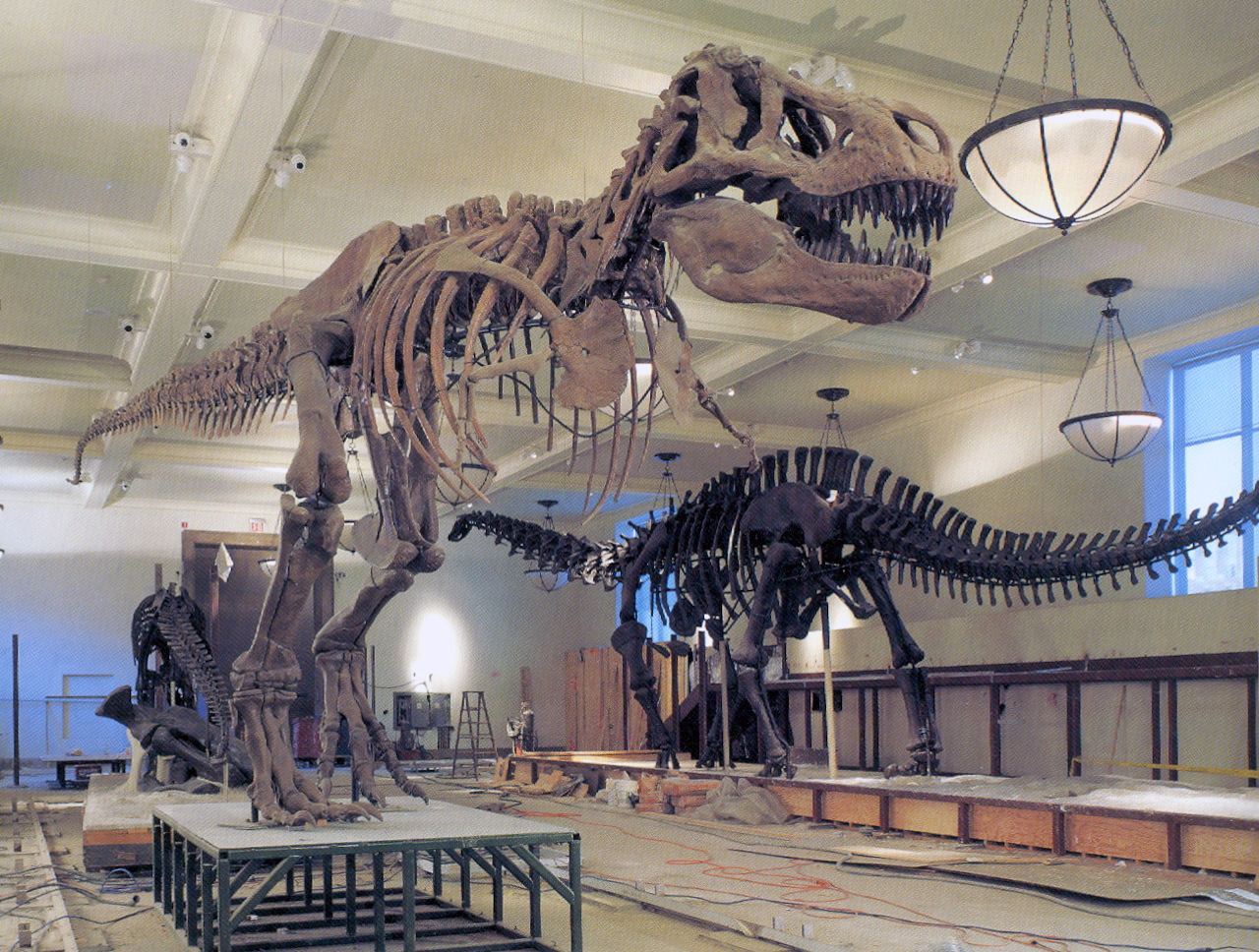
finished mount, room under construction

Restoration of AMNH 5027 was completed nearly three years before the hall reopened. Photo from Dingus 1996.

Between 1987 and 1995, Lowell Dingus coordinated a comprehensive, $44 million renovation of the AMNH fossil exhibits. As part of the project, chief preparator Jeanne Kelly led the restoration and remounting of the most iconic specimens, Apatosaurus and Tyrannosaurus. Of the two mounts, the Tyrannosaurus presented the bigger challenge. The fossils were especially fragile, and some elements, specifically the cervical vertebrae, had never been completely freed from the sandstone matrix. It took six people working for two months just to strip away the layers of shellac applied by the original preparators. All told, the team spent a year and a half dismantling, conserving, and rebuilding the T. rex.

Phil Fraley’s exhibit company constructed the new armature, which gave the tyrant king a more accurate horizontal posture. While the original mount was supported by obtrusive rods extending from the floor, the new version is actually suspended from the ceiling by a pair of barely-visible steel cables. Playing with Christman’s original wooden models, curators Gene Gaffney and Mark Norrell settled on a fairly conservative stalking pose, imbuing the mount with a level of dignity befitting this historic specimen. The restored AMNH 5027 was completed in 1992, but would not be unveiled to the public until the rest of the gallery was finished in 1995. Since that time, tens of millions of visitors have flocked to see this new interpretation of Tyrannosaurus. This is the skeleton that showed the world that dragons are real, and it is still holding court today.

References

Dingus, L. 1996. Next of Kin: Great Fossils at the American Museum of Natural History. New York, NY: Rizzoli International Publications, Inc.

Glut, D.F. 2008. Tyrannosaurus rex: A Century of Celebrity. Tyrannosaurus rex, The Tyrant King. Larson, Peter and Carpenter, Kenneth, eds. Bloomington, IN: Indiana University Press.

McGinnis, H.J. 1982. Carnegie’s Dinosaurs: A Comprehensive Guide to Dinosaur Hall at Carnegie Museum of Natural History, Carnegie Institute. Pittsburgh, PA: The Board of Trustees, Carnegie Institute.

Norell, M, Gaffney, E, and Dingus, L. 1995. Discovering Dinosaurs in the American Museum of Natural History. New York, NY: Alfred A. Knopf, Inc.

Osborn, H.F. 1906. Tyrannosaurus, Upper Cretaceous Carnivorous Dinosaur: Second Communication. Bulletin of the American Museum of Natural History vol. 22, pp. 281-296.

Osborn, H.F. 1913. Tyrannosaurus, Restoration and Model of the Skeleton. Bulletin of the American Museum of Natural History vol 32, pp. 9-12.

Osborn, H.F. 1916. Skeletal Adaptations of Ornitholestes, Struthiomimus, and TyrannosaurusBulletin of the American Museum of Natural History vol 35, pp. 733-771.

7 Comments

Filed under AMNH, dinosaurs, fossil mounts, history of science, museums, theropods

The Pan-American Expo Triceratops Lives On UPDATE: Or does it?

Triceratops at the Natural History Museum, London.

Triceratops at the Natural History Museum, London. Source

Don’t you hate it when you miss something glaringly obvious? I’ve never seen the Triceratops skeleton at London’s Natural History Museum in person, but I’ve seen enough pictures to know that it’s a little weird. Inaccuracies like the columnar feet, dragging tail, and vertical forelimbs can be attributed the display’s age, but the head doesn’t really look like any other Triceratops skull that’s ever been found. I had assumed that the funky frill and extremely long nasal horn were sculpted flourishes, but it turns out that no part of this Triceratops is real. It’s not a heavily-reconstructed original skeleton or even a cast – it’s a papier mâché model. And not just any model, but one that I’ve already written about in a different context.

Pan American exhibition

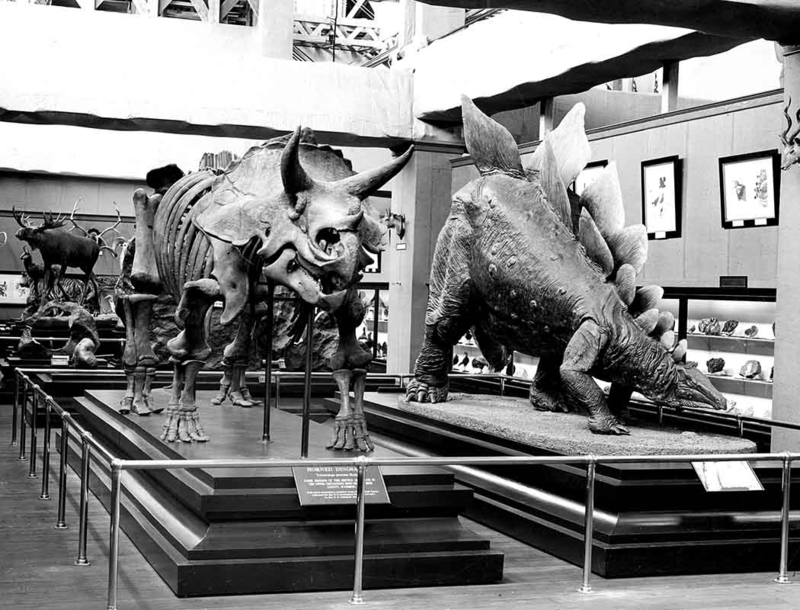
The Lucas Triceratops model at the 1901 Pan-American Exhibition. Source

Frederic Lucas, an Assistant Curator at the United States National Museum, created this Triceratops in 1900 for the Smithsonian display at the Pan-American Exhibition in Buffalo, New York. A mix of corporate and government displays based around the themes of peace, prosperity, and technology, the Pan-American Exhibition lasted from May to November 1901 (it was cut short when President William McKinley was shot on the fairgrounds). The Smithsonian’s 7,500 square foot exhibit took nearly a year to prepare, and showcased specimens from all departments of the nascent institution. Indeed, the Smithsonian’s participation in this and other fairs around the turn of the century is significant because these attractions were the basis for the some of the first exhibits at the USNM. Displays initially created for fairs often found a home in the museum’s permanent galleries, and the fair exhibitions were generally used as a template for the first generation of Smithsonian exhibits.

The Triceratops model was meant to represent the glut of fossils from the western United States that the Smithsonian had recently acquired from O.C. Marsh. Perhaps because most of those specimens were still unpacked and unprepared (the USNM didn’t hire a dedicated fossil preparator until 1903), Lucas sculpted the skeleton freehand based on one of Marsh’s published illustrations. It’s noteworthy that Lucas was not a paleontologist – he was brought on board at the age of 21 with no formal training because of his talent for constructing taxidermy displays. At any rate, Lucas followed Marsh’s reconstruction – at the time the only Triceratops reconstruction available – religiously when constructing his full-sized model.

St. Louis Expo

The Lucas Triceratops at the Louisiana Purchase Exposition in 1904. Source

After the Pan-American Exhibition, Lucas’s Triceratops made a second appearance at the 1904 Louisiana Purchase Exposition in St. Louis, Missouri. It was rendered obsolete shortly thereafter when Charles Gilmore assembled the world’s first real Triceratops skeleton at the USNM. As I’ve covered before, the act of physically manipulating the Triceratops fossils into a standing mount showed Gilmore that Marsh’s straight-legged reconstruction was a physical impossibility.

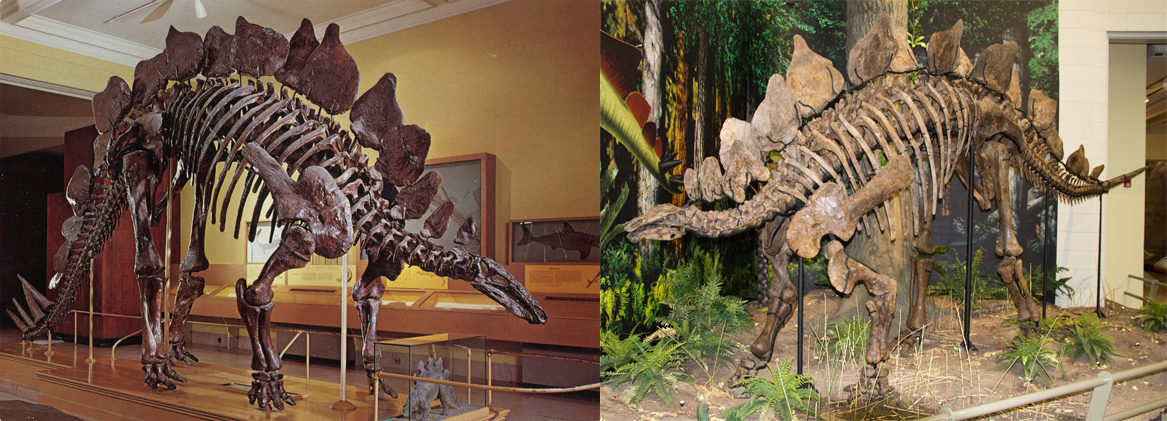
My understanding was that the Lucas model was lost or destroyed shortly after Gilmore’s real Triceratops went on display in 1905. I should have been more skeptical, however, because exhibits like this are almost never wasted. For example, Gilmore reported in 1943 that the Hadrosaurus cast displayed at the USNM before his arrival had been discarded due to wear and tear, but the mount had actually been given to the Field Museum in the 1890s. A couple months ago, I found out that Albert Koch’s chimeric mastodon (what he called “Missourium”) was purchased by Richard Owen on behalf of the British Museum and remounted. And just this year, the Smithsonian’s 112 year-old Stegosaurus model began a new life at the Museum of the Earth in Ithaca, New York.

tweet

Hey, that looks familiar! Source

The above tweet from the London Natural History Museum finally clued me in that the Lucas Triceratops had been hiding in plain sight for more than a century. The NHM (then the British Museum) received their Triceratops from the Smithsonian in 1907 (confirmed in the July 1907 issue of The Museums Journal), just when the Smithsonian had an extra Triceratops on hand. The London model is plainly not a cast of Gilmore’s 1905 mount, but it does resemble the Lucas model in most every detail, from the way the legs are posed to the exaggerated horns and frill. The only clear difference I can see is in the position of the head, which is much more elevated in the photos from the Buffalo and St. Louis expositions. However, I imagine the model would have been partially disassembled for transport. Perhaps when it was rebuilt in London the head ended up lower, whether by accident or design.

Unless there’s reason to think there were two copies of the Lucas Triceratops, I’d say the most parsimonious conclusion is that the London Triceratops is the very same model that was first displayed at the Pan-American Exhibition in 1901. Much like it’s long-time companion Dippy the Diplodocus, this Triceratops model is a century-old historic icon, one that has introduced generations upon generations of visitors to the enormity of deep time and the wonders of our prehistoric past. Inaccurate sculpture or not, it’s definitely something to preserve and to celebrate.

UPDATE: Shortly after I finished this post, @NHM_London responded to my inquiry with the following:

Hmm

Did I speak too soon? Source

I’m dubious that the NHM Triceratops is a copy of Gilmore’s 1905 version, but hey, it *is* their museum. I’ll leave this post up for now and follow up when I find out more. I love a good museum mystery!

References

Gilmore C.W. (1905).The Mounted Skeleton of Triceratops prorsus. Proceedings of the U.S. National Museum 29:1426:433-435.

Gilmore, C.W. (1941). A History of the Division of Vertebrate Paleontology in the United States National Museum. Proceedings of the United States National Museum 90.

Howarth, E., Rowley, F.R., Ruskin Butterfield, W., and Madeley, C. (1908). The Museums Journal, Volume 7. Museums Association.

7 Comments

Filed under dinosaurs, fossil mounts, history of science, marginocephalians, museums, NHM, NMNH

A Trio of Tyrants

The frentic search for North American dinosaur fossils in the late 19th and early 20th centuries can be divided into three phases. First came O.C. Marsh and E.D Cope, whose infamous rivalry resulted in literal trainloads of fossil material and laid the groundwork for our present understanding of dinosaur diversity. Next, teams sponsored by the newly-formed American, Carnegie, and Field museums returned to the same hunting grounds in the western interior to secure display-worthy specimens for their great halls of exhibition. The final phase was smaller in scale but yielded dinosaur specimens so spectacularly complete that most have gone unmatched to this day.

This third fossil rush occurred not in the United States but in Canada, along the cliff-like banks of Alberta’s Red Deer River. Fossil hunting in this region was pioneered in the late 1800s by George Dawson, Joseph Tyrell, and Lawrence Lambe, all working for the Canadian Geological Survey. This success did not go unnoticed by the the American Museum of Natural History’s Department of Vertebrate Paleontology. In 1910, the museum mounted an expedition led by Barnum Brown to the Red Deer River. Rather ingeniously, Brown’s team acquired a pair of 30-foot floating barges, which were used as mobile platforms from which they could excavate the steep river banks. The barges also served as floating campsites and a handy means of transportation in a region without reliable roads.The adventurous Brown was already a media favorite, and the publicity surrounding his Alberta expeditions only increased when the team started bringing back fully articulated and nearly complete dinosaur skeletons (including several with skin impressions).

Under pressure from constituents concerned that the Americans were hauling away so much of their natural heritage, the Canadian government formed its own team of fossil collectors in 1912. The new Canadian Geological Survey team was headed by independent fossil hunter Charles H. Sternberg (a veteran collector who had once worked for Cope) and his sons George, Levi, and Charles Jr. The Canadian and American teams worked in the same region for the next five field seasons. Their rivalry was usually good-natured, but on more than one occasion Brown saw fit to grumble about the Sternbergs’ ethics (never mind that he was the one permanently removing fossils from their country of origin).

Gorgosaurus at AMNH

Three tyrannosaurs mounted in relief at AMNH. Image courtesy of the AMNH Research Library.

All of this is so much preamble for the actual topic of this post – three remarkable Gorgosaurus skeletons* collected near the Red Deer River during the Canadian fossil rush. All three were eventually mounted in relief by AMNH preparator Peter Kaisen, and for a time they were displayed together in the Hall of Fossil Reptiles. These specimens are on the short list of most complete large theropod dinosaurs ever discovered, and in their day they provided researchers an unprecedented look at the physiology of these amazing animals. Nearly a century later, the three mounts are virtually unchanged. Locked behind glass for decades and largely inaccessible to researchers, the mounts themselves are now relics of a fascinating transitional period in the history of dinosaur studies.

*AMNH also recovered a fourth tyrannosaur during this period – Gorgeous George the Daspletosaurus.

As usual, a brief explanation of nomenclature is required. William Matthew and Barnum Brown originally described these specimens as Gorgosaurus, a genus that Dale Russell sank into Albertosaurus in 1970. Most specialists no longer support this synonymization, but the specimens at AMNH are still labeled as Albertosaurus.

Gorgosaurus libratus – USNM 12814

gorgo

A recent photo of USNM 12812 from the ongoing renovation of the national fossil hall. Source

USNM 12814 (originally designated AMNH 5248) was excavated by Brown’s company in 1913 and prepared for display in 1918. Kaisen elected to recreate the death pose in which the Gorgosaurus was found, with its head swept backward over its body. All told, the finished mount included a skull, a complete set of cervical and dorsal vertebrae, complete forelimbs, and a single femur – the pelvis and the rest of the hindlimbs were filled in with casts from other specimens. Since the skeleton was mounted in relief, Kaisen simply painted the tail onto the backdrop.

After at least a dozen years on display at AMNH, the Gorgosaurus was traded to the National Museum of Natural History as part of a complicated deal between the two museums. While surveying fossil collections throughout the United States, Brown realized that a single Barosaurus skeleton from Dinosaur National Monument had been divided among three different institutions. NMNH had the neck and part of one forelimb, the Carnegie Museum had the tail, and the University of Utah had the rest. Between 1929 and 1933, Brown arranged a series of trades in order to unify the Barosaurus at AMNH. The Smithsonian in particular drove a hard bargain – the museum had already invested $3400 in preparing their Barosaurus section, and paleontology staff wanted a good return for their investment. Brown’s initial offer was the fully prepared and mounted Gorgosaurus. Although AMNH valued the field and prep time spent on the fossils at $4573, it was at that point a duplicate specimen taking up valuable space in their increasingly crowded exhibit hall.

NMNH dinosaur specialist Charles Gilmore confided in Brown that he was okay with this trade, but fellow Smithsonian paleontologist Alexander Wetmore wasn’t sold. For years, NMNH staff had been trying to acquire one of the many Moropus specimens AMNH had collected at the Agate Fossil Beds in Nebraska. NMNH had offered a variety of specimens to trade, even sending AMNH a set of brontothere skulls at one point, but AMNH was adamant the Moropus fossils could only be exchanged for cash. Brown really wanted that Barosaurus neck, so in January of 1933, he finally relented and offered the Smithsonian a largely complete Moropus in addition to the Gorgosaurus. Not long after, the Gorgosaurus relief mount found its way into the Hall of Extinct Monsters at NMNH.

Gorgosaurus sp. – AMNH 5458

albertosaurus

A technician (probably Kaisen) adjusts the steel strap holding the femur in place. Source

Brown’s team found their second Gorgosaurus near Steveville, Alberta in 1914. Complete save for the left leg, right arm, and parts of the rib cage and tail, the mount was ready for display in May of 1921. At 24 feet long and 14 feet high, this was by far the largest relief mount at the museum. In fact, it was too big to fit through the workshop doorway in one piece, so Kaisen constructed it in eight sections that were sealed together in the exhibit hall. Each section had its own wooden frame for support, and the bones themselves were held in place with steel straps. The skull, jaw, and left forearm could be removed for individual study. This was unusual for the period (most contemporary fossil mounts were designed to be permanent) and speaks volumes about this specimen’s unique scientific value.

This mount is particularly notable for its awkward running pose. Directly contradicting many narratives of early 20th century paleontology, Matthew and Brown envisioned Gorgosaurus as an animal that “walked and ran much like a gigantic bird.” The AMNH team posed this mount after studying photos of bipedally running lizards, particularly the western tiger lizard*. However, Matthew and Brown noted that the dinosaur’s  limb proportions and range of motion more closely resemble a bird than a lizard, and adjusted the pose accordingly. They also advised a more conservative stride length to compensate for the animal’s considerable weight.

*Matthew and Brown do not provide a scientific name, and the common name “western tiger lizard” doesn’t seem to be used any more. Anyone know what it’s called today?

The final pose was a compromise between the elevated torso of a running lizard and the comparatively tight gait of a bird. It looks more than a little strange, but AMNH 5458 is certainly closer to our present understanding of theropod posture than most mounts of the era. Matthew and Brown’s interpretation of Gorgosaurus turned out to be ahead of its time. Some contemporary researchers, including Lawrence Lambe, declared the running pose to be highly improbable, and virtually all theropod mounts constructed over the next 60 years returned to the tail-dragging posture of the 1915 AMNH Tyrannosaurus.

Gorgosaurus sternbergi” – AMNH 5664

gorgo sternbergi

Gorgosaurus “sternbergi” as it was discovered and originally mounted. Source

The most complete tyrannosaur from the Red Deer River was not collected by the AMNH party, but by the Sternbergs. The elder Charles Sternberg discovered the specimen in 1917, entirely intact save for the left arm and the very end of the tail. In fact, this was the most complete large theropod ever found in North America until it was surpassed by yet another Gorgosaurus, TCM 2001.89.1. Sternberg first attempted to sell the specimen to the British Museum. They weren’t interested, but AMNH was. In 1918, the Department of Vertebrate Paleontology bought the skeleton for $2000, thus completing the tyrannosaur trio.

Matthew and Brown described AMNH 5664 as a new species – Gorgosaurus sternbergi. In their 1921 publication, they describe the skull as longer and shallower than other Gorgosaurus specimens, with rounder orbits. However, Brown and Matthew recognized that these could be juvenile characteristics, noting as well that the unfused pelvic bones were an indication of immaturity. As early as 1970, this specimen was suspected to be a juvenile Gorgosaurus (or Albertosaurus) libratus.

Kaisen prepared the relief mount in 1921, this time assisted by Carl Sorenson. The photo above shows the original version of this mount, with the tail projecting straight back from the body. This was how Sternberg discovered the skeleton, and Kaisen wanted to keep the death pose intact. In the 1950s, the tail was “corrected” to make it drag on the ground. Although the display has not been altered since, the revised tail posture is now considered inaccurate. Indeed, the vertebrae apparently had to be angled unnaturally to make the dragging tail work at all.

AMNH 5027 was restored and remounted in 1995.

The Gorgosaurus plaque mounts hide behind Tyrannosaurus rex at AMNH. Photo by the author.

All three Gorgosaurus specimens were first displayed in the cramped quarters of the Hall of Fossil Reptiles (now the Hall of Primitive Mammals) with the rest of the growing AMNH dinosaur collection (USNM 12814 and the tail of AMNH 5664 are barely visible in this photo). 5458 and 5664 moved to the newly opened Great Hall of Dinosaurs in 1922. They flanked the gallery’s rear doorway for 70 years before being moved to the Hall of Saurischian Dinosaurs in 1994. Meanwhile, the Gorgosaurus transferred to the Smithsonian first appeared in the Hall of Extinct Monsters in the 1940s, displayed behind glass on the north wall. It switched to the south side in 1962, and moved about 30 feet up the wall in 1981, where it could only be properly seen from the mezzanine ramp.

Aside from the aforementioned alternation to AMNH 5664’s tail, the Red Deer River Gorgosaurus trio has not been modified since they were first built. This may well change in the not-to-distant future. The NMNH crew is hard at work on a thorough renovation of the national fossil hall, dismantling and restoring all of the classic dinosaur mounts. Meanwhile, the current AMNH paleontology exhibits are now 20 years old, and will soon be due for a similar overhaul. Both institutions will need to decide whether or not to free the Gorgosaurus specimens from their plaster substrate. This would be an extremely difficult process, but not impossible – Phil Fraley Productions recently rebuilt the Carnegie Museum’s Corythosaurus, Dryosaurus, and Camptosaurus as free-standing mounts. Dismantling the relief mounts would give a new generation of scientists access to these important specimens, and it would allow for the skeletons to be given more accurate poses. In addition, a standing Gorgosaurus mount alongside either museum’s Tyrannosaurus rex would be both informative and awesome.

Nevertheless, remaking these mounts would also destroy significant historical context. The carefully restored death pose of USNM 12812 seems like something worth preserving, and the AMNH specimens represent an important transitional period in the history of dinosaur science. In the past, museums have often taken a “science marches on” approach when updating aging displays, but in these mounts might be unique enough in their current form to be left as-is. What do you think?

References

Carr, T.D. (1999). Craniofacial Ontogeny in Tyrannosauridae (Dinosauria, Coelurosauria). Journal of Vertebrate Paleontology 19: 497-520.

Colbert, E.H. (1968). Men and Dinosaurs: The Search in Field and Laboratory. New York, NY: E.P. Dutton & Co., Inc.

Gilmore, C.W. (1946). Notes on Recently Mounted Reptile Fossil Skeletons in the United States National Museum. Proceedings of the United States National Museum Vol. 96 No. 3196.

The Long Road to a Fossil Swap. Digging the Fossil Record, March 19, 2015. http://nmnh.typepad.com/smithsonian_fossils/2015/03/gorgosaurus-and-moropus.html

Matthew, W.D. and Brown, B. (1923). Preliminary Notices of Skeletons and Skulls of Deinodontidae from the Cretaceous of Alberta. American Museum Noviates 89: 1-10.

Russell, D. (1970). Tyrannosaurs from the Late Cretaceous of western Canada. National Museum of Natural Science Publications in Palaeontology 1: 1–34.

4 Comments

Filed under AMNH, dinosaurs, field work, fossil mounts, history of science, museums, NMNH, reptiles, theropods

Permo-Triassic Synapsids at NMNH

Click here to start the NMNH series from the beginning.

In the middle decades of the 20th century, museum theory and paleontological science were undergoing complementary revolutions. Museum workers shrugged off their “cabinet of curiosity” roots and embraced visitor-centric, education-oriented exhibits. Designers began to envision the routes visitors would travel through an exhibit space, and consider how objects on display could contribute to holistic stories. Meanwhile, paleontologists like Stephen J. Gould and David Raup moved their field away from purely descriptive natural history, exploring instead how the fossil record could inform our understanding of evolution and ecology. The common thread between both transitions was a focus on connections – bringing new meaning and relevance to disparate parts by placing them in a common narrative.

Between 1953 and 1963, the Smithsonian implemented an institution-wide modernization program, transforming virtually every exhibit in the museum complex. The National Museum of Natural History began renovations to its classic fossil halls in 1959, and the new exhibits were emblematic of contemporary trends in both museum design and paleontology. The plan, as devised by exhibit designer Ann Karras, was to do away with the loose arrangement of specimens and turn the east wing into a guided narrative of the biological and geological history of Earth. Responsibility for selecting specimens and writing label copy in each of the four halls fell to a different curator. In Hall 2, which housed dinosaurs and fossil reptiles, that curator was Nicholas Hotton.

Layout of the USNM east wing, circa 1963.

Layout of the NMNH east wing as of 1963.

Hotton joined NMNH in 1959 as an Associate Curator of Paleontology. Entirely onboard with Karras’s vision and the paleobiology movement as a whole, Hotton described the old exhibits as “crowded” and “unorganized.” He thought NMNH had plenty of dinosaurs, but “mammal-like reptiles”* were sorely needed if Hall 2 was to tell the complete story of amniote evolution. Following that, Hotton’s mission over the next several years was to assemble a respectable collection of synapsid specimens for NMNH, and to incorporate them into a well-illustrated exhibit on the origins of mammals. This post highlights just a few of the specimens featured in Hotton’s version of Hall 2.

*In Hotton’s day, early mammalian relatives were usually called “mammal-like reptiles”, hence their inclusion in the fossil reptile exhibit. Today, most specialists prefer a more precise definition of reptiles that excludes synapsid (mammal-line) animals. In this post, I will be using the modern classification wherever possible. 

The Dimetrodon

Prior to 1960, the non-mammalian synapsid collections at NMNH were mostly limited to early Permian pelycosaurs. The most impressive of these was a Dimetrodon gigas collected in 1917 by independent fossil hunter Charles Sternberg. One of the best collectors of his day, Sternberg worked intermittently for E.D. Cope, O.C. Marsh, and various North American museums. In the summer of 1917, however, Sternberg was on a personal collecting trip with his son Levi. Their target was the Craddock Ranch bone bed of Baylor County, Texas, which was first explored in 1909 by a University of Chicago team. Sternberg was already quite familiar with this part of western Texas, having made some of the first thorough surveys of the Permian “red beds” in the 1880s, but the site itself was new to him. Nevertheless, Sternberg was extraordinarily successful that summer, collecting hundreds of fossils from a wide range of animals. He offered this bounty to the Smithsonian, and they purchased it from him immediately.

The Craddock Ranch fossils were particularly appealing because of their unique preservation. Buried in soft clay at the bottom of a shallow pond, the fossils could be removed from the ground with relative ease, and were largely free of encrusting matrix. Although few of the bones were articulated, many were identifiable. All told, the Sternberg collection included at least 35 skulls and partial skeletons from amphibians like Cardiocephalus, Diplocaulus, and Seymouria, plus hundreds of individual Dimetrodon bones, and a single articulated Dimetrodon specimen.

Note short tail

An early photograph of the Dimetrodon mount. Image from Gilmore 1919.

Dimetrodon first displaed on north wall

The Dimetrodon was first displayed on the north wall of the Hall of Extinct Monsters. Source

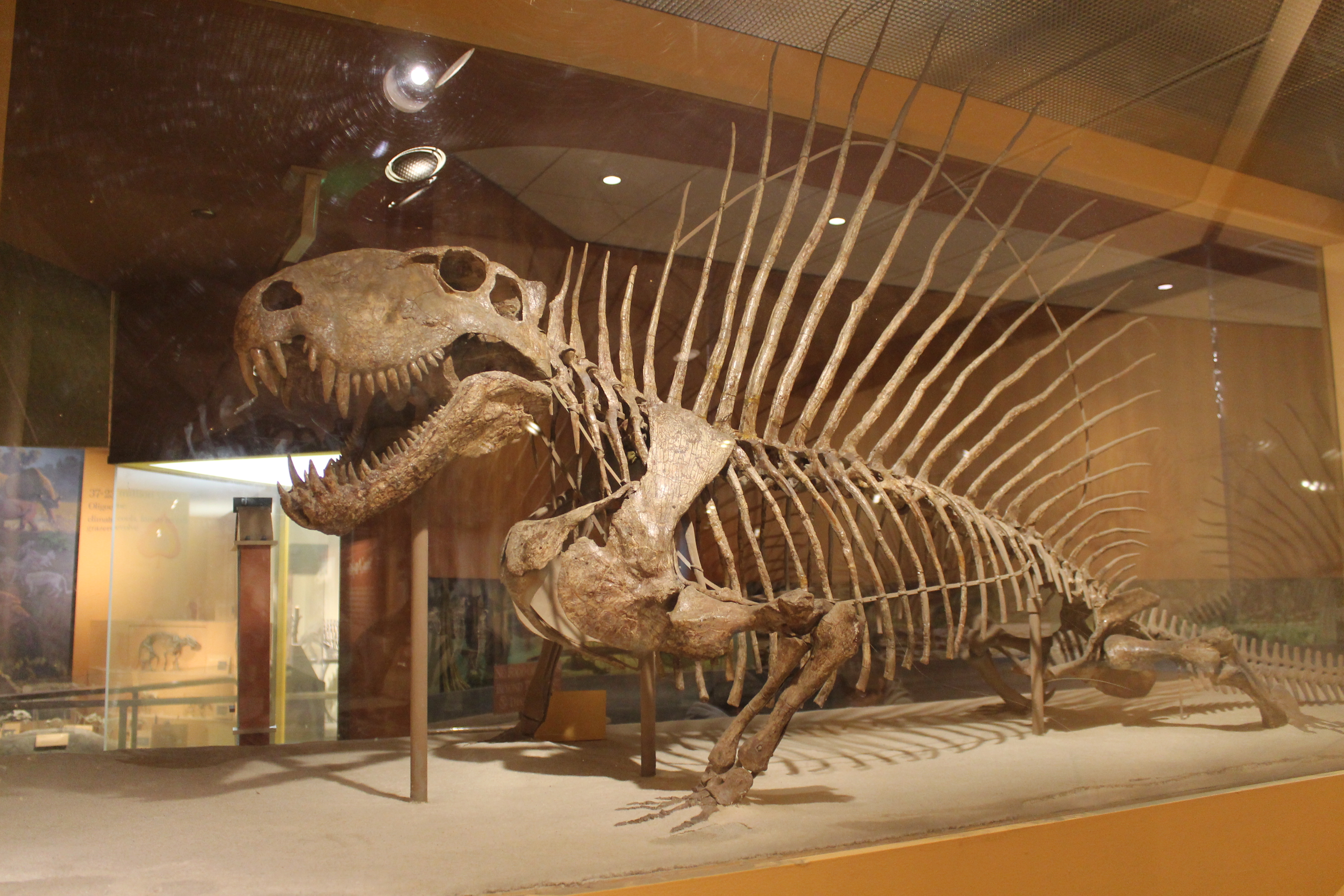
That Dimetrodon (USNM 8635) was the basis for a mount constructed by T.J. Horne. The articulated skeleton included a complete series of presacral vertebrae, the shoulder girdles, most of the forelimbs, and the left femur and tibia. The skull and jaw bones were found disarticulated, but bound together in the same mass of matrix as the skeleton. Horne added the pelvic bones and sacrum from smaller Dimetrodon specimens, and sculpted the rest of the missing material in plaster to complete the mount. Notably, his reconstructed tail was extremely short and stubby. Although the American Museum and Field Museum already had Dimetrodon mounts on display, the NMNH version stood out because of its open jaws, which Charles Gilmore said “gives the animal an appearance of angrily defying one who has suddenly blocked his path.”

Gilmore added the Dimetrodon to the Hall of Extinct Monsters in 1918. Like the other standing mounts constructed under Gilmore’s supervision, the skeleton was placed on a base textured and painted to resemble the rocks in which it was found. At this point in time, the NMNH fossil halls lacked any overarching organizational scheme, and interpretive content was minimal. Nevertheless, Gilmore displayed the Dimetrodon mount with both a small model and a 15-foot oil painting by Garnet Jex, which provided general audiences a better understanding of the animal’s life appearance.

dimetrodon

Dimetrodon in the 1963 fossil reptiles exhibit. Image courtesy of the Smithsonian Institution Archives.

Dimetrodon in 2014. Photo by the author.

Dimetrodon after the 1981 renovation. Photo by the author.

During the 1962 renovation, Hotton re-contextualized the classic Dimetrodon mount as a mammal ancestor. Unmissable orange arrows pointed to the specific anatomical traits that signify the animal’s kinship with mammals, including heterodont teeth and a single temporal fenestra. By design, visitors would pass Dimetrodon before visiting the true mammals in the adjacent hall.

The Dimetrodon skeleton itself was altered during the next renovation in 1981, when it was placed on a new, untextured base and given a longer replica tail. Contemporary staff also repainted the plaster sections to more closely resemble the original fossils – a surprising reversal of Gilmore and Horne’s original intention to make the reconstructed bones obvious to viewers.

The Thrinaxodon

Pelycosaurs like Dimetrodon represent the first major synapsid radiation, but by the middle Permian they were almost entirely replaced by therapsids. A more derived group which includes modern mammals, therapsids spread across the globe and became increasingly diverse as the Permian progressed. From weasel-sized burrowers to multi-ton herbivores, non-mammalian therapsids were among the first animal groups to conquer a wide range of terrestrial niches. Hotton wanted to tell this story in the modernized fossil exhibit, but there were hardly any non-mammalian therapsids in the NMNH collections. To correct this problem, Hotton took to the field for several months in 1960, and again in 1961. He joined James Kitching in exploring the Beafort Group rocks of South Africa, which were known to produce plentiful Permian and Triassic vertebrate fossils. Hotton returned to the museum with over 200 new specimens, the best of which were used in the renovated exhibit.

Hotton’s display of South African synapsids and amphibians. Note “Baby Doll” on the far left. Photo courtesy of the Smithsonian Institution Archives.

Thrinraxodon with Cynognathus skull

Thrinaxodon paired with Cynognathus skull. Photo by the author.

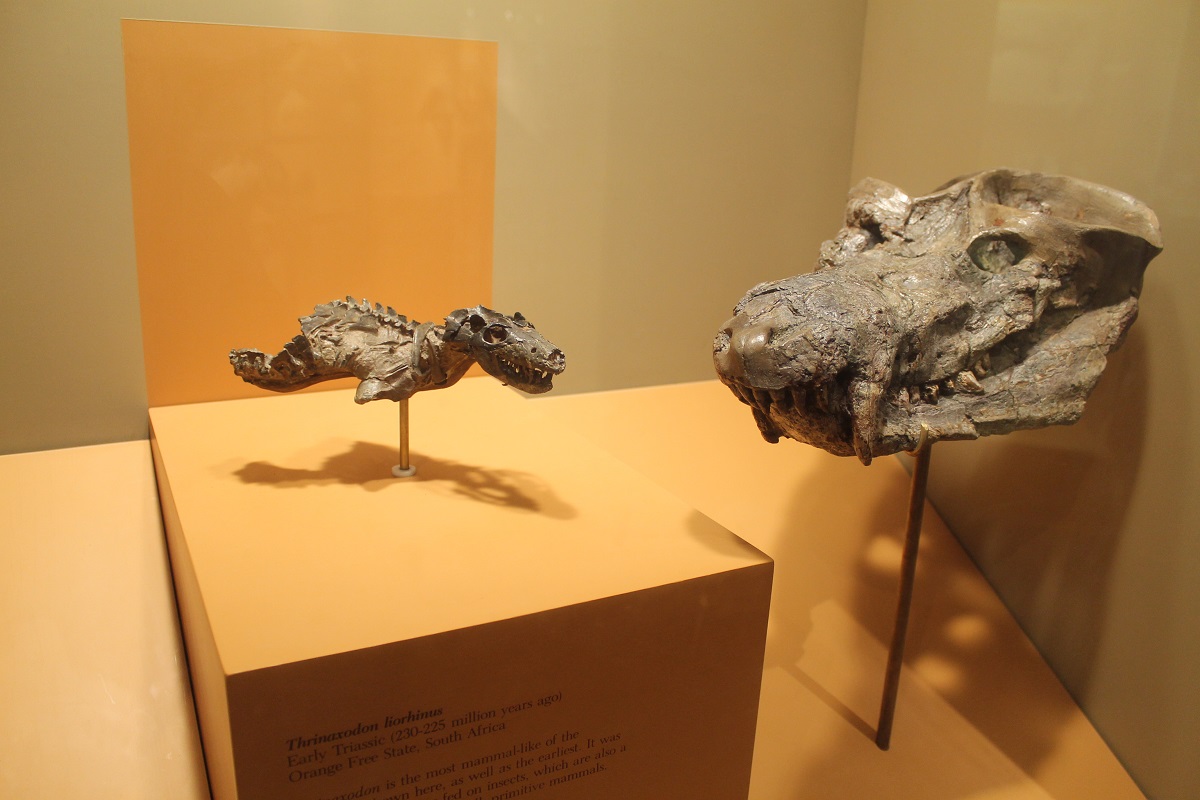
Hotton’s most prized find from South Africa was a gorgeously preserved and nearly complete Thrinaxodon liorhinus (USNM 22812). Hotton called this specimen “Baby Doll”, and while it was not prepared in time for Hall 2’s 1963 opening, it would later earn a spot of honor in the exhibit. Before that happened, though, Baby Doll was actually stolen by an over-enthusiastic volunteer. The FBI located and returned the fossil a year and a half later.

Since the 1980s, the Thrinaxodon has been displayed alongside the skull of Cynognathus crateronotus (USNM 22813), which Hotton collected on the same expedition. Both are members of the cynodont clade, which includes some of the closest relatives of modern mammals.

 The Daptocephalus

Less than a month after hall 2 reopened, Nicholas Hotton returned to South Africa. This time, he was accompanied by his spouse Ruth Hotton and their three young children. For seven months, the Hottons traveled among fossil sites on different ranches, camping most nights. They collected some 300 specimens for the Smithsonian, and Hotton’s biostratigraphic mapping of the Beaufort Group brought a measure of clarity to this region’s historically convoluted geology.

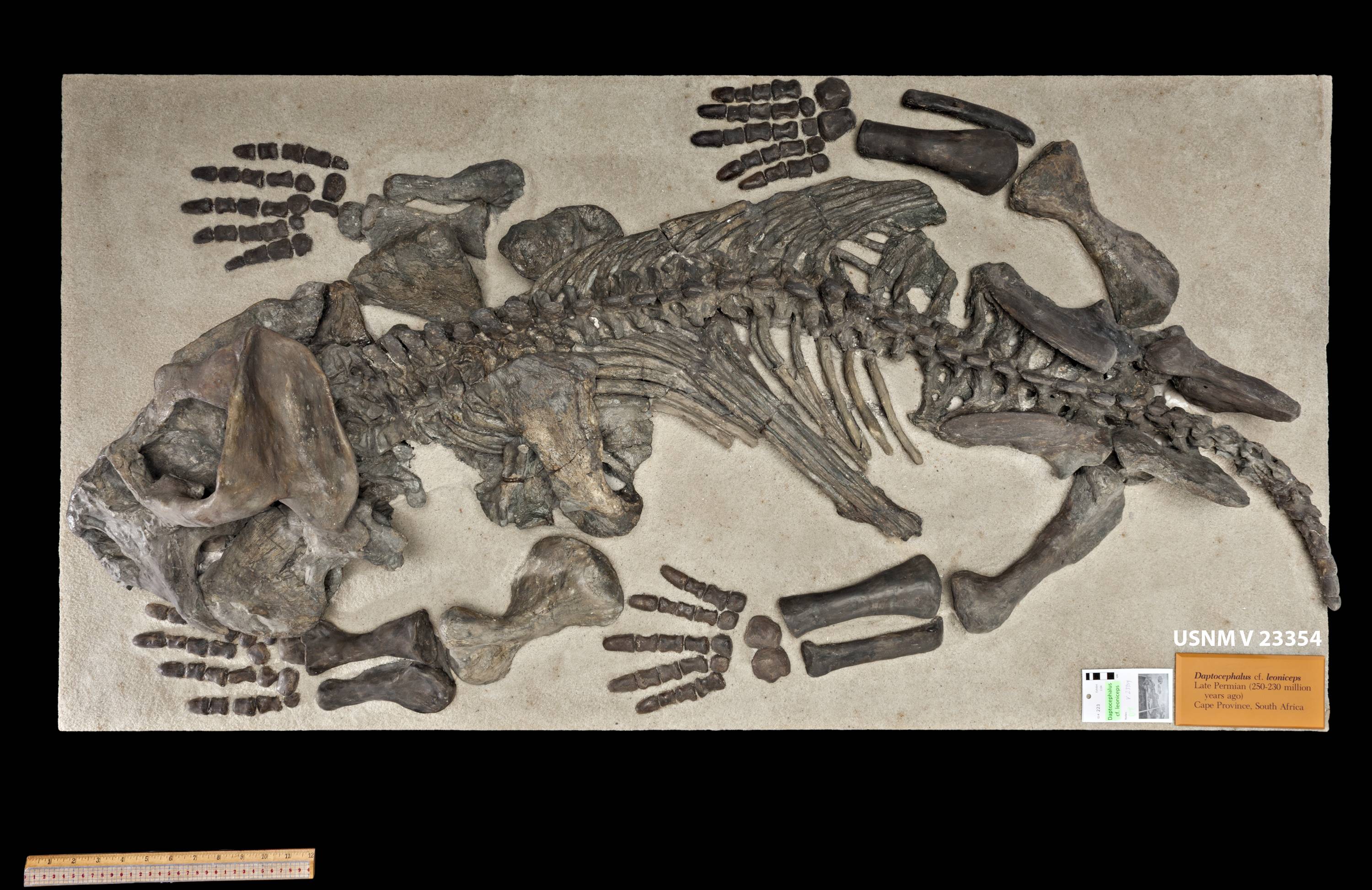
Ruth Hotton made one of the trip’s most impressive finds while prospecting in a dry riverbed with her daughter, Carol (who is now a paleobotanist at NMNH). Turning a corner, she stumbled upon a dicynodont skeleton, completely exposed and lying in the middle of the channel. One can only imagine the surprise and delight of finding an articulated fossil skeleton completely uncovered. If the Hottons had been there one season earlier or one season later, the river would have undoubtedly destroyed the fossils.

Daptocephalus on display. Photo by James Di Loreto, National Museum of Natural History.

Back at the museum, Nicholas Hotton prepared the specimen (USNM 299746) and determined it to be Daplocephalus leoniceps, one of the plethora of dicynodonts known from the Beaufort Group. Based on this classification, he reconstructed the damaged skull to resemble more complete Daplocephalus specimens, and added casts of Daplocephalus limbs.

The specimen was restored in 2019 and is now labeled Platypodosaurus. Photo by the author.

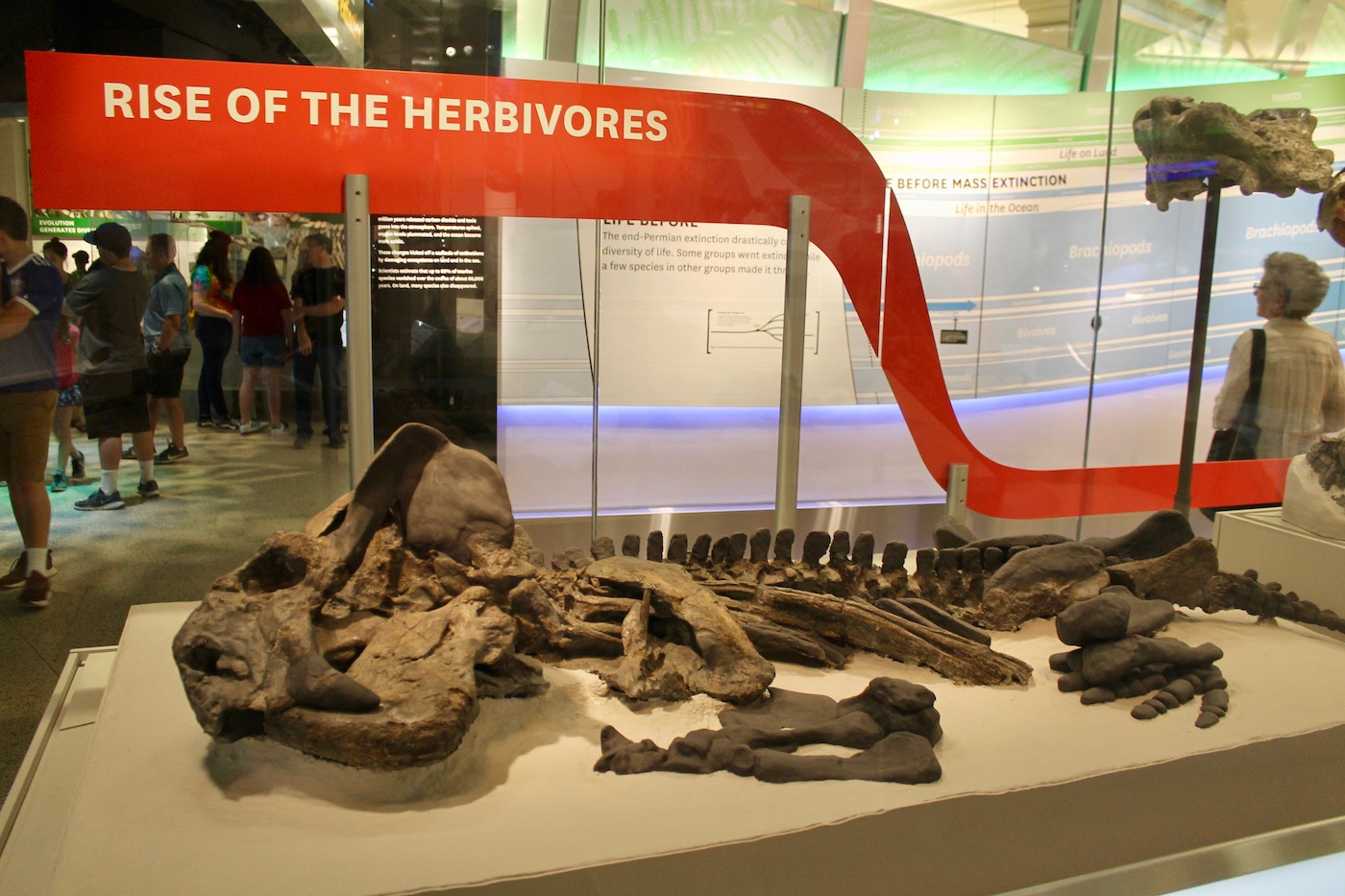
As it turns out, however, USNM 299749 is not a Daplocephalus—it is a somewhat distantly related dicynodont currently called Platypodosaurus. To varying degrees, fossil mounts are hypotheses made of bone and plaster. They are based on the best information available at the time, but sometimes they need to be corrected. The NMNH “Daplocephalus” had been mislabeled and erroneously reconstructed for many years, but the 2014 renovation of the NMNH fossil halls now presented an opportunity to deconstruct the specimen and study it up close. As of 2019, Platypodosaurus was back on display with a newly reconstructed skull and limbs.

Thanks to Christian Kammerer for kindly sharing images and insight on “Daptocephalus”!

References

Gilmore, C.W. (1919). A Mounted Skeleton of Dimetrodon gigas in the United States National Museum, with Notes on the Skeletal Anatomy. Proceedings of the United States National Museum 56:2300:525-539.

Kammerer, C. (2015). Personal communication.

Lay, M. (2013). Major Activities of the Division of Vertebrate Paleontology During the 1960s. http://paleobiology.si.edu/history/lay1960s.html

Marsh, D.E. (2014). From Extinct Monsters to Deep Time: An ethnography of fossil exhibits production at the Smithsonian’s National Museum of Natural History. http://circle.ubc.ca/handle/2429/50177

Sepkoski, D. (2012). Rereading the Fossil record: The Growth of Paleobiology as an Evolutionary Discipline. Chicago, IL: The University of Chicago Press.

4 Comments

Filed under exhibits, Extinct Monsters, field work, fossil mounts, history of science, mammals, museums, NMNH

History of the AMNH Fossil Halls – Part 2

Start with History of the AMNH Fossil Halls – Part 1.

During his leadership of the American Museum of Natural History’s Department of Vertebrate Paleontology and later, the museum at large, Henry Osborn oversaw an unprecedented expansion of the institution’s paleontology exhibits. As fossils poured in from the Department’s international collecting expeditions, these displays expanded into five separate galleries on the museum’s fourth floor. During the first two decades of the 20th century, AMNH staff was installing newly prepared and mounted specimens every single year, and AMNH was the undisputed center of American vertebrate paleontology. The increasingly marginal role of descriptive natural history in the greater field of biology at this time made the scale of Osborn’s program all the more impressive.

Nevertheless, this golden age of fossil exhibits would not last forever. Osborn supported the expensive expeditions and monumental displays through his personal connections with wealthy benefactors. The combination of the Great Depression and Osborn’s death in 1933 all but eliminated this source of income, and the museum had to scale back its activities considerably. In 1942, the Department of Vertebrate Paleontology was dissolved. Paleontology work continued under the Department of Geology, but with only a fraction of its former staff and budget.

Phase IV: 1940 – 1955

amnhmap_1939

In the post-Osborn era, responsibility for the fourth floor exhibits deservedly transferred to Barnum Brown. Indeed, Brown’s adventures as a swashbuckling fossil hunter not only brought him personal fame, but made the museum’s world-class paleontology exhibits what they were. Of the 36 dinosaurs on display by 1939, no less than 27 had been discovered by Brown. Most of these iconic finds were made in his 20s and 30s, but Brown nevertheless remained at AMNH for most of his life. Even after officially retiring in 1943, Brown still frequented the museum, often giving spontaneous personal tours of the exhibits.

brown's jurassic hall

Brown’s Jurassic Hall, around 1940. Photo from Dingus 1996.

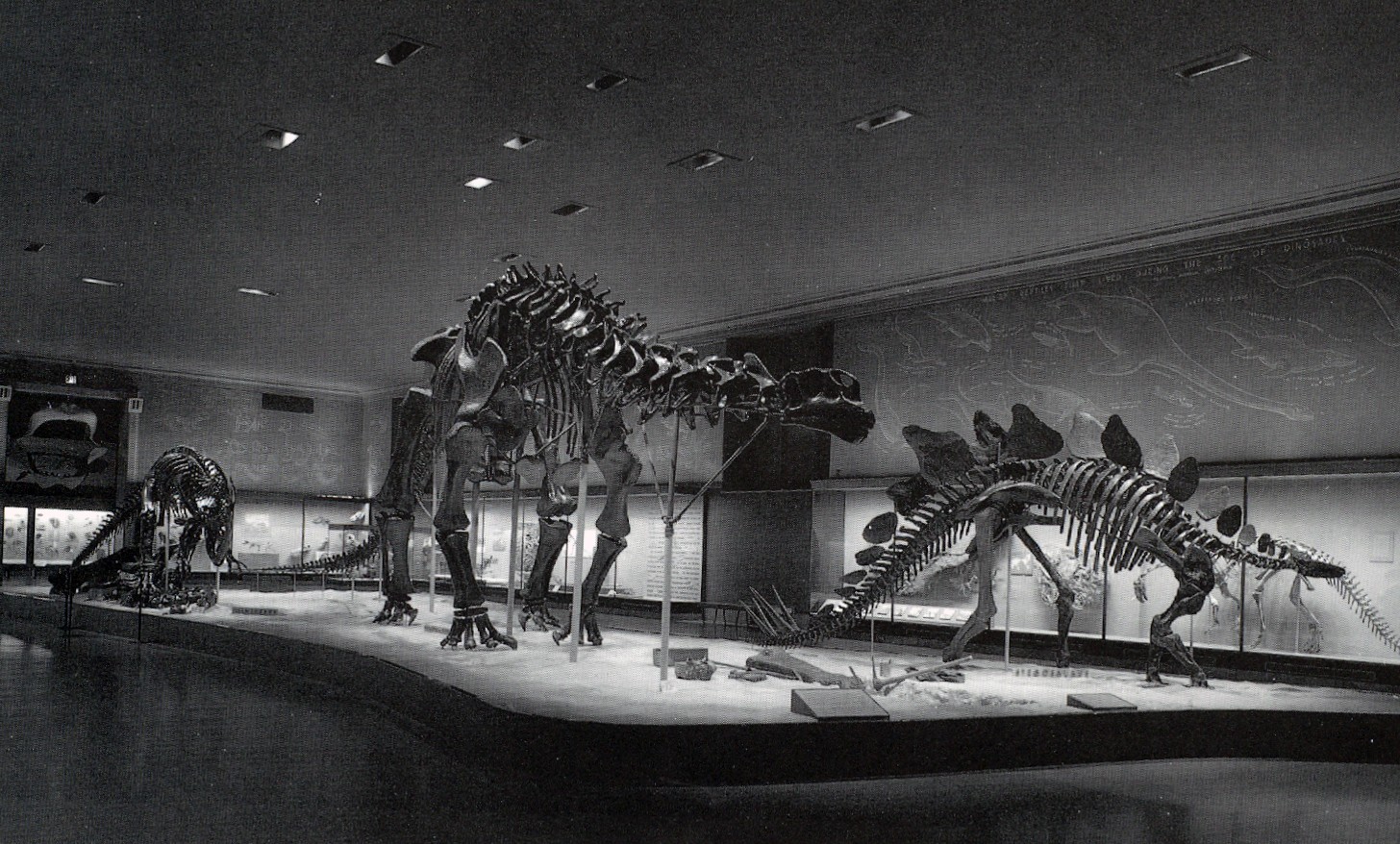
In 1932, the architectural firm Trowbridge and Livingston completed the 13th building in the AMNH complex. This meant that for the first time, the paleontology exhibits formed a complete circuit, an arrangement that persists to this day. Brown opted to spread the dinosaurs into two halls, making the new space the Jurassic Hall and converting the Osborn-era Great Hall of Dinosaurs into the Cretaceous Hall. Several existing fossil mounts had to be moved as a result, including the massive “Brontosaurus.”  Eyeballing the widths of the doorways and corridors separating the present day Hall of Saurischian Dinosaurs (formerly the Jurassic Hall) and Hall of Ornithiscian Dinosaurs (formerly the Cretaceous Hall and Great Hall of Dinosaurs), it’s difficult to imagine how museum staff could have moved the 66-foot sauropod in one piece. This photograph suggests that the skeleton was divided into several sections, which then had to be brought down the freight elevator on one side of museum and carted around to an elevator on the other side. This would be the third and final position for the “Brontosaurus” – even when the mount was updated  in 1995, preparators left the torso and legs in place.

brown's cretaceous hall

Brown’s Cretaceous Hall, around 1939. Photo courtesy of the AMNH Research Library.

The 1930s and 40s saw a number of new dinosaur mounts added to the displays, nearly all of which were discovered by Brown. The new Jurassic Hall gained a Stegosaurus and Tenontosaurus (oddly, not a Jurassic dinosaur), and the Cretaceous Hall gained Brown’s astonishingly intact Centrosaurus, Corythosaurus, and Styracosaurus from Alberta.

Phase V: 1956 – 1990

amnhmap_1956

Edwin Colbert joined AMNH in 1930 as Osborn’s assistant (he called this “a time of experiences and incidents,” whatever that means). Eventually rising to Curator of Vertebrate Paleontology, Colbert was one of only a handful of mid-century researchers studying dinosaurs. He is also notable for his public outreach — in collaboration with his partner, Margaret Colbert, he wrote more than 20 popular books about paleontology.

In 1953, Colbert worked with exhibit specialist Katharine Beneker to redesign the Jurassic and Cretaceous Halls. The Jurassic Hall received the most dramatic aesthetic makeover — windows were covered up to create a “black box” effect, while the dinosaur mounts were illuminated dramatically from above and below. The most significant addition to this space wasn’t a standing mount, but a trace fossil. Exhibit developers incorporated several slabs of sauropod tracks (collected at the Paluxy River in Texas by Roland T. Bird) into the central pedestal, as though left behind by the “Brontosaurus.” Cemented together, the slabs weighed 22 tons — apparently nobody expected that they would ever need to be moved. The fossil fish alcove, formerly part of the 1905 Hall of Fossil Reptiles, also found a home in this space.

In stark contrast to the Charles Knight oil and watercolor murals commissioned by Osborn, Colbert elected to decorate the Jurassic Hall with a series of understated chalk drawings. Joseph Guerry created the illustrations, which was then projected onto the walls and traced in chalk. The initial plan was to paint over the chalk outlines, but Colbert enjoyed the blackboard-like look and left them as they were. The exhibit team didn’t even add fixative, since it would have turned the lines an unpleasant yellow.

Jurassic hall colbert. Photo from Dingus 1996.

The Jurassic —or Brontosaur— Hall opened in 1953. Photo from Dingus 1996.

Architectural modifications to the Cretaceous Hall were minimal, although the standing dinosaur mounts were all clustered onto a single platform. Interestingly, both the National Museum of Natural History and the Peabody Museum of Natural History would arrange their dinosaurs in precisely the same way within the decade. While it’s possible that these museums were copying AMNH, this similarity is probably a reflection of the transition to more holistic natural history displays that was occurring in museums nationwide. Rather than displaying specimens individually, exhibit designers in the 1950s and 60s began to arrange them in meaningful ways — for example, grouping animals with a shared habitat. The Cretaceous Hall also gained some new specimens, including an array of Protoceratops skulls recovered during the Central Asiatic Expeditions. Signs and labels were updated with more approachable language, once again reflecting contemporary museum theory.

The Cretaceous —or Tyrannosaur— Hall opened in 1954. Photo courtesy of the AMNH Research Library.

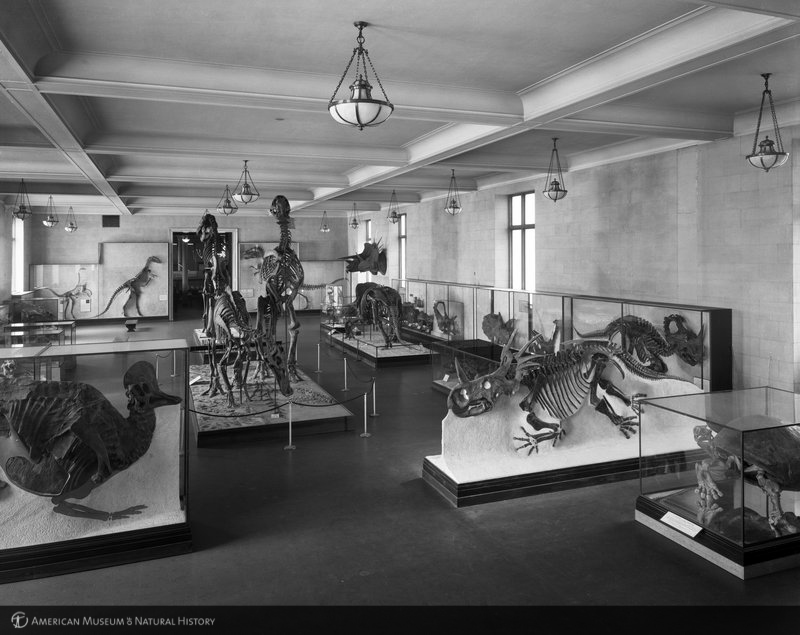
Meanwhile, some of the oldest AMNH fossil exhibits were retired and replaced during this period. In 1961, the classic geology hall — the oldest exhibit on the fourth floor — became the research library and was closed to regular museum visitors. Its spiritual successor was the new Earth History exhibit, which replaced Osborn’s Hall of the Age of Man. Around the same time, George Gaylord Simpson curated what was colloquially known as the “Sloth Hall.” Occupying the space that was once the Hall of Fossil Reptiles, this exhibit featured ground sloths and glyptodonts, plus a sizable display demonstrating how fossils are collected and prepared. Only the Hall of Fossil Mammals remained ostensibly untouched during this wave of modernization.

The Hall of Advanced Mammals in 1982. Some sections were boarded up but remaining exhibits were virtually unchanged from the turn of the century. Photo courtesy of the AMNH Research Library.

The 1950s and 60s iterations of the AMNH fossil halls endured for 30 years, making them the longest-lasting versions to date. Displays like the “Brontosaurus” and Tyrannosaurus became immutable symbols for the institution, visited again and again by generations of museum-goers. However, time gradually took its toll. A large section of the Hall of Fossil Mammals was boarded up, since museum staff had removed so many specimens for study or conservation. Railings were eventually added to the Jurassic Hall, because it was too tempting for visitors to join the dinosaurs on the platform, Ke$ha-style.

The Brontosaur Hall in 1988. Photo courtesy of the AMNH Research Library.

Most importantly, the exhibit content became increasingly out-of-date with each passing year. This obsolescence permeated nearly every aspect of the exhibits, from the discussion of the dinosaurs’ extinction to the drab, earth-tone aesthetics. However, the most visibly antiquated elements were the fossil mounts themselves. A new wave of dinosaur research demonstrated that these animals had been active and socially sophisticated, a far cry from the the coldblooded tail-draggers that populated the galleries. AMNH had once been the center of American paleontology, but by the late 1980s its dated displays were lagging far behind newer museums.

Phase VI: 1995 – Present

amnhmap_1995

Between 1987 and 1995, Lowell Dingus coordinated a comprehensive, $44 million renovation of the AMNH fossil exhibits (previously discussed here and here). The original plan was to renovate only the Hall of Fossil Mammals, since it had remained largely unaltered since 1895. Within a year, however, the project had expanded to encompass all six halls on the fourth floor, telling the entire story of vertebrate evolution. Two primary goals originated very early in the planning process. First, the “walk through time” layout would be replaced with one rooted in phylogenetic classification. The cladistic methodology for tracing organisms’ evolutionary history became the central theme that unified the new exhibits. This required a fairly substantial reorganization of existing specimens. The mammals could remain in the same two halls, but the denizens of the Jurassic and Cretaceous halls had to be rearranged to feature Saurischian and Ornithiscian dinosaurs, respectively. Meanwhile, the research library moved to a new location to make way for the Hall of Vertebrate Origins.

Advanced Mammals

The Hall of Advanced Mammals was the first renovated exhibit opened to the public. Photo by the author.

The second major goal was to restore the original architecture in each hall, ensuring that both the historic specimens and the spaces they occupied would come “as close to their original grandeur as possible” (Dingus 2006). In many cases original architecture elements — such as the molded ceilings — were still intact behind panels that had been installed over them. These features were painstakingly restored, or when necessary, recreated. Classic decorative elements, from the colonnades to the elegant chandeliers, were reintroduced.

Apatosaurus remount

The updated Apatosaurus in the Hall of Saurischian Dinosaurs. Photo by the author.

The vast majority of the fossil mounts in the renovated exhibits had already been on display for years. Among the classic mounts, only the two most iconic displays were completely overhauled. The restoration of Apatosaurus (formerly “Brontosaurus“) took more than a year. A conservation team led by Jeanne Kelly worked from a temporary wooden scaffold, filling cracks in the aging fossils with epoxy and securing loose joints on the armature. The mount’s torso and legs remained in place throughout the process, but the neck and tail were dismantled and remounted by Phil Fraley’s exhibit company. In addition to a new head, the revised Apatosaurus gained several caudal and cervical vertebrae, extending its total length to 88 feet. Remounting the Tyrannosaurus rex was even more difficult, because the fossils were so fragile. Once again, Phil Fraley was responsible for disassembling and reposing the skeleton. The T. rex now sports a more accurate horizontal posture, and its weight is supported by steel cables extending from the ceiling.

The new fossil mounts are easily recognized by their dynamic poses. In the Hall of Vertebrate Origins, the amphibian “Buettneria” (now Koskinonodon) assumes a diving pose, while a Prestosuchus charges with its tail aloft. Among the dinosaurs, a new Deinonychus mount (assembled in part from previously-unidentified historic material) is posed in mid-leap. Finally, the dog-like Amphicyon chases the tiny antelope Ramoceros in the Hall of Advanced Mammals.

hall of ver

In the Hall of Vertebrate Origins, a new Koskinodon mount represents the vertebrates’ critical transition to terrestrial life. Photo by the author.

The AMNH fossil halls represent one of the most exhaustively complete fossil collections in the world, but these exhibits ultimately tell two stories. On one hand, we have the story represented by the fossils themselves. The exhibit is an extended genealogy, tracing our origins across 500 million years of deep time. On the other hand, we have the museum’s history, which highlights both the praiseworthy and the ugly sides of 20th century science. It reminds us where our society has been and where it needs to go. Both stories are relevant to each and every person passing through these halls, and laudably, the latest renovation highlights both.

References

Colbert, E.H. (1958). Chalk Murals. Curator 4:10-16.

Dingus, L. (1996). Next of Kin: Great Fossils at the American Museum of Natural History. New York, NY: Rizzoli International Publications, Inc.

Norell, M, Gaffney, E, and Dingus, L. (1995). Discovering Dinosaurs in the American Museum of Natural History. New York, NY: Alfred A. Knopf, Inc.

5 Comments

Filed under AMNH, dinosaurs, exhibits, fossil mounts, history of science, mammals, museums, reptiles

The Carnegie Quarry Diaspora

About 150 million years ago, a severe drought ravaged the western interior of North America. In eastern Utah, malnourished dinosaurs gathered near a dwindling river. Unwilling or unable to leave the water source, they eventually died of thirst or disease. When rain finally returned to the region, three or four successive flash floods washed dozens of animal carcasses into a relatively small depositional area to the southeast. Today, this site is known as the Carnegie Quarry at Dinosaur National Monument, and it is one of the most incredible fossil sites in the world.
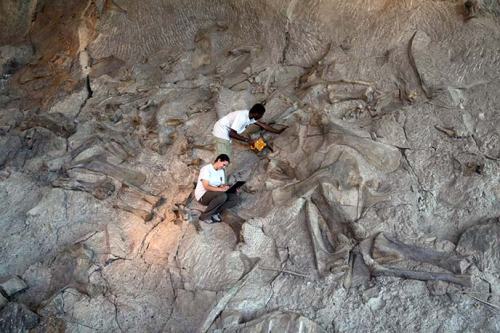
Dinosaur National Monument interns collect data on the quarry wall.

Dinosaur National Monument interns collect data on the quarry wall. Source

Today, a structure encompassing a 180-foot section of the deposit (less than half its total length) allows visitors to view nearly 1400 dinosaur bones in situ. However, the fossils on display at Dinosaur National Monument represent only a portion of the material found at the Carnegie Quarry. Between the site’s discovery in 1908 and the establishment of the quarry wall exhibit, more than 20 reasonably complete dinosaur skeletons and dozens more incomplete specimens were excavated and distributed to museums in the US and Canada. No less than eleven mounted skeletons have been created from this material, and they are all still on display today. Although they are thousands of miles from their place of discovery and exhibited in four different cities, these mounts all represent individuals that lived and died in the same environment. They may have even encountered each other in life!

The Discovery

Earl Douglass was already an established fossil hunter when the Carnegie Museum of Natural History hired him in 1902. Late in the 1909 field season, Douglass was prospecting near the confluence of the Green and Yampa Rivers when he spotted a series of sauropod vertebrae eroding out of the rocks. Once Douglass and his crew began excavating the fossils, it became apparent that they had not just one remarkably complete dinosaur, but several. Douglass called it a “beautiful sight,” and CMNH director William Holland could barely contain his glee in his reports back to the Pittsburgh museum. Under Douglass’s management, CMNH crews worked at what became known as the Carnegie Quarry for 13 years. The dinosaur fossils were jumbled and often overlaid one another, so the excavators had to work on multiple skeletons simultaneously. The especially hard sandstone also slowed their work, and the team regularly resorted to huge horse-drawn plows and even dynamite to reach the fossils. Eventually railway tracks were installed to help transport blocks of sandstone out of the quarry.

In 1915, Holland successfully petitioned Woodrow Wilson to preserve the site as a national monument. CMNH crews continued to excavate until early 1923. At that point, their primary benefactor Andrew Carnegie had died, and funding for field work was dwindling. Other museums collected from the quarry periodically in the years that followed, but Douglass’s idea to contain the remaining fossils in an on-site museum was not realized until 1958.

The Mounts

CMNH

CMNH Apatosaurus. Historic photo from McGinnis 1982; modern photo source.

Apatosaurus louisae – CM 3018

The CMNH Apatosaurus was the first dinosaur discovered at the Carnegie Quarry. After Douglass first spotted the articulated caudal vertebrae in August of 1909, his crew spent several months extracting the rest of the skeleton from the rocks. The excavation continued into early 1910, and by the time they were finished they had the most complete Apatosaurus ever found – a title the specimen holds to this day. Holland mounted the 77-foot skeleton alongside the museum’s Diplodocus in just three years, at the time a record for a sauropod mount.

Holland famously left his Apatosaurus headless for decades due to a disagreement with Henry Osborn of the American Museum of Natural History. Douglass recovered a skull that almost certainly belonged to the Apatosaurus, but Holland opted not to use it because it contradicted the sculpted head already in place on the AMNH Apatosaurus mount. After Holland’s death in 1932, museum staff quietly added a casted Camarasaurus skull as a placeholder. This was finally replaced with a proper Apatosaurus skull in 1979. More recently, the team at Phil Fraley Productions disassembled and restored the Apatosaurus, along with the rest of the classic CMNH dinosaurs. Since 2007, this specimen has been back on display in a more graceful modern pose.

Fancy fisheye photo.

AMNH Barosaurus. Source

Barosaurus lentus – AMNH 6341

When the CMNH team discovered this skeleton in 1912, they assumed it was yet another specimen of the well-known Diplodocus. It was harvested for parts, with portions sent to CMNH, the United States National Museum, and the University of Utah to supplement their displays. When the specimen turned out to be the more obscure sauropod Barosaurus, it languished in pieces for many years. Barnum Brown of AMNH was making a circuit of the fossil collections at various natural history museums when he rediscovered this specimen. Through a series of purchases and trades, the Barosaurus was reunited at AMNH in 1929.

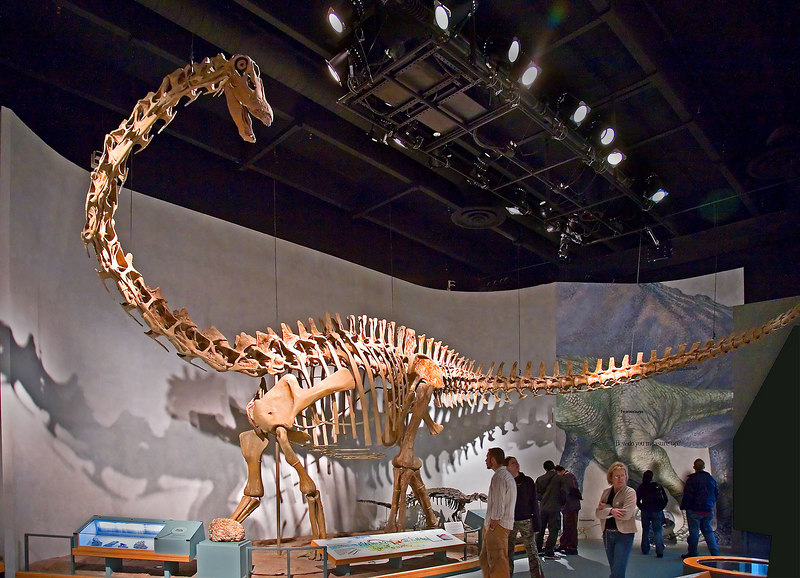
Nevertheless, AMNH quickly abandoned plans to mount the Barosaurus – the museum already had a sauropod on display, and there wasn’t enough floor space for another one. It wouldn’t go on display until 1991, when Lowell Dingus conceived of the idea to mount the Barosaurus in a spectacular rearing pose as part of the renovation of the Theodore Roosevelt Rotunda. Peter May took on the project – one of the first mounts produced by his company Research Casting International. The resulting display, actually a cast, is the tallest free-standing dinosaur mount in the world.

ROM Barosaurus.

ROM Barosaurus. Source

Barosaurus lentus – ROM 3670

Douglass recovered a second partial Barosaurus skeleton in 1912, which consisted of a mostly complete torso and parts of each leg. It stayed in the CMNH collections for many years, until they traded it to the Royal Ontario Museum in 1962. ROM staff intended to mount the skeleton, but once again this was cancelled due to a lack of space. David Evans was developing a new ROM paleontology exhibit in 2007 when he learned that the museum had most of a Barosaurus sitting in its collections. With only weeks remaining before the exhibit’s opening, Evans tapped Research Casting International to mount the sauropod, supplemented with a replica neck and tail from the AMNH version.

Allosaurus fragilis – CM 11844

Several Allosaurus specimens are known from the Carnegie Quarry, but the one on display at CMNH is one of the largest. Douglass and his team excavated this 35-foot skeleton between 1913 and 1915. The mount was built in 1938. Although the specimen included a partial skull, the exhibit team swapped it with a cast of a more complete skull (also found in the Carnegie Quarry) from the collections of the University of Utah. This mount also includes casts of the arms of USNM 4734, an Allosaurus collected for O.C. Marsh.

Stegosaurus ungulatus – CM 11341

The CMNH Stegosaurus is a composite of several individuals excavated from the Carnegie Quarry between 1920 and 1922. Museum staff completed the 21 foot-long mount in 1940, using a skull cast from USNM 8612. Casts of this skeleton were distributed to several other museums at some point, one of which is on display at the University of Nebraska State Museum. Phil Fraley’s company remounted the CMNH original in 2007.

Carnegie Camarasaurus.

Carnegie Camarasaurus. Source

Camarasaurus lentus – CM 11338

This juvenile Camarasaurus is the most complete sauropod ever found. It is displayed as a relief mount almost exactly as it was discovered, with two exceptions. The left leg was swapped with a more complete one from another individual, and the tail was re-positioned to create a more aesthetically pleasing mount. Casts of this skeleton are displayed at museums throughout the United States, including Dinosaur National Monument, but the original is at CMNH. This specimen is also notable because its left scapula is preserved in its life position, making it a helpful model for skeletal reconstructions and exhibit mounts.
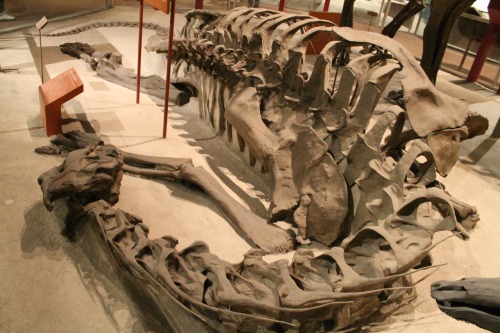
NMNH Camarasaurus. Photo by the author.

NMNH Camarasaurus. Photo by the author.

Camarasaurus lentus – USNM 13786

The second best Camarasaurus also comes from Carnegie Quarry, but it is a considerably larger individual. Only the tail and a few odds and ends were missing. CMNH kept the specimen for several years before trading it to USNM in 1933 for a set of Pliocene horse skeletons. Norman Boss prepared the specimen in full view of the public during the 1936 Texas Centennial Exposition – one of the first known examples of such an exhibit. The completed mount appeared at USNM in the 1950s, sporting the tail of another Camarasaurus. At over 30 feet long, this skeleton is one of the largest dinosaurs on display at the Smithsonian. Unfortunately, the death pose somewhat limits the effect. The Camarasaurus was taken off exhibit in late 2014 for conservation and remounting. When it returns, it will be standing on its feet for the first time in 150 million years, taking its rightful place as one of the museum’s most impressive dinosaurs.

DMNH Diplodocus. Source

DMNH Diplodocus. Source

Diplodocus longus – DMNH 1494

Since this Dipldodocus was found somewhat disarticulated, Douglass suggested that the carcass may have been twisted apart while rolling downstream. AMNH held on to this skeleton for some time before trading it to the Denver Museum of Nature and Science in 1936 for two mammoth skeletons. Preparator Phillip Reinheimer mounted the skeleton with the help of 40 workers assigned to the museum through the Works Progress Administration. Additional Diplodocus fossils collected by William DeWeese (actually the first dinosaur specimens acquired by the museum) were also used to complete the mount. The Diplodocus remained on view until 1989, when Ken Carpenter and others restored and remounted the sauropod, elevating its tail and making its neck sweep gracefully to the left. The improved mount has been on display since 1995.

CMNH Camptosaurus.

CMNH Camptosaurus. Historic photo from McGinnis 1982; modern photo source.

Camptosaurus aphanoecetes – CM 11337

Douglass found this controversial small ornithopod in 1922, and correctly matched it with an isolated leg several feet away. It was first identified as Camptosaurus medius, but in 2008 Ken Carpenter reassigned it to the new species C. aphanoecetes. A 2011 phylogenic study by Andrew McDonald moved this specimen to a new genus, Uteodon. Carpenter, however, asserts that McDonald’s analysis was based on an incorrectly associated Dryosaurus braincase.

CMNH staff assembled the fossils into a relief mount in 1940. The skull, hindfeet, and tail were all sculpted. During the 2007 renovation, the Phil Fraley Productions team extracted the fossils from the plaster slab, even managing to preserve the delicate ossified dorsal tendons. They then created a new, three-dimensional mount, which features a revised replica skull.
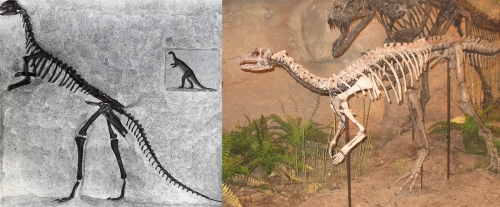
Modern photo by the author.

CMNH Dryosaurus. Historic photo from McGinnis 1982; modern photo by the author.

Dryosaurus altus – CM 3392

This Dryosaurus skeleton is the most complete of several collected at Dinosaur National Monument. The tail is missing, and given the completeness of the rest of the skeleton it may well have been destroyed when Douglass’s crew was blasting through rock to get to the bone layer. The Dryosaurus entered the CMNH collections in 1922, and was assembled as a 9 foot-long relief mount in 1940. In 2007, Fraley’s team removed the fossils from the plaster matrix, and just as they did with the Camptosaurus, constructed a standing mount. To date, this is the only mounted Dryosaurus specimen in the world. It is displayed alongside a juvenile Ceratosaurus cast acquired from Western Paleontological Laboratories.
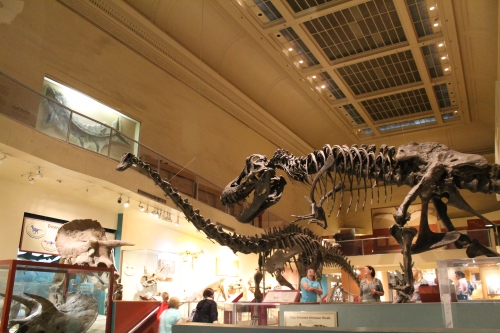
National Museum of Natural History in Washington, DC.

NMNH Diplodocus. Photo by the author.

Diplodocus sp. – USNM 10865

The National Museum of Natural History’s Diplodocus was one of the last articulated skeletons removed from the Carnegie Quarry. When the CMNH crew closed up shop, Charles Gilmore of the Smithsonian moved in to recover one of the sauropod skeletons Douglass left behind. In 1923, Gilmore’s team excavated a partial Diplodocus, and also cherry-picked a few extra bones from an adjacent specimen. The process of mounting the skeleton at USNM took six years of continuous work, and Gilmore would later describe it as the most ambitious undertaking his department hadever attempted. The 70-foot Diplodocus mount was completed in 1931, and remained unchanged for more than 80 years. It was finally taken down in December 2014, and will return in a new pose in 2019.

Addendum: Mike Taylor recently called attention to a gorgeous map of the entire deposit prepared by Ken Carpenter, which was what prompted this post. Check it out here.

References

Carpenter, K. (2013). History, Sedimentology, and Taphonomy of the Carnegie Quarry, Dinosaur National Monument, Utah. Annals of the Carnegie Museum 81:3:153-232.

Dingus, L. (1996). Next of Kin: Great Fossils at the American Museum of Natural History. New York, NY: Rizzoli International Publications, Inc.

Gilmore, C.W. (1941). “A History of the Division of Vertebrate Paleontology in the United States National Museum.” Proceedings of the United States National Museum 90.

McGinnis, H.J. (1982). Carnegie’s Dinosaurs: A Comprehensive Guide to Dinosaur Hall at Carnegie Museum of Natural History, Carnegie Institute. Pittsburgh, PA: The Board of Trustees, Carnegie Institute.

15 Comments

Filed under AMNH, CMNH, collections, dinosaurs, DMNS, exhibits, field work, fossil mounts, history of science, museums, NMNH, ornithopods, sauropods, theropods, thyreophorans

Missourium: Hiding in Plain Sight

A while back I wrote about Albert Koch, the 19th century showman who made a tidy profit assembling and touring chimeric composites of fossil bones. Koch’s monsters – an exaggerated mastodon called “Missourium” and two alleged sea serpents made from whale fossils – were a hit with the public but an embarrassment to scientists. At the time, ideas like extinction and the great age of the Earth were very new, and Koch’s fraudulent commodification of fossil evidence made it harder for legitimate researchers to be taken seriously.

The mastodon once called Missourium in the Mammal hall. Source

Is this mastodon at NHM actually the legendary Missourium? Source

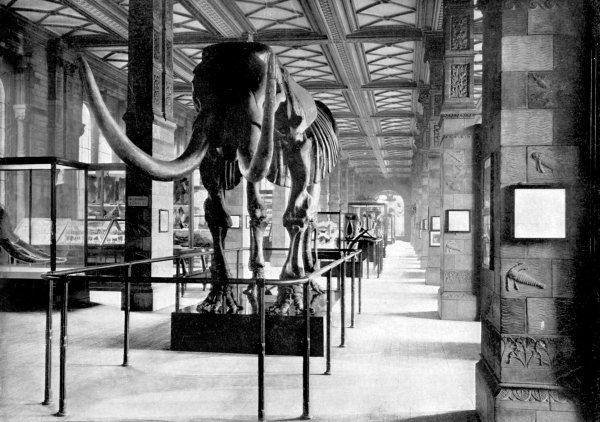
One thing I breezed over in the previous post was the eventual fate of Koch’s creations. It is widely reported that the whales (which Koch alternatively called “Hydrargos” and “Hydrarchos”) met rather dramatic ends: one perished in the Great Chicago Fire of 1871, while the other was purchased by the Royal Anatomical Museum in Munich Berlin and was subsequently blown up during World War II. But what about Missourium? Following Simpson, I wrote that the mount was sold to the British Museum (now the Natural History Museum), and left it at that.

However, Mike Taylor recently asked whether Missourium might still be on display in South Kensington today:

I didn’t know that the “Missourium” was sold to the British Museum! Do you know what they did with it? I don’t suppose anyone has the specimen number? Is it possible that they got rid of all the fakery and mounted it in the mammal hall, and that it stands there today under the shadow of the whale?(Link to comment)

After some very modest digging, I found that Mike’s hunch was exactly right. General googling revealed that several authors, including McMillian, Debus, and Fuller, had concluded that the NHM mastodon and Missourium were one and the same, but none of them offered a proper citation. While I have no reason to doubt these authors, I still wanted a primary source. I eventually found that in a 1991 article by NHM preparator William Lindsay, which details the process of moving the mastodon to its current home in the Mammals Gallery, and confirms its identity as a remounted Missourium.

An insane illsutration that accompanied Koch's traveling exhibit.

This insane illustration of Missourium in its natural habitat accompanied Koch’s traveling exhibit.

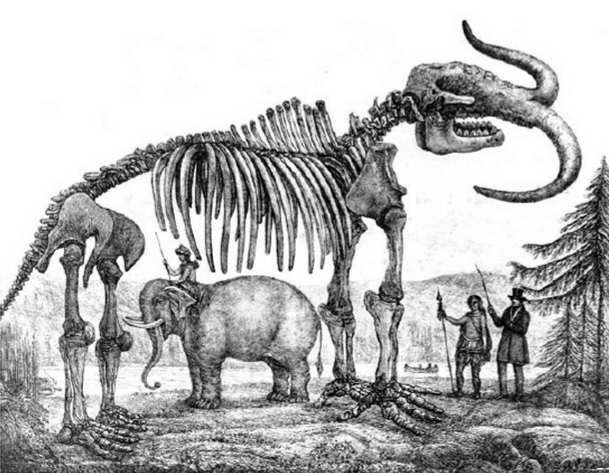
As far as we know, Koch retrieved all the fossils that made up Missourium from a single Benton County, Missouri spring in 1840 (Hoy confirmed the locality and found several additional bones in 1871). Koch used the bones of at least two individuals to assemble a chimeric super-mastodon, which he displayed in St. Louis. Most notably, Koch spliced a number of extra vertebrae into the spinal column, extending the mount’s length to 32 feet. To appeal to local audiences – and to differentiate his creation from Peale’s mastodon – Koch named the beast Missourium, and proclaimed it to be the skeleton of the biblical Leviathan. In 1841, Koch sold his St. Louis showroom and took Missourium on tour, eventually winding up in the Egyptian Hall of Piccadilly, London.

Local specialists, including Gideon Mantell, were initially impressed by the display. However, attitudes soured in February 1842 when Richard Owen presented a scathing critique of Koch’s work to the Geological Society of London. In his lecture, Owen made some cursory remarks about the inaccurately articulated skeleton, but he was primarily concerned with confirming that Missourium was nothing more than a run-of-the-mill American mastodon. Owen was a trendsetter, then as well as now, and for decades afterward his fellow naturalists took every opportunity to take Koch to task. For example, James Dana allowed that “the credit is due him of having performed a great service to science by his collections”, but tore into Koch’s publications to prove that he “was quite ignorant of geology and without scientific training.”

It is therefore ironic that Owen himself gave Koch one of the biggest paydays of his life when he bought Missourium on behalf of the British Museum. In exchange for the skeleton, Koch made off with a $2000 downpayment (about $65,000 today), plus $1000 a year for the rest of his life. It seems museums have been paying extortion prices for display-caliber fossils for a long time.

Armature

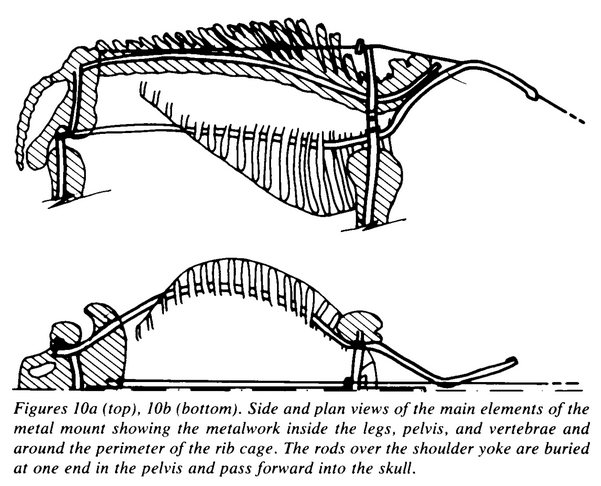
Diagram of the mastodon’s internal armature. Figure 10 of Lindsay 1991.

Museum technicians, including an individual named J. Flower, disassembled Missourium and rebuilt it into a proper mastodon. Reduced to a length of 20 feet, the remounted skeleton (now OR15913) was placed in the historic fossil mammals exhibit and remained there for almost 150 years. In 1991, the mastodon was selected for inclusion in the new Mammals Gallery at NHM, which combines both fossil and modern specimens. Although William Lindsay and colleagues had only limited time to restore and move the skeleton, they gained fascinating insight into 19th century mounting practices. As shown above, the internal metal armature was virtually identical to 20th century counterparts. A hand-wrought iron beam threaded through each vertebra provided the mount’s central anchor point. Four additional iron bars skewered the appendicular elements and connected to the vertebral beam inside the pelvis and under the shoulder girdle. An enlarged foramen magnum allowed the vertebral beam to enter the back of the skull, which turned out to be composed almost entirely of papier-mâché. A real palate and set of upper teeth were buried in the paper cranium, supported by a cradle of wood and copper wire. Amazingly, an 1881 issue of The Weekly Dispatch used in a cursory repair to the skull was still legible.

historic photo of mastodon

Missourium remounted as a standard mastodon in the historic fossil mammals hall. Source

As to be expected from anything on display for a century and a half, the mastodon was in rough shape. As usual, vibration damage was the primary culprit, and Lindsay discovered that the spongy bone in the femur and cervical vertebrae had been crushed beneath the weight of the iron armature. Although NHM staff weren’t able to completely disarticulate the skeleton, they separated it into seven pieces for transport. A coating of polyvinyl acetate was applied to consolidate the fragile fossils, and larger cracks were filled in with putty. Meanwhile, the deteriorating replica skull was retired and replaced with a glass-reinforced plastic cast. The original tusks are still included in the display, however, which is unusual among proboscidian mounts.

Missourium was the third mounted fossil skeleton ever assembled, after Bru’s Megatherium and Peale’s mastodon. Although they’ve each been reconfigured and restored at various points in time, all three specimens are still on exhibit today. While any object that has been on public display for 150 years (or more) is fascinating, I find it especially compelling that so few fossil mounts have ever been taken off exhibit. Public demand, institutional inertia, and the challenges of safely disarticulating a historic mount all contribute to the incredible longevity of these displays, but time inevitably takes its toll on fragile fossils. I can’t help but wonder how many more generations of visitors will be able to view the mastodon that was once Missourium before a mounted display becomes untenable.

References

British Museum (1904). The History of the Collections Contained in the Natural History Departments of the British Museum. London, UK: British Museum (Natural History) and Longmans and Co.

Dana, J.D. (1875). On Dr. Koch’s Evidence with regard to the Contemporaneity of Man and the Mastodon in Missouri. The American Journal of Science and Arts 9:335-346.

Hoy, P.R. (1871). Dr. Koch’s Missourium. The American Naturalist 5:3:147-148.

Lindsay, W. (1991). “Mammoth” Task. Curator 34:4:261-272.

Owen, R. (1842). Report on the Missourium now exhibiting at the Egyptian Hall, with an inquiry into the claims of the Tetracaudodon to generic distinction. Proceedings of the Geologic Society of London 3:3:82.

Simpson, G.G. (1942). The Beginnings of Vertebrate Paleontology in North America. Proceedings of the American Philosophical Society. 86:1:130-188.

7 Comments

Filed under anatomy, fossil mounts, history of science, mammals, museums, NHM

I Have Opinions About Dippy

1st cast in spot of honor

Dippy the Diplodocus has been at London’s Natural History Museum since 1905. Source

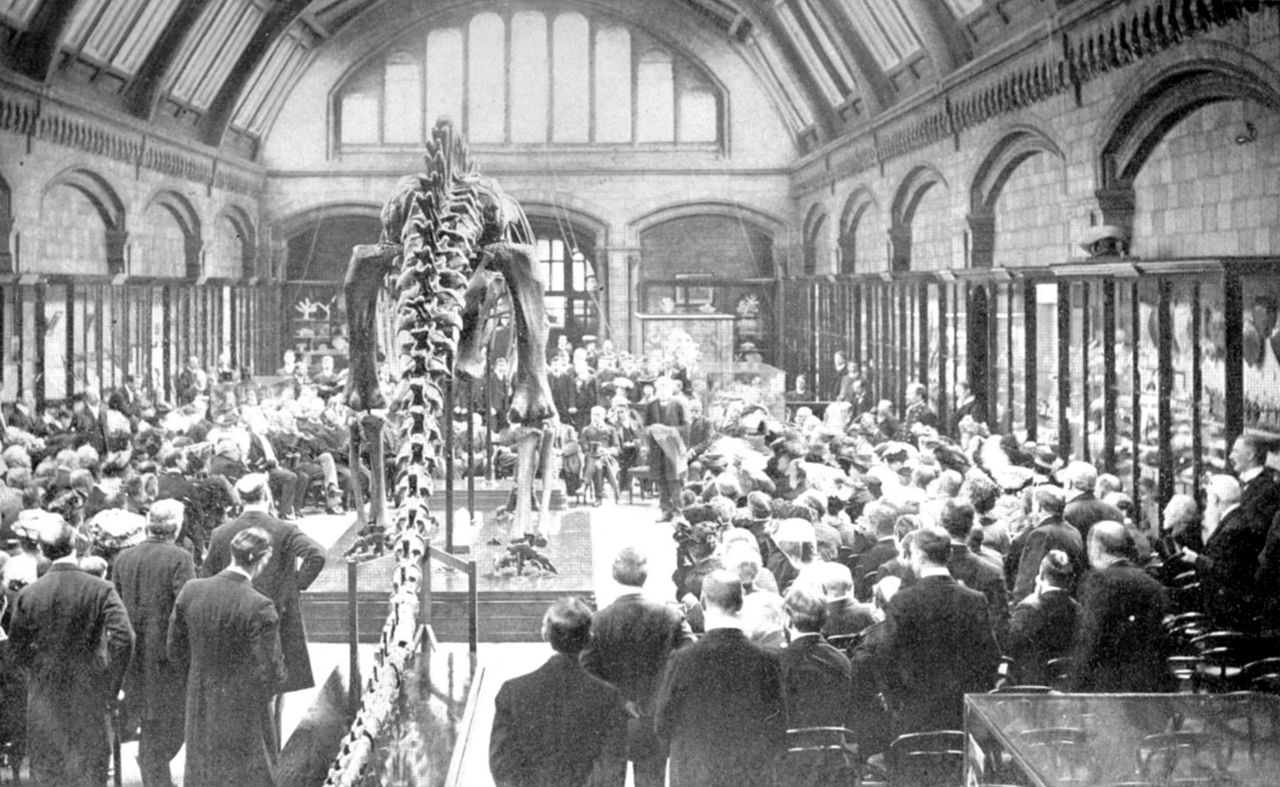
Historic fossil mounts are usually taken for granted. Classics like the the AMNH Tyrannosaurus (which turns 100 this year!) have been enjoyed by generations of visitors, and it seems out of the question that they might ever be retired from display. Such was the case with Dippy the Diplodocus at London’s Natural History Museum – this cast of the CMNH original has been at the museum since 1905, and has been the centerpiece of Hintze Hall since 1979. It was therefore something of a shock when the NHM announced on Thursday that plans are afoot to replace Dippy with a blue whale skeleton. For a few hours, at least, this was huge news. #Savedippy was trending internationally, memes were created, and petitions sprang up to keep the mount in place. To me, it was inspiring to see how much people care about this mounted skeleton. I’ve repeatedly argued on this blog that fossil mounts take on second lives in museums, and have cultural and historical meaning independent of their identities as scientific specimens. The outpouring of love for Dippy is as clear an example as I could ever hope for.

Things seemed to calm down once a few editorials in favor of the change made the rounds, most notably pieces at the Huffington Post, the Conversation, and the Telegraph. These authors make a strong case for the blue whale: it’s the largest animal to ever exist, but it’s on the brink of extinction. It reminds us of our role as stewards of the planet, and the impacts the choices we make today will have on future generations. Meanwhile, the opposition hasn’t offered much beyond “kids like dinosaurs.” Personally, I’m not steadfastly opposed to the change. A whale is an excellent symbol for the importance of protecting the natural world, and it certainly beats losing exhibit space to a new cafe or gift shop. I’ve also never been to the NHM, and my heart already belongs to another Diplodocus, so I don’t really have a dog in this fight. Still, Dippy is an irreplaceable monument deeply entrenched in history, and certainly deserves a thoughtful defense.

The MNH released this concept art of the new display. Source

Exhibit company Casson Mann prepared this concept art of the new display. Source

To review, the original Dippy fossils were collected in 1899 near Medicine Bow, Wyoming by a team funded by Andrew Carnegie. The Pittsburgh-based industrialist/philanthropist wanted to make a name for his newly-founded Carnegie Museum of Natural History by displaying the first-ever mounted skeleton of a sauropod dinosaur. The Diplodocus discovered by Carnegie’s team was (and still is) one of the most complete sauropod specimens ever found. Nevertheless, they lost the race to public display: the American Museum of Natural History unveiled its composite “Brontosaurus” mount in March of 1905*, while Carnegie was still waiting for his museum building to be finished. Not to be bested by the New York competition, Carnegie offered a complete plaster cast of the Diplodocus skeleton to King Edward VII. The replica now known as Dippy was on display in London before the end of the year. After completing a mount of the original fossils at CMNH in 1907, Carnegie went on to produce seven more Diplodocus casts, which he gifted to various European heads of state (read the full story here). In addition, at least four other Dippy replicas have been created since Carnegie’s death in 1919. Whether we consider all versions or just the London cast, Dippy the Diplodocus is among the most-viewed animal skeletons in the world. Its cultural impact, particularly in Europe, is astounding. More than any other specimen, it can be argued that this one made “dinosaur” a household word throughout the world.

*Natural history historian Ilja Nieuwland once commented that the first cast – the one still on display in London – was temporarily assembled in a Pittsburgh warehouse the Pittsburgh Exposition Society Hall in 1904. It could therefore be claimed that this was actually the first sauropod mount.

diplodocus_nocopyright

The Diplodocus cast in London debuted two years before the Pittsburgh original.

And yet, one of the recurring arguments to replace Dippy in the Hintze Hall is that it’s “just a copy” or worse, “a fake.” Of course, referring to a fossil cast in this way is a flagrant misrepresentation. Casts are exact replicas of real specimens, full stop. You can read about the reasons casts are made in the Fossil Mount FAQs, but suffice it to say that replicas like Dippy are just as useful to researchers as the originals they are based on in most respects – some have even been used for microscopic analysis. At the very least, it’s downright inflammatory to dismiss a cast as though it were a P.T. Barnum-era forgery.

But let’s say we don’t care about that, and we must adhere to a conception of authenticity that doesn’t allow for casts. Even then, this particular cast is a 109 year-old historic icon. Despite being made of plaster, this replica introduced the world to the immensity of deep time. Carnegie himself described it as way to foster international peace. It gave the multilingual troops in the first world war a shared word with which to refer to tanks. It was a harbinger of globalization and mass production. And yes, it has enchanted generation upon generation of schoolchildren. NHM director Michael Dixon said that the blue whale will bring the museum’s “societally relevant research” to the forefront, but you’d be hard-pressed to find a natural history specimen more societally relevant than Dippy.

Blue whale model at AMNH. Photo by the author.

Never let it be said that blue whales aren’t impressive. This model at AMNH is staggeringly huge. Photo by the author.

That brings me to the most irksome pro-whale argument. Michael Rundle contends that the whale “is “more profound than Dippy could ever be. We still share a planet, and a destiny, with this weightless behemoth.” It is true that blue whales are incredible, awe-inspiring animals, with a fate that depends directly on our own commitment to preservation. At the entrance to the NHM, the whale skeleton will be a powerful tool for educating audiences about the fragile condition of the world around us. But dinosaurs are just as relevant to ecological education. The best way to understand the modern biodiversity crisis is to look to the past. The fossil record lets us observe how organisms have responded to climate change, habitat loss, and invasive species over 4.5 billion years. In turn, this information helps us make informed choices about our future. A sauropod like Dippy is a particularly useful teaching tool. It could demonstrate how keystone herbivores can shape their environment. Or it could be compared to a mammoth or an elephant to show how different flora can lead to the evolution of completely different megaherbivores. The NHM’s rhetoric in favor of the whale unfortunately reinforces the idea that past life is dead, gone, and irrelevant. Nothing could be futher from the truth.

Plus, nothing’s cooler than a sauropod.

13 Comments

Filed under dinosaurs, exhibits, fossil mounts, history of science, mammals, museums, NHM, opinion, reptiles, sauropods, science communication

So long, Diplodocus

USNM 10865 in the Hall of Extinct Monsters, circa 1932. Photo courtesy of the Smithsonian Institution Archives.

USNM 10865, shortly after its introduction in 1931. Photo courtesy of the Smithsonian Institution Archives.

Since the National Museum of Natural History fossil halls closed for renovation this past April, I’ve made a habit of checking the webcam in Hall 2 every couple weeks or so. For a while, it didn’t look like much was happening – the first waves of de-installation occurred out of view, toward the back of the gallery. Eventually, however, the iconic dinosaur mounts started coming down. The Allosaurus vanished in mid-July. The Stegosaurus and Camptosaurus were gone in September. By late October, the exhibit team had started cutting back the elevated platform and surrounding walkway where most of the standing dinosaur mounts had stood. This was when the process got really interesting, because previous renovations to this space over the past century have always been additive. Old exhibit panels were boarded over and forgotten decades ago, and even some elements of the 1911 Hall of Extinct Monsters, such as the John Elliot fresco “Diana of the Tides”, are still buried in these walls. To hear about these time capsules of science history being unsealed over the past few months has been absolutely thrilling.

But when I checked the webcam last Tuesday, I was met with a slight sinking feeling. The Diplodocus, the centerpiece of this hall for the last 83 years, was gone.

Hall 2 at NMNH, as of December 23, 2014.

Hall 2 at NMNH, as of December 23, 2014. Source

After it was excavated from Dinosaur National Monument in 1923, USNM 10865 took Charles Gilmore, Norman Boss, Thomas Horne, and John Barrett nearly a decade to prepare and mount. Aside from an an adjustment to the neck supports in the early 80s (making it hang from the ceiling, rather than being propped up from the floor), the Diplodocus remained in place and unmodified for longer than the average American lifespan. Generations of visitors have gazed up at it, and those lucky enough to view it before 1963 were able to walk under it. This mount has unquestionably taken on a second life: it is an institutional and regional icon as much as it is a dinosaur that once roamed a Jurassic floodplain. And in three days, NMNH collections staff and specialists from Research Casting International cleared every trace of it – well over 200 individual bones – from the hall.

The Diplodocus, as it stood from 1963 through 1981. Image courtesy of the Smithsonian Institution Archives.

The Diplodocus, as seen from 1963 through 1981. Image courtesy of the Smithsonian Institution Archives.

I can’t help but feel a twinge of sadness to see the Diplodocus go. I’ve been visiting the sauropod since before I could talk. I knew it as a toddler, as a high school volunteer, as a fresh-out-of college-intern, and as a museum professional. Even though the fossil halls have been closed for months, I suppose it was comforting to know that the Diplodocus was still standing on the other side of those barriers. But now it’s actually gone, and that makes it really sink in that the NMNH fossil hall that I knew – the one that inspired and nurtured my life-long interest in paleontology, is gone for good.

An early sketch of

An early sketch of USNM 10865’s new home – anchoring the Jurassic ecosystem display.

Of course, the now-disarticulated Diplodocus fossils are in the best possible hands. The veteran team at RCI will conserve, restore, and eventually remount them in a stunning, dynamic pose. What’s more, the renovated fossil hall in which it will be reintroduced is going to be awesome – structurally, aesthetically, and pedagogically. It will contextualize classic specimens like the Diplodocus within a modern understanding of how the ancient past is connected to our present and future, while simultaneously honoring this space’s history and heritage. I can’t wait.

3 Comments

Filed under dinosaurs, exhibits, fossil mounts, history of science, museums, NMNH, sauropods

Extinct Monsters: Basilosaurus

Click here to start the Extinct Monsters series from the beginning.

The National Museum of Natural History houses the world’s most complete assemblage of fossil marine mammals. The crown jewel of this collection is assuredly the historic mounted Basilosaurus, which was until recently the only mount of its kind composed of original fossils. Since 2008, this ancestral whale has been suspended from the ceiling of the Sant Ocean Hall, but these fossils have actually been on near-continuous display for 120 years and counting. Technically this wasn’t the first time Basilosaurus fossils were used in a mounted skeleton (Albert Koch’s absurd chimera “Hydrarchos the sea serpent” preceded it by 60 years), but it was the first time this species was mounted accurately and under scientific supervision.

Basilosaurus was named by anatomist Richard Harlan in 1834. The name means “king lizard”, since he erroneously thought the bones belonged to a giant sea-going reptile. Richard Owen later re-identified the bones as those of a whale, and coined the new name “Zueglodon” (yoke tooth). While the International Code of Zoological Nomenclature decrees that the first published name must be used, late 19th century paleontologists apparently preferred to use Owen’s junior synonym.

Note basilo

Basilosaurus cast in the original USNM, now called the Arts and Industries Building. Photo courtesy of the Smithsonian Institution Archives.

In 1884 Charles Schuchert, an Assistant Curator at the United States National Museum, went to Clarke County, Alabama in search of “Zueglodon” remains. This would be the very first fossil-hunting expedition ever mounted by the Smithsonian. Decades earlier, Koch came to the same region to collect the fossils he used to assemble Hydrarchos, and local people had been familiar with the whale bones long before that.

Schuchert did not find the complete Basilosaurus skeleton he was looking for, but he did recover a reasonably complete, albeit fragmented, skull and jaw. He returned to Alabama in 1886 and collected an articulated vertebral column, a pelvis, and enough other elements to assemble a composite skeleton. Museum staff used the fossils to produce plaster casts, and combined them with sculpted bones to construct a replica “Zueglodon.” The whale was first unveiled at the Atlanta Exposition in 1895, before finding a home in the original United States National Museum (now the Arts and Industries Building). The 40-foot skeleton hung from the ceiling of the southwest court, with the original fossils laid out in a long case beneath it.

Basilosaurus as the centerpiece of the Hall of Extinct Monsters sometime before 1930. Photo courtesy of the Smithsonian Institution Archives.

In 1910, the USNM relocated to a larger building on the north side of the national mall, which is now of the National Museum of Natural History.  The east wing of the new museum became the Hall of Extinct Monsters, and has been the home of fossil displays at the Smithsonian ever since. The Basilosaurus was selected as the centerpiece of the new display, as its great length and toothy appearance made it popular with visitors. In honor of the occasion, preparator James Gidley reworked the old plaster mount to incorporate Schuchert’s original fossils. A series of caudal vertebrae from a third Basilosaurus specimen was also used. Still labeled “Zueglodon”, the mount was completed in 1912, about a year after the Hall of Extinct Monsters first opened to the public. As Curator of Geology George Merrill explained, the wide-open floor plan of the new hall allowed visitors to walk all the way around the mount, and inspect its every aspect up close.

During the 1960s and 70s, Basilosaurus occupied a case in the fossil mammal exhibit in Hall 5. Photo courtesy of the Smithsonian Institution Archives.

In 1931, the Basilosaurus was upstaged by a new centerpiece: the mounted Diplodocus that took Charles Gilmore and his team more than a decade to assemble. The Diplodocus took the front-and-center position (where it remained until 2014), while the Basilosaurus was relocated to the south side of the hall. The Great Depression and World War II ensured that the east wing exhibits remained largely unchanged for nearly three decades after that, but the space was eventually renovated in the early 1960s as part of a Smithsonian-wide modernization campaign. In its new incarnation, the east wing’s open spaces were carved into smaller galleries dedicated to different groups of ancient life. With the central Hall 2 occupied by dinosaurs and fossil reptiles, the Basilosaurus joined the other Cenozoic mammals in Hall 5. This gallery became “Life in the Ancient Seas” in 1989, but the Basilosaurus remained in place.

The Basilosaurus was in the Ancient Seas gallery from 1989 to 2008.

For the Ancient Seas gallery, Basilosaurus was remounted with an arched tail. Photo by Chip Clark.

Life in the Ancient Seas was a very different setting for the Basilosaurus than the Hall of Extinct Monsters, reflecting the significant changes in museum interpretation that occurred during the 20th century. The historic exhibit showcased the breadth of the museum’s fossil collection in a fairly neutral environment. Interpretation was minimal, and generally intended for a scholarly audience. In contrast, Life in the Ancient Seas was an immersive educational experience (no pun intended). The Basilosaurus and other marine mammal skeletons were posed over a papier-mâché ocean bottom, while a blue and turquoise color palate and even shimmering lights contributed to the illusion of traveling through an underwater world. Combined with text panels written with a jovial, inviting tone, the net effect was an exhibit pitched to a general audience at home with multimedia.

The historic Basilosaurus

The historic Basilosaurus, remounted for display in the Ocean Hall. Photo by the author.

The Basilosaurus was moved once more in 2008, when it was incorporated in the enormous new Ocean Hall. In its 5th position in a little over a century, the skeleton now hangs from the ceiling as part of an exhibit on whale evolution. Moving the historic skeleton was not an easy task, and took about six months of work. NMNH staff collaborated with Research Casting International to disassemble the skeleton, stabilize and conserve each bone, and finally remount the Basilosaurus on a new armature. In the new mount, each bone rests in a custom cradle with felt padding, to prevent vibration damage caused by the crowds passing beneath it. Smithsonian paleontologists also reunited the whale with its hind legs, which Schuchert found alongside the articulated vertebral column in Alabama but were, until recently, thought to belong to a bird.

This latest setting for Basilosaurus is a happy medium between museums past and present. The historic gallery occupied by the Ocean Hall has been restored to its original neoclassical glory, and much like the original Hall of Extinct Monsters visitors have clear sight lines across the space. Rather than being led on rails through a scripted exhibit experience, visitors can move freely through the gallery, bouncing among the objects they find compelling. At the same time, however, the Basilosaurus is explicitly contextualized as an example of the transformative power of evolution. Presented alongside cast skeletons of Maiacetus and Dorudon, this display makes whales’ evolutionary link to terrestrial mammals crystal clear.

This post was last updated on 1/8/2018.

References

Gilmore, C.W.  (1941). A History of the Division of Vertebrate Paleontology in the United States National Museum. Proceedings of the United States National Museum No. 90.

Marsh, D.E. (2014). From Extinct Monsters to Deep Time: An ethnography of fossil exhibits production at the Smithsonian’s National Museum of Natural History. http://circle.ubc.ca/handle/2429/50177

Meet Basilosaurus, an Ancient Whale (2008). Smithsonian Institution. http://www.mnh.si.edu/exhibits/ocean_hall/meet_basilosaurus.html

Leave a comment

Filed under exhibits, Extinct Monsters, fossil mounts, history of science, mammals, museums, NMNH