Category Archives: NMNH

Do fossil exhibits have too many dinosaurs?

Reflexive discussion about the practice of communicating paleontological science to general audiences has become more common recently – there was even a two-day Popularizing Paleontology workshop in London last year.  It’s about time – paleontology encompasses some of the most important questions about the world around us, from how life evolves to how ecosystems respond to planetary changes. Paleontology is the study of how the world came to be, and our understanding of the natural world is hopelessly incomplete without it. For the larger public, however, paleontology is synonymous with dinosaurs, and this can be a problem. Dinosaurs are awesome, but they are but one branch of the tree of life. And while their 160 million year dominance is significant, the era of non-avian dinosaurs is only a fraction of the 3.5 billion year history of life on Earth. Their story is not the only story worth telling.

Why the outsized fascination with dinosaurs? I suspect it’s the result of a self-perpetuating cycle. Human curiosity peaks somewhere between subjects an individual knows well and subjects that are completely new to them. In other words, people prefer to learn about things they are already familiar with. That means that museum visitors are drawn to dinosaurs like Tyrannosaurus and Apatosaurus because they already know something about them. Meanwhile, other fascinating creatures are bypassed precisely because visitors lack an existing mental framework to contextualize them. Somewhat paradoxically, in the sphere of informal learning, familiarity is king.

Generally, educators have been happy to indulge the public craving for dinosaurs*. In a must-read blog post resulting from the aforementioned Popularizing Paleontology workshop, Mark Witton describes dinosaurs as “one of the most important and potent tools at our disposal” because they are “gateways” to discussions about evolution, extinction, deep time, and even the nature of the scientific method. Witton then unpacks this conventional wisdom, highlighting several ways that relying on the built-in appeal of dinosaurs may not be as effective as traditionally assumed. It’s a fascinating discussion that I highly recommend reading.

Witton’s post got me thinking that if we’re going to consider easing up on dinosaurs in outreach efforts, we need some sort of baseline to firmly establish if (or the degree to which) they are being overused. One argumentum ad nauseum in these conversations is that museum exhibits are overstocked with dinosaurs. Allegedly, exhibit designers have responded to the popularity of Mesozoic dinosaurs by devoting an excessive amount of exhibit space to them, while relegating Paleozoic and Cenozoic specimens to the collections. This supposition can be (very, very crudely) tested by comparing the percentage of available exhibit space to the percentage of time non-avian dinosaurs dominated the planet. Assuming that exhibits should not be expected to allocate proportional space to pre-Phanerozoic life, I figure that the “Age of Dinosaurs” should cover 30-35% of an exhibit about life since the Cambrian (~160 million out of 541 million years).

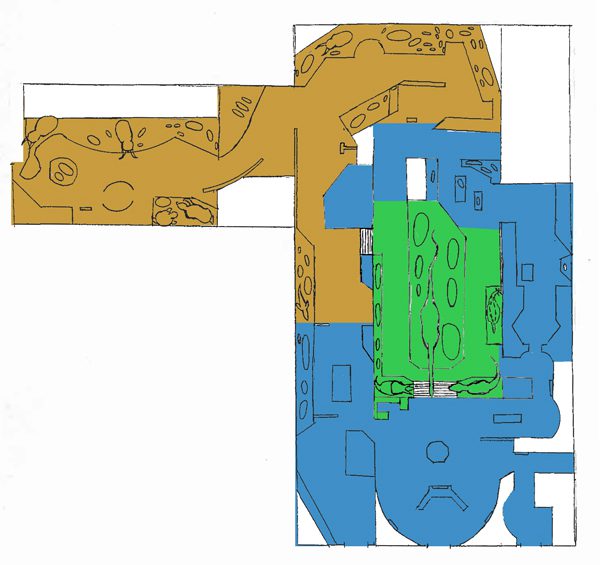
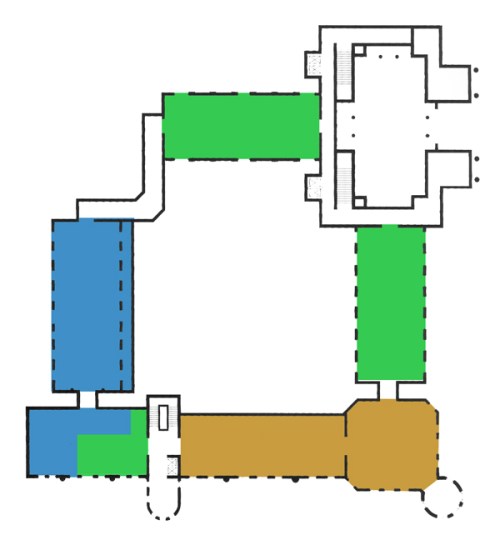
To satisfy my own curiosity, I’ve gone and checked this figure against the three big paleontology exhibits with which I am most familiar. The slapdash maps below are traced from museum guides available online, with percentages calculated with the help of the Photoshop ruler tool. Green denotes dinosaurs, brown represents Cenozoic mammals, and blue encompasses everything else, including Paleozoic fossils, overviews of life over time, and non-dinosaurian Mesozoic life.

Field Museum of Natural History

Space allotment by subject in Evolving Planet at the Field Museum of Natural History. Dinosaurs: 31%; Mammals: 31%; Other: 38%.

Let’s start with the Field Museum, since it’s the most straightforward. The Evolving Planet exhibit (on view since 2006) occupies three elongated halls totaling 27,000 square feet. Evolving Planet is a classic “walk through time”-style exhibit, and the Paleozoic, Mesozoic, and Cenozoic are given remarkably equal amounts of floor space. Even though the central hall is larger than the other two, it is partially occupied by plants, marine animals, and early Triassic weirdos. At 31% of the total exhibit, dinosaurs are right about where they should be.

National Museum of Natural History

Space allotment by subject in the old fossil halls at the National Museum of Natural History. Dinosaurs: 15%; Mammals: 43%; Other 42%.

The old paleontology halls at the National Museum of Natural History (closed since 2014) demonstrate what happens when a museum goes without a dinosaur specialist for three quarters of a century. Cenozoic mammals and Paleozoic marine life were given room to spread out, while the dinosaurs were crowded into a paltry 15% of the available 31,000 square feet. It’s worth noting that unlike the Field Museum’s current fossil halls, which were designed from the ground up in the early 1990s, the NMNH paleontology wing was built up in a piecemeal fashion over the course of a century. The space was repeatedly carved into smaller sections to make room for new exhibits, and designers had to work around existing specimens that were too expensive or difficult to move. By the 1980s the halls had become something like a maze, and much of the available space wasn’t used very efficiently. Still, the consistently meager amount of space allotted to dinosaurs made it clear where the curators’ interests lay.

American Museum of Natural History

gallery usage at amnh

Space allotment by subject on the fourth floor of the American Museum of Natural History. Dinosaurs: 40%; Mammals: 30%; Other: 30%.

At the American Museum of Natural History, fossil exhibits are spread across six halls on the fourth floor. The last substantial renovation was completed in 1995, although a titanosaur skeleton was added to the Orientation Hall in 2016. This exhibit differs from its counterparts at FMNH and NMNH in that it’s arranged phylogenetically, rather than chronologically. It is also limited to vertebrate evolution, so plants and invertebrates are not included. With those caveats in mind, dinosaurs occupy 40% of the 65,000 square feet of exhibit space.

So, do museums have too many dinosaurs? Based on this exercise, these three museums have just the right amount (or even too few). The proportion of space allocated to dinosaurs closely matches the time span of their ecological dominance during the Phanerozoic. The percentage of dinosaur space at AMNH is on the high side, but if we also incorporated the square footage of the human evolution exhibit and the assortment of marine invertebrate fossils on display elsewhere in the museum, that percentage would decrease significantly. In fact, if this exercise has revealed anything, it’s that Cenozoic mammals get an awful lot of space, given that the “Age of Mammals” takes up only 13% of the Phanerozoic.

Again, this is an extremely crude way to measure dinosaur-themed engagement efforts. One might also look at the number of specimens on exhibit, or the newness of the displays (are dinosaurs getting updated more frequently, while other exhibits are left to languish?). And that’s to say nothing of outreach beyond the permanent exhibits. Still, I hope this is a helpful starting point. At the very least, it suggests to me that “are museums over-emphasizing dinosaurs?” is not the only question worth asking. We also need to tease out if audiences are ignoring non-dinosaur paleontology outreach efforts, and if there’s a way to counter that.

*It’s a tired but worthwhile point that comparatively few people can articulate what a dinosaur actually is. For many, anything big and dead (and displayed in skeletal form) is a dinosaur. This complicates the matter, because when people ask for dinosaurs they may actually mean prehistoric animals.

7 Comments

Filed under AMNH, dinosaurs, exhibits, FMNH, mammals, museums, NMNH, systematics

The National Fossil Hall Rejects

In April 2014, the paleontology exhibits at the National Museum of Natural History closed for a wall-to-wall renovation. The re-imagined National Fossil Hall will reopen in 2019. We are now approaching the halfway point of this journey, which seems like a fine time to say farewell to some of the more charismatic specimens that are being rotated off display.

In comparison to the old exhibit, the new version will be influenced by a less-is-more design philosophy. While there will not be quite as many individual specimens on display, those that are included will be more visible and will be explored in more detail. This combined with the significant number of new specimens being added means that many old mainstays had to be cut from the roster. Cuts occur for a variety of reasons, including eliminating redundancy, preserving specimens that were not faring well in the open-air exhibit space, and making specimens that have been behind glass for decades available to a new generation of researchers. Retired specimens are of course not going far – they have been relocated to the collections where students and scientists can study them as needed.

Stegomastodon (USNM 10707)

Stegomastodon in 2014. Photo by the author.

The Stegomastodon in 2014. Photo by the author.

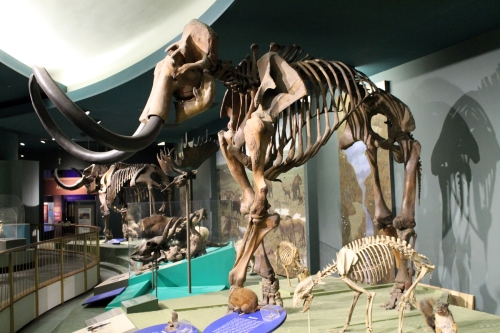
The young male Stegomastodon is the largest single specimen that is being retired from the NMNH fossil halls. James Gidley and Kirk Bryan collected this skeleton in the San Pedro Valley of Arizona, during the same 1921 collecting trip that produced the museum’s Glyptotherium (which will be returning). While the genus Stegomastodon was erected in 1912, Gidley referred his specimen to a new species, S. arizonae, due to its more “progressive” physiology and slightly younger age. By 1925, the skeleton was mounted and on display in the Hall of Extinct Monsters. While the original mount used the real fossil tusks, these were eventually replaced with facsimiles.

There are at least two reasons the Stegomastodon will not be returning in 2019. First, there are already two big elephants on display: the mammoth and the mastodon. Elephants take up a lot of space, and a third proboscidean offers diminishing returns when compared to the amount of floor space it requires. More importantly, the Stegomastodon is a holotype specimen, and the exhibit team elected to remove most of these important specimens from the public halls. This is both to keep them safe from the damaging effects of vibration, humidity, and fluctuating temperature, as well as to make them more accessible to researchers.

Paramylodon (USNM V 15164)

Collections staff

Collections staff wheel Paramylodon out of the exhibit hall. Source

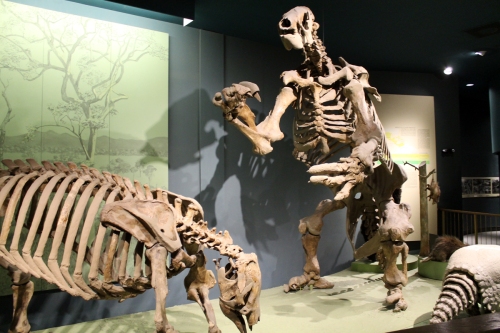
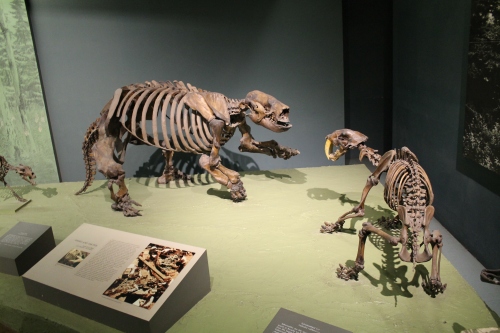
During the 1960s, Assistant Curator Clayton Ray oversaw the construction of the short-lived Quaternary Hall, which was reworked into the Hall of Ice Age Mammals. This meant creating a number of brand-new mounts, including several animals from the Rancho La Brea Formation in Los Angeles County. La Brea fossils are not found articulated, but as a jumble of individual elements preserved in asphalt. The Los Angeles Natural History Museum provided NMNH with an assortment of these bones, which preparator Leroy Glenn assembled into two dire wolves, a saber-toothed cat, and the sheep cow-sized sloth Paramylodon.

Paramylodon is another cut for the sake of eliminating redundancy: the colossal Eremotherium completely overshadows this more modestly-sized sloth. This mount also needed some TLC. For aesthetic reasons, the Paramylodon was given an internal armature, which involves drilling holes through each of the bones. Last year, preparator Alan Zdinak took on the task of disassembling and conserving these damaged fossils with assistance from Michelle Pinsdorf.

Zygorhiza (USNM PAL 537887)

efwewfwefwe

Zygorhiza cast in the Life in the Ancient Seas gallery. Source

When the Life in the Ancient Seas gallery opened in 1990, it featured a historic Basilosaurus skeleton that had been on display since the 1890s. This ancestral whale was relocated to the Ocean Hall in 2008, and a cast of the smaller whale Zygorhiza took its place in Life in the Ancient Seas. Since there is now an extensive whale evolution exhibit in Ocean Hall, this subject will not be a major part of the new paleontology exhibit. Both Zygorhiza and the dolphin Eurhinodelphis will have to go.

After the old fossil halls closed, Smithsonian affiliate Mark Uhen managed to acquire the retired Zygorhiza mount for George Mason University, where he is a professor. The whale is now on display in the Exploratory Hall atrium, suspended 30 feet in the air.

Tapirs, Horses, and Oreodonts

Photo by the author.

The tapir Hyrachyus and the mini-horse Orohippus. Photo by the author.

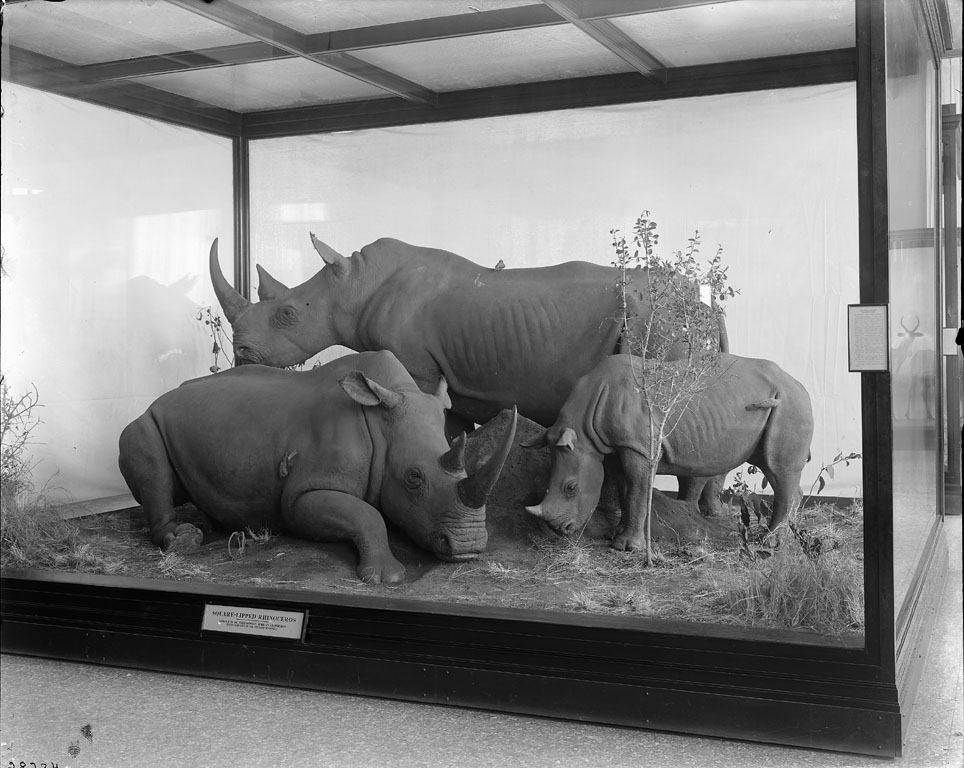
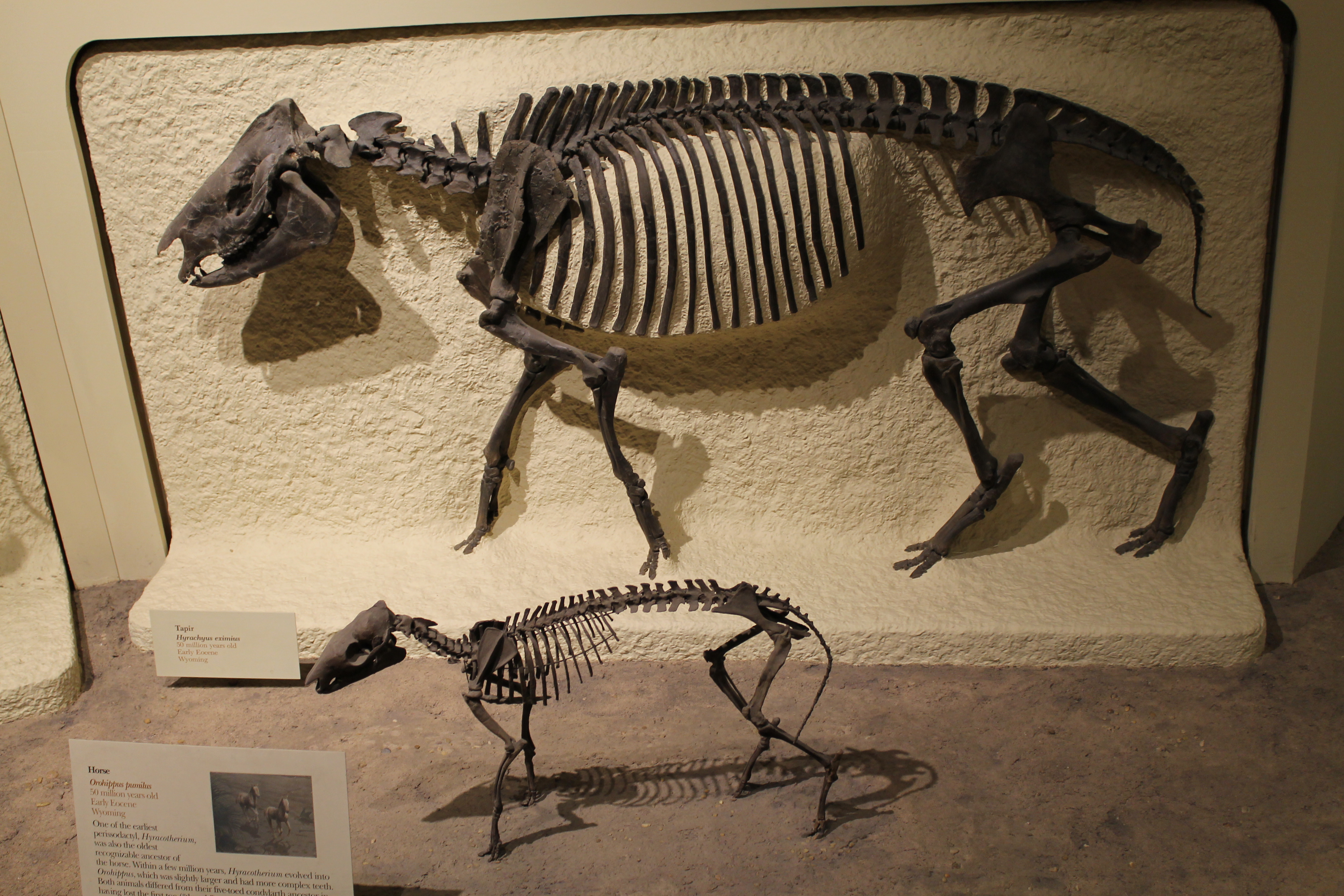
The last two major renovations of the NMNH fossil exhibits occurred when mammal specialists were in charge of the Paleobiology Department, and as a result the halls ended up with a lot of Cenozoic mammal mounts (at least 50, by my count). Virtually every major group was covered, often several times over. This menagerie has been culled for the new hall, which will focus on specimens that best tell the story of Earth’s changing climate during the past 66 million years. Casualties include the trio of Hagerman’s horses, the smaller horse Orohippus, the tapirs Hyrachyus and Helaletes, the ruminant Hypertragulus, and the oreodont Merycoidodon. Interestingly, the classic hall’s three large rhinos are sticking around, and will in fact be joined by at least one more.

Brachyceratops (USNM 7953)

Brachyceratops/Rubeosaurus

Brachyceratops/Rubeosaurus. Photo by NMNH Department of Paleobiology.

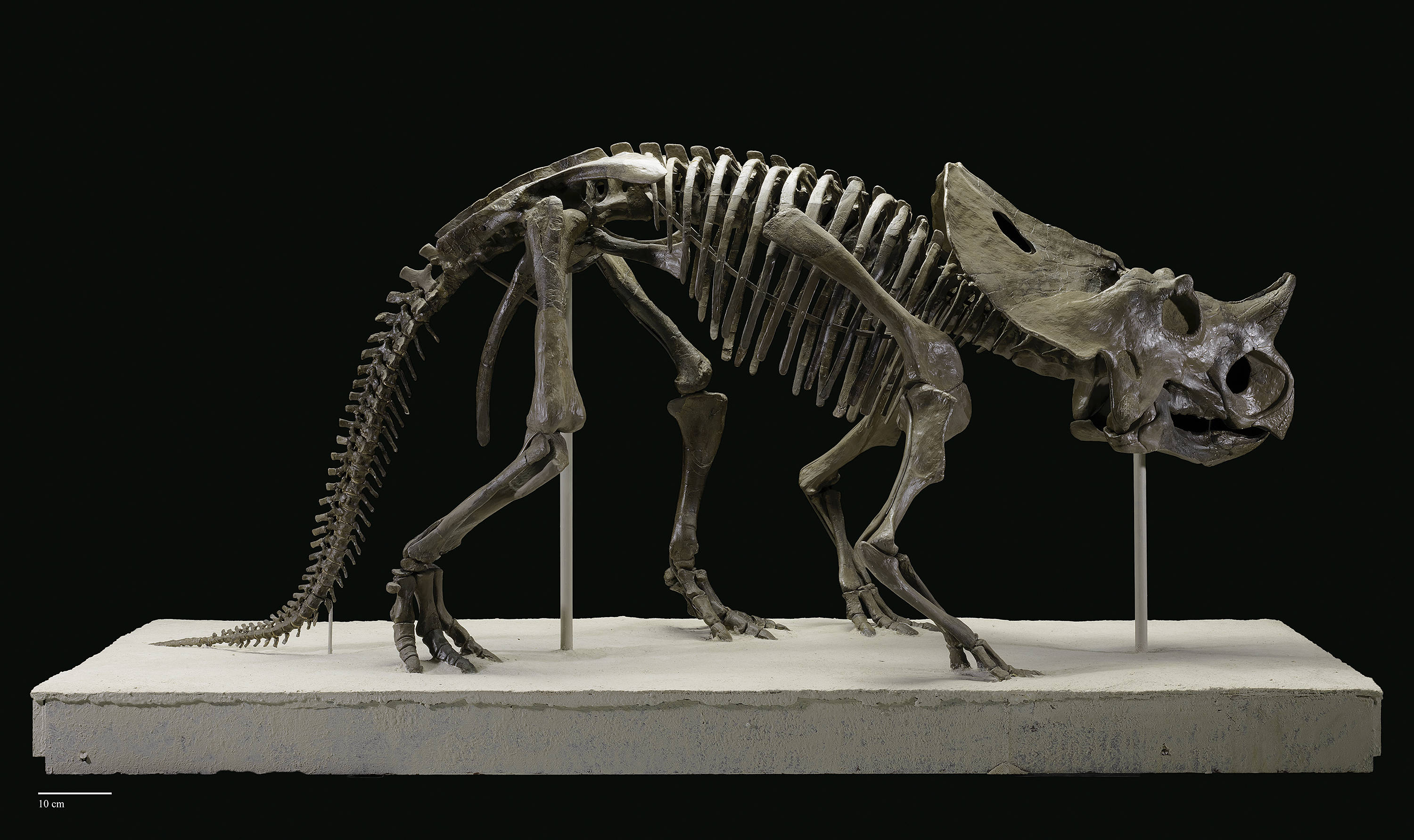
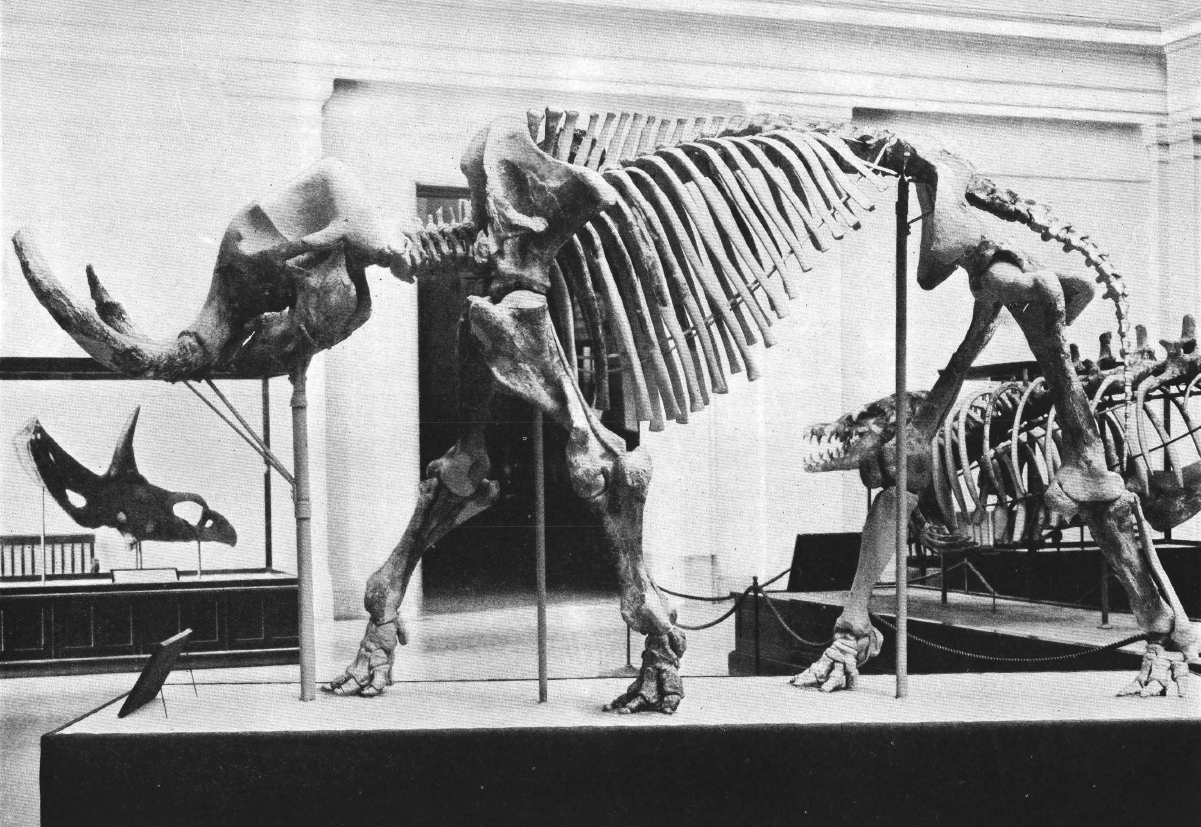
The pocket-sized ceratopsian historically called Brachyceratops has been on display at NMNH since 1922. Discovered in 1913 by Curator of Fossil Reptiles Charles Gilmore, this animal is one of only a few dinosaur species excavated, prepared, described, and exhibited entirely in-house at NMNH. Assembled by Norman Boss, the mount is actually a composite of five individuals Gilmore found together in northeast Montana.

Gilmore described Brachyceratops as an unusually small but full-grown ceratopsian, but in 1997 Scott Sampson and colleagues confirmed that all five specimens were juveniles. Unfortunately, the fossils lack many diagnostic features that could link them to an adult form. According to Andrew McDonald, the most likely candidate is Rubeosaurus. Nevertheless, without the ability to recognize other growth stages of the same species, the name Brachyceratops is unusable and is generally regarded as a nomen dubium.

It is not difficult to surmise why the Brachyceratops would end up near the bottom of the list of specimens for the new exhibit. It is not especially large or impressive, it doesn’t have a recognizable name (or any proper name at all, really) and it doesn’t tell a critical story about evolution or deep time. With limited space available and new specimens being prepped for display, little Brachyceratops will have to go.

Corythosaurus (USNM V 15493)

Corythosaurus as seen in 1960s

Corythosaurus as seen in the 1960s. Photo courtesy of the Smithsonian Institution Archives.

In 1910, Barnum Brown of the American Museum of Natural History launched the first of several expeditions to the Red Deer River region of Alberta. Seeing Brown’s success and under pressure to prevent the Americans from hauling away so much of their natural heritage, the Canadian Geological Survey assembled their own team of fossil collectors in 1912. This group was headed by independent fossil hunter Charles Sternberg, who was accompanied by his sons George, Levi, and Charles Jr. Having secured several articulated and nearly complete dinosaur skeletons, Brown’s team moved on five years later. The Sternbergs, however, remained at the Red Deer River, and continued to collect specimens for the Royal Ontario Museum.

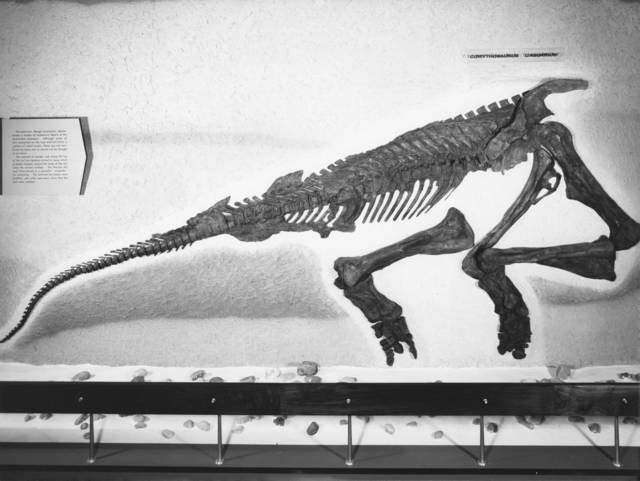
In 1933, Levi discovered a well-preserved back end of a Corythosaurus, complete with impressions of its pebbly skin. The Smithsonian purchased this specimen in 1937 for use at the Texas Centennial Exposition. It eventually found its way into the permanent paleontology exhibit at NMNH. Unfortunately, the half-Corythosaurus ended up crowded behind more eye-catching displays and was often overlooked by visitors. In the new exhibit, it will have to move aside to make room for new Cretaceous dinosaurs.

Assorted Dinosaur Skulls

Triceratops skull

Original skull of Hatcher the Triceratops, one of many dinosaur skulls coming off exhibit. Photo by the author.

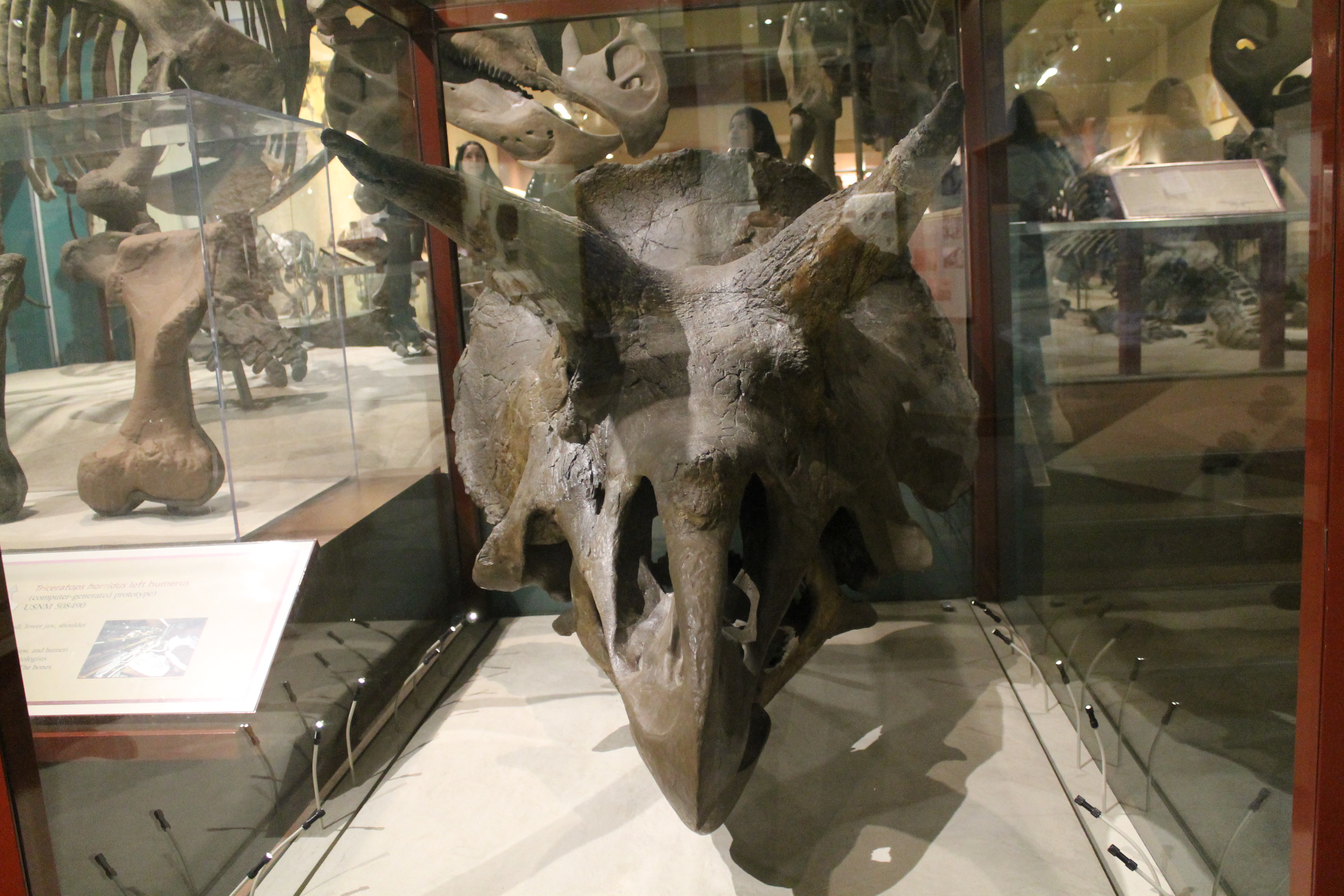
In addition to complete dinosaur mounts, the old NMNH fossil halls included several dinosaur skulls, ranging from the giant cast of the AMNH Tyrannosaurus to the miniscule Bagaceratops. Most of these standalone skulls have been cut, although a few (Diplodocus, Camarasaurus, and Centrosaurus) are sticking around, to say nothing of new specimens being added. Other retirees in this category include the original skulls of Nedoceratops (labeled Diceratops), TriceratopsEdmontosaurus, and Corythosaurus, as well as casts of Protoceratops, Pachycephalosaurus, Stegoceras, Psittacosaurus, and Prenocephalae.

As usual, the reasons these specimens are coming off exhibit are varied. The Nedoceratops skull is a one-of-a-kind holotype that has been the subject of a great deal of conflicting research over its identity and relevance to Maastrichtian ceratopsian diversity. Putting this specimen back in the hands of scientists should help clarify what this bizarre creature actually is. Meanwhile, many of the other skulls (e.g. Protoceratops, Psittacosaurus, and Prenocephalae) come from Asian taxa. In the new fossil hall, the Mesozoic displays will primarily focus on a few well-known ecosystems in North America.

Dolichorynchops (USNM PAL 419645)

Dolichorhynchops from Montana, mounted by Arnie Lewis. Photo by Chip Clark.

Dolichorhynchops in the Life in the Ancient Seas exhibit. Photo by NMNH Department of Paleobiology.

The NMNH Dolichorhynchops is a relatively new mount. It was collected in Montana in 1977 and acquired in a trade with the Denver Museum of Nature and Science. Arnie Lewis prepared it for display in 1987. 24 years later, “Dolly” is being retired to the collections. This is not due to anything wrong with the specimen, but to make way for a bigger, cooler short-necked plesiosaur. NMNH purchased a cast of Rhomaleosaurus from the Henry Ward Natural Science Establishment in the 1890s, but it has not been on exhibit since at least 1910. This cast, which is based on an original at the National Museum of Ireland (and which is identical to the cast at the London Natural History Museum) will make its first public appearance in over a century in the new National Fossil Hall. Sorry, Dolichorhynchops.

This has hardly been a comprehensive list – just a few examples that illustrate the decisions that are made when planning a large-scale exhibit. If you are curious about other favorites from the old halls, you can check on their fate by searching the Department of Paleobiology’s online database. Just go to Search by Field and enter “Deep Time” under Collection Name to see most of the specimens earmarked for the new exhibit.

References

Gidley, J.W. 1925. Fossil Proboscidea and Edentata of the San Pedro Valley, Arizona. Shorter Contributions to General Geology (USGS). Professional Paper 140-B, pp. 83-95.

Gilmore, C.W. 1922. The Smallest Known Horned Dinosaur, BrachyceratopsProceedings of the US National Museum 63:2424.

Gilmore, C.W.  1941. A History of the Division of Vertebrate Paleontology in the United States National Museum. Proceedings of the United States National Museum Vol. 90.

Gilmore, C.W. 1946. Notes on Recently Mounted Reptile Fossil Skeletons in the United States National Museum. Proceedings of the United States National Museum Vol. 96 No. 3196.

McDonald, A.T. 2011. A Subadult Specimen of Rubeosaurus ovatus(Dinosauria: Ceratopsidae), with Observations on other Ceratopsids from the Two Medicine Formation. PLoS ONE 6:8.

Sampson, S.D., Ryan, M.J. and Tanke, D.H. 1997. Craniofacial Ontogeny in Centrosaurine Dinosaurs: Taxonomic and Behavioral Implications. Zoological Journal of the Linnean Society 12:1:293-337.

7 Comments

Filed under collections, dinosaurs, exhibits, Extinct Monsters, fossil mounts, history of science, mammals, marginocephalians, museums, NMNH, ornithopods, reptiles, theropods

Painting the Ancient Seas

During a 1958 benchmarking trip to a number of North American natural history museums, Smithsonian exhibits specialist Ann Karras wrote to Assistant Secretary Remington Kellogg about the state of artwork in paleontology displays. She noted with some frustration that since the paleontological community’s early 20th century love affair with Charles Knight, very little had been accomplished in this field. Everywhere she went, Karras saw reproductions of the same decades-old Knight paintings, supplemented by only the most tentative attempts at original artwork. As Karras postulated, “reverence for [Knight’s] work on the part of paleontologists may have thwarted any ambitions in that area of illustration for some years.” The sole outlier was the Peabody Museum of Natural History, home of the 1947 Age of Reptiles mural by Rudolph Zallinger. Impressed by the scale and quality of this 110-foot fresco, Karras suggested that the Smithsonian  invest in a similarly monumental piece of up-to-date paleoart at some point in the future.

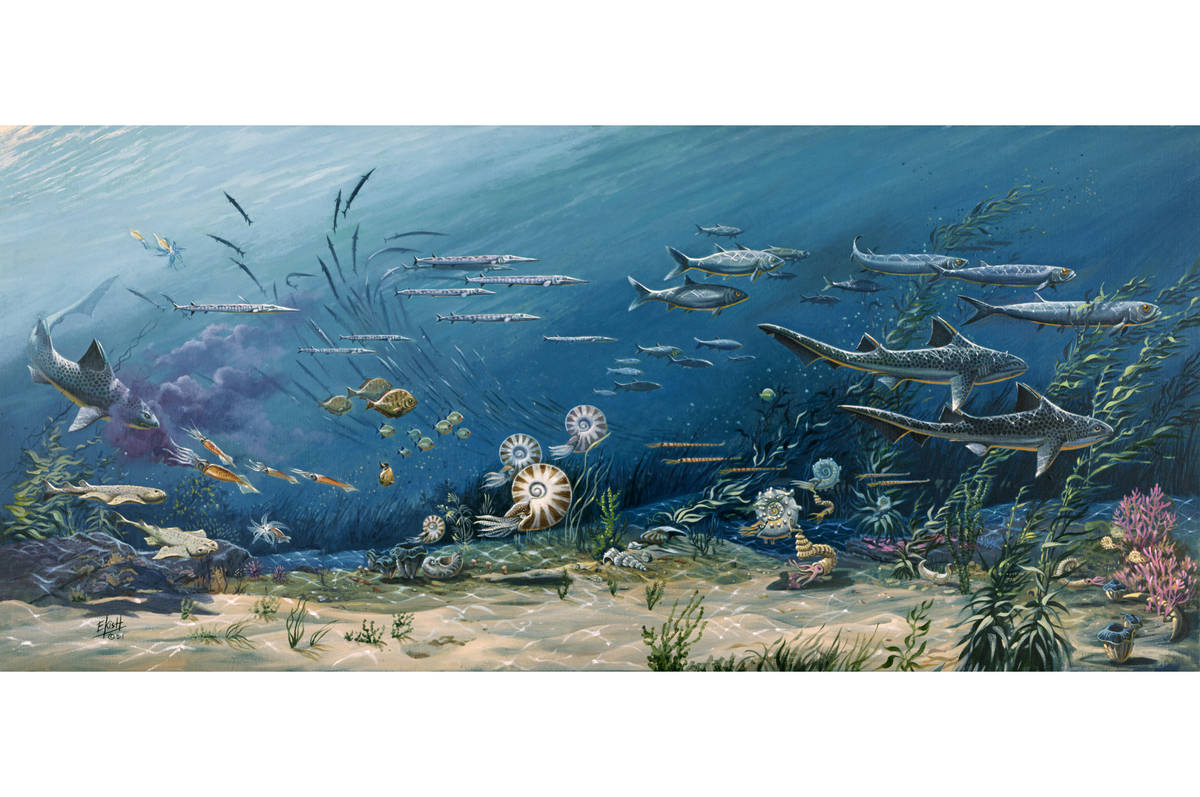
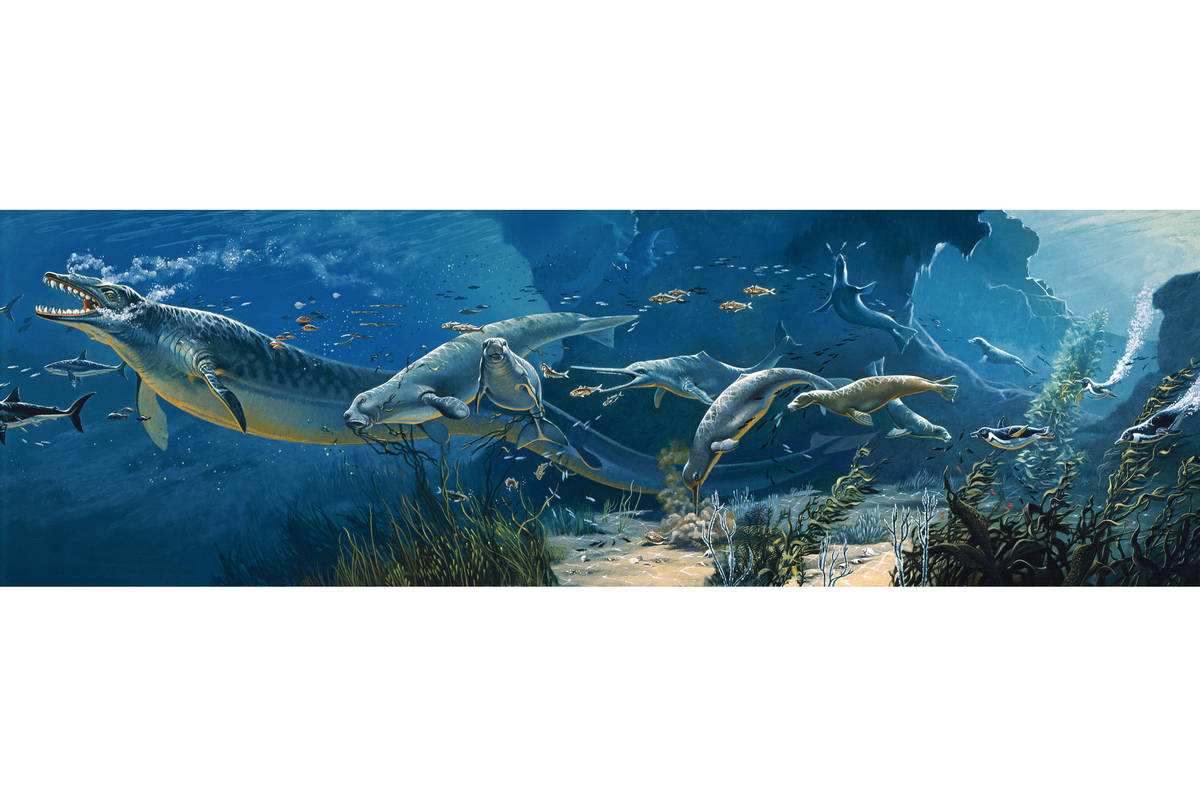
Karras’s wish was finally realized in 1990, with the debut of Eleanor Kish’s epic Life in the Ancient Seas mural in the exhibit of the same name. Sixteen feet high and 130 feet long (with a sixteen by twenty foot supplement on the opposite wall), this mural is even larger than Zallinger’s better-known magnum opus. It also covers more of Earth’s history, spanning 541 years of deep time across the entire Phanerozoic Eon. But while The Age of Reptiles charts the progression of life on land, Life in the Ancient Seas follows the denizens of the undersea realm. From the explosion of invertebrate diversity in the Cambrian to the proliferation of aquatic mammals in the recent past, the mural demonstrates that the history of life is most thoroughly documented by marine fossils.

Dunkleosteus. Art by Eleanor Kish. Copyright Smithsonian Institution.

Close-up of Dunkleosteus and eurypterids. Art by Eleanor Kish. Source

The idea to include a mural in the Life in the Ancient Seas exhibit came relatively late. There was no mention of the artwork in the 1987 briefing document for potential donors, and as late as June of that year curator Nicholas Hotton was writing in hopeful terms about the inclusion of a full-color illustration of Dolichorhynchops. Eventually, however, the exhibit team got the go-ahead to start looking for an artist. Content Specialist Linda Deck started by assembling a list of three dozen prominent paleoartists. She sent each of them a letter of invitation, describing the project and emphasizing the immense scale of the desired product. Half of the artists responded with resumes and portfolio samples, and from these the exhibit team narrowed the field to six candidates*.

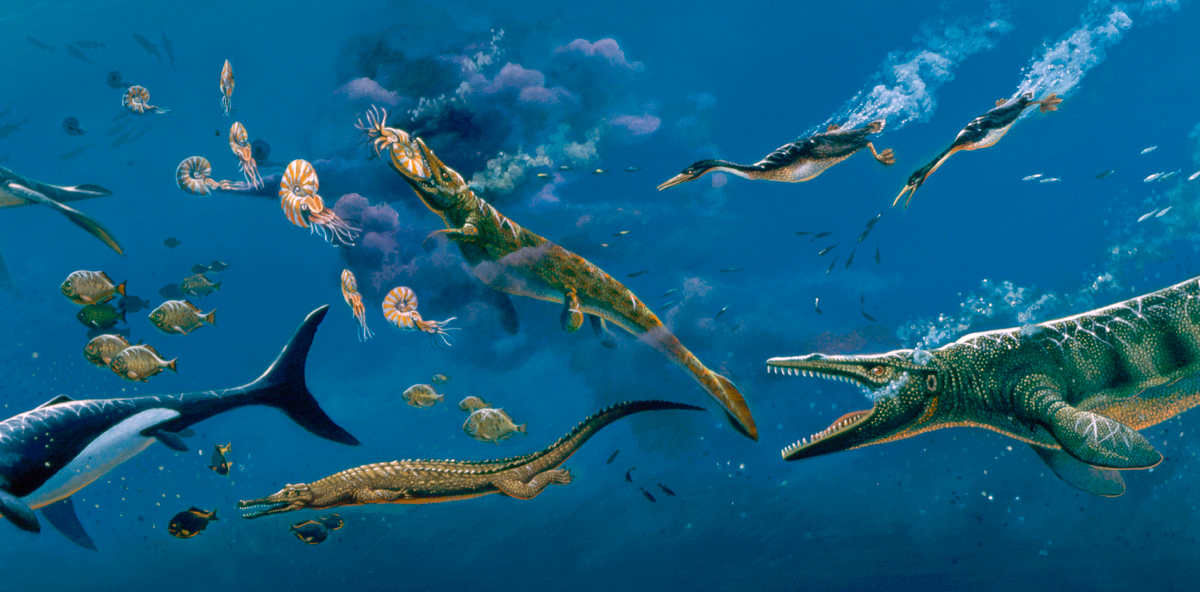
The short-list candidates were then given a $1000 stipend to paint a small sample piece. Each artist was provided with the scenario (a group of ammonites releasing a cloud of ink upon being attacked by a mosasaur), an assortment of fossil reference photos, and encouragement to get in touch with NMNH curators as needed. Of the five artists who completed this challenge, the exhibit team agreed unanimously that Kish’s work was the best fit for the project. Not only did she demonstrate the ability to accurately render the animals with anatomical precision, her bold color palate would work well as the backdrop for the entire exhibit.

Art by Eleanor Kish. Copyright Smithsonian Institution.

The mosasaur section of the mural, presumably not far off from Kish’s original concept piece. Art by Eleanor Kish. Courtesy of the Smithsonian Institution.

Eleanor (or Ely) Kish was born in 1924 to a family of artists. Growing up in New Jersey, she became a naturalized Canadian citizen in 1972. While Kish was a professional artist for most of her adult life, her career in paleontological illustration kicked off in the 1970s, at Ottawa’s Canadian Museum of Nature. It was there that she worked with paleontologist Dale Russell on some of the earliest Renaissance-era dinosaur reconstructions (an assortment of paintings from Russel’s An Odessey of Time: The Dinosaurs of North America can be seen here). Tales of dinosaur art from this era often focus on Gregory Paul, John Sibbick, and their imitators, but Kish’s work was similarly prominent in books and magazines of the day.

Kish’s art is instantly recognizable for its portrayal of active, highly expressive dinosaurs in breathtakingly realized landscapes. The worlds she created – particularly the skies – have an almost poetic beauty, while the plants and animals that inhabit them drip with dew and pulsate with life. Kish’s work is often overlooked today because her dinosaurs are shrink-wrapped in the extreme, sometimes appearing emaciated or even ghoulish. The skeletal look is very much out of vogue (modern paleontologists prefer their dinosaurs appropriately bulked out with muscle, fat, and feathers), but as Christian Kammerer pointed out on twitter, it’s important to consider Kish’s art in context. Her carefully-researched work was a powerful counterpoint to the rotund, shapeless dinosaurs that had dominated paleoart in preceding decades, and a critical step on the road to the reconstructions we know today.

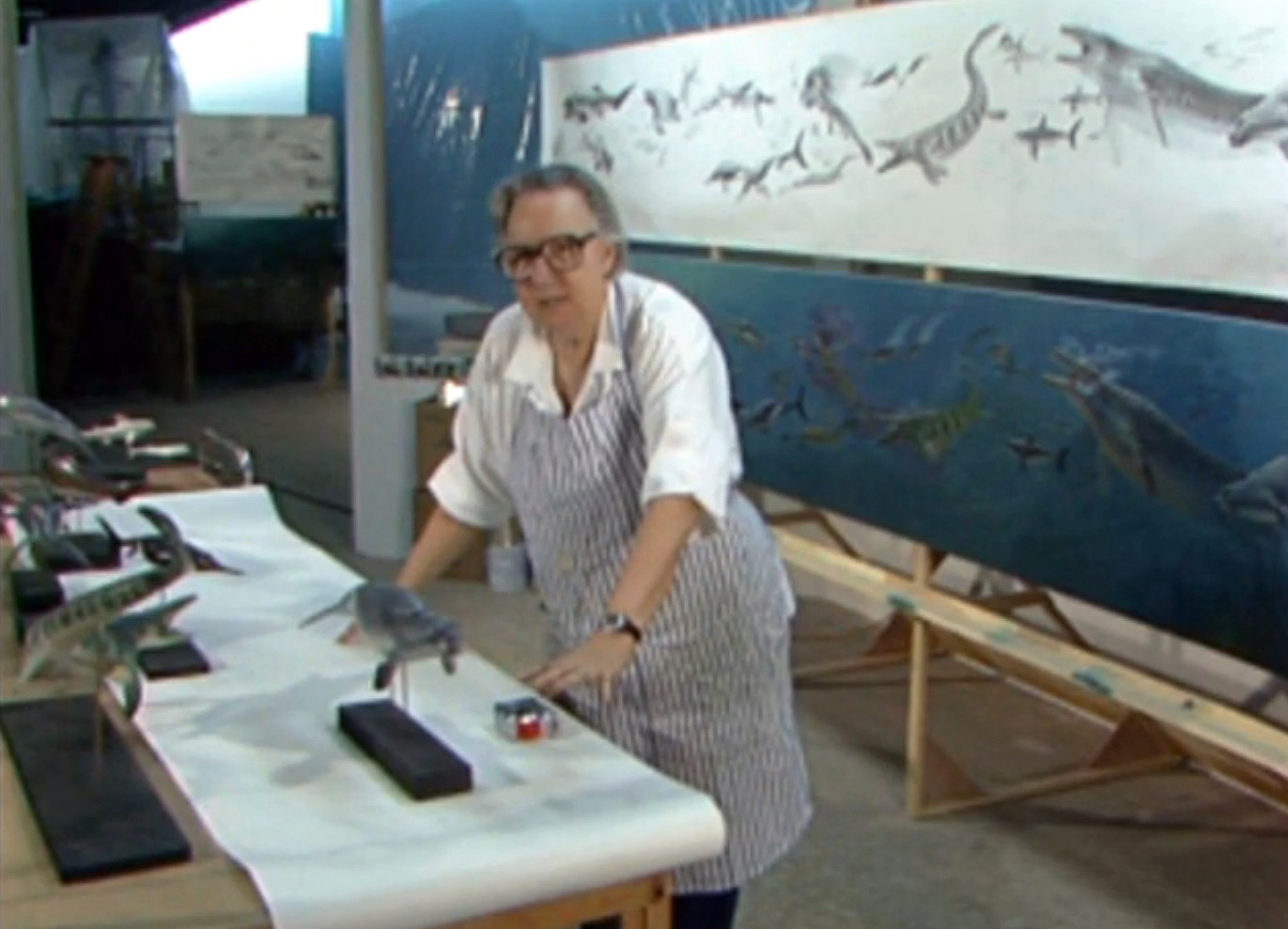
Kish with pencil sketch, color comprehensive, and models.

The artist with her models, pencil sketch, and color comprehensive. Courtesy of the Smithsonian Institution Archives.

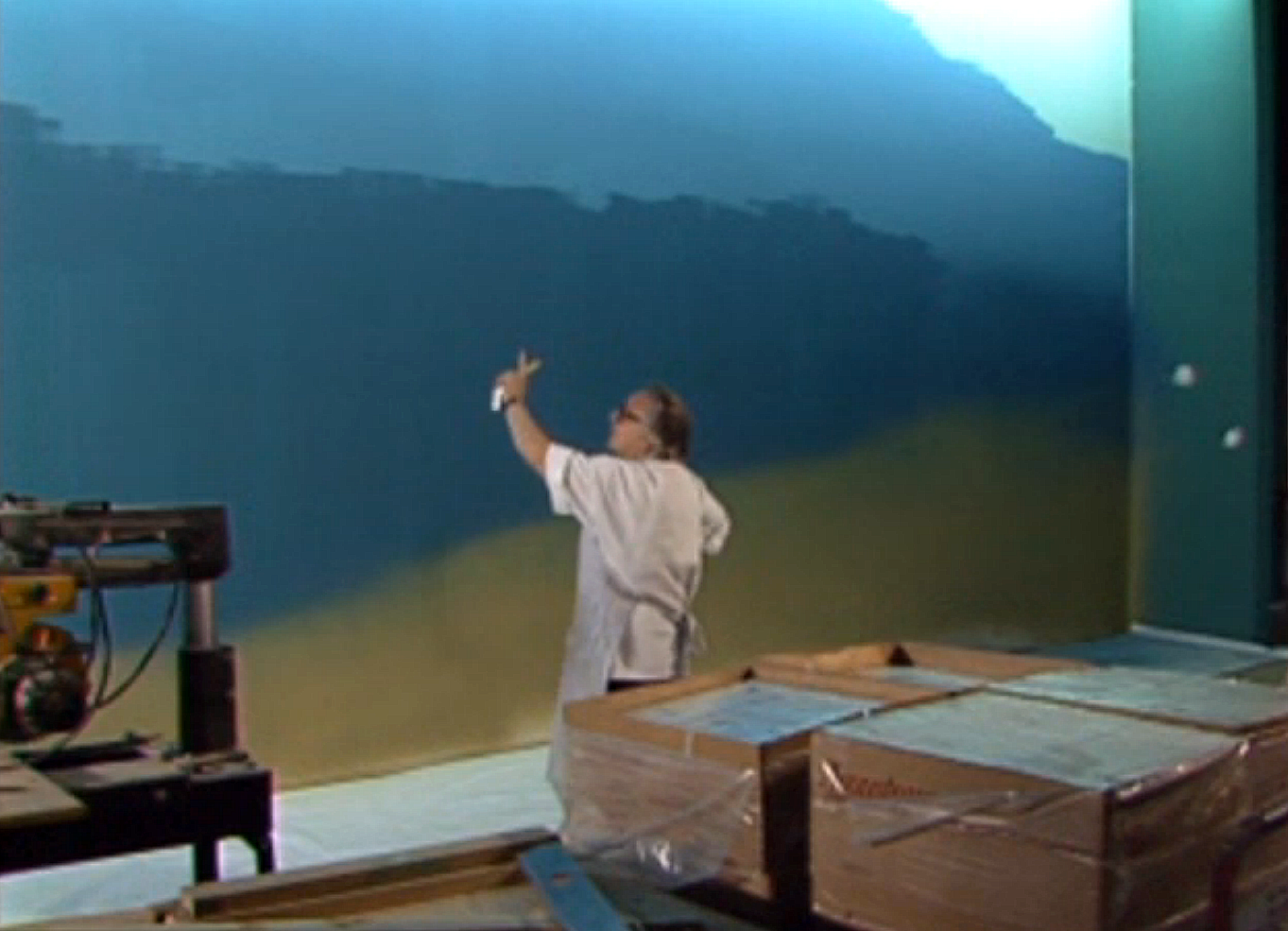
kish pretends to paint

Kish pretends to size up her canvas during a video shoot. Courtesy of the Smithsonian Institution Archives.

Once she received her work visa in May 1988, Kish moved to the Washington, DC area to begin Life in the Ancient Seas. She began by constructing small models of the most prominent animals that would appear in the mural. Working primarily with Sculptey, she built the animals’ skeletons first, using fossil photos as reference. Once these were approved, Kish sculpted the animals’ musculature and outer surfaces. She then used her models to paint a 16-foot small scale (1.5 inch to 1 foot) pencil sketch of the mural. This enabled her to work out the poses and behaviors of the animals, as well as the overall composition of the artwork. The next step was to produce the “color comprehensive”: a miniature painting with all the detail of the final piece. Since it would be impossible to photograph the entire mural within the narrow confines of Hall 5, this is the version that was reproduced for books, magazines, and postcards.

After fourteen months of preliminary work, Kish applied the first brushstrokes to the wall in the Spring of 1989. The museum’s graphics shop had prepared the surface well in advance, laying overlapping sheets of canvas onto drywall and carefully buffing out wrinkles and tears. Kish painted 130 feet of ocean backdrop for the main mural first, which took nearly two months. Next, Kish completed the smaller Cretaceous mural on the south side of the gallery, then moved on to the daunting task of filling in the large mural. She populated the scene chronologically, starting with the Paleozoic on the far left and moving forward through time. The exhibits department coordinated closely with Kish, so that the rest of the exhibit could be installed in her wake as each section of the mural was finished. The project took a total of two years to complete.

Art by Eleanor Kish. Copyright Smithsonian Institution.

The “small” 20-foot Mesozoic mural, which appeared on the south wall of Hall 5. Art by Eleanor Kish. Courtesy of the Smithsonian Institution.

Life in the Ancient Seas is an absolute masterpiece. Within the exhibit, this meticulously crafted image defines the space’s layout and color palate. It visually separates concepts and themes, and even directs visitor traffic with it’s strong leftward momentum. But Life in the Ancient Seas is the rare piece that was designed for a particular space, yet still holds up as a beautiful work of art on its own terms. The three biggest animals – Dunkleosteus, Tylosaurus, and Basilosaurus – anchor the action and provide a focal point for the viewer. From there, dynamic schools of fish draw the eye back and forth across the canvas. The longer one looks at this vibrant and colorful seascape, the more details emerge.

Of course, the primary function of the mural is to bring the static fossils on display to life, and Kish does not disappoint. The canvas is filled with hundreds of animals in perpetual motion. Streams of bubbles erupting from the creatures’ mouths imbue them with breath and energy. Although plenty of animals are being eaten, Life in the Ancient Seas is not a savage struggle of life and death. In one area, an inquisitive shark gets a face full of ink from a cephalopod that has no time for its antics. In another, a school of fish is sent careening in different directions by the powerfully swishing tail of the Tylosaurus. Instead of focusing on the macabre, Kish brilliantly incorporates whimsical humor into her work without plunging into the realm of cartoonishness. It is a feat that other paleoartists might do well to emulate. Meanwhile, Kish cleverly grounds some of the stranger extinct animals by juxtaposing them with their more familiar brethren. For example, the association of Basilosaurus, which resembles a fanciful sea dragon, with comparably mundane dugongs and dolphins makes this serpentine ancestral whale seem more plausible.

Art by Eleanor Kish. Copyright Smithsonian Institution.

The back lit cove where Miocene sea lions and penguins frolic is easily the most beautiful part of the mural. Art by Eleanor Kish. Courtesy of the Smithsonian Institution.

Life in the Ancient Seas was the largest project Kish ever took on. As she stated in multiple interviews, the Smithsonian commission made her career. The money she earned allowed her to buy a rural home in Ontario and convert it into a studio, which allowed her to produce more work more quickly. “I always wanted a studio,” she told the Ottawa Star,  “but I never had the money. The Smithsonian gave me that chunk of cash.”

Ely Kish passed away on October 12, 2014 at the age of 90. Those who knew her are quick to mention her kindness and generosity, particularly toward young artists. Past colleagues also fondly recall her impressive bouts of swearing, which would occasionally punctuate her normally soft-spoken demeanor. For the rest of us, we have Kish’s amazing artwork to remember her by. Kish created worlds we could otherwise never see, and she did it on a breathtaking scale. Although hers was a visual medium, she made the past into something we could feel and even experience. She and her talents will be missed.

Many thanks to the Smithsonian Institution Archives staff for providing access to the materials used in writing this article. 

References

Deck, L. 1992. The Art in Creating Life in the Ancient Seas. Journal of Natural Science Illustration 1: 4: 1-12.

Marsh, D.E. 2014. From Extinct Monsters to Deep Time: An ethnography of fossil exhibits production at the Smithsonian’s National Museum of Natural History. http://circle.ubc.ca/handle/2429/50177

10 Comments

Filed under exhibits, Extinct Monsters, fish, museums, NMNH, paleoart, reptiles

Revisting the Ancient Seas

Between 1981 and 1990, the National Museum of Natural History carried out its second major overhaul of the east wing paleontology exhibits. Entitled “Fossils: The History of Life”, the new exhibit complex represented a significant departure from earlier iterations of this space. While the previous renovation arranged specimens according to taxonomy and curatorial specialties, “The History of Life” followed the evolutionary progression of fossil plants and animals through time. The new exhibits also differed from prior efforts in that they were not put together exclusively by curators. Instead, the design process was led by educators and exhibits specialists, who sought curatorial input at all stages. The result was a (comparably) more relatable and approachable paleontology exhibit, created with the museum’s core audience of laypeople in mind.

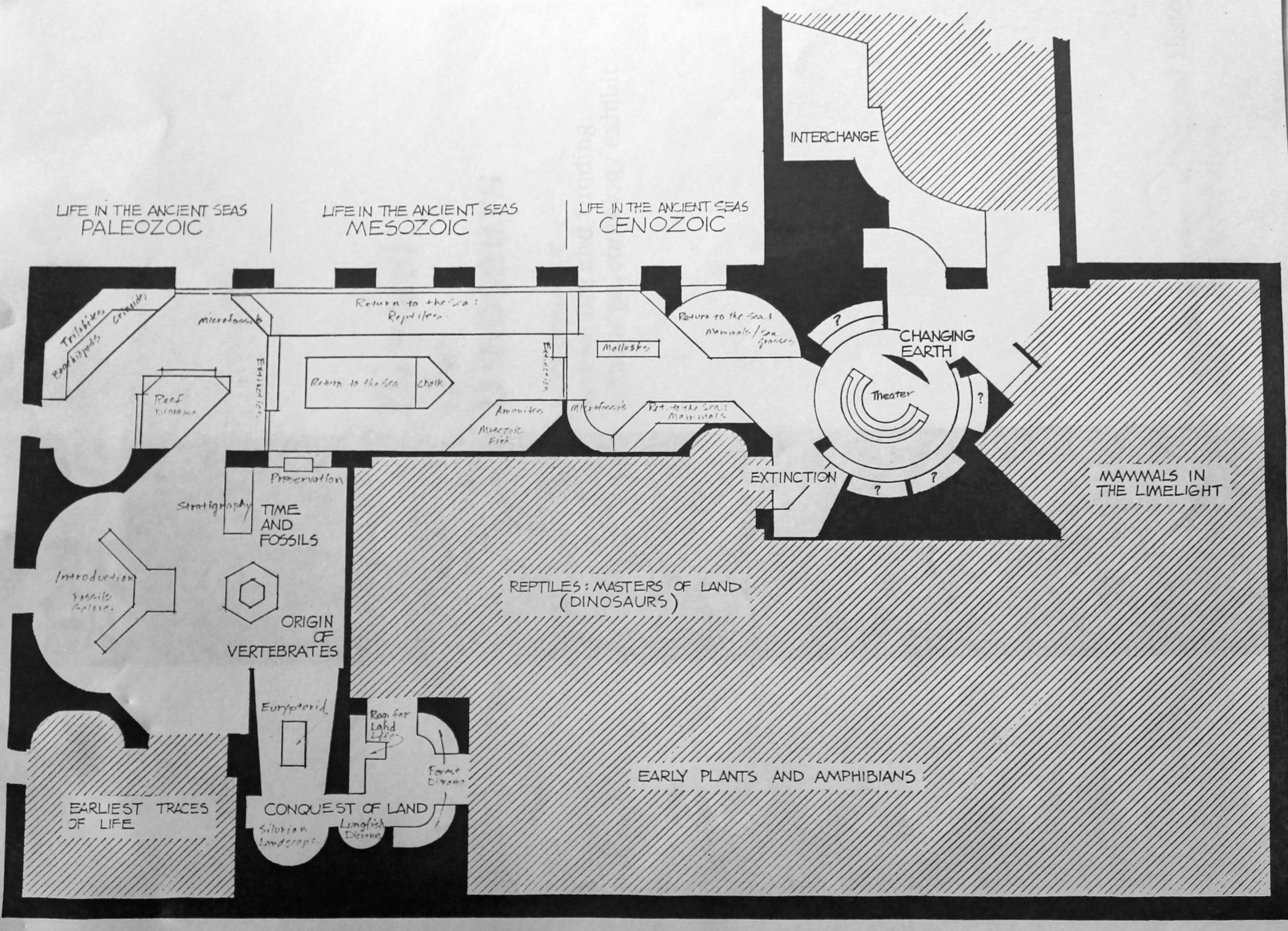
By 1987, four sections were completed: The Earliest Traces of Life, Conquest of the Land, Reptiles: Masters of the Land, and Mammals in the Limelight. Occupying halls 2, 3, and 4, these exhibits (along with the older Hall of Ice Age Mammals and the Rise of Man in Hall 6) told the complete story of the terrestrial fossil record. However, Hall 5 (the narrow space running parallel to the central dinosaur exhibit on its north side) was still vacant.

1987 map

1987 map of planned additions to the “History of Life” exhibit complex, including the never-realized Changing Earth. Courtesy of the Smithsonian Institution Archives.

Going back to the 1977 theme statement that kicked off the History of Life renovations, the intent was always for Hall 5 to feature two exhibits: one on prehistoric sea life and another on the geological context for the fossil record. These ideas were fleshed out in a 1987 briefing packet that was distributed to potential donors. As the document explained, “it is in the undersea realm that the history of life is most abundantly documented,” and coverage of fossil marine life is therefore “critical” to visitors’ understanding of evolution through deep time. From the beginning, the “Life in the Ancient Seas” exhibit promised to feature a life-sized diorama of a Permian reef community, mounted skeletons suspended in life-like swimming poses, and an immersive underwater ambiance. Meanwhile, the proposed “Changing Earth” exhibit would “illuminate the entire story [told in the fossil halls] by looking at the ways geological processes have affected the course of evolution over millions of years.” A key feature was a “video disc time machine”, which was essentially a computer terminal where artwork reconstructing different time periods could be viewed.

Changing Earth was ultimately never built. Instead, the allocated space became a windowed fossil preparation lab, which would prove to be one of the most popular exhibits in the History of Life complex. Nevertheless, many of the ideas planned for Changing Earth would be revisited in the Geology, Gems, and Minerals hall, which opened in 1997. Life in the Ancient Seas did get funding, however, and with a budget of approximately $4 million, production of the exhibit was underway by early 1988.

concept 1

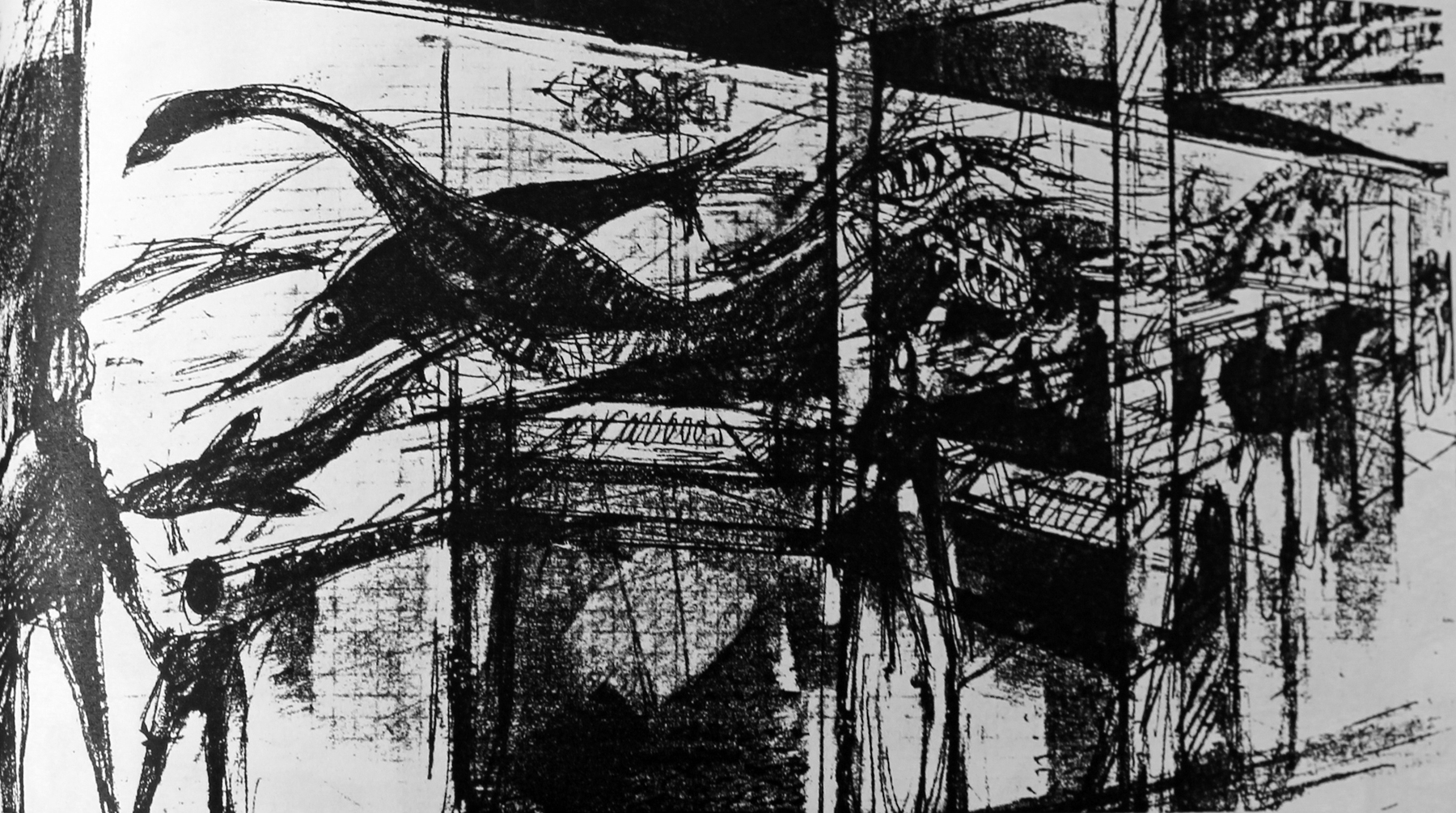
Life in the Ancient Seas concept art. Artist unknown. Courtesy of the Smithsonian Institution Archives.

concept 2

Life in the Ancient Seas concept art. Artist unknown. Courtesy of the Smithsonian Institution Archives.

As with any large exhibit, Life in the Ancient Seas was made possible through the combined efforts of dozens of talented scientists, artists, and technicians. Like the rest of the History of Life complex, the Department of Exhibits generally initiated and produced the content, which the Department of Paleobiology then revised or approved. Linda Deck was the content specialist, steering the ship throughout the planning and production process. She selected specimens, chose the major storylines, and acted as a bridge between the curators and exhibits staff. Li Bailey and Steve Makovenyi were the designers, overseeing the exhibit’s aesthetics and making sure it functioned as a cohesive whole. Sue Voss was the lead writer of label copy.

The hall’s design revolved around two main ideas, one aesthetic and one pedagogical. Visually, the exhibit needed to “simulate the perspective of a scuba diver” (Deck 1992). Makovenyi and Bailey gave the hall a blue-green color palate, with a low, black-tiled ceiling. Shimmering lights projected on the floor contributed to the illusion of traveling through the underwater world. Meanwhile, the layout of the hall adhered strictly to the chronology of geologic time. As visitors traversed the space, archways and glass barriers emphasized the conceptual divisions between the Paleozoic, Mesozoic, and Cenozoic eras.

Tylosaurus photo by the author

Tylosaurus and Hesperornis are classic NMNH mounts. Photo by the author.

Dolichorhynchops from Montana, mounted by Arnie Lewis. Photo by Chip Clark.

Dolichorhynchops from Montana, mounted by Arnie Lewis. Photo by Chip Clark.

Life in the Ancient Seas featured over 1,000 specimens, most of which were invertebrates like trilobites, brachiopods, ammonites, and bivalves. Early lists of vertebrates earmarked for display were (as is typical) much longer than the final selection of twelve mounted skeletons – a walrus and a baleen whale were among the casualties. A few of the mounts, like the  ancestral whale Basilosaurus (USNM V 4675) and the sea lizard Tylosaurus (USNM V 8898), had already been on display for decades and needed only modest touch-ups for the new exhibit. Most of the vertebrate skeletons, however, were brand new. The Dolichorhynchops (USNM PAL 419645) was collected in Montana in 1977, and acquired in a trade with the Denver Museum of Nature and Science. Arnie Lewis prepared and assembled the mount in 1987. A Eurhinodelphis dolphin (USNM PAL 24477) from Maryland was mounted by contractor Constance Barut Rankin. Her work was so impressive that she earned a full-time position for her trouble. The sea cow Metaxytherium (USNM PAL 244477) was a very late addition, having been excavated in Florida during the 1988 field season.

miocene

Miocene dolphin and sea cow. Photo by the author.

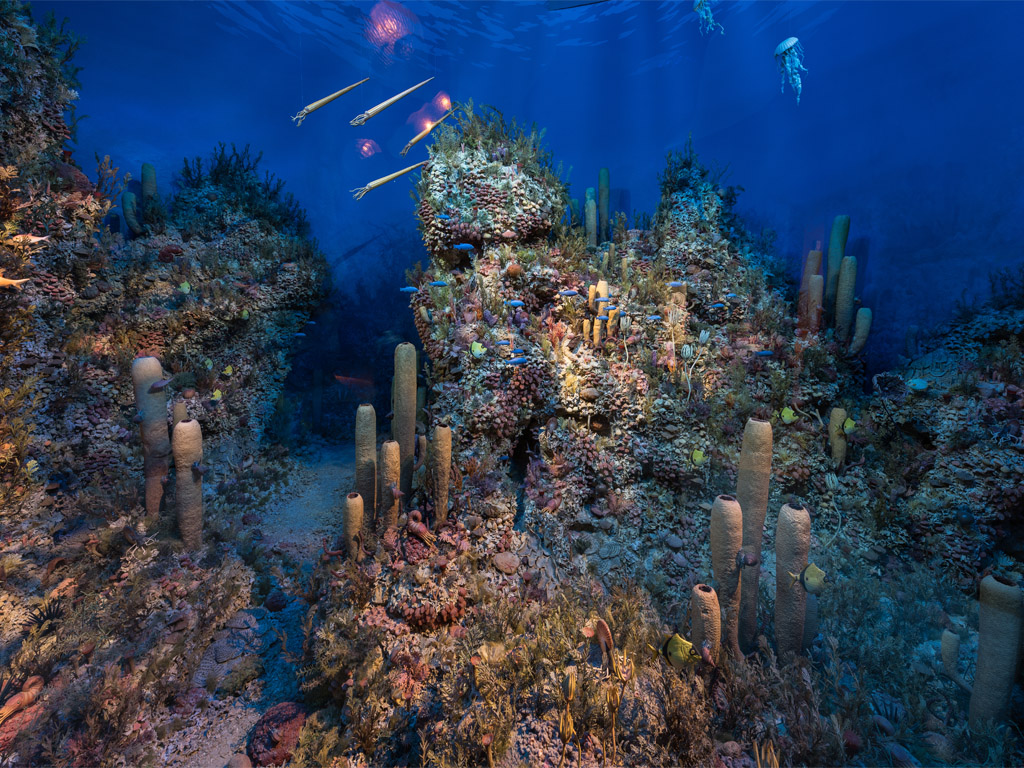
A variety of created objects joined the real specimens in telling the story of marine life through time. Model Hybodus sharks swam near the ceiling, and a realistic papier-mâché seabed extended the length of the exhibit beneath the mounted skeletons (little did visitors know this “seabed” was fragile enough to be punched through if it was ever stepped on). The exhibit team decided early on that Life in the Ancient Seas would include an 11-foot high, life-sized diorama of a Permian reef, based on the Glass Mountains deposits in Texas. Smithsonian paleontologist G. Arthur Cooper spent years collecting and publishing on the immaculate fossils found in this region, so a reconstruction of the Permian near-shore ecosystem was an obvious choice. What’s more, there was already a man lined up for the job. Terry Chase of Missouri-based Chase Studios (who would later go on to create Phoenix the whale) had already built a Permian reef for the Petroleum Museum in Midland, Texas, and most of the same molds and designs could be re-used. Still, the NMNH diorama was a massive undertaking, featuring 100,000 unique models – some hand-sculpted and some cast in translucent resin or wax.

Phillip Anderson experimented with a variety of materials to create the shimmering of sunlight shining through water that appeared in the diorama and at the exhibit’s two main entrances. As it turns out, nothing looks as good as actual light penetrating actual water. To accomplish the effect, Anderson rigged a piston cylinder to continuously produce waves in a shoebox-sized plexiglass container of water. A quartz light shone through the container and projected the pattern onto the floors and walls.

The Permian reef at the Midland Petroleum Museum. I stupidly never took a picture of the NMNH version.

The Permian reef at the Midland Petroleum Museum. I stupidly never took a picture of the NMNH version. Source

Life in the Ancient Seas opened in May 1990. In a Washington Post review, Hank Burchard raved about the ocean-themed design and especially Voss’s text, stating that “every museum text writer in town should study her style.” For the next 23 years, Life in the Ancient seas stood out as the gem among the east wing fossil exhibits. It was more colorful, easier to navigate, and generally more inviting than the other History of Life galleries. The theatrical label copy was arguably over the top (“Act One had been a bottom-dweller’s ballet, Act Two would be a swimmer’s spectacle”), but the exhibit as a whole plainly succeeded in presenting the story of evolution, adaptation, and extinction in an appealing and attractive way. Over the years, there were a few changes: the shimmering lights were shut off, a charming clay-mation video about the end-Cretaceous food chain collapse was removed, and the Dunkleosteus skull and Basilosaurus skeleton were relocated to the Ocean Hall (the latter was replaced with a cast of the related whale Zygorhiza). Indeed, the opening of the similarly-themed but far larger Ocean Hall in 2008 overshadowed Life in the Ancient Seas, and made many of its displays redundant. Although it was the best part of the History of Life complex, Life in the Ancient Seas was also the shortest lived. It was the last section to open, and in 2013, it was the first section to close.

Those familiar with the exhibit will have surely noticed that I have yet to discuss the beautiful 122-foot mural painted by Ely Kish. Running the entire length of the exhibit, this amazing artwork outclasses even the famous “Age of Reptiles” at the Yale Peabody Museum in terms of scale and number of subjects depicted. This monumental accomplishment will be the subject of the next post – stay tuned!

References

Burchard, H. 1990. Fossils Fuel Sea Journey. The Washington Posthttps://www.washingtonpost.com/archive/lifestyle/1990/05/25/fossils-fuel-sea-journey/d582f067-0745-44a0-90c8-248c1328962a/

Deck, L. 1992. The Art in Creating Life in the Ancient Seas. Journal of Natural Science Illustration 1: 4: 1-12.

Telfer, A. 2013. Goodbye to Life in the Ancient Seas Exhibit. Digging the Fossil Record: Paleobiology at the Smithsonianhttp://nmnh.typepad.com/smithsonian_fossils/2013/11/ancient-seas.html

3 Comments

Filed under exhibits, Extinct Monsters, fish, fossil mounts, mammals, museums, NMNH, reptiles

The Epistemological Challenge of Model Whales

The very nature of whales precludes scientific study of these incredible animals. They are enormous—strong and powerful in life and unwieldy to manipulate in death. They live in the open ocean, where they can only be reached by boat or plane. Living whales fare poorly in captivity, and dead whales rapidly deteriorate into an oily, reeking mess. If there was ever a natural specimen that does not lend itself to display in a museum, it would be a whale.

This is not for lack of trying. Museums have long sought to collect whales, both to complete their records of biodiversity and to show the visiting public the spectacular extremes of animal life. Success in this endeavor has always been mixed. The Natural History Museum of London has one of the best collections of real whales, including dolphins, porpoises, and a humpback (Megaptera novaeangliae) fetus pickled in bathtub-sized vats of alcohol. Larger whales*, however, can only be displayed as skeletons, which unfortunately misrepresent the shape of the living animal (and as many museums have learned the hard way, even whale bones stink and drip blubber for years after cleaning). Many taxidermists have attempted to preserve the skins of large whales over the years, but this has typically resulted in grotesque, short-lived failures**.

Casting in newfoundland

A Smithsonian team takes plaster molds from a blue whale caught by whalers in Newfoundland. Source

A museum is a place for real things, but what can museum workers do if a specimen is so irreconcilable with the practicalities of display? Throughout the 20th century, many museums have experimented with life-sized model whales. Vouched by scientists and based on photographs and measurements of actual whales, these models provided (and continue to provide) many visitors with the closest experience they will ever have to seeing a giant whale in person. However, to display a model is to raise key questions about authenticity. Constructed from papier-mâché, plaster, or fiberglass, a model whale lacks the flesh-and-blood reality of a true whale. Its legitimacy comes from a disassociated set of observations, and the perceived authority and expertise of the scientists who made them. The situation is complicated by the fact that we know remarkably little about living whales, and historical scientists knew even less. Model whales have never been intended to deceive audiences, but many could hardly be called accurate reconstructions today.

In the 19th century, the only people who had seen living whales up close were whalers—a group probably more concerned with staying alive than making careful anatomical observations. Scientists had to rely on occasional, all-too-brief surface sightings and the misshapen corpses of beached animals. While the situation has improved, we still know precious little about whales’ lives below the waves. Is it scientifically acceptable, or even ethical, to present a reconstruction of an animal based on such limited information? Let the epistemological nightmare begin!

*By large whales, I am referring primarily to mysticetes and the sperm whale (Physter macrocephalus).

**One notable exception is the juvenile blue whale at the Göteborg Natural History Museum in Sweden. Not only is this the only mounted mysticete in the world, it is the only whale to have an upholstered seating area inside. Once a destination for lovers’ trysts, the whale’s interior now hosts Santa Claus at Christmastime. 

Round 1: 1880 – 1938

First whale

This bisected humpback at the United States National Museum was the first large whale replica displayed at a major museum. Image courtesy of the Smithsonian Institution Archives.

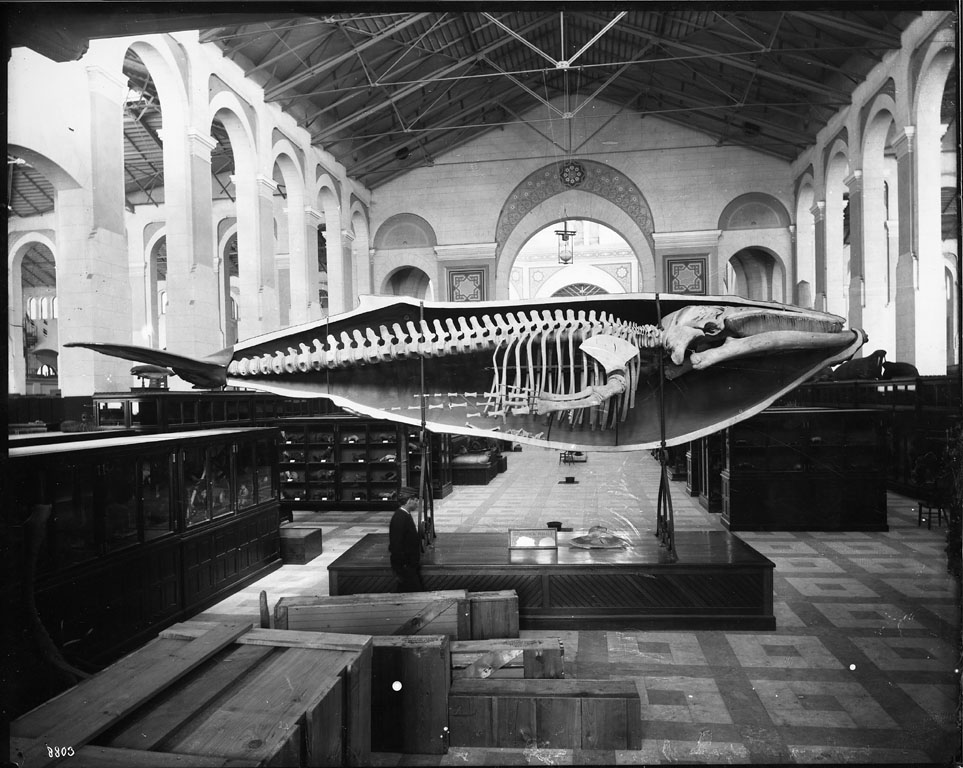
Spencer Baird, the Smithsonian’s first curator, was a marine biologist with a strong interest in cetaceans. He quickly made the Smithsonian a place for whales, assembling an impressive collection and hiring staff with similar research priorities. It is therefore no surprise that the first full-sized replica of a large whale would be built at the United States National Museum. In 1882, exhibit specialist Joseph Palmer mounted the skeleton of a humpback whale with its left side enclosed in a plaster death cast of the same individual. This display lasted until the early 20th century, when it was scrapped during the move from the Arts and Industries Building to what is now the National Museum of Natural History. In 1901, Ward’s Natural Science Establishment provided a similar half-mount of a sperm whale to the Bishop Museum in Honolulu.

However, museum workers soon set their sights on bigger whales—specifically, the largest animal the Earth has ever known. In 1903, Smithsonian Curator of Mammals Frederick True teamed up with Head of Exhibits Frederick Lucas to create the first scientifically informed life-sized model of a blue whale (Balaenoptera musculus). To accomplish this, the two Fredericks traveled to the Cabot Steam Whaling Company processing station in Newfoundland. At this point in time, whaling had progressed well beyond the rickety wooden ships described by Melville. It was a technologically sophisticated and ruthlessly efficient operation, largely conducted from floating meat factories armed with explosive harpoons. This period of industrialized whaling  drove many whale species to the brink of extinction. For their part, True and Lucas were convinced that they only had a few years left to observe a giant cetacean firsthand.

In the arts and industries building

After debuting at the St. Louis World’s fair, Lucas’s blue (or “sulphur-bottom”) whale found at home at USNM. Photo courtesy of the Smithsonian Institution Archives..

True and Lucas watched the whalers haul in several smaller blue whales before selecting a 78-foot, 70-ton behemoth as their subject. Once the whalers brought the dead animal into shallow water, the museum workers rode out in a dinghy to measure the whale and take plaster molds of its flank, flukes, and head. They worked continuously over two days, racing to beat the onset of decomposition. The resulting molds only represented half the animal, and were significantly distorted by the sagging and bloating of the carcass, but Lucas made do.

Following Carl Akeley’s general method for creating life-like taxidermy mounts, Lucas started by blocking out the whale’s basic dimensions with a steel and basswood frame. His team then used wood and wire mesh to further shape the boat-like model, and finished it with an outer layer of papier-mâché. It is unclear if Lucas was able to use any actual casts of the Newfoundland whale, or if he sculpted it freehand using the molds as reference. Most likely, it was a combination of the two. The colossal model was shipped by rail for its debut at the 1904 Louisiana Purchase Exposition in St. Louis (alongside a familiar Stegosaurus and Triceratops). Afterward, Lucas’s whale was displayed in the Arts and Industries Building, and later, in the west wing of the newly completed NMNH.

In 1906, the American Museum of Natural History started work on a blue whale of their own. Rather than measuring their own dead whale, the AMNH exhibits team led by F.C.A. Richardson (who also built the NMNH Stegosaurus) used measurements from True’s monograph, Whalebone Whales of the Western North Atlantic. In fact, the New York model ended up with virtually identical proportions to its Smithsonian predecessor, and was probably styled after the same Newfoundland carcass. Richardson ran into trouble when he couldn’t get his whale’s papier-mâché skin to hold up—it sagged against the wooden frame, making the model look emaciated. Richardson was eventually dismissed from the project, replaced by Roy Chapman Andrews (who would later lead the Central Asiatic Expeditions). At the time, neither Andrews nor anyone else working on the model had ever seen a whale in person. Still, the completed model was, by all contemporary accounts, just as convincing as the Smithsonian version.

source

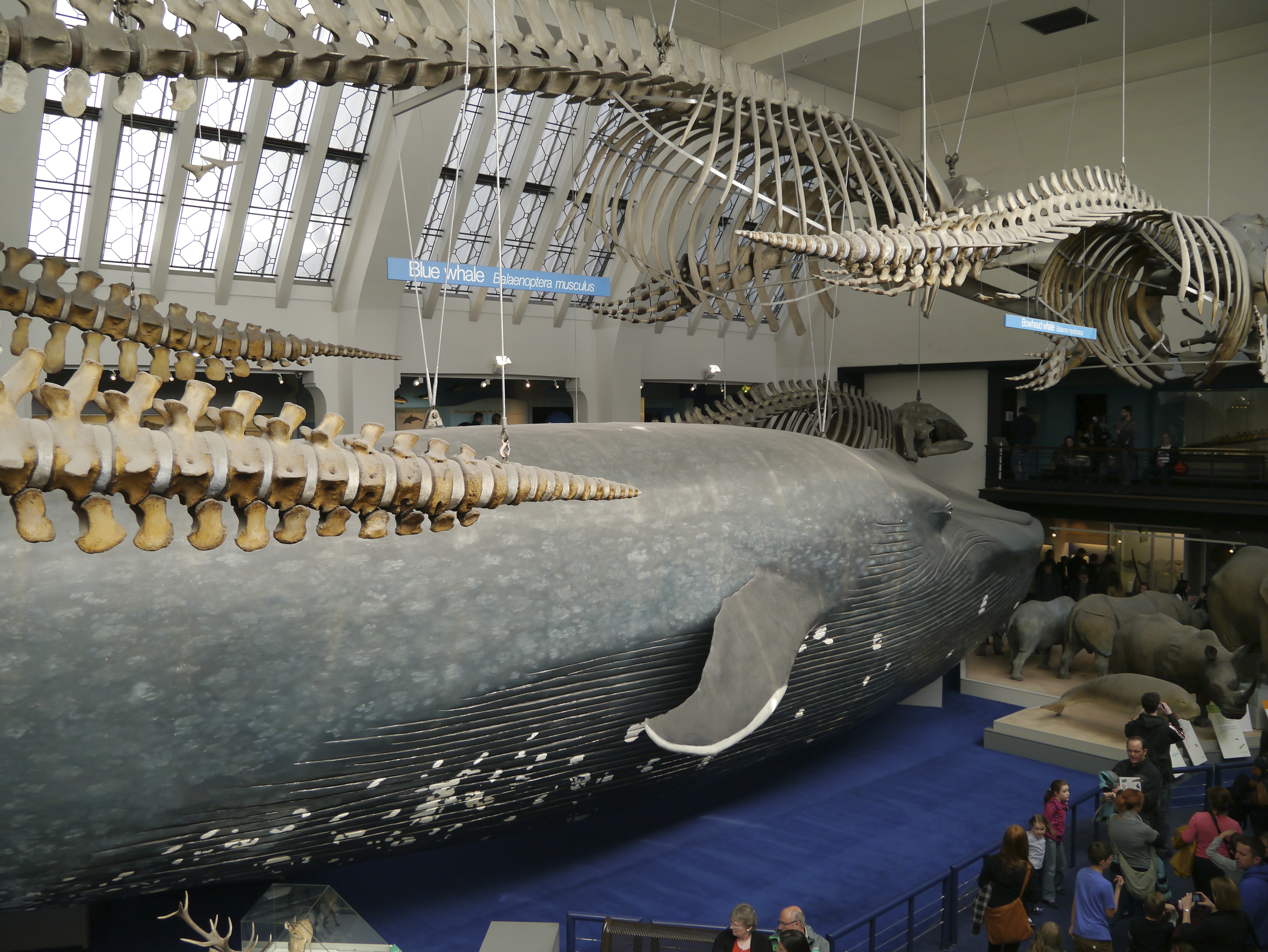
It seems there is nowhere in the NHM Hall of Mammals where one can see, much less photograph, the entire blue whale. Source

On the other side of the Atlantic, London NHM scientists scoffed at the Americans and their replica whales. Zoological Department head William Calman was particularly contemptuous, opining that natural history museums should only display real specimens. Apparently something changed in the decades that followed, because in 1937 NHM unveiled a wood-and-plaster blue whale model built by Percy Stammwitz. For some reason it is often claimed that the London cetacean was the first life-sized blue whale replica, which is plainly untrue. Nevertheless, at 92 feet and seven tons, it was the largest such exhibit when it debuted. It is also the oldest blue whale replica that is still on display today.

Round 2: 1963 – 1969

underthesea

The Smithsonian’s second blue whale model dominated the Life in the Sea exhibit. Photo courtesy of the Smithsonian Institution Archives.

Back in America, the NMNH and AMNH blue whales endured for several decades. Eventually, however, new cetacean research and new standards for museum displays made these first generation models obsolete. In the late 1950s, Frank Taylor initiated the Smithsonian-wide modernization program, which was to replace the institution’s aging exhibits. Early on the agenda was an update to the marine life exhibit, home to the 1904 blue whale. Designing the new hall was like pulling teeth, as intransigent curators refused to cooperate or furnish specimens for what they saw as a misguided endeavor*. Still, Taylor was able to commission a new, larger blue whale model to serve as the exhibit’s centerpiece.

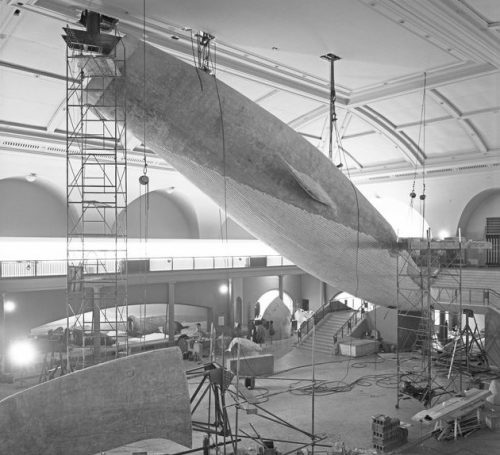
The first NMNH whale bore an unfortunate resemblance to a giant grey sausage**. True and Lucas based the proportions on a bloated and decomposing carcass, understandably missing some of the nuances of the animal’s form. Meanwhile, the model’s stiff posture and cylindrical shape were necessary given the structural limitations of the materials used in its construction. The 1963 model corrected both problems. Although photographs of living blue whales underwater were still a decade away, footage of grey whales (Eschrichtius robustus) at sea helped the model-makers imbue their creation with life. The model was given a gentle diving pose, and lightweight plastic and fiberglass helped make this more dynamic sculpture possible. With a total length of 94 feet, the new whale was painted a cheery light blue, with pale yellow spots. Two steel beams secured the model’s left side to the north wall of the gallery.

After several false starts, AMNH began serious work on a replacement for their own outdated sausage-whale in 1967. The new blue whale model would be the centerpiece of the long-delayed Hall of Ocean Life, now slated to open for the museum’s centennial in 1969. This firm deadline made an already challenging project even more stressful—by the end, Department of Mammology Chair Richard van Gelder had threatened to resign twice, and was nearly fired three times.

installing the amnh whale mk 2

The rig securing this 9-ton blue whale model to the ceiling is an engineering marvel. Photo courtesy of the AMNH Research Library.

To start, van Gelder was frustrated by the museum administrators’ firm insistence that the new whale not be suspended by wires (which they thought looked tacky). As a tongue-in-cheek counter-proposal, van Gelder suggested the museum construct a dead, beached whale splayed out on the floor. To his chagrin, the administrators loved the idea because it would be much cheaper. Gordon Reekie of the exhibits department began planning an immersive experience with the sounds of gulls and crashing surf. As legend has it, van Gelder successfully sabotaged the dead whale concept when he told a group of donors that the smell of the rotting carcass would also be simulated.

Lyle Barton eventually devised the final plan, in which the steel structure securing the whale to the ceiling would be hidden within the model’s arching back. Once van Gelder deflected a last-minute request to give the whale an open mouth (not only was this inaccurate, but it would tempt people to throw things into it), workers from StructoFab carved the model from huge blocks of polyurethane. Like Andrews before him, van Gelder had never seen a blue whale in person, but did his best to ensure the accuracy of the model—down to the 28 hairs on its chin.

One more headache remained: at nine tons, the completed model was heavier than anticipated. 600 pounds of paint had to be sanded off and reapplied with a lighter touch before the model met the recommendations of two independent teams of engineers. Still, Barton insisted on measuring the distance between the whale’s chin and the floor every day for several months, just in case.

Restoring the squid and the whale Source

“The Squid and the Whale” with its original paint job. Source

In addition to the blue whale, the Hall of Ocean Life debuted with a second model cetacean. This famous diorama depicts the head of a sperm whale as the animal wrestles with a giant squid (Architeuthis dux). When the model was built, nobody had ever seen a live giant squid, much less one battling the world’s largest predator. We know that sperm whales eat squid because squid parts are found in their bellies. Suction-cup scars on whales’ faces tell us the squid do not always do down without a fight. Still, the 1960s modelmakers had to guess at the appearance of the cephalopod. Even the sperm whale proved difficult to recreate: these animals appear light grey underwater but almost black on the surface, and curators argued how to paint the model. This was rendered moot when the diorama was placed in a nearly pitch-black environment, simulating the gloomy depths 23,000 feet under the sea. Barely visible in the darkness, this display is fantastically eerie. The fact that the event it represents has never been (and may never be) witnessed by human eyes makes it all the more unsettling.

*Curators objected to the planned exhibit’s interdisciplinary presentation, which would use specimens to make broader points about ecology, climate, and maritime history. They preferred displays that were divided by sub-discipline and which strictly adhered to taxonomic tradition.

**Counterintuitively, the awkward, stiff shape of the original NMNH blue whale actually made it more believable: many visitors thought they were looking at a real taxidermied whale gone slightly awry. One of the aims when designing a replacement was to reduce confusion by creating an object that was clearly artificial. 

Round 3: 2003 – Present

Blue whale model at AMNH. Photo by the author.

The restored AMNH blue whale in 2015. Photo by the author.

Sadly, not all of the historic cetacean models are still with us. The original NMNH blue whale was discarded in the early 1960s to make way for its replacement. AMNH saved its first whale in storage until 1973, when they offered it free of charge to anyone who could arrange for its removal from the building. When no serious offers were made, this model was also demolished (although the eyeball was sold during a fundraising event). The second NMNH blue whale eventually proved to be somewhat inaccurate: the throat was over-inflated and the coloration was all wrong. It was hidden from view for most of the 1990s, although its back was still visible over a blockade. In 2000, the west wing was converted into the Mammals Hall, and the construction contractor gained ownership of the unwanted whale. He briefly listed the model on eBay, but unfortunately the whale fell apart once it was pulled off the wall.

The International Whaling Commission banned the hunting of blue whales in 1966. Since that time, interest in conservation and improved technology have enhanced our understanding of these marine giants. While few blue whale behaviors have been observed, much less photographed, marine biologists know far more than they did half a century ago. Armed with better knowledge of blue whale anatomy, AMNH exhibits staff made several modifications to the 1969 model. In addition to a resculpted jawline and a relocated blowhole, the whale gained a navel and an anus (both details were overlooked the first time around). Finally, its slate gray skin, based on photographs of beached carcasses, was repainted in the vivid blue of a living whale.

Teh squid

Like the blue whale, the AMNH giant squid was remodeled and repainted in 2003 based on new information about this elusive creature’s shape and color. Photo by the author.

The roster of model cetaceans has seen several additions in recent decades. Among them are a gray whale built for the Monterey Bay Aquarium in 1984, and yet another blue whale displayed outside Tokyo’s National Museum of Nature and Science. One of the newest life-sized whale sculptures to grace museum halls is Phoenix, a North Atlantic right whale (Eubalaena glacialis) on display at NMNH since 2008. This model is special because it represents a real, individual animal that is alive in the ocean today.

Scientists at the New England Aquarium have tracked the real Phoenix (a.k.a. #1705) since her birth in 1987. She was selected for the NMNH model because her life history is well known, and because the ongoing study of this individual presents an opportunity to show science in action. An interdisciplinary group of researchers including Marilyn Marx, Amy Knowlton, Michael Moore, Jim Mead, and Charles Potter spent two years working out every detail of the model, down to the chin scars Phoenix got in a run-in with a fishing net. Missouri-based Elemoose Studios was commissioned to build the full-sized model. Because the historic space the whale was to be exhibited in could not support the weight of a traditional fiberglass model, modelmaker Terry Chase had to get creative. He designed an ultra-light aluminum frame, with a foam build-up and paper skin. The completed model is 45 feet long but weighs only 2,300 pounds.

fee

Phoenix floats majestically in the NMNH Ocean Hall. Source

A model whale will always be an imperfect substitute for reality. Early attempts were limited as much by available technology and materials as they were by an incomplete understanding of their living counterparts. Lucas and Andrews could scarcely dream of the light but strong urethane foam used to create the Phoenix replica. Nevertheless, model whales have become steadily more accurate with each generation, keeping pace with marine biologists’ improving access to whales in their natural habitat. With considerable effort, it is now even possible to exhibit a convincing duplicate of a living individual.

The advantage of a model whale is that it is much easier to observe than a real whale. Paradoxically, this is also what makes these exhibits so epistemologically challenging. Even for somebody fortunate enough to have seen a whale at sea, a museum model is a much more visceral and relatable encounter. Almost nobody has seen a living blue whale underwater, but millions see the AMNH model every year. For those people, this chunk of polyurethane IS a blue whale. It represents their understanding of the animal, and is how they make sense of any fleeting glimpses of real whales they may have seen. Creating a whale stand-in is therefore not only technically challenging for a museum, it is an immense responsibility.

References

Burnett, D.G. 2012. The Sounding of the Whale: Science and Cetaceans in the Twentieth Century. Chicago, IL: University of Chicago Press.

Hoare, P. 2010. The Whale: In Search of the Giants of the Sea. New York, NY: HarperCollins.

Quinn, S.C. 2006. Windows on Nature: The Great Habitat Dioramas of the American Museum of Natural History. New York, NY: Abrams.

Rader, K.A. and Cain, V.E.M. 2014. Life on Display: Revolutionizing U.S. Museums of Science and Natural History in the Twentieth Century. Chicago, IL: University of Chicago Press.

Rossi, M. 2008. Modeling the Unknown: How to Make a Perfect Whale. Endeavour 32: 2: 58-63.

Rossi, M. 2010. Fabricating Authenticity: Modeling a Whale at the American Museum of Natural History, 1906-1974. Isis 101: 2: 338-361.

Smithsonian Institution. 2008. Modeling Phoenix, Our North Atlantic Right Whale. http://naturalhistory.si.edu/exhibits/ocean_hall/whale_model.html

Smithsonian Institution. 2010. A Century of Whales at the Smithsonian Institution. http://naturalhistory.si.edu/onehundredyears/profiles/Whales_SI.html

Wallace, J.E. 2000. A Gathering of Wonders: Behind the Scenes at the American Museum of Natural History. New York, NY: St. Martin’s Press.

3 Comments

Filed under AMNH, exhibits, history of science, mammals, museums, NHM, NMNH

Envisioning the Ice Age at NMNH

neanderthal diorama

The neanderthal burial diorama. Image from Ice Age Mammals and the Age of Man, 1974.

On September 13, 1974, the Hall of Ice Age Mammals and the Rise of Man opened in Hall 6 at the National Museum of Natural History. Part of the “third wave” of NMNH exhibits, the Ice Age Hall was the result of interdisciplinary collaboration and a new drive to create more accessible, visitor-centric museum experiences. Specifically, the exhibit was a response to increasing pressure for museums to become destination attractions, valuing visitors’ desire to be entertained above anything else. The Ice Age Hall was meant to prove that good science and the intrinsic value of specimens could, in fact, be applied in a way that would appeal to contemporary audiences. The curators, designers, educators, and artists involved with the project saw it as an important departure from old methodologies, and expected it to be a template for future exhibits. This transition did not necessarily come easily, but for 40 years the results spoke for themselves.

The Hall of Quaternary Vertebrates

wegegeg

Large fossil mounts in the short-lived Pleistocene Hall. Images courtesy of the Smithsonian Institution Archives.

Despite the fanfare accompanying the Ice Age Hall’s opening, NMNH regulars would be forgiven for noticing that much of the exhibit looked familiar. Just four years earlier, this same space saw the opening of the brand-new Hall of Quaternary Vertebrates. This was the fifth and final phase of a thorough re-imagining of the museum’s fossil displays that began in 1959. Under the guidance of exhibit designer Ann Karras, the loose arrangement of specimens that had characterized the east wing for half a century was replaced with a directed narrative of the biological and geological history of the Earth.

This new direction was motivated by complementary revolutions in the museum field and in paleontology. Museum workers shrugged off their “cabinet of curiosity” roots and embraced education-oriented exhibits. Designers began to envision the routes visitors would travel through an exhibit space, and consider how objects on display could contribute to holistic stories. Meanwhile, paleontologists moved their field away from purely descriptive natural history, exploring instead how the fossil record could inform our understanding of evolution and ecology. At NMNH, this change in ideology inspired paleontologists to break away from the Geology Department and form their own Department of Paleobiology. The common thread between both transitions was a focus on connections – bringing new meaning and relevance to disparate parts by placing them in a common narrative.

Piano wire barely visible. Photo from Marsh 2014.

Two dire wolves posed over a horse. This display didn’t make it into the Ice Age Hall. Source

As Curator of Paleontology, C.L. Gazin oversaw most of the east wing modernization and designed the Tertiary Mammals exhibit in Hall 4 himself. Gazin retired in 1970, however, so responsibility for the unfinished Quaternary exhibit in Hall 6 went to new hire Clayton Ray, the Assistant Curator of Cenozoic Mammals. To fill out the Quaternary Hall, Ray arranged a number of trades with other museums. The Natural History Museum of Los Angeles County provided a saber toothed cat, two dire wolves, and the sheep-sized sloth Paramylodon (USNM 15164) from the La Brea tar pits, while the American Museum of Natural History was able to spare a bison “mummy” (USNM 26387) and a taxidermied musk ox. Ray also selected a complete set of mammoth bones from the AMNH collections, which were found during a gold mining operation near Fairbanks, Alaska. The bones were collected individually and belonged to an unknown number of individuals (they may well represent multiple species), but they were sufficient for preparator Leroy Glenn to construct a complete mounted skeleton.

Ray placed the new mammoth (USNM 23792) alongside the Indiana mastodon (USNM 8204), which had been on display since 1904. The mammoth was so tall that it had less than an inch of clearance with the ceiling. The other big draw in  the Quaternary Hall was a pair of never-before-exhibited giant sloths (USNM 20867 and USNM 20872) assembled from material Gazin collected in Panama. Referred to as “megatheres” at the time, these sloths are actually Eremotherium, and they are composites of at least eight individuals. The giant sloths were positioned back-to-back on a central platform, accentuated by an illuminated opening in the ceiling. All four giant mammal skeletons were supplemented with 1/5th scale life restorations created by staff artist Vernon Rickman. Exhibits specialist Lucius Lomax came up with the idea to display the fossil mounts behind piano wire, stretched from the floor to the ceiling and arranged in rows. The Eremotherium platform alone required 500 strands – or about 6000 feet – of wire.

A New Vision

Chimera mammoth

The composite mammoth looms over other specimens along the right wall of the Ice Age Hall. Photo by the author.

Neither NMNH staff nor museum visitors were overjoyed with the Quaternary Hall as it stood in 1970. The piano wire Lomax had installed was a frequent cause for complaint: visitors would constantly pluck at the strings and occasionally break them. The wires also ruined photos. Automatic lenses would focus on the wire, so when visitors got their vacation pictures developed they would end up with a bunch of images of vertical strands with darkness beyond them. Nevertheless, the piano wire was really just a scapegoat for deep-seated disagreements over content between paleontology curators and exhibit designers. This apparently unsolvable clash of personalities contributed to the hall being closed indefinitely after just a couple years.

Paleontologist Porter Kier became Director of NMNH in 1973, and one of his first moves was to assemble a new team to reinvent the Quaternary Hall. Paleobotanist Leo Hickey, geologists Robert Emery and Thomas Simkin, and anthropologist William Fitzhugh conceived of an interdisciplinary exhibit that would explore the ice ages from multiple perspectives. Continental glaciation, the evolution and extinction of large mammals, and the rise of humans would all be presented in a single, holistic story. In what was at the time a novel development, the curators worked with Elaine Anderson and other “conceptualizers/writers” from the Office of Exhibits. The scientists conceived of the main ideas and ensured factual accuracy, but the Office of Exhibits ultimately wrote the label copy and oversaw the construction of the exhibition.

arch section

A statue of an archaeologist at work was a popular part of the exhibit. Image from Ice Age Mammals and the Emergence of Man, 1974.

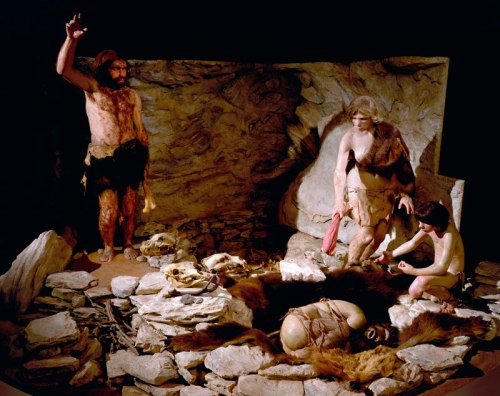
To accommodate new content, the existing Quaternary Hall layout had to be completely gutted and replaced. Although Clayton Ray was conspicuously absent from the exhibit team, most of the modern and fossil animal specimens he had gathered were reused in different locations. The center of the exhibit became an enclosed theater with a video presentation about the advance and retreat of North American glaciers. The north end of the hall was overtaken by human evolution displays. Replica skulls and full-body illustrations showed the progression of hominids from australopithicines to modern humans, amusingly represented by a hippie. Vernon Rickman returned to create a life-sized diorama depicting a neanderthal burial ceremony. While directly based on excavations at Regourdou Cave in France, the scene was also inspired by the much-publicized Shanidar Cave site in Iraq, where neanderthals allegedly laid their dead to rest on a bed of freshly picked flowers. Finally, a cast of an engraved mammoth tusk, based on a 25,000 year old original from the Czech Republic, was added to the south entrance. This piece was meant to tie the exhibit’s narrative together, symbolizing “man’s emergence in the ice age as a dominant influence on other animals and his environment” (Ice Age Mammals and the Emergence of Man, 1974).

Vernon Rickman works on neanderthal models in 1973. Image Courtesy of the Smithsonian Institution archives.

Vernon Rickman works on neanderthal models in 1973. Image courtesy of the Smithsonian Institution Archives.

The Ice Age Hall was completed remarkably quickly. Kier pulled the team together in early 1974 and the new displays were designed, written, and fabricated by September. At least internally, a great deal of excitement accompanied the reopening of Hall 6. The Ice Age Hall was a serious departure from how exhibit work had traditionally been done at NMNH, but it also represented an attempt by the museum to stand its ground in the face of pressure to delve into “edutainment.” This was a trial run at developing a visitor-focused but science-driven exhibit, and everyone involved was anxious to see how the public would react.

Legacy of the Exhibit

Eremotherium today. Photo by the author.

Few visitors can help but stop in their tracks at the sight of the Eremotherium pair. Photo by the author.

In 1978, Robert Wolf and Barbara Tymitz published a “naturalistic/responsive” evaluation of the Ice Age Hall. Their groundbreaking and oft-cited methodology involved interviewing visitors and surreptitiously tracking them through the gallery space, seeking to understand how museumgoers were using and interpreting the “complex set of stimuli” presented by the exhibit. This document, and especially the taxonomy of visitor types it describes, may well have influenced the museum field more than the Ice Age Hall itself.

According to Wolf and Tymitz, the Ice Age Hall was largely successful. Visitors generally remembered the major topics under discussion, and frequently left more curious about natural history than when they entered. They also noticed the difference in layout from the rest of the museum, describing it as easier to navigate and understand. Not surprisingly, the mammoth, mastodon, Eremotherium, and neanderthal burial were the most popular and most photographed objects. In comparison, the carved mammoth tusk at the front of the hall recieved surprisingly little attention. This object was intended to be tie the entire exhibit together, but most people ignored it entirely. Likewise, the separation of North and South American animals via an architectural “land bridge” was completely lost on visitors. Wolf and Tymitz observed that visitors entering from the south paid more attention to the fossil mounts, while visitors entering from the north were drawn to the glacier theater. A lesson about the importance of sight lines and traffic flow lies therein.

La brea mounts. Photo by the author.

Paramylodon and Smilodon from the La Brea tar pits. Take a good look at the sloth, because it won’t be returning in 2019. Photo by the author.

After 40 years, not every element of the Hall of Ice Age Mammals and the Emergence of Man aged gracefully. Most obviously, the androcentric title and frequent use of the word “man” to describe humans throughout the label copy comes across as painfully dated. Displays that warned of another period of global cooling were removed (or at least stopped being lit) when anthropogenic warming emerged as a crucial public policy concern. The multimedia demonstration of continental glaciation was shut down by the early 2000s, and the human evolution corner was boarded up once the Hall of Human Origins opened in 2010. While the neanderthal diorama remained on display, recent research has shown that the affectionate burial it depicts is probably a misinterpretation. Ironically, the gradual removal of geology and anthropology components effectively turned the Ice Age Hall into the straightforward menagerie of Pleistocene animals that Ray initially envisioned.

The Ice Age Hall closed along with the rest of the NMNH fossil displays in April 2014. When the east wing reopens, many of the specimens will return restored and remounted, but in a different location. Since the new National Fossil Hall will be arranged in reverse chronological order, Hall 6 itself will house displays on the origins of life and an expanded FossiLab. Still, the Ice Age Hall experiment continues to leave its mark on the museum. The collaborative workflow and sharing of responsibilities between curators, educators, and exhibit specialists pioneered in the development of this exhibit remains standard practice today. The result has been ever more effective displays, providing solid scientific content to the widest possible audience.

References

Eschelman, R.E., Emry, R.J., Domning, D.P. and Bohaska, D.J. (2002). Biography and Bibliography of Clayton Edward Ray. Cenozoic Mammals of Land and Sea: Tributes to the Career of Clayon E. Ray. Emry, R.J., ed. Washington, DC: Smithsonian Contributions to Paleobiology.

Lay, M. (2013). Major Activities of the Division of Vertebrate Paleontology During the 1960s. http://paleobiology.si.edu/history/lay1960s.html

Marsh, D.E. (2014). From Extinct Monsters to Deep Time: An ethnography of fossil exhibits production at the Smithsonian’s National Museum of Natural History. http://circle.ubc.ca/handle/2429/50177

Sepkoski, D. (2012). Rereading the Fossil Record: The Growth of Paleobiology as an Evolutionary Discipline. Chicago, IL: The University of Chicago Press.

Smithsonian Institution. (1974). Ice Age Mammals and the Emergence of Man. Washington, DC: Elephant Press.

Wolf, R.L. and Tymitz, B.L. (1978). Whatever Happened to the Giant Wombat: An Investigation of the Impact of the Ice Age Mammals and the Emergence of Man Exhibit. Washington, DC: Smithsonian Institution.

Yochelson, E. (1985). The National Museum of Natural History: 75 Years in the Natural History Building. Washington, DC: Smithsonian Institution.

4 Comments

Filed under anthropology, education, exhibits, Extinct Monsters, fossil mounts, history of science, mammals, museums, NMNH, science communication

The Nation’s T. rex Revealed

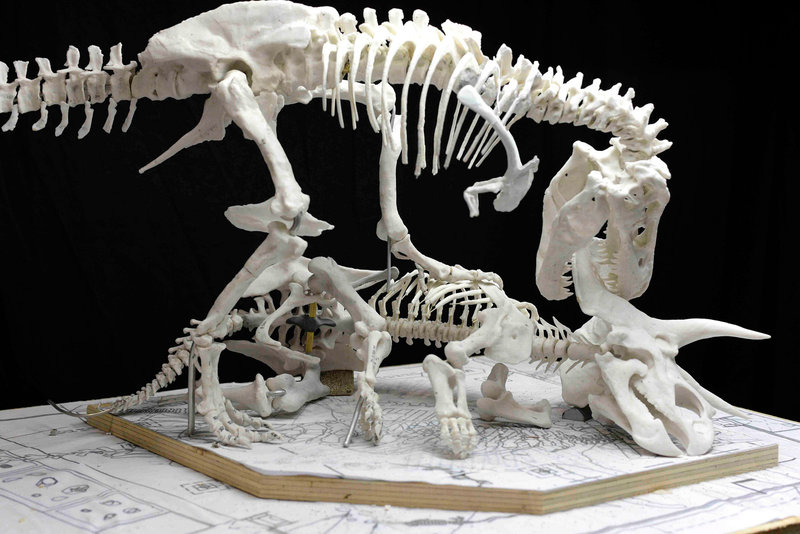
The Nation's T. rex was temporarily assembled in the RCI workshop for inspection by Smithsonian staff. Source

The Nation’s T. rex was temporarily assembled in the RCI workshop for inspection by Smithsonian staff. Source

Yesterday, a press embargo lifted and the world got it’s first look at the pose the Nation’s T. rex will assume in the new fossil hall at the National Museum of Natural History. I don’t have much to add to the solid coverage at The Washington Post, NPR, and Smithsonian Magazine except holy crap, that’s awesome.

The photo above (by Nikki Kahn of The Washington Post) was taken when Smithsonian staff visited the Research Casting International workshop to inspect the mount’s progress. Located outside of Toronto, RCI is the industry leader in the art of creating mounted fossil skeletons, and their work is on display in museums all over the world. The Nation’s T. rex is one of 52 mounts the company will create for NMNH over the next three years.

Dr. Carrano gestures toward the awesomeness behind him.

Dr. Carrano gestures toward the awesomeness behind him. Source

The Nation’s T. rex (also known as Wankel Rex) is new to NMNH, but it is not a new specimen. It was discovered by Montana rancher Kathy Wankel in 1988 on land owned by the Army Corps of Engineers. The skeleton, which was for a time the most complete Tyrannosaurus known, was held in trust at the Museum of the Rockies until last April, when the Corps loaned the specimen to the Smithsonian for the next 50 years. This is the first time the original fossils have been displayed in a standing mount, but RCI has been producing casts of the specimen for years. Examples can be seen at the Great North Museum, the Royal Ontario Museum, the Perot Museum of Nature and Science, and even the Google Campus.

The Smithsonian team inspecting every inch of the 2,000 pound mount included Curator of Dinosauria Matt Carrano, Exhibit Project Manager Siobhan Starrs, and Preparator Steve Jabo. The violent scene, with the Tyrannosaurus preparing to decapitate its Triceratops prey, was first suggested by Carrano over two years ago. The inspiration came from research by Denver Fowler and colleagues, which proposed that Tyrannosaurus regularly dismembered Triceratops by pulling the head off by the frill. The dynamic pose sets the Nation’s T. rex apart from the more “regal” stances other museums have chosen for their Tyrannosaurus mounts, and also reminds visitors that this animal was a living, acting being within its environment.

A 3-D printed model of the skeleton was used to plan the pose. Source

The exhibit team used a 3-D printed model of the skeleton to plan the pose. Source

The tyrant king’s prey is none other than a cast of Hatcher, NMNH’s resident Triceratops. This composite skeleton was the first mounted Triceratops ever exhibited, and it has been on display in one form or another since 1905. An updated reproduction of Hatcher can be seen right now in The Last American Dinosaurs, but apparently this will be its last hurrah. As Carrano put it, “Hatcher’s done its duty.” Even relegated to the role of food, however, Hatcher is still an impressive beast. The skeleton is nearly as long as the Nation’s T. rex, and noticeably bigger than the Triceratops mounts at other major U.S. museums.

Hatcher Photo by the author.

Poor Hatcher knows nothing of his imminent demise at the claws of a 38-foot murderbird. Photo by the author.

The NMNH team had a few notes for RCI, both for the sake of accuracy and the sake of the exhibit. Carrano requested that the fibula be rotated slightly, while Starrs emphasized that the tail should be at least 10 feet off the ground, to prevent over-enthusiastic visitors from grabbing at it. The workshop visit was also an opportunity to explore how the mount would look among the other denizens of the National Fossil Hall. Hatcher and the Nation’s T. rex will be sharing space on the Creataceous platform with Edmontosaurus, Thescelosaurus, and the crocodile relative Champsosaurus, among others. Working out dynamic poses that also keep key lines of sight open is no easy task, and the gallery space needs to be planned down to the inch.

As is now industry standard, RCI’s armature is made up of intricate steel cradles that are custom fitted to hold each of the 150 real fossils in place. Unlike many historic mounts, no holes have been drilled in the bones and none of the delicate fossils are supporting the structure’s weight. Most bones can be removed individually, and with the right equipment, the entire mount can be assembled in just a few hours. As such, we can rest assured that this display will not only be incredibly cool, but the authentic 66 million-year-old fossils will be as safe as they could possibly be while on view for 7 million visitors per year.

5 Comments

Filed under dinosaurs, exhibits, fossil mounts, marginocephalians, museums, NMNH, theropods

See the Elephant

Fenykovi elephant at the National Museum of Natural History, September 2014. Photo by the author.

National Museum of Natural History rotunda, September 2014. Photo by the author.

The iconic Fénykövi elephant, the centerpiece of the National Museum of Natural History rotunda since 1959, received an update last week in the form of a new interpretive platform. Like the Barosaurus at the American Museum of Natural History and Máximo at the Field Museum, this African bush elephant is the first object most NMNH visitors see upon entering. With its ears forward and its trunk raised, the elephant stands over 13 feet tall—larger than any elephant known to be living today. But in spite of its inspiring presence as the symbol of the museum, this elephant has a problematic history that NMNH has long struggled to interpret.

Hungarian-born Josef J. Fénykövi shot the elephant in Angola in 1955. Fénykövi owned a ranch in the west African nation (at the time a Portuguese colony), where he spent several months each year hunting wildlife. After discovering the existence of an unusually large bull elephant in 1954, Fénykövi returned the following year equipped to track and kill what was thought to be the biggest land animal on the planet. Fénykövi and his team of guides located the giant elephant on November 13th, and eventually downed it after a full-day chase*. A truck filled with salt was required to keep the hide fresh during the hundred-mile journey from the kill site to the nearest train station in Kuito. Rather than keep the trophy for himself, Fénykövi decided to donate the animal to a museum. He offered it to the London Natural History Museum first, but the process was taking too long for his taste so he gave the elephant to the Smithsonian, instead. Later, an old-fashioned slug from a flintlock pistol found embedded in the elephant’s leg provided reason to believe the animal had been nearly 100 years old when Fénykövi killed it.

*Fénykövi’s account gives the impression that the guides did most of the work. They tracked the elephant’s prints and spoor on foot while Fénykövi followed in a jeep, and a man named Mario fired the shots that actually finished off the animal. 

The acquisition and subsequent exhibition of the Fénykövi elephant at NMNH gives us a great deal to unpack. The collection of animals for public display has fallen sharply out of favor over the past century. In the late 1800s, little worlds behind glass populated by taxidermy animals provided the increasingly urban public a window into the natural world they felt they had left behind. But even in Fénykövi’s day, popular opinion was beginning to turn against the practice. For most, this aversion to taxidermy begins and ends with the unpleasantness of being confronted with a dead animal. Some scholars rightly call attention to the imperialism and exoticism inherent in collecting animals from far-flung lands. This criticism is especially apt for Fénykövihis story contains more than a whiff of imperialist entitlement.

Fénykövi Elephant in the 1960s. Photo courtesy of the Smithsonian Institution Archives.

The Fénykövi Elephant in the 1960s. Photo courtesy of the Smithsonian Institution Archives..

The fact that the elephant was killed as a trophy complicates matters still further. It’s one thing for a museum to display an animal that was sacrificed for science—to better understand its biology or to contribute to a record of biodiversity. Displaying a trophy is quite another. While a typical museum taxidermy display represents the life of an animal, a trophy mount celebrates that animal’s death. As Poliquin explains, “trophies arouse negative reactions not simply because they are evidence that a human killed an animal…they are evidence of a human’s desire to kill an animal” (Poliquin 2010, 152). Indeed, it is arguably impossible to fully separate a trophy mount from the narrative of the creature’s demise.

For Fénykövi, the meaning of the elephant is obvious. It represented a specific, triumphant event in his life, an attempt to communicate something about himself through the death of animal. NMNH staff have faced the much greater challenge of interpreting Fénykövi’s trophy for the millions of visitors that enter the rotunda every year. For 60 years, they have struggled to present this animal, selfishly killed by a wealthy colonial, in a way that matched the museum’s conservation-oriented mission.

The elephant’s original context unfortunately left something to be desired. The traditional, circular pedestal in the center of the NMNH rotunda did not effectively distance the specimen from it’s origin as a trophy, and the museum was occasionally criticized for complicity with big-game hunting and the colonial agenda. Nevertheless, the elephant did eventually earn an identity as a symbol for the museum, largely separate from the man who killed it. Credit for this accomplishment goes to William Brown and Norman Deaton, who prepared and mounted the hide over sixteen months. Brown and Deaton managed to imbue this dead skin over a wood-and-plaster frame with an astonishing amount of life and character. The elephant holds court in the four-story rotunda, exuding confidence and power over its domain. It’s an unforgettable sight, and it almost makes one forget that this animal is only there because it lost a fight.

Words Source

The 1999 habitat diorama platform—my favorite iteration. Source

Still, it was clear by the 1990s that while the elephant was there to stay, it needed to be more thoughtfully contextualized. In 1999, NMNH replaced the old pedestal with a large, open diorama of the Angolan savanna, which brought the elephant three feet higher off the ground. The project was completed entirely by in-house staff, and was funded in part by a donation from Kenneth Behring (a big-game hunter, among other things). In the revised display, the elephant was the focal point of a story that encompassed every department at the museum. A jackal and an assortment of birds (a lilac-breasted roller, a carmine bee eater, and a white-backed vulture) joined the elephant on the platform, while Angolan grasses and trees completed the scene. Ants, flies, and dung beetles (pushing dung balls cast from examples collected at the National Zoo) abounded. A tin can implied to have been tied to a tree by a local herder represented Anthropology, and bones of the extinct proboscidian Palaeoloxodon recki covered Paleobiology. In short, this display elegantly introduced visitors to everything the museum has to offer, while reinforcing the breadth and significance of natural history collections.

The elephant’s platform has now been rebuilt once again. The elephant stands at the same height and at the same angle, but the footprint of the base has been cut back significantly. The savanna diorama is gone, replaced with a straight-edged marble pedestal. Light and dark marble stripes reflect the rotunda’s classic architecture, particularly the columns in front of each of the main halls. The compass rose on the rotunda floor, hidden since the elephant was first installed in 1959, is visible once again. It grounds the elephant display nicely, especially when viewed from the second floor. Finally, the new elephant platform now includes an information desk. It seems sensible to incorporate a bit of functionality into the display, and fortunately this addition does not noticeably detract from exhibit’s overall aesthetics.

Fénykövi elephant from above. Photo by the author.

The Fénykövi elephant from above. Photo by the author.

The interdisciplinary interpretation has been removed*, replaced by displays that focus on elephant behavior and the omnipresent threat of poaching. In fact, the only objects on display besides the elephant itself are three ivory sculptures that were seized by customs. The inclusion of these sculptures is a little strange, since it reinforces that ivory products are actually very pretty. Hopefully the adjacent message that elephant poaching has tripled since 1998—and that an elephant is killed for its tusks every 15 minutes—will be enough to convince visitors that it isn’t worth it.

*The one exception is a graphic that places modern elephants in their evolutionary and temporal context, featuring nearly photo-real artwork by Mauricio Anton. 

To its credit, the new display banishes Fénykövi from the elephant’s story—I didn’t see his name mentioned once. While I don’t think it’s possible (or more to the point, appropriate) to completely erase this specimen’s problematic history, it’s encouraging that it has taken on a second life as a cherished ambassador for its threatened species. I can think of no better outcome for an animal that was killed as a trophy.

What do you think of the new display? Which version do you like best?

References

Haraway, D. (1985). Teddy Bear Patriarchy: Taxidermy in the Garden of Eden, New York City, 1908-1936. Social Text 11:20-64.

Love, S. (1997). Curators as Agents of Change: An Insect Zoo for the Nineties. Exhibiting Dilemmas: Issues of Representation at the Smithsonian. Washington, DC: Smithsonian Institution Press.

Poliquin, R. (2010). The Breathless Zoo: Taxidermy and the Cultures of Longing. University Park, PA: Pennsylvania State University Press.

Smithsonian Institution. (2010). Explore Our Collections: Fénykövi Elephant. http://www.mnh.si.edu/onehundredyears/featured_objects/Fenykovi_elephant.html

6 Comments

Filed under exhibits, mammals, museums, NMNH, reviews

The Pan-American Expo Triceratops Lives On UPDATE: Or does it?

Triceratops at the Natural History Museum, London.

Triceratops at the Natural History Museum, London. Source

Don’t you hate it when you miss something glaringly obvious? I’ve never seen the Triceratops skeleton at London’s Natural History Museum in person, but I’ve seen enough pictures to know that it’s a little weird. Inaccuracies like the columnar feet, dragging tail, and vertical forelimbs can be attributed the display’s age, but the head doesn’t really look like any other Triceratops skull that’s ever been found. I had assumed that the funky frill and extremely long nasal horn were sculpted flourishes, but it turns out that no part of this Triceratops is real. It’s not a heavily-reconstructed original skeleton or even a cast – it’s a papier mâché model. And not just any model, but one that I’ve already written about in a different context.

Pan American exhibition

The Lucas Triceratops model at the 1901 Pan-American Exhibition. Source

Frederic Lucas, an Assistant Curator at the United States National Museum, created this Triceratops in 1900 for the Smithsonian display at the Pan-American Exhibition in Buffalo, New York. A mix of corporate and government displays based around the themes of peace, prosperity, and technology, the Pan-American Exhibition lasted from May to November 1901 (it was cut short when President William McKinley was shot on the fairgrounds). The Smithsonian’s 7,500 square foot exhibit took nearly a year to prepare, and showcased specimens from all departments of the nascent institution. Indeed, the Smithsonian’s participation in this and other fairs around the turn of the century is significant because these attractions were the basis for the some of the first exhibits at the USNM. Displays initially created for fairs often found a home in the museum’s permanent galleries, and the fair exhibitions were generally used as a template for the first generation of Smithsonian exhibits.

The Triceratops model was meant to represent the glut of fossils from the western United States that the Smithsonian had recently acquired from O.C. Marsh. Perhaps because most of those specimens were still unpacked and unprepared (the USNM didn’t hire a dedicated fossil preparator until 1903), Lucas sculpted the skeleton freehand based on one of Marsh’s published illustrations. It’s noteworthy that Lucas was not a paleontologist – he was brought on board at the age of 21 with no formal training because of his talent for constructing taxidermy displays. At any rate, Lucas followed Marsh’s reconstruction – at the time the only Triceratops reconstruction available – religiously when constructing his full-sized model.

St. Louis Expo

The Lucas Triceratops at the Louisiana Purchase Exposition in 1904. Source

After the Pan-American Exhibition, Lucas’s Triceratops made a second appearance at the 1904 Louisiana Purchase Exposition in St. Louis, Missouri. It was rendered obsolete shortly thereafter when Charles Gilmore assembled the world’s first real Triceratops skeleton at the USNM. As I’ve covered before, the act of physically manipulating the Triceratops fossils into a standing mount showed Gilmore that Marsh’s straight-legged reconstruction was a physical impossibility.

My understanding was that the Lucas model was lost or destroyed shortly after Gilmore’s real Triceratops went on display in 1905. I should have been more skeptical, however, because exhibits like this are almost never wasted. For example, Gilmore reported in 1943 that the Hadrosaurus cast displayed at the USNM before his arrival had been discarded due to wear and tear, but the mount had actually been given to the Field Museum in the 1890s. A couple months ago, I found out that Albert Koch’s chimeric mastodon (what he called “Missourium”) was purchased by Richard Owen on behalf of the British Museum and remounted. And just this year, the Smithsonian’s 112 year-old Stegosaurus model began a new life at the Museum of the Earth in Ithaca, New York.

tweet

Hey, that looks familiar! Source

The above tweet from the London Natural History Museum finally clued me in that the Lucas Triceratops had been hiding in plain sight for more than a century. The NHM (then the British Museum) received their Triceratops from the Smithsonian in 1907 (confirmed in the July 1907 issue of The Museums Journal), just when the Smithsonian had an extra Triceratops on hand. The London model is plainly not a cast of Gilmore’s 1905 mount, but it does resemble the Lucas model in most every detail, from the way the legs are posed to the exaggerated horns and frill. The only clear difference I can see is in the position of the head, which is much more elevated in the photos from the Buffalo and St. Louis expositions. However, I imagine the model would have been partially disassembled for transport. Perhaps when it was rebuilt in London the head ended up lower, whether by accident or design.

Unless there’s reason to think there were two copies of the Lucas Triceratops, I’d say the most parsimonious conclusion is that the London Triceratops is the very same model that was first displayed at the Pan-American Exhibition in 1901. Much like it’s long-time companion Dippy the Diplodocus, this Triceratops model is a century-old historic icon, one that has introduced generations upon generations of visitors to the enormity of deep time and the wonders of our prehistoric past. Inaccurate sculpture or not, it’s definitely something to preserve and to celebrate.

UPDATE: Shortly after I finished this post, @NHM_London responded to my inquiry with the following:

Hmm

Did I speak too soon? Source

I’m dubious that the NHM Triceratops is a copy of Gilmore’s 1905 version, but hey, it *is* their museum. I’ll leave this post up for now and follow up when I find out more. I love a good museum mystery!

References

Gilmore C.W. (1905).The Mounted Skeleton of Triceratops prorsus. Proceedings of the U.S. National Museum 29:1426:433-435.

Gilmore, C.W. (1941). A History of the Division of Vertebrate Paleontology in the United States National Museum. Proceedings of the United States National Museum 90.

Howarth, E., Rowley, F.R., Ruskin Butterfield, W., and Madeley, C. (1908). The Museums Journal, Volume 7. Museums Association.

7 Comments

Filed under dinosaurs, fossil mounts, history of science, marginocephalians, museums, NHM, NMNH

Framing Fossil Exhibits: Environmental Change

Over the past few months, I’ve been writing about the strengths and weaknesses of various large-scale paleontology exhibits from an educational standpoint. Check out the Introduction, Walk Through Time, Phylogeny, and Habitat Immersion posts if you’d like to catch up. I’ll wrap up this series for the time being with a look at two upcoming renovations of classic fossil displays, which appear to have converged on similar aesthetic, organizational, and interpretive approaches.

First up is the Peabody Museum of Natural History, where the Great Hall of Dinosaurs and adjacent Hall of Mammal Evolution have seen little modification since the 1950s. While the PMNH fossil galleries are fascinating as a time capsule of mid-century exhibit design, much of the content is rather dated and a thorough overhaul is sorely needed. PMNH staff started planning for the renovation in 2010, and I highly recommend Collections Manager Chris Norris’s blog posts on the process. Once the basic layout and concepts were in order, the museum hired the architectural firm Studio Joseph to prepare the images being used to promote the project. Fundraising is now underway, but an estimated completion date has yet to be announced.

Great hall

Conceptual render of the Great Hall of Dinosaurs by Studio Joseph. Source

The big idea behind the new exhibit is the dynamic relationship between the biosphere and the Earth’s various other spheres (atmosphere, geosphere, hydrosphere, etc). The evolution of life on Earth did not occur in a vacuum, but as part of a continuously changing global system. This narrative does have a time axis – visitors will travel from the Permian at one end of the exhibit to the Quaternary at the other – but the precise divisions of geologic time are de-emphasized in favor of the broad environmental transitions that triggered evolutionary innovations. Examples might include the separation of continents during the Mesozoic, the diversification of flowering plants in the Cretaceous, or the massive climatic shift at the end of the Eocene. In this context, it’s more important that visitors understand (for example) that the Cenozoic was generally a transition from hot and wet to cold and dry (and the implications on mammalian evolution) than that they know the names and time spans of each epoch.

This approach contrasts sharply with traditional chronological exhibits, such as the Field Museum of Natural History’s “Evolving Planet.” The FMNH fossil galleries are extremely linear, and each geologic period is introduced with a set of easily-digested bullet points summarizing what happened during that time. Relatively tight spaces prevent visitors from seeing specimens from other time periods prematurely, and the galleries devoted to each period are color-coded to make them immediately distinct. According to Norris, this segmented presentation of the history of life obscures the large-scale transitions which transcend the somewhat arbitrary divisions of geologic time. As such, the new PMNH fossil halls will present the narrative holistically, encouraging visitors to track the underlying environmental trends that precipitated evolutionary change over time.

mammal hall concept art by Studio Joseph

Conceptual render of the Hall of Mammals by Studio Joseph. Source

As is immediately clear from the promotional images, the new exhibit will juxtapose a modern, wide-open aesthetic with elements of the museum’s past – specifically, the outdated but gorgeous Rudolph Zallinger murals. Both of these design elements tie directly to exhibit’s narrative themes. By breaking up the central dinosaur pedestal and eliminating the unsightly glass cases in the Mammal Hall, the exhibit designers have dramatically increased the available floor space and opened up new lines of sight. This should allow visitors to view each of the galleries comprehensively, rather than as a series of discreet segments. Meanwhile, the Zallinger murals will remain a celebrated part of the exhibits. These magnificent frescoes were painted between 1942 and 1967, and are among the most iconic images of prehistoric life ever created. Although the physiology of some of the animals is outdated, Zallinger was in other ways ahead of his time. Rather than giving the geologic periods hard borders, Zallinger artfully wove the sections together so that each one fades imperceptibly into the next. The viewer can see that the flora, fauna, and climate are changing over time, but it’s a gradient, not a ladder, which perfectly reflects the narrative of the new exhibit.

deinonychus close up by Studio Joseph

A conceptual render of Deinonychus and other Cretaceous fossils. Source

About 300 miles south of PMNH, the re-imagining of the fossil halls at the National Museum of Natural History is well underway. This building’s east wing has been home to paleontology displays since it opened in 1910 and has been updated several times, but this is the first time it has undergone a complete, wall-to-wall modernization. The old exhibits were formally closed on April 28th, 2014, and NMNH staff spent the following year removing thousands of specimens from the halls. With the fossils out of the way, the next step will be to restore the historic space to its original neoclassical glory. After that, the new exhibits and updated fossil mounts can be assembled in time for a 2019 re-opening.

Intriguingly, the planned design of the new National Fossil Hall is both thematically and aesthetically similar to the PMNH renovation, albeit on a grander scale. The National Fossil Hall’s narrative focus will be on large-scale environmental transitions over time, and how these changes drove the evolution of plants and animals. Like at PMNH, this will be accentuated by an open layout: false walls and barriers that have divided the space since the early 1960s will come down, allowing visitors to see clear across the spacious three-story hall. This airy aesthetic hearkens back to the Hall of Extinct Monsters, and like the restoration of the Zallinger murals at PMNH it represents an admirable celebration of the institution’s history.

concept art

Early conceptual render of the National Fossil Hall by Reich + Petch Source

One interpretive choice that will set the National Fossil Hall apart is the clustering of specimens on islands, or “pork chops”, as the were called early in development. Each pork chop represents North America at a particular period in time. While anchored by a few charismatic mounts, the pork chops will also include all manner of small animals, invertebrates, and plants that were part of that environment. In this way, the islands are self-contained mini exhibits, each one showing a complete ecosystem that existed at a particular time. Moving among the these displays, visitors should get a sense of how climate change and faunal interchange (among other phenomena) can completely transform an ecosystem over millions of years. They’ll also learn how certain organisms, like sauropods in the Jurassic or grass in the Neogene, can change landscapes and influence the evolution of contemporary plants and animals.

The emphasis on open spaces and freedom of movement is notable, because this is quite different from the linear exhibits of the late 20th century. In recent decades, exhibits have become increasingly structured, with specific learning goals and physical spaces designed to corral visitors through a carefully orchestrated narrative journey. Again, Evolving Planet at FMNH is an excellent example of this philosophy. The new National Fossil Hall is in some ways a push in the opposite direction – although it has a clear narrative and overarching message, visitors can roam through the exhibit as they please. I see the pork chop system as a way to have it both ways. Whether visitors work through the exhibit front to back or run straight to the T. rex in the center of the hall, then wander around at random, they’ll still be able to compare and contrast the different ecosystems and learn what the designers want them to learn.

A pork chop

Early concept art of the Jurassic “pork chop.” Image from The Last American Dinosaurs, NMNH.

More than anything else, what I expect to set the National Fossil Hall apart from peer exhibits will be its explicit connections to modern-day environmental crises. It’s worth quoting the Department of Paleobiology’s summary in full:

Visitors to the Museum will be able to explore how life, environments, and ecosystems have interacted to form and change our planet over billions of years. By discovering and harnessing the tools and methods paleobiologists use to study fossils, visitors will gain a deeper understanding of how the world works.

The distant past affects all of us today and will continue to do so in the future. How will climate change impact the natural world and our daily lives? How can we make informed choices about our ecosystems as individuals and as a species? How can we all become informed citizens of a changing planet?

We are in the midst of an extinction event of our own making. Anthropogenic climate change, habitat destruction, and invasive species are as dangerous as any asteroid, and will likely have profound effects on our own lives and livelihoods in the coming century. But while humans are undeniably the cause of the latest round of global changes, we also have the power to mitigate and manage their consequences. The study of fossils provides important contextual information – we can place modern organisms in an evolutionary context and understand their role in shaping the world as we know it, and we can see how organisms have responded to significant environmental overhauls in the distant past. The fossil record is in fact the only way to directly observe these things (as opposed to relying on models or actualistic experiments). As such, the new National Fossil Hall will make it clear that paleontology isn’t just about historical curiosity. The study of past life gives us a long view of the Earth’s biotic and abiotic systems, and helps us predict how they will respond to today’s environmental changes.

looking west

Concept drawing of the National Fossil Hall’s Cretaceous zone. In the old hall, the viewer would be standing at the base of the mezzanine stairs facing the rotunda. Source

With the modern climate crisis front and center, the new National Fossil Hall has the potential to be one of the most immediately relevant and important paleontology exhibits ever assembled*. This is significant, because as I lamented when I started this series, immediacy and relevance are not things that most museum visitors expect from fossil displays. While fossils, particularly the mounted skeletons of dinosaurs and other prehistoric animals, have been central to the identity of natural history museums since the late 19th century, most visitors don’t regard these exhibits as anything more than prehistoric pageantry. Visitor surveys consistently reveal that dinosaurs are seen as eye candy – monsters that might as well be from another planet. This is a shame, because dinosaurs and other prehistoric organisms were real parts of our own world, and we can learn much from them.

Reich

The new National Fossil Hall will be arranged in reverse chronological order – as visitors move accross the gallery, familiar elements of modern environments will be stripped away and the world will become an increasingly alien place. Source

And so we come full circle. What is the point of a museum exhibit**? Is it enough to provide visitors an opportunity to see cool objects and specimens? When we ask museumgoers what they want to see, they tell us “dinosaurs” or “fossils.” They don’t ask for compelling narratives or connections to big contemporary issues, and they don’t see their museum visit as an important way to bridge gaps in scientific literacy.

Still, it is of critical importance that we provide these narratives and connections. Even if we accept the fact that the very existence of a museum and the chance to see real specimens is a Good Thing, museums are still accountable to the public. Virtually all museums cite education as the primary purpose of their institution, and it’s imperative to live up to that. A museum should have a learning goal in mind, it should be able to prove that this message is coming across, and it should be able to articulate why its audience is better off for it. This is not necessarily easy – exhibits need to be relevant without being condescending or preachy. Exhibit designers need to understand their visitors as much as their content. They need to find a balance between feeding visitors information and providing a customizable experience for diverse audiences. As we have seen, not every exhibit succeeds, but my impression is that we’re getting better at it.

*It’s also notable that this climate change-focused exhibit will be on the national mall, given the ongoing politically-motivated opposition to climate science.

**Note that I’m referring specifically to public-facing exhibits. There are many good reasons why the ongoing maintenance of natural history collections is intrinsically valuable.

References

Marsh, D.E. (2014). From Extinct Monsters to Deep Time: An ethnography of fossil exhibits production at the Smithsonian’s National Museum of Natural History. http://circle.ubc.ca/handle/2429/50177

Weil, S.E. (2002). Making Musueums Matter. Washington, DC: Smithsonian Books.

Werning, S. (2013). Why Paleontology Is Relevant. The Integrative Paleontologists. http://blogs.plos.org/paleo/2013/02/19/why-paleontology-is-relevant

6 Comments

Filed under dinosaurs, education, exhibits, FMNH, museums, NMNH, opinion, PMNH, science communication